Hiking and mountain huts in Slovenia

Hiking is a very popular past time in Slovenia. One might even go so far as to call it a national passion and none more so than here, where I live, in the Gorenjska region, home to the Karavanke and the Julian Alps.

There are over 170 mountain huts in Slovenia and many people base their trips to the mountains around visiting one of the huts. The huts vary in their style, accommodation and the food and drink on offer. However, at the very least there is always a cup of warming local tea and some type of soup or stew available.

Whilst the food varies from hut to hut, typical food found in most of the Slovene mountain huts includes ‘jota – a thick soup containing sauerkraut, and potato, ričet – a thick soup containing pearl barley and vegetables – usually these soups can be ordered with meat (sausage or other pork meat) or without (for vegetarians) and various types of sausage. For something sweet, the staple offerings include ‘jabolčni zavitek – apple strudel and/or ‘palačinke – pancakes. The food is pretty standard throughout the year, its isn’t seasonally adjusted, often due to the constraints of getting the food to the huts and the limited storage facilities within so even in the height of summer be prepared for steaming hot soup and comfort food!

Talking of food, you know you must be eating too much pizza when you actually end up having a pizza named after you, as I now have! Pizza Adele, as seen below, now features on the new menu at one of my favourite restaurants, Pizzeria Ema in Srednja vas pri Bohinju, where they have HUGE pizzas. I probably should add that I didn’t eat the whole thing – half lasted until the next day! Give it a try if your passing!

CIMG6796

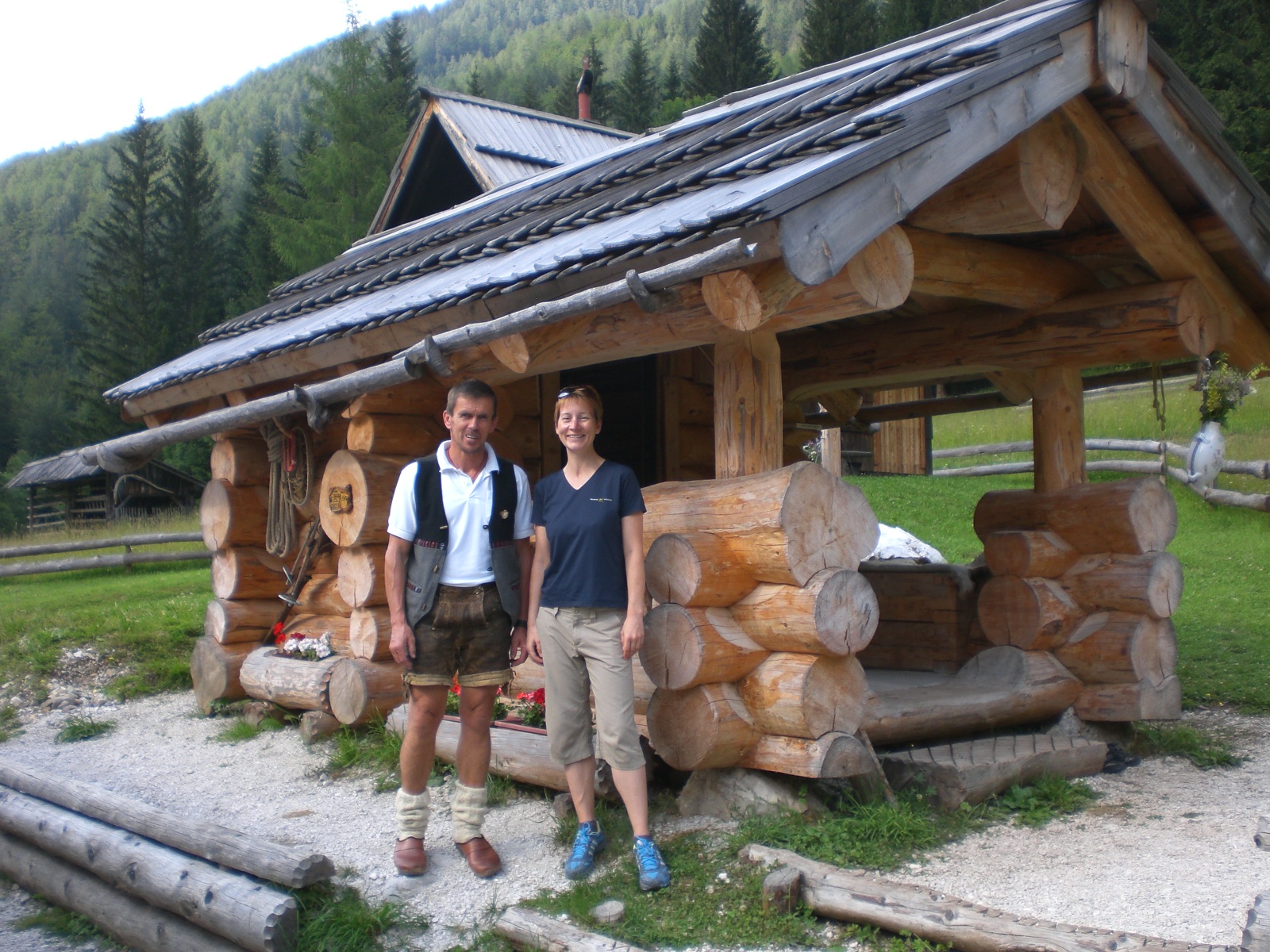
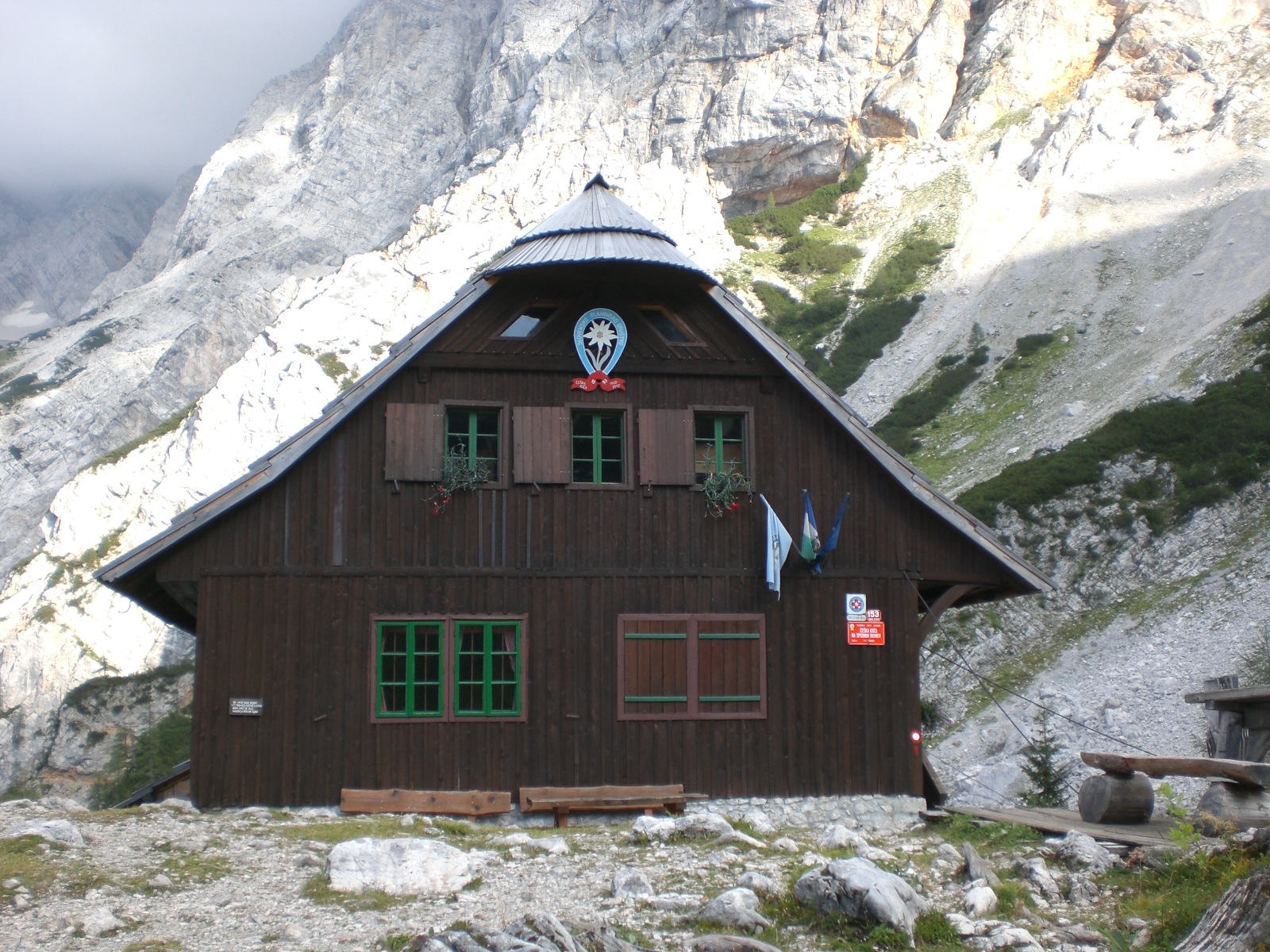
Woops, went slightly off topic there – back to mountain huts! Češka koča, located in the KamnikSavinja Alps, above Jezersko, has a very different appearance to the other mountain huts in Slovenia, due to it having been built by the Czech Branch of the mountain association, hence the name Češka koča, meaning Czech hut. It was officially opened in 1900 and has been renovated several times since then, but still retains its original appearance.    
CIMG6673       

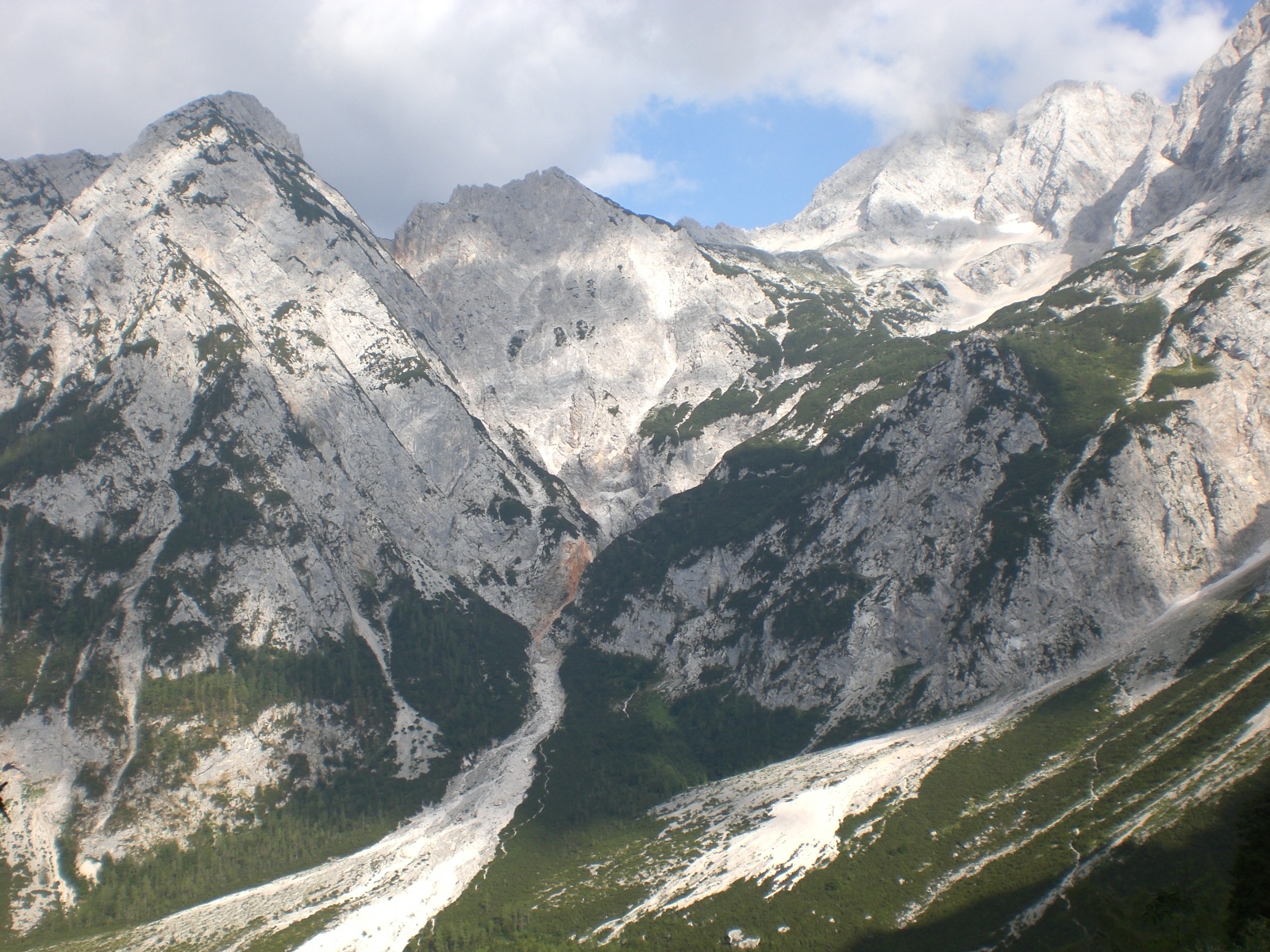
There are a number of options for reaching Češka koča. Together with 2 friends, we took one of the 3 paths which begin at Ravenska kočna (1080m) and climbs up to the hut at 1542m. The path is marked with the usual red and white circular markations and is easy to follow. The path begins rather steeply up through the forest and later, in places there are wooden ladders and a few exposed sections where this is steel cable to assist, but it is well secured and is not technically demanding.

CIMG6677 CIMG6670

From the hut, there are also a number of other tours that can be made, such as to hut Kranjska koča na Ledinah or to the peaks of Grintovec, Kočna or Skuta. However, all the paths from here are rated as ranging from partly to highly demanding and should therefore only be undertaken by experienced and well-equipped hikers.

This coming week, Lambergh Chateau and Hotel in Dvorska vas, near Begunje are hosting 2 events. On Tuesday its the Pool Party featuring night swimming, music and cocktails whilst on Friday, they are holding a Chateau Dinner. The theme for the 5 course dinner, with matching wines, is honey and there will additionally be music, storytelling and a visit from the Radovljica Beekeeping Association. More information about the hotel and their events can be found here – http://www.hotel-lambergh.com/en/

The ‘Kriva jelka’ Path and sweet treats ahead!

As regular readers of my blog will know, I love being outdoors; hiking in the mountains, cycling, running etc. Having lived here for over 6 years now, and spent a large part of that time outdoors,  some might say I know a lot of the paths and the terrain around Radovljica and the surrounding areas better than some of the locals. Indeed,  its not been unknown for me to be taking a friend or two along with me to places they have never been before. I’m told I’d make a good guide – tour guide that is, not a Girl Guide!

I was therefore delighted when, for a change, a friend recently told me about a path which I’d never even heard of before – the circular walking path ‘Kriva Jelka‘, which is part of the ‘Udin Boršt’ forest. Of course, I immediately took it to task to check it out. The path is named after the bent over (kriva) fir tree (jelka), planted by the local tourist association, which replaced the original tree around which bandits used to gather.

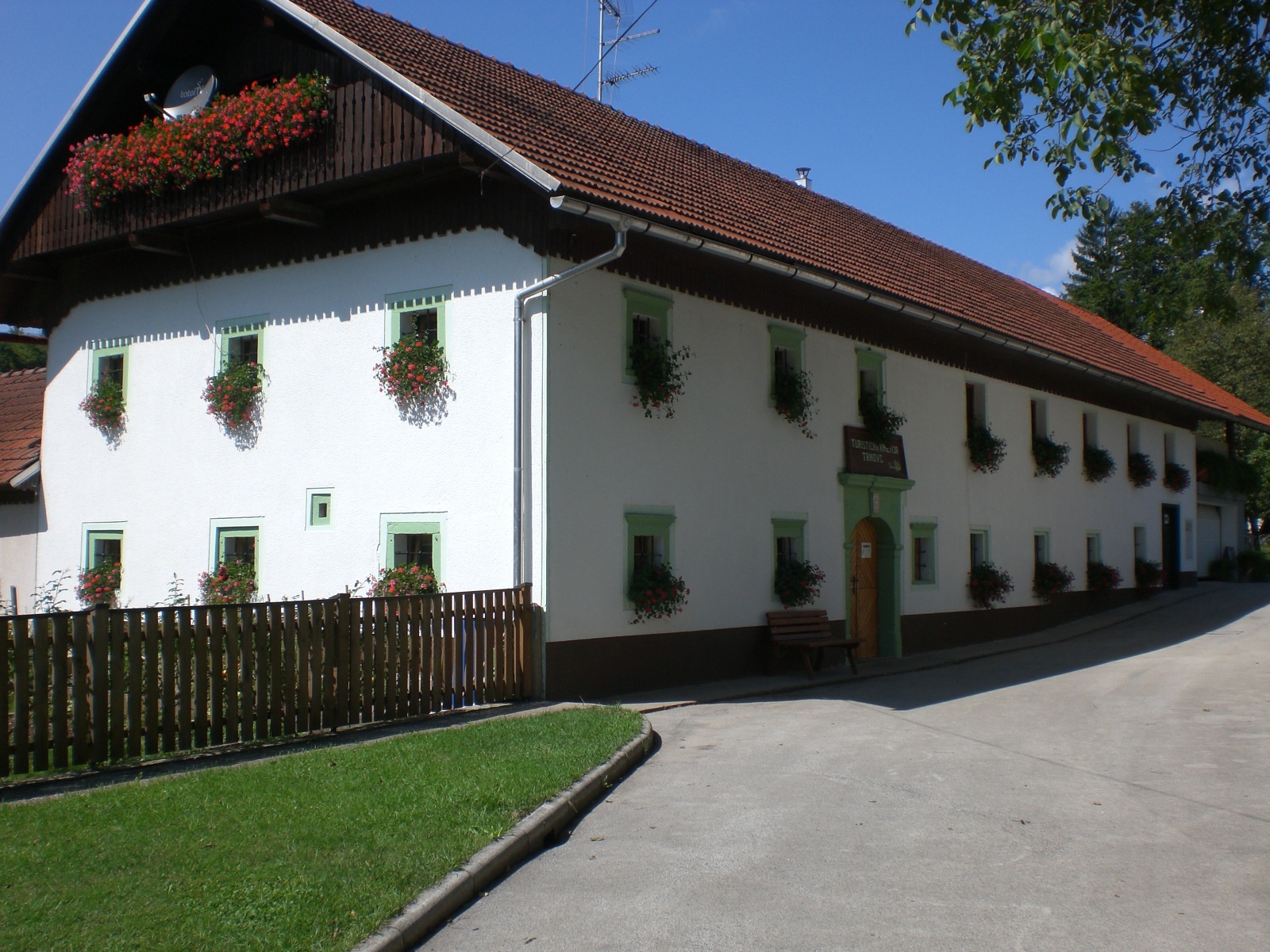
The path begins in Zgornje Duplje at Camp Trnovc, which is just a fifteen minute drive from Radovljica. Previously I had never been to, or even heard of, this small family run campsite so it was a great find. It is set in a peaceful location, in the middle of a large meadow, with space for up to 50 campers, tents or trailers and is surrounded by woods and a river. Next door, the owners also run the Trnovc Tourist Farm (Turistična kmetija Trnovc) where, upon prior reservation, home-cooked meals can be enjoyed. There is also a small reception area, with a pleasant shady seating area, where drinks and ice-creams can be bought – a welcome reward after the walk, and where you can get further information and a map for the walk. More information about the Camp and Tourist Farm can be found here – http://www.trnovc.com/ and about the walk here (only in Slovene – http://www.grascina-duplje.si/zz%20kriva%20jelka/

CIMG6683

CIMG6684

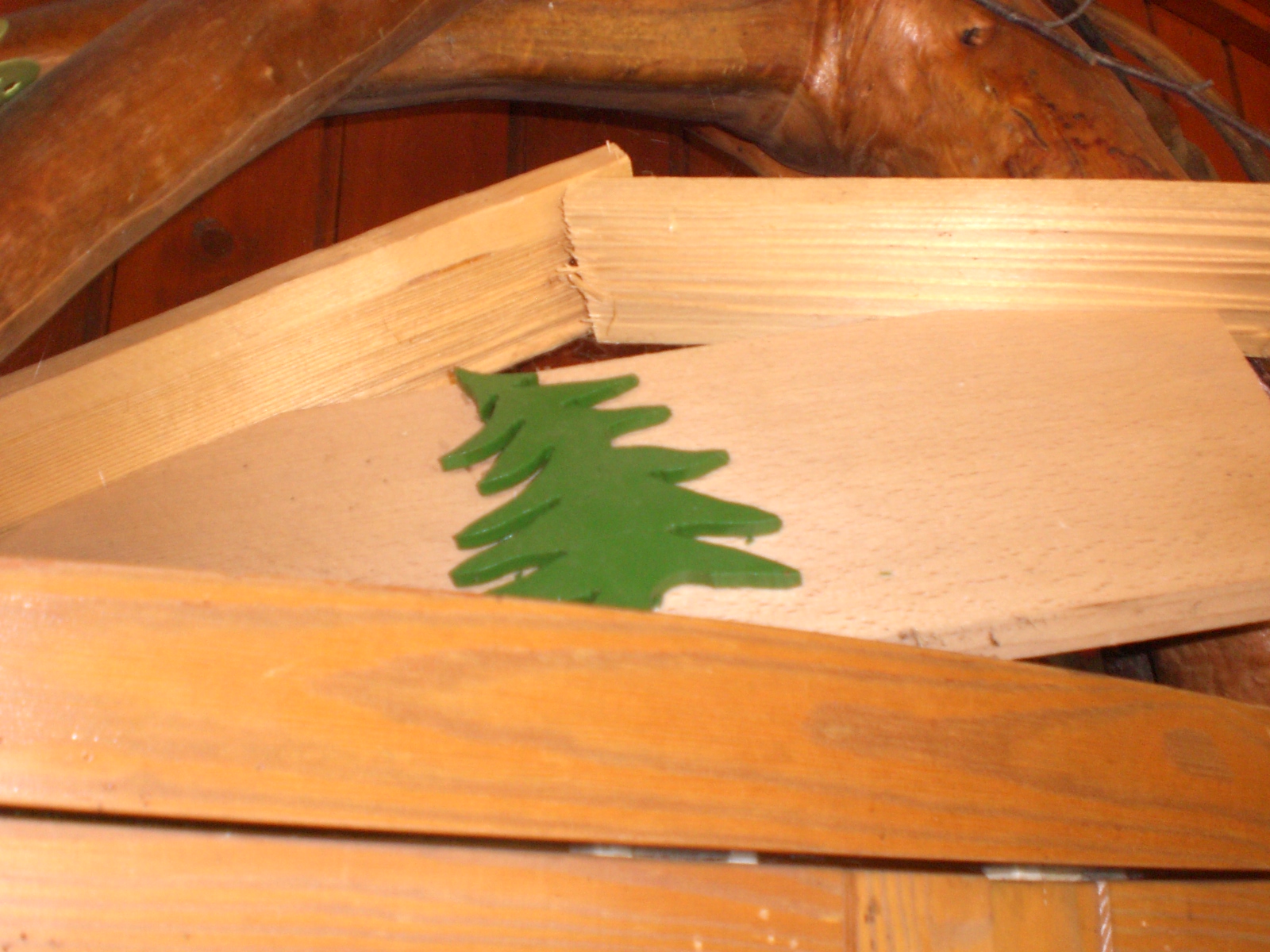
There is an information board at the start showing several options to make a longer or shorter route and path is well marked throughout with a small fir tree on the wooden markings (as seen below). In addition to the Kriva Jelka itself, the path also passes a number of points of interest including the Manor House (graščina) and Vogvar’s House, a heritage protected monument, in Spodnje Duplje and the Kras Cave entrance (kraška jama) in Zadraga.

CIMG6686

CIMG6693

This coming week, time permitting, I plan to attend a concert by the Carmen Manet Choir, which will take place on Tuesday 17th September at 7pm in the Radovljica Mansion House. Entrance is free. I previously attended a concert by the same choir back in …….. and thoroughly enjoyed their renditions and mixture of classic and modern songs with a twist. You can also listen to a clip of them on my previous blog from January 2013 entitled ‘Shovels Ahoy!’.

I also intend to visit the 2nd Festival of Honey, taking place on Saturday 21st September, at the Gorenjska Beekeeping Centre( http://www.cricg.com/) in nearby Lesce. The event programme kicks off at 10am and includes lectures, presentations, honey themed cookery workshops and a market – ideal for someone with as sweet a tooth as I have!

Actually, it’s going to be a busy one because next weekend its also the Sweet Festival (Sladka Istra) at the coast in Koper. This is one of the largest events of its kind in Slovenia and is a heavenly mixture of all things sweet. Ok, its a bit of a drive to get there but I usually make a day of it – stop somewhere enroute to walk, probably Nanos, weather permitting, take a stroll along the coast to Izola and enjoy the more temperate coastal climate for a change. To be followed by lots of sweet delights! More information can be found here and of course I will be writing about it next week too  – http://www.sladka-istra.si/sl/

Radovljica and Beekeeping

Beekeeping in Slovenia is hugely popular. According to statistics, there are around 8,000 beekeepers which, for a population of just 2 million people, equates to around 4 beekeepers per 1,000 inhabitants.

The reason I am writing about this today is that I was once again reminded of the importance of bees when I saw the trailer for a new film, ‘More than Honey’, which has just been released and is now showing in cinemas in the UK. It looks well worth a view. I have sent the link onwards within Slovenia in the hope that maybe someone will consider bringing it to audiences in Slovenia too. In the meantime, you can watch the trailer here – http://www.morethanhoneyfilm.com/

Radovljica, where I live, is home to not only the Apiculture Museum (that’s beekeeping to you and me), housed in the Radovljica Mansion (seen below) but also the Gorenjska Beekeeping Centre where, on Saturday 21st September, the Festival of Honey and Day of Honey Cuisine will take place. The event, which begins at 10am, will include lectures, presentations and honey themed cookery workshops, as well as a market selling honey related products and an accompanying entertainment programme. More information about the Museum of Apiculture in Radovljica can be found here – http://www.muzeji-radovljica.si/4m_cebelarski/4cebelarski_uvod-en.html

Grascina

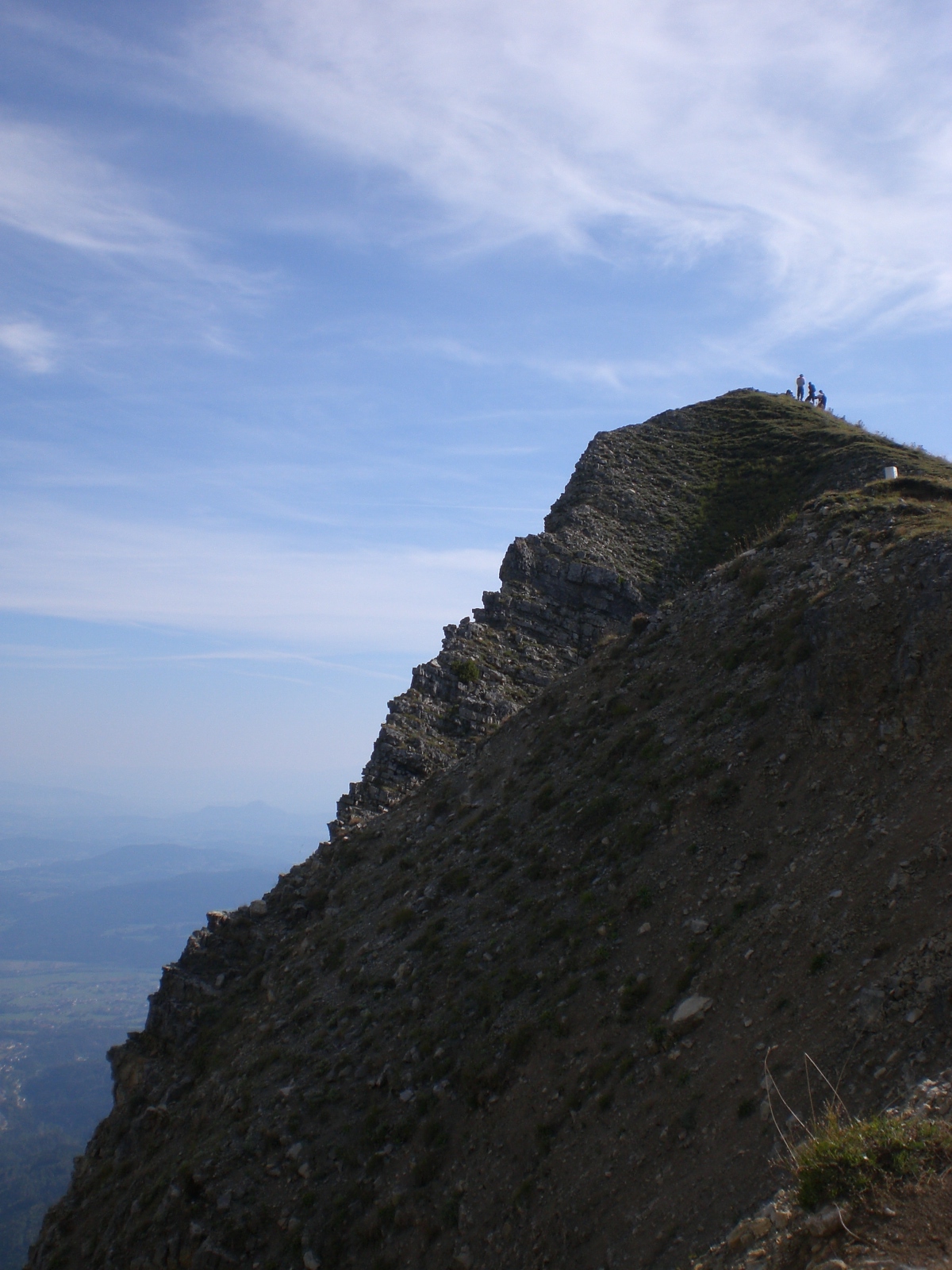
Radovljica is also ideally suited for hikes into the surrounding Julian Alps and the Karavanke range. I spend a lot of my free time hiking, and am particularly fond of the Karavanke, which are literally on my doorstep. At this time of year, I often make a trip to the peak of Dovška Baba (1891m) which stands above the village of Dovje. The views across to the village of Mojstrana, the Vrata valley and its surrounding high mountains, including Triglav, are simply stunning. 

CIMG6700

Its a pretty steep hike up through the forest, but nowhere is it technically demanding. There are no mountain huts enroute although there is a herdsmen’s hut at the Dovška Rožca Highland, which is sometimes open at weekends, but this isn’t to be relied on. After passing the highland, it is about a further 20-30 minutes up to the peak where you are richly rewarded with views on one side of Slovenia and the other side across into Austria. However, on its northern side, Dovška Baba is highly eroded (as seen in the picture below) so one should take great care not to get to close to its edge.

CIMG6707  CIMG6705

There are also hundreds of other walks in the Karavanke range which are as, if not even more, rewarding. I also like the fact the Karavanke are lesser known, and therefore less crowded, than the Julian Alps. I have written numerous times about walks there, and will of course continue to do so too.

On Saturday of the coming week, 14th September, the central event of the Langus Days Festival (Langusovi dnevi) will take place at 5pm in the village of Kamna Gorica with a fete and entertainment being provided by a local choir whilst amateur painters, who have spent the previous week at the artists colony, display their works of art.

The Dovžan Gorge

Despite still being August, there has certainly been a hint of autumn in the air this past week, with rather chilly, fresh mornings and the first mushrooms starting to appear in the forests.

Summer is, and will always be, my favourite season and I am always sad as it begins to draw to a close. However, every season must end, and autumn, if it’s a mild one, can also be fantastic for hiking and savouring the spectacular colours of the deciduous trees and surrounding nature.

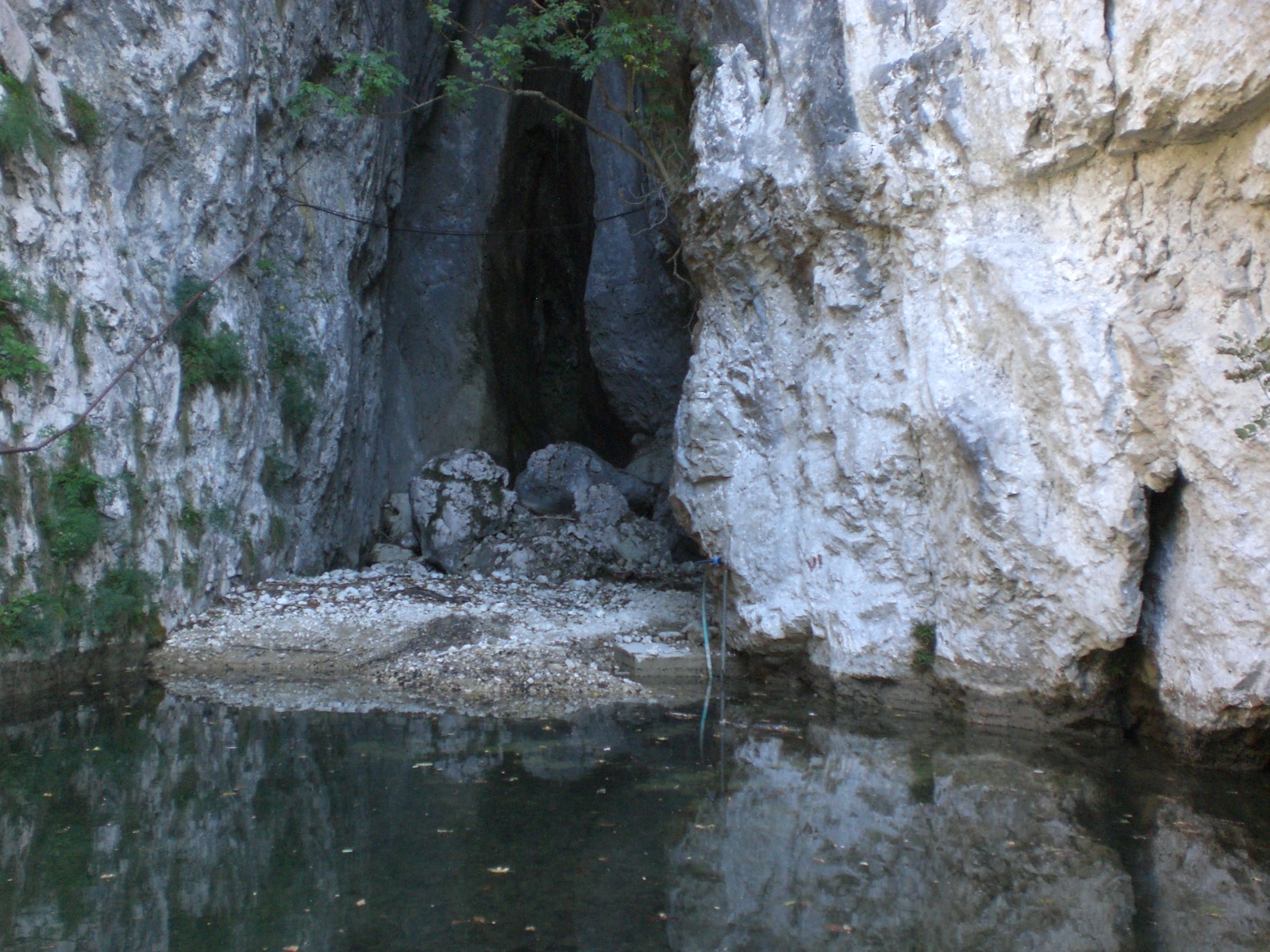
I had heard that the Dovžan Gorge (Dovžanova soteska) had recently been somewhat updated with a new walking path and renovated bridges so I decided to go and check it out for myself. The Dovžan Gorge is located a few kilometres north of the town of Tržič, just a 20 minute drive from where I live in Radovljica. The waters of the Trziška Bistrica river have carved out the gorge, which is particularly known for its rich geological conditions and palaeontologic sites.

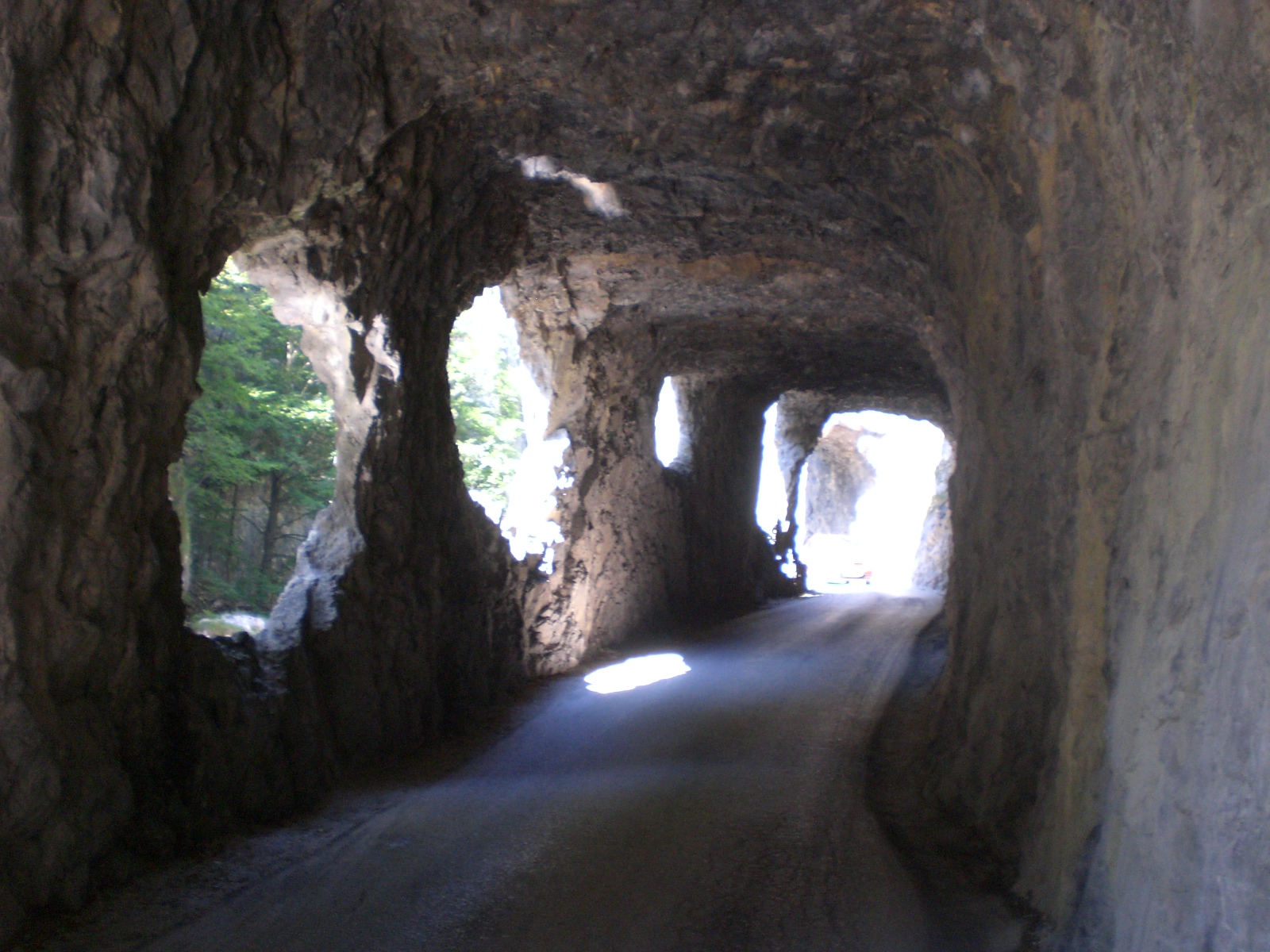
The tunnel at the entrance to the gorge, pictured below, was built on the order of Baron Born at the end of the 19th century. This effectively opened the gorge to the world as prior to this residents had to risk crossing a precarious suspension bridge, which was at the mercy of the raging waters.

CIMG6639  CIMG6638

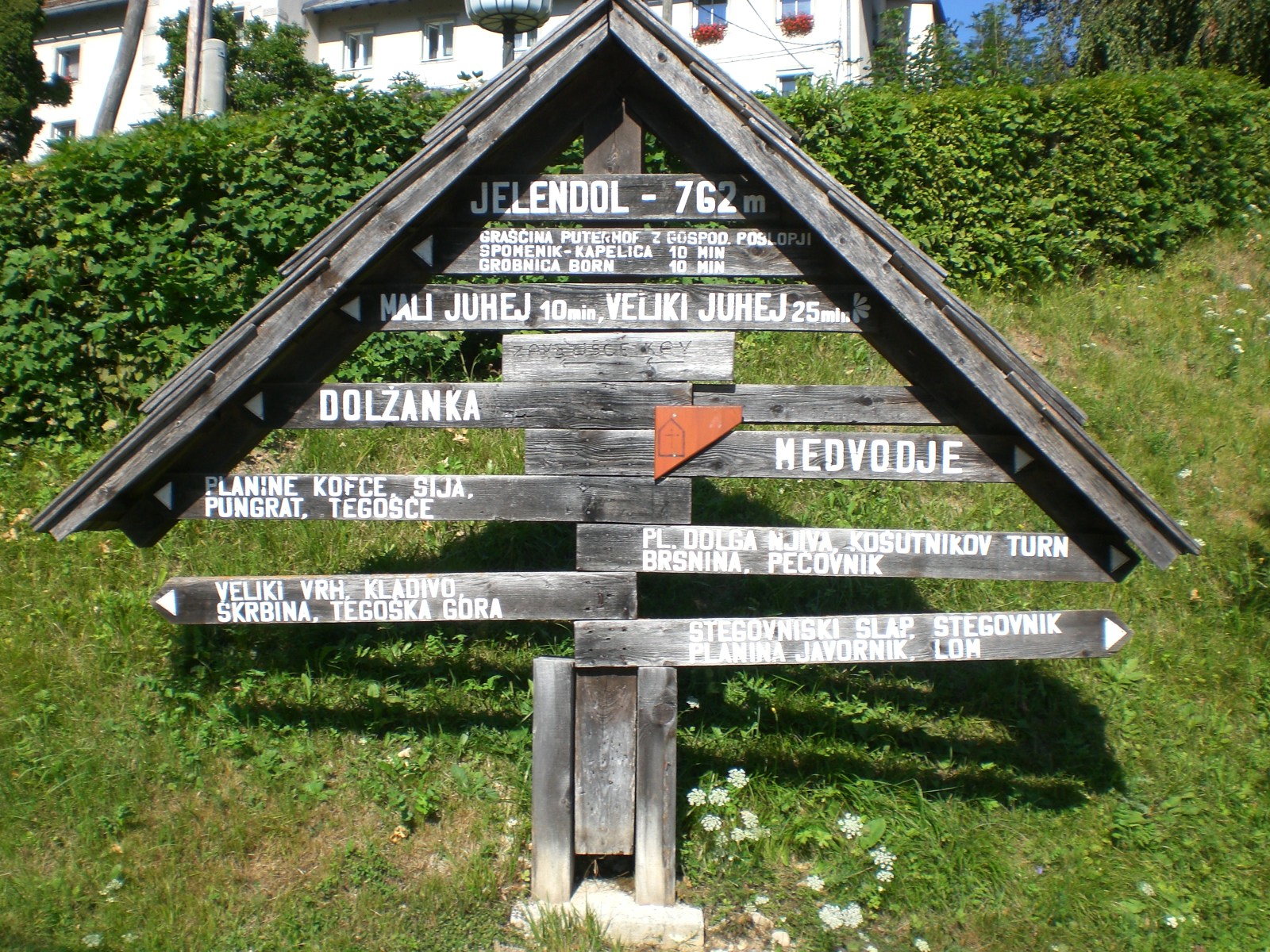
It is now possible to make a short circular walk in part of the gorge whilst the other parts lead beside the road. The circular walk, though short, is fairly challenging with ladders and steel grips here and there, so sturdy footwear is a must. This however can be avoided by continuing to walk along the road instead of crossing the river. Those wishing to go a longer walk, as I did, can continue on the road to the village of Jelendol, which is home to the Born Mansion (Bornova graščina) and is also a starting point, as seen on the sign below, for numerous walks into the surrounding Karavanke mountain range; the peaks of Veliki vrh and Kladivo, the very popular Kofce highland and the Stegovnik waterfall. There is also an Exhibition and Educational Centre, in the village of Dolina.

CIMG6644

This weekend was Shoemaker’s Sunday uštarska nedelja) in Tržič. I usually attend the event however this year, due to car problems, I wasn’t able to make it. The event,  held annually on the first Sunday in September, is one of the largest of its type in Slovenia and brings the streets of the old centre of Tržič to life, attracting up to 10,000 visitors from all over Slovenia and neighbouring countries. The event was originally intended to showcase shoemaking in the area, with demonstrations and sales of products at bargain prices. These days however, there is a wide range of other products and stalls together with local food and an accompanying programme of entertainment.

A new exhibition, of the work of Andrej Ropret, is opening this week in the Šivec House Gallery (Šivčeva hiša) in the old town centre of Radovljica. Entrance to the exhibition, which begins on Friday 6th September, is free. More information about Šivec House can be found here – http://www.radolca.si/en/radovljica-sivec-house/

Also on the 6th September, the Lambergh Chateau and Hotel in Dvorska vas, near Begunje, are holding a Castle Dinner with gourmet food and accompanying medieval programme. More information about the event and the hotel can be found here – http://www.hotel-lambergh.com/en/
Galetovec and Slovenian hayracks

I can’t believe the summer holidays are almost over and schools will be starting again next week. The school summer holidays are really long, far longer in the UK. Though I don’t have children myself, I have significantly more free time during the summer, due to a lack of work so when the school holidays begin I always think it will seem like an eternity. However, the time really flies by – as they say ‘Time flies when you are having fun!’

Once again I have been busy enjoying all the fantastic, natural and free things Slovenia, and in particular the Gorenjska region, has to offer.

A particularly enjoyable trip I made this week was to Galetovec (1265m). Though not high, the panoramic view from this peak, which stands above the village of Bohinjska Bela, is outstanding and well worth the effort. Bohinjska Bela is located just the other side of Bled, approximately 10kms from Radovljica. So, as it wasn’t far, and to avoid the usual summer weekend traffic jams through Bled, I went from home by bike.

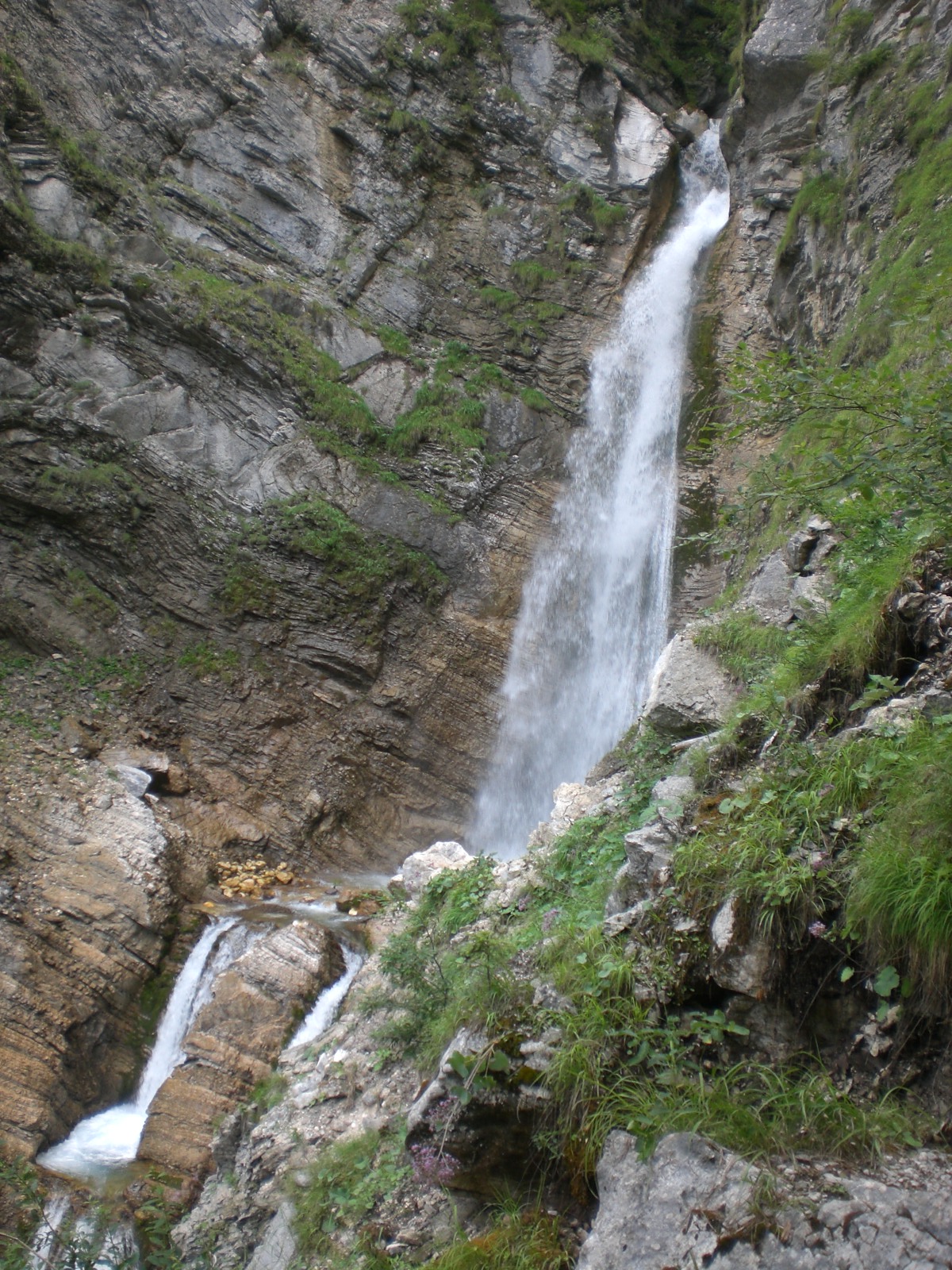
Though not the official start of the walk, I began my hike from the Iglica waterfall (Slap Iglica), which in the current dry season could perhaps better be described as the ‘Iglica Trickle’ – don’t expect too much! The area is a popular with local rock-climbers and there are ladders (as seen below) tucked into the crags between the rock faces. Those not keen on narrow confined spaces, would be better to begin the walk from the Mercator supermarket in Bohinjska Bela and followed the signed route. Both routes eventually join at a hayrack and lead onwards and upwards through the forest, quite steeply in places, passing the Slamniki highland, a Partisan memorial and eventually Galetovec itself, where you are more than rewarded with views across the valley, to the Jelovica plateau, the Karavanke Alps and, in the distance, the Kamnik-Savinja Alps.

CIMG6679 CIMG6648

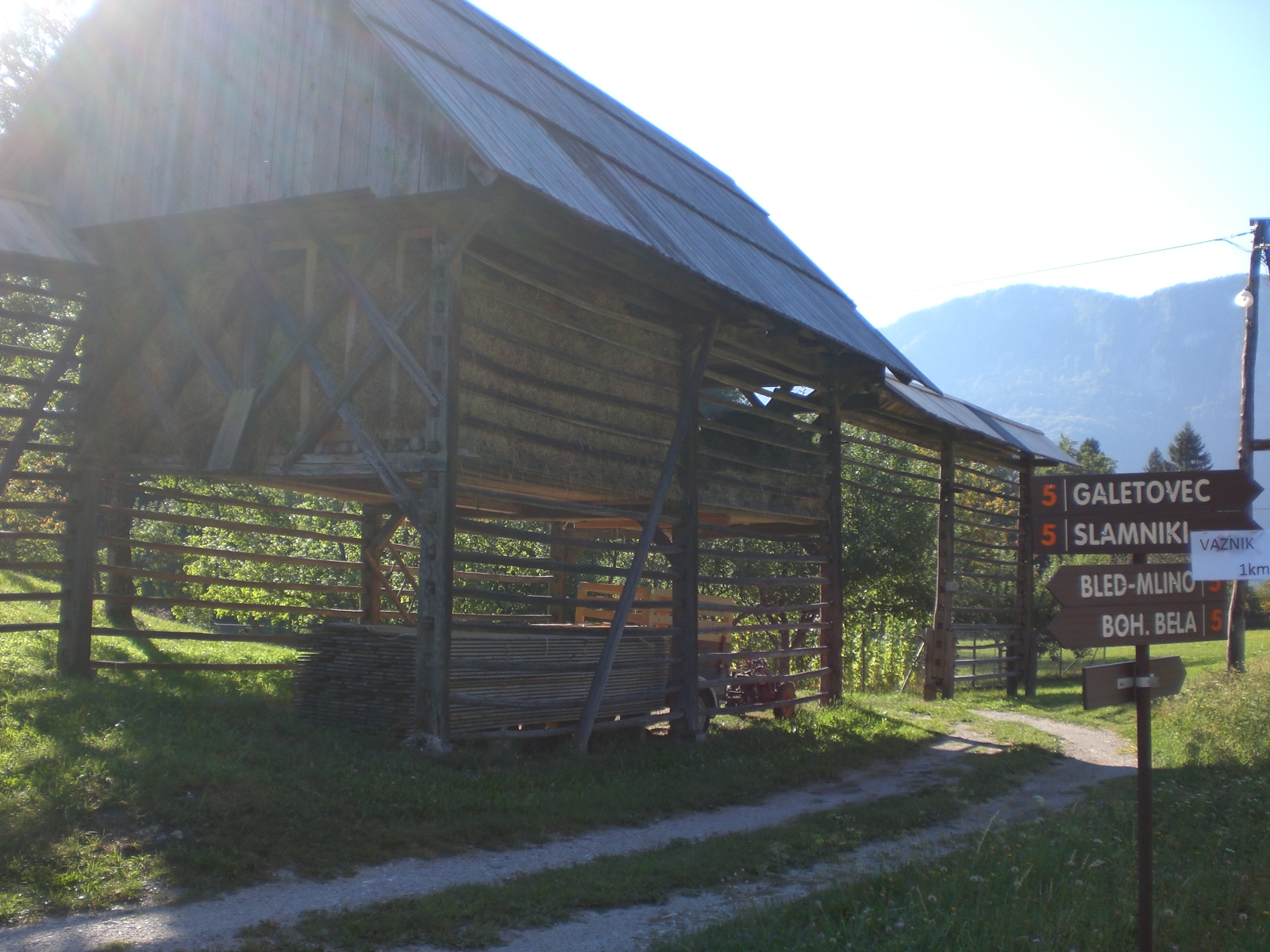
Hayracks (kozolci), used for drying hay, as seen in the picture below, are a typical feature of the landscape in Slovenia, with each region having its own unique variety. Wherever you are in the country, you will usually come across a hayrack. In fact, the worlds first open-air hayrack museum has also recently opened in the Dolenjska region – http://www.slovenia.si/culture/tradition/the-land-of-hayracks/   Unfortunately, these days all too often you can see advertising hoardings, rather than hay, hung on the hayracks, something I abhor but in these times of financial hardship, I suppose a much needed source of income for struggling farmers and landowners.

CIMG6653

If you are visiting, or thinking of visiting, Radovljica and the surrounding area this coming week, there’s plenty happening. Here are some of the highlights:

  • On Tuesday 27th August at 8pm, there’s a free concert by the Kaboodle Community Choir in Linhart Square, Radovljica .
  • On Saturday 31st August at 4.30pm it’s the annual Večno mladi (Evergreens) street parade through Radovljica. This year its a double celebration as the Radovljica Fire Brigade are celebrating their 130th year of existence.
  • After the parade, at 5.30pm, there will be a concert featuring top Slovene music acts Čuki and Tanja Žagar. The concert will be held on the lawn behind the Spar supermarket and entrance is free.
  • On Sunday 1st September a Flea Market will be held in Linhart Square, Radovljica from 9am onwards.
  • Also on Sunday 1st September, a concert will take place at the church in Kamna Gorica. The concert, by Filip Kopušar, is part of the Langus Days Festival (Langusovi dnevi) which takes place annually on the first weekend of September to celebrate the painter Matejž Langus, and includes creative,  recreational and cultural events for all the family.

Jezersko, the Sava River and more…

A perfect to visit in the height of summer, when the heat is on, is Jezersko. This tranquil and picturesque part of Slovenia can feel a little cut-off, due to its somewhat remote location at the end of a long winding road which leads to the border with Austria. However, in reality its only just over 40km from where I live in Radovljica and takes under an hour to reach by car.

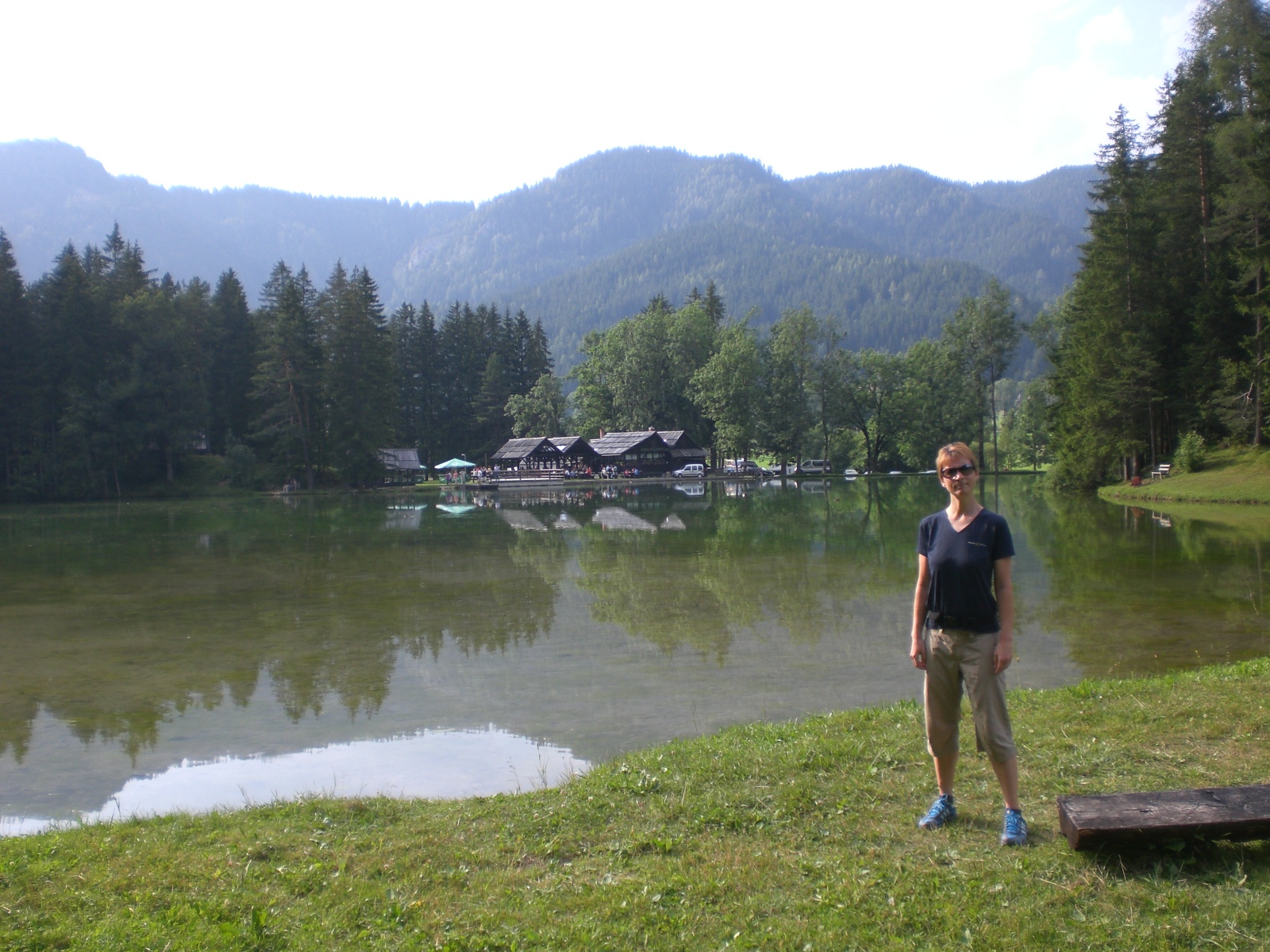
Jezersko’s 700 residents are scattered across its two parts – Lower (Spodnje) and Upper (Zgornje) Jezersko. It lies at 906m and is surrounded by the high peaks of the Kamnik-Savinja Alps. There area is a nature lovers dream with an abundance of outdoor things to do; hiking, cycling and climbing in the summer and skiing, sledging and skating in the winter. Lower Jezersko is predominantly residential whilst its upper part offers accommodation, tourist farms and other (limited) tourist facilities. The lake, Planšarsko jezero, is one of its most popular draws and is a popular place for family outings as well as being the start point for the numerous walks into the surrounding high peaks of the Kamnik-Savinja Alps.

CIMG6456

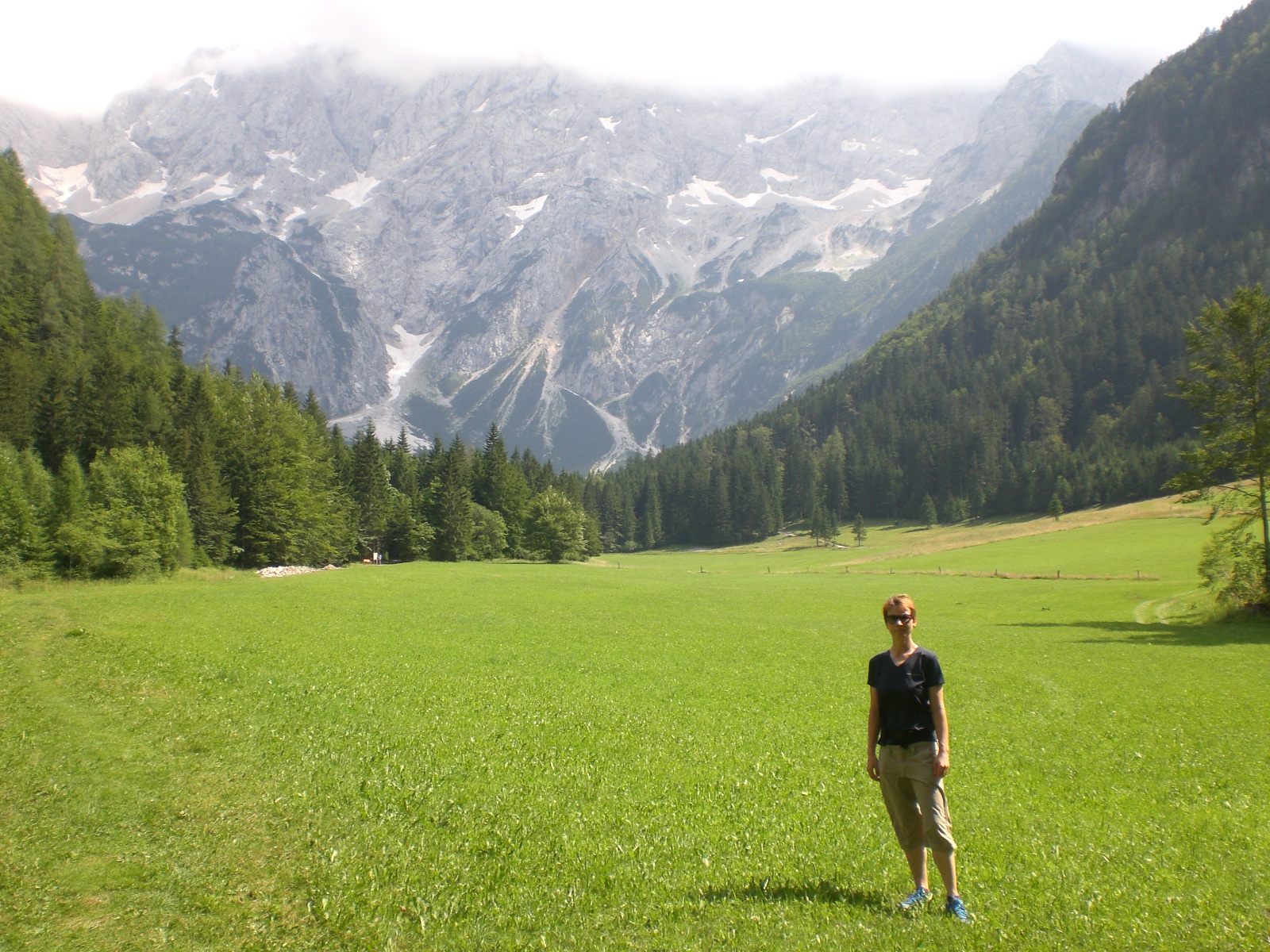
Having recently done some work in relation to the new Ravenska Kočna Theme Path (http://ravenska-kocna.si/en/), and always on the look out for new and interesting places to walk, I wanted to go and see and try it for myself. The 8km path, which is fairly level throughout, passes through some stunning scenery and even having been in Slovenia for over 6 years, I was still silenced by its beauty as it traverses meadows and the Jezernica stream, before heading slightly uphill to the viewpoint at ‘Na prodih’. And what a view it is. Here is a photo I took, but it really doesn’t do it justice, so you can also read more about the path and see more photos here – http://ravenska-kocna.si/wp-content/uploads/Tabla1.pdf

CIMG6441

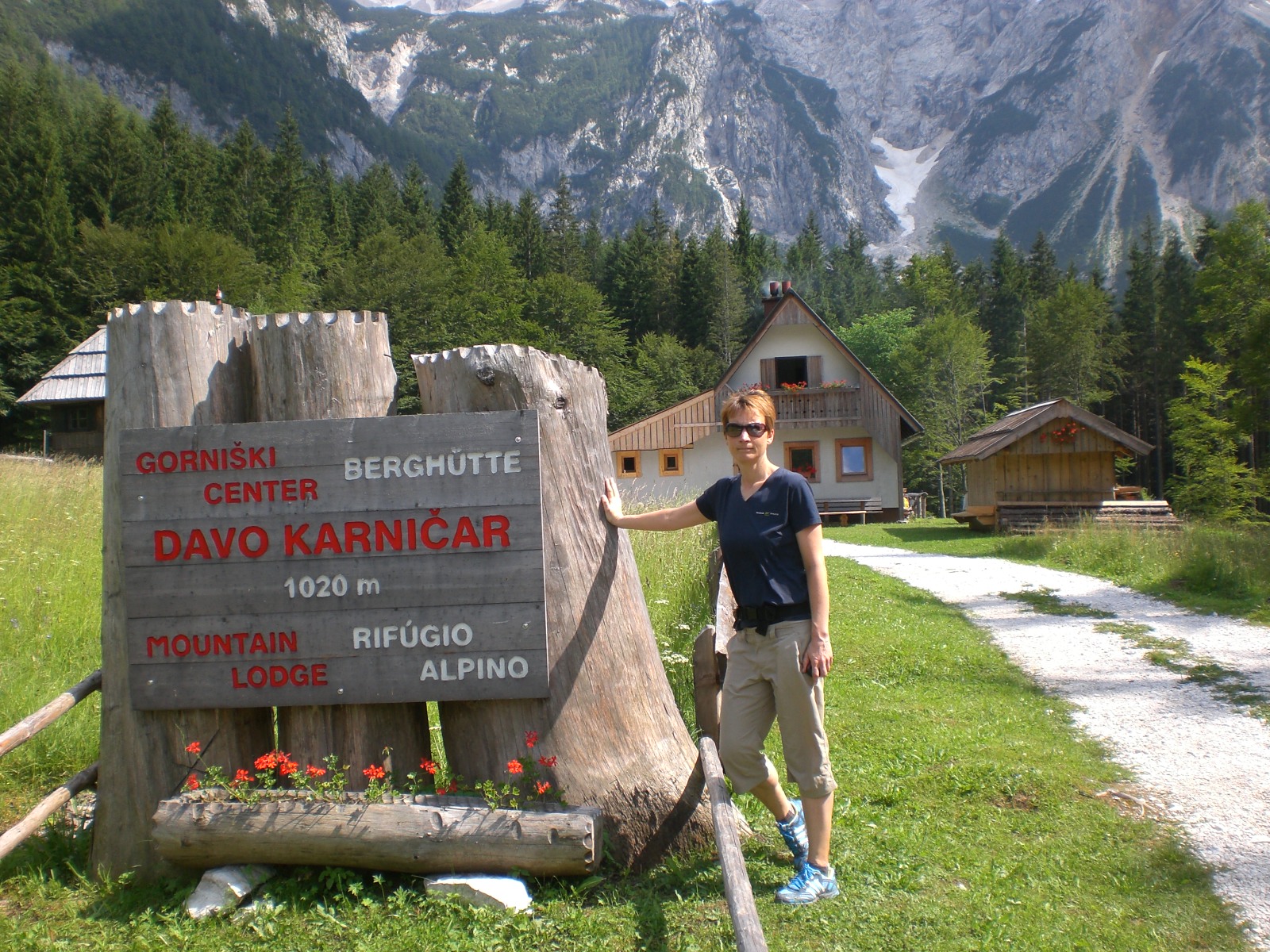
Also, along the path is the new Davo Karničar Mountain Lodge. A true Jezersko local, Davo Karničar is a climber and extreme skiier, as well as being the first man to ski from the summit of Everest in the year 2000, as well as having skiied from the 7 summits, the 7 highest mountains on each of the 7 continents. In short he’s a (Slovene) living legend. Despite all that he has achieved he has remained entirely down-to-earth and will more than happily brew you a tea or cook up some local specialities and can also offer advice on what to see and do in the area that he knows like the back of his hand. Accommodation at the lodge and guided tours can also be arranged.

CIMG6445  CIMG6455

At the far end of Jezersko, you reach the Seeberg mountain pass (1218m), and former border, which leads into the town of Bad Eisenkappel (Železna Kapla) in Austria, which is just one of the many ways of reaching Austria from Slovenia.

Every August the Sheep Ball (Ovčji Bal) is held in Jezersko, which is a festival of all things ovine. The celebration of the indigenous Jezersko-Solčava breed of sheep, this year in its 55th year, include demonstrations of sheep shearing and other sheep related traditions, woollen related activities and the opportunity to purchase local handicrafts and dairy products.

_50040b7628e98

Elsewhere, the Sava River is a popular place to take a dip and cool down at this time of year, though it’s way too cold for me! In total the Sava river extends to 990 kilometres and flows through  Slovenia, Croatia, Serbia and Bosnia-Herzegovina. In Slovenia it comprises the Sava Dolinka and Sava Bohinjka which merge at the confluence in Radovljica. From Radovljica, there are many options for taking pleasant shady walks alongside the river or, for those brave enough, having a paddle in its shallower parts. A popular walk from Radovljica is to the Fux footbridge over the Sava river. More information can be found here – http://www.radolca.si/en/lipnica-castle-natural-science-trail/

The hugely popular Avsenik Festival kicks off this week and runs from the 23rd – 25th August. The festival of popular folk music, this year celebrating its 60th year, is held at the Avsenik Restaurant in Begunje na  Gorenjskem and attracts huge audiences – http://www.avsenik.com/festival/en.asp

The Pokljuka Gorge

Slovenia is almost 60% covered in forest, which comes in pretty handy when its this hot because you are never far away from some cool shade in the forest. So in the past few weeks, most of my trips have been planned around being outdoors and making the most of the fantastic weather, whilst also being in the shade.

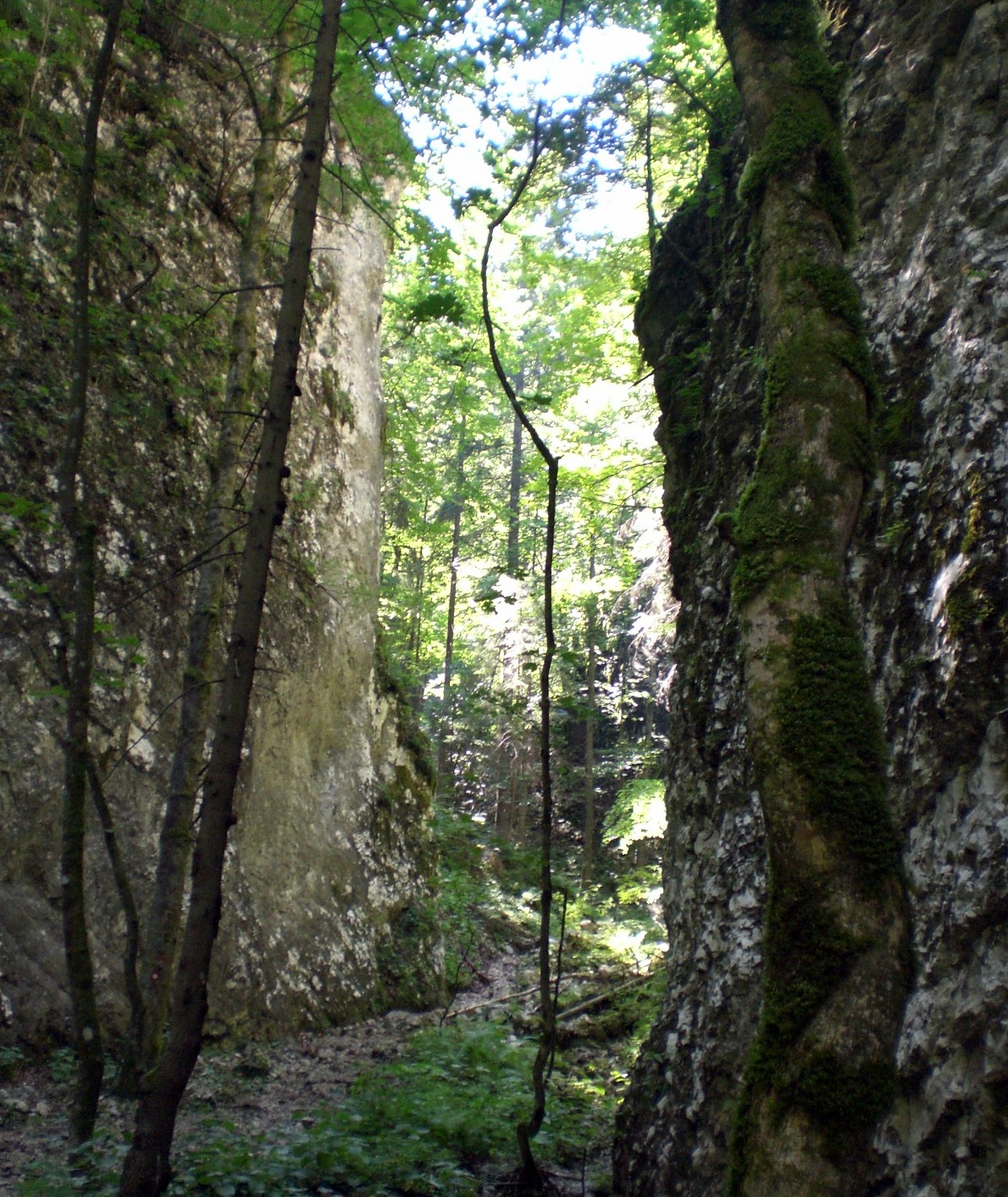
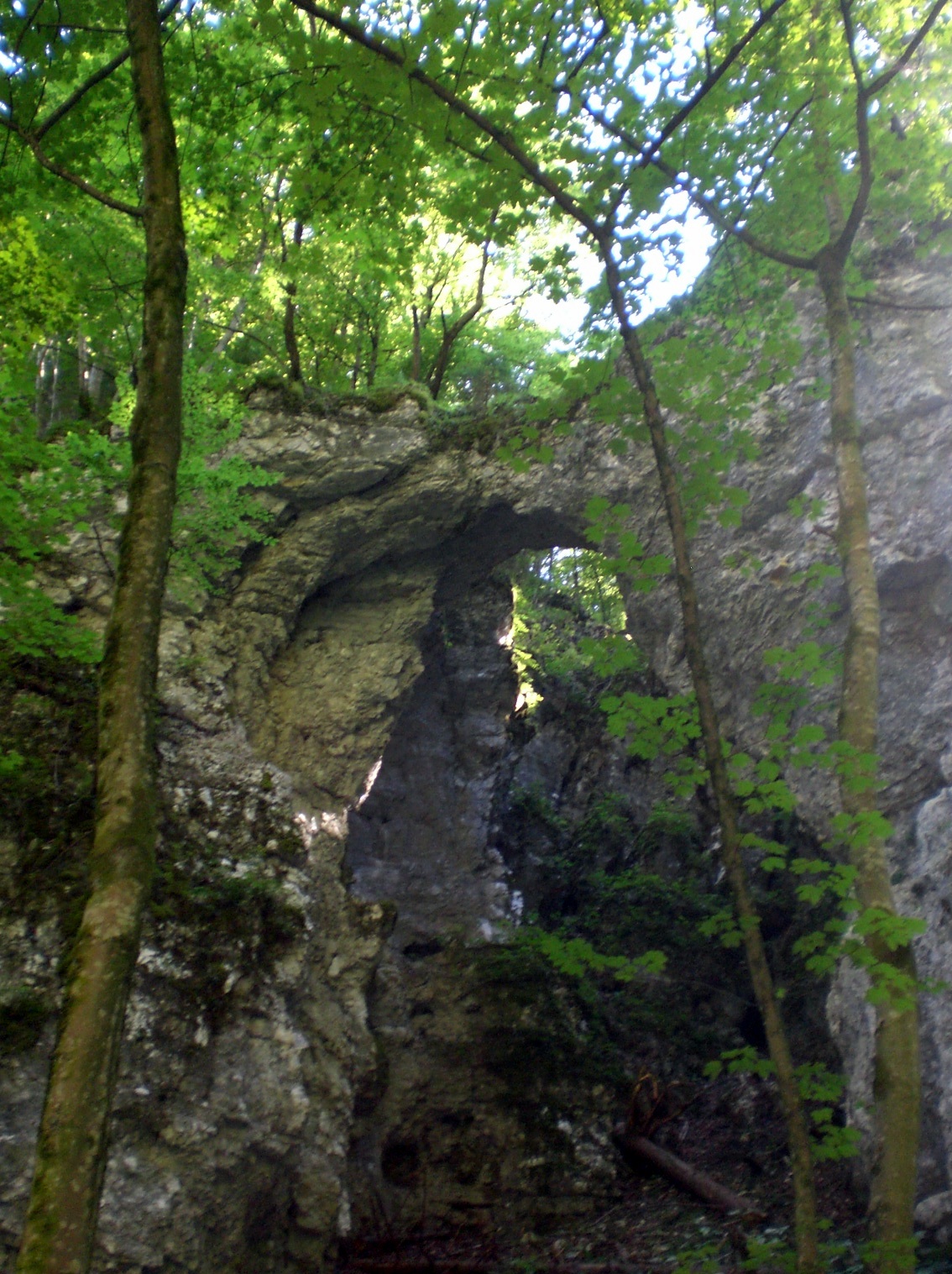
The Pokljuka Gorge (Pokljka soteska) is a hidden and refreshing gem during the summer. A lot of people bypass it on their way to the Pokljuka plateau but it is certainly worth making the short detour. The 2km gorge was formed from the waters of the Pokljuka glacier. At first the terrain is a little difficult through a ravine with fallen trees, branches and stones, but as long as you are wearing good shoes it is fine and only takes around 20 minutes from the parking area to reach the most interesting part of the gorge. The path leads first past the natural bridge, then onto a large cave, the Pokljuka Hole.

CIMG6563  CIMG6566

It then continues before reaching the Gallery, a wooden boardwalk, which leads up steps before you emerge from the rock walls into an area covered with ferns and forest flowers.

CIMG6569 CIMG6572

This week I also visited the Pokljuka plateau itself, this time by bike. Its quite a long ride from Radovljica (496m), via Bled and Gorje, with an almost 900m altitude gain to reach Rudno Polje  (1347m). The road climbs up gradually, via a series of sweeping bends, but its never overly steep. However, again its ideal in the heat as up there, on the forested plateau, the temperature was just perfect. The Pokljuka plateau is vast. It spans almost 20km in both length and width and part of it lies within Triglav National Park. It is a popular destination for sports lovers; in winter it is home to some of the best country-country skiing trails in the area, and also the location of the annual Biathlon World Cup. There are also 2 small ski slopes, one near Rudno Polje and the other near the Sport Hotel. In summer, and in winter too, its a hikers paradise with a wide range of walks available from shorter strolls to one of its many highlands, to longer, more challenging walks to the surrounding mountains. The highest point, and a very popular spot year-round, is the peak of Debela Peč (2014m). Pokljuka is easiest accessed by car (or by bike!) as there is no public transport to/from the plateau other than in the summer months when buses run daily from Bled.

As, more often than not, I’m walking alone, I don’t have the chance to get many pictures of me and the scenery (maybe that’s a bonus!). So here’s a picture taken by a friend who accompanied me this week for fantastic hike! Here you can see me on the peak of Srednji vrh (1796m), on the left with Vrtača in the background and on the right with Stol behind me – super!

CIMG6578 CIMG6580

This weekend it’s the Sheep Ball (Ovčji Bal) in Jezersko, so I hope to be making a visit there and writing more about the Jezersko area next week. The Ball, held annually on the second Sunday in August, celebrates the indigenous Jezersko-Solčava sheep breed and revives former traditions and customs. There is, of course, also an opportunity to buy and try all things ovine; local dairy products, wool products, souvenirs etc.

Meanwhile, the Radovljica Festival is now into its second week, with still plenty  happening –  http://www.radolca.si/en/radovljica-festival/

Medieval Radovljica

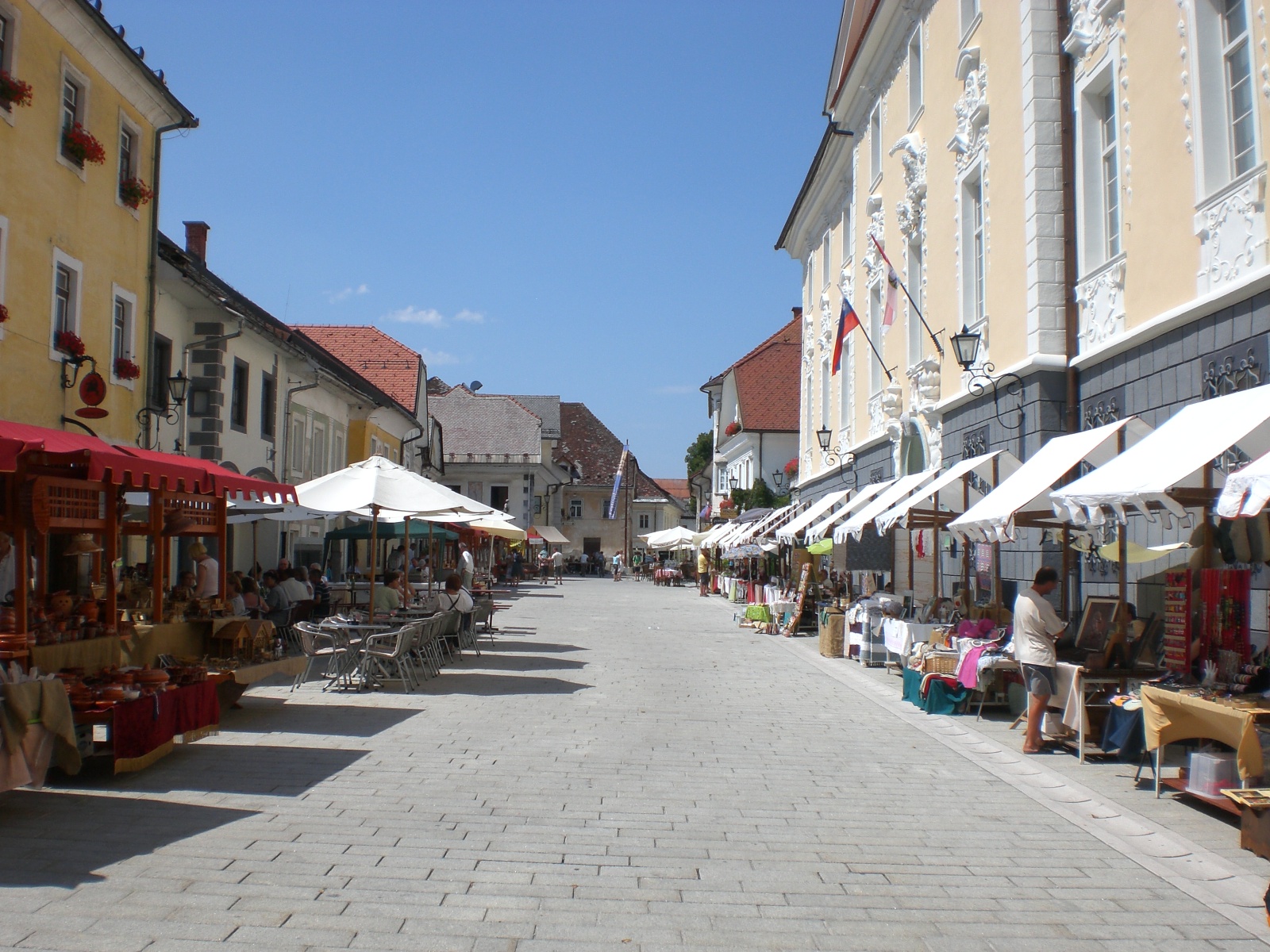
Radovljica, Škofja Loka and Ptuj are home to the three best-preserved medieval old town centres in Slovenia – and I am fortunate enough to live in one of them! Every year, on the first Sunday in August, Radovljica hosts a Medieval Day which celebrates its history and recreates some of its medieval crafts and traditions. When I visited at around 2pm I thought it seemed unusually quiet, no doubt due to the searing heat, but then I realised everyone was sitting in the shade with an ice-cream and/or cold beer in hand whilst the bulk of the visitors choose the early morning or evening hours to visit. The event attracts both visitors from Slovenia and tourists who come to watch the displays, browse the market stalls and buy handicrafts, taste the local food and enjoy the medieval atmosphere.

CIMG6554  CIMG6555

Apart from one short but destructive storm this week, the weather has been absolutely perfect again all week – no complaints here! But it was one hell of a storm. It was on Monday afternoon and only lasted about 30 minutes but in the short time it took to sweep through the country, it wreaked havoc and caused millions of euros worth of damage. On my balcony, 3 large plants pots and their contents were smashed to pieces but that’s insignificant compared to the damage others suffered with roofs being blown off, falling trees etc. Then followed the eerie calm after the storm and the next morning it was as if nothing had ever happened and back to the heatwave.

Needless to say I have once again been taking full advantage of the weather and have been busy hiking and cycling, interspersed with just a little work here and there! I try to always remember, though not always successfully, to take my camera with me these days so I can show where I’ve been and give readers of my blog some ideas and inspiration for those thinking of visiting Slovenia. This week however, I had a hard time choosing from all the pictures I’d taken!

Temperature records were being broken all over the country this past weekend including temperatures of 38.3 degrees in the capital Ljubljana and 39.4 in Novo Mesto. However, the overall highest ever recorded temperature of 40.6 degrees, recorded in 1950 in Črnomelj in the Bela Krajina region of Slovenia, hasn’t yet been exceeded. So with these high temperatures, I’ve been planning my hiking trips carefully, leaving early and where possible staying in the forest and the shade as much as possible.

On Monday I hiked up to Babji Zob (1128m). Babji zob, which means Hag’s Tooth, is an unusual tooth shaped rock formation at the far northwestern edge of the forested Jelovica plateau. There is also a cave under the rock, thought to be the second oldest cave in  Slovenia which can, upon prior arrangement, be explored with a guide – more information can be found here – http://bledbohinjskabela.wix.com/b  However, the walk up to the rock  can be done at any time but it is rather steep in places so good footwear is a must and I’d also suggest using walking poles.

Jama_%20foto%20Bogdan%20Kladnik[1]

On Tuesdsay I visited the Martuljek waterfalls and was also fortunate to stumble across the Charcoal Makers  Day being held there where a charcoal pit, as seen below, was being recreated.

CIMG6518

There are two waterfalls, the lower and upper falls. The first waterfall can be reached in about 30 minutes from the parking area whilst the upper falls requires a further 1 hour walking from there. The falls are a very popular attraction and are reasonably easily accessed. However, good footwear is a must as the path rises steeply in places through the forest and then descends on a somewhat rocky and in places treacherous path – do not attempt it in sandals. The source of the Martuljek stream, which cascades in three stages down a 110 metre high cliff forms the Upper Martuljek waterfall. The stream follows its path through a 500 metre long ravine dropping again over the 50 metres high rock face as the Lower Martuljek waterfall.

 CIMG6528  CIMG6526

On Wednesday I made another long trip, this time starting a little further on from the reservoir in Završnica and hiking up to the mountain hut Koča pri Izviru Završnice, onwards to the Zelenica Ski Centre, then towards Vrtača. I had been on a similar route during the winter but had somehow failed to notice how stunning the views across to Lake Bled were – perhaps because during the winter I am constantly worrying about falling through the snow covered scrub hence I’m unable to appreciate the views!

CIMG6544

Incidentally, a new trim trail has recently been created which begins at the Završnica reservoir and leads pleasantly beside the Završnica stream, at all times in the shade so perfect for these hot days. There is also a new children’s play area and a  new bar, making a trip to Završnica now a worthwhile destination in itself.

CIMG6558

The hugely popular Radovljica Music Festival begins this week and runs from the 10th – 25th August. The annual festival of old music, now in its 31st year, attracts musicians and audiences from far and wide and is notable for the high standard of music on offer performed by top-notch musicians from around the world and in the magnicient setting of the Radovljica Mansion. More information can be found herehttp://www.radolca.si/en/radovljica-festival/

Spoilt for choice!

It’s been another fabulous week – well at least for those of us who love the heat. Of course there are some folk moaning that it’s too hot but then most Slovenes love the winter – I’m just not one of them! The only problem I’m faced with now every morning is which of the many wonderful hiking paths or bike trips should I choose – I’m spoilt for choice!  At this time of year I’m time rich and cash poor, since it seems half of Slovenia de-camp to the coast for their holidays so there’s slim pickings when it comes to work. However, I’m fortunate that I enjoy activities such as hiking and cycling which require spending very little, other than having a good pair of walking shoes and bike.

My days tend to start early, no lazy lie-ins for me, in order to get a good few hours of hiking or cycling in before the midday sun. Then it’s time to seek refuge indoors, or at least somewhere in the shade, preferably with as huge an ice-cream as possible! But I really don’t mind the heat here. Despite my constant moaning and moaning (and moaning some more) about the long winters, there is one advantage to living in an alpine climate – in general the summers are without the humid, stifling heat that can be uncomfortable and even when it is scorching it’s never hard to find some shade or to head up into the mountains where the air is cleaner and cooler and with stunning views to boot.

When the temperatures really hot up, parts of Radovlijca can seem like a ghost town from late morning until early evening, when people begin to venture out again as the temperatures drop. There are always however a constant trickle of tourists visiting to see the compact, but magnificent, medieval old town centre with its frescoed buildings, St. Peter’s Church, the Šivec Gallery, the Radovlijca Mansion, the Lectar Restaurant and Live Gingerbread Museum and the amazing views across the valley and the Jelovica plateau and onwards towards Slovenia’s highest mountain, Triglav (2864m).

linhartov trg2[1]  radovljica%20mk1

So, where have I been this week? Where haven’t I been! Hiking to Begunščica, by car to the Trenta valley and hiking to Kriški podi, by bike to Pokljuka, cycling and hiking to Kropa and Vodiška planina – to name but a few. That’s what is so great about living here, pretty much the whole country is within easy reach. Let me elaborate further about at least one of my walks (so as not to bore you with them all)…

From Radovljica, the most direct way to reach Trenta and the Soča Valley is over the Vršič Pass. At 1611m, Vršič is the highest road pass in Slovenia and usually closed for most of the winter. Once over the 50 hairpin bends, the road descends to reach the Trenta Valley which comprises the small settlements of Trenta, Lepena and Soča and is entirely within Triglav National Park. If you are seeking peace, solitude and an abundance of walks and natural features, then this is for you, but there really is little else; one small shop, a handful of tourist farms, camps and restaurants and that’s about it. There are only around 100 residents living permanent in the valley, though during the summer season this number is somewhat inflated by tourists and tourism providers. The centre of the valley is the Trenta Lodge Information Centre, which houses a Triglav National Park Information Centre, the Trenta Museum and tourist apartments for rent.

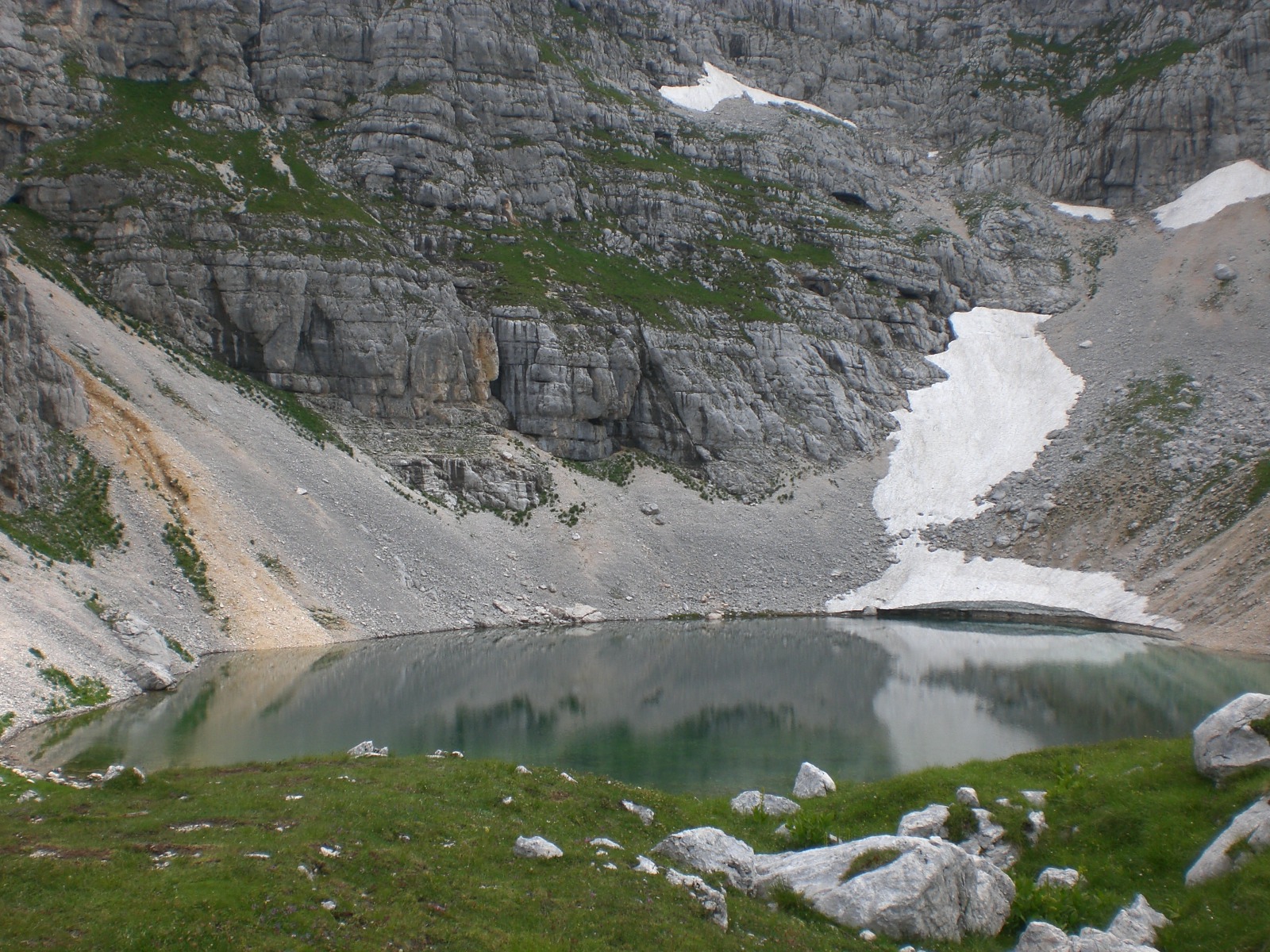
The Zadnica valley, reached from Trenta, is the start point for a number of walks up into the high mountains of the Julian Alps. It is from here that I walked up to Kriški podi and to the mountain hut Pogačnikov dom na Kriških podih and the 3 Kriški mountain lakes. The path is long, with a 1400m ascent taking over 3 hours, but it is surprisingly easy and the spectacular views means one can be easily distracted from its length. The route follows an old World War 1 mule track, which begins pleasantly in the shade of the forest before emerging into the typical craggy limestone world of the Julian Alps, and leading up to the Kriški podi plateau. The lower lake (Spodnje Kriško jezero) is the largest of the three, and worth making the short diversion to see. The middle lake (Srednje Kriško jezero) can be seen from the mountain hut, though it was still half covered in snow when I visited and this is not uncommon, snow can remain here pretty much all year round. The upper lake (Zgornje Kriško jezero), which I did not visit as there is no direct marked path to it from here, is a further 200m higher.

CIMG6508  CIMG6513

Next Sunday, the 4th of August, it’s the annual Medieval Day in Radovljica. I always look forward to this and make sure not to miss it as the old town centre comes to life with a whole host of activities, dances, street performances and a market – http://www.radolca.si/en/what-to-do/events-1/medieval-day-in-linhart-square/83/310/

1941_file

The Bohinj Highlands and the Tourist Cheese Route

It’s been a fabulous week thanks to the glorious weather. Whilst I’ve never been one for lying on a beach in the sun, I do love being out in the sun hiking and biking. I’ve been out a lot this week as I just want to make the best of every minute of the summer while it lasts. You won’t find me complaining about the heat, especially since living here where the winters can be very long.

A trip that I do at least once a year, is to the many mountain highlands up above Lake Bohinj. It’s quite a long hike but not overly strenuous. I was walking for around 8 hours with only one quick break to eat, but because there’s so much to see it never feels like hard going and is well worth the effort. My route, which started from Stara Fužina in the valley, took in Planina Blato, Planina Laz, Planina Dedno Polje, Planina pri Jezerju, Planina Viševnik and Planina Vogar.

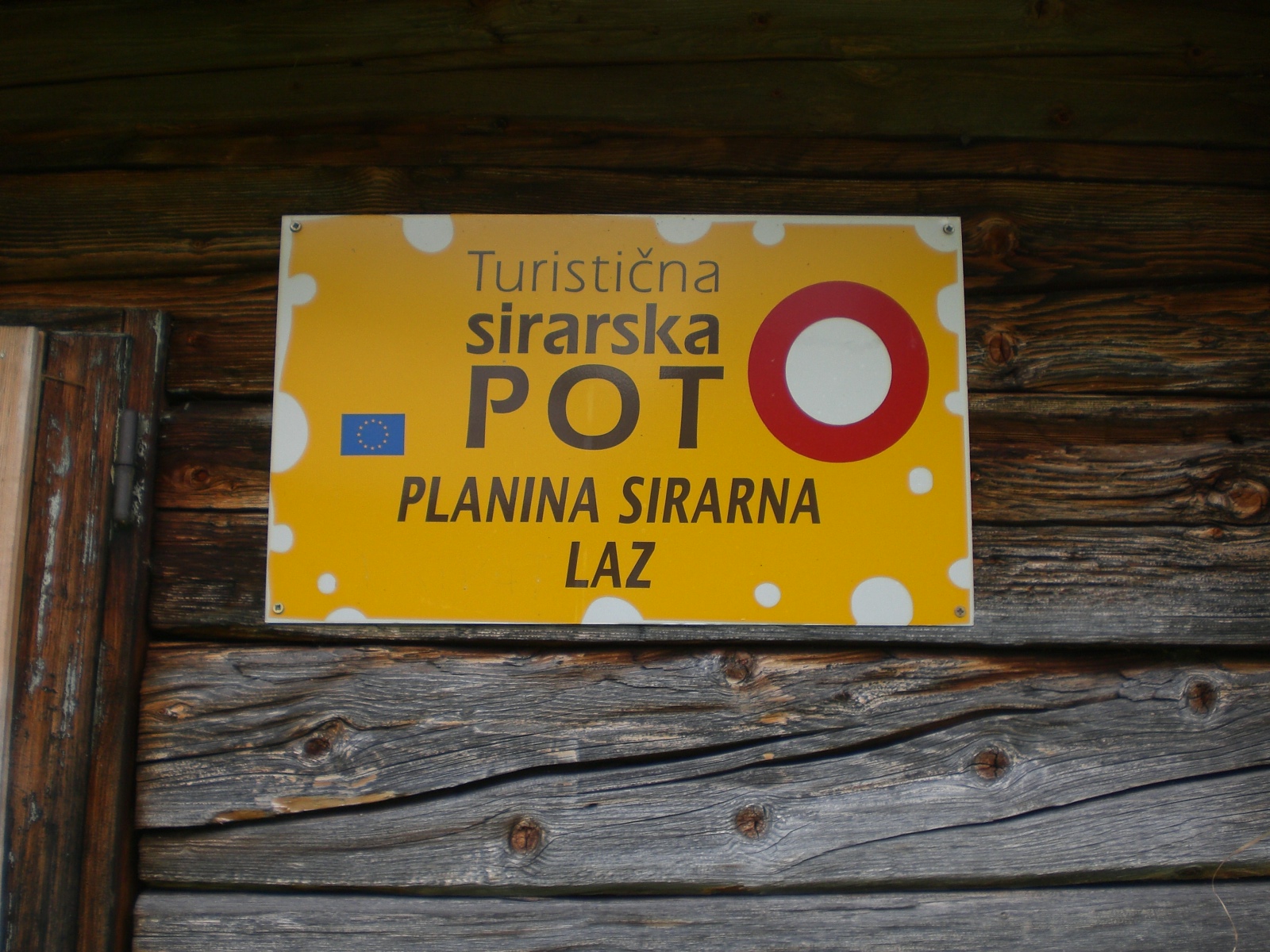
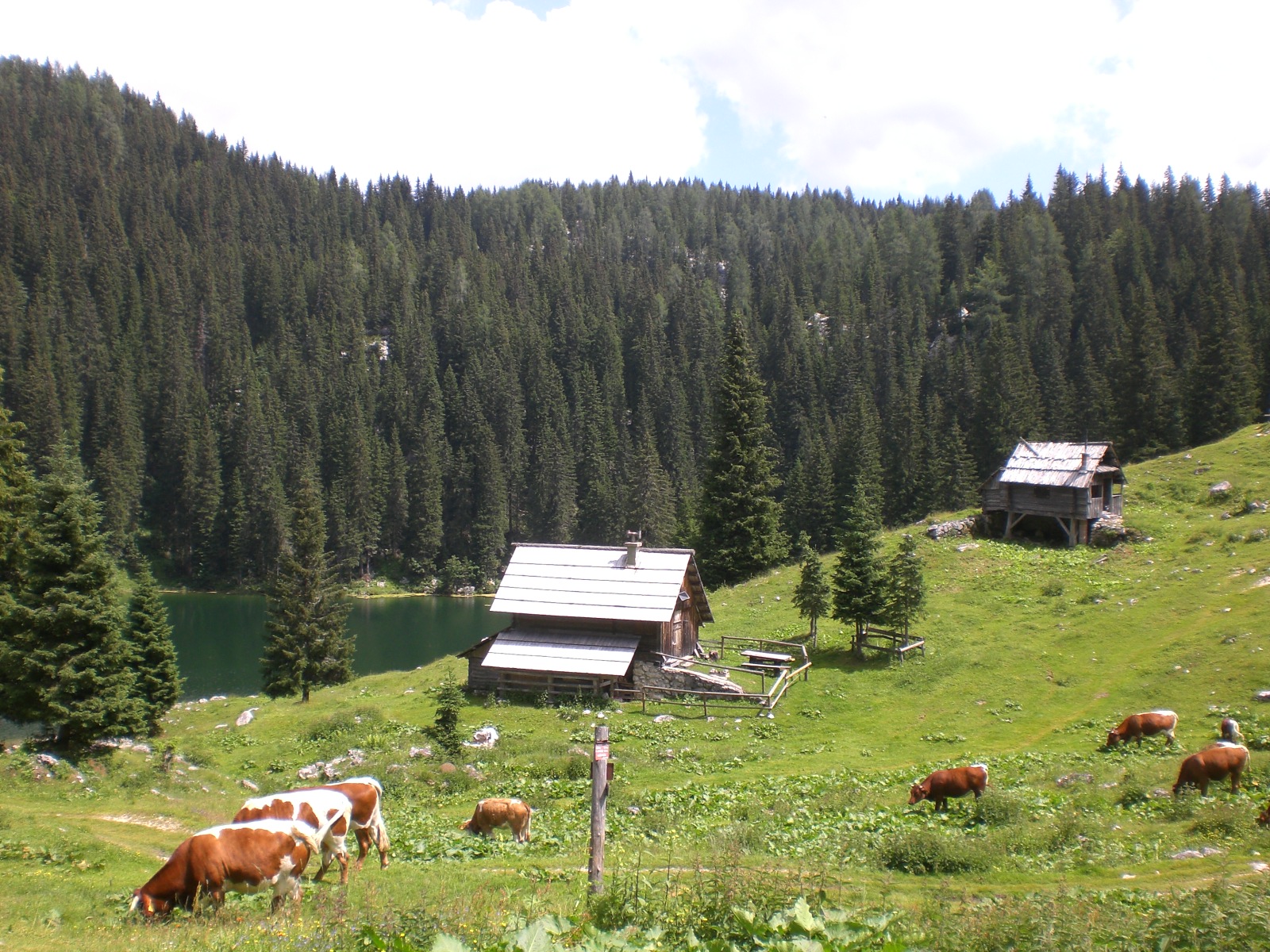
Planina Laz (seen below) is the oldest of the mountain highlands in Slovenia and, in the summer, is still very much and living and working highland where the herdsmen live and produce and sell cheese and sour milk. It is also part of the Tourist Cheese Route (Turistična sirarna pot). The route leads across the many highlands in the Bohinj area where cheese and other dairy products can be sampled and bought. The route, which is marked with yellow signs as seen below, also leads past numerous natural features of interest such as gorges, waterfalls, museums, churches, archeological sites and more. The path covers a very wide area so its not possible to walk it in its entirety (at least not in a day) so it is best to just choose part of it and visit one or two of the highlands and dairies.

CIMG6459 CIMG6461

It is also possible to drive up to Planina Blato from Stara Fužina via the toll road so even for those who don’t wish to walk so far, it is still possible to visit some of the highlands and enjoy the fantastic scenery. This picture (below) shows Planina pri Jezeru – these are certainly lucky cows!

CIMG6472

This week I also finally got to meet some of my blog readers face-to-face. It was so nice to know that reading my blog helped them to finally decide to come to Slovenia and to go walking in the Julian Alps and I was more than happy to show them around my home town of Radovlijca. I’m always willing to try and help with advice on planning hiking/biking trips to Slovenia, so don’t hesitate to get in touch!

Last weekend it was the annual Bled Days Festival in Bled. There were numerous events taking place across the weekend including concerts, an air show, a large market, a fireworks display and on Saturday evening candles on the lake. It’s a very popular weekend and Bled was packed but fortunately, since I live only 7kms away, I was able to walk there via the Sava river, so I didn’t have to worry about parking. The highlight of the weekend for me was the air show where acrobatic planes were swooping down low, almost skimming the surface of the lake, before performing dramatic aerial climbs and nose-dives – quite a sight against the backdrop of Bled Castle.

CIMG6484

In Radovljica this week there will be live music in the Old Town Centre on Thursday from 8pm with Nula Kelvina and on Friday at 9pm the open-air cinema on the terrace of the Mansion House will be showing the film Cowboy.