The Kokra Canyon / Summer Highlights in Radovljica

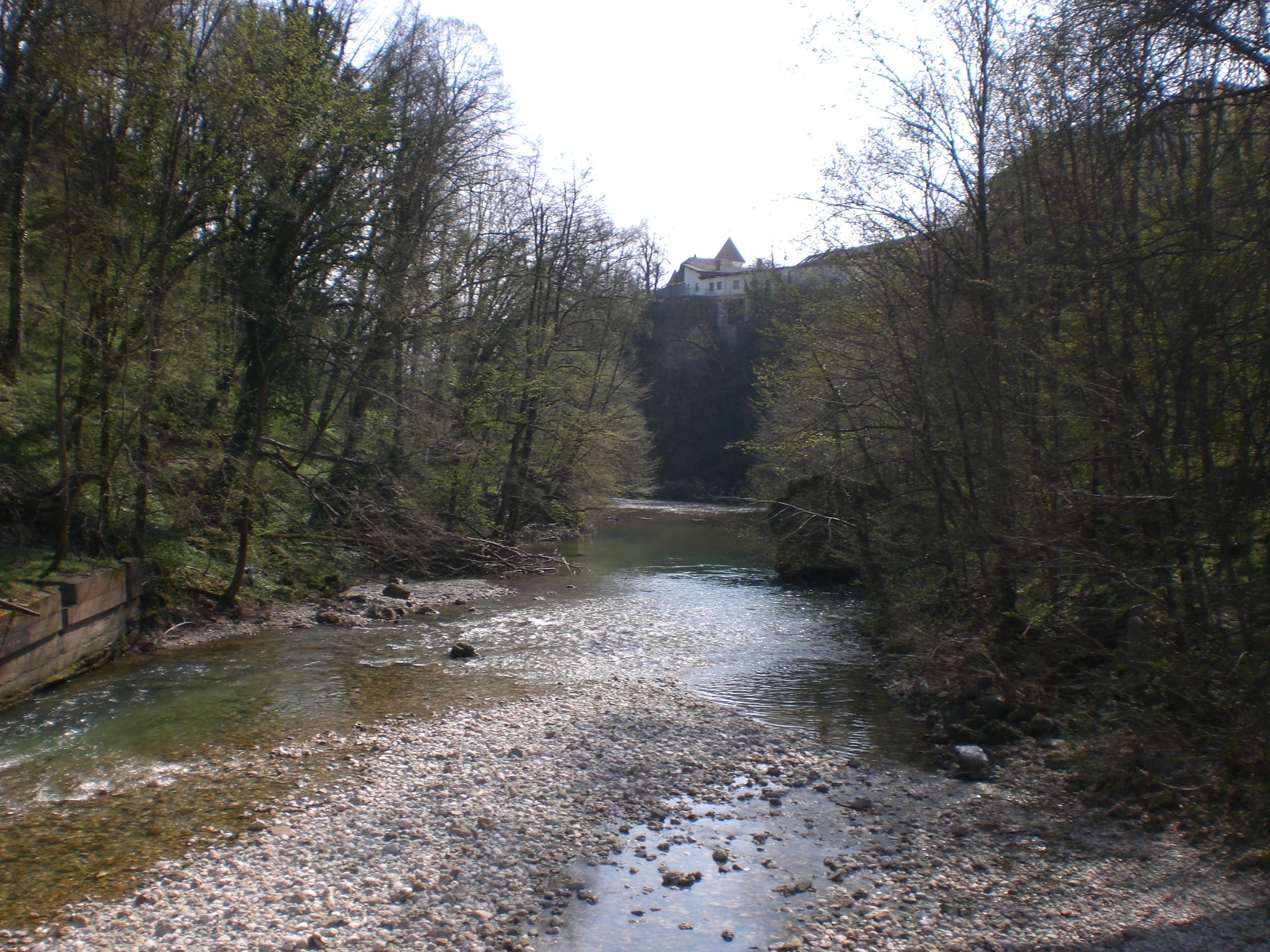
The old town of Kranj, the capital of the Gorenjska region, sits on a terrace above the 30-metre deep Kokra canyon, which was formed by the Kokra river carving its way into the conglomerate terrace dating back to the Ice Age.

CIMG8503

The recently constructed Educational Trail runs for about 2km beside the Kokra river and is best accessed down the long flight of stairs beneath the bridge over the river in the centre of the old town. It makes a great addition to the old town centre which sadly, like so many other town centres these days, is in decline due to the many out-of-town shopping centres that have sprung up here, there and everywhere. The trail means a walk through the old town can now be extended somewhat before returning to enjoy a cuppa and a cake at one of the many cafes which, together with the town’s museums and a meagre sprinkling of shops, are largely all that remain in the old town centre.

CIMG8505

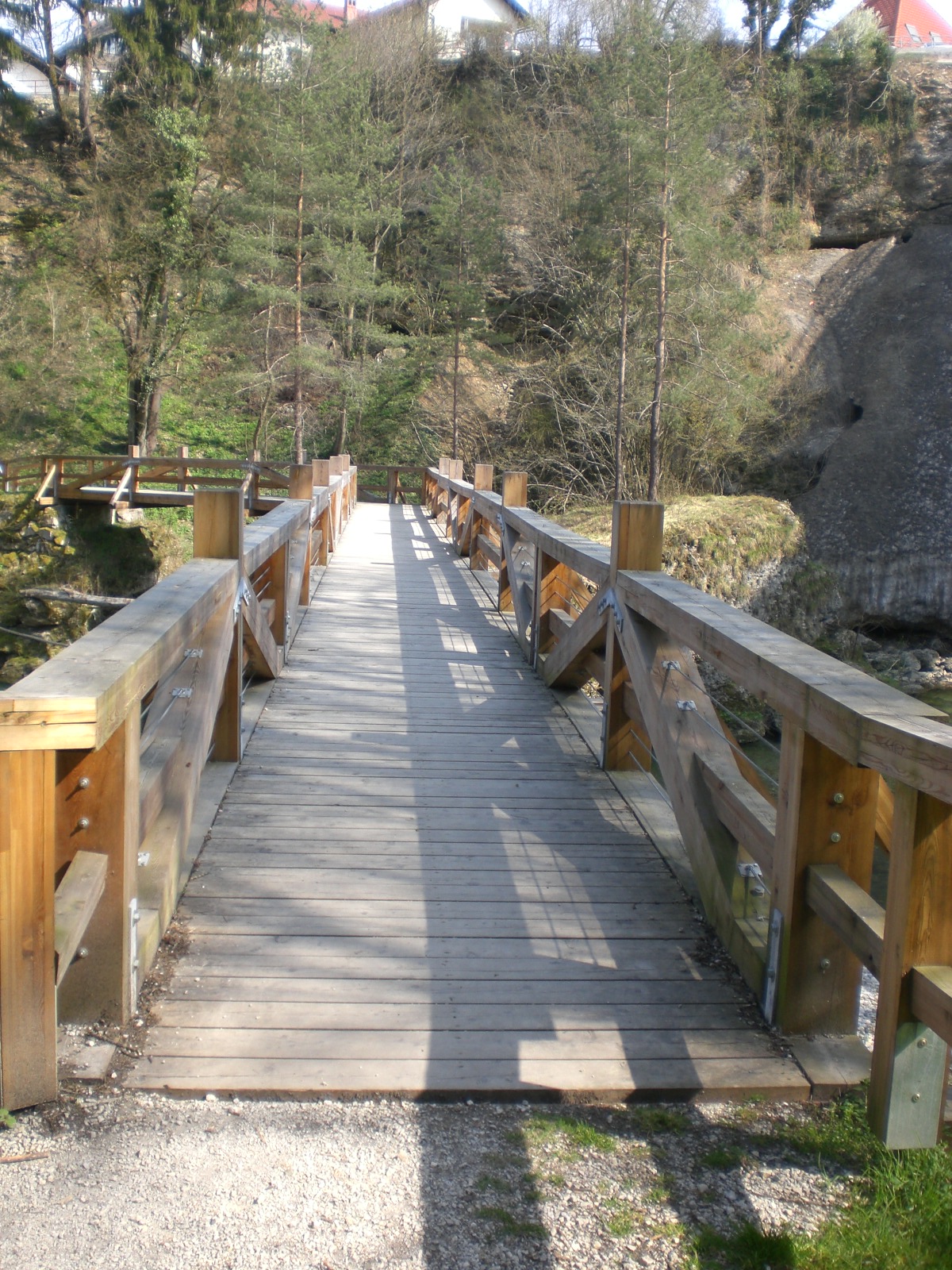
After descending down to the river you can walk along either bank of the river and make a circular route. However, unfortunately at present its not possible to walk the circular route as some weeks back a lorry travelling over the narrow bridge, unsuitable for lorries, at the far end of the canyon, managed to reduce it to a twisted wreck of metal and concrete. It is hoped they will repair the bridge as soon as possible but nevertheless its still a nice enough place for a short stroll whilst visiting Kranj.
CIMG8506          CIMG8507

Its still possible to make an almost, albeit very short, circular route by descending the stairs and staying on the same side of the river i.e. don’t cross the bridge, and continue until just short of the mangled bridge, then take the road uphill which leads back to the old town centre.

Its interesting to note that in Dol, on the right bank of the river, there was once a public bathing resort. The resort, which opened in 1900, was open from June to September and was divided into sections for men and women. It was in use until 1916 and then again for the short time after the First World War. Today, just the remains of the foundations of the changing rooms, and the stairs on the riverbank serve as reminders.

Kranj is well served by public transport, so reaching the town from Radovljica, which also has excellent transport links, is easy. Regular buses and (slightly less regular) trains run from Ljubljana – Jesenice, stopping at, amongst others, Kranj, Radovljica, and Lesce-Bled stations.

The Radovljica Summer Events Programme is now available and there’s plenty for everyone. Some of the highlights include:

* Fresh Thursdays – Live Music every Thursday evening in Linhart Square – the heart of the old town centre

* The 33 Radovljica Music Festival – 8th to 23rd August – Part of the European Early Music Network. More information here: http://www.radolca.si/en/what-to-do/events-1/radovljica-festival/83/260/

* Theatre Festival in Kropa – 19th June to 3rd July – More information here (in Slovene): http://www.radolca.si/kaj-poceti/dogodki/festival-gledalisca-kropa-2015/83/785/

* Flea Markets – Every first Sunday in the month (throughout the year) from 9am – 1pm

* Free Guided Tours of Radovljica – Every Tuesday – More information here: http://www.radolca.si/en/guided-tour-of-radovljica/

The entire programme can be found here: http://www.radolca.si/en/db/radolca/file/zgibanka%20prevodi_web.pdf

© AdeleinSlovenia 2015

Hell’s Cave

The last few days have been a perfect mixture of brilliant spring sunshine with cold, bright, crisp mornings, and warm afternoons. The week ahead looks like being more of the same. So, no complaints here – for a change!

On Saturday I went, almost literally, ‘to Hell and Back’, since I visited Hell’s Cave (Jama Pekel), near Šempeter in the Savinjska valley! Actually, I’d struggle to tell you exactly where it is since finding it was far from easy and in the end it was more by luck than judgement. The journey from home in Radovljica began relatively easily, following the motorway to Ljubljana, then onwards in the direction of Slovenia’s 2nd biggest city, Maribor, taking the exit for Šempeter. I suppose I only had myself to blame as I was armed with only a basic map but, in my defence, many of the larger tourist attractions throughout the country have familiar brown signs beside the major roads to direct visitors, this one, alas, did not and is woefully lacking in signage;  rather strange since it seems to be a relatively popular and visited one. Oh well, at least I got to see some of the hidden parts of the countryside which I wouldn’t have otherwise! If you plan a visit, as long as you turn right on leaving the motorway, you will, eventually, pick up the signs to the cave as it is only a couple of kilometres from the motorway – just don’t, whatever you do, turn left!!!

Anyway, once I arrived at the cave, all was forgotten and it was well worth the effort. When one thinks of caves in Slovenia, of course the world-famous Postojna caves and the UNESCO listed Skocjan caves are the ones that immediately spring to mind. Slovenia, though, actually has over 10,000 registered caves, and to think that those are the ones that are known about, who knows what else lurks in the mysterious underworld. Many of them are largely unexplored whilst others, those that are open to the public, are not as vast as the aforementioned ones, but nonetheless each offers an intriguing glimpse into the underground karst world. Hell’s Cave is no exception, and the highlight is most certainly the 4m waterfall which is actually inside the cave, the only of its kind in the country.

CIMG8378     DSC03544

The Ponikvica stream carved out the cave and runs through it throughout the part that is now open to the public. It is well-equipped with boardwalks, ladders, lights etc. though very narrow in places and quite a lot of ducking is required for anyone over a few feet tall (oops, metres tall – still can’t get to grips with European metric measurements!). The name of the cave originates from the rocks at the entrance to the cave which, with a bit of imagination, appear to form the shape of the devil and additionally, during the winter when the temperature inside is warmer than the outdoor temperature, it appears as if steam is coming from the cave’s entrance.

DSC03556     P1090030

Guided tours of the cave are available daily on the hour, from 10am-5pm from 1st April – 30th September; in March and October it is only open at weekends with the last tour at 4pm. During our group’s tour, we witnessed a pair of sleeping bats, yet to wake up from their winter hibernations, as well as a crab-like creature which is at home in the stream within the cave. Following the tour I took a walk on the forest nature trail which begins at the entrance to the cave and is easy to follow; just follow the green owls! The 2km circular trail takes less than 30 minutes and is nice way to begin, or end, a visit to the cave.

CIMG8380     CIMG8391

Nearby is a Roman Necropolis which I had also planned to visit but on this occasion was unable to since the monuments are still covered up for the winter period. About 2000 years ago a Roman road ran through the area around Šempeter and the necropolis, discovered quite by chance in 1952, is considered the most important of the remains from the Roman era, not just in Slovenia, but in Central Europe. So, it will, for the time being, remain on my lists of ‘places to go’ and about which I hope to write about some time soon – I’ll go equipped with a map next time though!

You can read more about the cave, the necropolis, and the other attractions in the area on the Šempeter Tourist Association website here – http://www.td-sempeter.si/en/

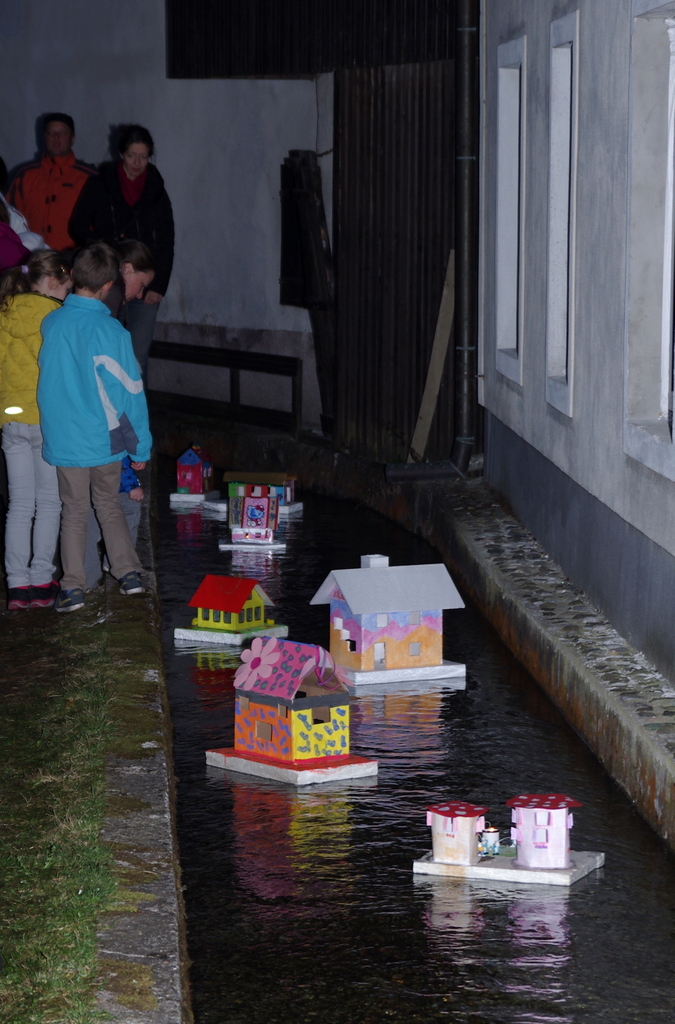
The tradition of making and floating models vessels, made by local children and illuminated by candles, in the streams in the villages of Kropa and Kamna Gorica will take place this week. This age-old iron-forging custom takes place annually on the eve of St. Gregory’s Day. The models, which are a mixture of unique art creations made from paper, cardboard and wood with candles affixed either on the exterior or interior, create a colourful effect against the dusk setting. This custom dates back to the era of manual iron forging, before the introduction of the Gregorian calendar in 1582, when the name day of St. Gregory was considered the first day of spring. With the weather we’ve been having in the past few days, this year it holds true. Unfortunately, due to work commitments, I likely won’t be able to attend this year, which is a shame as it is a spectacle worth seeing, so here are a couple of photos from last year.

01-01-IMGP9793      05-05-IMGP9806

© AdeleinSlovenia 2015

Slovenia’s Smaller Lakes

The British media have done some of my work for me this week thanks to the 2 glowing articles about Slovenia published in the press last week. I was delighted to see that Radovljica also made it into the list of places to see, as well as the usual and much written about destinations such as LjubljanaPostojna caves and Bled – so, for a change, its not just me extolling the virtues of Radovljica! You can read both the articles using the links below:

http://www.telegraph.co.uk/travel/destination/slovenia/152352/Slovenia-attractions.html

http://www.dailymail.co.uk/travel/article-2965536/From-magical-caves-charming-capital-centuries-old-castles-comfort-cuisine-Slovenia-Europe-s-hidden-gem.html

I must admit to having slightly mixed feelings about such media coverage. It’s great for Slovenia’s tourist industry and, one hopes, for the economy – which is in dire need of a boost. However, part of me also hopes that the country won’t become too popular and too over-run with tourists so it can remain as beautiful and pristine as it is. It is, of course, inevitable that visitor numbers are growing, and will continue to grow. Lucky then that I know of SO many more places worth visiting too, those hidden corners, away from the tourist hotspots, which part of me wants to keep secret but every so often I’m willing to share!!!

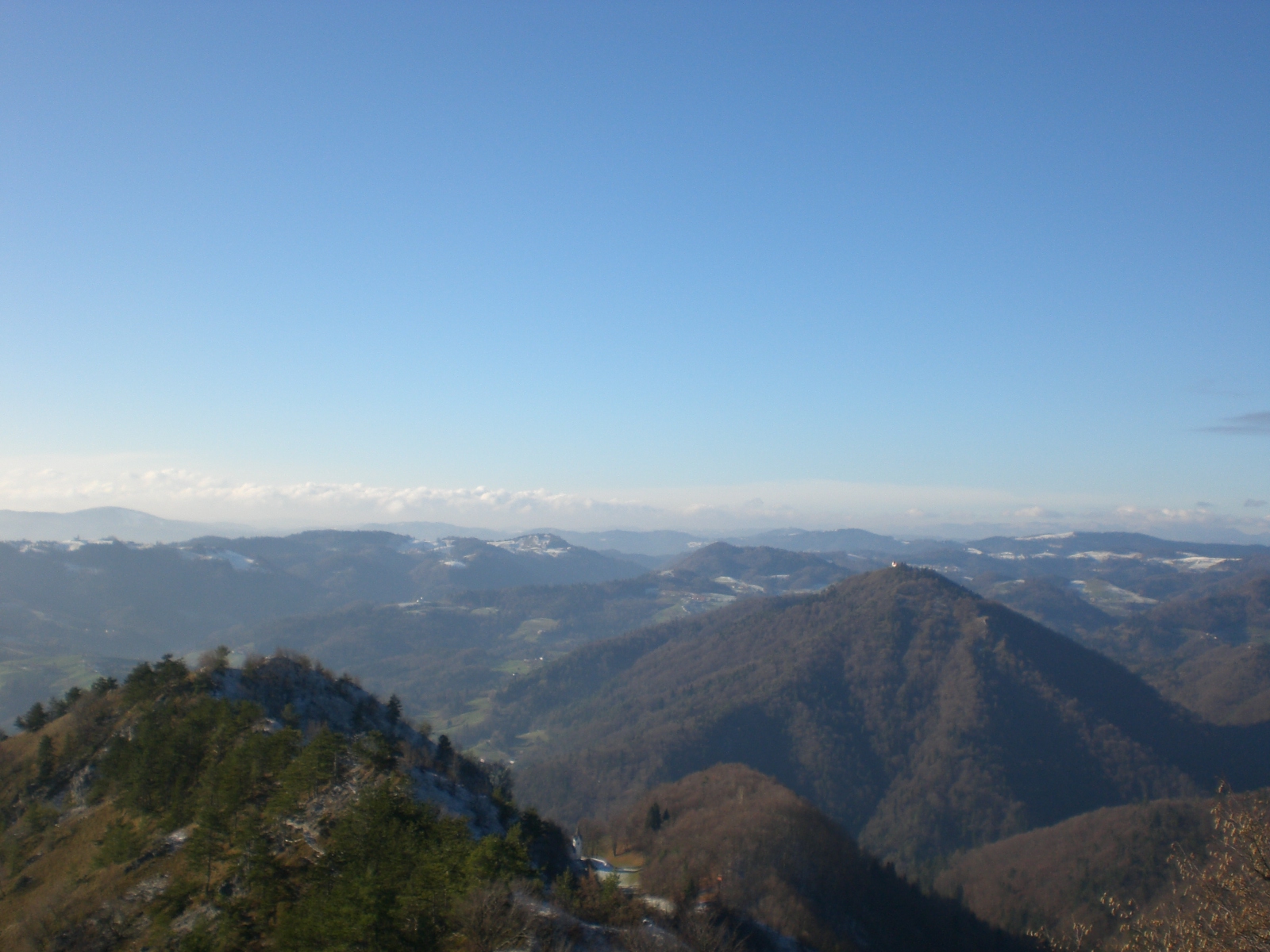
This weeks ‘sharing’ is about 2 of Slovenia’s lesser-known lakes that I visited last weekend. Offically the country has 321 bodies of water, though this includes some ‘lakes’ that are intermittent and some of them are barely more than large puddles. One of these, are least at first sight, is the karst Podpeč Lake (Podpeško jezero) which lies on the outskirts of Ljubljana, in the area of the Ljubljana marshes (Ljubljansko barje) in the village of Jezero near Podpeč – hence the name. Despite its modest size, it is actually classified among the deepest ‘lakes’ in Slovenia due to an underground outflow which leads to a funnel which has, thus far, been explored to a depth of 51 metres. It takes all of 5 minutes to see the lake, though one can take a walk on the road which leads around it, and there are also numerous paths which lead up through the forest including the one I took up to St. Ana’s Church (Sv. Ana) which stands on top of a hill at 484m. A church was originally erected here sometime in the 11th or 12th centuries, however, the church in its current form dates from 1883 when it was renovated in the Baroque style. It only takes around 30 mins to reach the church from the lake and it is well worth the effort for the panoramic views in all directions. The lake is also one of the start points for the longer hike up to Krim (1107m) which is the highest point in the Ljubljana basin and is easily recognisable due to the attenae which stand atop it and is a popular hiking destination for those living in, and near, Ljubljana. When I visited it was a spring-like day and it was wonderful to see snowdrops coming into bloom as where I live they have yet to creep out of their winter slumber. Unfortunately, it was also very hazy and my amateur photos really didn’t capture any of the views so I’ll jsut post these 2 as a taster!

CIMG8367       CIMG8375

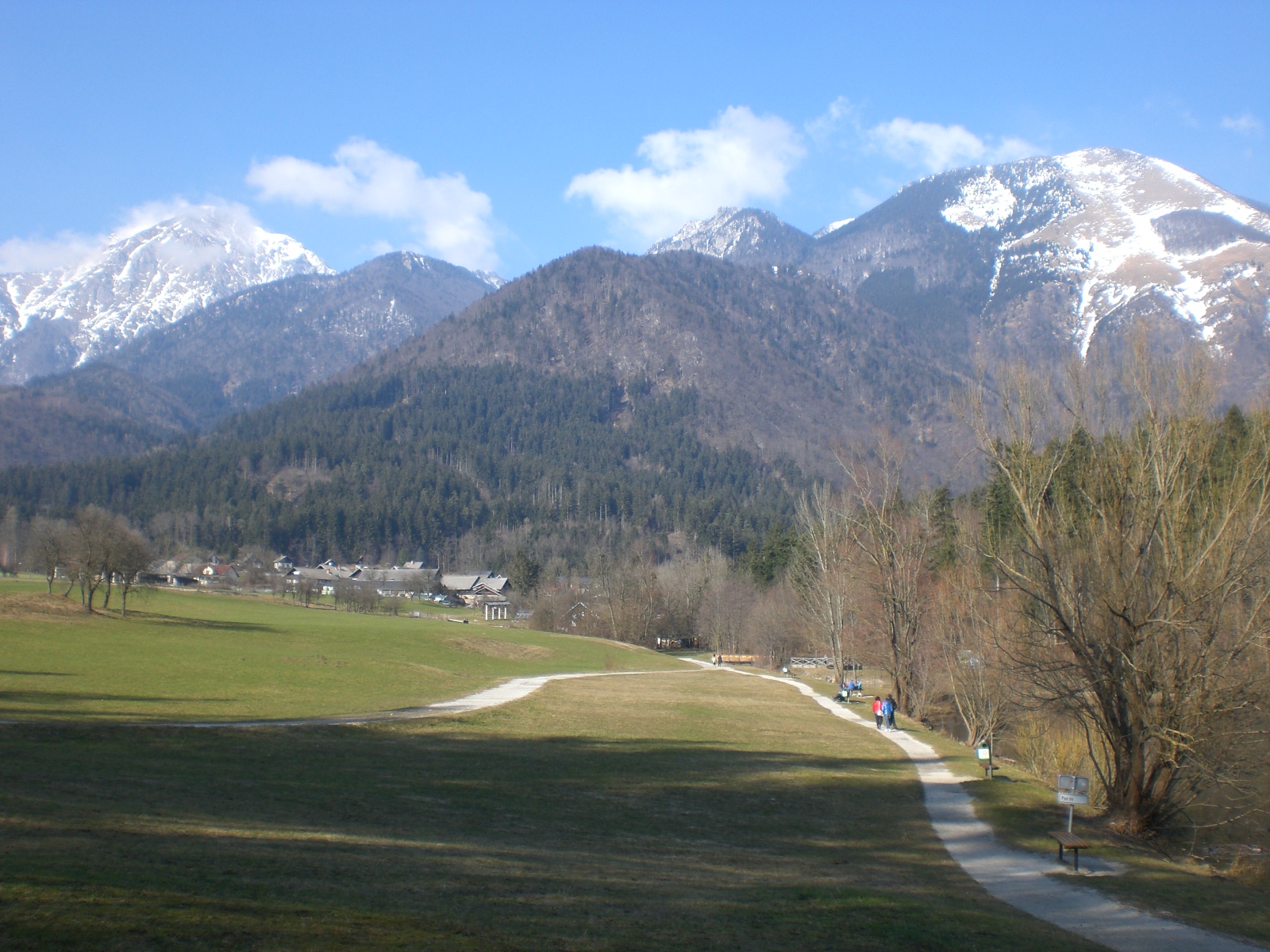
The other lake I visited this weekend is somewhat larger and closer to home, the Black Lakerno jezero) in Preddvor, in an idyllic setting at the foot of the Storžič and Zaplata mountains. The lake is a popular destination for a short stroll as well as being the starting point for many hikes in the surrounding hills and mountains. Next to the lake is the Bor Hotel and the 16th century Hill Castle (Grad Hrib); I also particularly like the tree-lined Castle Avenue (grajski drevored), as seen below, and can imagine many a romantic wedding photo being taken here. On the path in the woods just beyond the lake, there were hundreds of beautiful crocuses which are really a sight for sore eyes after months of seeing just snow and ice.

CIMG8354       CIMG8356

CIMG8363      CIMG8364

It may look, from the photos above, as if there is very little snow remaining, however, these mountains are south facing and up to around the 1000m level, much of the snow has melted. However, in shaded and north facing areas, there is still snow at around the 700m level so caution, and a small pair of crampons, should definitely be in your rucksacks at this time of year when hiking. Nevertheless, meteorological spring has officially sprung and, despite this week colder temperatures and possible snow to ground level being forecast, spring is definitely on it’s way – hooray!

© AdeleinSlovenia 2015

The Polhov Gradec Hills

Many of Slovenia’s ski resorts opened this past weekend, at least in part, with others due to open during the course of this week. The main and largest ski resorts are at Kranjska Gora, Krvavec, Maribor Pohorje, Vogel and Cerkno, but there are also many others too such as Golte, Stari vrh and Soriška planina, to name but a few.

Sadly Kanin, Slovenia’s highest ski resort, remains closed and looks likely to be so for the foreseeable future. Personally, I cannot understand how this can be allowed to happen without the government, or someone, stepping in to offer assistance before it is too late; to allow what was the ‘crème’ of Slovene skiing to be left to rot taking with it the business and livelihoods of no doubt countless people in the town of Bovec, and the surrounding areas, where there is little work other than tourism. Let’s hope it won’t come to that and the resort will be revived to its former glory.

Sunday was a glorious day; very crisp and frosty but with brilliant winter sunshine, so I made the most of it with a trip to the Polhov Gradec hills, also known as the Polhov Dolomites (Polhograjski dolomiti), due to their rocky appearance. The area consists of a hilly region that extends from the southern side of Ljubljana to the northern side of the Škofja Loka area. The highest of the hills is Tošč (1021m) follow by Pasja Ravan at 1019m. It is interesting to note that Pasja Ravan was previously the highest however approximately 10 metres of its height was lost during the setting up of a rocket base there by the then Yugoslav Army. My favourite peak in the range is Grmada. At just 898m it is far from high but one really has the impression of being in the high mountains as the views from the top are simply stunning and far reaching in all directions.

There are a number of paths, leading from various directions, to reach the peaks. Many locals start from the visit of Topol, also known as Katarina due to the name of it church or from the village of Polhov Gradec. From either of these villages the walks are well marked and it takes only around an hour and 1.5 hours respectively, to reach Grmada. However, from where I live in Radovljica, it is closer and easier to access the area via Medvode, rather than having to drive up and over the hills or around Ljubljana. I therefore started my walk from Slavkov dom at Golo Brdo, making it a longer walk but then I would always rather walk further than drive! The path leads gradually uphill, never steeply, taking about an hour to reach Katarina, then a further good hour’s walk to Grmada.

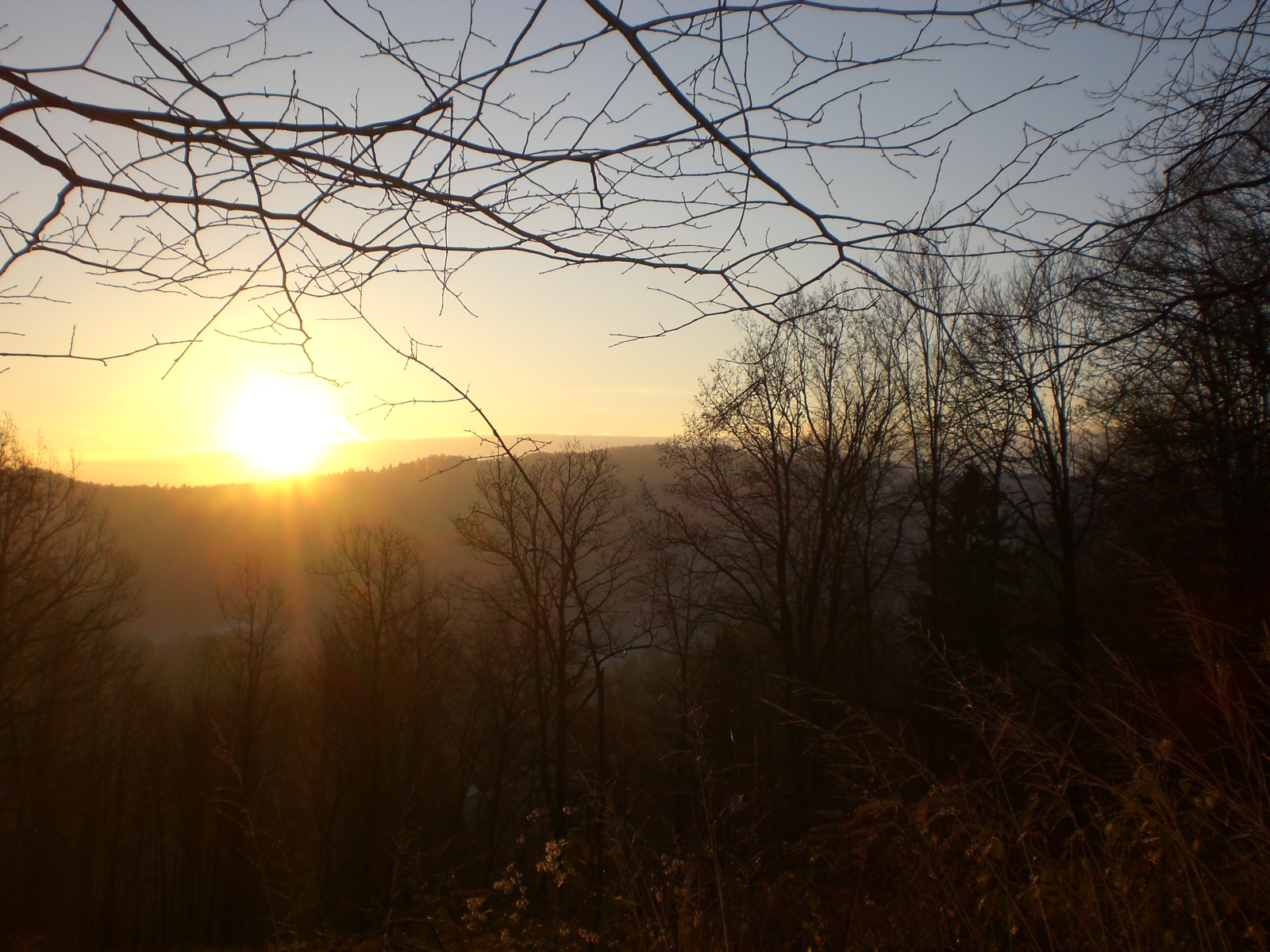
Below are some photos of my walk beginning with the beautiful sunrise I was treated to as a reward for my early start and the view looking back towards Katarina.

CIMG6892  CIMG6902

One of the signs I encountered en-route  – you’ve really got to know where you’re going here!

CIMG6904

Here you can see the final part of the ascent to Grmada, complete with a light dusting of snow, from the direction of Gonte, which can easily be avoided by taking the direct path up to Grmada; me at the top with Triglav in the far background and wonderful views all around as far as the eye can see.

CIMG6908 CIMG6913 CIMG6911

As I wrote in a previous blog a few weeks ago (October 2013, Christmas comes early to Radovljica), Christmas came early this year to Radovljica, but only for one day, when a commercial, for a well-known Italian product was being filmed in the old town centre. Thn town was transformed into a magical, fairytale Christmas scene. Now the advert is available on YouTube, so you too can get a glimpse, an all too short glimpse, of the beautiful town where I live – http://www.youtube.com/watch?v=t78uVV50pdY