A rude awakening!

I couldn’t believe my eyes this morning when I woke up and looked out the window to see a thick blanket of fresh snow, which is still falling heavily now as I write. It seems even the forecasters hadn’t seen it coming as rain was forecast rather than snow. Those that know me well, and any regular readers, will know that I am not a big fan of the white stuff and especially now when there has already been so much of it this winter. It’s a particular shame as Saturday was a beautiful sunny day and I was revelling in seeing the many spring flowers which had been rapidly appearing from the undergrowth during the past week – what a welcome sight- but now once again buried under heavy snow. I for one hope the rain will appear soon to wash it all away so spring can really get on with springing! For the skiers out there though, its going to be a very long ski season so they are certainly happy.

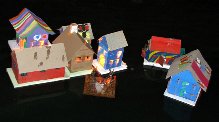
Despite the less than favourable weather, there has been quite a lot happening in the Radovljica area this past week. On Monday at dusk, the tradition of floating handmade models, made by local children and illuminated by candles, in the streams in the villages of Kropa and Kamna Gorica took place. This age-old iron-forging custom, takes place annually on the eve of St. Gregory’s Day. The models, which are a mixture of unique art creations made from paper, cardboard and wood with candles affixed either on the exterior or interior, create a colourful effect against the dusk setting. This custom dates back to the era of manual iron forging, before the introduction of the Gregorian calendar in 1582, when the name day of St. Gregory was considered the first day of spring. What a shame that once again this year the spring gods didn’t appear to be listening or taking any notice but it is nonetheless a magical scene to watch the faces of the children as their colourful creations float off along the stream.

St Gregorys

St Gregorys 2

On Wednesday the new bookshop in Radovljica played host to the great Slovenian alpinist, author and expedition leader, Viki Grošelj, who came to give a short talk (and of course book promotion) and I was lucky enough to be able to go along and listen to him recounting some of his experiences and recalling anecdotes. Viki is one of the few alpinists in the world who has climbed the ten summits of over 8,000 metres in the Himalayas, including Everest and K2, and has written numerous books about his experiences. We in the audience only got to hear a fraction of his tales but undoubtedly he must have a lifetime of stories to tell, of jubilant triumphs, extreme conditions, harrowing successful and less successful expeditions – some of them tinged with sadness – as inevitably friends and colleagues have fallen victim to the might of the mountains and the elements along the way.

On Saturday, it was a crisp but beautifully sunny day and I decided to take a little trip out to the town of Škofja Loka. Škofja Loka boasts one of the three best preserved medieval town centres in Slovenia, the other two being Radovljica, where I live, and Ptuj, where I’m ashamed to say I still haven’t been, though it’s definitely firmly on the list of places to go! Škofja Loka was actually among one of the places I considered living when I moved to Slovenia. Like Radovljica, it has a lot of history and many places, buildings and natural features of note, is surrounded by pristine nature, offers a mulititude of walking and cycling paths and is also convenient for getting to Ljubljana. However, in the end I plumped for Radovljica, a decision I don’t regret.

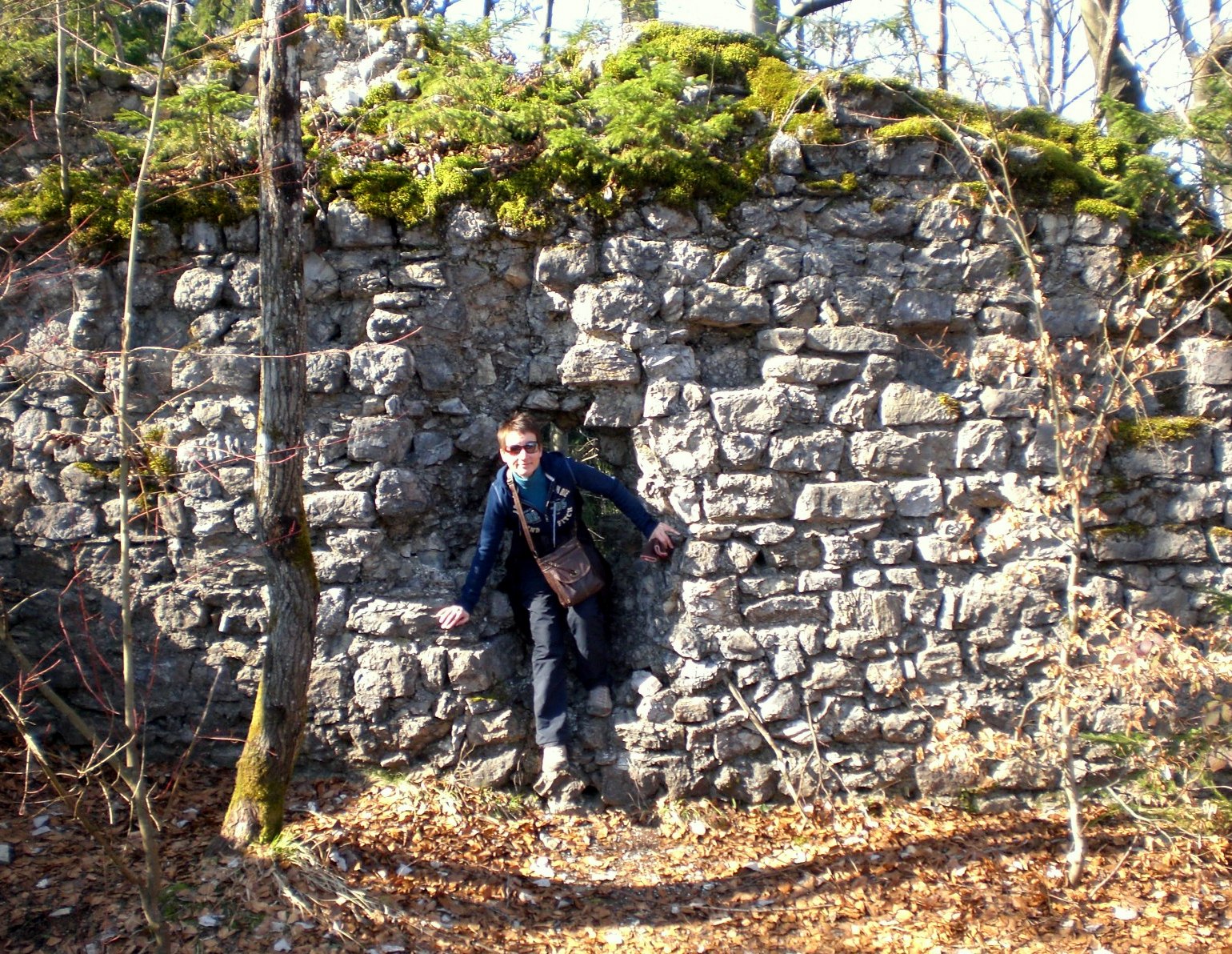
Škofja Loka has several castles, two of which I visited. The newer of the two, the impressive and imposing Loka Castle (Loški grad), was originally built in the 13th century but was completely renovated following an earthquake in 1511. The castle stands on a small hill just above the town centre and also houses the Loka Museum. The remains of the Old Castle (Stari grad), shown in the picture below, stand a little further and higher away and can be reached on foot, approximately 30 minutes walk away from Loka Castle, by following the signs for the Loška Nature Trail.

Stari grad 16 marec 2013 003

Incidentally, Radovljica also briefly got its own castle this winter, albeit a snow castle!Snezni grad

© Adele in Slovenia

An icy dip

Brrr… it makes me shiver just thinking and writing about it but some hardy folk braved the ice cold waters of Lake Bled last week for the Bled Winter Swimming Cup 2013, which since starting in 2010, has now become an annual event – ice permitting.

The water temperature on the day of the swim was a balmy 3 degrees and the air temperature 0 degrees. The event attracted 67 competitors from far and wide: Australia, Croatia, Germany, Ireland, Portugal, Russia, UK, USA and of course Slovenia.

All the men’s events were won by Slovenes whilst the women’s events were won by a Slovene, a Germany and an Australian. The shortest event was 25 metres and the longest 50 metres. However, one brave chap, from England no less, where we’re not exactly famed for our tolerance to the extreme cold, then went on to swim the ice mile in 37.23 minutes, hats off all round to him I say!

This year, although there have been record levels of snowfall, the air temperature hasn’t actually been as low as last year and therefore, fortunately for the competitors, the lake hasn’t frozen over. This time last year it was completely frozen over with a very thick layer of ice and for the first time since moving here I was able to walk across the ice to the island and the church in the middle of the lake. What a strange and slightly unsettling experience (as you might gather from my facial expression in the photo below – that and the fact it was freeeeezing!). However, I certainly wasn’t alone, there were plenty of others walking and skating on the ice too so I decided to put my apprehensions aside and join them. And it was worth it for my first chance to reach and explore the tiny island and so I can finally say I’ve been there.

Blejsko jezero Januar 2012 002

Fortunately, living in Radovljica, which is just 7km from Bled, I am able to walk and run frequently around Lake Bled – I couldn’t possibly count how many times I’ve done so in the past 6 years and it still hasn’t lost its appeal. Bled has been a popular tourist destination since the 19th century and is probably most known for its island in the middle of the lake, home to the Church of St. Mary which was originally built in the 8th century and renovated in the 15th and 18th centuries. The stairway which leads from the lake up to the island has 99 steps and dates from 1655. The island can only be reached by boat and visitors can either rent a boat and row themselves or use one of the traditional Bled ‘pletna’ boats whose oarsmen will do the hard work for you.

Alternatively, a walk, or even a run, around the lake as I do is a very popular activity year-round. It’s approximately 6km around but the time passes easily whilst admiring the beauty of the island, Bled Castle and the backdrop of the mountains of the Karavanke Alps.

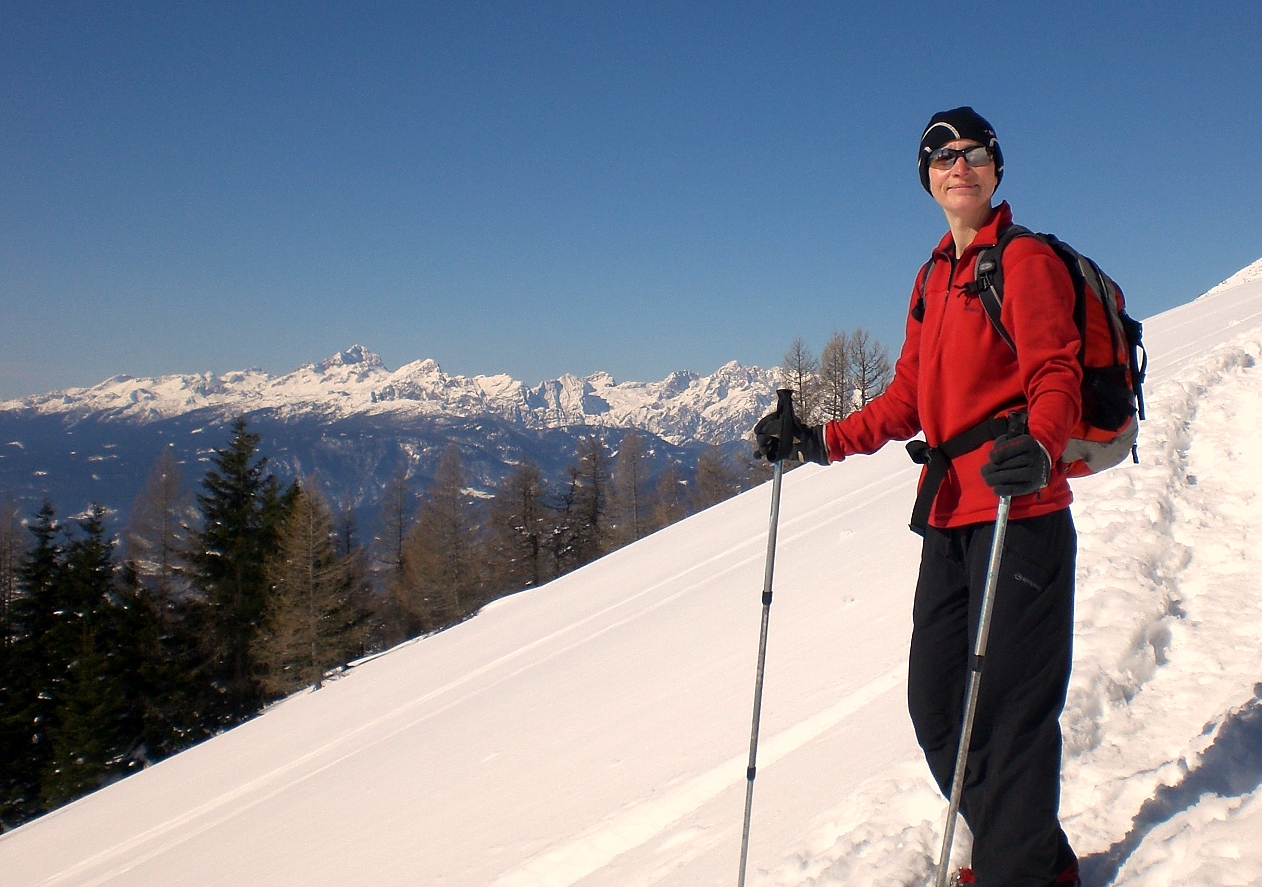
Since I love being up in the mountains rather than just looking at them, and since Friday brought some much needed and long awaited warm sunshine, I went for a walk with a friend to the Roblek mountain hut (Roblekov dom) which at 1657m is the highest of the huts on Begunjščica, a part of the Karavanke Alps. It was so sunny and warm up there, we could have stayed all day, alas we had to get back so we’d didn’t have much time to linger but just long enough to feel some of the sun’s rays and take a few photos.

Roblek 1 marec 2013 002

Roblekov dom is named after Hugon Roblek, who was born in Radovljica. He was a successful pharmacist and one of the fighters who defended the northern border in the Austrian Koroška region. In 1920, whilst staying in the National Home in Trieste, Italian fascists set fire to the home and Roblek fell to a sad death when trying to jump out of a window to save his life. In his will, Roblek left all his assets to the Radovljica branch of the Slovene Mountain Association who built Roblekov dom using his legacy.

Roblek 1 marec 2013 005

© Adele in Slovenia

Cake and Confessions!

First, the confession. I must have the world’s worst sweet tooth! Chocolate, cakes, biscuits, you name it – if it’s sweet it’s got my name written all over it. So, it was with delight that I read last week that Radovljica has now got its own cake and therefore I hastily arranged a tasting.

The idea for Linhart’s cake (Linhartov cukr), as it is known since Radovljica is the birthplace of the first Slovene dramatist and playwright Anton Tomaž Linhart, came about during conversations held in Lectar Inn between its proprietor, Jože, and locals who recalled how in days gone by in Linhart’s era, local school children used to come to Lectar for cake.

And so the idea to try to recreate and revive this tradition was born and Jože and his team at the Lectar Inn set about trialling and testing recipes, based upon traditional recipes, until they were satisfied with the result.

The cake was launched at a special event on St. Valentines Evening and from now on will be available daily, to eat in or take-away, at Lectar Inn.

The cake, which has become a talking point about town, uses only natural ingredients, comprises a light sponge base topped with a moist apple layer, using organic locally grown apples, and finished with a light cream icing. A silhouette of Linhart is then added to the top for decoration and to mark it out as Linhart’s cake. You can see me indulging, or about to indulge, below, with a little drop of (medicinal!) blueberry schnapps!

Radovljiska torta 22 februar 2013 004

The family run Lectar Inn, which is in the centre of the historic old town of Radovljica, has been in operation for over 180 years and is a popular attraction for locals and visitors from all over Slovenia, as well as tourists from far and wide. The waiters and waitresses are dressed in traditional Slovene dress and food is prepared and cooked using traditional methods and recipes. In addition to the restaurant, Lectar also houses a working gingerbread museum and a penzion with 9 rooms. More information about Lectar can be found here – http://www.lectar.com/_en/index.html

It was yet another snowy night when I visited Lectar, so it felt great to be somewhere warm and hospitable, enjoying good food and company and momentarily forgetting about the blizzard outside. It has been another week dominated by snowfall, which I for one, really hope will end soon as it’s about time spring sprung! I’ve managed a couple of walks up to Talež (see my previous blog entitled ‘Sporting Slovenia’) which have involved wading through knee-deep snow – pretty to look at but exhausting – still, helps to burn off all that cake!

© Adele in Slovenia

Six years and counting!

Wow, I can’t believe it. Today is the 6th anniversary of my move to Slovenia. The time really has flown by. I wonder how many hundreds, or perhaps thousands, of kilometres I’ve walked, cycled and run around Slovenia during that time! Slovenia is a fantastic place to visit on holiday, particularly for those, like myself, who love being outdoors. However, it certainly isn’t an easy place to live, or rather to try and make a living and it definitely hasn’t all been plain sailing. There have been a lot of highs and low and I’ve been trying to find a word, or words, to sum up the past 6 years but it’s proving harder than anticipated and therefore I think the following pairs of words are more apt:

• Happiness (the good times) and sadness (the bad times)
• Hope (the promise of new work) and despair (it never materialises)
• Elation (actually getting the work) and despondency (feeling like giving up the fight)
• Excitement (conquering a mountain or a tough bike climb) and frustration (finding it difficult to conquer my fears of going downhill, but what goes up must come down!)
• Freedom (being outdoors enjoying the beauty and sounds of nature) and frustration (bureaucracy, bureaucracy, bureaucracy)
• Joy (getting invited somewhere, a hope of meeting new people) and dejection (see despair).

Friday was a public holiday – Prešeren’s Day, which is celebrated in the memory of the death of the great Slovene poet, France Prešeren. I went to Kranj, the capital of the Gorenjska region and just a 20 minute drive from Radovljica, where every year on the 8th February the Prešeren Fair takes place. All around the old town there are links to him including: Prešeren Grove, the cemetery where he was laid to rest, Prešeren Theatre, Prešeren Monument, Prešeren Street, with its Gothic and Baroque townhouses and Prešeren House, now a museum, and where the poet spent the latter years of his life and died. The fair combines a street market with re-enactments of traditions from Prešeren’s times; clothing, music, dance etc. and its always really busy and buzzy. I have been for the last three years and it’s always a pleasant and different way to spend a couple of hours.

On Saturday it was carnival time in Radovljica! Well not just in Radovljica actually. The tradition of ‘Pust’ is a celebration of the harsh winter giving way to spring and a new cycle of farming and nature, though personally mid-February seems a bit optimistic to celebrate this when the snow covered land stills feels incredibly wintery to me! I can but hope that someone, somewhere up there is taking note and it might actually stop snowing soon!

A number of events take place across Slovenia for the Pust Festival. The largest Pust Carnival takes place annually in Ptuj from 3rd – 12th February where up to 150,000 people attend the 100 or so events taking place during the carnival period. The second largest carnival takes place in Cerkno. Pust is synonymous for its ornate costumes and masks (pictured below) with each region having its own variations, customs and habits. If you happen to be in Slovenia during this period, perhaps on a skiing holiday, you should take some time out and go and visit one of these carnivals, wherever you are, there is bound to be one happening near you.

za_prireditev_na_Ptuju_20434

Here in Radovljica, the Pust procession took place on Saturday. Children from the local area all get dressed up in costumes and parade through the town and the streets are lined with people cheering them on.

On Pust Tuesday, children get dressed up in costumes and masks in what resembles a curious mix of Halloween, complete with trick-or-treating, and Pancake Day, albeit with doughnuts being eaten rather than pancakes! Not wishing to be a party-pooper, and of course in keeping with tradition, I did my bit by munching through several doughnuts too!

I remember shortly after having moved here, seeing children dressed up and going from house to house however at that time I didn’t know what it was all about – I assumed they must celebrate Halloween in Slovenia in February!

© Adele in Slovenia