Shop Locally at Radovljica’s Farmers and Craft Markets

Radovljica now boasts two monthly local markets, where you can buy direct from farmers, producers and local craftspeople. As anyone who has ever shopped at a farmers’ market will know, it’s a lovely, relaxed way to shop; safe in the knowledge there are no food miles involved, no added nasty additives etc., and, at the same time, you are helping to support the local community. So, a win-win all round!

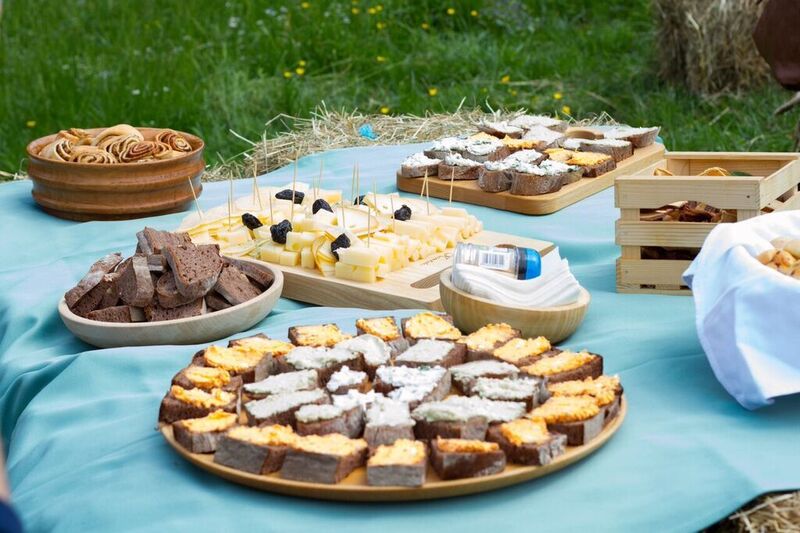
The monthly Vila Podvin local market takes place on the first Saturday morning of each month in Mošnje near Radovljica. It is something of a mixture of a farmers and craft market, where you can buy locally produced food and other handmade products.

vila podvin trznica2

The market is always popular and, of course, the fact that it is held in the beautiful gardens of Vila Podvin, where one of Slovenia’s top chefs, Uroš Štefelin, conjures up delicious and creative dishes, is also a factor, as is the added bonus of being able to stay after the market and enjoy a specially prepared lunch, made using products available for sale on the day. And if you’d like to enjoy a tipple too, there are also 5 well-appointed double rooms available, located in the previous stable area of the building, with views of the (sadly) long-abandoned Podvin Castle.

vila podvin vrt

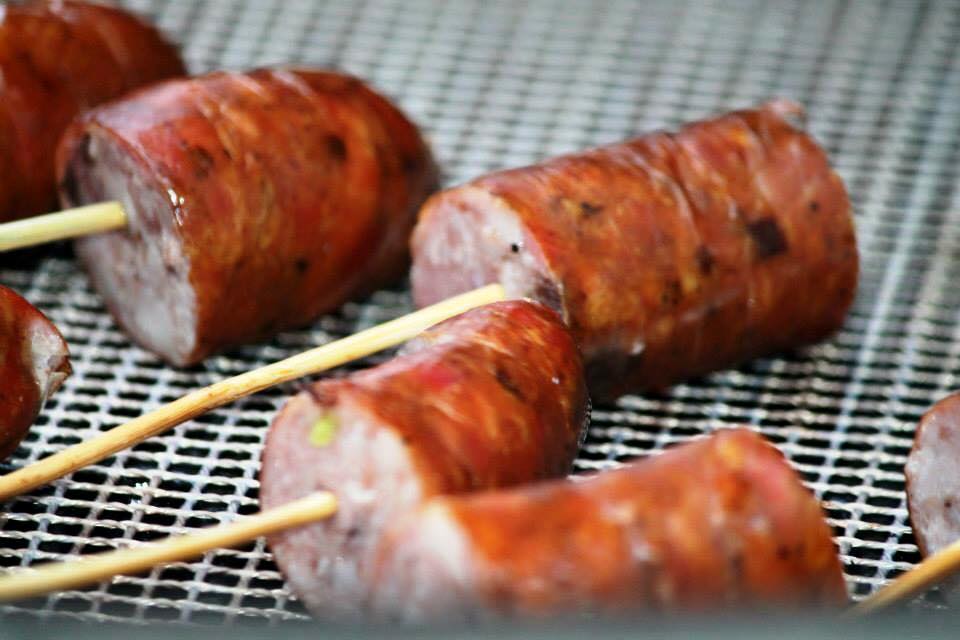
Uroš’ ethos is on using forgotten local ingredients, such as tepka pears – a variety of pear that only grows in this area of Slovenia – to create new dishes in his own distinctive way. At the local market there is also a chance to try these unique sausages made with tepka pears.

vila podvin klobasa s tepko

What is on offer at the market varies from month to month, but as a general rule you will food items such as find fruit and vegetables, cheese, jams, flour, cordials, eggs, dried meats etc.

Vila podvin trznica

As well as non-food items such as jewellery, trinkets and other homeware goods.

vila podvin trznica3

Vila Podvin is one of the participating Taste Radol’ca restaurants, the focus of which is on using local ingredients, and about which you can find out more here – http://www.radolca.si/en/taste-radolca/

Find more information about Vila Podvin here – http://www.vilapodvin.si/EN/

The other market, and a welcome new addition, is the small farmers’ market held on the 2nd Saturday of each month, from 9am to 1pm, at the building known as Sarčeva hisa, next to the library in Radovljica. The next such market will take place this Saturday 10th September.

© Adele in Slovenia

Hiking the Alpe Adria Trail – Stage 23: Kranjska Gora to Trenta, Slovenia

The Alpe Adria Trail, which begins on Kaiser Franz Josefs Hohe in Austria and ends on the coast at Muggia in Italy, has 43 stages and a total length of 750kms. The trail is a collaboration between three countries – Austria, Slovenia, Italy and offers lovers of the great outdoors myriad possibilities for enjoying the stunning and ever-changing scenery along the way from the highest glaciers to sea-level.

It’s easy to pick and choose where to start and how far to walk, however, since the route is linear, be sure to have a plan how to get back if you need to do so! In terms of the trail in Slovenia, stage 22 runs from Austria into Slovenia, stages 23, 24 and 25 are entirely within Slovenia, and stage 27 begins in Slovenia ending in Italy.

Stage 23 of the trail officially starts in the centre of Kranjska Gora (810m), though I started my early morning hike from the stunning Lake Jasna, which sits at the foot of the Vršič Pass. It was very tempting to linger a while, however, I had a long hike ahead so headed onwards, and upwards.

CIMG9126

The mythical golden-horned mountain goat ‘zlatorog‘ is a landmark and obligatory photo spot!

CIMG9128

From the far-end of the lake the route then leads along the Krnica valley, beside the Pišnica river and makes a fairly level easy start to the day. Note: If you’re looking to escape the summer heat, this valley is the place to be. Whatever the time of year in the early morning it’s freeeeeezing!!! In winter, Krnica is a particularly popular place for sledging.
CIMG1917

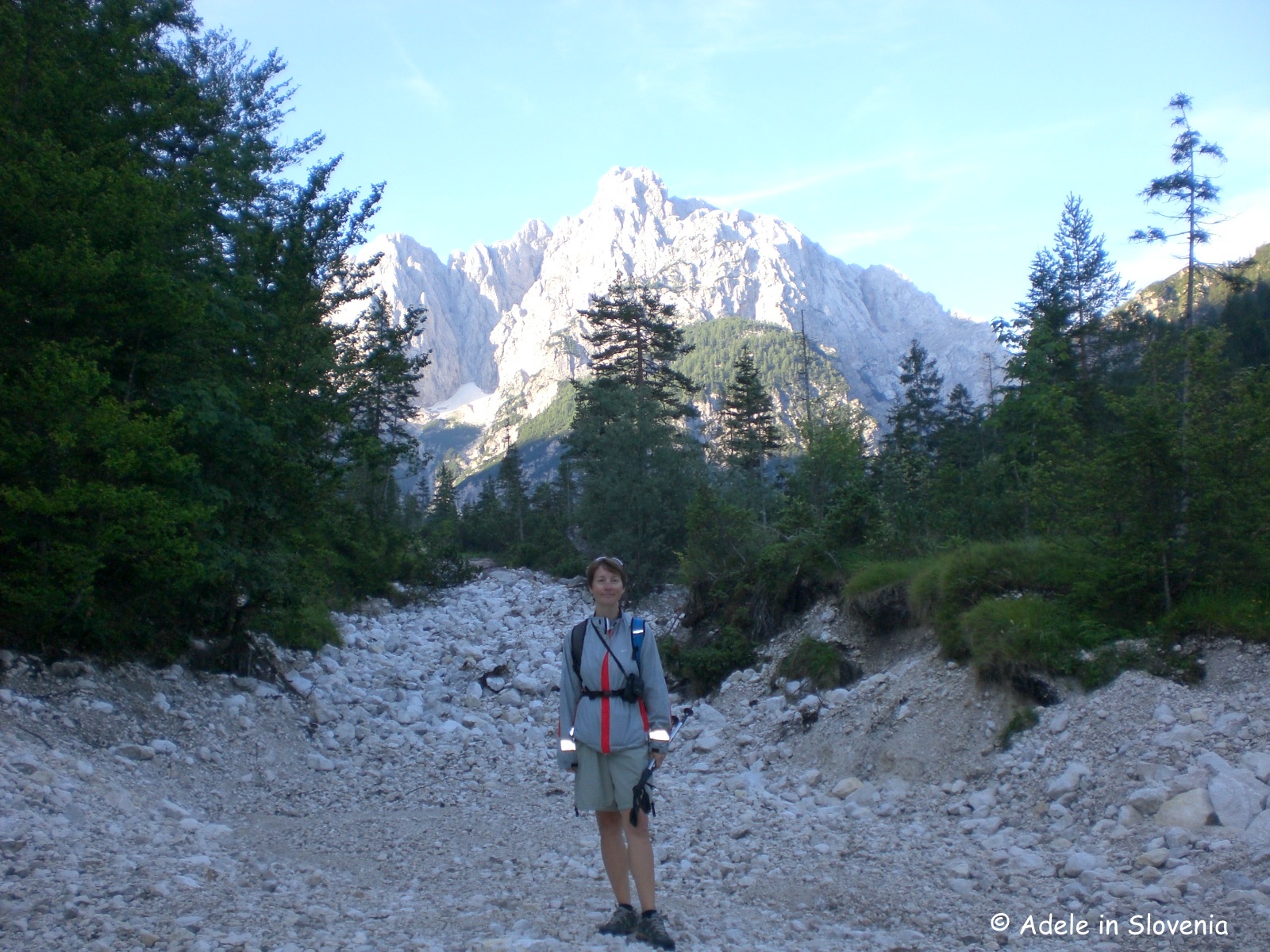
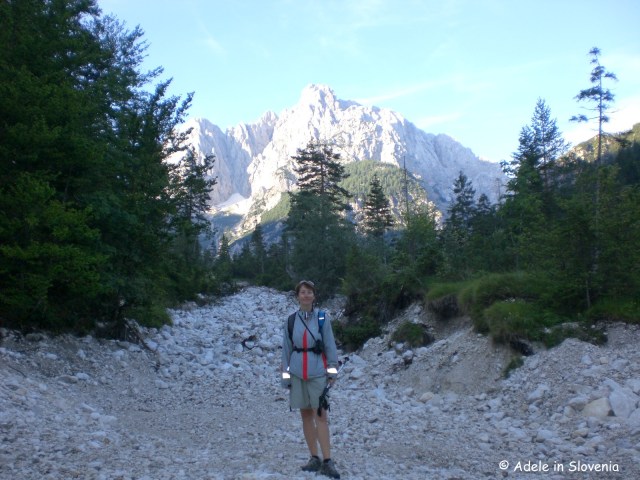
The route then turns right, passes the Mali Tamar Memorial to those who have lost their lives in the mountains, crosses a bridge over the stream, and then the ascent to Vršič begins. It is well-marked throughout with Alpe Adria signs as well as the usual Slovene way-markers (a red circle with a white inner).

The Vršič Pass is the highest mountain pass in Slovenia. It was built in the early 19th century, originally for military purposes, and has a total of 50 hairpin bends. You can, of course, drive up instead of hiking, or even cycle – as many do, though note that the pass is usually closed throughout winter when there is heavy snowfall due to the danger of avalanches.

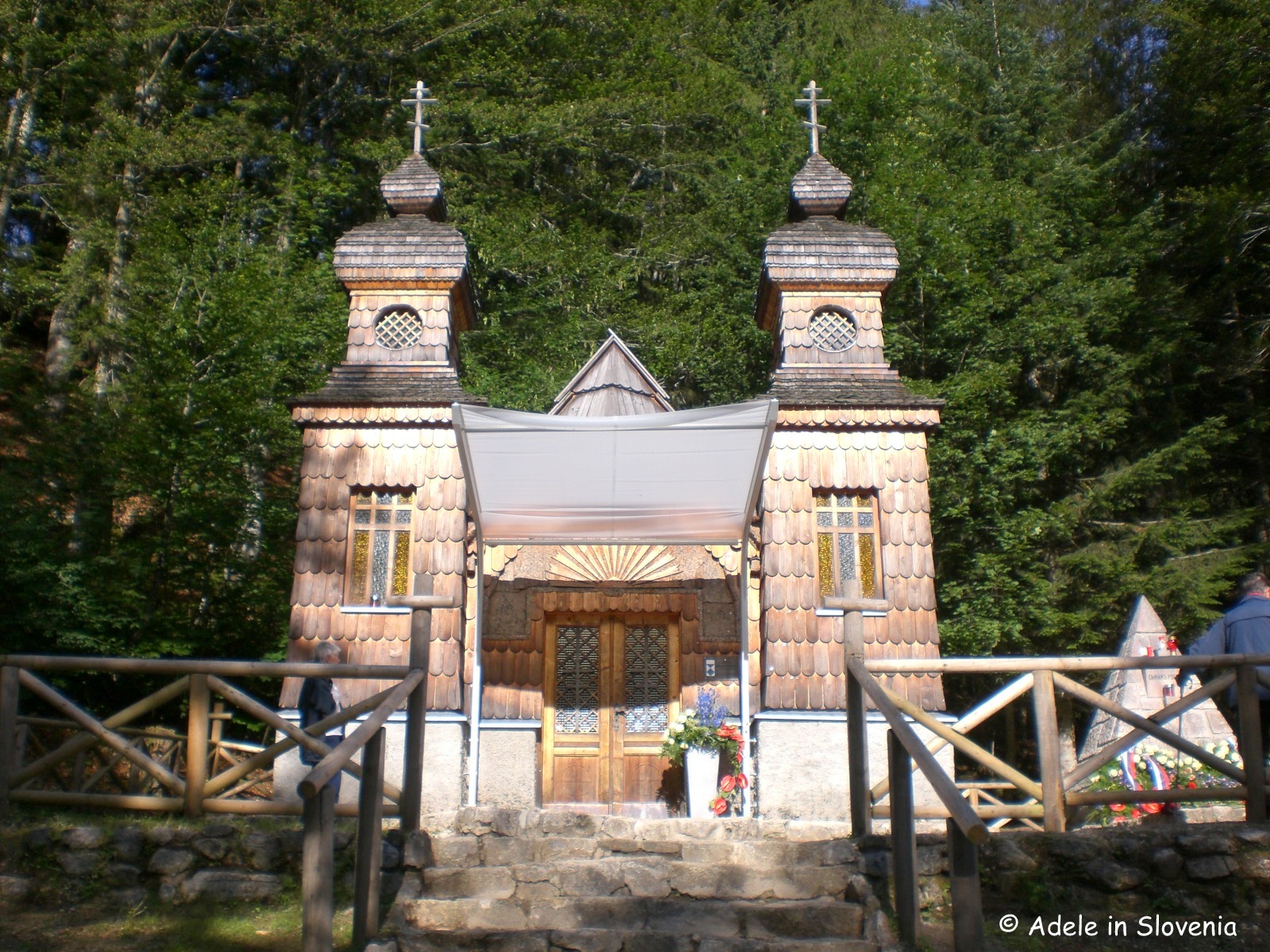
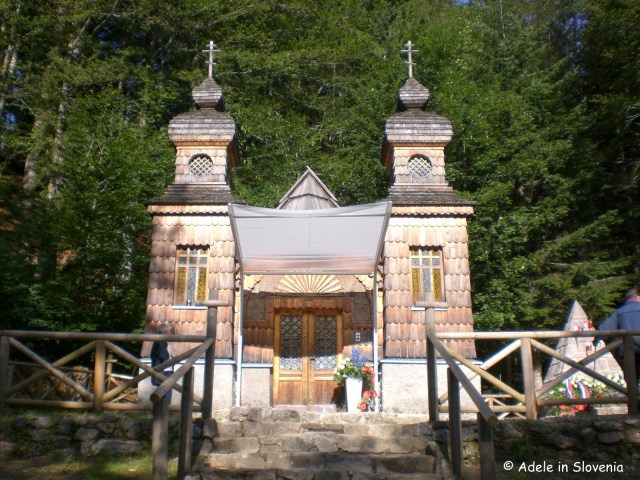
The trail goes largely through the forest, though in places it emerges – or if ‘it’ doesn’t then ‘you’ can – from the forest at sights of interest and to take in the views. The first such sight is the Russian Chapel, which was built in memory of the suffering of the thousands of Russian prisoners during construction of the road. Hundreds of prisoners and their guards – Russian and Austrian – lost their lives due to an enormous avalanche in winter 1916 – the exact number who died was never known.
CIMG1929

The route continues to the right of the chapel, again through the forest. I recommend a stop at bend 17 to see the somewhat eerie looking stones that have begun to ‘appear’ in recent years. I guess someone started the trend and others followed!

CIMG1932

The view from here isn’t half bad either!

CIMG1934

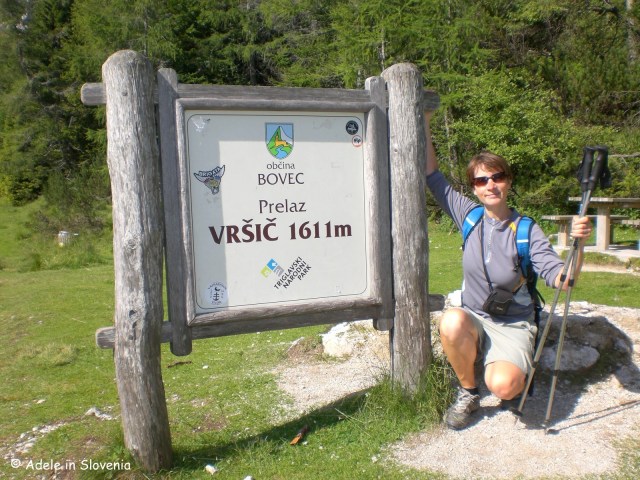
It’s now not far to reach the top, less than half-an-hour and I was already at 1611m at the top of the Vršič Pass.
CIMG1941

From the top it was easy to see where I was heading, down towards the Soča Valley and I could hardly wait to glimpse the always-stunning emerald-green Soča river.

CIMG1948

When leaving the top, look for this sign and walk down the road for approximately 500 metres.
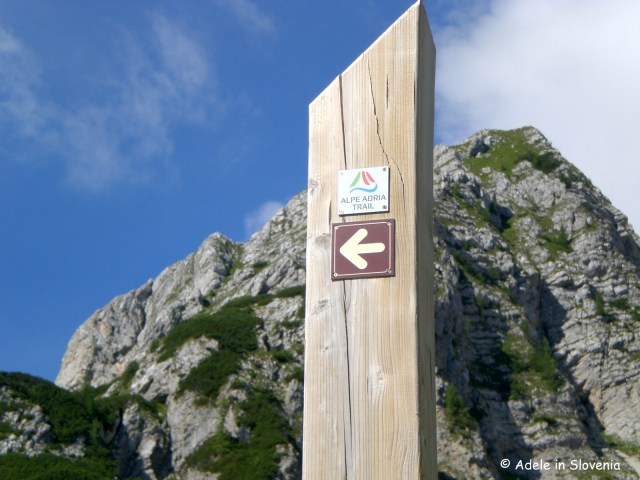
CIMG1949

As tempting as it is to admire the views, be sure to keep your eyes to the ground here, as here the way-marker for the trail is only on the ground and could easily be missed.

CIMG1950

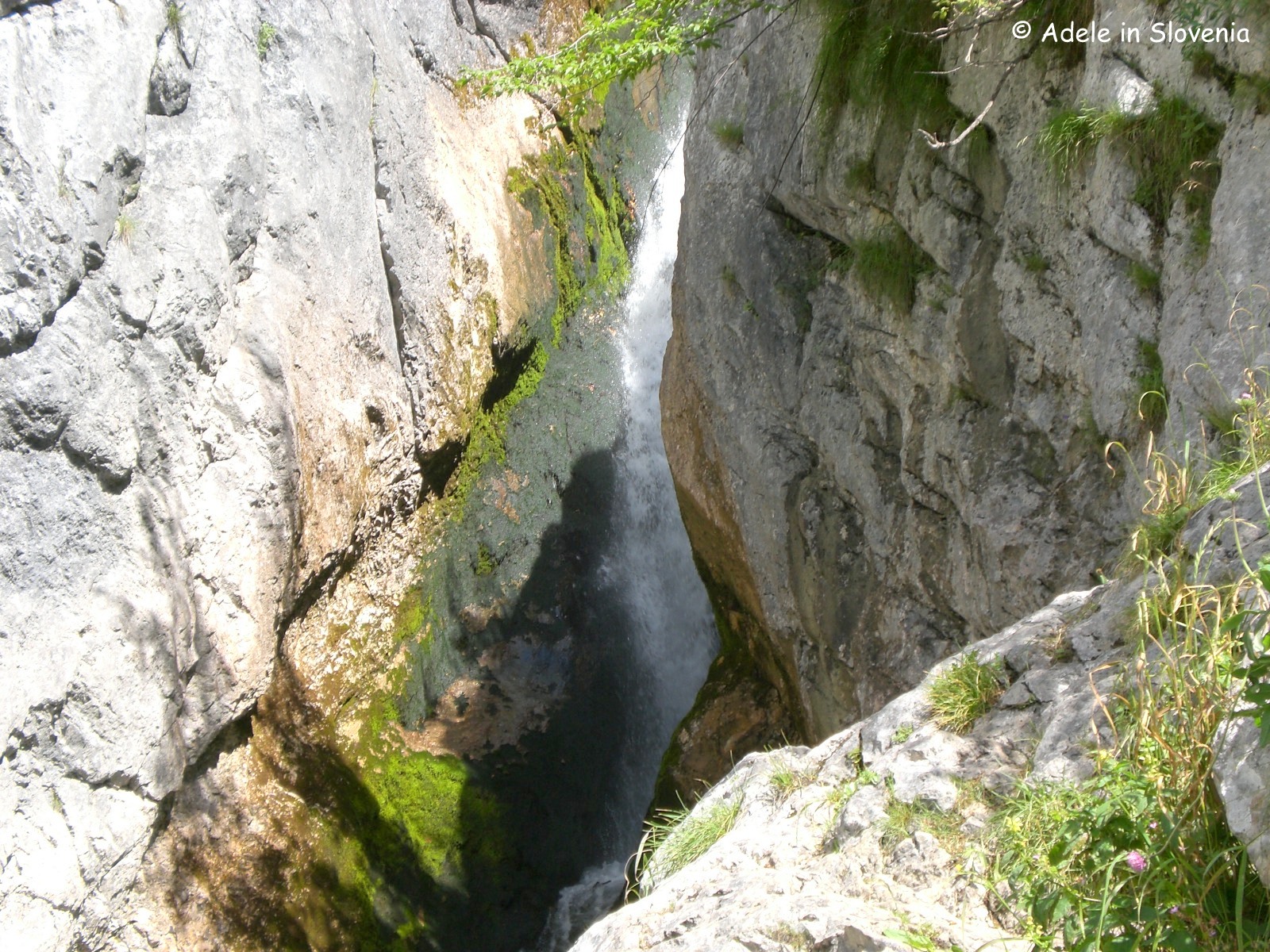
From here the trail re-enters the forest and leads on a pleasant gently-descending path, eventually emerging between stones walls into the parking area at the source of the Soča river, where there is a small hut offering refreshments. In places the trail is marked by the letters AAT – as shown below.

CIMG1966

If you choose to take a detour to see the source of the Soča river, it takes about 10-15 minutes to reach the first viewpoint – a relatively easy path, thereafter its a bit of a climb, assisted by iron pegs and rope, so not for the faint-hearted! Knowing I still had a way to go, I just went to the first viewpoint (well, that’s my excuse anyway!).

CIMG1961

From here it is downhill all the way. The Soča River Trail leads on traffic-free paths to Trenta, home to a Triglav National Park Information Centre, and where there is a mini-market, restaurant and a sprinkling of accommodation options.

CIMG1969


The total distance of this stage of the trail is 17.8km, of which the ascent is 962m and 1146m descent. It can easily be shortened as required – at least during the summer months when buses operate over the Vršič pass from Kranjska Gora to the Soča Valley. Out of peak season, however, you would need to ensure you have suitable onward, or return, transport.

In total the hike took less than 5 hours, including photo stops. If you take time to linger and savour the views, perhaps enjoy a meal at one of the several mountain huts en-route to, or at the top of, the Vršič pass, then it makes a very enjoyable full day trip. Highly recommended!

More information about the trail can be found here – http://alpe-adria-trail.com/en/ and more information about autumn hiking in Slovenia here – http://www.slovenia.info/en/Autumn-hiking-in-Slovenia.htm?aktivna_pohodniska_jesen_slovenija=0&lng=2

© Adele in Slovenia
 

Kindness in the Karavanke

In this often turbulent world we live in, the kindness of strangers is something to be valued and cherished, as I discovered on my latest adventure in the Karavanke mountains last weekend!

CIMG2132

Those of you who also follow me on my Adele in Slovenia Facebook page are likely to have already read my (mild) rant last week about the queues of people and two hour wait to ascend to the top of Slovenia’s highest mountain, Triglav, on a busy Bank Holiday weekend in August.

I have often waxed lyrical here about the Karavanke mountains, which seem to get so overlooked by those visiting Slovenia who automatically head for the better-known Julian Alps. The Karavanke form a natural border between Slovenia and Austria so, in addition to offering myriad possibilities for day and multi-day hikes, there are the added bonuses of less crowds and far-reaching views across 2 countries.

CIMG2129

My home town of Radovljica is in a perfect location to base yourself to explore the Karavanke mountains, being in close proximity to Stol – the highest peak of the Karavanke, as well as Begunščica and numerous other peaks, many of which I have written about previously. Note: you can use the search facility on this blog to find previous posts by using keywords and/or visit the Tourism Radol’ca website for more information – http://www.radolca.si/en/hiking/

So, back to my latest adventure. This time I headed slightly further from home to hike in the Karavanke mountains, first to Tržić, then to the village of Dolina, near Jelendol, from where I hiked up to the ever-popular Kofce highland and mountain hut (1488m). The sky really was that perfectly blue – no photo-shopping required!

CIMG2107

From there I continued to the Šija highland and hut and past grazing cattle, of which there are plenty on the highlands along the length of the range.

CIMG2117

Next I continued along an old unmarked path to the Pungrat highland before joining the path up to Škrbina ridge (1869 m) from where there were bird’s eye views across both Slovenia and Austria.

CIMG2125

As much as I hate crowds (as per the Triglav rant), there was barely a soul to be found here so I was more than elated to encounter two kindly, gallant strangers who came to my rescue when I got myself into a spot of bother just beneath the peak of Kladivo (2094m). They were passing in opposing directions but didn’t hesitate to help, which served as the wonderful reminder of how such altruistic acts of simple kindness can make the world a much better place.

So, thank you once again Olga and Anže for for your help and part in a (mostly!) wonderful, and certainly unforgettable, day. As was well that ended well and new acquaintances were made to boot. So, all in all, despite my little ‘moment’, it was a(nother) great day in the Karavanke!

CIMG2128

© Adele in Slovenia


Cerkno – A Green Destination Keeping in Touch with Nature

The town of Cerkno and its surroundings offer plentiful sites of significant historic interest  and wonderful nature and is one of Slovenia’s Green Destinations.

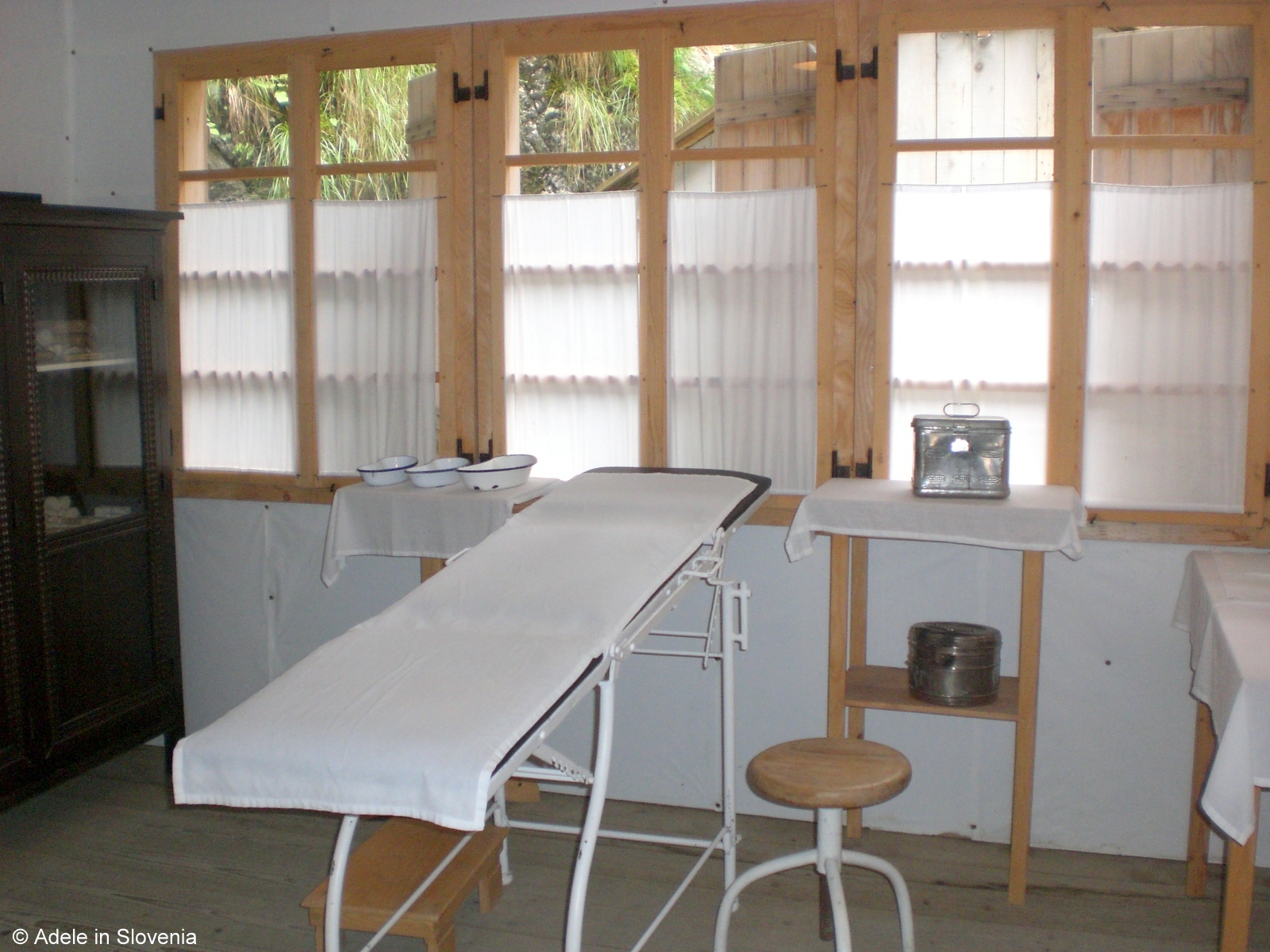
The most visited attraction, and one of the most important and remarkable of its kind, is the Franja Partisan Hospital. I had heard and read plenty about this place, but its not until I saw it for myself that I was able to really grasp its significance, though its still difficult to imagine how patients, equipment and goods could have been transported in such difficult terrain, and nigh on impossible to comprehend what life must have been like living and working in such cramped, cold and damp conditions.

CIMG1669

The hospital, named after the partisan physician Franja Bojc Bidovec, was set up in the then Yugoslavia by an enterprising group of partisans in order to treat wounded fighters. For its time, and considering the hospital’s almost inaccessible location, the facilities at the hospital, though basic, were such that it was able to operate entirely self-sufficiently for the 18 months of its operation.

The hospital comprised 14 wooden units and was so well hidden, deep inside the narrow and steep Pasica gorge, near Cerkno, that it was never discovered.

CIMG1677

The hospital finally closed on 5th May 1945. During this time the central facility treated almost 600 patients, whilst others were treated in dislocated units. Patients hailed not only from Slovenia but also from other former Yugoslav nations, Soviet nations, Italy, Poland, France, Austria and even America.

CIMG1670

Having survived the war, in a cruel twist of fate in 2007 the hospital was almost entirely destroyed when a large part of Slovenia was hit by devastating floods. The hospital was fully reconstructed, though only one original building stands, and nowadays is again open to the public (daily from April – November, thereafter by prior arrangement). Today the path through the gorge is well-secured, though can be a little wet in places so sensible footwear is a must.

CIMG1665

More information here – http://www.muzej-idrija-cerkno.si/index.php/en/locationsexhibitions/permanent-exhibitions/franja-partisan-hospital.html

The Divje babe archaeological site is a Karst cave located in the steep rocky slopes above the Idrijca Valley. Several remains of cave bear have been discovered in the cave – by far the most significant and most spectacular find is a bone flute made of the bone of a cave bear, which dates back 55,000 years and is the oldest known musical instrument in the world. Guided tours of the Divje babe site are available upon prior arrangement. More information here – http://www.divje-babe.si/en/

divje babe

The town of Cerkno itself is synonymous with the Cerkno laufarija – the traditional carnival characters who, during the winter ‘pust‘ carnival, drive away winter by performing a ritual wearing costumes made of natural materials and masks carved from linden wood. The Cerkno museum hosts a permanent exhibition entitled ‘Pust is to blame – a story about the Cerkno Laufarija’.

sprevod

The Ski and Mountain Cerkno resort is a year-round destination for outdoor pursuits. During winter the resort, at an altitude of 1291m, offers well-groomed ski pistes, cross-country skiing, and other snow-based activities, and is considered one of Slovenia’s best ski resorts in terms of facilities and user-friendliness.

In summer you can go hiking, enjoy the views, or try out some of the activities at the Cerkno Bike and Fun Park, such as stand-up paddling on the lakearchery, or downhill biking. There is also a playground and trampolines for children – so something for all the family.

CIMG1631

The chairlifts operate at weekends during summer – great views guaranteed!

cerkno razgled 2

More information here – http://www.ski-cerkno.com/en/index.html

The latest addition to the resort is its range of Forest Selfness programmes, which range from 2 – 6 hours and include culinary delights, relaxation under the treetops, reflexology and barefoot walking, forest relaxation, meditation and energy exercises. More information here – http://www.gozdni-selfness.si/eng/

gozdni selfness piknik

Whilst exploring the Cerkno area, I stayed at the Gostilna Gačnk guest house, which offers excellent traditional Slovene hospitality and cuisine, as well as basic, though comfortable, rooms, and is located just minutes from the Franja Partisan Hospital. Read plenty more about my stay at Gačnk here – http://wp.me/p3005k-1HE

©  Adele in Slovenia
Rogla: Year-round Recreation and Fun for All!

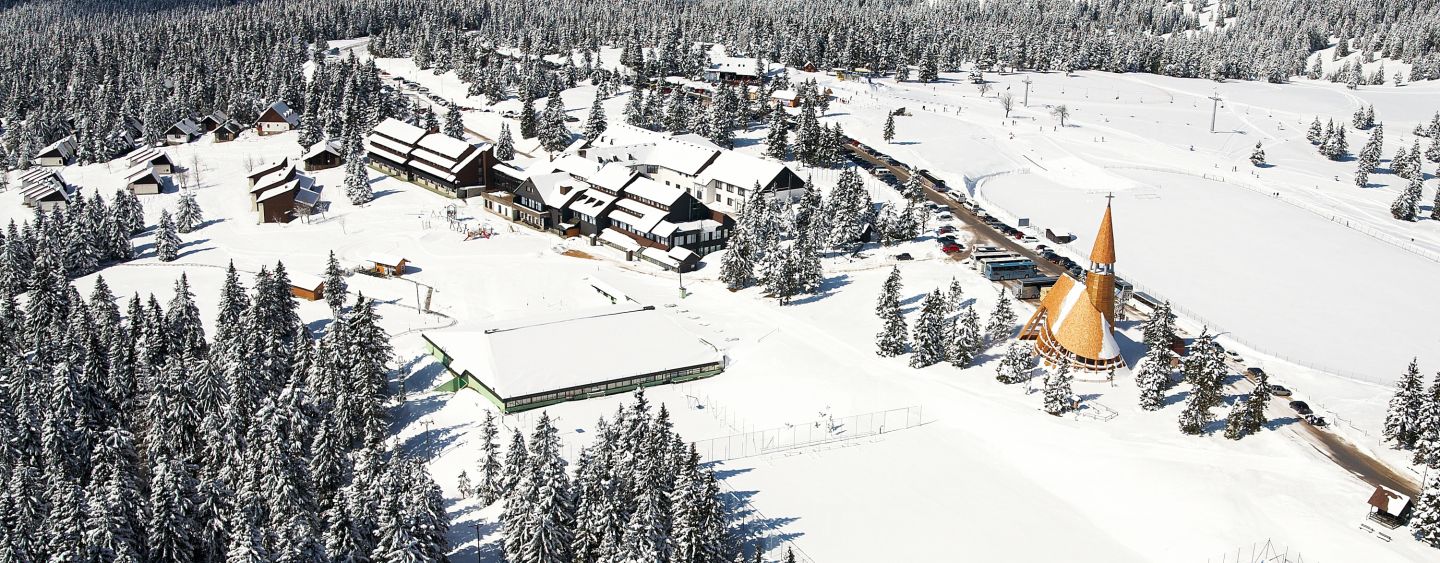
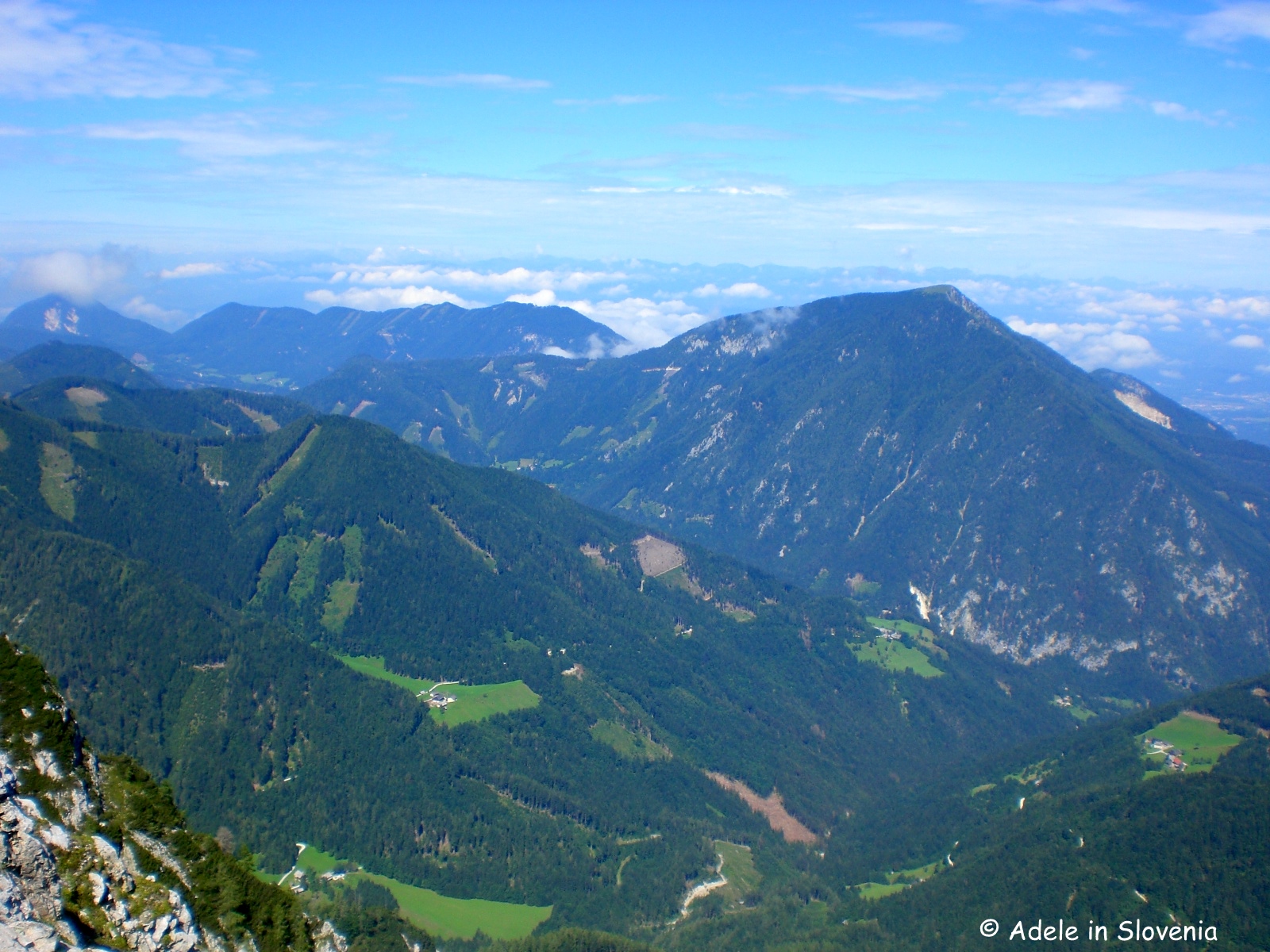
If you love the great outdoors, spending your free time being active, and breathing in fresh mountain air, then you will love Rogla! Located in the northeast of Slovenia on the Zreče side of the Pohorje massif at an altitude of 1517m, Rogla is a ski resort and year-round recreation destination.

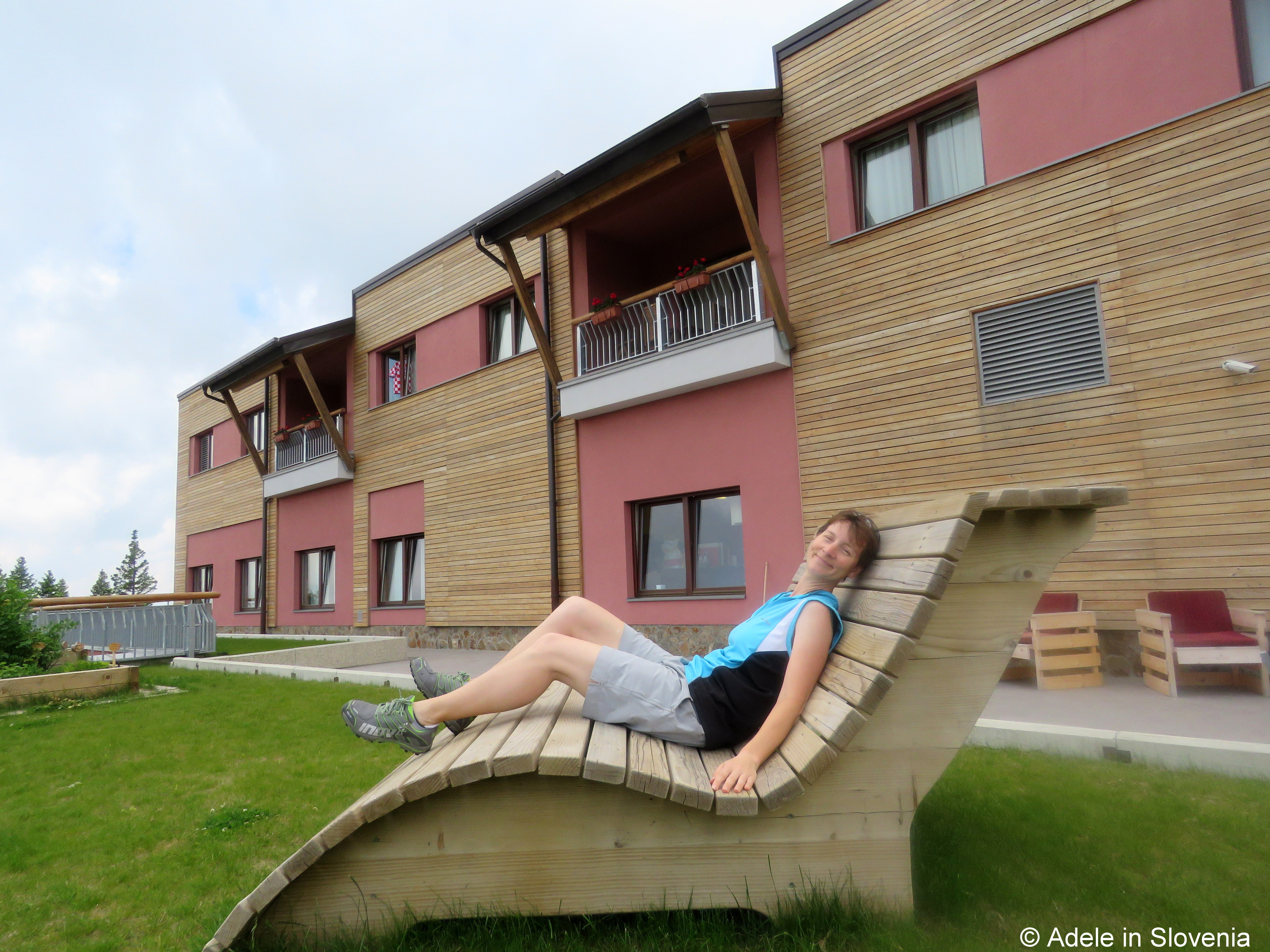
Visit for a day, stay for a few days, or even longer, there’s no shortage of things to see and do! There is a choice of accommodation on Rogla – hotels, bungalows, apartments – but for the most modern and luxurious among them I’d certainly recommend the latest addition, the new Hotel Natura, which is really something a bit special!

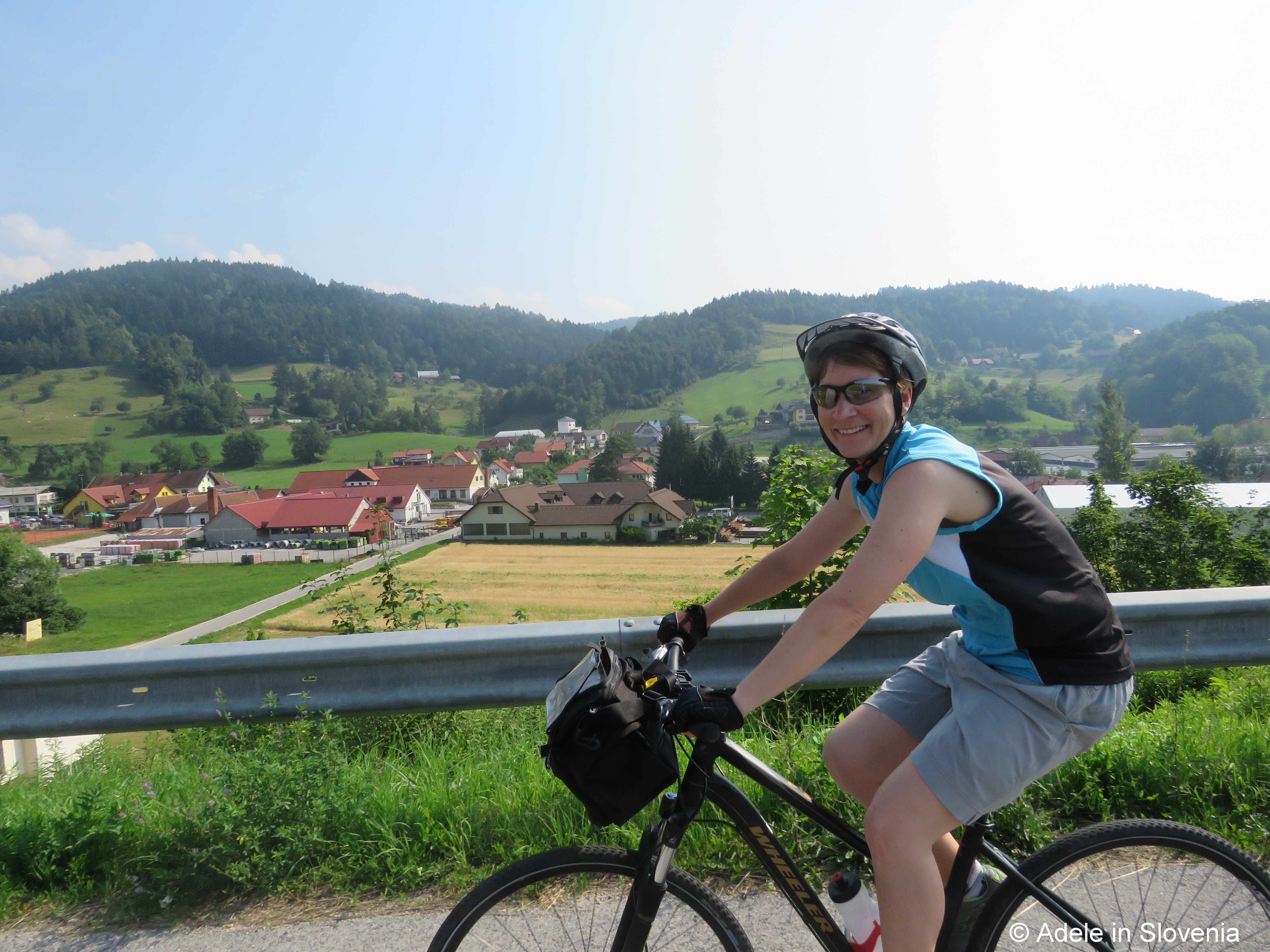
I went to check it out during a recent visit to the Zreče thermal spa, read more here – http://wp.me/p7jQx9-7O and, well, me being me, decided to cycle up to Rogla! On reaching the hotel, after a 2 hour+ uphill ride (Zreče 360m – Rogla 1,517m) the giant wooden recliners on the hotel’s terrace were beckoning and thereafter it was hard to tear myself away!

IMG_7675

If you’re a keen cyclist then, although long, the road to Rogla is good and it makes a great day out. You can choose to either go on the main road, or, as I did, ride up at first on minor roads – which I’d recommend for great views and less traffic – before joining the main road, or for those with mountain bikes you can take one of the forest roads. There are also numerous other marked cycle routes on the plateau itself.

IMG_7618

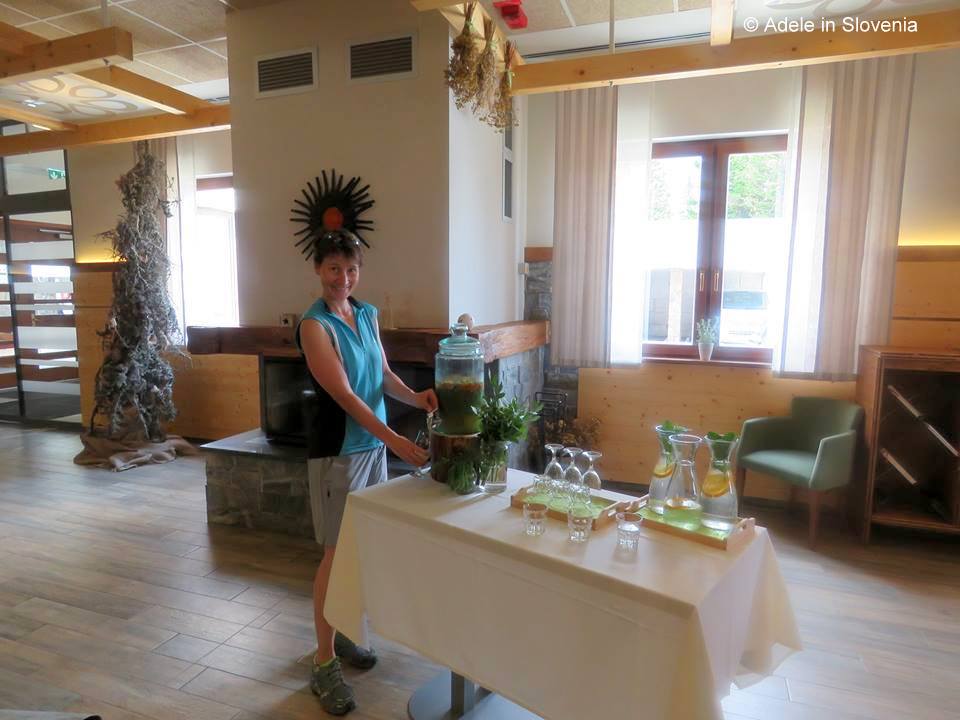
Hotel Natura is the first hotel reached when arriving on Rogla and an excellent place to stay to explore the area, or just call in for a delicious meal made using local Pohorje ingredients as part of ‘Taste Rogla’. I headed straight for a glass of refreshing homemade iced herbal tea and elderflower cordial served in the hotel’s very welcoming and comfortable lounge area.

13480252_10154234045204780_1045207313_n

natura

Next came a well-earned meal in Restaurant Brusnica which was beautifully and imaginatively presented as well as being scrumptious!

CIMG1534

CIMG1535

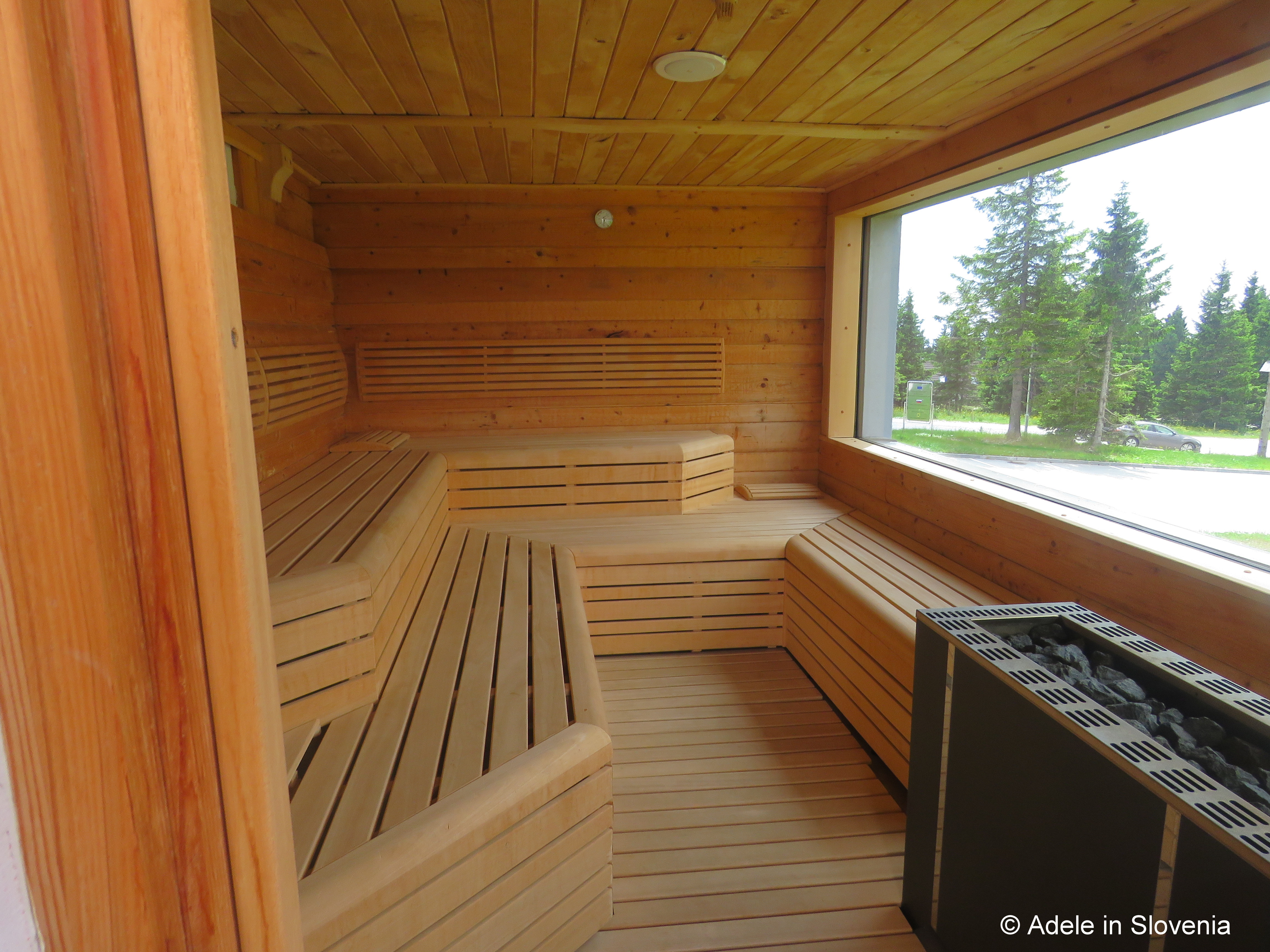
Hotel Natura offers excellent wellness facilities, massages, baths, and a sauna with a panoramic view – in winter overlooking a cross-country skiing poligon. I can image that the wellness facilities must particularly come into their own during winter after a long day’s skiing.

IMG_7703

Of course, if you stay at Rogla itself then you don’t have to cycle all the way up there and can instead spend more time exploring the area – note to self, do that next time! If you prefer exploring on foot, then Rogla is great for leisurely strolls or longer hikes. Pick up a map of the Rogla hiking trails and you can choose from 9 marked trails, varying in length from 2.3km to 25.9km.

One of the most scenic is the path to the Lovrenc lakes, which is made up of 20 small lakes that formed during the Ice Age. The lakes, which do not have a surface water inflow and are supplied only by rainwater, are surrounded by dwarf pine and in places are bursting with water lilies.  To get a better impression of the size and scope of the lakes, head for the best vantage point – the lake tower.

Lovrenska-jezera

The Rogla Bike Park has 6 trails ranging in length and difficulty, including a beginners polygon and obstacle trails. Mountain bikes can be rented and instructors are also available. More information here – http://bit.ly/29IhQSh

Bike-park-Rogla-6

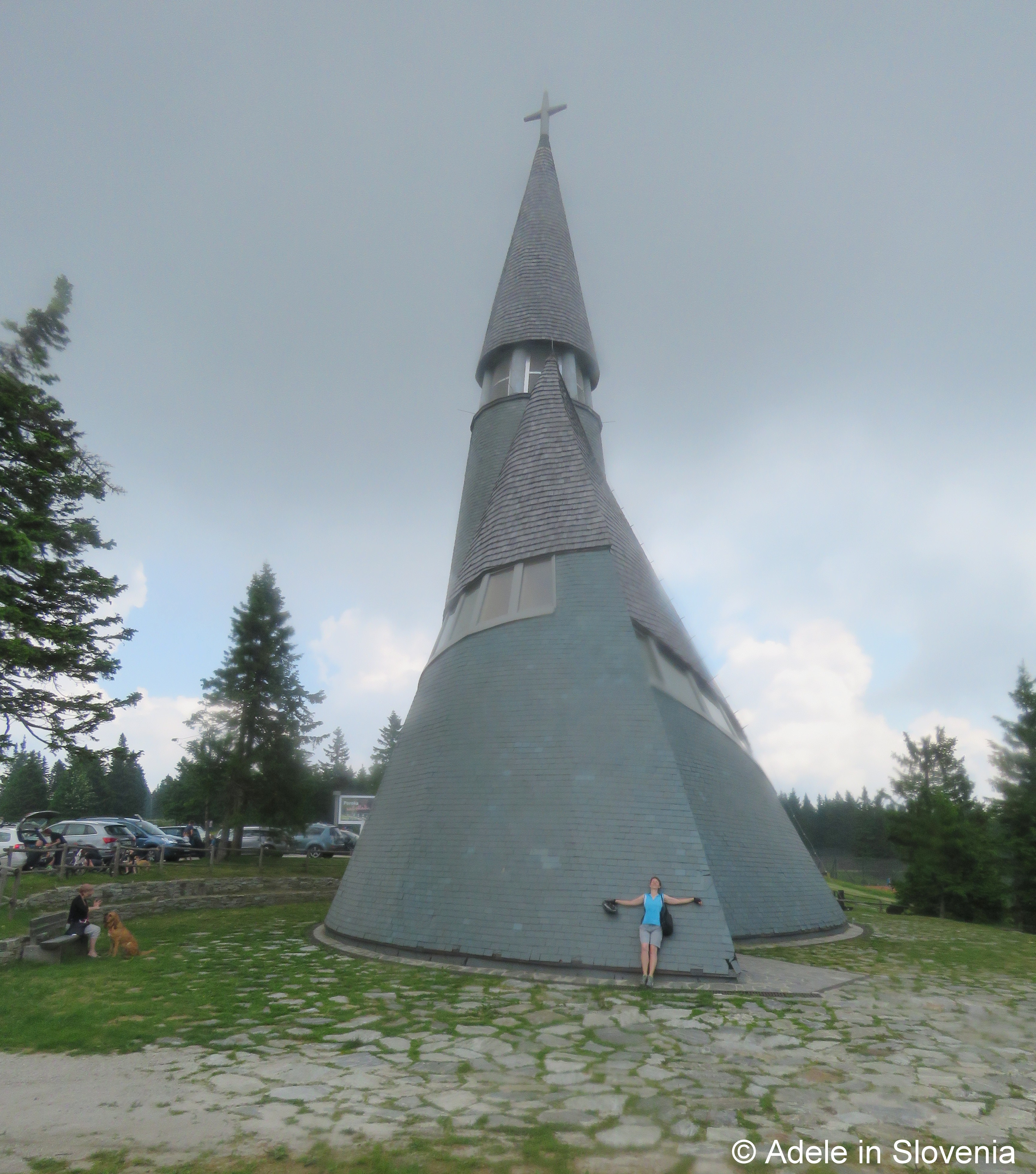
Working began on building the rather unusual looking Church of Jesus Christ on Rogla in 2006 and it was blessed in 2010. The church has three bells, an impressive altar and notable church organ.

IMG_7649

Before starting the long (though very quick!) descent back to Zreče, there was time to enjoy a bit more adrenalin with a 1,360 metre descent on the Zlodejevo toboggan run. The return is by drag lift I hasten to add!

IMG_7659

Other outdoor facilities include a funpark, tennis courts. football field and running tracks. The Rogla Sports Centre is particularly popular with athletes seeking altitude training. There is a high altitude training room equipped with a multitude of fitness equipment where conditions up to 7,000 metres above sea-level can be simulated.

With an average of 100 days of snow cover per year, Rogla really is a year-round destination. In winter it offers downhill skiing, cross-country skiing, snowboarding, snowshoeing, winter hikes and other fun snow-based activities.

rogla-z-letala

This is but a snapshot of all there is to see and do on Rogla! Find out plenty more here – http://www.rogla.eu/en/

© Adele in Slovenia
 

To Jamnik and Beyond!

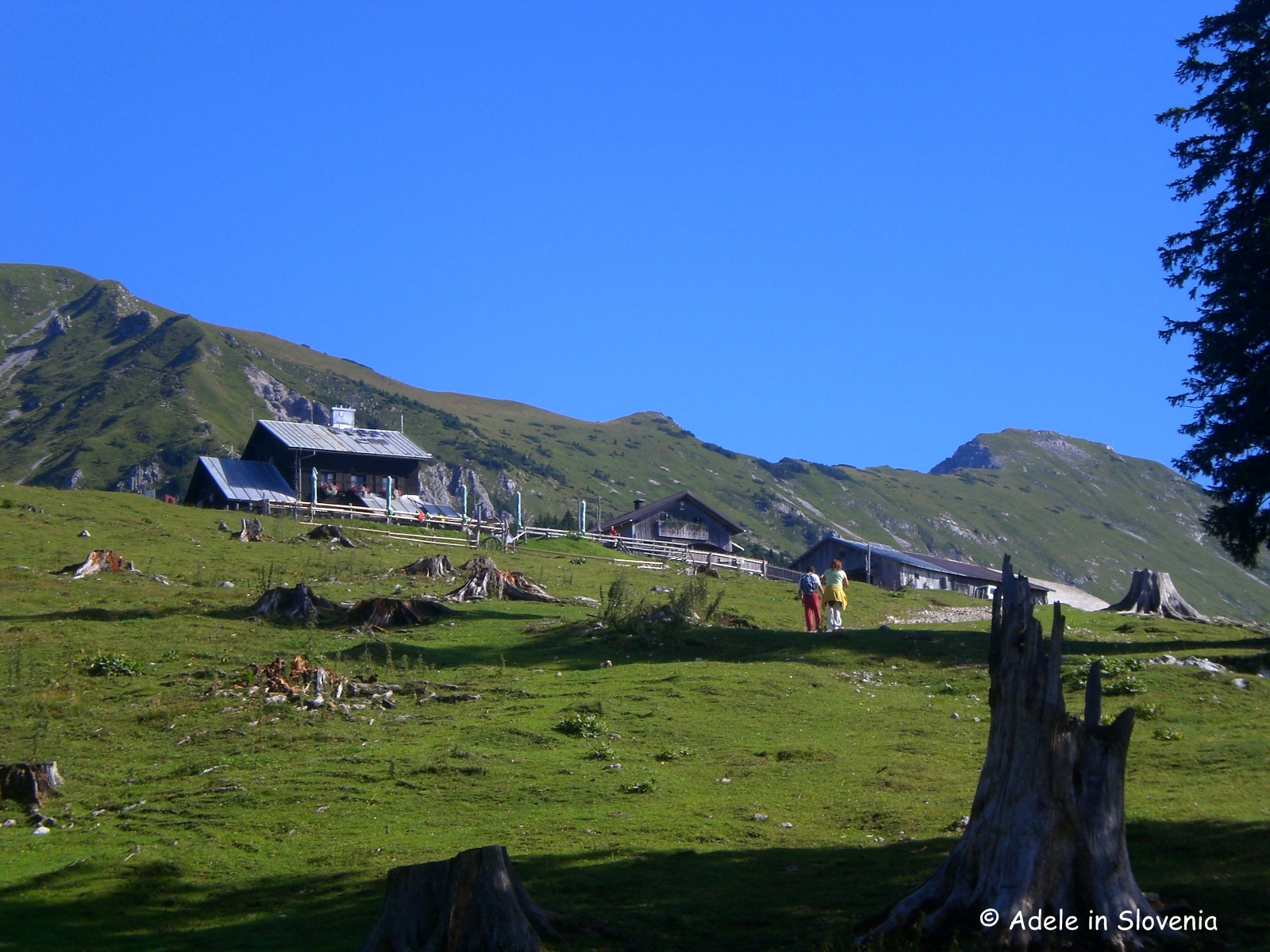
As you might have noticed, there are many hilltop churches in Slovenia. When visiting the Gorenjska region in the northwest of Slovenia one of the most prominent is the Church of St. Primus and Felician, which stands proudly atop a hill, beneath the slopes of the Jelovica plateau, and can be seen from far and wide.

CIMG1611

The church is located in Jamnik, a small settlement above the traditional iron-forging village of Kropa. It’s a great place to go for stunning panoramics views; the wide Radovljica plains and the Karavanke mountains to the north and the Škofja Loka hills and beyond to the south.

You can reach Jamnik by several means. My favourite, in the summer at least, and as I did this Sunday, is to go by bike. The effort put in on the 5km windy road leading up from Kropa is more than rewarded by the views. Jamnik and Kropa can be destinations in themselves, or you can continue onwards and visit other areas and sights of interest including Dražgose, Škofja Loka and Železniki.

You can also reach Jamnik on foot through the forest from Kropa (cca 1 hour), or by car. To reach the church take the path from the layby at Jamnik and just follow your nose – you can’t miss it!

CIMG1610

The small settlement of Jamnik is nestled snuggly into the slopes beneath the Jelovica plateau.

CIMG1618

Whilst there take some time to look around the quaint iron-forging village of Kropa where, amongst other things, you can wander around the village and see the impressive iron work that adorns many of the village houses, visit the Museum of Iron Forging, and enjoy a meal at the Pr’Kovaču restaurant.

CIMG8826

However you choose to go, Kropa and Jamnik should be on your list of places to visit when in the Radol’ca area.

This Sunday, 31st July, its the annual Medieval Day in Linhart Square in Radovljica. There’s a medieval market, music, dance and other performances, archery, and more. Find out more here – http://www.radolca.si/en/what-to-do/events-1/medieval-day-in-linhart-square/83/310/

© Adele in Slovenia

Gostilna Gačnk – Slovene Food and Hospitality at its Best!

Gostilna Gačnk, in the settlement of Log near Cerkno, is a family-fun traditional Slovenian guest house and restaurant with a more than 100-year tradition. I stayed there last weekend whilst exploring Cerkno and the surrounding areas for a future blog post and had originally intended to just mention where I’d stayed, however, I soon found out that to do so would be an injustice, since this place deserves a blog all of its own, so, here it is!

Despite being mid-summer, on the day of my arrival it was unseasonably chilly thanks to a brief cold front that had spread across the country the day before. So, I took a seat next to the wood burner, had a cup of tea (as we English do!), and enjoyed a lovely natter with the very affable owner, Matjaž.

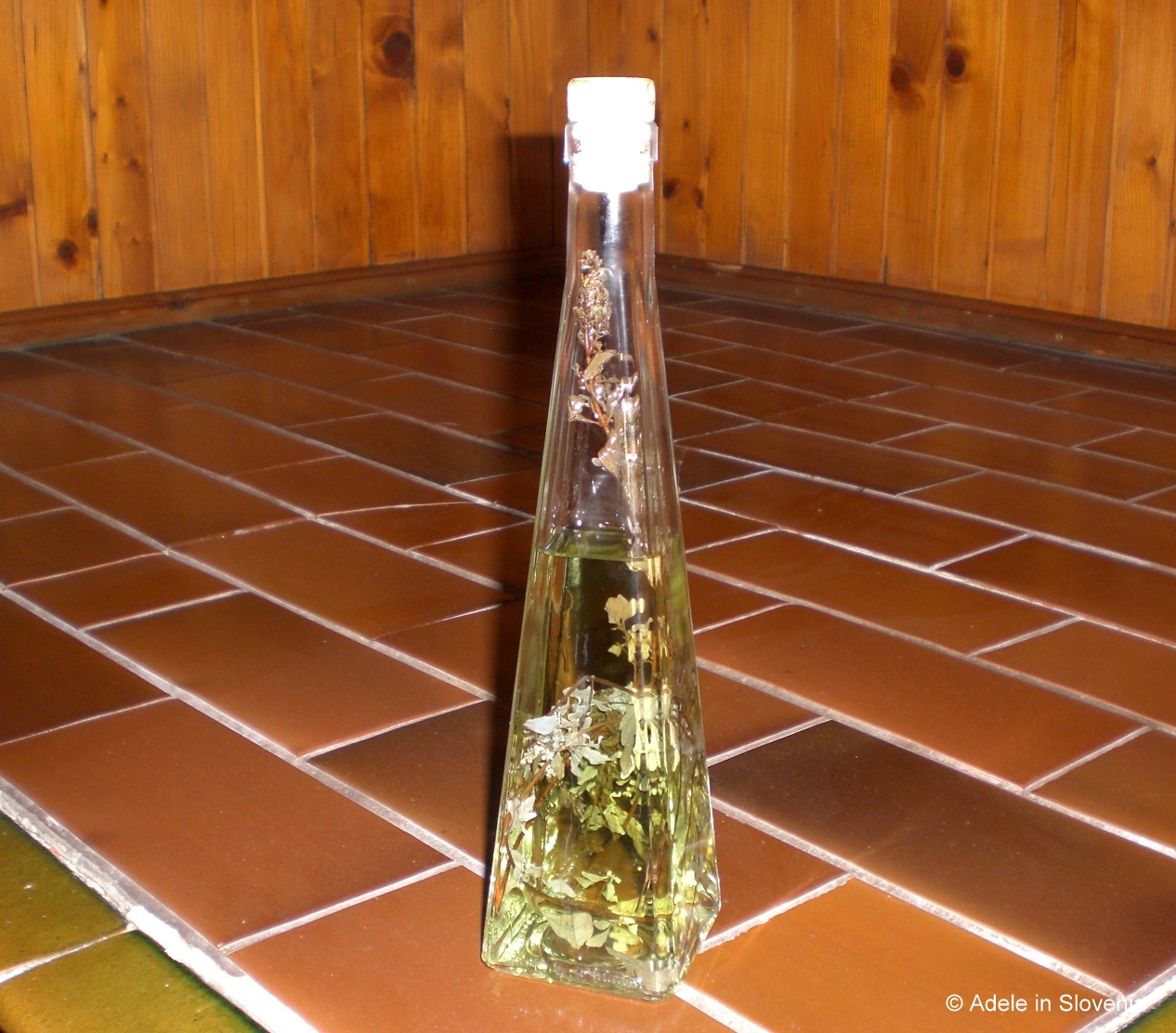
After discussing what to see and do during my weekend visit, and following a short walk, I was offered a glass of homemade schnapps made from ‘palaj‘ (Latin: Micromerio thymifolio), which grows exclusively in the area around Novaki, specifically on and between the peaks of Kopa and Porezen, and, as such, is a real speciality and rarity.

CIMG1635

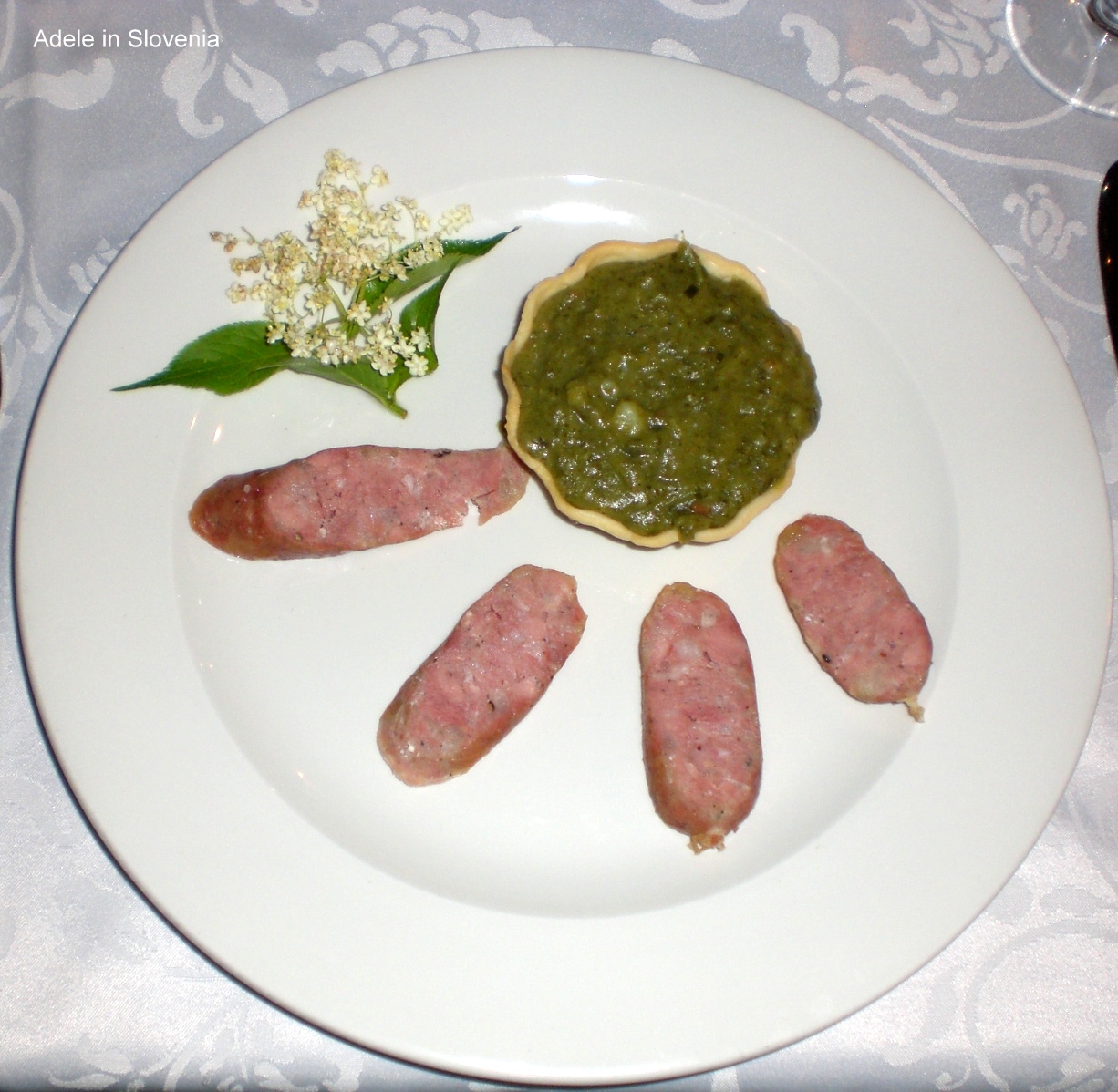
This was just a prelude to the excellent hospitality and meals I was to enjoy over the weekend. For a change I had some company for dinner, when a fellow blogger, who lives in Cerkno, joined me and was to prove great company as we shared tales of blogging. We left it to the team in the kitchen to surprise us with some local delights (other than instructions from me for ‘no fish!’). I particularly enjoyed the starter as it was something I’ve never tried before – ‘smukavc‘ – a thick soup made from cabbage and served in a pastry ‘bowl, with home-produced sausage.

CIMG1637

Gačnk specialises in dishes cooked outside over an open fire and other traditional Slovenian dishes such as žlikrofi and štrukjli.

peka_zunaj

As I was planning a full day of exploring the next day, I arranged for a ‘packed breakfast’ which was excellent and included bread freshly baked in the clay oven, which is a weekend speciality at the gostilna.

gacnk5

Gostilna Gačnk is ideally situated for visiting the Franja Partisan Hospital, the entrance to which is only 10 minutes away on foot. The gostilna’s main dining area is dedicated to the physician Franja Bojc Bidovec, after whom the hospital was named.

After a full day out exploring, I returned starving and eagerly awaiting dinner. There was also a wedding taking place, one of many that are held regularly at weekends here, so I was able to look on and enjoy watching others enjoying their celebration whilst savouring a beautifully presented, and equally delicious, dinner.

CIMG1692

CIMG1694

CIMG1696

Though it could be considered a little out of the way for some, Gostilna Gačnk is actually excellently located for exploring the Cerkno area, and even further afield, particularly if you like hiking, skiing, cycling, or other outdoors activities and are seeking peace and quiet. I will be writing plenty more about what to see and do in the area in a future blog coming soon, so stay tuned!

You can find more information here – http://www.cerkno.com/

© Adele in Slovenia

Mysterious Lake Cerknica – Now You See It, Now You Don’t!

Cerknica Lake is the largest intermittent lake in Slovenia and one of the largest in Europe.

For up to six months per year this fascinating, mysterious lake is, well, a lake, filled with water with a mean depth of over 6 metres. During the remainder of the year the water simply disappears, leaving just green, wild flower-covered fields.

CIMG1571

The lake is fed by a number of openings with a series of subterranean reservoirs or caverns, some of which are above the lake level in the surrounding hills. In dryer months the lake completely drains into the reservoirs lying beneath it, revealing rich vegetation. In the wetter months, the surrounding higher reservoirs fill and discharge suddenly through subterranean passages into the lake, which very rapidly regains its volume and may even inundate the surrounding countryside.

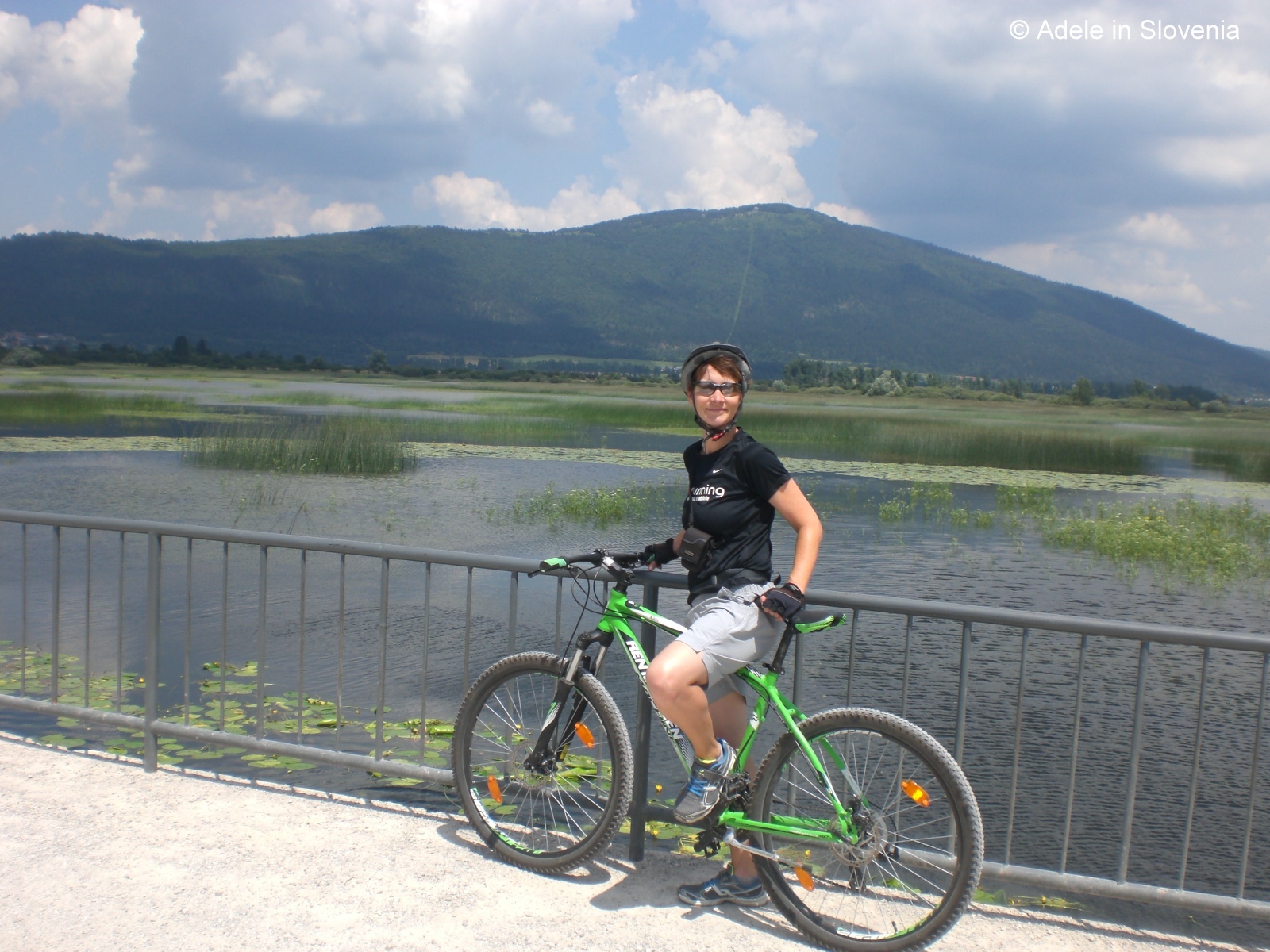
A great way to visit, and to get a real impression of the vastness of the lake, is to cycle around the area. At the time of my visit in late June, there was still some water, in places up to 3 metres deep, though it was rapidly disappearing.

CIMG1575

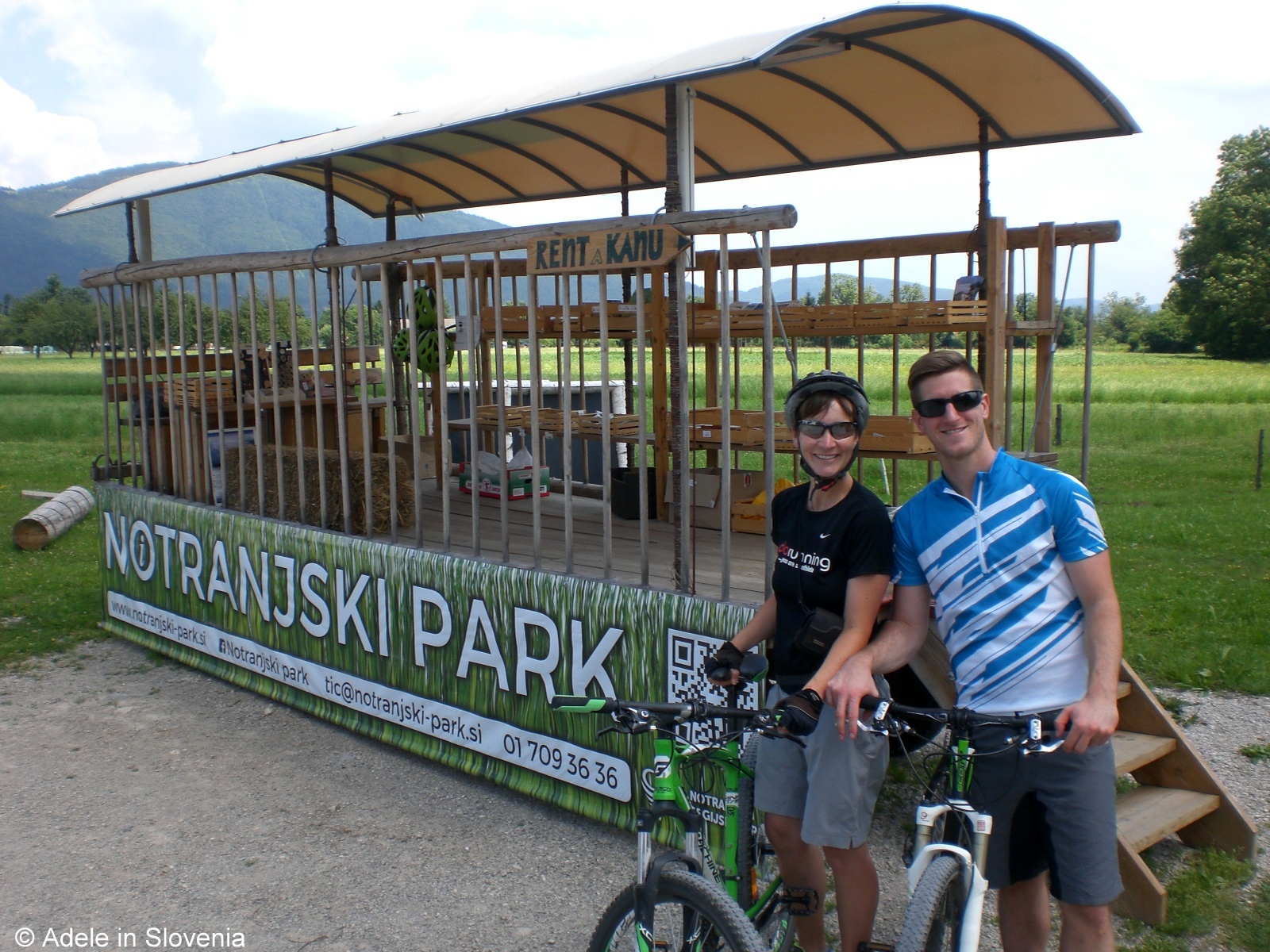
Every weekend bikes and canoes can be hired from the Notranjska Park Information Point, located in the main car park in the village of Dolenje Jezero. You can also, as I did, arrange a local guide for your cycling trip, who will take you to the best vantage points and provide plenty of local information.

CIMG1577

We began by cycling through the valley of the Rakov Škocjan Landscape Park. This fascinating natural wonder, packed with karst phenomena, was formed by the Rak river, which springs from the Zelške cave, runs above the surface for 3.5kms, then once again goes underground in the Tkalca cave at the other end of the valley.

CIMG1546

The main attractions are the two natural bridges at each end of the valley – Veliki naravni most (Big natural bridge) and Mali naravni most (Small natural bridge). There is a well-marked walking trail that leads between the bridges and to other parts of the valley and information boards are provided at the main points. On a hot summer’s day, it was a wonderful place to seek respite from the heat!

CIMG1552

This place offers wild nature at its best, no crowds, just the chance to savour up close the fascinating geological formations, of which there are plenty.

CIMG1558

You can view them from up above or from down below!

CIMG1555

We then continued to one of the best vantage points of Cerknica Lake from where one can really get an idea of its size. The whole area that you can see behind me in the photo below, is, for around half the year, a lake. If you look closely you can just see the last remains of the water at the lake’s far end.

CIMG1568

Although its fascinating to see the lake when it is actually a lake, even if there isn’t any, or isn’t much, water, it’s still worth a visit. Regardless of whether you visit when the lake is or isn’t, a great way to get a full impression of this mysterious lake is to visit the Museum of Lake Cerknica at Jezerski Hram in Dolenje Jezero.

Although it has areas with typical museum exhibits, this is no ordinary museum. It is the impressive model of the lake, hand-built by the museum’s owner Vekoslav Kebe, that is the standout feature. The model, the result of three year’s work, shows the topography of the area as well as demonstrating how, and where, the lake fills and empties.

CIMG1586

After viewing the model and listening to accompanying commentary and sounds of nature, narrated by Vekoslav himself, visitors move upstairs to watch a multimedia presentation, which is available in a number of foreign languages. The museum also houses a collection of tools and other implements, used by local at various stages of the year when tilling the fields or fishing on the lake.

The museum is open Saturdays at 3pm, and at other times by prior arrangement.

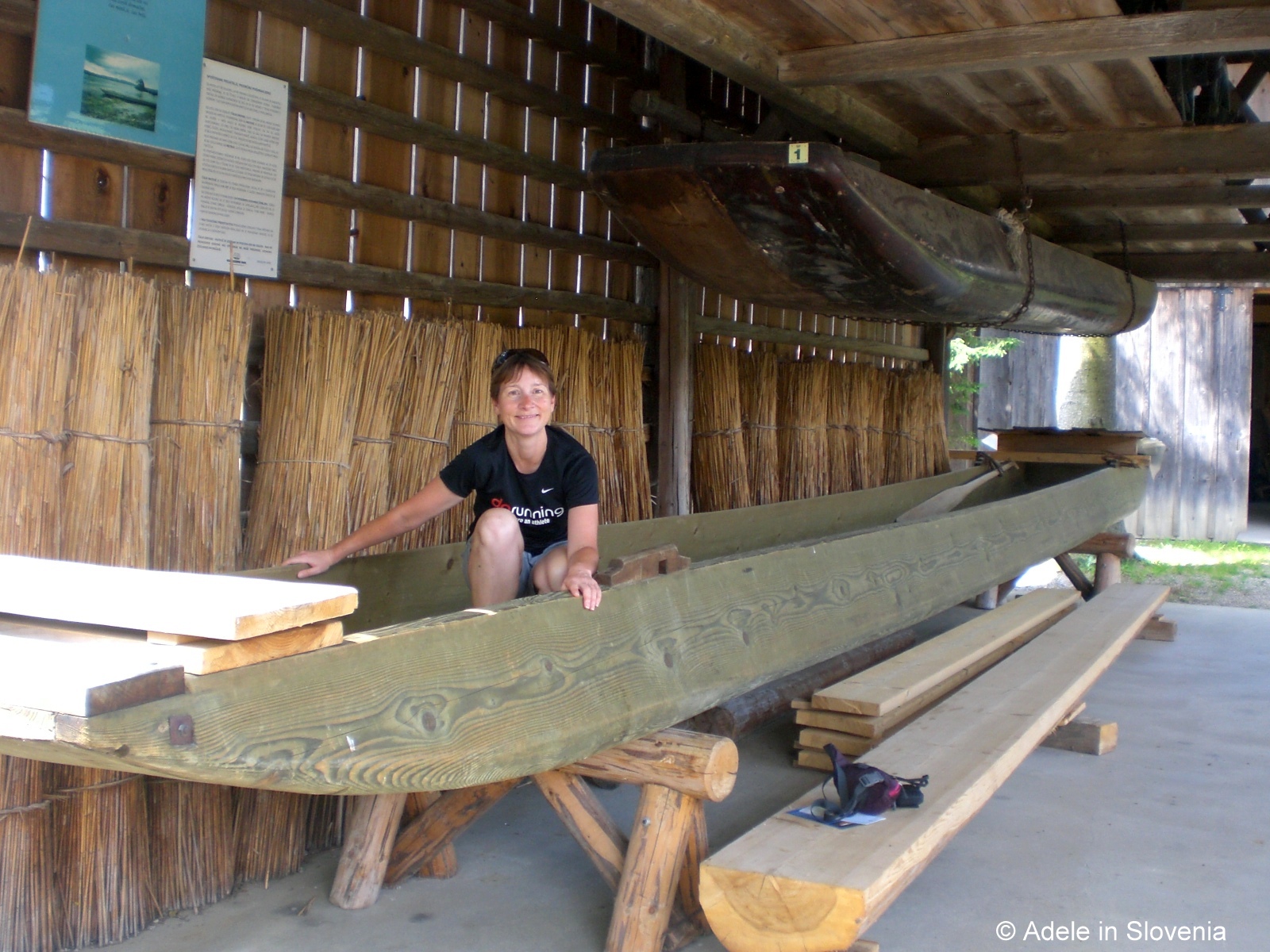
Drevak boats were once the staple way of transporting supplies across the lake. This one seen below, at the Museum of Lake Cernika, again made by Vekoslav (a man of many talents!), gives visitors a real impression of the size of the boats and the work that goes into mastering the art of making these long, curved vessels. More information about the museum can be found here – http://jezerski-hram.si/en/

CIMG1580

In the past even larger vessels, as can be seen below, sailed on the lake.

13497932_1224144250943079_6380821604370707595_o

Author of photo: unknown, photo collection: Julka Hvala – www.stareslike.cerknica.org

Every weekend during summer, Notranjska Regional Park hosts themed Sundays at the lake, offering visitors the chance to take part in a range of activities such as horse-drawn carriage rides, fishing and boat trips, guided hikes and bike rides, and botanical and ornithological workshops. Find more information about Notranjska Regional Park here – http://www.notranjski-park.si/en

13415376_1217214804969357_120093125642468689_o

More information about all this, and all the other sights of interest in the surrounding areas, can also be found at the Green Karst website here – http://zelenikras.si/en/

© Adele in Slovenia

Love Swimming, Love Slovenia!

It’s always lovely to hear from, and meet, readers and self-professed ‘fans’ of my blog. In the past 3 years I have received hundreds of emails, comments, messages on Facebook etc., some wanting ideas and advice, others just writing to say ‘thanks’, and have also enjoyed many a wonderful Taste Radol’ca meal together with readers generously wishing to show their appreciation.

It was particularly nice, then, when I recently met a whole group of readers! Patricia, a regular reader of my blog, has shared it with many of her group of fellow Americans, who were staying in Radovljica for a family swimming camp. She told me how helpful my blog had been in planning excursions and activities for the swimming camp and invited me to join the group for their final night’s banquet dinner at Kunstelj Inn – one of the Taste Radol’ca restaurants and just one of the venues where members of the group stayed during their visit.

CIMG1603-001

Maja and her team at Kunstelj Inn cooked up a delicious meal, using locally-sourced ingredients, and, as ever, the views from the terrace provided the icing on the cake!

13308531_1217230541621319_1581784669002045216_o

This was the 4th consecutive year that the Piranhas Swimming Club from Stuttgart chose Radovljica as the base for its summer family swimming camp. This year’s group totalled 108, comprised of 40 swimmers, with their families and friends, and, in some cases, 3 generations of the same family.

During their time staying in Radovljica, they certainly packed in a lot of sightseeing and activities, which just goes to show, as if proof were needed, what a wonderful place Radovljica is to base yourself for a holiday in Slovenia.

Radovljica’s Olympic-size swimming pool was the venue for the daily pool-based training and fun sessions. More information about Radol’ca’s swimming pools here – http://www.radolca.si/en/swimming/

Slovenia Swim Camp 2016 - Radovljica

They swam in Bled Lake.

Slovenia 2016 - Swimming Lake Bled

And did an open-water swim in the Adriatic sea in Piran Bay.

Slovenia 2016 - Open Water swim in Piran Bay

When not swimming, and for the non-swimmers among them, there was a whole host of other organised activities including cookery classes at Kunstelj Inn.

Slovenia 2016 - Cooking Class at the Kunstelj

Rafting on the Sava and Soča rivers.

Slovenia 2016 - Rafting the Soca River

Other activities included a visit to the iron-forging village of Kropa, a ride in the cable car to Vogel, kayaking on Bohinj Lake, hiking to the Savica waterfall, a visit to the Škocjan Caves, fishing, playing golf, making the famous Lectar gingerbread hearts at Lectar Inn in Radovljica, and more!

Patricia told me that they have all ‘fallen in love with Slovenia and Radovljica’ and are already planning the 2017 camp. So, I look forward to seeing you all back here next year. In the meantime, I’ll keep writing and providing ideas for some more activities for next year, so, stay tuned!

© Adele in Slovenia

Award-Winning Olimje – A Very Special Slovene Village

The village of Olimije is located in the east of Slovenia in the Styriatajerska) region, right on the border with Croatia. The whole area is idyllic, awash with unspoilt nature, lush green forests, hills, vineyards, and far from any major roads, industry and pollution. It’s no wonder, then, that it has won several ‘best kept’ village awards.

The star of the show, which has people flocking to see from far and wide, is the Olimje church, Minorite monastery and old pharmacy.

CIMG1243

Olimije is almost a direct extension of the town of Podčetrtek, which has a tourist information centre, numerous accommodation options, eateries and a handful of shops. The town is also served by special ‘spa trains’, operated by Slovenian Railways, which run from Ljubljana. Visitors arriving by train are also entitled to special discounts and benefits. More information here – http://www.slo-zeleznice.si/en/passenger-transport/around-slovenia/the-spa-train

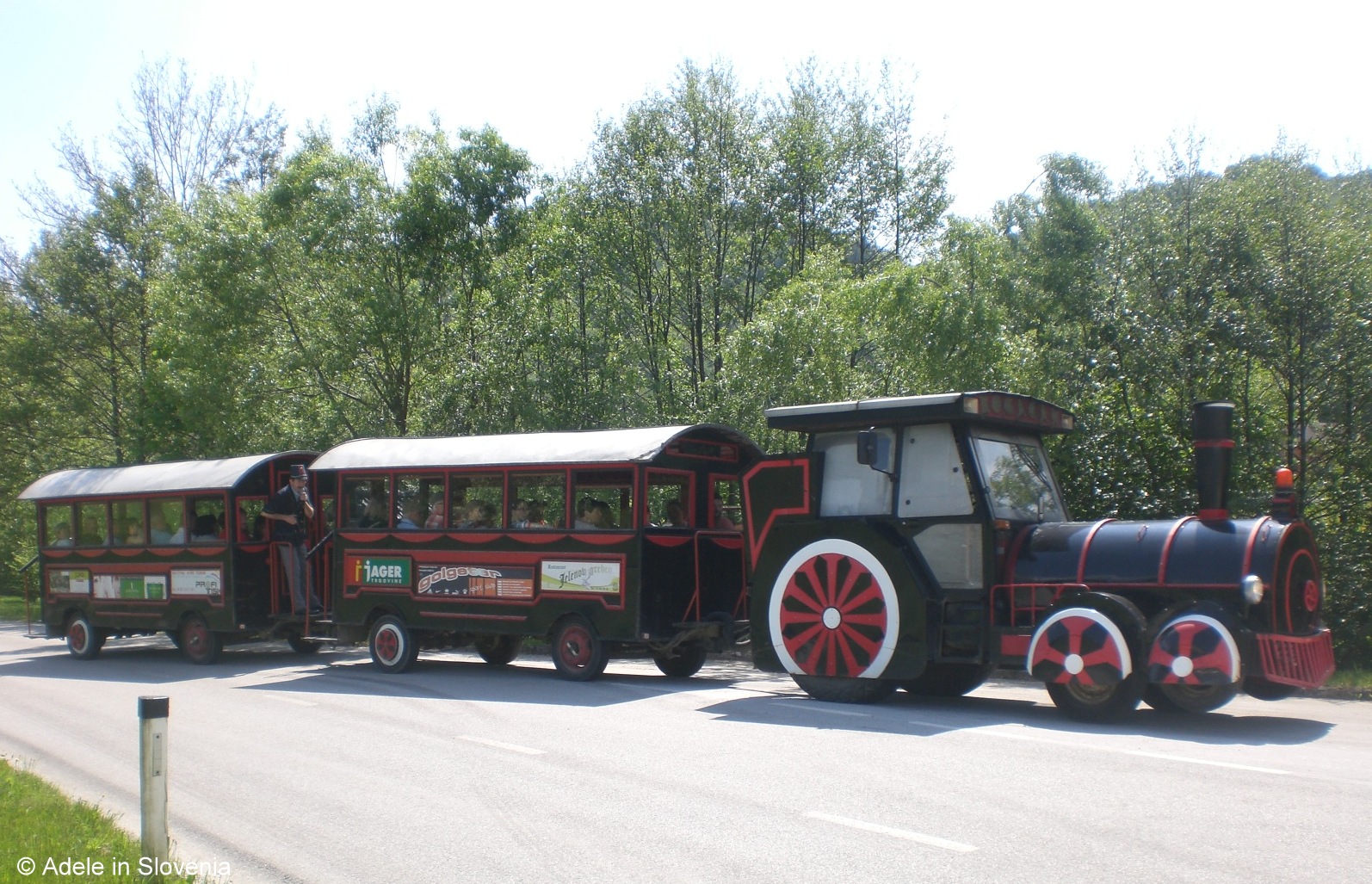
Once there, the dinky tourist road train is a perfect way to get around and see all the area’s sights of interest.

CIMG1236

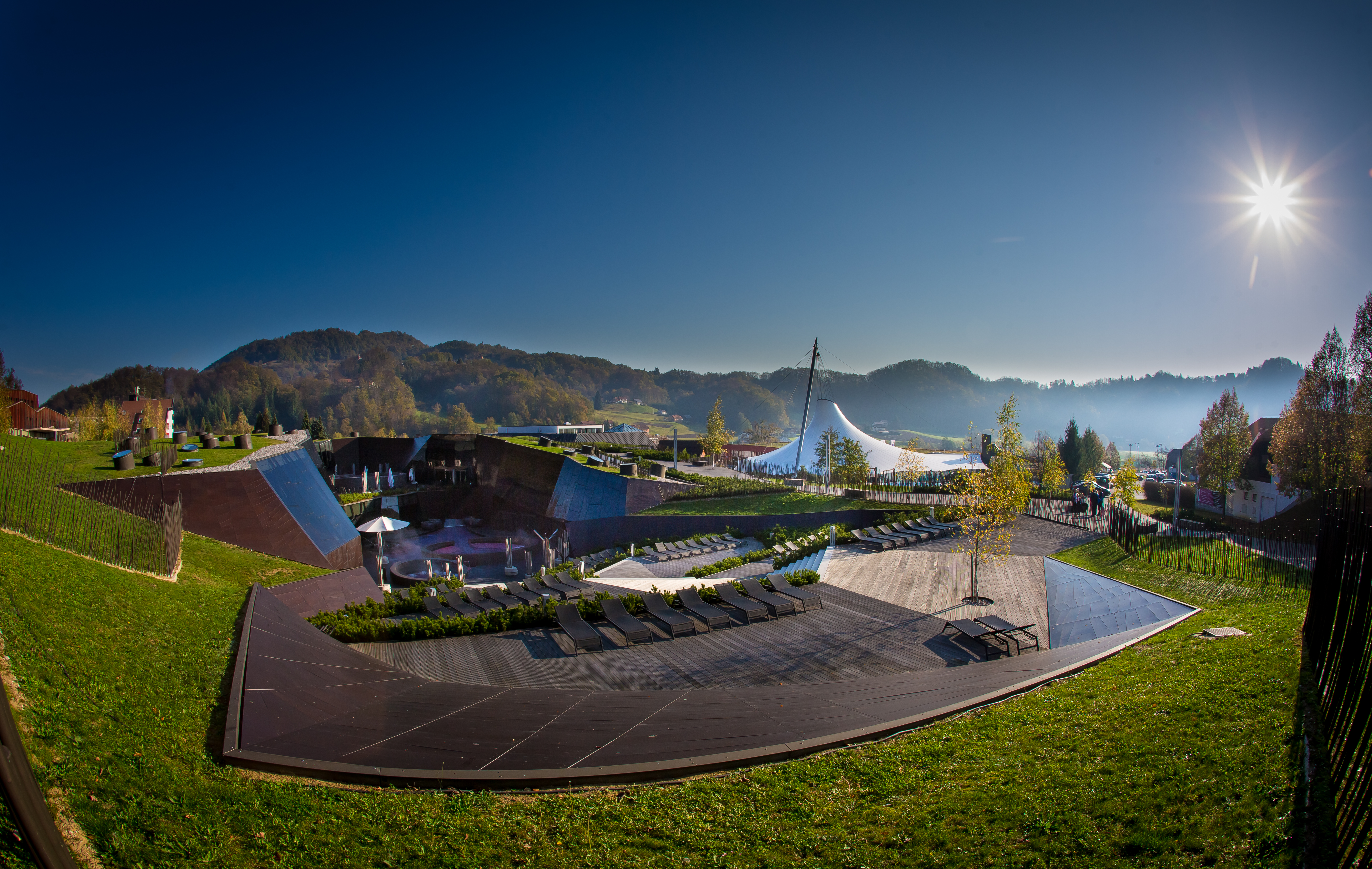
During my 3-day visit I stayed at the Olimia Thermal Spa, which makes an ideal base for exploring the area, and where you can also indulge in some luxurious treatments and water-based activities at the Orhidelia Wellness Centre that has for the last five consecutive years been voted the best in Slovenia. You can read plenty more about that here –https://spasinslovenia.com/2016/06/07/terme-olimia-the-best-wellness-centre-in-slovenia/

Terme-Olimia-exterior

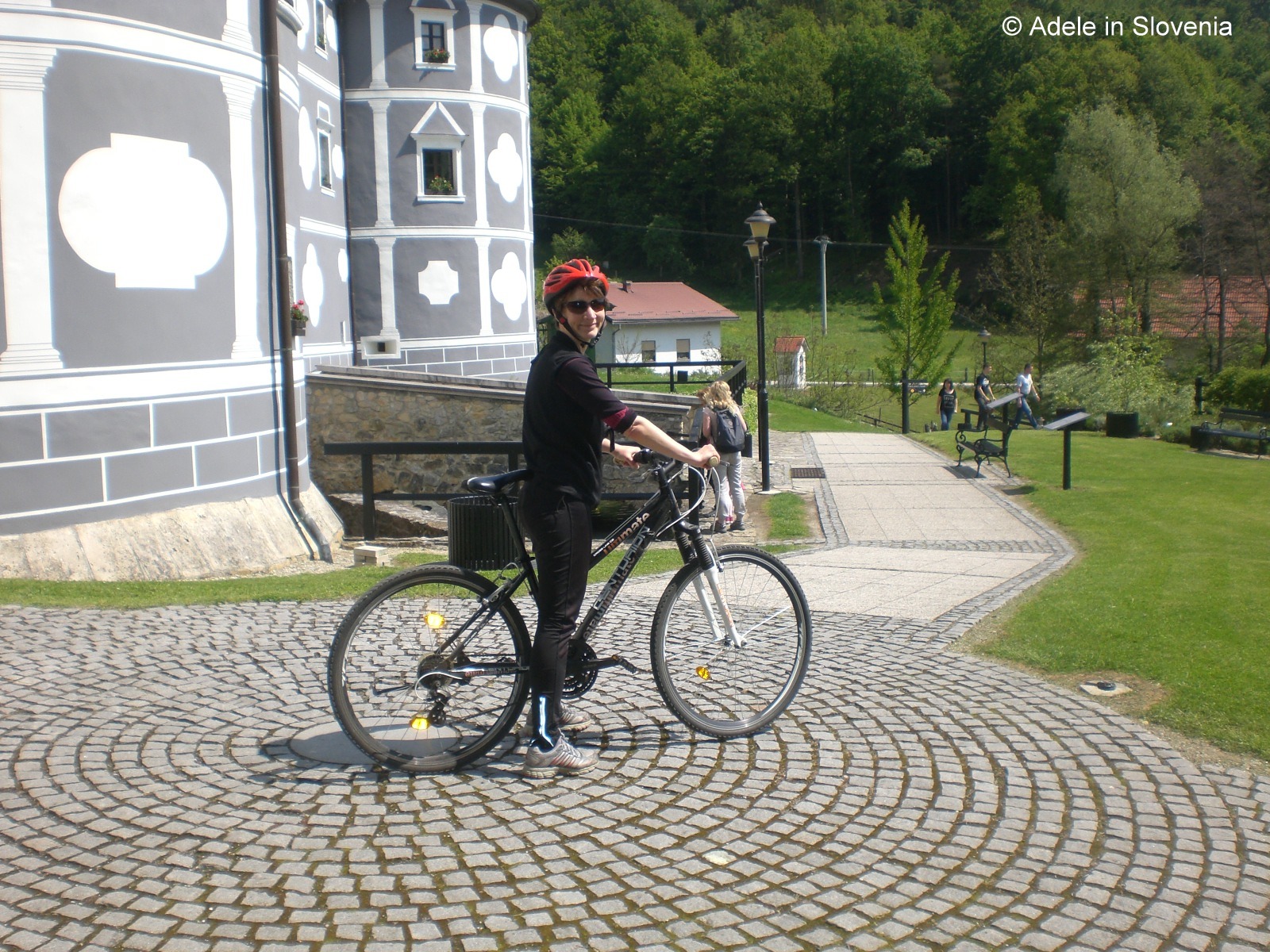
From the spa I went by bike on the cycle path to Olimje. My first port of call was a visit to the Olimje church, monastery and old pharmacy. This place, formerly a castle, was first mentioned in historical records in 1208 as a place of the Shrine of the Assumption of Mary. The castle was then turned into a monastery and pharmacy – now one of the oldest pharmacies in Europe.

CIMG1231

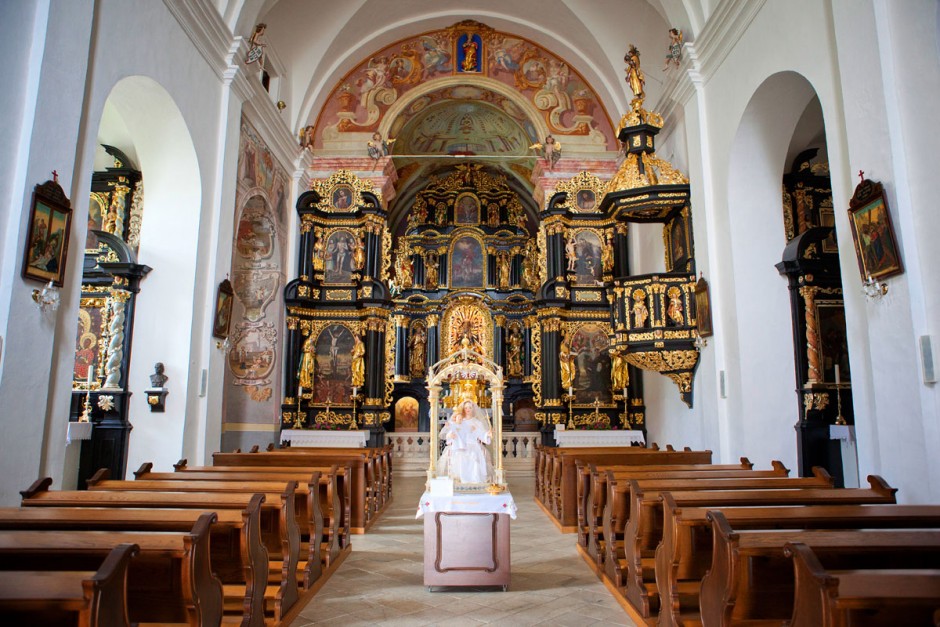
For over 120 years it was inhabited by the Pauline Monks, who, in 1665, were responsible for building the magnificent and extremely ornate Baroque church, which features one of the biggest golden altars in Slovenia, as well as numerous other notable pictures, frescoes and statues.

samostan-olimje-88995

The Pauline Monks produced their own natural remedies, and, according to their monastic rule, the monastery had to have a room for any sick brothers with an adjacent room for medicine and remedies. The frescoes in the pharmacy were painted by Lerchinger in 1780 and represent various biblical scenes.

CIMG1253

I was astonished at the number of people, hailing from all over Europe, that were queuing in the pharmacy to buy herbal teas, tinctures, syrups and apiculture products. There seems to be a ‘cure’ for every ailment imaginable, all of which are grown and produced by the monks-in-residence.

CIMG1252

Adjacent to the monastery building is the Syncerus Chocolate Boutique (Čokoladnica Olimje). Yes, you’re right, that was the MAIN reason for my visit!

CIMG1257

I was, literally, like a kid in a sweet shop trying to choose from all the delicious handmade chocolates on offer and I might, just might, have bought a few (kilos!). The shop is open daily throughout the year, from 10am – 5pm in winter, and from 10am – 7pm in the summer season. More information here – http://cokoladnica-olimje.si/

2f2b21b908c6cb0314fc2e7e6031b6da

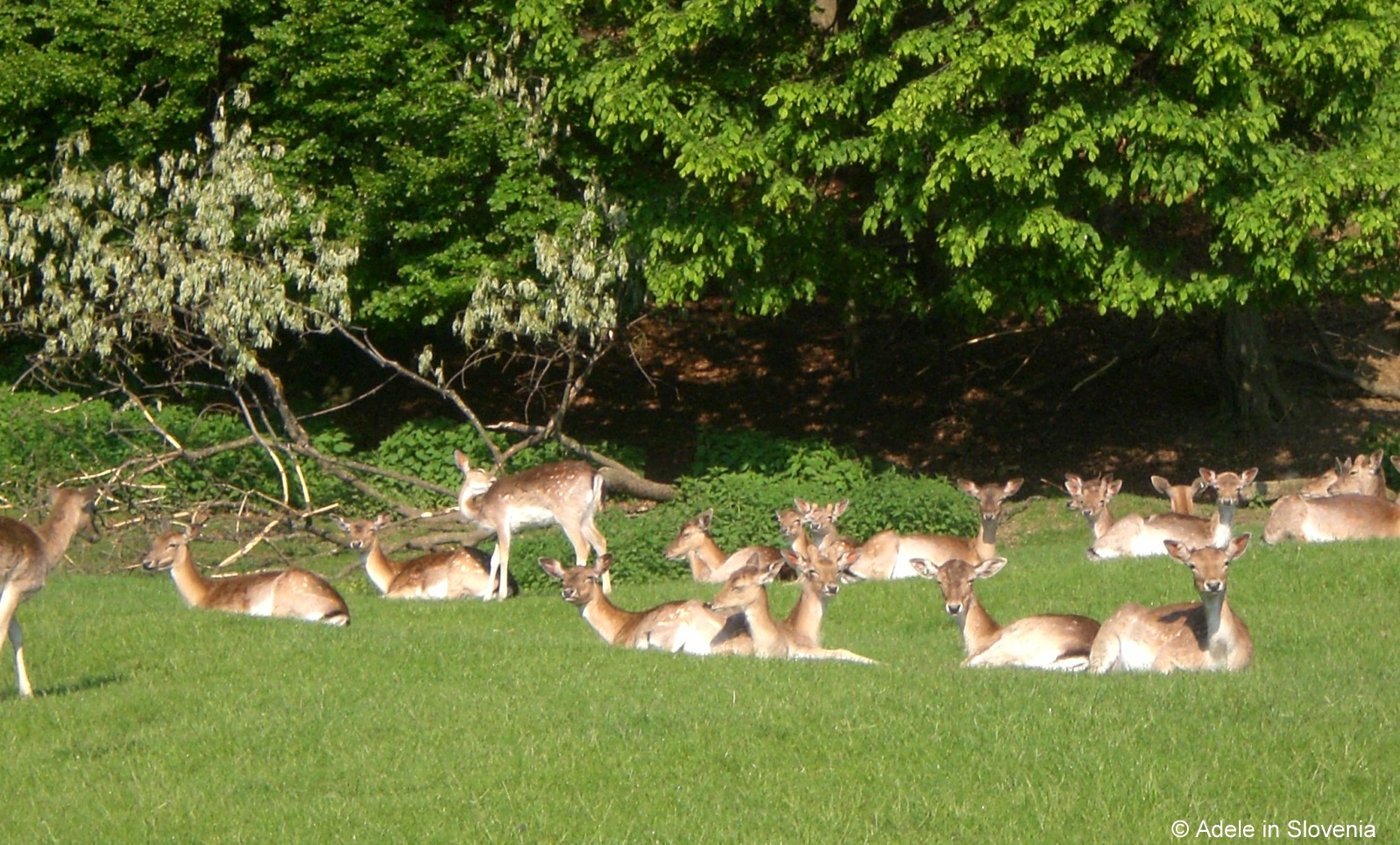
My next stop, just a few minutes uphill from the monastery, was the Jelenov Greben deer farm. The estate comprises a guest house and apartments, a restaurant, a shop selling homemade products such as venison sausages, jams, juices, honey etc., the Star Ata winery and, the stars of the show, the deer and mouflon which roam the estate freely and seem largely unperturbed by humans – meaning you can even get right up close to feed them. More information here – http://www.jelenov-greben.si/

CIMG1274

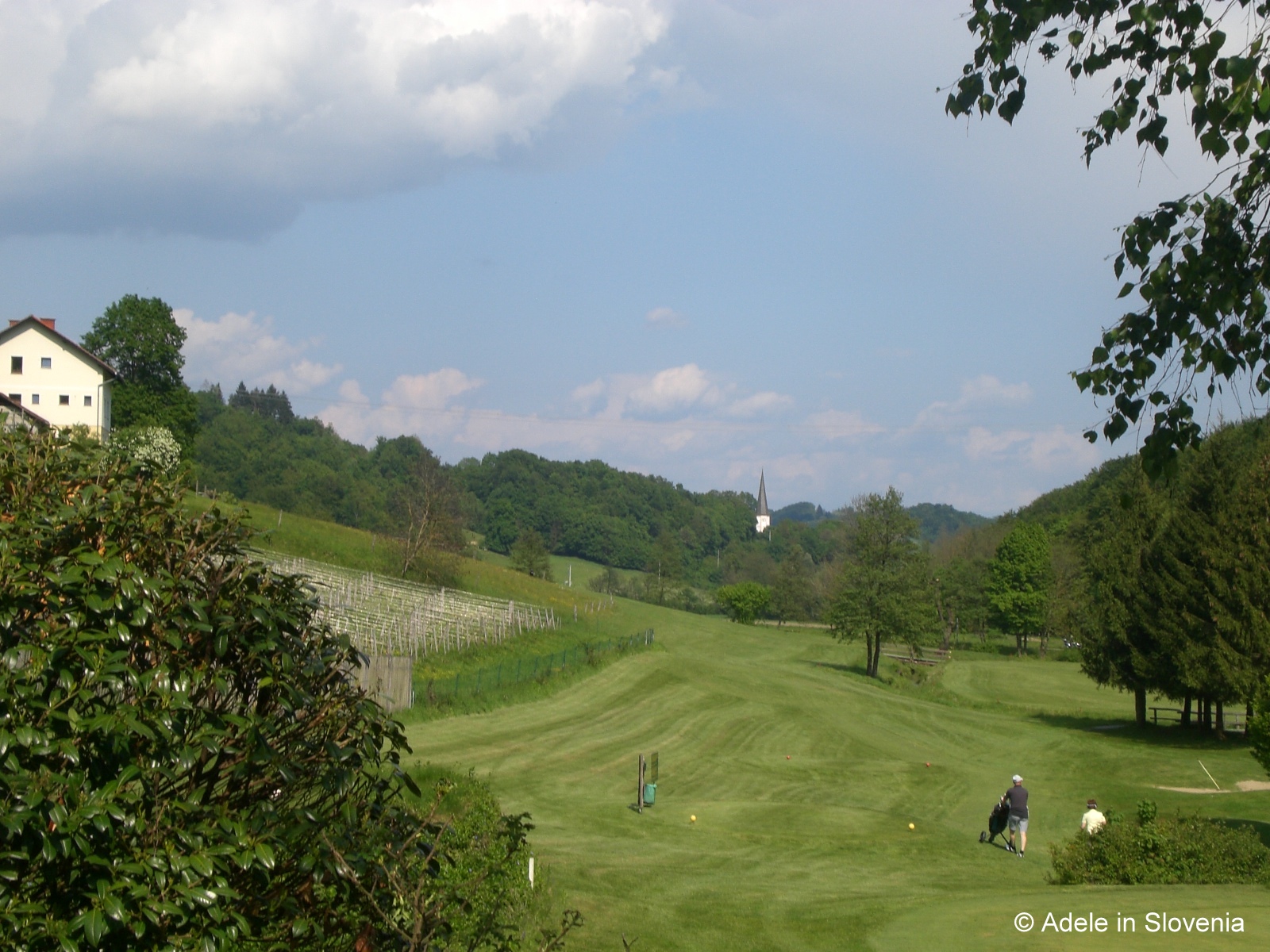
Also within close proximity is the Amon Estate, which is a family-run business and the oldest private winemaking company in Slovenia. The estate features a 9-hole golf course – A Golf, a guest house, and a small shop selling homemade products. It was a perfect spot for me to sit back, take a break, and enjoy the tranquillity and the views. More information here – http://www.amon.si/index.php?si

CIMG1260

More information about all the above, and more, can be found here – http://www.turizem-podcetrtek.si/en/

© Adele in Slovenia