Discover Brežice and the Bizeljsko Wine Road

The town of Brežice, in the south-east of Slovenia, is framed by the Gorjanci mountain range, is the location of the confluence of the Sava and Krka rivers, home to the magnificent Brežice Castle and other sights of interest, as well as being close to Bizeljsko and the Bizeljsko-Sremič Tourist Wine Route and the Čatež Thermal Spa.

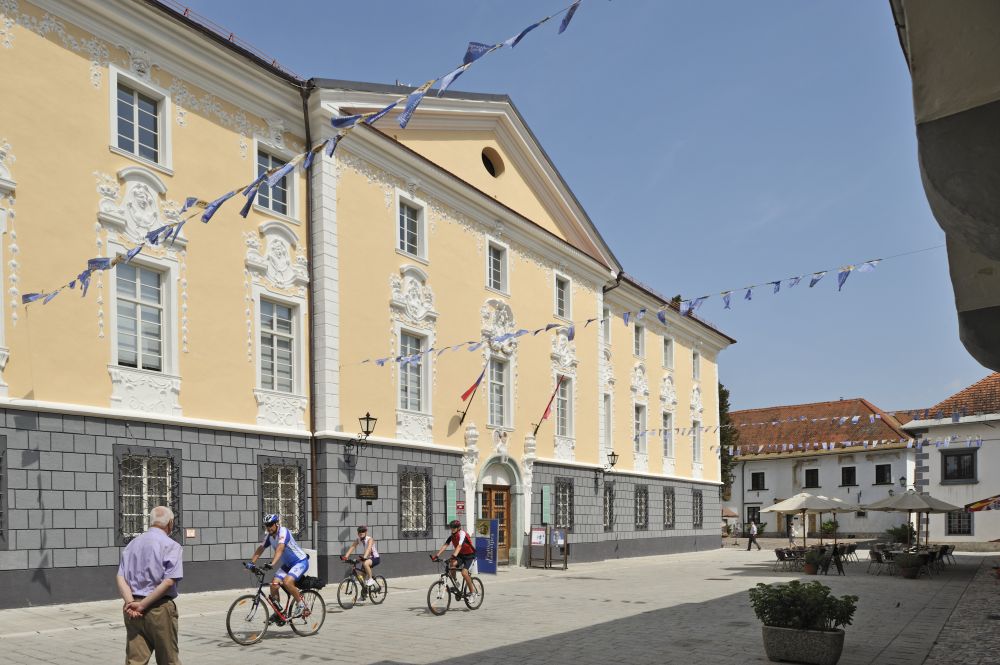
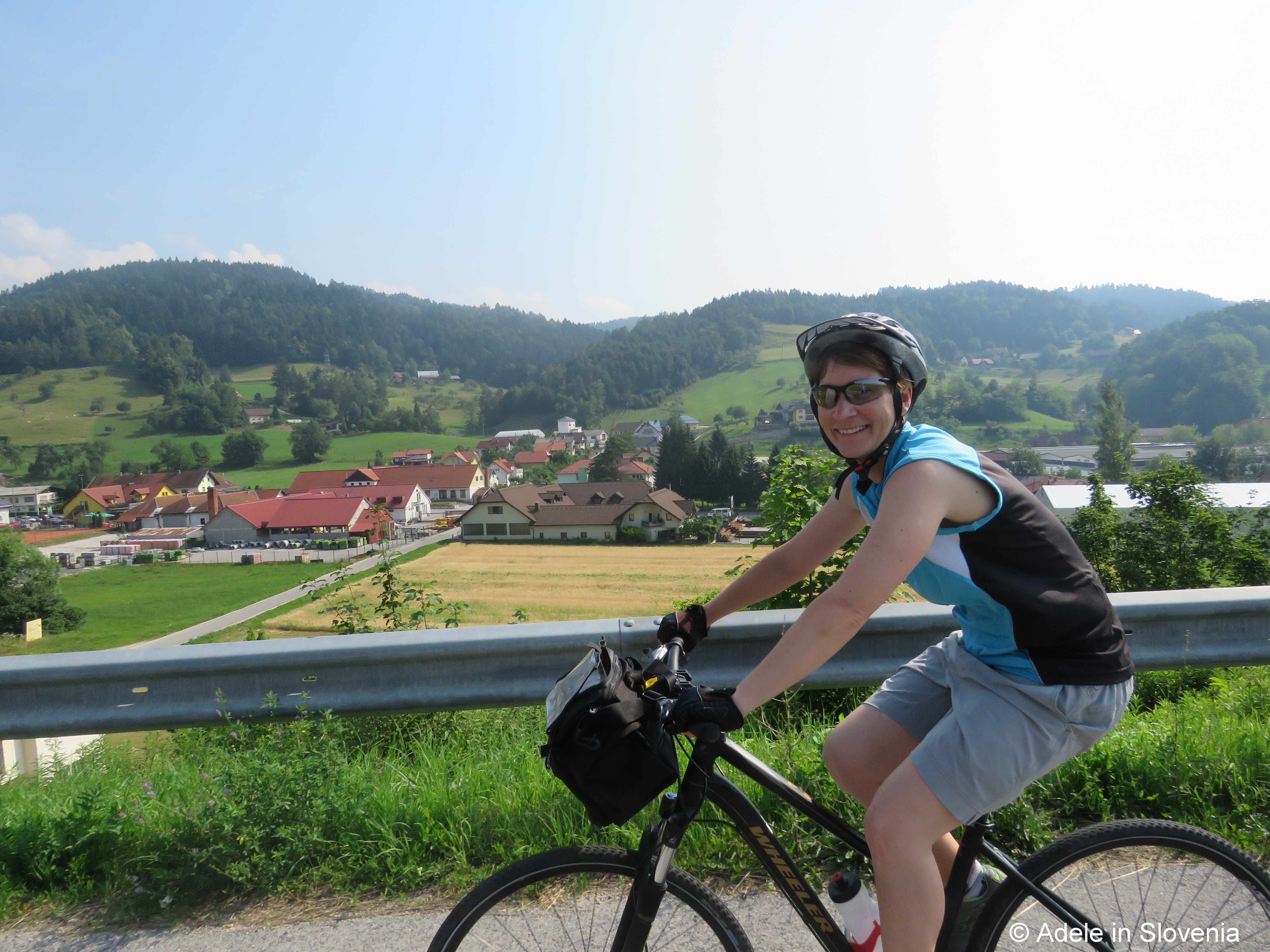
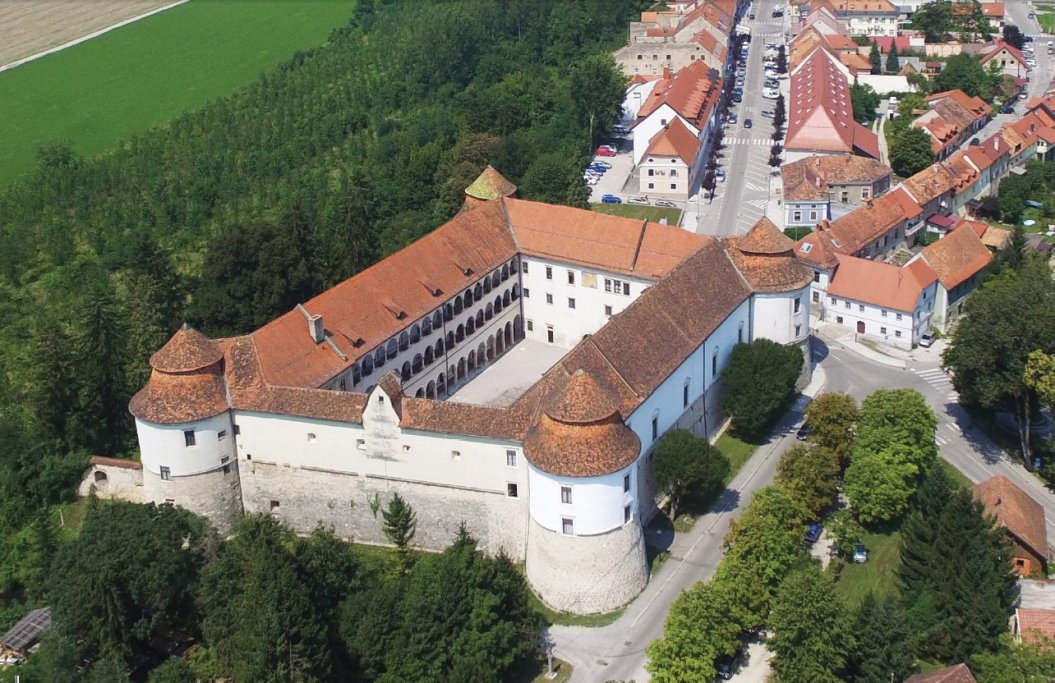
During my stay at the Čatež Thermal Spa, I took time to ‘Discover Brežice’ – as the town’s tourism slogan goes. I set off by bike and first headed to the Brežice Castle and Museum, which is without doubt the jewel among the town’s historic buildings.
3080

The Renaissance castle was turned into a residential castle by the aristocratic Attems family in the late 17th/early 18th century. The Baroque painted Knights’ Hall is most definitely the pièce de résistance and really has to be seen to be able to appreciate its full magnificence and the vibrancy of colours.

CIMG1841

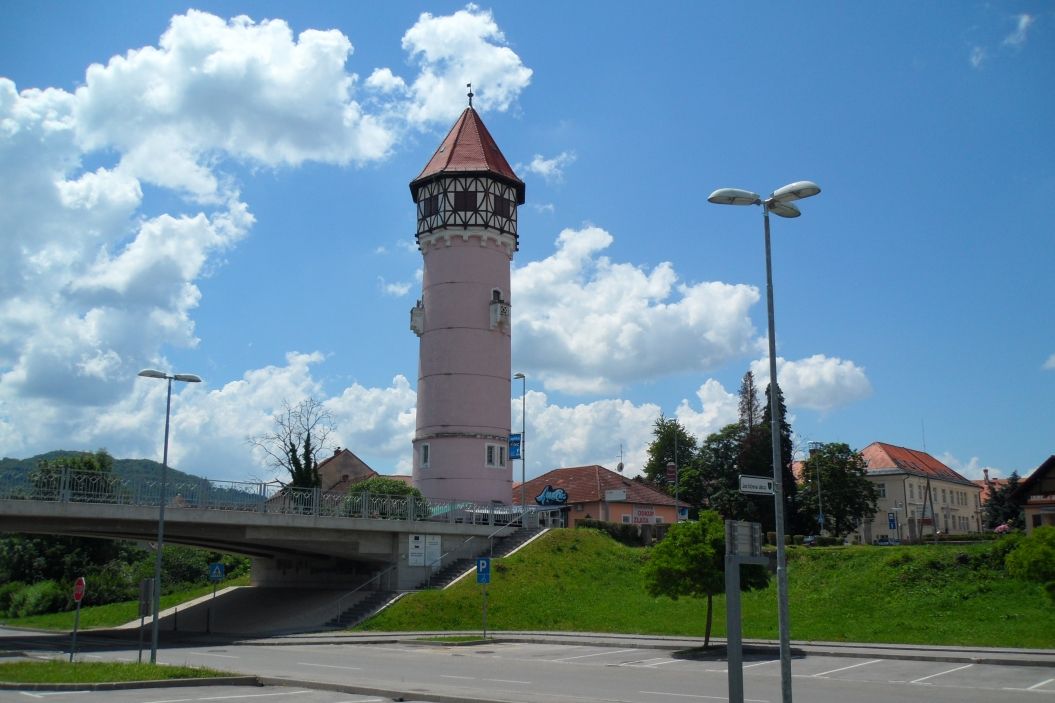
The 46 metre-high Brežice Water Tower was built in 1914 in order to provide the town with water. It no longer serves its original purpose but remains the most visible and well-known of the town’s landmarks. Today you can sit in the café on the ground floor and look up to enjoy the view!
vodni stolp

Whilst in the area you simply must drive, cycle, or walk, along part of the Bizeljsko-Sremič Tourist Wine Road and pay a visit to a ‘repnice‘ – quartz sand caves which are nowadays used for storing wine.

cimg1798


From Brežice it took around 45 minutes by bike to reach the Najger repnice. The area’s landscape has an almost Tuscan feel to it and, although I was cycling on main roads, traffic was light and it was a pleasurable and scenic ride. The area is part of the Kozjanso Nature Park – one of the oldest and largest protected areas in Slovenia.

CIMG1782

Not really knowing what to expect, I found the Najger repnice absolutely fascinating. Repnice caves were originally used for storing turnips (‘repa‘ in Slovene, hence the name ‘repnice‘) during winter, at the time when turnips were the main fodder for livestock.

CIMG1784

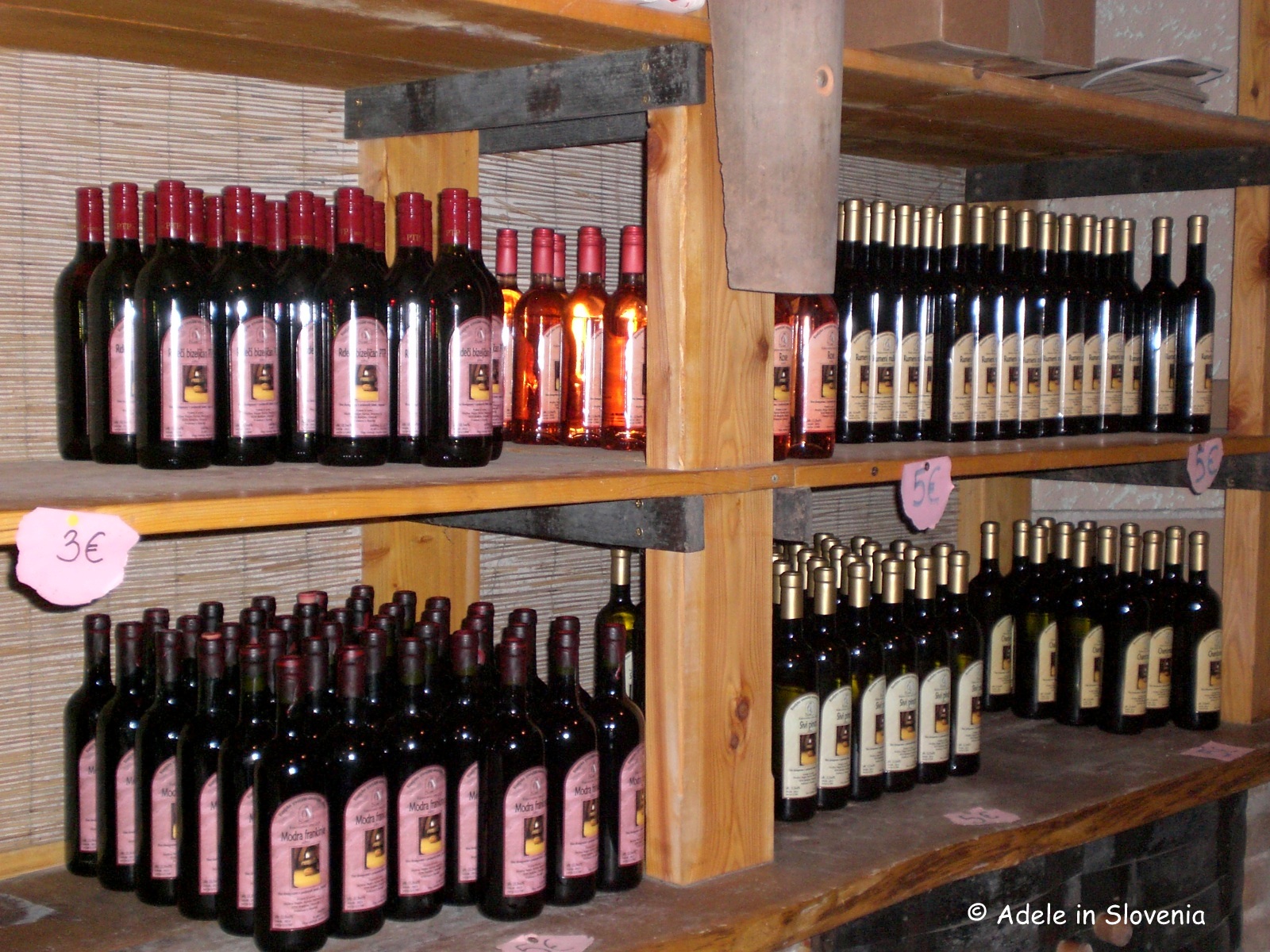
These days, the caves, made from dug out quart sand, are used for storing wine and visitors have a chance to taste and buy some of the excellent home-made wines, accompanied by a plate of home-produced cheese and dried meats, or other homemade delights.

CIMG1804

The rooms inside the caves are at a constant temperature, offering perfect conditions for storing wine. To really understand the marvel of these caves it is necessary to understand how much work went in to digging them out; for each small room it took around 3 months of working 8 hours per day. Now if that isn’t hard labour and dedication I don’t know what is. The results, however, were well worth it!

CIMG1791

If you look closely at the sandstone you can make out various natural shapes and patterns. Which animal can you see here?

CIMG1797

Following the tour of the cave there was also the chance to buy some of the home-produced wine, at more-than reasonable prices, which makes an idea gift or a treat for yourself – it was sweet muscat wine for me!
CIMG1812

The vast Terme Čatež Thermal Spa is one of the main attractions in the area and offers year-round water-based fun for all the family. You can read a full account of my visit here – http://wp.me/p7jQx9-8y

In bygone days, boats and ferries regularly transported people and goods from one side of the Sava river from the Čatež Thermal Spa to the village of Mostec and back. Nowadays, the special ‘brod’ ferries offer short pleasure trips along the river.


CIMG1766

The 7-day Brežice My Town Festival, the largest festival in the Posavje region, takes place annually at the end of June and attracts thousands of visitors from Slovenia and neighbouring countries. The festival programme includes a wide range of concerts, performances, activities for children, sports challenges and a chance to sample some of the best local cuisine.

For more information about all the above visit the Discover Brežice website – http://www.discoverbrezice.com/EN/

© Adele in Slovenia

Taste Tepka Pear Perfection at Vila Podvin

The tepka pear is a rare variety of pear that is only grown in a few areas of Slovenia and, in recent years, has been coming back into popularity largely due to its unique flavour and versatility.

Flying the flag for the tepka pear is one of Slovenia’s top chefs, Uroš Štefelin, at Vila Podvin. Uroš’ ethos of cooking is based on using local ingredients to give traditional Slovene food a modern twist, thus, incorporating tepka pears into his dishes fits the bill perfectly.

12924607_1055621994511620_3629632656492390110_n

Curious to find out more about this rare pear, and, of course, taste it, I went along to Vila Podvin in Mošnje last week (luckily for me it’s only a few kilometres from where I live!) to try an entire menu based around tepka pears, with the aim of helping to spread the word about this gem of a fruit.

In their natural form, as seen below here on the left, one could be forgiven for thinking that the brown inside of the pear means it is rotten, but this is quite normal, though, for my taste at least, the texture is a little gritty. The tepka pear seen on the right below is the dried version and, and, as is the case with many fruits, drying or cooking them makes the flavour far sweeter and more intense.

cimg2351

The tepka pear works equally well in sweet and savoury dishes – all that is needed is a little imagination, which Uroš has in spades! So, if you’d like to get to know this interesting little fruit, read on, and, if you like what you see, be sure to pay a visit to Vila Podvin to try some for yourself!

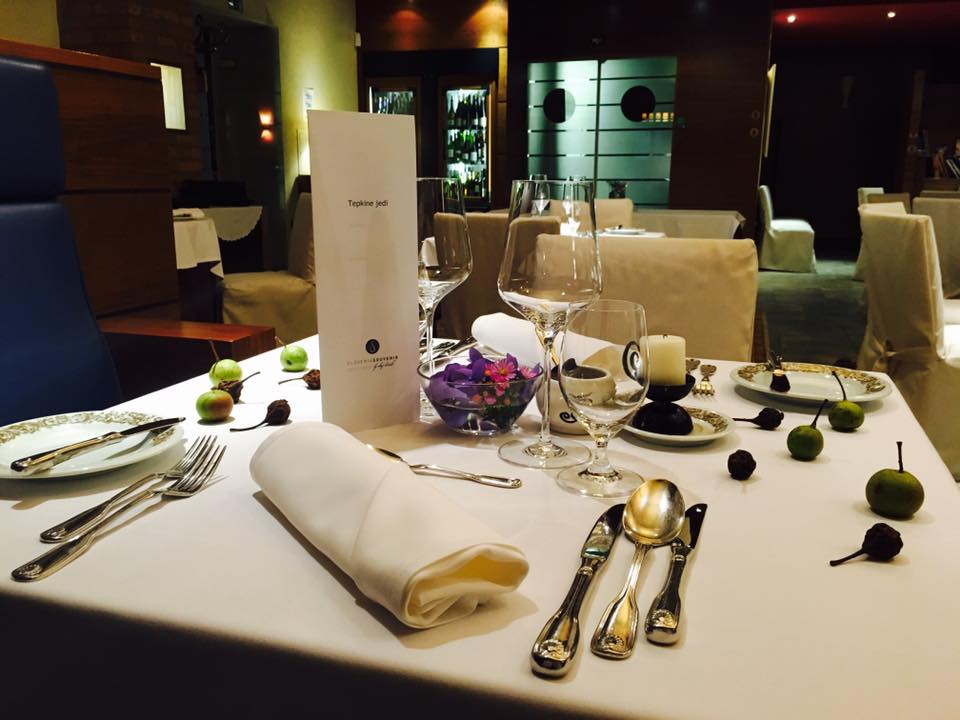
If you opt for the tepka-based menu, you can expect your table decoration to be tepka-based too!

14448983_1195797713827380_6558383087345365871_n

Menus at Vila Podvin are seasonal and based on locally available ingredients so, although there is usually always something tepka-based available, if you want the full tepka works, then be sure to book ahead!

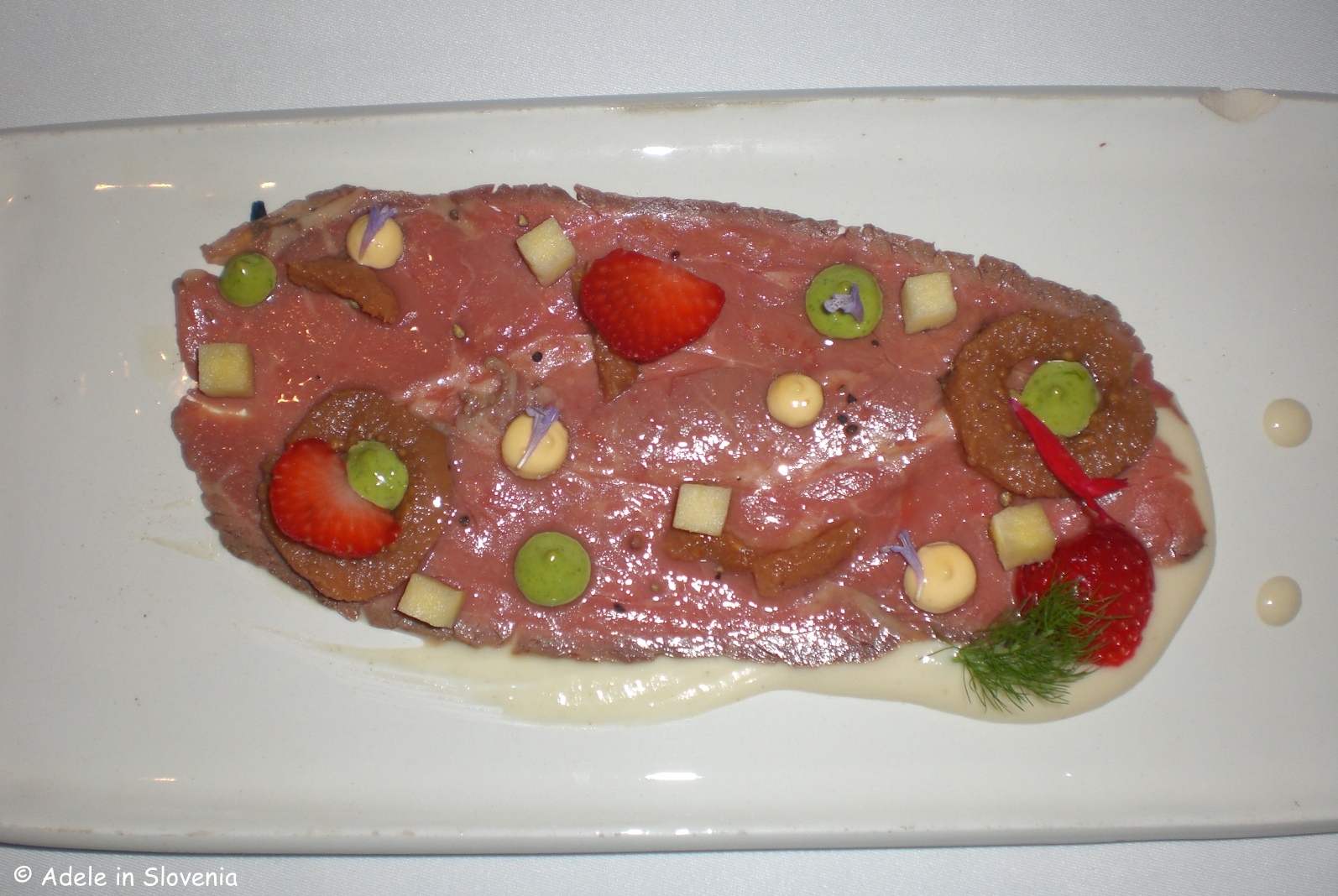
The first of the 6 course tasting menu I devoured was beef carpaccio with sliced cooked tepka pear and horseradish mayonnaise.

cimg2340

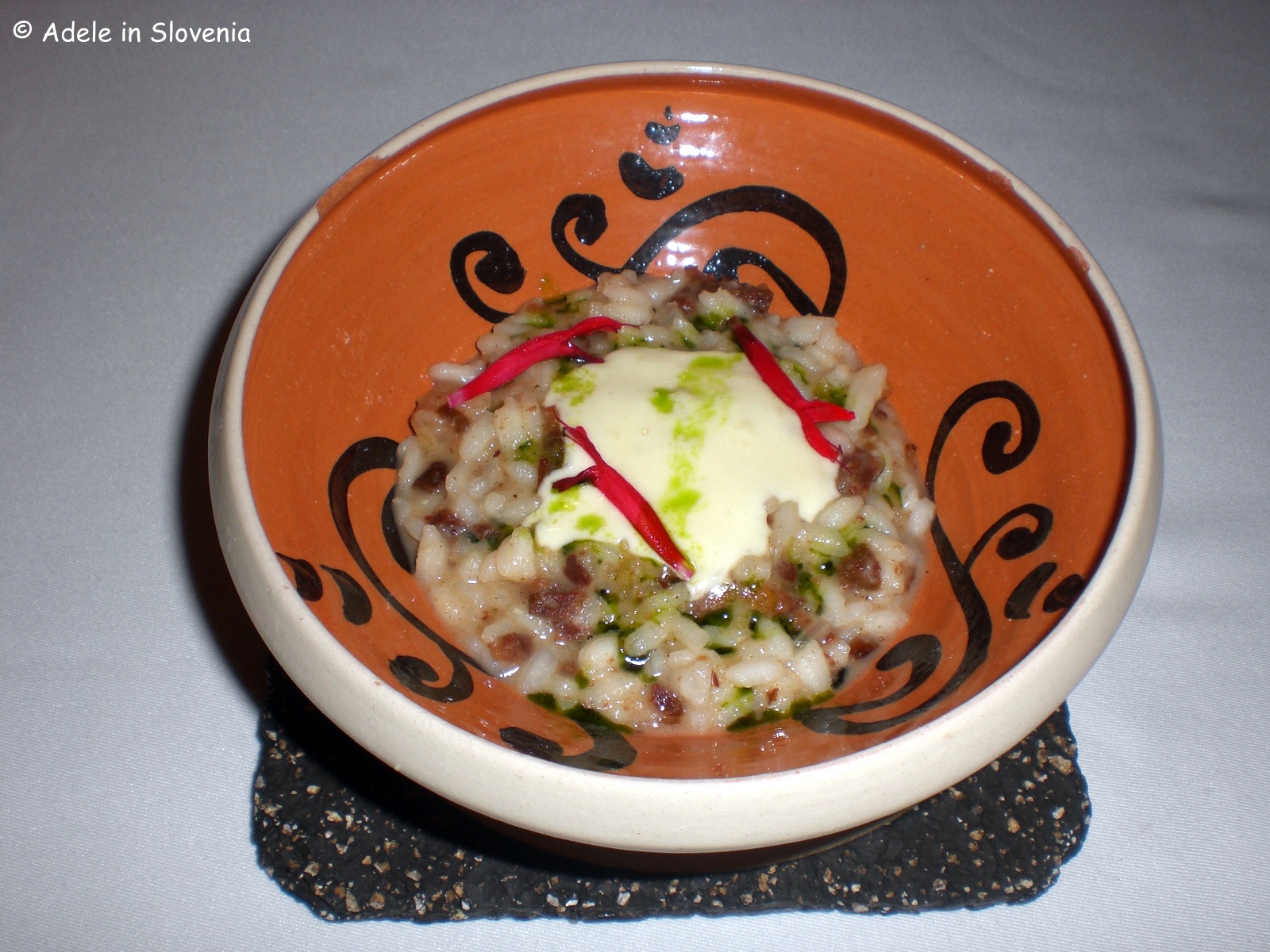
Next up was barley risotto with tepka pear, horseradish and goats cheese.

Vila Podvin also has its own in-house pottery workshop in the entrance lobby. The unique plates and bowls in/on which the food is served are designed by the house artist, Barba Štembergar Zupan, who transforms clay into Podvin ceramics decorated with motifs of Ljubno potters. It’s this attention to detail, both in the food and presentation, that makes all the difference.

cimg2342

Although Vila Podvin is a superior-quality restaurant with a renowned head chef and excellent and knowledgeable waiting staff, the atmosphere is pleasantly relaxed and intimate and doesn’t feel in any way stuffy or formal. So, if you want to go into the kitchen, just ask – as I did!  I was just in time to see my third dish being served up!

cimg2348

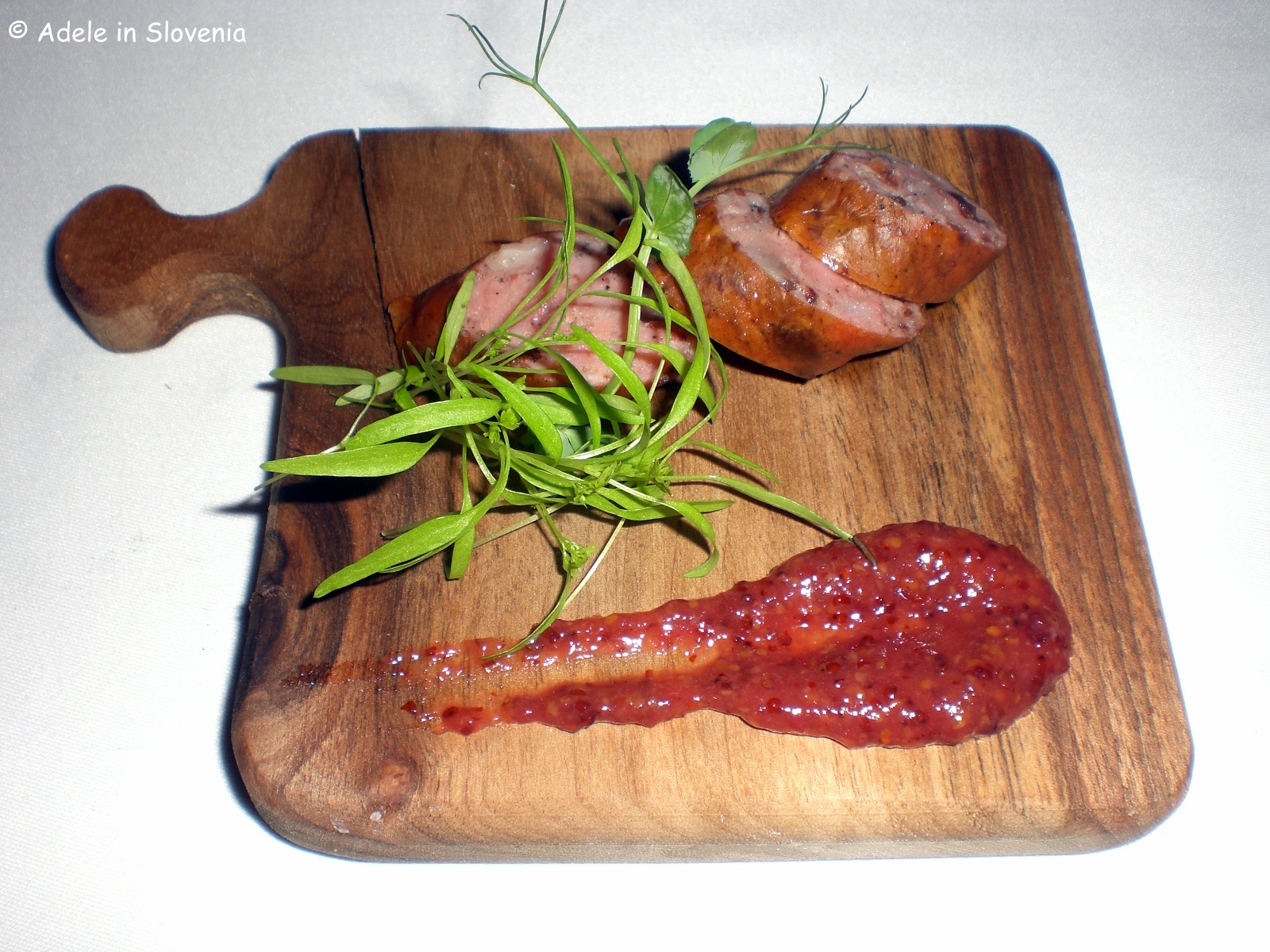
Carniolan sausage, otherwise known as Kranjska klobasa, with tepka, served with plum jam with mustard seeds.

cimg2349

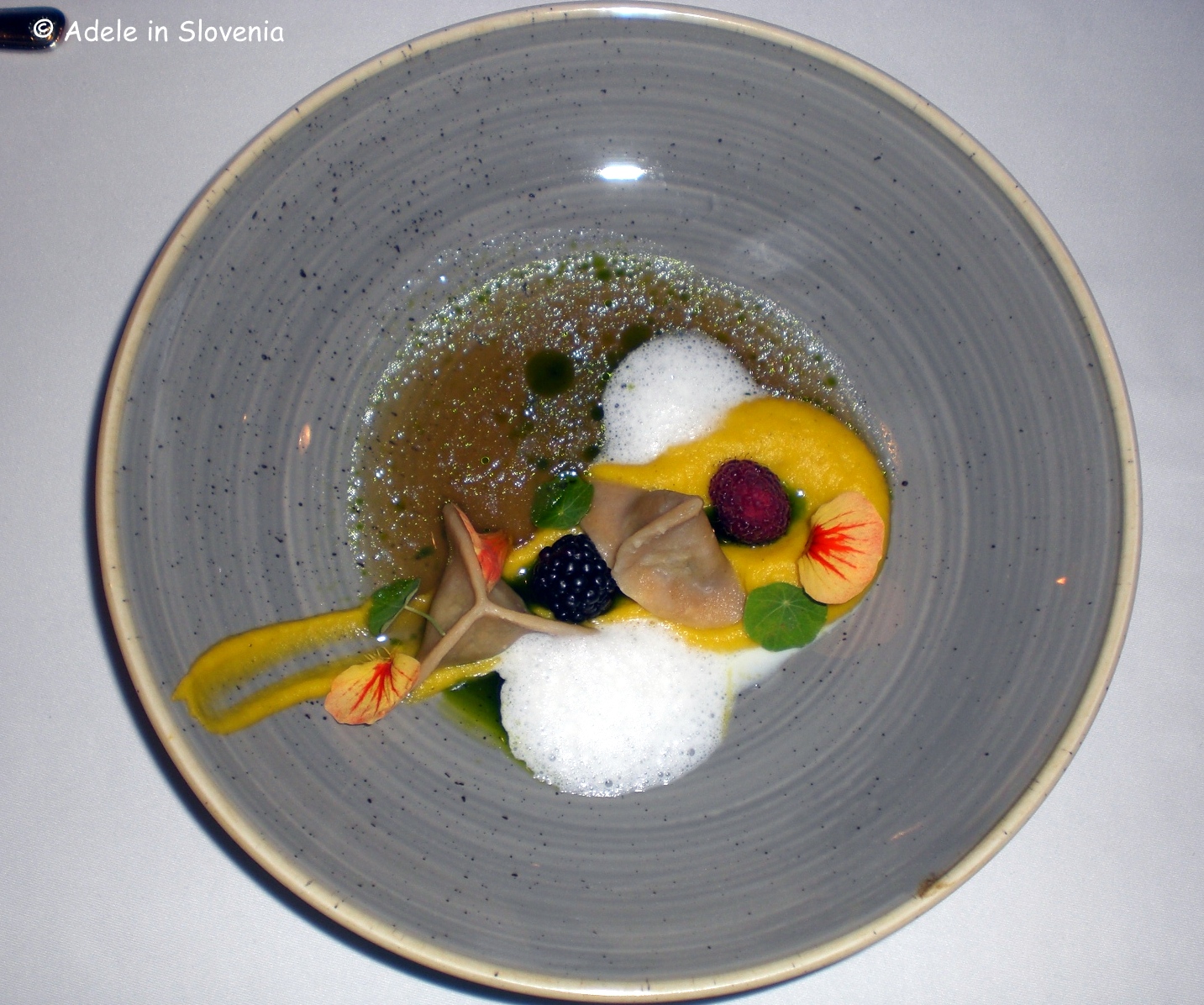
The next course was pasta filled with goose liver and tepka pear with a clear mushroom broth.

cimg2353

The final savoury dish was saddle of roe deer on a base of red polenta with tepka pear, black walnuts with berries and a honey sauce.

cimg2355

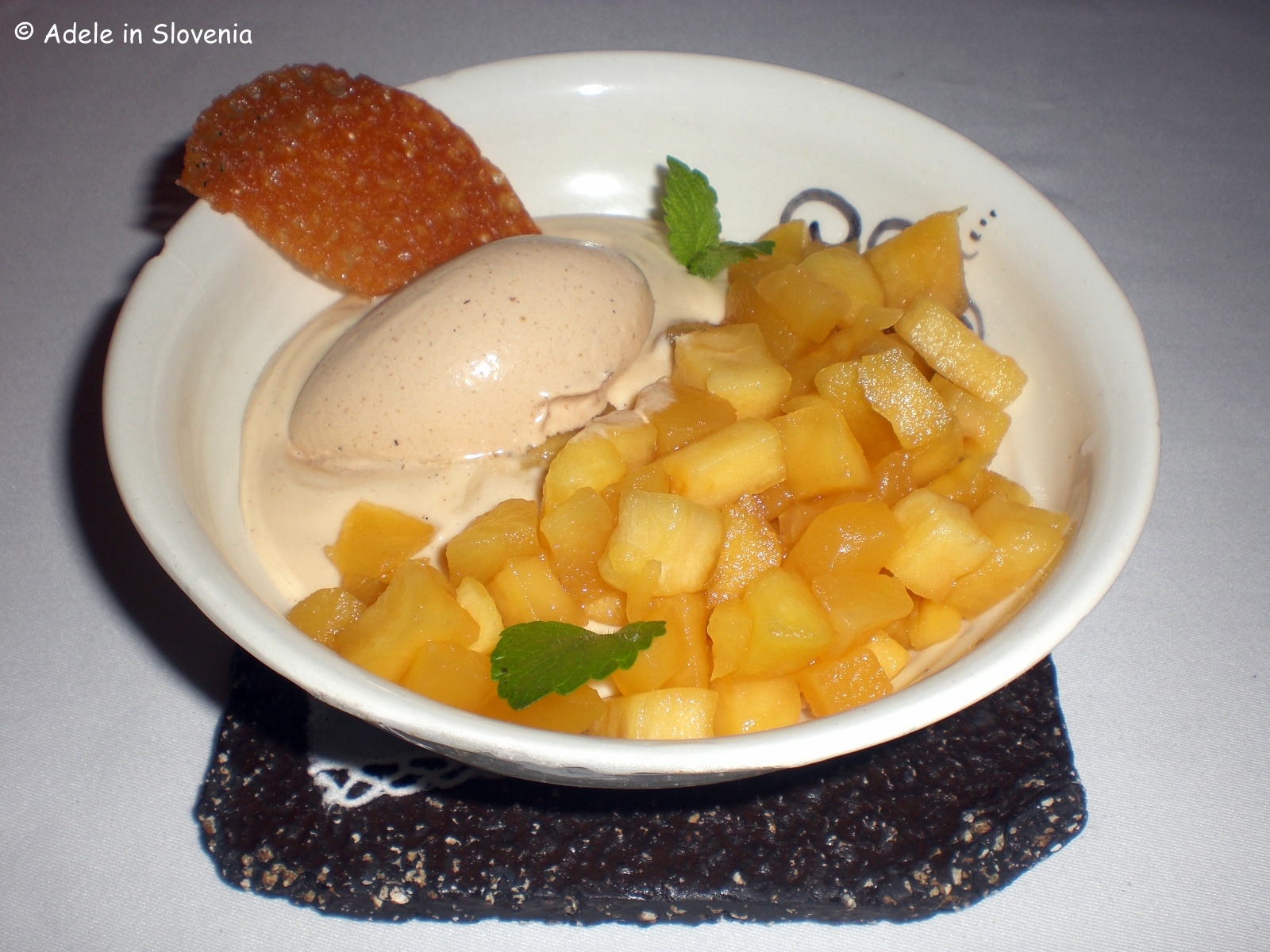
Fortunately I still had room, just about, for dessert – which is always my favourite part of every meal! A deconstructed apple strudel with tepka pear ice-cream – delicious!

cimg2359

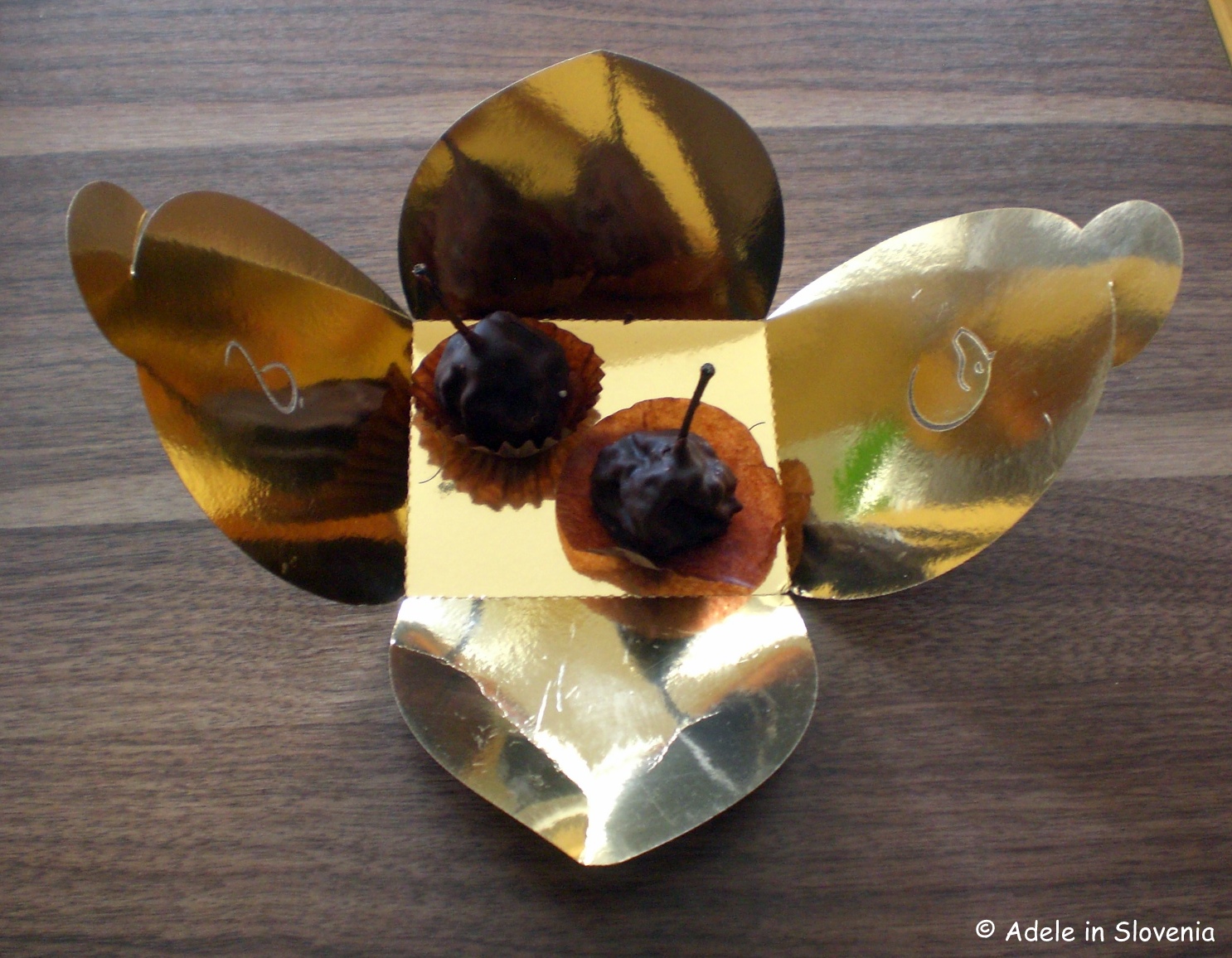
The final icing on the cake was the dried, soaked, succulent chocolate-covered tepka pears, which I opted to take home!

cimg2366

You can also buy tepka pear treats to take home, including fruit juice, liqueur, and sausages, and there is a chance to sample them at the monthly Vila Podvin local market. Read more here – https://adeleinslovenia.com/2016/09/05/shop-locally-at-radovljicas-farmers-and-craft-markets/

Find out more about Vila Podvin, which is also one of the participating Taste Radol’ca restaurants and will this year host the opening event at the end of October, here – http://www.vilapodvin.si/EN/

© Adele in Slovenia


Wacky and Wonderful Rainy Day Ideas in Slovenia – The Sunny Side of the Alps!

Autumn can be one of the nicest times of year here in Slovenia. The heat of the summer has subsided, and with it the risk of afternoon showers, the roads and tourist hotspots are less crowded, and the leaves falling from the trees are a wonderful kaleidoscope of autumn gold and russet colours.

However, although Slovenia is often called ‘The Sunny Side of the Alps’, let’s face it, it does also rain at times!

Bohinj Lake in Autumn – Photo: Dunja Wedam_3099_orig

Much of Slovenia’s natural beauty lies in the great outdoors. So, as I know only too well, it can be frustrating when it isn’t possible to get out there and enjoy it. But, it doesn’t have to spell disaster! There are still plenty of things to see and do, whatever the weather. So, in this blog, I’ve listed a few ideas for what to do on those gloomy, rainy, and maybe even snowy, days!

MUSEUMS – There are hundreds to choose from, thus it’s nigh-on impossible to single one out, so I’ve whittled down the choice somewhat, though, of course, the list is far from exhaustive. Below are just a few of the largest and most popular.

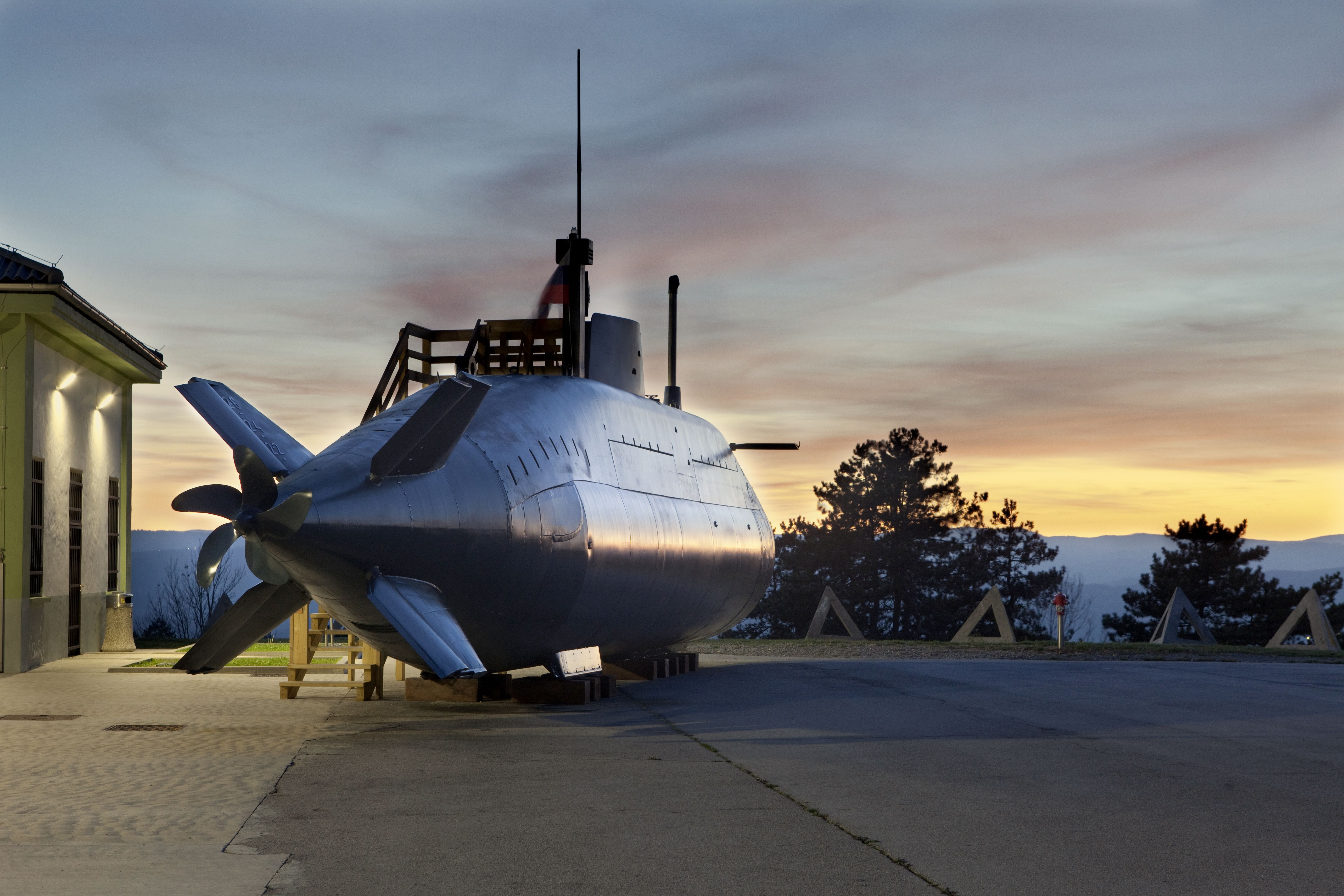
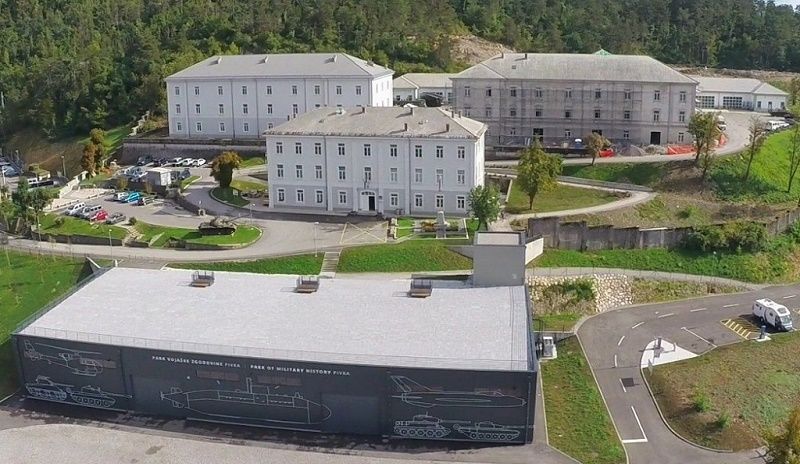
The Park of Military History in Pivka – even those who don’t consider themselves fans of military history, will find something here. The highlight is the chance to go inside the P-913 Zeta submarine. Read more about my recent visit here – http://goo.gl/nWm3Mq and find more information here – http://parkvojaskezgodovine.si/en/

Photo:

Photo: Simon Avsec http://www.slovenia.info

The UNESCO-listed Anthony’s Shaft Idria Mercury Mine – more than 700kms of tunnels, and 500 years of mercury mining. More information here – http://www.antonijevrov.si/index.php/en

Photo: Visitidrija.si

Photo: Visitidrija.si

The Museum of Apiculture in Radovljica – housed in the magnificent Baroque Radovljica Mansion. Learn about beekeeping in Slovenia and see the oldest beehive panel in the world.

Radovljica SLO 2011

Photo: Tourism Radovljica

Škofja Loka Museum – housed in Loka Castle, one of Slovenia’s finest castles in the heart of the historic medieval old town. It boasts extensive and impressive museum collections. More information here – http://www.loski-muzej.si/en/

Photo: Jana Jocif

Photo: Jana Jocif

The Ptuj-Ormož Museum – housed in Ptuj Castle, in Slovenia’s oldest city. Highlights include the collections of traditional carnival masks, musical instruments and glass paintings, as well as the Castle Gallery. More information here – http://pmpo.si/en/

gradsta3-e1455185283533-1600x792-ptuj

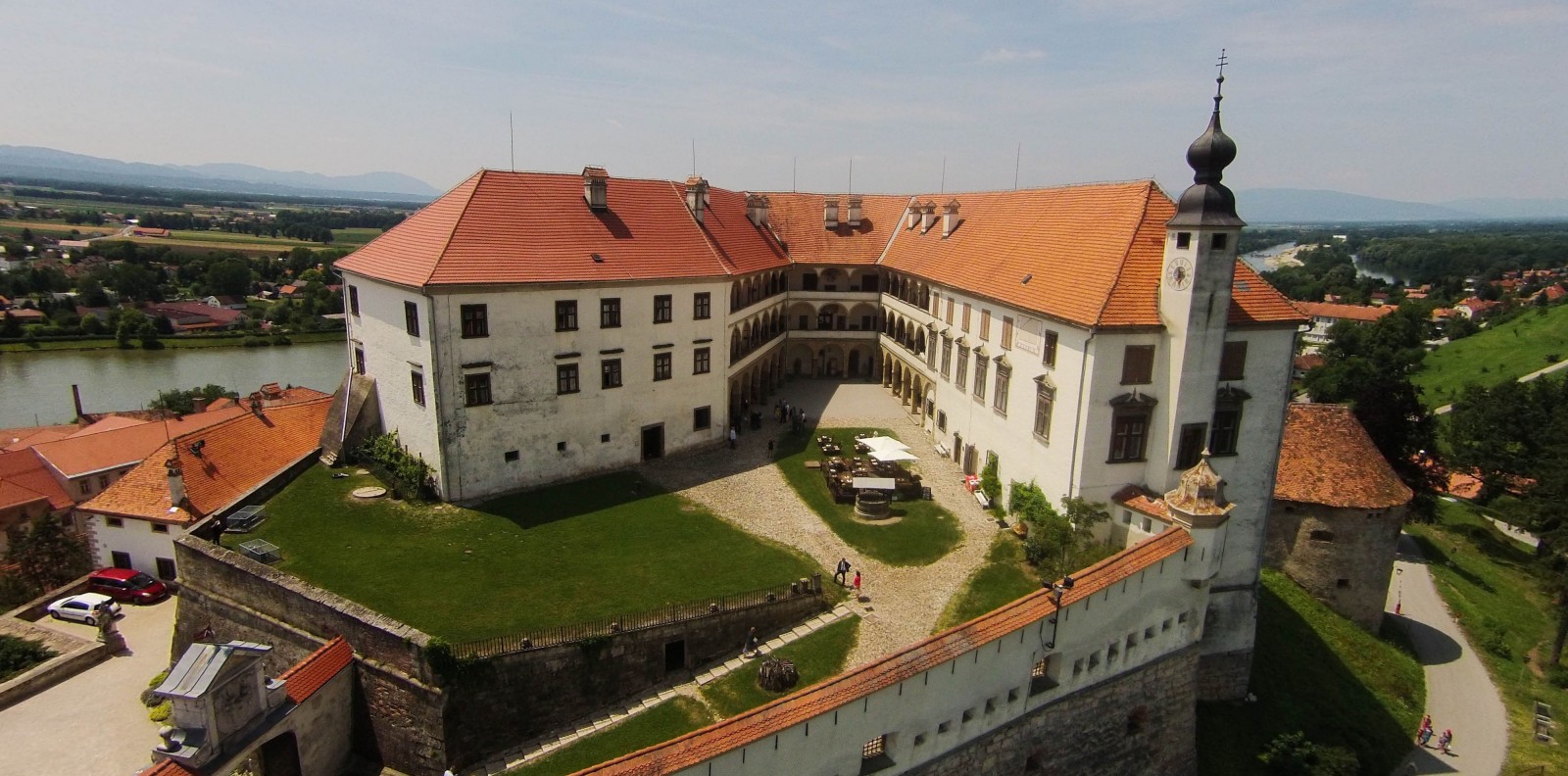
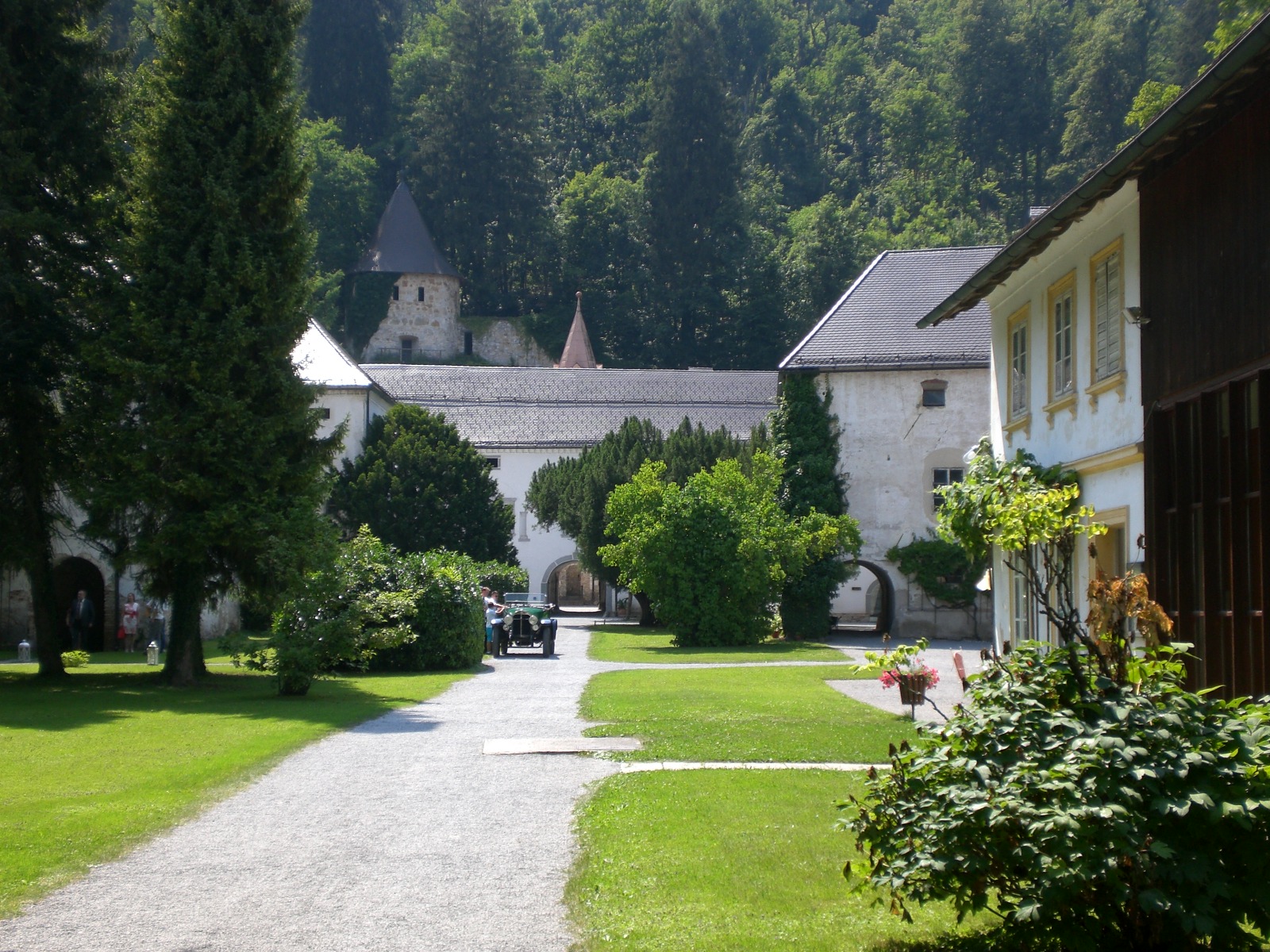
Bistra Castle and the Technical Museum of Slovenia. The castle was originally a Carthusian monastery during the period from 1260 – 1782 and was later changed into a manor house. It houses an eclectic mix of exhibitions including the Slovenian Hunting Museum and a collection of ex-President Tito’s cars. Read more here – http://wp.me/p3005k-NM and find more information here – http://www.tms.si/index.php

CIMG8905

Ljubljana’s museums and galleries – being the capital city, there is a wide choice, among them the National Gallery, the Museum of Modern Art, the City Art Museum, and the Railway Museum. Find out more here – http://goo.gl/WCnyYn

EAT, DRINK AND BE MERRY! – It certainly doesn’t have to be bad weather to ‘Eat, Drink and Be Merry’, but a dose of traditional hearty Slovene food on a cold damp day is sure to lift your spirits!

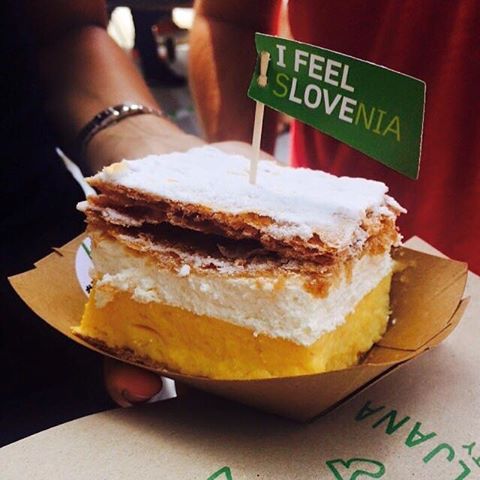
Suggested traditional dishes and foods include; bograč, štruklji, jota, ričet, žlikrofi, kremšnita, gibanica. Read more in this previous blog entitled ‘Love Food – Love Slovenia: 10 Must Try Foodshttps://adeleinslovenia.com/2016/02/18/love-food-love-slovenia-10-must-try-slovene-foods/

kremsnita

WINE or CRAFT BEER TASTING – Take your pick! There is plenty to choose from! You could head to one of the many wine-growing areas, such as Goriška Brda and the Vipava Valley, or, if you are in the capital, leave the choice to an expert and set off on a Ljubljananjam guided food walk, which can be tailored to suit. Read more here http://goo.gl/KqwmVo and find more information here – http://www.ljubljananjam.si/

cimg9517

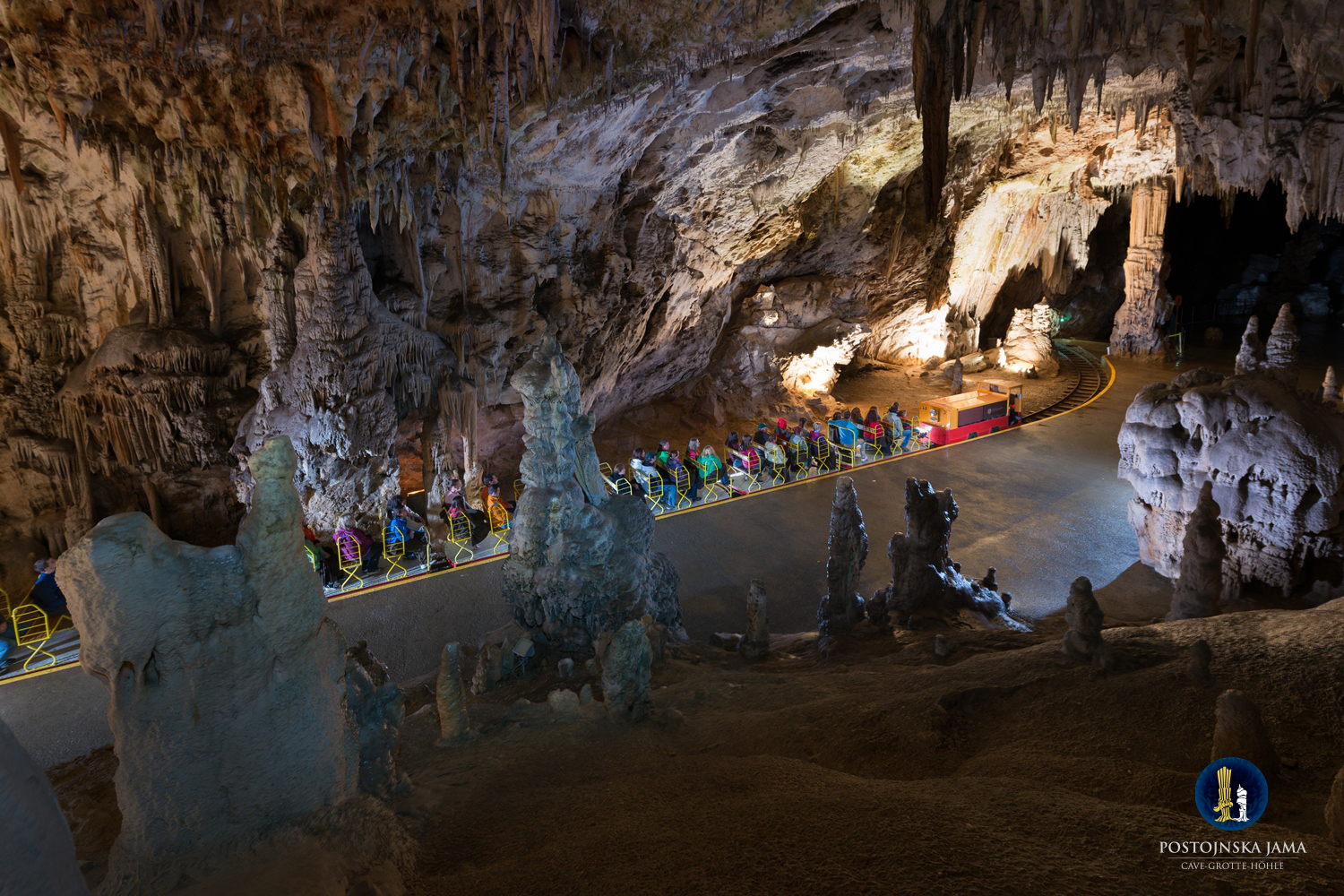
EXPLORE A CAVE OR TWO – With a constant temperature year-round, a visit to one of Slovenia’s tourist caves isn’t weather dependant. The Postojna Caves and the UNESCO-listed Škocjan Caves are the most popular, though there are also hundreds of other smaller caves.

Photo: Iztok Medja for Postojnska jama

SOMETHING DIFFERENT – Not necessarily ‘wacky’ but here are a few ‘out there’ ideas for a different way to spend a rainy day.

Cycle through a mountain! Just because it’s not cycling weather, it doesn’t mean you can’t cycle! For a unique experience try mountain biking through the former lead, zinc and iron ore mines under the Peca massif in Koroška. Read more here – http://goo.gl/DOvjXl

cimg2051

Try and escape the Enigmarium Escape Rooms – Literally lock yourself in (or rather someone else locks you in!) a room, or even an igloo, and try to escape by solving clues before the time runs out. Don’t get locked in! Find out more here – http://escape-room.si/?lang=en

Photo: Enigmarium.si

Photo: Enigmarium.si

And finally, if its wet outside, how about some pampering and/or water-based enjoyment at one of Slovenia’s thermal spas. This year I have been on a journey of discovery of them all – well almost all, just one to go! You can follow my journey here – https://spasinslovenia.com/

cimg2235

© Adele in Slovenia


The Pivka Park of Military History – A Historic Year!

It’s been quite a year thus far for the Park of Military History in Pivka. Visitor numbers are up by an astonishing 40%, as word spreads about this fascinating museum and its extensive and diverse collections. Last week the park celebrated its 10th birthday – in true military style of course – with a week of events culminating in the annual Festival of Military History, which I attended on Sunday.

It’s easy to reach Pivka, which is in Slovenia’s Green Karst region. It can be a destination in itself, or you can combine it with a visit to one of the other nearby attractions in the area, such as the Postojna Caves, Predjama Castle or the Lipica Stud Farm. The park is also an ideal place to visit on those pesky rainy days!

For those without transport, a bonus is that it is easy to reach Pivka by train. Direct trains run from Slovenia’s capital, Ljubljana and onwards toward Rijeka in Croatia. On arrival you can already see the imposing renovated barracks in which the museum is housed. When exiting the train station, just look for the museum symbols marked on the pavement.

dsc00052

After crossing the tracks, head downhill, following the green signs, and within 10 minutes you are there!

dsc00053

One of the biggest draws at the Park is undoubtedly the P-913 Zeta submarine, which visitors have a chance to go inside, accompanied by a guide, to experience the cramped conditions the submarine crew worked under.

podmornica-p-913

Photo: Simon Avsec – http://www.slovenia.info/

The renovated barracks housing the museum collections were built by the Kingdom of Italy around 1930 in order to defend the Rapallo border and were later home to the Yugoslav People’s Army. Since 2004 the Park has been developing and has now become the largest museum complex in Slovenia, as well as one of the largest military historical complexes in this part of Europe.

Of the numerous military-related events that take place at the Park throughout the year, last weekend’s 10th Festival of Military History, which was meticulously organised, is the largest. Below you can see some of the action that took place.

Demonstrations of tanks operating in combat situations.

dsc00094

A dynamic display of anti-terrorist measures with the helicopters of the Special Forces and the Slovene Army.

dsc00102

Recreations of various World War II military camps – Partisan, Soviet, American, and German. At times I felt like I had walked onto the set of MASH!

dsc00074

There was even fresh Jerry soup!

dsc00087

A chance to walk through a cavern. Provided, of course, you could get past the guards!

dsc00075

There was plenty of opportunity to get involved, ask questions, and, of course, pose for a few snaps for posterity!

dsc00068

A chance to get ‘hands on’ with the ammunition. The first, and hopefully only, time I will be holding such a weapon!

dsc00078

Not even the occasional torrential downpour dampened the spirits of these strapping Romans (from Ptuj)! Can you spot the odd one out?

dsc00057

There was also archery, a small market area, a collection of old-timer cars, and free transport to/from the railway station. The festival was a roaring success and another testament to the Park’s popularity.

You can find out more about the Park here – http://parkvojaskezgodovine.si/en/ and also read more about other things to see and do in the area, including the 17 intermittent lakes, in a previous blog from earlier this year – https://adeleinslovenia.com/2016/05/05/pivka-pause-ponder-play/

You don’t need to especially be a lover of museums, history, or military history (I wouldn’t consider myself to be!) to enjoy a visit. The exhibits are fascinating and there’s something for all the family. I highly recommend a visit!

© Adele in Slovenia


Biking and Hiking in Koroška – Through and On Mount Peca!

For lovers of the great outdoors, particularly hiking and cycling, Slovenia’s Koroška region offers a wealth of opportunities and exciting, unique experiences and was somewhere I had long had on my list of places to get round to visiting.

This is not a place of mass-tourism, and is all the better for it. Instead it’s crammed with unspoilt nature, picturesque alpine valleys, peaceful hamlets, remote and hidden delights, farmsteads and tourist farms with hospitable locals. In fact, Koroška is among the most mountainous of Slovenia’s regions – hence it has my name written all over it!

I stayed at the family-run Bike and Eko Hotel Koroš, in Jamnica, near Mežica – the Alpine and mining centre of the Mežiska valley. As you can see below, the views I woke up to of the surrounding countryside and mountains were pretty breathtaking!

CIMG2063

The hotel stands at an altitude of 900m, and is the first dedicated bike hotel in Slovenia.

koros5

As well as offering 10 simple rooms and excellent home-grown and home-cooked food, it boasts the Jamnica Single Trail Bike Park – a paradise for fans of adrenaline-filled mountain biking. Making the most of the idyllic surroundings, and with the agreement and co-operation of the local community, the hotel’s owners have prepared a network of 30km of single trails which you can tackle alone or with a guide. More information about the hotel and bike park here – http://www.mtbpark.com/si/main/ekohotelkoros

Photo: Rupert Fowler

Lead, zinc and iron ore mining was once the region’s key industry and there was, or rather still is, a labyrinth of tunnels under Mount Peca stretching for around 800 kilometres. At the peak of its production, around 2,000 people worked in the mine’s various units, which operated for three centuries, with production finally ceasing in 1994.

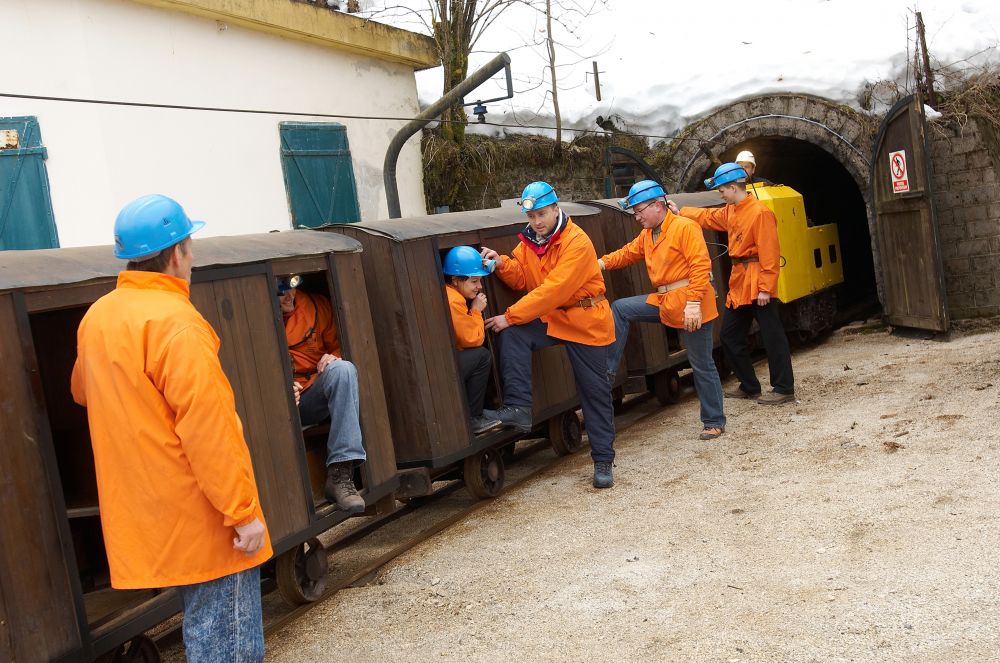
Nowadays, just a small part of the mine is open for tourists who can choose from 3 ways of experiencing it. The more sedentary option is to take a tour of the 3.5km Glančnik tunnel on board an original mining train. You also get to don some miners’ gear, to make the experience even more authentic! However, it’s not entirely sedentary, as the experience also includes a 1.5km walk through part of the mine.

vlak

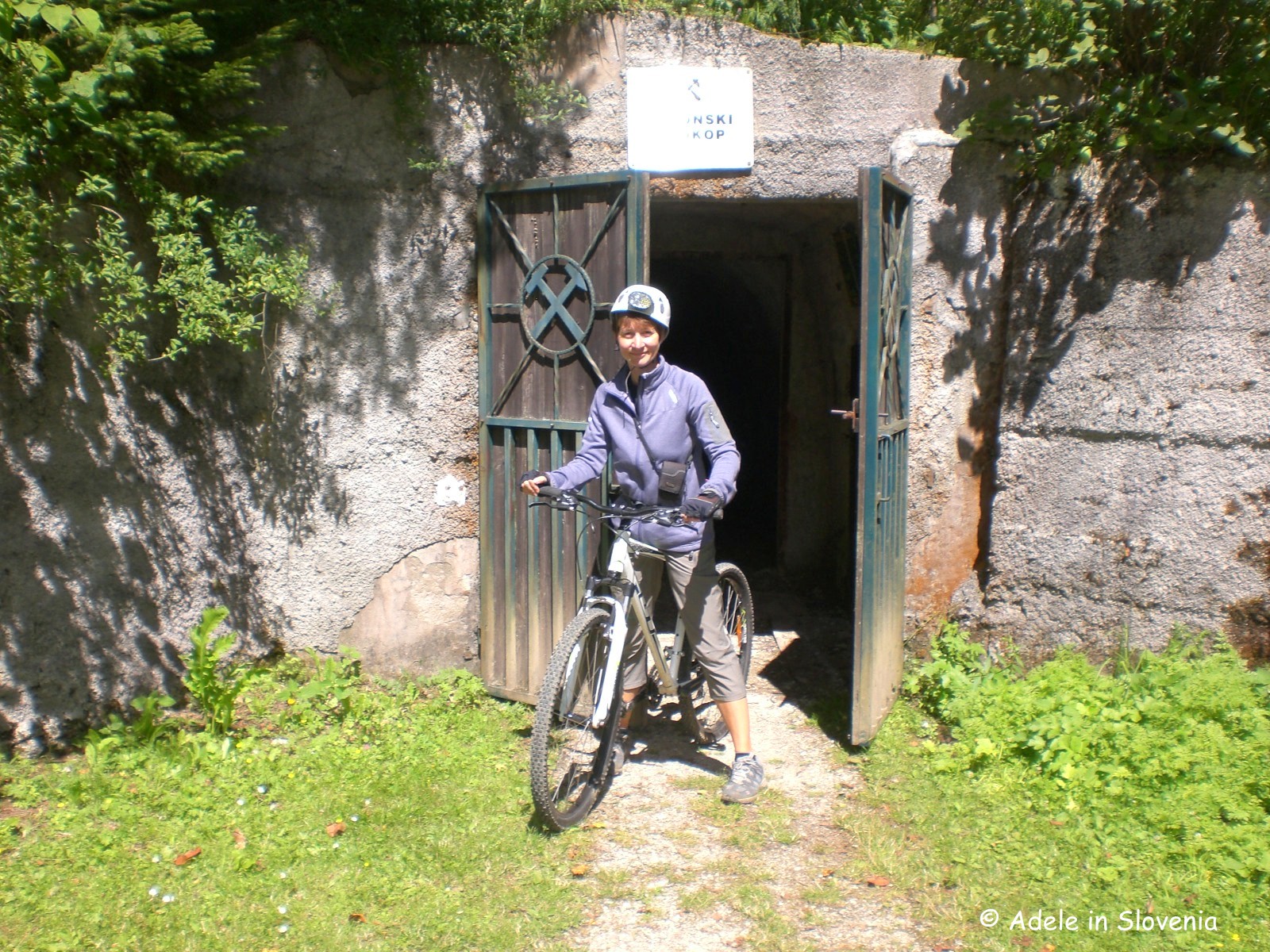
Another option, and for a unique and thrilling experience, is to explore the tunnels on a guided mountain bike trip – which was my choice!

The mountain bike experience lasts around 3 hours and begins with a short van ride to the entrance at Igrčevo, in Črna na Koroškem. Each participant is provided with a helmet and headlamp. Do make sure to have extra layers of clothing as it is a constant 10˚C inside the mines. It was around 30˚C outside on the day of my visit, so warm clothes were not at the forefront of my mind, though, I sure wish I had taken warm gloves!

CIMG2037

It feels slightly disconcerting at first, but you soon adjust to cycling through the narrow low tunnels. Along the way the guide gives information about the working conditions in the mine and you can see some remains of equipment used and names scribbled on the mine’s walls. The total ride itself is only around 6km, with a negligible incline.

CIMG2051

All the experiences begin at the cross-border Karavanke Geopark in Mežica, which in itself is worth a visit, and in 2013 it became a member of the European and global network of geoparks under the auspices of UNESCO.

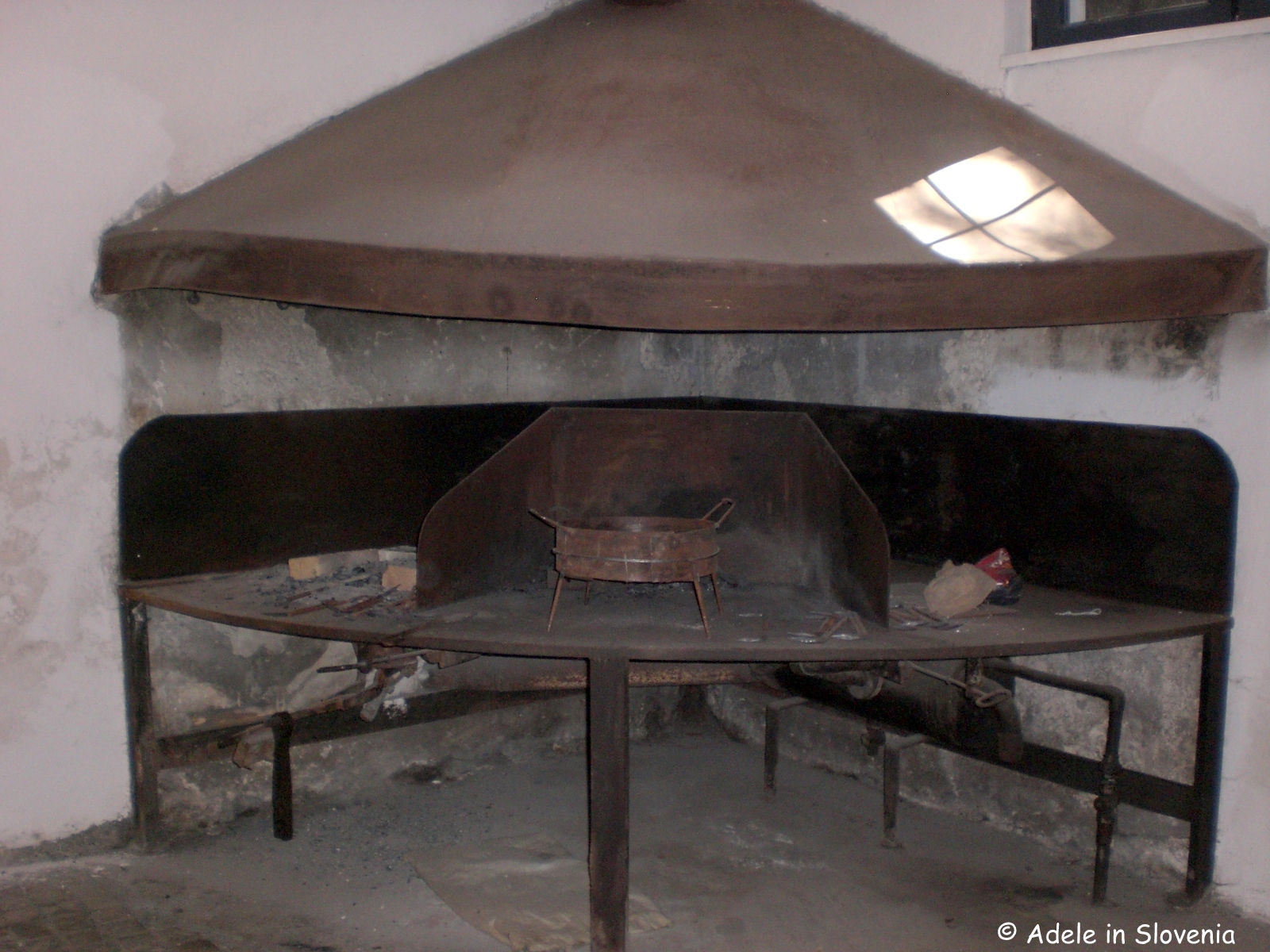
The centre offers a glimpse into the more than 400 million-year-old history of the area of today’s eastern Karavanke and comprises an exhibition area with exhibits including a fully-preserved smithy, an information area with a café and gift shop, and it also hosts workshops and other events.

CIMG2032

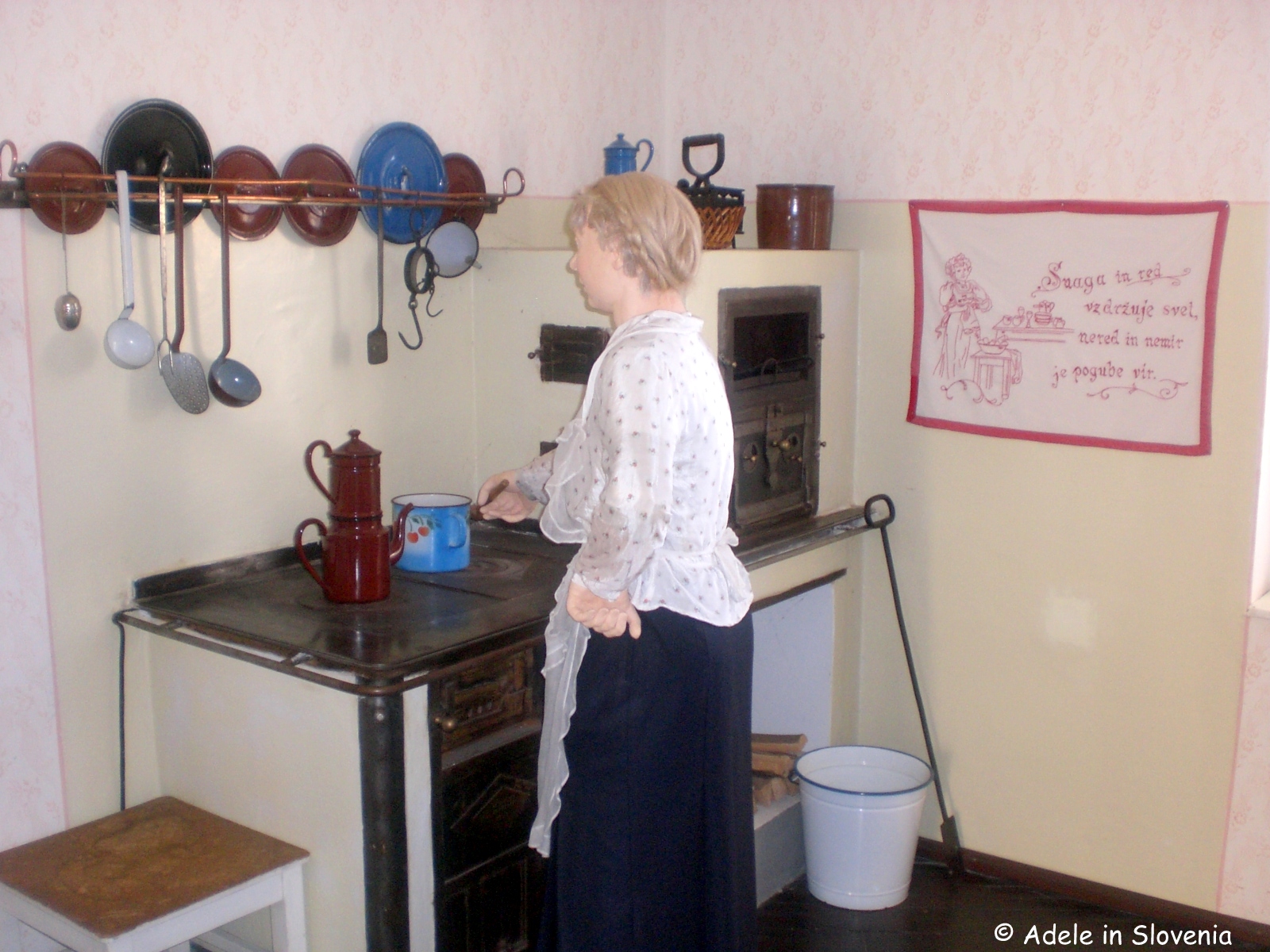
In an adjacent building there is museum, which gives a further insight into the lives of those working in, or connected to, the mines, and a collection of ores, minerals and fossils.

CIMG2058

Note: for bike and kayak tours, prior reservations are required; the minimum age is 10. More information about the Geopark can be found here – http://www.podzemljepece.com/?lang=en

Having spent the afternoon going through Mount Peca, next morning it was time to go ON Mount Peca – this time on foot! Peca is part of the Karavanke chain, which has a total length of around 120km and forms a natural border between Slovenia and Austria.

The Peca massif forms part of the Eastern Karavanke and can be approached from either Slovenia or Austria. I chose to begin my hike from the serene and stunning Topla Valley, which is surrounded on all sides by lush forest and contains just a handful of farmsteads – each with a traditional shingle roof. This protected valley really is like something out of a fairytale and is about as unspoilt as it gets.

CIMG2098

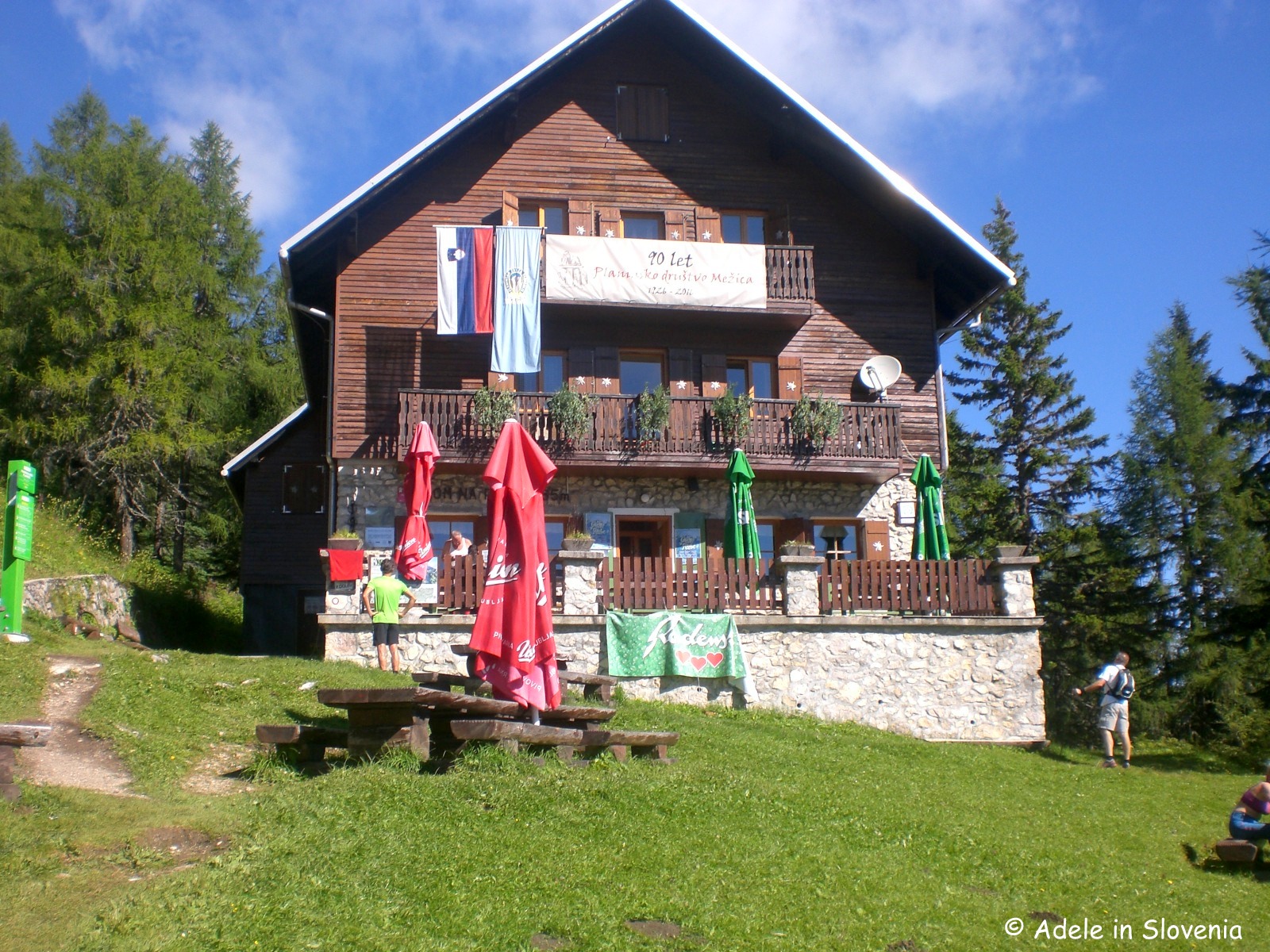
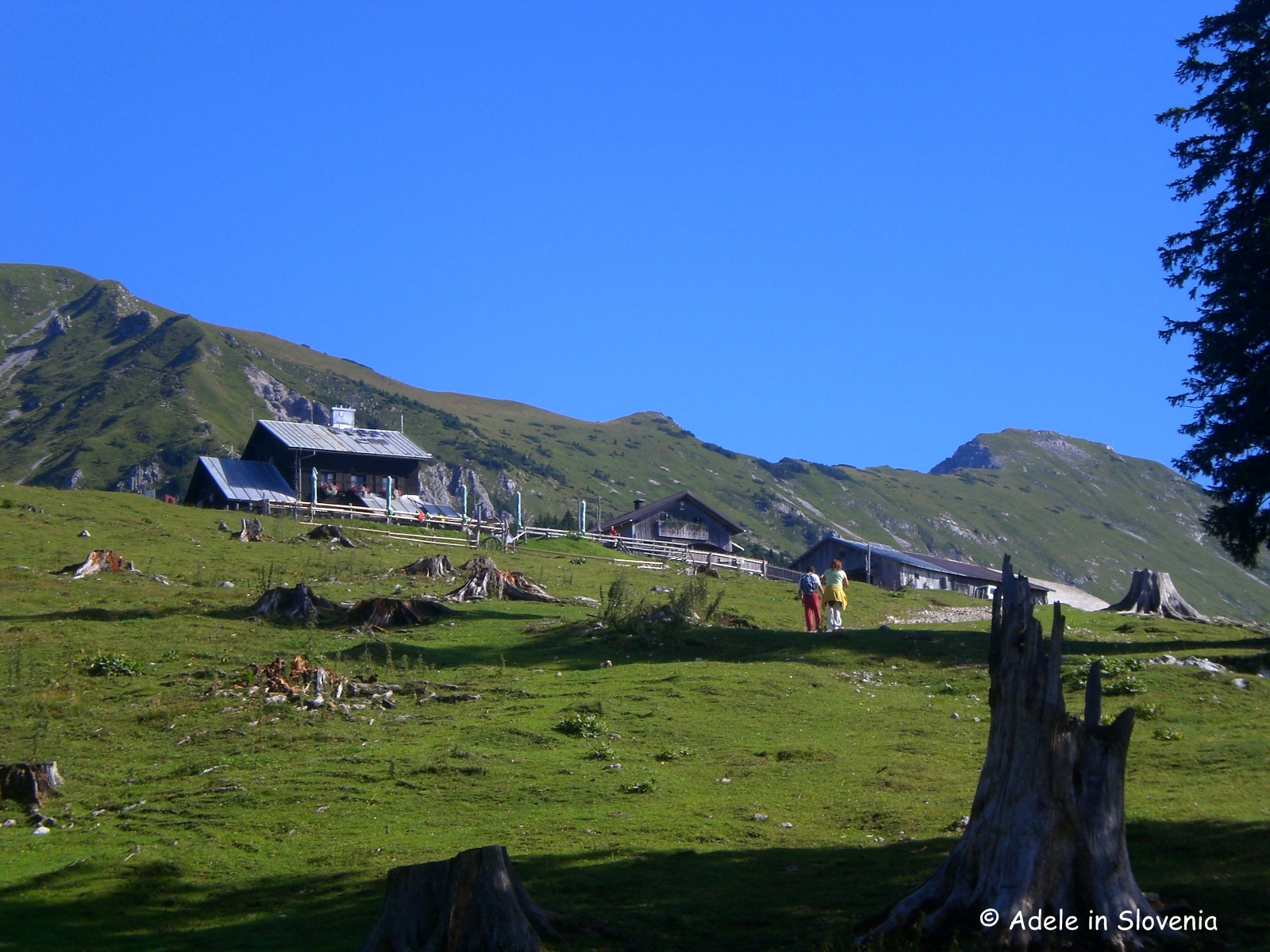
At the far-end of the valley, near the entrance to the Topla mine, a path leads steeply up through the forest taking about 2 hours to reach the Dom na Peci mountain hut (1665m), where you can enjoy delicious home-cooked stews, štruklji, strudel and other types of food, which always seem to somehow taste even better when you have earnt them after a long hike!I

CIMG2076

However, knowing it was still a way to go to reach the top of Peca, Kordeževa glava (2125m), and not wishing to do so with a full stomach, I resisted the temptation and continued onwards and upwards! At first across a meadow, then the terrain becomes more rocky, but still relatively easy, though for those who like more challenging climbing routes (that doesn’t include me, I hasten to add!), there is also an alternative path to the top, which is classified as ‘demanding’.

CIMG2077

The higher you go, the better and more far-reaching are the views, and the more the effort pays off!

CIMG2081

Despite it being a searingly-hot mid-August weekend, I still had the place to myself! Well, not exactly, but in fact there were just about the right number of people for my liking. Enough that one could pass the time of day and exchange a few words with fellow hikers here and there, and find some friendly folk to take the odd snap for me, but not so many that it felt crowded – just perfect!

CIMG2089

Koroška tends to get somewhat overlooked in terms of tourism, at least in terms of those visiting from outside of Slovenia, however, I recommend that for lovers of the outdoors, it definitely deserves to be included in your holiday plans.

This gives just a brief snapshot of the area; more information about what else to see and do can be found here – http://www.koroska.si/en/

© Adele in Slovenia
Shop Locally at Radovljica’s Farmers and Craft Markets

Radovljica now boasts two monthly local markets, where you can buy direct from farmers, producers and local craftspeople. As anyone who has ever shopped at a farmers’ market will know, it’s a lovely, relaxed way to shop; safe in the knowledge there are no food miles involved, no added nasty additives etc., and, at the same time, you are helping to support the local community. So, a win-win all round!

The monthly Vila Podvin local market takes place on the first Saturday morning of each month in Mošnje near Radovljica. It is something of a mixture of a farmers and craft market, where you can buy locally produced food and other handmade products.

vila podvin trznica2

The market is always popular and, of course, the fact that it is held in the beautiful gardens of Vila Podvin, where one of Slovenia’s top chefs, Uroš Štefelin, conjures up delicious and creative dishes, is also a factor, as is the added bonus of being able to stay after the market and enjoy a specially prepared lunch, made using products available for sale on the day. And if you’d like to enjoy a tipple too, there are also 5 well-appointed double rooms available, located in the previous stable area of the building, with views of the (sadly) long-abandoned Podvin Castle.

vila podvin vrt

Uroš’ ethos is on using forgotten local ingredients, such as tepka pears – a variety of pear that only grows in this area of Slovenia – to create new dishes in his own distinctive way. At the local market there is also a chance to try these unique sausages made with tepka pears.

vila podvin klobasa s tepko

What is on offer at the market varies from month to month, but as a general rule you will food items such as find fruit and vegetables, cheese, jams, flour, cordials, eggs, dried meats etc.

Vila podvin trznica

As well as non-food items such as jewellery, trinkets and other homeware goods.

vila podvin trznica3

Vila Podvin is one of the participating Taste Radol’ca restaurants, the focus of which is on using local ingredients, and about which you can find out more here – http://www.radolca.si/en/taste-radolca/

Find more information about Vila Podvin here – http://www.vilapodvin.si/EN/

The other market, and a welcome new addition, is the small farmers’ market held on the 2nd Saturday of each month, from 9am to 1pm, at the building known as Sarčeva hisa, next to the library in Radovljica. The next such market will take place this Saturday 10th September.

© Adele in Slovenia
Hiking the Alpe Adria Trail – Stage 23: Kranjska Gora to Trenta, Slovenia

The Alpe Adria Trail, which begins on Kaiser Franz Josefs Hohe in Austria and ends on the coast at Muggia in Italy, has 43 stages and a total length of 750kms. The trail is a collaboration between three countries – Austria, Slovenia, Italy and offers lovers of the great outdoors myriad possibilities for enjoying the stunning and ever-changing scenery along the way from the highest glaciers to sea-level.

It’s easy to pick and choose where to start and how far to walk, however, since the route is linear, be sure to have a plan how to get back if you need to do so! In terms of the trail in Slovenia, stage 22 runs from Austria into Slovenia, stages 23, 24 and 25 are entirely within Slovenia, and stage 27 begins in Slovenia ending in Italy.

Stage 23 of the trail officially starts in the centre of Kranjska Gora (810m), though I started my early morning hike from the stunning Lake Jasna, which sits at the foot of the Vršič Pass. It was very tempting to linger a while, however, I had a long hike ahead so headed onwards, and upwards.

CIMG9126

The mythical golden-horned mountain goat ‘zlatorog‘ is a landmark and obligatory photo spot!

CIMG9128

From the far-end of the lake the route then leads along the Krnica valley, beside the Pišnica river and makes a fairly level easy start to the day. Note: If you’re looking to escape the summer heat, this valley is the place to be. Whatever the time of year in the early morning it’s freeeeeezing!!! In winter, Krnica is a particularly popular place for sledging.

CIMG1917

The route then turns right, passes the Mali Tamar Memorial to those who have lost their lives in the mountains, crosses a bridge over the stream, and then the ascent to Vršič begins. It is well-marked throughout with Alpe Adria signs as well as the usual Slovene way-markers (a red circle with a white inner).

The Vršič Pass is the highest mountain pass in Slovenia. It was built in the early 19th century, originally for military purposes, and has a total of 50 hairpin bends. You can, of course, drive up instead of hiking, or even cycle – as many do, though note that the pass is usually closed throughout winter when there is heavy snowfall due to the danger of avalanches.

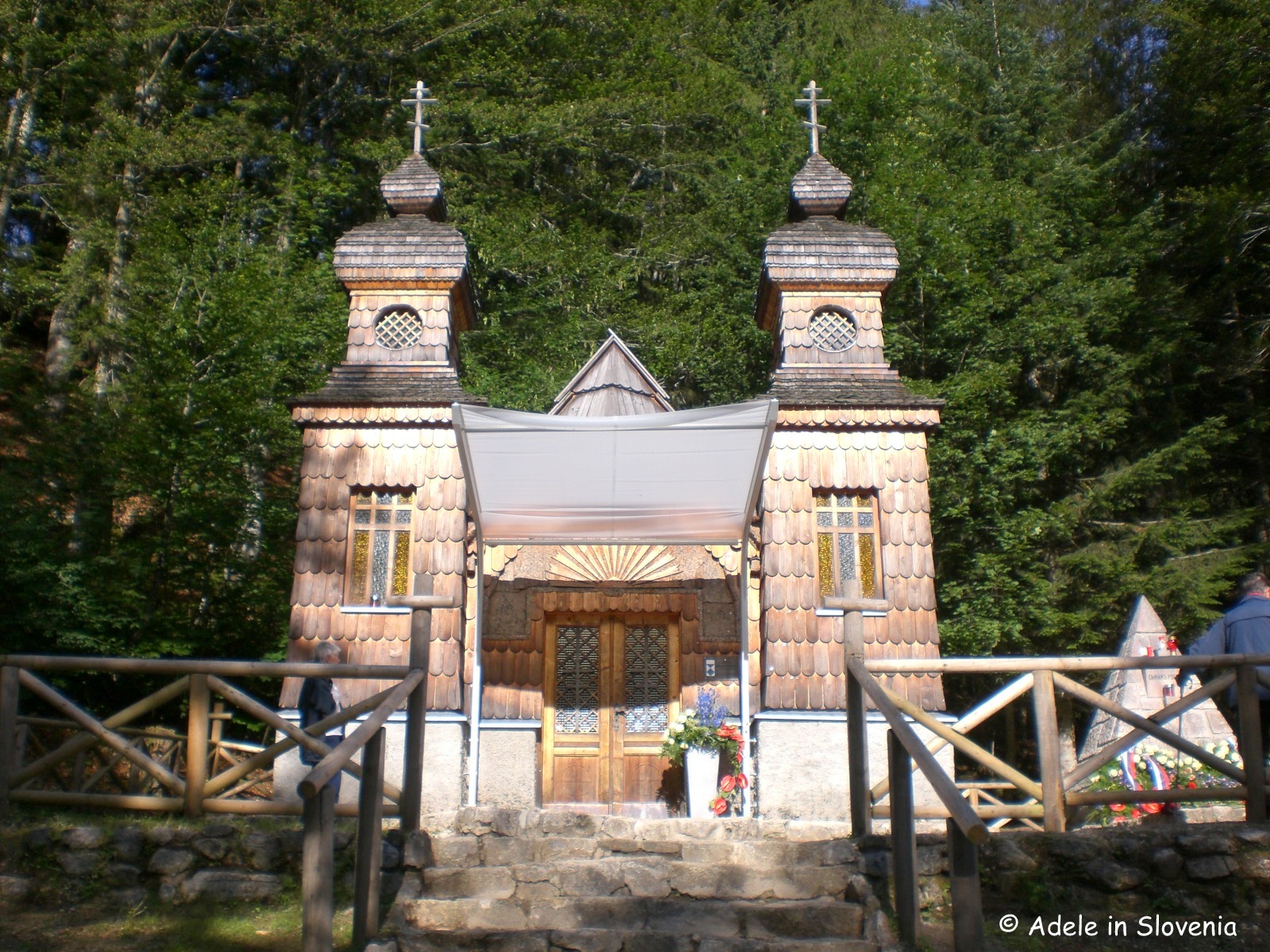
The trail goes largely through the forest, though in places it emerges – or if ‘it’ doesn’t then ‘you’ can – from the forest at sights of interest and to take in the views. The first such sight is the Russian Chapel, which was built in memory of the suffering of the thousands of Russian prisoners during construction of the road. Hundreds of prisoners and their guards – Russian and Austrian – lost their lives due to an enormous avalanche in winter 1916 – the exact number who died was never known.

CIMG1929

The route continues to the right of the chapel, again through the forest. I recommend a stop at bend 17 to see the somewhat eerie looking stones that have begun to ‘appear’ in recent years. I guess someone started the trend and others followed!

CIMG1932

The view from here isn’t half bad either!

CIMG1934

It’s now not far to reach the top, less than half-an-hour and I was already at 1611m at the top of the Vršič Pass.

CIMG1941

From the top it was easy to see where I was heading, down towards the Soča Valley and I could hardly wait to glimpse the always-stunning emerald-green Soča river.

CIMG1948

When leaving the top, look for this sign and walk down the road for approximately 500 metres.

CIMG1949

As tempting as it is to admire the views, be sure to keep your eyes to the ground here, as here the way-marker for the trail is only on the ground and could easily be missed.

CIMG1950

From here the trail re-enters the forest and leads on a pleasant gently-descending path, eventually emerging between stones walls into the parking area at the source of the Soča river, where there is a small hut offering refreshments. In places the trail is marked by the letters AAT – as shown below.

CIMG1966

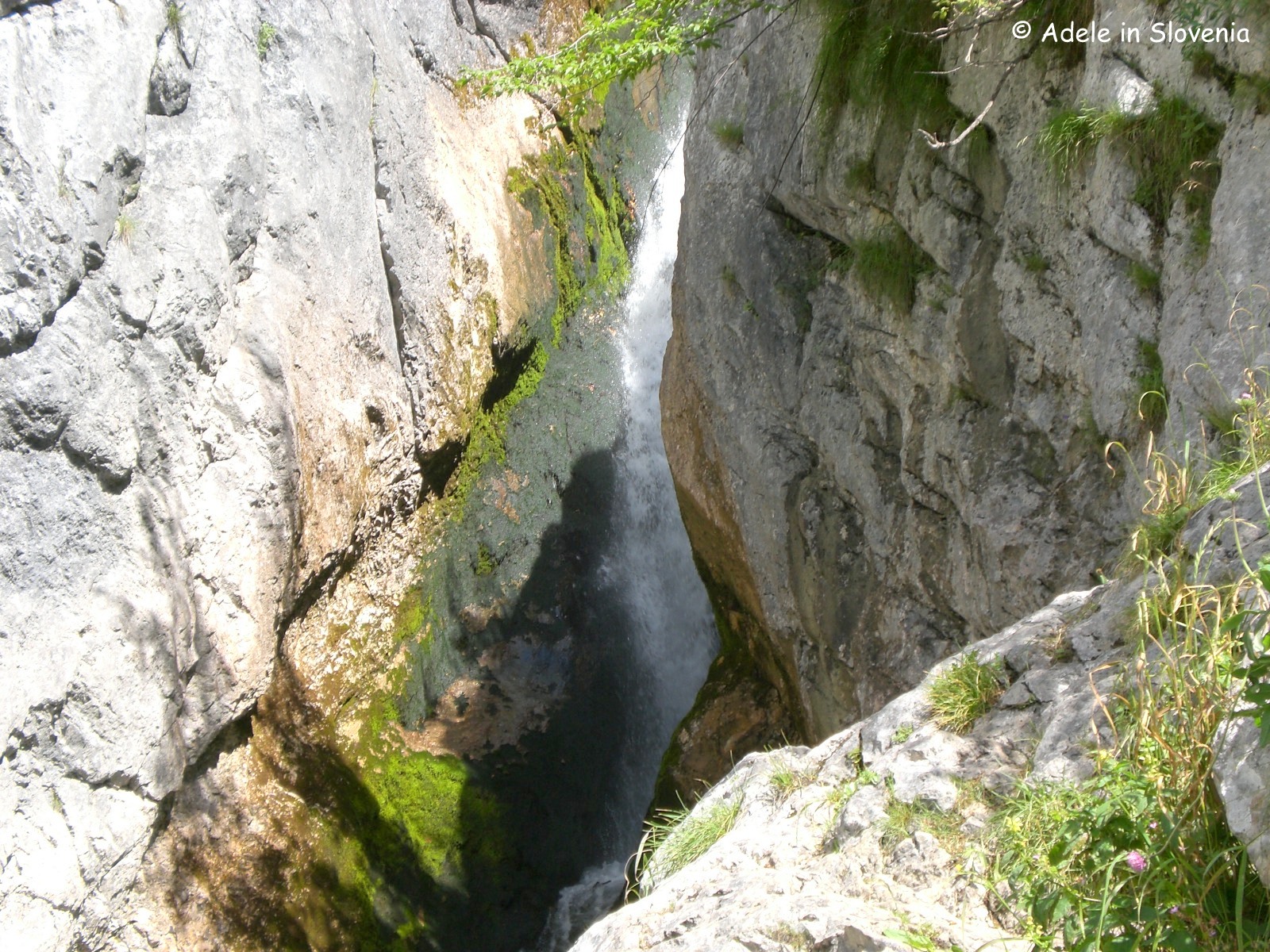
If you choose to take a detour to see the source of the Soča river, it takes about 10-15 minutes to reach the first viewpoint – a relatively easy path, thereafter its a bit of a climb, assisted by iron pegs and rope, so not for the faint-hearted! Knowing I still had a way to go, I just went to the first viewpoint (well, that’s my excuse anyway!).

CIMG1961

From here it is downhill all the way. The Soča River Trail leads on traffic-free paths to Trenta, home to a Triglav National Park Information Centre, and where there is a mini-market, restaurant and a sprinkling of accommodation options.

CIMG1969


The total distance of this stage of the trail is 17.8km, of which the ascent is 962m and 1146m descent. It can easily be shortened as required – at least during the summer months when buses operate over the Vršič pass from Kranjska Gora to the Soča Valley. Out of peak season, however, you would need to ensure you have suitable onward, or return, transport.

In total the hike took less than 5 hours, including photo stops. If you take time to linger and savour the views, perhaps enjoy a meal at one of the several mountain huts en-route to, or at the top of, the Vršič pass, then it makes a very enjoyable full day trip. Highly recommended!

More information about the trail can be found here – http://alpe-adria-trail.com/en/ and more information about autumn hiking in Slovenia here – http://www.slovenia.info/en/Autumn-hiking-in-Slovenia.htm?aktivna_pohodniska_jesen_slovenija=0&lng=2

© Adele in Slovenia
 

Kindness in the Karavanke

In this often turbulent world we live in, the kindness of strangers is something to be valued and cherished, as I discovered on my latest adventure in the Karavanke mountains last weekend!

CIMG2132

Those of you who also follow me on my Adele in Slovenia Facebook page are likely to have already read my (mild) rant last week about the queues of people and two hour wait to ascend to the top of Slovenia’s highest mountain, Triglav, on a busy Bank Holiday weekend in August.

I have often waxed lyrical here about the Karavanke mountains, which seem to get so overlooked by those visiting Slovenia who automatically head for the better-known Julian Alps. The Karavanke form a natural border between Slovenia and Austria so, in addition to offering myriad possibilities for day and multi-day hikes, there are the added bonuses of less crowds and far-reaching views across 2 countries.

CIMG2129

My home town of Radovljica is in a perfect location to base yourself to explore the Karavanke mountains, being in close proximity to Stol – the highest peak of the Karavanke, as well as Begunščica and numerous other peaks, many of which I have written about previously. Note: you can use the search facility on this blog to find previous posts by using keywords and/or visit the Tourism Radol’ca website for more information – http://www.radolca.si/en/hiking/

So, back to my latest adventure. This time I headed slightly further from home to hike in the Karavanke mountains, first to Tržić, then to the village of Dolina, near Jelendol, from where I hiked up to the ever-popular Kofce highland and mountain hut (1488m). The sky really was that perfectly blue – no photo-shopping required!

CIMG2107

From there I continued to the Šija highland and hut and past grazing cattle, of which there are plenty on the highlands along the length of the range.

CIMG2117

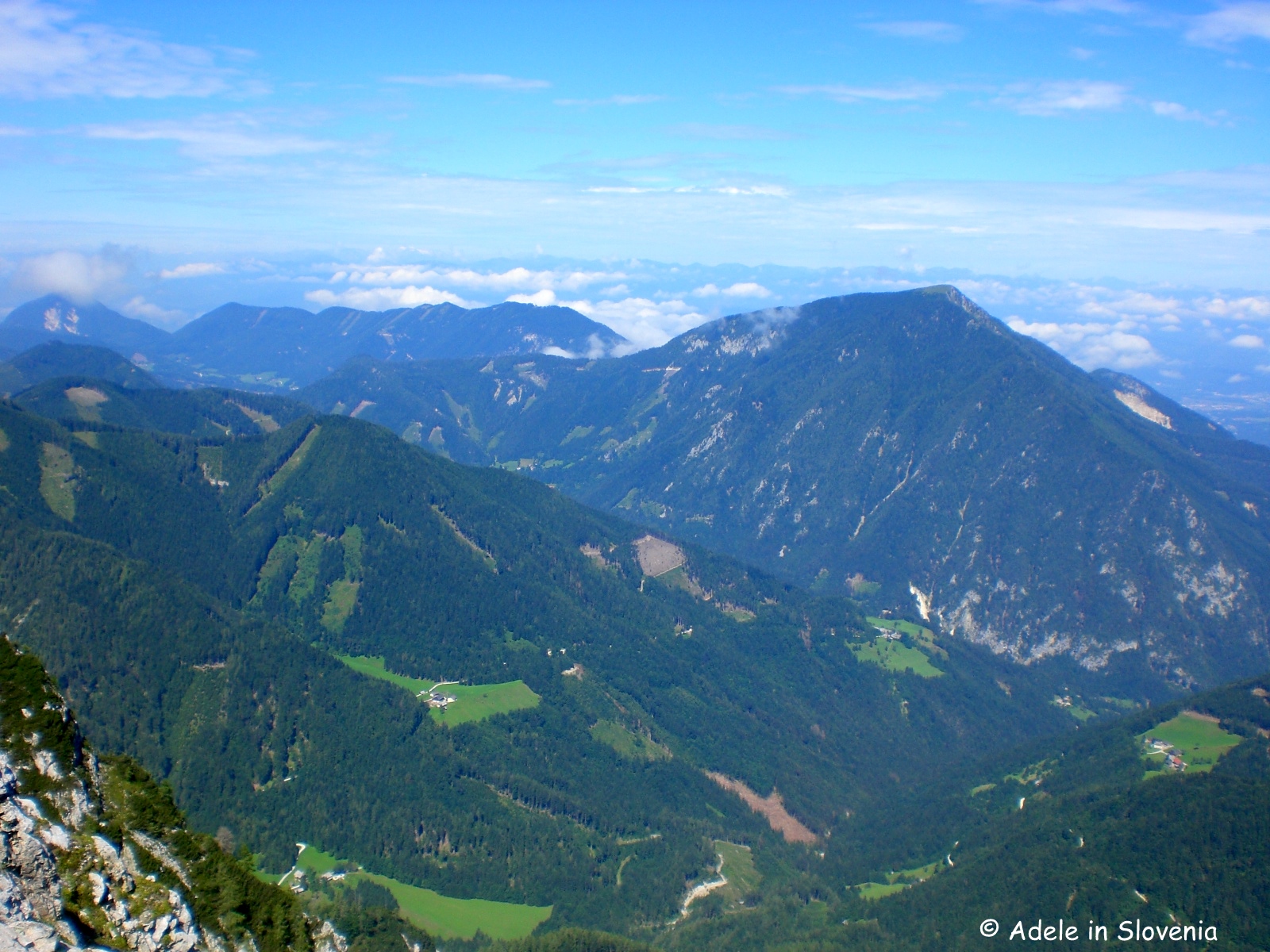
Next I continued along an old unmarked path to the Pungrat highland before joining the path up to Škrbina ridge (1869 m) from where there were bird’s eye views across both Slovenia and Austria.

CIMG2125

As much as I hate crowds (as per the Triglav rant), there was barely a soul to be found here so I was more than elated to encounter two kindly, gallant strangers who came to my rescue when I got myself into a spot of bother just beneath the peak of Kladivo (2094m). They were passing in opposing directions but didn’t hesitate to help, which served as the wonderful reminder of how such altruistic acts of simple kindness can make the world a much better place.

So, thank you once again Olga and Anže for for your help and part in a (mostly!) wonderful, and certainly unforgettable, day. As was well that ended well and new acquaintances were made to boot. So, all in all, despite my little ‘moment’, it was a(nother) great day in the Karavanke!

CIMG2128

© Adele in Slovenia


Cerkno – A Green Destination Keeping in Touch with Nature

The town of Cerkno and its surroundings offer plentiful sites of significant historic interest  and wonderful nature and is one of Slovenia’s Green Destinations.

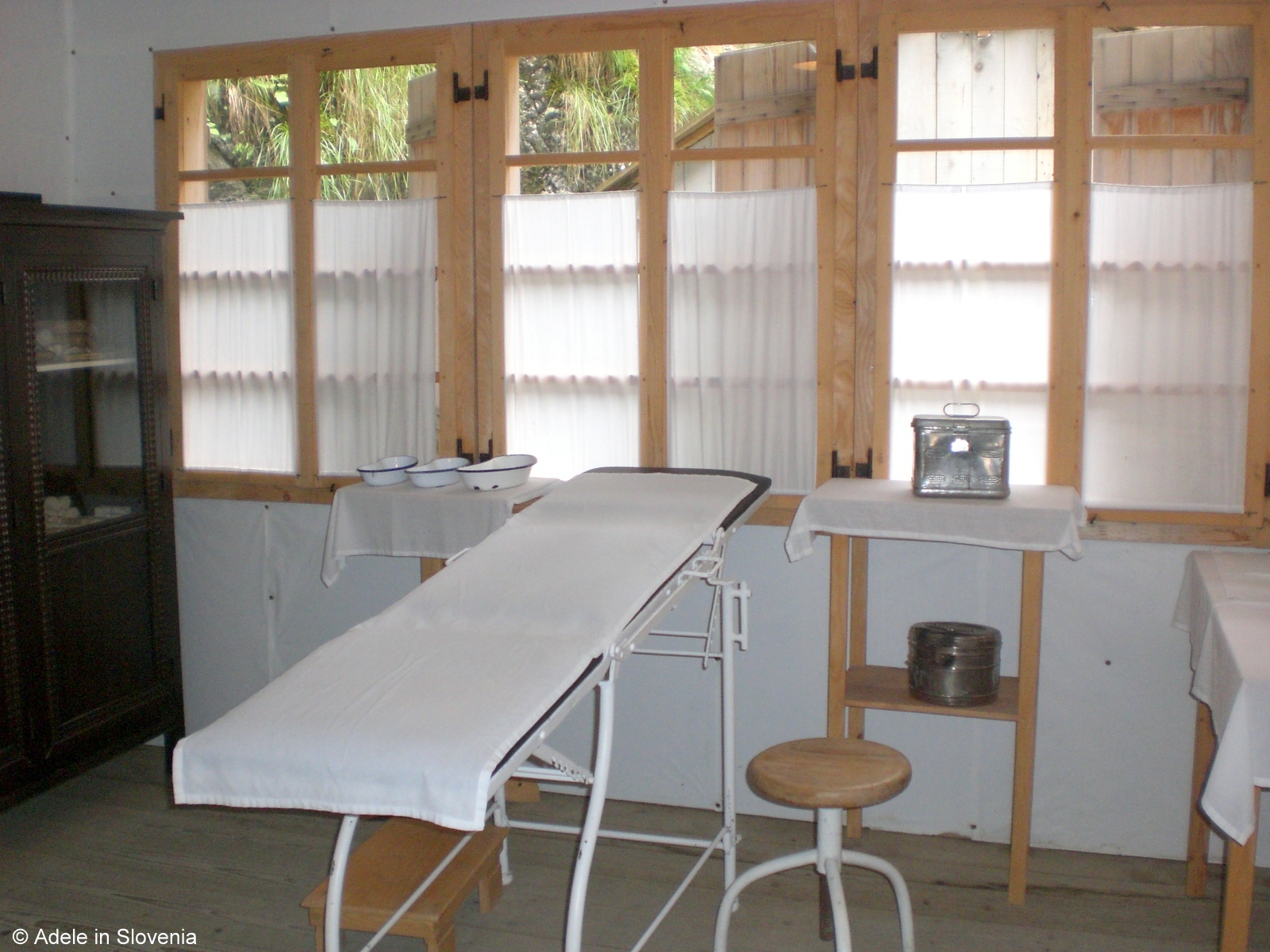
The most visited attraction, and one of the most important and remarkable of its kind, is the Franja Partisan Hospital. I had heard and read plenty about this place, but its not until I saw it for myself that I was able to really grasp its significance, though its still difficult to imagine how patients, equipment and goods could have been transported in such difficult terrain, and nigh on impossible to comprehend what life must have been like living and working in such cramped, cold and damp conditions.

CIMG1669

The hospital, named after the partisan physician Franja Bojc Bidovec, was set up in the then Yugoslavia by an enterprising group of partisans in order to treat wounded fighters. For its time, and considering the hospital’s almost inaccessible location, the facilities at the hospital, though basic, were such that it was able to operate entirely self-sufficiently for the 18 months of its operation.

The hospital comprised 14 wooden units and was so well hidden, deep inside the narrow and steep Pasica gorge, near Cerkno, that it was never discovered.

CIMG1677

The hospital finally closed on 5th May 1945. During this time the central facility treated almost 600 patients, whilst others were treated in dislocated units. Patients hailed not only from Slovenia but also from other former Yugoslav nations, Soviet nations, Italy, Poland, France, Austria and even America.

CIMG1670

Having survived the war, in a cruel twist of fate in 2007 the hospital was almost entirely destroyed when a large part of Slovenia was hit by devastating floods. The hospital was fully reconstructed, though only one original building stands, and nowadays is again open to the public (daily from April – November, thereafter by prior arrangement). Today the path through the gorge is well-secured, though can be a little wet in places so sensible footwear is a must.

CIMG1665

More information here – http://www.muzej-idrija-cerkno.si/index.php/en/locationsexhibitions/permanent-exhibitions/franja-partisan-hospital.html

The Divje babe archaeological site is a Karst cave located in the steep rocky slopes above the Idrijca Valley. Several remains of cave bear have been discovered in the cave – by far the most significant and most spectacular find is a bone flute made of the bone of a cave bear, which dates back 55,000 years and is the oldest known musical instrument in the world. Guided tours of the Divje babe site are available upon prior arrangement. More information here – http://www.divje-babe.si/en/

divje babe

The town of Cerkno itself is synonymous with the Cerkno laufarija – the traditional carnival characters who, during the winter ‘pust‘ carnival, drive away winter by performing a ritual wearing costumes made of natural materials and masks carved from linden wood. The Cerkno museum hosts a permanent exhibition entitled ‘Pust is to blame – a story about the Cerkno Laufarija’.

sprevod

The Ski and Mountain Cerkno resort is a year-round destination for outdoor pursuits. During winter the resort, at an altitude of 1291m, offers well-groomed ski pistes, cross-country skiing, and other snow-based activities, and is considered one of Slovenia’s best ski resorts in terms of facilities and user-friendliness.

In summer you can go hiking, enjoy the views, or try out some of the activities at the Cerkno Bike and Fun Park, such as stand-up paddling on the lakearchery, or downhill biking. There is also a playground and trampolines for children – so something for all the family.

CIMG1631

The chairlifts operate at weekends during summer – great views guaranteed!

cerkno razgled 2

More information here – http://www.ski-cerkno.com/en/index.html

The latest addition to the resort is its range of Forest Selfness programmes, which range from 2 – 6 hours and include culinary delights, relaxation under the treetops, reflexology and barefoot walking, forest relaxation, meditation and energy exercises. More information here – http://www.gozdni-selfness.si/eng/

gozdni selfness piknik

Whilst exploring the Cerkno area, I stayed at the Gostilna Gačnk guest house, which offers excellent traditional Slovene hospitality and cuisine, as well as basic, though comfortable, rooms, and is located just minutes from the Franja Partisan Hospital. Read plenty more about my stay at Gačnk here – http://wp.me/p3005k-1HE

©  Adele in Slovenia

Rogla: Year-round Recreation and Fun for All!

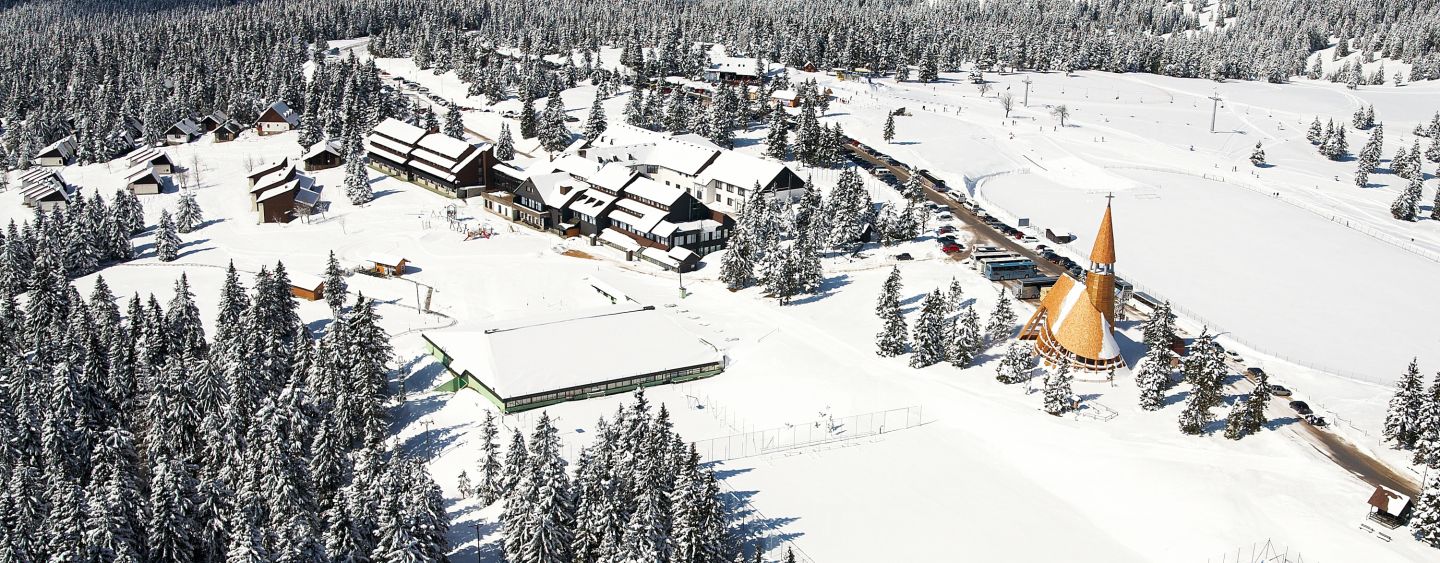
If you love the great outdoors, spending your free time being active, and breathing in fresh mountain air, then you will love Rogla! Located in the northeast of Slovenia on the Zreče side of the Pohorje massif at an altitude of 1517m, Rogla is a ski resort and year-round recreation destination.
Visit for a day, stay for a few days, or even longer, there’s no shortage of things to see and do! There is a choice of accommodation on Rogla – hotels, bungalows, apartments – but for the most modern and luxurious among them I’d certainly recommend the latest addition, the new Hotel Natura, which is really something a bit special!

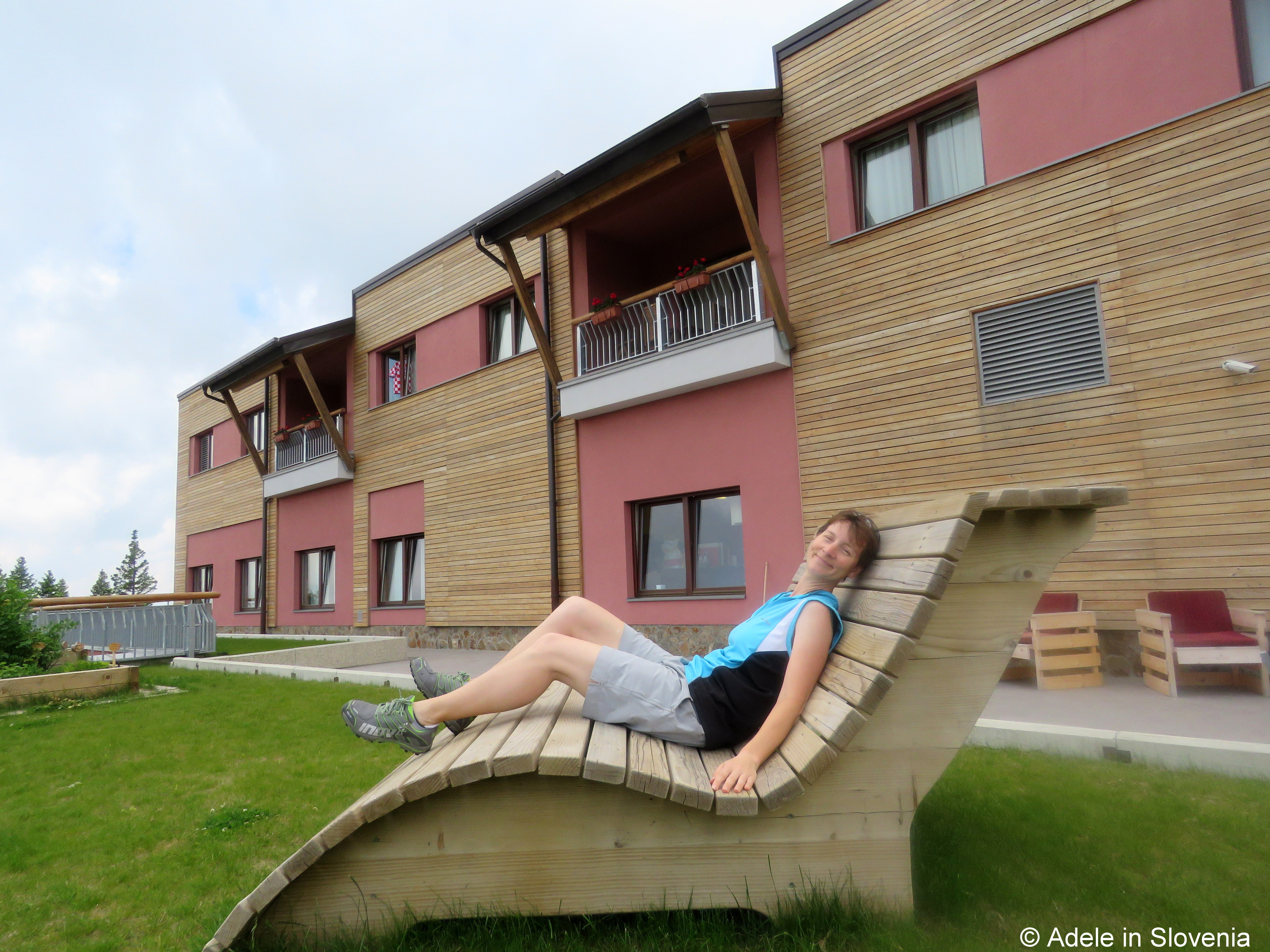
I went to check it out during a recent visit to the Zreče thermal spa, read more here – http://wp.me/p7jQx9-7O and, well, me being me, decided to cycle up to Rogla! On reaching the hotel, after a 2 hour+ uphill ride (Zreče 360m – Rogla 1,517m) the giant wooden recliners on the hotel’s terrace were beckoning and thereafter it was hard to tear myself away!

IMG_7675

If you’re a keen cyclist then, although long, the road to Rogla is good and it makes a great day out. You can choose to either go on the main road, or, as I did, ride up at first on minor roads – which I’d recommend for great views and less traffic – before joining the main road, or for those with mountain bikes you can take one of the forest roads. There are also numerous other marked cycle routes on the plateau itself.

IMG_7618

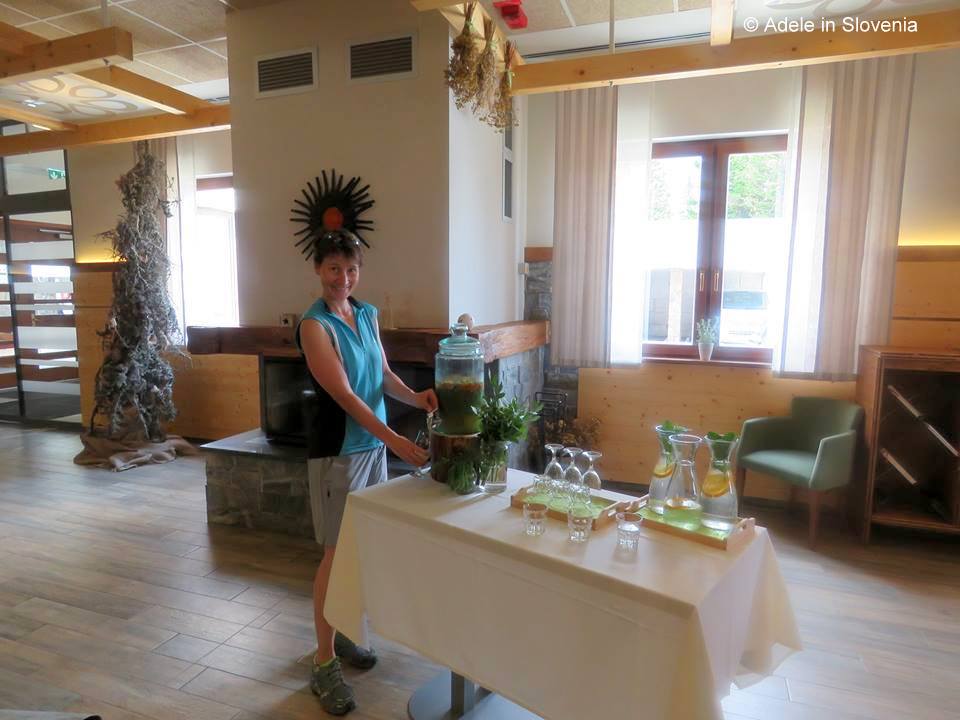
Hotel Natura is the first hotel reached when arriving on Rogla and an excellent place to stay to explore the area, or just call in for a delicious meal made using local Pohorje ingredients as part of ‘Taste Rogla’. I headed straight for a glass of refreshing homemade iced herbal tea and elderflower cordial served in the hotel’s very welcoming and comfortable lounge area.

13480252_10154234045204780_1045207313_n

natura

Next came a well-earned meal in Restaurant Brusnica which was beautifully and imaginatively presented as well as being scrumptious!

CIMG1534

CIMG1535

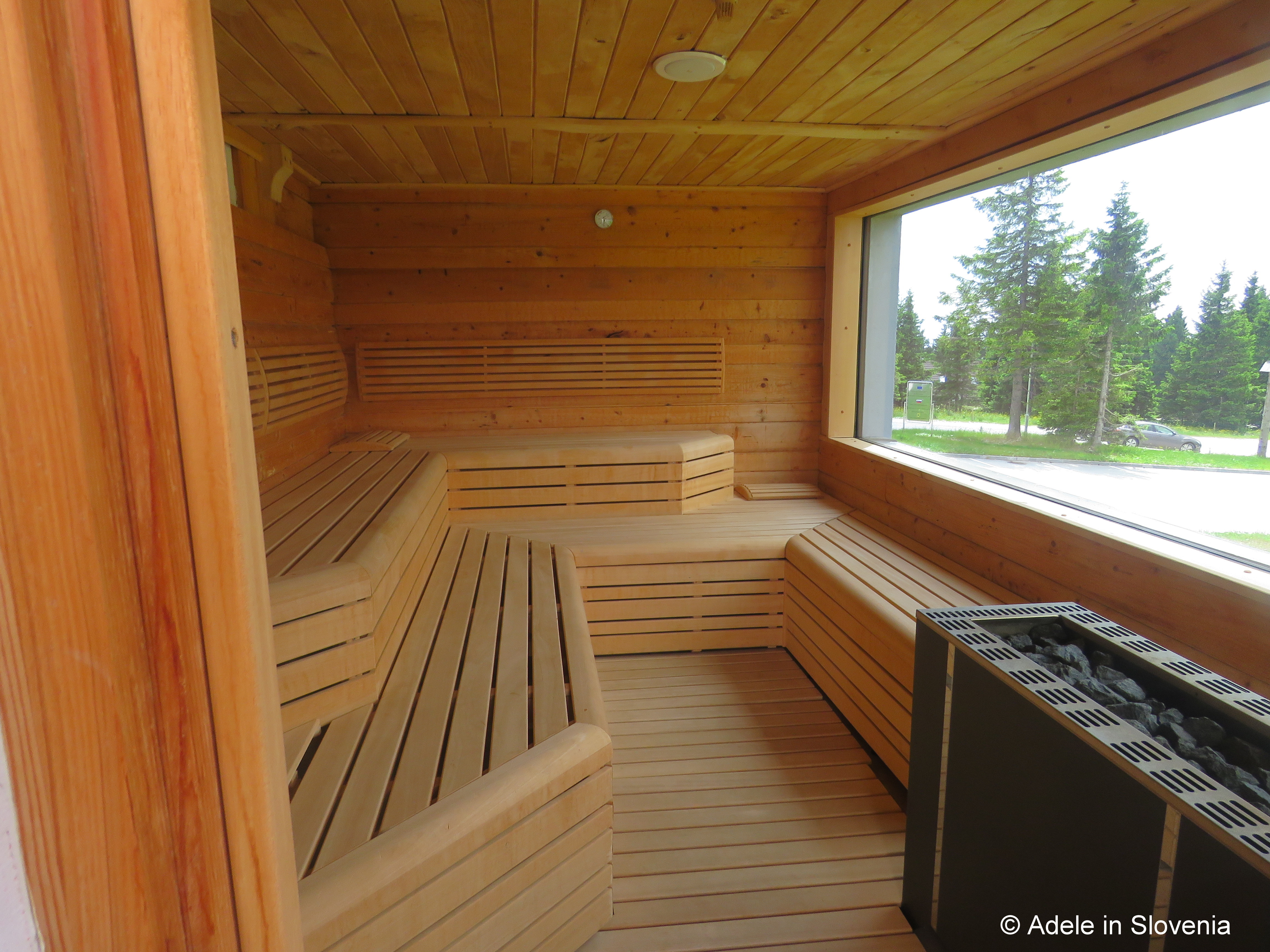
Hotel Natura offers excellent wellness facilities, massages, baths, and a sauna with a panoramic view – in winter overlooking a cross-country skiing poligon. I can image that the wellness facilities must particularly come into their own during winter after a long day’s skiing.

IMG_7703

Of course, if you stay at Rogla itself then you don’t have to cycle all the way up there and can instead spend more time exploring the area – note to self, do that next time! If you prefer exploring on foot, then Rogla is great for leisurely strolls or longer hikes. Pick up a map of the Rogla hiking trails and you can choose from 9 marked trails, varying in length from 2.3km to 25.9km.

One of the most scenic is the path to the Lovrenc lakes, which is made up of 20 small lakes that formed during the Ice Age. The lakes, which do not have a surface water inflow and are supplied only by rainwater, are surrounded by dwarf pine and in places are bursting with water lilies.  To get a better impression of the size and scope of the lakes, head for the best vantage point – the lake tower.

Lovrenska-jezera

The Rogla Bike Park has 6 trails ranging in length and difficulty, including a beginners polygon and obstacle trails. Mountain bikes can be rented and instructors are also available. More information here – http://bit.ly/29IhQSh

Bike-park-Rogla-6

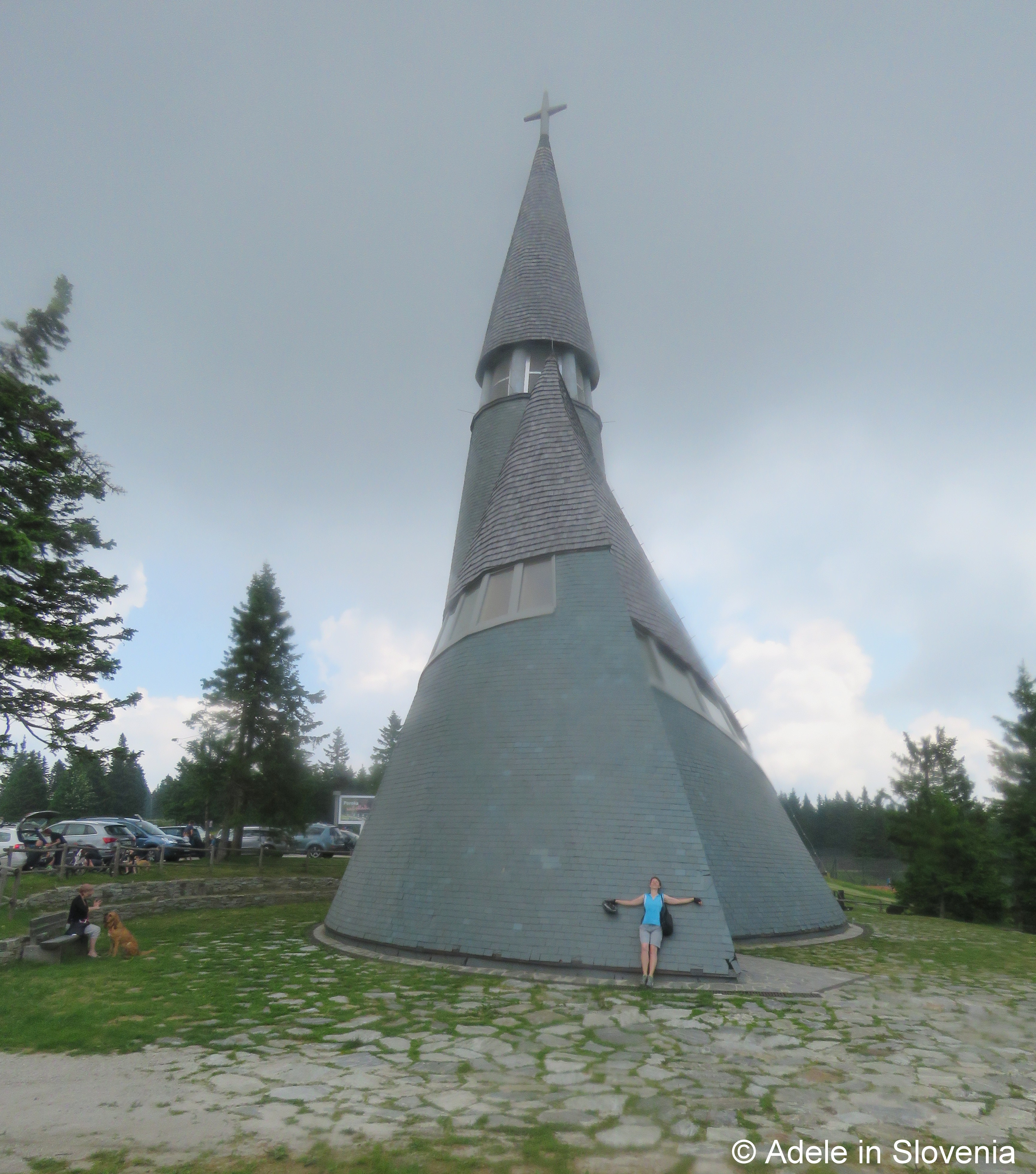
Working began on building the rather unusual looking Church of Jesus Christ on Rogla in 2006 and it was blessed in 2010. The church has three bells, an impressive altar and notable church organ.

IMG_7649

Before starting the long (though very quick!) descent back to Zreče, there was time to enjoy a bit more adrenalin with a 1,360 metre descent on the Zlodejevo toboggan run. The return is by drag lift I hasten to add!

IMG_7659

Other outdoor facilities include a funpark, tennis courts. football field and running tracks. The Rogla Sports Centre is particularly popular with athletes seeking altitude training. There is a high altitude training room equipped with a multitude of fitness equipment where conditions up to 7,000 metres above sea-level can be simulated.

With an average of 100 days of snow cover per year, Rogla really is a year-round destination. In winter it offers downhill skiing, cross-country skiing, snowboarding, snowshoeing, winter hikes and other fun snow-based activities.

rogla-z-letala

This is but a snapshot of all there is to see and do on Rogla! Find out plenty more here – http://www.rogla.eu/en/

© Adele in Slovenia