Beguiling Begunje na Gorenjskem

I’m fortunate to live just a few kilometres from the village of Begunje na Gorenjskem, which is packed full of natural and cultural sights of interest. I spend quite a lot of time there, too, whether hiking, cycling or eating great Taste Radol’ca food. So, in this blog I’ve focused on some of the highlights of beguiling Begunje.

Fans of popular folk music won’t want to miss a visit to the Avsenik family homestead, where the legendary forefathers of Slovene folk music, Slavko and Vilko Avsenik were born. Though, sadly, Slavko passed away in 2015, the family’s music very much lives on.

You can visit the gallery and museum, and/or attend one of the frequent music evenings and other events. More information here – http://www.radolca.si/en/avsenik-gallery-museum/

The Katzenstein Mansion in the heart of the village has had a long and interesting past. Built in the 14th century, its current Renaissance and Baroque appearance is a result of renovations in the 16th, 17th and 18th centuries. 1n 1875 the mansion was sold to Austro-Hungarian judicial authorities and a prison, holding 300 female prisoners, was established. During the German occupation, it became a Gestapo prison and political prisoners were incarcerated in the mansion; after the war it again reprised its role as an all-female prison.

The Museum of Hostages (Muzej Talcev) has been housed in the building at the north-western end of the residential wing since 1961. Inside, on the walls of the former prison cells, you can see written records left by the prisoners and announcements by the occupiers concerning executions. This one says ‘Molimo za mir’ (We pray for peace). Sobering stuff, indeed.

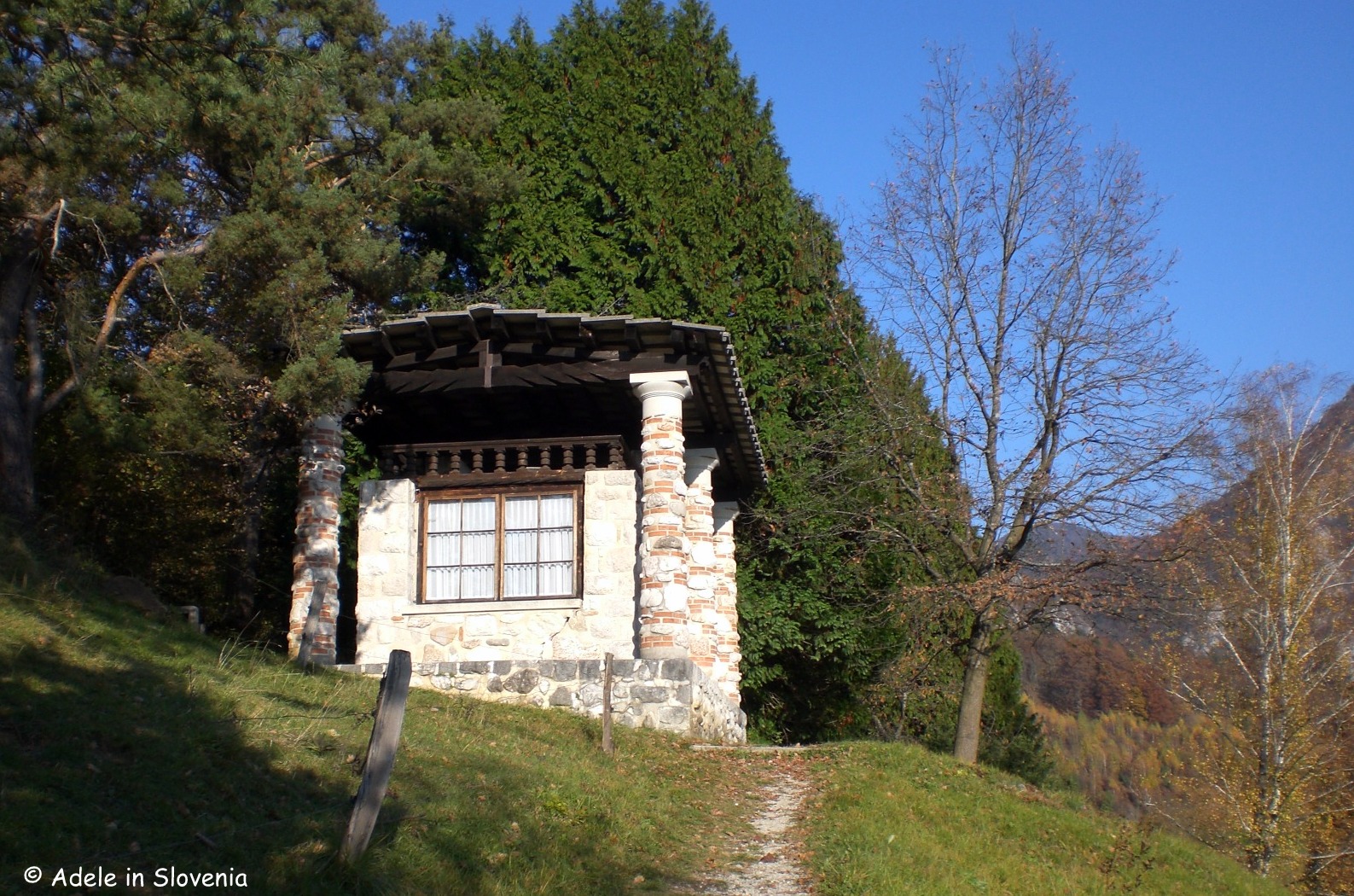
The park in the ground of the mansion is a lovely place for a stroll. It contains a pavilion and the Chapel of St. Joseph, designed by the most famous Slovenian architect, Jože Plečnik, and is also home to a small cemetery where 457 hostages and 18 World War II combatants are laid to rest. The bronze statues of a hostage and a prisoner, as well as the karst marble sculpture of a female hostage are the work of the sculptor, Boris Kalin.
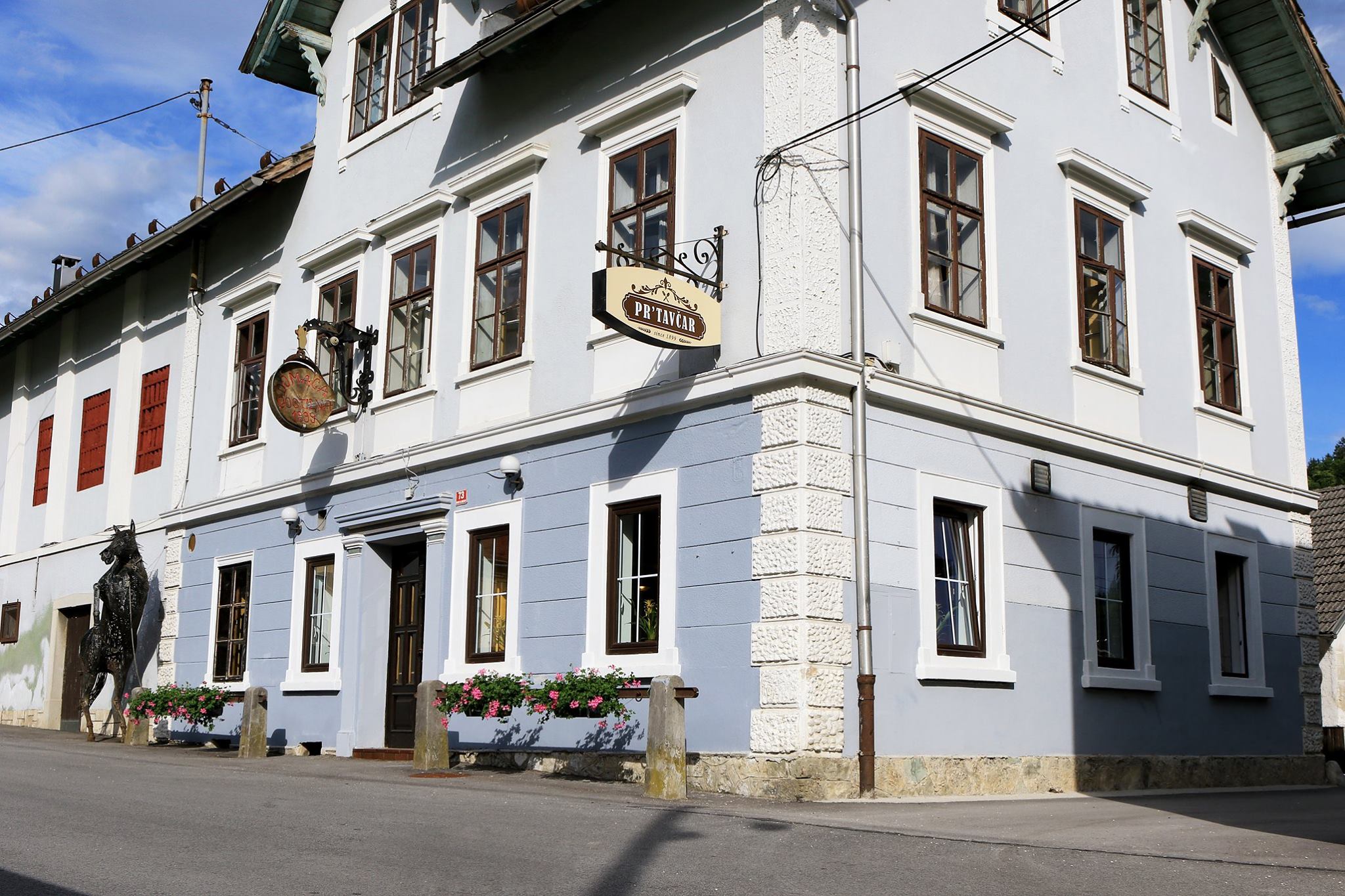
Also in the heart of the village, near the entrance to the hospital and park, is the Gostilna Pr’ Tavčar restaurant, one of the 13 Taste Radol’ca restaurants. In the relatively short time it has been open it has become a firm favourite among locals.
At the end of the village you reach the Draga valley and the imposing ruins of  Kamen Castle, built in the 12th century by the Counts of Ortenburg. More information here – http://www.radolca.si/en/kamen-castle/

Photo: M Kambic

The short drive to the end of the valley brings you to Gostišče Draga, another of the participating Taste Radol’ca restaurants, where specialities include venison goulash, fresh trout, homemade sweet and savoury štruklji, and more. Situated in the shade of the forest beside a stream, it is particularly popular with those seeking refreshment and sustenance after expending their energy in the surrounds.

The Draga valley is a gateway for numerous hiking trails in the Karavanke mountains including, amongst others, to Begunščica, the ever-popular Roblekov dom mountain hut, and the Preval mountain hut.

As you can see, despite it’s modest size, Begunje packs in a lot, so be sure to include a visit on your trip to the Radovljica area.

© Adele in Slovenia
 

Delightful Dražgoše: The Home of Dražgoše Honey Breads and Serious Sunshine!

The village of Dražgoše is nestled into the southern slopes of the Jelovica plateau, perched at an altitude of 832m above sea-level, above the Selca valley and the town of Železniki. Thanks to its favourable location, Dražgoše is renowned as being one of the sunniest villages around and proudly goes under the slogan ‘Pri nas sonce je doma’ (Here is where the sun is at home).

dsc00440

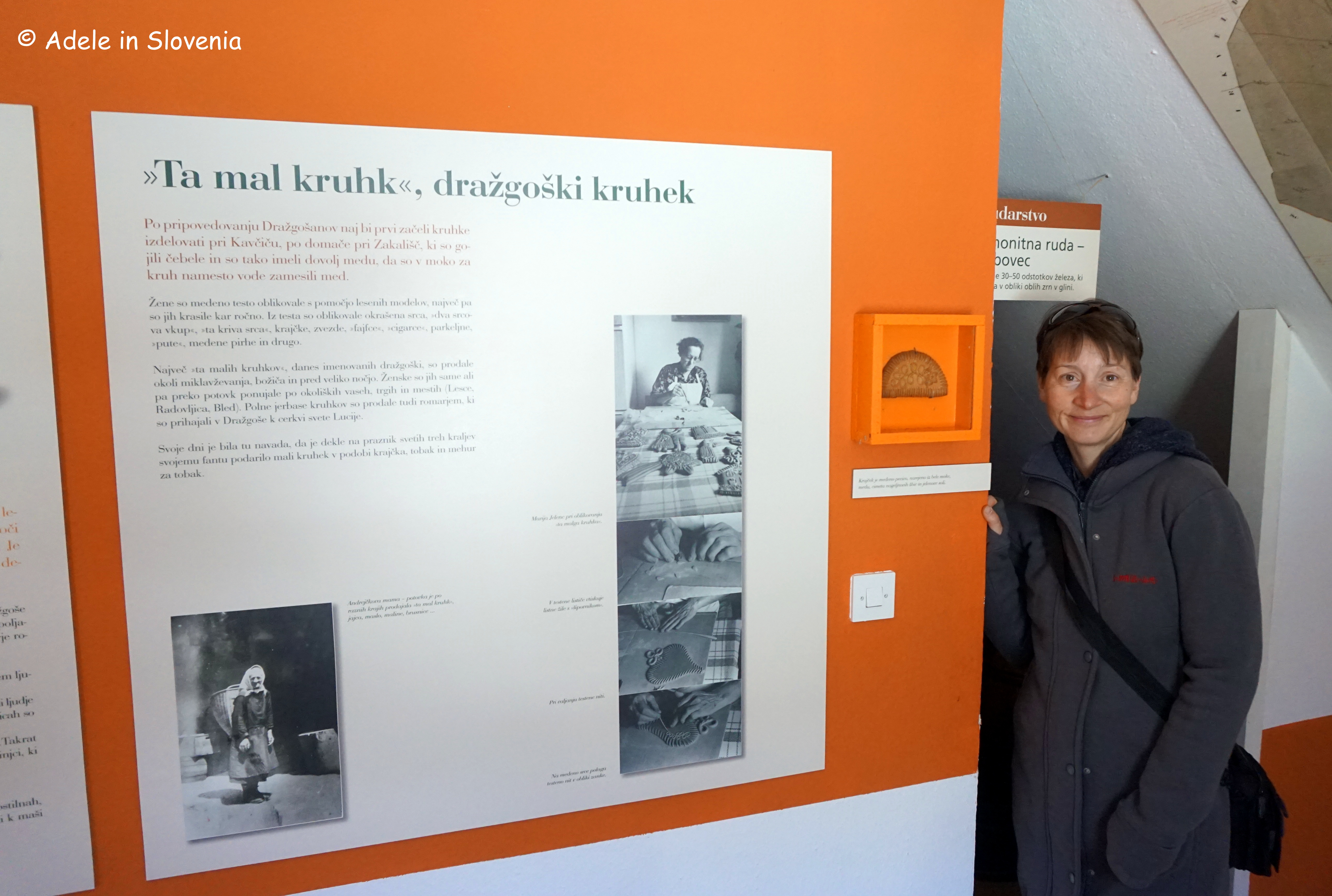
Dražgoše is most known for 2 things – its intricate hand-crafted honey breads and the Battle of Dražgoše. A good place to start a visit and learn more is at the recently reopened Brunarica Dražgoše snack bar.

47966_448360748432_2879696_n

In addition to hot and cold drinks and snacks, you can pop upstairs to the small museum for a brief introduction to the history of the village and the tradition of making honey breads.

dsc00434

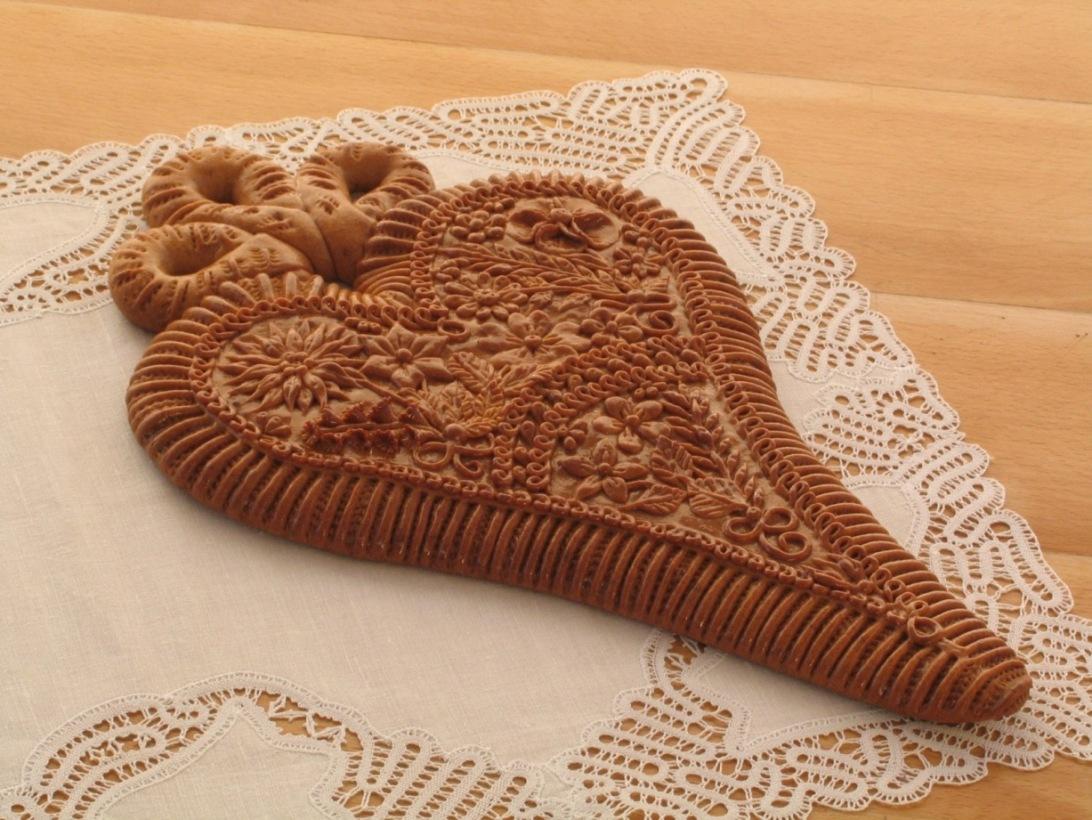
There are 2 types of honey breads made in the Škofja Loka regionLoka honey breads (which regular readers will recall I recently made at the DUO Centre in Škofja Loka, read more here – https://adeleinslovenia.com/2017/01/13/loka-honey-breads-and-handicrafts-at-the-duo-arts-crafts-centre/) and Dražgoše honey breads. The key difference between the two is that Loka honey breads are made using a hand-carved mould, whereas Dražgoše honey breads are made entirely by hand.

I visited Breda Tolar and Alenka Lotrič who are masters in the art of making Dražgoše honey breads and are continuing their grandmother’s tradition.

dsc00443

The dough is made using flour, honey, cinnamon and cloves. The honey is warmed through before mixing to allow the dough to be pliable for rolling and shaping.  Some of the designs are highly intricate and labour-intensive – real works of art. Dražgoše honey breads are edible, though in cases such as this one below, it would be such a shame to do so!

slika_jpg

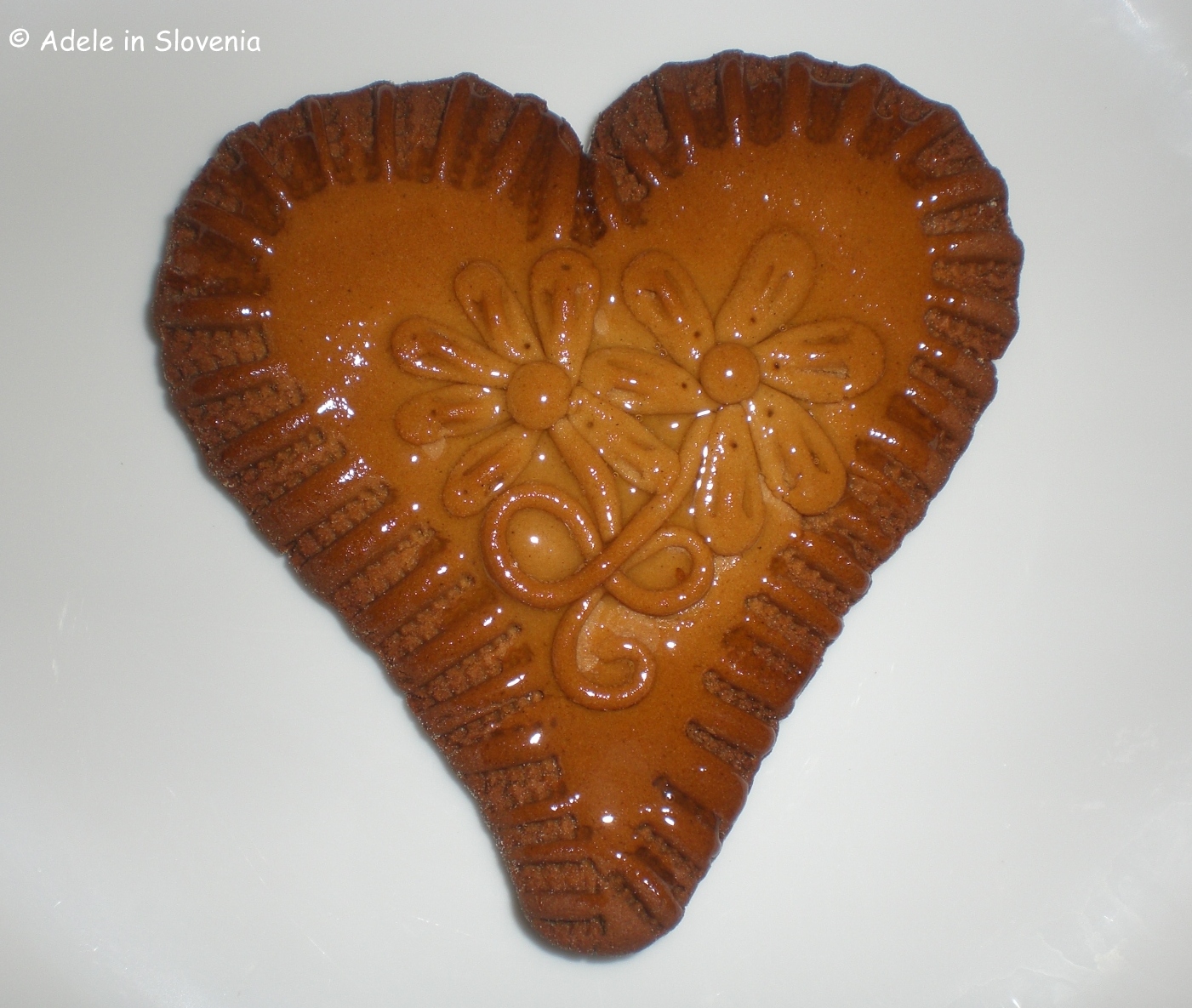
Whilst I haven’t been blessed with any form of artistic talent whatsoever, these two ‘pros’ made it look easy. Just look closely at their versions compared to mine!

dsc00461

After the intricate patterns are finished, the breads are baked in the oven then glazed with (more!) honey for a shiny finish. All couples getting married at Loka Castle (read more here – https://adeleinslovenia.com/2017/01/01/a-spotlight-on-skofja-loka/) receive a honey bread as a wedding gift. You can be sure that it will look better than my finished effort, though its not too bad for a novice I suppose, and I sure had fun making it, which is what counts!

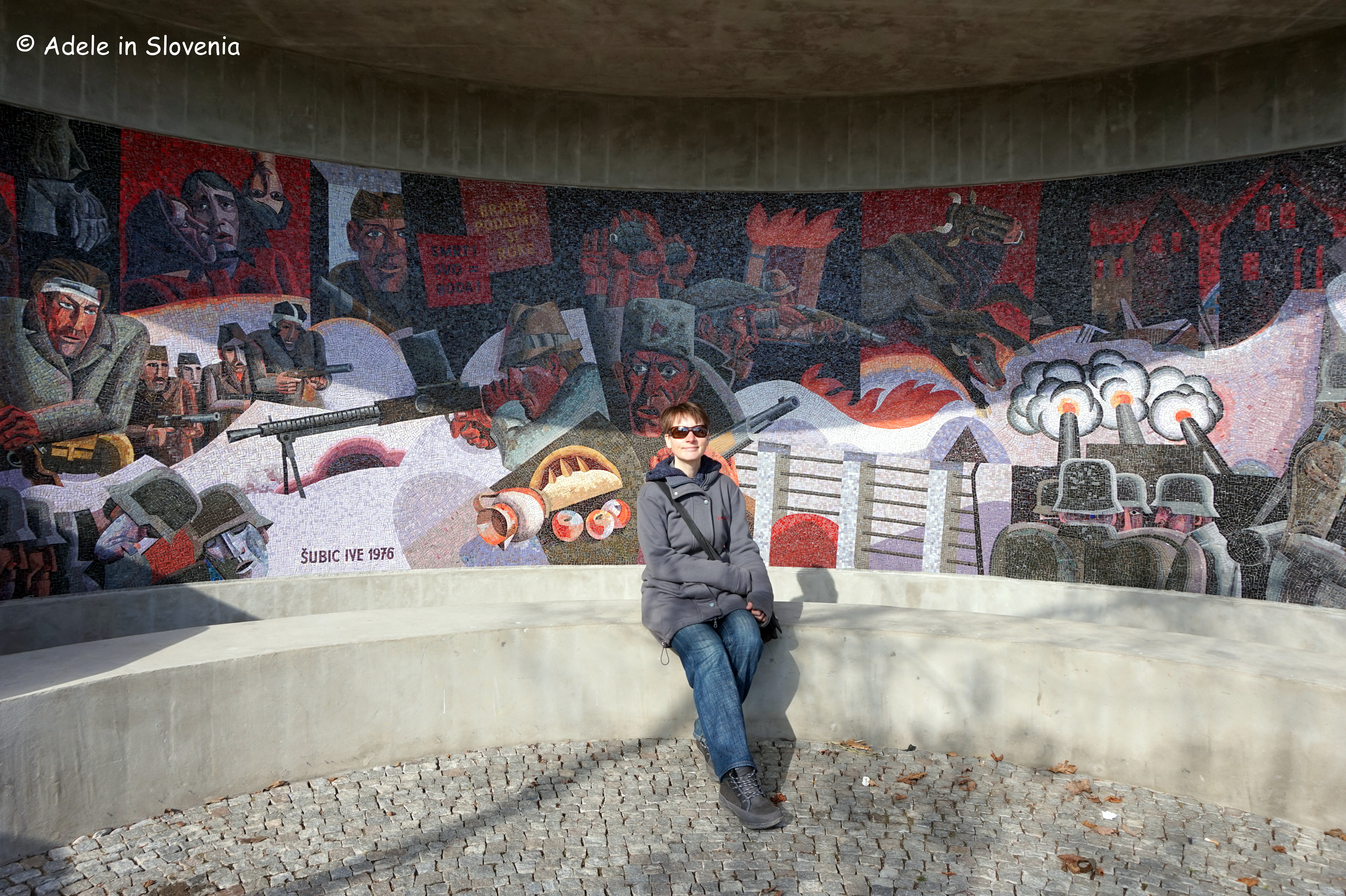
The monument to the Battle of Dražgoše commemorates the World War II battle between Slovenian Partisans and Nazi armed forces, which ended with brutal reprisals by the German forces – executions, looting and torching of buildings – and the destruction of the village. The village was entirely rebuilt after the war. The monument with an ossuary was erected in 1976.

dsc00439

spomenik3_jpg

The painting is by the renowned painter Ive Šubic from nearby Hotavlja who participated in the battle as a Partisan, later returning to depict it in art.

dsc00437

Though the old village church was destroyed in the battle, the Škofja Loka Museum Association was able to move the partly-preserved altars to where they stand today in the chapel of Loka Castle, whilst the original church organs are now in the church in Železniki. In the village you can still see the remains of the church which have been well-preserved and where there is a memorial park.

stara-cerkev

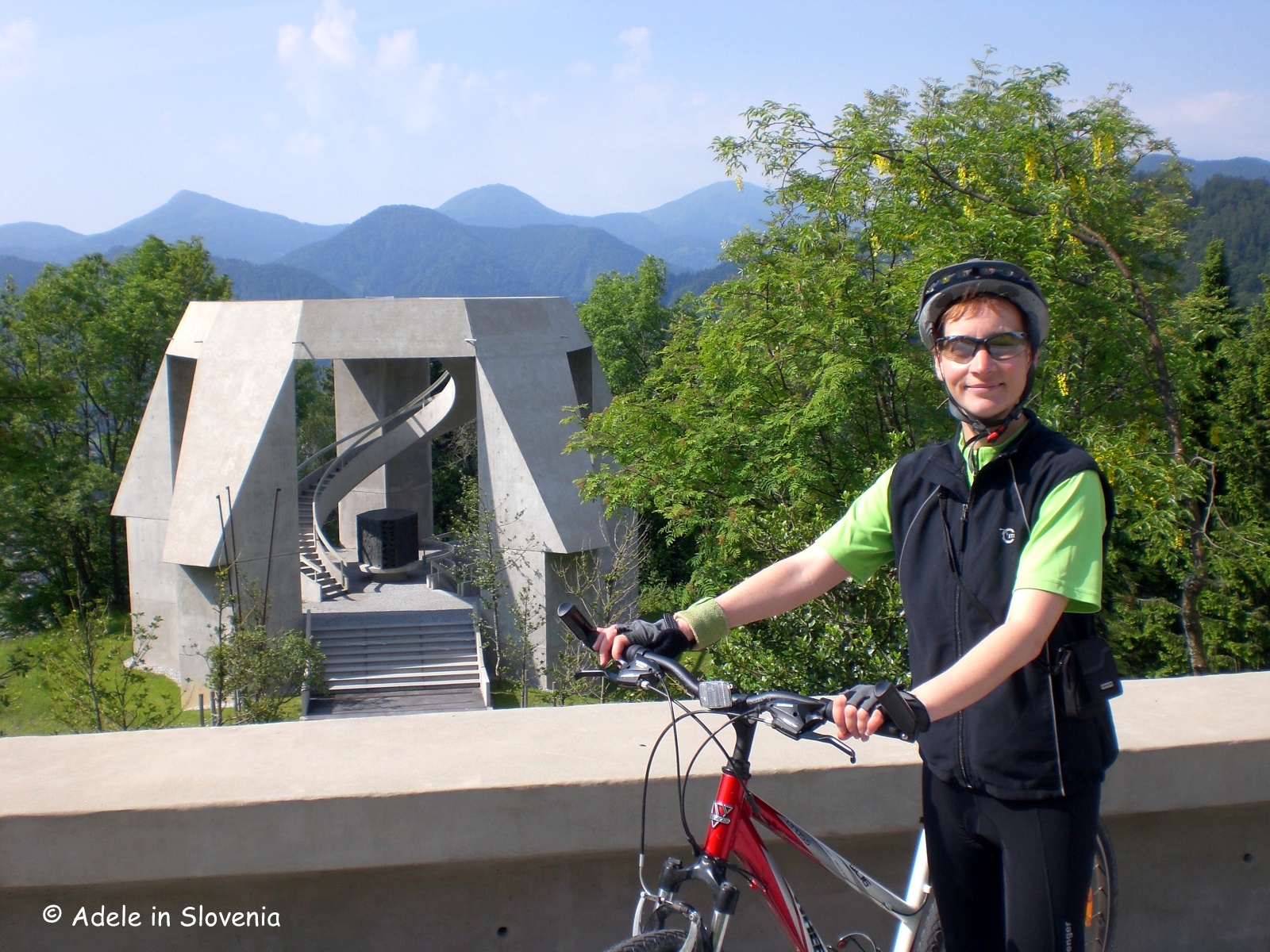
Dražgoše is also an idyllic area for hiking and cycling, albeit, flat it isn’t! In summer I’ve been known to cycle up from home in Radovljica first to Kropa, up to Jamnik and then on to Dražgoše. On this occasion (below), I was feeling particularly energetic and continued down into the Selca valley to Škofja Loka then via Kranj back to Radovljica. It was a long tiring tour but one that I must do again some time!

You can also hike up above the village to the hilltop of Dražgoška gora, visit one of a number of caves (accompanied by a guide), talke a walk along all, or part of, the Spominska pot (the Memorial Path) – a 3-3.5 hour-long route beginning at the Brunarica snack bar.

For more information about any of the above, and/or to arrange a honey bread workshop, contact Visit Škofja Lokahttp://www.visitskofjaloka.si/en/

© Adele in Slovenia
Sorica: Super Skiing and Slovenia’s Most Beautiful Mountain Village

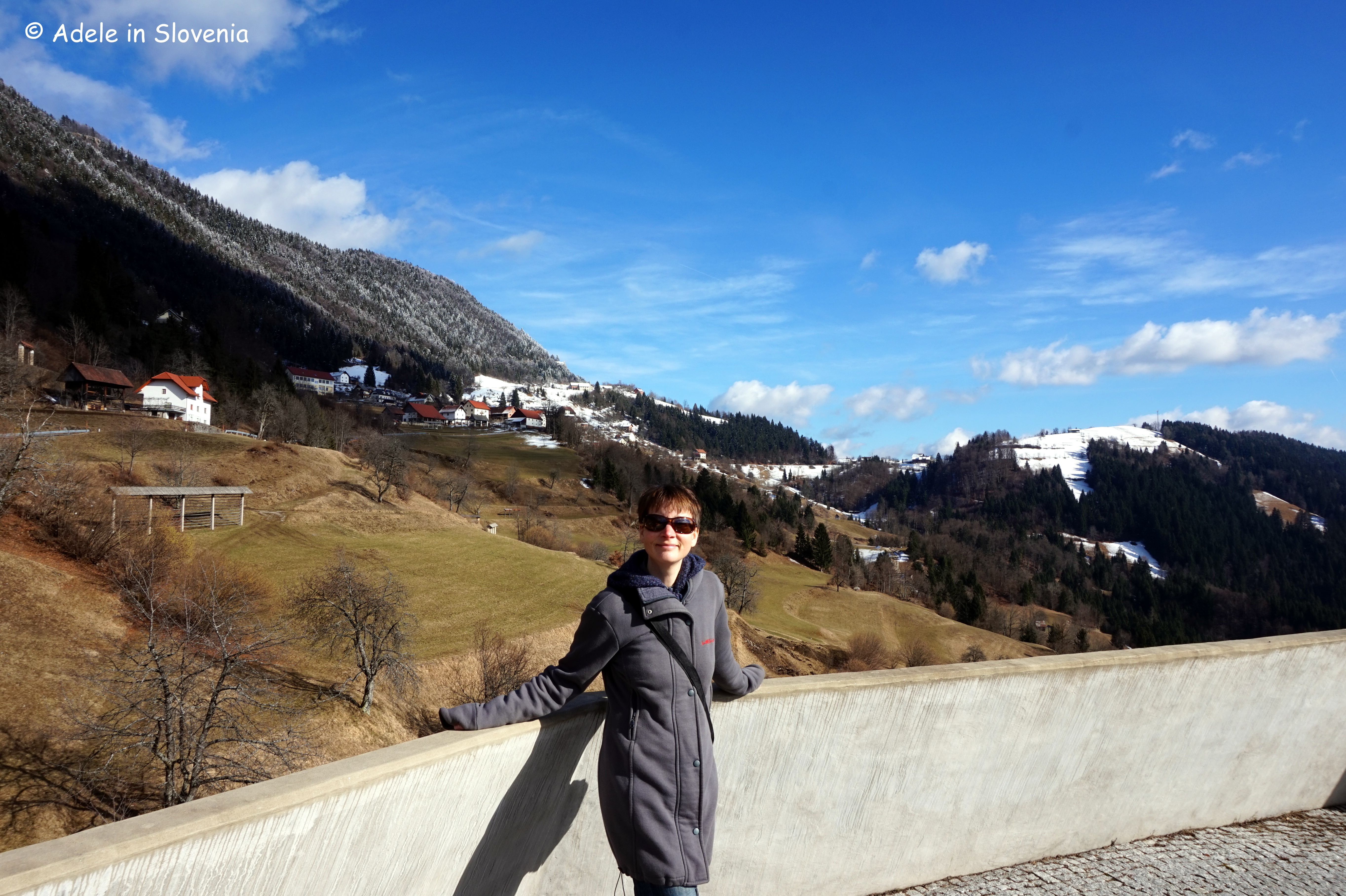
The well-kept village of Sorica is considered to be one of most beautiful mountain villages in Slovenia. As the tourism writer Rudolf Badjura wrote ‘It would be necessary to travel some distance around the world to see such a beautiful village.’ And even though it didn’t look its best on a slightly overcast February afternoon when I visited, when nature’s hues are still somewhat subdued after the winter slumber, one can easily imagine how glorious it must be here in the warmer months when nature is at its vibrant best.

dsc00362

Sorica is known as Grohar’s village (Groharjeva vas) as it is the birthplace of one of Slovenia’s most esteemed impressionist painters, Ivan Grohar (1867-1911).

dsc00360

The best way to get acquainted with the village is by walking the theme path ‘Path through Sorica’, which begins in the centre of the village between the Gostilna Macesen restaurant with rooms and Grohar’s House (Groharjeva hiša) – Ivan Grohar’s birth house.

dsc00365

With views like this, it’s easy to see where Grohar got his inspiration! The 18th century Baroque parish church of St. Nicholas contains a ceiling fresco of ‘The Last Supper’ by another of Slovenia’s esteemed painters, Janez Šubic from Poljane.

Tone Logonder, the sculptor of the statue of Ivan Grohar which was placed here in 1981, received the Gorenjska Prešeren Award for his work.

dsc00371

Rather than just being a museum, locals wanted Grohar’s House to once again come to life and a winning formula was found in making it into a kind of one-stop cultural centre which has become particularly popular for school field trips, and visits for private groups can also be arranged. The ground floor features a gallery.

dsc00380

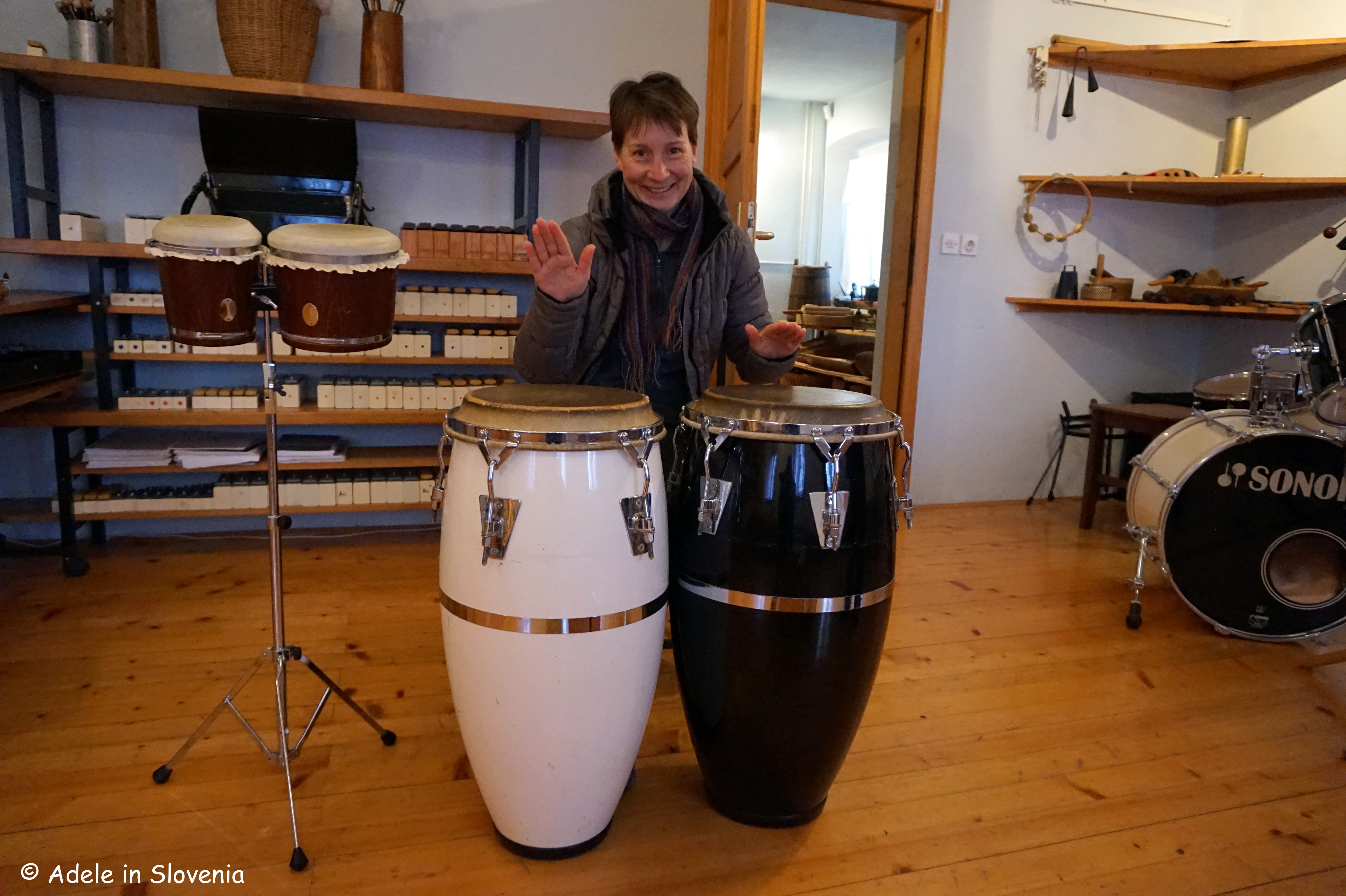
On the first floor you can indulge your creative side and take part in a workshop in the music room.

dsc00389

And then head up to the upper floor to the artists’ workshop to have a go at creating one of your own pictures to rival that of Grohar!

dsc00391

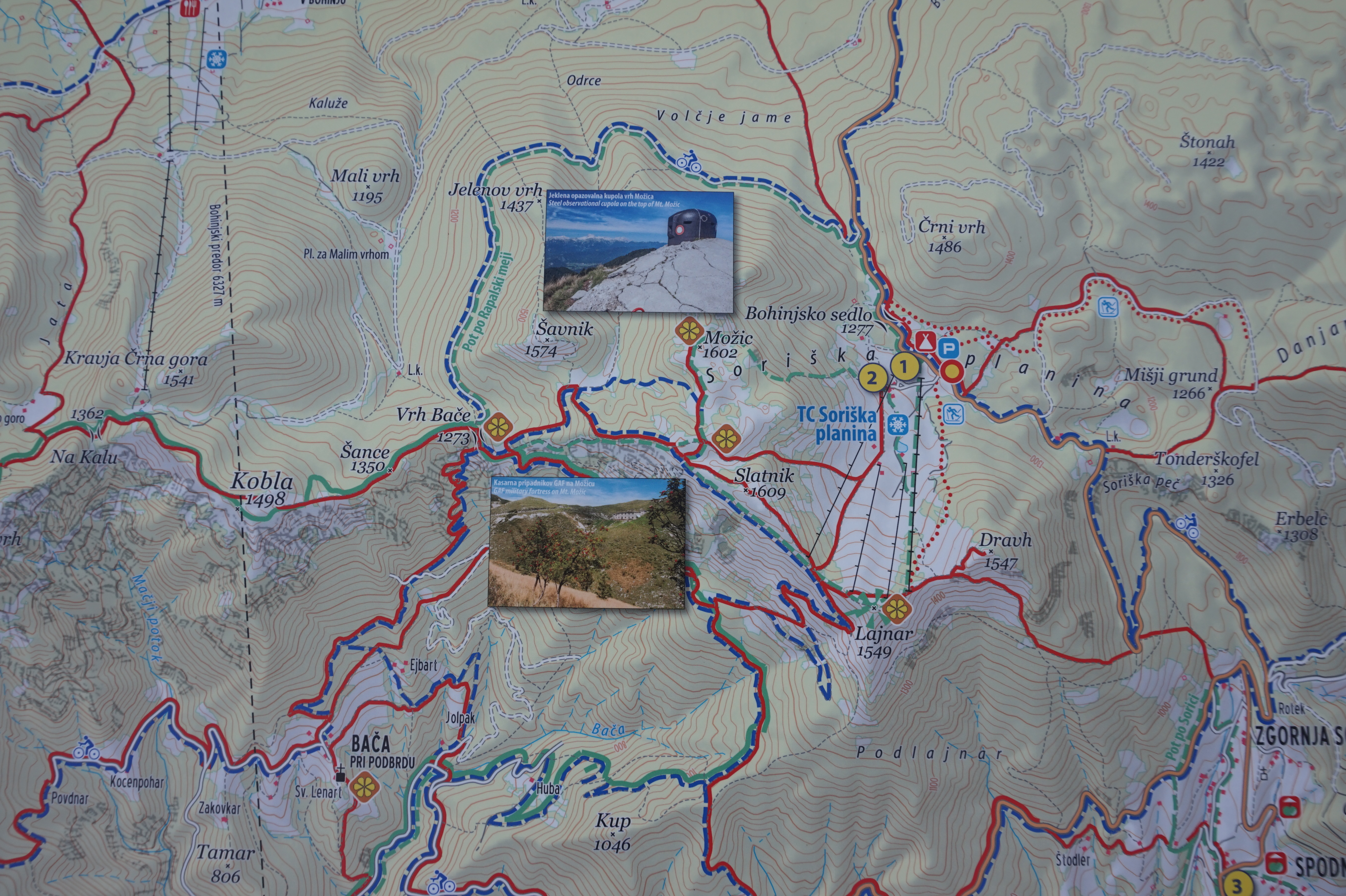
You can choose to just soak up the views of the village and its surroundings, set off on one of the many paths in the hills and mountains or, for those with a thirst for more active pursuits, head up to Soriška planina where in winter you can ski and in summer there are numerous scenic and interesting hiking trails.

dsc00334

Soriska planina can be reached from several directions; from Škofja Loka via Železniki, from Bohinjska Bistrica or from Most na Soči via Baška Grapa.

dsc00356

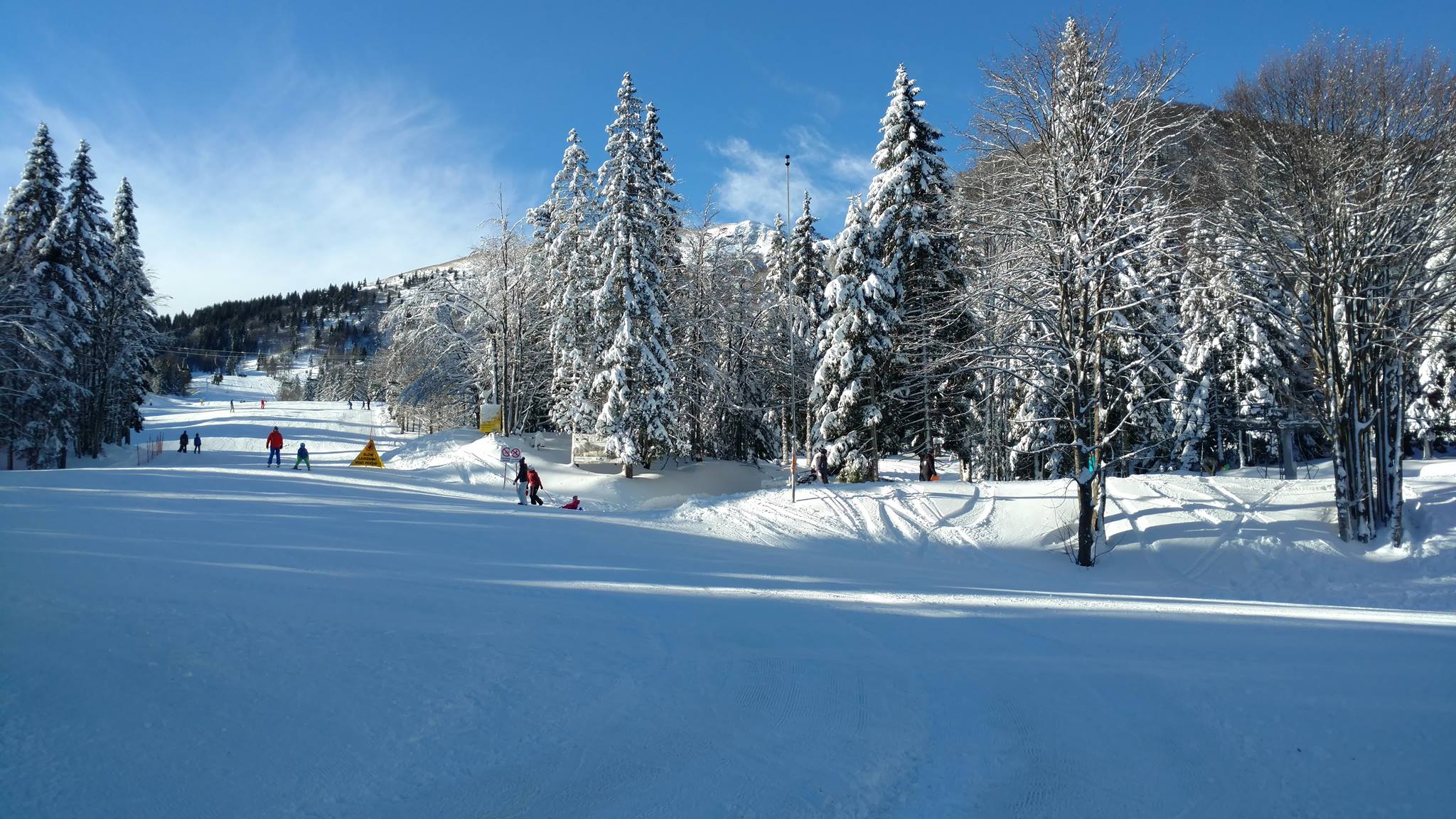
Facilities at the Soriška planina ski resort consist of a two-person chairlift, 3 drag lifts, a children’s drag lift, a snow park, a sledging track, cross-country ski trails and a restaurant.

15975001_1301471476588056_8741942859265004115_o

I had previously hiked in this area in the summer, but prior to last week had never seen it in its winter glory. Even for non-skiers like me, there’s still snowy fun to be had! Here I am at the highest point of the ski resort looking back down over the village of Sorica.

dsc00344

One of the most interesting features of this area are the numerous bunkers, barracks and other fortifications remaining from the time of the Rapallo Border – a former border that existed during both world wars between Yugoslavia and Italy.

Below you can see the bunker on Lajnar, and you can also continue to others including on Možic, Slatnik and Dravh.

dsc00346

Find out more about the Soriška planina ski resort here – http://www.soriska-planina.si/en/hiking/ and more about other theme paths and trails along the Rapallo Border here – http://www.visitskofjaloka.si/en/experiences/theme-paths/rappalo-border

© Adele in Slovenia

Winter Hiking and Snowshoeing in Slovenia’s Julian Alps

I’ve had quite a few enquiries recently via my blog regarding winter hiking in Slovenia. So, I thought I would put together a new blog post with some ideas about where to hike here in winter, and also about another alternative winter sport – snowshoeing.

Before I go on, however, one thing I would like to emphasise – and cannot emphasise enough – is that you MUST be properly prepared and equipped for winter hiking. In the past couple of weeks there have been a number of deaths in our mountains, and, as is so often the case, among them are tales of people going to the mountains in trainers or other such inappropriate attire. Proper equipment is essential year-round, but particularly so in winter, as is knowing the terrain. Personally, during winter, particularly when hiking alone, I stick to routes that I know and that I know are well-trodden.

kozlov-rob-15-januar-2011-021

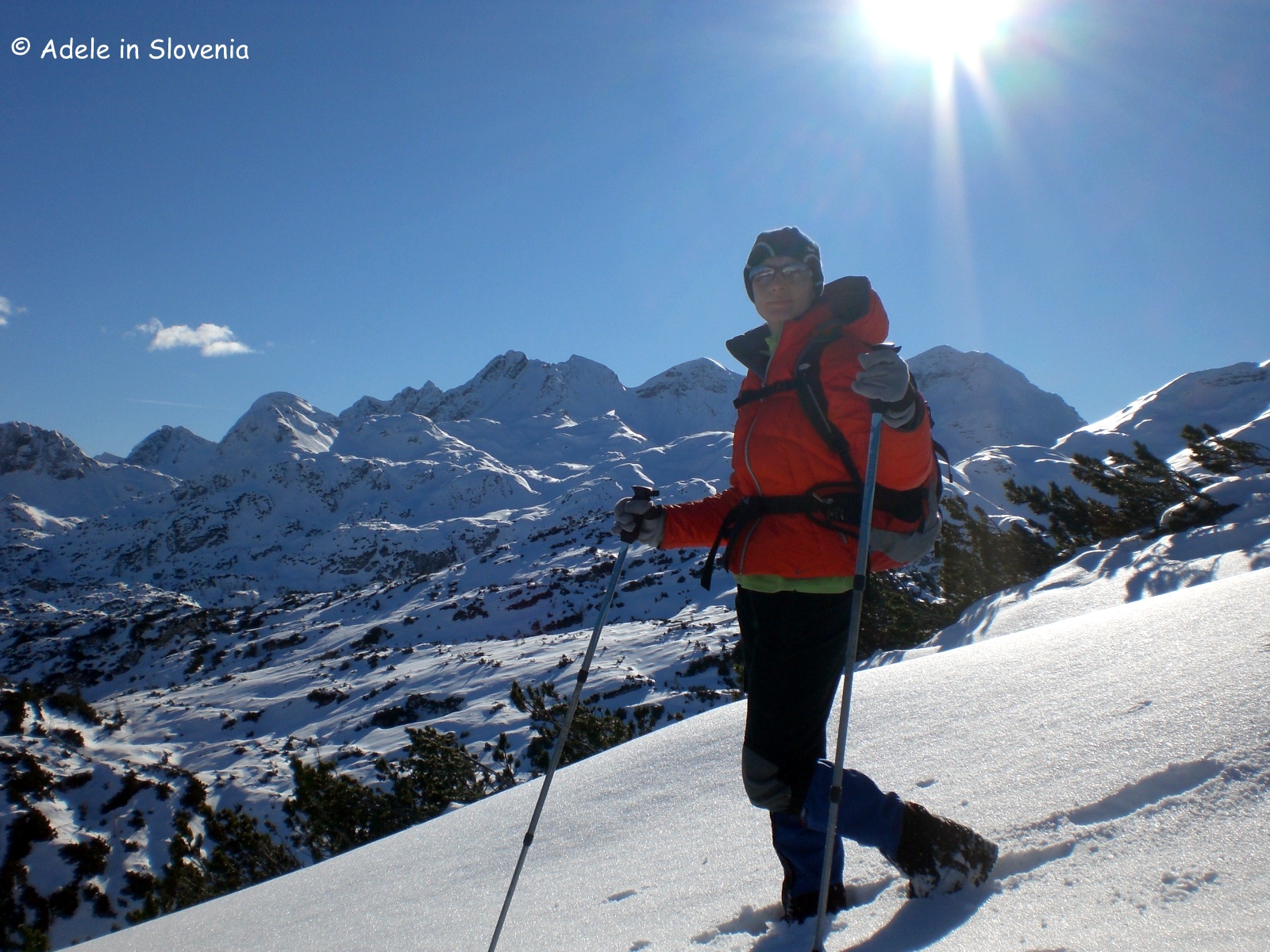
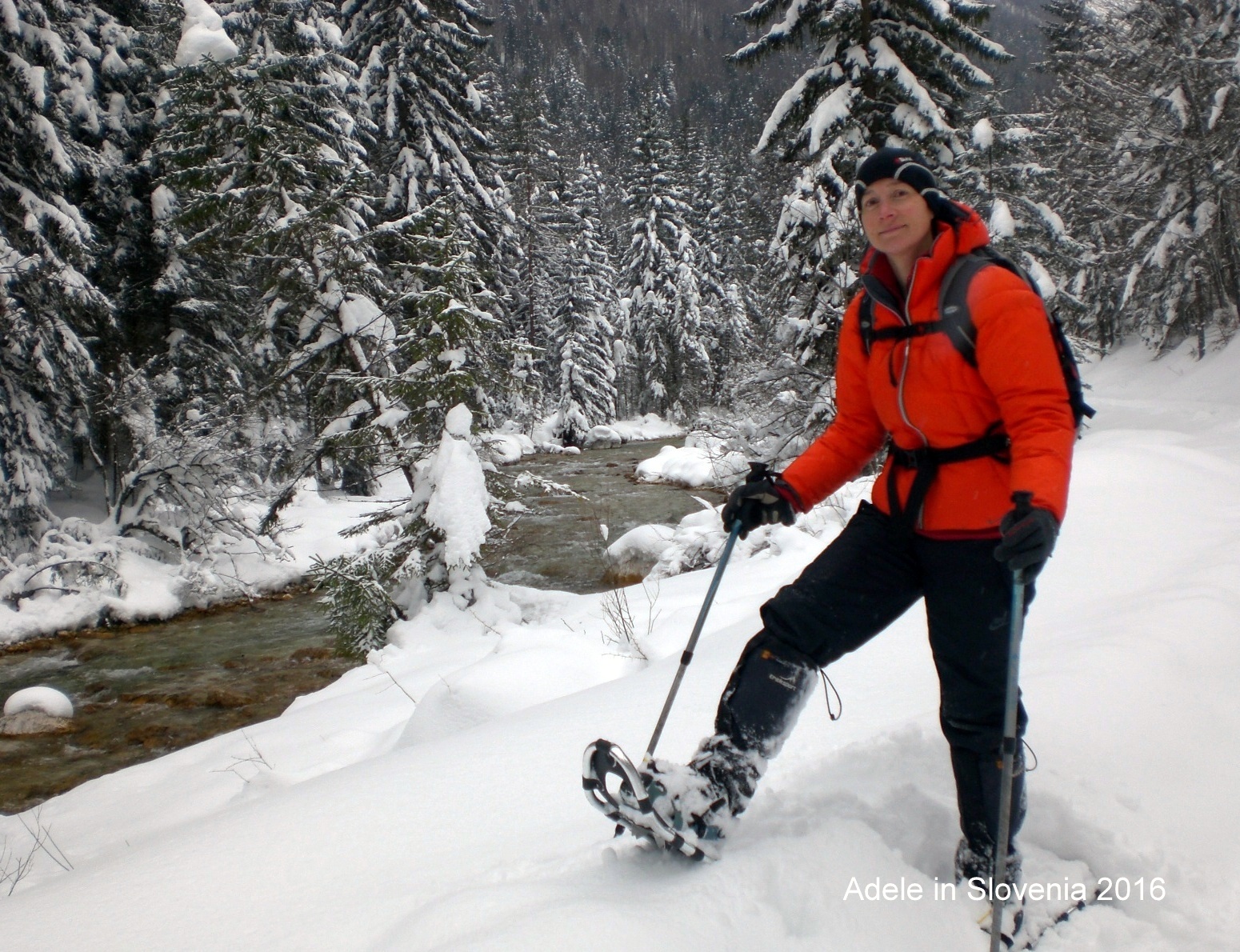
As I’m not a skier – never have been and never will be – snowshoeing provides great exercise and (can be!) great fun too, provided the conditions are right. Putting on a pair of snowshoes for the first time is a slightly strange experience. One feels rather awkward and clumsy walking around with, what look and feel like, tennis racquets strapped to your feet, though the modern versions, as seen below, are somewhat sleeker in their design.

snowshoe-sizing

Once you get used to walking with a wider and slightly ungainly gait, you soon get used to it, though a pair of hiking poles is a requisite. Walking with snowshoes enable you to access places on foot that would otherwise be inaccessible during winter. However, snowshoes aren’t suitable for scaling high peaks, but rather for traversing wider, flatter snow-covered terrain.

vrata-krplanje-18-januar-2013-001-001

One of the best, and one of my favourite, places for winter activities is the Gorenjska region, where I live in the northwest of Slovenia, is the Pokljuka plateau. The entire forested Karst plateau, 20kms in length, is within Triglav National Park, and reaches an elevation of 1,400m. The highest peak is Debela peč (2014m), which, together with the peaks of Brda, Mrežce and Viševnik, are among the most popular with hikers year-round.

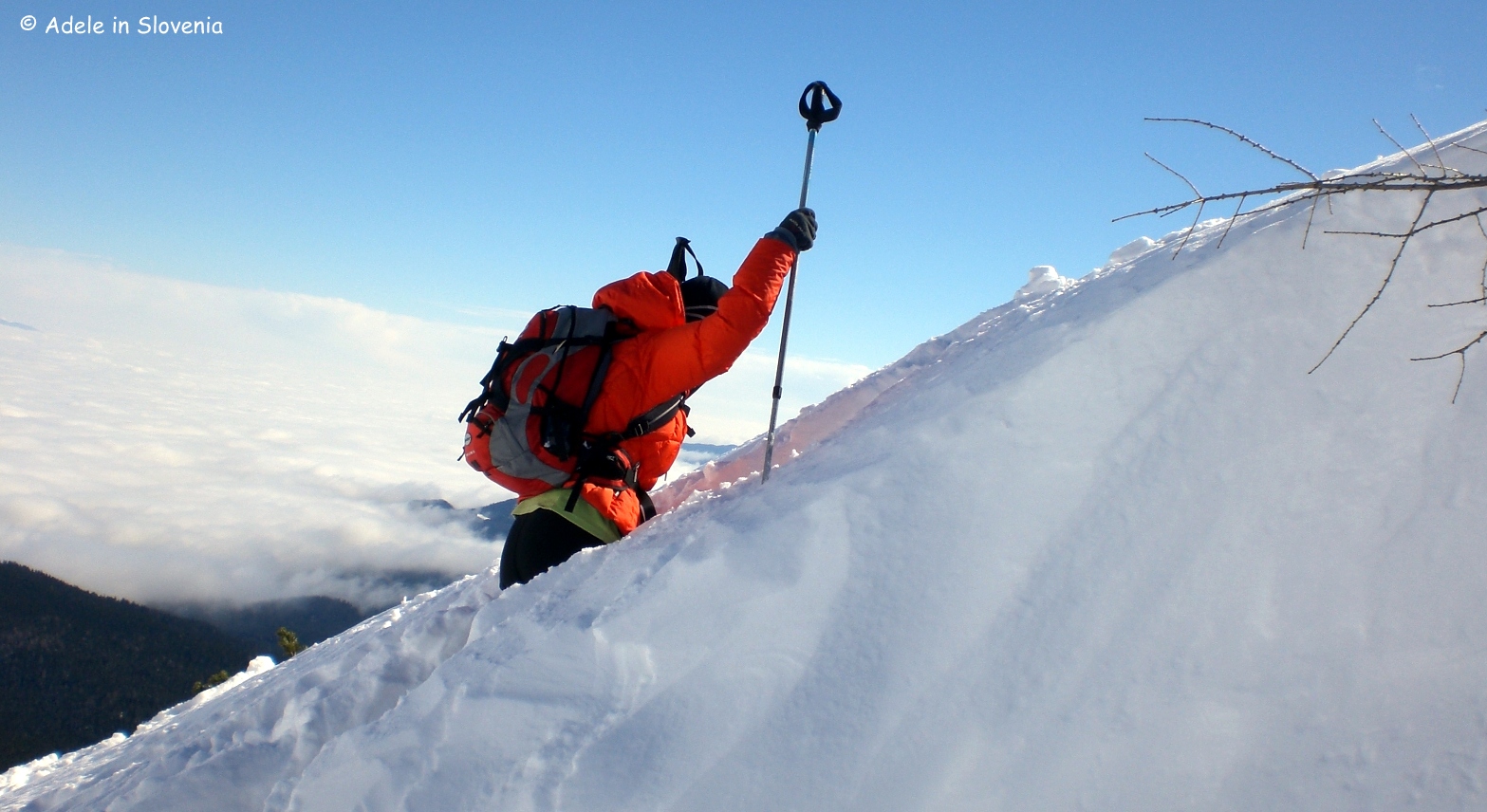
As can be seen below – me en-route to Debela peč – winter hiking, when at times you can be waist deep (or deeper!) in snow, can be exhausting at times, so isn’t for the faint-hearted!

debela-pec-19-februar-2011-026

But the rewards can also be fantastic, provided you are well-equipped, sensible, know the terrain, and are fit enough!

debela-pec-19-februar-2011-018

Pokljuka is approximately 15kms from Bled. Other than for a few months during summer, there is no regular, scheduled public transport to the plateau, so a car is essential. The plateau can also be reached from the road which turns off near Bohinjska Bistrica and leads up towards Gorjuše.

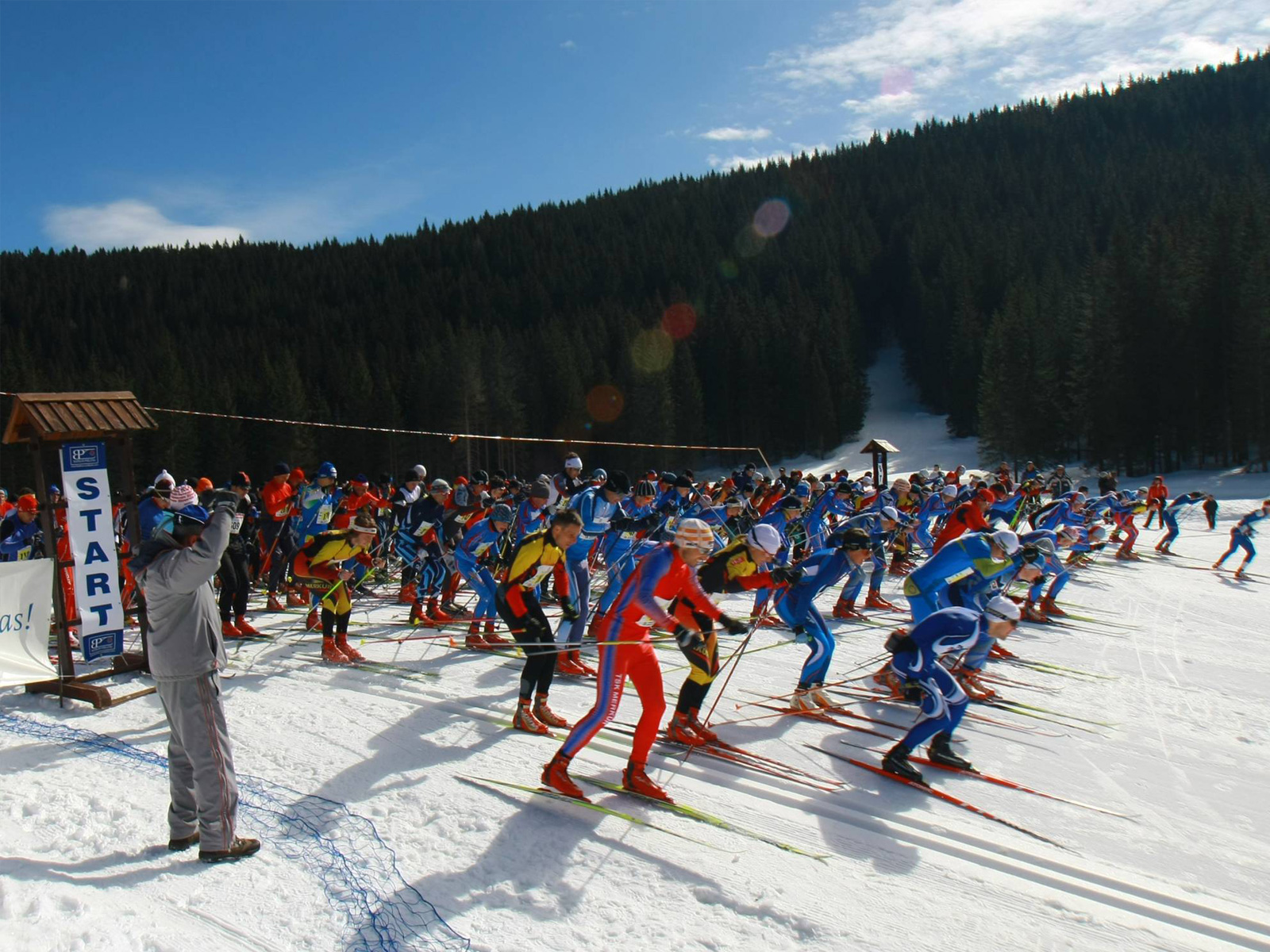
This year on 8-11th December Pokljuka hosted the annual BMW Biathlon World Cup. The plateau is a favourite training destination for many winter sports people from across Europe as well as for the Slovene military who have a barracks at Rudno Polje, which is also home to the Pokljuka Sports Centre and the Hotel Center http://www.center-pokljuka.si/en.html

druge_prireditve

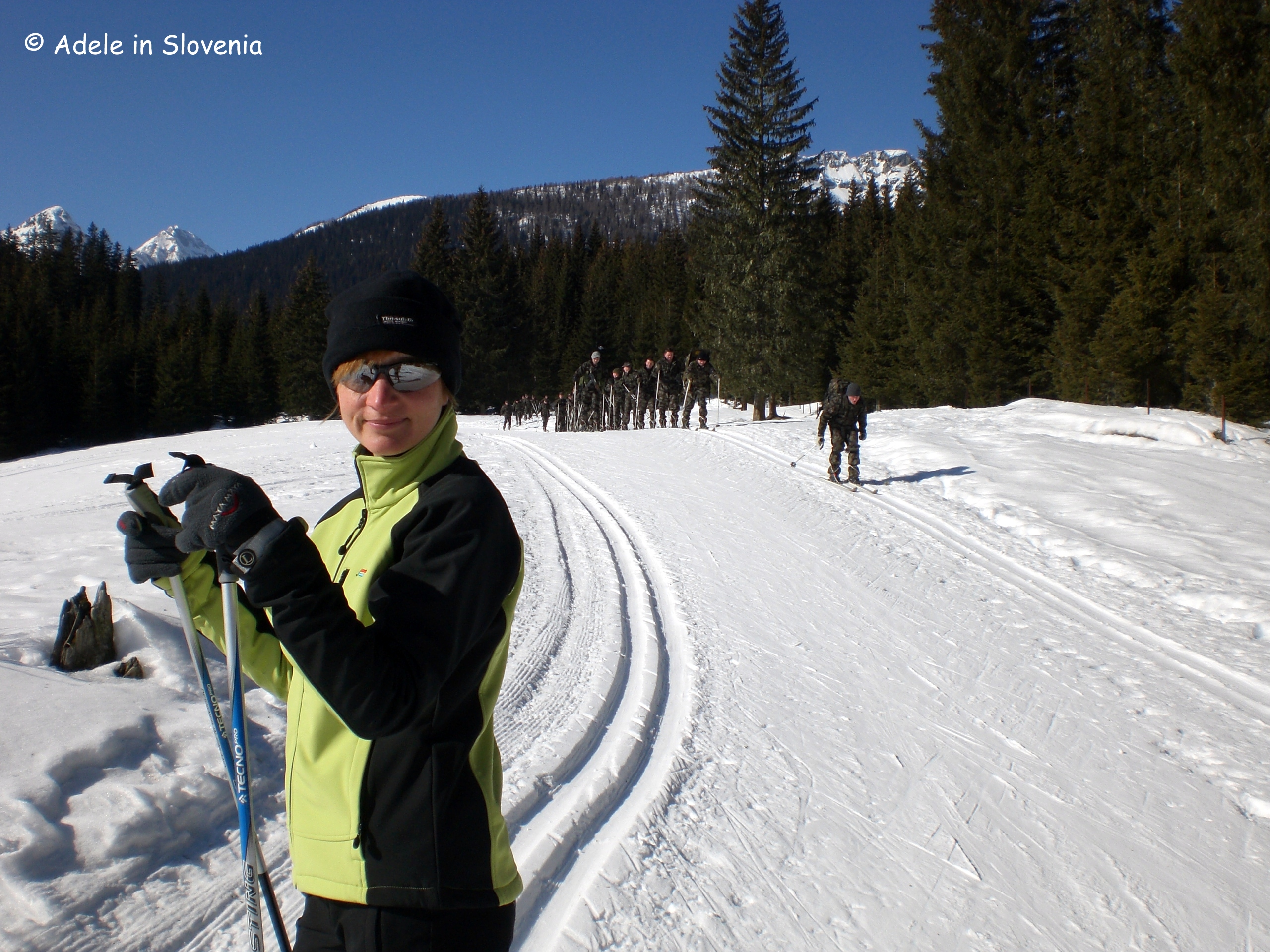
Pokljuka is a very popular destination with fans of cross-country skiing. I have tried it, on a few occasions, but me and skiing – of any kind – are never going to get along! Here’s me trying to ‘play it cool’ whilst a group of Slovenian military recruits go whizzing by!

pokljuka-16-02-2008-017

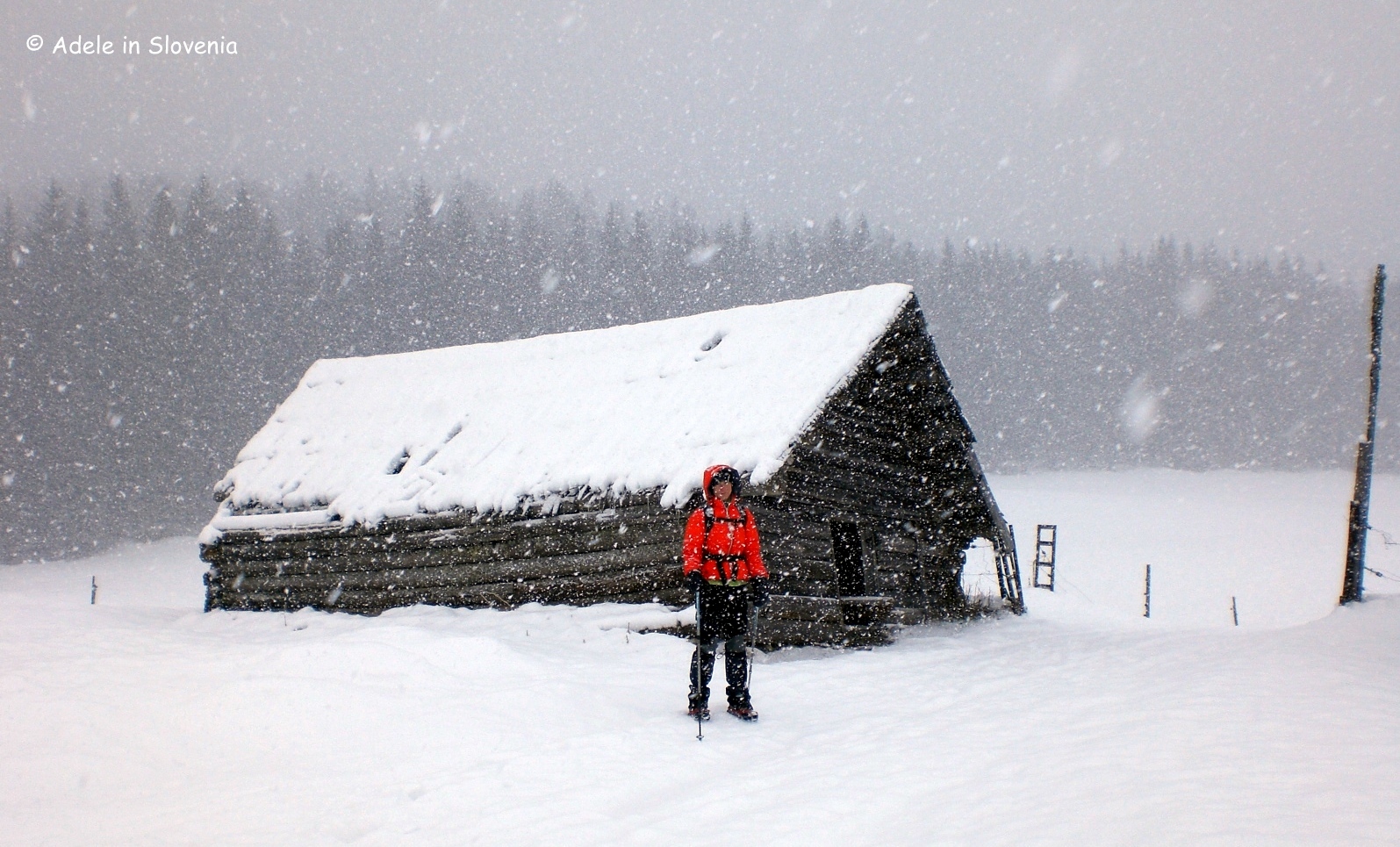
I’ve been there at times when the weather is less than favourable too, though once home in the warm with a cuppa, all is forgiven and forgotten!

mrezice-25-november-2010-023

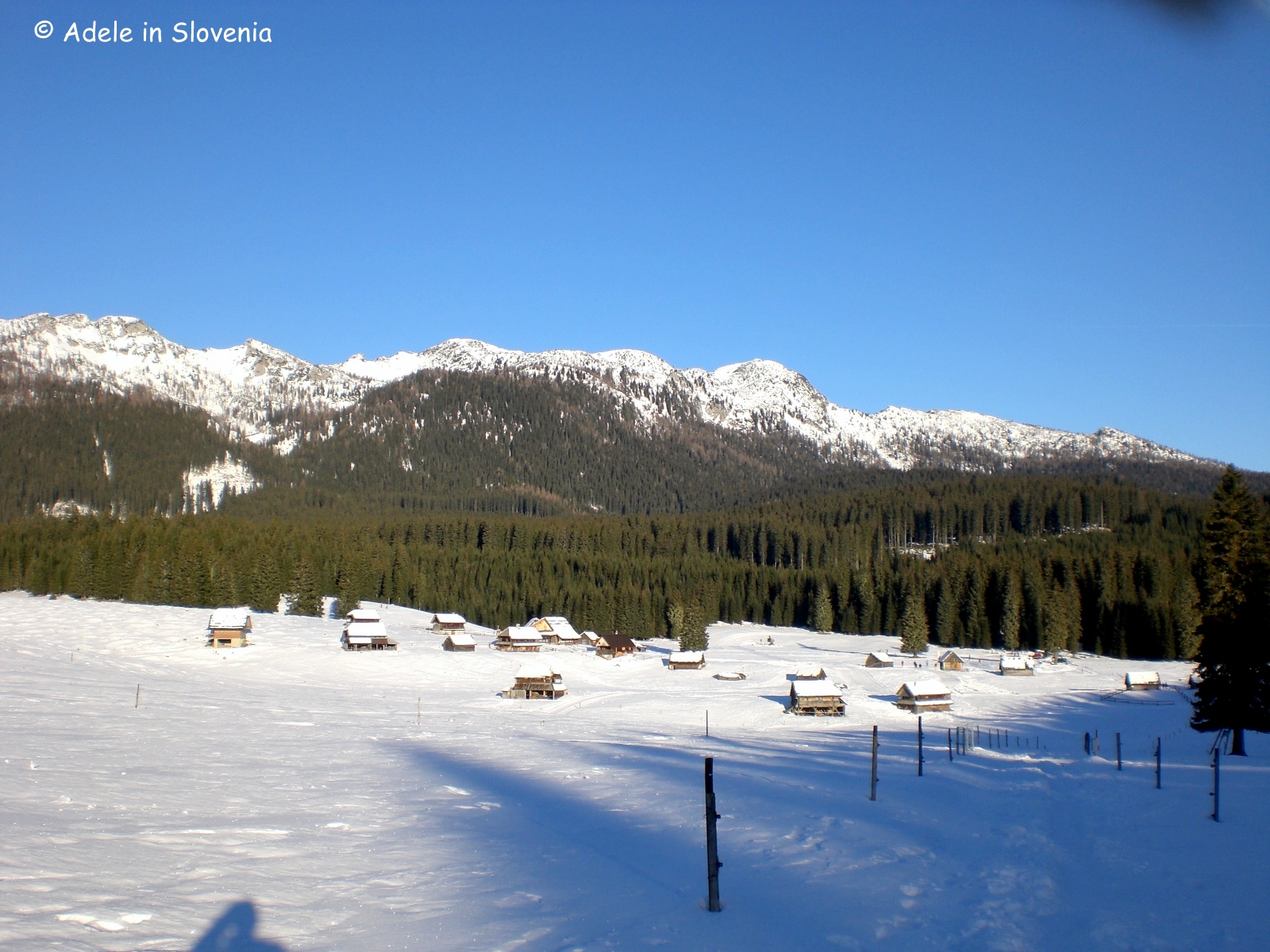
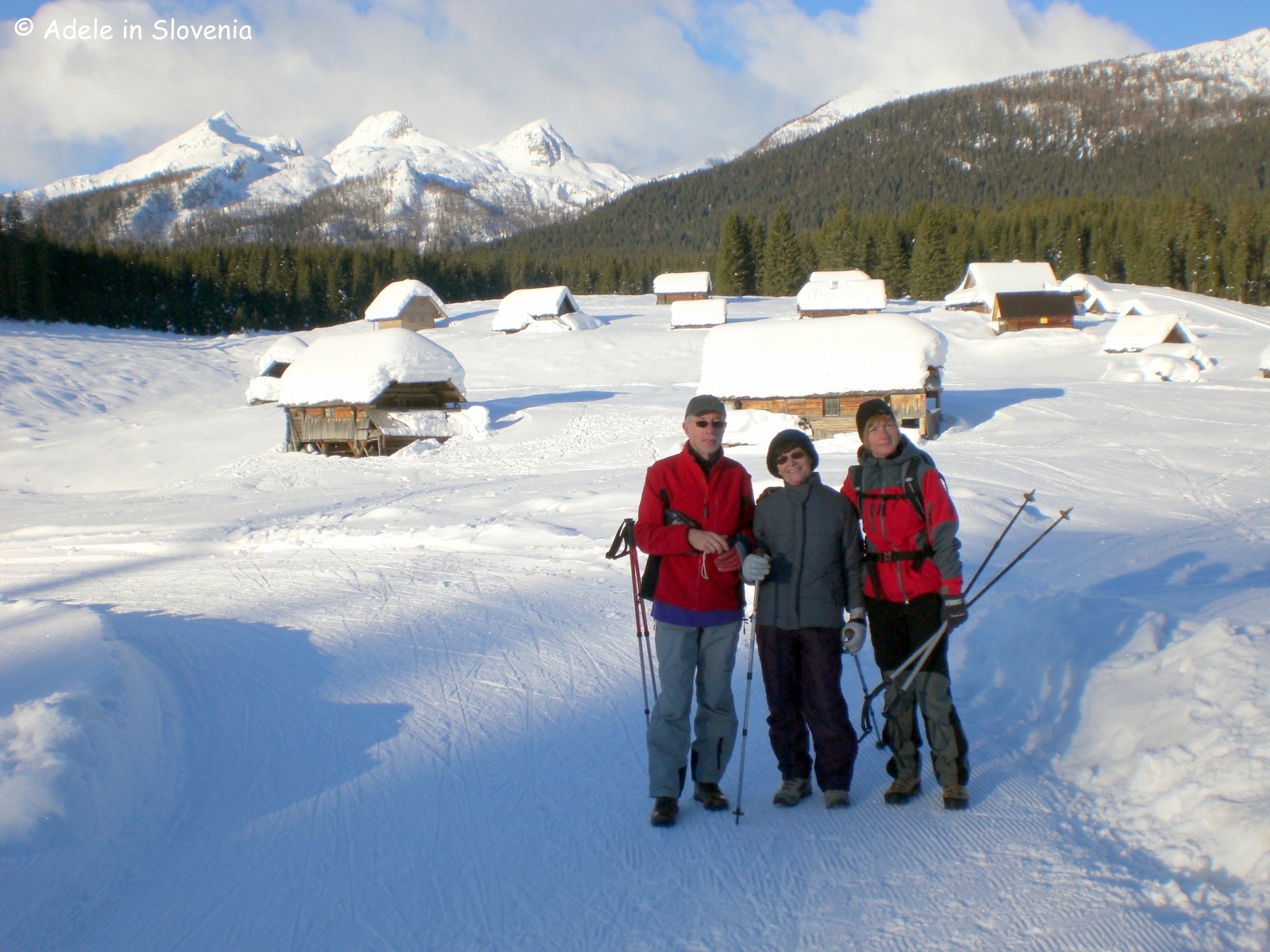
With its wide, open pastures and traditional wooden huts, the beautiful Planina Zajavornik highland is among the most popular parts of Pokljuka. The highland is also equally stunning during summer. You can cross the highland on foot and then head further up to the Blejska koča mountain hut, where you can enjoy hearty, traditional Slovenian food such as Carniolan sausage or a stew such as ričet, or, if the road is clear of snow, you can drive a little further by taking the road to the right from Mrzli studenec then park on the opposite side of the highland before continuing on foot up to the mountain hut.

cimg6921

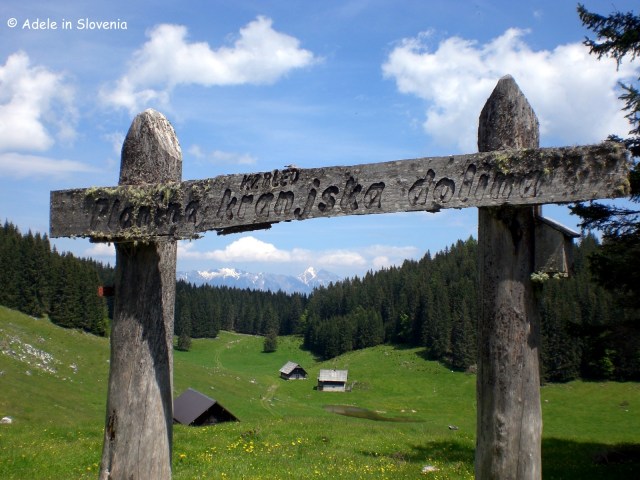
There are so many lovely parts of Pokljuka, it’s hard to choose a favourite and it’s equally beautiful, if not more so, during summer. Below you can see the Kranjska dolina highland, which you pass if you take the road as described above. I particularly like cycling in this area in summer.

cimg8730

It’s fairly easy to navigate your way around Pokljuka, but a map of the Julian Alps will certainly aid you in planning routes.

I hope this has provided some ideas and inspiration for winter hiking in Slovenia. I wish you happy, and above all, safe, hiking!

© Adele in Slovenia
New Year’s Eve in Slovenia – How, Where and Hangover Cures!

Generally speaking, Slovenes love New Year’s Eve and really go to town when it comes to celebrating! So, if you are going to be, or are thinking about, celebrating New Year’s Eve in Slovenia, here are some ideas of how, and where, to see in the new year in style.

You won’t have to go far to find new year’s celebrations, since pretty much every village, town, and city has some kind of celebration. And even if you don’t see them, you will certainly hear them!

The biggest crowds gather in the Slovene capital, Ljubljana, where numerous events take place, the highlight being the fireworks display launched from the Ljubljana Castle hill. Find more information about New Year’s Even in Ljubljana here – https://www.visitljubljana.com/en/visitors/events/page-12848/

10658550_10153293781642546_5977977199321123042_o

There are New Year’s Eve concerts held in several of the city centre squares from 9pm onwards.

12374938_10153281050862546_4675017763656891039_o

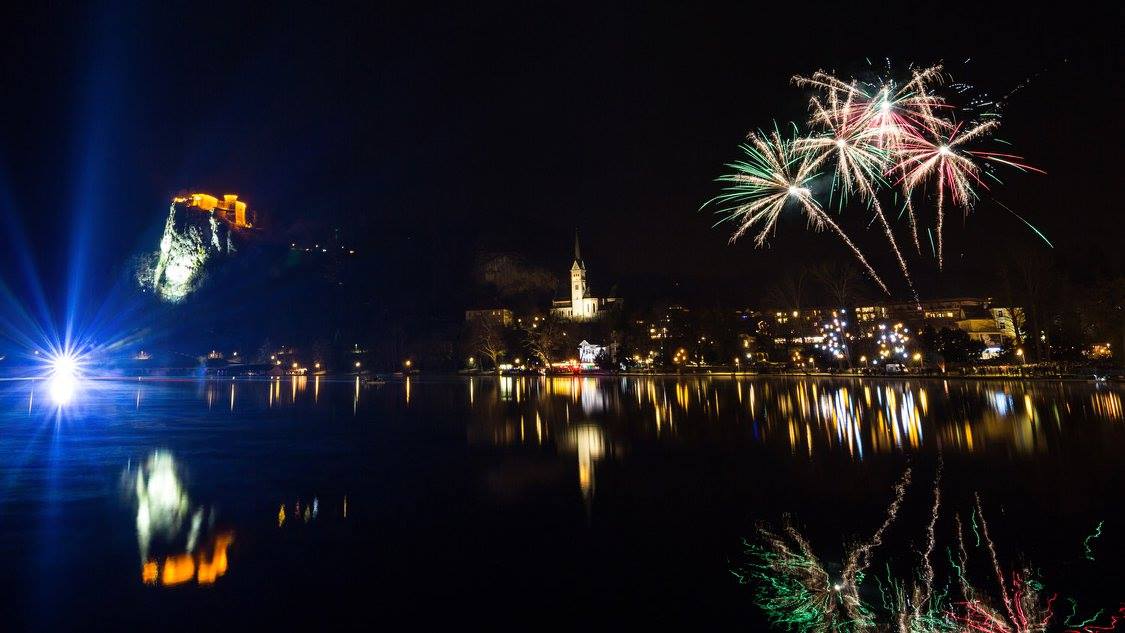
Lake Bled is another popular place to spend New Year’s Eve. I saw in the new year there a few years back; first taking a (brisk!) walk around the lake, then settling down with a friend and a mug of mulled wine to watch the fireworks display above the lake.

bled-novo-leto

There are New Year’s Eve celebrations in all the major cities, including Maribor, Celje, Novo Mesto, Nova Gorica, Piran, Kranj, Velenje etc., as well as smaller local events.

silvestrovo_07_slovenia_slovenija_maribor_pohorje_profoto_studio_06

New Year’s Eve in Maribor, Photo: http://www.maribor-pohorje.si (Profoto studio)

A more unique way to see in the new year is to visit the mountains. Quite a few of Slovenia’s mountain huts hold house parties on New Year’s Eve. Expect hearty food alongside the wood-burner, plenty of schnapps, and obligatory singing! Of course, don’t forget that the next morning – yes, the one after the night before – you will have to hike back down!

You might find the hut half buried in snow, as I did here on the Pokljuka plateau, but that’s all part of the fun! A pair of snowshoes, as seen below, definitely aids access when conditions are like this.

pl-konjscica-12-februar-09-056

If it’s a nice sunny New Year’s Day, what better hangover cure can there be than this!

If you prefer a ‘hair of the dog’ style hangover cure, then be sure to try out one of numerous kinds of Slovenian homemade fruit schnapps, but beware, the homemade versions are often strong enough to blow your socks off!

kozlov-rob-15-januar-2011-011

I have to admit to being a bit of a killjoy when it comes to New Year’s Eve. I can take it or leave it, preferring Christmas and time spent with family to loud parties and – as we all know – the world is always still the same the next day, despite all the new year’s resolutions! However, since I’ve been in Slovenia, I have tried to embrace New Year’s Eve a little more, and have tried a number of different ways of celebrating.

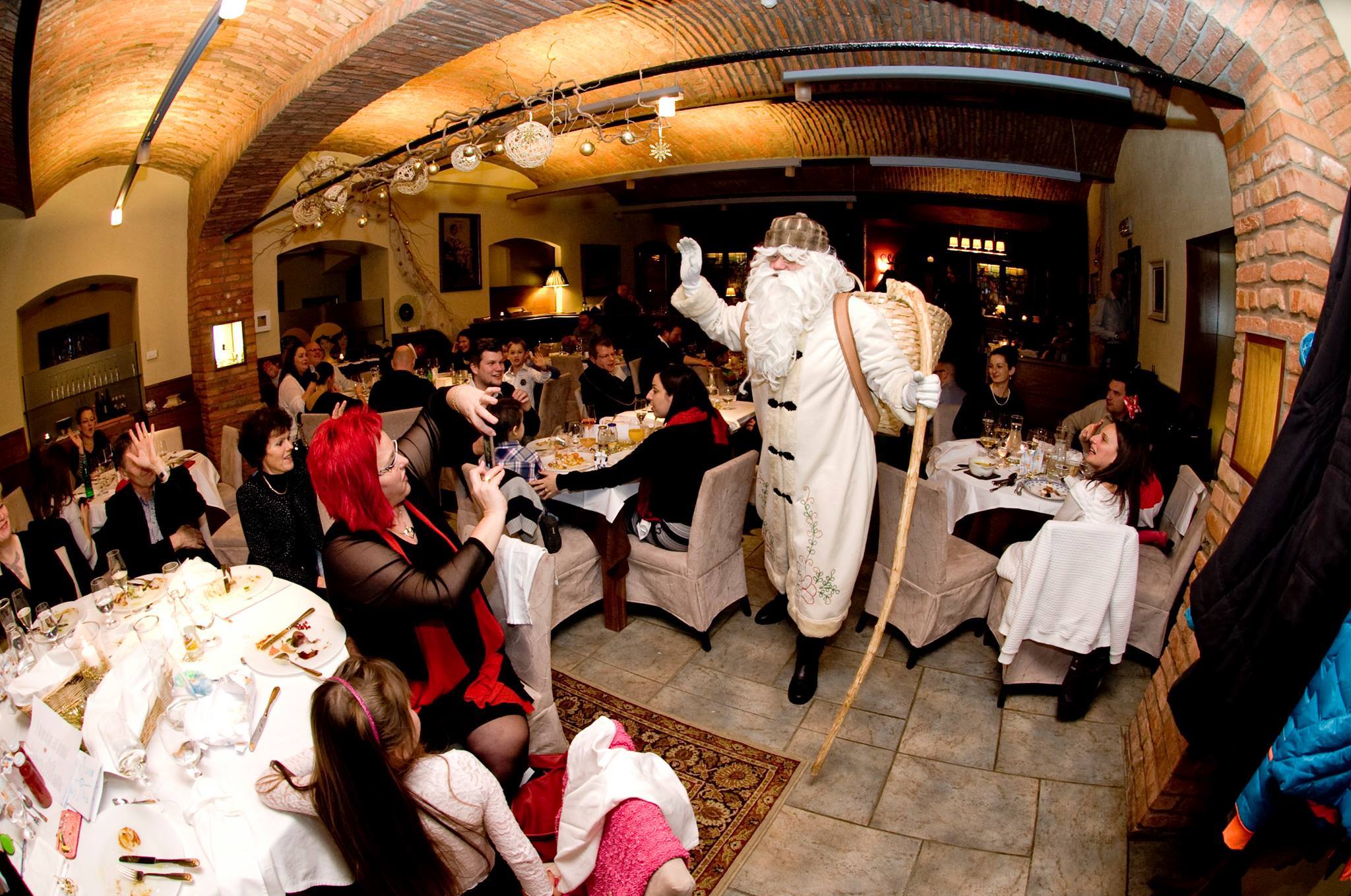
If you’ve been a good girl or boy, then Old Man Winter (Dedek Mraz) may visit on New Year’s Eve! I met him at Vila Podvin on New Year’s Eve 2014/2015, whilst enjoying a gourmet dinner prepared by one of Slovenia’s top chefs, Uroš Štefelin. Families with young children especially enjoy the New Year’s Eve celebrations at Vila Podvin. This year the fun begins at 7pm – reservations essential.

12370751_995518353855318_5120873239217548165_o

New Year 2015/2016 was spent at another local restaurant, Kunstelj Inn, whilst other years I have just walked from home into the heart of my hometown of Radovljica where the celebrations are focused around the historic old town centre, with live music and merriment. This year in Linhart Square, the heart of the medieval old town, there will be live music and merriment with the Gašperji Ensemble from 11pm – 2am.

12390992_1001993673177182_7080849416868439696_n

There have been a couple of times when temperatures having been well below freezing and I couldn’t face going out in the cold and the appeal of staying home in the warm won over! If you do venture out in the cold at midnight, be sure to wrap up well!

novo-leto-2009-001

Wherever and however you choose to celebrate, I wish you a very HAPPY NEW YEAR and a healthy and prosperous 2017!

© Adele in Slovenia

Christmas 2016 in Slovenia – Christmas Markets, Food and Traditions

In February next year I will have been living in Slovenia for 10 years – gosh how time flies! My first Christmas here in 2007 was a bit of a culture shock as, at that time, Christmas wasn’t, or at least to me didn’t seem to be, such a big deal – no roast turkey and all the trimmings, no crackers and wearing of silly paper hats (though some might say that’s a bonus!), no shops crammed with Christmas merchandise in September and blaring Christmas jingles for months on end, and just a few low-, or at least lower-key Christmas markets.

Well, things have definitely changed and Christmas is most definitely here in a big(ger) way! With an increasing number of people choosing Slovenia as a destination for a short-break over Christmas/New Year, this blog has a run down of just some of things you can see and do.

Christmas in Ljubljana, Photo: http://www.slovenia.info

As in many other countries in Europe, the evening of the 24th is when most families celebrate and get together for a special meal, to exchange gifts and/or attend midnight mass. It’s worth noting that many restaurants are closed on Christmas Eve, or close earlier than usual. Shops are usually open on the 24th but close a little earlier than usual. All shops are closed on the 25th and again this is a family day, often for some recreational activities perhaps skiing, hiking or visiting relatives. The 26th is also a public holiday, Independence and Unity Day, and therefore again many shops and business will be closed although these days most of the larger ones are open, at least for a few hours in the morning. No Boxing Day Sales – hooray!

Christmas markets take place in all the major cities – the largest being in Ljubljana, where there are numerous markets throughout the city, the main one being alongside the banks of the Ljubljanica river. The festivities kick-off on 25th November with the official switching on of the lights at 5.15pm. There are also numerous concerts and other events taking place throughout the festive period. More here – http://bit.ly/2eBfQhk

Aba League Union Olimpija-Crvena Zvezda

Christmas in Ljubljana, Photo: http://www.slovenia.info

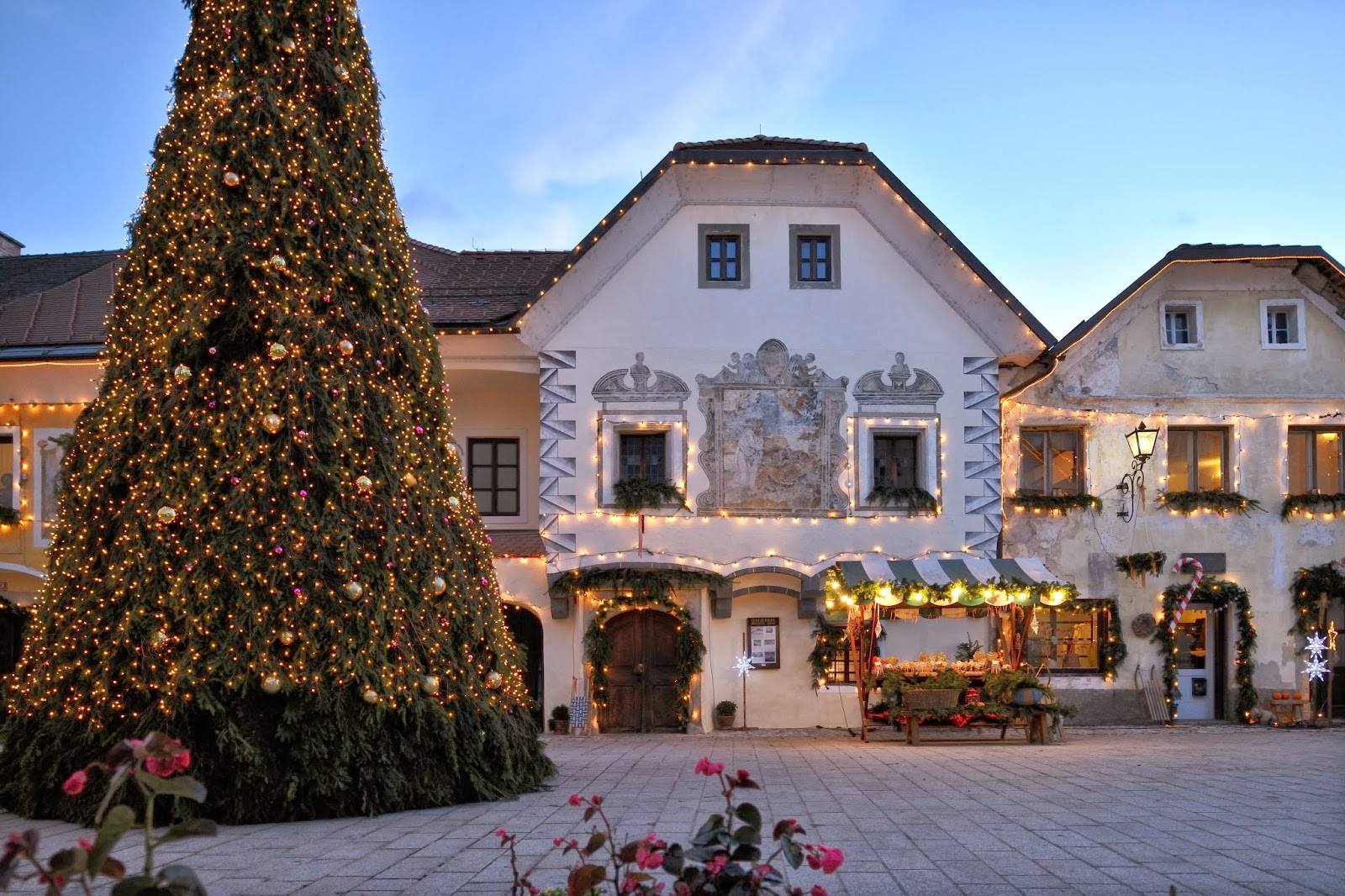
My home town of Radovljica, one of the three best-preserved historic towns in Slovenia, has a small Advent Market and also looks magical! More information here – http://tinyurl.com/zxczvsg

radovjlica3

The cute little Alpine Village in the ski resort of Kranjska Gora is a winter wonderland. More information here – http://tinyurl.com/jbntrpl

alpine-village-kranjska-gora

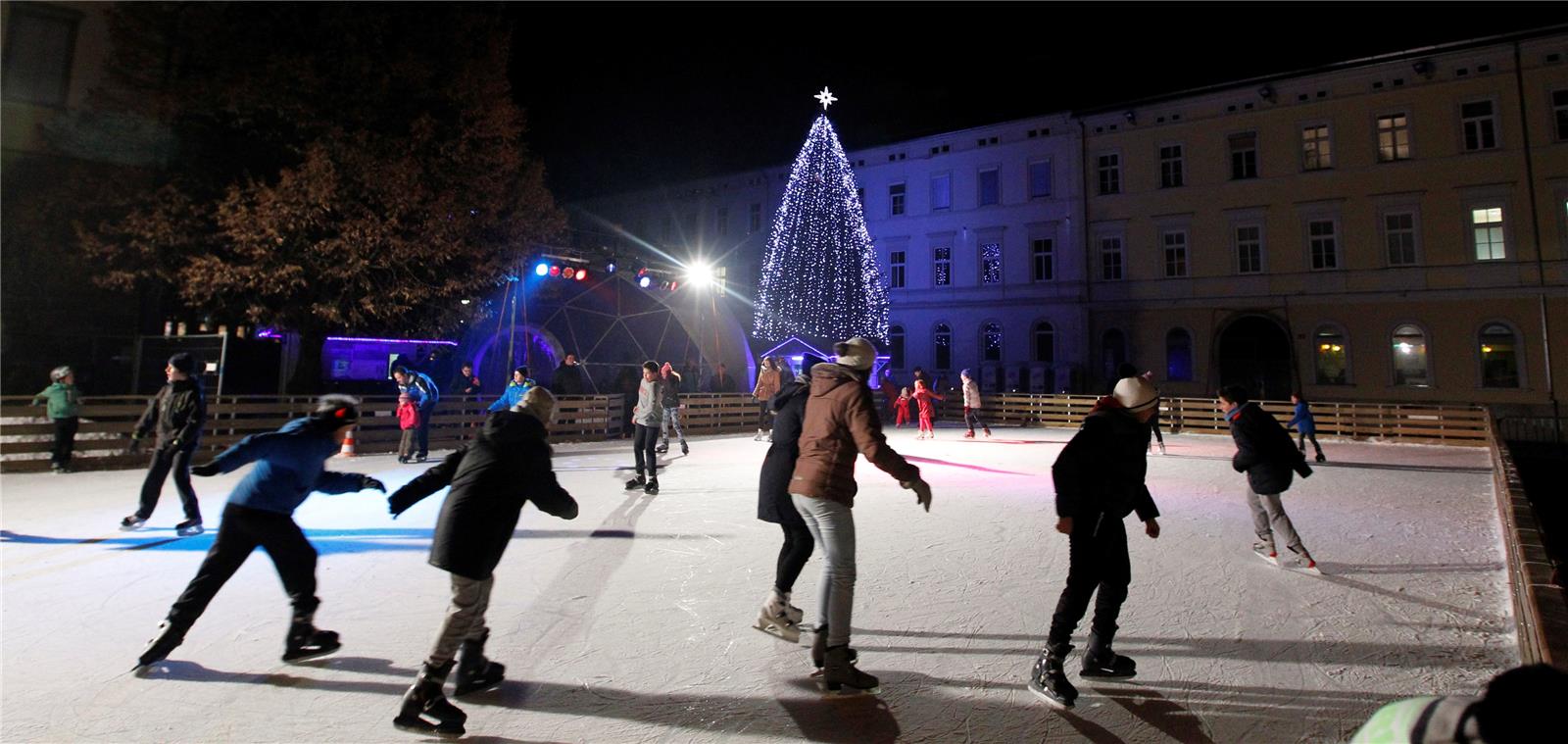
Slovenia’s 2nd biggest city, Maribor, switches on its Christmas lights on Friday 25th November. The Christmas programme includes a Christmas market, St. Nicholas fair, Artmar fair, city ice-rink, concerts and parties. More information here – http://bit.ly/1I8qXL0

praznicni_december_2013_maribor_slovenia_slovenija_maribor_pohorje_mp_produkcija_5

Festivities in Bled begin on 2nd December. A Christmas market takes place on the promenade at the south end of Lake Bled. If there’s snow, the island looks even more fairy tale-like! More information here – http://bit.ly/2eDpZZj

13-_ve%c6%92er__prihaja-the_evening_is_coming_3728_orig

Bled Island, Photo: http://www.slovenia.info

There are also Christmas markets in Celje and Portorož, as well as smaller local ones in many other towns throughout the country, though these tend to only be open for a few days rather than for the entire advent period.

Throughout Slovenia you will find a host of other festive events and activities, where you can be a spectator or join in, including live nativities, outdoor ice-rinks, parades and concerts.

praznicnidecember2013mariborsloveniaslovenijamariborpohorjempprodukcija8o

Outdoor ice-rink in Maribor – Photo: Produkcija80

The last two years, Christmas has not been ‘white’. However, if it is a white Christmas, then there are a whole host of other possibilities, such as sledging, skiing, snow-shoeing, hiking etc. My parents often spend Christmas here and we have had some memorable Christmas Days, including this one below, spent hiking on the Pokljuka Plateau.

bozic-08-014

And Christmas isn’t Christmas (and Easter not Easter!) without home-baked potica! You can read plenty more about my potica journey here – https://adeleinslovenia.com/2016/03/03/easter-in-slovenia-my-potica-journey/

cimg0549

So, if you are considering Slovenia’s for a Christmas break, then rest assured, you will find plenty to see and do. You can also be safe in the knowledge that you won’t have to pull a cracker and wear a silly hat!

© Adele in Slovenia

Biking and Hiking in Koroška – Through and On Mount Peca!

For lovers of the great outdoors, particularly hiking and cycling, Slovenia’s Koroška region offers a wealth of opportunities and exciting, unique experiences and was somewhere I had long had on my list of places to get round to visiting.

This is not a place of mass-tourism, and is all the better for it. Instead it’s crammed with unspoilt nature, picturesque alpine valleys, peaceful hamlets, remote and hidden delights, farmsteads and tourist farms with hospitable locals. In fact, Koroška is among the most mountainous of Slovenia’s regions – hence it has my name written all over it!

I stayed at the family-run Bike and Eko Hotel Koroš, in Jamnica, near Mežica – the Alpine and mining centre of the Mežiska valley. As you can see below, the views I woke up to of the surrounding countryside and mountains were pretty breathtaking!

CIMG2063

The hotel stands at an altitude of 900m, and is the first dedicated bike hotel in Slovenia.

koros5

As well as offering 10 simple rooms and excellent home-grown and home-cooked food, it boasts the Jamnica Single Trail Bike Park – a paradise for fans of adrenaline-filled mountain biking. Making the most of the idyllic surroundings, and with the agreement and co-operation of the local community, the hotel’s owners have prepared a network of 30km of single trails which you can tackle alone or with a guide. More information about the hotel and bike park here – http://www.mtbpark.com/si/main/ekohotelkoros

Photo: Rupert Fowler

Lead, zinc and iron ore mining was once the region’s key industry and there was, or rather still is, a labyrinth of tunnels under Mount Peca stretching for around 800 kilometres. At the peak of its production, around 2,000 people worked in the mine’s various units, which operated for three centuries, with production finally ceasing in 1994.

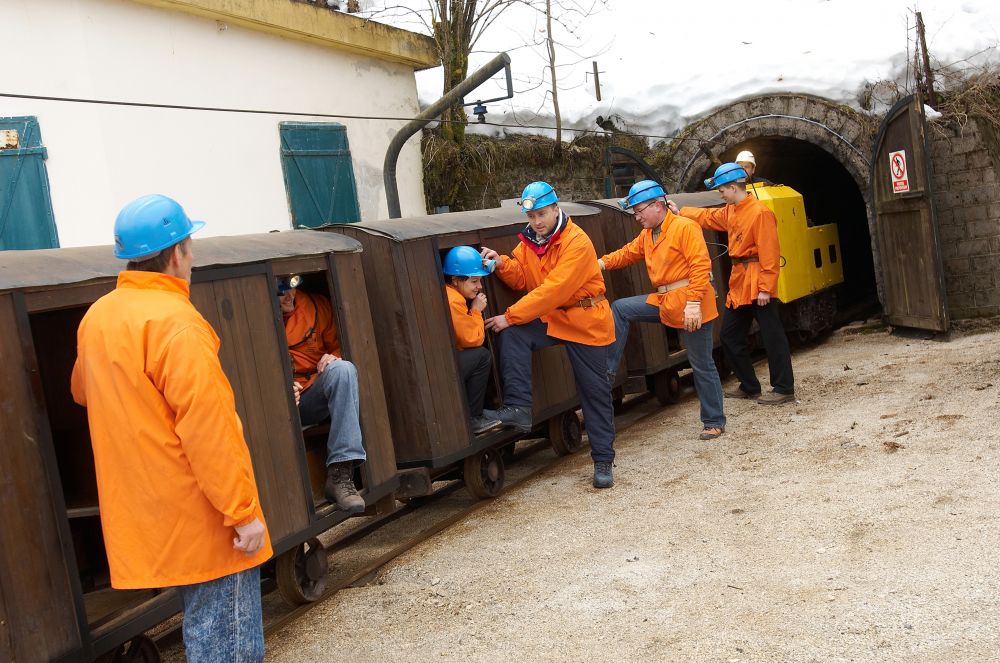
Nowadays, just a small part of the mine is open for tourists who can choose from 3 ways of experiencing it. The more sedentary option is to take a tour of the 3.5km Glančnik tunnel on board an original mining train. You also get to don some miners’ gear, to make the experience even more authentic! However, it’s not entirely sedentary, as the experience also includes a 1.5km walk through part of the mine.

vlak

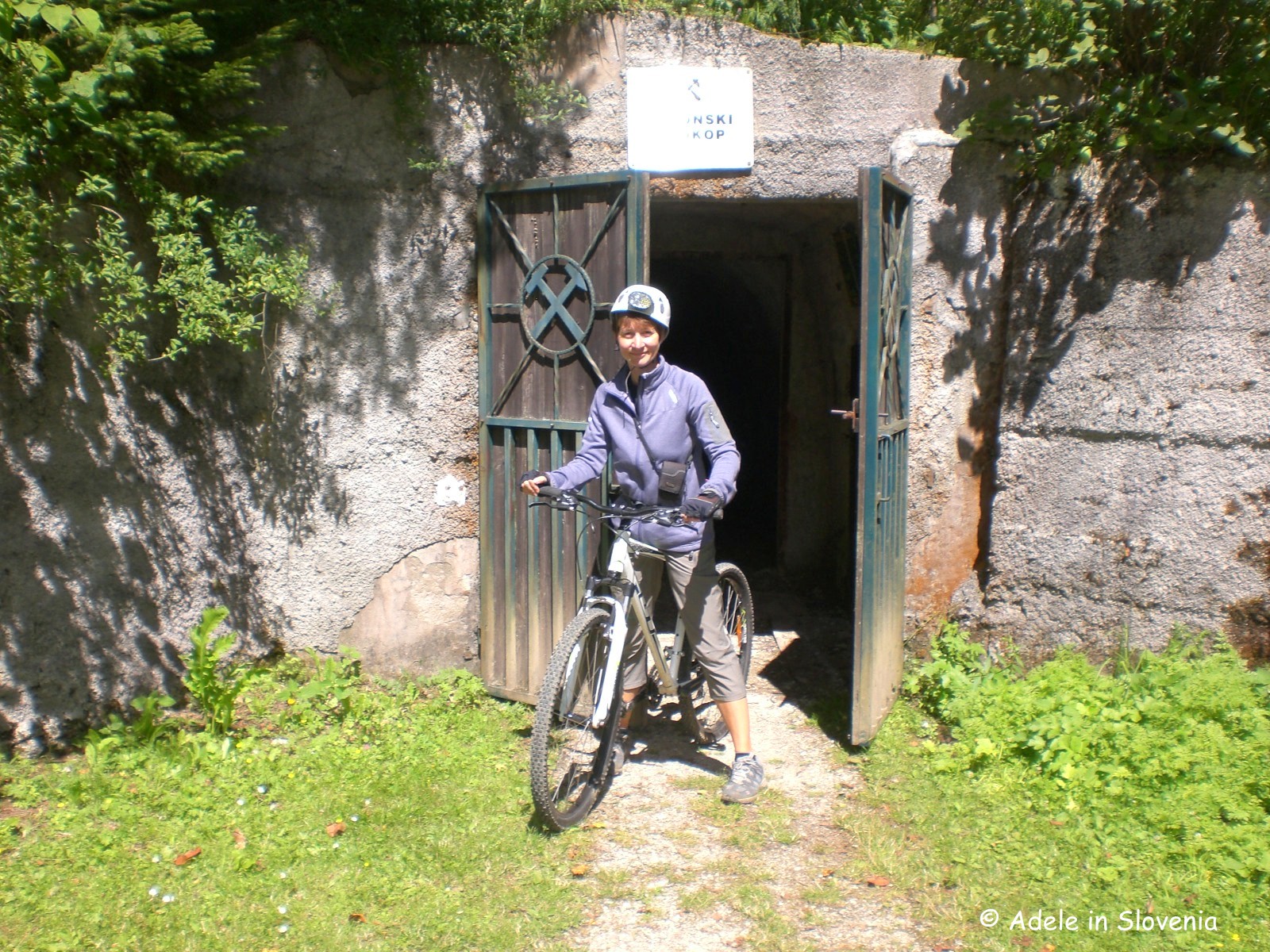
Another option, and for a unique and thrilling experience, is to explore the tunnels on a guided mountain bike trip – which was my choice!

The mountain bike experience lasts around 3 hours and begins with a short van ride to the entrance at Igrčevo, in Črna na Koroškem. Each participant is provided with a helmet and headlamp. Do make sure to have extra layers of clothing as it is a constant 10˚C inside the mines. It was around 30˚C outside on the day of my visit, so warm clothes were not at the forefront of my mind, though, I sure wish I had taken warm gloves!

CIMG2037

It feels slightly disconcerting at first, but you soon adjust to cycling through the narrow low tunnels. Along the way the guide gives information about the working conditions in the mine and you can see some remains of equipment used and names scribbled on the mine’s walls. The total ride itself is only around 6km, with a negligible incline.

CIMG2051

All the experiences begin at the cross-border Karavanke Geopark in Mežica, which in itself is worth a visit, and in 2013 it became a member of the European and global network of geoparks under the auspices of UNESCO.

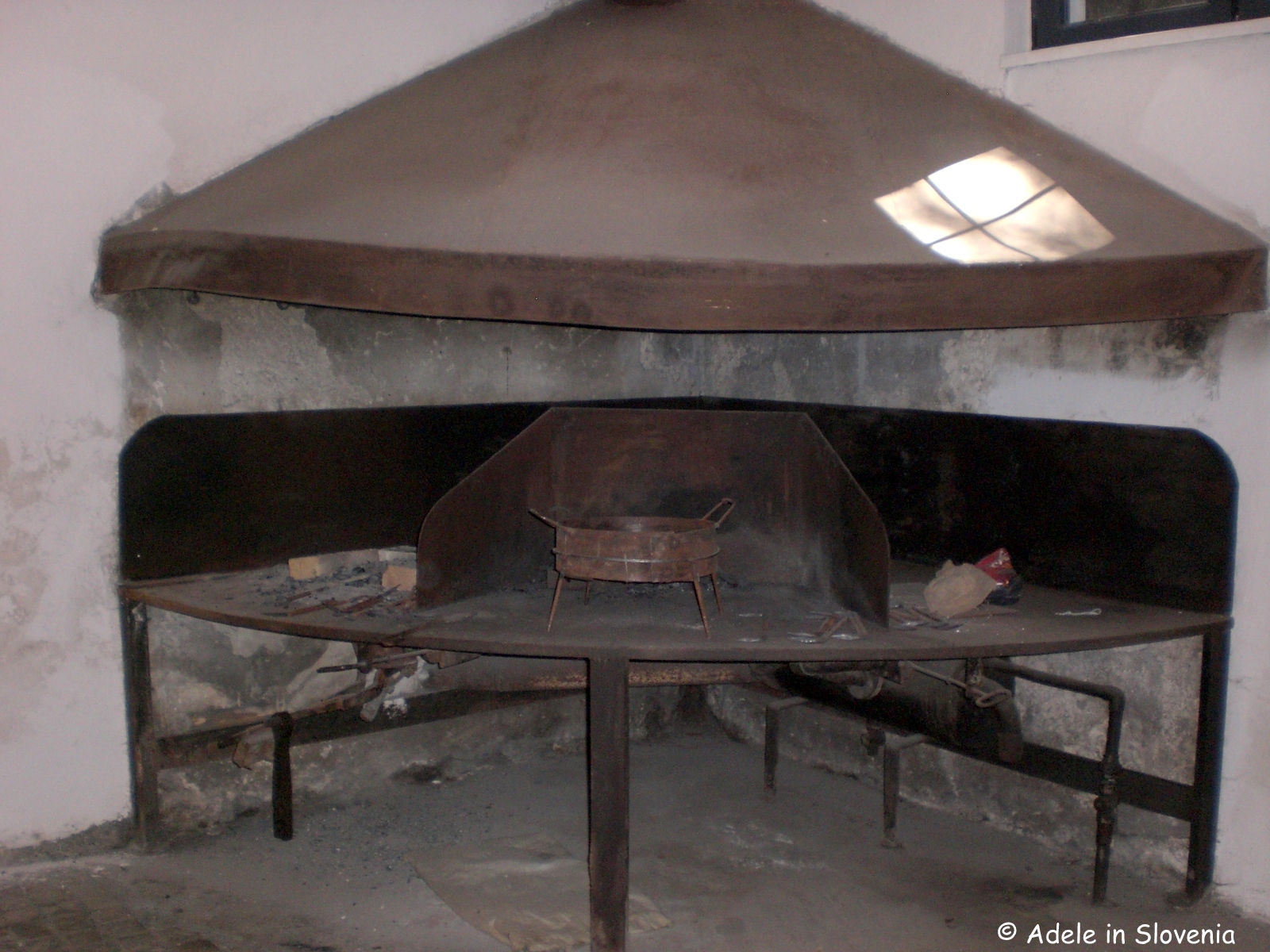
The centre offers a glimpse into the more than 400 million-year-old history of the area of today’s eastern Karavanke and comprises an exhibition area with exhibits including a fully-preserved smithy, an information area with a café and gift shop, and it also hosts workshops and other events.

CIMG2032

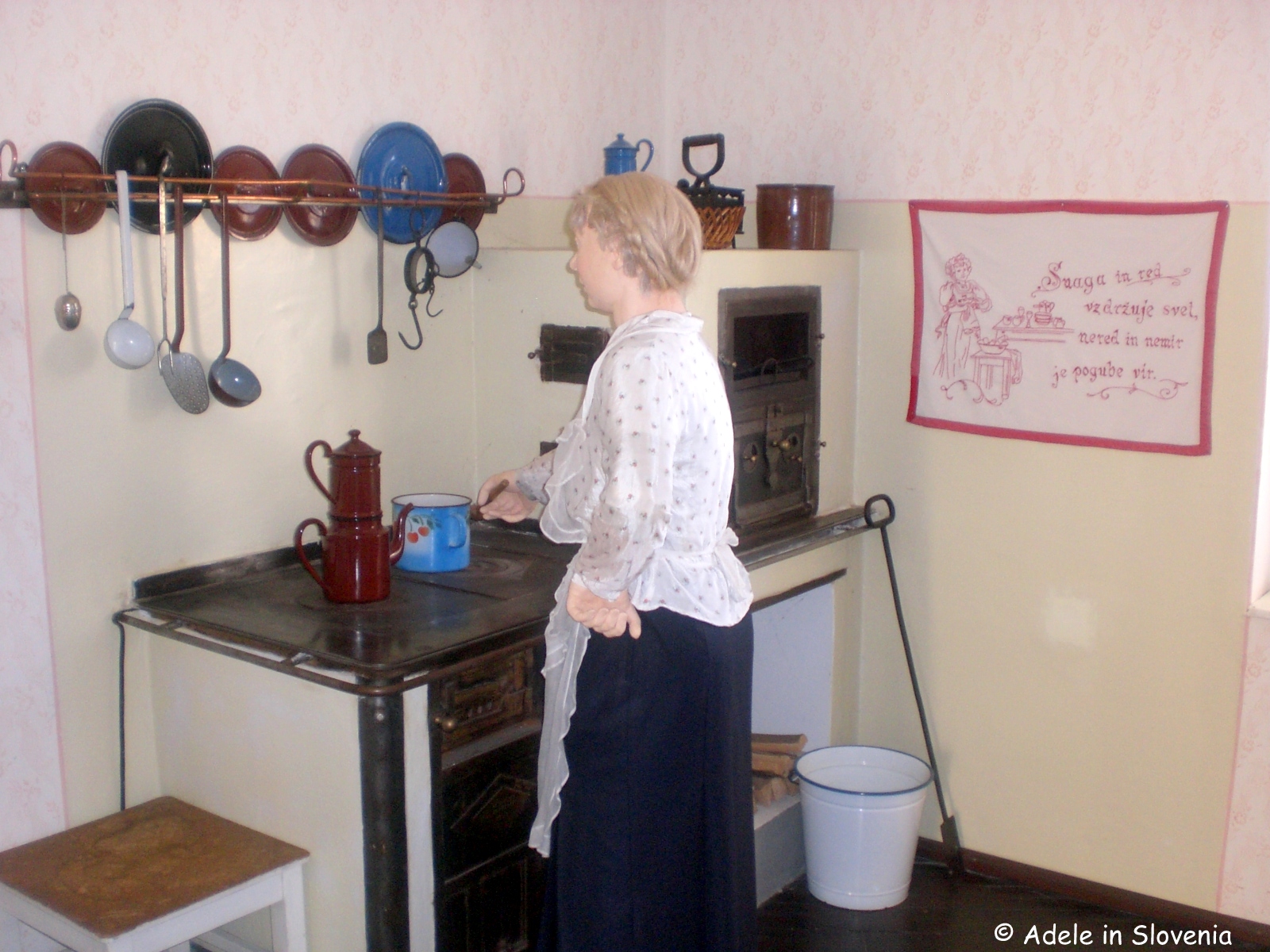
In an adjacent building there is museum, which gives a further insight into the lives of those working in, or connected to, the mines, and a collection of ores, minerals and fossils.

CIMG2058

Note: for bike and kayak tours, prior reservations are required; the minimum age is 10. More information about the Geopark can be found here – http://www.podzemljepece.com/?lang=en

Having spent the afternoon going through Mount Peca, next morning it was time to go ON Mount Peca – this time on foot! Peca is part of the Karavanke chain, which has a total length of around 120km and forms a natural border between Slovenia and Austria.

The Peca massif forms part of the Eastern Karavanke and can be approached from either Slovenia or Austria. I chose to begin my hike from the serene and stunning Topla Valley, which is surrounded on all sides by lush forest and contains just a handful of farmsteads – each with a traditional shingle roof. This protected valley really is like something out of a fairytale and is about as unspoilt as it gets.

CIMG2098

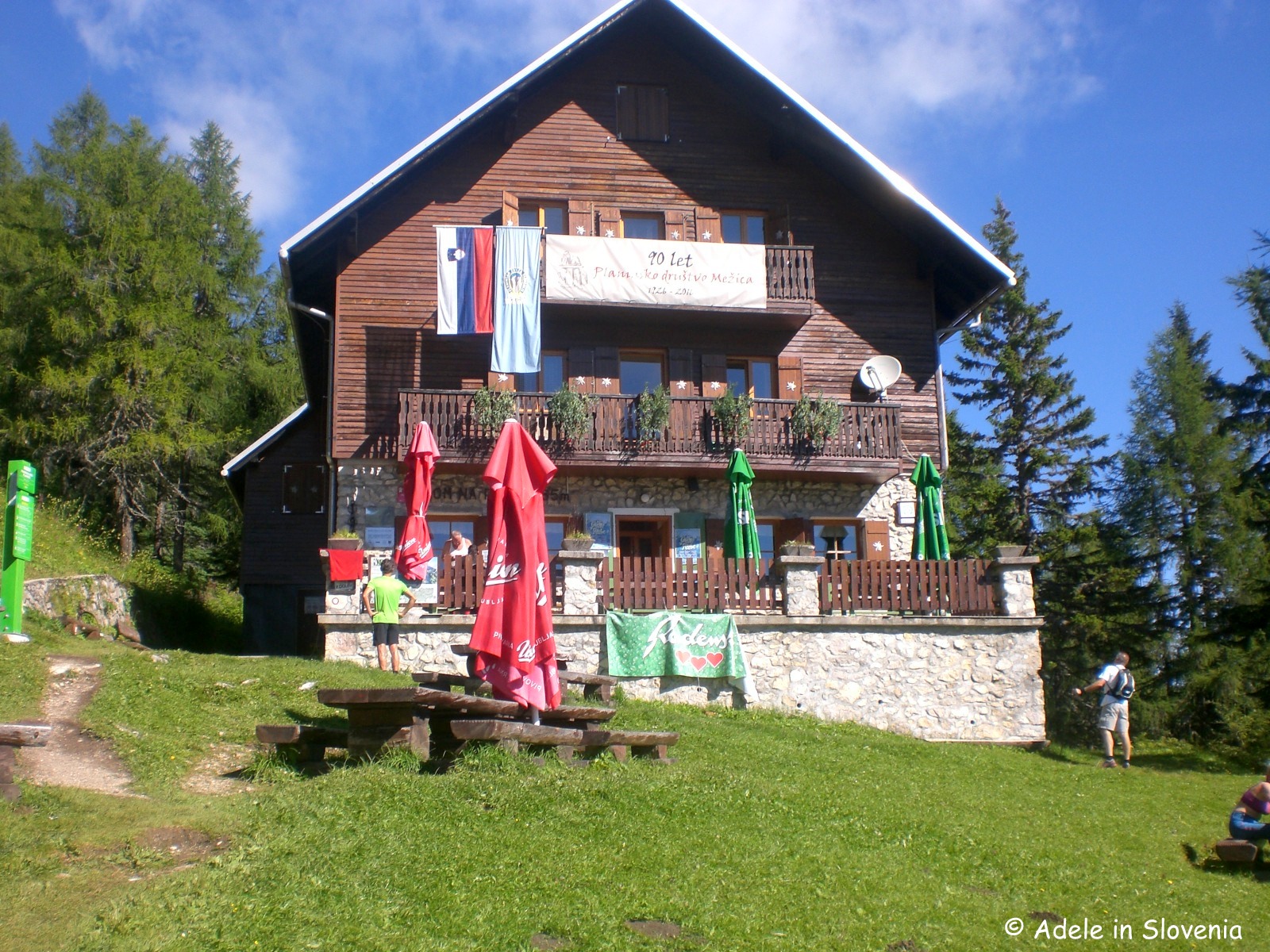
At the far-end of the valley, near the entrance to the Topla mine, a path leads steeply up through the forest taking about 2 hours to reach the Dom na Peci mountain hut (1665m), where you can enjoy delicious home-cooked stews, štruklji, strudel and other types of food, which always seem to somehow taste even better when you have earnt them after a long hike!I

CIMG2076

However, knowing it was still a way to go to reach the top of Peca, Kordeževa glava (2125m), and not wishing to do so with a full stomach, I resisted the temptation and continued onwards and upwards! At first across a meadow, then the terrain becomes more rocky, but still relatively easy, though for those who like more challenging climbing routes (that doesn’t include me, I hasten to add!), there is also an alternative path to the top, which is classified as ‘demanding’.

CIMG2077

The higher you go, the better and more far-reaching are the views, and the more the effort pays off!

CIMG2081

Despite it being a searingly-hot mid-August weekend, I still had the place to myself! Well, not exactly, but in fact there were just about the right number of people for my liking. Enough that one could pass the time of day and exchange a few words with fellow hikers here and there, and find some friendly folk to take the odd snap for me, but not so many that it felt crowded – just perfect!

CIMG2089

Koroška tends to get somewhat overlooked in terms of tourism, at least in terms of those visiting from outside of Slovenia, however, I recommend that for lovers of the outdoors, it definitely deserves to be included in your holiday plans.

This gives just a brief snapshot of the area; more information about what else to see and do can be found here – http://www.koroska.si/en/

© Adele in Slovenia
Hiking the Alpe Adria Trail – Stage 23: Kranjska Gora to Trenta, Slovenia

The Alpe Adria Trail, which begins on Kaiser Franz Josefs Hohe in Austria and ends on the coast at Muggia in Italy, has 43 stages and a total length of 750kms. The trail is a collaboration between three countries – Austria, Slovenia, Italy and offers lovers of the great outdoors myriad possibilities for enjoying the stunning and ever-changing scenery along the way from the highest glaciers to sea-level.

It’s easy to pick and choose where to start and how far to walk, however, since the route is linear, be sure to have a plan how to get back if you need to do so! In terms of the trail in Slovenia, stage 22 runs from Austria into Slovenia, stages 23, 24 and 25 are entirely within Slovenia, and stage 27 begins in Slovenia ending in Italy.

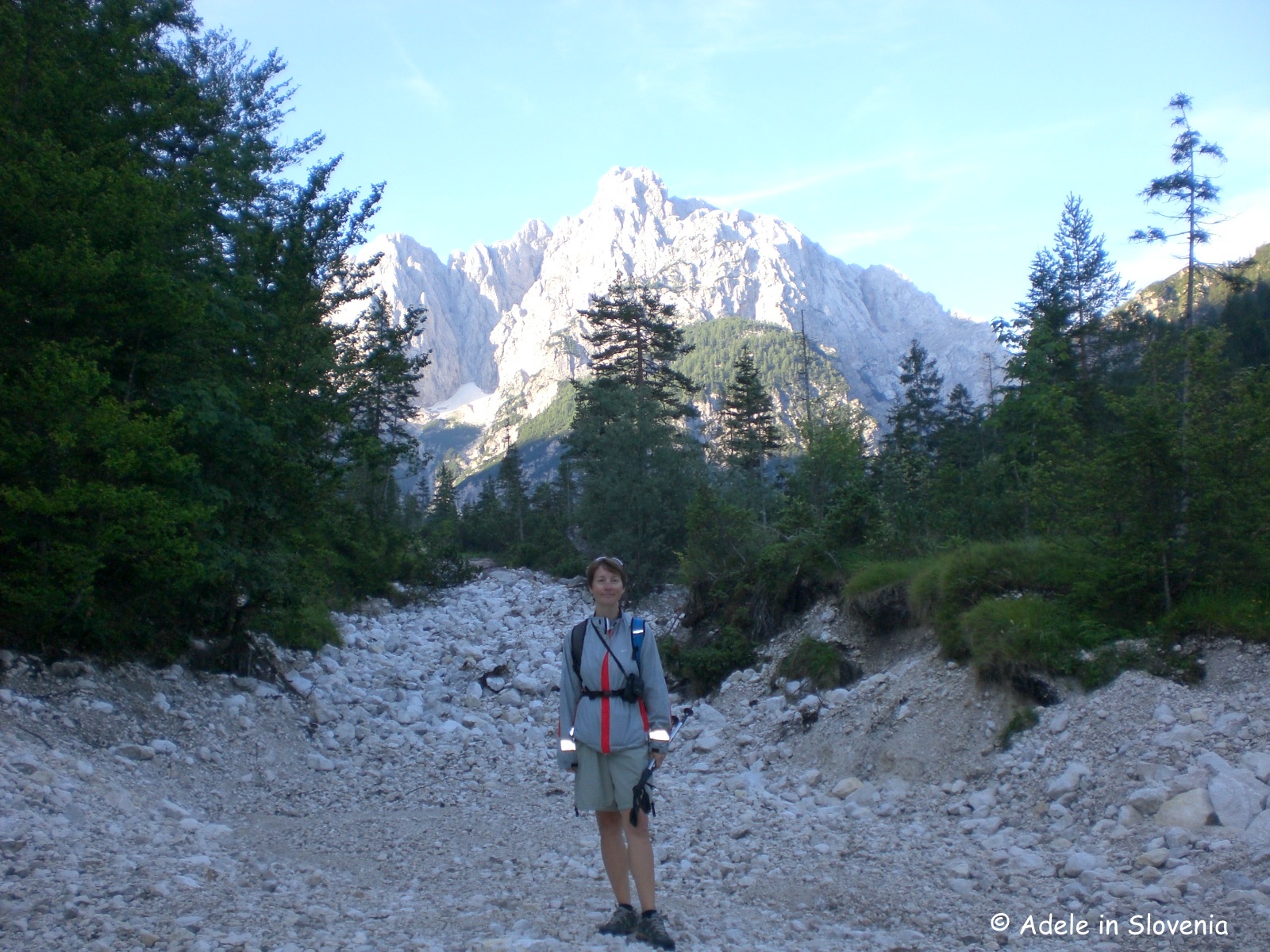
Stage 23 of the trail officially starts in the centre of Kranjska Gora (810m), though I started my early morning hike from the stunning Lake Jasna, which sits at the foot of the Vršič Pass. It was very tempting to linger a while, however, I had a long hike ahead so headed onwards, and upwards.

CIMG9126

The mythical golden-horned mountain goat ‘zlatorog‘ is a landmark and obligatory photo spot!

CIMG9128

From the far-end of the lake the route then leads along the Krnica valley, beside the Pišnica river and makes a fairly level easy start to the day. Note: If you’re looking to escape the summer heat, this valley is the place to be. Whatever the time of year in the early morning it’s freeeeeezing!!! In winter, Krnica is a particularly popular place for sledging.

CIMG1917

The route then turns right, passes the Mali Tamar Memorial to those who have lost their lives in the mountains, crosses a bridge over the stream, and then the ascent to Vršič begins. It is well-marked throughout with Alpe Adria signs as well as the usual Slovene way-markers (a red circle with a white inner).

The Vršič Pass is the highest mountain pass in Slovenia. It was built in the early 19th century, originally for military purposes, and has a total of 50 hairpin bends. You can, of course, drive up instead of hiking, or even cycle – as many do, though note that the pass is usually closed throughout winter when there is heavy snowfall due to the danger of avalanches.

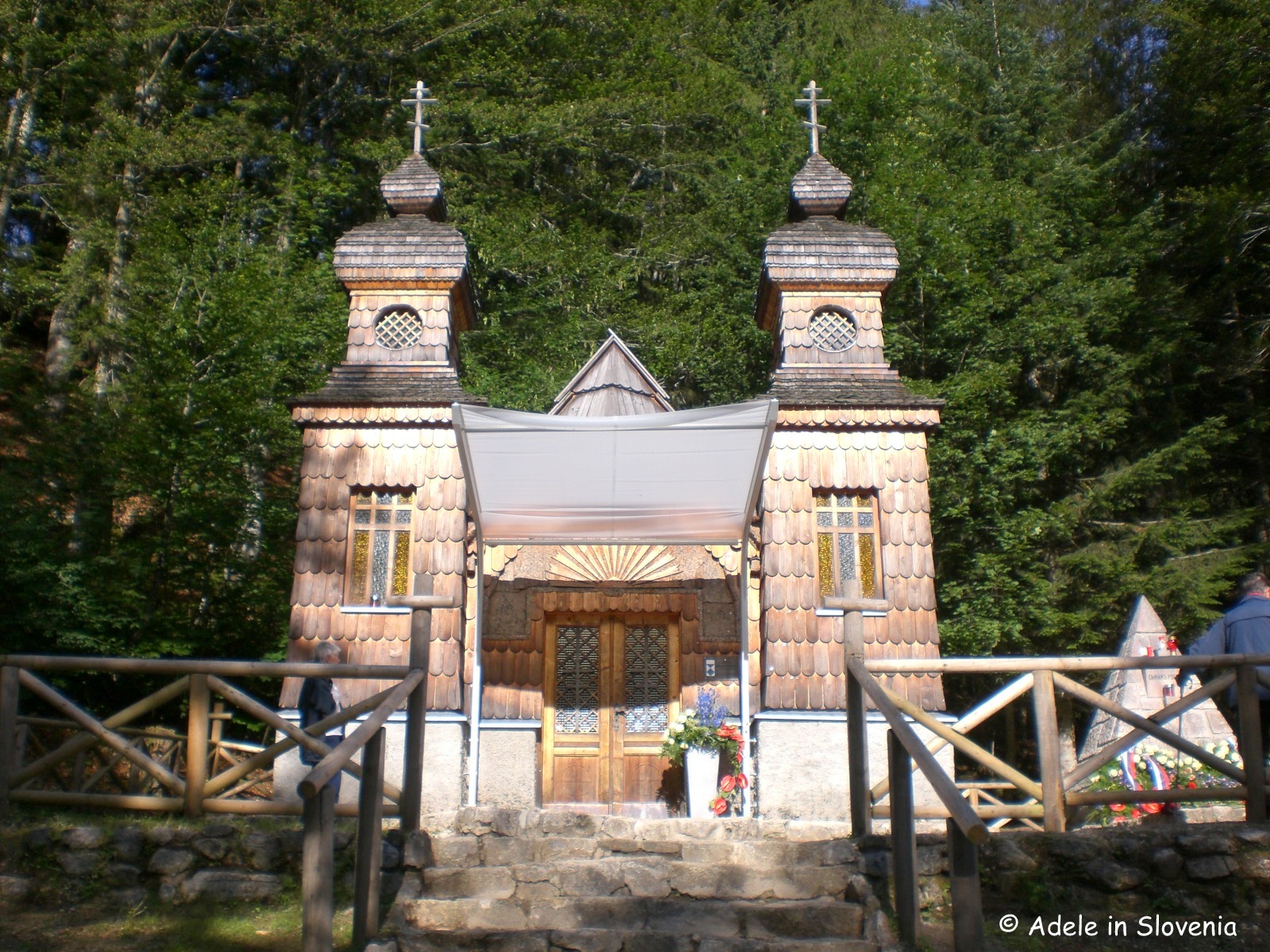
The trail goes largely through the forest, though in places it emerges – or if ‘it’ doesn’t then ‘you’ can – from the forest at sights of interest and to take in the views. The first such sight is the Russian Chapel, which was built in memory of the suffering of the thousands of Russian prisoners during construction of the road. Hundreds of prisoners and their guards – Russian and Austrian – lost their lives due to an enormous avalanche in winter 1916 – the exact number who died was never known.

CIMG1929

The route continues to the right of the chapel, again through the forest. I recommend a stop at bend 17 to see the somewhat eerie looking stones that have begun to ‘appear’ in recent years. I guess someone started the trend and others followed!

CIMG1932

The view from here isn’t half bad either!

CIMG1934

It’s now not far to reach the top, less than half-an-hour and I was already at 1611m at the top of the Vršič Pass.

CIMG1941

From the top it was easy to see where I was heading, down towards the Soča Valley and I could hardly wait to glimpse the always-stunning emerald-green Soča river.

CIMG1948

When leaving the top, look for this sign and walk down the road for approximately 500 metres.

CIMG1949

As tempting as it is to admire the views, be sure to keep your eyes to the ground here, as here the way-marker for the trail is only on the ground and could easily be missed.

CIMG1950

From here the trail re-enters the forest and leads on a pleasant gently-descending path, eventually emerging between stones walls into the parking area at the source of the Soča river, where there is a small hut offering refreshments. In places the trail is marked by the letters AAT – as shown below.

CIMG1966

If you choose to take a detour to see the source of the Soča river, it takes about 10-15 minutes to reach the first viewpoint – a relatively easy path, thereafter its a bit of a climb, assisted by iron pegs and rope, so not for the faint-hearted! Knowing I still had a way to go, I just went to the first viewpoint (well, that’s my excuse anyway!).

CIMG1961

From here it is downhill all the way. The Soča River Trail leads on traffic-free paths to Trenta, home to a Triglav National Park Information Centre, and where there is a mini-market, restaurant and a sprinkling of accommodation options.

CIMG1969


The total distance of this stage of the trail is 17.8km, of which the ascent is 962m and 1146m descent. It can easily be shortened as required – at least during the summer months when buses operate over the Vršič pass from Kranjska Gora to the Soča Valley. Out of peak season, however, you would need to ensure you have suitable onward, or return, transport.

In total the hike took less than 5 hours, including photo stops. If you take time to linger and savour the views, perhaps enjoy a meal at one of the several mountain huts en-route to, or at the top of, the Vršič pass, then it makes a very enjoyable full day trip. Highly recommended!

More information about the trail can be found here – http://alpe-adria-trail.com/en/ and more information about autumn hiking in Slovenia here – http://www.slovenia.info/en/Autumn-hiking-in-Slovenia.htm?aktivna_pohodniska_jesen_slovenija=0&lng=2

© Adele in Slovenia


Kindness in the Karavanke

In this often turbulent world we live in, the kindness of strangers is something to be valued and cherished, as I discovered on my latest adventure in the Karavanke mountains last weekend!

CIMG2132

Those of you who also follow me on my Adele in Slovenia Facebook page are likely to have already read my (mild) rant last week about the queues of people and two hour wait to ascend to the top of Slovenia’s highest mountain, Triglav, on a busy Bank Holiday weekend in August.
I have often waxed lyrical here about the Karavanke mountains, which seem to get so overlooked by those visiting Slovenia who automatically head for the better-known Julian Alps. The Karavanke form a natural border between Slovenia and Austria so, in addition to offering myriad possibilities for day and multi-day hikes, there are the added bonuses of less crowds and far-reaching views across 2 countries.

CIMG2129

My home town of Radovljica is in a perfect location to base yourself to explore the Karavanke mountains, being in close proximity to Stol – the highest peak of the Karavanke, as well as Begunščica and numerous other peaks, many of which I have written about previously. Note: you can use the search facility on this blog to find previous posts by using keywords and/or visit the Tourism Radol’ca website for more information – http://www.radolca.si/en/hiking/

So, back to my latest adventure. This time I headed slightly further from home to hike in the Karavanke mountains, first to Tržić, then to the village of Dolina, near Jelendol, from where I hiked up to the ever-popular Kofce highland and mountain hut (1488m). The sky really was that perfectly blue – no photo-shopping required!

CIMG2107

From there I continued to the Šija highland and hut and past grazing cattle, of which there are plenty on the highlands along the length of the range.

CIMG2117

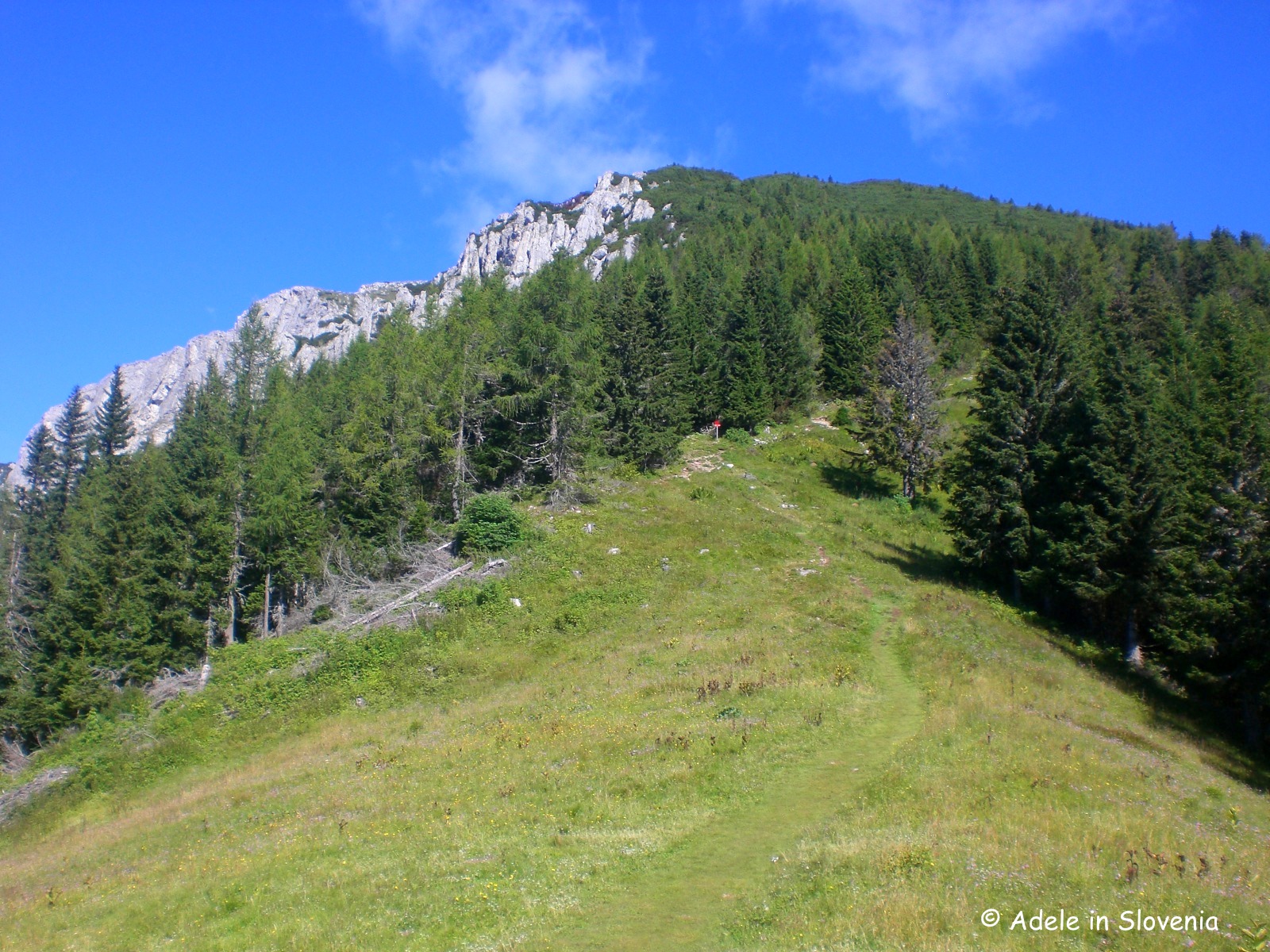
Next I continued along an old unmarked path to the Pungrat highland before joining the path up to Škrbina ridge (1869 m) from where there were bird’s eye views across both Slovenia and Austria.

CIMG2125

As much as I hate crowds (as per the Triglav rant), there was barely a soul to be found here so I was more than elated to encounter two kindly, gallant strangers who came to my rescue when I got myself into a spot of bother just beneath the peak of Kladivo (2094m). They were passing in opposing directions but didn’t hesitate to help, which served as the wonderful reminder of how such altruistic acts of simple kindness can make the world a much better place.

So, thank you once again Olga and Anže for for your help and part in a (mostly!) wonderful, and certainly unforgettable, day. As was well that ended well and new acquaintances were made to boot. So, all in all, despite my little ‘moment’, it was a(nother) great day in the Karavanke!

CIMG2128

© Adele in Slovenia
 

Rogla: Year-round Recreation and Fun for All!

If you love the great outdoors, spending your free time being active, and breathing in fresh mountain air, then you will love Rogla! Located in the northeast of Slovenia on the Zreče side of the Pohorje massif at an altitude of 1517m, Rogla is a ski resort and year-round recreation destination.
Visit for a day, stay for a few days, or even longer, there’s no shortage of things to see and do! There is a choice of accommodation on Rogla – hotels, bungalows, apartments – but for the most modern and luxurious among them I’d certainly recommend the latest addition, the new Hotel Natura, which is really something a bit special!

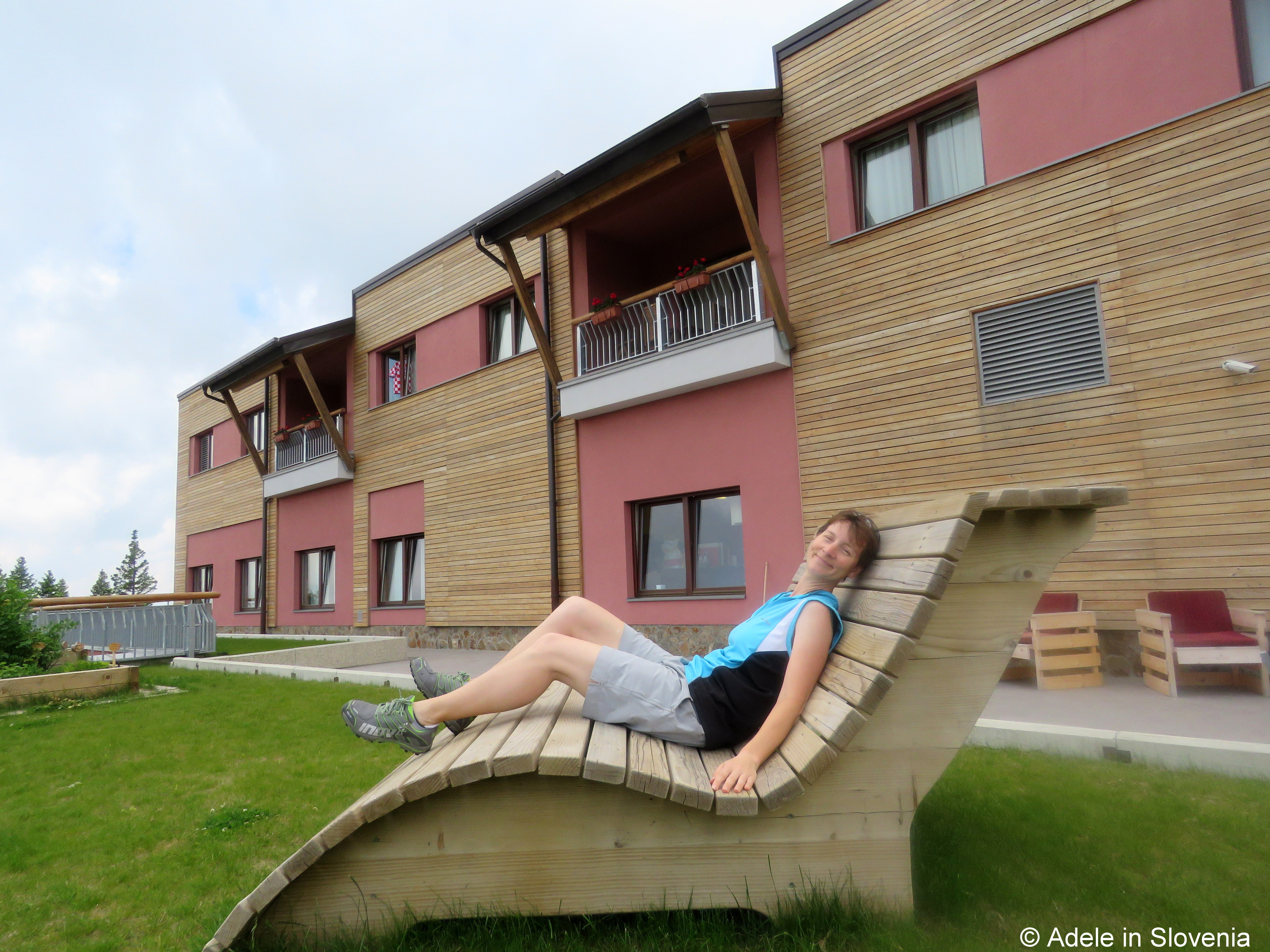
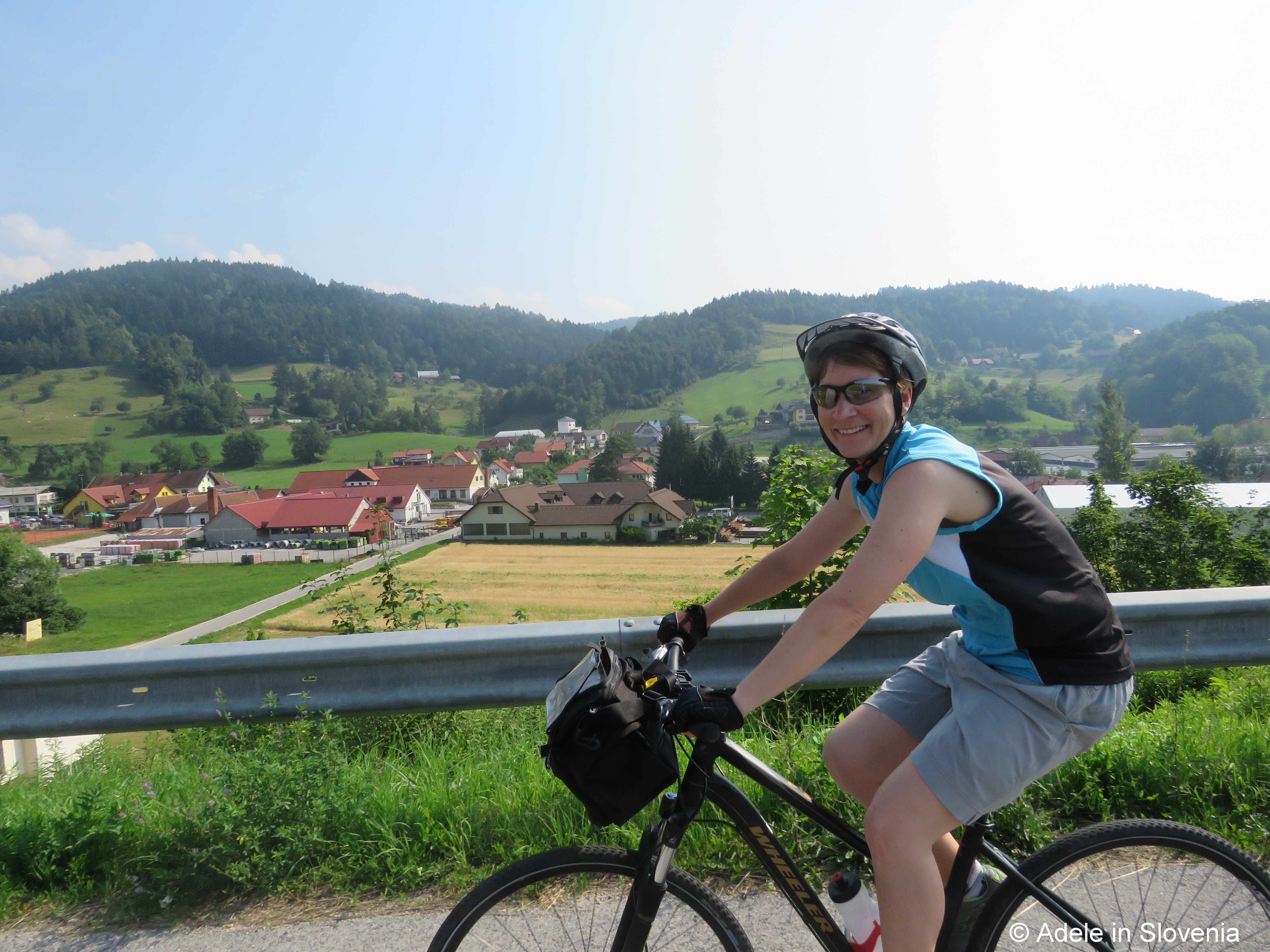
I went to check it out during a recent visit to the Zreče thermal spa, read more here – http://wp.me/p7jQx9-7O and, well, me being me, decided to cycle up to Rogla! On reaching the hotel, after a 2 hour+ uphill ride (Zreče 360m – Rogla 1,517m) the giant wooden recliners on the hotel’s terrace were beckoning and thereafter it was hard to tear myself away!

IMG_7675

If you’re a keen cyclist then, although long, the road to Rogla is good and it makes a great day out. You can choose to either go on the main road, or, as I did, ride up at first on minor roads – which I’d recommend for great views and less traffic – before joining the main road, or for those with mountain bikes you can take one of the forest roads. There are also numerous other marked cycle routes on the plateau itself.

IMG_7618

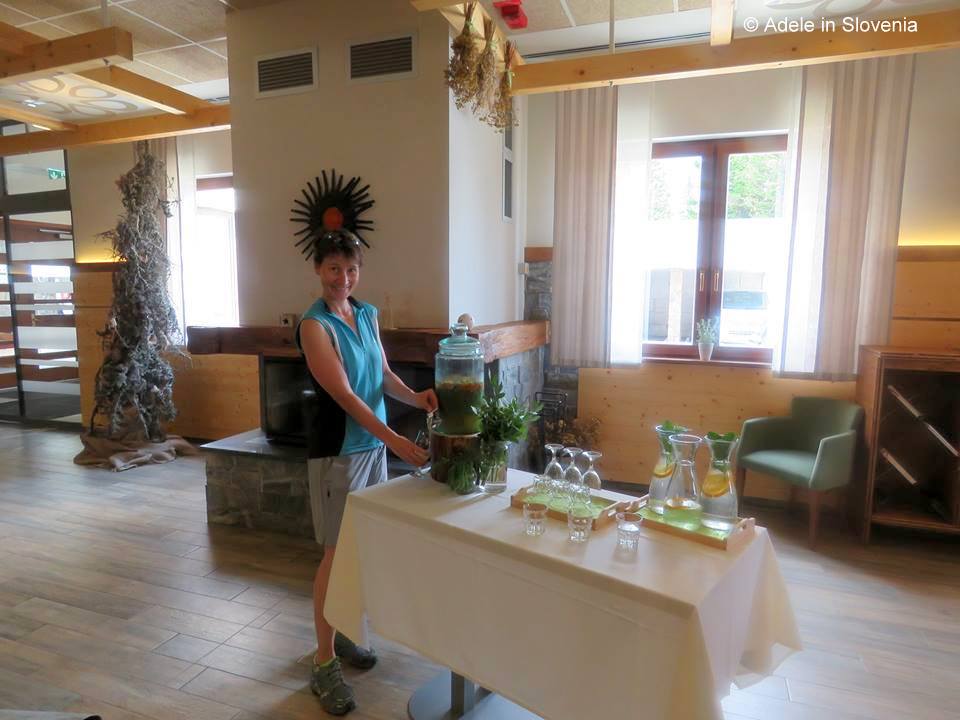
Hotel Natura is the first hotel reached when arriving on Rogla and an excellent place to stay to explore the area, or just call in for a delicious meal made using local Pohorje ingredients as part of ‘Taste Rogla’. I headed straight for a glass of refreshing homemade iced herbal tea and elderflower cordial served in the hotel’s very welcoming and comfortable lounge area.

13480252_10154234045204780_1045207313_n

natura

Next came a well-earned meal in Restaurant Brusnica which was beautifully and imaginatively presented as well as being scrumptious!

CIMG1534

CIMG1535

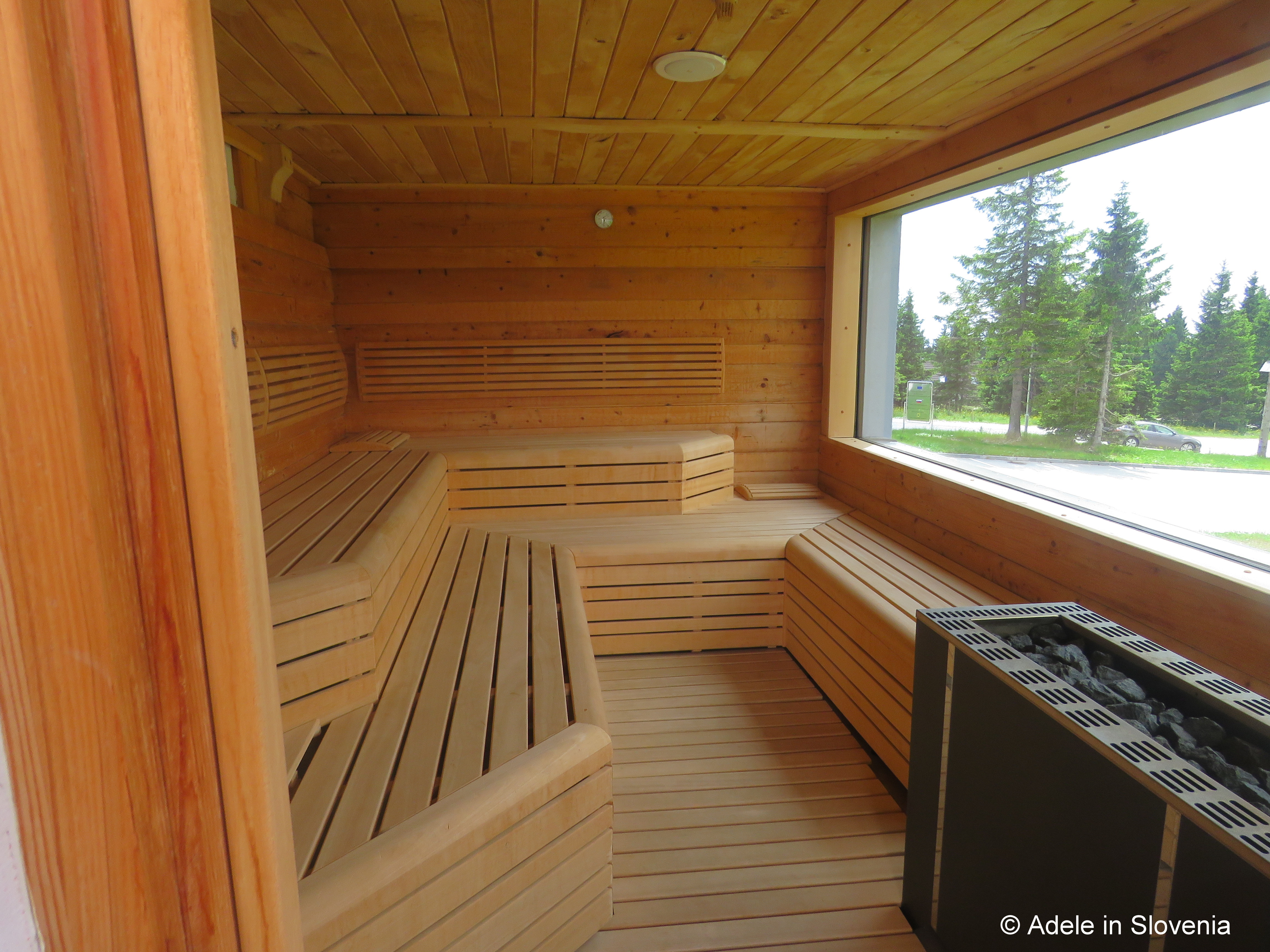
Hotel Natura offers excellent wellness facilities, massages, baths, and a sauna with a panoramic view – in winter overlooking a cross-country skiing poligon. I can image that the wellness facilities must particularly come into their own during winter after a long day’s skiing.

IMG_7703

Of course, if you stay at Rogla itself then you don’t have to cycle all the way up there and can instead spend more time exploring the area – note to self, do that next time! If you prefer exploring on foot, then Rogla is great for leisurely strolls or longer hikes. Pick up a map of the Rogla hiking trails and you can choose from 9 marked trails, varying in length from 2.3km to 25.9km.

One of the most scenic is the path to the Lovrenc lakes, which is made up of 20 small lakes that formed during the Ice Age. The lakes, which do not have a surface water inflow and are supplied only by rainwater, are surrounded by dwarf pine and in places are bursting with water lilies.  To get a better impression of the size and scope of the lakes, head for the best vantage point – the lake tower.

Lovrenska-jezera

The Rogla Bike Park has 6 trails ranging in length and difficulty, including a beginners polygon and obstacle trails. Mountain bikes can be rented and instructors are also available. More information here – http://bit.ly/29IhQSh

Bike-park-Rogla-6

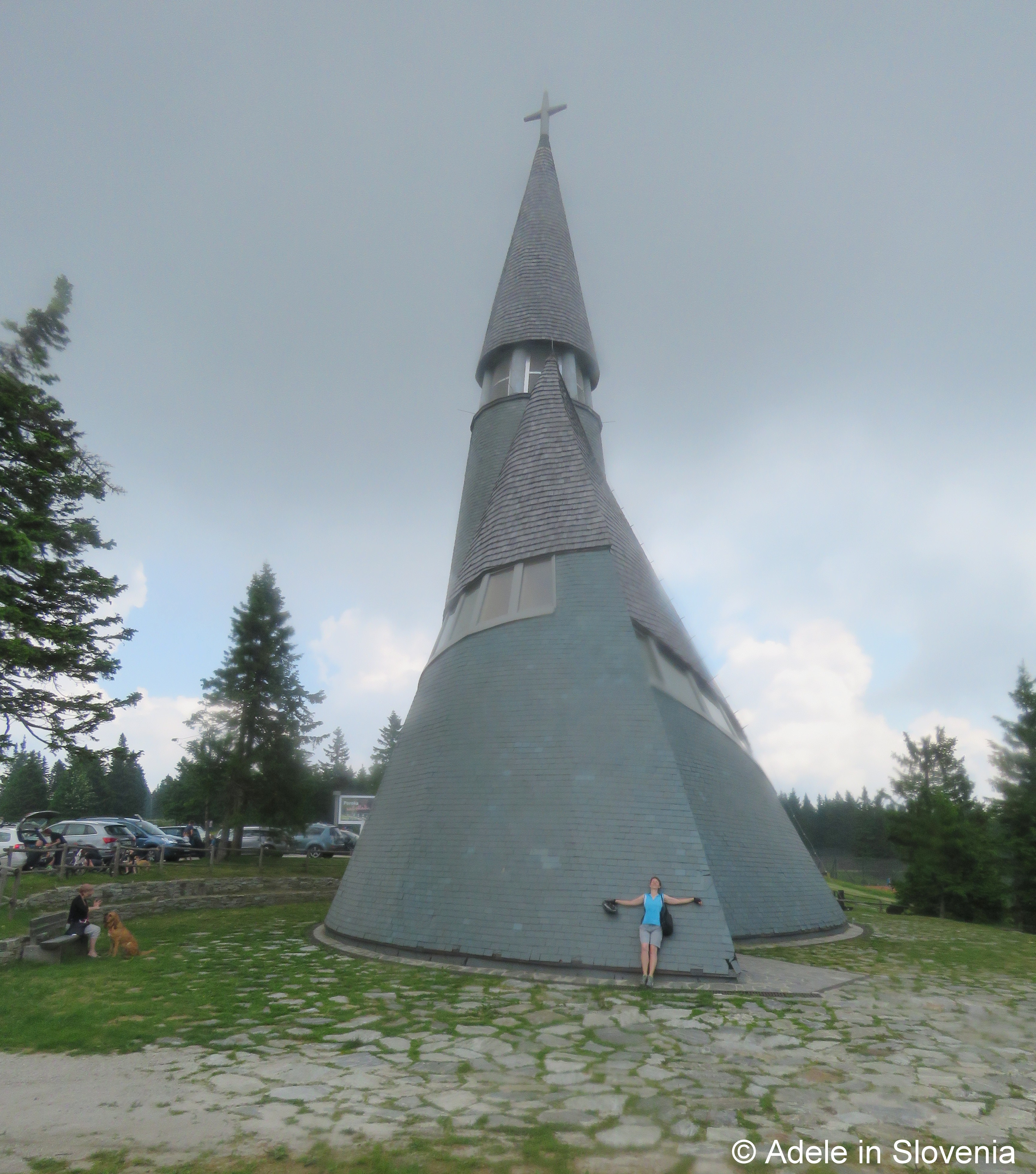
Working began on building the rather unusual looking Church of Jesus Christ on Rogla in 2006 and it was blessed in 2010. The church has three bells, an impressive altar and notable church organ.

IMG_7649

Before starting the long (though very quick!) descent back to Zreče, there was time to enjoy a bit more adrenalin with a 1,360 metre descent on the Zlodejevo toboggan run. The return is by drag lift I hasten to add!

IMG_7659

Other outdoor facilities include a funpark, tennis courts. football field and running tracks. The Rogla Sports Centre is particularly popular with athletes seeking altitude training. There is a high altitude training room equipped with a multitude of fitness equipment where conditions up to 7,000 metres above sea-level can be simulated.

With an average of 100 days of snow cover per year, Rogla really is a year-round destination. In winter it offers downhill skiing, cross-country skiing, snowboarding, snowshoeing, winter hikes and other fun snow-based activities.

rogla-z-letala

This is but a snapshot of all there is to see and do on Rogla! Find out plenty more here – http://www.rogla.eu/en/

© Adele in Slovenia