Pivka: Pause, Ponder & Play

Just when I thought I had discovered most of the best that Slovenia has to offer, a short break spent in the Pivka area, part of Slovenia’s Green Karst region, has opened my eyes to a whole new world, ripe for exploring and perfect for lovers of the great outdoors.

So why the title ‘Pause, Ponder & Play’?

PAUSE – I, as I’m guessing countless others, am guilty of passing through Pivka en-route to Croatia. But, I urge you, don’t! There really is so much to see and do in this area, it deserves at least a few hours of your day, if not a few days, so, pause in Pivka!

PONDER – A visit to the Park of Military History is a must, where you can ponder and reflect on the action seen by all the tanks, aircraft, artillery and ammunition.

PLAY – There’s plenty to see and do for all the family. Visit or stay at a tourist farm, get outdoors – hiking, cycling, visit one of the numerous bunkers or caves, such as the Pivka cave, seen belowor, in the spring, one of the 17 intermittent lakes.

Pivka_Cave_2_Iztok_Medja_Postojnska_jama_Archive_3976_orig

Photo: Iztok Medja – http://www.slovenia.info/


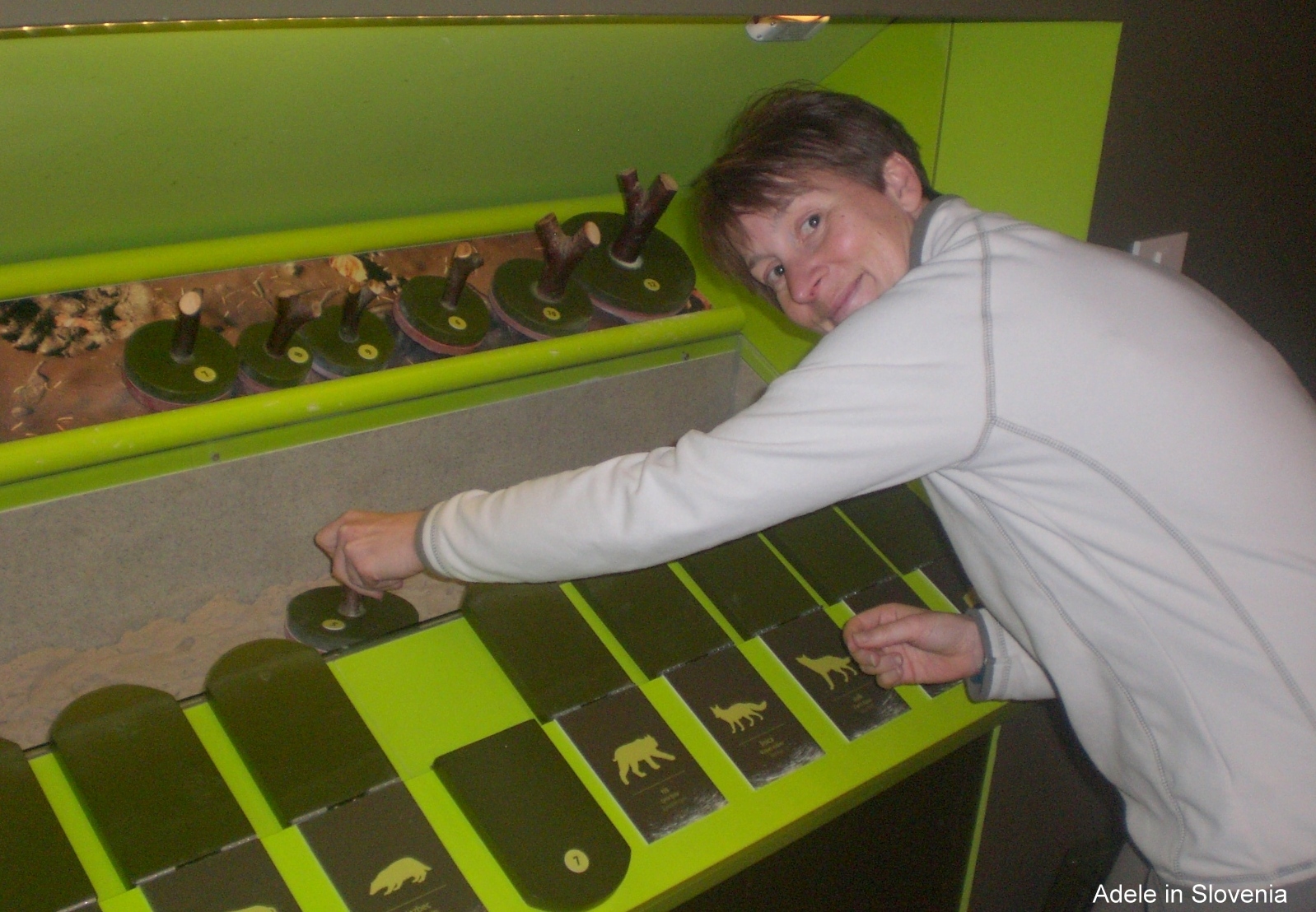
I began my 2 day visit at the Ecomuseum of the Pivka Seasonal Lakes. This brand new museum acquaints visitors with the phenomena of the 17 Karst lakes which, after heavy rainfall, fill with water.
CIMG0722

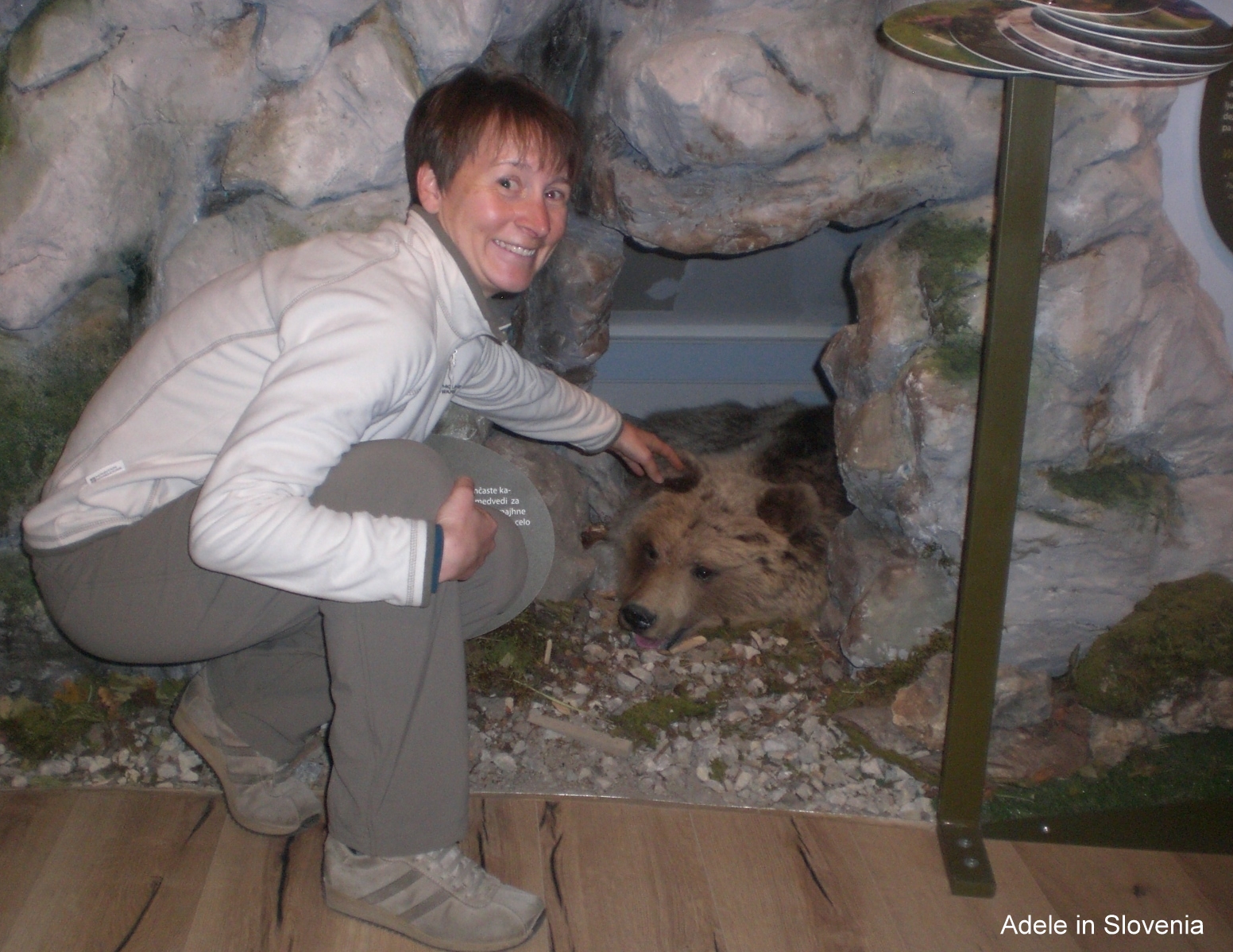
There are a number of interactive exhibits, including an encounter with a bear! Speaking of which, bear watching is something that can also be arranged in the Pivka area.
CIMG0726

I visited the 2nd biggest of the lakes, Petelinsko jezero, and it was hard to imagine that within a month or so of my visit the water will have entirely disappeared, leaving just a flower-covered meadow.

CIMG0728

It was rather convenient that at the time of my visit, there just happened to be a private party, or rather the remains of one, taking place by the lake, and I was treated to champagne and chocolate-covered strawberries!

CIMG0732

My next stop was to visit the Park of Military History. I’ll hold my hands up and admit that, not being a particular fan of either museums or military history, I wasn’t expecting to be won over by it, however, how wrong I was, and it has now earnt its place as by far my favourite museum in Slovenia!

Immediately on approach the imposing renovated barracks impress. The barracks were built by the Kingdom of Italy around 1930 in order to defend the Rapallo border and were later home to the Yugoslav People’s Army. Since 2004 the museum has been developing and has now become the largest museum complex in Slovenia, as well as one of the largest military historical complexes in this part of Europe.

One of the highlights of my visit was undoubtedly the chance to go inside a submarine – a first for me! During the winter the submarine is housed indoors, then in late spring it is moved outdoors –  at 19 metres in length and weighing 76 tonnes thats no small feat. The P-913 Zeta submarine was gifted to the Park of Military History in 2011 from the Republic of Montenegro.

Podmornica P-913

Photo: Simon Avsec – http://www.slovenia.info/

If you opt for a guided tour of the park, which I recommend (for groups upon prior booking), you also have a chance to go inside the submarine.

CIMG0749

There is a huge collection of tanks and other military vehicles, aircraft and ammunition. Exhibitions include ‘The Armour of Freedom’ and ‘Partisan Tanks’, which includes Soviet tanks, such as the T-34/85 Soviet tank, one of the best known tanks of the Eastern front. The M47 Patton, the heaviest tank in the collection, consumes an incredible 700 litres of high-octane fuel per 100km. Environmentally-friendly it’s not!

CIMG0738

Housed in an entirely new building, there is an exhibition entitled ‘The Road to Independence’, which documents Slovenia’s road to independence. There are plenty of interactive exhibits and all exhibits are described in both Slovene and English.

The museum shop stocks a wide range of military souvenirs, clothing, equipment and other memorabilia.

You can find more information about the Park of Military History here http://parkvojaskezgodovine.si/en/ and watch this short video to see more.

You can also find more information about Pivka and the Green Karst area here http://zelenikras.si/en/ and watch this video.

Whilst exploring the area I stayed at the wonderful Pri Andrejevih Tourist Farm in Narin, more about which I will write in a future blog – watch this space!

© AdeleinSlovenia 2016


The Four Seasons of Spring!

Last week we really did have all the four seasons within the space of four days. It began with a few snowflakes on Wednesday morning, which later became heavy snowfall,  and certainly made a bit of a mockery of last week’s blog entitled ‘Spring in the Karavanke’. It’s now anything but spring in the Karavanke!

Though it had been forecast that it could snow in places at around the 700 metre level, Radovljica, where I live, is at 496m, so no-one, forecasters included, was quite expecting the snow to reach the valley – and certainly not so much of it – considering the previous week we had had temperatures in the twenties.

So this is what spring in the Karavanke now looks like!

13062176_1074769012580907_4605015675305884375_n

It wasn’t just in Gorenjska in the north-west of Slovenia either, it also snowed in other lower-lying regions of the country. I spent 2 days in Dolenjska, in the south-east, and it even snowed there too.

Hiking at the moment isn’t advisable as the late-spring snow is very wet and heavy, and has caused a lot of damage with branches and trees down, whilst the danger of avalanches is at level 4 – the highest level being 5. Instead however, those who are die-hard fans of winter and skiing once again took to the slopes as the Vogel ski resort re-opened for the extended holiday weekend.

On Saturday it was a return to temperatures of 18 degrees and the valley was bathed in sunshine and the Sava river at Radovljica was looking its sparkling best when I went for an early morning walk.

CIMG1177

However, it was a different matter when I got into the forest as I tried, and in places failed, to pick my way under and over fallen trees on the path up to Talež. It’s amazing the devastation just 24 hours of snow caused – more than in the whole of last winter.

CIMG1179

I was amazed and saddened at the number of fallen trees and branches, almost reminiscent of the damage caused by the glaze ice two winters ago, though, thankfully, nowhere near to that extent.

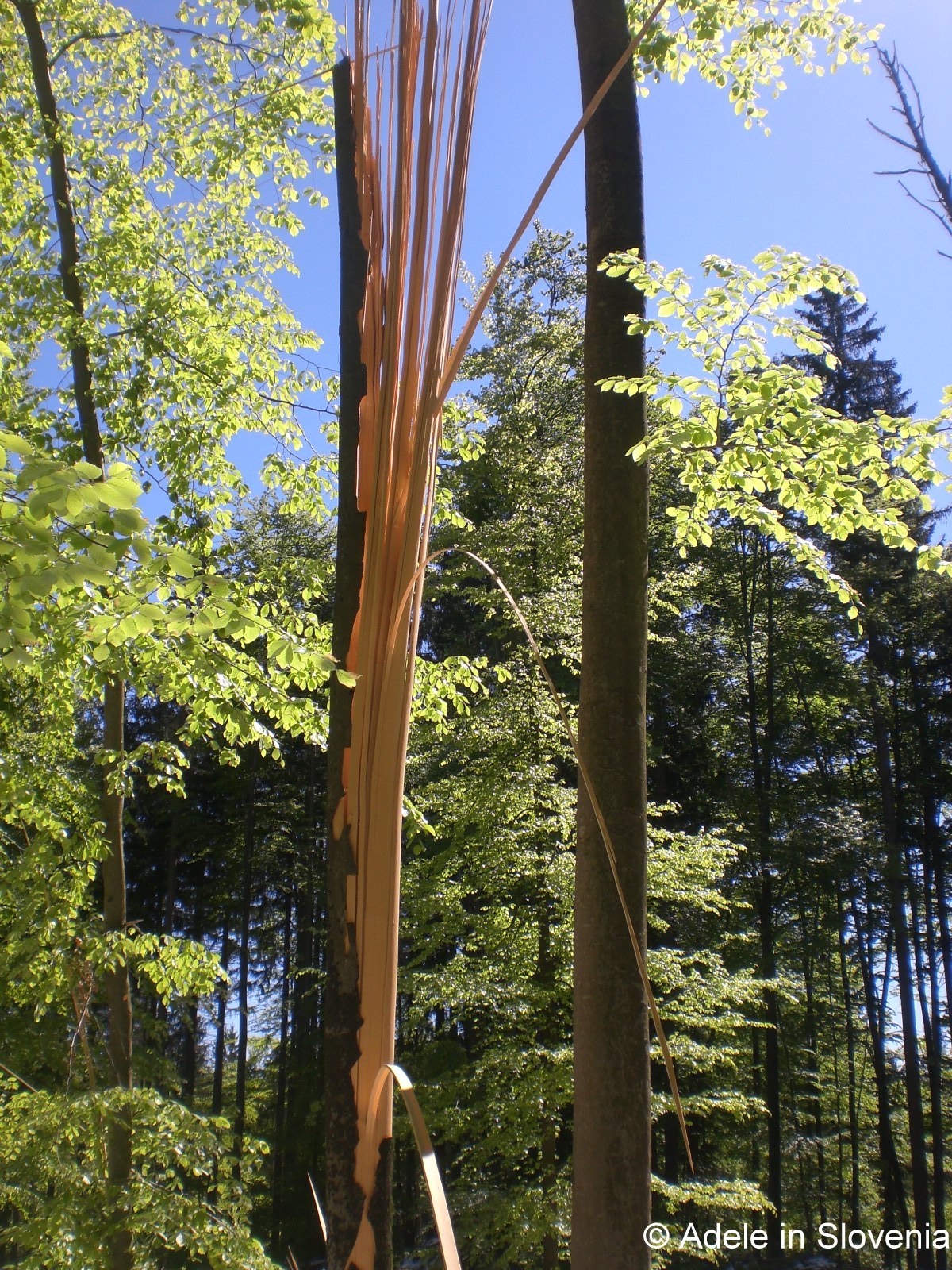
Some trees, such as this one below, had literally been torn apart under the weight of the heavy snow.

CIMG1181

It’s been over 20 years since there has been such heavy snowfall this late in the year, so this prompted me to try and uncover some historical snowy spring facts:

  • In 1907 40cm of snow fell on 29th April in Bohinjska Bistrica
  • In 1974 in Nomenj it snowed on the 10th of June
  • In 1985 it snowed on 3rd May
  • In 1988 it snowed on 24th April
  • The earliest snowfall of the year was recorded in 1972 on 11th September in Kotlje

Unfortunately it has also caused a huge amount of damage to crops and vines – in places its reported that up to 90% have been destroyed. This year’s honey production is also expected to be severely affected. Over one-third of honey produced in Slovenia is acacia honey, and a large number of the blooms have been destroyed. It’s all such a shame and another reminder of the equal wonders and cruelty of nature.

Roll on summer!!!

© Adele in Slovenia


Spring in the Karavanke Mountains

After all the excesses of the Radovljica Chocolate Festival, last week was all about my other great love – Slovenia’s great outdoors!

Spring has arrived in the Karavanke mountains and, particularly on the south facing slopes, the snow is melting at a pace, or rather ‘was’. When I started writing this blog last week, it certainly was ‘Spring in the Karavanke Mountains’. Now, however, looking out of my window at the fresh snow, and digging out my gloves and warm clothes again, it feels anything but spring-like! Nevertheless, the blog below remains ‘as was’ and hopefully spring-proper will return very soon.

It is, however, a different matter on the north facing slopes of the Karavanke, so it’s still a bit too soon in the season for any serious hiking above 1,500 metres, and it’s an entirely different matter in the Julian Alps, where there is still a significant amount of snow, even at lower levels.

It’s still a little nippy early morning, especially for cycling, but wrapped up well I cycled from Radovljica to the Završnica reservoir then headed on foot to Smolnik (1002m). What I particularly like about Smolnik is that despite it being near the Valvasor mountain hut (Valvasorjev dom) – a very popular destination for hikers, Smolnik itself is relatively unknown as the path is not marked, thus only those ‘in the know’ frequent it – until now perhaps!!!

CIMG0854

Though I also often hike up to the Valvasor hut at this time of year, what sets Smolnik apart is the view, since the views from the hut are rather restricted. The path up through the forest is very steep, so I consider a pair of hiking poles a must – though there is an option to approach it from the opposite direction, via the road that leads to the Ajdna archeological site, which is a far less steep option. In places it little more than a mass of tangled tree routes, however, the path is clear and easy to follow.

CIMG0856

On reaching the top of Smolnik there are wonderful views across the valley and towards Bled Lake, a great reward for my effort.

CIMG0858

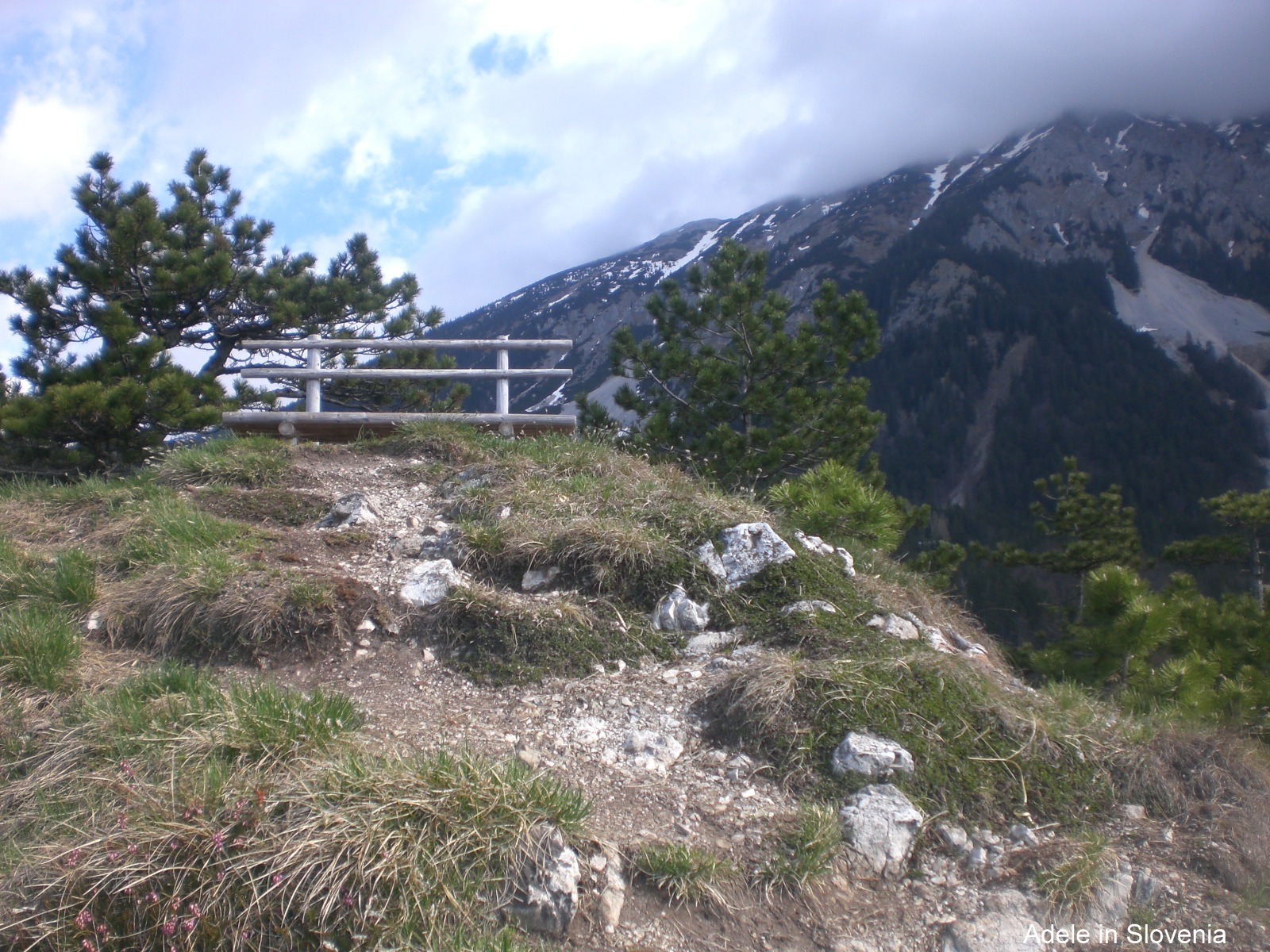
There is a bench for resting weary limbs if required, with Stol, the highest peak in the Karavanke range, dominating the backdrop, and looking very ‘moody’ on this occasion.

CIMG0859

From the peak of Smolnik it’s easy to reach the Valvasor mountain hut, from where you can continue to one of the mountain highlands as I did – in this case the Žirovniška planina highland, for marvellous views of the snow-capped Julian Alps, or continue towards Ajdna, which is well worth a visit. You can read more about that in a previous blog here – https://adeleinslovenia.com/2014/01/13/fascinating-ajdna/

CIMG0865

It’s just the start of the season, so plenty of this, and more, to come!

© Adele in Slovenia 2016

Vurnikov Trg – Radovljica’s New Square Comes to Life!

Anyone who has visited, or passed through, Radovljica in the past few years, can’t have failed to have noticed the large building site that has lain dormant for some time. Over the past few years the site had earned itself the unfortunate nickname by some locals as ‘the concrete jungle’.

Now, the new square it is finally nearing completion with all the residential/retail/office units complete, and just the one unfortunate blot on the landscape remaining – the concrete shell which is to be Radovljica’s new library, if the long-running saga of financing its completion ever gets resolved. Eventually, it will hopefully become the semi-green oasis envisaged in the plans below!

vurnikov-trg-4

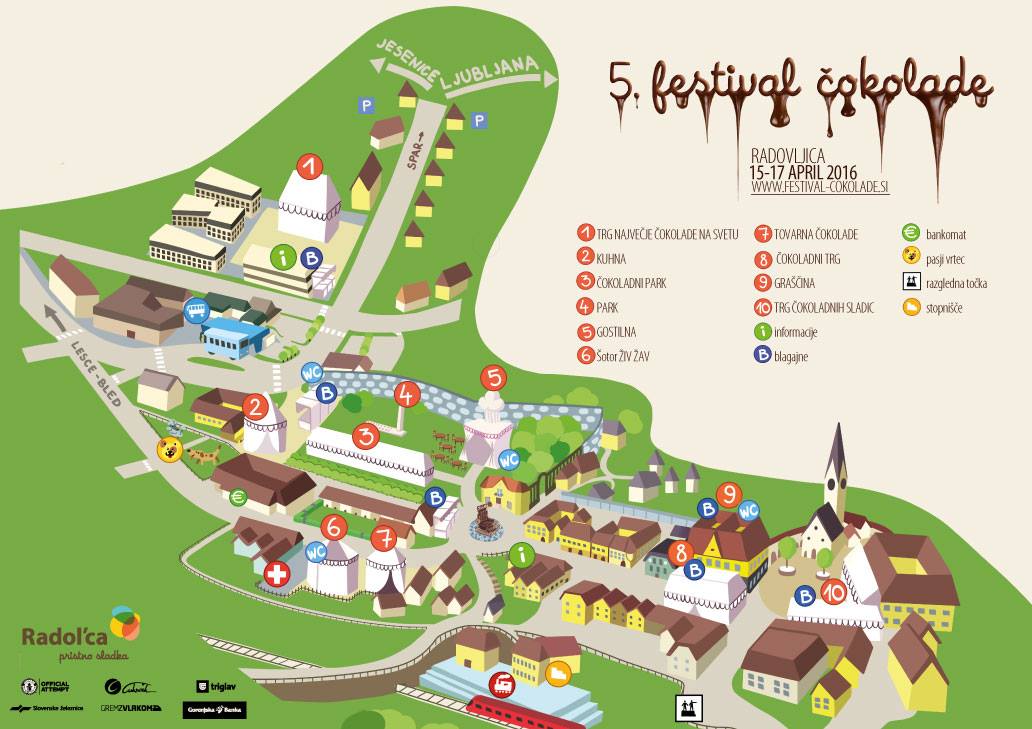
Next weekend Radovljica’s new square, Vurnikov Trg (Vurnik Square), will serve its first purpose as the hosting area for the attempt at the Guinness World Record for the Largest Chocolate Bar, as part of the Radovljica Chocolate Festival, taking place from 15 – 17 April. The map below shows all the festival locations.

12968046_1072156356160913_4077089239842219593_o

The official measuring and announcement of the record is due to begin at 4.30pm on Friday 15th April.

Vurnikov Trg is named after the Slovene architect Ivan Vurnik (1884-1971), who was born in Radovljica. Vurnik helped found the Ljubljana School of Architecture and, together with his wife, Helena Kottler Vurnik, they went on to design many notable buildings in Slovenia, as well as further afield.

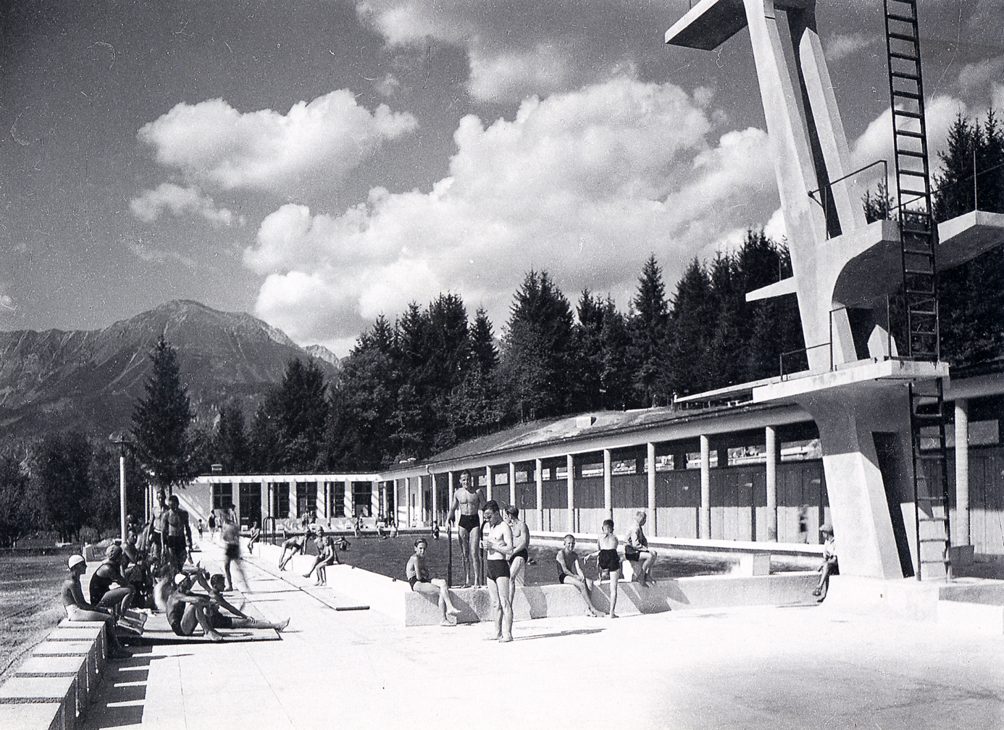
Radovljica’s swimming pool was built in 1932 and is considered one of Vurnik’s most notable projects. The most distinguishing feature, at its time considered a daring feat of engineering and architecture, was the high diving platform. It was demolished in 1966 but Radovljica’s Olympic-size swimming pool lives on today, in the same location, though in a somewhat more modern form.

Kopalisce Radovljica 1932

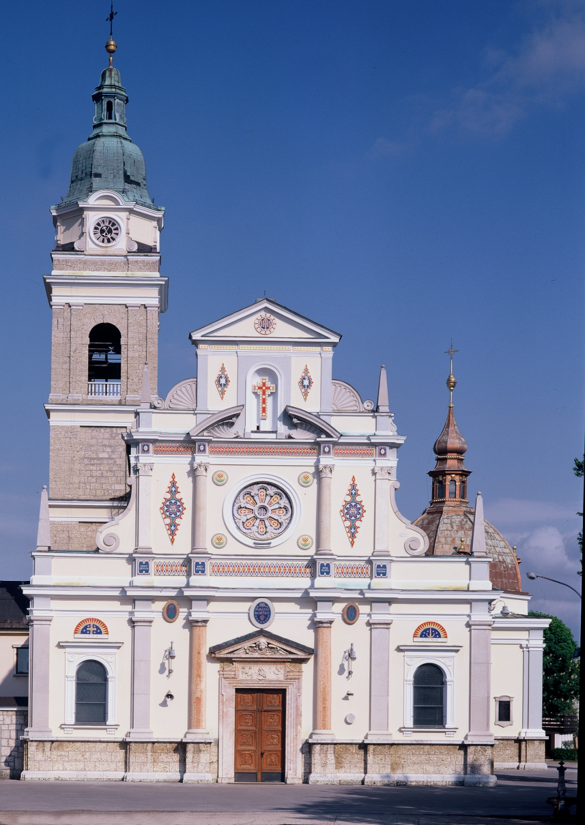
The Basilica of Mary Help of Christians in Brezje, built in the period from 1965 – 1967, is today the most renowned pilgrimage centre in Slovenia. In 1988 it was elevated to the status of basilica by Pope John Paul II. More here – http://www.radolca.si/en/brezje/

Brezje 1965-1967

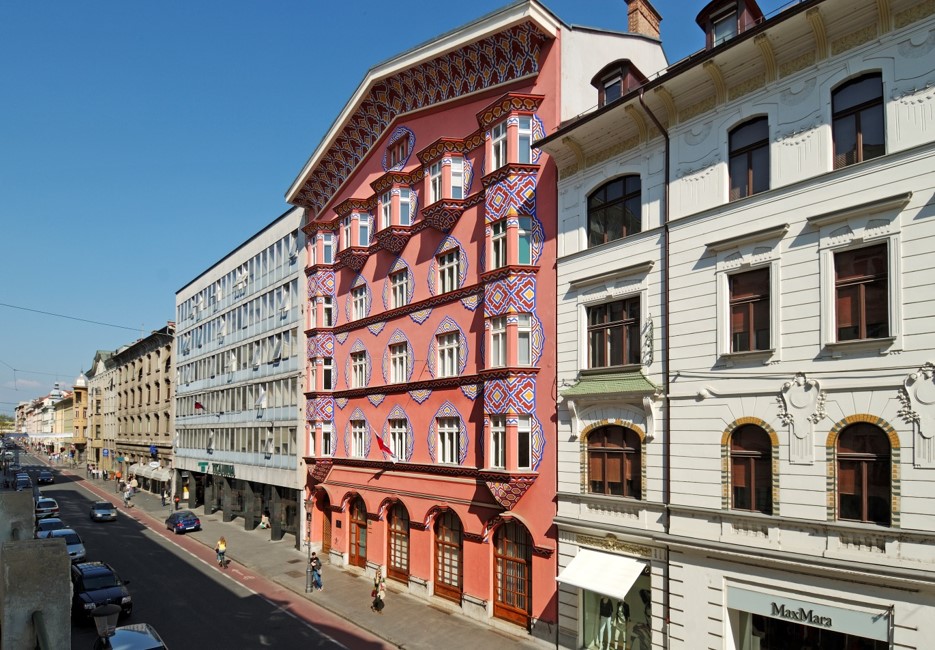
The Zadružna Gospodarska Banka (Co-operative Business Bank) building in Ljubljana is one of the city’s most famous buildings. It was built in 1921. Ivan Vurnik designed it whilst his wife painted the interior wall paintings and frescoes. More here – http://www.visitljubljana.com/en/activities/sightseeing/1771/poidetail.html

Zadruzna gospodarska banka Lju 1922

The Bishop’s Chapel in Trieste was designed by Vurnik in 1913 for Bishop Dr. Andrej Karlin. It is considered one of Vurnik’s finest works and one of the best examples of Secessionist sacral art. This was Vurnik’s first work, completed in collaboration with his wife.

Skofovska kapela Trst

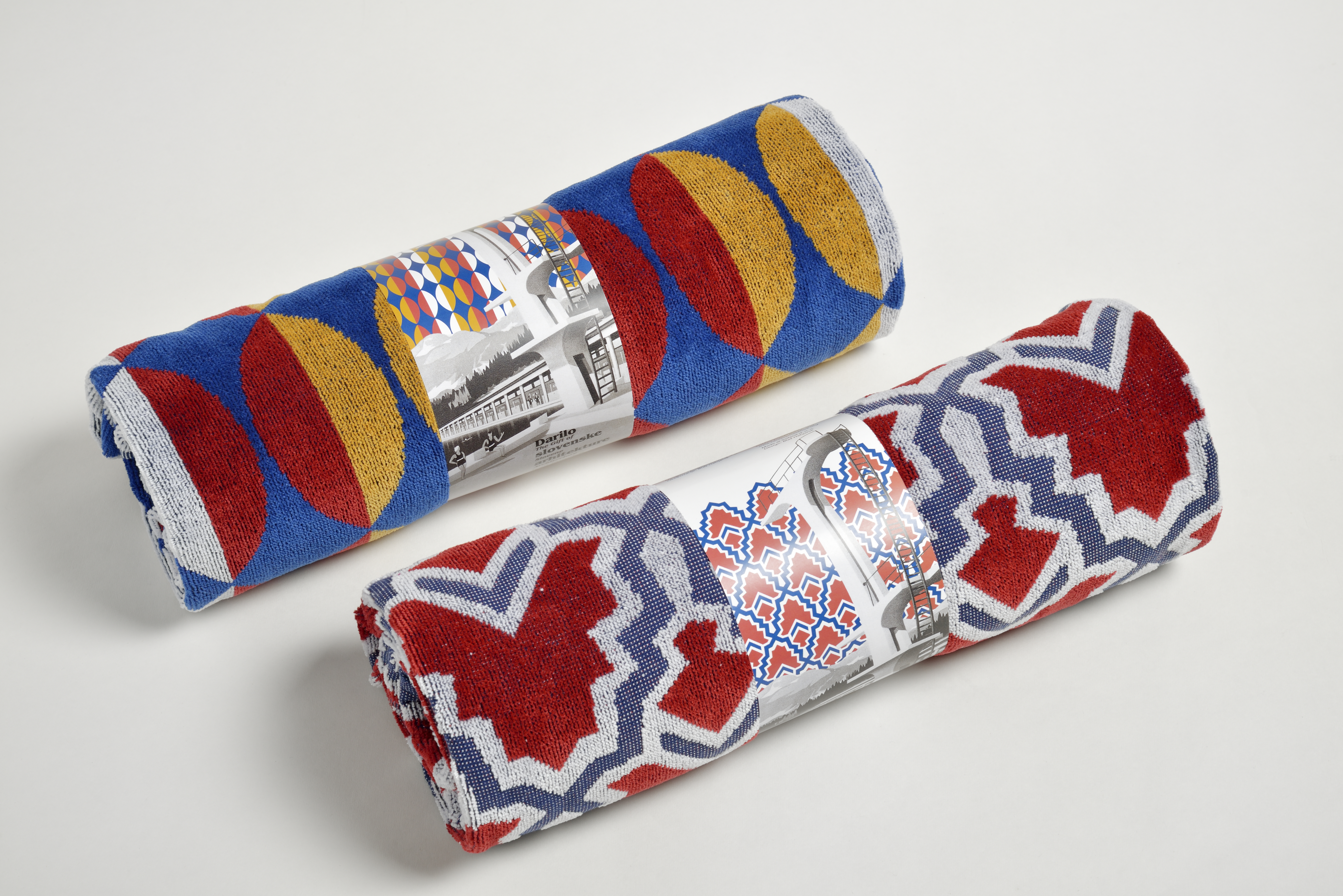
The above photos, by Miran Kambič, show just a selection of Vurnik’s work. More detailed information is available from the Slovene Centre for Architecture, that has also produced a range of products, which make ideal gifts, based on Vurnik’s designs. The items are available at selected tourist offices, museums and bookshops, amongst them at the Radovljica Tourist Office. More information here – http://www.centerarhitekture.org/darilo-slovenske-arhitekture/

darilo slovenske arhitekture Vurnik center arhitekture 2014

© AdeleinSlovenia 2016

The Bohinj Wild Flower Festival – A Jubilee Year

The annual Bohinj International Wild Flower Festival will take place from 21st May to 5th June and this year, the 10th successive year, marks a jubilee. The first festival was held in 2007 and since then it has been growing (pun intended!) in popularity, and gaining ever more recognition, by the year.

The main theme of the festival is the presentation of alpine flowers in the waters, meadows, hills and mountains of the areas surrounding Bohinj Lake, part of Triglav National Park.

During the festival a variety of events take place including guided walks and hikes, workshops, local craft and farmers markets, exhibitions, excursions, concerts and culinary evenings.

There are also activities for the whole family including a ‘Weekend for Families and Children’ which includes flower-related events as well as participation in water sports and other outdoor activities.

Childrens Wknd Bohinj flower festival

You can get really hands-on at many of the workshops, first picking the flowers, then preparing them for various uses.

flower festival workshop

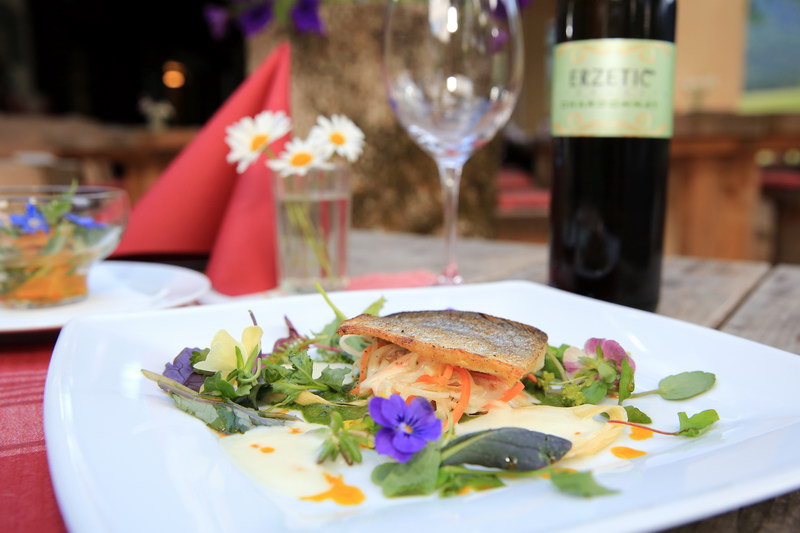
Culinary evenings take place at selected local restaurants, such as at the restaurant at Camp Danica in Bohinjska Bistrica, seen below, where you can enjoy local delicacies, such as trout, paired with edible wild flowers.

culinary evening danica

There are around 70 known types of flower which are endemic to Slovenia, and/or the immediate surroundings. A walk among them is a botanist’s dream. Theses species include:

Zois’ bellflower – endemic to Slovenia, Austria and Northern Italy and most prevalent in the Julian and Kamnik-Savinja Alps (shown below)

zoisova_zvoncnica_1s

Triglav Hawksbeard – discovered by one of the first four men to climb Triglav in 1778. It was found near where the Planika mountain hut now stands. It is very rare and is on the list of threatened species. So rare, I haven’t yet found it to photograph myself!

European False Stitchwort – first discovered near Ljubljana Castle in 1762 by the Carinthian botanist Jesuit Franc Ksaver Wolfen. It belongs to the Pink family, to which carnations also belong.

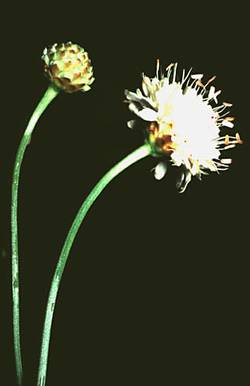
Trenta Scabious – discovered over 200 years ago in Idrija by a physician. The original finding is preserved in Slovenia’s Natural History Museum.

trenta-scabious-scabiosa-trenta-355e5ab376

Depending on the weather – late snowfall can sometimes mean the season begins later – you can expect to find wildflowers in the meadows and highlands from the end of May through to late summer.

If you are interested in wild flowers, and/or considering a visit, here’s a sneak peek of what you can expect to see, those that I have been lucky enough to encounter on my hikes within Triglav National Park.

  • Here I am on a hike in the highlands above Bohinj Lake; from Planina Krstenica towards Ogradi.

Bohinjske planine 27. Julij 2011 007

  • Surrounded by wonderful wild flowers during a summer walk to the Seven Triglav Lakes valley. One can almost feel as if in a botanical garden, whilst completely at one with nature.

Sedmera jezera Julij 2010 009

Here are a few of my close-up snaps.

  • Alpine carnation (Alpski nagelj) – also known as Alpine Pink

OLYMPUS DIGITAL CAMERA

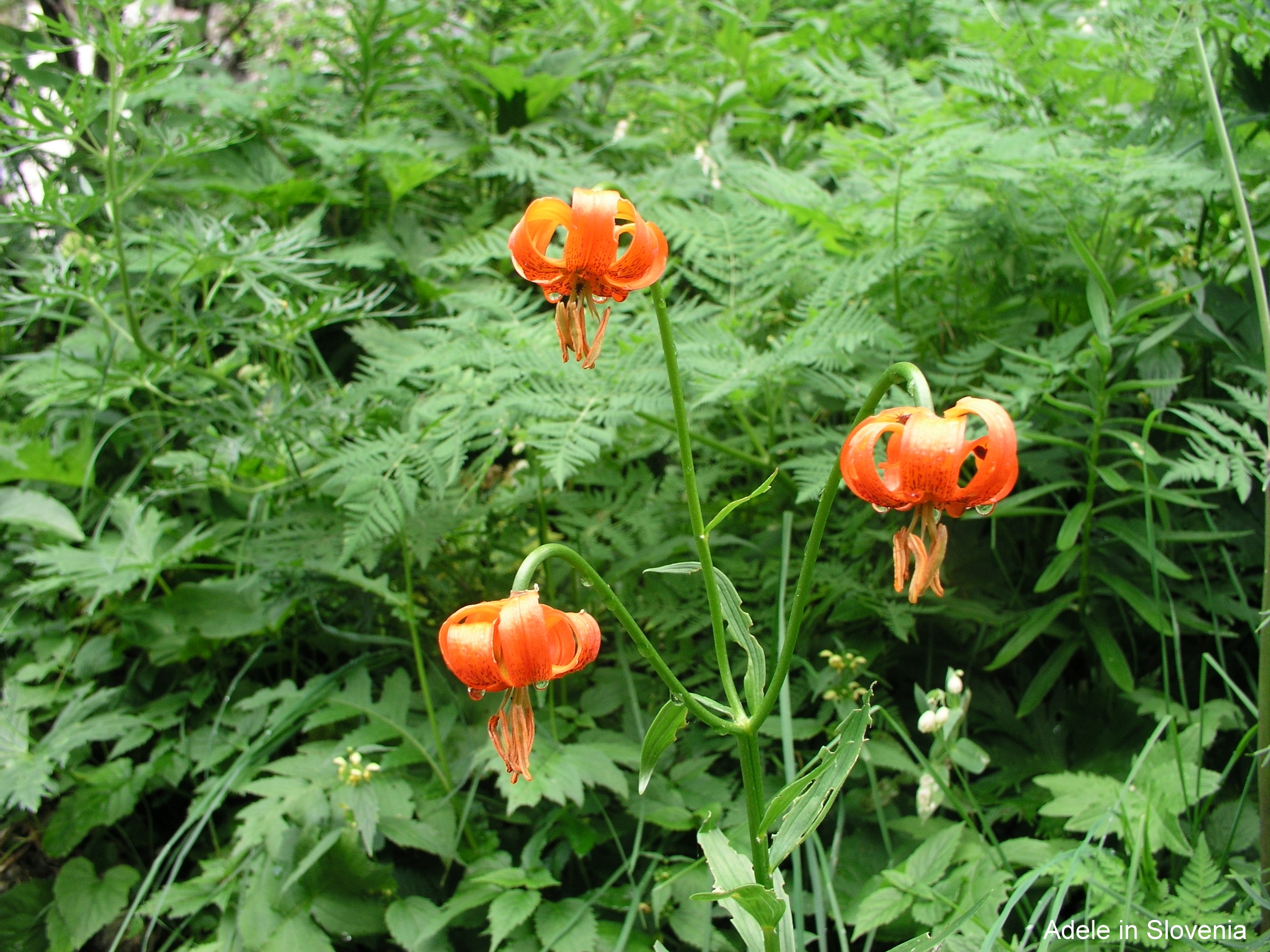
  • Carniolan lily (Kranjska lilija) – Not entirely endemic to Slovenia, since it can also be found in areas from north-east Italy to Bosnia, however, it is most common in Slovenia.

OLYMPUS DIGITAL CAMERA

  • Yellow Gentian (Košutnik) – native to the mountains of central and southern Europe

OLYMPUS DIGITAL CAMERA

  • Edelweiss (Planika) – this one probably doesn’t need any explanation as it’s widely known, but I had to include it as it’s such a special one, and also because we have a mountain hut named after it, which sits just beneath our highest mountain, Triglav.

Komna 14 Julij 2012 004

You can read more about the festival and find the whole of this year’s programme here – http://www.bohinj.si/alpskocvetje/eng/index.php

© AdeleinSlovenia 2016


Let the Train Take the (Chocolate) Strain!

As anyone who has been to any of the previous Chocolate Festivals in Radovljica will know, the event is VERY popular and becoming more so every year. And, if you haven’t yet been, then it’s time to come and see what all the fuss is about!

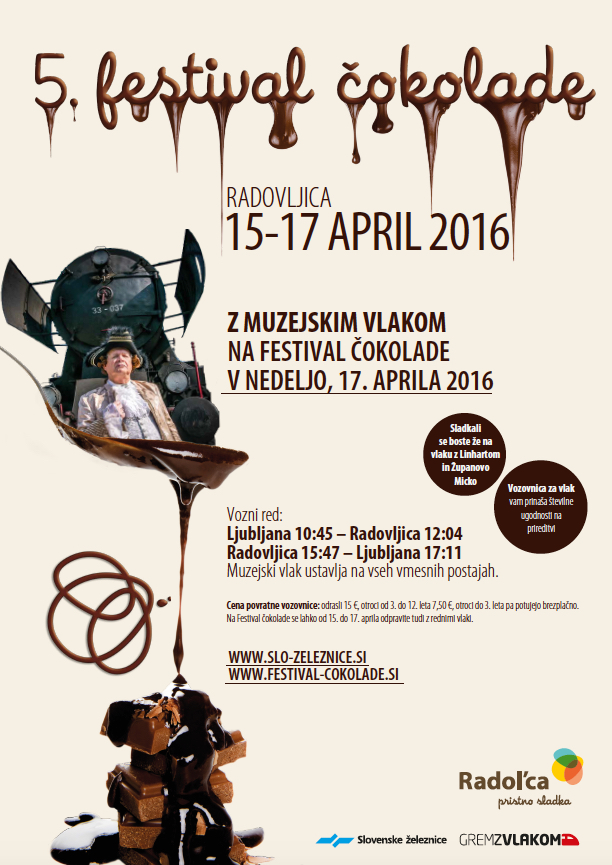
So, this year, why not visit the Chocolate Festival by train, eliminating the stress of trying to find somewhere to park, and also the ‘chocolate fun‘ will begin from the moment you step onto the train.

A special heritage train will operate on Sunday 17th April, leaving Ljubljana at 10.45, arriving in Radovljica at 12.04. On board the train there will be entertainment, and, of course, chocolate!

muzejski_vlak_press

The return train leaves Radovljica at 15.47, arriving in Ljubljana at 17.11. So, that means more than 3-and-a-half-hours of chocolate indulgence in Radovljica!

Luckily for me I live in Radovljica so I only have a 5 minute walk to be in chocolate heaven, however, I’m quite tempted to take the train, just for the experience!

Poster image 2

There are also a number of additional bargains and offers at the festival for those who arrive by train, including:

  • Chocolate from the Guinness World Record chocolate bar for just 4 coupons – instead of the usual 5
  • Kunstelj cake pops (seen below) for 2 coupons each – instead of the usual 3
  • 10% discount on the purchase of bottled wine at the Sodček wine bar – located at the entrance to the old town centre
  • Free guided tour of the Lectar Gingerbread Workshop
  • Reduced-price entrance to the Museum of Apiculture and the Municipal museum – payment with coupons

CIMG8542

More information about the special train (it seems, currently only in Slovene!) here – http://www.slo-zeleznice.si/sl/potniki/izleti-in-prireditve/z-muzejskim-vlakom-na-festival-cokolade-v-radovljico and about the festival (in English) here – http://www.radolca.si/en/what-to-do/events-1/chocolate-festival/83/309/

Of course, taking the train isn’t just possible during the time of the festival, but all-year round you can visit Radovljica by train. The railway station is located just metres from the historic old town centre and the journey from Ljubljana, which takes just under an hour, offers great views and a relaxing way to travel. More information here (this time also in English!) – http://www.slo-zeleznice.si/en/

© AdeleinSlovenia 2016


2 Records and a Rant!

Rather an odd title for this week’s blog, you might think. I’ll start with the ‘records’ and get on to the ‘ranting’ later!

The first of the ‘2 records’ refers to this year’s Radovljica Chocolate Festival where, in addition to a full programme of chocolate tasting and other chocolate-related entertainment, there will be an attempt to break the Guinness World Record for the largest ever chocolate bar.

The current world record was set in 2011, with the largest bar weighing a whopping 5,792.50kg (probably equating to about my average annual consumption of the stuff!). It was produced by Thorntons Plc (UK), who just happen to make one of my favourite kinds of chocolate in the world. Any friends or family visiting from the UK are always instructed to bring me some!

4982148661_e4f0d90ede_b

So, it will take some doing to break it – the record I mean, not the chocolate bar! Though, one does wonder how on earth they are going to divide it up into manageable chunks! The full programme for the festival, which takes place from 15 – 17th April, is almost complete, so there’ll be plenty more about it here, and on the festival website, in the coming weeks – http://www.festival-cokolade.si/program/

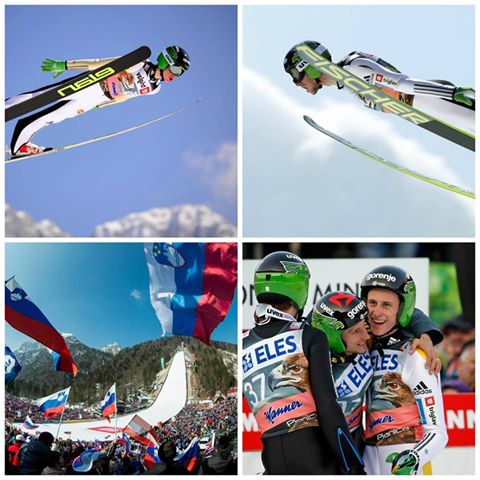
That’s not all on the subject of record-breaking. The 2nd of the ‘2 records’ refers to the record-breaking weekend at Planica. I wasn’t among the crowd as unfortunately, despite being offered a ticket, a problem with my ears means that I’m unable to withstand loud noise and Planica is a synonym for loud noise with hooters, claxons and the masses of highly enthusiastic fans cheering on their heroes. However, since there was such widespread media coverage over the whole 4 days, it was easy to feel a part of the nation’s pride without actually being there.

The combination of fantastic weather, record-breaking crowds, and world-beating performances by the Slovene ski jumping team ensured a winning weekend was had by all. And boy, do the supporters know how to cheer and wave their flags in earnest when it comes to Planica – all 110,000 of them!

Ekipa planica 2016

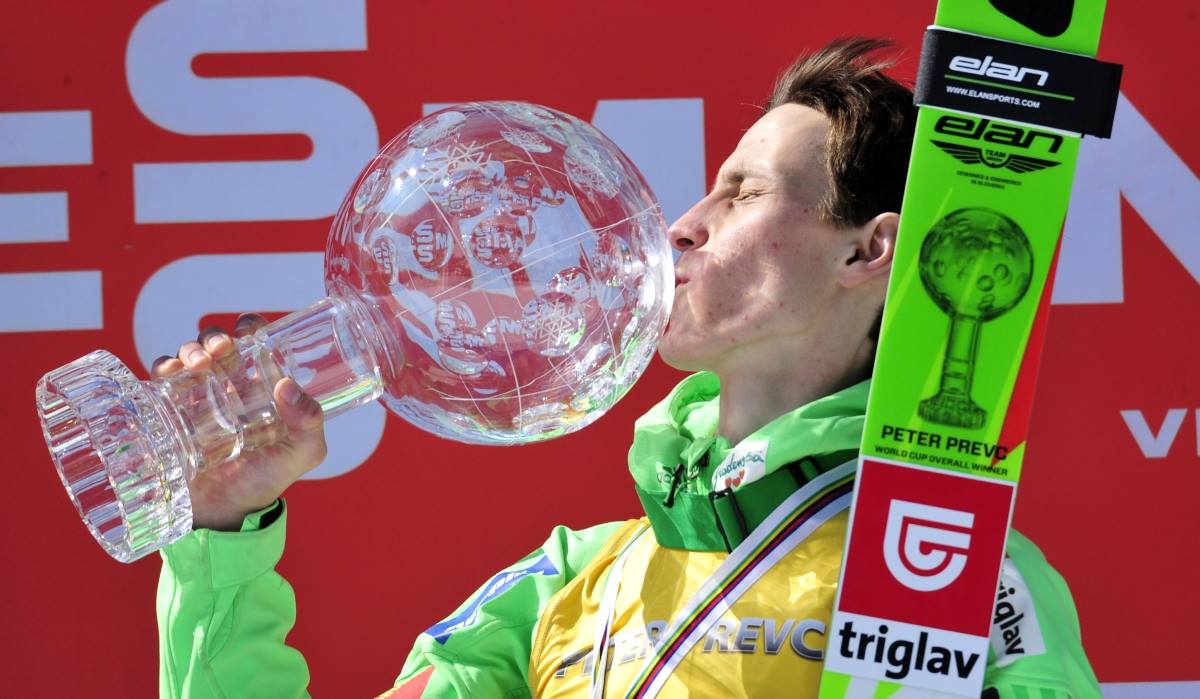
To crown his sensational season, on Sunday Peter Prevc once again secured victory, to round-off a truly astounding year which saw him amass 15 wins, 22 podiums and a new record of 2303 points to become the overall 2016 FIS ski jumping champion. I think it’s fair to say that there isn’t a single Slovene who isn’t proud of him! In Sunday’s competition, Slovenia’s Robert Kranjec took 2nd place, whilst on Saturday the Slovene team were second in the team competition.

Prevc planica

Now, moving onto the ‘rants’ – well actually just one rant, and not something I would usually use the medium of blogging to do, however, on this occasion I feel the need, so please indulge me, just this once.

Saddened, disgusted, horrified, angry, these, along with resignation, were my feelings on finding out that a McDonalds is to open in Lesce. In recent years Taste Radol’ca restaurants, amongst others, have been striving to place a focus on eating locally-produced food. In schools too, both here and elsewhere, there has been ever increasing attention on what kids eat.

From my perspective, I thought I’d found a little corner of the world to escape mass corporate globalisation, though, in truth, that’s almost impossible these days. Therefore, to find out that this particular burger chain is opening on my doorstep was a huge upset. Of course, it’s not the first one in Slovenia, but until now they have been confined to larger cities, rather than encroaching in this beautiful part of the country.

What is additionally worrying is its location. Right at the Bled exit from the motorway, which is notoriously busy. Every weekend during the summer there are tailbacks of several kilometres, and this will only add to that, not to mention there will no doubt be ghastly advertising hoardings erected here, there, and everywhere – another of my pet hates.

Sadly, it’s inevitable that it will do well, as those passing on the motorway will stop off for a fast food fix. I’m not trying to be a preacher here, since I’m no saint when it comes to food – pizza, chocolate, cakes etc. are a staple part of my diet. I can only hope, forlornly perhaps, that at least some of you, my dear readers, appreciate quality food over fast food and steer clear! After all, within just a few kilometres, or even less, of ‘that burger chain’ there are a wealth of restaurants awaiting you with delicious home-produced Slovene food. And if the need for a burger really grabs you – as sometimes it does, at least choose one such as this Angus beef burger, new on the menu at Draga Inn, looks delicious wouldn’t you agree?

Vaski burger

So, I urge you, please support local food and restaurants, when visiting Slovenia eat Slovenian food, and don’t let the global giants win!

© AdeleinSlovenia 2016
Spring Restaurant Week 2016

After a relatively dry and mild December and January, the weather seems to have been playing catch-up for the last few weeks and we’ve been experiencing alternating torrential rain and snow. Operators of Slovenia’s ski resorts will be rubbing their hands with glee as an extended ski season looks a dead cert now, since in the past week in some places there has been up to metre of fresh snow. So, if you are considering a late ski trip, consider Slovenia!

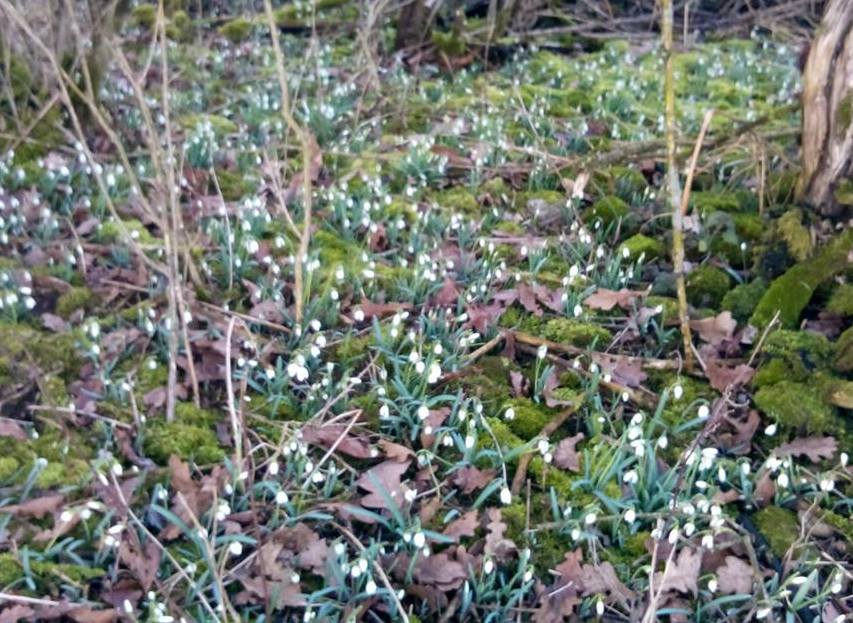
Despite the rain and snow, temperatures have been feeling more spring-like (though it was snowing when I woke up this morning!), there are plenty of spring flowers in bloom, the days are getting longer, and Spring Restaurant Week is here, yippee!

zvoncki spring 2016

Spring Restaurant Week 2016 takes place from 11th – 20th March. There are a total of 86 participating restaurants, and out of the 11 in the Gorenjska region3 of these are Taste Radol’ca restaurants. This is all the more impressive since the Restaurant Week team visit each restaurant to ensure it meets its strict criteria for inclusion, meaning only the finest are chosen.

Restaurant Week takes place twice a year – in spring and in autumn – and the concept is to make gourmet food affordable. Diners have an opportunity to try out some of Slovenia’s best restaurants, with 3-course specially prepared menus available for just 16 euros. It is incredibly popular, so bookings are essential. Since the website is only in Slovene I thought I’d give you a sneak preview of what to expect.

Kunstelj Inn, Radovljica – a choice of 2 themed menus. One is ‘All Things Vegetable’. Below you can see the main course – the 4th generation of Kunstelj štruklji.

Kunstelj 2

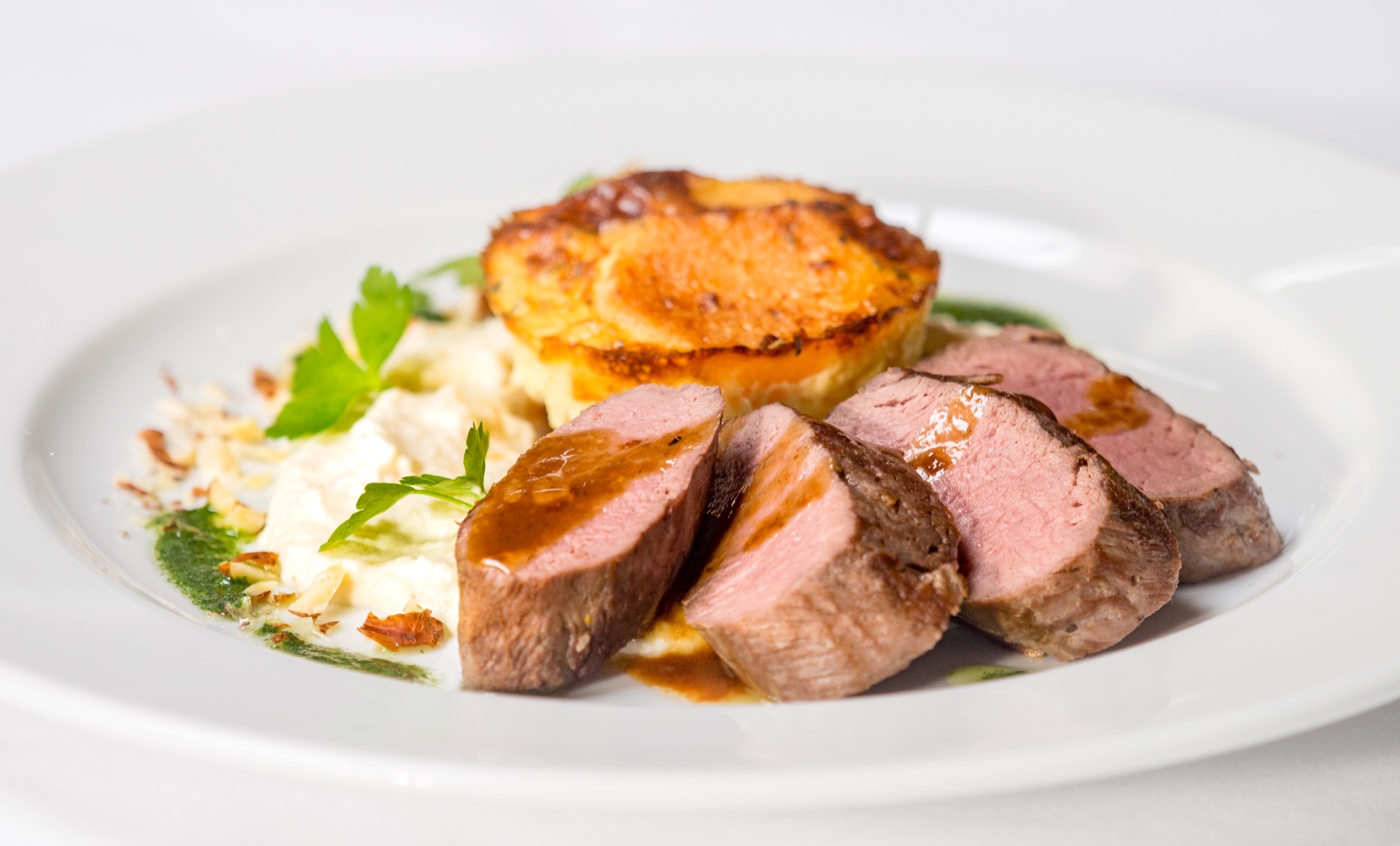
The other is named ‘From the Mountains and Forests’. The main course is fillet of mouflon with parsnip mash and kohlrabi.

OLYMPUS DIGITAL CAMERA

Vila Podvin, Mošnje – Uroš Štefelin, one of Slovenia’s top chefs, will be cooking up delights including carpaccio of rainbow trout with a herb and horseradish mayonnaise

Vila podvin sarenka

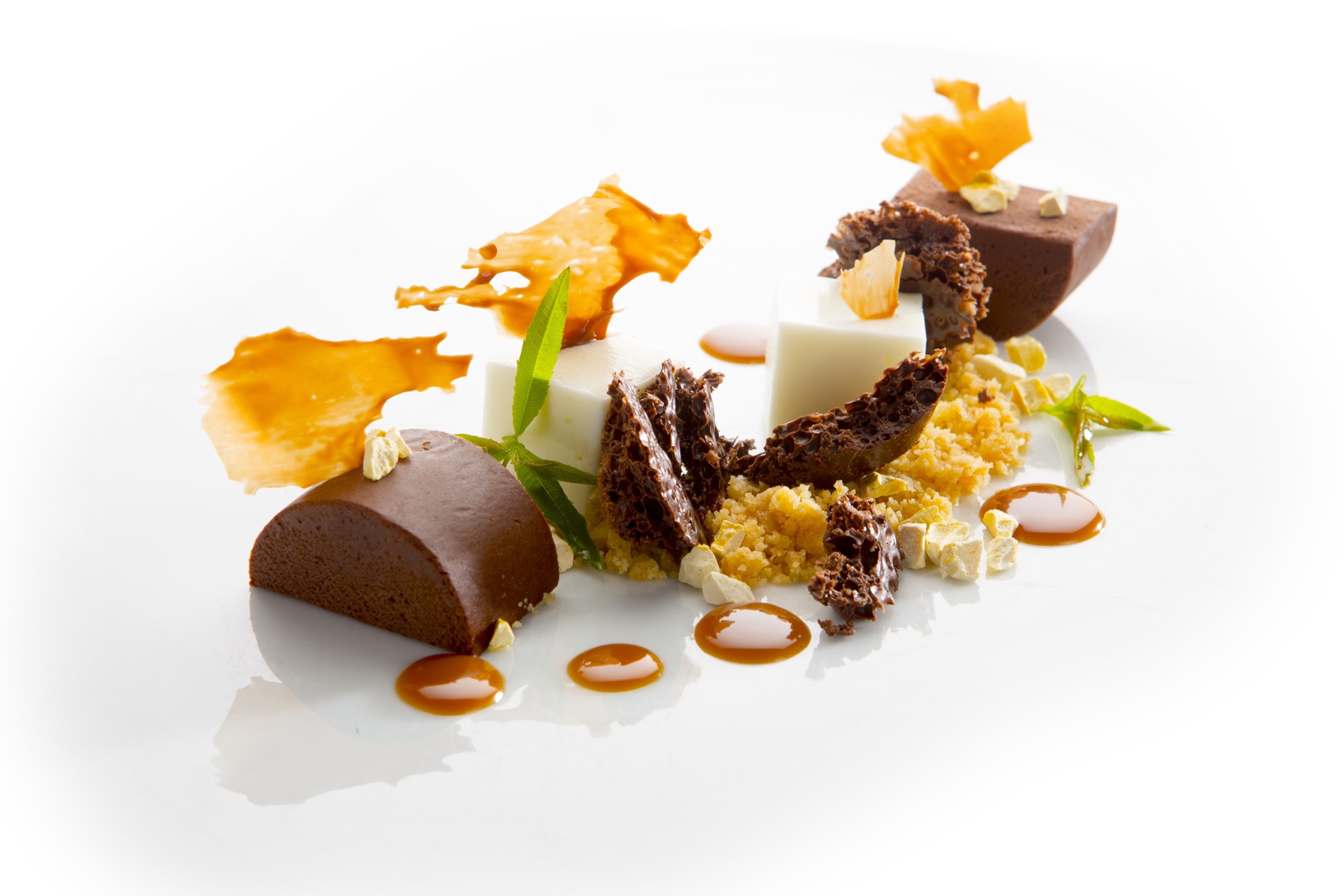
Lambergh Chateau & Hotel, Dvorska vas – there are 2 menus, meat-based or fish-based. Note – *this photo is from the 2015 Restaurant Week as photos of the 2016 culinary delights at Lambergh have yet to be released.

lambergh-Luflee-cokolada-mousse-cokolade-dimljen-jogurt-slani-karamel-TR

Now, I just have the tough choice of deciding where to go and how many of the restaurants I can fit into one week!

More information here (in Slovene only) – http://tedenrestavracij.si/restaurant-category/gorenjska/

You can also read more about Restaurant Week here, in English, though it is only about Ljubljana-based restaurants – http://www.inyourpocket.com/ljubljana/Restaurant-Week_73983f

© AdeleinSlovenia 2016
Easter in Slovenia – My Potica Journey!

It’s not even Easter yet and I’ve already eaten half my body weight in potica – all in the name of research for this blog!

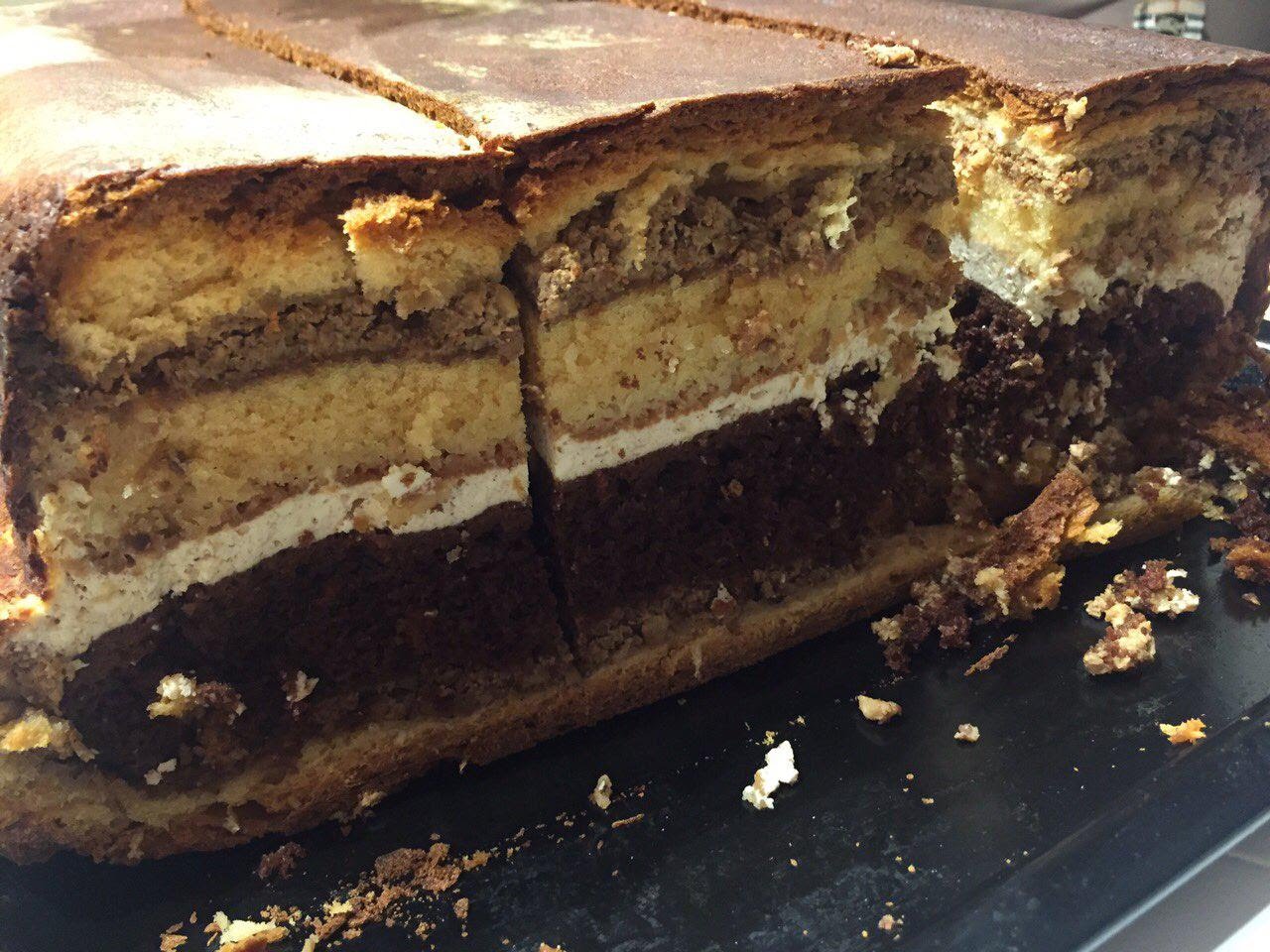
It’s not hard to find potica in Slovenia, far from it, it’s abundantly available, particularly during Easter, Christmas and New Year holidays. I have often read that there are over 80 different types of potica in Slovenia, yet in most shops and bakeries there are only the usual staple varieties, such as; walnut – by far the most commonly found; poppy seedtarragonpork crackling; dried fruitpotratna –  as seen below – a layered ‘luxury’ potica, made with curd cheese, walnuts and layers of light and dark sponge.

potratna potica

So, where then are the other 70+ varieties I asked myself? Therefore, for this blog I set myself the challenge of seeking out some of the other, more unusual types of potica. In the process I have crossed waters and worked my way through an awful lot of potica, so, I hope you enjoy reading about potica in Slovenia as much as I have enjoyed eating it!

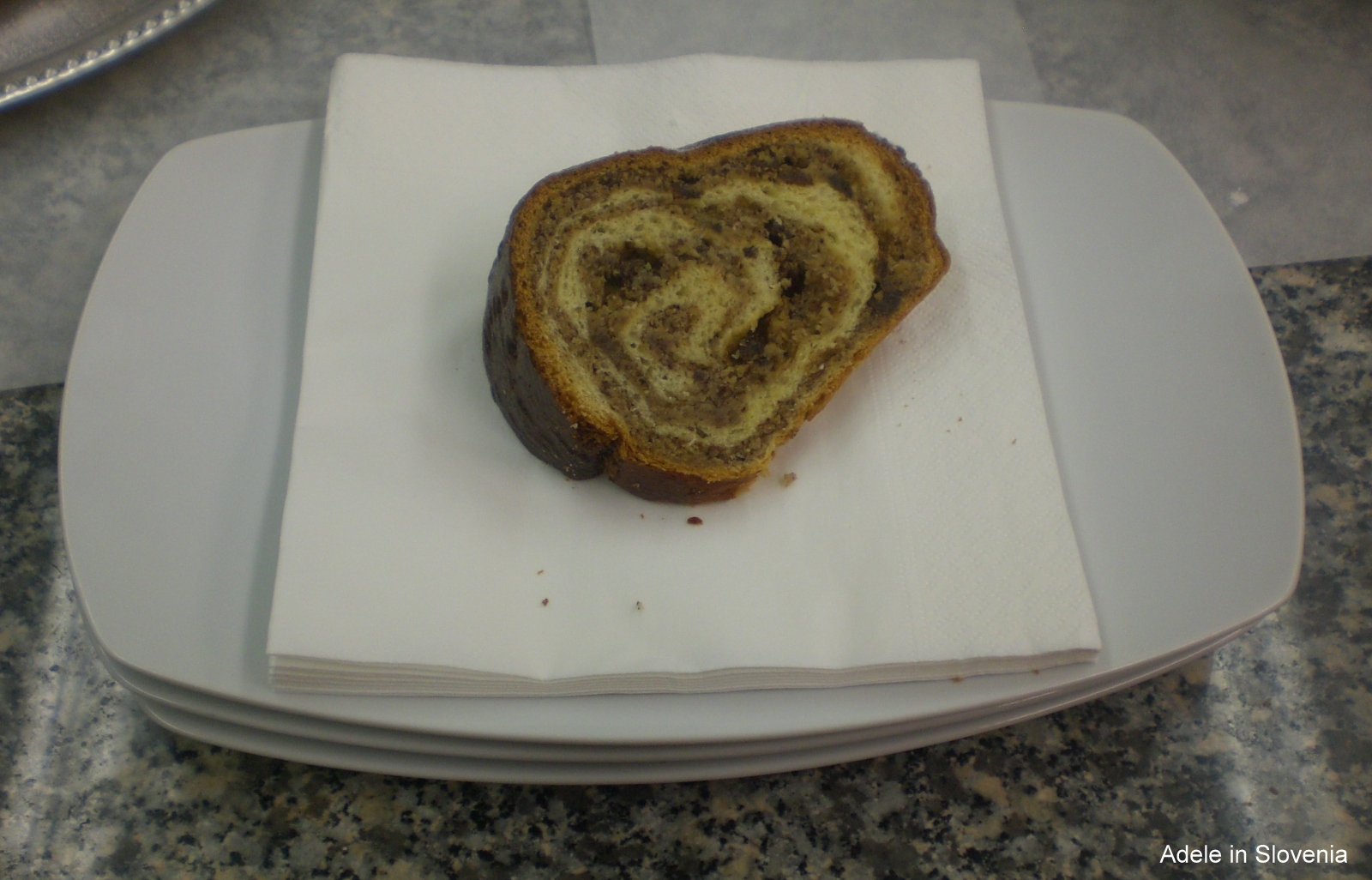
I must confess that sometimes I find potica can be rather uninspiring, dry, and, well, a bit underwhelming. For me the ratio of dough to filling is the key factor. According to potica experts, the ideal ratio is 1:1 – for example, if the dough is 1cm thick, then the filling should also be 1cm. In reality, especially when it comes to mass produced potica, this seems to be far from the case, hence it definitely pays to seek out handmade potica, and it also pays to pay! Though these days you can find potica in pretty much every supermarket throughout the land, and it can often be found on special offer, these shop-bought varieties, though cheap, are often disappointing. Homemade versions are almost always the best – almost everyone in Slovenia seems to have a grandmother who makes ‘the best’ potica, or I recommend also trying some of the ones below!

First I contacted Iva Gruden from Ljubljananjamhttp://www.ljubljananjam.si/ who knows pretty much everything there is to know about the food scene in Ljubljana. She suggested I try the coffee shop and patisserie Čopomana in Ljubljana. Čopomana has many flavours of potica including several that I have never seen, let alone tried.

Čopomana bakes the usual favourite flavours and also an array of different and imaginative flavours. During Easter week they are readily available, whilst at other times throughout the year they are baked to order.

  • Almond and candied fruit

CIMG0465

  • Hazelnut with rum-soaked raisins

CIMG0473

  • Pumpkin seed, pistachio and cardamom

CIMG0479

  • Date, orange, almond and rose petal

CIMG0482

  • Coconut and milk chocolate

CIMG0485

  • Chestnut, fig and Tonka bean – unfortunately I failed to get a good snap of this one for some reason, though it was actually my favourite of the lot – too busy eating, perhaps!

CIMG0468

I’d like to say a very big ‘Thank You’ to the owner of Čopomana, Tanja Viler, for her extreme friendliness, inventiveness and willingness. My visit even inspired her to invented a new flavour of potica (the chestnut one!), and I must mention that my attention was also drawn by all the other delicious looking handmade cakes, jams and other goodies available. I think I will be visiting again soon! More information here – https://www.facebook.com/Čopomana-576820115783243/?fref=ts

CIMG0470

My search also led me to Bled island. As well as being home to the Church of the Mother of God, and a gallery, the island also has its own ‘potičnica‘. I’m going to let the photos tell the story, as there is SO much to tell!

CIMG0503

I journeyed to the island by private boat.

CIMG0505

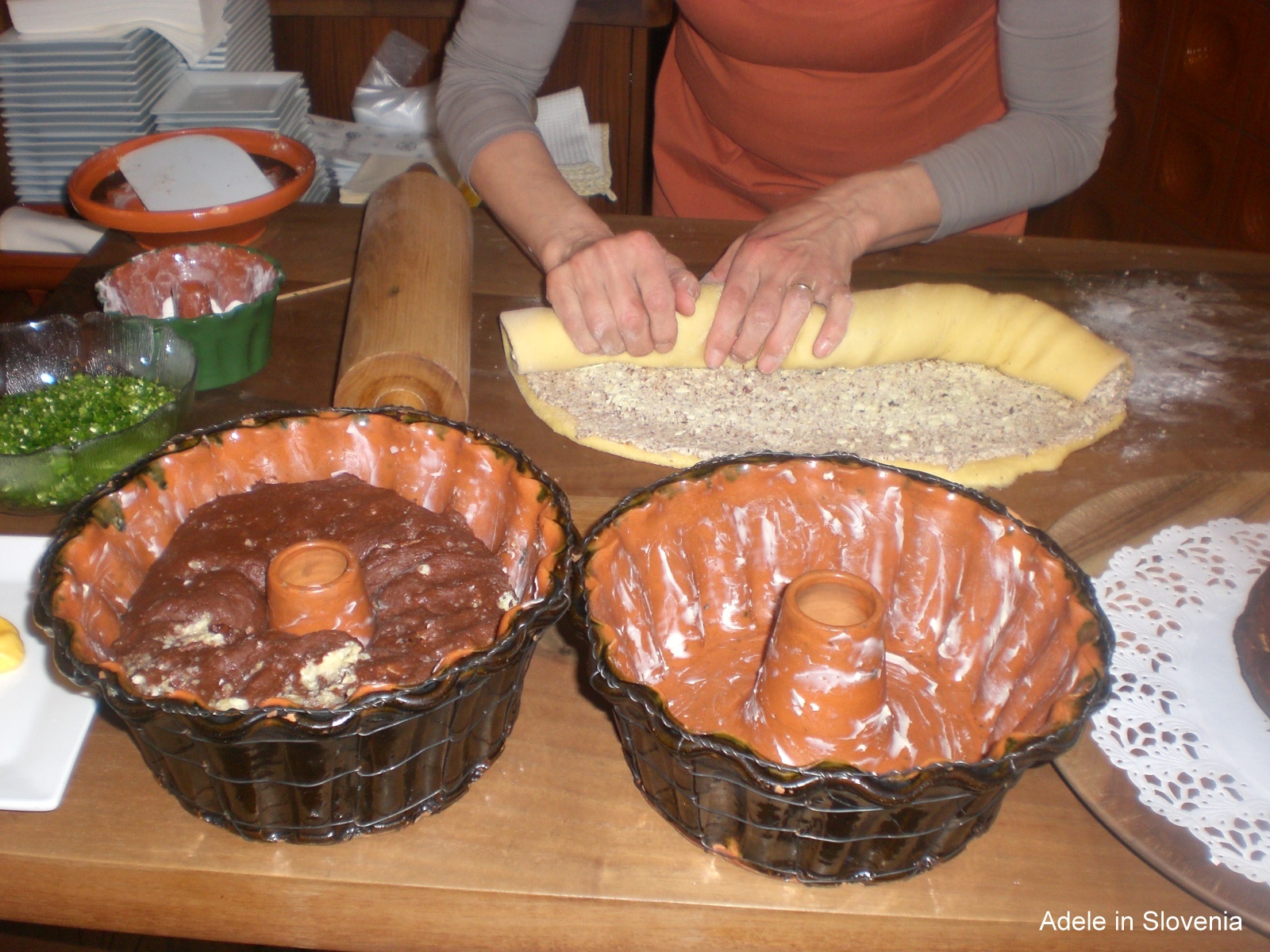
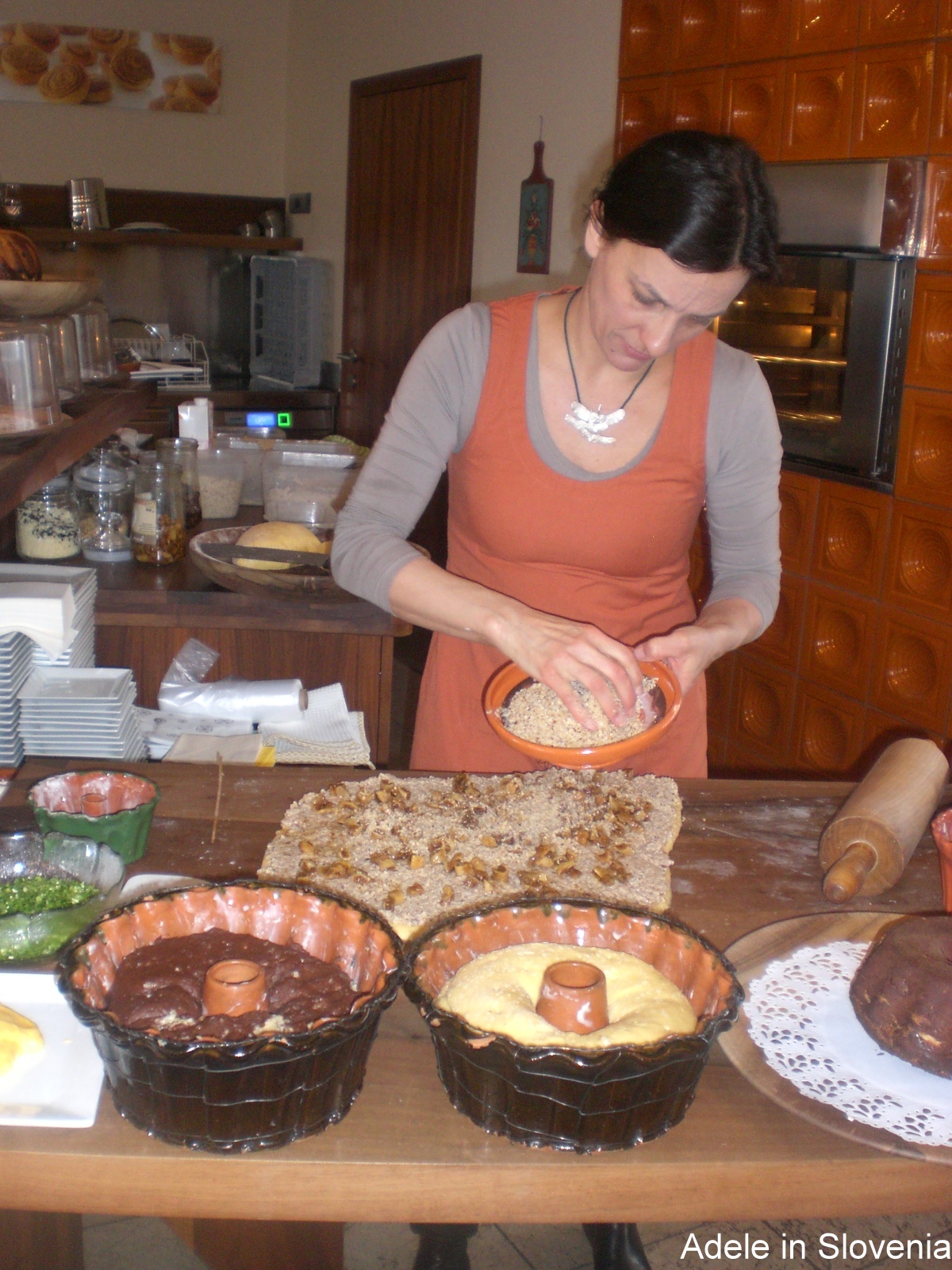
I was warmly greeted by Romana Bohinc, who then proceeded, at lightning speed, to skilfully make and bake five different kinds of potica.

  • A chocolate-enriched dough filled with ground almonds and cranberries soaked in honey and lemon juice

CIMG0519   CIMG0544

  • Blanched almond with white chocolate, cream and honey

CIMG0526   CIMG0550

  • Toasted hazelnut, honey and dried fig – Romana told me about the island’s fig tree. The alpine climate in Gorenjska isn’t exactly conducive to growing figs, however, she explained to me that the island has its own kind of microclimate, which results in a healthy annual fig crop.

CIMG0530

  • Walnut, honey and rum-soaked raisins – a slight twist on the classic walnut potica

CIMG0555

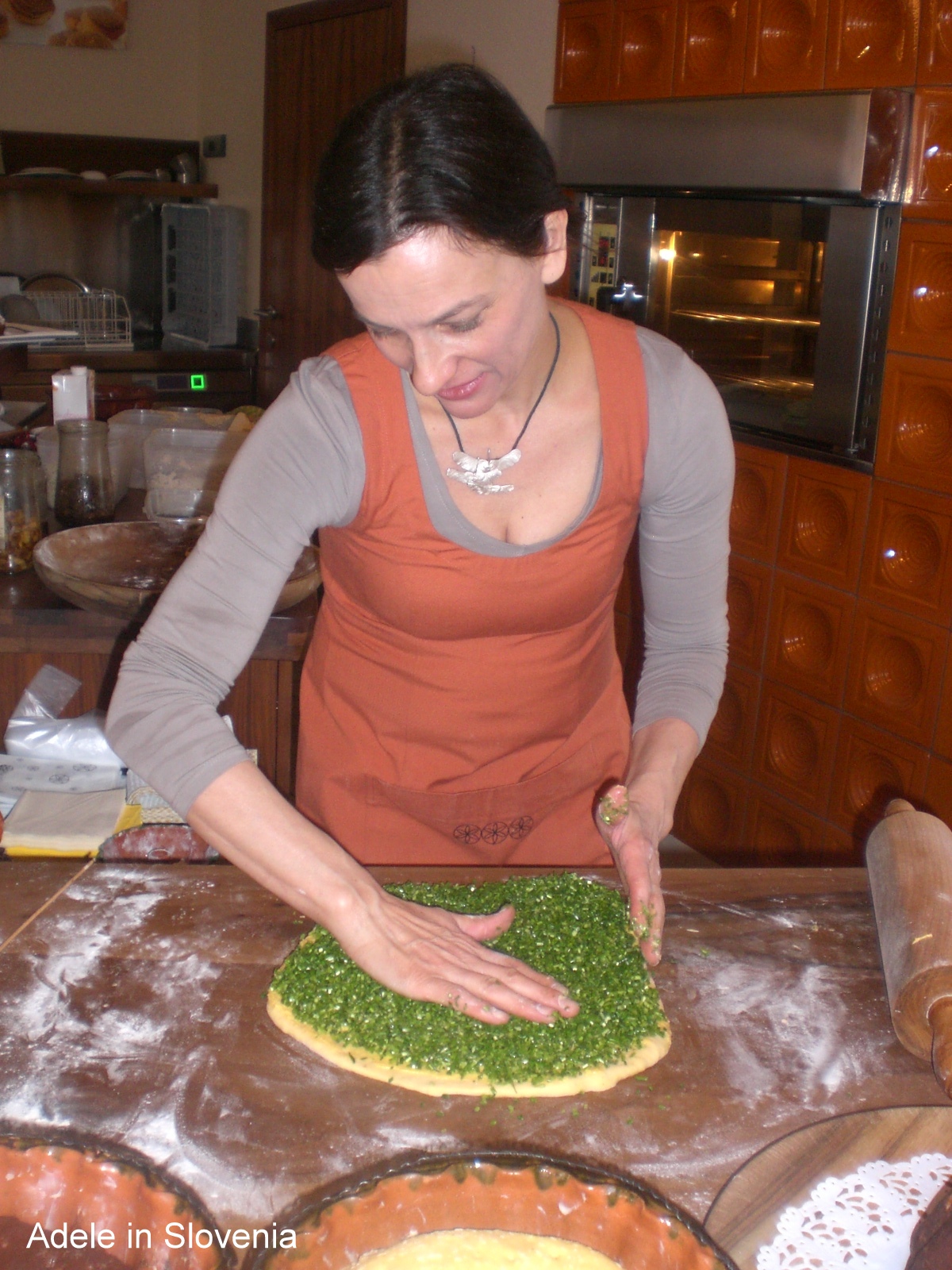
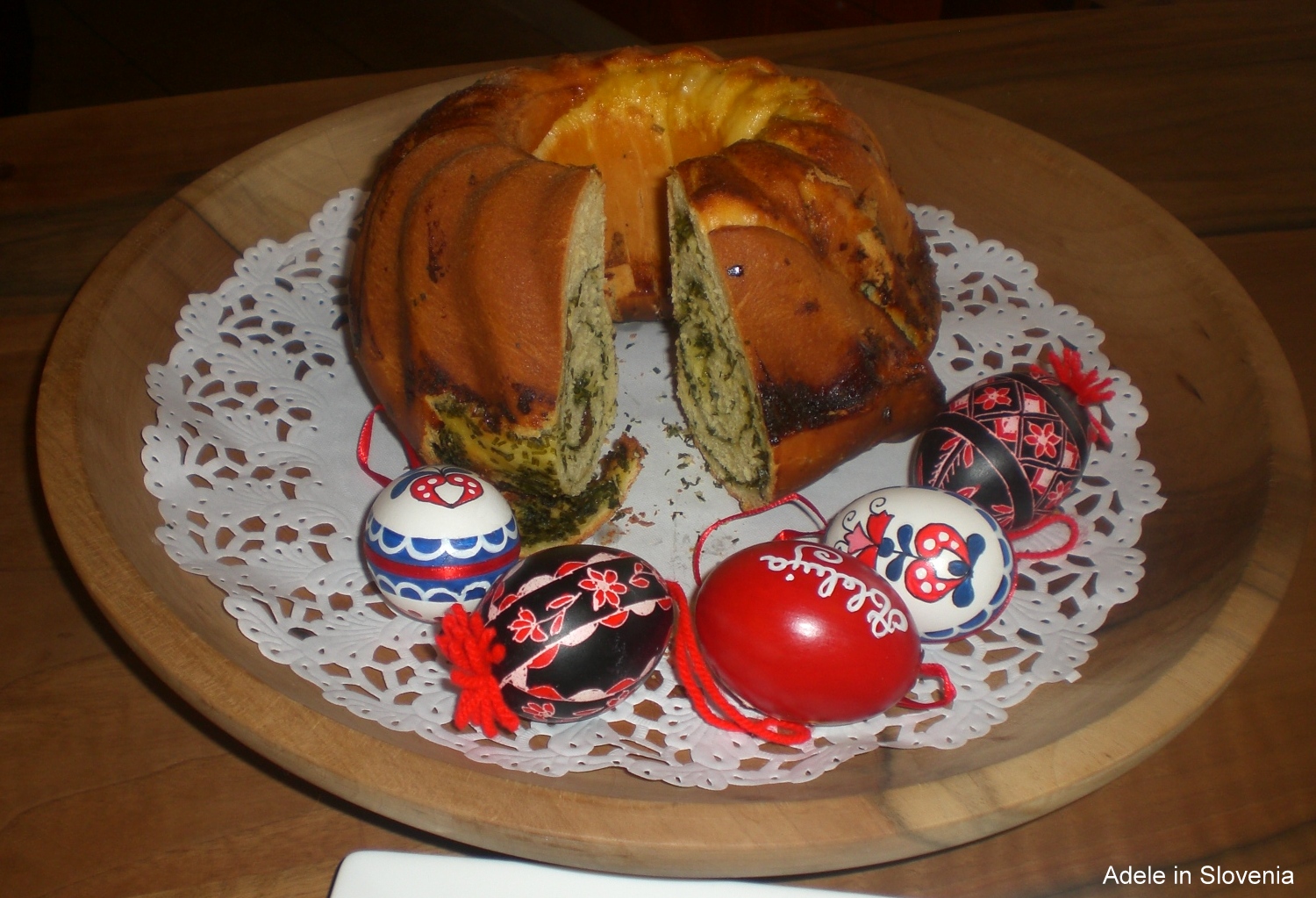
  • Chive, rum-soaked raisins and cranberry – with a base layer of egg yolks, butter and sugar. I couldn’t quite get my head round chives being used in a sweet bake, as they have a very pungent flavour, but this one actually turned out to be my favourite of the lot. Do try it!

CIMG0539    CIMG0553

I was also impressed by the ‘no waste’ policy, whereby the ends of the dough that are cut off before the potica goes into a mould, are baked into biscuits.

CIMG0563

By prior arrangement the potičnica offers workshops for groups, whereby each person can make their own potica, have a guided tour of the island, a tasting session, and some potica to take home. This sounds like a fantastic idea to me and I hope that, rather than just being a spectator, I too will be able to participate myself sometime soon. More information here – http://www.blejskiotok.si/poticnica

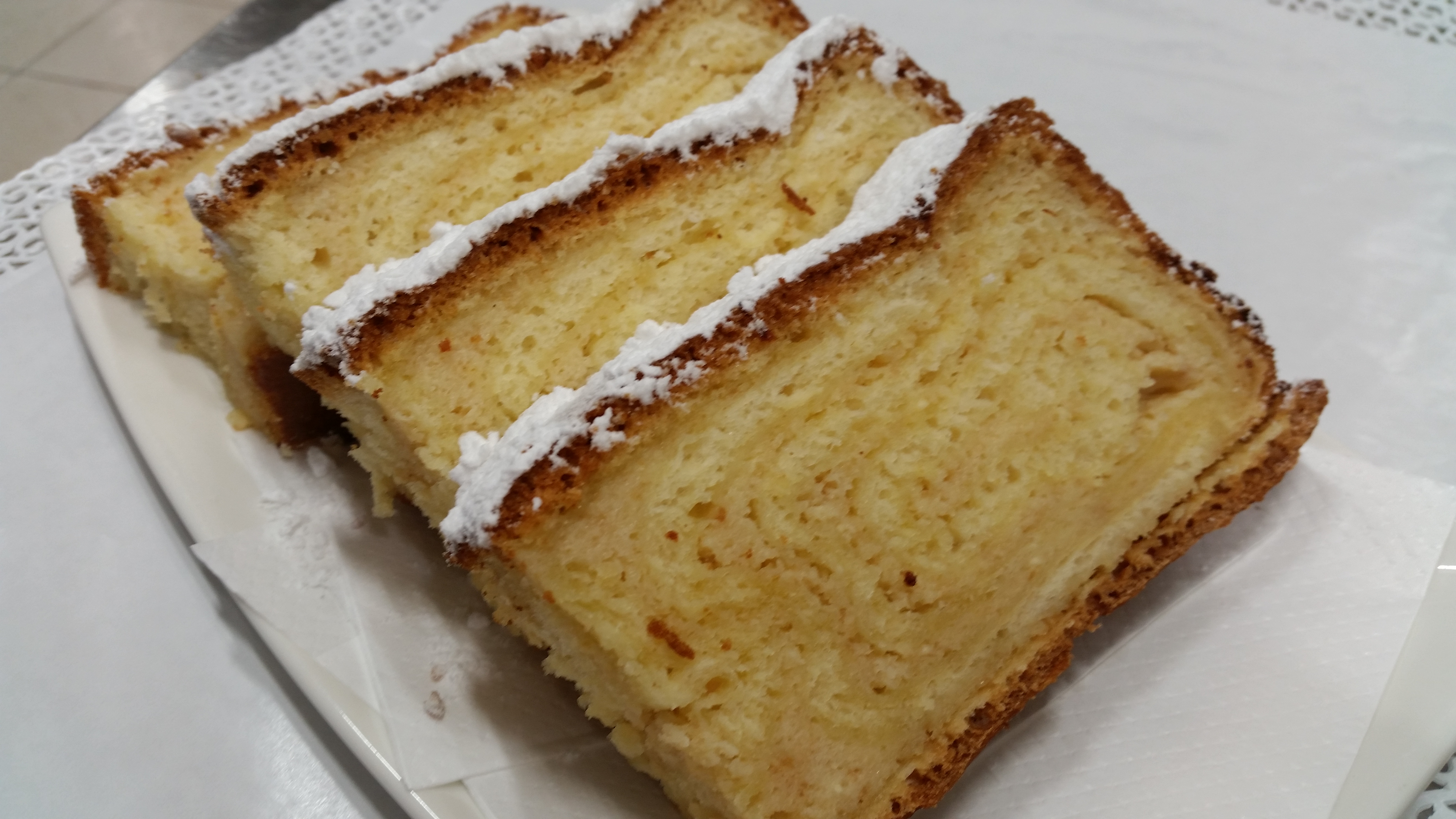
I also happened upon one more variety of potica, cream potica, made at Trojane – home of the original Trojane doughnut! One perhaps wouldn’t associate Trojane with potica, but they have their own in-house bakery and patisserie and also pride themselves on their homemade local food. Whilst traditional walnut potica is available all year-round at Trojane, cream potica is only available at Easter and Christmas. The filling comprises a mixture including breadcrumbs, curd cheese and cream.

Trojane smetanova potica

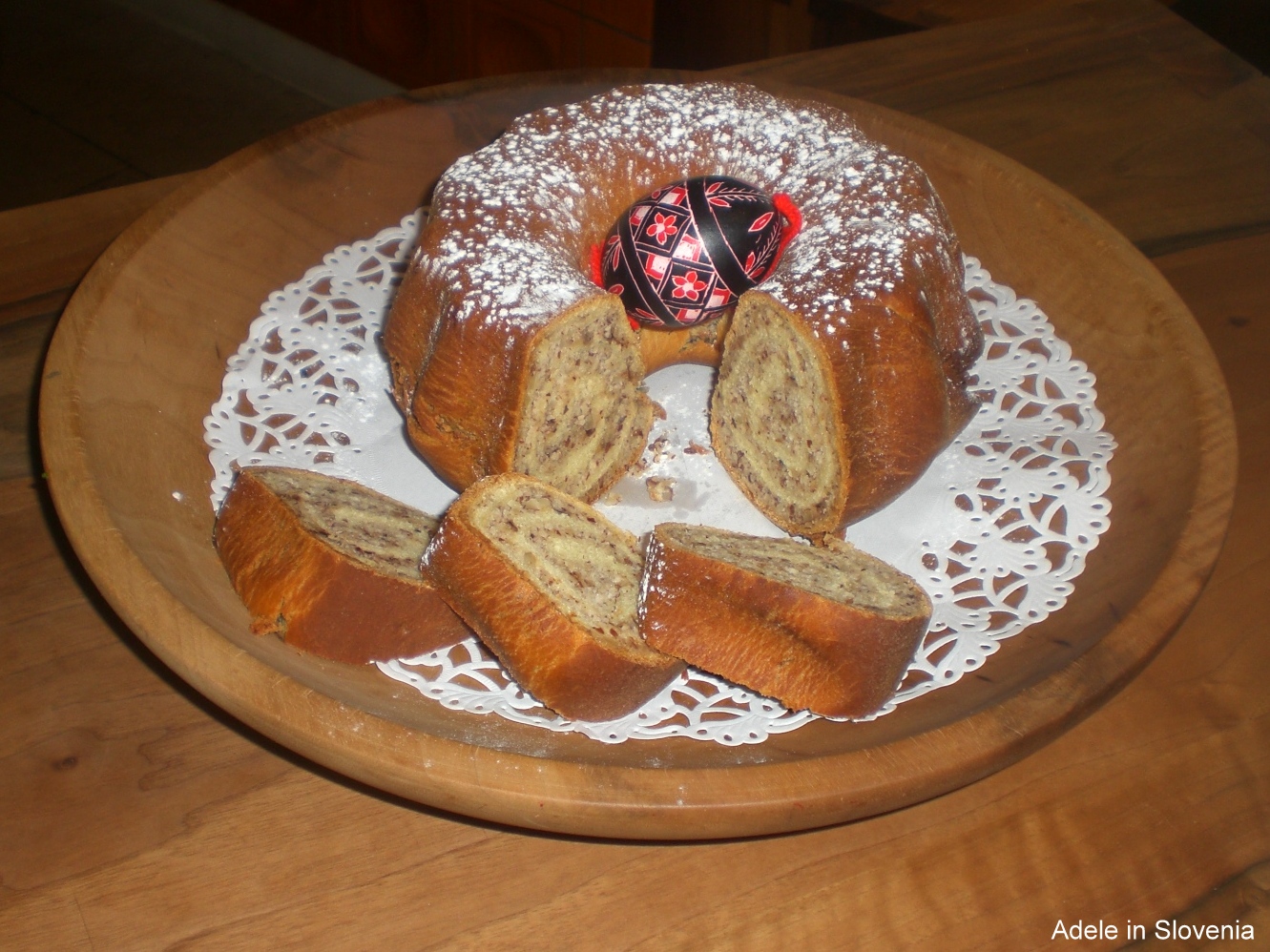
Perhaps potica purists will baulk at some of the flavours shown above, preaching that they don’t consistute ‘real’ potica, but, as I see it, as long as the original shape and methods are retained, then there are no limits to the possibilities – all it takes is a little imagination, as I discovered on my potica journey.

Easter in Slovenia is celebrated in a number of ways. It begins on Palm Sunday when people can be seen flocking to churches around the country carrying bundles of branches and leaves, called ‘butare‘ which are then blessed as part of a custom thought to date back as far as the 9th century.

butare

On Easter Saturday people take baskets of food, covered with embroidered cloths, to church to be blessed. However, this food cannot be eaten until Easter Sunday. Then, after a period of abstinence (by some), with a fast beginning on Ash Wednesday, food becomes a big deal as tables in homes around the country can be found bursting under the weight of, of course, potica, as well as baked ham, horseradish, eggs and other delicacies!

However and wherever you choose to celebrate Easter, may it be filled with colour, joy, and, of course, potica! I reckon I might manage another slice, or two!

© AdeleinSlovenia 2016
 

A gift from me to you: Discounts and special offers galore!

To celebrate the momentous (for me at least!) occasion of my blog achieving its 100,000 view, I decided I would like to prepare something special for readers, as a way of a thank you, and also to involve the local community.

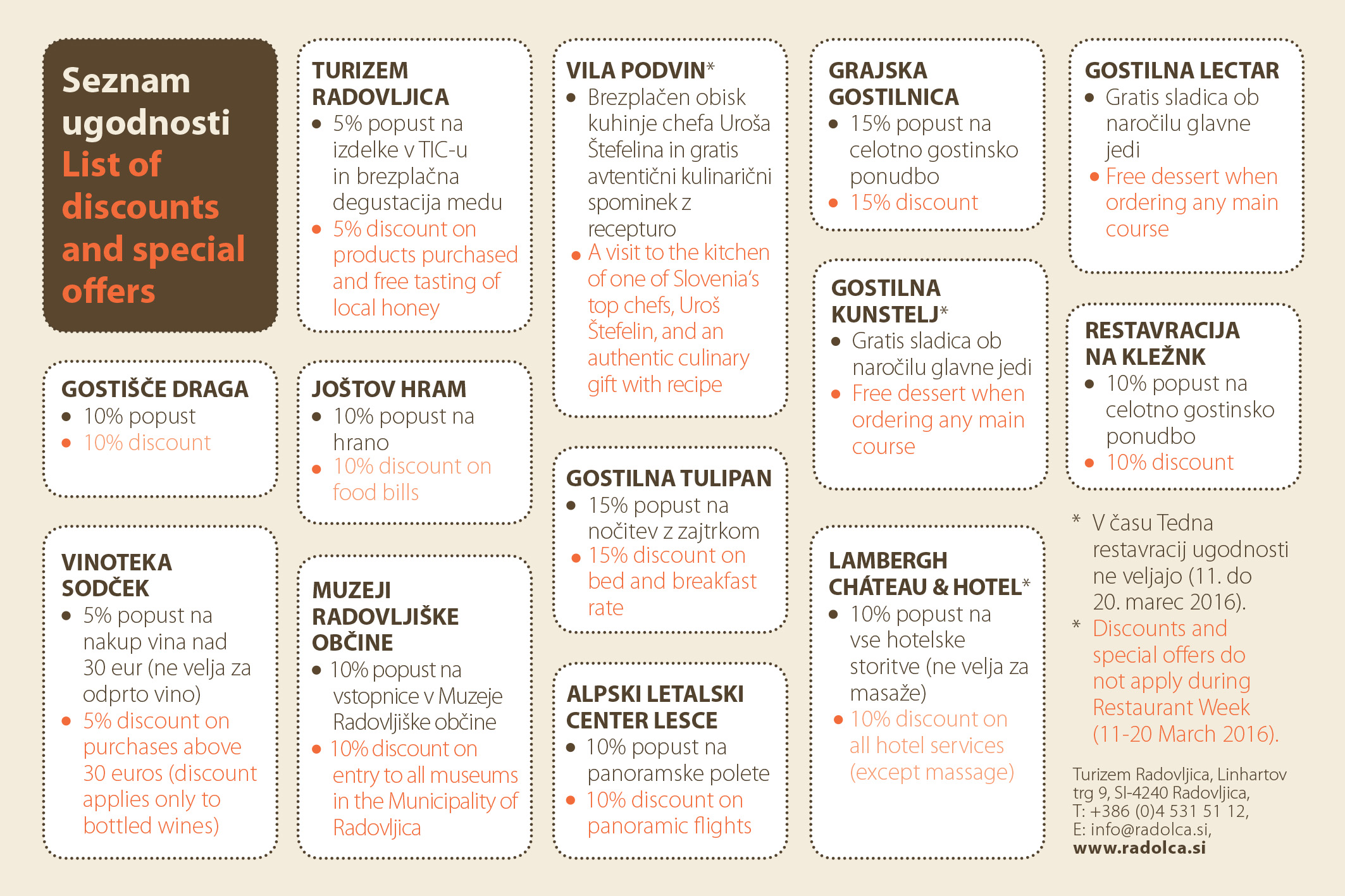
Therefore, I came up with an idea and am now immensely proud and excited to introduce and offer you the ‘Adele in Slovenia Discount Card’. The card offers a range of benefits that EVERYONE can take advantage of, regardless of whether you live in Slovenia, or are visiting as a tourist, and even better it’s FREE! As it is a celebration of achieving 100,000 views the special offers will last 100 days – commencing 1st March, ending on 8th June.

kartica ugodnosti adele-1

I pitched the idea to the director of Tourism Radovljica, who liked the idea and agreed to help with printing the cards, and I then set about contacting each of the Taste Radol’ca restaurants, and a few other local companies, all of whom were enthusiastic and generously offered a variety of discounts, special offers, freebies and more.

Here’s the deal. Simply pop into the Radovljica Tourist Office (opening hours – daily 9am – 4pm), where you can take advantage of the first special offer, and pick up your card. There are no strings attached, anyone can get a card, and it can be used unlimited times during the 100 day period.

  • RADOVLJICA TOURIST OFFICE – 5% discount on all purchases + free tasting of honey
  • GRAJSKA GOSTILNA, Radovljica – 15% discount on food bills
  • VILA PODVIN*, Mosnje – A free visit to the kitchen of Uroš Štefelin, one of Slovenia’s top chefs, and a free culinary gift
  • KUNSTELJ INN*, Radovljica – Free dessert when ordering a main course
  • TULIPAN INN, Lesce – 15% discount on bed and breakfast rate
  • LECTAR INN, Radovljica – Free dessert when ordering a main course
  • LAMBERGH CHATEAU AND HOTEL*, Dvorska vas – 10% discount on all hotel services (excluding massage)
  • DRAGA INN, Begunje na Gorenjskem – 10% on food bills
  • NA KLEŽNK, Lesce – 10% on food bills
  • LESCE ALPINE FLYING CENTRE – 10% discount on panoramic and glider flights
  • JOŠTOV HRAM, Podnart – 10% discount on food bills
  • SODČEK WINE BAR, Radovljica – 5% discount on purchases above 30 euros (bottled wine only)

kartica ugodnosti adele-2

So, don’t delay, go and pick up your card today (well tomorrow, from 1st March they are available)!

Here’s to the next 100,000 views….. I hope you will remain with me for the journey – there’s still plenty more to come!

© AdeleinSlovenia 2016