Hiking the Alpe Adria Trail – Stage 23: Kranjska Gora to Trenta, Slovenia

The Alpe Adria Trail, which begins on Kaiser Franz Josefs Hohe in Austria and ends on the coast at Muggia in Italy, has 43 stages and a total length of 750kms. The trail is a collaboration between three countries – Austria, Slovenia, Italy and offers lovers of the great outdoors myriad possibilities for enjoying the stunning and ever-changing scenery along the way from the highest glaciers to sea-level.

It’s easy to pick and choose where to start and how far to walk, however, since the route is linear, be sure to have a plan how to get back if you need to do so! In terms of the trail in Slovenia, stage 22 runs from Austria into Slovenia, stages 23, 24 and 25 are entirely within Slovenia, and stage 27 begins in Slovenia ending in Italy.

Stage 23 of the trail officially starts in the centre of Kranjska Gora (810m), though I started my early morning hike from the stunning Lake Jasna, which sits at the foot of the Vršič Pass. It was very tempting to linger a while, however, I had a long hike ahead so headed onwards, and upwards.

CIMG9126

The mythical golden-horned mountain goat ‘zlatorog‘ is a landmark and obligatory photo spot!

CIMG9128

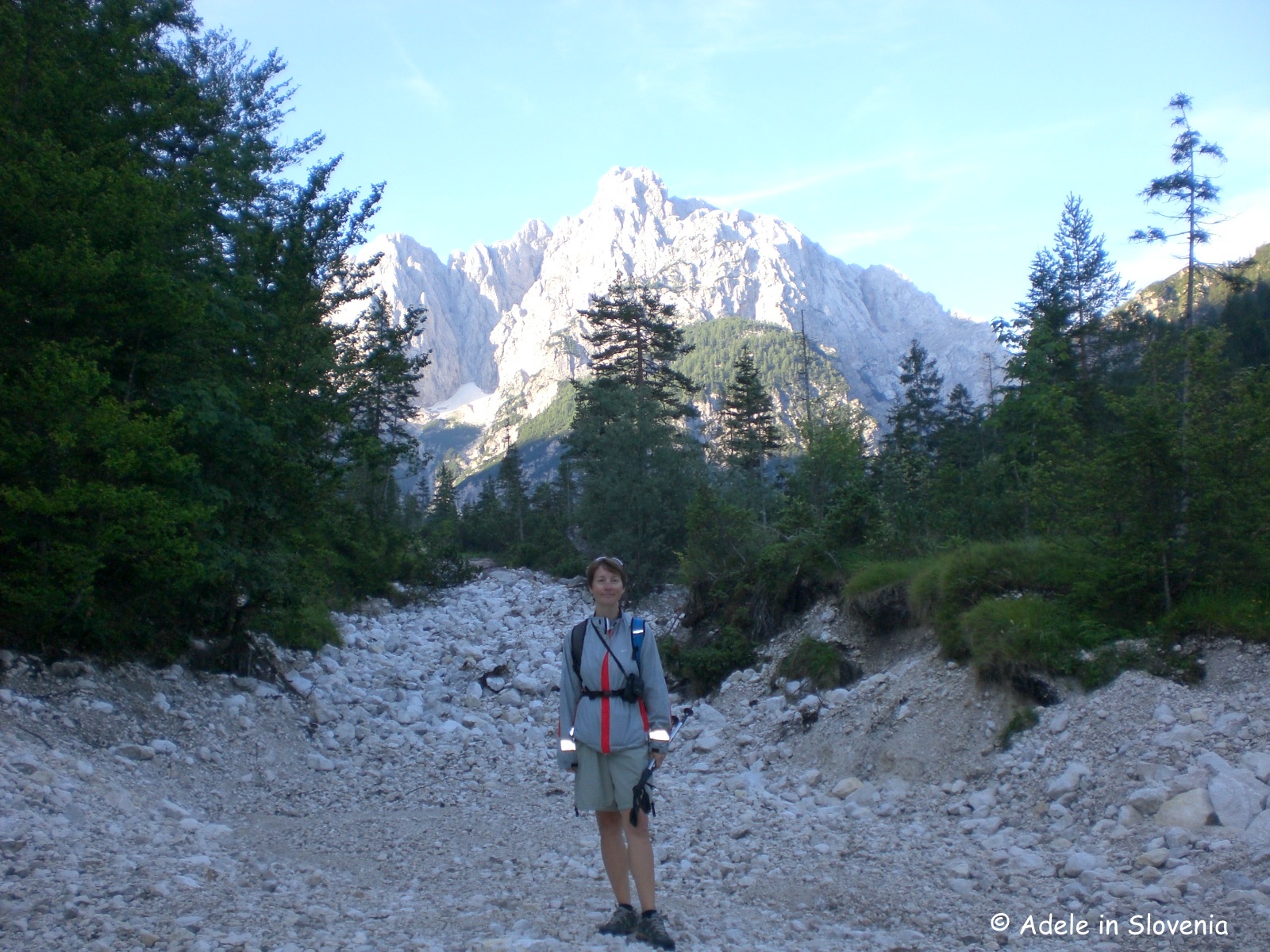
From the far-end of the lake the route then leads along the Krnica valley, beside the Pišnica river and makes a fairly level easy start to the day. Note: If you’re looking to escape the summer heat, this valley is the place to be. Whatever the time of year in the early morning it’s freeeeeezing!!! In winter, Krnica is a particularly popular place for sledging.
CIMG1917

The route then turns right, passes the Mali Tamar Memorial to those who have lost their lives in the mountains, crosses a bridge over the stream, and then the ascent to Vršič begins. It is well-marked throughout with Alpe Adria signs as well as the usual Slovene way-markers (a red circle with a white inner).

The Vršič Pass is the highest mountain pass in Slovenia. It was built in the early 19th century, originally for military purposes, and has a total of 50 hairpin bends. You can, of course, drive up instead of hiking, or even cycle – as many do, though note that the pass is usually closed throughout winter when there is heavy snowfall due to the danger of avalanches.

The trail goes largely through the forest, though in places it emerges – or if ‘it’ doesn’t then ‘you’ can – from the forest at sights of interest and to take in the views. The first such sight is the Russian Chapel, which was built in memory of the suffering of the thousands of Russian prisoners during construction of the road. Hundreds of prisoners and their guards – Russian and Austrian – lost their lives due to an enormous avalanche in winter 1916 – the exact number who died was never known.
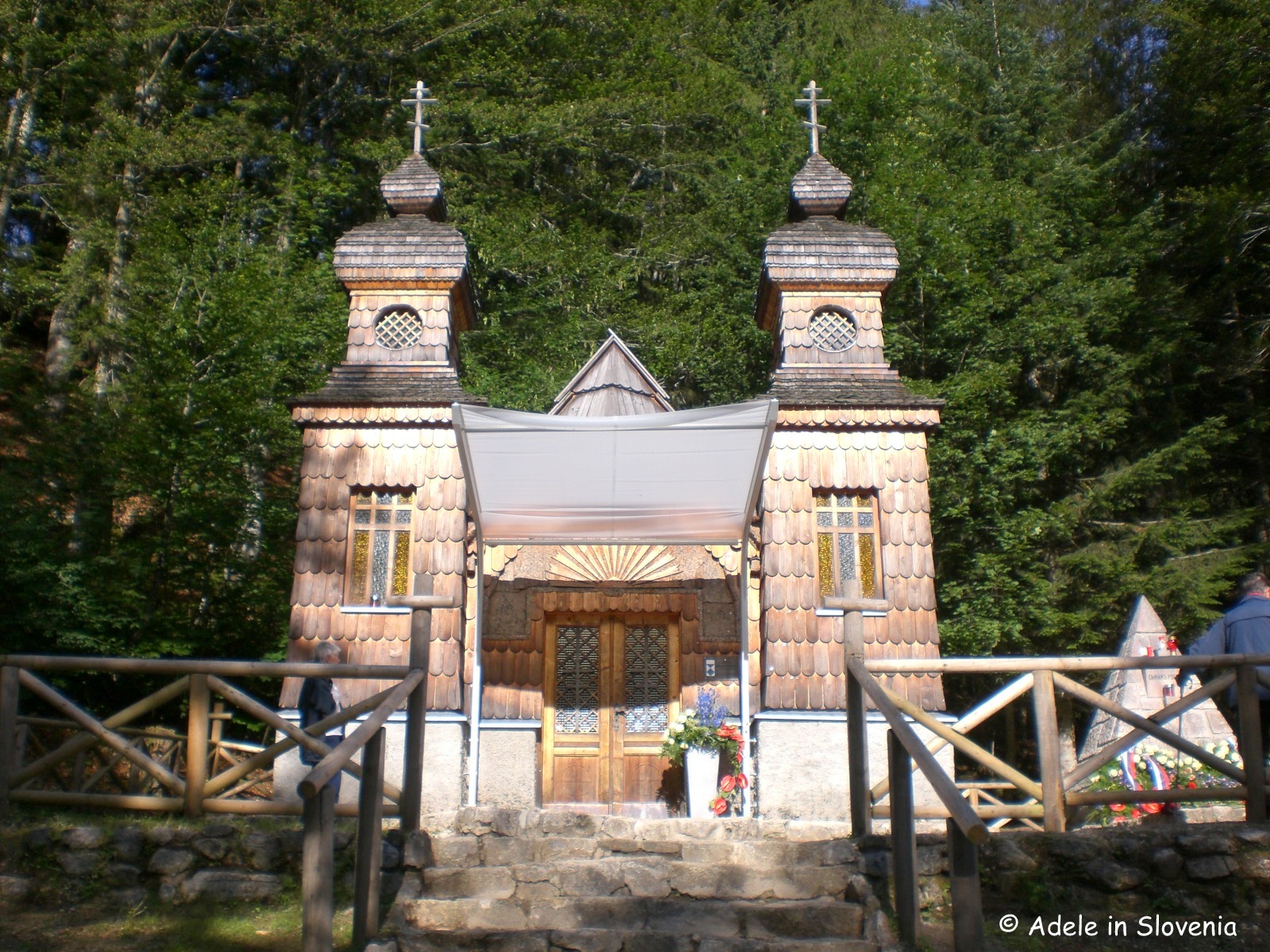
CIMG1929

The route continues to the right of the chapel, again through the forest. I recommend a stop at bend 17 to see the somewhat eerie looking stones that have begun to ‘appear’ in recent years. I guess someone started the trend and others followed!

CIMG1932

The view from here isn’t half bad either!

CIMG1934

It’s now not far to reach the top, less than half-an-hour and I was already at 1611m at the top of the Vršič Pass.

CIMG1941

From the top it was easy to see where I was heading, down towards the Soča Valley and I could hardly wait to glimpse the always-stunning emerald-green Soča river.

CIMG1948

When leaving the top, look for this sign and walk down the road for approximately 500 metres.

CIMG1949

As tempting as it is to admire the views, be sure to keep your eyes to the ground here, as here the way-marker for the trail is only on the ground and could easily be missed.

CIMG1950

From here the trail re-enters the forest and leads on a pleasant gently-descending path, eventually emerging between stones walls into the parking area at the source of the Soča river, where there is a small hut offering refreshments. In places the trail is marked by the letters AAT – as shown below.

CIMG1966

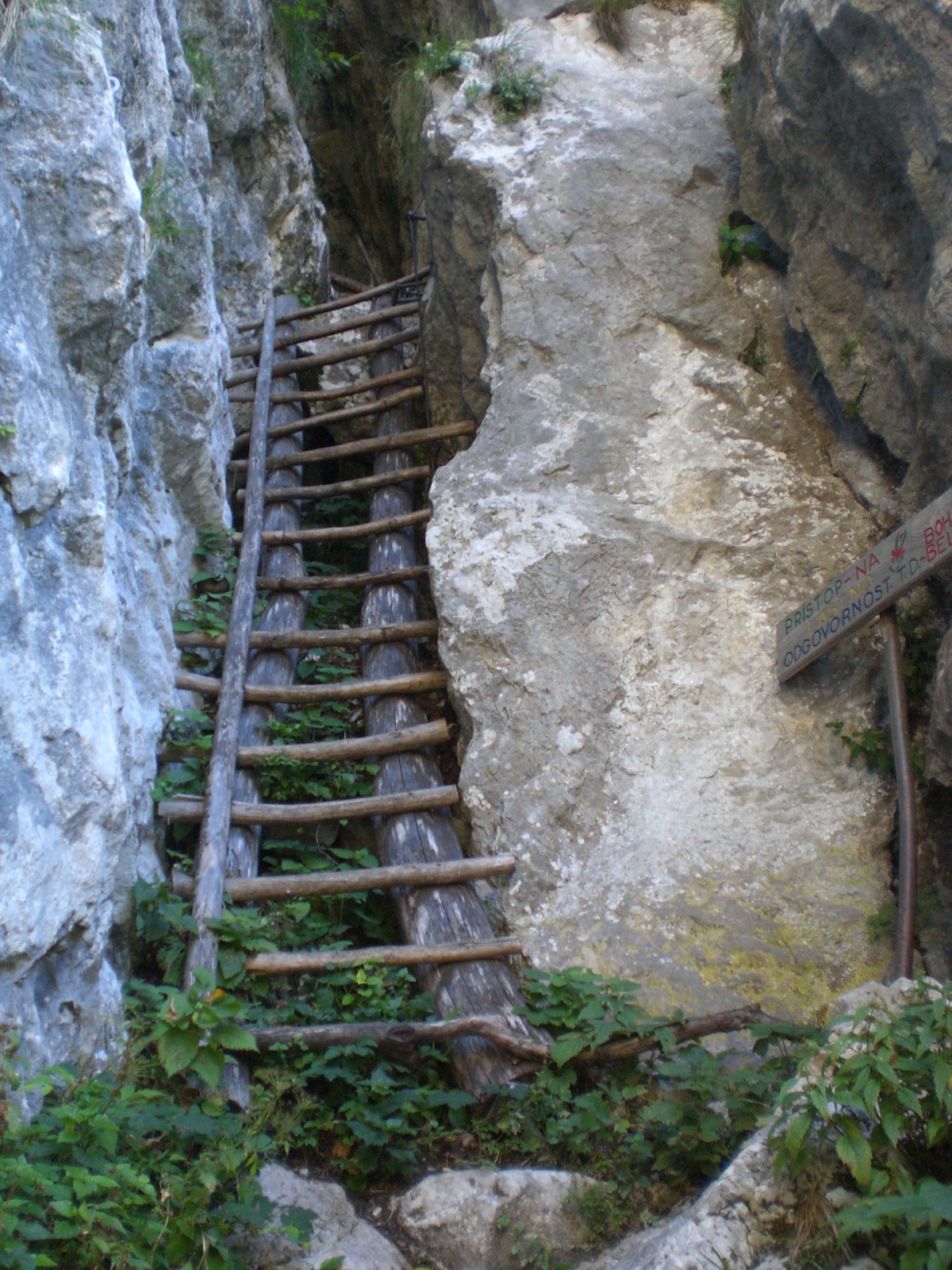
If you choose to take a detour to see the source of the Soča river, it takes about 10-15 minutes to reach the first viewpoint – a relatively easy path, thereafter its a bit of a climb, assisted by iron pegs and rope, so not for the faint-hearted! Knowing I still had a way to go, I just went to the first viewpoint (well, that’s my excuse anyway!).
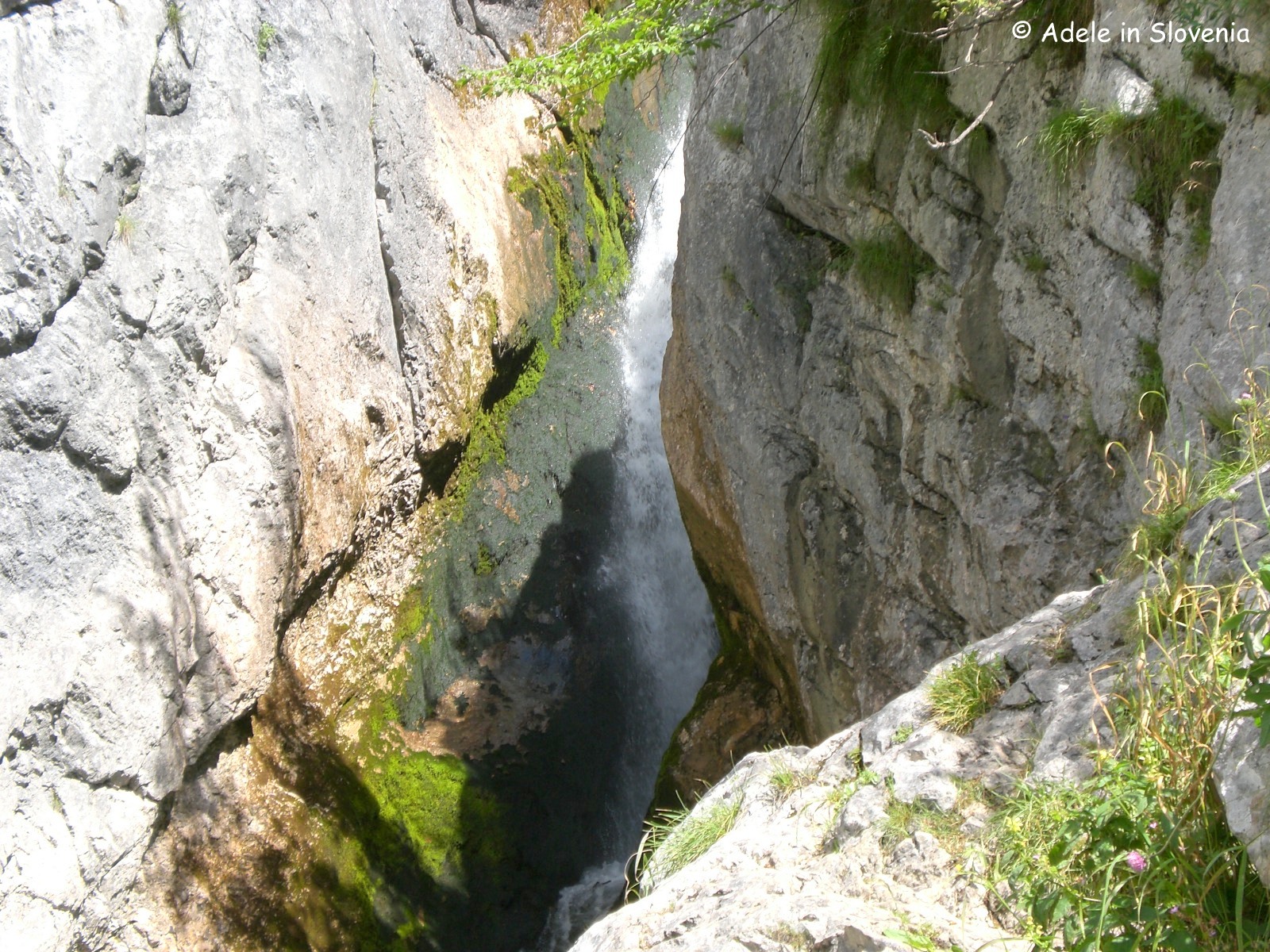
CIMG1961

From here it is downhill all the way. The Soča River Trail leads on traffic-free paths to Trenta, home to a Triglav National Park Information Centre, and where there is a mini-market, restaurant and a sprinkling of accommodation options.

CIMG1969


The total distance of this stage of the trail is 17.8km, of which the ascent is 962m and 1146m descent. It can easily be shortened as required – at least during the summer months when buses operate over the Vršič pass from Kranjska Gora to the Soča Valley. Out of peak season, however, you would need to ensure you have suitable onward, or return, transport.

In total the hike took less than 5 hours, including photo stops. If you take time to linger and savour the views, perhaps enjoy a meal at one of the several mountain huts en-route to, or at the top of, the Vršič pass, then it makes a very enjoyable full day trip. Highly recommended!

More information about the trail can be found here – http://alpe-adria-trail.com/en/ and more information about autumn hiking in Slovenia here – http://www.slovenia.info/en/Autumn-hiking-in-Slovenia.htm?aktivna_pohodniska_jesen_slovenija=0&lng=2

© Adele in Slovenia
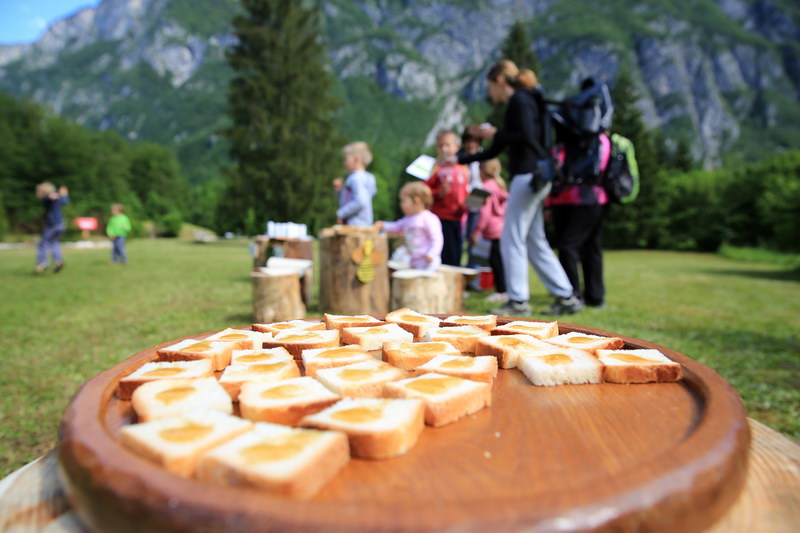
 

The Bohinj Wild Flower Festival – A Jubilee Year

The annual Bohinj International Wild Flower Festival will take place from 21st May to 5th June and this year, the 10th successive year, marks a jubilee. The first festival was held in 2007 and since then it has been growing (pun intended!) in popularity, and gaining ever more recognition, by the year.

The main theme of the festival is the presentation of alpine flowers in the waters, meadows, hills and mountains of the areas surrounding Bohinj Lake, part of Triglav National Park.

During the festival a variety of events take place including guided walks and hikes, workshops, local craft and farmers markets, exhibitions, excursions, concerts and culinary evenings.

There are also activities for the whole family including a ‘Weekend for Families and Children’ which includes flower-related events as well as participation in water sports and other outdoor activities.

Childrens Wknd Bohinj flower festival

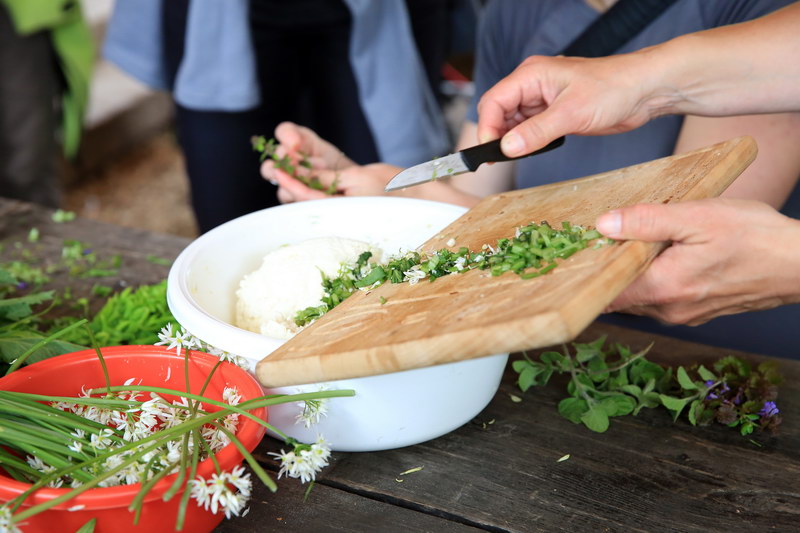
You can get really hands-on at many of the workshops, first picking the flowers, then preparing them for various uses.

flower festival workshop

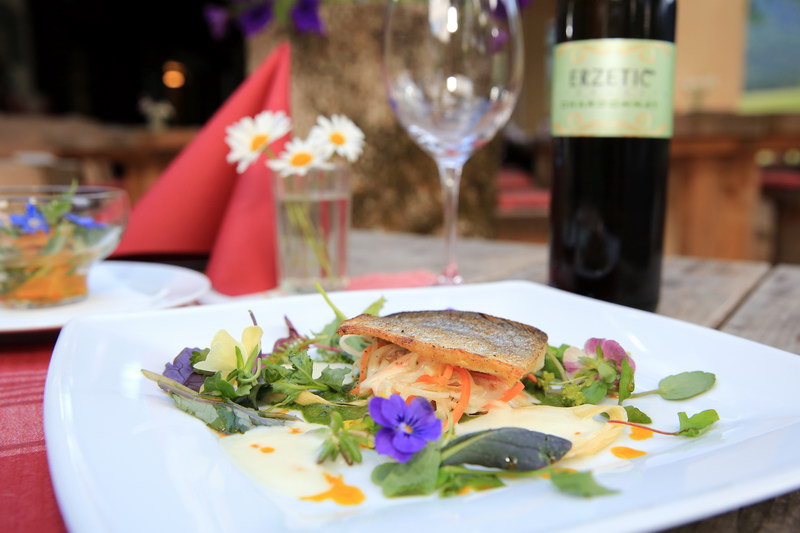
Culinary evenings take place at selected local restaurants, such as at the restaurant at Camp Danica in Bohinjska Bistrica, seen below, where you can enjoy local delicacies, such as trout, paired with edible wild flowers.

culinary evening danica

There are around 70 known types of flower which are endemic to Slovenia, and/or the immediate surroundings. A walk among them is a botanist’s dream. Theses species include:

Zois’ bellflower – endemic to Slovenia, Austria and Northern Italy and most prevalent in the Julian and Kamnik-Savinja Alps (shown below)

zoisova_zvoncnica_1s

Triglav Hawksbeard – discovered by one of the first four men to climb Triglav in 1778. It was found near where the Planika mountain hut now stands. It is very rare and is on the list of threatened species. So rare, I haven’t yet found it to photograph myself!

European False Stitchwort – first discovered near Ljubljana Castle in 1762 by the Carinthian botanist Jesuit Franc Ksaver Wolfen. It belongs to the Pink family, to which carnations also belong.

Trenta Scabious – discovered over 200 years ago in Idrija by a physician. The original finding is preserved in Slovenia’s Natural History Museum.

trenta-scabious-scabiosa-trenta-355e5ab376

Depending on the weather – late snowfall can sometimes mean the season begins later – you can expect to find wildflowers in the meadows and highlands from the end of May through to late summer.

If you are interested in wild flowers, and/or considering a visit, here’s a sneak peek of what you can expect to see, those that I have been lucky enough to encounter on my hikes within Triglav National Park.

  • Here I am on a hike in the highlands above Bohinj Lake; from Planina Krstenica towards Ogradi.

Bohinjske planine 27. Julij 2011 007

  • Surrounded by wonderful wild flowers during a summer walk to the Seven Triglav Lakes valley. One can almost feel as if in a botanical garden, whilst completely at one with nature.

Sedmera jezera Julij 2010 009

Here are a few of my close-up snaps.

  • Alpine carnation (Alpski nagelj) – also known as Alpine Pink

OLYMPUS DIGITAL CAMERA

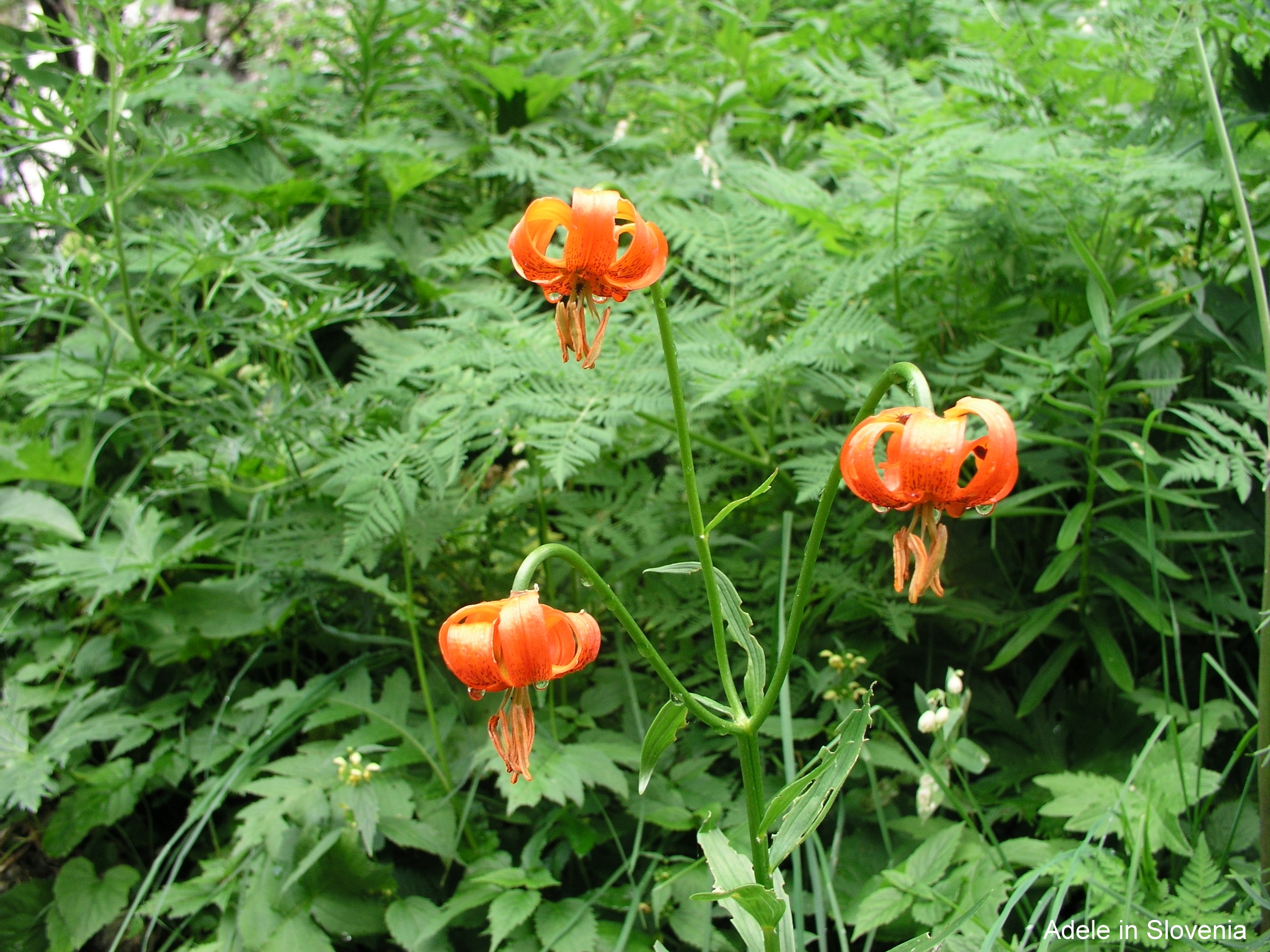
  • Carniolan lily (Kranjska lilija) – Not entirely endemic to Slovenia, since it can also be found in areas from north-east Italy to Bosnia, however, it is most common in Slovenia.

OLYMPUS DIGITAL CAMERA

  • Yellow Gentian (Košutnik) – native to the mountains of central and southern Europe

OLYMPUS DIGITAL CAMERA

  • Edelweiss (Planika) – this one probably doesn’t need any explanation as it’s widely known, but I had to include it as it’s such a special one, and also because we have a mountain hut named after it, which sits just beneath our highest mountain, Triglav.

Komna 14 Julij 2012 004

You can read more about the festival and find the whole of this year’s programme here – http://www.bohinj.si/alpskocvetje/eng/index.php

© AdeleinSlovenia 2016


Highlights of Triglav National Park!

In this blog I’d like to show you some of the highlights of Triglav National Park, including some of my personal favourite parts, which will hopefully provide some ideas and inspiration for those interested in exploring this wonderful part of Slovenia.

Triglav National Park is Slovenia’s only national park and is the heart of the Julian Alps. The park is located in the north-western part of Slovenia and is named after the country’s highest mountain, Mt. Triglav (2,864m). It covers an area of over 83,000 hectares.

On my blog I have always strived to ensure I give readers a personal account of my adventures and experiences in Slovenia, rather than just regurgitating information which is already readily available. Therefore, I’m not ashamed to admit that I’ve never actually been to the top of Triglav, though I’ve been close!

CIMG7569

Unlike in some national parks, there are no official entry and exit points to the park, and no entrance fees to be paid. However, there are some rules by which visitors must abide to protect the flora and fauna of this jewel of nature. For example, wild flowers are not to be picked, no fires may be lit, and camping anywhere within the park, other than in designated campsites, is strictly forbidden.

One among my many favourite parts of Triglav National Park is Krn Lake (1391m) – as seen below, with Mt. Krn (2244m) in the background.

For this trip I started from the car park at the Savica waterfall in Bohinj and walked up to Komna (1520m), onwards past the Koča pod Bogatinom hut to the Vratca saddle then descended to the Dom pri Krnskih jezerih hut (1385m) where I stayed overnight. The next morning I got up (very!) early to hike up Mt. Krn, then returned the same way back to Savica. It makes a long 2nd day but the scenery is so wonderful, and other than the climb up to Krn, its reasonably easy going. If you don’t need to return back to Savica, then you can instead take the path down to the Dom dr. Klemena Juga hut (700m) in the Lepena valley from where you can explore the beautiful Soča valley.

krnsko-jezero-julij-2010-006

The picture-postcard pretty Planina pri Jezeru highland is another of my favourites and the options for reaching it are numerous. I like to start from Stara Fužina and walk first to Vogar, from where there are magnificent views over Bohinj lake and the surrounding mountains, then past the Kosijev dom na Vogarju hut (1054m).

CIMG9013

On this hike I continued first towards the Planina pri Jezeru hut (1453m) but then branched off towards Planina Blato (1147m) then to Planina Laz (1560m) – the oldest highland in Slovenia. From Planina Laz a very pleasant almost level route leads to Planina pri Jezeru from where, after a break for some sustenance, I returned to the Vogar highland and back to Stara Fužina. There are, however, also several other alternative routes that I have also taken, such as via Planina Viševnik and onwards to Pršivec (1761m).

laz

Planina Laz is on part of the Tourist Cheese Route (Turistična sirarna pot). The route leads across the many highlands in the Bohinj area where cheese and other dairy products can be sampled and bought. The route, which is marked with yellow signs, also leads past numerous natural features of interest such as gorges, waterfalls, museums, churches, and archeological sites. The path covers a very wide area so its not possible to walk it in its entirety (at least not in a day), so it’s best to just choose part of it and visit one or two of the highlands and dairies.

krnsko-jezero-julij-2010-012

One of the most popular destinations for hiking in Triglav National Park is the Seven Triglav Lakes Valley. It is doable in a day trip, particularly if you drive up the toll road, saving yourself approx. 1.5 hours of hiking, to begin at Planina Blato. However, to have time to fully experience and appreciate the entire length of the valley, it is best to stay at least one night in a mountain hut, such as the Koča pri Triglavskih jezerih (1685m), where you also get a chance to soak up the atmosphere of the surroundings, enjoy some hearty homemade food, and chat to some fellow hikers.

Sedmera jezera Julij 2010 026-001

As you can see, there’s no shortage of routes to choose!

CIMG6468 (2013_07_22 14_09_31 UTC)

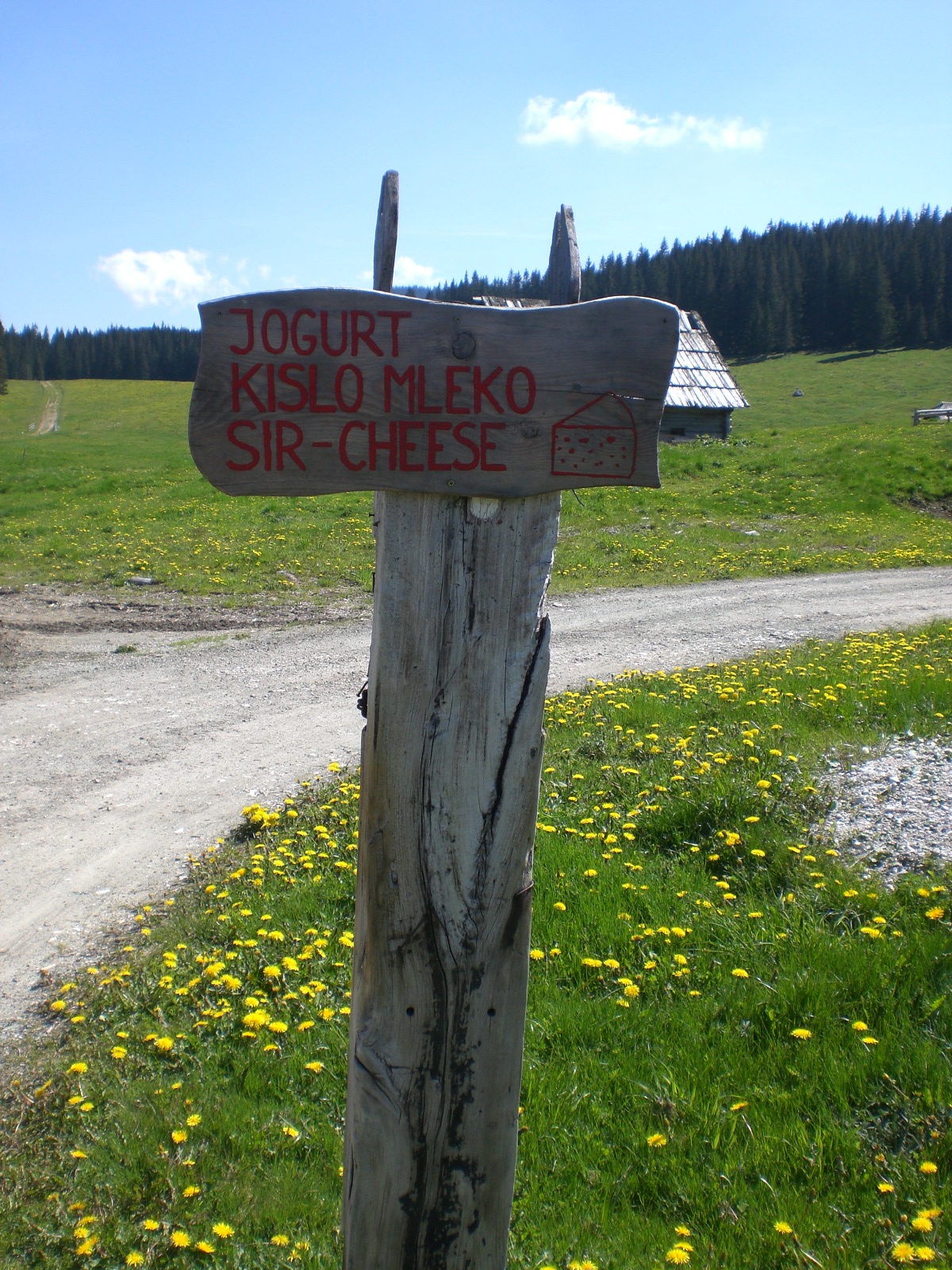
Wherever you see signs such as this one, you can buy home-produced cheese, sour milk, and other highland treats!

CIMG6469 (2013_07_22 14_09_31 UTC)

And you can certainly see exactly where it comes from. There are no food miles here!

Bohinjske planine 27. Julij 2011 026

Provided you have a map of the Julian Alps it is very easy to put together an itinerary for day, or multi-day, hikes. Routes are generally well-marked and there are plenty of mountain huts where you can overnight, though in the summer months I’d recommend booking ahead for the most popular huts – you wouldn’t want to hike all that way to find yourself without a bed for the night!

Triglav National Park awaits – time to get exploring!

© AdeleinSlovenia 2016


The New Triglav National Park Centre and a Froggy Tale!

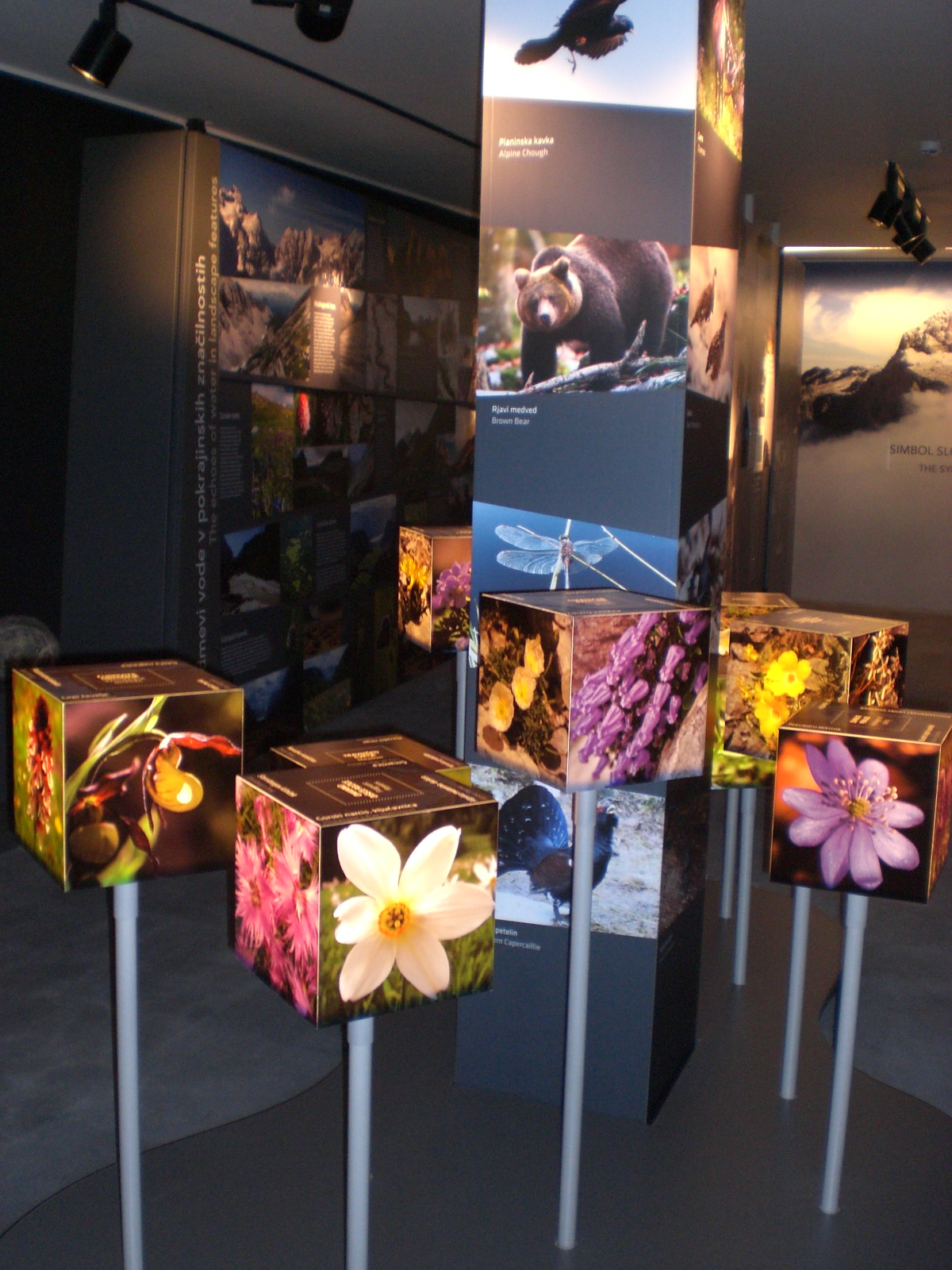
Triglav National Park is Slovenia’s only national park, covers an area of 880 square kilometres and has 3 information centres including the newly-built and recently opened centre in the village of Stara Fužina, near Bohinj lake, which I visited for the first time last week.

Downstairs the centre, which is open 10am-3pm on weekdays and 10am-5pm at weekends, has a permanent exhibition, information and exhibits about the park, and a small area selling local products.

CIMG9740

However, its the upstairs viewing room that makes this place so special. The saying ‘a room with a view’ is certainly apt for this, and no photo-shopping is required. They have managed to capture the views and the essence of Bohinj lake and the surrounding mountains perfectly with the full-depth windows, relaxing hanging chairs and selection of magazines.

CIMG9750

The only thing missing was a nice cup of tea with which to be able to sit and marvel at the views!

CIMG9756

Whilst in the area I paid a visit to another of my favourite haunts, Čokohram, in the tiny village of Česnjica, near Bohinj lake. I wrote extensively about this in a previous blog – http://bit.ly/1iq7MR4 – however, this time there was an added reason for my visit, apart from the obvious reason of gorging myself with chocolate and cake.

Inside the tiny building the walls have been hand-painted with several pictures of frogs and, on a previous visit, the owner, Alenka, had begun to tell me about the reason for this and her plans for the future. So, I wanted to find out more, as I’m always one for listening to an interesting local story.

CIMG9708

Though, in fact, I won’t give too much away yet as Alenka has plans to create a ‘frog-based’ theme path that will lead from Bohinj lake to Čokohram in Česnjica – and you can be sure I’ll be writing about that as soon as the plan is realised.

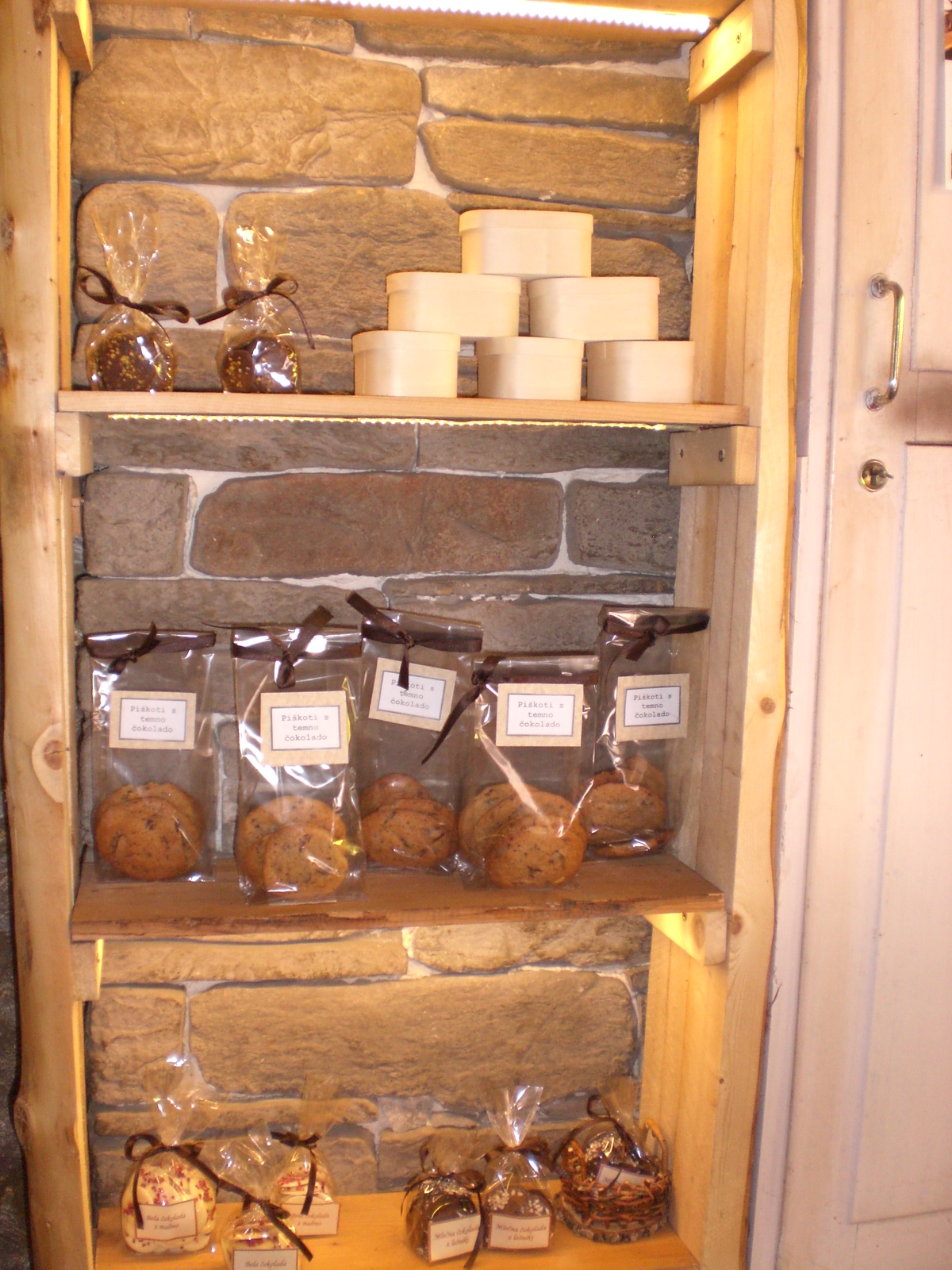
In the meantime I’ll share some photos I took of the delicious things on offer, as each time I visit there is something new. This time I noticed new chocolate liqueur, home-baked chocolate cookies, and cake pops. Nothing escapes me!

CIMG9706           CIMG9703

I also worked on persuading Alenka to be a part of next year’s Radovljica Chocolate Festival, which has become THE unmissable chocolate event in Slovenia and the date of next year’s festival has already been announced – 15-17th April 2016.
The Blacksmiths Festival + Hiking, Cycling and Mushrooms galore!

Summer is well and truly here – hooray! And with it come numerous fairs, festivals and other outdoors events, as well as myriad opportunities for hiking, cycling, swimming and enjoying the great outdoors.

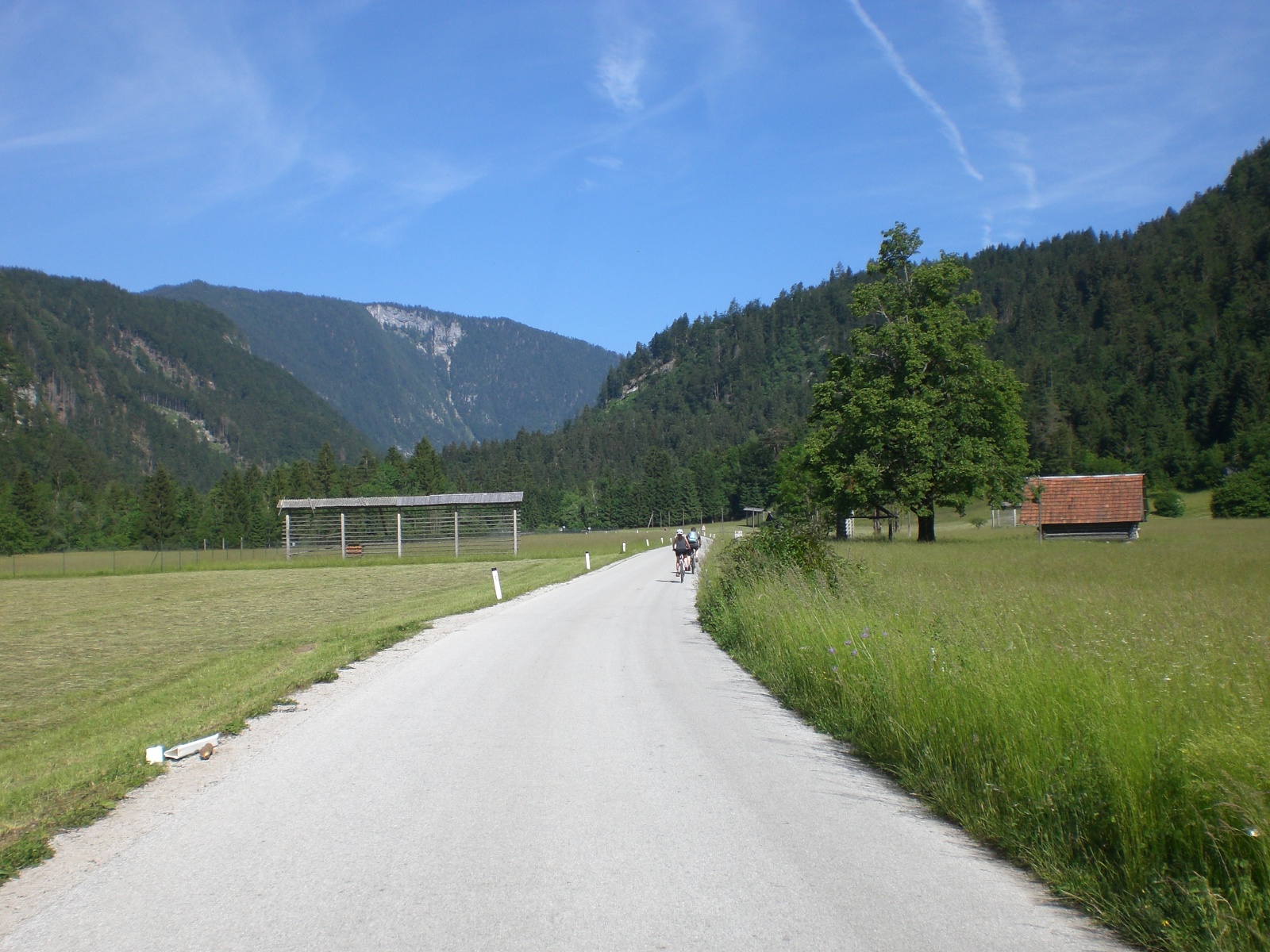
I had a pretty active weekend myself. On Saturday I went by bike from Radovljica to Bohinjska Bela, the other side of Bled, from where I then hiked up to Galetovec, beginning at the climbing area by the Iglica waterfall. You can read more about hiking to Galetovec in this previous post – http://bit.ly/1HHmigK

CIMG6650

On Sunday I went by bike through the Radovna valley, which is always the place I head to bike when the heat is on as the cycle path leads mostly alongside the Radovna river and in the cool of the forest beneath the Mežakla and Pokljuka plateaus. I returned on the D2 cycle path from Mojstrana to Jesenice, and then by road back to Radovljica. You can read more about cycling in Radovna in this previous post –  http://bit.ly/1NL6B9f

CIMG7440

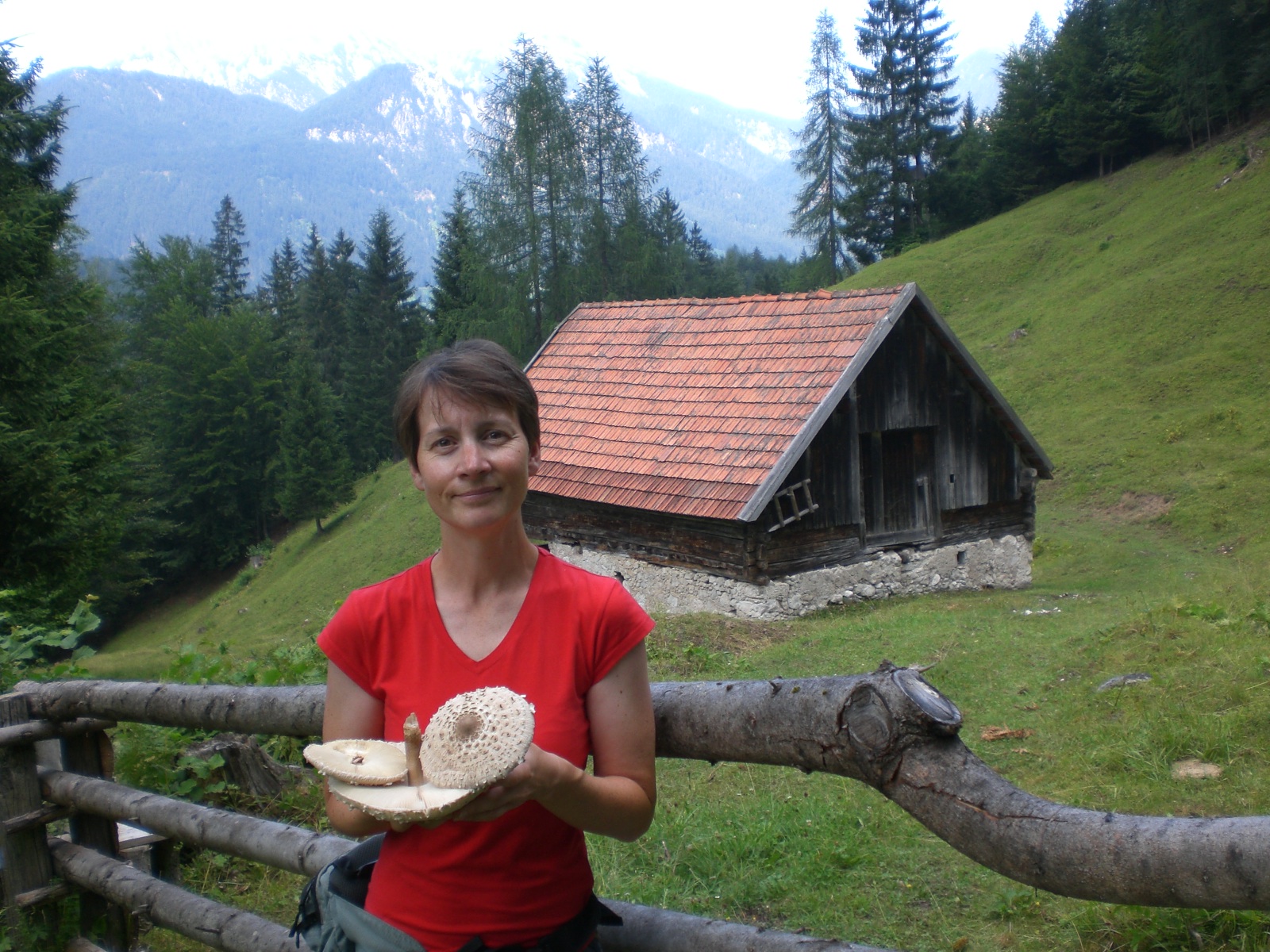
Other than that I was keeping cool in the shade of the forest, which isn’t hard to do when Slovenia is 60% covered by forest. I even got lucky and found my first mushrooms of the year which were delicious cooked up with chard from my vegetable plot!
CIMG8884

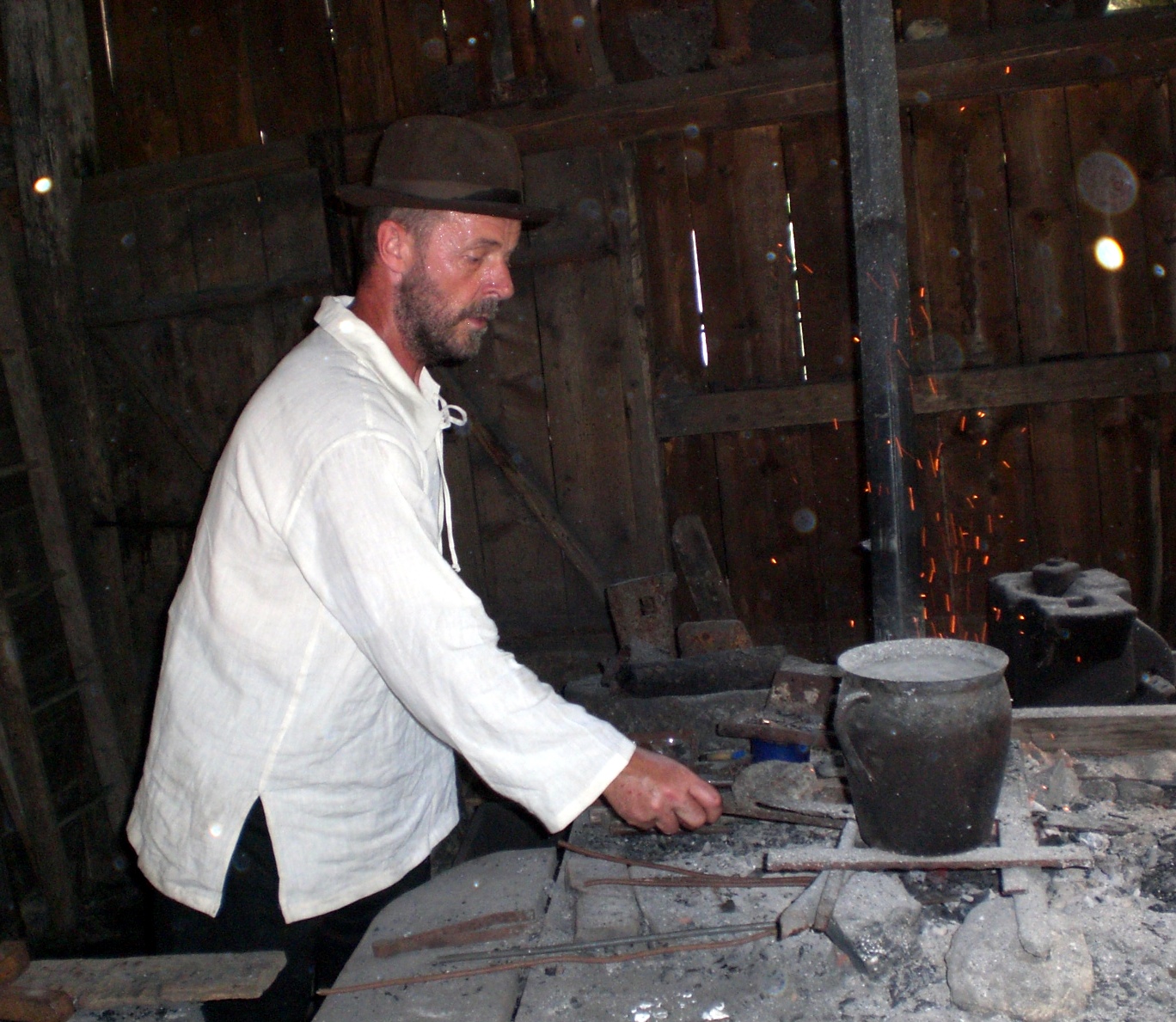
On Saturday it was also the annual Blacksmiths Festival (Kovaški smaren) in the village of Kropa, the cradle of Slovene iron-forging. The village, which sits snugly at the far eastern edge of the Jelovica plateau, is crammed with interesting sights and architecture and preserved technical heritage which is showcased during the annual festival. There were demonstrations of hand forging of nails in the Vigenjc Vice Blacksmiths Museum, a small handicraft market, old-time bikes, open days at the Blacksmiths Museum and the Fovšaritnica Museum House, as well as at the headquarters of UKO Kropa, which is keeping the iron-forging tradition alive in Kropa and specialise in all manner of wrought iron furnishings and fittings.

CIMG6416         CIMG6436

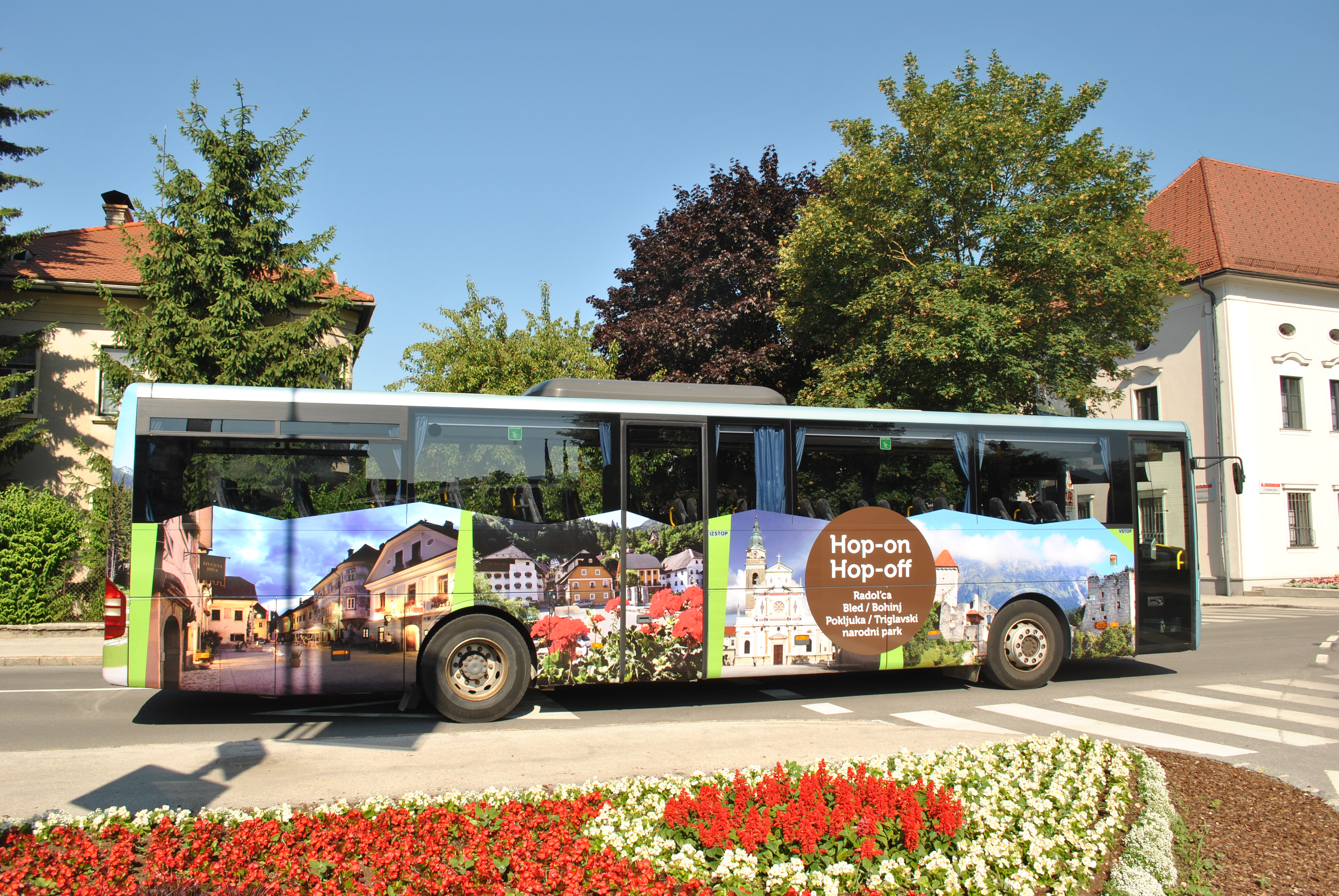
Kropa is one of the destinations that can be visited on the Hop-On Hop-Off tourist bus which is now operating. The bus visits Kropa on Tuesdays on the route which also includes Bled, Radovljica and Kamna Gorica. As the name implies, you can get on and off the bus at the various place along the route and either wander at your own leisure or participate in one of the guided tours. The bus also runs on Thursdays additionally to Begunje and Brezje, and at weekends to Triglav National Park. More information can be found here – http://www.radolca.si/en/hop-on-hop-off-radolca/

The nation was saddened by the news of the death last week of the legendary Slavko Avsenik, the founder of Slovene national folk music. The music of the Avsenik brothers is popular worldwide, particularly in neighbouring European countries, but also farther afield. The family home, and venue for the Avsenik Festival, regular concerts, gallery and museum, is at Pr’Jožovcu in Begunje na Gorenjskem. To date they have produced over 1000 songs, which are now being performed by younger generations of the family, so there is no doubt that his music will live on forever.

© AdeleinSlovenia 2015

gostilna Walking Pokljuka’s Highlands / Radovljica Ceramics Festival 2015

I’ve had a bit of a cold hanging around for the past few days, maybe the weather is to blame due to a week of temperatures in the mid-twenties followed by half a week of rain and temperatures barely reaching 10 degrees. This week, however, with the exception of a blip yesterday, it looks set to warm up again and hopefully I, and the weather, are now on the up!

I’m not good at being ill so, unless I’m really at death’s door, I still prefer to get outdoors in the fresh air rather than be cooped up indoors. Though, since I was feeling a bit lacklustre I needed a more gentle alternative and therefore a trip to the Pokljuka plateau was just the ticket. The vast plateau really does offer something for everyone. I usually go for longer hikes and baulk at the thought of driving part of the way, but this time I did let the car take some of the strain! There are endless places to walk of all lengths and difficulties, though, it is best to stick to marked paths and forest roads as one could very easily get lost in the great swathes of forest. Nevertheless, it doesn’t really matter where, how far, or how high, you go on Pokljuka, every path offers its own magic.

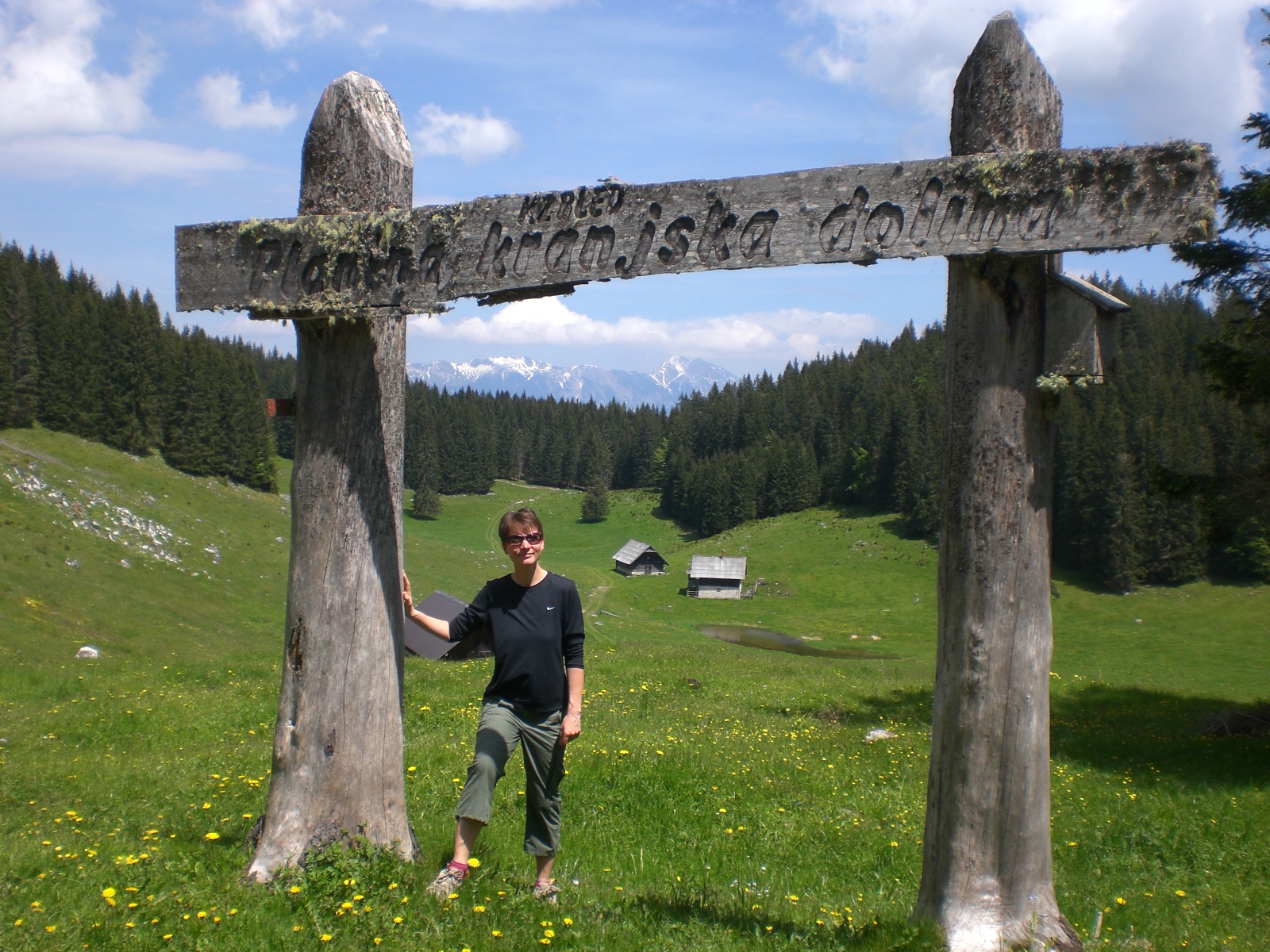
I began by driving past the Kranjska dolina highland, from where Stol, the highest peak in the Karavanke, can be seen in the background.

CIMG8731

Next I set off, on foot, towards Lipanca and the Blejska koća mountain hut. However, instead of continuing up to the hut, I took another path back down to rejoin the road, reaching one of my favourite highlands, Planina zajavornik. The whole of Pokljuka lies within Triglav National Park, which means there are certain rules to abide to protect nature and, as can be seen below, there are bears in the area, though the chances of meeting one are probably one in a million!

CIMG8733     CIMG8736

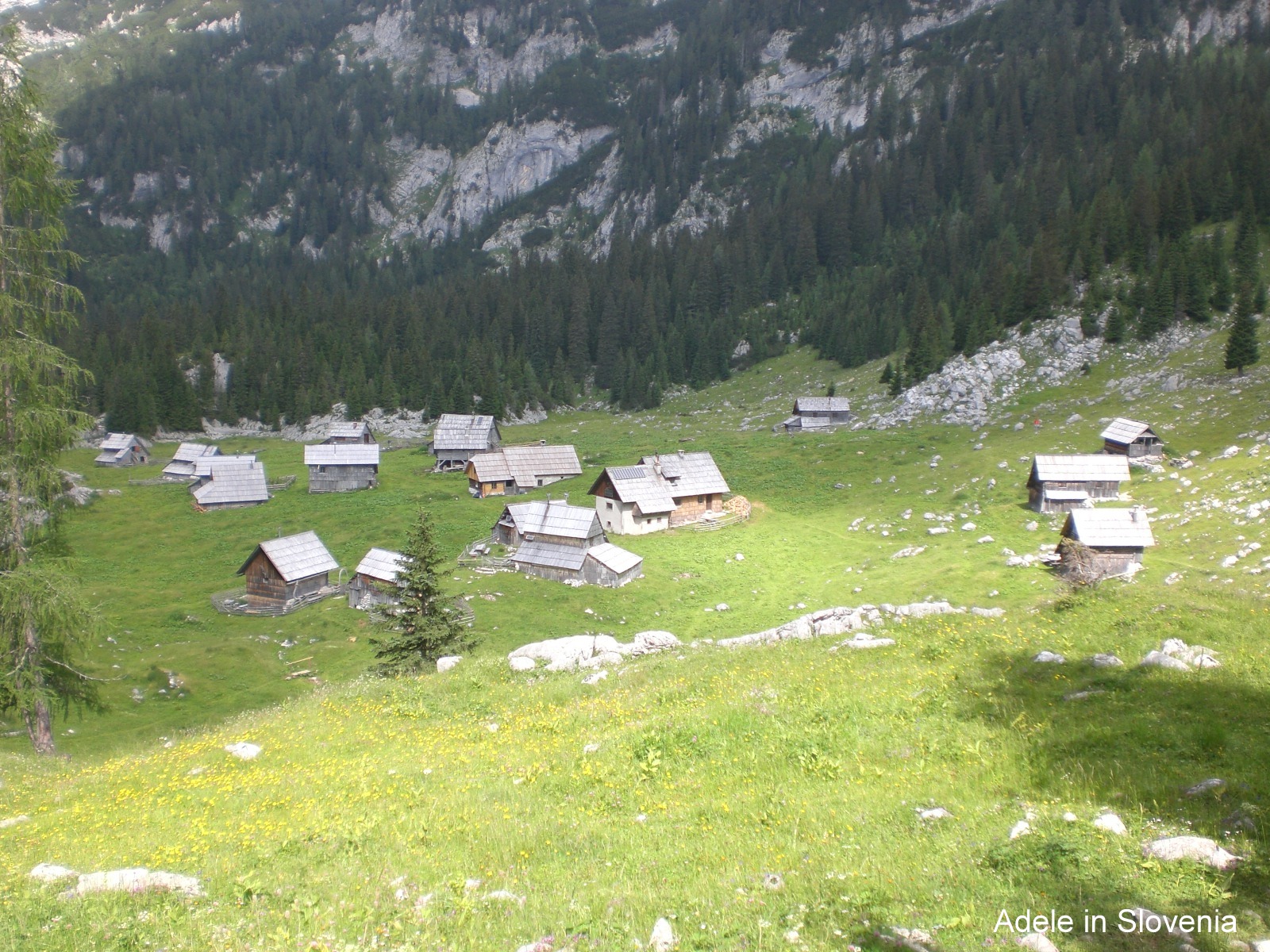
I then enjoyed a rest in the sun among the wildflowers. The sun was lovely and warm though the wind was a bit nippy hence why I’m wrapped up in an old bivvie bag! There are a smattering of small wooden houses on the highland and, during the summer months, cheese, yoghurt and sour milk can be bought direct from the herdsmen.

CIMG8740     CIMG8738

On Saturday it was the main day, Market Day, of this year’s Ceramics Festival in Radovljica. Aside from the monster of a hail storm early afternoon, it was a fine day that drew visitors – locals and tourists alike – to browse and buy from the stalls where they could chat directly with the ceramists themselves. There were also workshops, for adults and children, for those interested in having a go at making something for themselves. The Festival was officially opened on Thursday at an event attended by Radovljica’s Mayor and the ceramist Grainne Watts from Ireland whose exhibits could be seen in the lobby of the Radovljica Mansion.

11057702_901256256584258_4607817132748228310_n     1549495_903808339662383_6932145810335596348_n

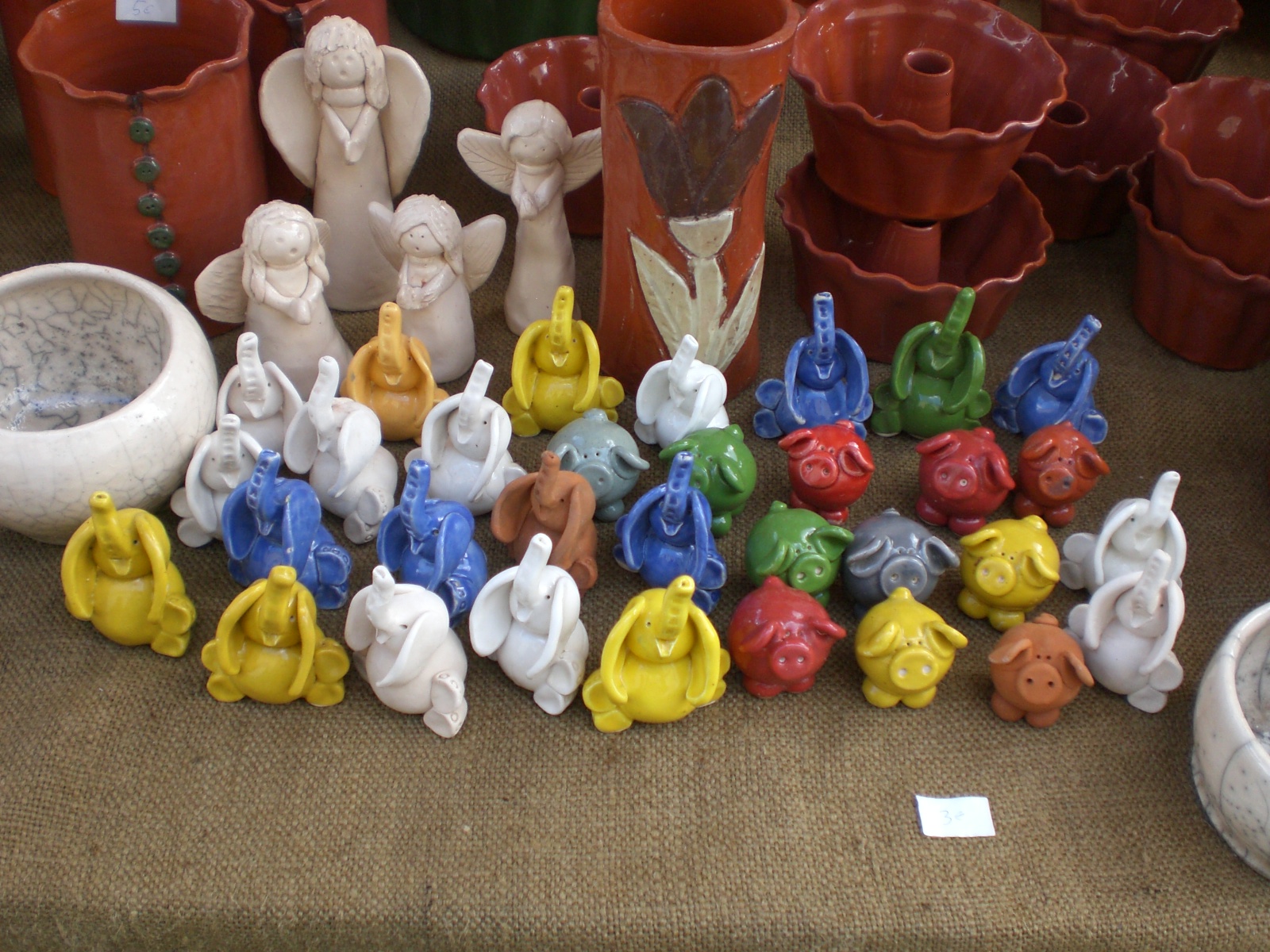
As a collector of elephants, though I don’t actually recall when or why I started collecting them, these colourful ornaments caught my eye.

CIMG8773

Later on Saturday, as part of Vurnik Days (Vurnikovi dnevi), the event ‘Pozdrav trti’ (A Toast to the Vine) took place at Kunstelj Inn in Radovljica. The vine is in the garden at Kunstelj Inn which offers great local food and one of the finest views in town. The vine, of the original variety Žametna črnina, is a descendant of the world’s oldest vine (as recorded in the Guiness Book of Records) which is found in Slovenia’s 2nd biggest city, Maribor.  More information about Kunstelj Inn can be found here – http://www.kunstelj.si/

CIMG8781     CIMG8786

Multi-culinary Slovenia
One of the features of Slovenia’s cuisine that makes it so unique is its diversity, which is largely due to the influence from surrounding countries – Austria, Italy, Hungary. These days it is perhaps even more diverse due to the emergence of some world-class chefs who are taking traditional Slovene food and giving it a modern twist, and also due to the increasingly multi-cultural population consisting, in particular, of people from other former-Yugoslav nations.

An example of this was the event ‘Multikulinarika‘ event which took place last Friday in Jesenice. Held in the Kolpern Hall at the Stara sava area (which I wrote more about in last week’s blog), the event is designed to showcase food from various nations and unite them all under one roof. There were 21 different countries represented at this year’s events including; Macedonia, India, Mexico, Albania, Serbia, Bosnia & Herzegovina, Belarus, Spain, Kosovo and of course Slovenia!

IMGP7610     IMGP7614

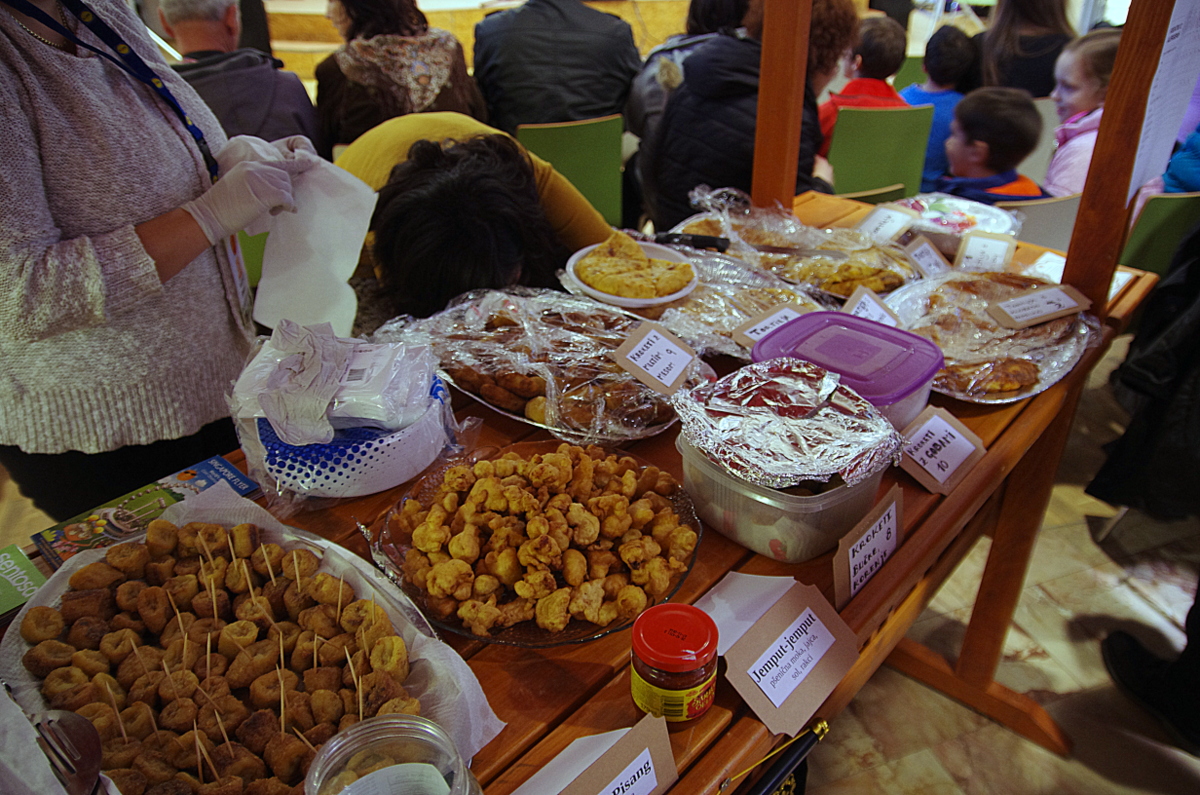
Taking the lead from Radovljica’s Chocolate Festival – more about that below – tasting takes place through the purchase of tasting coupons. As you can see from the photo below, I bought some and began to work my way through the cuisine of various countries!  The only problem was that there were so many different things on offer, and it was so busy, with the stands so tightly packed together, that I lost track of what I was eating and from which country! I was hoping to have a chance to chat with the stall holders, to find out more about what they had on offer, their country specialities etc., however, the crowds and the lack of space made it almost impossible. So, in the end I just headed to the stalls that were most reachable and managed to come away with plates laden with various types of burek, breads, potica, cakes, baklava and more!

IMGP7619      CIMG8419

I can see this event going from strength-to-strength, however, the organisers really need to find a larger venue which allows more space for the exhibitors, the visitors and the accompanying programme. Here are a couple more pictures of the various dishes on offer, more can be seen on my Pinterest page!

CIMG8417      CIMG8411

I have been fortunate to be privy to some of the as-yet closely under wraps, and still being finalised, details of this year’s Radovljica Chocolate Festival. The festival takes place over 3 days from 17-19th April and, in addition to the regular programme of chocolate tastings, sales and entertainment, the programme this year has quite a number of exciting new features too including; an extended festival area including a Chocolate Avenue and Chocolate Kitchen; an exclusive children’s entertainment area; a marquee where the chefs from the Taste Radol’ca restaurants will be cooking up special dishes; a Chocolate Party and other evening entertainment. You can also follow the latest news about the festival on the festival website – http://www.festival-cokolade.si/en/ and on Facebook – https://www.facebook.com/events/341095372765995/

10982079_873359362707281_3075502047712497002_n

In last week’s blog I wrote about the new route being launched by Adria airlines, Slovenia’s national carrier, offering flights 3-times per week from Maribor, Slovenia’s 2nd biggest city, to Southend-on-Sea in the UK. I’m definitely a supporter of more flight connections to/from Slovenia, especially if they are reasonably priced. The Adria flights went on sale yesterday with prices from 69 euros return and, unlike the so-called ‘low-cost’ airlines, these flights include 23kg of luggage, plus hand-luggage at no extra cost. Additionally, as an opening offer, they are throwing in a free return train ticket to London. What’s not to like! Click on the link on the right-hand-side of my blog to get booking those bargain flights!

Still on the theme of transport, I read this week about a new daily bus route from Vienna to Trieste in Italy, via Ljubljana. This also has to be another useful addition as many tourists visiting Slovenia from further afield, fly into one of the surrounding airports, such as Vienna or Trieste and this offers another choice of ways to reach Slovenia. More information here (in Slovene)  – http://www.javniprevoz.si/prevozi/avtobusni-prevozniki-slovenija/nova-vsakodnevna-avtobusna-povezava-dunaj-ljubljana-trst/
This article, published in The Guardian newspaper yesterday, about 10 of Europe’s best national parks, lists Triglav National Park, Slovenia’s only national park, at number 2. Just another reason to come and visit! http://www.theguardian.com/travel/2015/mar/30/10-europe-best-national-parks-italy-france-spain

Finally, I wish you all a very HAPPY EASTER!

© AdeleinSlovenia 2015

Triglav National Park Information / Garden Village, Bled

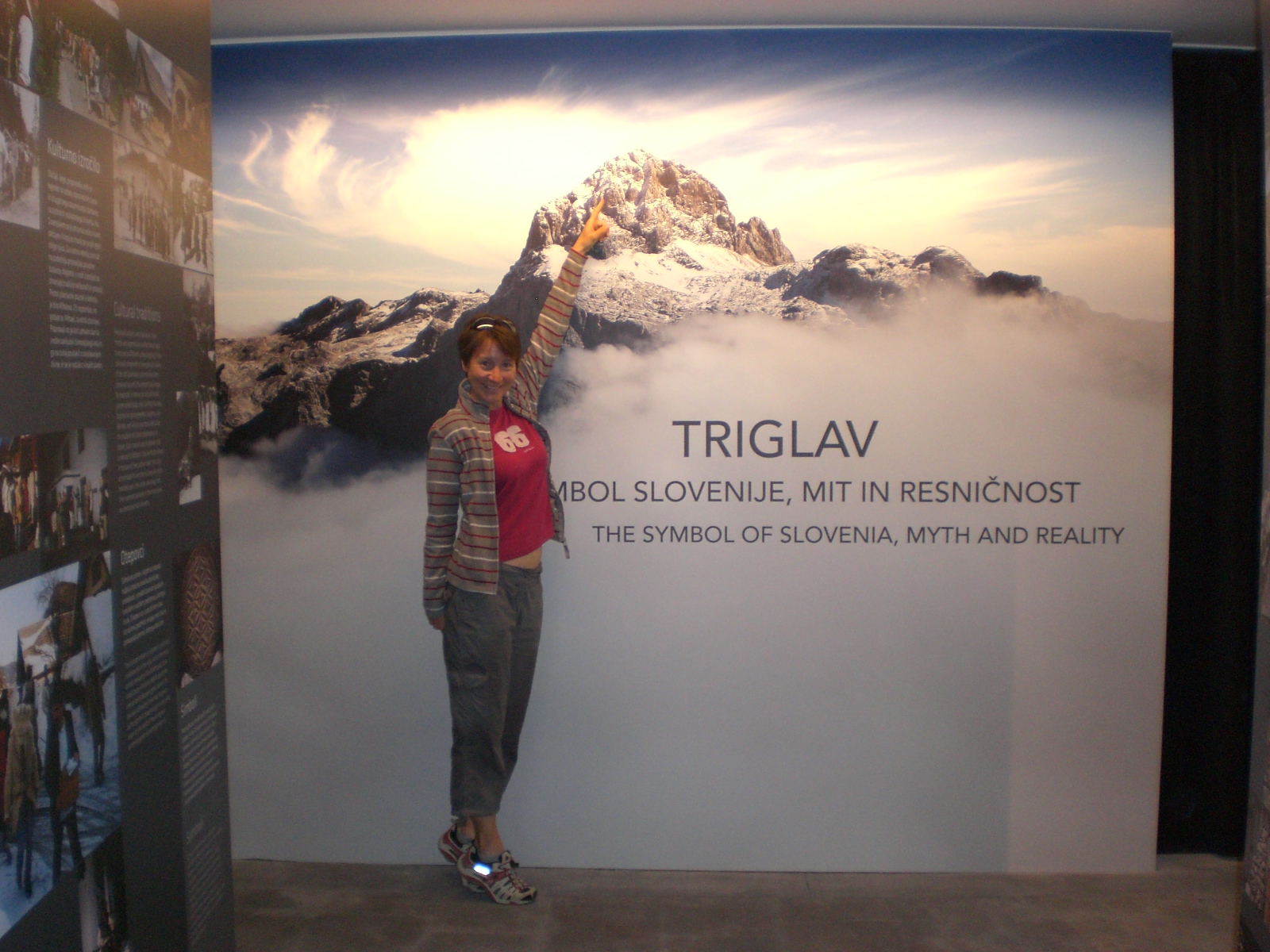
On Tuesday last week I went to the opening of the Triglav Roža Information Centre, which reopened its doors after a lengthy closure for refurbishment. The centre is located on the main road into Bled (Ljubljanska cesta 27) and is an excellent point-of-call for visitors to the Gorenjska region, especially those planning to spend some time in Triglav National Park, Slovenia’s only national park. The centre contains some interesting permanent exhibitions including about Slovenia’s highest mountain, Triglav and the National Park, as well as information about other parts of the Gorenjska region. Visitors can also watch a video and obtain maps and information. The centre is open daily from 8am – 6pm during the summer and from 8am – 4pm in the winter.

CIMG7565  CIMG7569

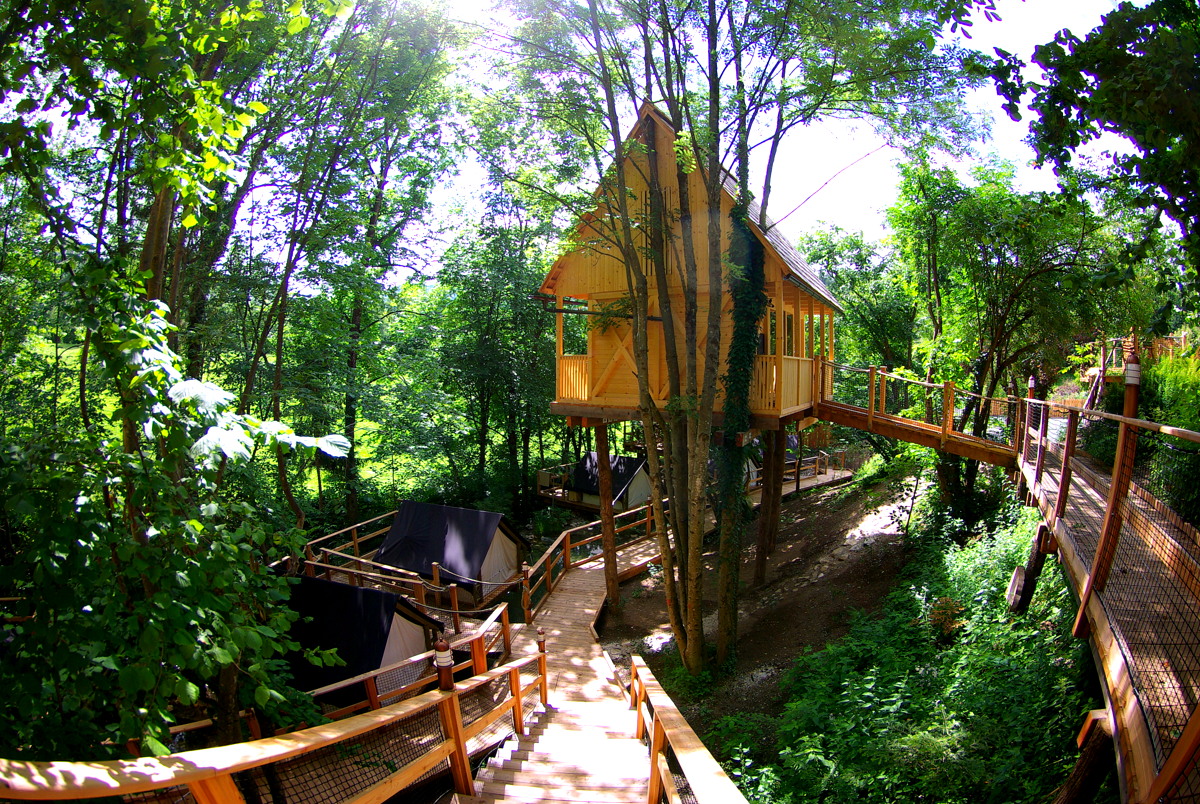
Whilst in Bled, I also took the opportunity to go and have a look at the new Garden Village Resort, which opened last month and wow is it AMAZING! Those that know me, will attest to the fact that I’m not exactly known for my ability to relax (always hiking/biking/running…..) but even I felt relaxed there among the green and serene surroundings, sitting by the pool area, sipping a cool elderflower cordial……. Happy Days – even if only briefly whilst I watched how the other half live!

The resort, located just 5 minutes from Lake Bled, is certainly ‘glamping’ at its best. It comprises a mixture of luxury tented accommodation, tree houses and apartments. The whole ethos of the resort is built around being ‘green’ – both visually and operationally – and it shows. The attention to detail is remarkable in every area including the restaurant, wellness and the gardens, where guests are able to literally pick and eat whatever is growing around the resort. Their website says ‘Adventurous, Romantic and Exclusive’ and I’d have to agree. Now, if only I could find someone adventurous and romantic to share it with!!! For those of you lucky to have found adventure and romance, here’s the link (it’s already pretty much booked up for this summer season) – http://www.gardenvillagebled.com/

09-IMGP3360  19-IMGP3375

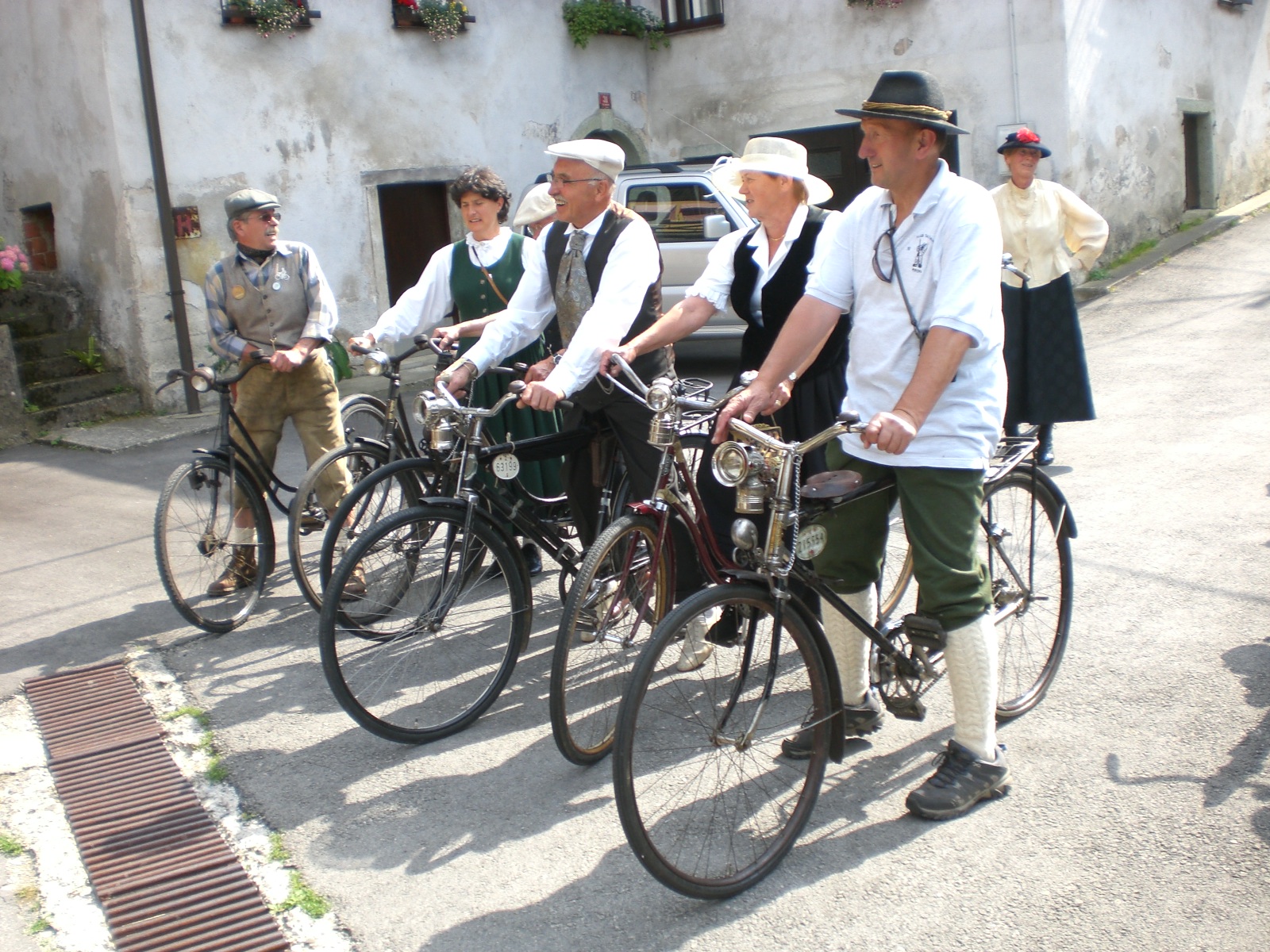
With the weather being so glorious for the weekend, I had a tough decision to make as to where to go and what to do – so much choice – so in the end I did a bit of everything! Saturday began with an early morning start, cycling from home to the lake at Bohinj. I then took the gondola up to the Vogel Ski Resort, which was celebrating its 50th anniversary of operation and thus had 50% discount on the usual ride charge. There was a great party atmosphere up there with plenty of entertainment including national folk music, presentations of national costumes and old-timer bikes, guided walks, workshops for children and market stalls. As a non-skier, I have only previously visited Vogel once during the autumn when it was shrouded in mist and there were no views to be seen and I was unable to explore the area fully. This time, it couldn’t have been more different. It was a glorious day and I was able to grasp just how extensive the area is and how much there is to see and do up there, regardless of the season. Being a ski resort, I’d always considered it more of a winter venue, but how wrong was I, and it has now been added to my list of summer destinations too – next time I might even consider hiking up there too! There are a wide choices of walks, either shorter, easier ones such as the Vogel Trail, or longer ones to one of the many peaks or highlands of the Julian Alps, such as Rodica or Planina Sija. The Orlove Glave chairlift also operates during the summer and can be used to shorten some of the hikes. There is also a bike park, several places to eat and drink and of course, it goes without saying, stunning and far-reaching views in all directions.

CIMG7577  CIMG7580

It’s going to be another busy week ahead with lots going on in the Radovljica/Bled area. Here is just a pick of the events:

Tuesday 8th July

  • Open Day at the Sextons’ Museum House in Kamna Gorica, 10am-6pm, entrance free (also on Saturday 12th & Sunday 13th July)
  • Free guided tour of Kamna Gorica, 4.30pm

Thursday 10th July

  • Music Thursdays in Linhart Square in Radovljica’s old town centre – Every Thursday in July from 8.00pm – this week ‘San Di Ego Band’
  • Story-telling by the fire at Camp Šobec – Join the Triglav National Park rangers to listen to some of the myths and legends of the Slovenian mountains – 9pm, free event (also for those not resident at the camp)

Saturday 12th July

© AdeleinSlovenia 2014


Hop-On Hop-Off Bus: Bled, Radovljica and the Julian Alps

Following a spectacular storm on Sunday evening, Monday morning saw a rather chilly start to the new week with even a sprinkling of fresh snow on the top of Stol, which I wrote about last week, and more than a sprinkling in the high mountains. If you use Facebook, check out the photo I posted of the snow at the Kredarica mountain hut, beneath Triglav. Thankfully, the forecast for the rest of the week looks more promising with temperatures set to soar.

After a successful introduction last year, this year the new Radol’ca Hop-on, Hop-Off Bus will be operating throughout the summer from the 1st July to the 31st August and will cover two local routes now including Bled:

Every Tuesday: Bled – Radovljica – Kropa – Radovljica – Bled

Every Thursday: Bled – Radovljica – Begunje – Brezje – Radovljica – Bled

In addition, this year, for the first time in 23 years, a special bus will operate at weekends from Bled to Bohinj and Pokljuka within Triglav National Park:

Hop on hop off radolca

The price of a one-day ticket is just 5 euros per person with children under the age of 10 travelling for free.

In addition to being able to get on and off the bus at various points and see the towns and sights of interest, there will also be addition benefits to travelling by the bus, such as free or reduced entrance fees to museums and galleries, guided tours of the towns and villages in the area, gingerbread, cookery and candle-making workshops (supplement payable), walking paths and more. Of course, it’s also a more relaxed way to travel with time to sit back and enjoy the sights, and more environmentally friendly too – so a win, win all round!

http://www.radolca.si/hop-on-hop-off-radolca/

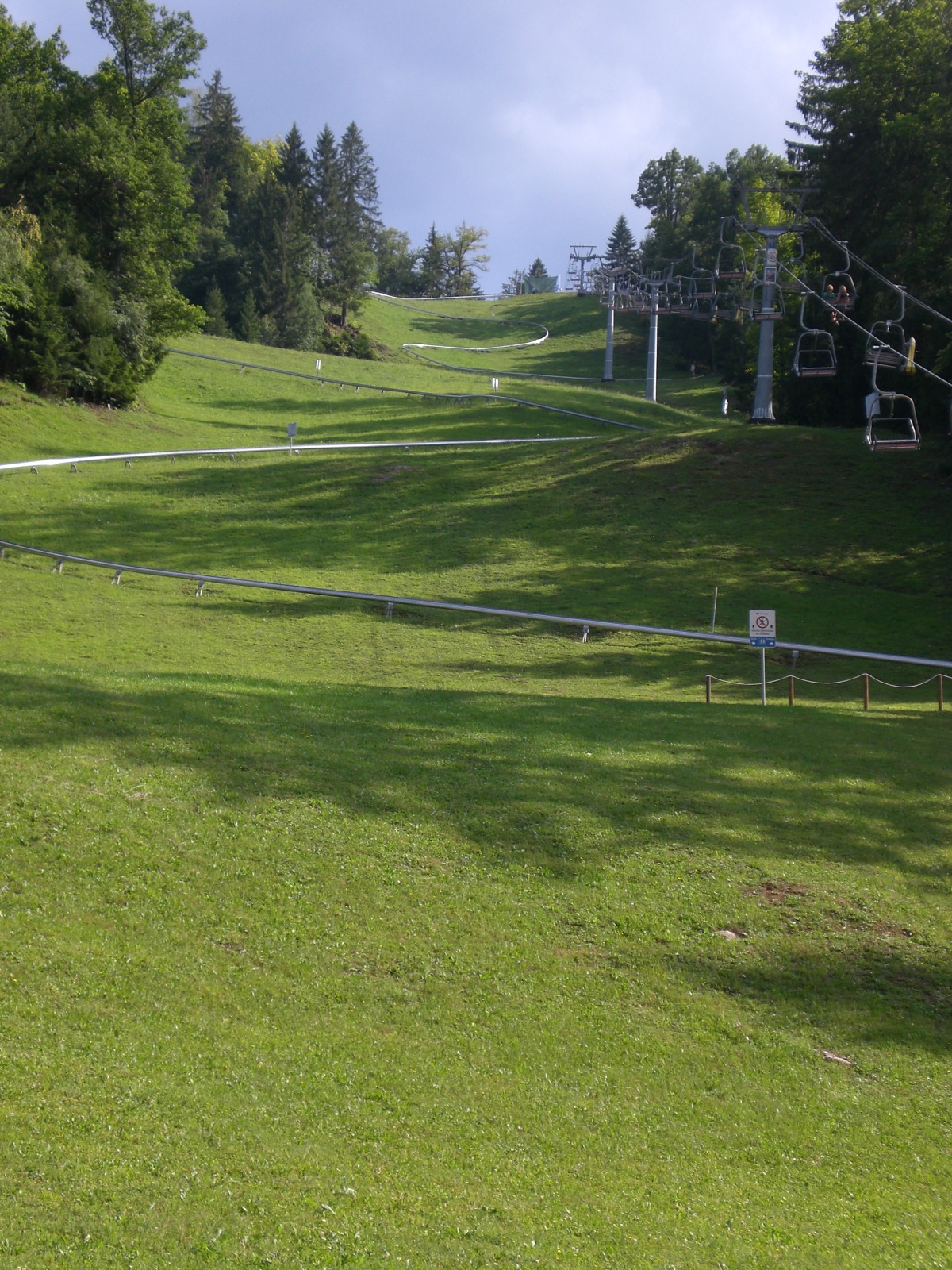
On Friday I attended the opening of the new Fitness Trim Trail in Bled on the small Straža ski slope. During the summer Straža operates as a toboggan track and there is also the Bled Adventure Park and two snack bars. As well as the various activities, Straža is also a pleasant place to visit for a walk and it is well worth making the effort to walk up to the top (or take the chairlift if that sounds too much like hard work!) for the views over Bled lake, the castle, the Karavanke mountains which are quite stunning.

CIMG7555  CIMG7541  CIMG7554

Another new addition to Straža is the Land of Slovenian Folk Tales, as seen below, and more information here – http://www.bled.si/en/events/2014/07/05/1904-Land-of-slovenian-folk-tales

CIMG7543  CIMG7550

Straža is also synonymous with the Swiss doctor Arnold Rikli. Born in 1823, Rikli was largely responsible for the beginnings of Bled’s boom in tourism. His focus was on ‘healing tourism’ as he worked and learned the value and benefits of the climate and natural gifts of Bled. His work was guided by the principle: ‘Water works wonder, air can do even more, but light does the most of all.’ He founded the Institute of Natural Healing and introduced a new method of treatment. In 1859, Rikli ordered the building of simple wooden Swiss style baths (opposite the then Park Hotel) and also constructed huts for patient accommodation.

Walks around the Bled area were a key part of Rikli’s healing programme. There were strict house rules that all patients had to observe. Early starts (5-6am), followed by walks and outdoor physical activity. To improve their circulation patients walked barefoot and during the day they bathed, sunbathed and rested. Treatment helped diseases such as rheumatism, migraines, insomnia and obesity, Rikli’s methods became very popular and successful and through this, Bled became known far and wide. Today, his methods are still celebrated and remembered, particularly at the time of the popular annual Rikli Walk which takes place this coming weekend on Sunday 6th July. Anyone can join in the walk and it’s a great chance to see other parts of Bled, such as Straža and the Osojnica hill, as well as experiencing some of Rikli’s methods. Be prepared for some bathing, barefoot walking and fun! The walk begins at 7am in front of the Golf Hotel.

Here’s a small pick of this week’s forthcoming events:

1st – 17th July: 19th International Bled Music Festivalhttp://www.bled.si/en/events/2014/07/05/1329-19th-Festival-Bled-2014

Thursday 3rd July at 8pm (and every Thursday in July): Music Thursdays – Enjoy listening to live music in Linhart Square in Radovljica’s medieval old town centre.

Thursday 3rd July at 9pm (and every Thursday during July and August): Join the Triglav National Park rangers for ‘Storytelling by the Fire’ at the Šobec campsite – Listen to the myths and fairy tales of the Slovene mountains. The event is free and is in both English and Slovene.

Saturday 5th July from 9am – 6pm: Iron Forging Festival in Kropa – Watch live demonstrations, browse the market stalls, free entrance to the Iron Forging Museum, the Fovšaritnica Museum House and the Vice Spike Forge, and more.

Saturday 5th July from 9pm – White Night in Bled: http://www.bled.si/en/events/2014/07/05/1582-White-night-2014

© AdeleinSlovenia 2014