Archery Adventures and Delicious Draga Delights!

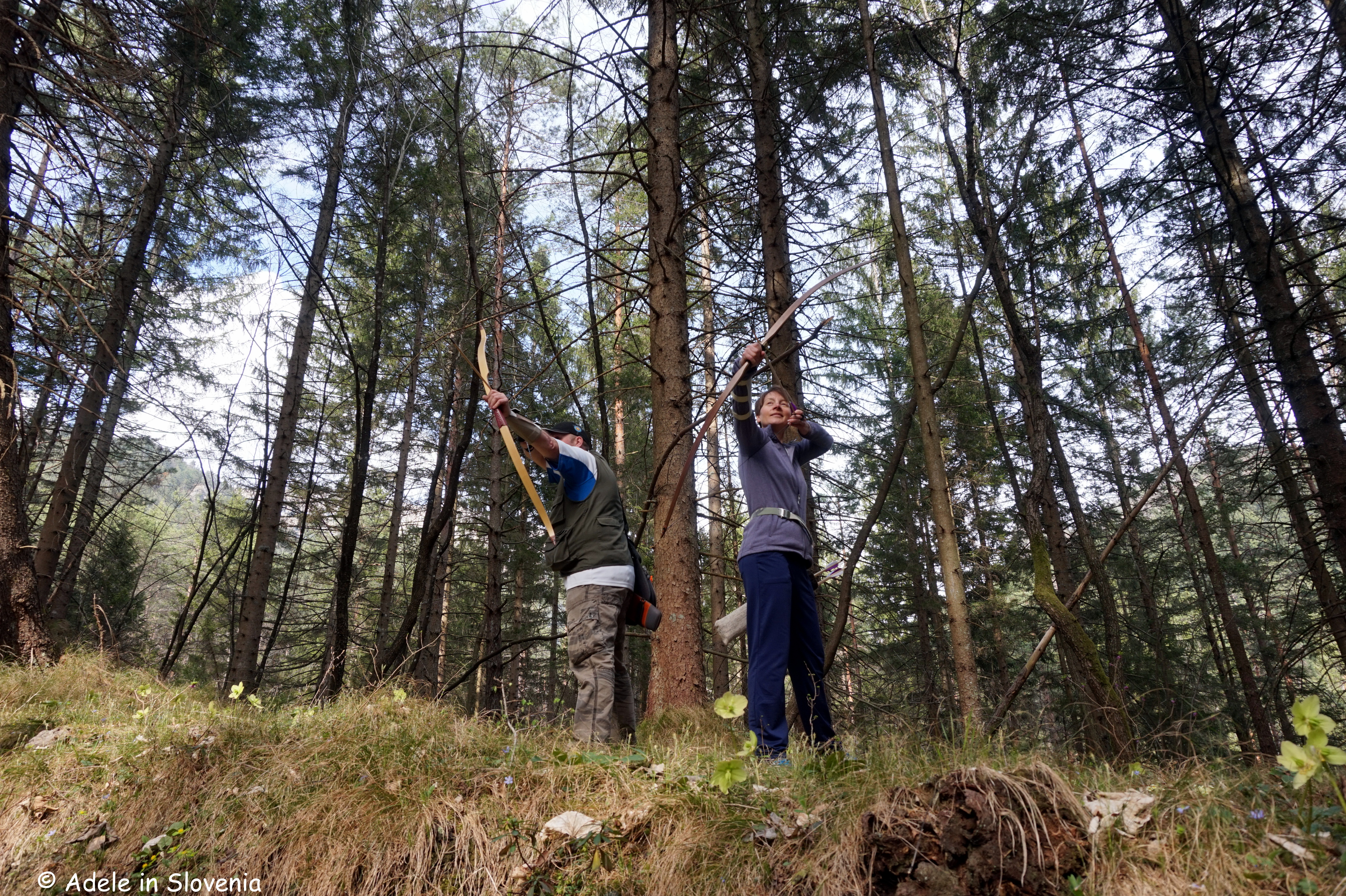
The beautiful Draga valley in Begunje in Gorenjskem – home to the ruins of Kamen Castle, the Gostišče Draga restaurant and the start point for numerous hikes in the Karavanke mountains – has just got even better thanks to the new improved 28-target archery range.

Having never so much as held a bow and arrow, I was keen to try it out for myself and, I must say, I’m hooked already and can’t wait to try it again!

If you have your own equipment, you can just turn up and pay in the Gostišče Draga restaurant and then head off on your own, of course taking care to follow the numbered markers in the correct direction.

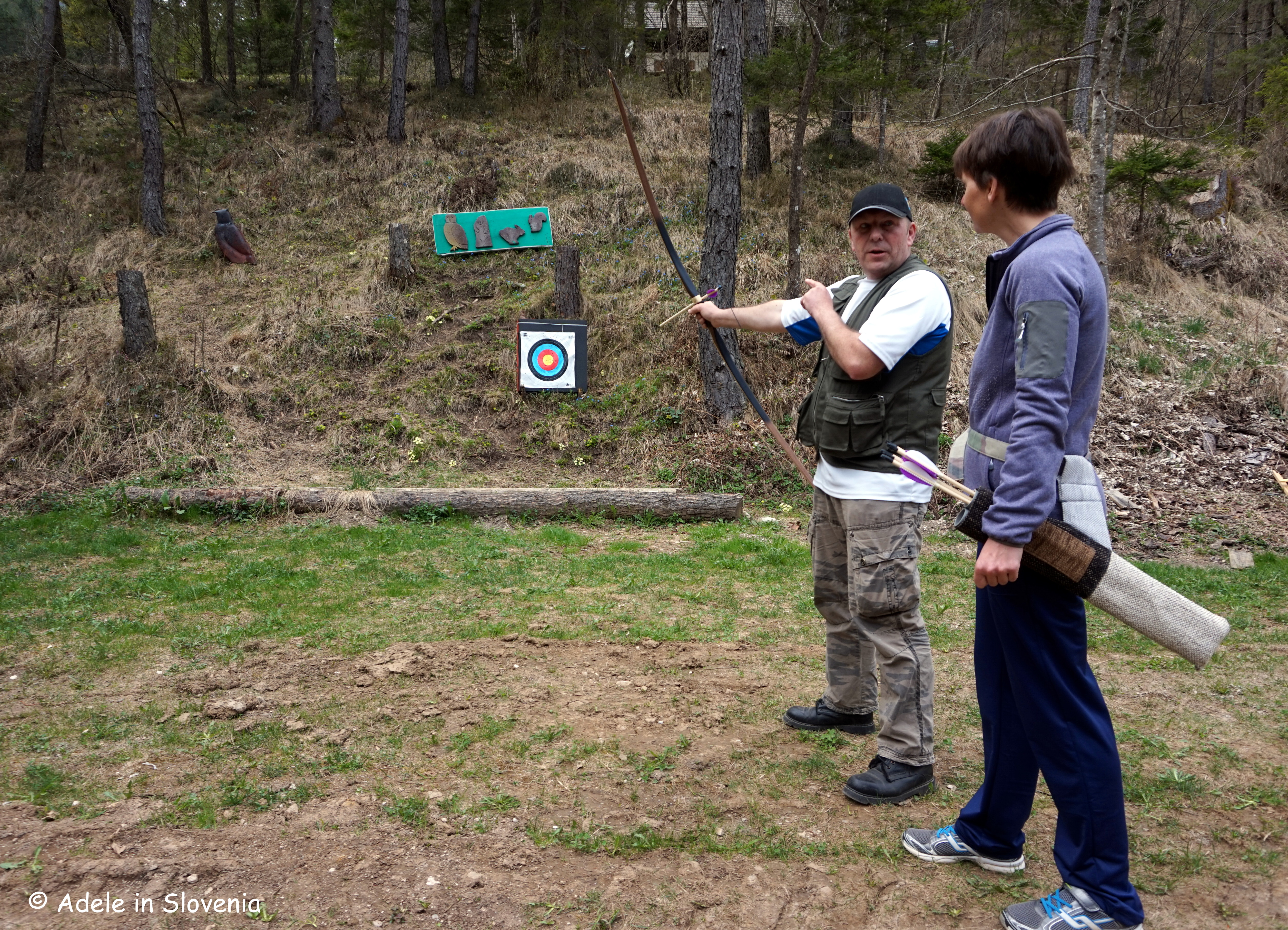
If you, like me, are a total novice or a relative newcomer to archery, or you skills are a bit rusty, then I suggest contacting the ‘go-to’ man for archery around here, Robert (Robi) Levstek.

We started with a brief safety introduction and a few warm-up shots as Robi demonstrated and talked me through the technique.

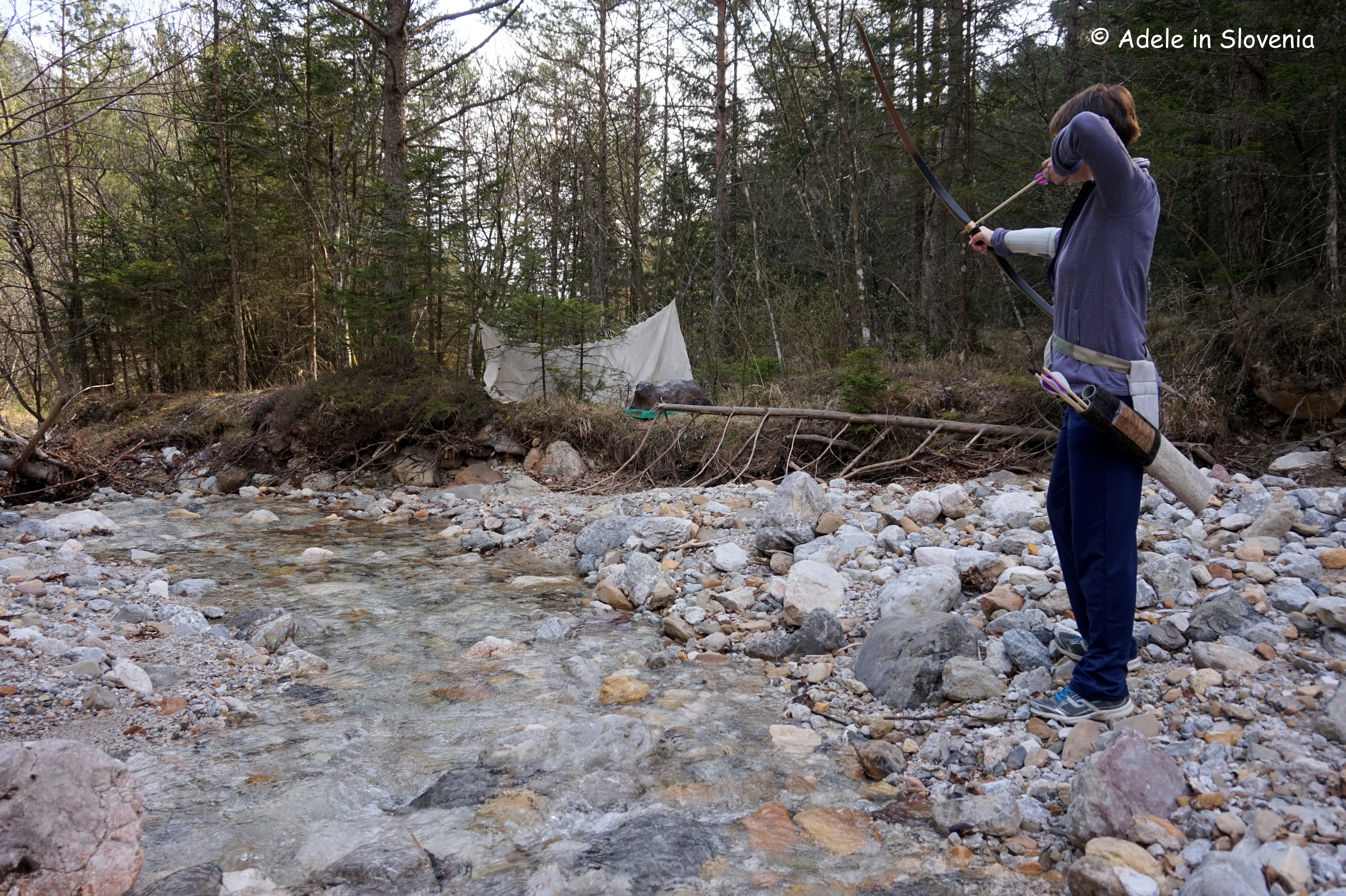
I know you probably won’t believe me, since I barely believed it myself, but this was one of my first shots – totally a case of beginner’s luck, though, as it didn’t continue in that vein!

Robi made all of the animal targets and also makes all his own bows and arrows, something he is deservedly proud of.

The archery course is also ideal for families with children, and Robi teaches children from age 3+. It’s also extremely good value, considering it provides several hours of entertainment, at just 10 euros for adults and 8 euros for children.

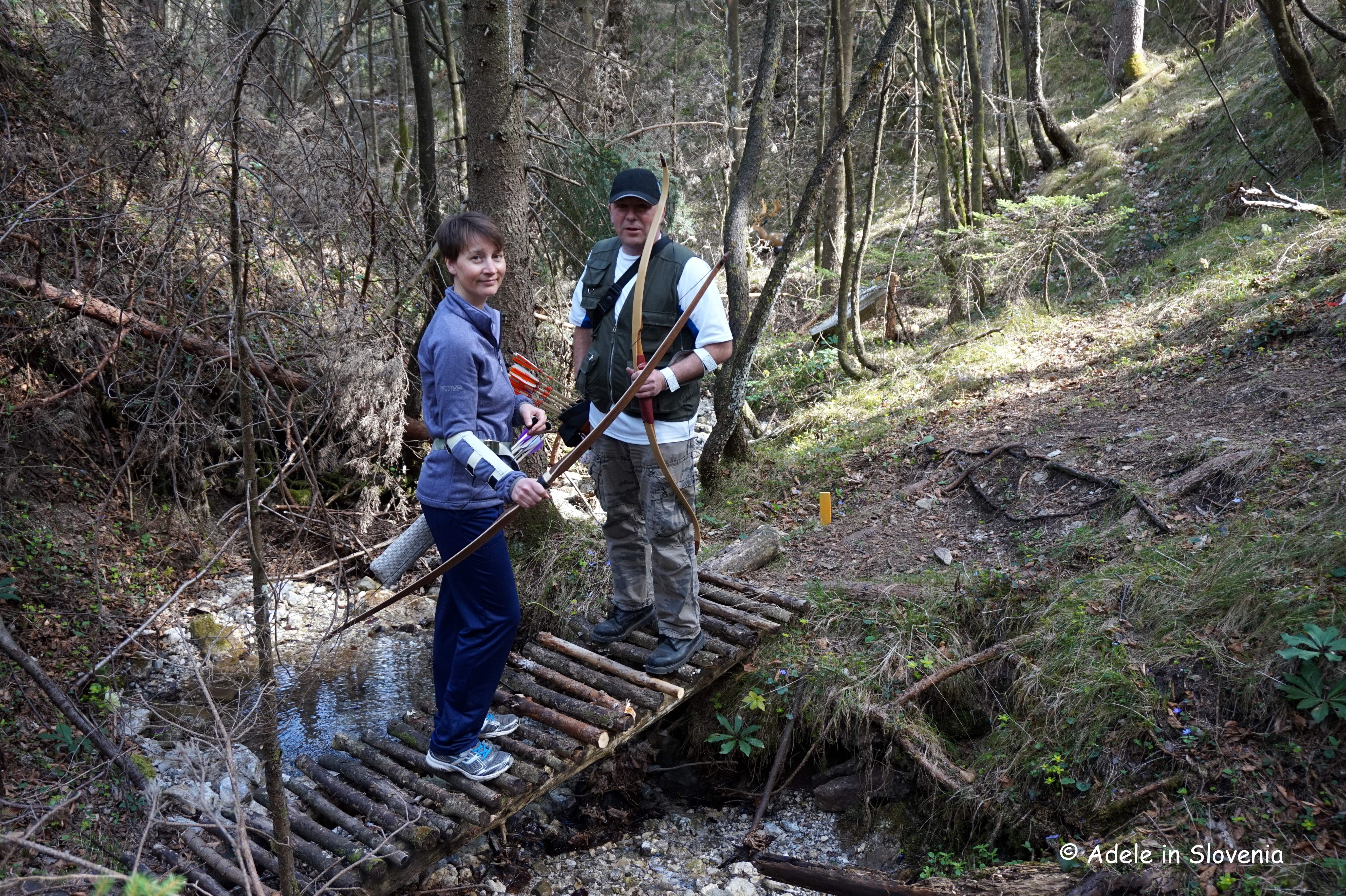
Sensible footwear is a must, as is comfortable clothing, but other than that all you need is a sense of adventure and good spirits!

It’s great fun making your way around the course through the forest, crossing the stream and trying to spot the life-like animals. Those with a competitive nature, and even those without, will love it. For those who want to get competitive, you can tot-up points, join the club and/or compete in the regular Parkur tournaments, whilst for others it can merely be a fun day out surrounded by the wonderful nature of the Draga valley.

The archery range is open year-round and even in winter, provided the snow cover is not too deep, you can spot the animal targets!

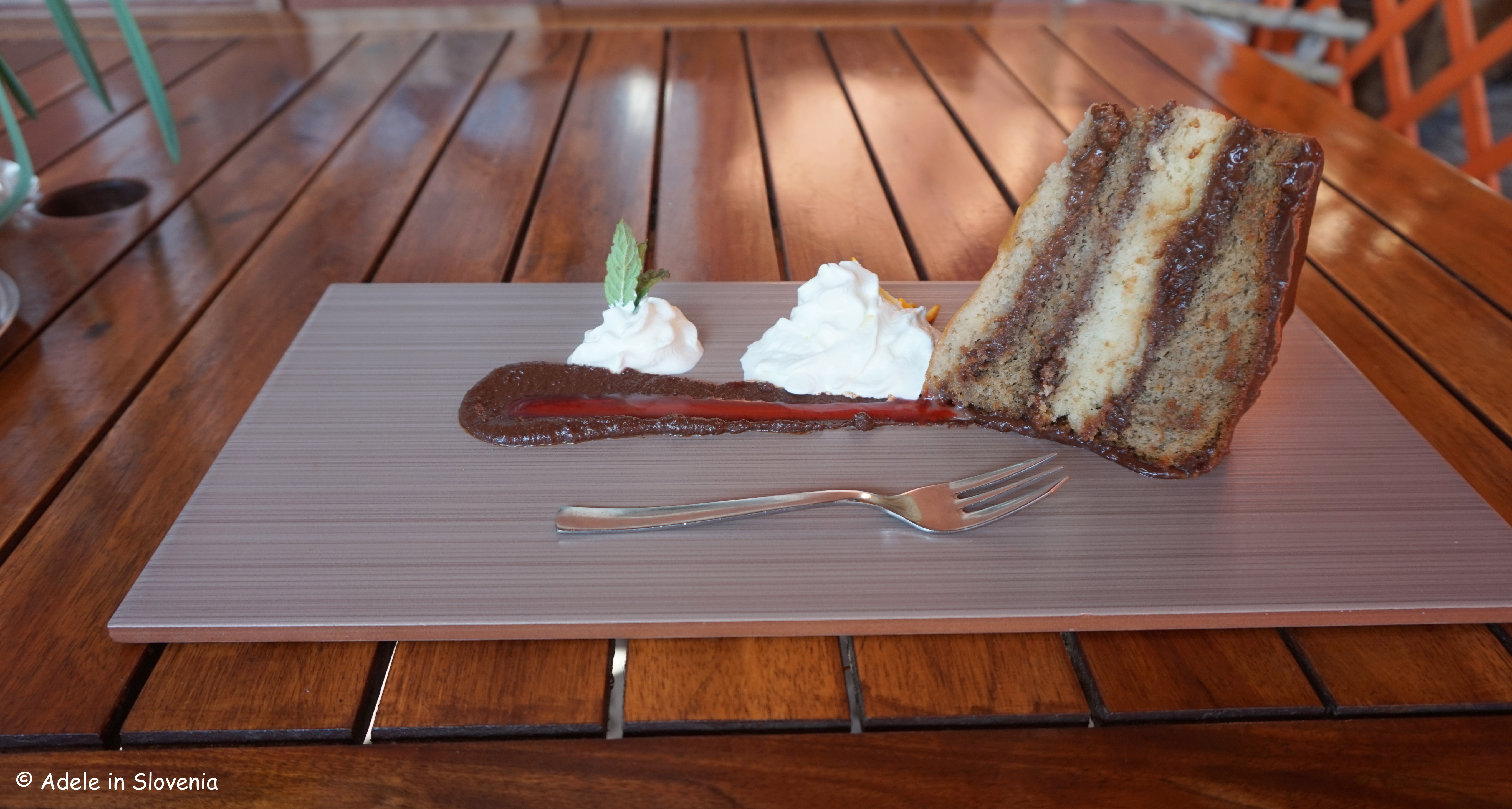
And no visit to the Draga valley is complete without a meal at the Gostišče Draga restaurant. Known for its fresh trout, venison, and other traditional Slovenian dishes, of late the restaurant has also become a mecca for lovers of all kinds of štruklji – sweet and savoury. Unable to decide on which to try this time, I went for the triple whammy and tried 3 different versions – buckwheat with wild garlic, classic curd cheese, and blueberry – all of which were so delicious I took some home for the next day (or two) too!


You can contact Robi and/or find out more information via the Facebook pages Parkur Draga https://www.facebook.com/parkurdraga/ and Lokostrelstvo Robert Levstek https://www.facebook.com/Lokostrelstvo-Robert-Levstek-sp-679804982054234/

Enquiries and reservations for the archery range can also be made at the Gostišče Draga restaurant – http://www.gostisce-draga.si/

But watch out, you might, like me, get hooked – on both the archery and the štruklji!

© Adele in Slovenia

The UNESCO-Listed Škofja Loka Passion Play

When UNESCO deems something important enough to be included in its List of Intangible Cultural Heritage of Humanity, you know it’s something of great value and importance, as is the case with the Škofja Loka Passion Play.

Staging of the play is based on the oldest preserved text in Slovenian language, written by Father Romuald, a Capuchin monk who lived for a time in the monastery in Škofja Loka.

Staging of the Passion Play, Photo: Andrej Tarfila Photography

Where better, then, to start my journey of discovery of the Passion Play, than with a look around St. Anne’s Church and the Capuchin Monastery – where the original manuscript is preserved – in the heart of the medieval old town of Škofja Loka.

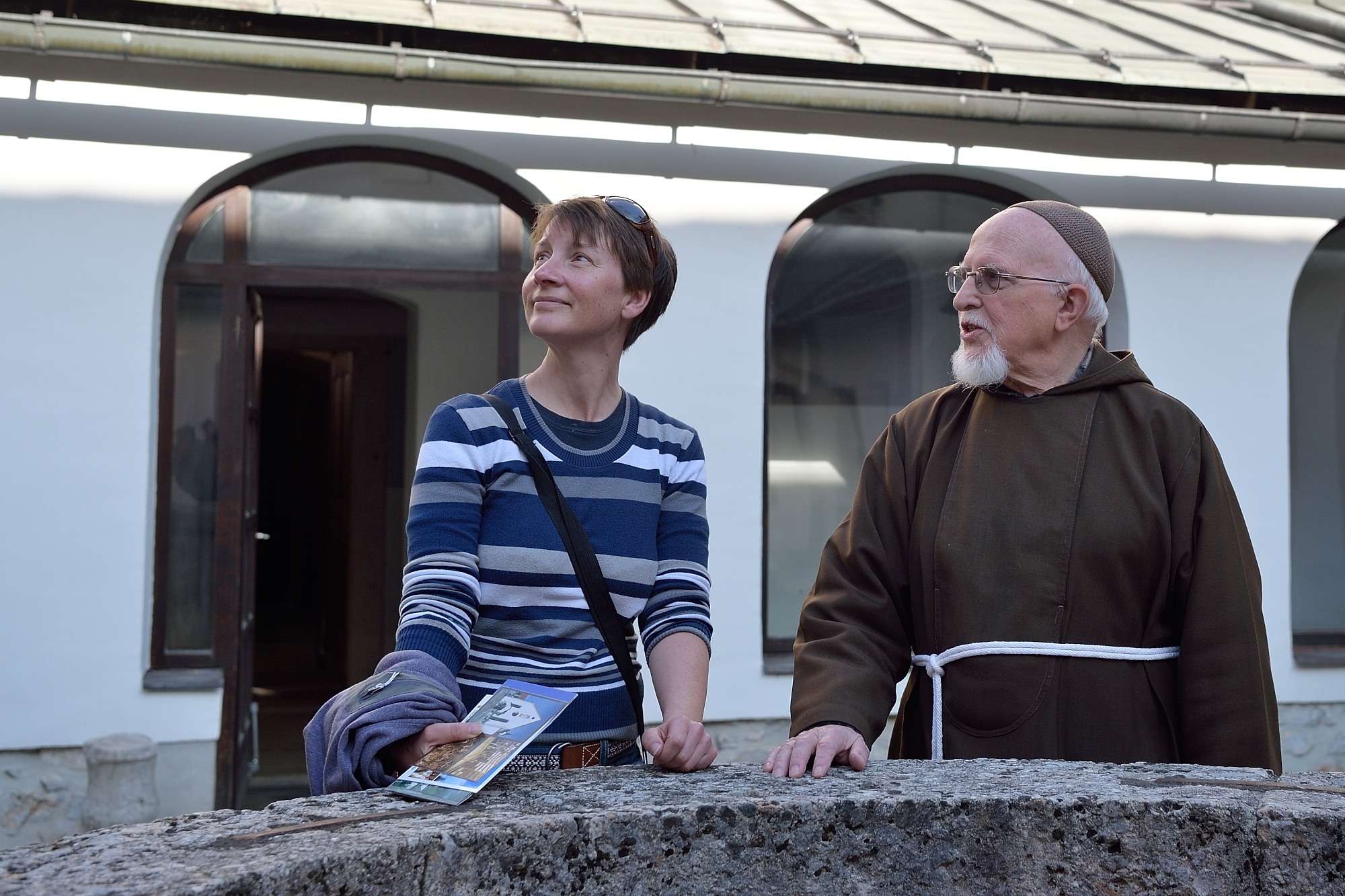
I was greeted by the sprightly 80-year monk Father Bernard who is a good testament to the benefits of clean living. It was a pleasure and a privilege to get an insight into life in the monastery and hear some of this tales of the various Capuchin monasteries where he has lived in Slovenia.

The church and monastery date back to 1707 when the foundation stone was laid, with regular church services beginning on New Year’s Day 1710.

Photo: Tomaž Sedej

Photo: Tomaž Sedej

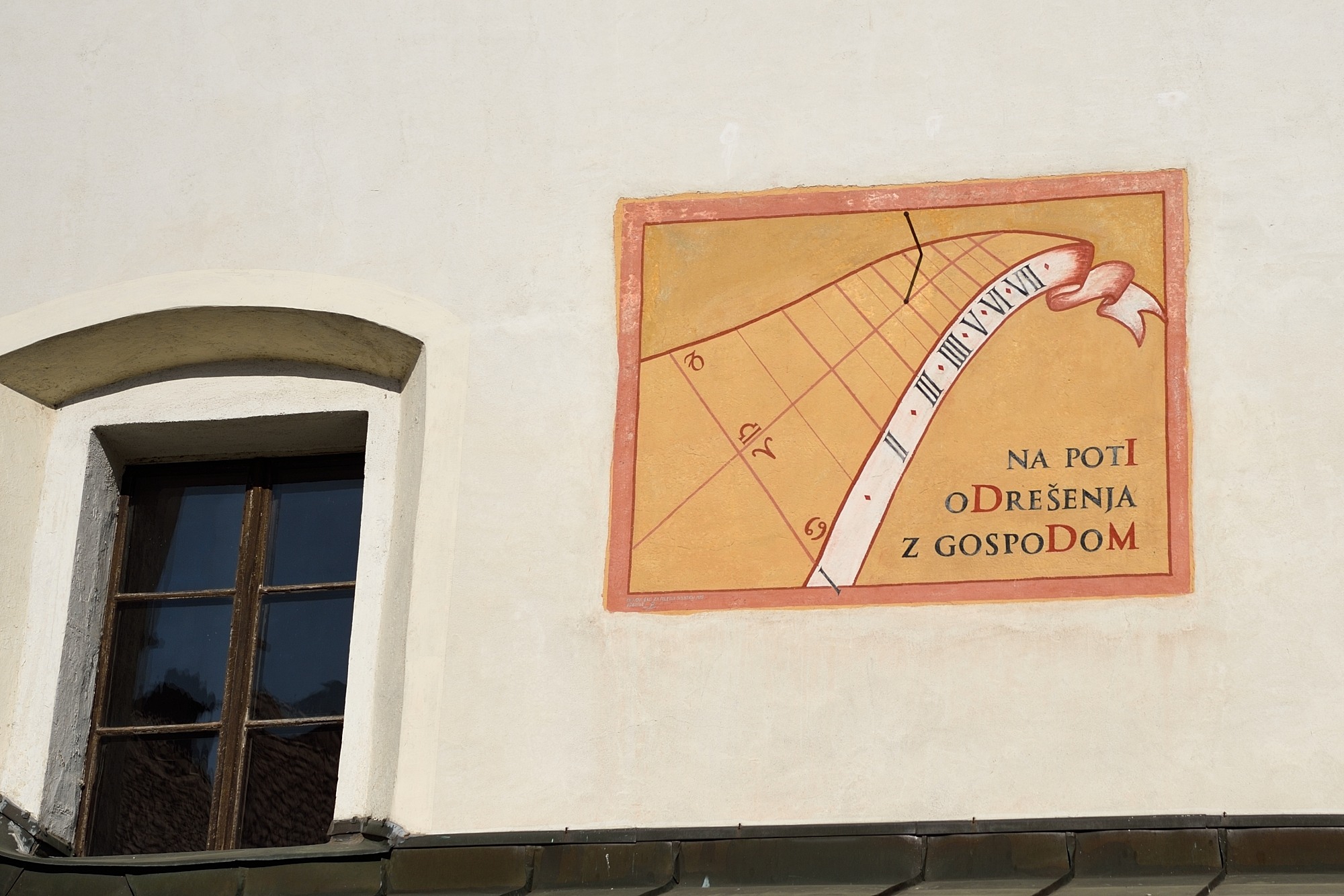
Father Bernard first showed me around the monastery’s gardens and courtyard and was particularly keen to point out the two sundials.

Photo: Tomaž Sedej

We moved on to look at the monastery church. Its layout is simple – a single nave with three chapels – however the fittings, altars and paintings are opulent. Mass takes place twice daily on weekdays at 6am and 8am, and three-times per day on Sundays and public holidays, at 8am, 11am and 6pm (at 5pm during winter) and is open to everyone.

Photo: Tomaž Sedej

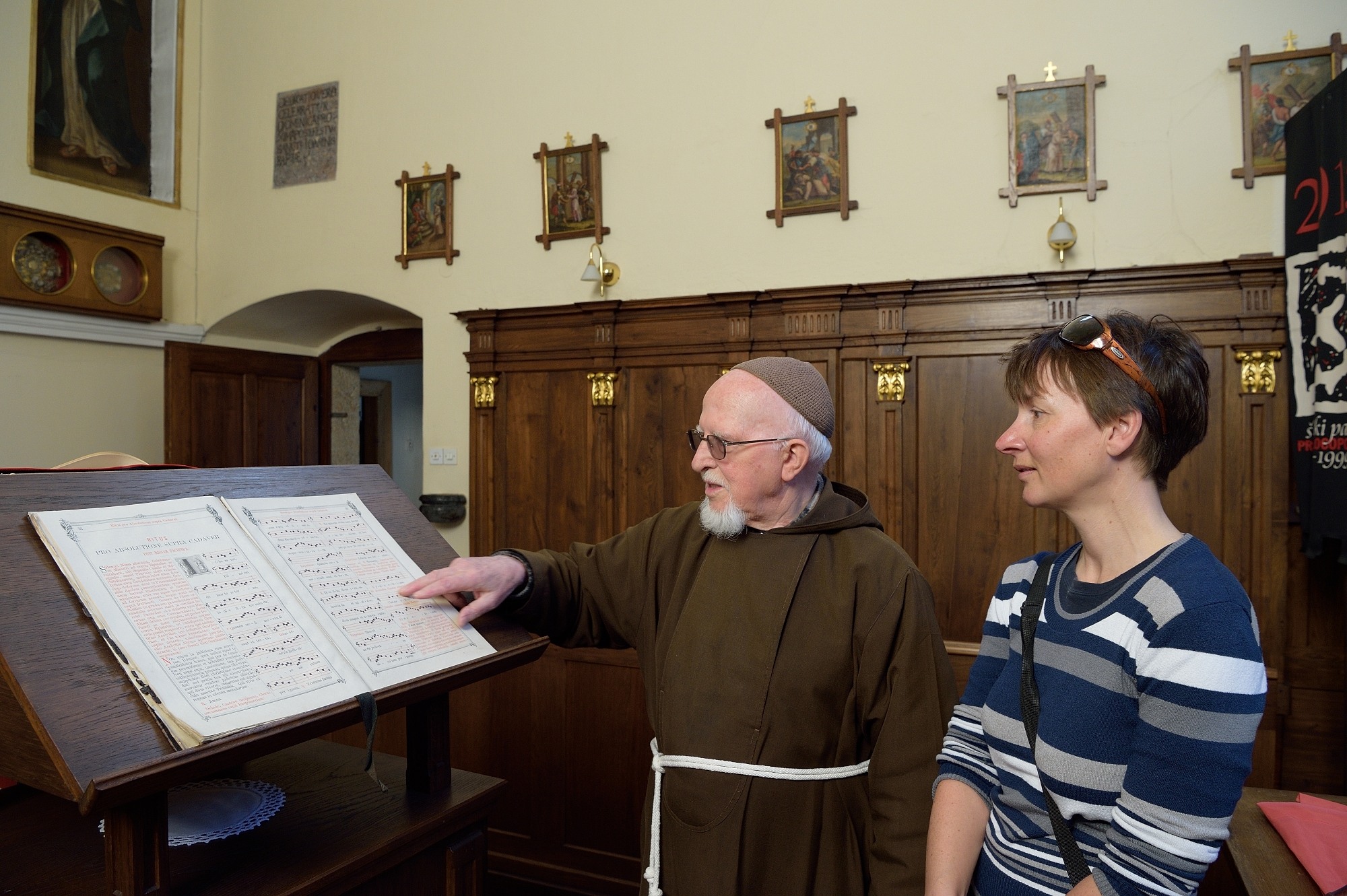
The pride and joy of the monastery, however, is undoubtedly the library on the first floor which contains 25,000 items, among them are 21 incunabula – books printed before 1501, the oldest of which dates from 1473, and the original manuscript of the Škofja Loka Passion.

The precious original manuscript. Photo: Tomaž Sedej

The library in itself is a work of art, featuring intricate hand-carving work by the acclaimed local carver Petra Podlogar Plestenjak. I met Petra and witnessed her work up close earlier this year when she taught me how to make Loka honey breads using her hand-carved moulds at the DUO Arts and Crafts Centre. Read more here – https://adeleinslovenia.com/?s=Loka+honey+breads

Carving by Petra Plestenjak Podlogar, Photo: Kati Sekirnik

Conditions in the library are maintained at a constant level of light and humidity to ensure preservation of the centuries-old precious books. I was almost afraid to breathe, such are the pristine conditions of the books in the library and the sense of history they convey.

There is also a separate exhibition area which includes copper reliefs of scenes from the Passion Play, and historical photos of the Capuchin monasteries in Slovenia.

Copper reliefs of scenes from the Passion, Photo: Tomaž Sedej

The Passion Play was originally performed on Good Friday each year until 1751. Almost 300 years later it was again held in 1936, before being revived in 1999. The play is now staged every 6 years, with the last full performance being held in 2015. So, we may have to wait until 2021 for the next performance, but, as they say “All the best things are worth waiting for!”

Around 800 people, including actors, volunteers, dressmakers etc., are involved in the staging of the largest open-air theatre production in Slovenia (and surely further afield too).

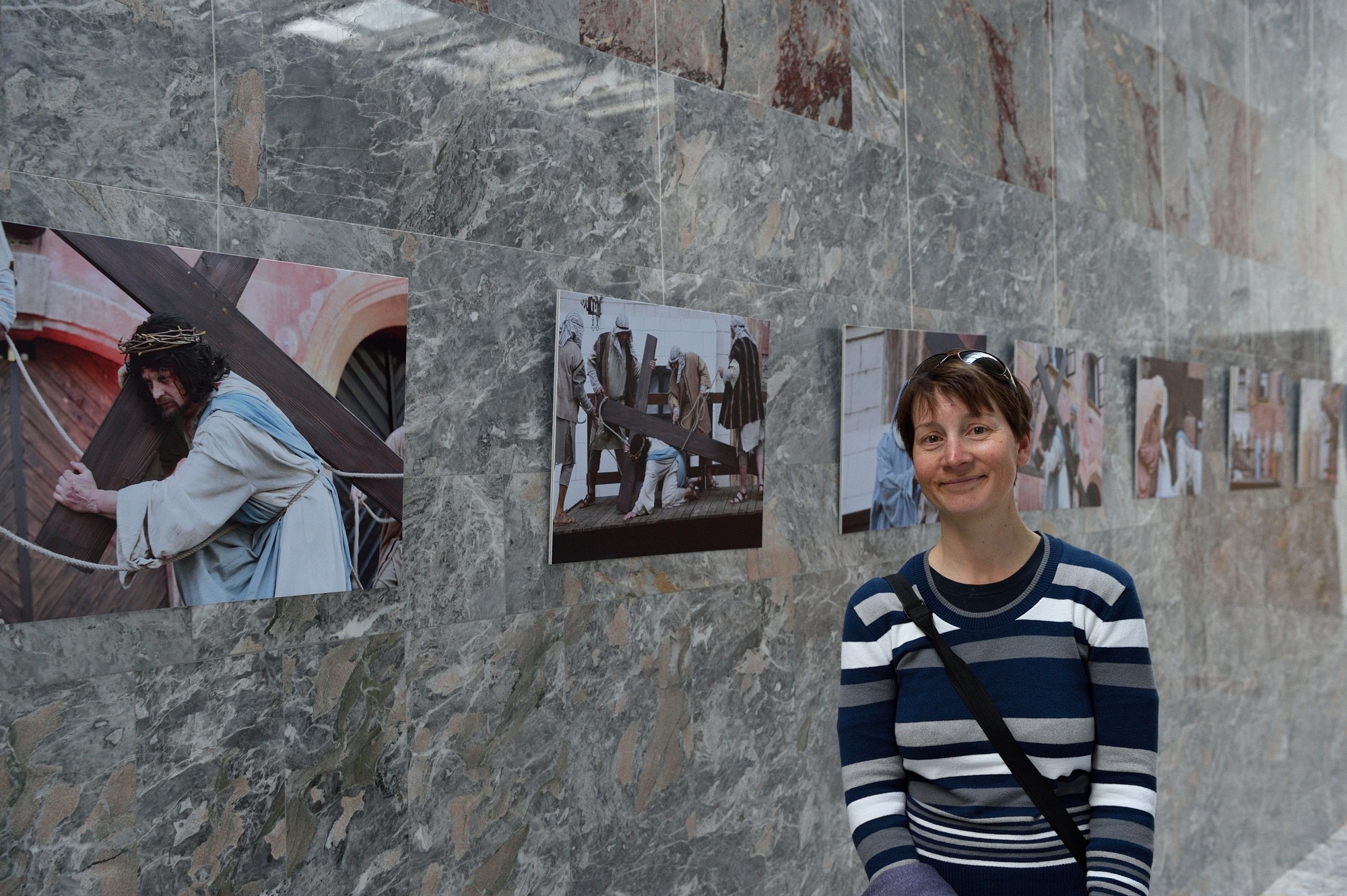
There is currently an exhibition of pictures of the Passion Play on view in the Sokolski dom building in the centre of Škofja Loka’s old town. The exhibition by Jože Štukelj is based on the UNESCO session in Addis Ababa, Ethiopia, held from 27.11-2.12.2016, where the Passion Play was officially inscribed into the afore-mentioned UNESCO List. Entry to the exhibition is free and it is open until 17th April.

The current exhibition in Sokolski Dom, Photo: Tomaž Sedej

More information about the Škofja Loka Passion Play can be found here – http://www.pasijon.si/en/ and about the Capuchin Library on the Visit Škofja Loka website here – http://www.visitskofjaloka.si/en/experiences/culture-and-art

2021 will come around before you know it, so mark the date now!

© Adele in Slovenia

Slovenia’s Historic Towns and Cities

Statistics show that the large majority of people who visit Slovenia tend to do so for just a few days, either as just a mini-break or as part of a longer trip taking in some of the neighbouring countries. And for those limited in time, the focus is usually on the ‘usual’ tourist hot-spots i.e. Bled Lake, Ljubljana, Postojna Caves, Piran... However, in visiting just these, admittedly marvellous, places, you miss – in my opinion – a large swathe of the country and the chance to see the ‘real’ Slovenia.

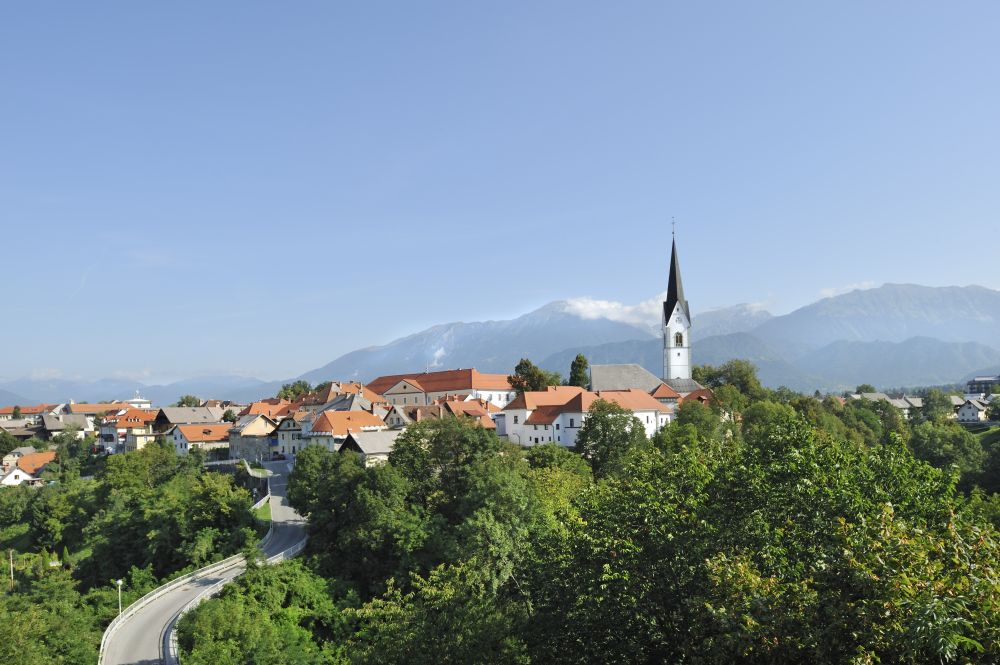
Granted, I might be a bit biased since I’m fortunate to live in Radovljica, which has one of Slovenia’s best-preserved medieval old town centres and is a member of the Association of Historical Towns and Cities of Slovenia, but since Slovenia is a perfectly compact country, it is very easy to get around and make detours to other places of interest. So, sure, go to the usual tourist hotspots to tick them off the list, but do take time to see more of Slovenia’s countryside, culture and history too!

Looking over Radovljica and beyond to the Karavanke mountains

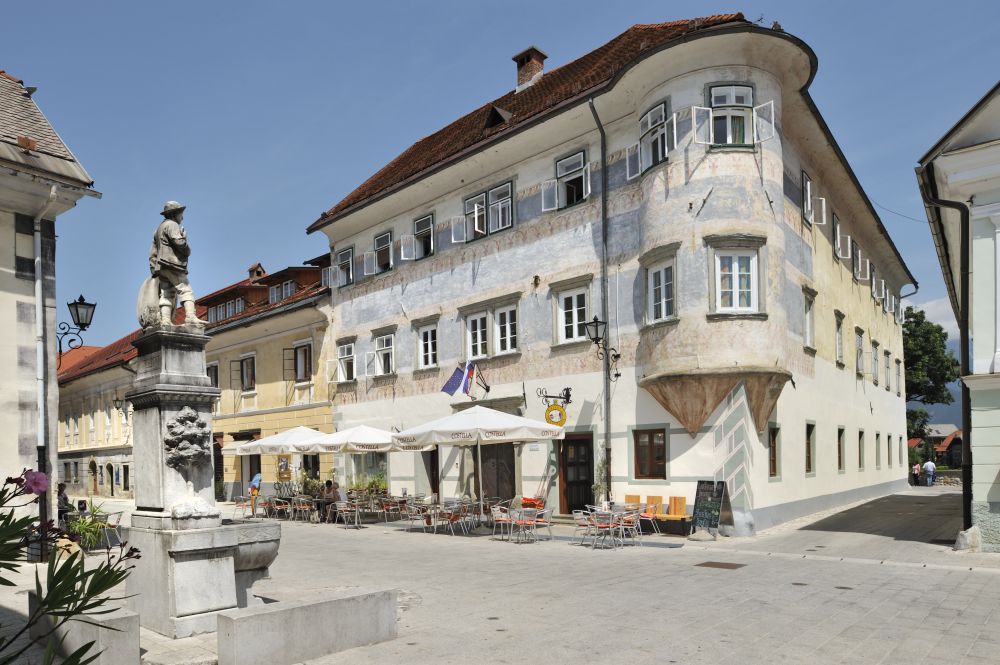
For example, if you are visiting Bled, then turn off the motorway (or get off the train or bus) just one stop early, and within minutes you will be in the historic old town centre of Radovljica where you can see, amongst others, the frescoed townhouses, the Baroque St. Peter’s Church, and the Šivec House Gallery.

Vidic House, just one of the frescoed buildings in the old town

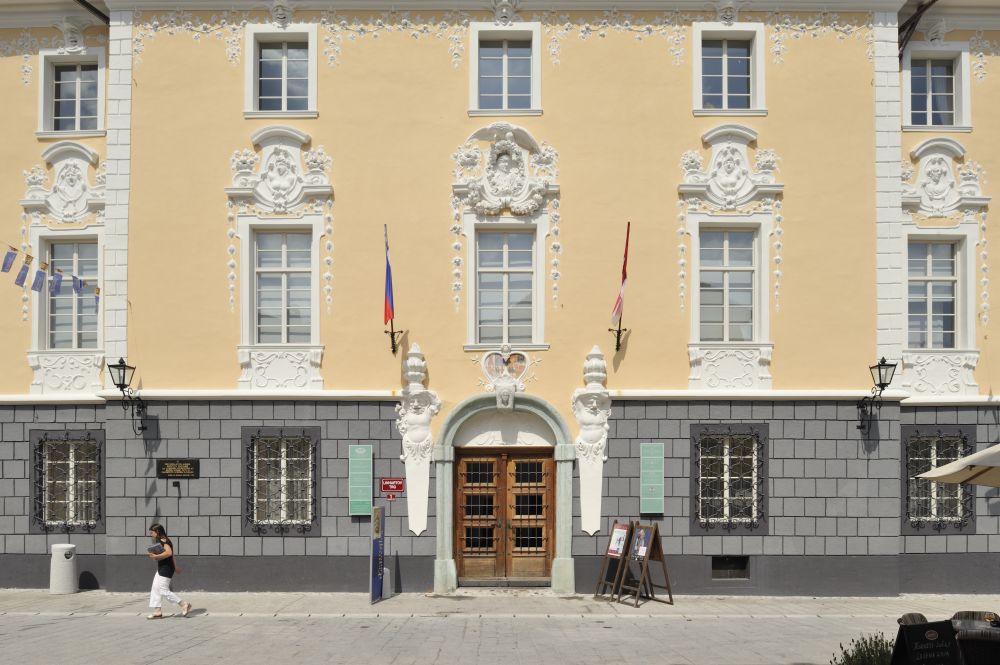
The Radovljica Mansion is home to the Museum of Apiculture, the Municipal Museum, and a music school. During daylight hours the building is always open and visitors are welcome to go in and look at the photographic exhibitions in the entrance foyer.

The Radovljica Mansion

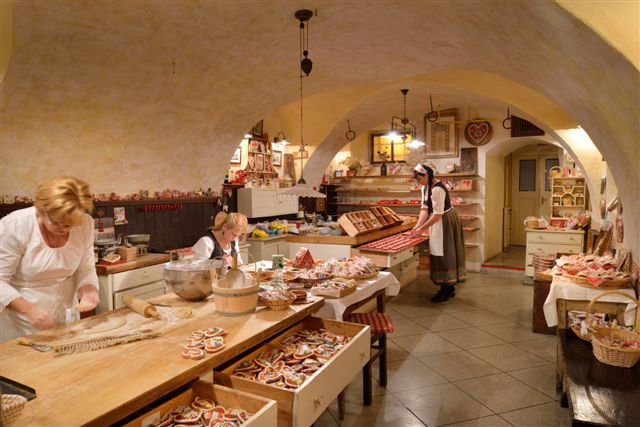
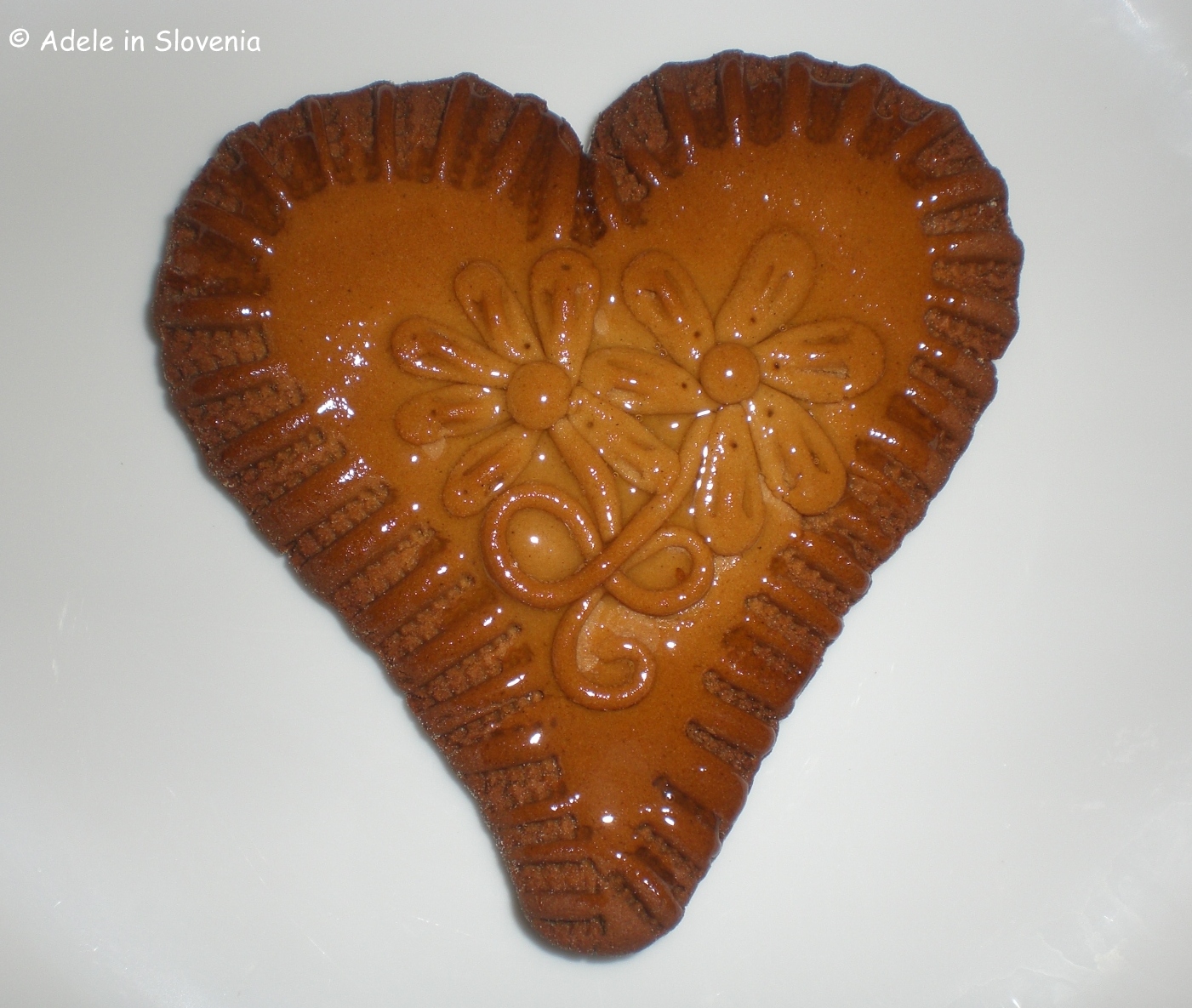
Don’t miss a visit to Lectar Inn where you can try traditional Slovenian food and downstairs visit the workshop with it’s 250-year tradition of making red-iced and decorated gingerbread hearts.

The Lectar gingerbread workshop

Radovljica also offers a wealth of great places to stroll, hike, cycle, do water sports, or partake in other active or less active pursuits. Or you can just sit on one of the benches at the viewing area and and soak up the views of the Julian Alps, the Jelovica Plateau and the Sava River.

Looking back at the old town with majestic Mr. Stol in the background

And be sure to come hungry as you won’t want to miss the chance to taste some of the delicious locally-produced food at the 13 restaurants that collaborate in the Taste Radol’ca project.

In addition to Radovljica , there are a further 13 towns and cities included in the Association of Historical Towns and Cities of Slovenia – Idrija, Kamnik, Koper, Kostanjevica na Krki, Kranj, Metlika, Novo Mesto, Piran, Ptuj, Slovenske Konjice, Škofja Loka, Tržič and Žužemberk.

More information about Radovljica can be found here – http://www.radolca.si/en/radovljica-area/ and more about the association here – http://www.zgodovinska-mesta.si/eng/index.php

© Adele in Slovenia


Bears, Bread and Bukovec in the Poljane Valley

To get the full flavour of the pristine Poljane valley it’s necessary to take your time to explore the area, seek out some of its more hidden parts, soak up the best vistas, visit remote farms, try the tastiest home-produced food and drink, walk its forests and paths, and meet some of the friendly locals – including the bears (read on!). I recommend doing all of this is on a walk on the Path Through Zala (Pot skozi Zalo).

The Path Through Zala theme path runs mostly through the forest in Zala and begins at the Pr’ Bukovcu farmstead (shown as Bukovec on the map), which is located in Žirovski Vrh, high above the Poljane valley. The original farmhouse, Bukovčeva hišadates back to 1639.

Nowadays the farm is a popular place for walkers to stop for refreshments (it’s advisable to call ahead to book, but if you’re passing they can always ‘rustle something up’ if needs be!) and/or to buy a few provisions for along the way or to take home, such as dried fruit, baked goods, milk and schnapps – all of them home-produced and organic. One of the farm’s outbuildings also has an area ideal for group picnics or other such social events.

On Sundays you won’t be able to pass the farmhouse without being lured in by the aroma of freshly-baked bread. In fact, the farm’s bread has become quite legendary and attracts people from far and wide!

The first and last section of the 11km path run along the ridge of Žirovski Vrh, from where, on a clear day, there are panoramic views of all 3 of Slovenia’s mountain ranges – the Julian Alps, the Karavanke, the Kamnik-Savinja Alps – as well as across the valleys below.

Literally everywhere you look there are jaw-dropping views!

If you haven’t got time to walk the entire path, you should at least walk the 3.5km Bear Cub Path (Medvedkova pot), which begins opposite the Pr’ Bukovcu farm. The Slovene writer Dr. Ivan Tavčar wrote a book about Zala, telling the story of Canon Amandus who shot a bear that attacked and severly wounded him in Zala. You can find out more about how the story unfolds on the Path Through Zala.

The Bear Cub Path is marked with yellow paw prints on trees and equipped with 7 boards showing 7 themed games, ensuring the little ones won’t be bored!

The circular path is suitable for all and is easy trail, however, sensible footwear is required as it crosses a stream and traverses undulating forest paths.

The highlight of the path is the 3.5 metre-high bear, Štefka, and bear cub, both made from moss. What a great thing to find in the middle of the forest and there’s no doubt you will want to get ‘up close and personal’ with these bears!

If you walk the longer route of the Path Through Zala, you will also pass some of the many fortifications and bunkers of the Rupnik Line on Goli vrh, built in the 1930’s by the then Kingdom of Yugoslavia as a defence line on the border with the Kingdom of Italy (more about this to come in a future blog!).

Other highlights of the 11km path include the Mrakov grič and Selakov grič viewpoints, the Pr’ Mrak, Pr’ Šimc and Pr’ Omejčk farmsteads, the Hunter’s Lodge, and the Zala stream.

Every year the Žirovski Vrh Tourist Association organises guided walks on the Path Through Zala. This next walk will be held on 2nd May. More information here (in Slovene) – http://www.tdzirovskivrh.si/.

Photo: TD Žirovski vrh

More information about this and other theme paths in the Škofja Loka area can be found on the Visit Škofja Loka website – http://www.visitskofjaloka.si/en/experiences/theme-paths and more about the Pr’ Bukovcu farmstead here (in Slovene only) – http://www.bukovc.si/

© Adele in Slovenia


Beguiling Begunje na Gorenjskem

I’m fortunate to live just a few kilometres from the village of Begunje na Gorenjskem, which is packed full of natural and cultural sights of interest. I spend quite a lot of time there, too, whether hiking, cycling or eating great Taste Radol’ca food. So, in this blog I’ve focused on some of the highlights of beguiling Begunje.

Fans of popular folk music won’t want to miss a visit to the Avsenik family homestead, where the legendary forefathers of Slovene folk music, Slavko and Vilko Avsenik were born. Though, sadly, Slavko passed away in 2015, the family’s music very much lives on.

You can visit the gallery and museum, and/or attend one of the frequent music evenings and other events. More information here – http://www.radolca.si/en/avsenik-gallery-museum/

The Katzenstein Mansion in the heart of the village has had a long and interesting past. Built in the 14th century, its current Renaissance and Baroque appearance is a result of renovations in the 16th, 17th and 18th centuries. 1n 1875 the mansion was sold to Austro-Hungarian judicial authorities and a prison, holding 300 female prisoners, was established. During the German occupation, it became a Gestapo prison and political prisoners were incarcerated in the mansion; after the war it again reprised its role as an all-female prison.

The Museum of Hostages (Muzej Talcev) has been housed in the building at the north-western end of the residential wing since 1961. Inside, on the walls of the former prison cells, you can see written records left by the prisoners and announcements by the occupiers concerning executions. This one says ‘Molimo za mir’ (We pray for peace). Sobering stuff, indeed.

The park in the ground of the mansion is a lovely place for a stroll. It contains a pavilion and the Chapel of St. Joseph, designed by the most famous Slovenian architect, Jože Plečnik, and is also home to a small cemetery where 457 hostages and 18 World War II combatants are laid to rest. The bronze statues of a hostage and a prisoner, as well as the karst marble sculpture of a female hostage are the work of the sculptor, Boris Kalin.

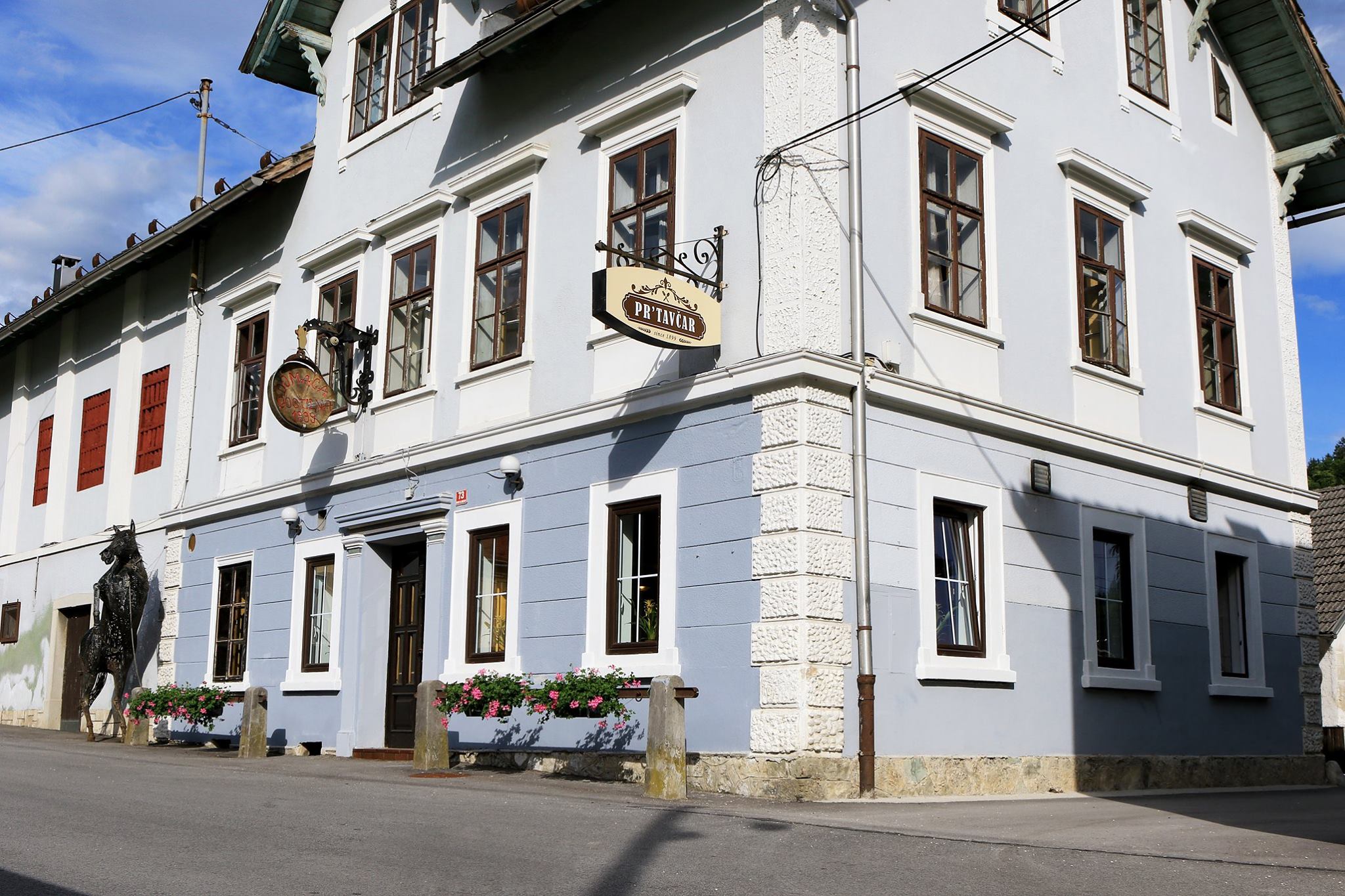
Also in the heart of the village, near the entrance to the hospital and park, is the Gostilna Pr’ Tavčar restaurant, one of the 13 Taste Radol’ca restaurants. In the relatively short time it has been open it has become a firm favourite among locals.

At the end of the village you reach the Draga valley and the imposing ruins of  Kamen Castle, built in the 12th century by the Counts of Ortenburg. More information here – http://www.radolca.si/en/kamen-castle/

Photo: M Kambic

The short drive to the end of the valley brings you to Gostišče Draga, another of the participating Taste Radol’ca restaurants, where specialities include venison goulash, fresh trout, homemade sweet and savoury štruklji, and more. Situated in the shade of the forest beside a stream, it is particularly popular with those seeking refreshment and sustenance after expending their energy in the surrounds.

The Draga valley is a gateway for numerous hiking trails in the Karavanke mountains including, amongst others, to Begunščica, the ever-popular Roblekov dom mountain hut, and the Preval mountain hut.

As you can see, despite it’s modest size, Begunje packs in a lot, so be sure to include a visit on your trip to the Radovljica area.

© Adele in Slovenia


Delightful Dražgoše: The Home of Dražgoše Honey Breads and Serious Sunshine!

The village of Dražgoše is nestled into the southern slopes of the Jelovica plateau, perched at an altitude of 832m above sea-level, above the Selca valley and the town of Železniki. Thanks to its favourable location, Dražgoše is renowned as being one of the sunniest villages around and proudly goes under the slogan ‘Pri nas sonce je doma’ (Here is where the sun is at home).

dsc00440

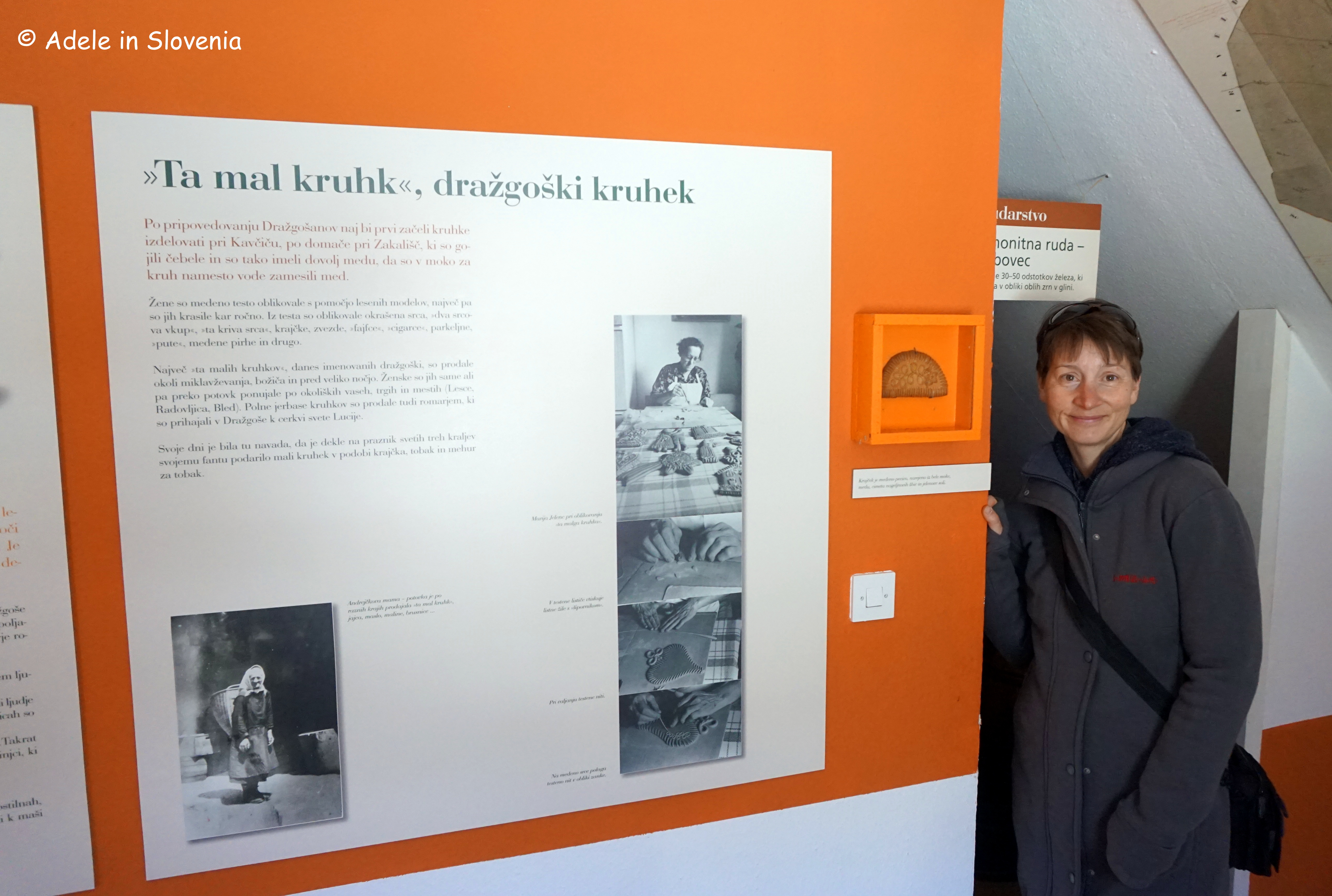
Dražgoše is most known for 2 things – its intricate hand-crafted honey breads and the Battle of Dražgoše. A good place to start a visit and learn more is at the recently reopened Brunarica Dražgoše snack bar.

47966_448360748432_2879696_n

In addition to hot and cold drinks and snacks, you can pop upstairs to the small museum for a brief introduction to the history of the village and the tradition of making honey breads.

dsc00434

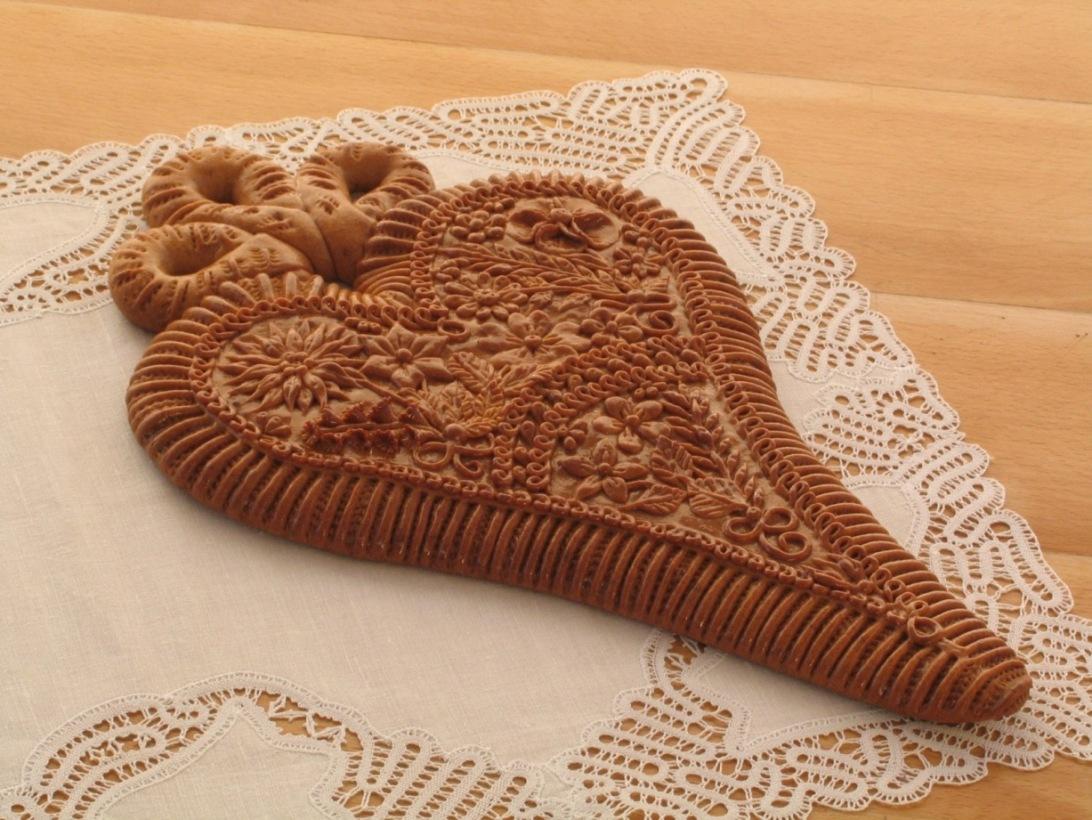
There are 2 types of honey breads made in the Škofja Loka regionLoka honey breads (which regular readers will recall I recently made at the DUO Centre in Škofja Loka, read more here – https://adeleinslovenia.com/2017/01/13/loka-honey-breads-and-handicrafts-at-the-duo-arts-crafts-centre/) and Dražgoše honey breads. The key difference between the two is that Loka honey breads are made using a hand-carved mould, whereas Dražgoše honey breads are made entirely by hand.

I visited Breda Tolar and Alenka Lotrič who are masters in the art of making Dražgoše honey breads and are continuing their grandmother’s tradition.

dsc00443

The dough is made using flour, honey, cinnamon and cloves. The honey is warmed through before mixing to allow the dough to be pliable for rolling and shaping.  Some of the designs are highly intricate and labour-intensive – real works of art. Dražgoše honey breads are edible, though in cases such as this one below, it would be such a shame to do so!

slika_jpg

Whilst I haven’t been blessed with any form of artistic talent whatsoever, these two ‘pros’ made it look easy. Just look closely at their versions compared to mine!

dsc00461

After the intricate patterns are finished, the breads are baked in the oven then glazed with (more!) honey for a shiny finish. All couples getting married at Loka Castle (read more here – https://adeleinslovenia.com/2017/01/01/a-spotlight-on-skofja-loka/) receive a honey bread as a wedding gift. You can be sure that it will look better than my finished effort, though its not too bad for a novice I suppose, and I sure had fun making it, which is what counts!

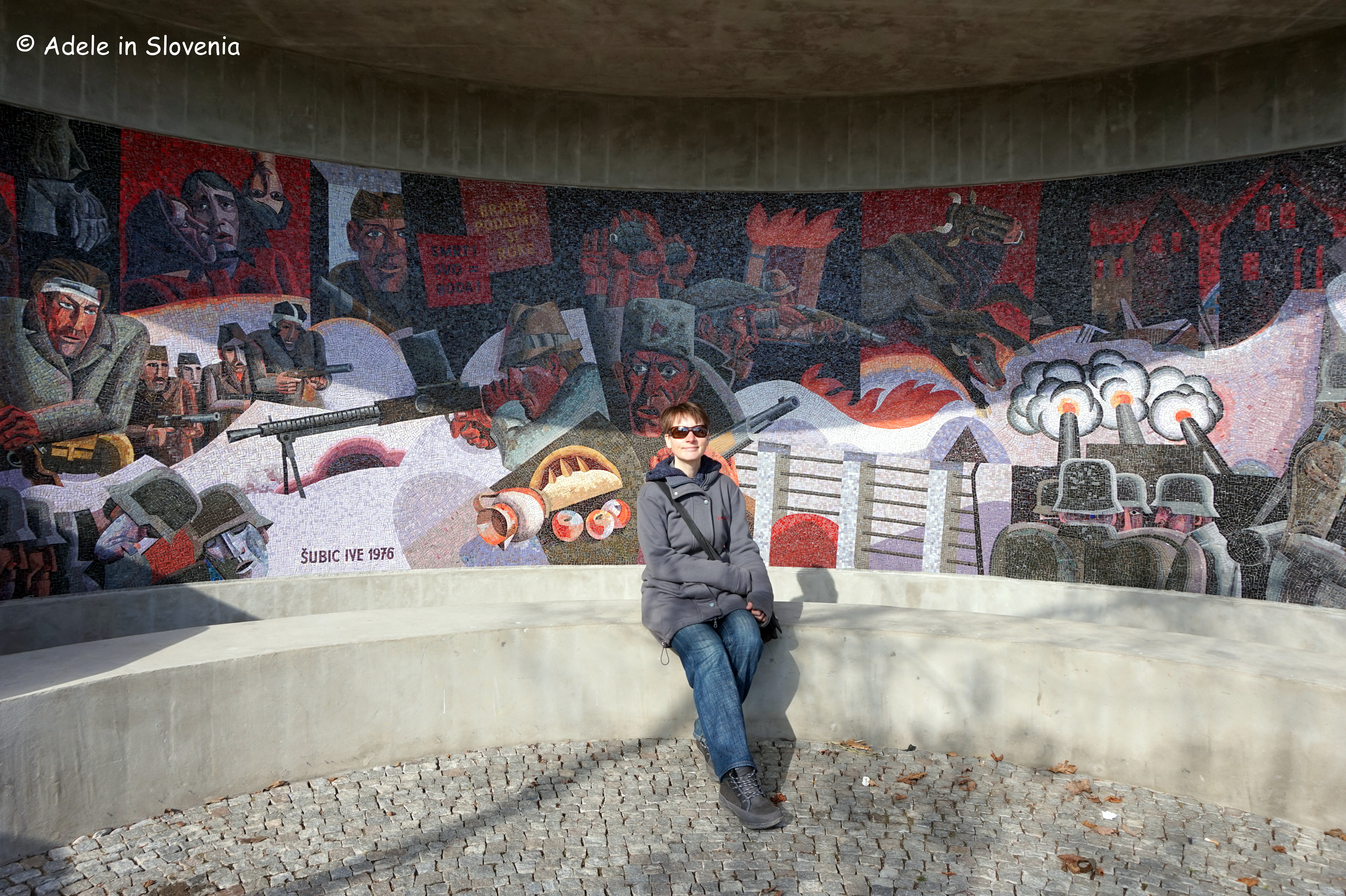
The monument to the Battle of Dražgoše commemorates the World War II battle between Slovenian Partisans and Nazi armed forces, which ended with brutal reprisals by the German forces – executions, looting and torching of buildings – and the destruction of the village. The village was entirely rebuilt after the war. The monument with an ossuary was erected in 1976.

dsc00439

spomenik3_jpg

The painting is by the renowned painter Ive Šubic from nearby Hotavlja who participated in the battle as a Partisan, later returning to depict it in art.

dsc00437

Though the old village church was destroyed in the battle, the Škofja Loka Museum Association was able to move the partly-preserved altars to where they stand today in the chapel of Loka Castle, whilst the original church organs are now in the church in Železniki. In the village you can still see the remains of the church which have been well-preserved and where there is a memorial park.

stara-cerkev

Dražgoše is also an idyllic area for hiking and cycling, albeit, flat it isn’t! In summer I’ve been known to cycle up from home in Radovljica first to Kropa, up to Jamnik and then on to Dražgoše. On this occasion (below), I was feeling particularly energetic and continued down into the Selca valley to Škofja Loka then via Kranj back to Radovljica. It was a long tiring tour but one that I must do again some time!

You can also hike up above the village to the hilltop of Dražgoška gora, visit one of a number of caves (accompanied by a guide), talke a walk along all, or part of, the Spominska pot (the Memorial Path) – a 3-3.5 hour-long route beginning at the Brunarica snack bar.

For more information about any of the above, and/or to arrange a honey bread workshop, contact Visit Škofja Lokahttp://www.visitskofjaloka.si/en/

© Adele in Slovenia

Spring in Radovljica Means Chocolate!

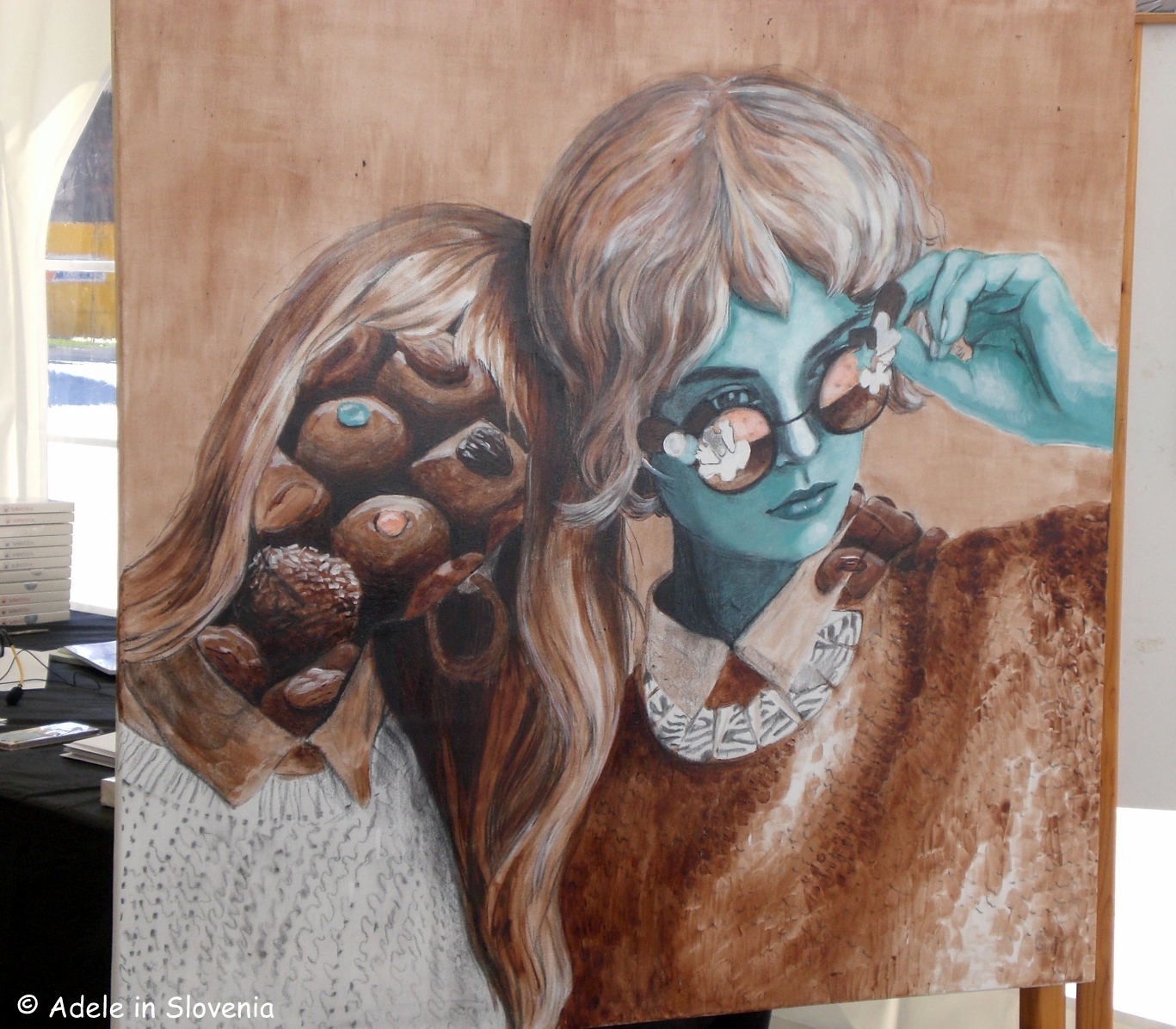
Yes, finally, after the coldest winter for over 30 years, spring is finally springing here in the Radovljica plains. And spring in Radovljica has come to mean chocolate, chocolate and more chocolate, due to the now annual Radovljica Chocolate Festival – this year taking place from Friday 21st – Sunday 23 April. How lucky I am that it takes place in my home town!

Though summer will always be my favourite season, spring isn’t far behind as it’s a time of blooming flowers, Easter, new-born lambs, longer days, warmer temperatures and, in case I haven’t already mentioned it, chocolate!

pomlad-3-3-2017

Photo: Adele in Slovenia

To whet you appetite, and in case you missed it, here’s a recap of some of last year’s festival fun!

Guinness record was broken for the world’s largest chocolate bar by area. The chocolate bar was made by the Cukrček chocolatier and measured over 140 square metres, smashing the previous record of 102 square metres. It took over 300 hours to piece together the 28,000 pieces of chocolate.

cimg0851

There was also a record number of chocolatiers and visitors to last year’s festival, and I have a feeling that this year, the 6th Radovljica Chocolate Festival, could be even bigger and better.

13041065_1077943002248915_5048165062827836274_o

Photo: Aleš Košir

For the first time last year visitors were able to travel to/from the festival by vintage steam train from Ljubljana.

12991053_1352567444758593_7081727616073599369_n

Photo: Adele in Slovenia

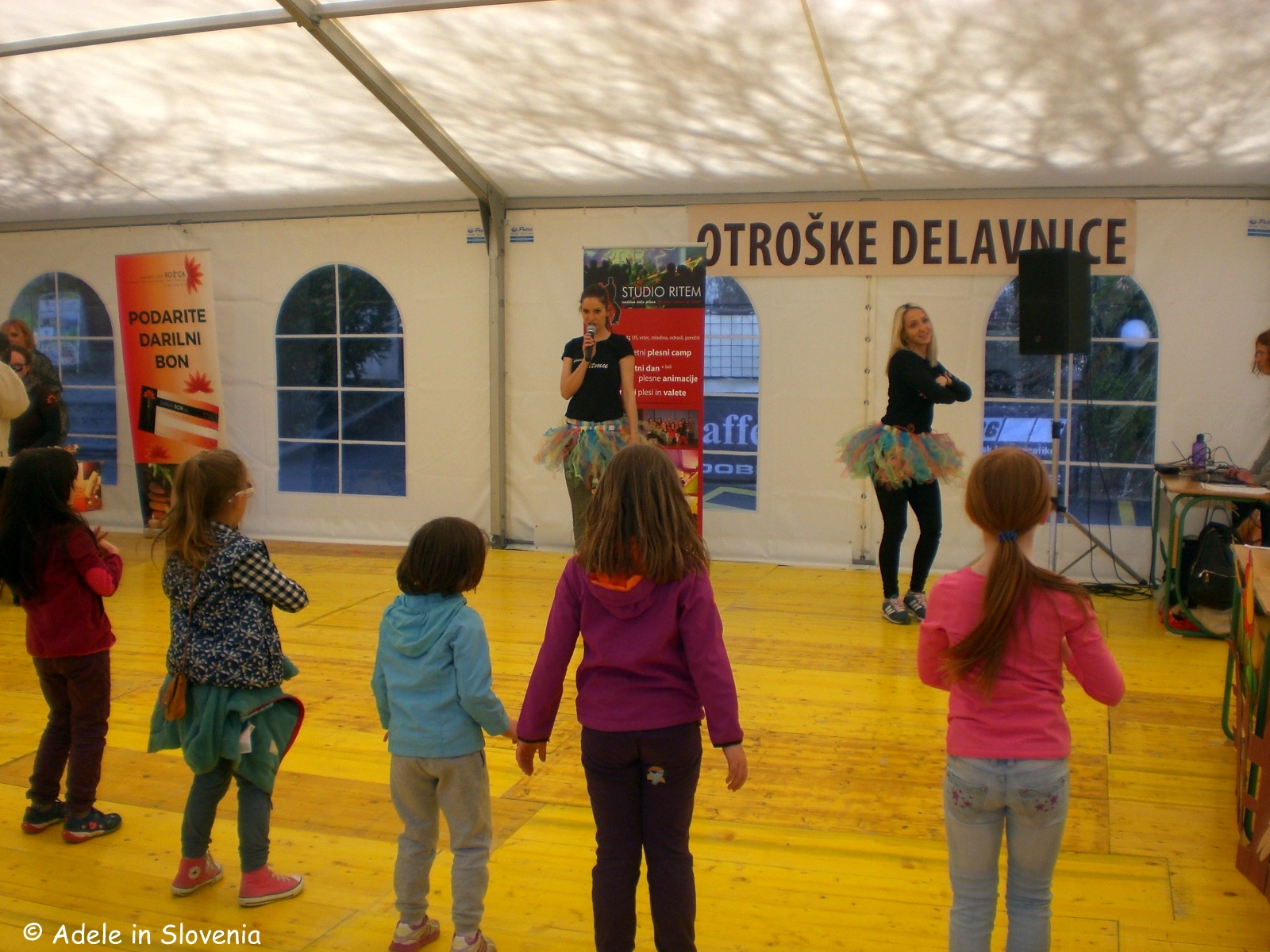
The packed programme also includes chocolate-related entertainment for all the family.

13041252_1077943135582235_4488269117016114694_o

Photo: Aleš Košir

What will this year’s festival bring? Well, the 2017 festival programme is still being prepared, but it will be available soon so keep your eye out on the festival website for updates – http://www.festival-cokolade.si/festival-2017/ as well as on the Visit Radol’ca Facebook pagehttps://www.facebook.com/RadolcaHonestlySweet/

© Adele in Slovenia


A Choctastic Weekend in Radovljica!

Well, it’s been quite an eventful week all in all! After one of the longest, snowiest winters ever, this week saw temperatures up to 25 degrees and Thursday was the warmest day for over 7 months and although it’s cooled down a bit now and is raining, the fine weather looks set to return later this week. It’s so great to be able to be outdoors more and to be dressed in light clothing again, no more being buried under layers and layers of thick clothing!

I changed the tyres on my car this week, well not me obviously, but I took them to be changed – not every exciting but necessary. In this part of Slovenia, by law you have to have winter tyres between 15th November and 15th March. However, with the long winter this year most people, me included, waited longer than usual to be sure that we have really seen the end of the snow (surely we have now!) before changing to summer tyres. It can be a bit of a faff having to change the tyres twice a year, not to mention the cost, because also it means having to have 2 set of tyres and these have to be changed every 5 years, regardless of the profile or how much you drive. Even if you had your car in the garage for 5 years, you would have to buy new tyres. Still, it’s all just a part of life here!

Last week Radio Slovenia International visited Radovljica to do a live broadcast and I was interviewed. I was asked to give an insight into life here as a foreigner, what is great about Radovljica and the differences between life here and in the UK.

The long awaited and much anticipated 2nd Festival of Chocolate took place this weekend in Radovljica. It was of course my duty to attend and taste as much chocolate as possible in order to be able to blog my findings! After last year’s unexpectedly high turnout, this year the event was even bigger and better and also spanned across 2 days. It took place in Linhart Square (Linhartov trg) in the old town centre and in the Radovlijca Mansion House (graščina).

festival_cokolade_1


Radovljica Festival Cokolade 20 april 2013 007

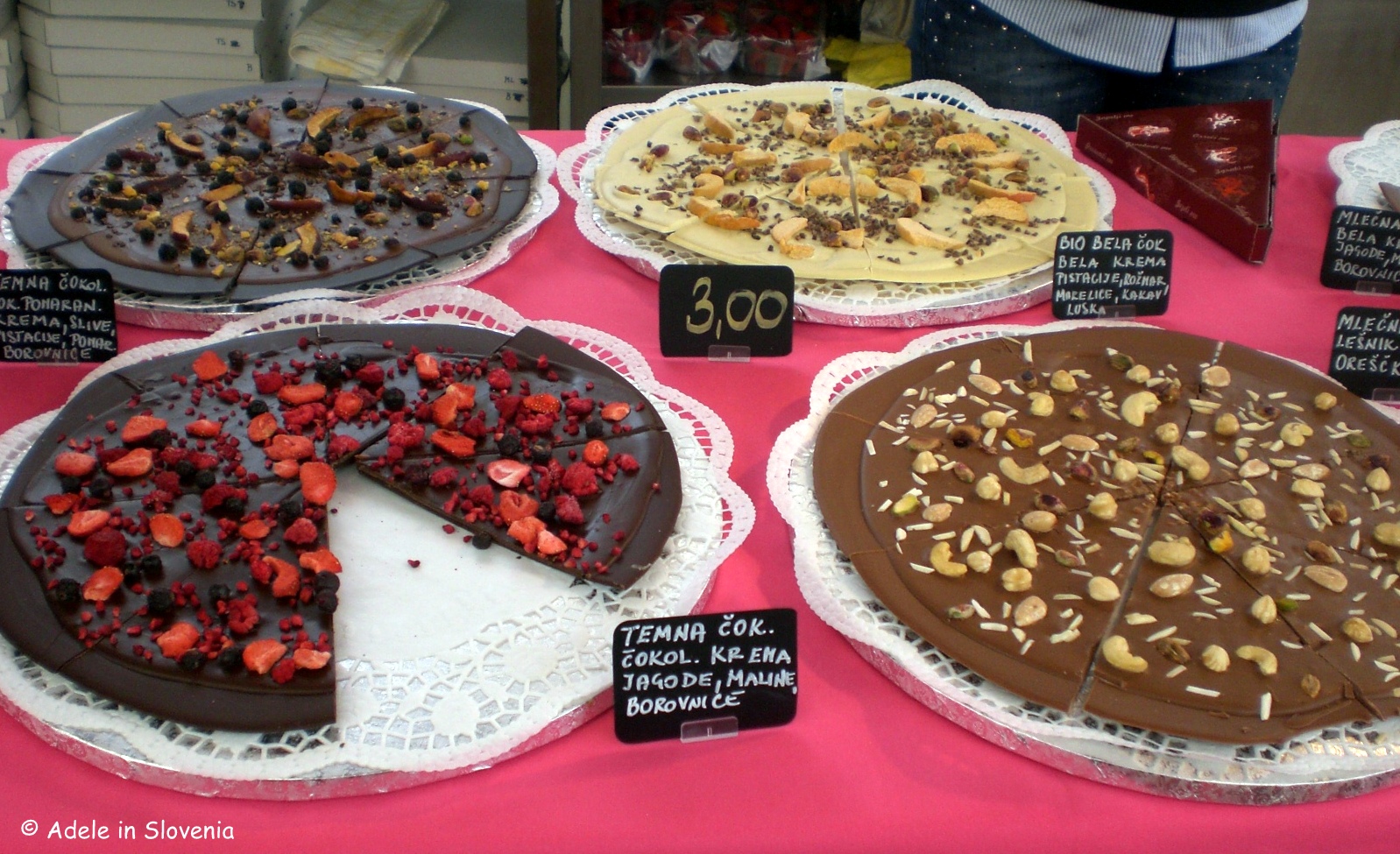
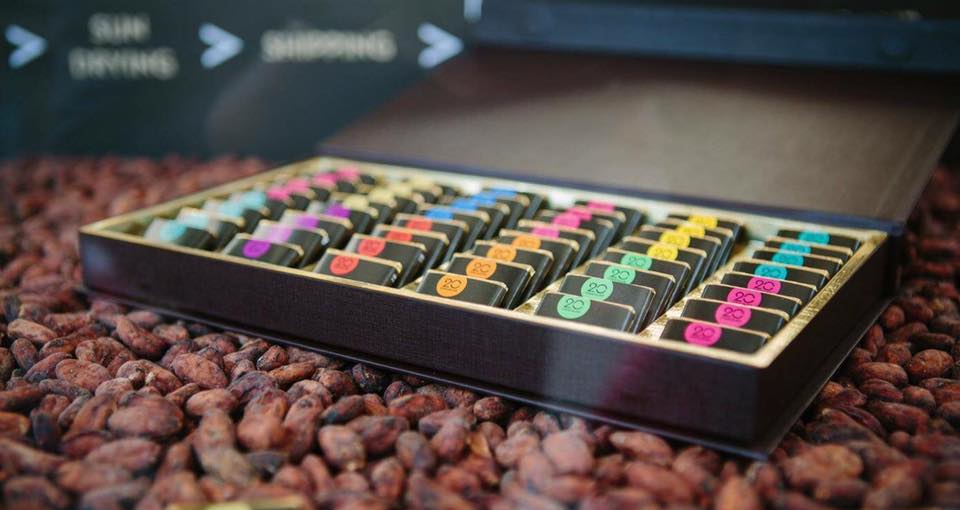
There was every kind of chocolate product you can imagine – from the more tradition to some highly unusual and unique flavour combinations such as dried figs with basil coated in chocolate, chocolate with pumpkin seeds, chocolate with aniseed and quince chocolate cake. In order to sample the products, tasting coupons are bought, which cost 0.50 cents each then it’s a case of wandering from stall to stall deciding which of all the delicious things on offer to taste – decisions, decisions, and as you can see from the pictures below, I managed to amass quite an impressive collection!

Radovljica Festival Cokolade 20 april 2013 009

It would be impossible to pick a favourite, since I generally love anything and everything chocolate related, although I have to confess I’m not a fan of bitter dark chocolate, but other than that I love it all! Among my favourites was the Preseren’s Cylinder dessert, the speciality of the team at the Lambergh Chateau and Hotel in Dvorska vas. It consists of a chocolate waffle, Parisian cream, dried figs marinated in cognac and chocolate syrup. They had prepared miniature versions especially for the event but I hope to go and taste the full size version some time soon! The students from the Radovljica School of Catering and Tourism (SGTŠ Radovljica) also prepared some delicious cakes and biscuits and the chocolate cocktails from the Lake House Inn (Jezerska hiša) also went down rather well!

In addition to the stalls, there were also loads of side events taking place including cooking shows, workshops for adults and children, street performers, a chocolate themed fashion show, a cocktail mixing show and a theatre improvisation performance. After the success of this event, it’s sure to become a regular fixture on the Radovljica Event Calendar – http://www.radolca.si/en/ and I would definitely recommend a visit whether you are a chocolate lover like me, or for any chocolatiers, from both Slovenia and abroad, who wish to showcase their products to a large audience.

Radovljica Festival Cokolade 20 april 2013 012

The next day for the diary is the Radovljica Pottery Festival, the main events of which will be taking place on the 24th/25th May. More information can be found here http://potteryfestivalradovljica.weebly.com/

After all that indulgence, it’s time to get running/cycling/hiking again. It is now possible to get up to around the 1000 metres mark before encountering snow, although in shady areas there is still snow lower than this. However, above this the snow is still deeper than I am tall and unfortunately it still not safe to go hiking high in the mountains right now.

An illustration of this is the report I heard on the news this week about how workers are working 10 hours a day to try and clear the snow from the Vršič pass. At 1611m, Vršič is Slovenia’s highest mountain pass. It crosses the Julian Alps and is usually closed over the winter due to the snowfall and high susceptibility to avalanches. This year, with the extreme amount of snowfall, it is taking longer than usual to clear it and in some places, due to avalanches, there is up to 8 metres of snow – unbelievable but true! Although it provides a vital link between Gorenjska and the Soča Valley, the Vršič pass is in itself a tourist attraction and one about which I shall definitely be writing more in the weeks to come.

© Adele in Slovenia
It’s Spring and Radovljica is Alive!

Winter seems to have finally lost its vice like grip and spring has courageously battled through and taken over – yippee! Walking around Radovljica this week has been a pleasure – seeing people sitting outside cafes for their morning coffee, children (and some adults too!) eating ice-cream, people playing various sports in the sports park and generally people emerging from the long winter spent cooped up indoors – much like bears awaking from their winter hibernation – and enjoying feeling the warmth of the sun. Never have I been so pleased to see that large, round, yellow, warming object in the sky on Tuesday – it’s got some making up to do so let’s hope it’s here to stay. I also hope it will get to work on melting some of the metres and metres of snow in the mountains so I can get up high hiking again asap.

Although I’m not entirely adverse to winter walking in the fresh snow during the winter ‘proper’, by this time of year the novelty of walking in the snow has long since worn off am I’m longing to be able to start walking to some of the higher lying areas. However, in the meantime, its time to get resourceful and find places to walk which are a little lower and south facing, where the snow has already begun to melt. I co-wrote a guidebook about Slovenia some time back and from the time when I was researching it and gathering information, I have a folder full of brochures and leaflets which, at times like these come in very handy. So a rummage through the folder led me to deciding on walking the Ostroverhar Trail on Saturday, and a good choice it was too!

Podgrad pri Lj 13 april 2013 004

The circular trail starts in the village of Podgrad, near Ljubljana and leads over Kašelj hill (Kašeljski hrib) and past the remains of two medieval castles, both of which were a part of the Osterberg property, home of the Ostrovrhar knights. The Old Castle (Stari grad) is thought to date back to 1256 and first belonged to the Spanheim family. Over the years it has had numerous owners but since 1930, it has been the property of the Kansky family, manufacturers from Podgrad. Another interesting feature of the path is the millstone quarry beneath the castle. Here, since the Middle Ages until production ceased, millstones were cut (like the one I’m sitting on below), with a diameter of about one metres and a thickness of 20 centimetres, and you actually still see where they were cut from the rock. The path is well-marked and it took about 2.5 hours to walk the entire trail.

Podgrad pri Lj 13 april 2013 005

Podgrad pri Lj 13 april 2013 012

Sunday was a beautiful, warm, spring day so it was time to dust off my bike and get the cogs turning once again. I haven’t cycled properly since October so it was a tentative start but as they say, you never forget how to ride a bike, and once I got going it felt great. I cycled to the Završnica valley where, at the start of the valley, there is a small reservoir. This is also the start point for many hikes in the surrounding Karavanke Alps – more about which I will be writing as soon as the snow has melted!

Zavrsnica

Preparations are in full swing for next weekend’s Festival of Chocolate in Radovljica – if you are anywhere near the area, don’t miss it, it’s sure to be a delicious weekend! Last year’s event was so popular that this year it has been extended to two days. This year, there will be a new system in place whereby coupons can be purchased which can then be exchanged for tastings of the chocolate goodies on offer at all the stalls. More information about the festival can be found here – http://www.festival-cokolade.si/  As probably the world’s biggest chocoholic, I will definitely be paying a visit!

© Adele in Slovenia

A Change of Scenery: Radovljica – Ljubljana
I love nothing more than discovering somewhere new to walk and force of circumstances i.e. the ongoing bad weather, meant I did just that on Saturday. Radovljica offers endless possibilities for outdoor activities when the weather is good, hence why I like living here. However, with the current conditions i.e. still over 3 metres of snow in the mountains and a week of non-stop rain making the ground that isn’t snow covered completely sodden, by Saturday this week I was feeling pretty desperate to get away for a change of scenery and walk somewhere ‘normal’.

Since the completion of the motorway, it now takes only around 40 minutes to drive from Radovljica to Ljubljana, or around an hour by train. Once a month when I work in Ljubljana I often go for a stroll in Tivoli Park. I usually park in the same place and walk the same way in and out of town as although its far from a big city, I find the layout of Ljubljana somewhat confusing and seem unable to mentally link together the different areas, despite others saying Ljubljana is really more like just a big village. Whenever I walk around Tivoli, I have often wondered where the many paths, which branch off every which way, lead to – but haven’t ever, until now, taken the time to go and explore them. Now I have, it feels like I’ve unearthed a whole new side of Ljubljana which I previously wasn’t aware of and I certainly didn’t know there was a skiing jumping centre in the middle of the woodland slap bang in the centre of the city – a revelation indeed!

The regional park, which comprises the areas of Tivoli and the Rožnik and Šišenski hills, extends over an area of 5km² and is a favourite place among locals for all kinds of recreation; walking, running, cycling and even ski jumping! The ski jumping centre is part of the Mostec Recreation Centre, a great place for a picnic and there’s a fitness trail which involves lots of torturous looking jumps, lifts etc. and looks pretty hardcore, not the usual run of the mill poor attempts I’ve seen elsewhere! Rožnik hill is the highest part of the park and from the top, where there’s a café and a church, there are great views across the city. Ljubljana Zoo is also within the boundaries of the regional park on the southwest side of the Rožnik hill. I didn’t actually go into the zoo on this occasion but there’s more information about it here  http://www.zoo-ljubljana.si/index.php?id=1&L=2 and here is a photo of the bronze statue of the bull, which stands at the zoo entrance, by the renowned Slovene sculptor and painter Janez Boljka.

DSC_5823_kipi_janeza_boljke_small

It struck me this morning what an awful job it must be being a weather forecaster at the moment. They must get accosted every time they walk out the door by people asking “What on earth is going on?” The strange phenomenon that is this year’s weather in Europe has meant that so far this year there has only been the equivalent of 6 days of sun here and whereas last year’s temperatures at this time of year were above average, this year they are well below. Winter is still stubbornly refusing to bid farewell yet Iceland seems to be getting all the sun as I read they have had far more than usual! It’s all quite bizarre and can it can only be hoped that it is just a one-off occurrence.

I’m constantly amazed by the number of people from all over the world, who have found and read my blog. It’s fascinating to see where in the world people are reading about little old me and my life here and hopefully gaining more recognition for Radovljica too. I’ve received compliments from far flung places as well as from several locals too. Last week I was even interviewed for the local paper – due out next month!

© Adele in Slovenia