The Škofja Loka Hills and Caves: Lubnik and the Kevderc Cave

Lubnik (1025m) stands prominently above the town of Škofja Loka and is a favourite, and very accessible, hiking destination.

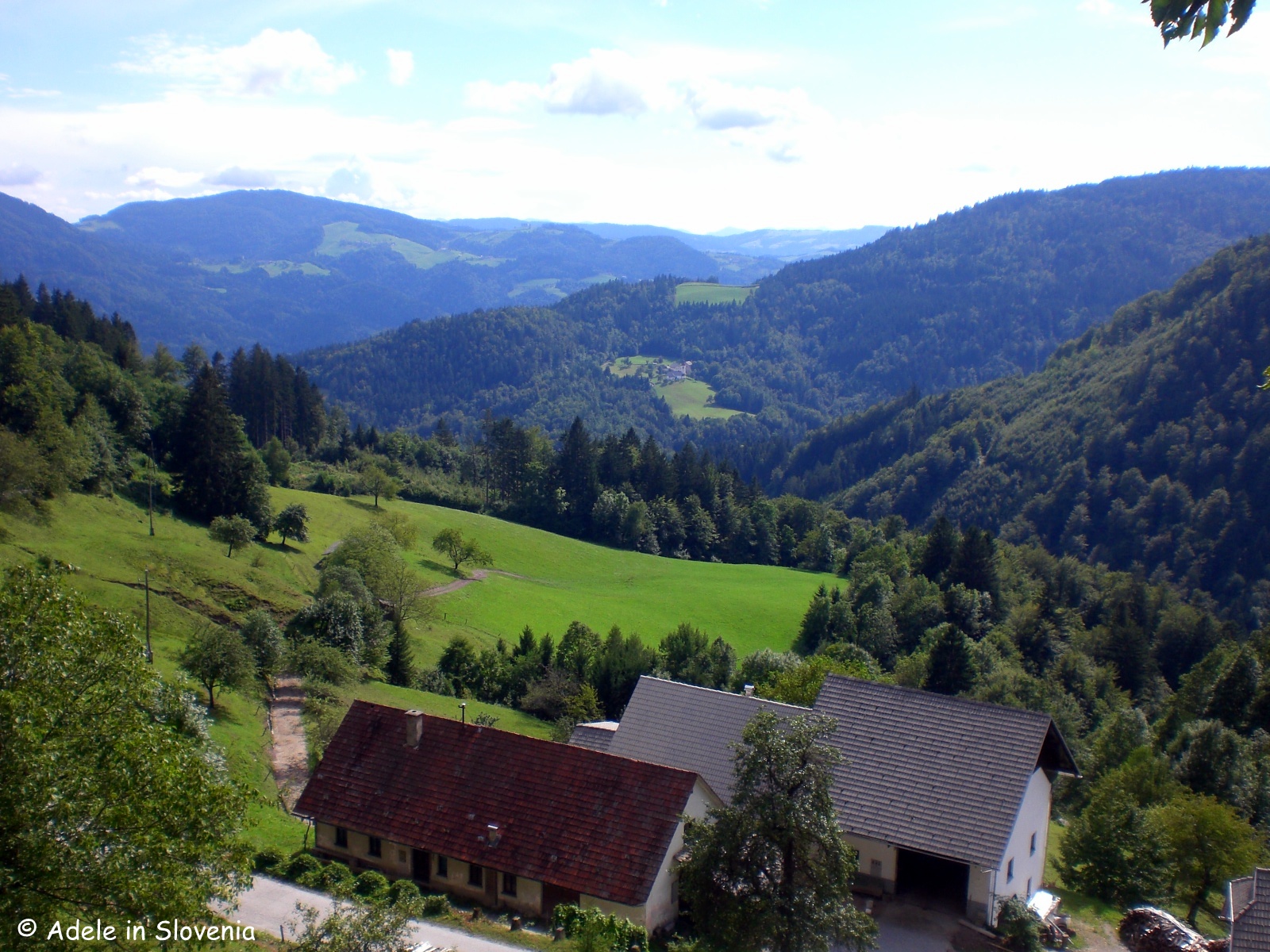
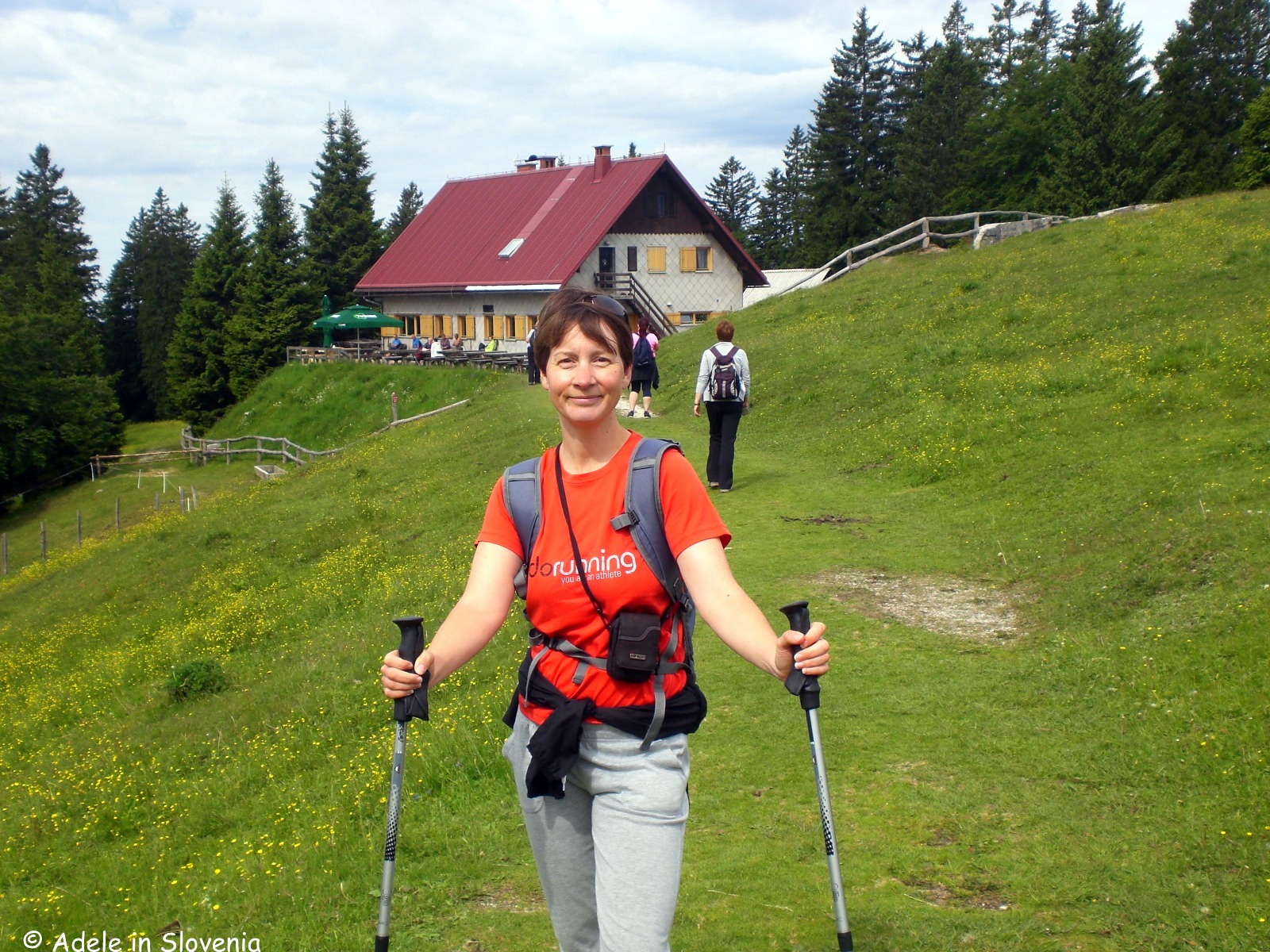
There are a number of paths to the top. You can start directly from the old town centre and take the marked path via Loka Castle and Gabrovo, from where it takes about 2 hours to reach the Dom na Lubniku mountain hut or, for a shorter hike, drive up the windy road to the village of Breznica pod Lubnikom, from where it takes just 40 minutes to reach the top and where the views are already inspiring.

As regular readers of my blog will know, I have a penchant for taking the longest possible hiking routes to reach my destination, and much prefer to walk or cycle rather than drive – anywhere and everywhere! However, I had an ulterior motive, or rather two, for choosing the shorter route in this case, namely to visit the Okrepčevalnica Malina snack bar and to find out more about the nearby Kevderc cave.

Whichever path you choose to Lubnik, you will find that they are all very well-marked with the usual red circle with a white inner painted on trees, rocks etc., so orientation isn’t a problem. The path is almost entirely through the forest, so even on the hottest of days it is pleasantly cool.

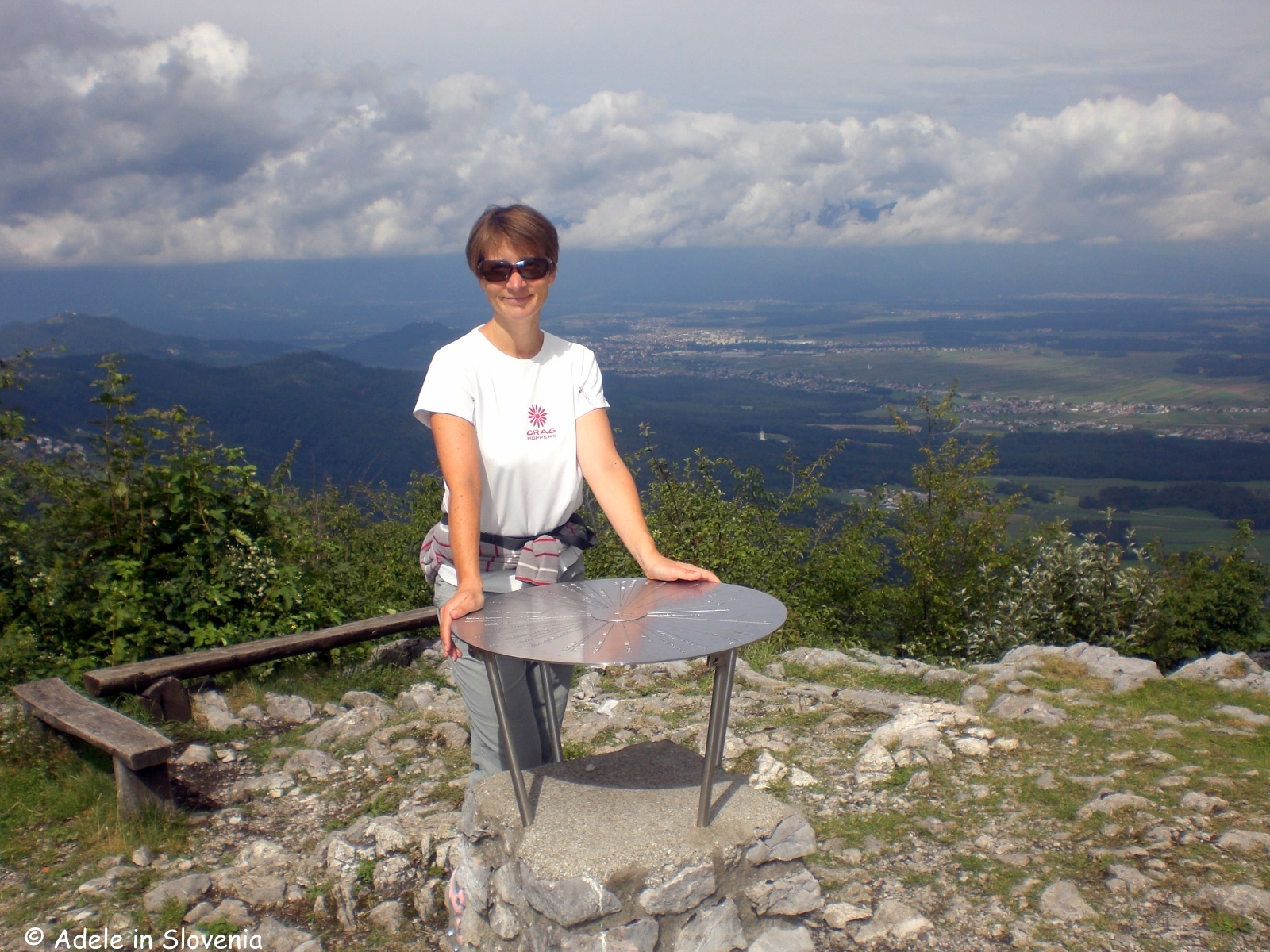
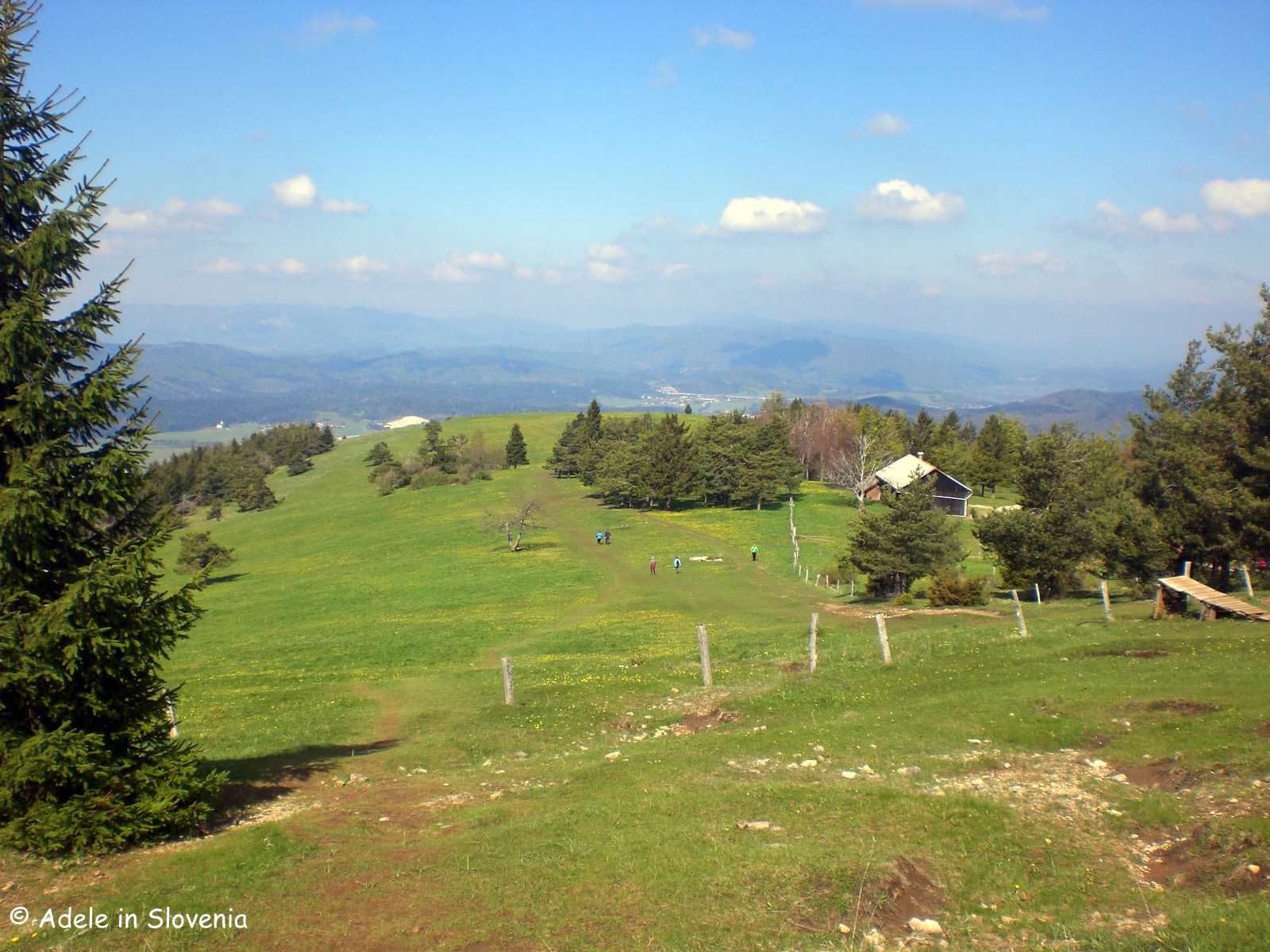
On a clear day, from the hut there are far-reaching views of the Karavanke mountains, the Kamnik-Savinja Alps and the surrounding Škofja Loka hills.

Dom na Lubniku is open year-round; during winter on Fridays, Saturdays, Sundays and public holidays; from the end of April to the end of October daily except Mondays.

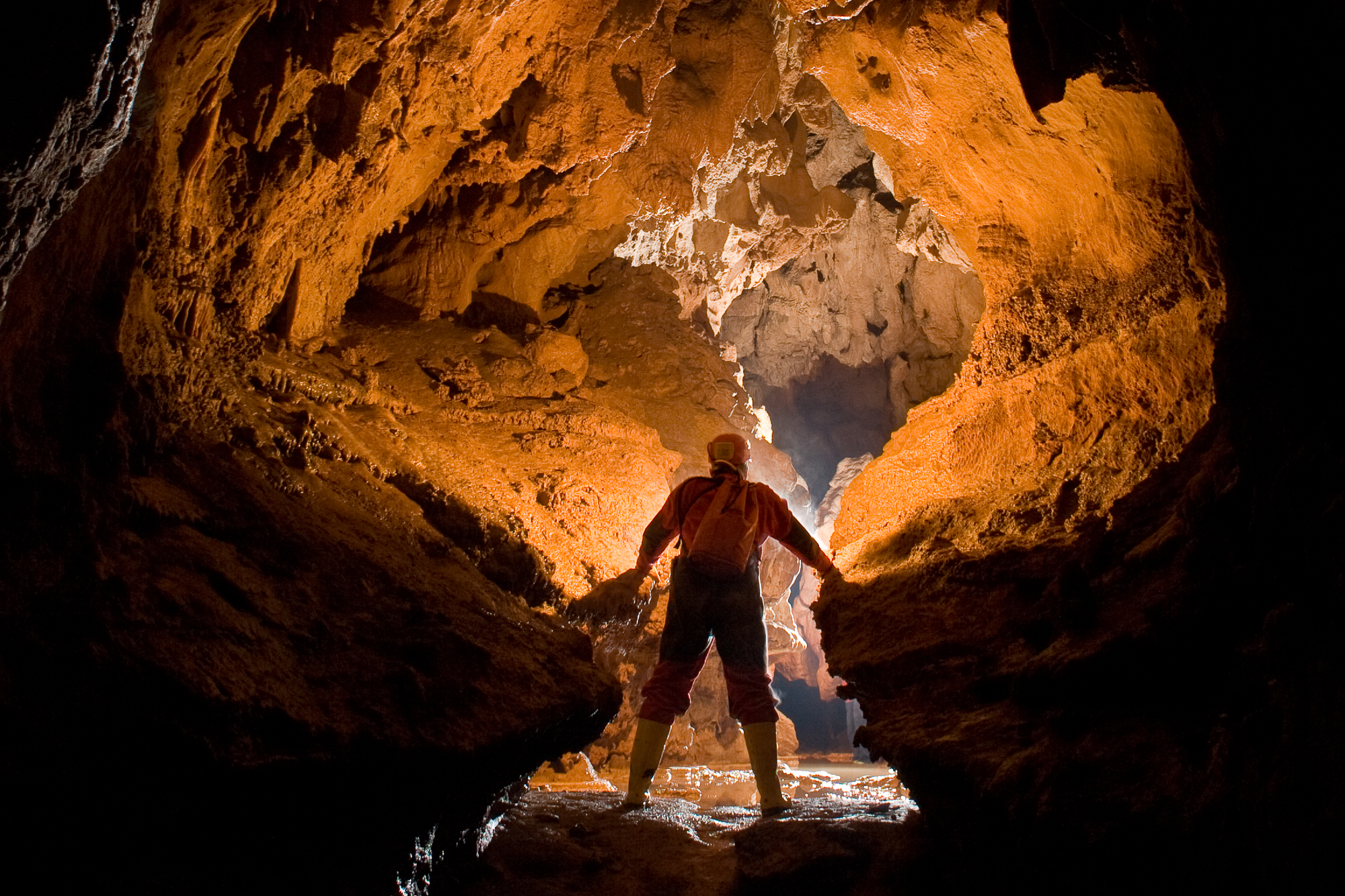
Also in the vicinity of the path to Lubnik is the fascinating Kevderc cave. Though nowhere near as well-known as Slovenia’s main tourist caves (Postojna, Škocjan, the Križna cave…), those who take time to visit the Kevderc cave will be captured by its beauty, perhaps even more so as it is so pristine, mysterious, and less-trodden.

Photo: Simon Primožič

From the entrance to the cave it is just a few metres to the first large hall which passers-by are free to access, providing you have sturdy footwear and a headlamp.

Photo: Simon Primožič

Some sections of the cave, however, can only be explored by experienced cavers.

Photo: Simon Primožič

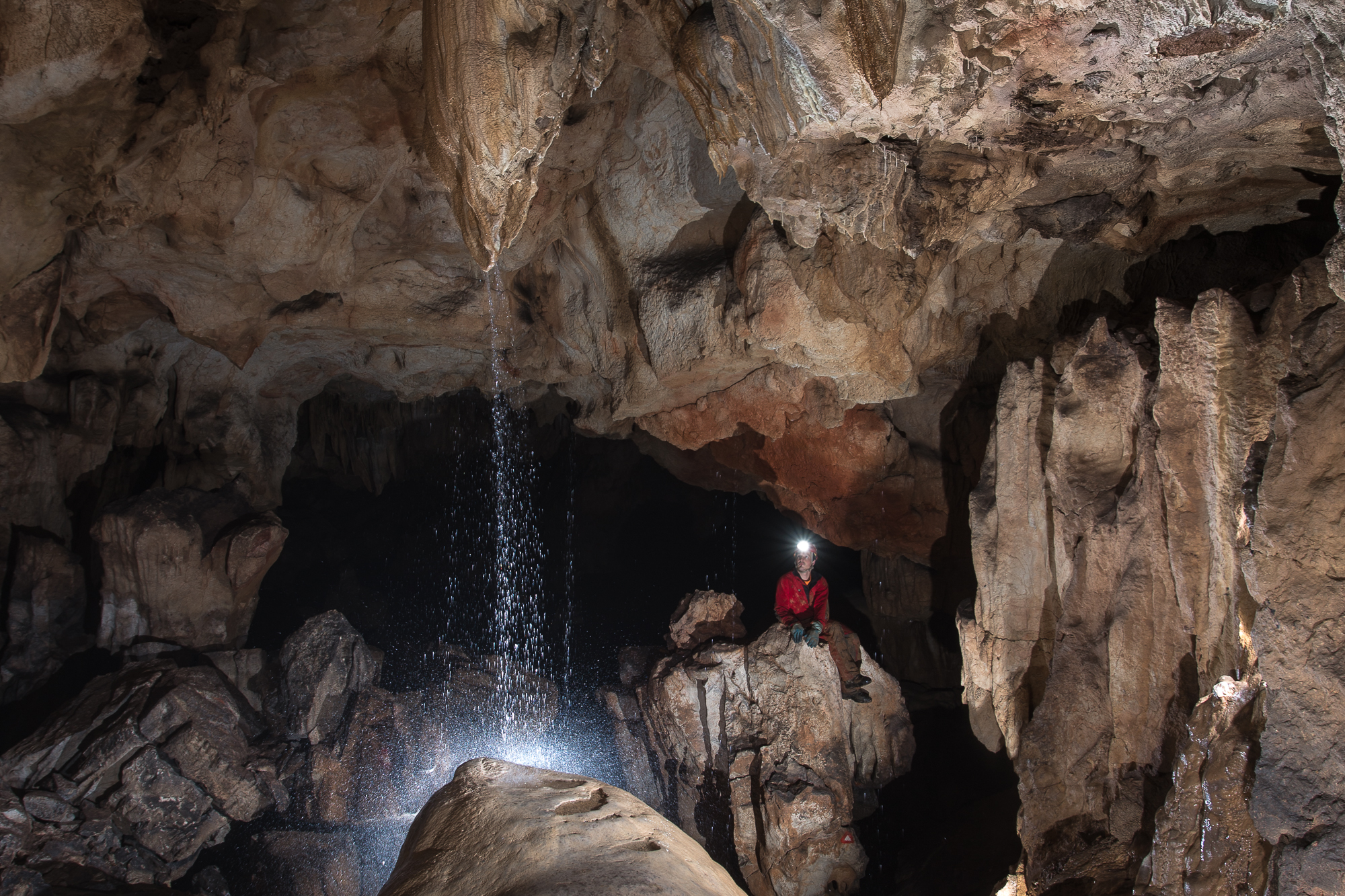
During periods of heavy rainfall, all the water from the surface runs into the cave, creating a unique fairytale-like scene.

Photo: Simon Primožič

If you would like to explore the cave further, for safety reasons it is recommended that you contact the Škofja Loka Association for Exploring the Underworld (Društvo za raziskovanje podzemlja Škofja Loka) to arrange a guided tour. Just a few metres away is the Lubnik cave, which can mostly be explored without a torch as natural light floods into its interior. For more information contact DRP Škofja Loka: +386 51 244 244, info@drp-drustvo.si.

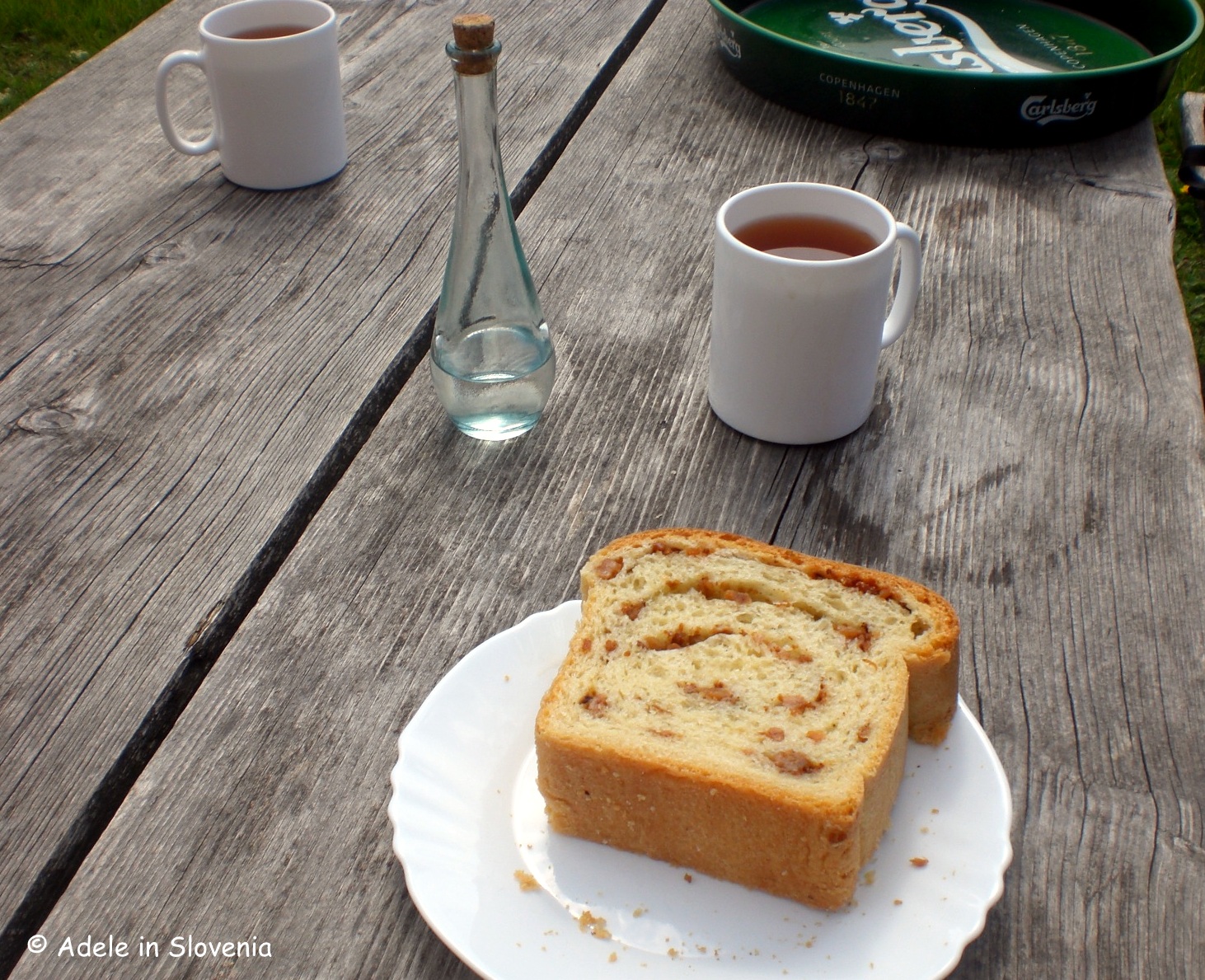
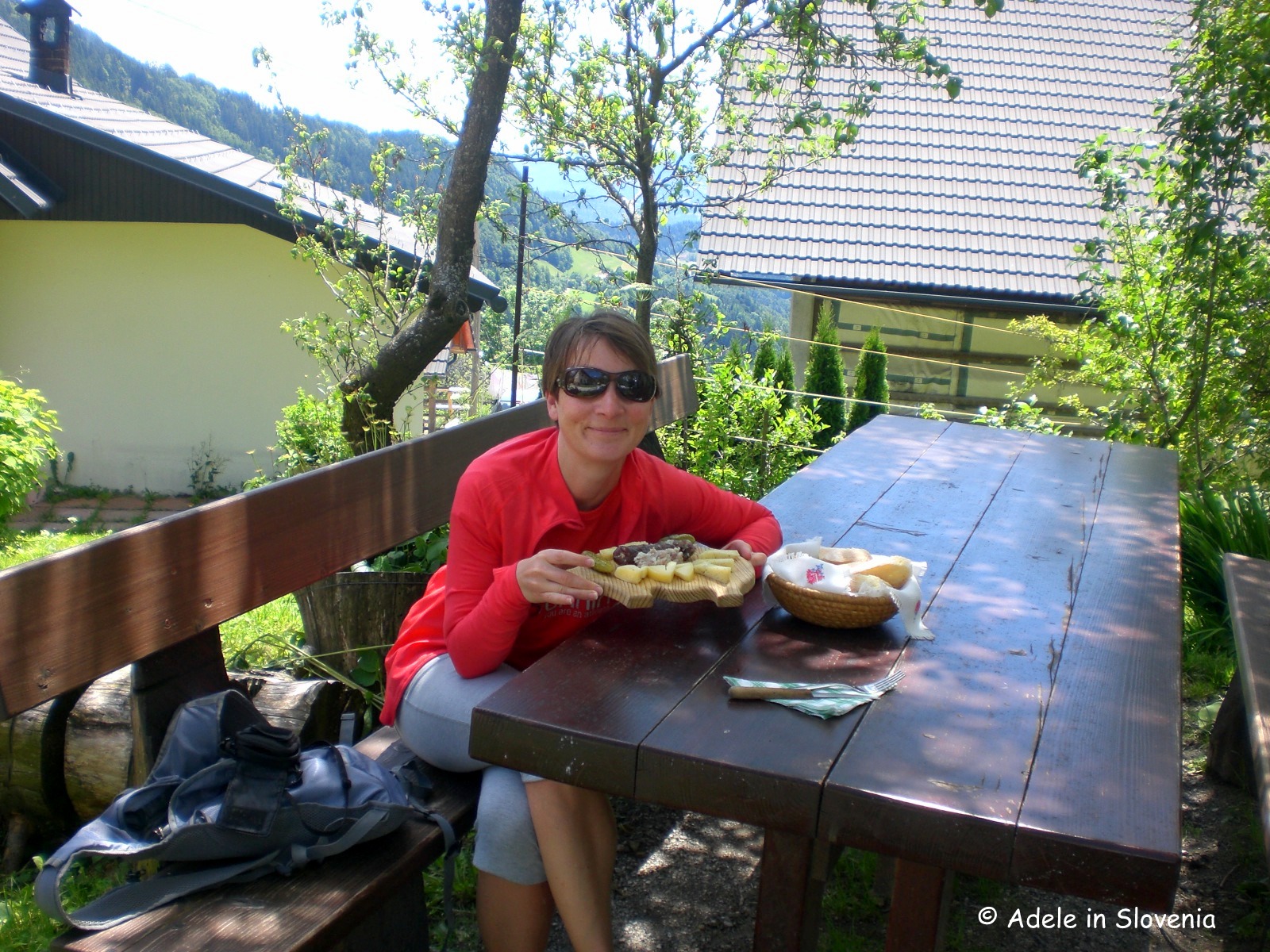
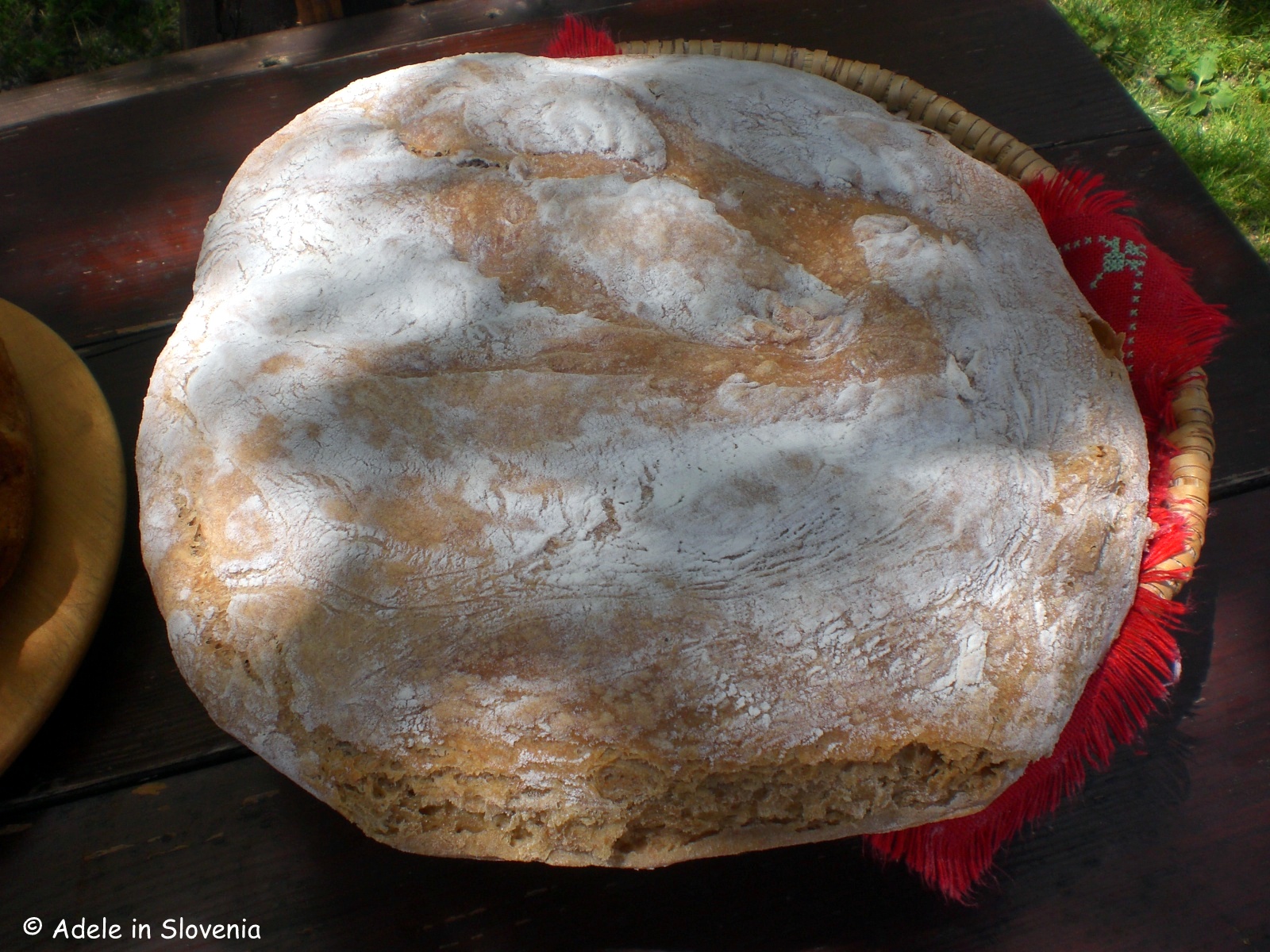
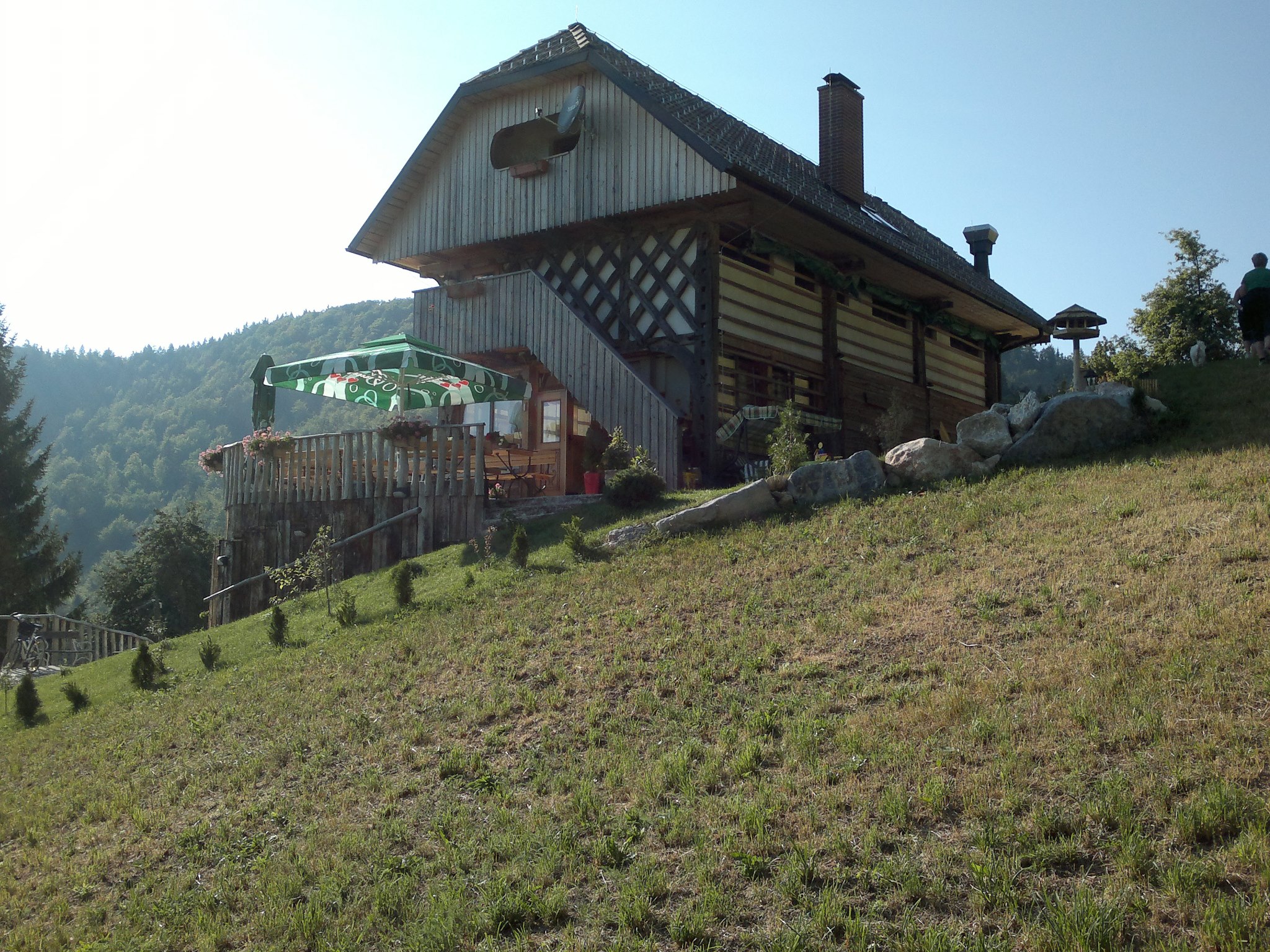
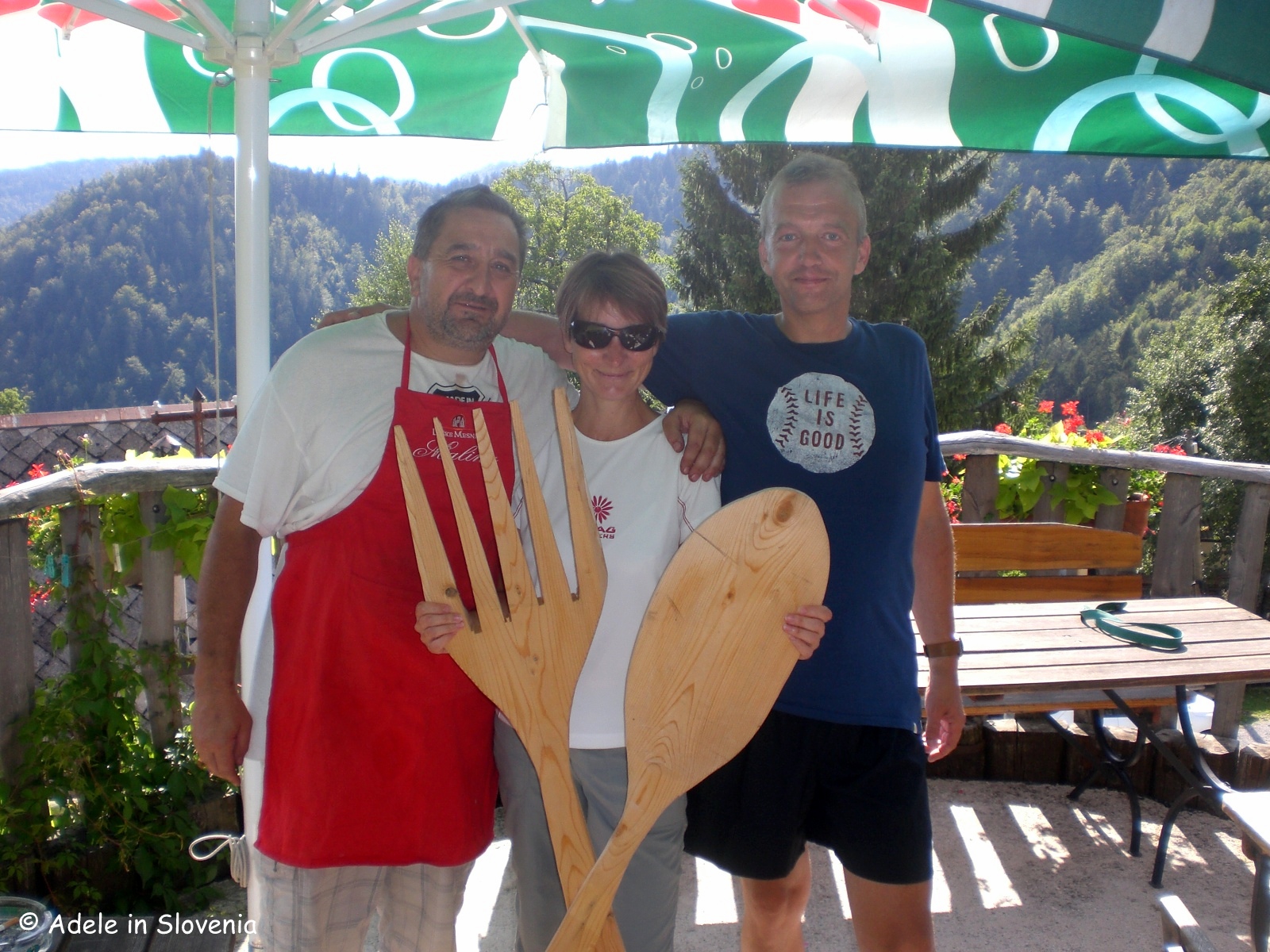
After your hike and/or exploration of the cave, or for those cycling past on the Škofja Loka Cycle Route, I recommend stopping at the Malina snack bar (tel: 041 809 900), which is just metres from the path to Lubnik in Breznica pod Lubnikom, where you can enjoy refreshments with a view!

Traditional Gorenjska snacks, soups and stews are always available, and, upon prior arrangement, for special occasions you can enjoy a real feast!

In fine weather the view from the terrace is a winner, but, whatever the weather, you can be sure of a friendly welcome!

As my visit coincided with a group celebration, I had a chance to see how the food is cooked outdoors over hot coals.

So, as you can see, on this occasion letting the car take the strain was worth it, but you can also see more of this area by bike as it is part of the Škofja Loka Cycle Route. More information can be found on the Visit Škofja Loka website here – http://www.visitskofjaloka.si/en/

© Adele in Slovenia
Keep Cool in Kropa: The Source of the Kroparica Stream

The recent heat wave across many parts of southern Europe, including Slovenia, has seen temperatures in the mid-high 30s. I LOVE the heat and HATE the cold, so I haven’t been complaining, and since Slovenia is almost 60% covered by forest and there are rivers and streams aplenty, there’s always somewhere to escape the heat.

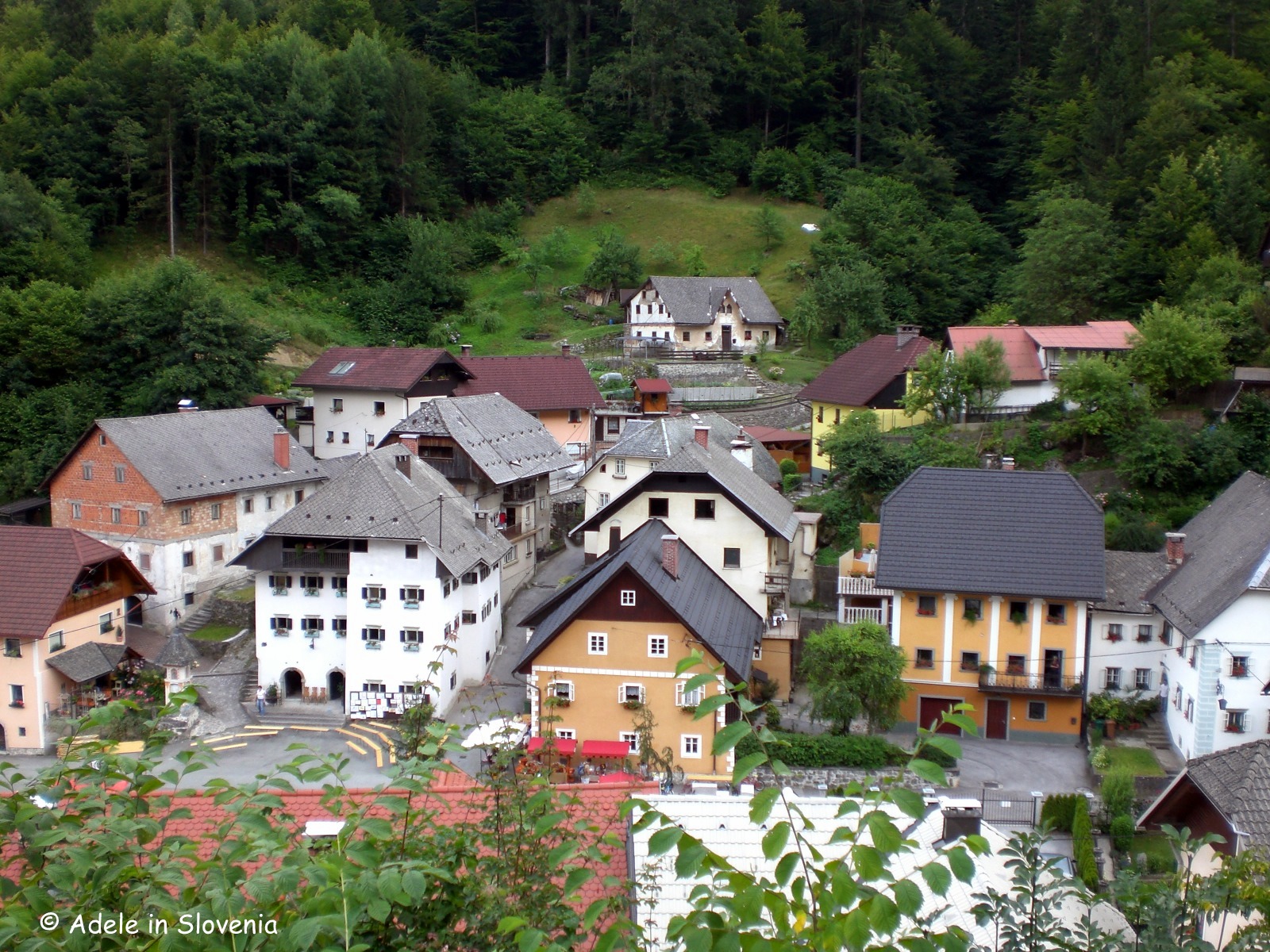
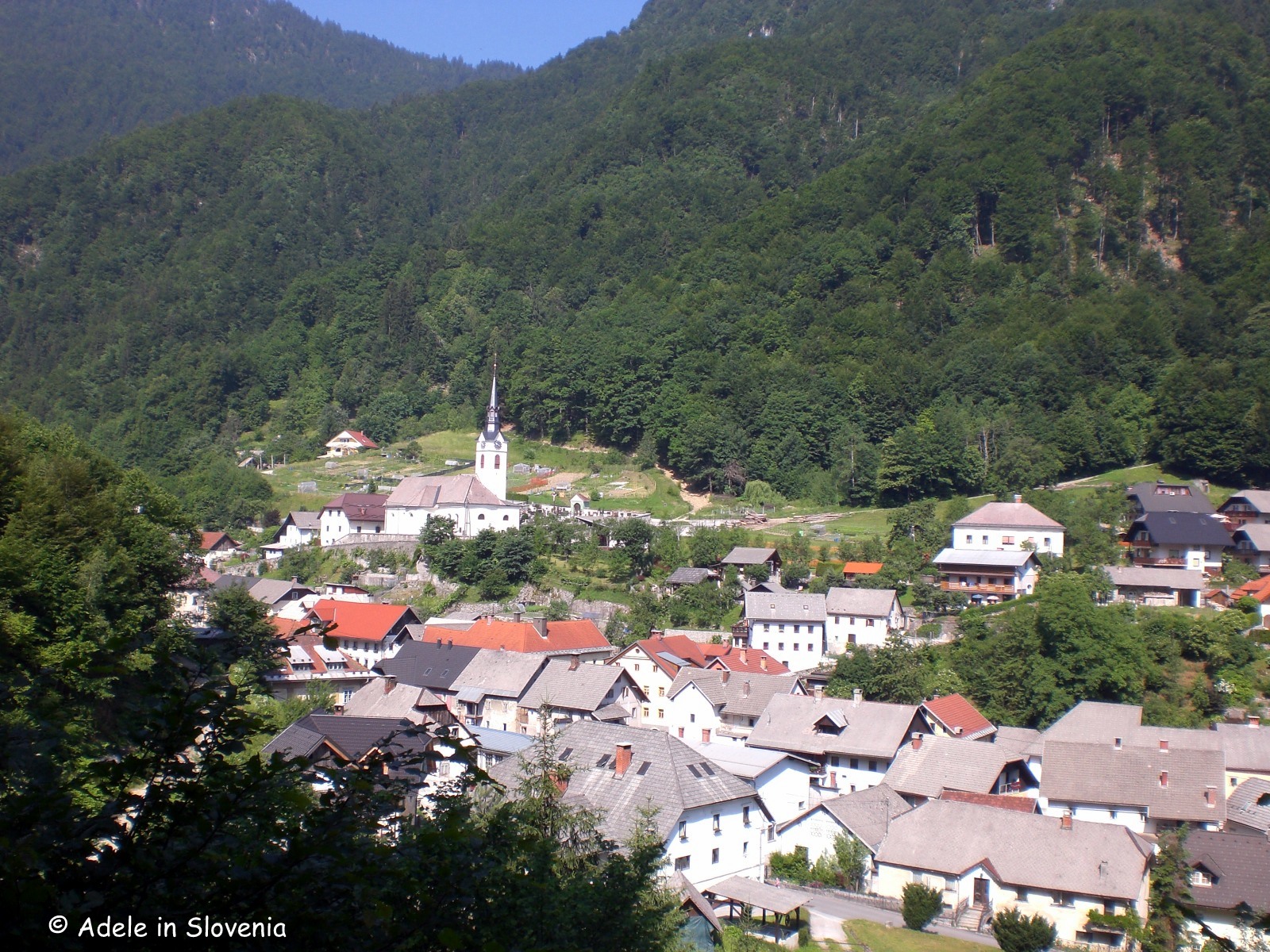
One such ‘cool’ place is Kropa – the cradle of Slovene iron forging.

Due to its location, nestled into a corner at the foot of the Jelovica plateau, Kropa remains cool even on the most sweltering of days.

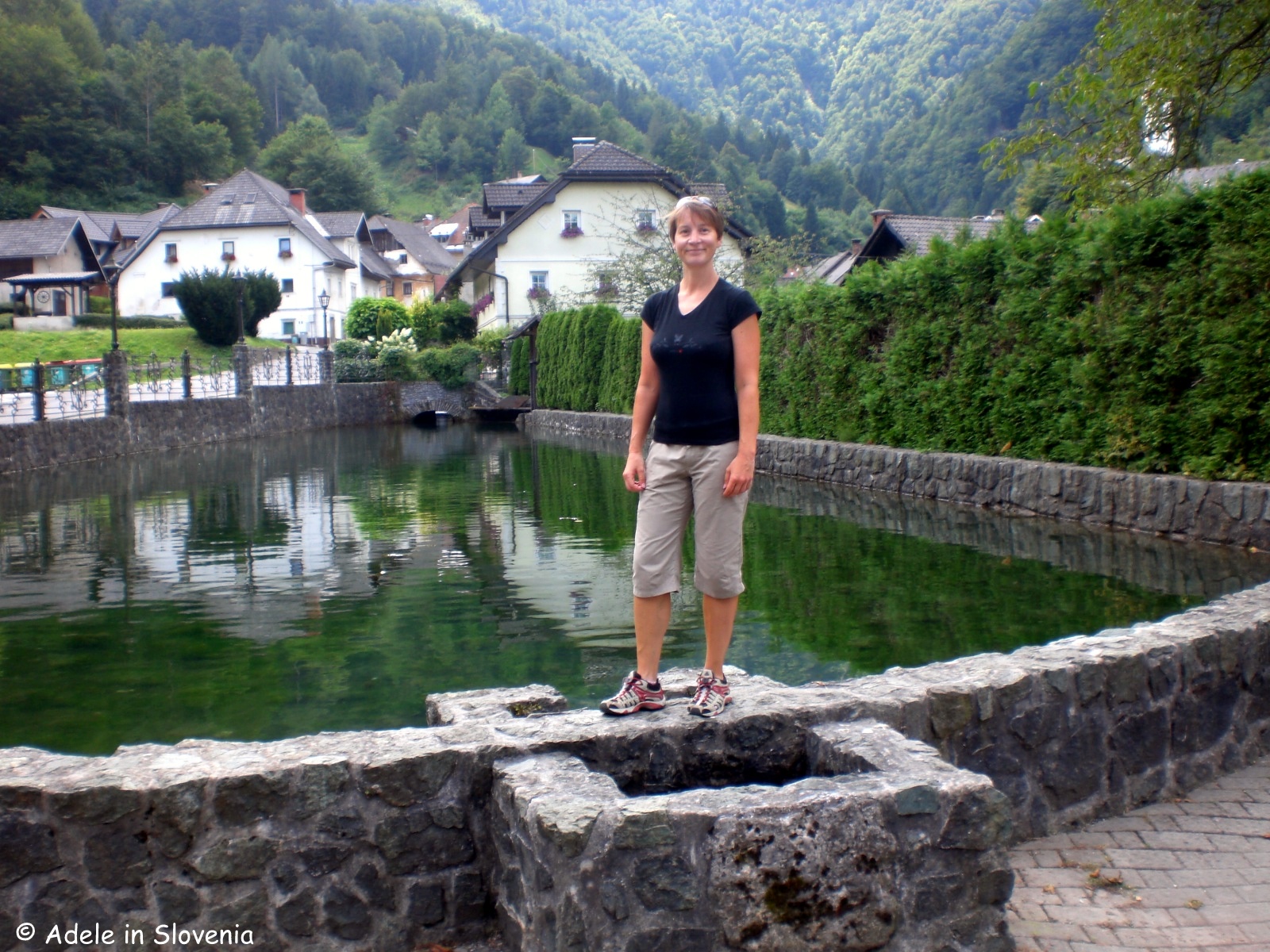
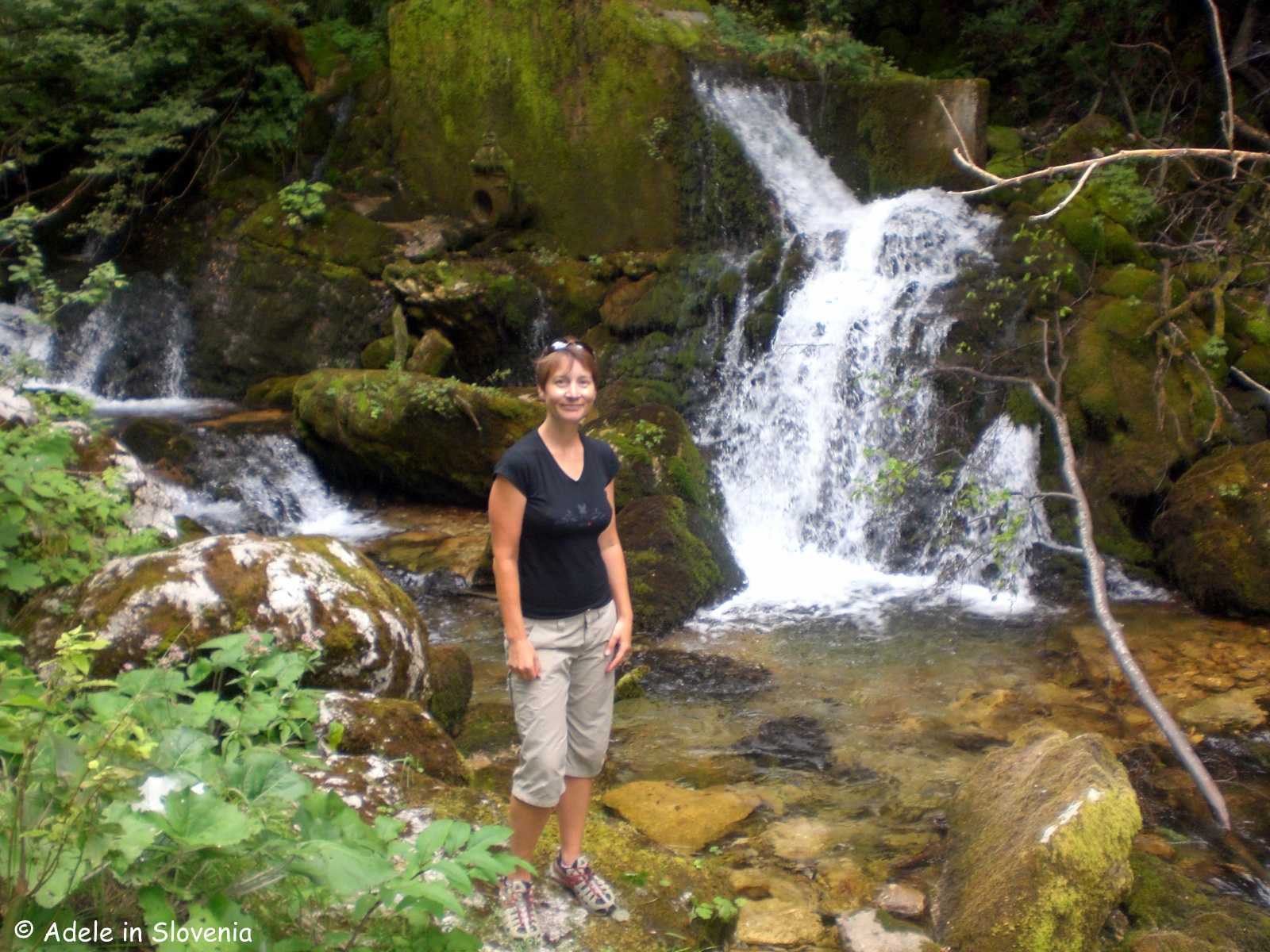
The Kroparica stream is one of the two streams that springs from the foothills of the Jelovica plateau. The stream runs through the heart of the village and joins the other stream – the Lipnica – before continuing through the valley to meet the Sava river at Podnart.

In September 2007 the stream, which ironically was once the lifeblood of the village, burst its bank following heavy rainfall causing flooding and significant damage – as can be seen by the video below.

In its heyday of nail-making in the 18th and start of the 19th century, the ironworks in Kropa and nearby Kamna Gorica employed more than 2000 people.  The most important markets at that time were the area of the Republic of Venice and Trieste.

In the lower part of the village you can see the renovated pool which is a remainder of the lower foundry, whilst in the upper part of the village the water cascade, water troughs and barriers are remains of the upper foundry.

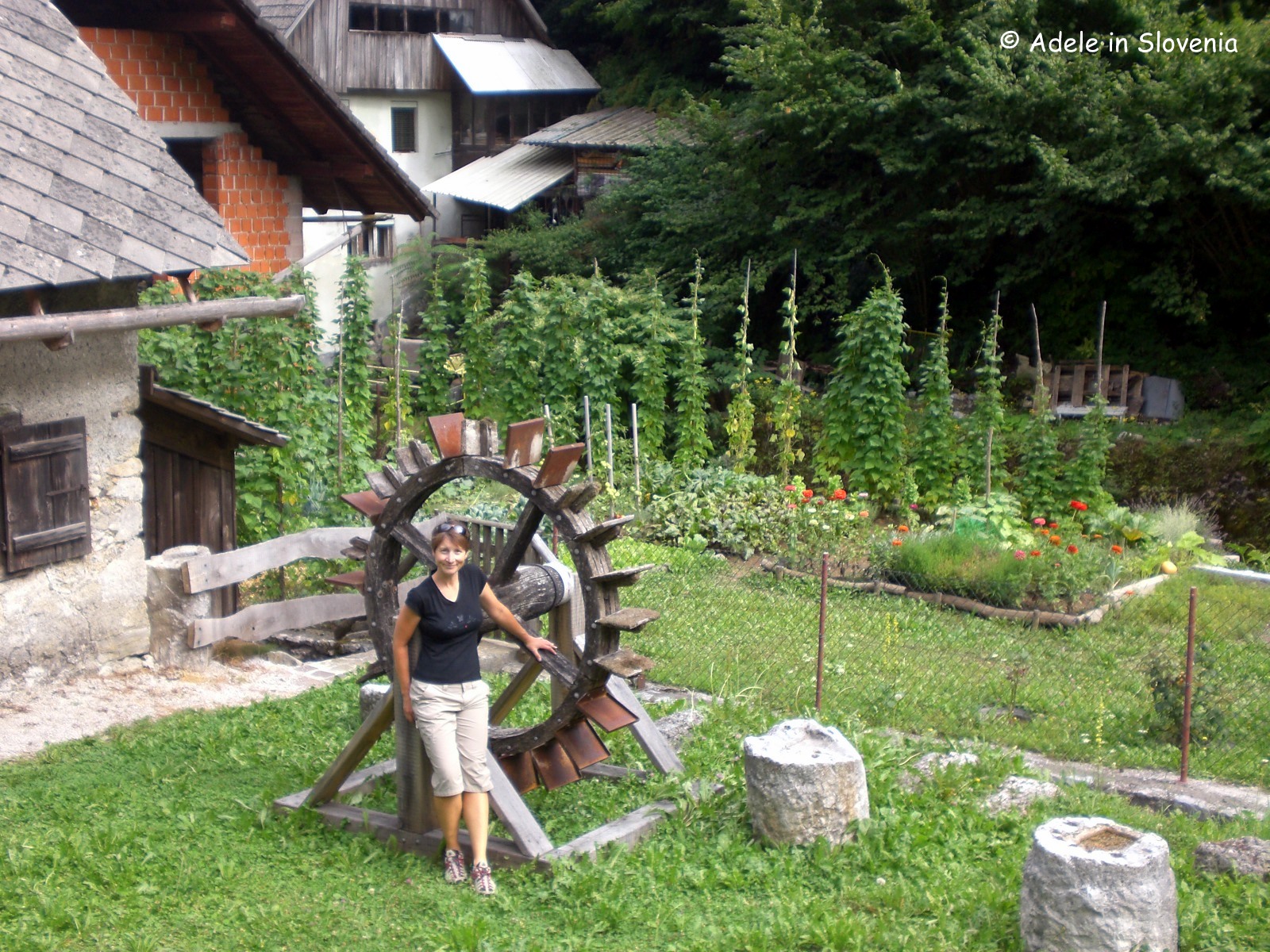
The Vigenc vice nail forge, located in the upper part of the village, is the only preserved foundry  for the manual forging of nails with an authentic preserved exterior and blacksmithing equipment inside. It is situated on the left bank of the stream below the dam of the former upper foundry. Next to the stream there is a wheel for driving the bellows, the interior contains three blacksmiths’ fireplaces. Around each fireplace there are six stone stumps for anvils, above the fire in the centre is the ‘kitchen’, the place where blacksmiths’ wives put their pans and cooked whilst working.

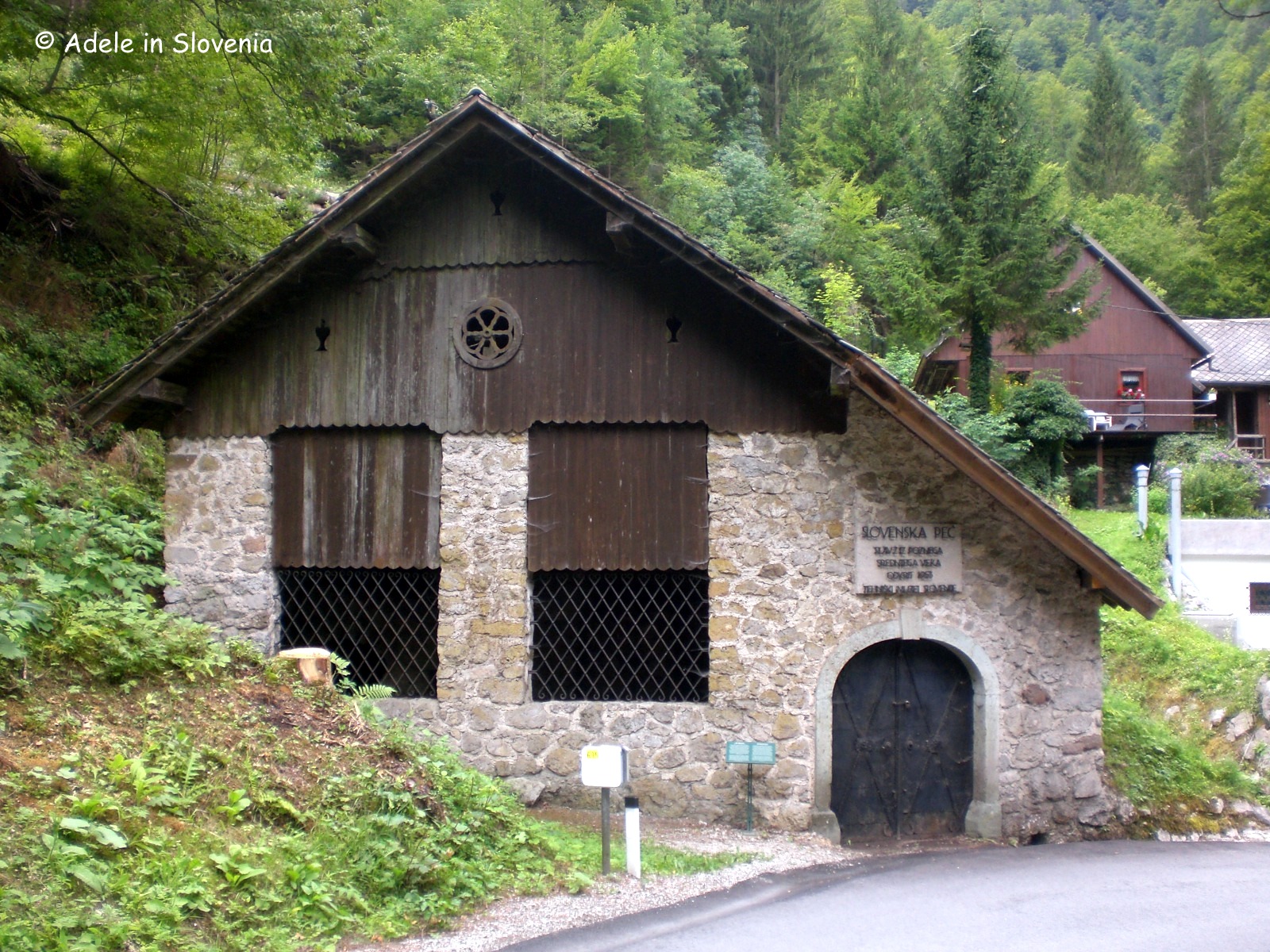
When walking around the village you can see some of the preserved technical objects beside the Kroparica stream which are evidence of the former lively ironworking industry. The Slovenian smelting furnace (Slovenska peč), dating from the 14th century, is located on a bend in the winding road that leads from Kropa up to Jamnik. Archeological remains of this important technical monument were discovered in 1953 and a protective building was erected to preserve it. The smelting furnace was 3 metres high and in 10 hours it produced 200 kilogrammes of wrought iron for forging.

Just after passing the furnace, you will see a sign on the right-hand side of the road to Vodice – one of the many hiking paths that lead to the Vodiška planina highland and the Partisanski dom na Vodiški planini  hut. If you would like to see the source of the Kroparica stream take this path but do NOT cross the small wooden bridge, continue instead ahead, slightly uphill on a somewhat overgrown stone path for a few hundred metres to reach the source.

The path isn’t marked but just follow your nose, and the water! The stream makes its way down from its source through the village through artificially constructed water drainage systems and barriers through which water from the stream’s main channels ran to the ironworks and blacksmiths workshops.

You can reach Kropa under your own steam, or until the end of August you can catch the Hop-on Hop-off tourist bus every Tuesday. Find out more about the Hop-On Hop-Off bus here – http://www.radolca.si/en/hop-on-hop-off-radolca/

You can find out plenty more about Kropa’s old village centre, the ironworks, the museum, and its technical heritage on the Tourism Radol’ca website here – http://www.radolca.si/en/kropa/

© Adele in Slovenia

A Recce of the Rupnik Line

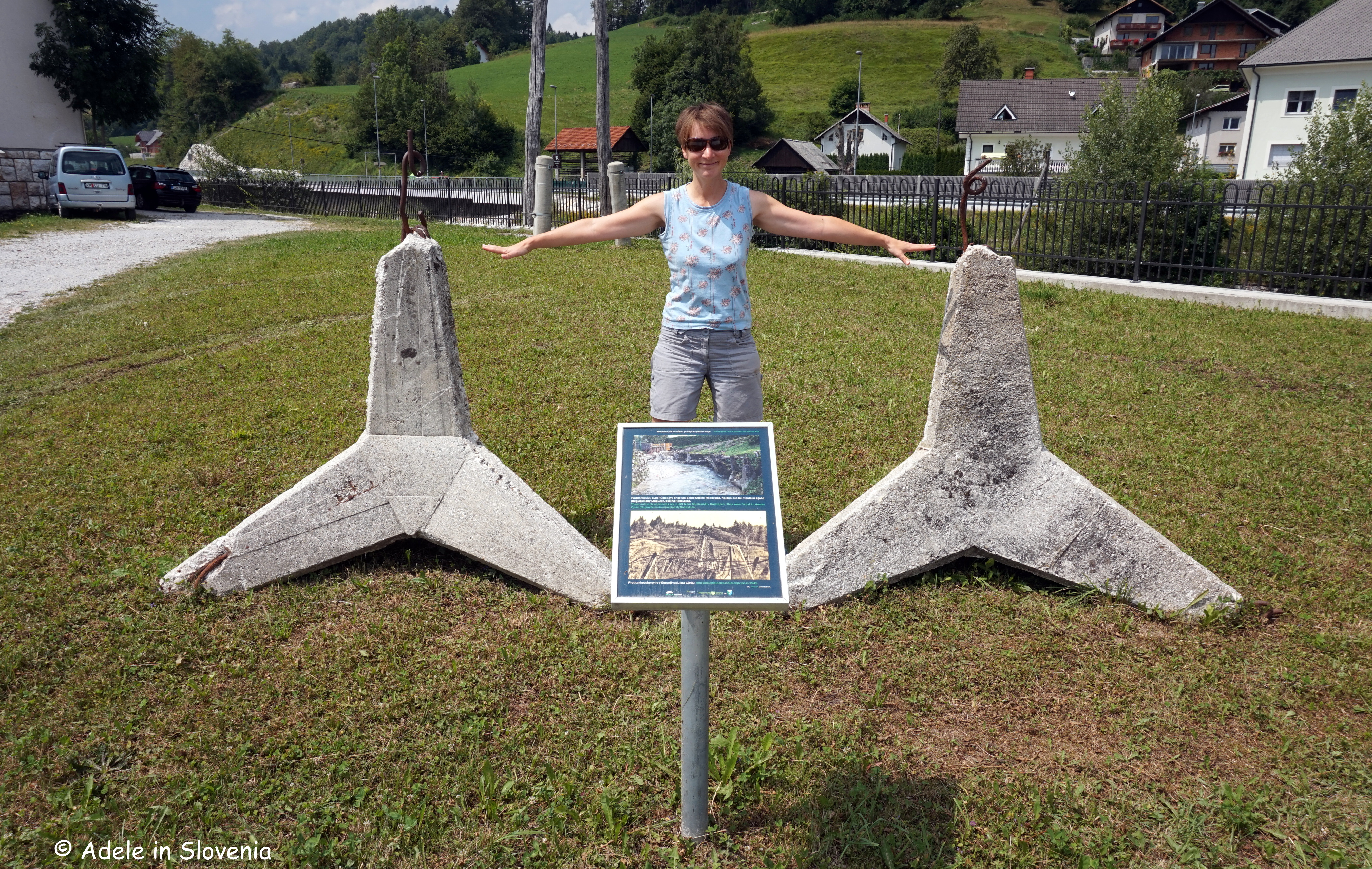
Another day of exploring the scenic Poljane valley; this time walking along part of the former Rupnik Line – a system of fortifications that were built during the 1930’s by the Kingdom of Yugoslavia as a defence line on the border with the Kingdom of Italy.

It transpired that the strategically placed forts were never actually used for military or defence purposes, but the building of the fortifications at least brought residents a temporary solution to the unemployment and financial troubles which affected them due to the location of the Rapallo Border.

The Rupnik Line theme path begins at the cemetery in Gorenja vas where there is an information board showing the route.

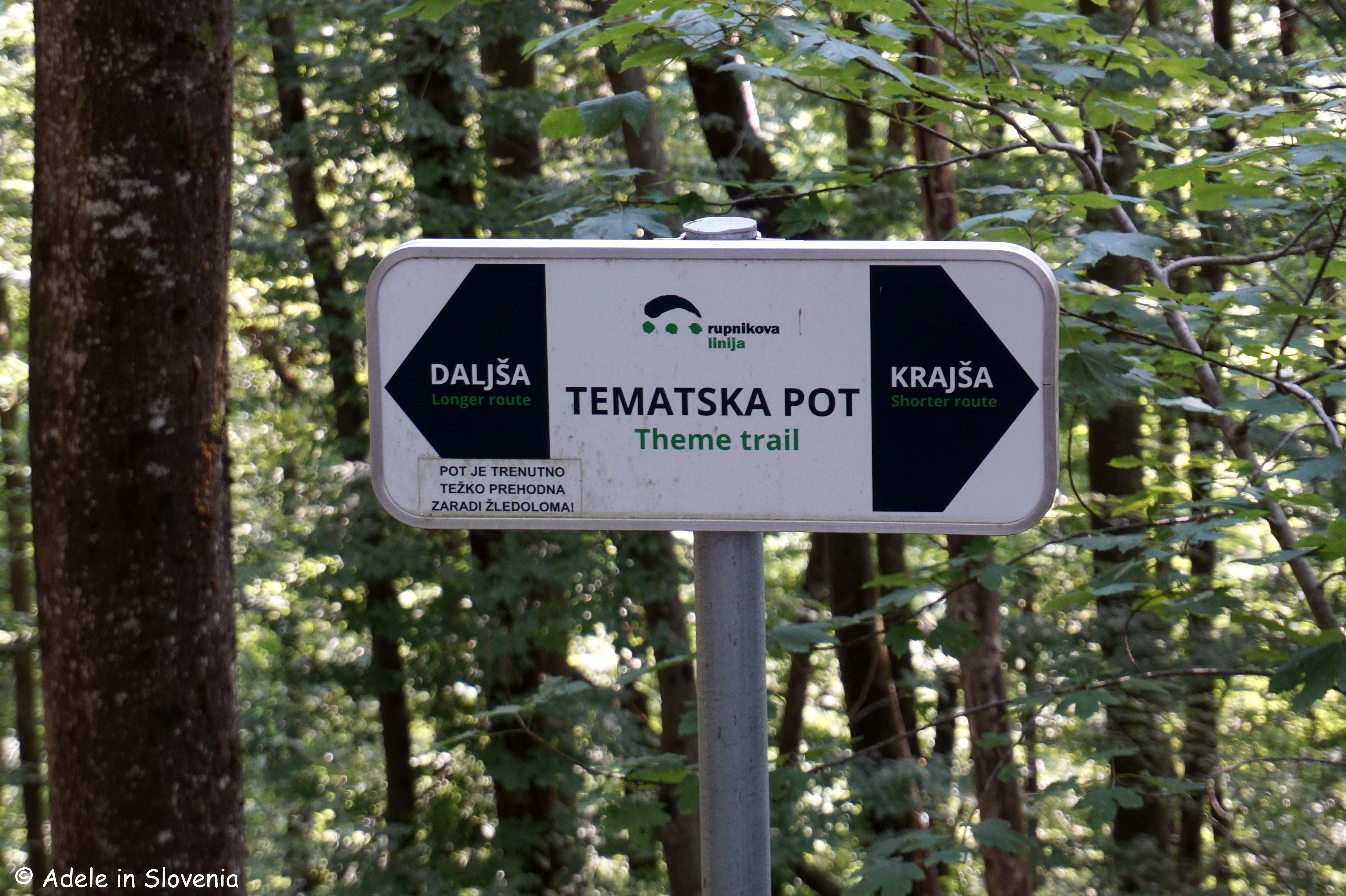
The path is well marked; in places with green signs, such as seen below, in other places with yellow markings painted on trees.

There are actually two paths – a shorter 4.5km circular path and a longer non-circular path which is 6km one-way. However, due to the ever present damage in the forest due to the glaze ice in the winter of 2014 – the clear up job is still ongoing throughout many parts of the country – walking on the longer path is not currently advised.

For the first 2km both paths follow the same route, first uphill on an asphalt road, which later becomes an unmade road then into the forest where you soon reach the first bunker.

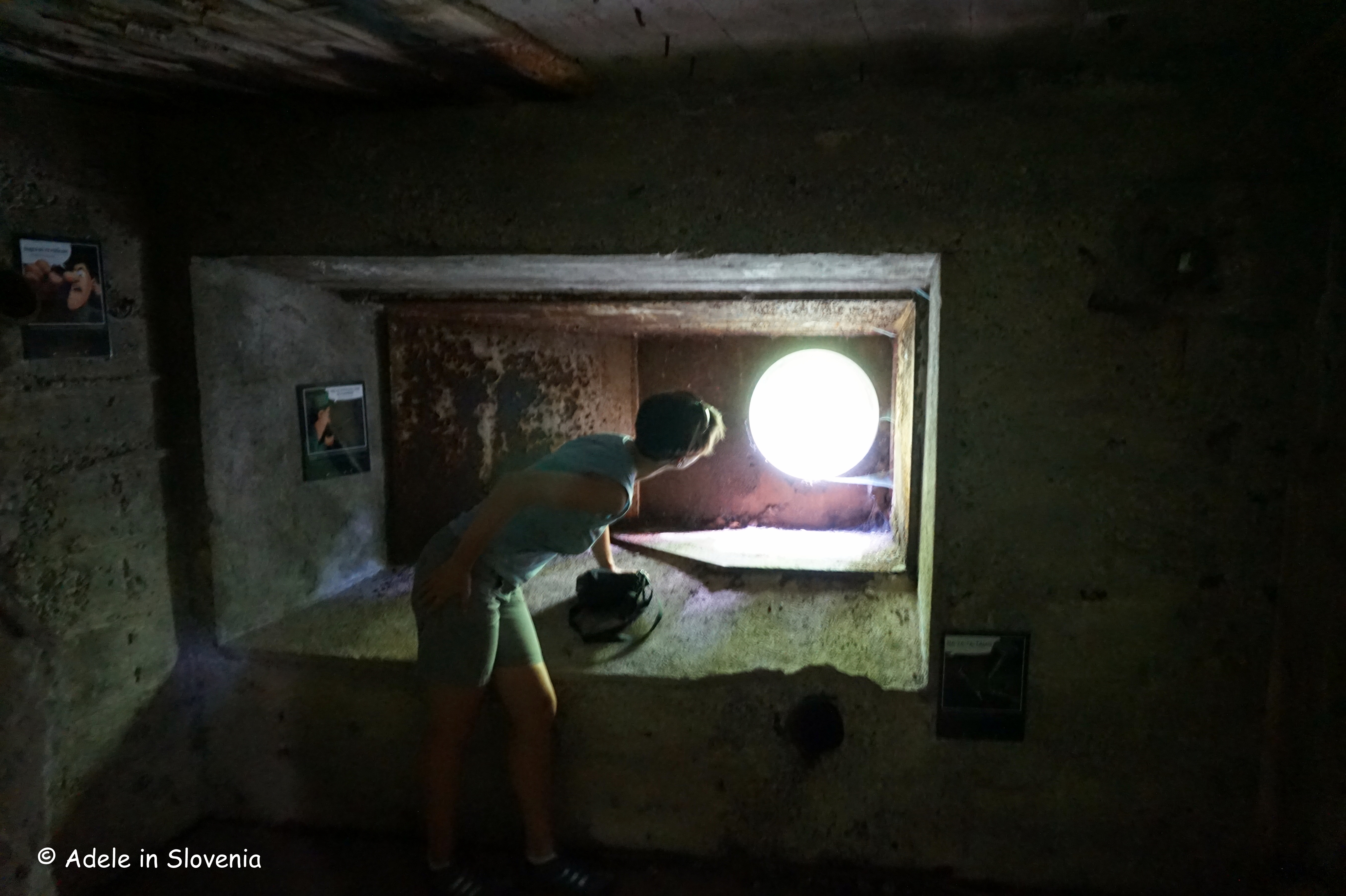
It takes a few minutes for your eyes to adjust to the darkness, but thereafter you can take a look inside. I clearly woke a bat from its slumber and not sure who was more startled, me or it!

Continue until you reach this sign, where you should take the shorter (krajša) path to the right.

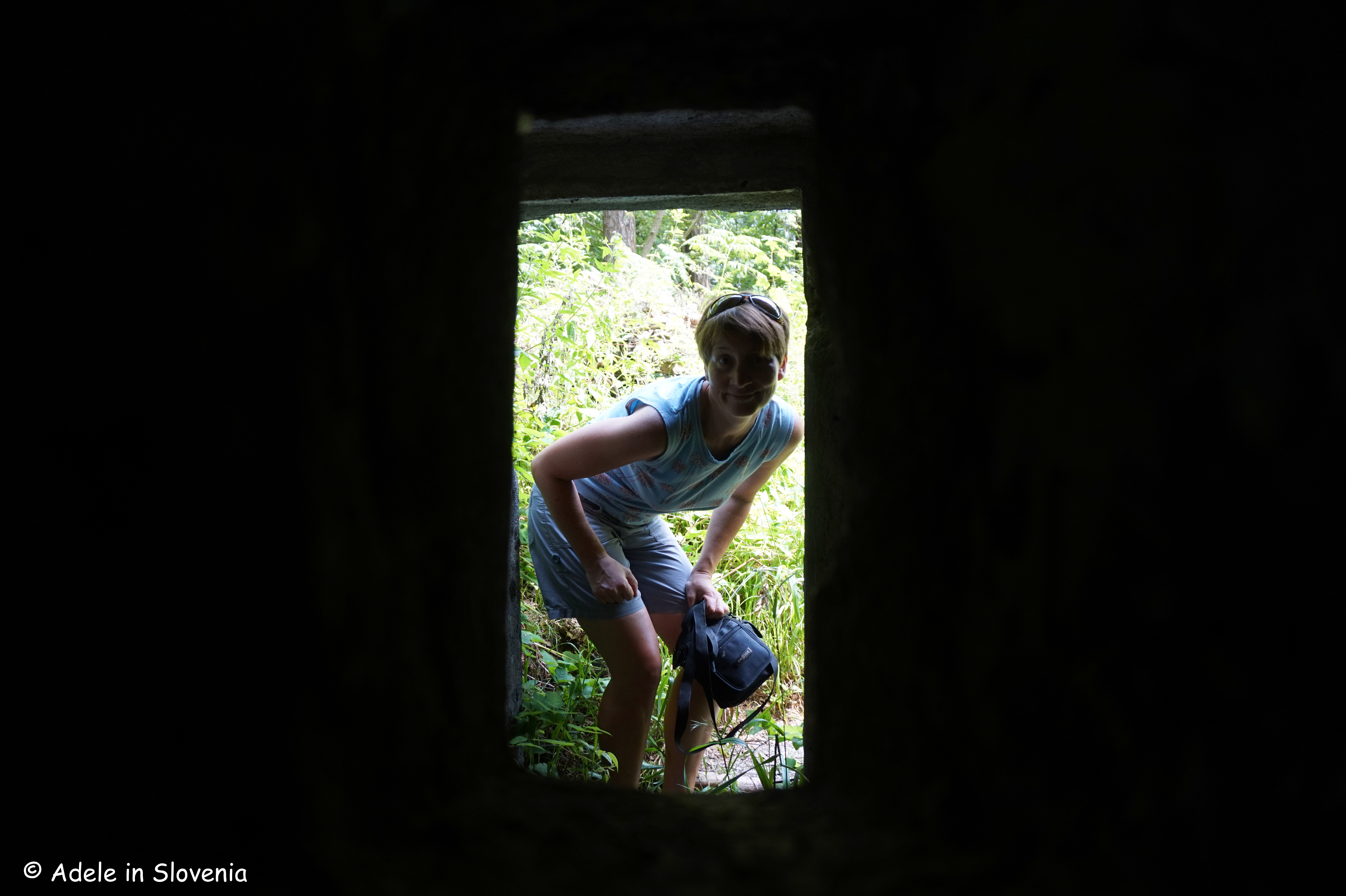
The path continues past more bunkers, each with it’s own information board where you can learn more about the fortifications and take time to explore, but do exercise caution and have sensible, sturdy footwear.

You can enter some of the bunkers, whilst others are not so accessible.

Though not part of this theme path, one of the best-preserved and largest fortifications is the underground fortress on Goli vrh where there is a permanent exhibition of remains from the time of building. I shall be writing more about this in a future blog so watch this space! Find more information about the Rupnik Line theme path on the Visit Škofja Loka website here – http://www.visitskofjaloka.si/en/experiences/theme-paths/the-rupnik-line-construction

The annual Pisana Loka Festival (Colourful Loka) takes place this year in Škofja Loka from 25th August – 3rd September. The festival is a mixture of concerts, workshops and performances – many of which are FREE – that take place at various locations, including in the heart of the old town centre and at Loka Castle.

This year part of the festival will be dedicated to Latino Loka on 2nd September in the Town Square (Mestni trg), and promises to be sizzling!

More about the festival can be found here (in Slovene only) http://www.skofjaloka.si/objava/80730, whilst further details about all the events taking place this month in Škofja Loka, including in English about the Pisana Loka Festival, can be found in the latest events calendar here – http://www.visitskofjaloka.si/si/files/default/Newsletter/Avgust%202017/spletni%20KAM-1%20avgust.pdf

© Adele in Slovenia
 

Hike Blegoš and Dine at Pr’ Andrejon – A Winning Combination!

At 1562m Blegoš is among the highest of the peaks surrounding Škofja Loka and, together with the Koca na Blegošu mountain hut, is one of the area’s favourite destinations for lovers of hiking and nature.

Blegoš can be reached from many directions, but whichever you choose, I recommend that you also take time to visit the Pr’ Andrejon Open Door Farm, where you can buy home-produced cheese and reward yourself with some fantastic, traditional, home-cooked Slovene food.

If you would like to take the shortest route to the peak, and the one which puts you in easiest reach of the Pri Andrejon farm, then you should begin your hike from Črni Kal, from where it only takes around an hour to the top of Blegoš.

I, however – not being prone to ever taking the ‘shortest’ or ‘easiest’ way! – opted to take the route from the hamlet of Volaka which leads past the Mountain Guards’ Shelter on Jelenci (Planinski zavetišče na Jelencih), which, rather oddly, is only open at weekends during winter.

The path, which leads up through the forest, is never overly steep but at the same time is challenging enough to work up a sweat!

The path is very well marked; at times the usual red circle with a white inner is on rocks and/or trees, at other times there are more prominent markings.

It took me exactly 2 hours to reach the summit, having first passed the mountain hut, where I didn’t pause on the way up, but did stop briefly on the way back down to check out their legendary ocvirkova -a kind of savoury potica made using pork crackling.

Although it was one of those mornings when the weather couldn’t quite make up it’s mind, the views were still stunning, and in fact perhaps even more so for the dramatic cloud cover.

Despite the cloud, it was still hard to choose where to look first, such were the panoramic views. An orientation table assists with getting one’s bearings.

Although not the easiest of places to reach, a narrow winding road that seems to go on and on… when you do eventually reach the Pr’ Andrejon farm in the hamlet of Gorenja Žetina above the Poljane valley, the warm welcome and excellent food means all is soon forgotten!

Whilst it is not a tourist farm, i.e. there are no rooms available for overnight accommodation, they consider themselves an ‘Open Door Farm’, meaning, as the name implies, they are pretty much always open. However, despite its relatively remote location, this place is hugely popular, so advanced booking, particularly for large groups, is a must.

Despite my arrival coinciding with that of 2 large pre-booked groups (hence, heed my advice to book in advance!), Anka still managed to rustle up some home-produced cheese and cold cuts and the most amazing bread, fresh from the wood-burning oven. I’d travel a long way for bread that good – oh yes, I actually did – so I had to get some to take home too!

During my brief visit, I was amazed at how many people stopped by to buy cheese direct from the farm.

Pr Andrejon is also a popular stop for cyclists, as part of the Loka Cycle Route goes right past the door. More information here – https://adeleinslovenia.com/2017/06/11/active-and-historic-loka-the-skofja-loka-cycle-trail/

The farm’s website has more information (only in Slovene), or you can contact Anka by email or phone to make reservations and find out more – anka.vodnik@gmail.com, tel: 045 188174 or 051 389108 – http://www.freeweb.siol.net/mvodnik6/default.htm

You can find more information about the wide range of hiking paths in the Škofja Loka on the Visit Škofja Loka website here – http://www.visitskofjaloka.si/en/experiences/active-breaks/hiking/hiking-trails-in-loka

© Adele in Slovenia


Highlights of the Škofja Loka Historial 2017

The annual Škofja Loka Historial (Festival of History) took place last weekend in the well-preserved medieval old town and its surroundings.

I attended the festival and managed to dodge (most of !) the afternoon showers which are so often a feature at this time of year. And the spirits of all the dancers, actors, stallholders, and other performers and guests weren’t dampened either!

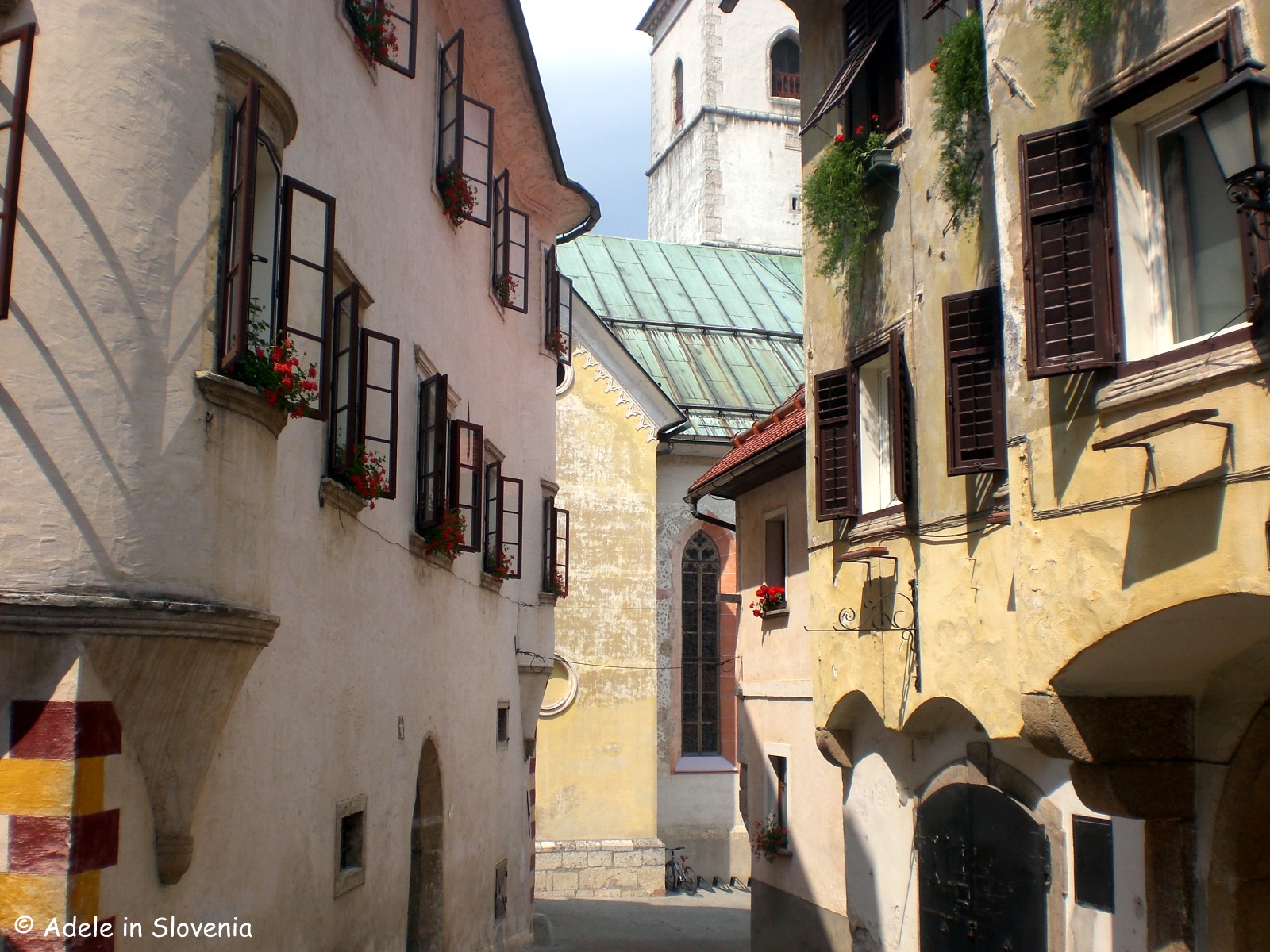
Below you can see some of the highlights of the festival, as well as see more of this charming town on the Sora river which should be on your list of places to visit whilst in Slovenia.

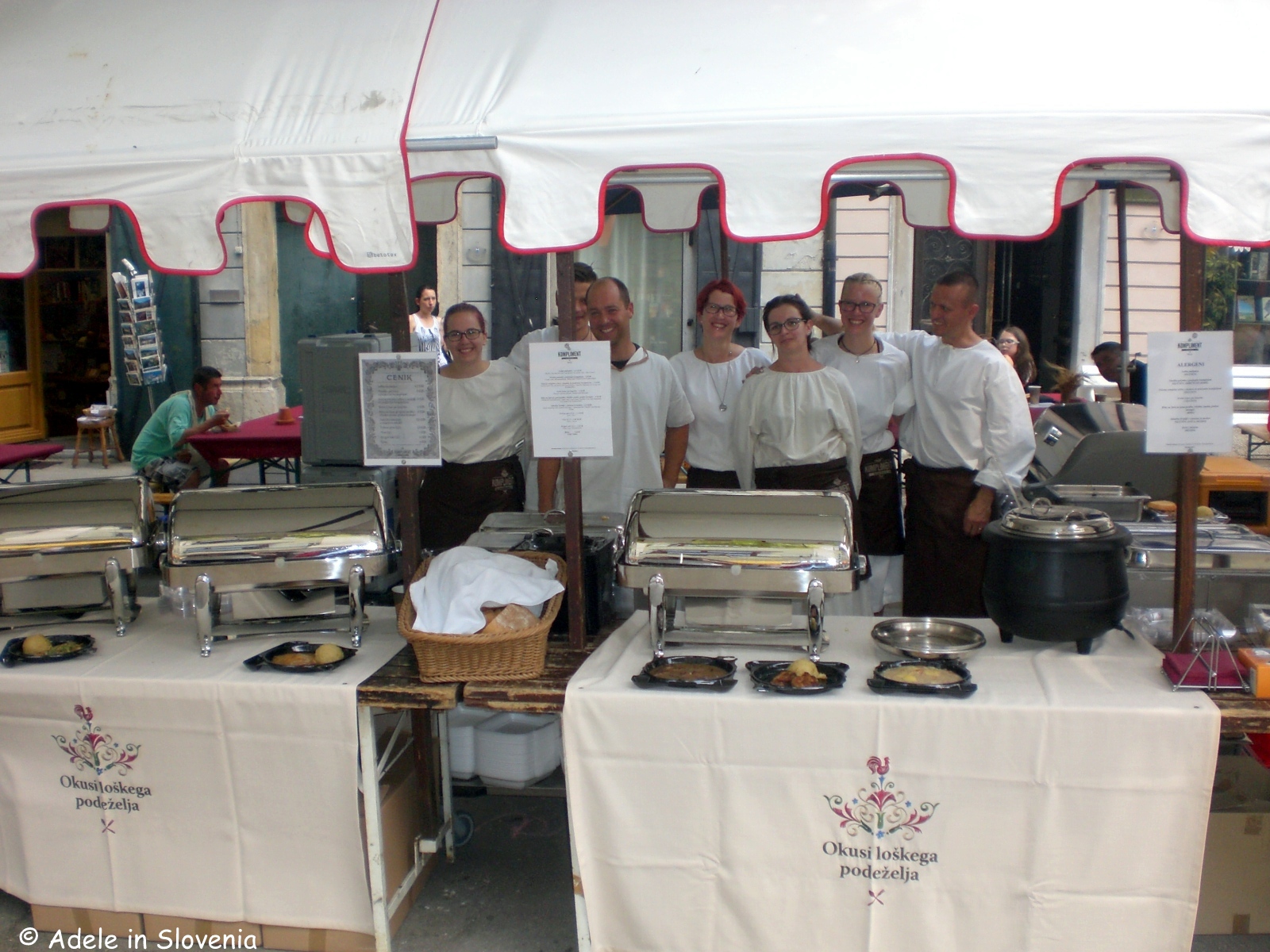
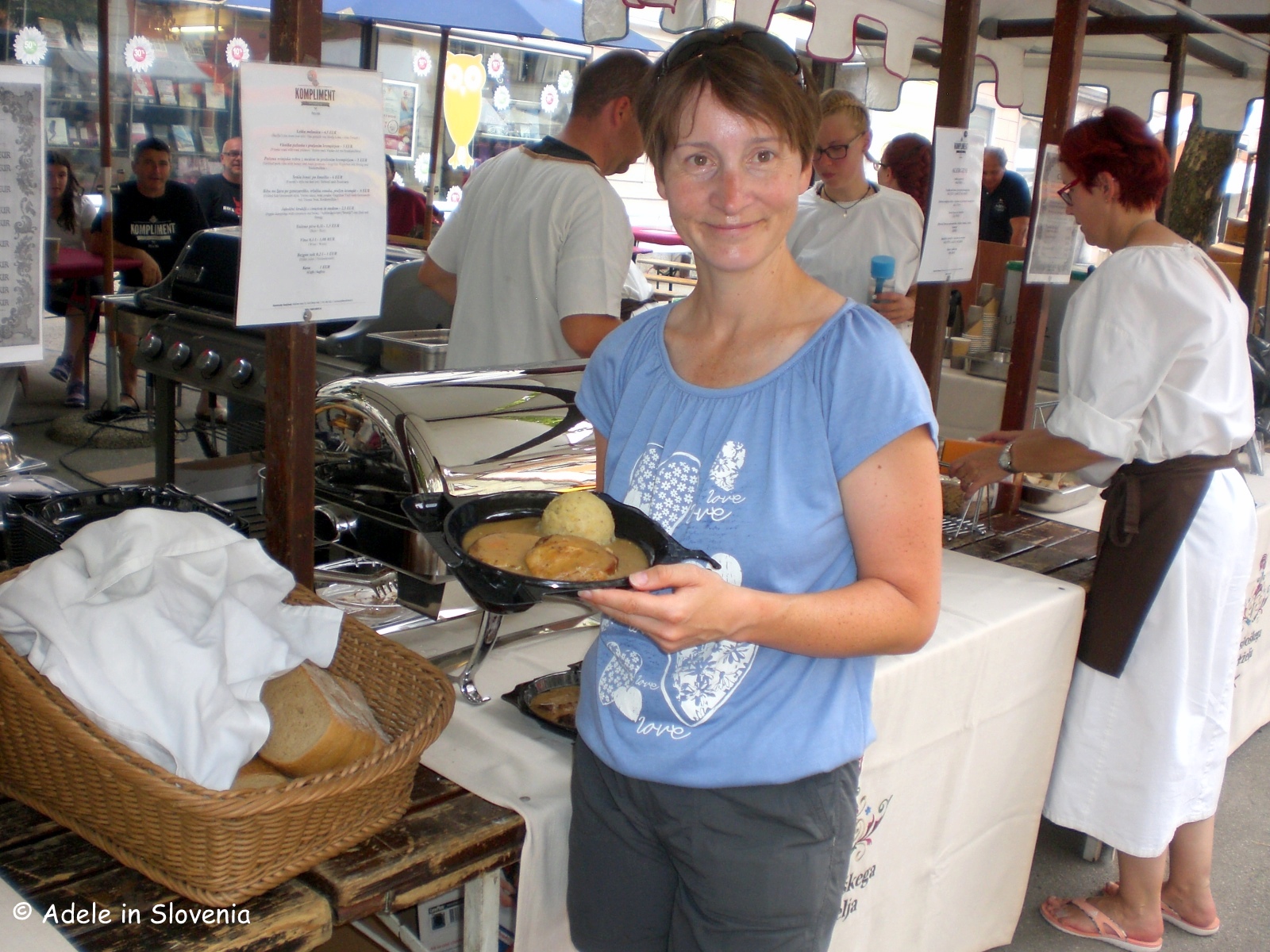
The fair and the majority of events took place in the main town square (Mestni trg) where visitors  had a chance to try some typical dishes from the area, part of the Taste of the Škofja Loka Countryside project (Okusi loškega podeželja).

One of the foods most synonymous with this area is Visoška pečenka – roast pork from nearby Visoko, studded with carrots, lemon, parsley garlic and laurel.

On the main stage there were performances from, amongst others, the Lonca Dance Society performing historic dances.

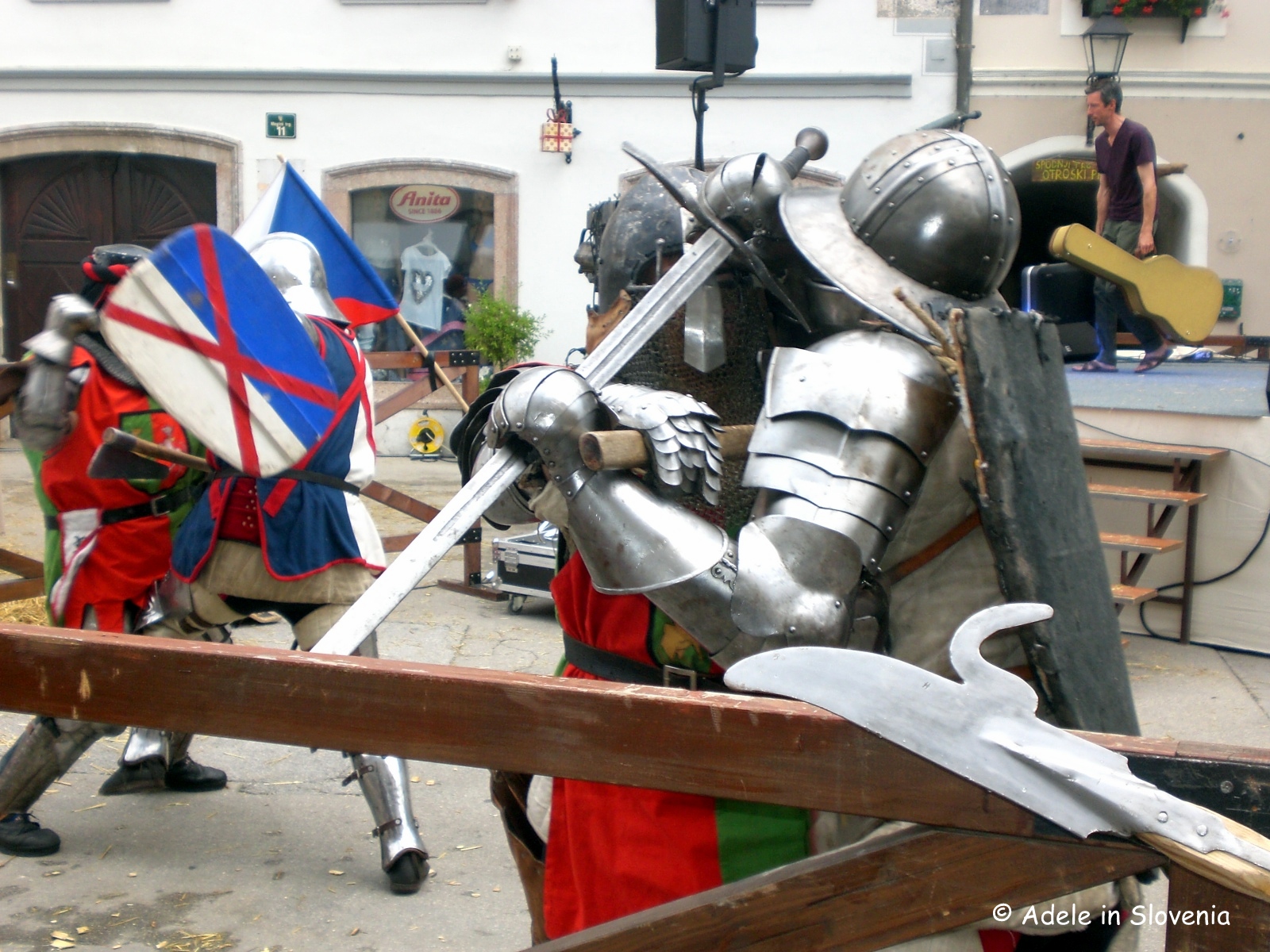
A display of flag throwing and sword play was performed by the Taboršti Kupci historic group from the twin town of Tabor in Southern Bohemia.

They certainly weren’t just play fighting! It was pretty brutal, raw fighting which, in addition to swordplay, seemed to involve a lot of bashing each other over the head with (real!) hammers!

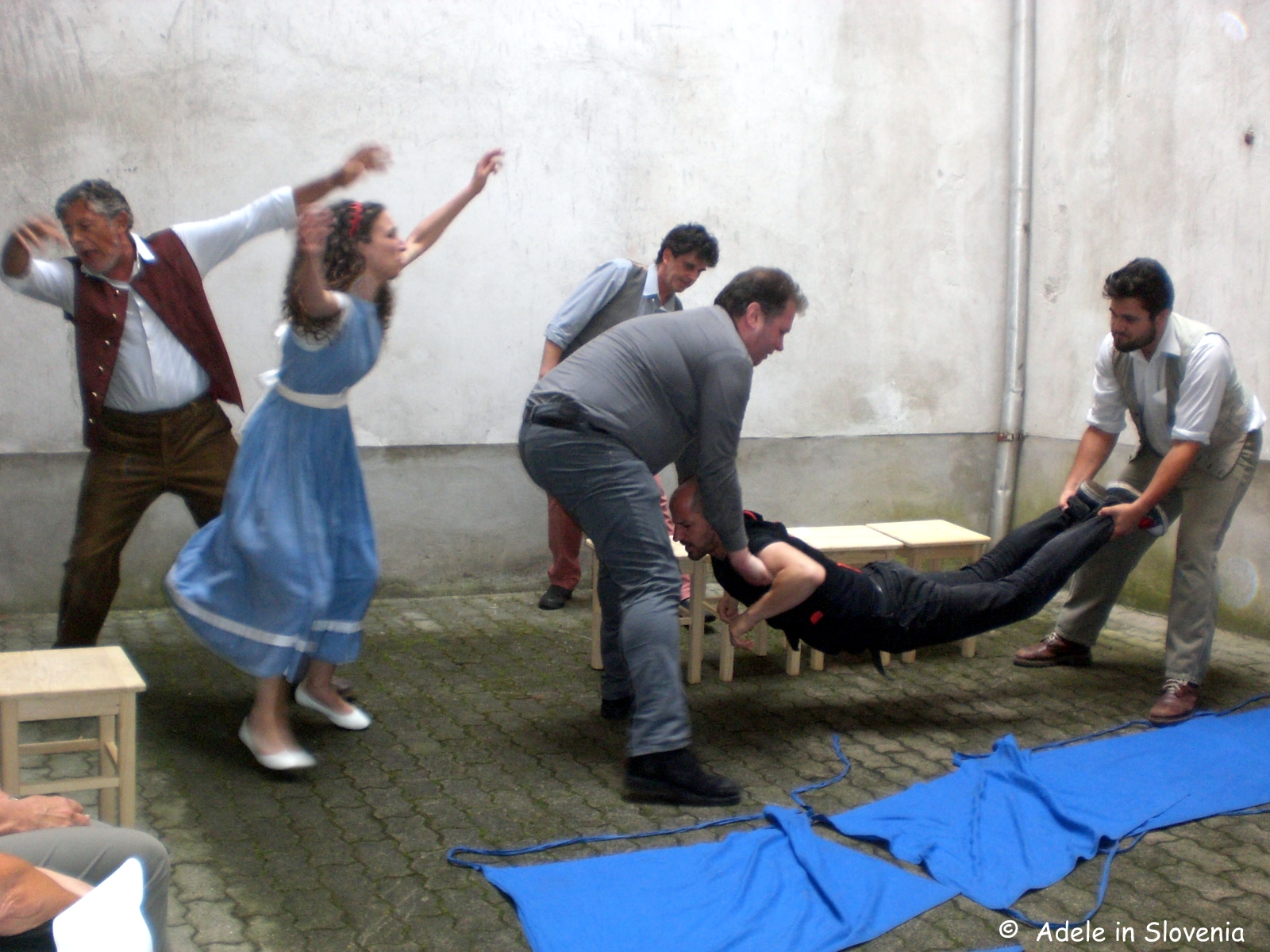
In Rotovž, the former town hall building and one of the most prominent buildings in the square with its baroque frescoes and three-storey gothic arcaded courtyard, the main event took place at intervals throughout the day. The drama ‘The Devil’s Footbridge’ (Hudičev brv) tells the story of the devil, the Puštal frogmen and a stone bridge.

From the main square, I headed down through the narrow streets and alleys to the other main town square, Lower Square (Spodnji trg) where there were also various workshops and performances.

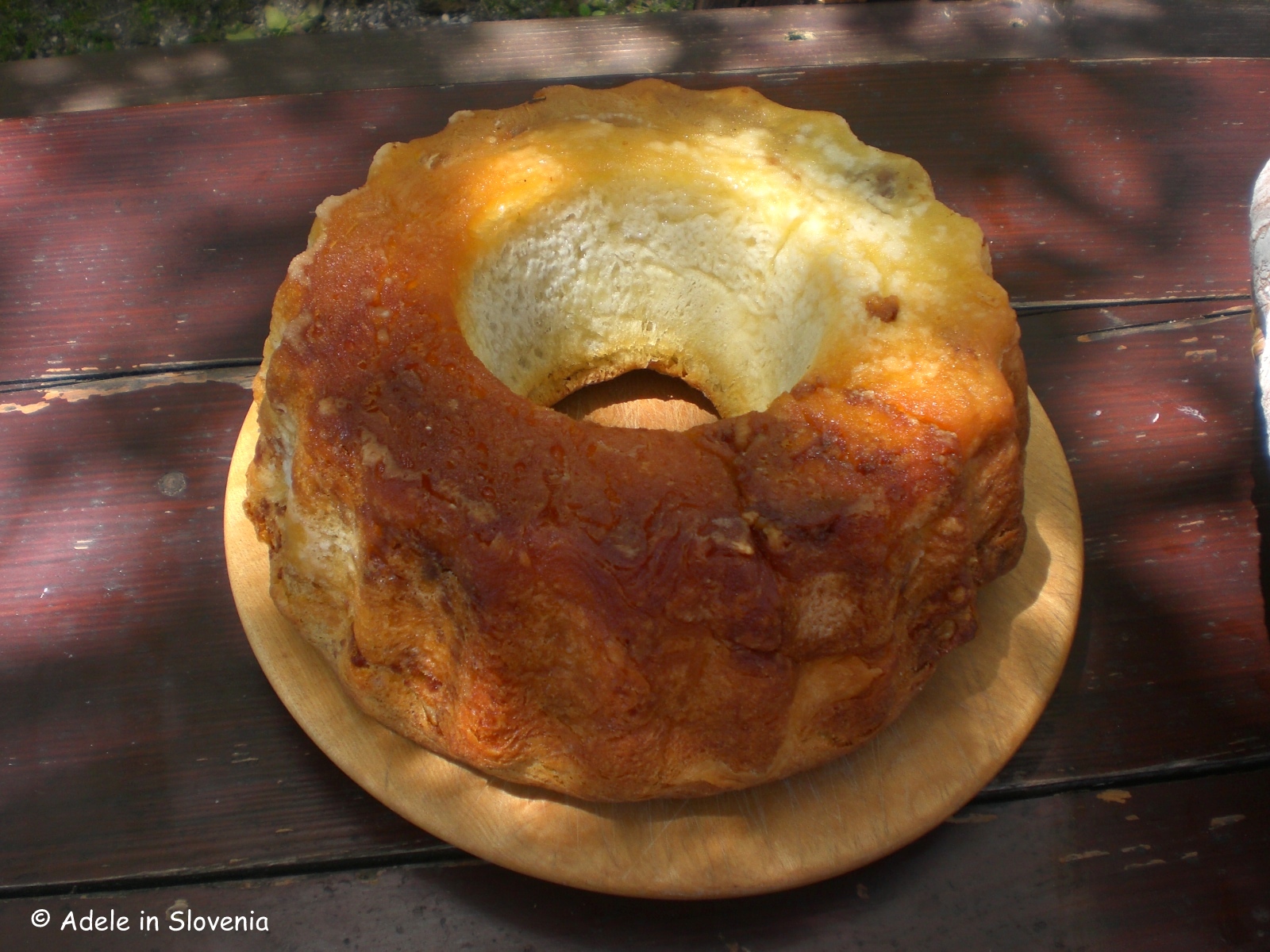
Next it was up to Loka Castle and the 16th century Škopar’s House (Škoparjeva hisa) where I had a chance to sample Loška medla, cooked in the original black kitchen; a simple peasant-style dish made of cooked millet which, according to some sources, originates from the Škofja Loka area.

Outside the house there were workshops and puppet shows for children, as well as weaving workshops. Unfortunately I haven’t got so much as a creative bone in my body when it comes to such things, but I’m always willing to give them a try! Weaving on a loom and using a weaving board; the latter, as I discovered, also requires a fair bit of patience!

Even when there aren’t any particular events happening in the town itself, there’s no shortage of things to see and do in and around it, as well as further afield in the Selca and Poljana valleys, about which I’ve already written quite a bit this year, but I’m certainly not finished yet!

And there’s no need to wait until next year’s Historial if you’d like to try your hand at some traditional handicrafts as this can be done all-year round at the DUO Arts and Crafts Centre (more here https://adeleinslovenia.com/2017/01/13/loka-honey-breads-and-handicrafts-at-the-duo-arts-crafts-centre/); you could also take a guided tour of the town to find out more about its history and listen to some of the many local legends, try some of the suggested experiences, or explore the pristine countryside on foot or by bike. More about all this can be found on the Visit Škofja Loka website – http://www.visitskofjaloka.si/en/

© Adele in Slovenia
Bountiful Beekeeping Beneath Blegoš

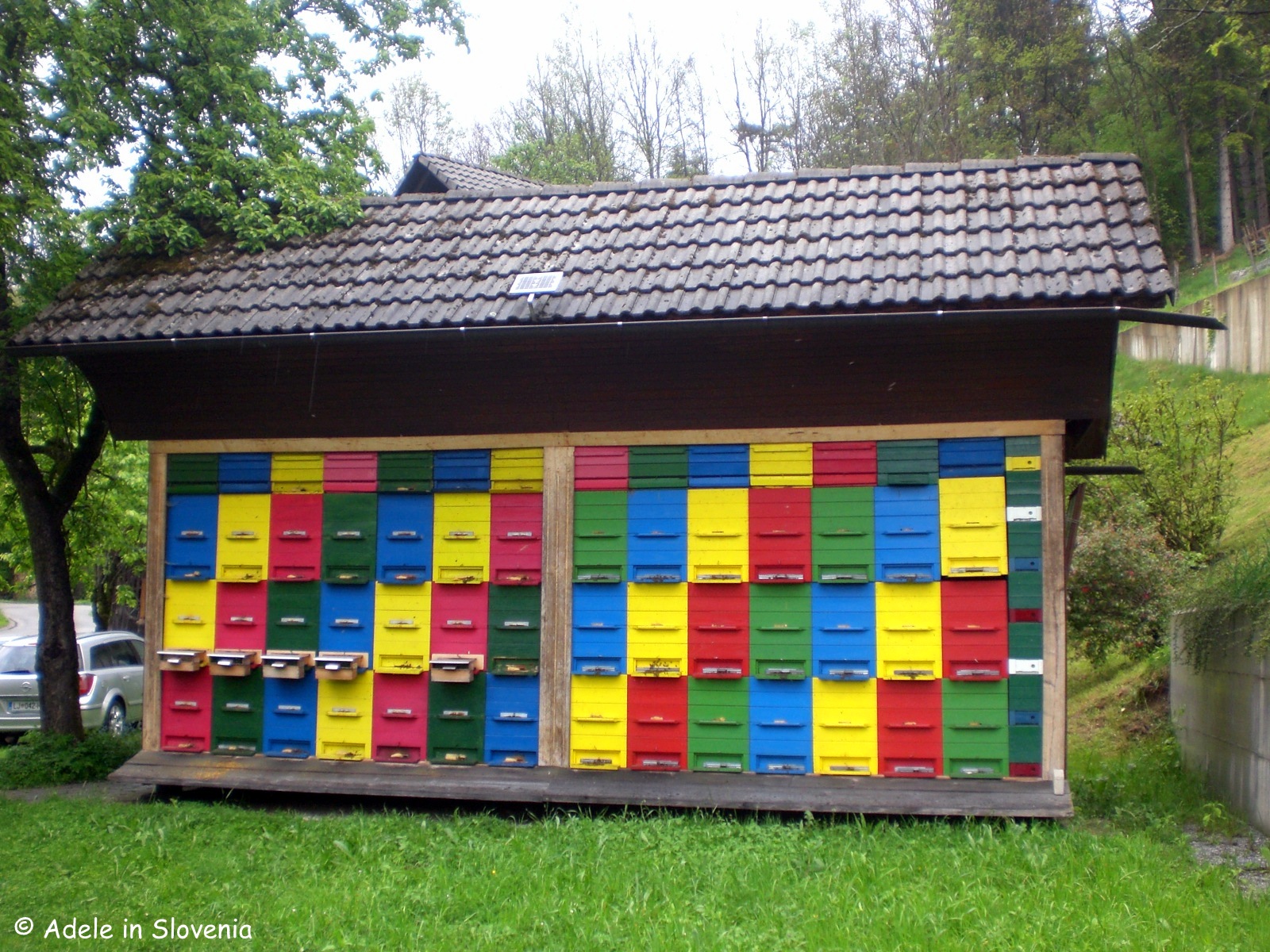
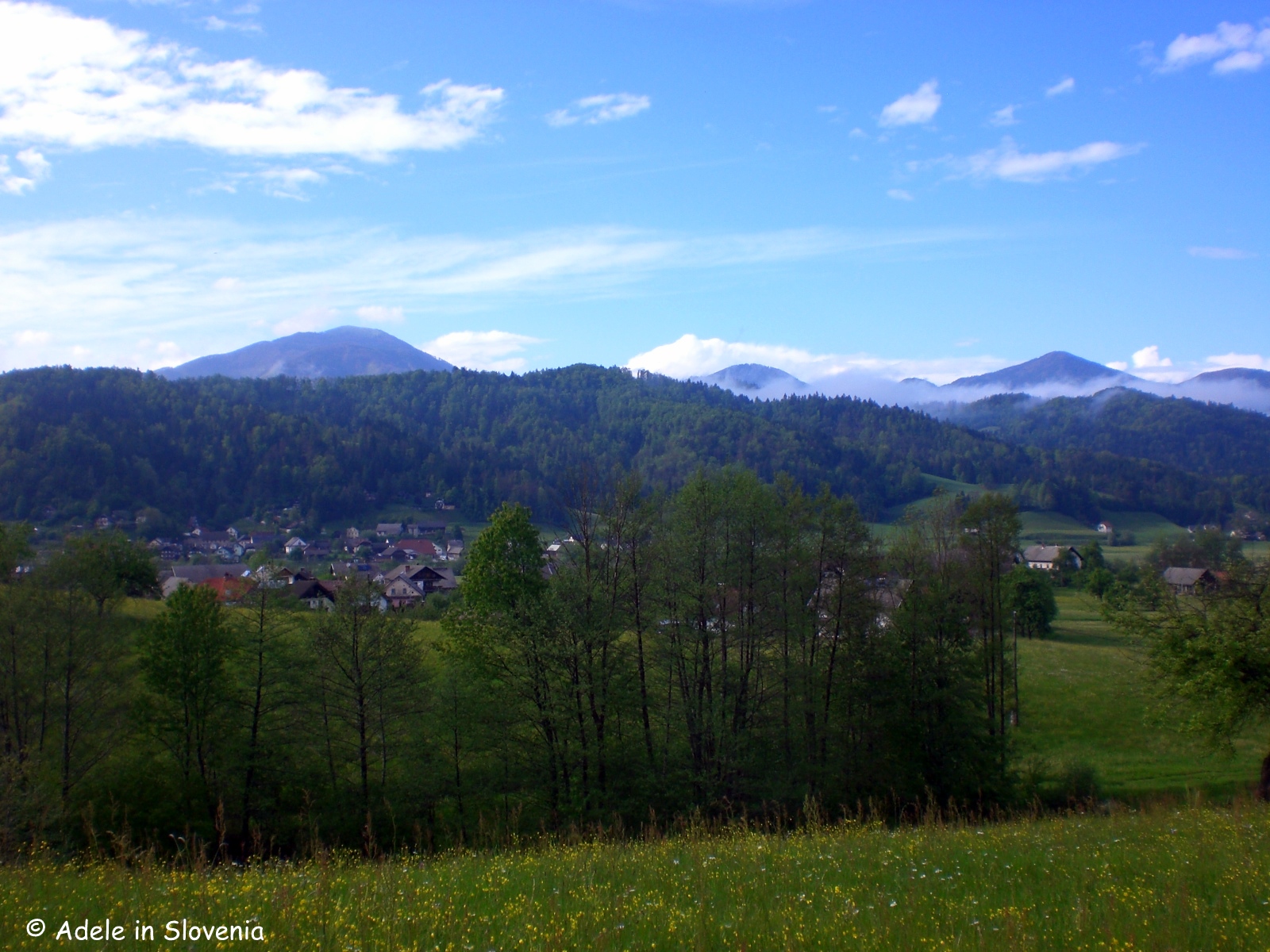
The Beekeeping Path in the Poljane Valley was established by the Blegoš Beekeeping Association, whose beginnings date back to 1911. The idea behind the path is to allow beekeeping enthusiasts, as well as lovers of hiking and nature, to discover the beauty of the countryside beneath Blegoš – at 1562m Blegoš is the highest of the areas peaks, as well as uncover a part of its history, taste delicious honey and honey-related products and learn more about beekeeping in the Poljane Valley.

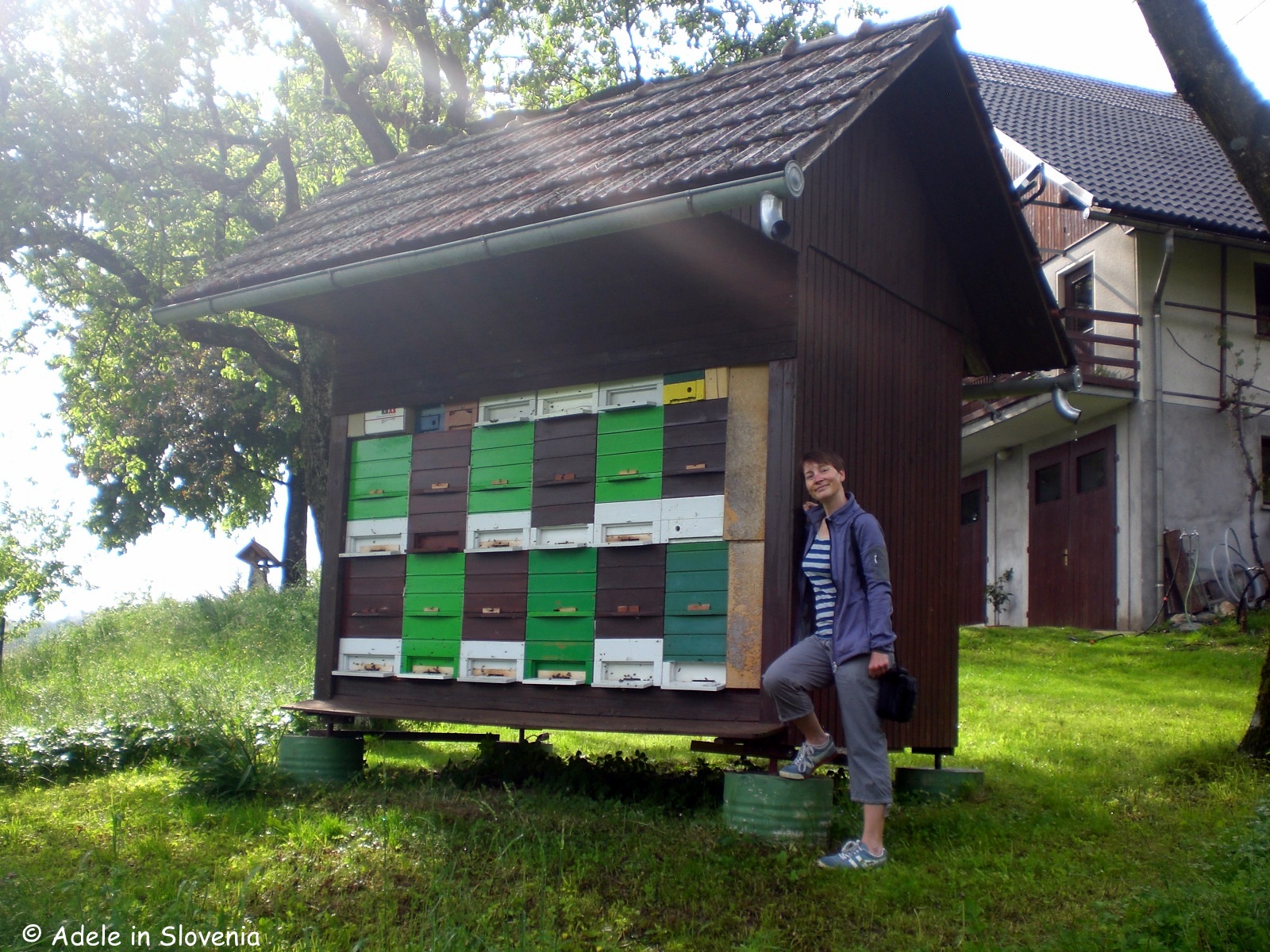
The path begins at the Pri Jakuc – Inglič farm (Kmetija pri Jakuc – Inglič) where the owner, Stefan Inglič, has created a mini museum of all things beekeeping, an area for tasting and buying honey and honey products, and, of course, keeps his beautiful bees in an equally beautiful hive!

There are information boards at the start and at other main points of the route as well as green and yellow signs.

I recommend beginning with a look at the small museum where owner Stefan Inglič will acquaint you with his collection.

Of course, whilst there you will want to try, and maybe buy, some of the local honey which is produced and sold under the label ‘Med izpod Blegoša’ (Honey from beneath Blegoš), as well as other honey products such as liqueurs, propolis, candles etc.

There are 12 points of interest along the Beekeeping Path. You can choose to walk just part of it, picking and choosing among the points of interest, or you can undertake the entire 14.6km path, which runs through the forest ranging in altitude from 400m – 690m leading to various bee hives, farms, view points and churches.

From the Jakuc – Inglič farm, which is at Sredna vas 2, Poljane, cross the main road to reach the covered wooden bridge across the river Sora to the village of Žabja vas. A short walk uphill leads to the ‘v duplu’ hive. From there the path continues to its highest point, the viewpoint Pešarjev grič (699m). At the chapel in Vinharje the path leads downhill to the Pri Ljubici tourist farm (refreshments available).

The oldest beehive on the path, dating from the late 1800s, is found at the Pri Bačnarju – Peternelj farm.

Unfortunately on the day of my visit, the weather gods were not on my side, dampening (literally!) my plans to hike along the path. Therefore I visited a couple of the hives on foot and others by car, However, as you can see below, when the sun did eventually come out late afternoon, it was glorious and worth the wait!

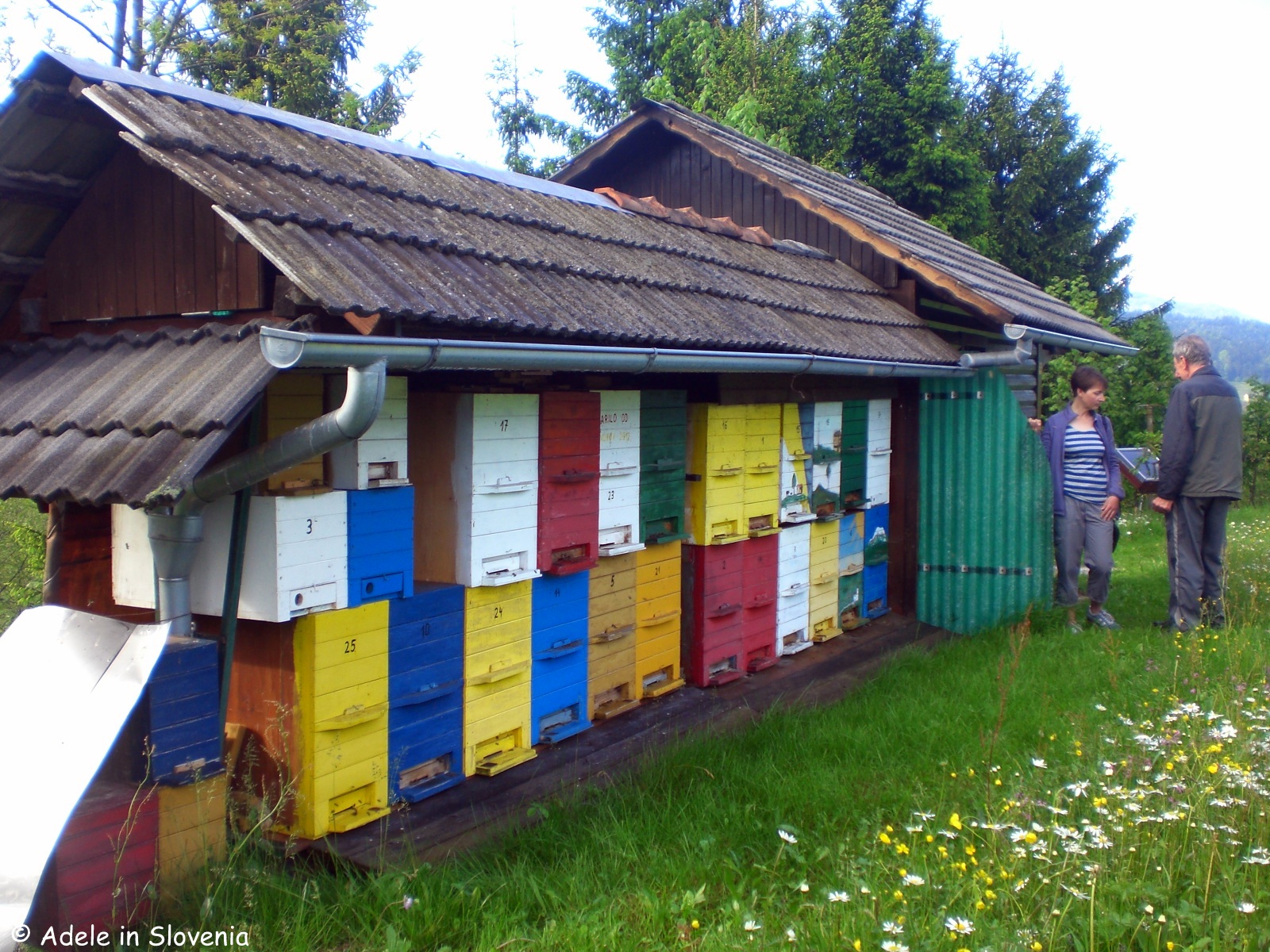
Each of the beehives is unique and, if you are lucky, you will find the friendly beekeepers at home who will be delighted to tell you more about their hives, as was the case when I reached point no. 10 on the path the beehive ‘čebelnjak Pavla Čadeža’.

It’s amazing how placid Slovenian bees are. Despite getting right up close to take a look and get some photos, not once did they bother me, but, nonetheless, I couldn’t resist the chance to get up even closer and try out a proper beekeeper’s hat!

To arrange a visit or for more information and to download the leaflet with the entire route, see the Visit Škofja Loka website here http://www.visitskofjaloka.si/en/experiences/theme-paths/beekeepers-path or you can contact Mr Inglič direct by email: inglic.stefan@siol.net to arrange individual or group visits.

© Adele in Slovenia
 

Wonderful Weddings and Award-Winning Cheeses in the Poljane Valley

The Poljane Valley is known for its unspoilt nature and is synonymous with one of Slovenia’s most renowned writers – Ivan Tavčar (1851-1923).

Tavčar Manor in Visoko is where the writer found inspiration for many of his best works. The manor dates from the 14th century and was originally used by the Lords of Loka as a hunting manor. Later it passed into the hands of the Kalan family before being bought by Tavčar in 1893 when he returned to his homeland.

Legend has it that he found an iron chest in the attic of the manor that contained notes about the Kalan family. Tavčar used these notes, together with his rich imagination, to write his famous Visoko Chronicle (Visoško kroniko).

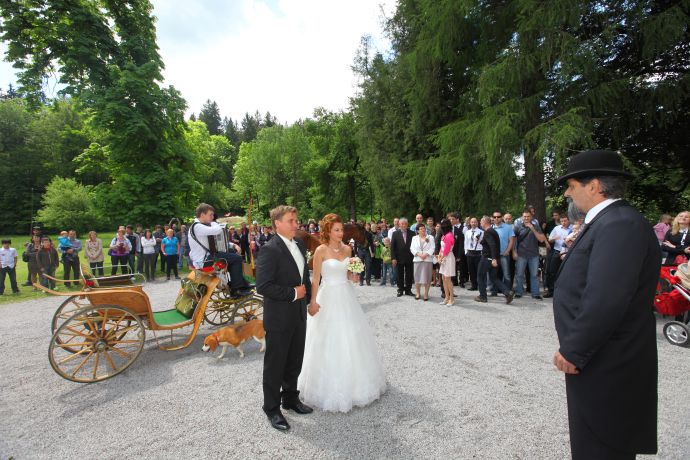
Today the manor’s gorgeous, romantic, country setting makes it a very popular venue for weddings as well as a hosts of other events, festivals, family days, concerts etc. Weddings are held in the wedding hall which is adorned with ceiling and wall paintings.

Photo: Izidor Jesenko

The Master of Ceremonies, dressed as Ivan Tavčar, conducts the ceremony, adding to the special charm of a wedding at Tavčar Manor.

Photo: Izidor Jesenko

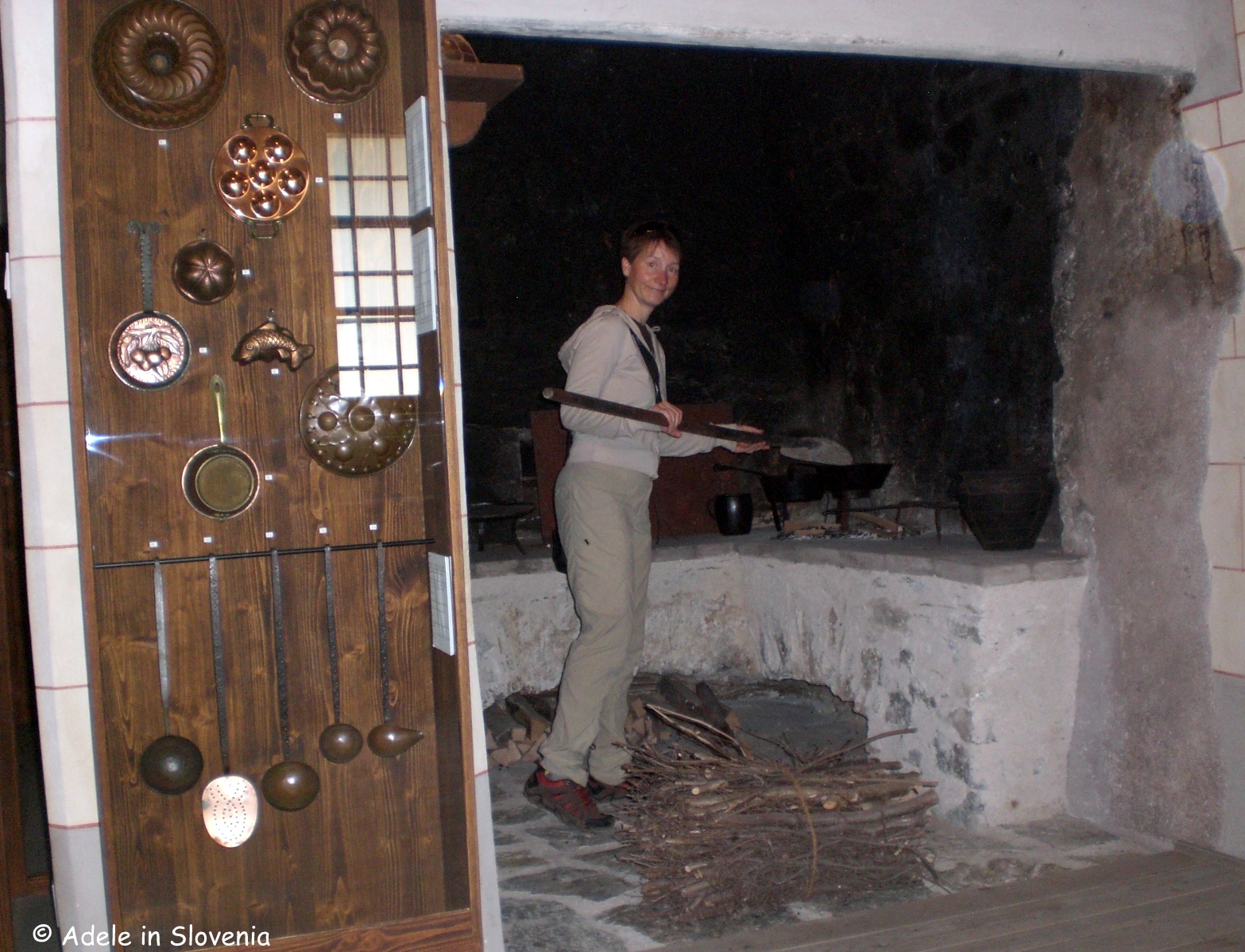
Inside there is an exhibition dedicated to Tavčar which includes an authentic, and still working, black kitchen.

Whilst visiting the manor you can’t help but notice the beautiful, prominent hilltop St. Volbenk’s pilgrimage church with its two bell towers in the settlement of Log just minutes from Tavčar Manor. The church was built in the second half of the 17th century and its baroque altars and altar pictures are especially valuable – the work of the Šubic family of painters from Poljane.

You can walk – as I did – or drive up to the church from where you can look down over Tavčar Manor and the Poljane Sora river.

And whilst at the manor enjoy the view back up towards the church!

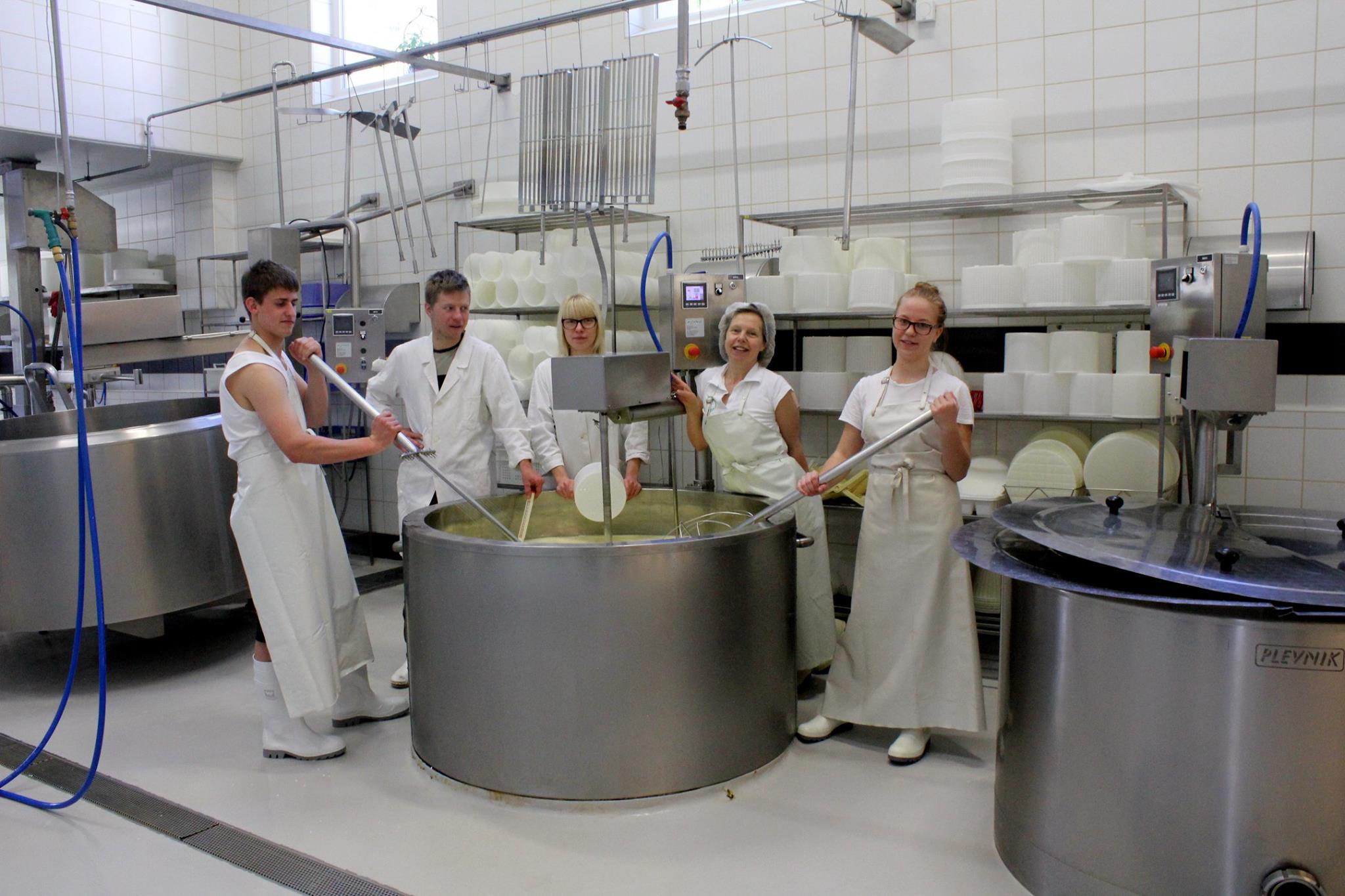
Just a few kilometres further along the valley you reach the family-run, award-winning Pustotnik dairy.

The dairy is a real family affair with all four children involved in the business.

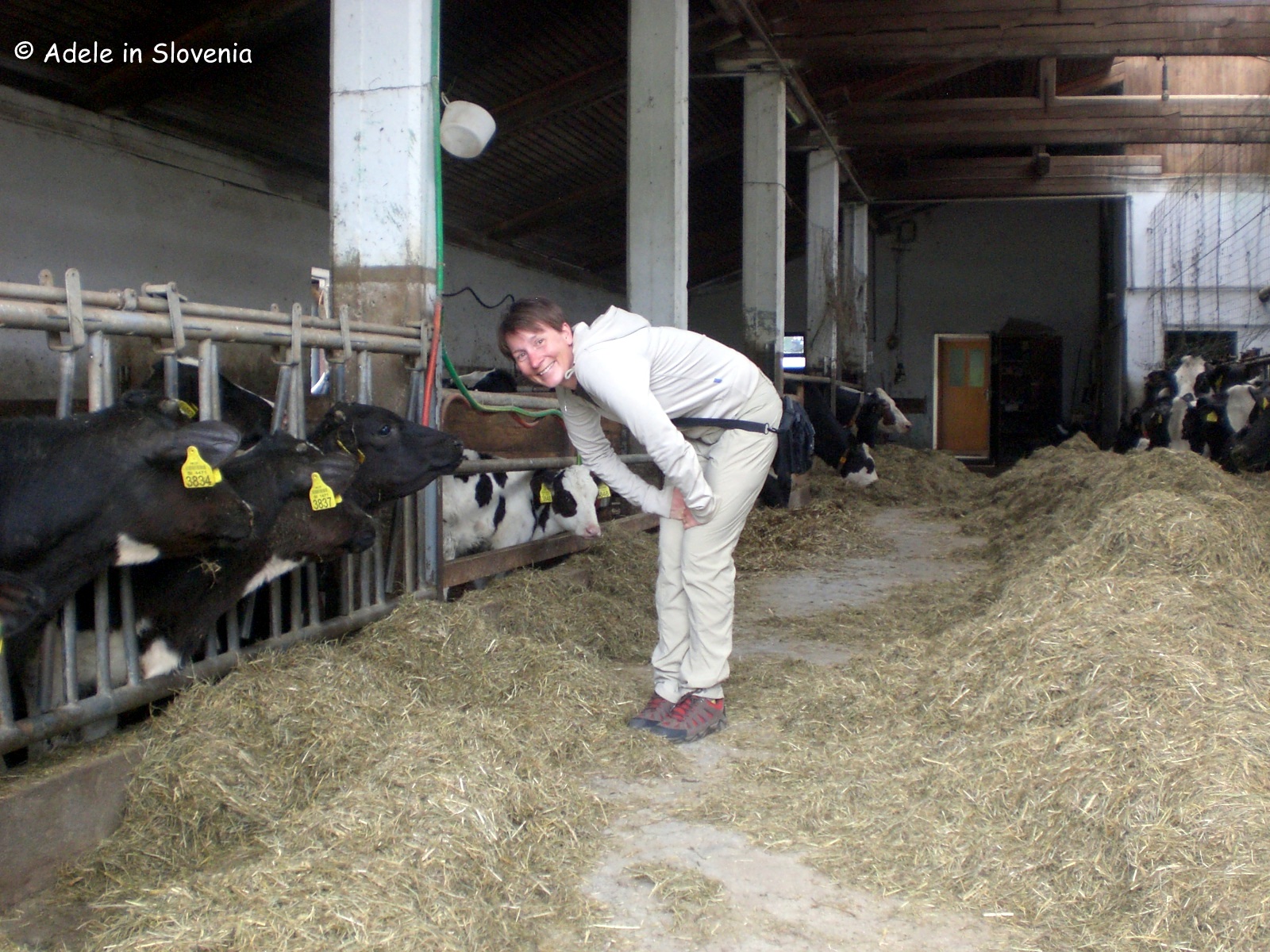
The dairy cows have their own ‘creche’ and ‘maternity unit’. What a cute little new-born calf!

Friendlier cows you couldn’t wish to meet! Content cows!

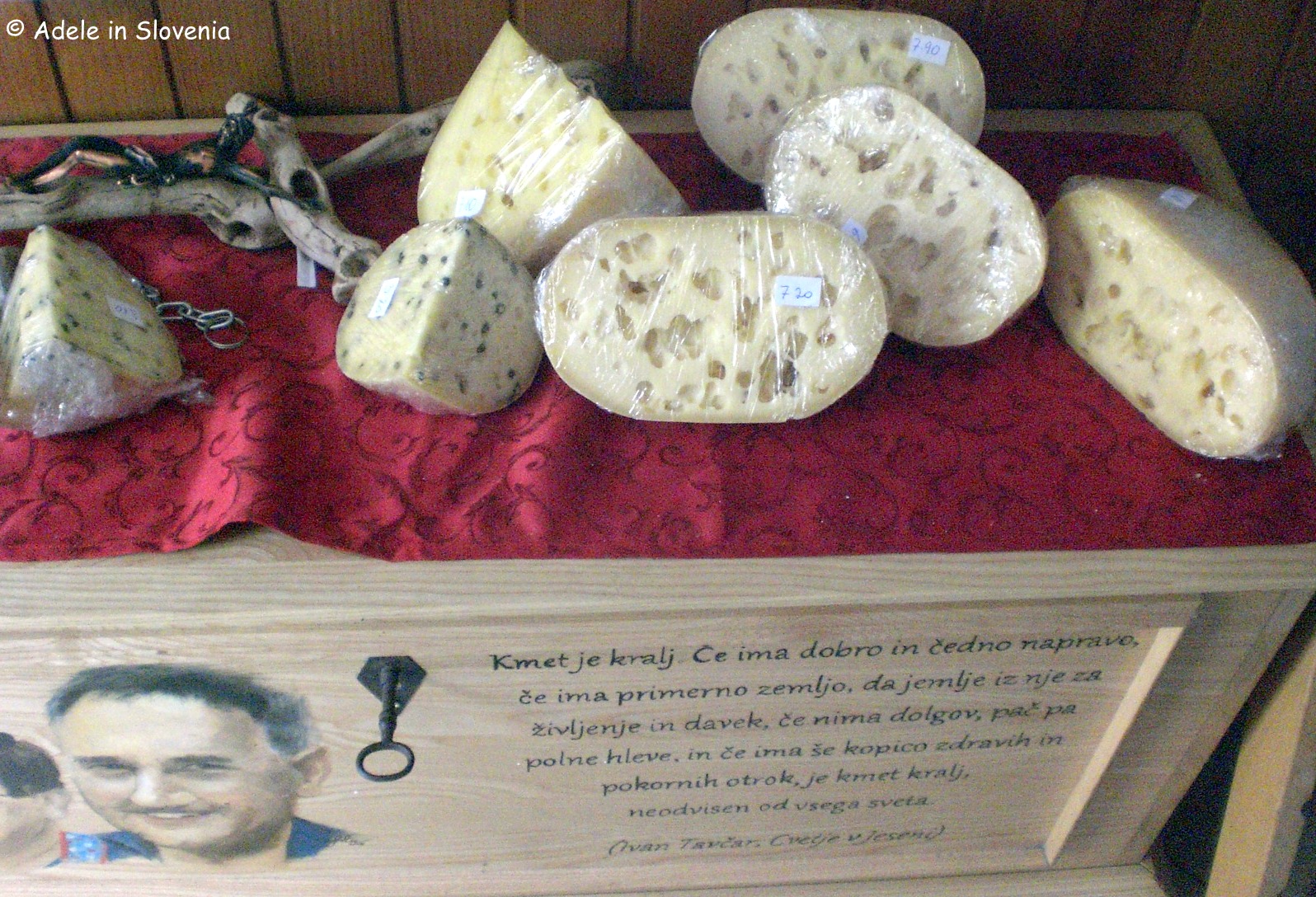
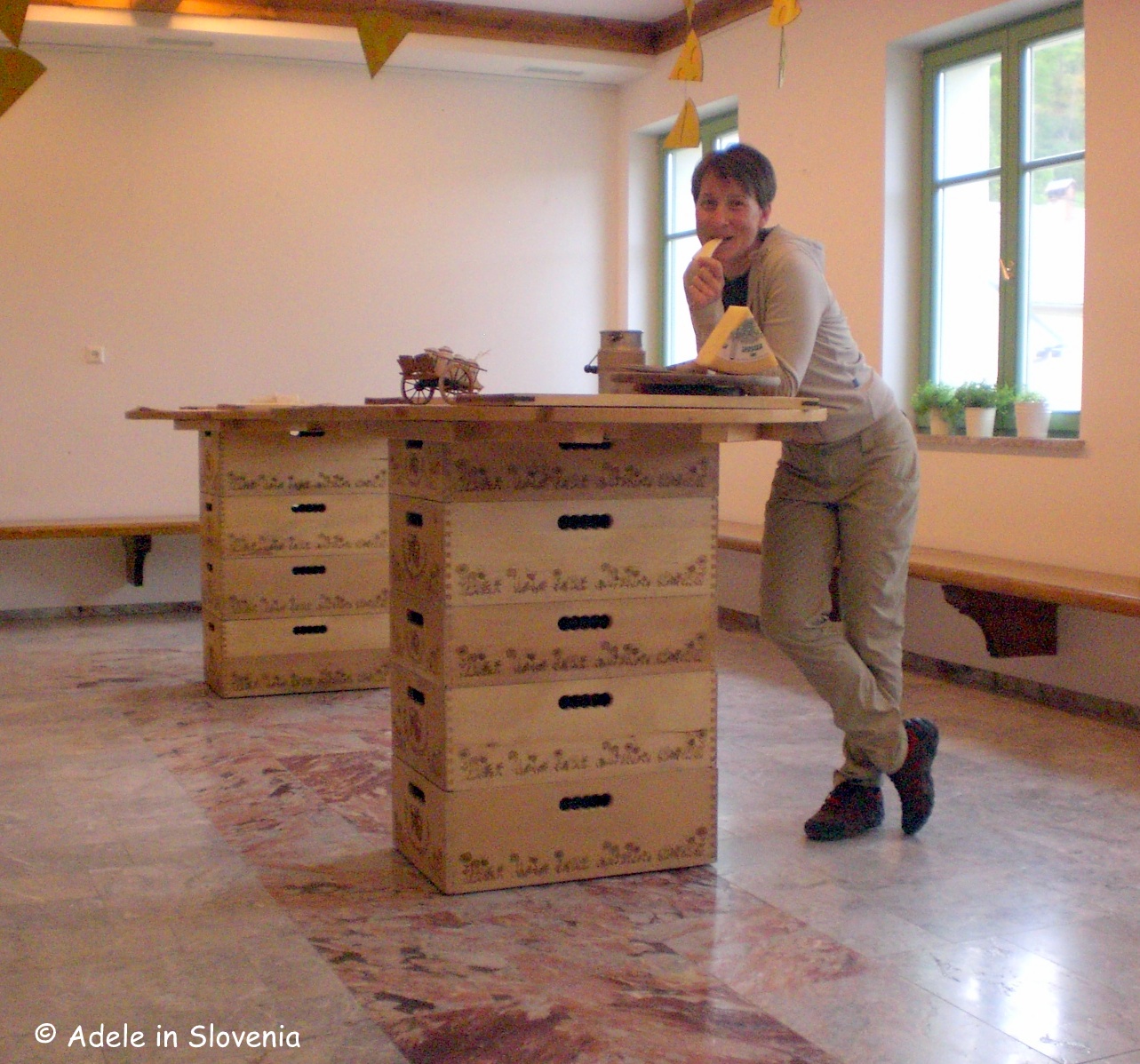
Pustotnik produces cheeses using cow’s, goat’s and sheep’s milk and offers over 70 different products. As someone who loves strong cheese – the stronger the better – the aged gauda really hit the spot for me and I took some home too!

In November 2016 the Pustotnik Dairy won silver at the 2016-2017 World Cheese Awards for its Kozovč cheese – made with a mixture of goat’s and sheep’s milk.

Individuals can visit the cheese-making boutique with no prior reservations required. However, for groups, guided tours and other special arrangements, such as cheese-making workshops, then do be sure to call or email ahead to avoid disappointment as this place is popular!

You can also find Pustotnik cheeses, yoghurts and other products on sale at farmers markets in the Gorenjska region as well as in Ljubljana and further afield. You can find more information about the Pustotnik Dairy here – http://www.kmetijapustotnik.si/

For more information about weddings at Tavčar Manor and what else to see and do in the Poljane Valley see the Visit Škofja Loka website here – http://www.visitskofjaloka.si/en/weddings/weddings-in-visoko

© Adele in Slovenia

Snežnik and Slivnica – Witches and Castles in the Karst

Last year I cycled around Cerknica Lake (Cerkniško jezero) – the largest intermittent lake in Slovenia and one of the largest in Europe. At that time, however, there was little water remaining and it was more field than lake – such is the nature of an intermittent lake. For up to six months per year this fascinating, mysterious lake is filled with water with a mean depth of over 6 metres; during the remainder of the year the water simply disappears, leaving just green, wildflower-covered fields.
Therefore, following the very heavy recent late-spring rains, I figured that now would be a good time to visit to try and catch sight of the lake in its lake-like glory! One of the best ways to do this, is to get up above it by hiking up Slivnica (1114m), from where there are great views over the vast area below.

My gamble paid off and the lake is currently more ‘lake’ than ‘field’, and you can also clearly make out the village of ‘Island’ (Otok) which becomes, well, an island at times of heavy rain. So, now is a great time to visit the area and also a great time to hike up to the top of Slivnica. The lower part of the path is currently a carpet of wild garlic, whilst the meadows a little higher are awash with blooming wildflowers.

Legend has it that Slivnica is the home of witches and there is even a cave named ‘Witches Cave’ located below the summit.

There are several routes to the top of Slivnica, I opted for the one that begins at Bar Kekec in the centre of Cerknica, from where the path begins to ascend directly up through the forest, taking a little over an hour to reach the Dom na Slivnici hut.

Dom na Slivnici is a popular place to rest, soak up the views, and enjoy a hot drink, a cold beer, and a snack or meal.

A further 5 minutes leads to the actual top of Slivnica, however, unless you desperately want to ‘bag’ the top and/or sign the visitors book, I wouldn’t worry, since there is only an antenna, a wooden bench and no views to speak of.

Throughout the summer, Notranjska Regional Park organises ‘Theme Sundays’ with activities based around the lake and its surroundings, including bird watching, nature walks, horse and cart rides, rides in special wooden ‘drevak’ boats, cycle rides, and more. More information can be found here – http://www.notranjski-park.si/en

Photo: Notranjski park

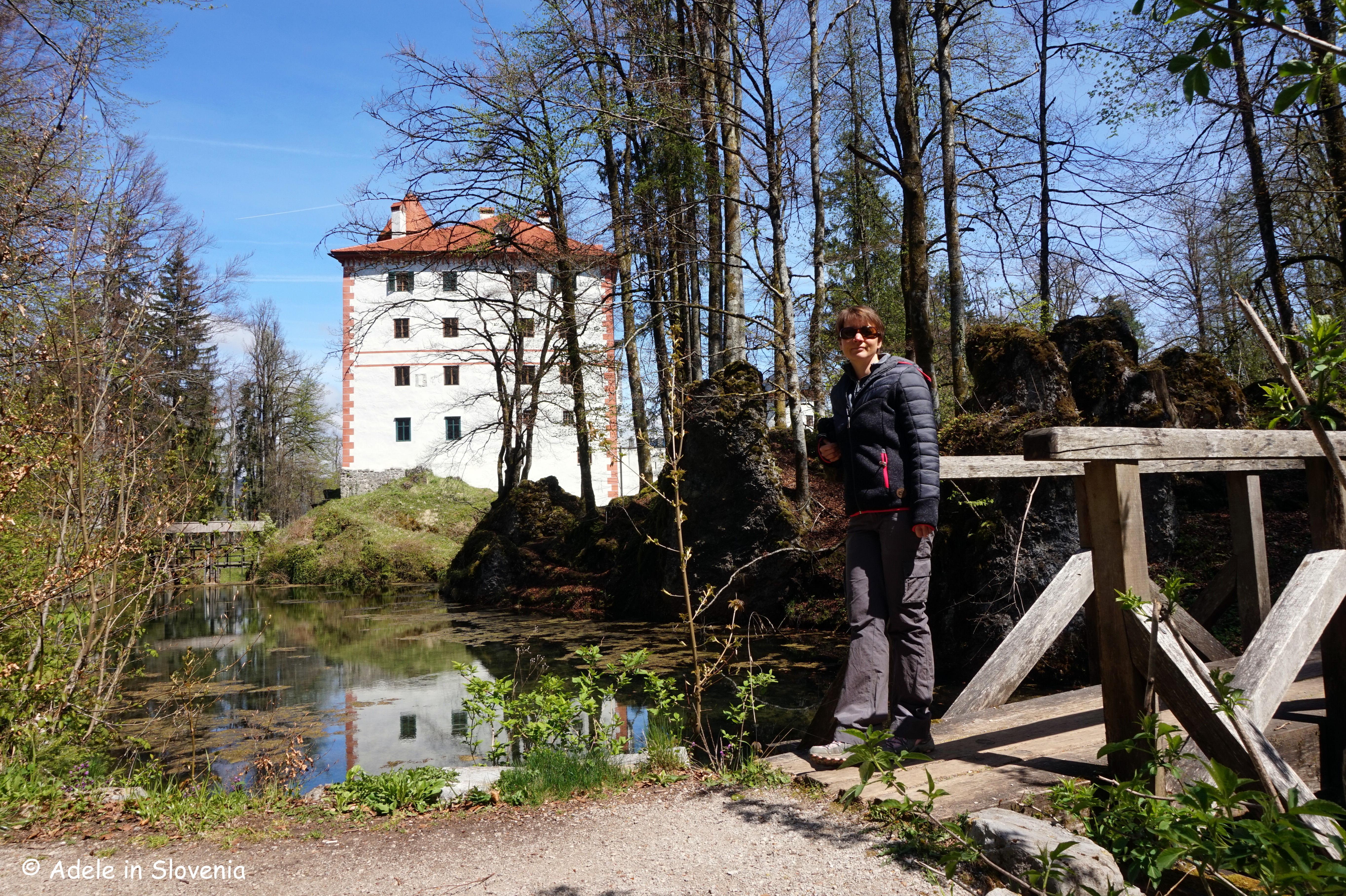
Whilst in the area I recommend visiting the magnificent 13th century Snežnik Castle – one of the region’s star attractions and somewhere I had, until recently, long had on my list of places to go.

The castle, set in a strategic, remote location on the edge of the Lož valley (Loška dolina), has had a long and convoluted history involving multiple owners throughout its former years of existence, and later, following World War II, it was one of the few castles that remained intact and escaped torching and looting.

The castle’s interior is full of lavishly-furnished rooms crammed with antiques and artefacts that reflect the lifestyles of some of the castle’s former inhabitants. More information about the castle can be found here – http://www.nms.si/index.php?option=com_content&view=article&id=325&Itemid=56&lang=en Taking photos inside is not permitted, but the exterior is stunning from whichever angle you view it!

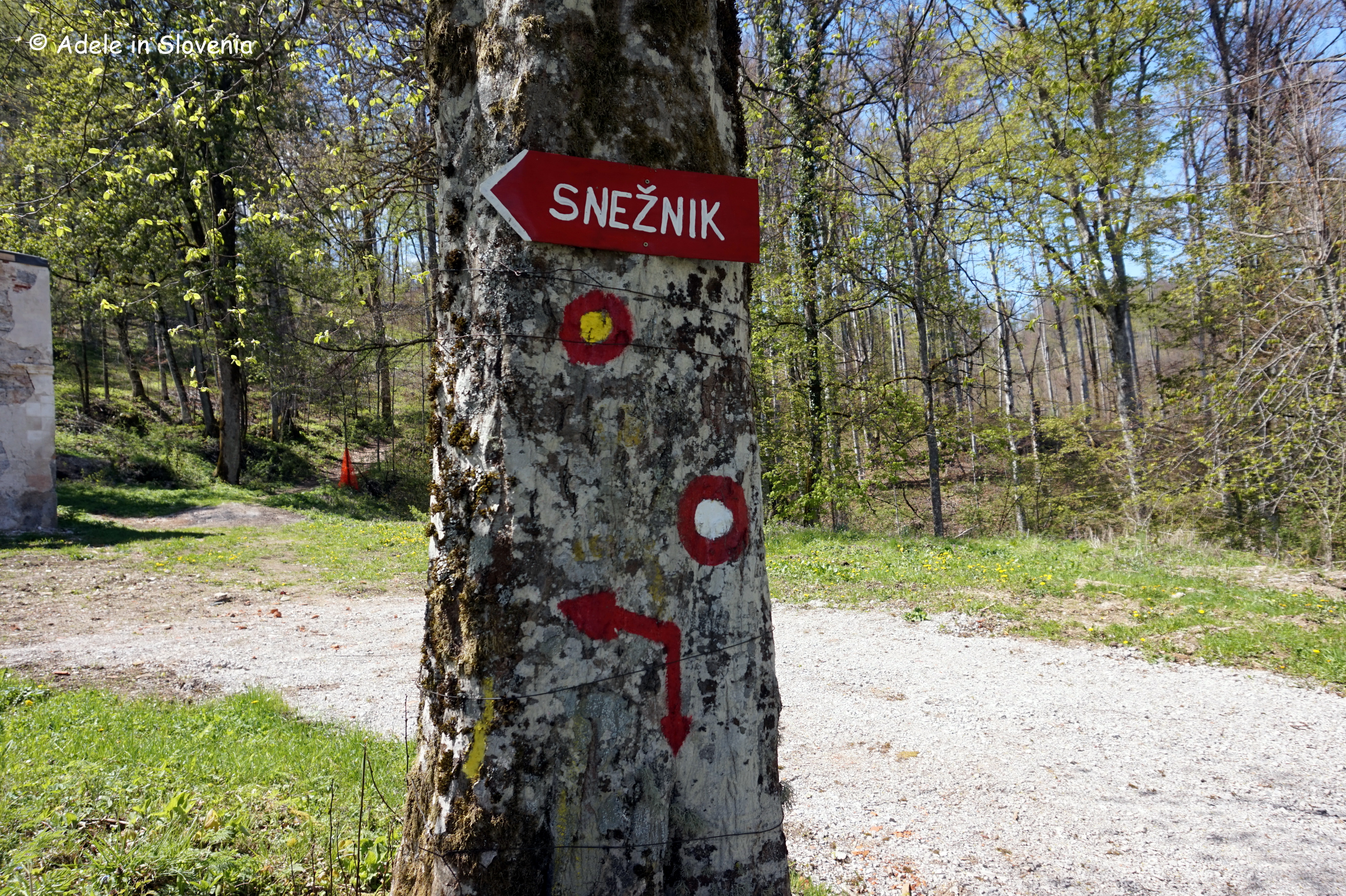
Snežnik Castle is also one of the starting points for hiking to Snežnik, Slovenia’s highest non-alpine mountain (1796m). It’s a fairly long hike from here, however, so many people prefer to drive to Sviščaki (1242m) and from there hike the cca. 2 hours to the peak.

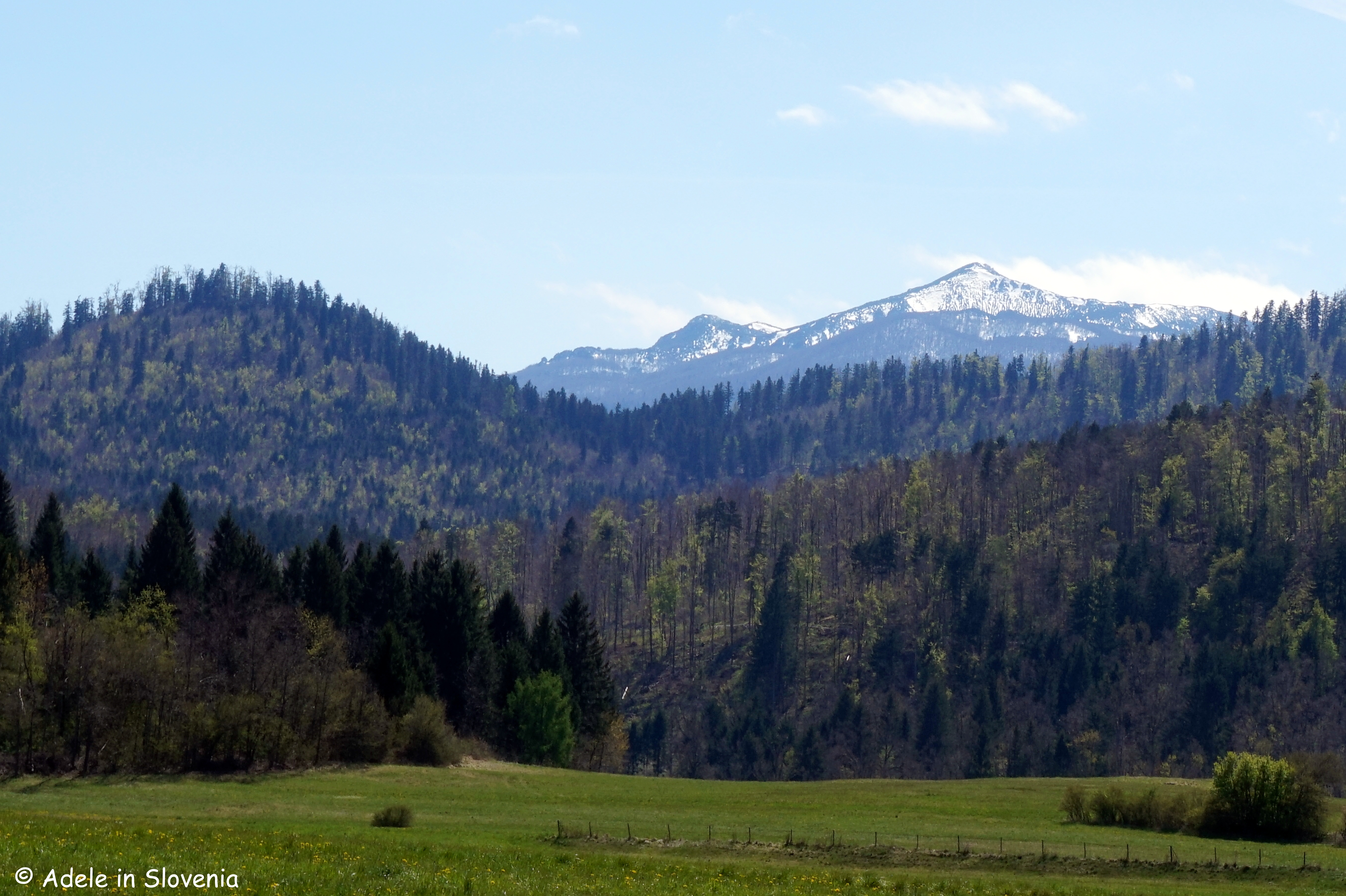
At the time of my visit, Snežnik, which you can see below in the distance, was living up to its name – Snežnik stemming from the word ‘sneg’ meaning snow.

You can read more here about my previous visit to Rakov Škocjan with its natural bridges and unique Karst features, as well as Cerknica Lake and the Museum of Lake Cerknica at Jezerski Hram in Dolenje Jezero, which contains an impressive hand-made model of the lake that shows the topography of the area as well as demonstrating how, and where, the lake fills and empties – https://adeleinslovenia.com/2016/07/14/mysterious-lake-cerknica-now-you-see-it-now-you-dont/

You can read more about the above and find information about the many other attractions in Slovenia’s Green Karst here – http://zelenikras.si/en/

© Adele in Slovenia
 

Exploring the Green Karst: The Križna Cave (Križna jama)

Slovenia’s Green Karst is abundant with caves, only a few of which are open to the public. Although the Postojna caves and the UNESCO-listed Škocjan caves are by far the most well-known and visited tourist caves in Slovenia, for a more authentic and less Disney-esque experience, I can recommend first-hand the naturally-preserved 8.273 metre-long Križna jama cave. The name, which translates as ‘Cross cave’, comes from the nearby church of St. Cross (Sv. Križa). It is the seventh longest cave system in Slovenia and offers a totally unique experience – a ride in a large rubber dinghy on one, or more, of its 22 underground crystal-clear emerald-green lakes.
I must admit I felt a little trepidation at the thought of entering the cave, togged up in the mandatory wellington boots, torch in hand. But I needn’t have! In fact, once inside it was quite the opposite.  The cave is so captivating that you can entirely forget about the outside world.


I opted for the short tour, which lasts around 1 hour and involves a 600 metre walk, followed by a short dinghy ride on the first lake. Here the lake splits and those taking the short tour return on foot the same way. The temperature inside the cave is a constant 8 degrees year-round, so be sure to wear your woolly socks and coats!

On entering the cave into the Great Hall, our guide, Gasper, first acquainted us with the entire cave system and showed us the part that we would be visiting.

We proceeded on foot, stopping at short intervals to see things such as ancient wall writings, the earliest among them date back to the 16th century,

The skulls and bones of cave bears, which are particularly notable for their size – the largest skull measures 56cm.

Gasper pointed out how the edges of the cave walls were rounded by the cave bears brushing past in the pitch black.

There is also an alternative tour to Bear Tunnel (Medvedji rov) for those particularly interested in finding out more about cave bears.

The Križna jama cave is known to contain around 45 animal species, making it the 4th in the world in terms of the number of species. During the tour that I joined, we came face-to-face with one, albeit it a sleeping one!

Then came the best bit. The dinghy awaits! I really didn’t know what to expect, but the overwhelming feeling as we sat in the boat with just the floodlights beneath the boat illuminating the crystal-clear water, was just total serenity and tranquility – a rarity in this modern fast-paced world.

There are also 2 longer tours available for real cave lovers. In order to protect the cave, visitor numbers on these longer tours are strictly limited. The 4-hour tour to the Calvary lake (Kalvarija) can be visited by only 1000 people per year (year-round, by prior arrangement), whilst only 100 people per year can take the 7-hour tour to the end of the 20th lake (from October to March, by prior arrangement).

Should you opt for either of the longer tours, you will be kitted out with all-in-one suits, and will need to take your own refreshments (a small snack, not an entire picnic!). After the first lake, you will transfer to a smaller dinghy and continue the tour partly on foot, partly by dinghy.

The 7-hour tour visits 20 lakes, culminating at Crystal Mountain, which is especially rich with stalactites.

One hour tours of the cave are available from 4.6 – 31.9 with no prior reservations required (at other times tours are available upon prior arrangement). Tours take place daily at 3pm on Saturdays, Sunday and public holidays from 4-30.6, thereafter at 11am, 1pm, 3pm and 5pm until 31st August, and at 11am, 1pm and 3pm during September. The one hour is suitable for all ages, providing you are able to walk on uneven ground. Prior booking for the longer tours is essential.

You can visit come rain or shine! So whilst in Slovenia, don’t miss the opportunity to see this amazing part of the mysterious Karst underworld.

More information about the Križna jama cave can be found here – http://krizna-jama.si/en/about-the-cave/ and more information about what else to see and do in the surrounding Green Karst can be found here – http://zelenikras.si/en/

Official cave photos: Peter Gedei, Gašper Modic.

© Adele in Slovenia


The Radovljica Chocolate Festival 2017 – Hot Off the (Chocolate) Press!

So, it’s that time again. Chocolate Time! It’s hard to believe that this year marks the 6th year-in-a-row of the Radovljica Chocolate Festival and, of course, I’ve been to every one!

Last year the festival attracted around 55,000 visitors, and this year those numbers could even be exceeded, which is quite astounding for a festival which began as a humble one-day event back in 2012 and has since grown to become one of Slovenia’s main foodie events.

This year the festival is on for 3 days, beginning today on Friday 21st April at 3pm, and continuing on Saturday from 9am to 8pm and on Sunday from 9am to 7pm, so there’s still plenty of time!

In addition to the regular sales and tastings of chocolate, this year there are some new highlights and treats to look forward to.

This evening there is a premiere 6-course dinner at Vila Podvin, prepared by 3 of Slovenia’s top chefs and in collaboration with 20chocolate.

In the Chocolate Beauty Marquee the Roz’ca massage salon is offering chocolate hand massages using their own handmade cocoa butter cream using all natural ingredients. I couldn’t stop sniffing my hands, it really does smell good enough to eat! Those who have a hand massage during the festival are also entered into a prize draw to win a full body massage (the non-chocolate version!). More information here http://masaza-rozca.si/ and here https://www.facebook.com/Masaže-Rožca-Simona-Šlegel-sp-278814295512819/?fref=ts

A chocolate roulette, bet with chocolate and win chocolate – that’s got to be worth a flutter!

Chocolate sculptures

Meta Solar painting using chocolate, so original and resourceful and what an eye for detail! https://metasolar.si/tag/radovljica/

New to the festival this year is Čokoladni Hram which produces some unusual flavours of chocolate using speciality Slovenian ingredients, among them zaseka (minced lard), mohant (a very smelly cheese), and tarragon. Go on, be daring and give them a try, you’ll be pleasantly surprised!

As well as new, intriguing flavours of chocolate infused with tea at the Čajna Soba Tea Room. among them chocolate with black masala chai, honeybush caramel tea chocolate, dark chocolate with earl grey green tea…

In addition to chocolate, there’s plenty to see and do for all the family, including archery for children with Robert Levstek https://adeleinslovenia.com/2017/04/10/archery-adventures-and-delicious-draga-delights/

Children’s cookery workshops and dance classes.

Stilt walkers entertaining the crowds.

On Saturday at 2pm students from the Maribor Design School will be putting on a Chocolate Fashion Show, and on Sunday at 12 noon Gorenjka’s giant 95kg chocolate bar will be smashed and shared among the crowd.

Other highlights of the packed entertainment programme include culinary workshops with contestants on this year’s Slovenian Masterchefjugglers, magicians and other street entertainment, free concerts, a canine corner, chocolates and chocolate products for everyone, including for allergy suffers, organic chocolate, raw chocolate, chocolate scooter races – all this and much more! See the full programme herehttp://www.festival-cokolade.si/program-2017/

Congratulations to Tourism Radol’ca for another fantastic job organising the festival. The weather, for now at least, couldn’t be more perfect for such an event so, don’t miss out, there’s enough chocolate for everyone – even after I’ve had my fill!

© Adele in Slovenia