Honey Radol’ca – Celebrating 60 Years of Radovljica’s Museum of Apiculture!

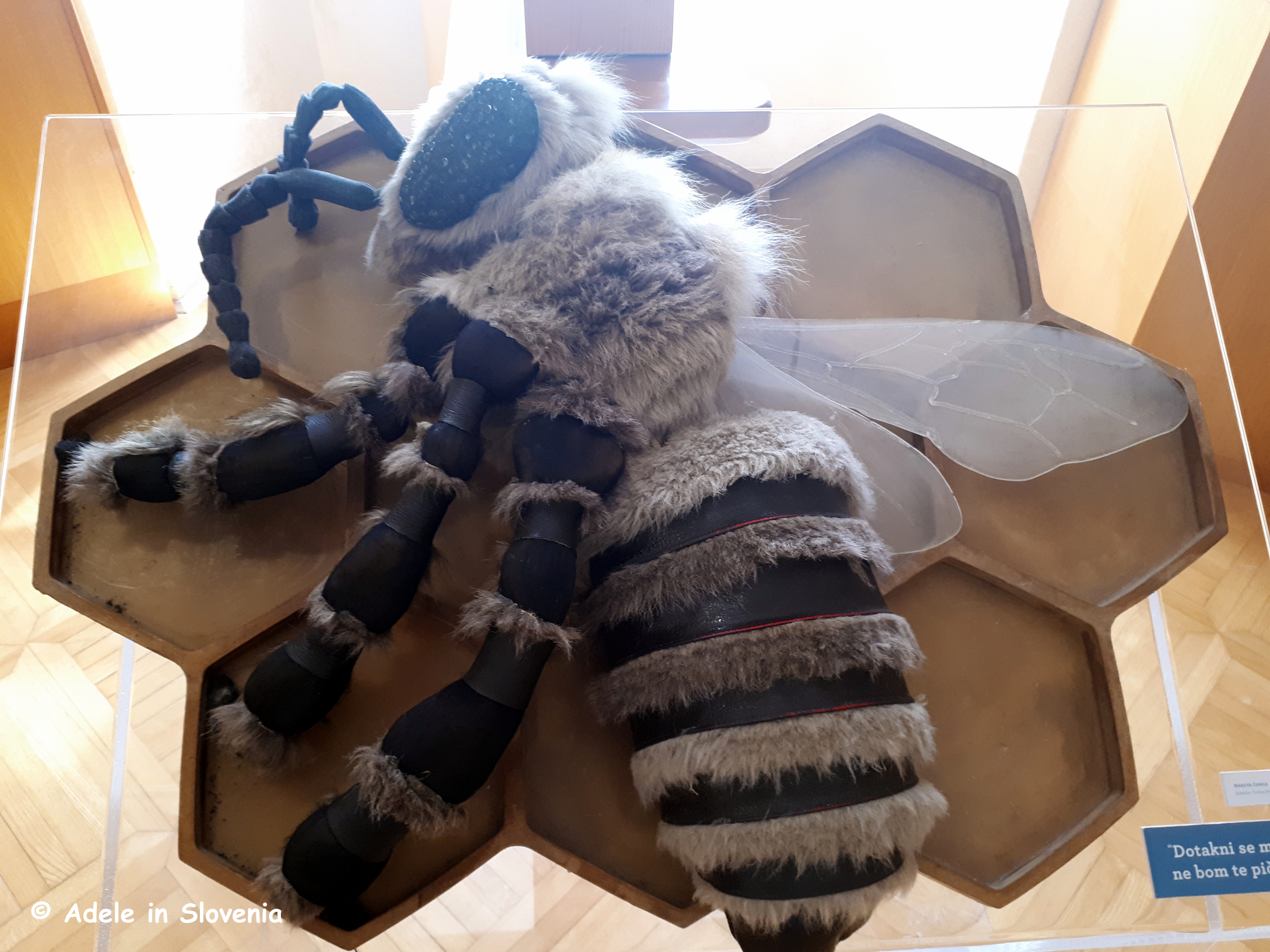
Last Saturday was a particularly ‘sweet’ day in Radovljica! The main event to celebrate the 60th anniversary of the Museum of Apiculture, housed in the magnificent Radovljica Manor, took place, titled ‘Honey Radol’ca

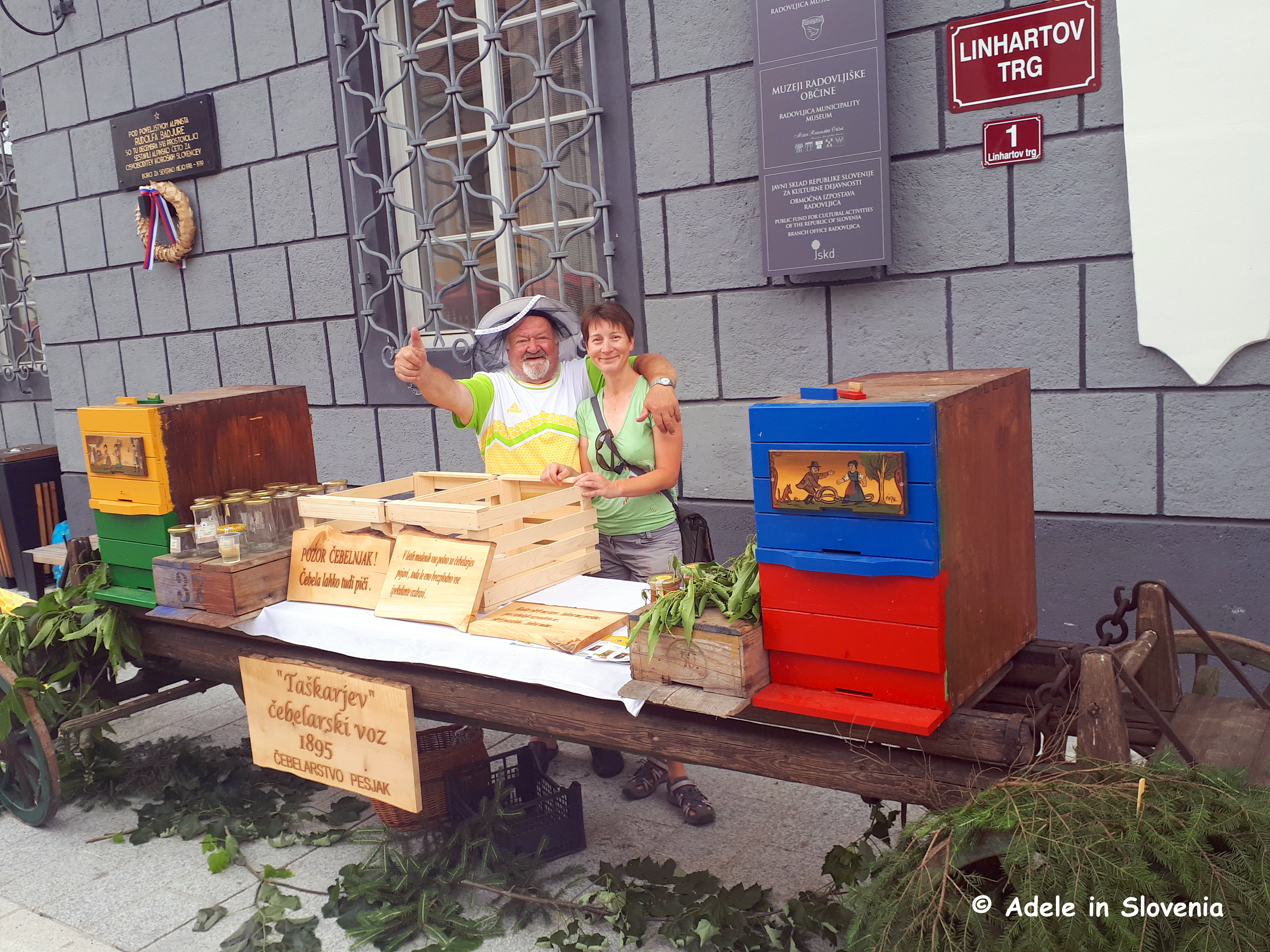
Honey Radol’ca also featured market stalls with honey and honey products from various local beekeepers as well as the Slovenian Beekeepers’ Association, the Beekeeping Education Centre of Gorenjska, and the Radovljica Beekeepers’ Association.
Though it opened in 1959, the history of the Museum of Apiculture dates back substantially further. At a meeting in 1925, the then editor of the magazine Slovenski čebelar (Slovenian Beekeeper), August Bukovec, suggested the establishment of the museum and a year later the decision was finalised. The active gathering of beekeeping-related objects for the museum began, especially beehive frontal panels, as well as the search for suitable premises for the museum. The collection of objects gathered for the museum was first housed in two premises in Ljubljana, and later, in 1959, the museum moved to the Radovljica Manor, where it remains today.
Last Saturday, or rather Friday actually, marked the opening of a new exhibition dedicated to 60 years of the Museum of Apiculture. In pictures and words, 60 highlights of the museum are presented in the exhibition, which is on view until September, and in a special publication titled ’60 Highlights of the Museum of Apiculture, Radovljica’.
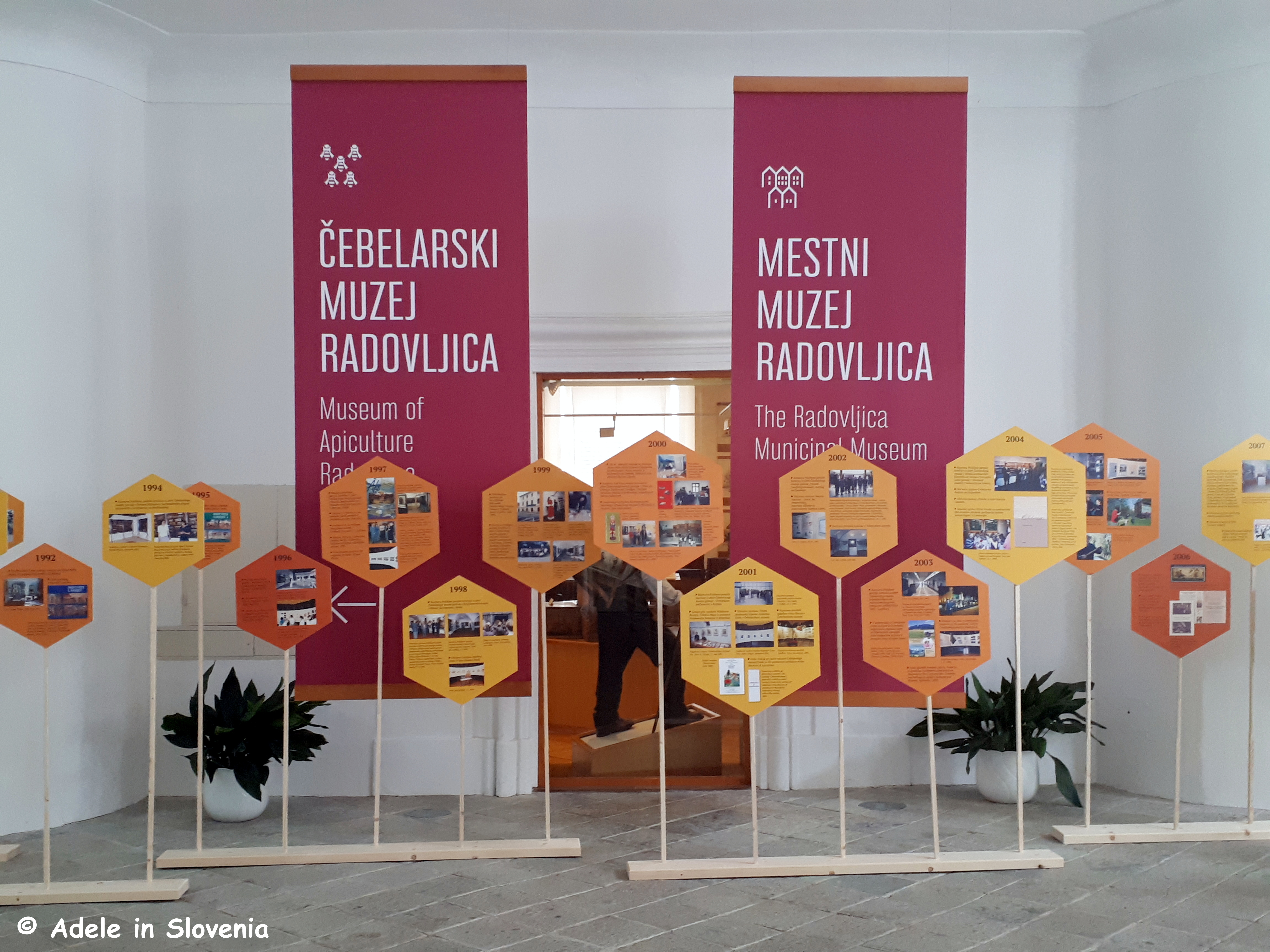
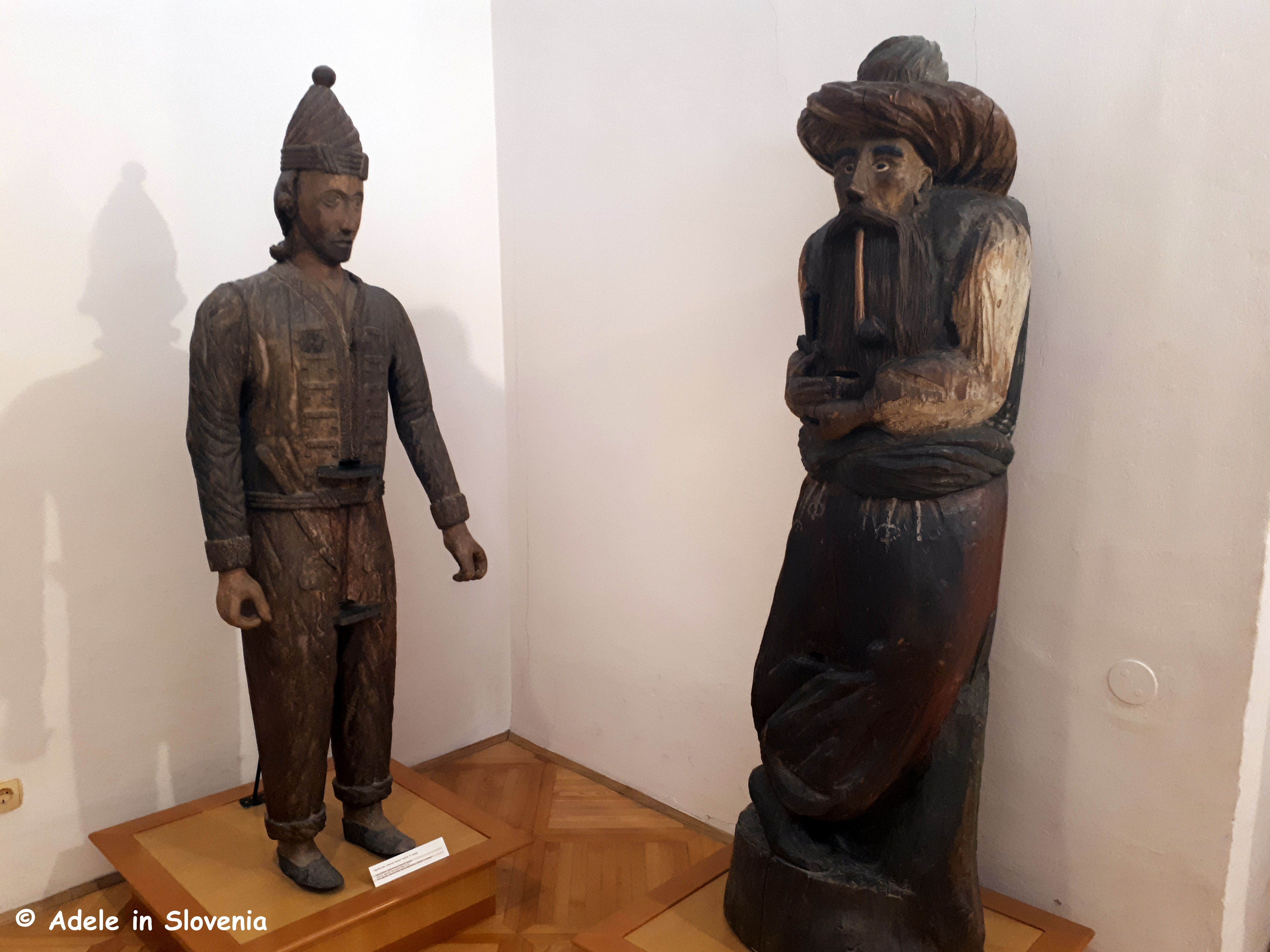
In addition to this new, temporary exhibition, the museum’s permanent collection includes a wide range of hives and beekeeping tools, as well as unusual figural hives.

The museum’s extensive collection of painted beehive frontal panels, including the oldest known in the world, is a particular highlight. Each one tells its own unique folk tale.

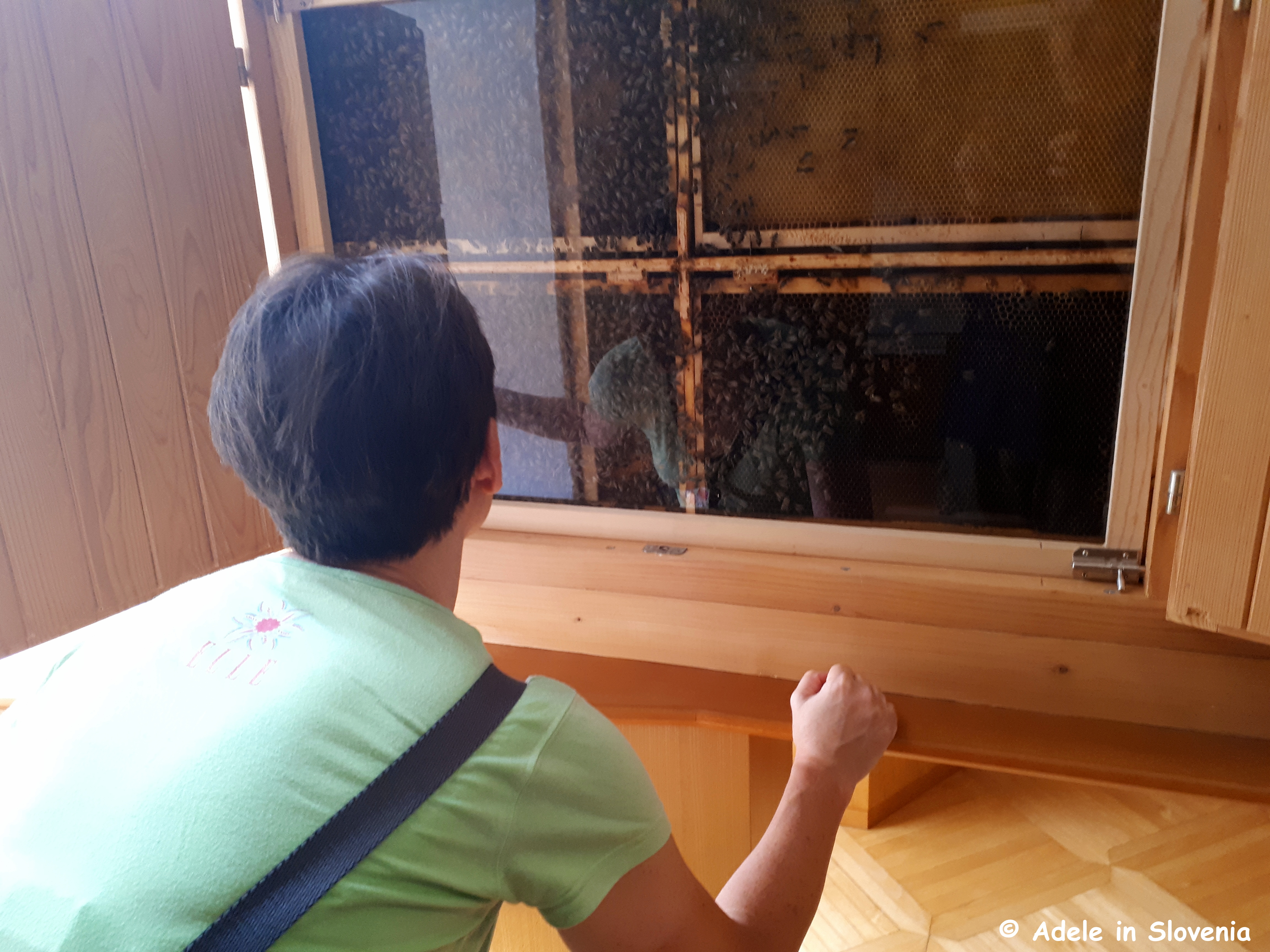
You can get up close to the Carniolan grey bee – Slovenia’s indigenous breed of bee – or rather a lot of them, at the observation hive, which is installed annually in the museum during the warmer months.
You can also take a seat and watch a video about beekeeping in Slovenia – the English version of which is narrated by yours truly!

The Museum of Apiculture is just one of the museums and galleries under the umbrella of Radovljica Municipal Museums, the others are: the Iron Forging Museum in Kropa, the Museum of Hostages in Begunje, the Šivec House Gallery in Radovljica, and the Radovljica Municipal Museum.

But don’t worry, even though ‘Honey Radol’ca’ has been and gone, you can visit the museum throughout the year, and there’s still plenty of honey- and beekeeping-related experiences to be(e!) had in Radovljica and the surroundings, including the new family experience ‘Follow a ‘bee’ through Radovljica‘.

The Museum of Apiculture is open throughout the year, except on Mondays; opening hours varying according to the month. Find more information about all of Radovljica’s museums, opening times and admission fees here and here.

© Adele in Slovenia
 

A New Addition to the Old Town – The Pharmacy and Alchemy Museum, Radovljica!

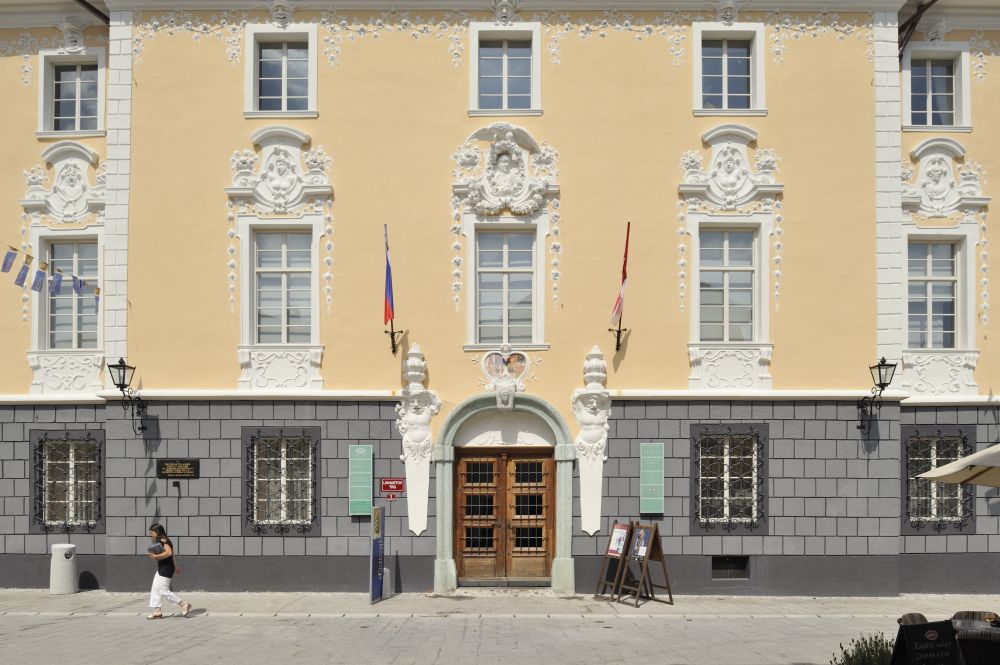
Last Friday I attended the opening of a brand new museum in Linhart Square – the Pharmacy and Alchemy Museum – which is a great addition to Radovljica’s already charming old town centre.

I saw the sign being hung for the museum some time ago, and I have to admit thinking to myself at the time that it doesn’t exactly sound that riveting, however, I stand corrected! Having seen it for myself, the Pharmacy and Alchemy museum is actually fascinating. Its location in a beautifully restored bourgeois house in the old town adds to the experience, and I left on a high and looking forward to being able to share the news of this new museum with you – readers of my blog!

Radovljica’s mayor officially opened the museum, then we – the gathered crowd – had the chance to be the first to be ‘let loose’ inside the museum!

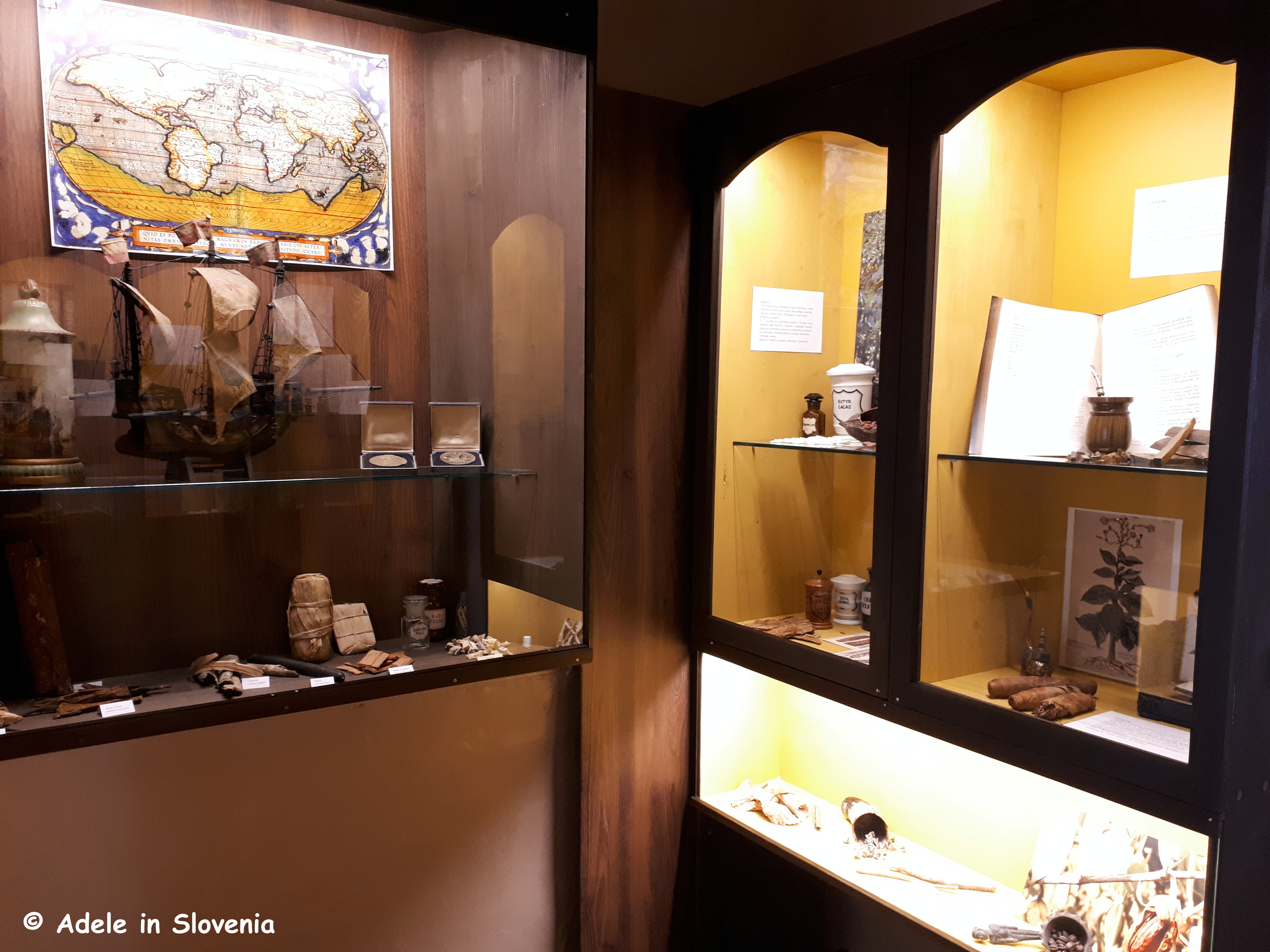
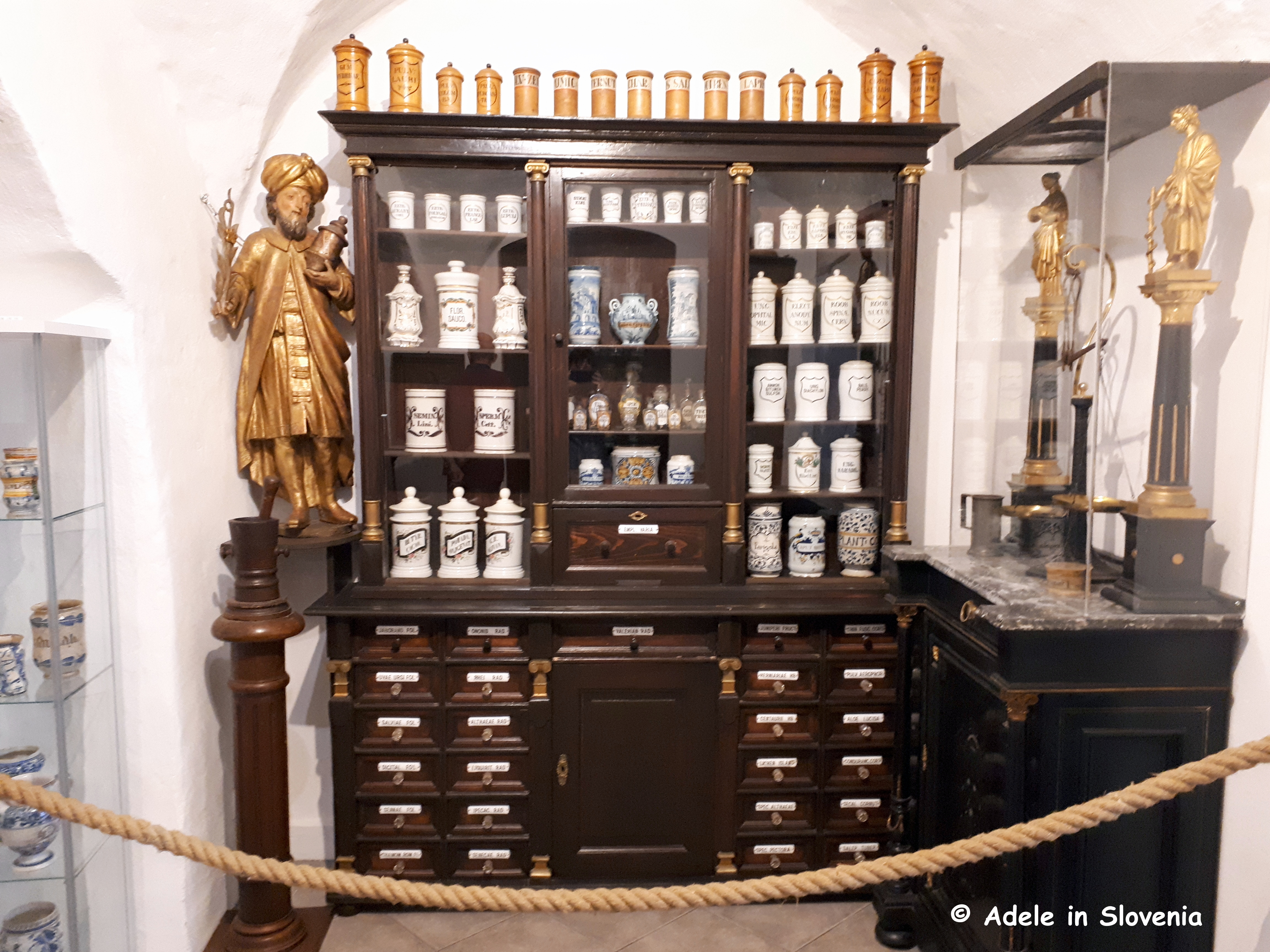
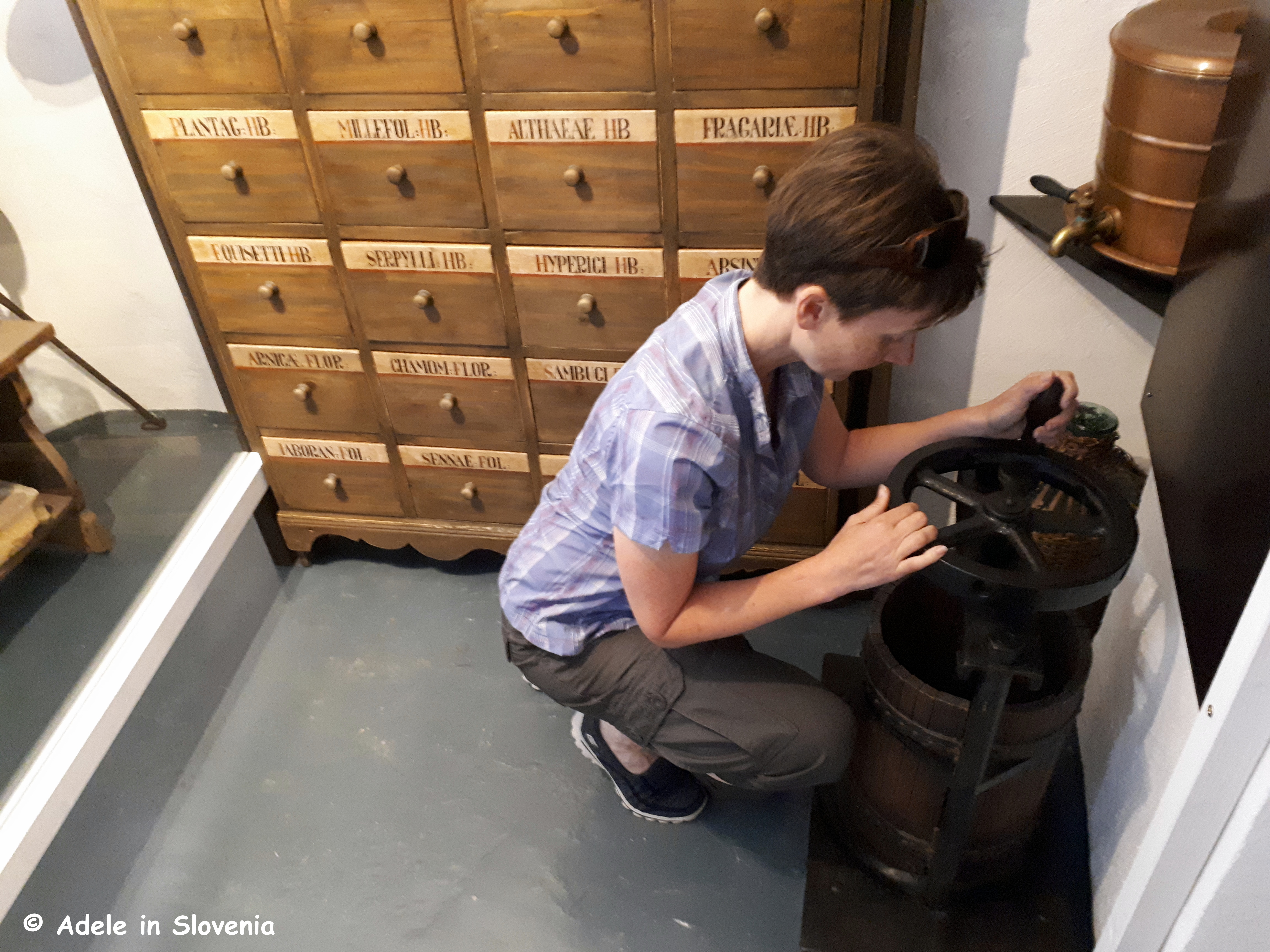
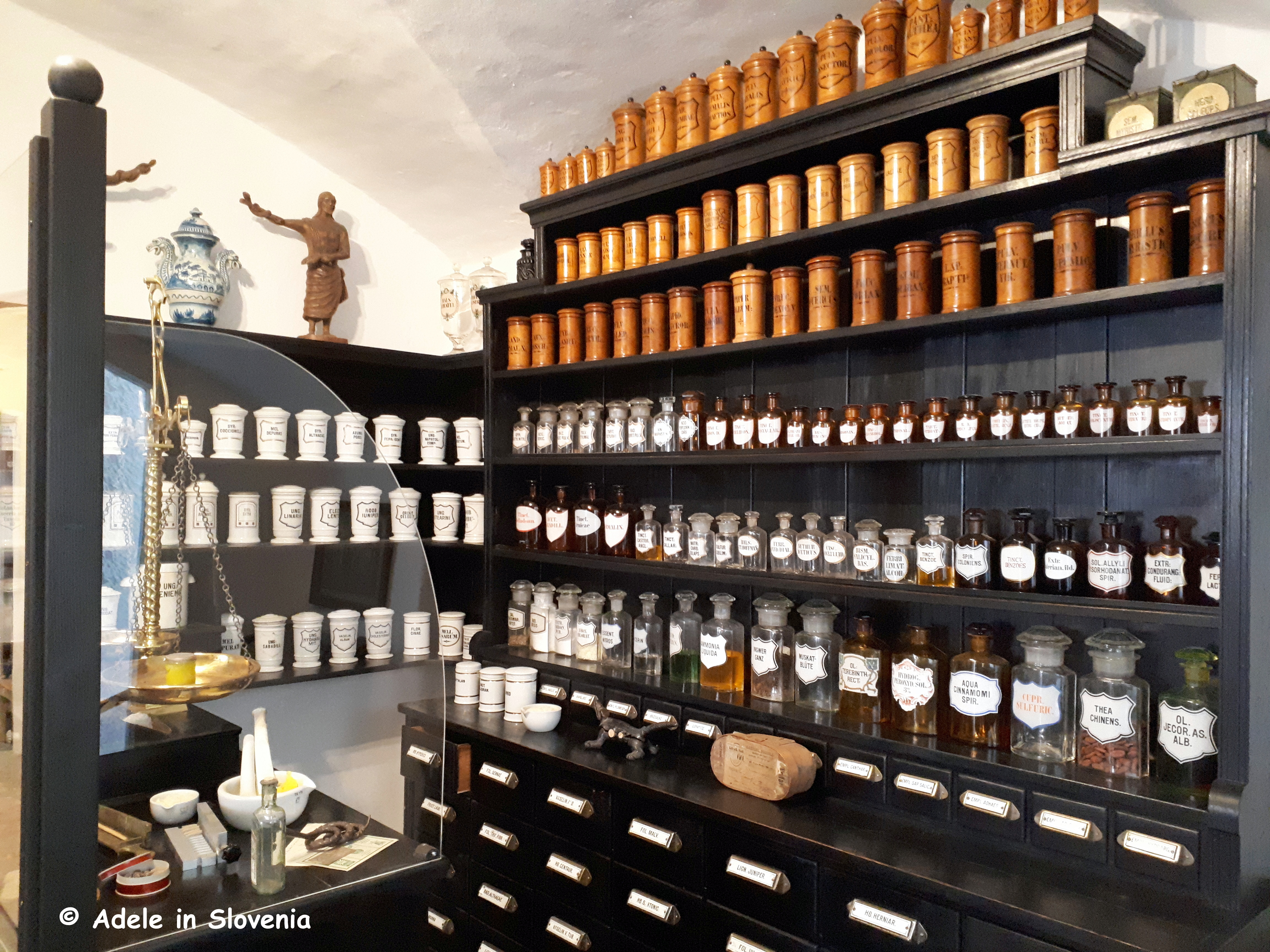
The exhibits in the museum have been collected over a 40-year period by its owner, who, together with his daughter, has now gathered the objects in one place and opened this intriguing museum. On entering it is like taking a step back in time, while at the same time the beautifully arranged exhibits have been thoughtfully presented in a timeless and appealing way.

The collection of Spanish and Italian alborel (decorated ceramic pots for storing medicine) is particularly extensive. The exhibits include a collection of mortars, the oldest of which dates from the 12th century, and 30 pharmaceutical books, one of which dates from the 15th century. The museum also features some objects from ancient and Asian medicine and an ethnological collection of folk medicine on Slovenian territory.

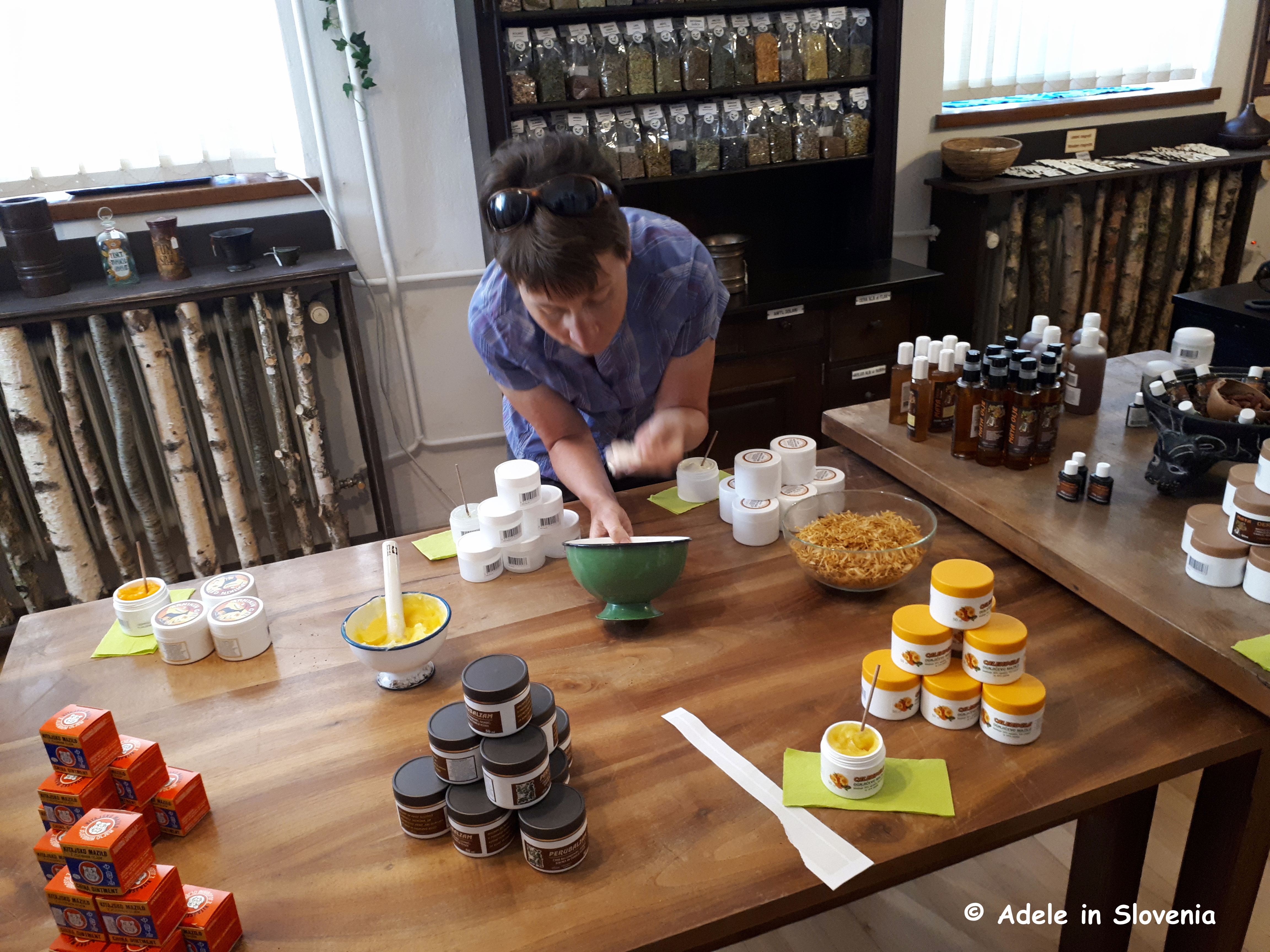
The museum shop is a great place to pick up some gifts to take home for friends and/or family, or even to treat yourself!

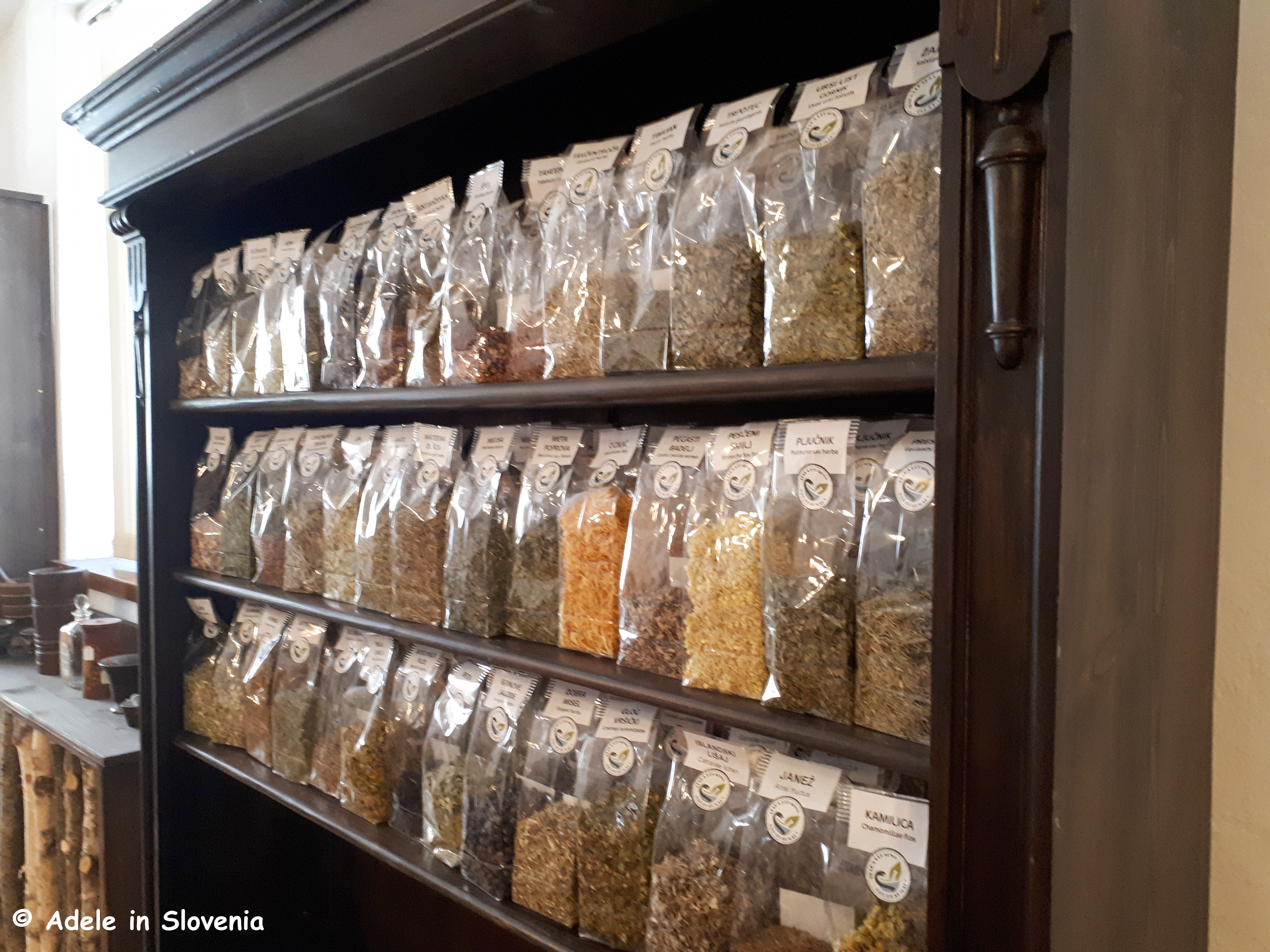
The shop is equipped like an old pharmacy and sells natural cosmetics, souvenirs with mythological themes, honey, herbs, essential oils, and a range of teas.

The museum and museum shop are open daily from 10am – 6pm. Entrance fees apply.

This bring the tally of museums in Radovljica’s old town to three, or four if we include the Šivec House Gallery, which falls under the banner of Radovljica Municipal Museums – not bad for such a small place, hey! In addition to this newly-opened museum, you can visit the Museum of Apiculture, which is celebrating its 60th anniversary this year, the Municipal Museum, and, as mentioned above, the Šivec House Gallery.

Come rain or shine, there’s always something to see and do in Radol’ca!

© Adele in Slovenia

Sports and Entertainment at the Završnica Recreation Park

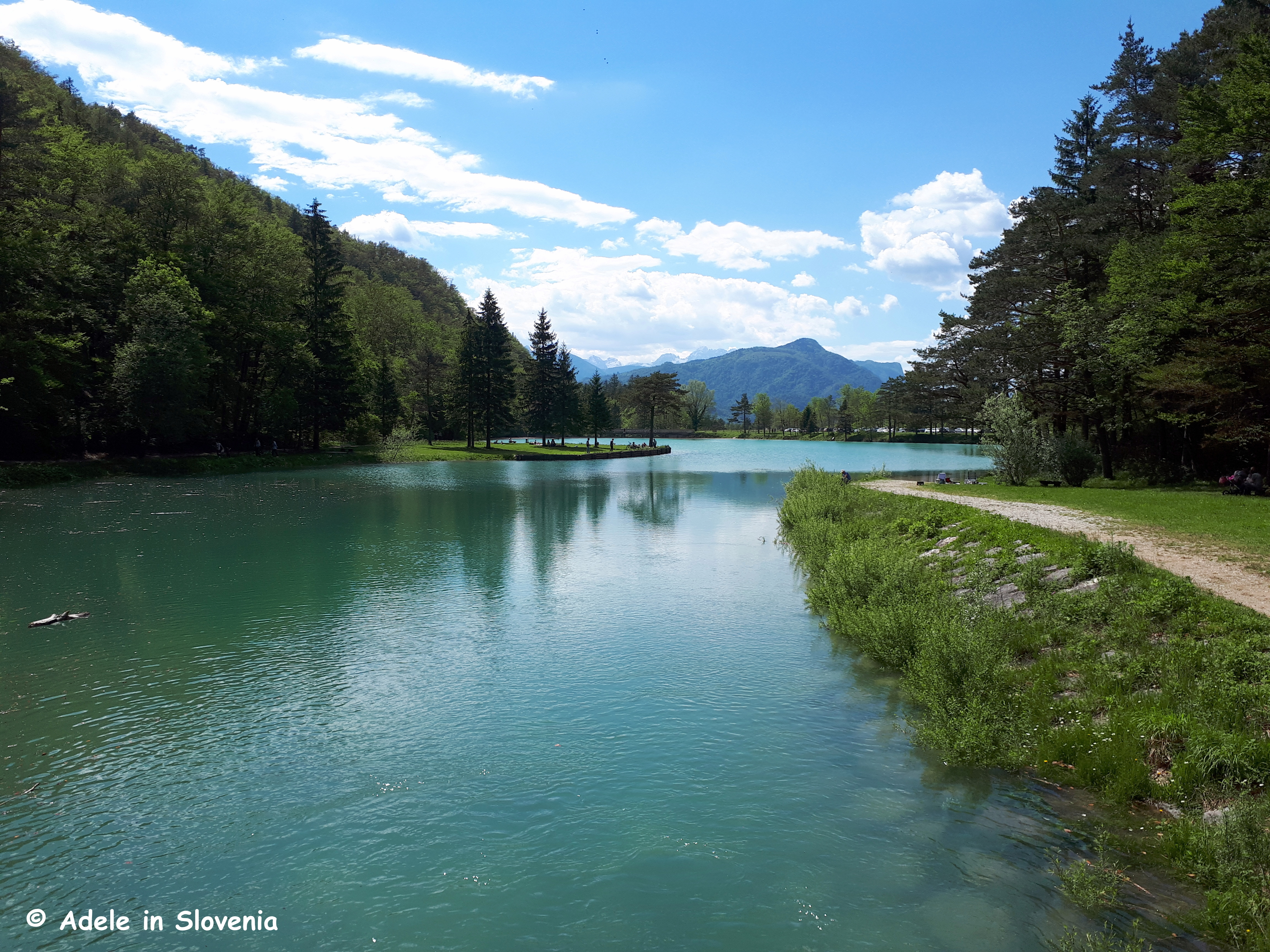
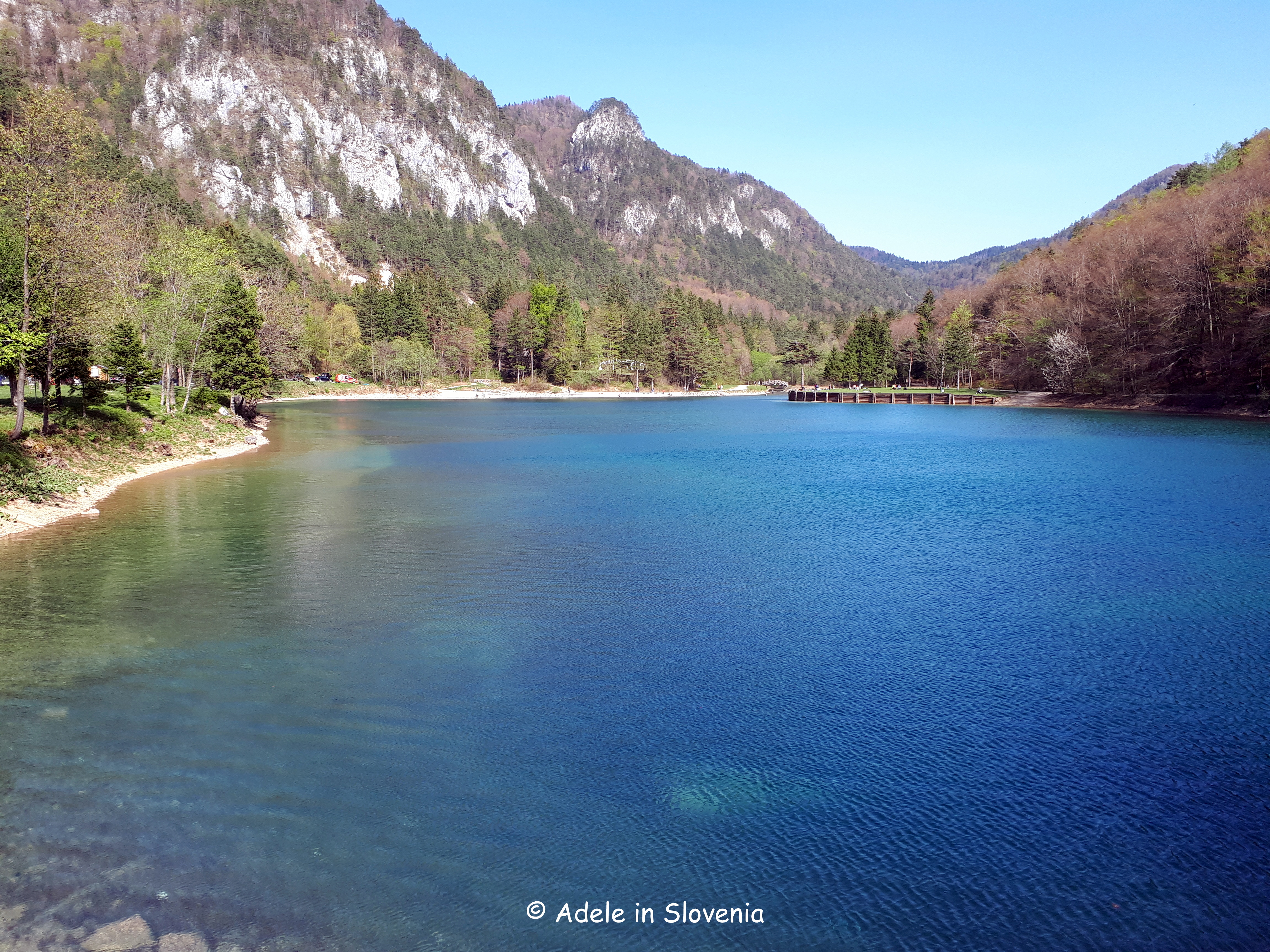
The Završnica Recreation Park, with its reservoir, trim trail, and beautiful backdrop of the Karavanke mountains, is a great place to visit whether you want to be mega active, moderately active, or to just chill! The park, and the entire Završnica valley, offers something for everyone, and even more so last weekend at the ‘Day of Sport and Entertainment‘.

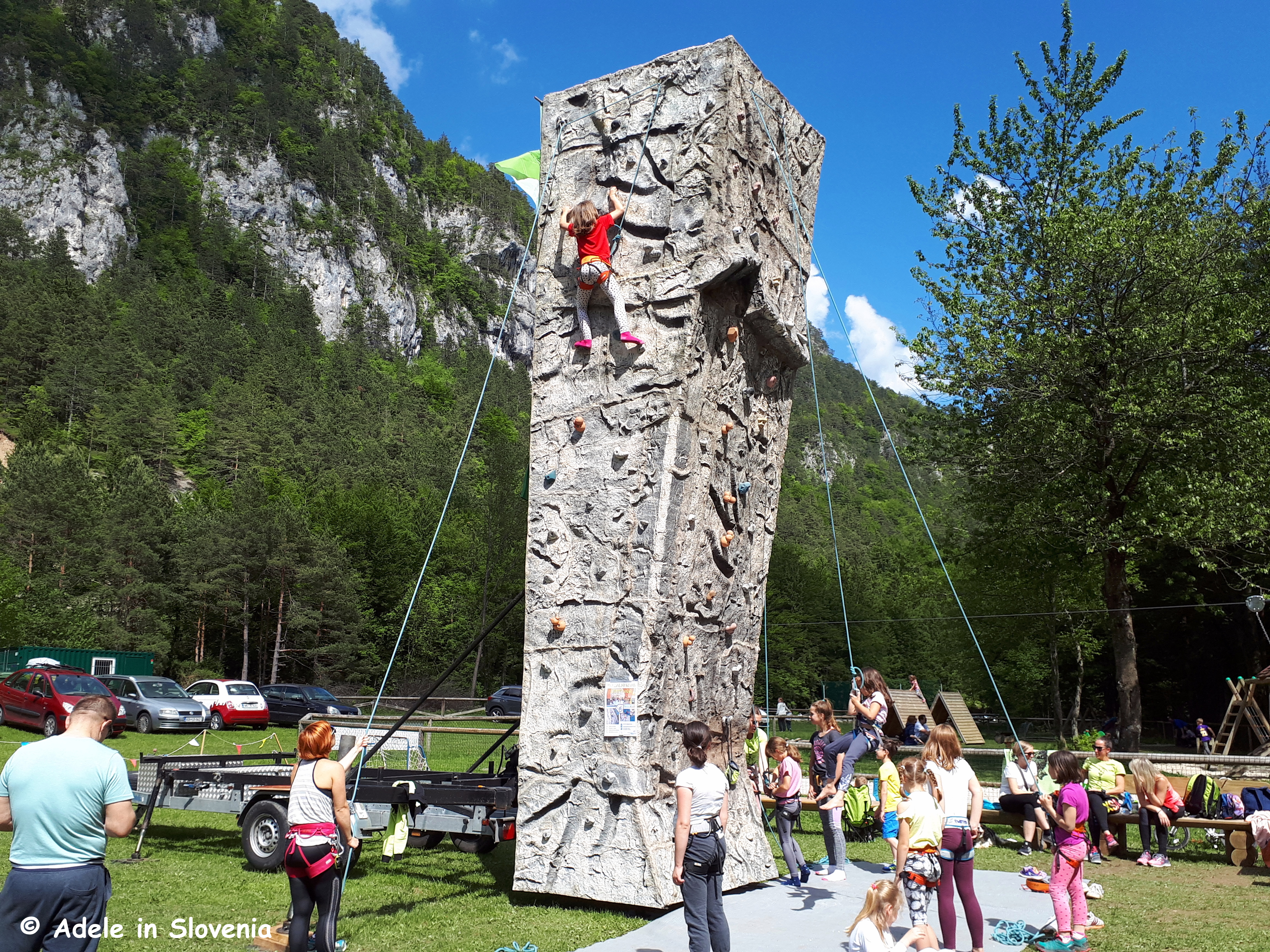
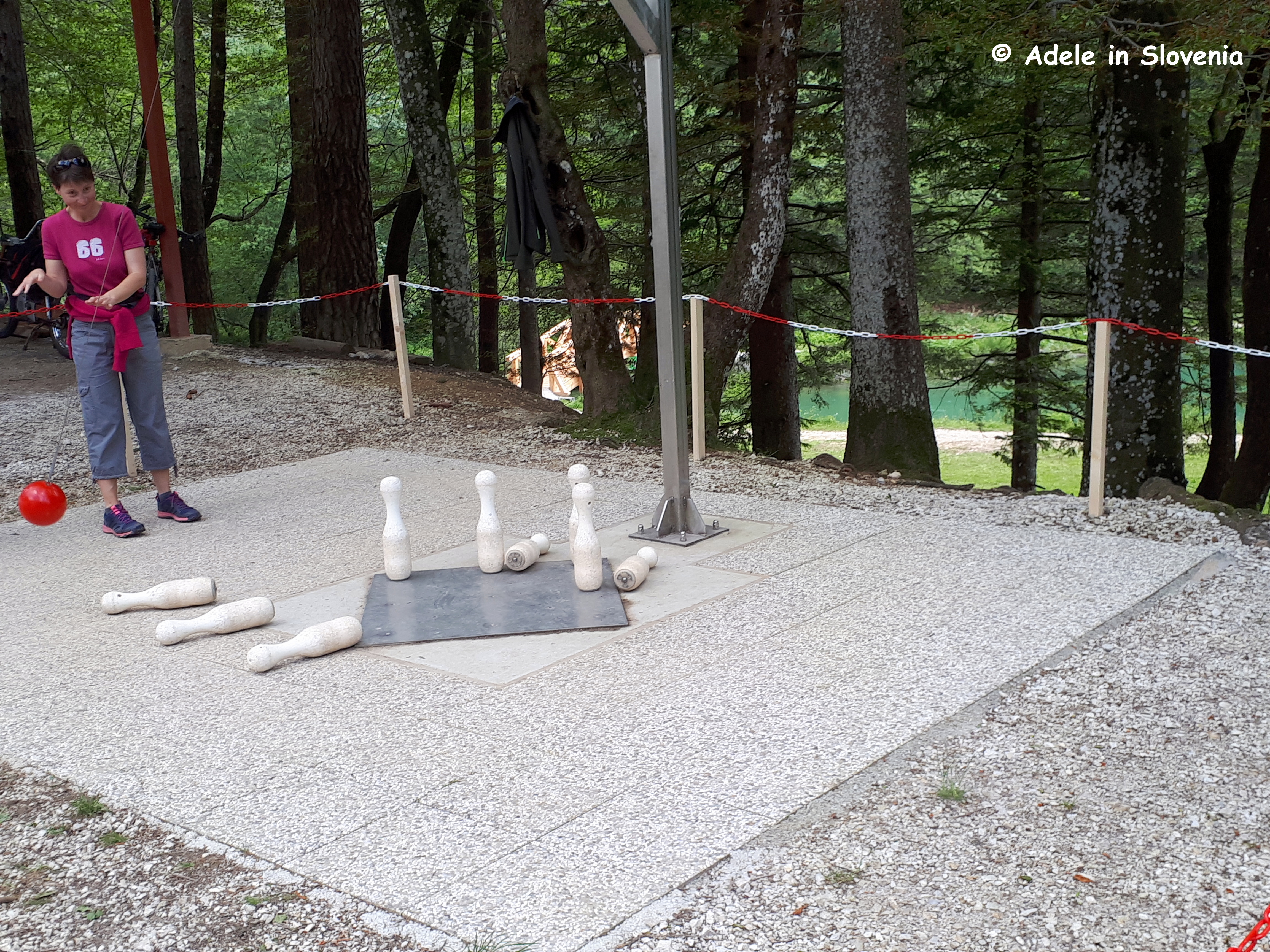
The day included a chance to try out activities including climbing, beach volleyball, 9-pin skittles, football, summer sledging and more.

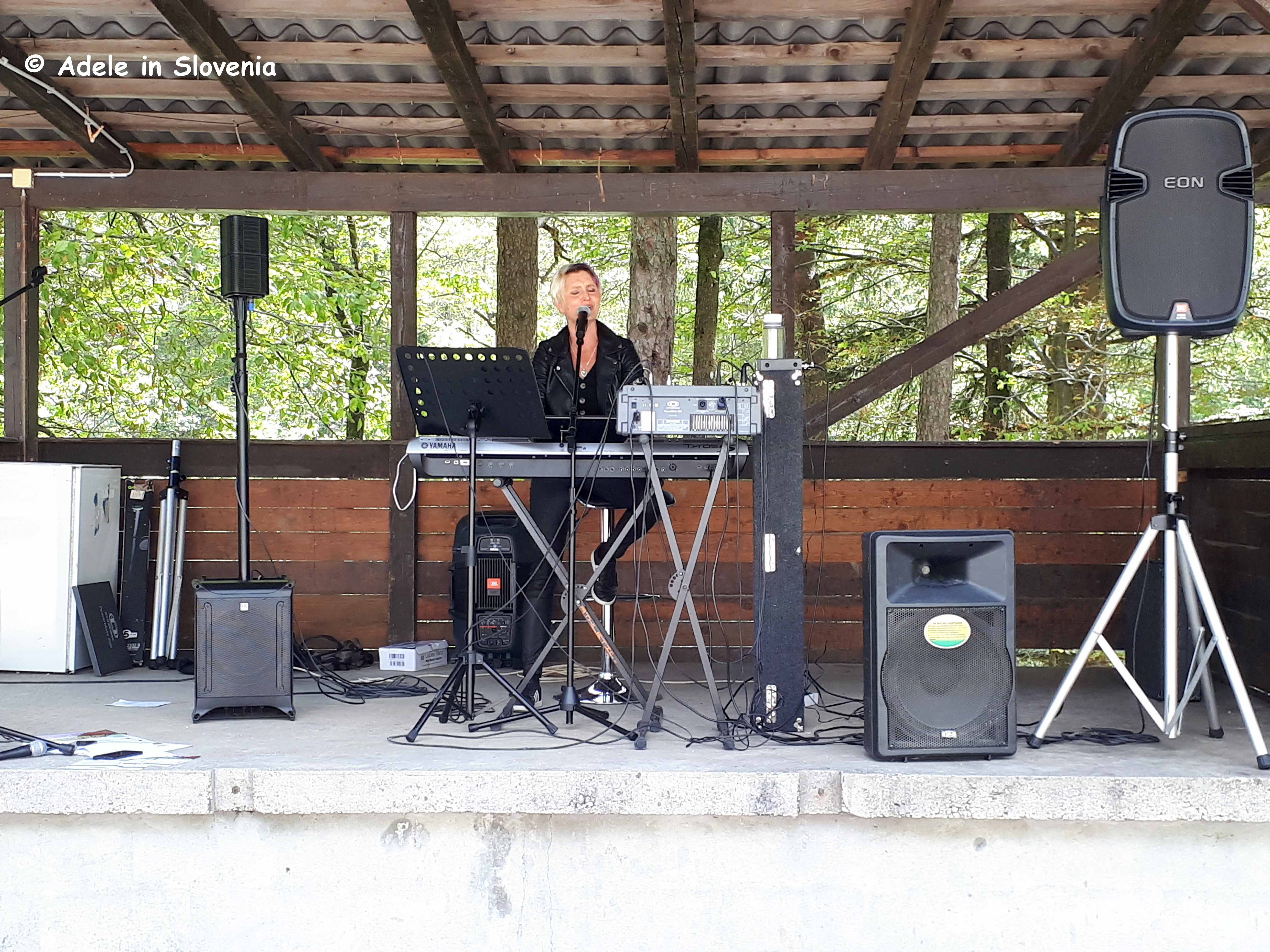
Live music contributed to the fun atmosphere, too!

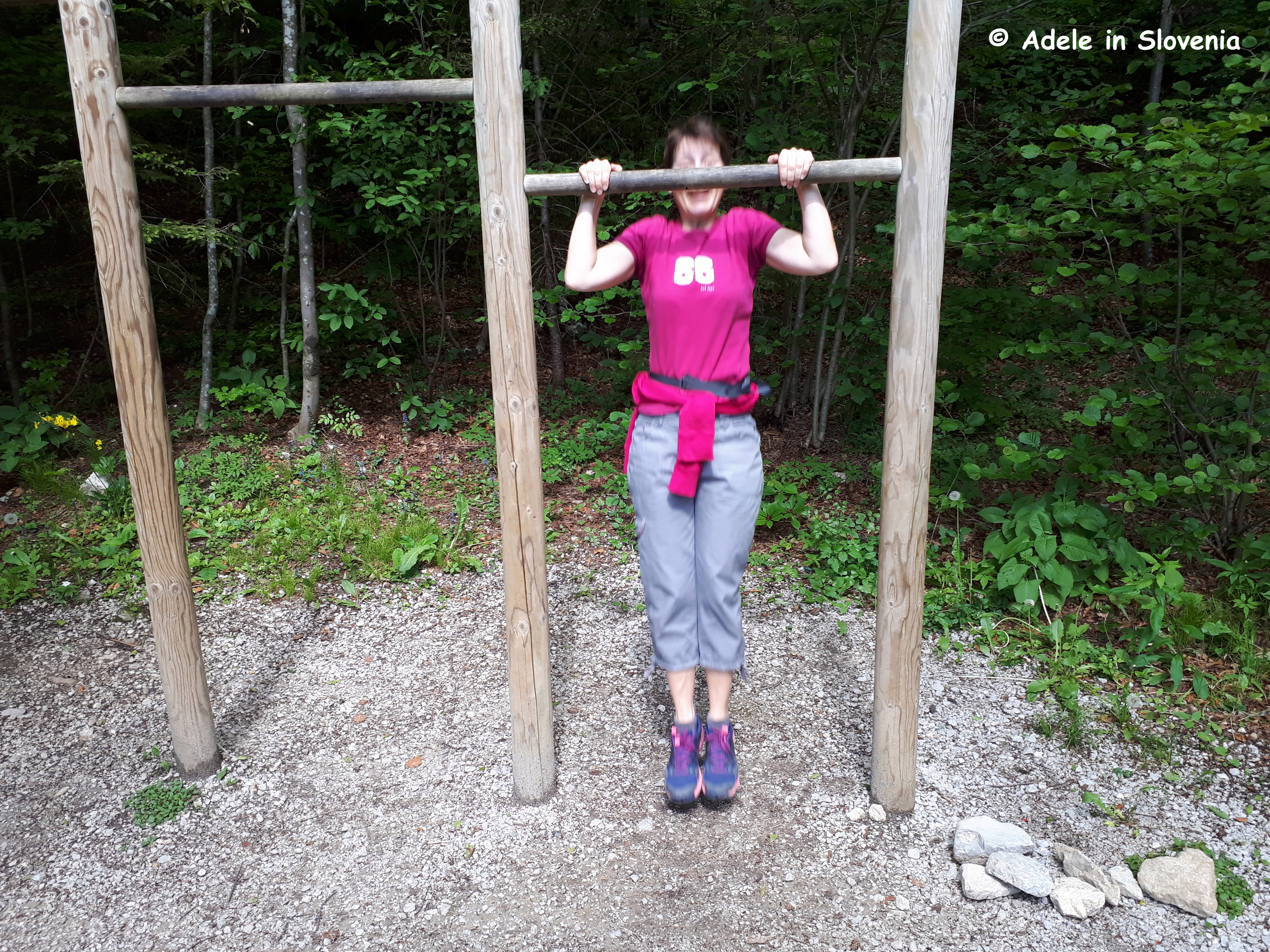
Some of the activities are available throughout the year, such as a children’s playground, horse riding, and a trim trail, where, on the latter, you can test your strength and balance…

…of which it seems I have neither!

There’s no shortage of hiking, cycling and mountain bike trails. in the valley and the surrounding peaks of the Karavanke mountains.

If all these activities aren’t your cup of tea, or if/when you’ve had your fill of being active, head for the Zavrh bar, where you can sit beside the Završnica stream, enjoy a cup of something hot or a glass or something chilled, or even have a light meal (burgers, stews, salads etc.).

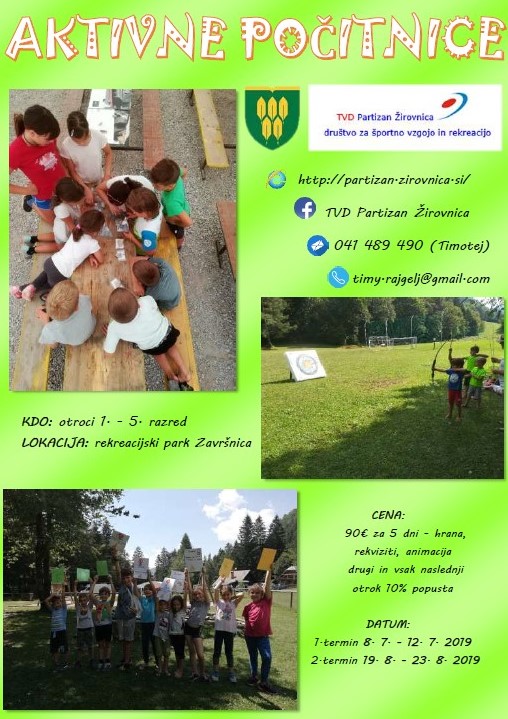
It is possible to hire the entire sports park, or part of it (e.g. the volleyball court, football pitch) for private events, school groups, team building events, etc., which includes an area for picnics/barbecues, plus sports activities and ample parking, and there are also organised school summer camps.

For further information and prices contact TVD Partizan or the Žirovnica Institute for Tourism and Culture.

But it’s not just summer, there’s fun to be had in the Završnica valley during winter too, so it’s a real year-round leisure destination!

© Adele in Slovenia

The Radovljica Beekeeping Adventure: Follow a ‘Bee’ Through Radovljica!

Honestly Sweet‘ was chosen as the slogan for the tourist destination of Radol’ca, which encompasses Radovljica itself (where I live!) and the other surrounding towns and villages in the municipality, due to the town’s long connection with all things ‘sweet’ i.e. beekeeping and chocolate.

And while this year’s Chocolate Festival has been and gone, Radovljica now features a brand new ‘sweet’ treat – the Radovljica Beekeeping Adventure.

The Radovljica tourist board came up with the idea for the Radovljica Beekeeping Adventure in order to consolidate the town’s position as the capital of Slovenian beekeeping as well as a desire to offer more activities for families. The idea for a bee-related adventure was an obvious choice and was inspired by the events last year to mark the first-ever World Bee Day.

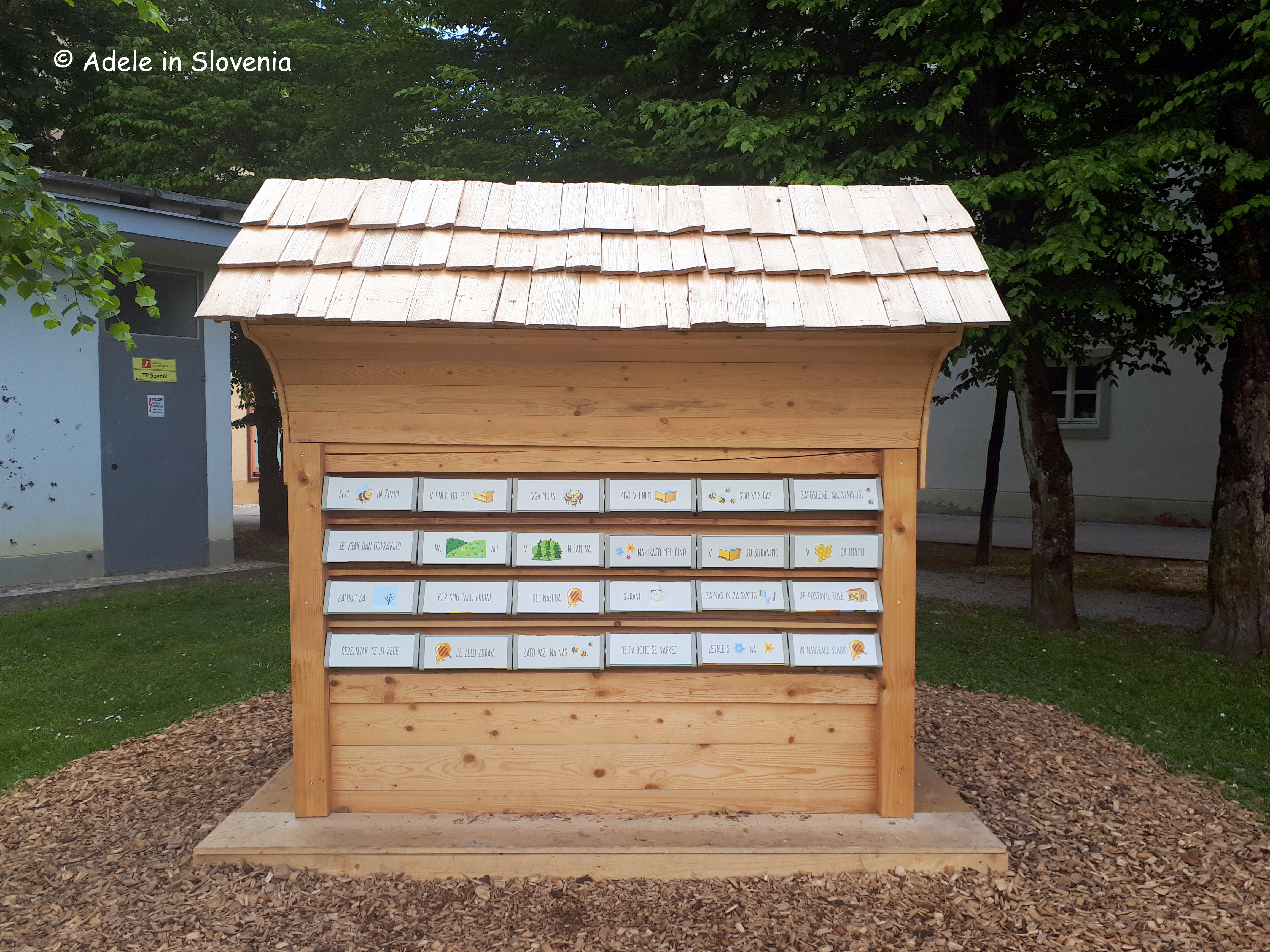
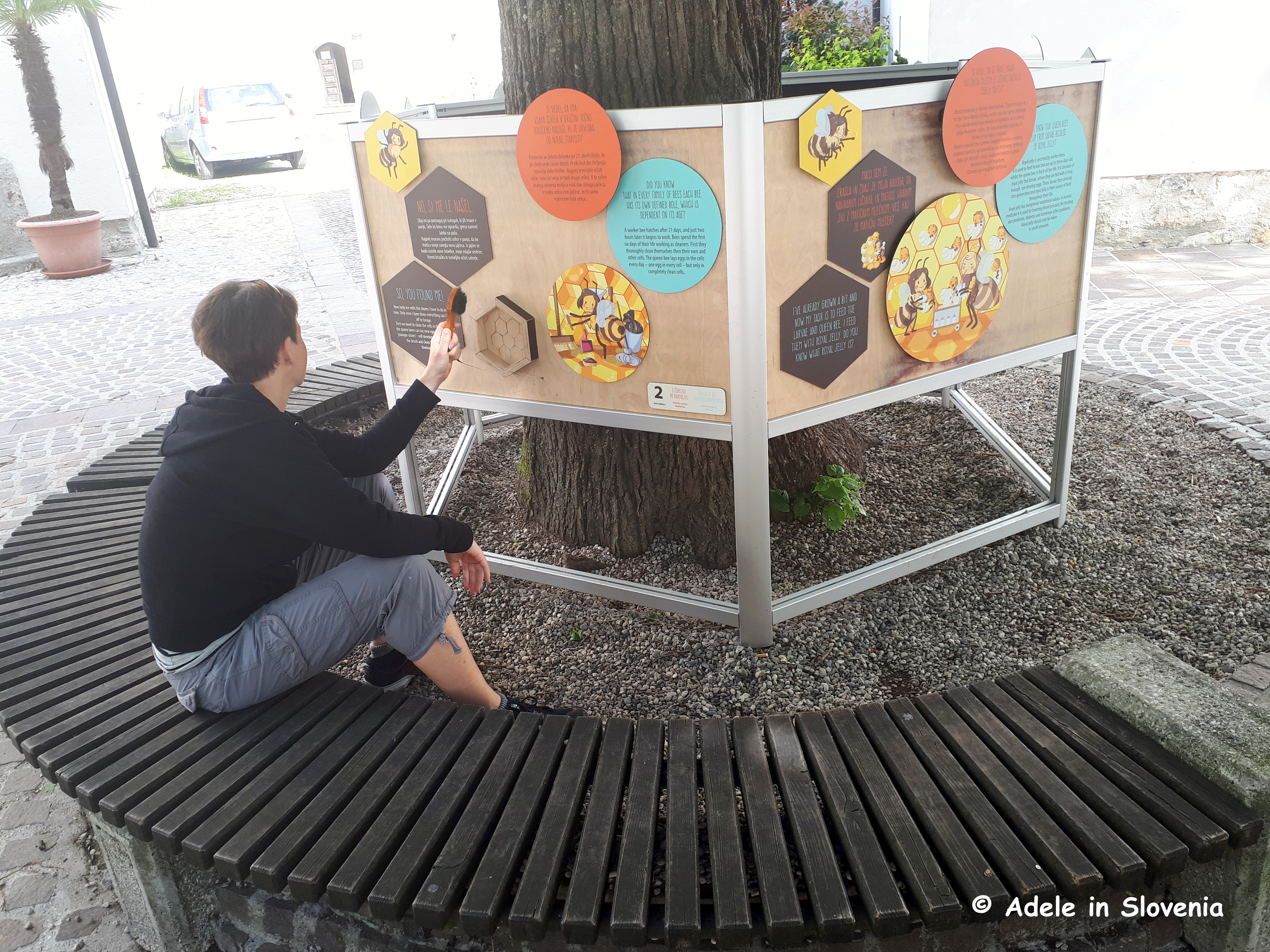
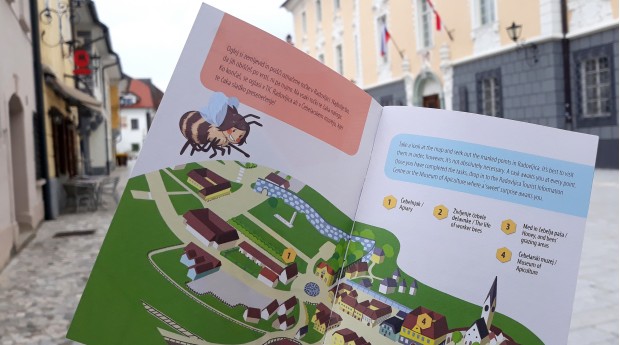
The Beekeeping Adventure has been designed as a family adventure. It features four interactive points in the old town centre of Radovljica, the first of which is the apiary in the town park. 

The next is in front of St. Peter’s church


…and at the viewpoint at the end of the old town centre.

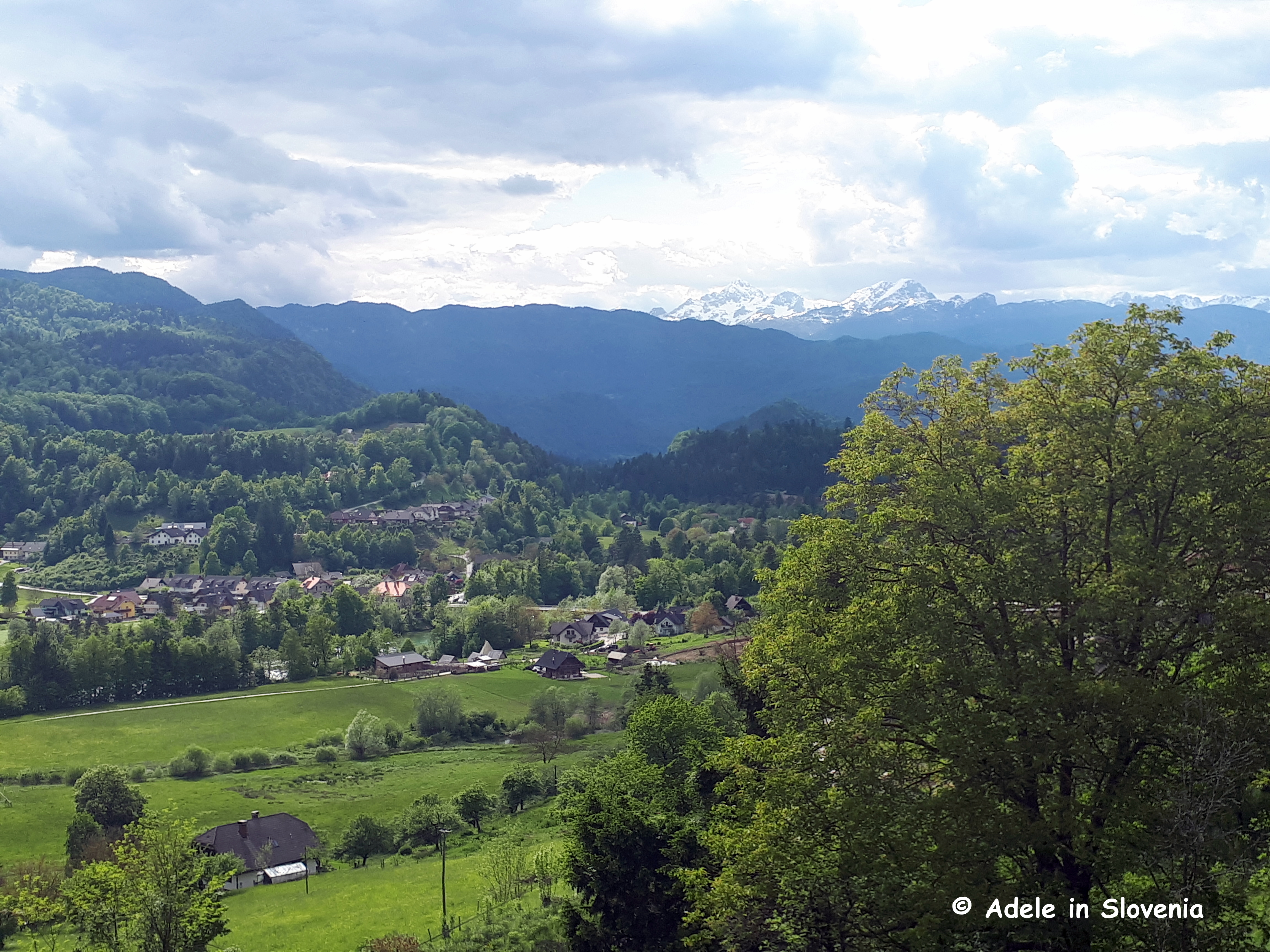
Despite living here 12 years, I can never tire of the view from Radovljica towards the Julian Alps and the Jelovica plateau, and even on a partly cloudy late May day – in a month where there have only been 2 days without rain so far – the views still blow me away, every time!

The adventure concludes with a visit to the Museum of Apiculture in the Radovljica Manor, where you can watch bees hard at work and find out plenty more about the history of Slovenian beekeeping, see an exhibition of the oldest painted beehive frontal panels, and learn even more about just how amazing bees really are!

The fun, creative and educational tasks have been devised to allow children to hone their manual skills and to learn about beekeeping, whilst seeking out the path with the help of a map helps develop outdoor orientation and spatial recognition skills.

As a reward for completing all the tasks, a ‘sweet’ treat awaits at the end – but I won’t spoil the surprise!

The Beekeeping Adventure costs €8 per family, which includes:

  • One copy of the booklet including a map, tasks and information about the life of bees
  • A family entrance ticket to the Museum of Apiculture (2 adults, up to 3 children)
  • A ‘sweet’ surprise
  • Supplement for additional booklets with tasks: €1 per booklet (up to 3 additional booklets are permitted per family upon purchase of a family package)

The booklet can be purchased at the following locations:

The Beekeeping Adventure is available from 24th May to 31st October 2019. Since the Museum of Apiculture is closed on Mondays, it is recommended that you visit from Tuesday to Sunday. The path itself is very short and flat, but together with solving the tasks and a visit to the museum, you should allow approximately 1.5-2 hours.

The Museum of Apiculture is celebrating it’s 60th anniversary this year, and, to mark the occasion, there will be a new comprehensive exhibition while the main anniversary event will take place on 15th June.

To end, on an entirely different theme, though one that many would also consider to be ‘sweet’, next Saturday a brand new festival is coming to Radovjlica – the Radovjlica Craft Beer Festival. Weather permitting the festival will kick off at 12 noon on Saturday 1st June and will feature a number of Slovenian craft breweries, live music, and food from Taste Radol’ca restaurants. A shuttle bus will also run every half hour from Bled.

No photo description available.

So, now there are even more reasons to come and visit the lovely town that I call ‘home’!

© Adele in Slovenia

Visit Tržič: MINFOS and the St. Anne Mine

The Tržič area is known to be one of the most fascinating areas of Slovenia in geological terms.

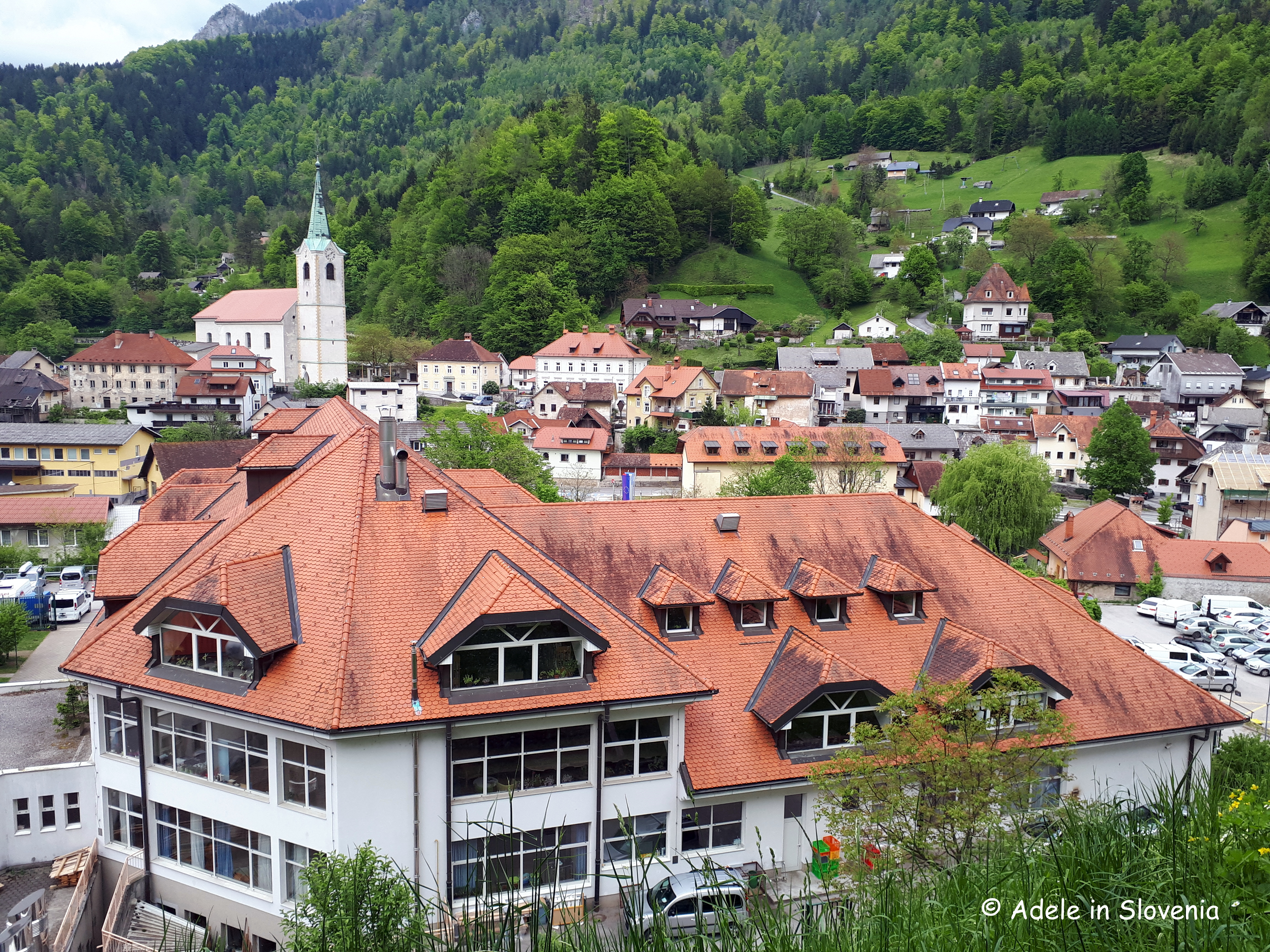
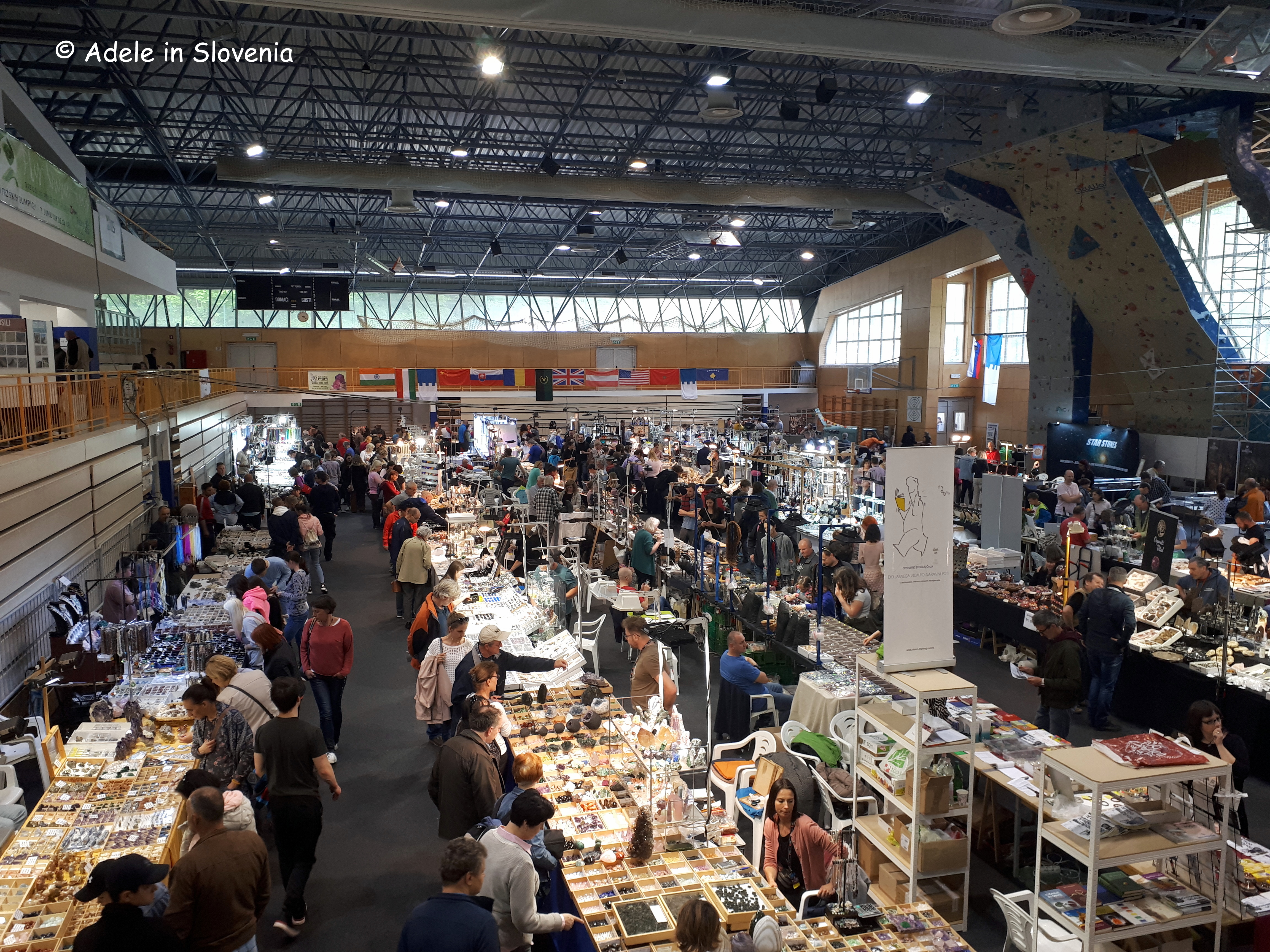
MINFOS is an annual 2-day exhibition of minerals and fossils, which, together with the Dolina Exhibition and Education Centre* and some fascinating geological trails, showcases the area’s rich geological treasures. The exhibition is held in the Tržič Olympians Arena (the red-roofed building just out of sight to the left of building in the foreground below) in the heart of the picturesque old town.

The event unites visitors and exhibitors from far and wide, from those with a specific interest in minerals and fossils wanting to enrich their knowledge by viewing specialised exhibits, talking to experts, and/or attending creative and educational workshops, to those who just want to take a look and/or maybe treat themselves or their loved ones to some new jewellery or other gifts.

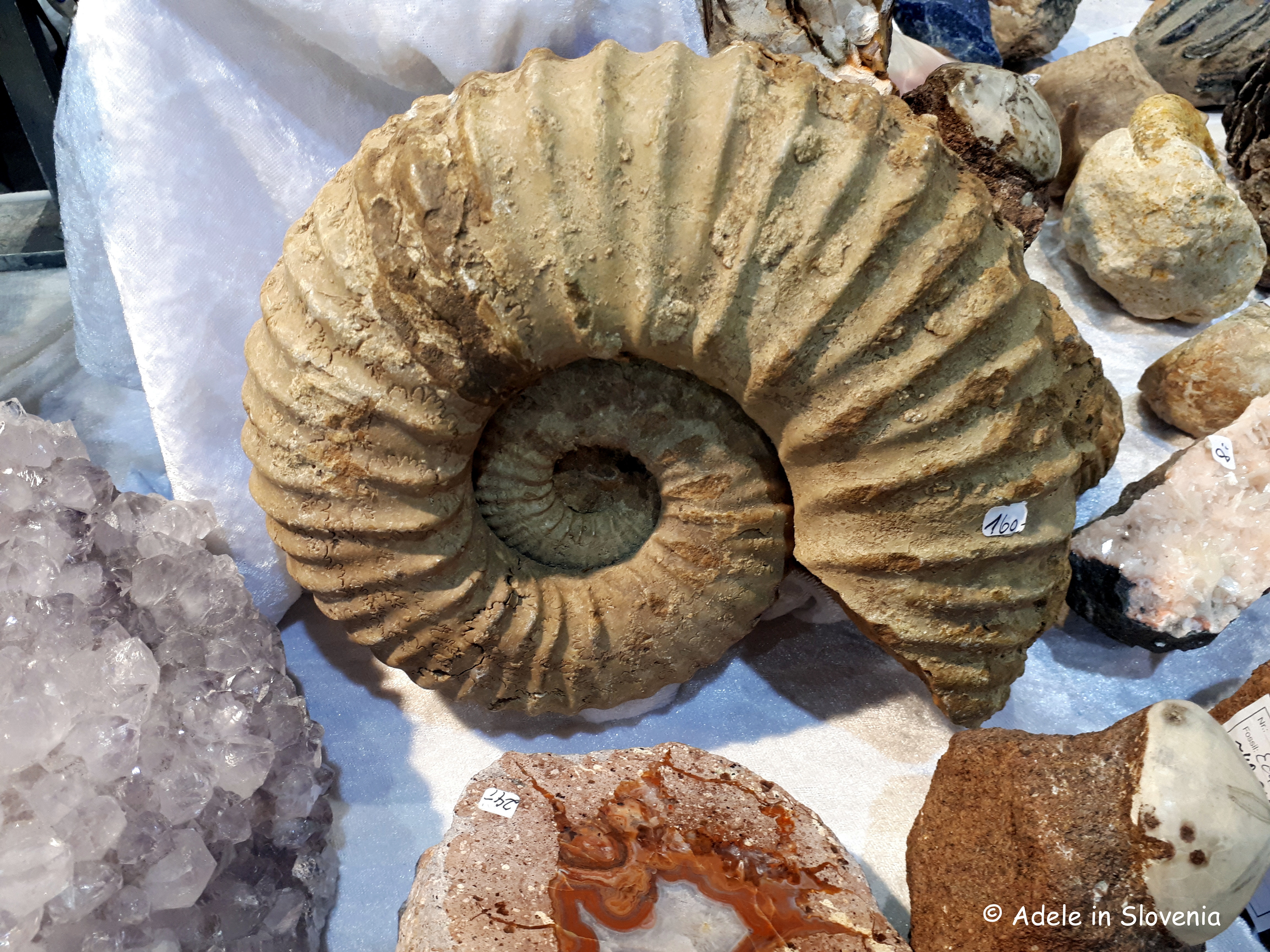
There is a fascinating array of exhibits of almost every shape, colour and size imaginable…

…and you wouldn’t believe how heavy some of them are, despite the relatively small size!

Although this year’s MINFOS took place last weekend – hence its too late to visit this year – you can instead visit the Dolina Exhibition and Education Centre in the hamlet of Dolina located along the valley of the Dovžan gorge** (Dovžanova soteska), just over 3 kilometres northeast of Tržič.

At the centre you can find out more about the picturesque valley that was carved out by the Tržič Bistrica river which laid bare the most complete sequence of rocks from the younger Paleozoic period, ranging in age from 300 to 260 million years.

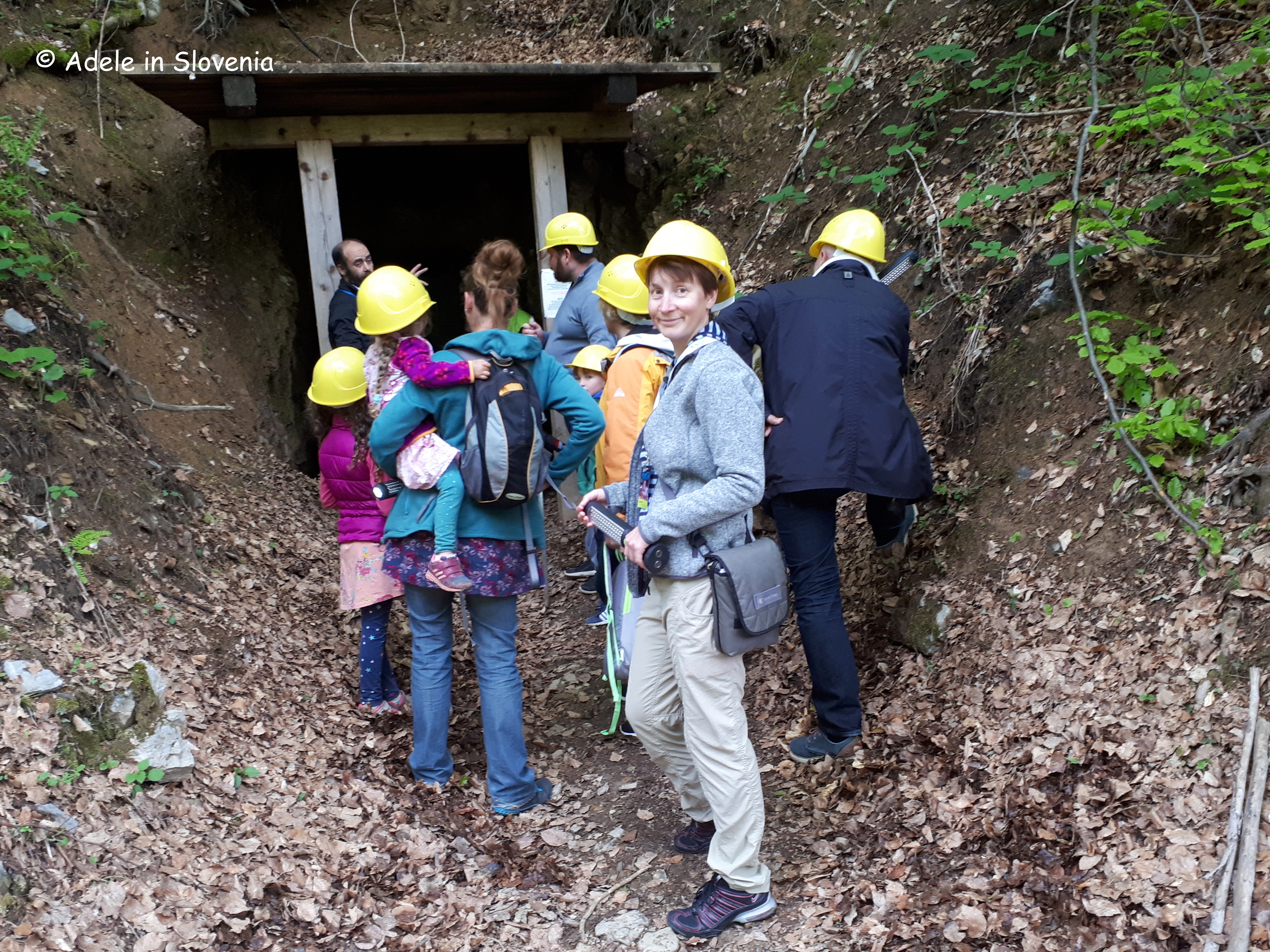
As part of MINFOS, visitors are offered guided tours of the Dovžan gorge and the St. Anne mine (Šentanski rudnik) I chose to visit the latter. Guided tours can also be arranged at other times via the Tržič Tourist Information Centre.

Whilst in the past Idrija was the hub of Slovenia’s mercury mining industry, a number of miners from Idrija also came to work at the mine at Podljubelj. Regular production of cinnabar began at the mine in 1975 but ceased just a quarter of a century later in 1902 due to the low amount of mercury in the ore. A total of about 110,000 tonnes of ore and almost 300 tonnes of mercury were obtained from the mine.

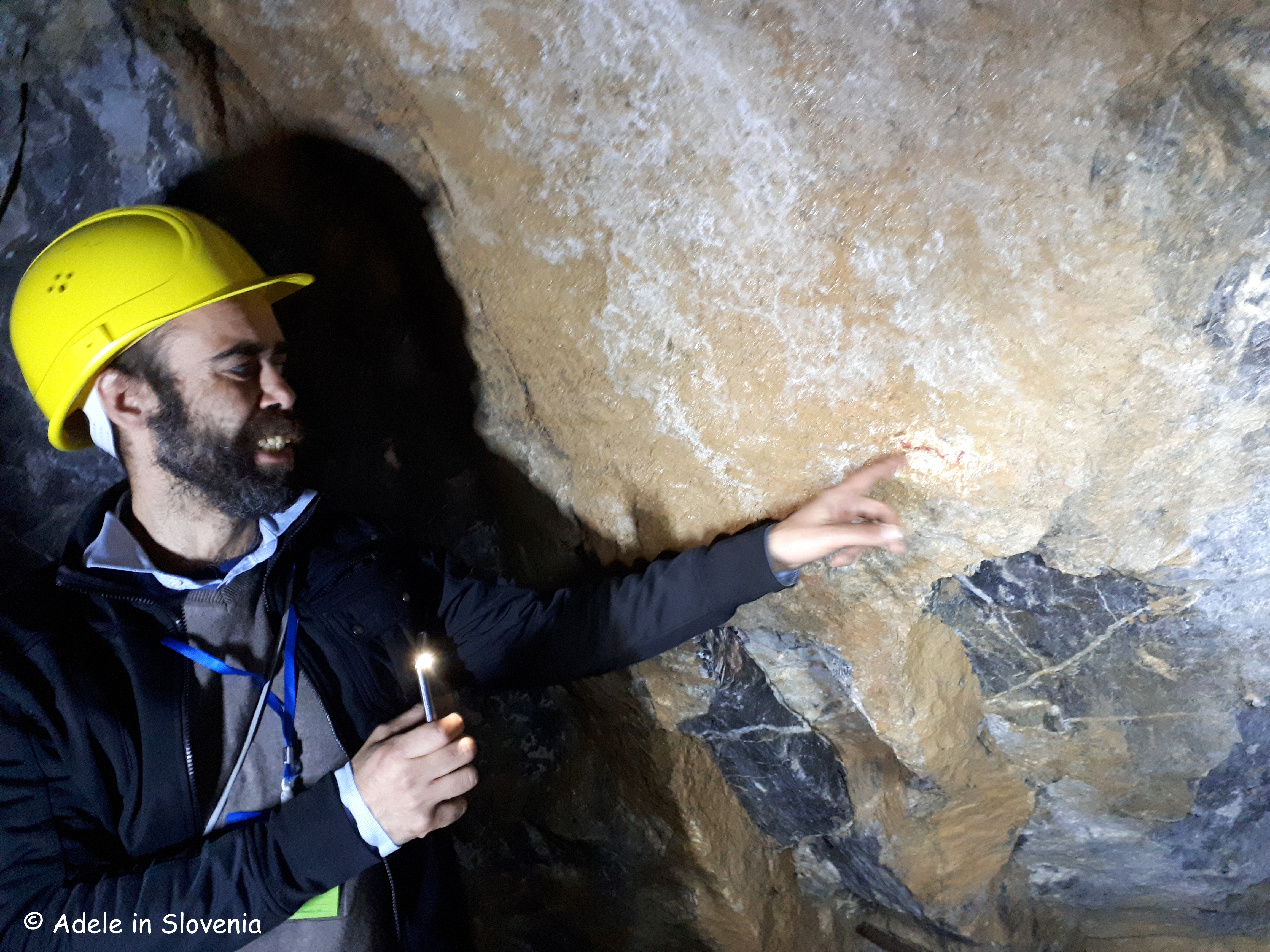
Our incredibly knowledgeable guide, Luka, enlightened us about the history of the mine. At the end of the 19th century, 75 miners worked at the mine, of which 24 were women. But I won’t divulge all the details and spoil the surprise, instead why not take a tour and see it for yourself!

The tour begins by passing the entrance to the 450 metre-long Avgust mine, which served as a service route.

The Friderik mine was the main export tunnel for tailings.

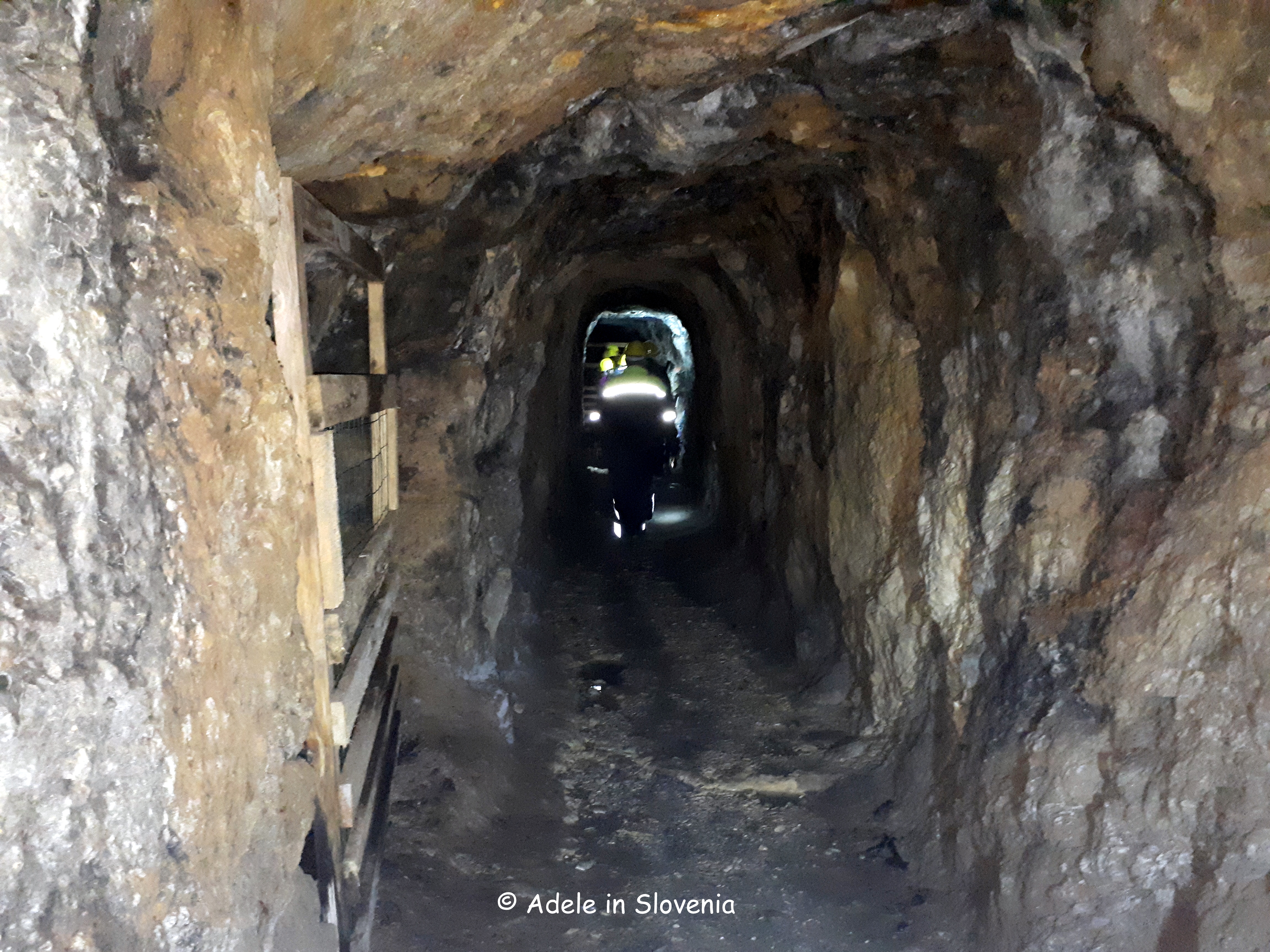
The Anton mine, which was the most rich in ore and was thus also the most mined, is the only part that is open for visitors on the tour. Before entering we donned hard hats and were given torches, then we were off…into the unknown!

Luka told us many more fascinating facts, demonstrated the depth of the deepest shaft – approx. 35 metres, and pointed out the traces of cinnabar that can still be seen on the walls of the mine as well as beneath foot.

It is a bit nippy in there, so be sure to wrap up well – regardless of the weather outdoors – but it’s certainly worth it for a glimpse into part of Tržič’s history.

© Adele in Slovenia

* In fine weather the Dolina Exhibition and Education Centre is open from May until the end of October at weekends and on public holidays from 11am to 6pm, and at other times by prior arrangement.

** Due to extensive flooding in April this year, part of the path through the Dovžan gorge is closed, but rest assured, once it is open again I will be blogging about that too!

Hiking in Žirovnica: The Turkish Cave

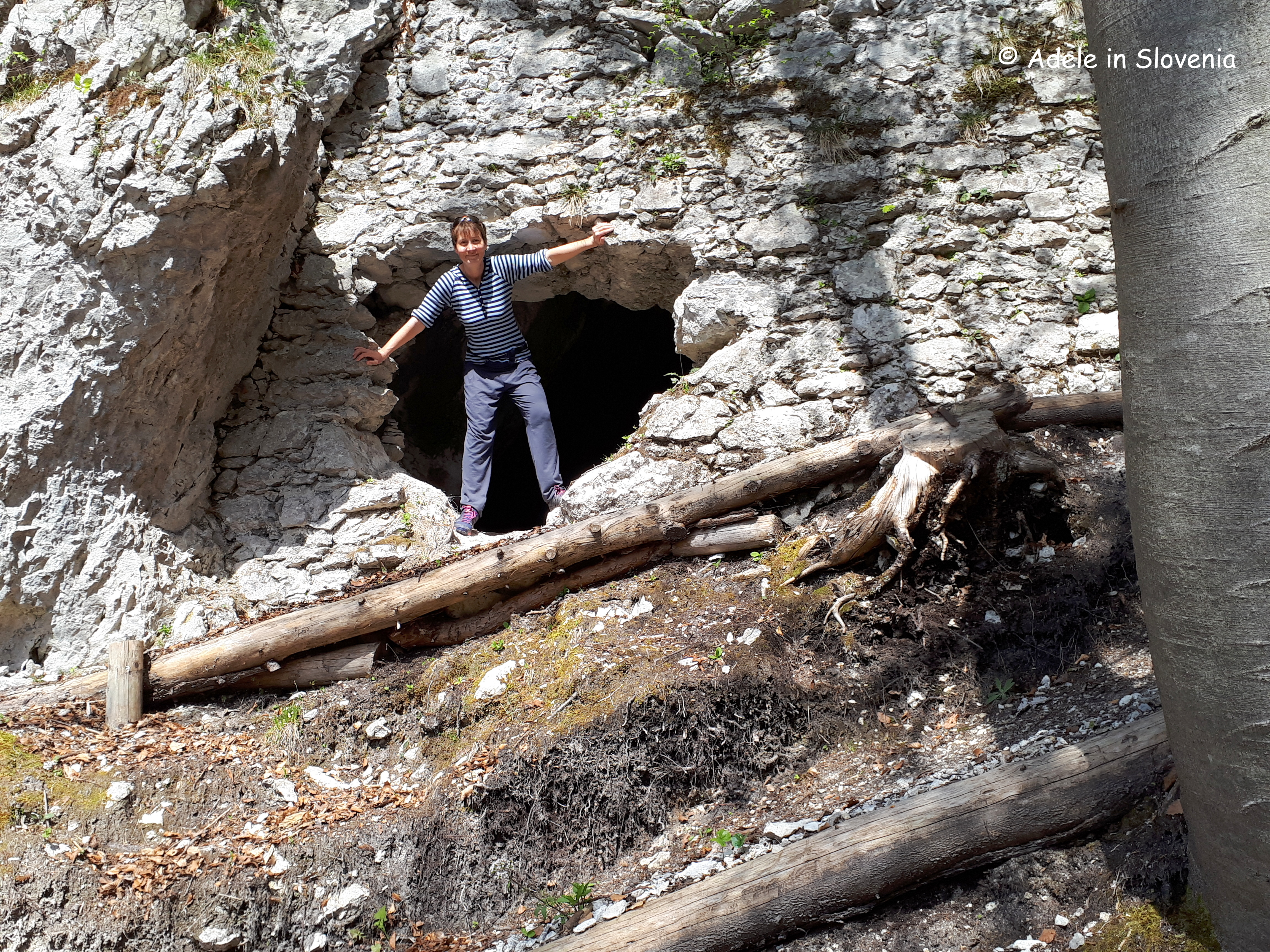
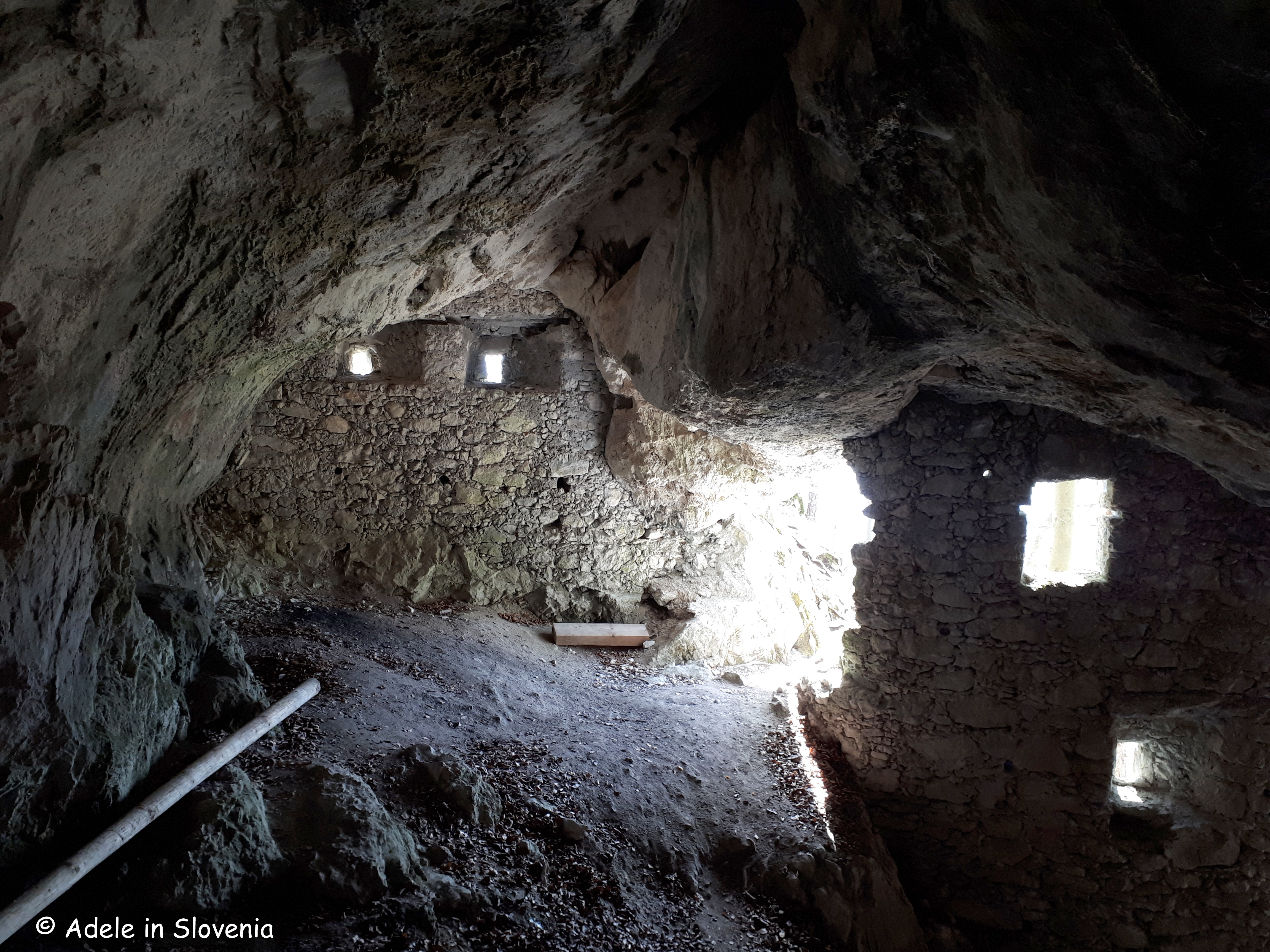
The Turkish Cave (Turška jama) is located at an altitude of 835m above the Završnica valley. The name of the cave derives from when, many centuries ago, women and children retreated to the cave to seek refuge from Turkish invaders.

The path to the cave is just one of the 16 trails included in the new map of hiking and mountain bike trails in the Žirovnica area, which you download here or pick up a copy (available in Slovene and English) at the Žirovnica Tourist Information Centre in Čop’s House (Čopova hiša).

The trail begins at the car park at the Završnica reservoir, which is a very popular place among locals either for just chilling or as a starting point for numerous hiking and cycling trips in the Završnica valley and the surrounding Karavanke mountains, or, of course, both, i.e. first hike or bike, then chill!

Set off along the gravel road towards the Valvasorjev dom mountain hut, where, after cca. 1 kilometre, you will reach a sharp left turn. There is a rest area and a sign showing the path towards the Turška jama cave.

From the sign it takes just 5-10 minutes to ascend through the forest to the cave.

The cave has two entrances, is 18 metres long and 2 metres deep.

The view from the cave is somewhat obstructed by trees…

…so it’s worth venturing (carefully!) a few metres further…

…where you a richly rewarded for your efforts with fabulous views.

You can also extend your trip by visiting the Valvasorjev dom mountain hut – three times the winner in recent years of the title of ‘Slovenia’s Best Mountain Hut’ – or you can even continue to Stol, the ‘top’ of the Karavanke!

© Adele in Slovenia
Discovering the Taste(s) of Žirovnica – Gostišče Osvald

Regular readers of my blog will know that I have written numerous posts about the fantastic hiking opportunities the Žirovnica area offers, among them an ascent of Stol, the highest mountain in the Karavanke range. And now, since all hungry hikers (as well as cyclists and those pursuing other active pursuits) need plenty of sustenance and a ‘reward’ for their efforts, I have now set about delving more deeply into what is on offer at Žirovnica’s restaurants and inns – all in the name of research, of course!

So, let’s begin with a popular and traditional Slovenian restaurant – Gostišče Osvald, which is located on the main road through Žirovnica in the hamlet of Selo pri Žirovnici and is the oldest restaurant in the area.

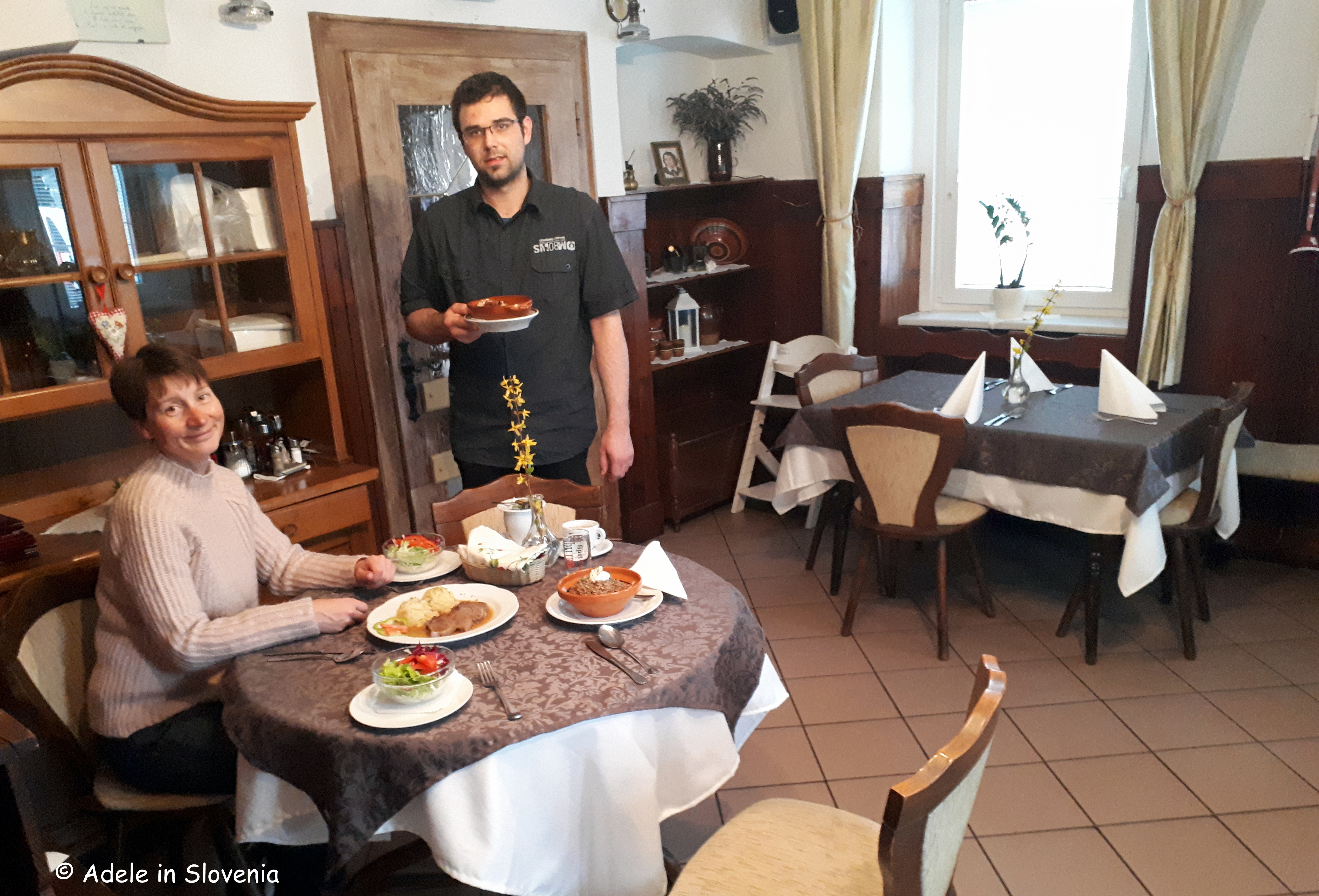
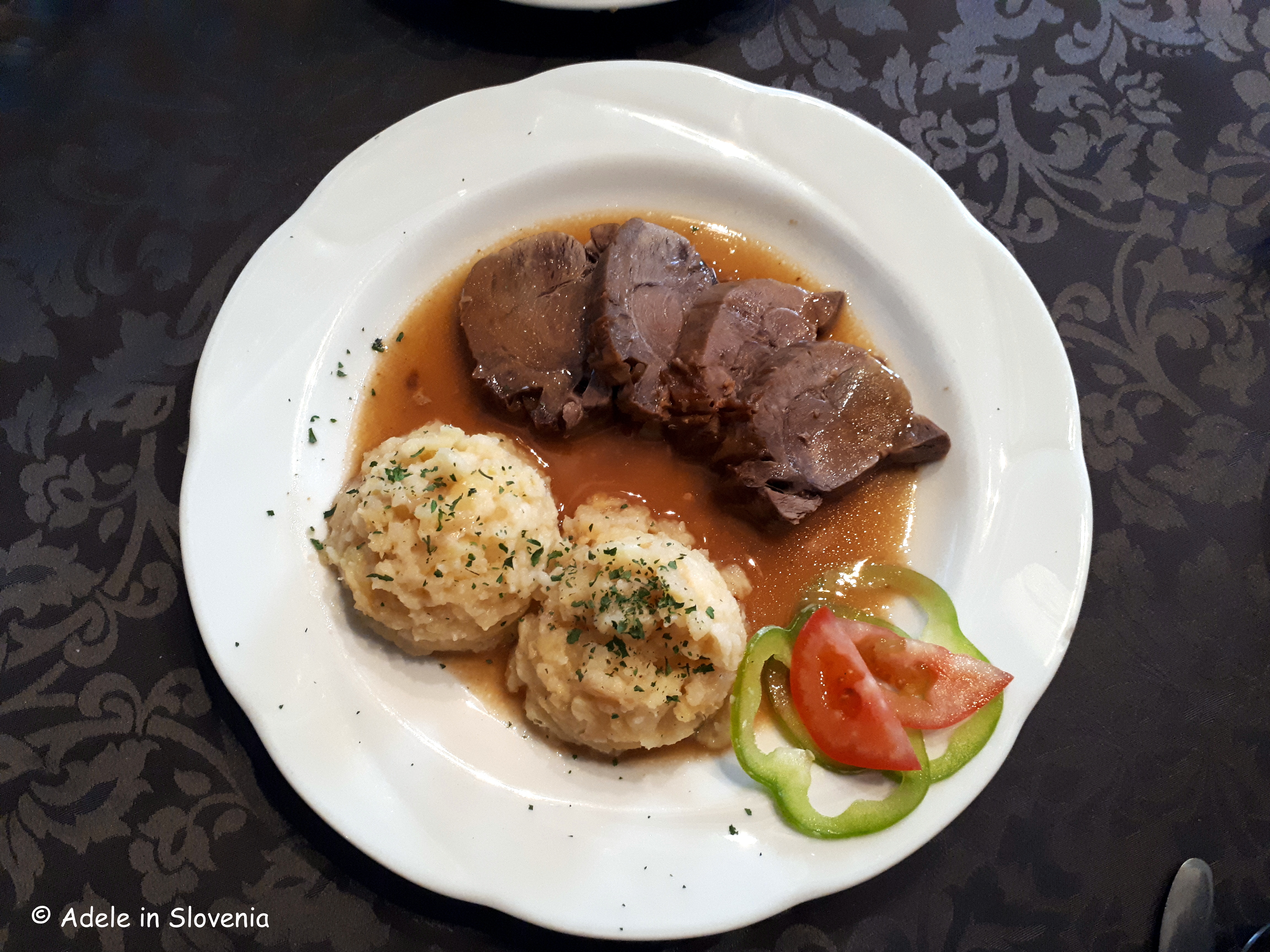
One of my desires when writing such blogs is to try and uncover and share with readers any particular dishes that are a real speciality of a particular restaurant or area. Hence I left it to owner Anže to dish me up his specialties!

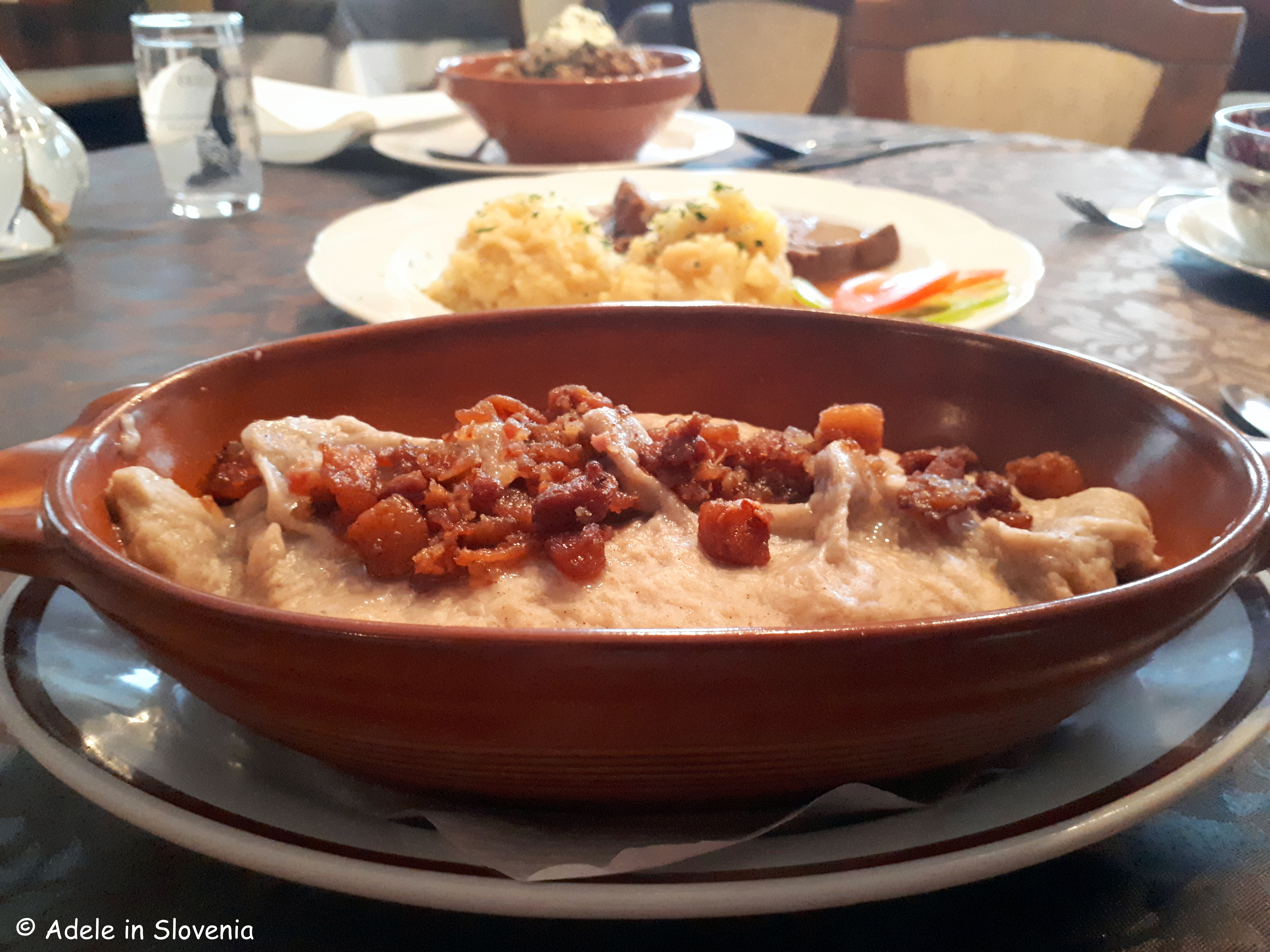
I hit gold with this giant buckwheat ‘krap’! ‘Krapi’ are usually smaller, individual dumplings, filled with curd cheese. This giant one, however, has a small amount of yeast mixed into the buckwheat dough to allow it to rise, is filled with a mixture of curd cheese and millet, and topped with pork crackling – ingenious and delicious!

Another speciality of the Žirovnica area is buckwheat with porcini mushrooms. It’s not dissimilar to a mushroom risotto, albeit it with grains of buckwheat instead of rice, with onion, herbs and sour cream to finish. It can be a hearty and filling dish on its own or a side dish.

Served together with a roast, I left fit to burst!

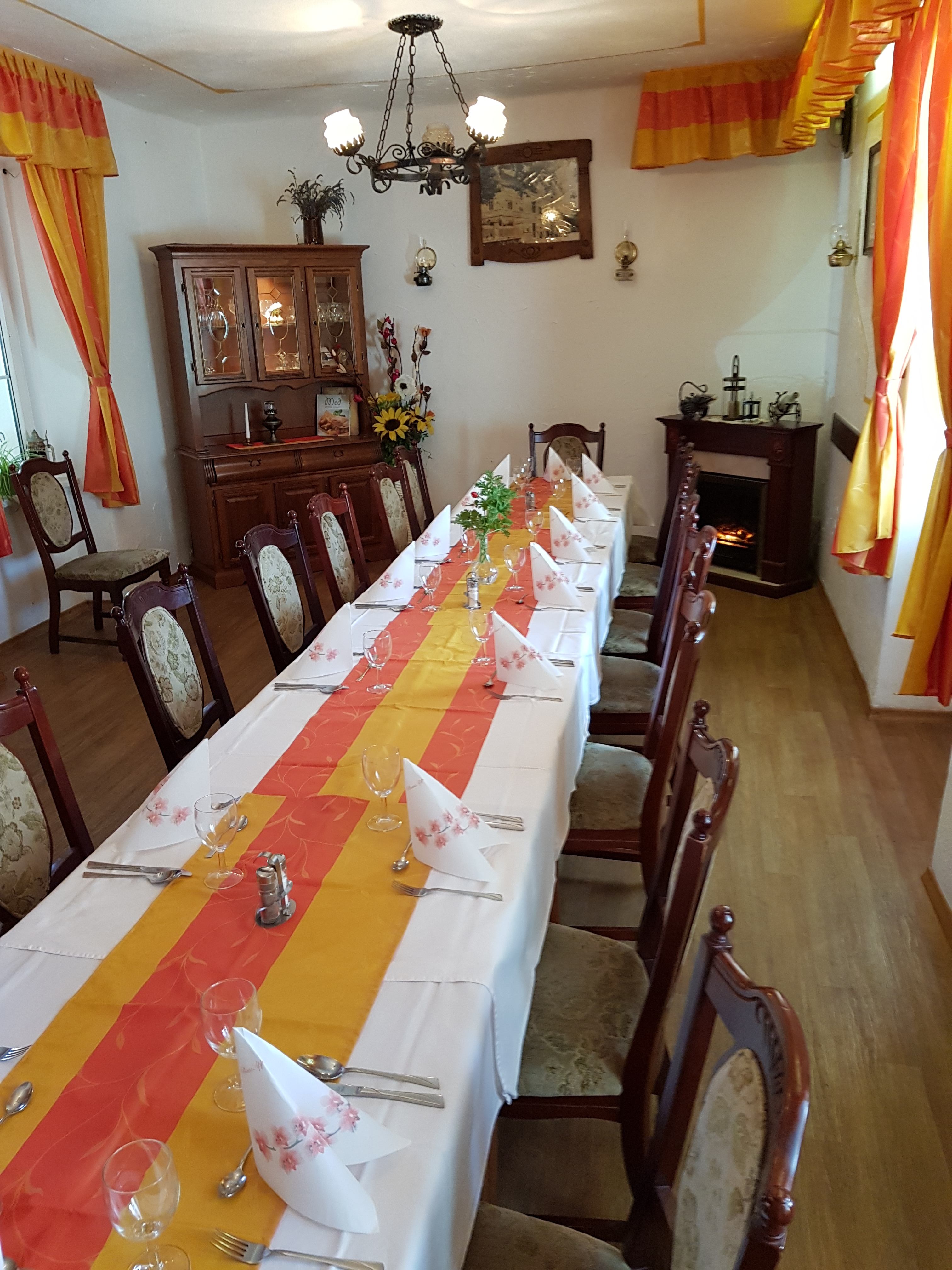
Anže then showed me around the other parts of the deceptively large building, which features two additional rooms for functions.

The restaurant was built in the mid-19th century. In bygone days there was a barn next door for the horses of horsemen who stopped in Selo pri Žirovnici on their onward travels and stayed in rooms above the barn.

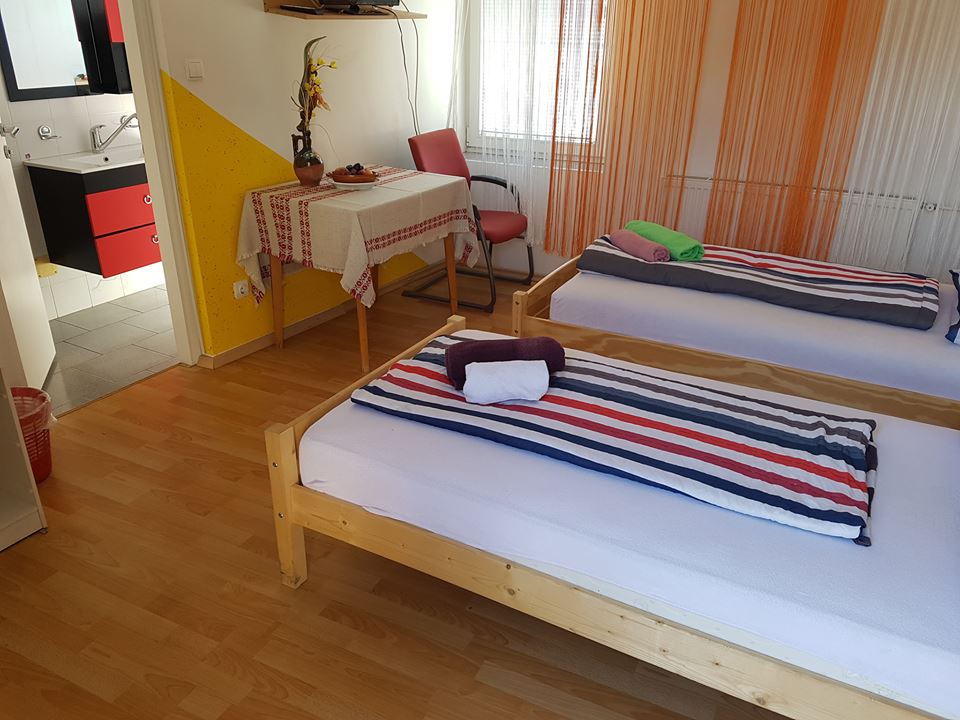
Today you too can stay there – though above the restaurant rather than in the barn! – in the recently refurbished attic rooms, which are simple but make a bargain place to stay and ideal base for exploring the area.

Gostišče Osvald is in close proximity to Čopova hisa (Čop’s House), the birth house of Matija Čop, the first Slovenian philologist, literary historian and librarian, one of the greatest European scholars of his time and a good friend and mentor of France Prešeren.

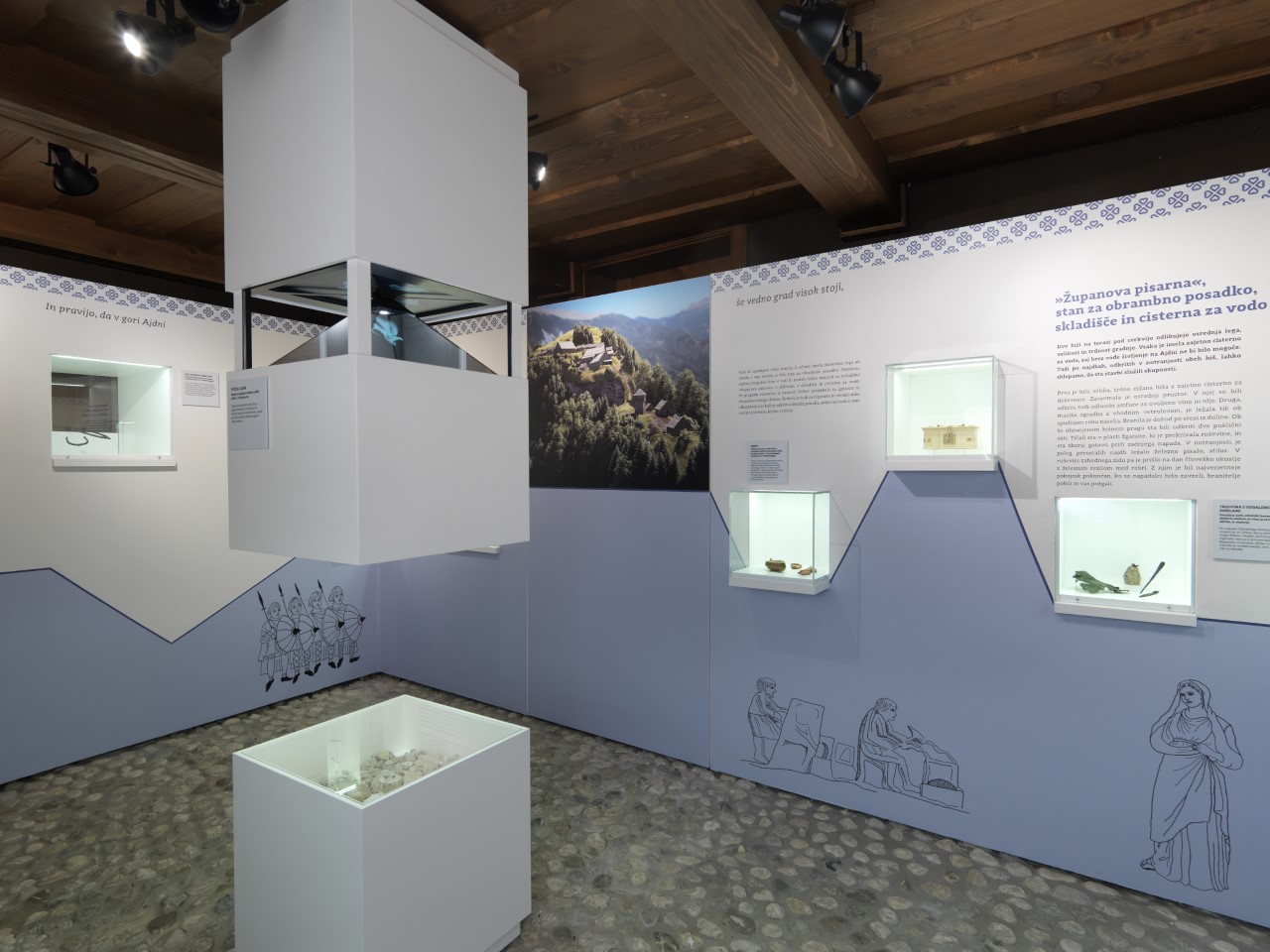
His birth house is now also home to the Žirovnica Tourist Information Centre as well as the Ajdna Museum Room, featuring an exhibition of artefacts found during archeological excavations at Ajdna. Read more about hiking to Ajdna in one of my previous blog posts.

Also close by is the Avenue of Famous Men, located in front of the primary school in Žirovnica, and part of the Žirovnica Path of Cultural Heritage. You can take a horse and cart ride along the path every fourth Saturday in the month from March to October.

The ‘avenue’ features bust statues of five of the most famous and influential men from the Žirovnica area –Anton Janša, France Prešeren, Fran Saleški Finžgar, Janez Jalen and Matija Čop.

Click here for more information about what to see and do in Žirovnica and here for more about what, and where, to taste Žirovnica, and keep an eye out for more ‘tasty’ blogs to come too!

© Adele in Slovenia
The Poignant Past + Delicious Present in Tržič: Mauthausen and Gostišče Karavla

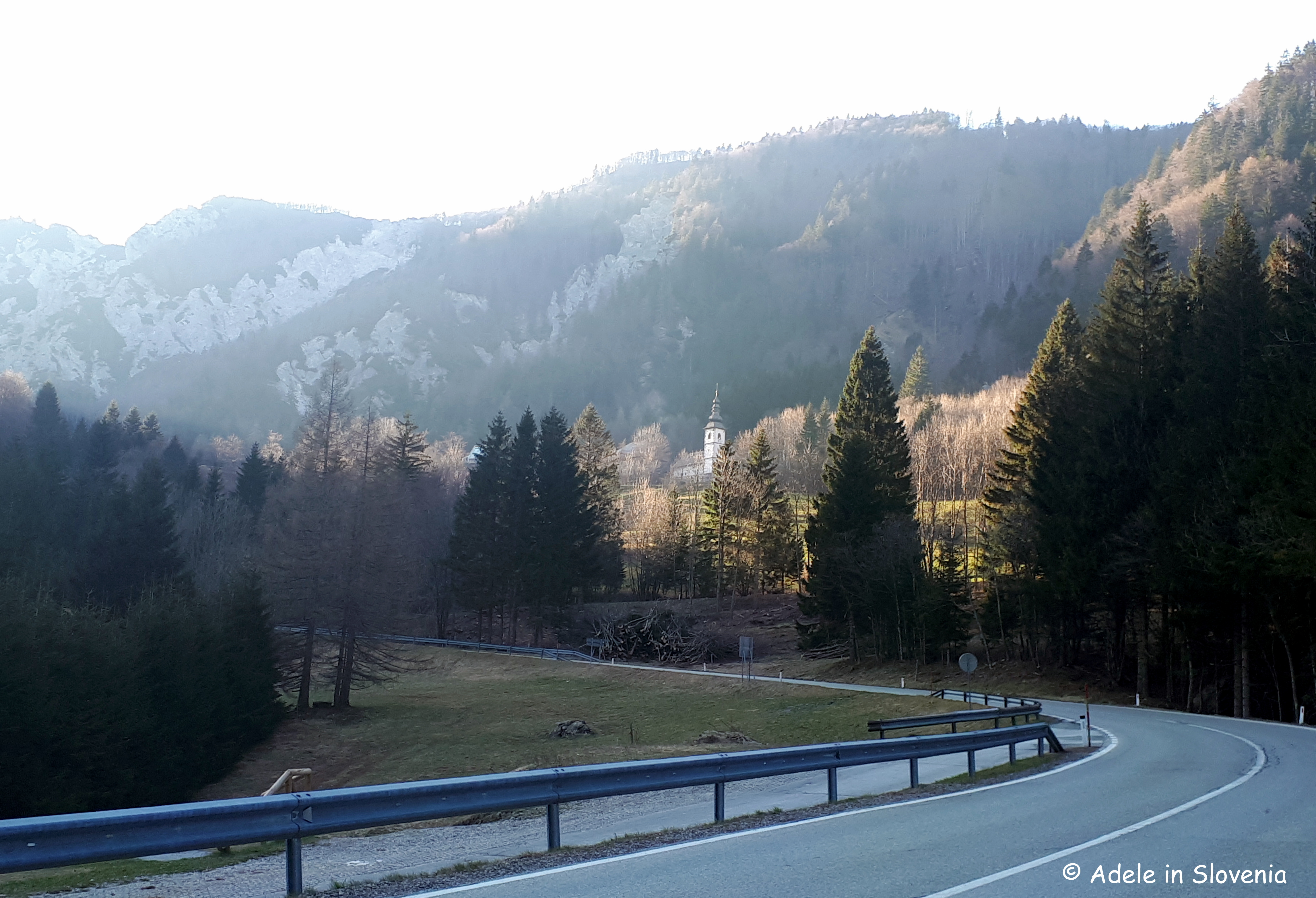
The tranquil St. Ana valley is squeezed between the Karavanke mountains along the road leading from Tržič to the Ljubelj pass. The valley was named after St. Anne’s church, which can be seen nestled beneath the mountains shortly before reaching the top of the windy road.

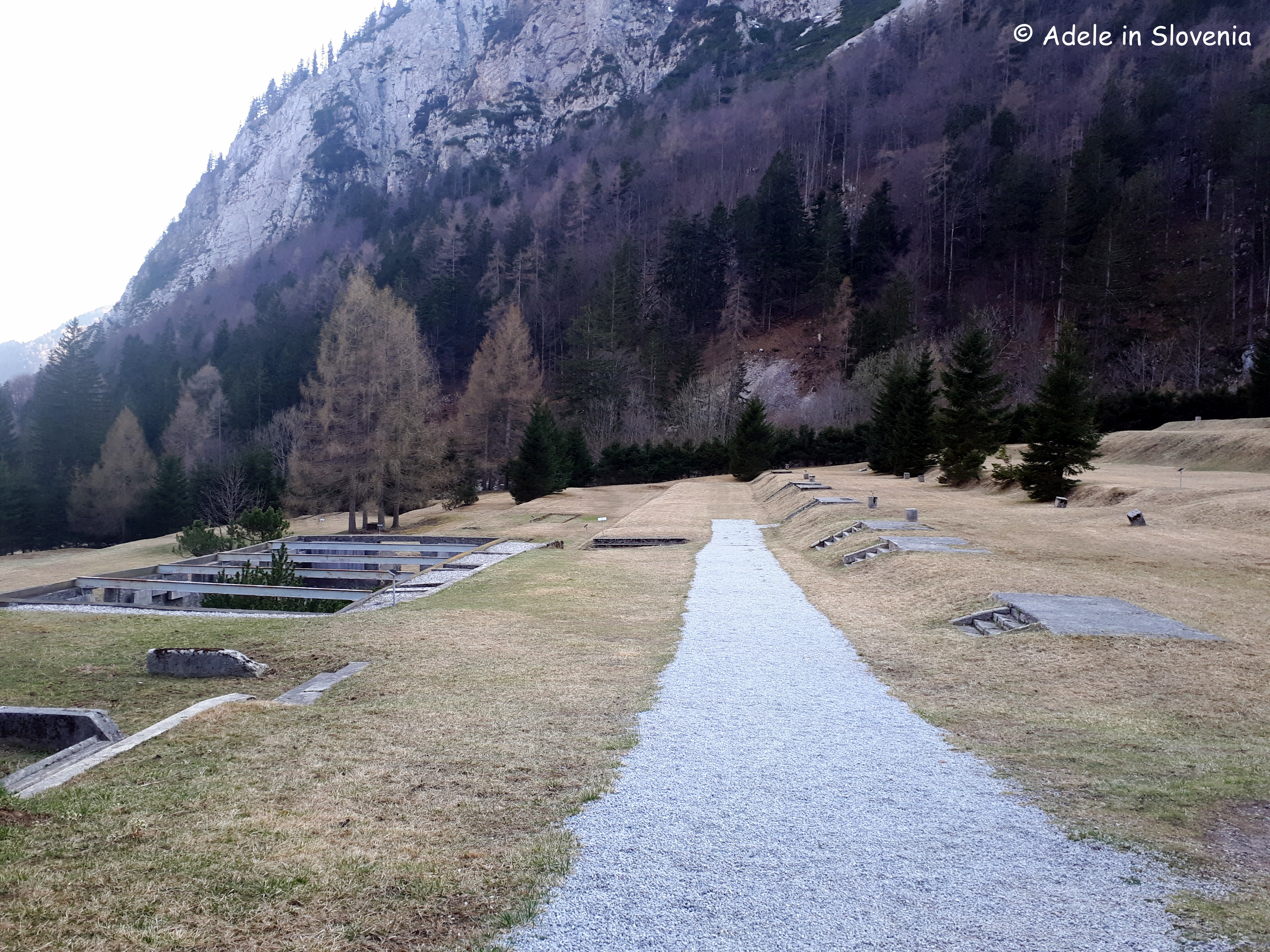
The valley has a particularly poignant past, as it was the location of a former World War II Mauthausen concentration camp, also known as the Ljubelj Labour Camp, the remains of which can still be seen today at the preserved and protected cultural site. It was the only World War II camp of its kind in Slovenia.

The concentration camp, which was a branch of the Mauthausen Nazi camp, was established during the time of the construction of the Ljubelj tunnel on the strategically important road between the then Nazi Germany and the southern occupied territories.

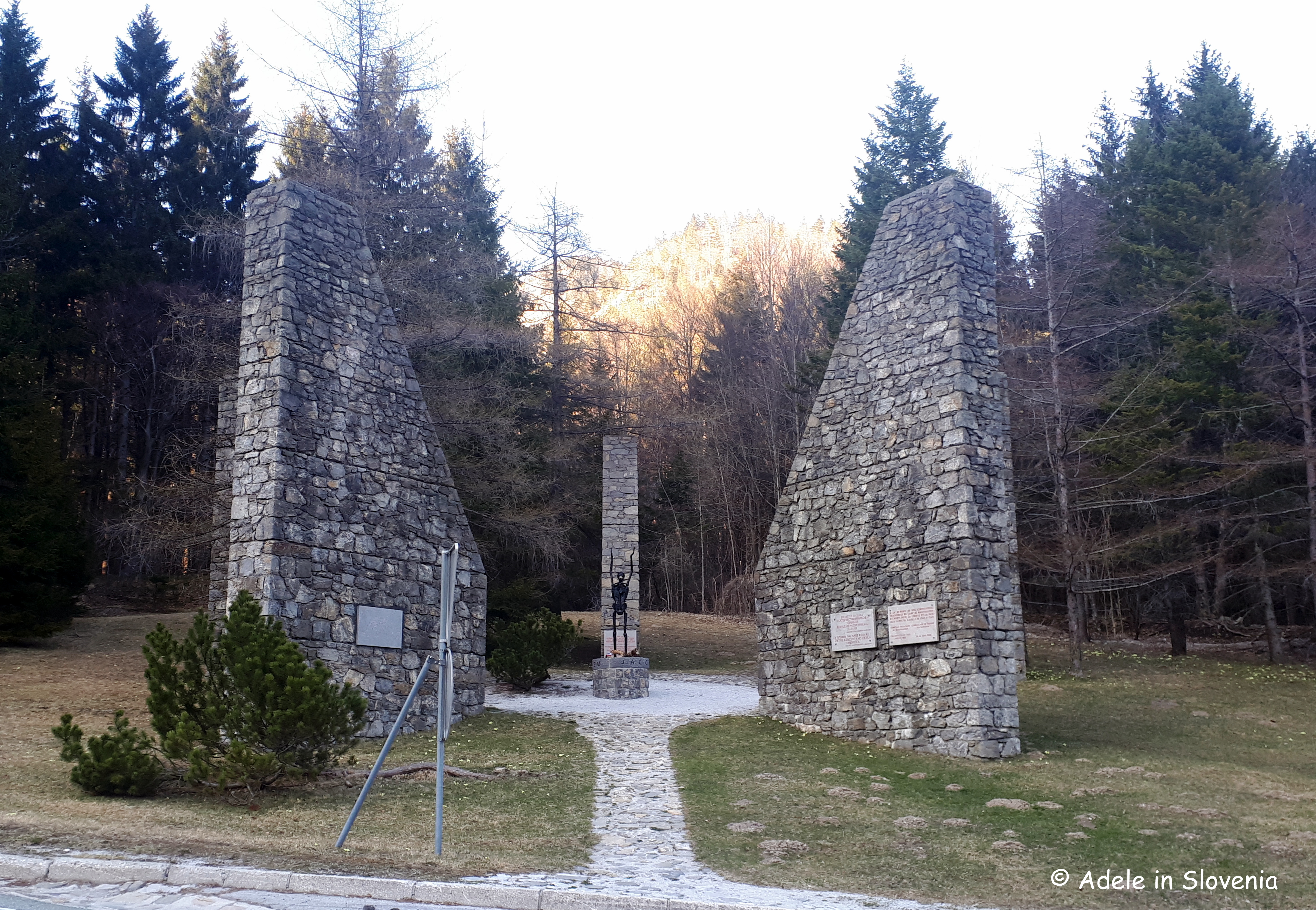
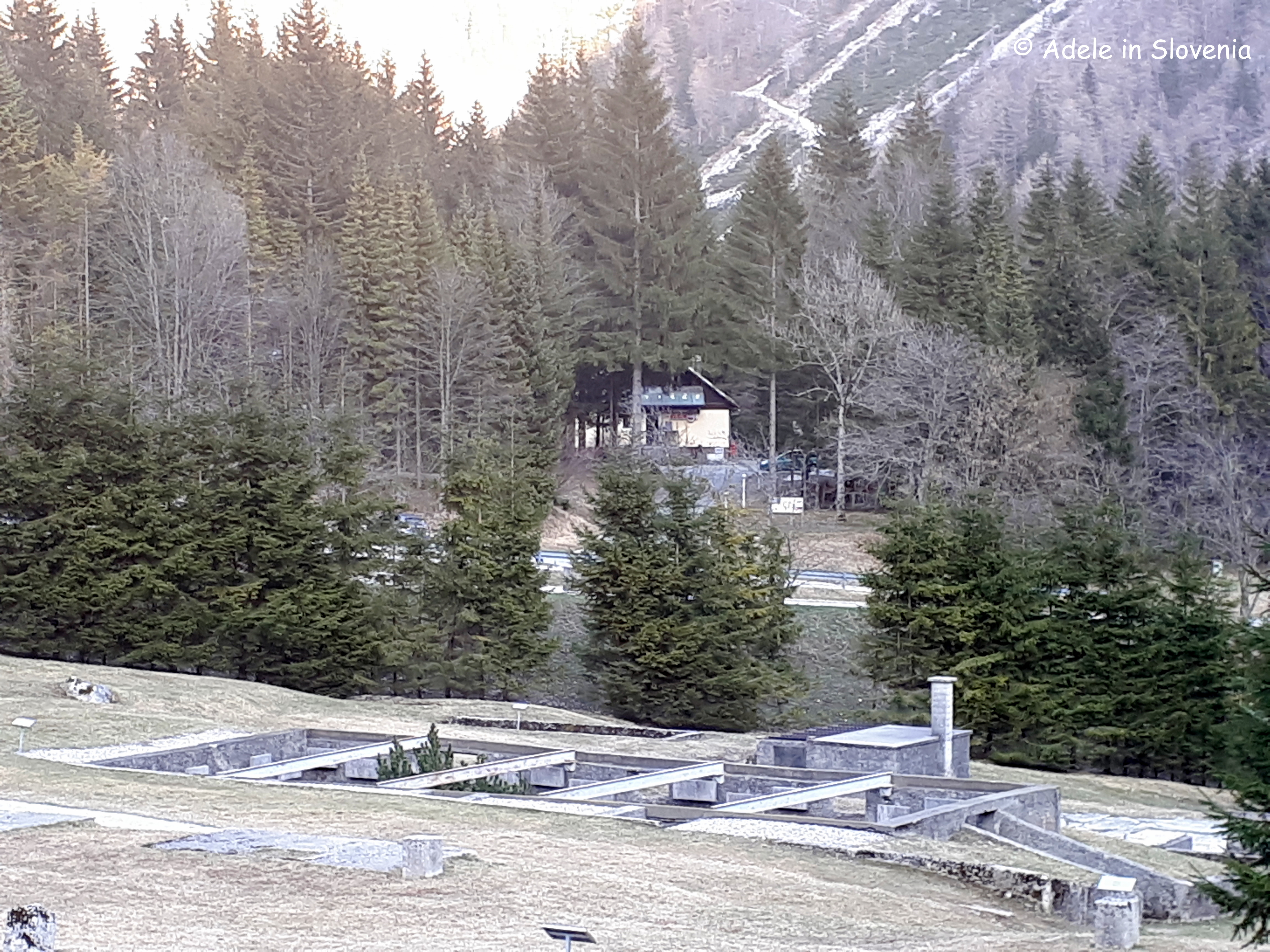
Today the remains have been arranged into a memorial park.

Though its not the usual type of tourist attraction, those interested in history, as well as anyone with a sense of respect for the past – myself included – can’t fail to be moved and feel somewhat poignant when strolling through the camp mindful of the dreadful atrocities that took place there.

The first 330 political internees were brought to the camp on 3rd June 1943, and the camp closed on 7th May 1945. There was a maximum of 1,300 internees, the majority were French, whilst there were also Poles, Yugoslavs, Italians, Czechs, Jews, Norwegians, Belgians, and Greeks, among others, the majority of which met their death while interned at the camp.

Click here to take a virtual walk through the camp.

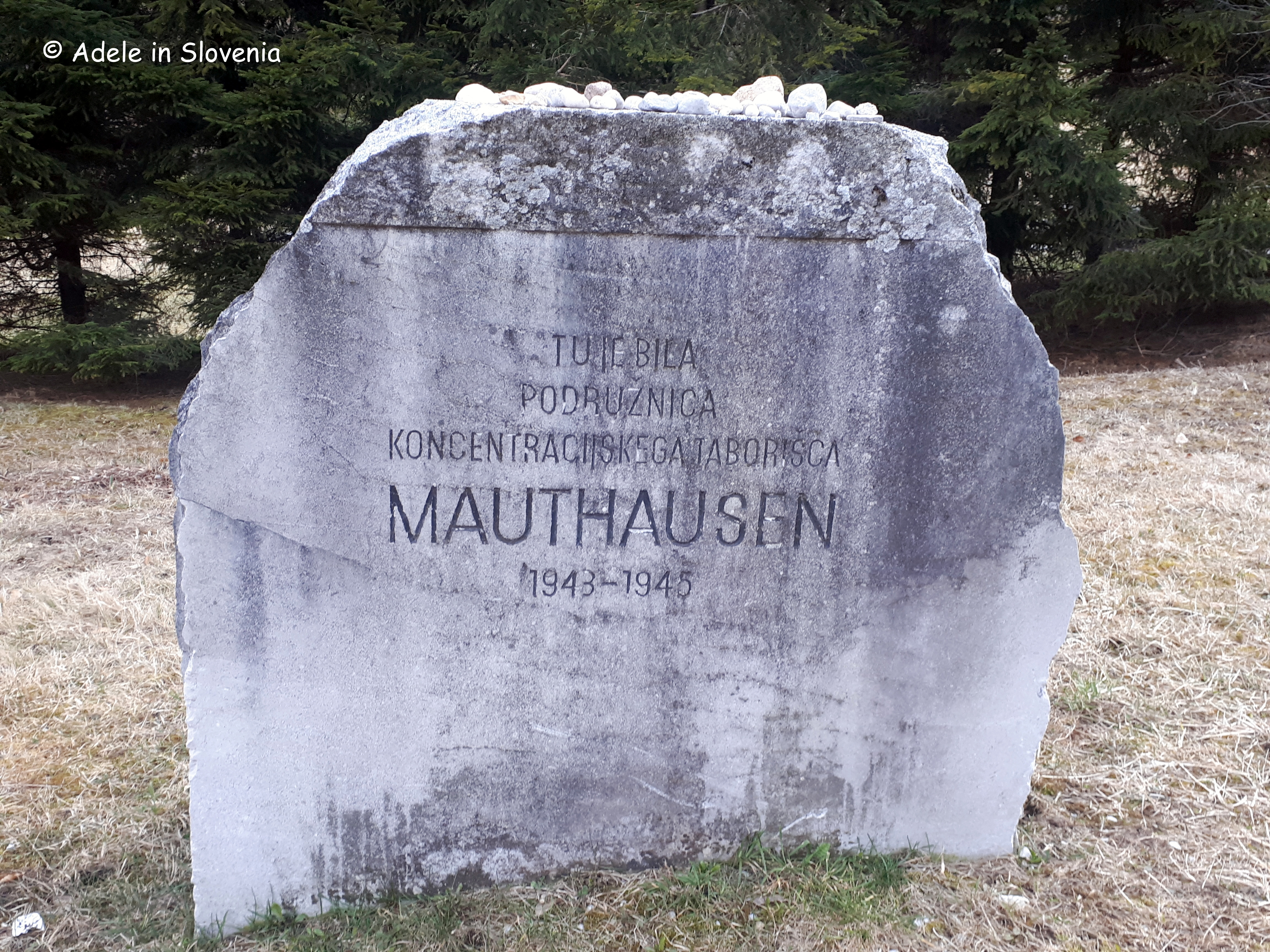
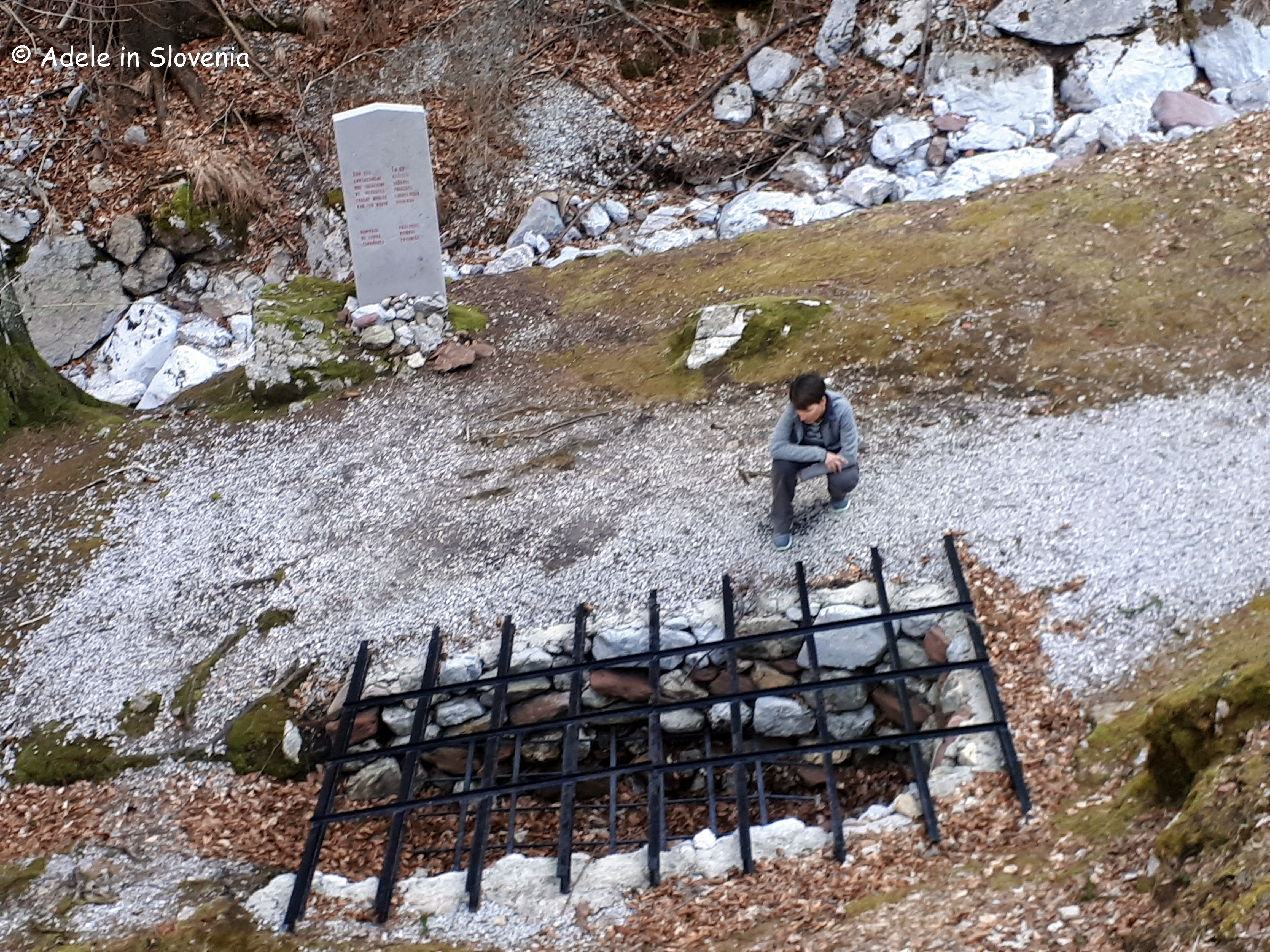
On the opposite side of the road there is a monument with commemorative plaques giving more information (in various languages, though not in English).

From the Mathausen camp you can see a building on the opposite side of the road almost hidden in the forest. This is Gostišče Karavla (formerly known as Gostišče Koren), which I must admit to having overlooked on previous visits to the area.

However, following my recent visit I can attest that a meal here is a ‘must’ – thanks to both the fantastic food and the exceptionally friendly team – and I highly recommend rewarding yourself after a sightseeing visit to the area, or after a hike, bike ride or, in winter, a ski tour, or just ‘because you’re worth it!’

The menu is varied, with a focus on game and Angus steaks, though there are also plenty of other traditional Slovenian dishes and numerous options for vegetarians too.

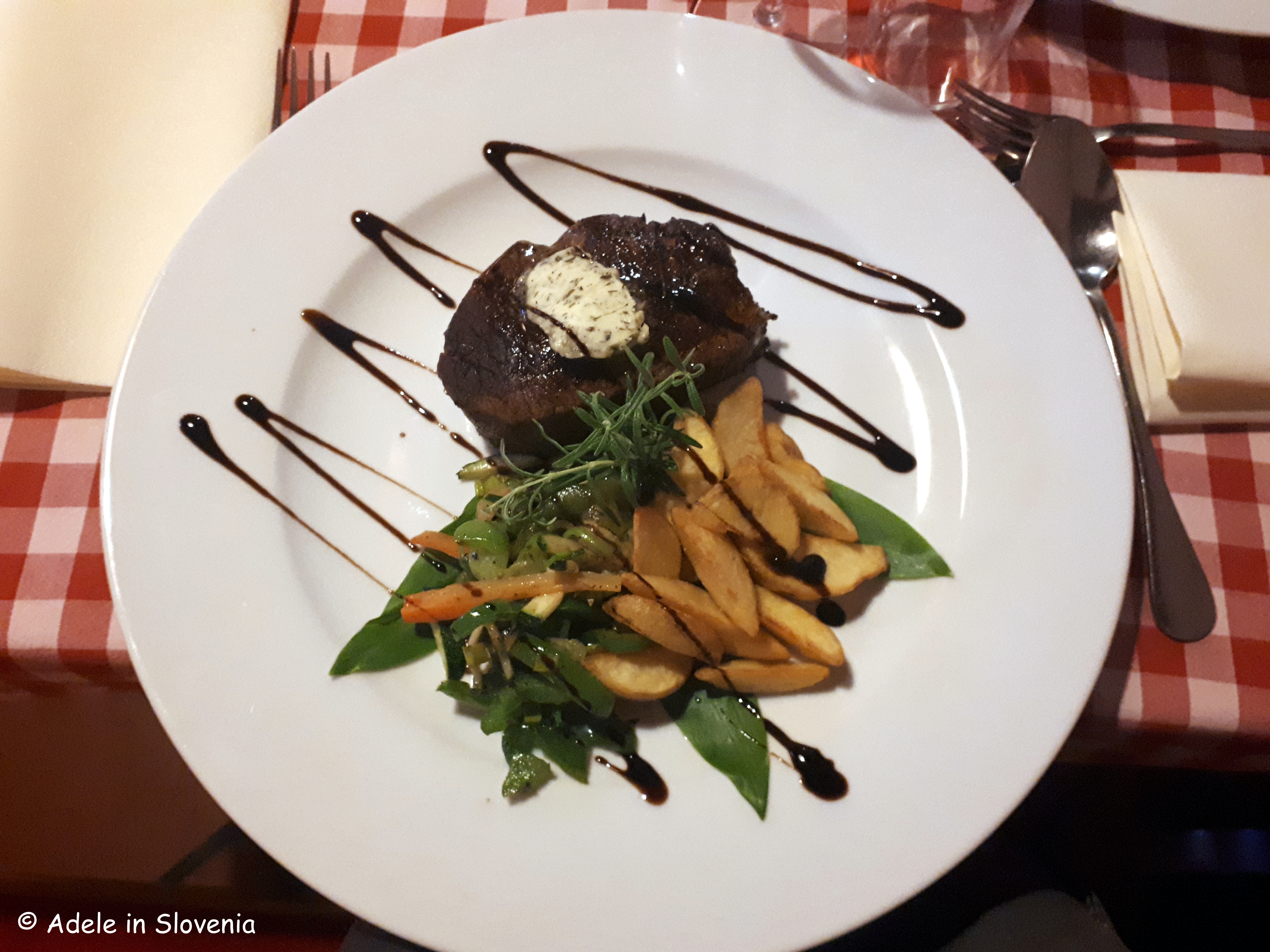
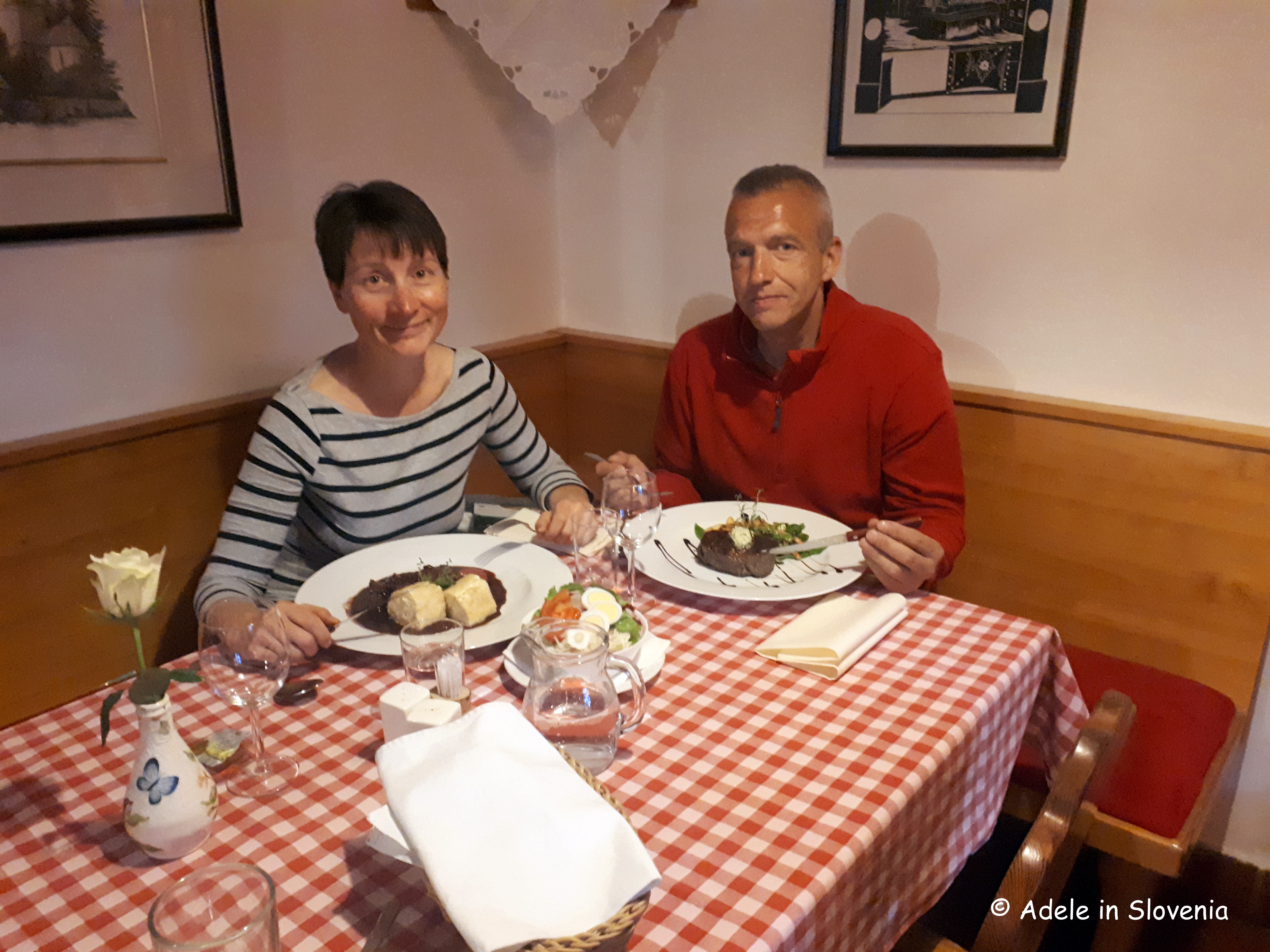
As the focus is on game, I just had to try the wild boar with cranberries, which is served with homemade curd cheese štruklji, and the black Angus steak was cooked to perfection and ‘melt-in-the-mouth’ delicious!

And although, for a change(!) it was ‘dinner-a-deux’…

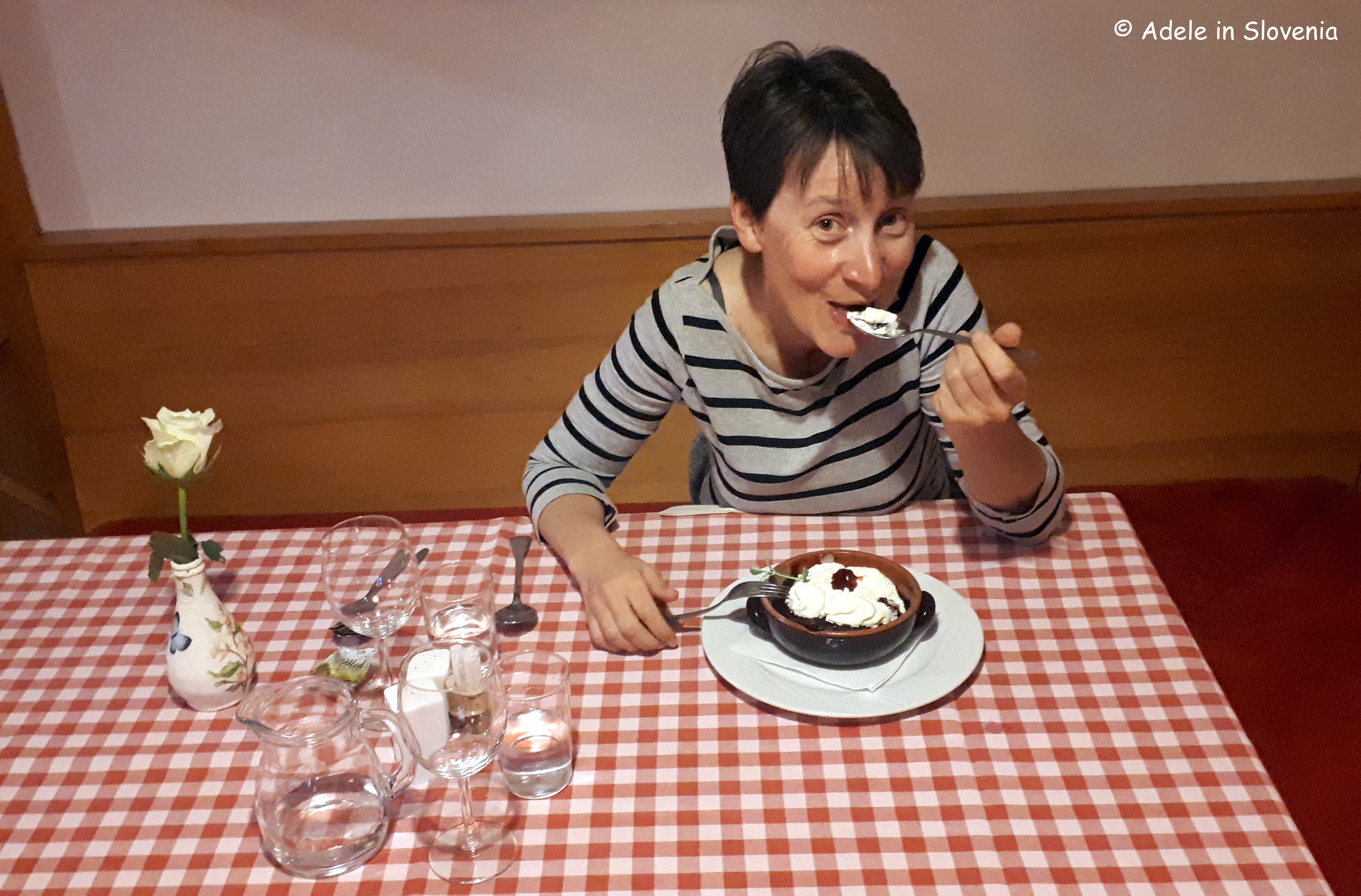
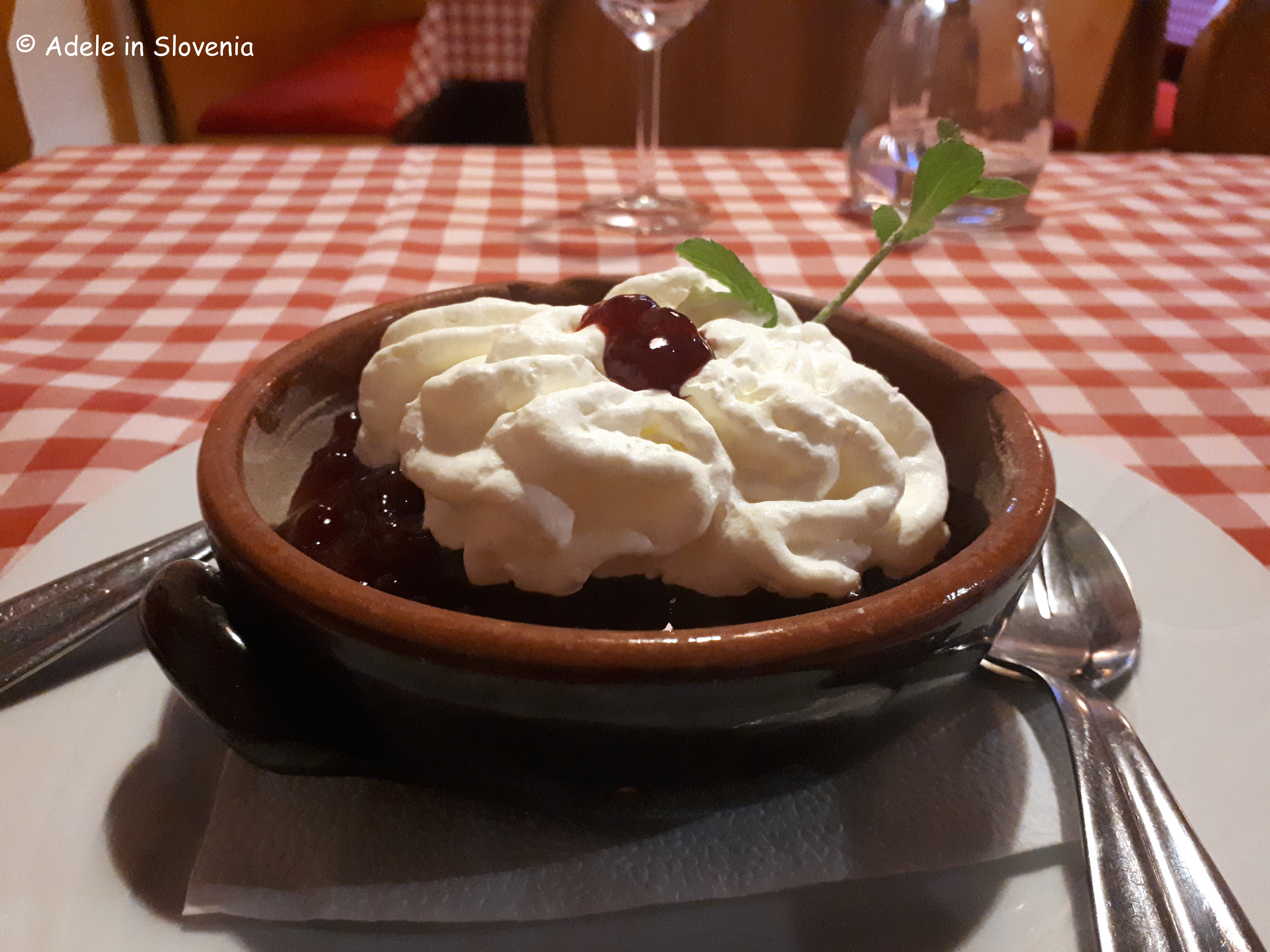
…the dessert – the house speciality buckwheat sponge with hot cranberries and cream – was mine, all mine!

Click here to find out more about all this and all the other attractions in the Trzic area, and here to read my previous post about hiking and other activities at Zelenica and Ljubelj.

© Adele in Slovenia

Lovely Little Ljubno and the Brezje Pilgrimage Trail

The village of Ljubno might be small but its numerous beautifully frescoed houses and ‘miraculous’ church are a real feast for the eyes!

When driving along the Gorenjska motorway from east to west, just before reaching the Ljubno tunnel, to the left you can see the village and its closely-packed houses. However, its not until you get up close and take a walk among the houses, that you get a true sense of this small village.

Ljubno was once a centre of pottery in the Gorensjka region. Today you can find out more about the tradition and see examples of Ljubno pottery at the Manufaktura pottery shop and workshop in Radovljica’s old town centrehttps://adeleinslovenia.com/2019/01/05/manufaktura-a-new-year-and-a-new-addition-to-radovljicas-linhart-square/.

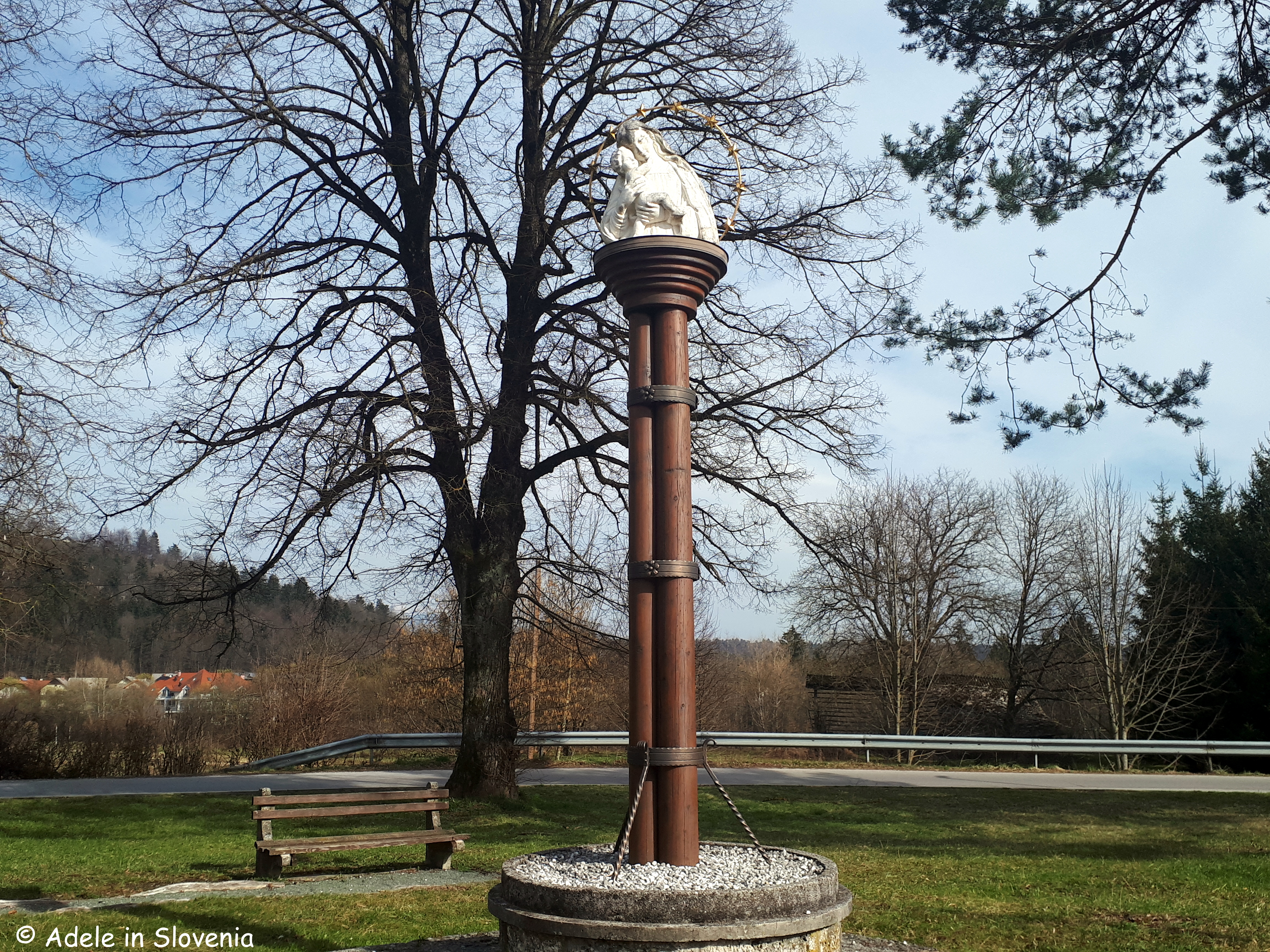
There is an interesting story of how Ljubno was transformed into an important pilgrimage place in the 17th century. During renovation of Ljubno’s village church – the Church of Mary Help of Christians, also known as the Church of the ‘Stricken’ Mary – a builder struck the statue of Mary and blood poured out of the ‘wound’ and wouldn’t stop. The story quickly became known throughout the land and attracted ever more pilgrims. Today it is not as popular as nearby Brezje, however, when in the area, it is still worth a visit.

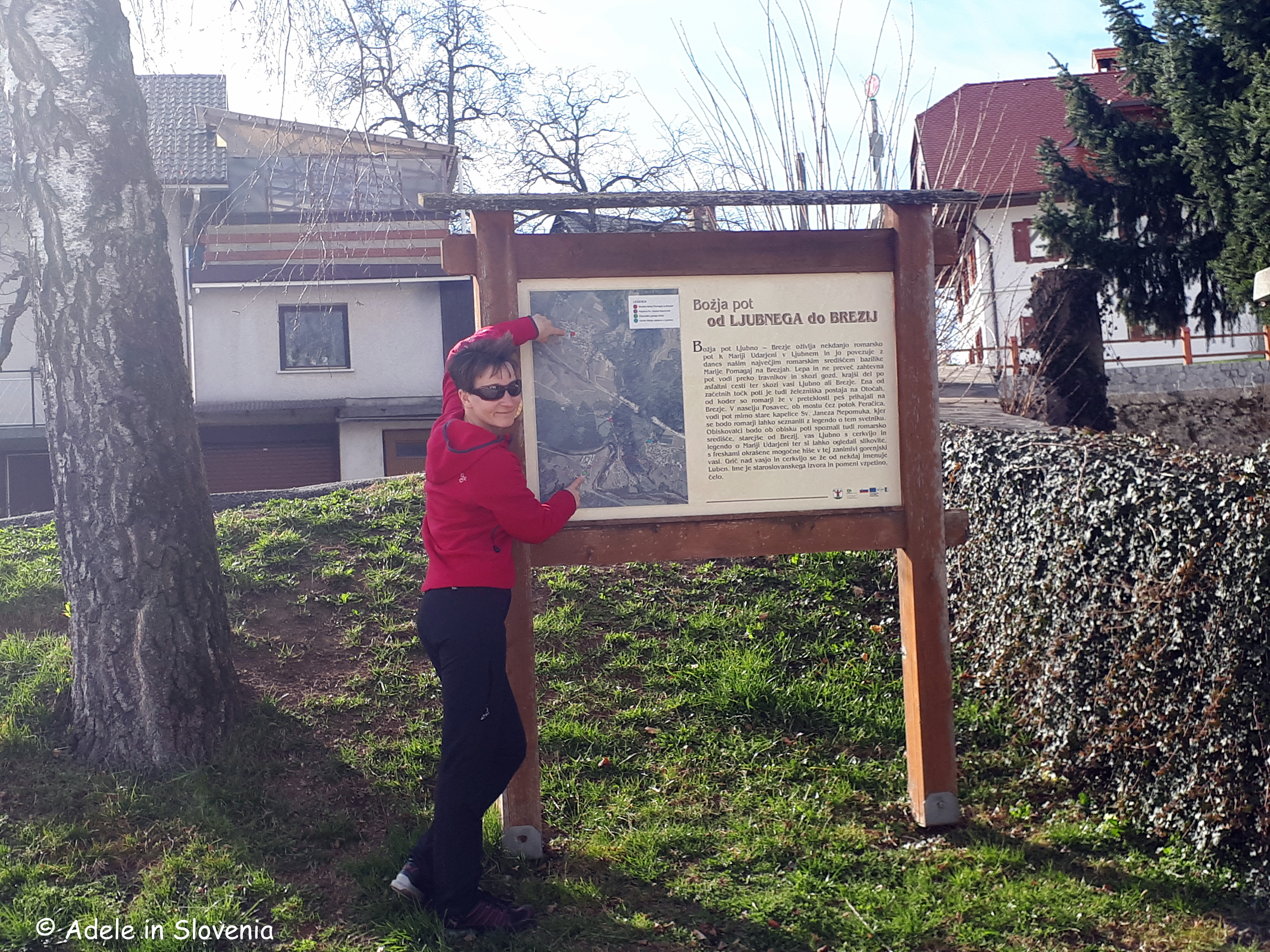
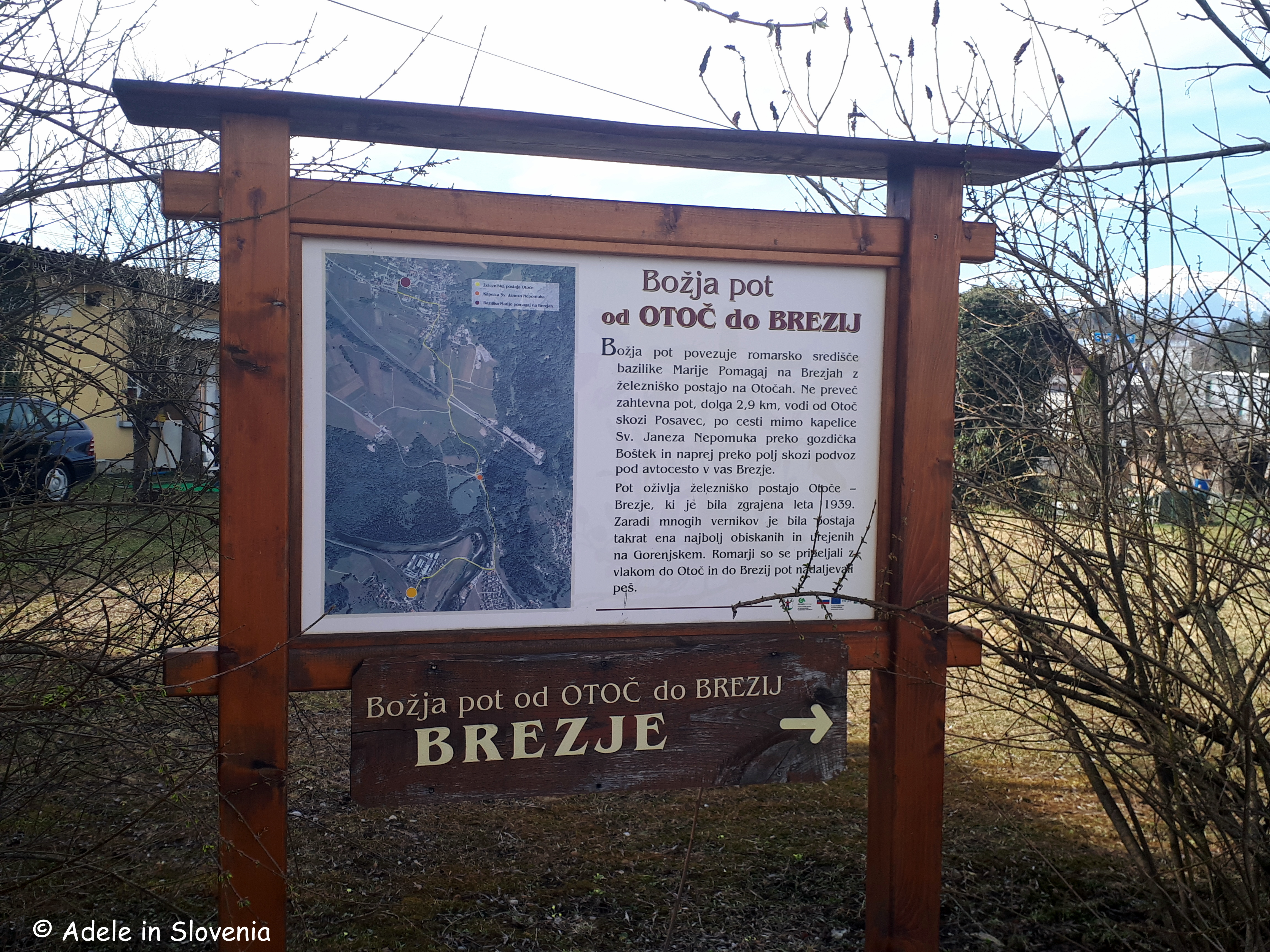
A visit to Ljubno can be an extension of a walk along the Brezje Pilgrimage Trail (Božja pot), which today runs along the once most commonly used pilgrimage trail from Otoče to the Basilica of Mary Help of Christians in Brezje. There is an information board (in Slovene) about the trail adjacent to the church.

The path in Otoče begins at the railway station, hence making it ideal for those reliant on public transport.

Immediately on leaving the station you will find the first information board about the trail (in Slovene).

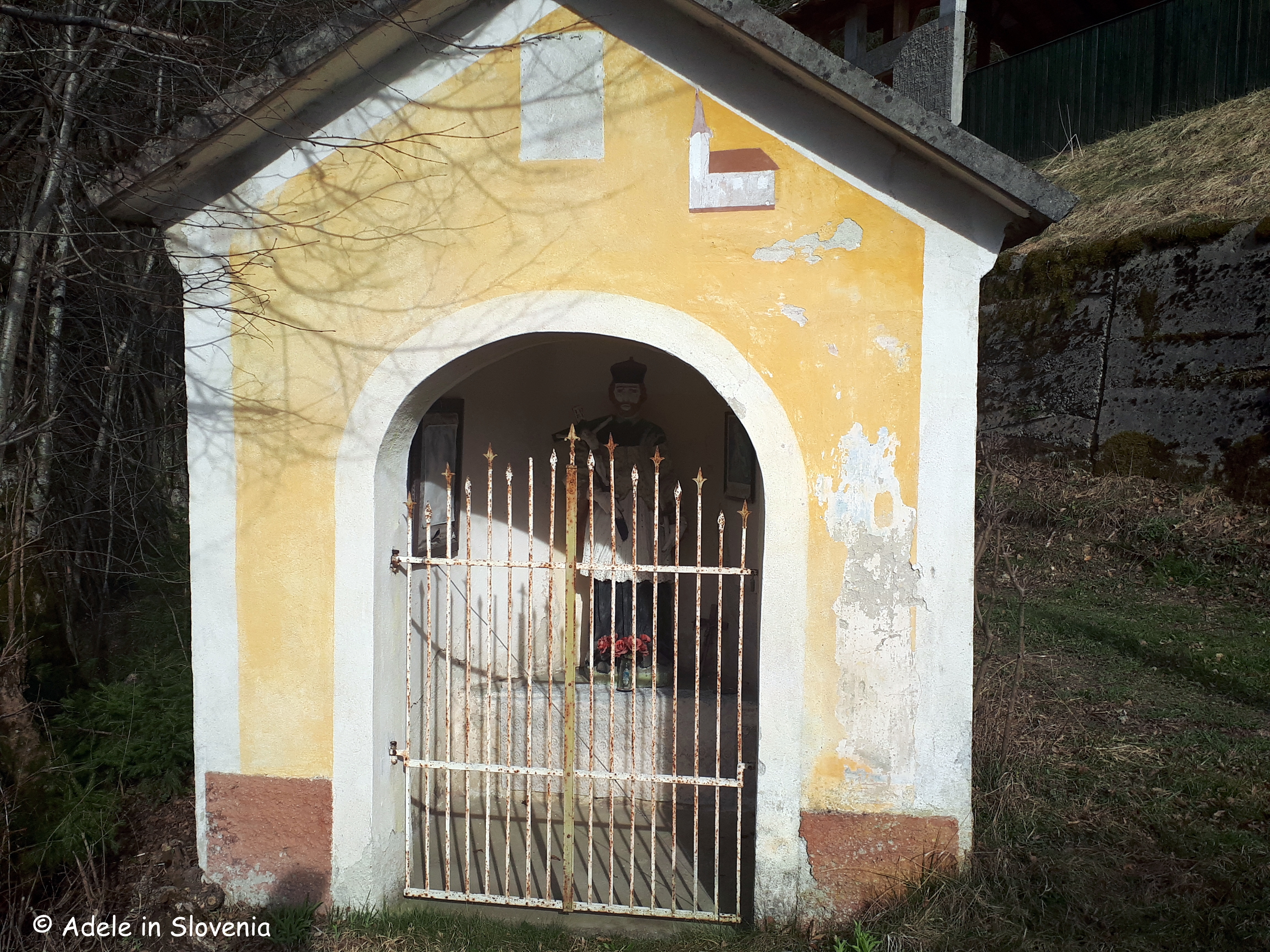
First walk along the village road to the junction with the main road and turn left. After just a few metres you can choose to follow the marked path to make a detour to Ljubno, or take the direct route to Brezje. If you opt for the latter, which is cca. 5kms one-way, continue along the verge of the road for a further cca. 5 mins until you reach the shrine of St. John of Nepomuk (kapelica sv. Janeza Nepomuka).

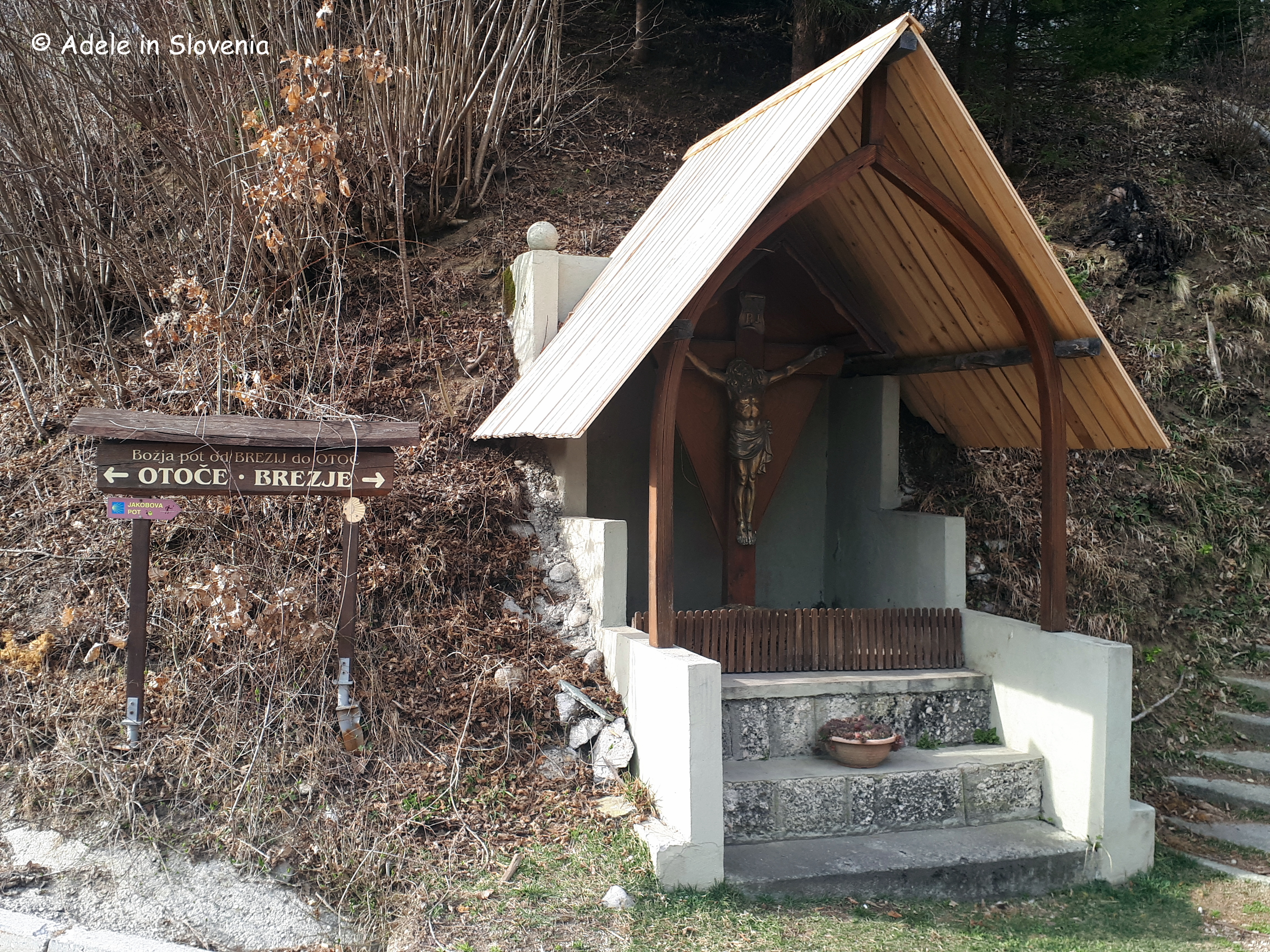
After crossing the bridge over a stream take the wooden steps to the right of another shrine that lead up steeply on a forest path.

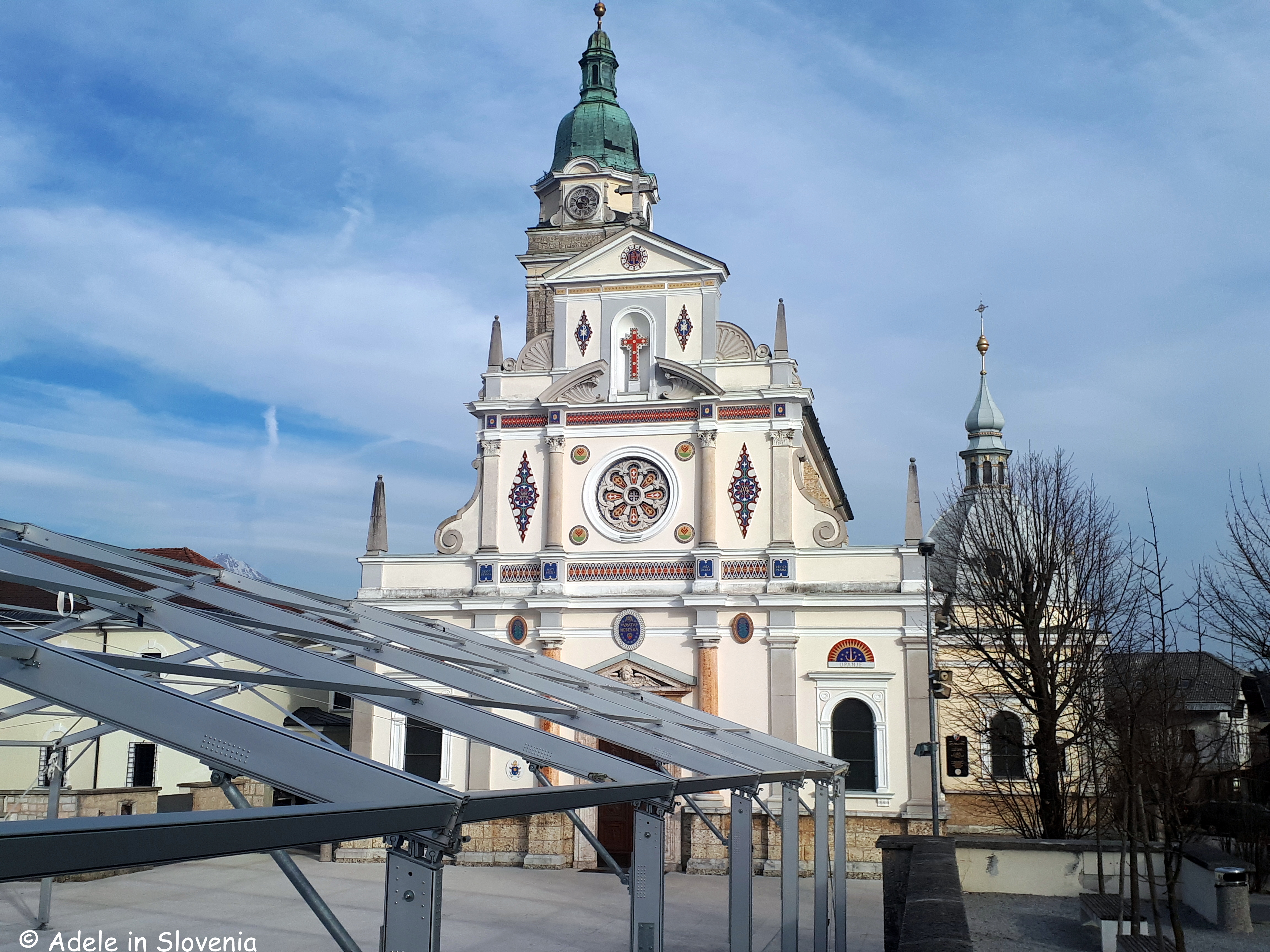
On emerging from the forest head towards the underpass under the motorway. Shortly thereafter you will see the sign for the village of Brezje. Follow the road up a short incline into the village and then just ‘follow your nose’ to the basilica, you can’t exactly miss it!

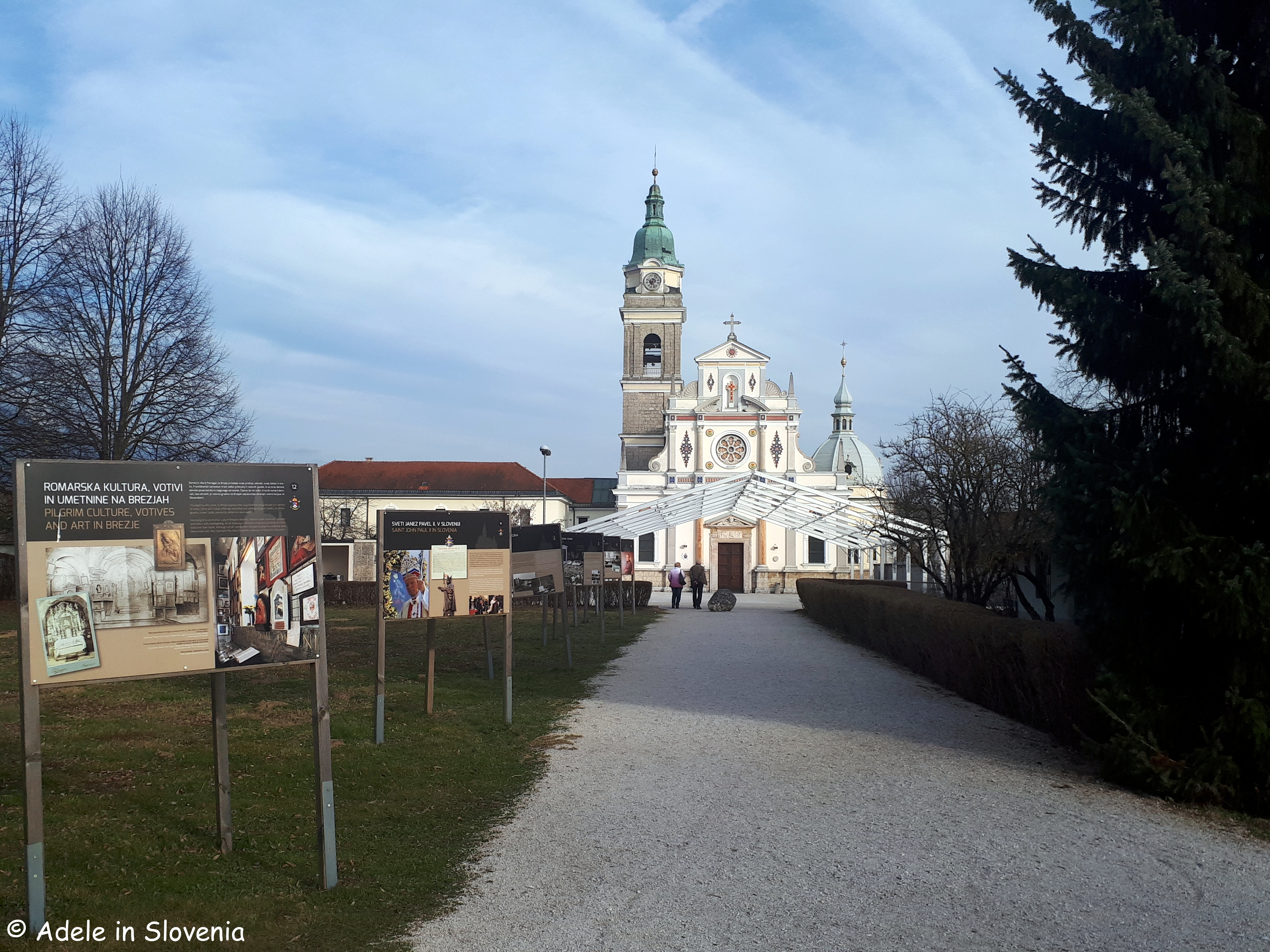
In 1988 the then Church of St. Vitus was elevated to the status of minor basilica by Pope John Paul II, who also visited in 1996. The basilica has become a popular pilgrimage destination to where people flock from all over Slovenia and further afield, too, particularly on Assumption Day, which is celebrated on 15th August and is a public holiday in Slovenia.

Whilst there you can also visit the Nativity Museum, which is located just behind the basilica and contains almost 400 nativity scenes from all over the world. Read more in a previous post here – https://adeleinslovenia.com/2017/12/10/feel-the-festive-spirit-at-the-nativity-museum-at-slovenias-national-shrine-in-brezje/

Opposite the basilica there is a small park where you can sit in peace and admire the basilica, read the information boards about Brezje’s history, and soak up the views of the surrounding countryside and mountains.

You don’t need to be a pilgrim, or even to be particularly religious, to enjoy a walk along the trail; it’s just one of the many attractions in the Radol’ca area. Click here to see even more, oh and by the way, if you happen to be in the area in April, or are planning a visit and are pondering when to come, don’t miss the Radovljica Chocolate Festival from 12th-14th April, about which I will, of course, be writing (and eating!) more soon!

© Adele in Slovenia

Discover Tržič and the Three Bells Trail

From time-to-time, when not dashing up and down hills and mountains, and especially at this time of year when many of the paths at higher altitudes are treacherous due to snow and, particularly, ice, I find that an easier, flatter walk such as the Three Bells Trail (in Slovene: Pot treh zvonov) is the perfect choice!

The mainly flat trail leads along quiet traffic-free country lanes and paths and through the Udin boršt woods and offers numerous beautiful viewpoints and places to rest and enjoy the sights and sounds of nature along the way.

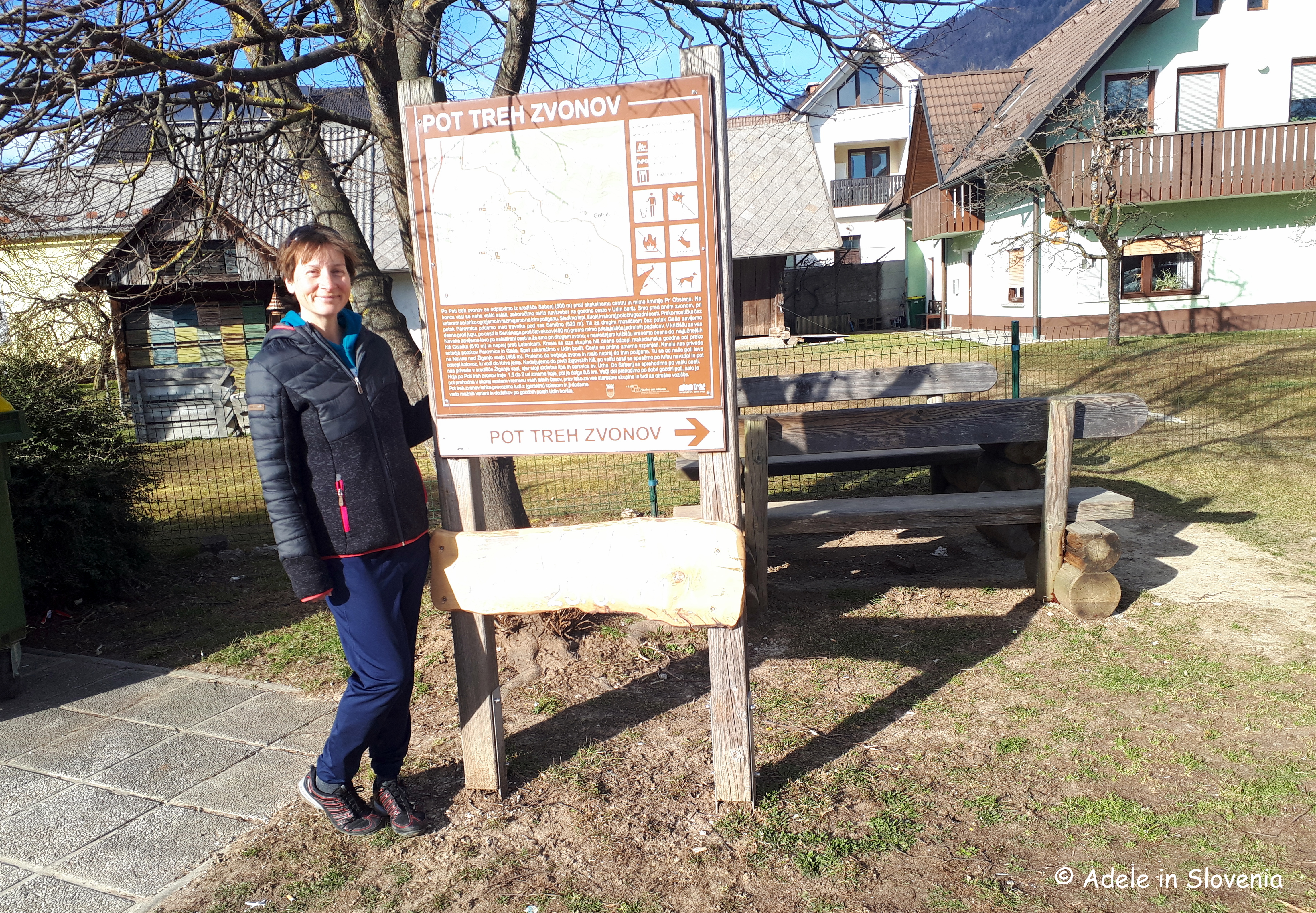
Since the trail is circular, you can start anywhere really; I chose to begin in the village of Sebenje where there is an information board about the trail.

The trail is well marked throughout so once you find the first sign showing three green bells, you can just follow them and can’t really go wrong. However, if you want more information and like having a map in hand, then you can pick up a copy of the trail brochure at the Tržič Tourist Information Centre or download the brochure here.

Set off towards the newly renovated ski jump centre in Sebenje (in Slovene: skakalni center).

Then after a short while the tarmac road becomes a gravel path as you enter the Udin boršt woods where you will find the first of 2 trim trails along the way – ideal for a warm-up before heading onward!

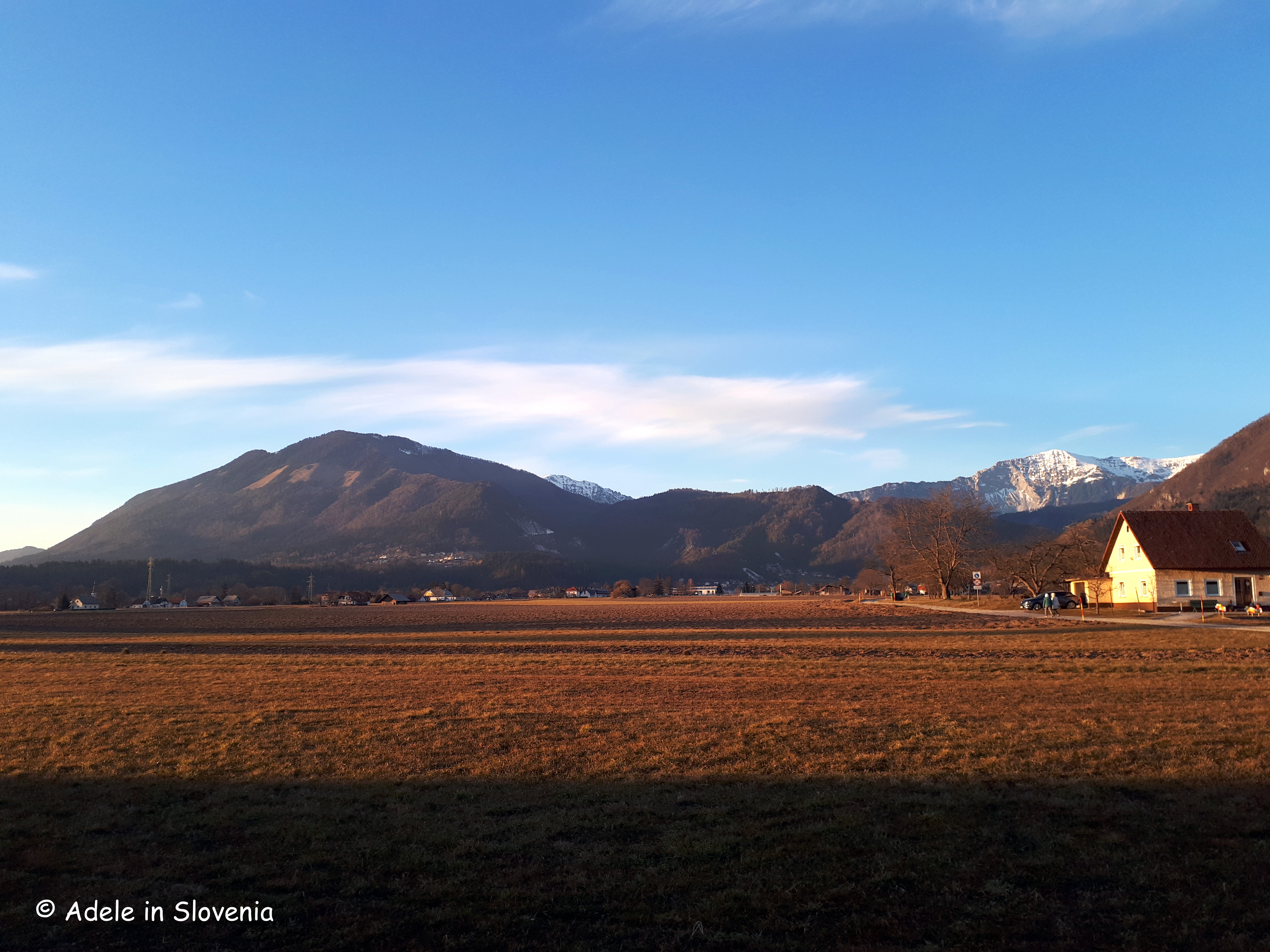
After leaving the woods the trail leads in the direction of the village of Senično, from where there are wonderful views of Kriška gora (1471m), with its highest point Tolsti vrh (1715m), and neighbouring Storžič (2132m).

Before reaching the village, the trail turns right, passes a parachuting practice area, then leads to the hamlet of Novake.

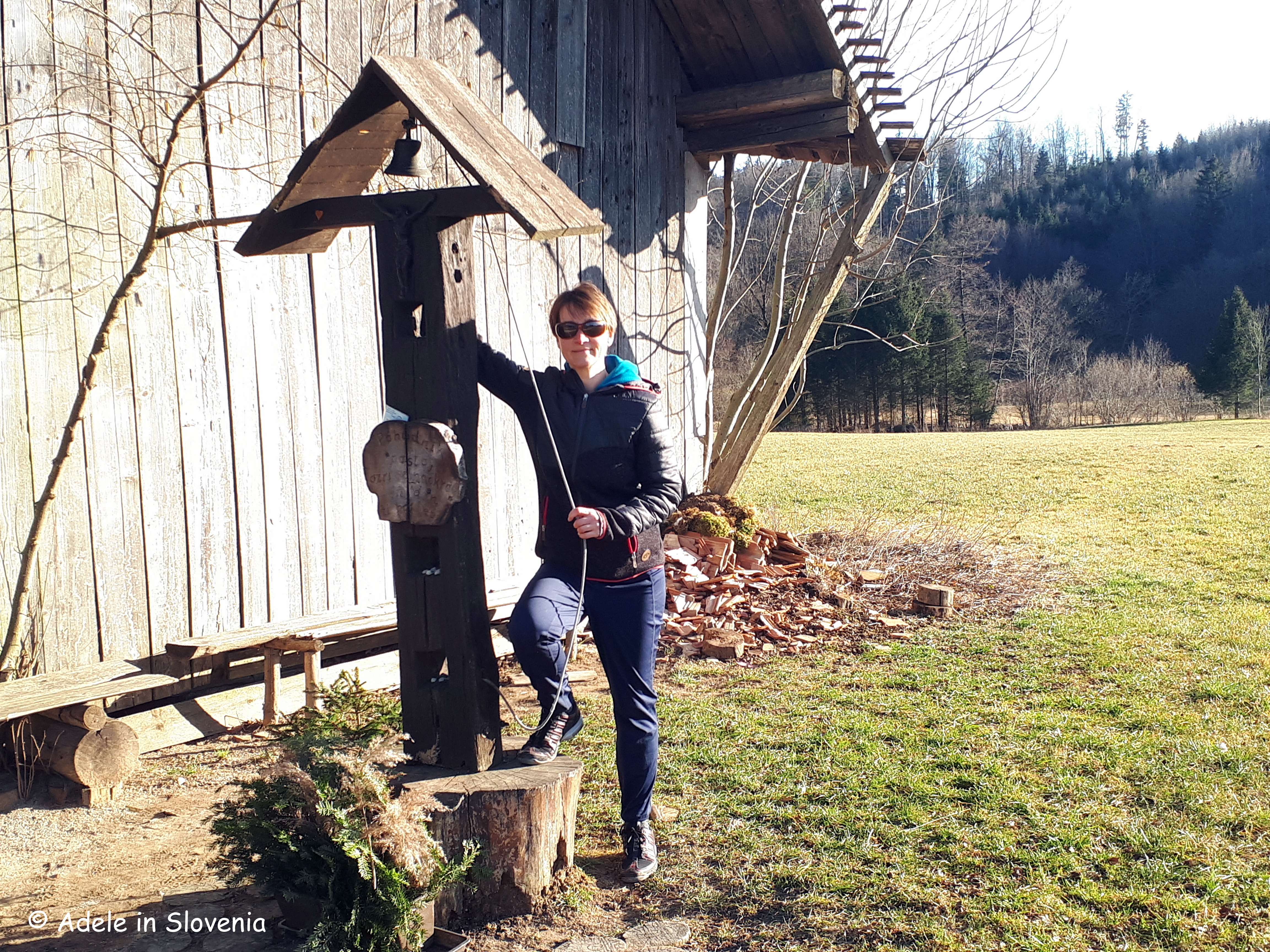
Soon you reach one of the three small bells (the first, second or third depending on where you start the trail!).

Shortly after the trail re-enters the woods, where it leads gently uphill, before reaching the next bell and a pleasant rest area.

Shortly before exiting the woods you pass another trim trail – another chance for some extra fitness!

Then, you emerge into the village of Žiganja vas, whose inhabitants came up with the idea for the Three Bells Trail at the time when three bells where being replaced in the village church.

On a clear day, there are far-reaching views from one side of the Julian Alps, all the way to Triglav

…and on the other towards the Karavanke mountains that form a natural border between Slovenia and Austria.
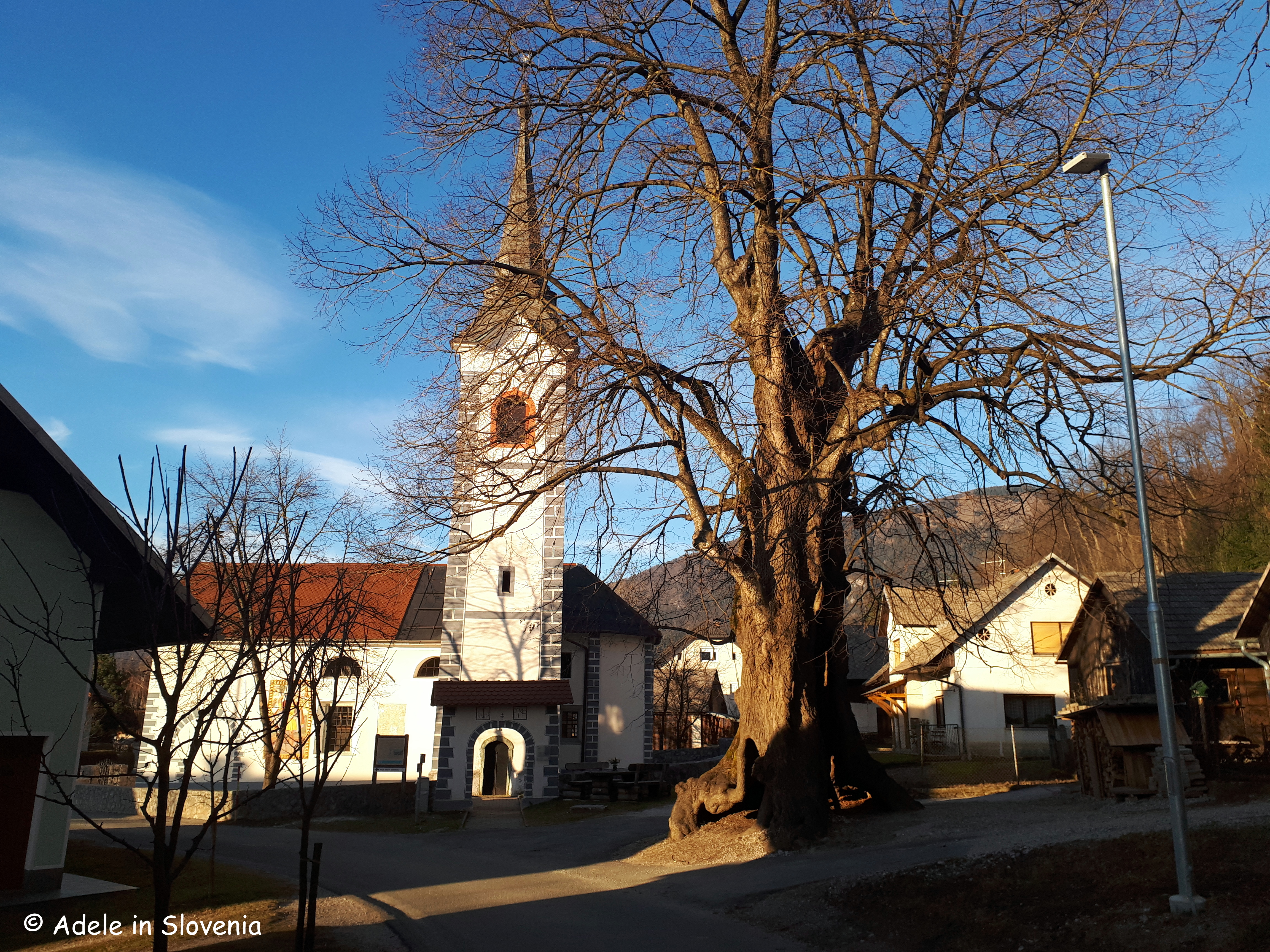
In the centre of Žiganja vas, adjacent to St. Ulrich’s church, stands the giant village linden tree, which is so huge, and in places hollow, you can actually go inside it – and who could resist such an opportunity!
The trail then returns back to Sebenje completing the 9km-long circular route. Much of the route is also suitable for cycling (mountain or trekking bike). You should allow around 2 hours, more if you make frequent stops, and it is a truly pleasant way to while away a sunny winter’s afternoon!

You can find out more about the other walking and hiking trails in the Tržič area here, and, of course, stay tuned to my blog for more ideas and inspiration to come too!

© Adele in Slovenia