Bears, Bread and Bukovec in the Poljane Valley

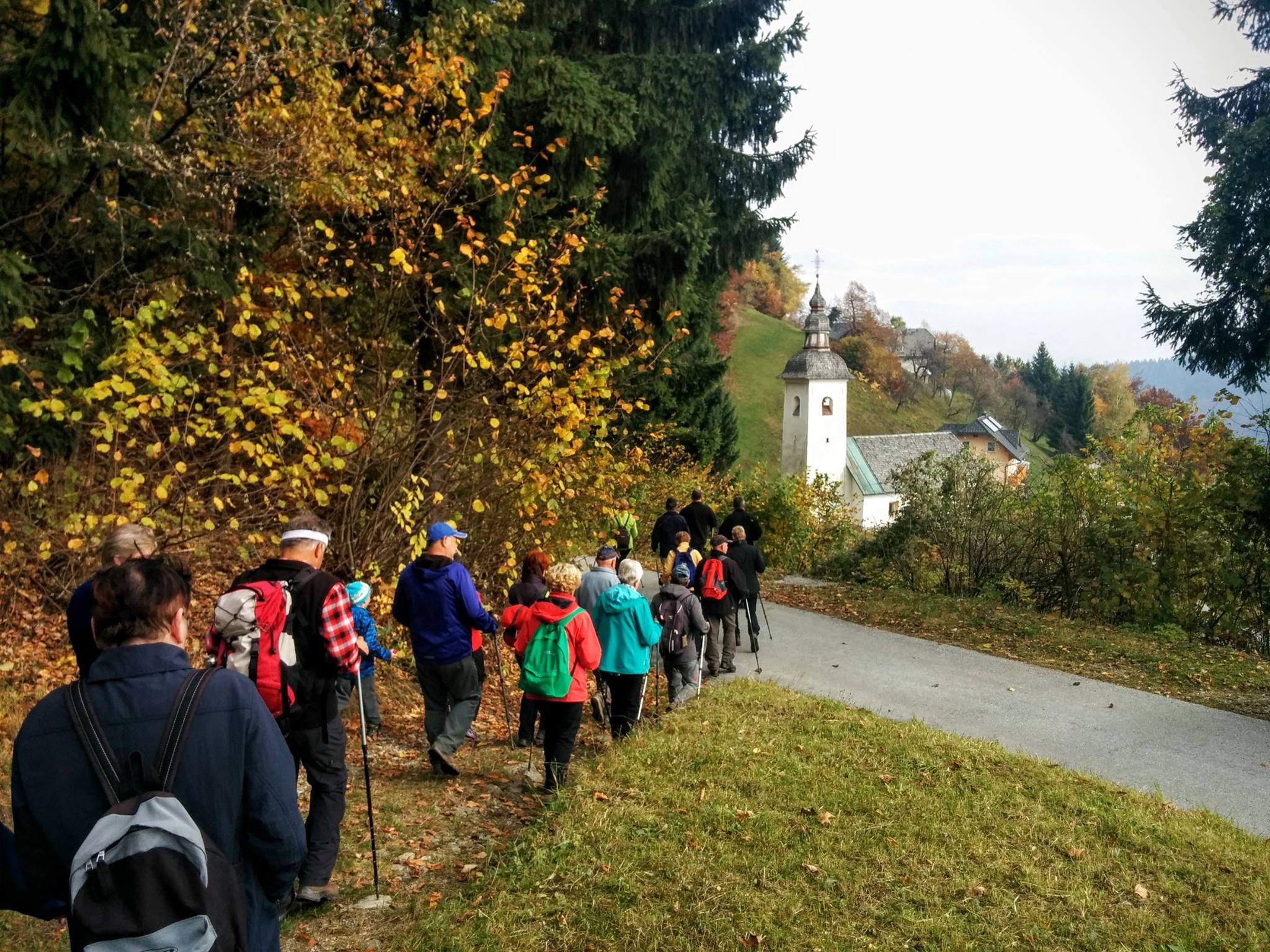
To get the full flavour of the pristine Poljane valley it’s necessary to take your time to explore the area, seek out some of its more hidden parts, soak up the best vistas, visit remote farms, try the tastiest home-produced food and drink, walk its forests and paths, and meet some of the friendly locals – including the bears (read on!). I recommend doing all of this is on a walk on the Path Through Zala (Pot skozi Zalo).

The Path Through Zala theme path runs mostly through the forest in Zala and begins at the Pr’ Bukovcu farmstead (shown as Bukovec on the map), which is located in Žirovski Vrh, high above the Poljane valley. The original farmhouse, Bukovčeva hišadates back to 1639.

Nowadays the farm is a popular place for walkers to stop for refreshments (it’s advisable to call ahead to book, but if you’re passing they can always ‘rustle something up’ if needs be!) and/or to buy a few provisions for along the way or to take home, such as dried fruit, baked goods, milk and schnapps – all of them home-produced and organic. One of the farm’s outbuildings also has an area ideal for group picnics or other such social events.

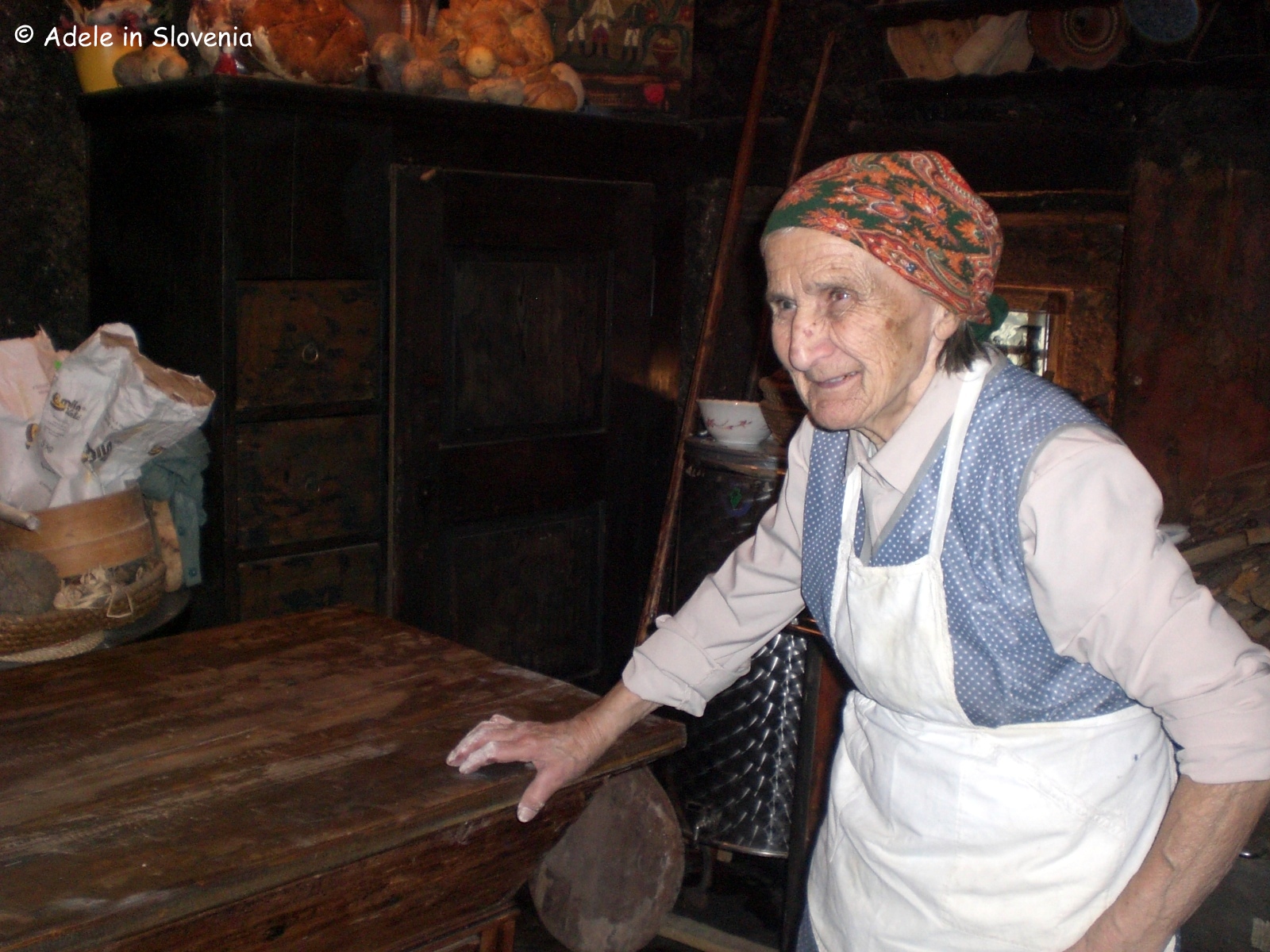
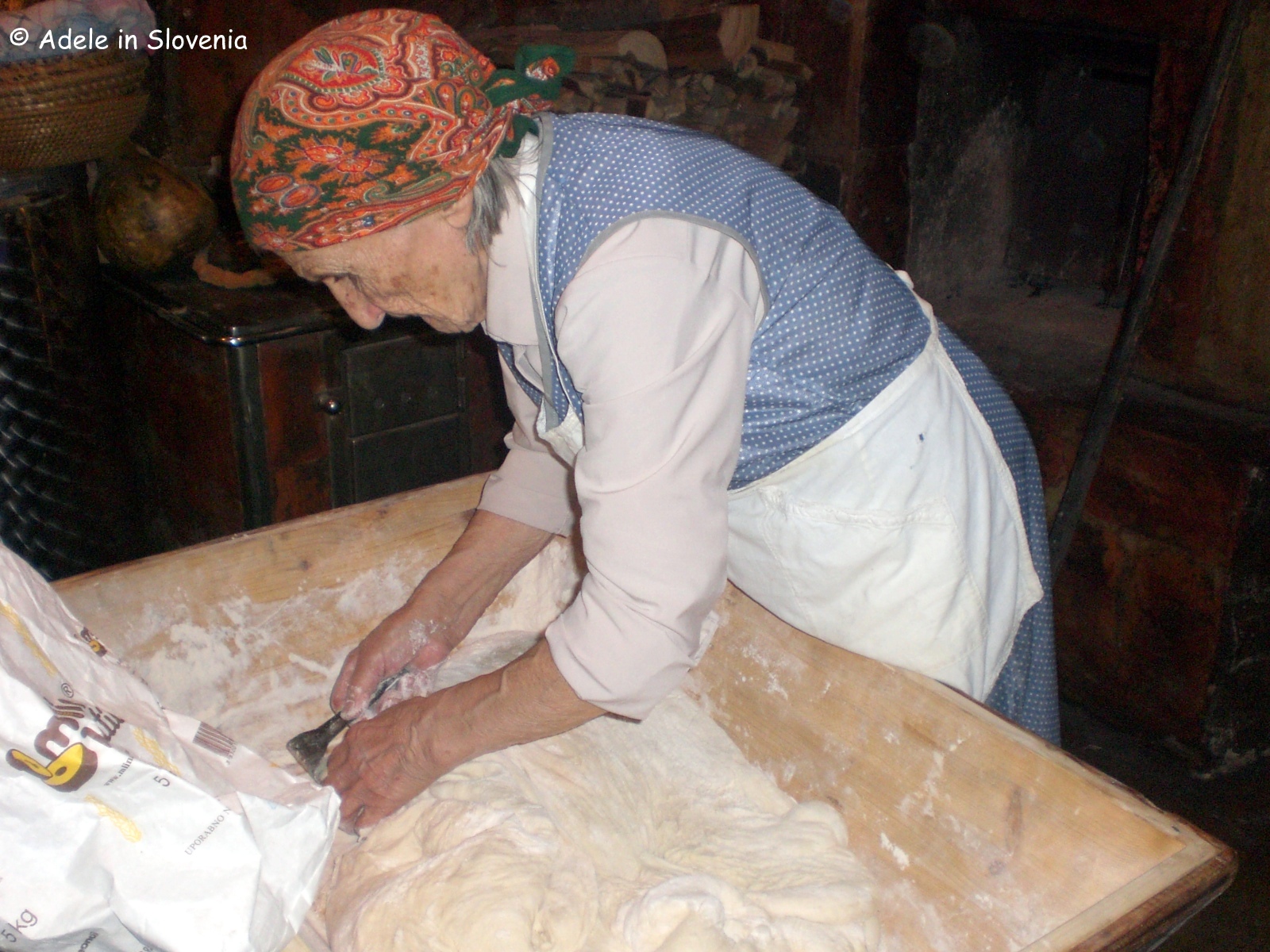
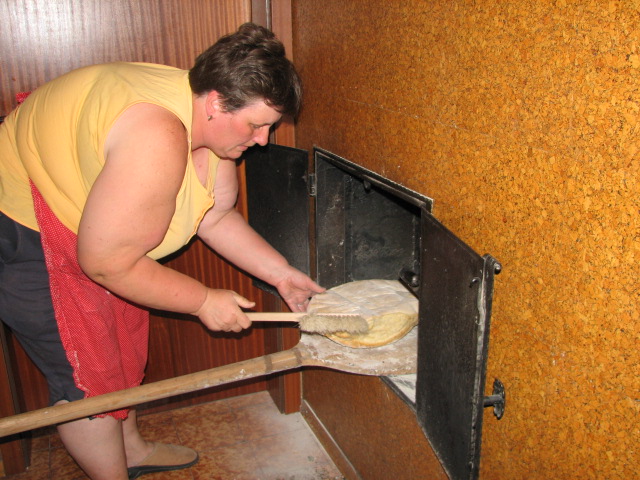
On Sundays you won’t be able to pass the farmhouse without being lured in by the aroma of freshly-baked bread. In fact, the farm’s bread has become quite legendary and attracts people from far and wide!
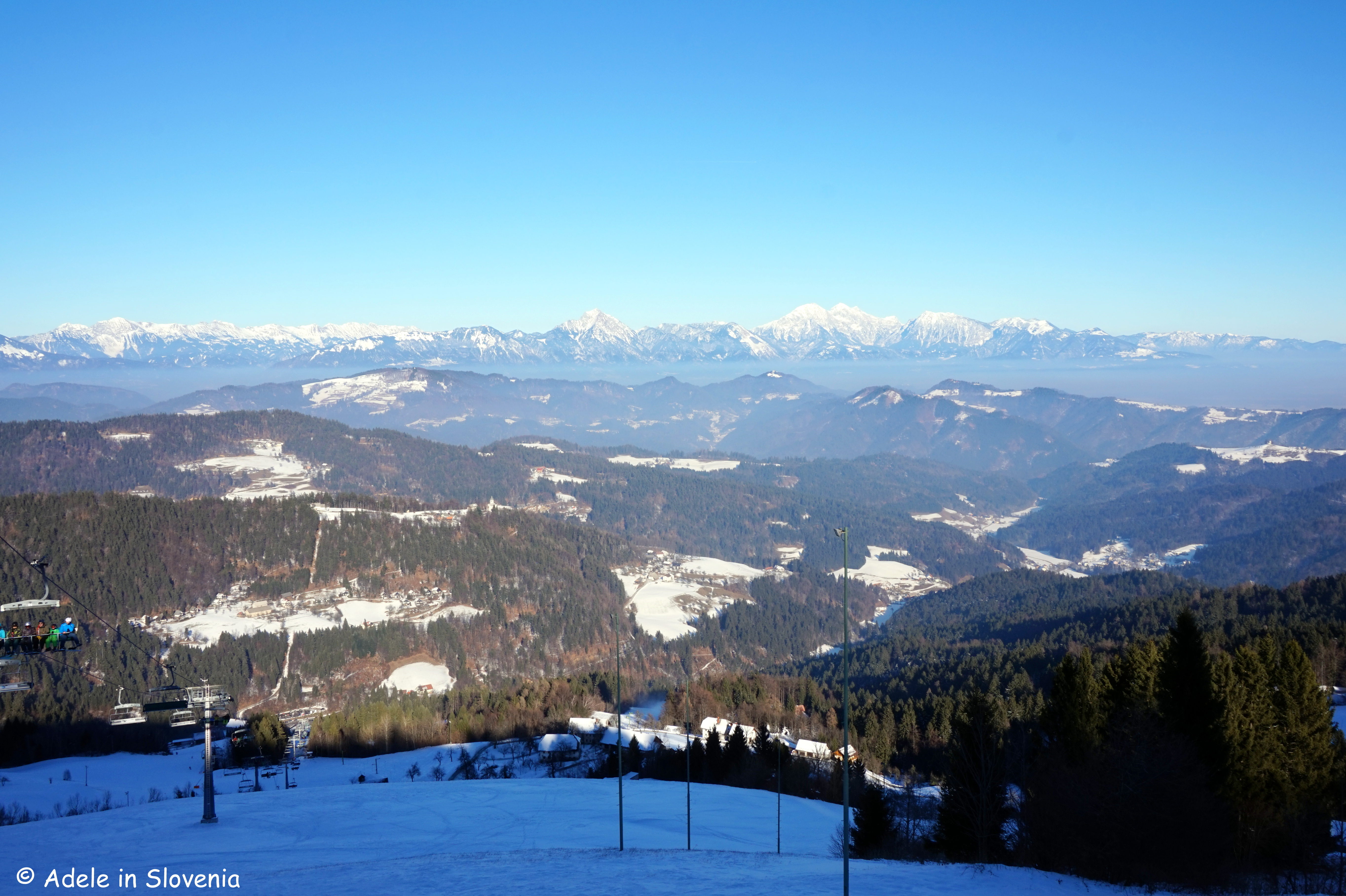
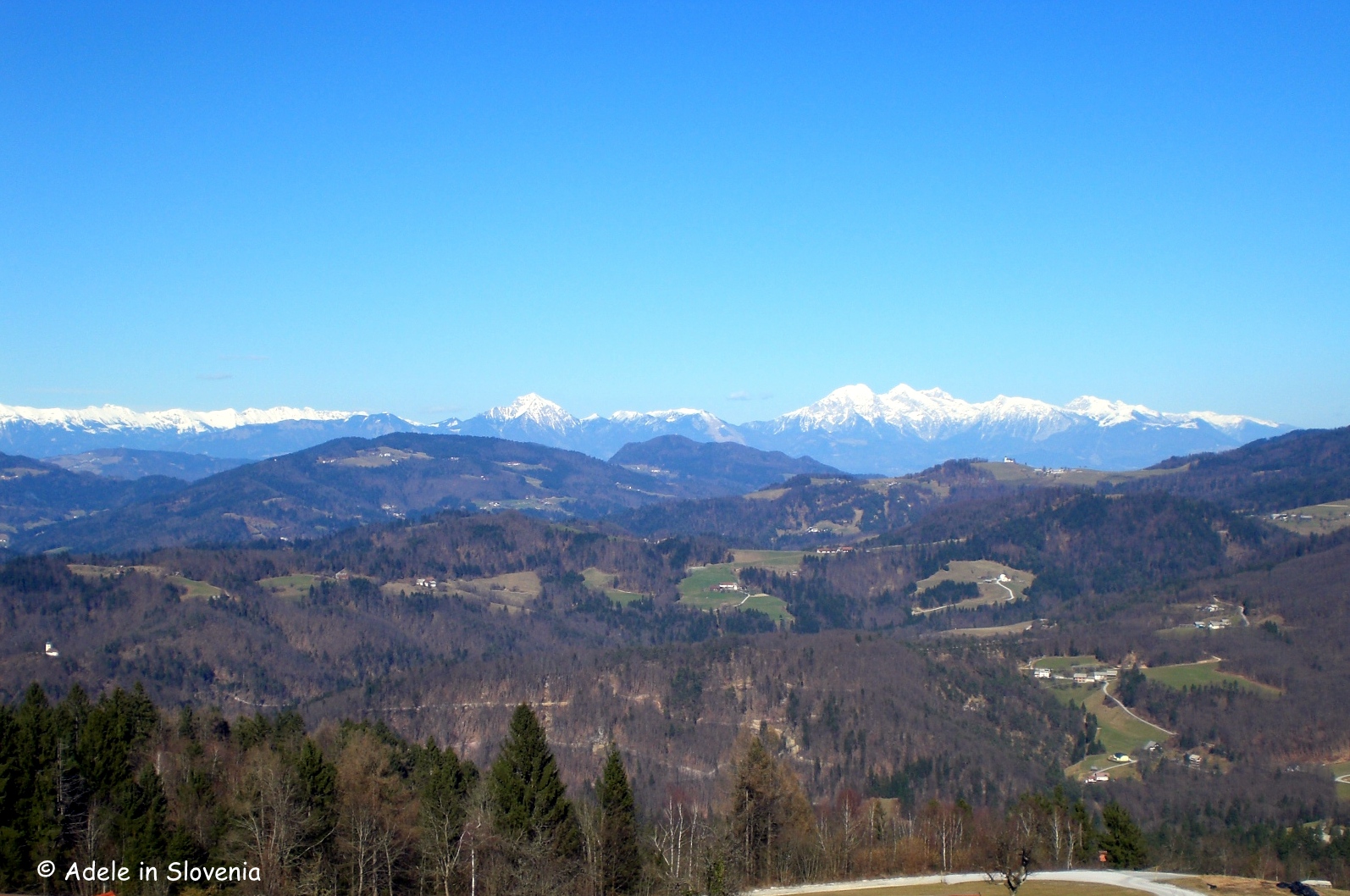
The first and last section of the 11km path run along the ridge of Žirovski Vrh, from where, on a clear day, there are panoramic views of all 3 of Slovenia’s mountain ranges – the Julian Alps, the Karavanke, the Kamnik-Savinja Alps – as well as across the valleys below.
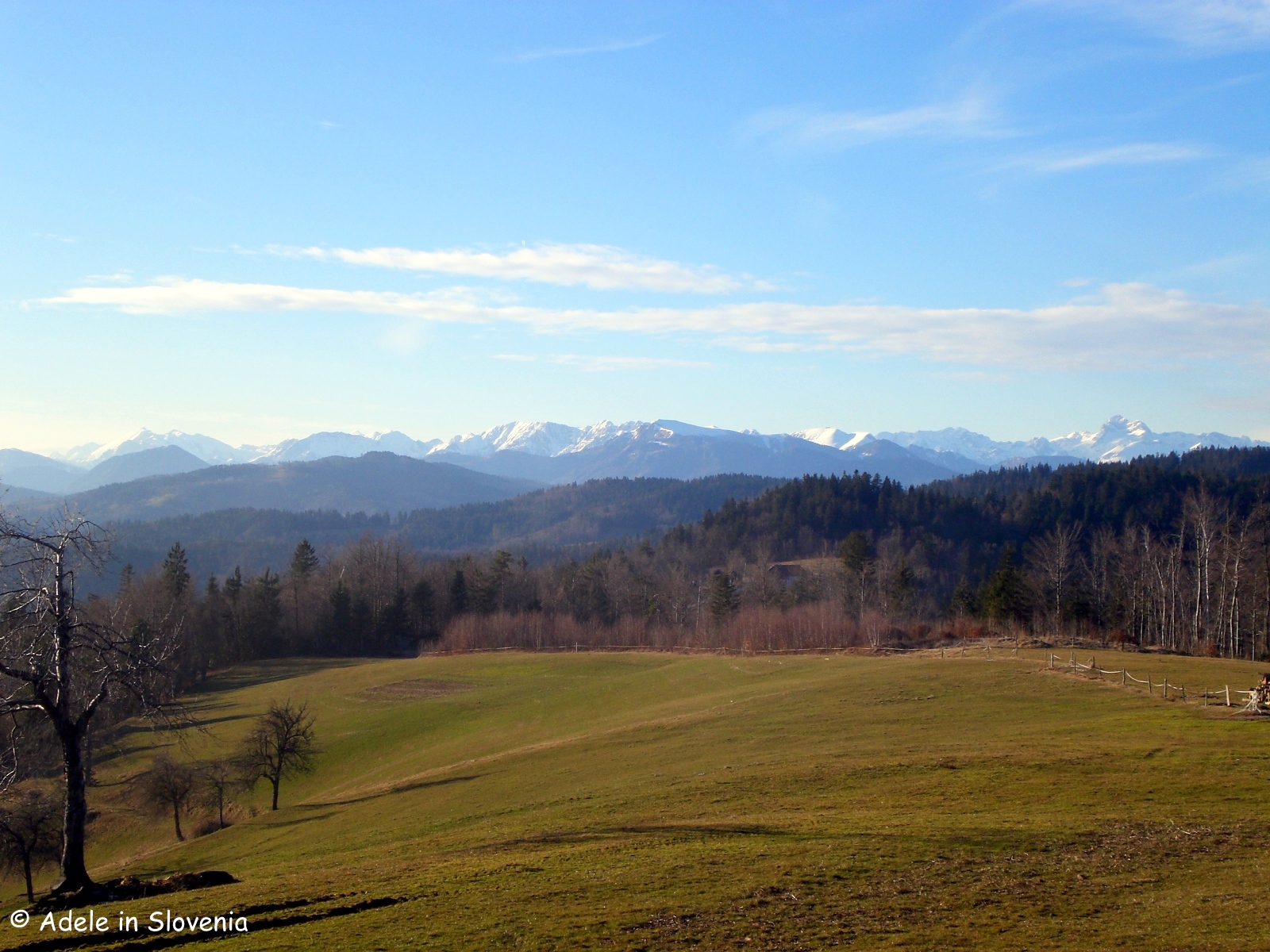
Literally everywhere you look there are jaw-dropping views!
If you haven’t got time to walk the entire path, you should at least walk the 3.5km Bear Cub Path (Medvedkova pot), which begins opposite the Pr’ Bukovcu farm. The Slovene writer Dr. Ivan Tavčar wrote a book about Zala, telling the story of Canon Amandus who shot a bear that attacked and severly wounded him in Zala. You can find out more about how the story unfolds on the Path Through Zala.

The Bear Cub Path is marked with yellow paw prints on trees and equipped with 7 boards showing 7 themed games, ensuring the little ones won’t be bored!

The circular path is suitable for all and is easy trail, however, sensible footwear is required as it crosses a stream and traverses undulating forest paths.

The highlight of the path is the 3.5 metre-high bear, Štefka, and bear cub, both made from moss. What a great thing to find in the middle of the forest and there’s no doubt you will want to get ‘up close and personal’ with these bears!

If you walk the longer route of the Path Through Zala, you will also pass some of the many fortifications and bunkers of the Rupnik Line on Goli vrh, built in the 1930’s by the then Kingdom of Yugoslavia as a defence line on the border with the Kingdom of Italy (more about this to come in a future blog!).

Other highlights of the 11km path include the Mrakov grič and Selakov grič viewpoints, the Pr’ Mrak, Pr’ Šimc and Pr’ Omejčk farmsteads, the Hunter’s Lodge, and the Zala stream.

Every year the Žirovski Vrh Tourist Association organises guided walks on the Path Through Zala. This next walk will be held on 2nd May. More information here (in Slovene) – http://www.tdzirovskivrh.si/.

Photo: TD Žirovski vrh

More information about this and other theme paths in the Škofja Loka area can be found on the Visit Škofja Loka website – http://www.visitskofjaloka.si/en/experiences/theme-paths and more about the Pr’ Bukovcu farmstead here (in Slovene only) – http://www.bukovc.si/

© Adele in Slovenia


Beguiling Begunje na Gorenjskem

I’m fortunate to live just a few kilometres from the village of Begunje na Gorenjskem, which is packed full of natural and cultural sights of interest. I spend quite a lot of time there, too, whether hiking, cycling or eating great Taste Radol’ca food. So, in this blog I’ve focused on some of the highlights of beguiling Begunje.

Fans of popular folk music won’t want to miss a visit to the Avsenik family homestead, where the legendary forefathers of Slovene folk music, Slavko and Vilko Avsenik were born. Though, sadly, Slavko passed away in 2015, the family’s music very much lives on.

You can visit the gallery and museum, and/or attend one of the frequent music evenings and other events. More information here – http://www.radolca.si/en/avsenik-gallery-museum/

The Katzenstein Mansion in the heart of the village has had a long and interesting past. Built in the 14th century, its current Renaissance and Baroque appearance is a result of renovations in the 16th, 17th and 18th centuries. 1n 1875 the mansion was sold to Austro-Hungarian judicial authorities and a prison, holding 300 female prisoners, was established. During the German occupation, it became a Gestapo prison and political prisoners were incarcerated in the mansion; after the war it again reprised its role as an all-female prison.

The Museum of Hostages (Muzej Talcev) has been housed in the building at the north-western end of the residential wing since 1961. Inside, on the walls of the former prison cells, you can see written records left by the prisoners and announcements by the occupiers concerning executions. This one says ‘Molimo za mir’ (We pray for peace). Sobering stuff, indeed.

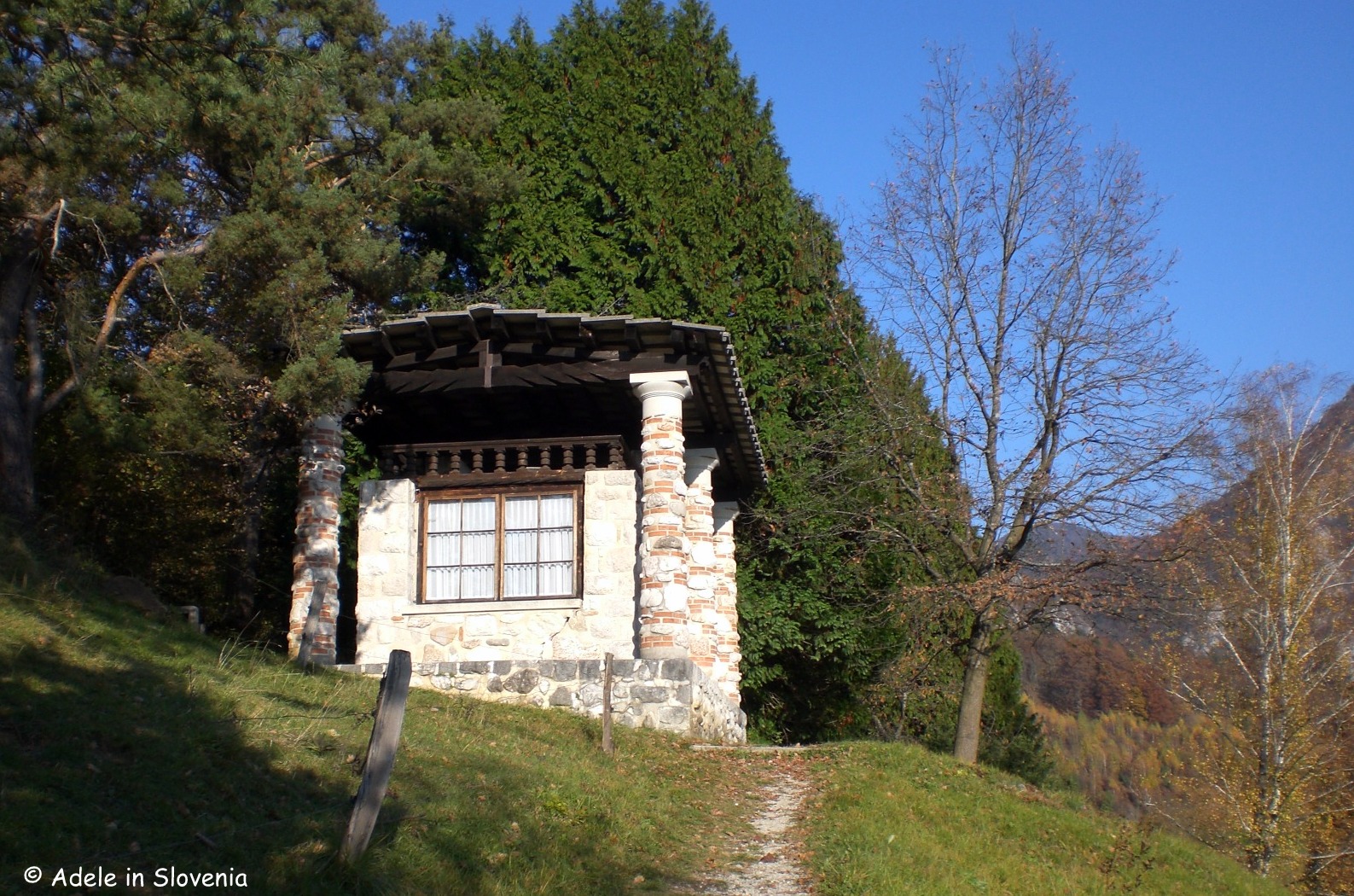
The park in the ground of the mansion is a lovely place for a stroll. It contains a pavilion and the Chapel of St. Joseph, designed by the most famous Slovenian architect, Jože Plečnik, and is also home to a small cemetery where 457 hostages and 18 World War II combatants are laid to rest. The bronze statues of a hostage and a prisoner, as well as the karst marble sculpture of a female hostage are the work of the sculptor, Boris Kalin.

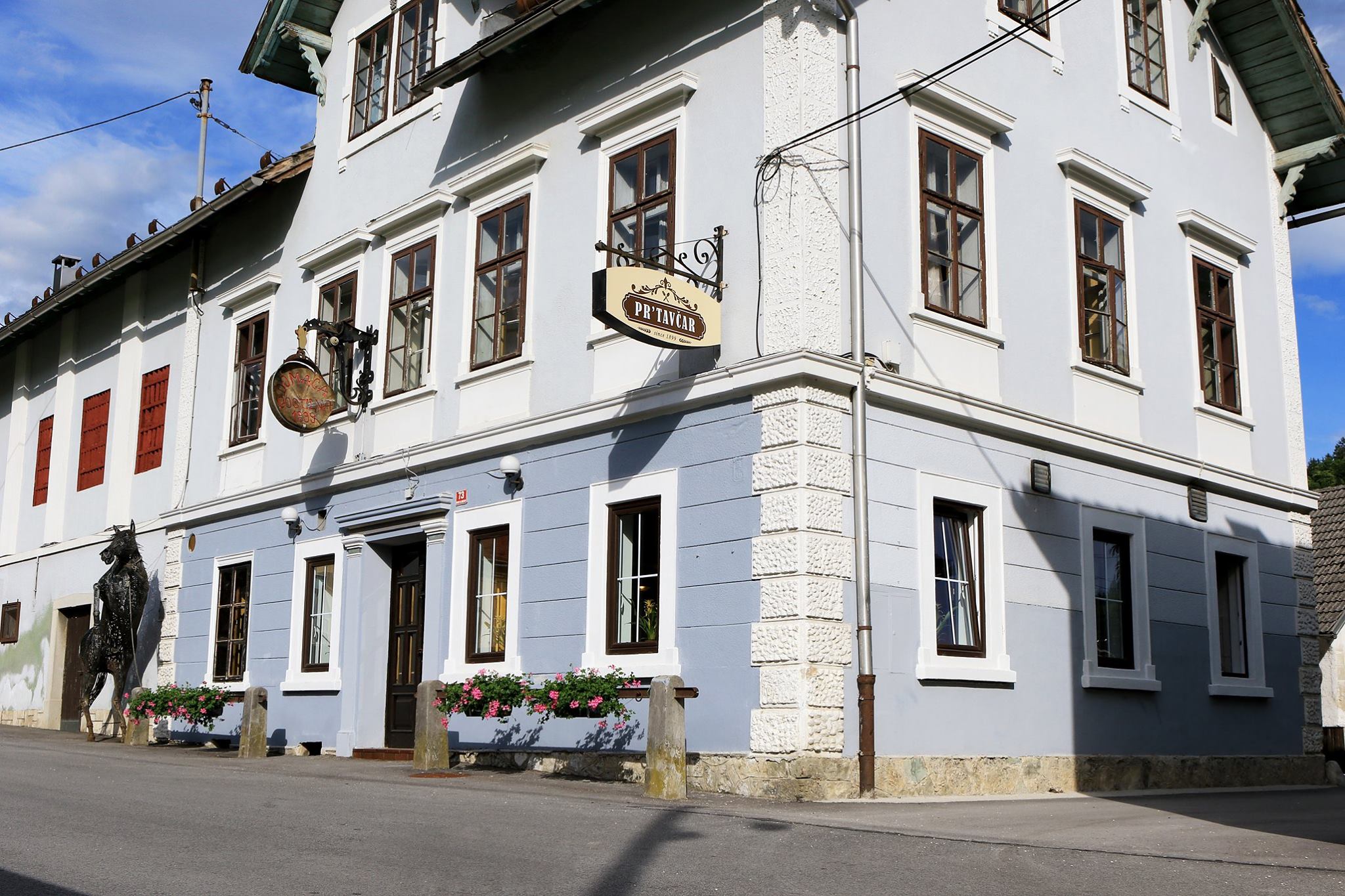
Also in the heart of the village, near the entrance to the hospital and park, is the Gostilna Pr’ Tavčar restaurant, one of the 13 Taste Radol’ca restaurants. In the relatively short time it has been open it has become a firm favourite among locals.

At the end of the village you reach the Draga valley and the imposing ruins of  Kamen Castle, built in the 12th century by the Counts of Ortenburg. More information here – http://www.radolca.si/en/kamen-castle/

Photo: M Kambic

The short drive to the end of the valley brings you to Gostišče Draga, another of the participating Taste Radol’ca restaurants, where specialities include venison goulash, fresh trout, homemade sweet and savoury štruklji, and more. Situated in the shade of the forest beside a stream, it is particularly popular with those seeking refreshment and sustenance after expending their energy in the surrounds.

The Draga valley is a gateway for numerous hiking trails in the Karavanke mountains including, amongst others, to Begunščica, the ever-popular Roblekov dom mountain hut, and the Preval mountain hut.

As you can see, despite it’s modest size, Begunje packs in a lot, so be sure to include a visit on your trip to the Radovljica area.

© Adele in Slovenia


Delightful Dražgoše: The Home of Dražgoše Honey Breads and Serious Sunshine!

The village of Dražgoše is nestled into the southern slopes of the Jelovica plateau, perched at an altitude of 832m above sea-level, above the Selca valley and the town of Železniki. Thanks to its favourable location, Dražgoše is renowned as being one of the sunniest villages around and proudly goes under the slogan ‘Pri nas sonce je doma’ (Here is where the sun is at home).

dsc00440

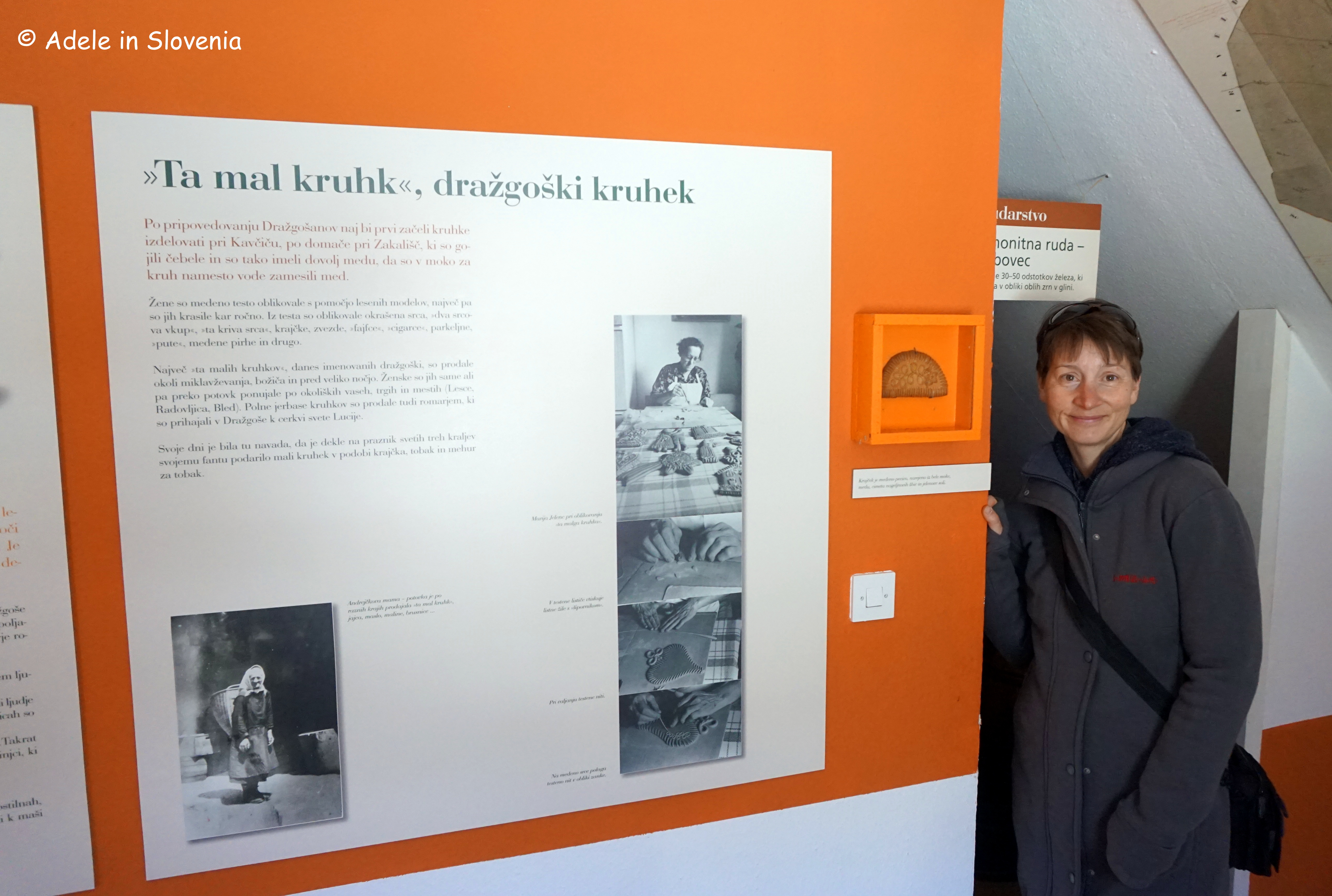
Dražgoše is most known for 2 things – its intricate hand-crafted honey breads and the Battle of Dražgoše. A good place to start a visit and learn more is at the recently reopened Brunarica Dražgoše snack bar.

47966_448360748432_2879696_n

In addition to hot and cold drinks and snacks, you can pop upstairs to the small museum for a brief introduction to the history of the village and the tradition of making honey breads.

dsc00434

There are 2 types of honey breads made in the Škofja Loka regionLoka honey breads (which regular readers will recall I recently made at the DUO Centre in Škofja Loka, read more here – https://adeleinslovenia.com/2017/01/13/loka-honey-breads-and-handicrafts-at-the-duo-arts-crafts-centre/) and Dražgoše honey breads. The key difference between the two is that Loka honey breads are made using a hand-carved mould, whereas Dražgoše honey breads are made entirely by hand.

I visited Breda Tolar and Alenka Lotrič who are masters in the art of making Dražgoše honey breads and are continuing their grandmother’s tradition.

dsc00443

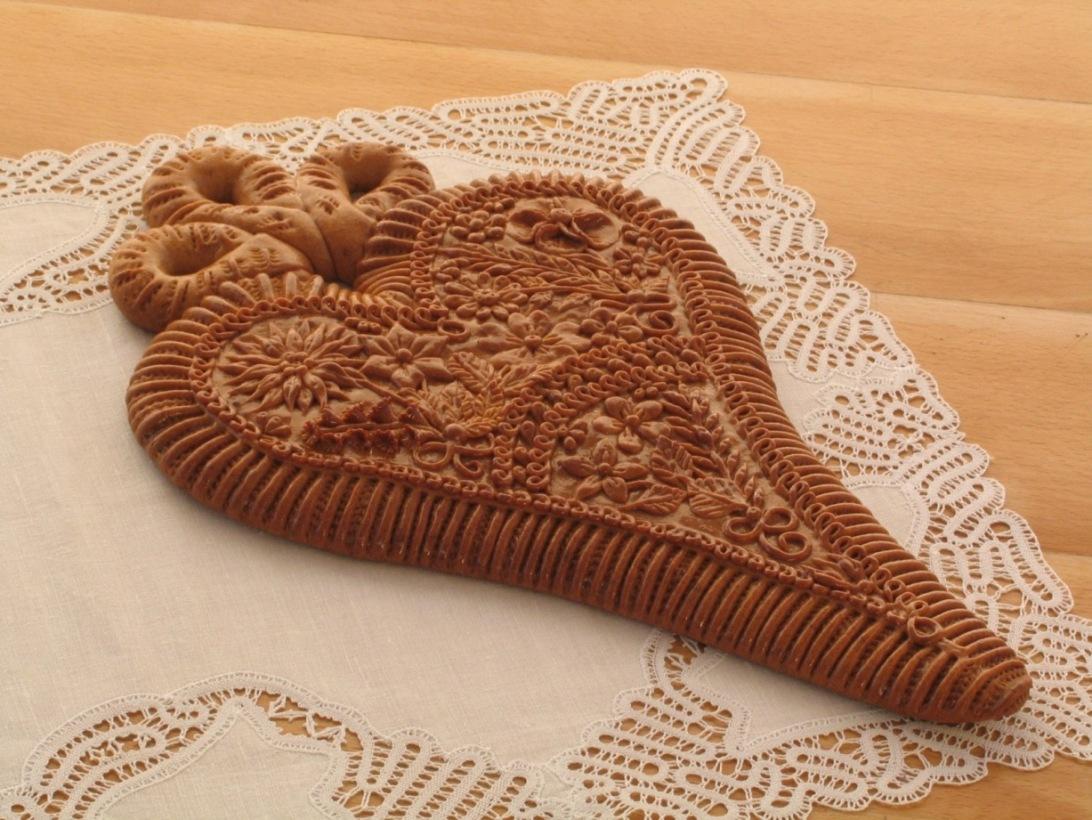
The dough is made using flour, honey, cinnamon and cloves. The honey is warmed through before mixing to allow the dough to be pliable for rolling and shaping.  Some of the designs are highly intricate and labour-intensive – real works of art. Dražgoše honey breads are edible, though in cases such as this one below, it would be such a shame to do so!

slika_jpg

Whilst I haven’t been blessed with any form of artistic talent whatsoever, these two ‘pros’ made it look easy. Just look closely at their versions compared to mine!

dsc00461

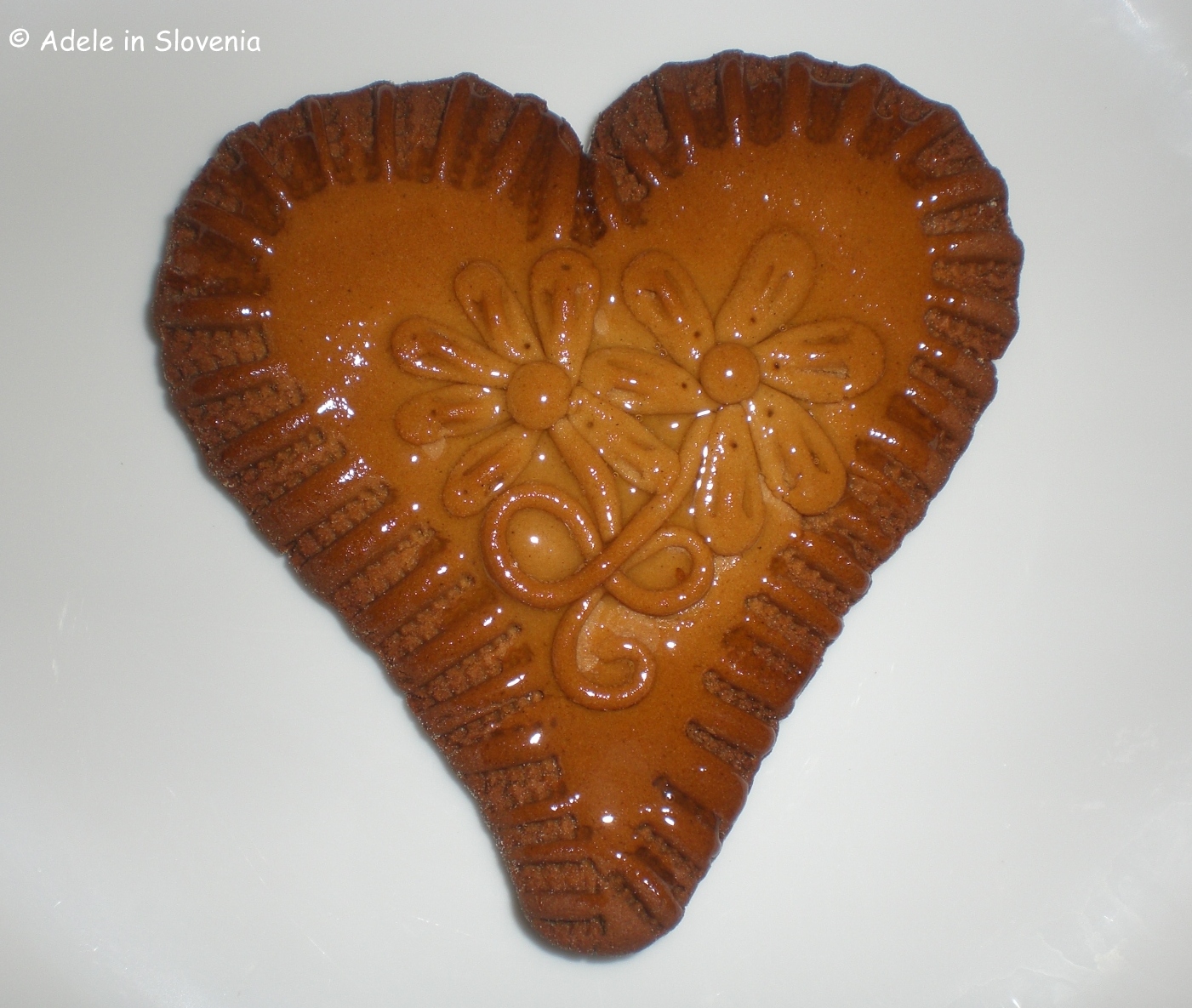
After the intricate patterns are finished, the breads are baked in the oven then glazed with (more!) honey for a shiny finish. All couples getting married at Loka Castle (read more here – https://adeleinslovenia.com/2017/01/01/a-spotlight-on-skofja-loka/) receive a honey bread as a wedding gift. You can be sure that it will look better than my finished effort, though its not too bad for a novice I suppose, and I sure had fun making it, which is what counts!

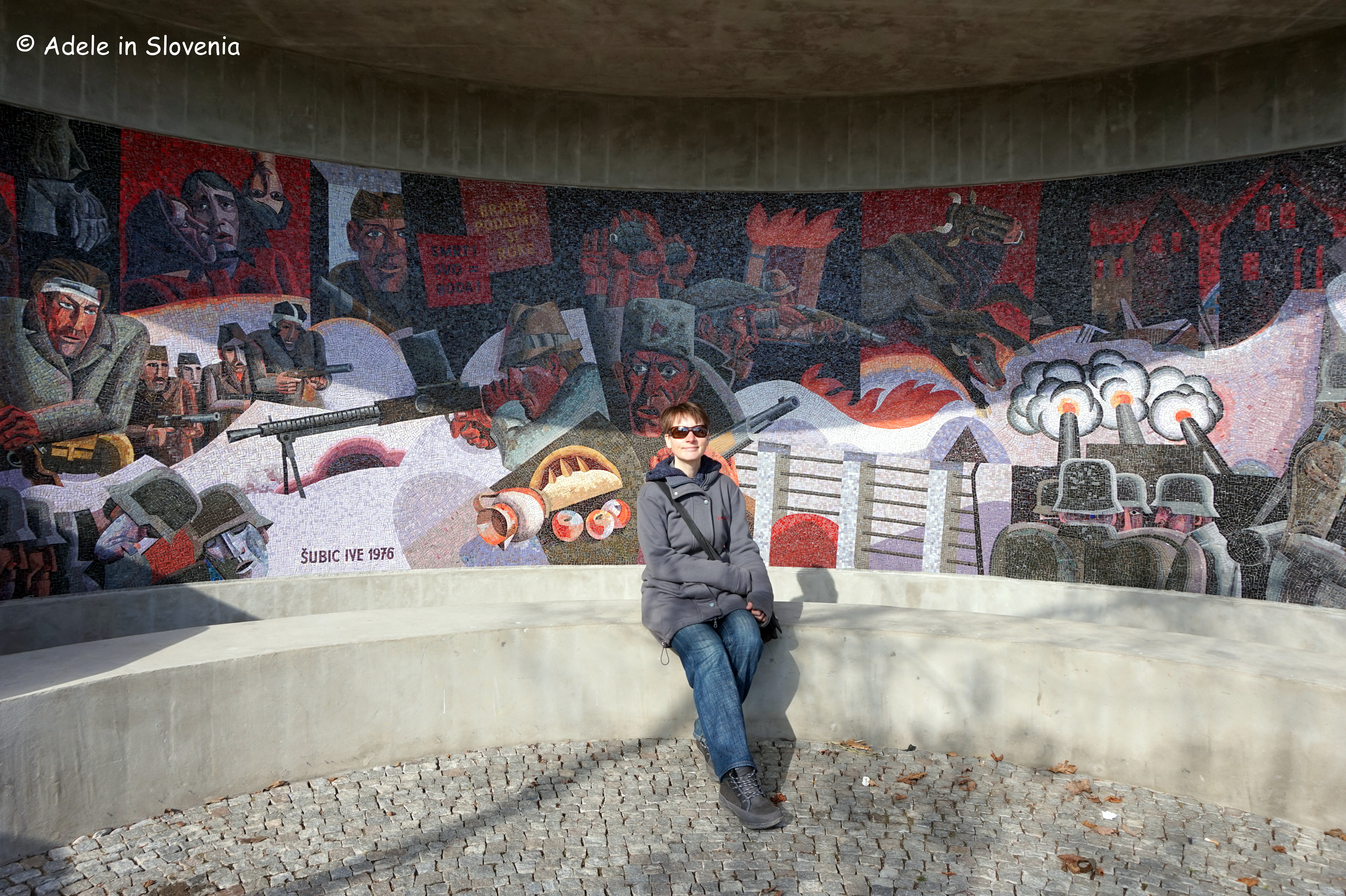
The monument to the Battle of Dražgoše commemorates the World War II battle between Slovenian Partisans and Nazi armed forces, which ended with brutal reprisals by the German forces – executions, looting and torching of buildings – and the destruction of the village. The village was entirely rebuilt after the war. The monument with an ossuary was erected in 1976.

dsc00439

spomenik3_jpg

The painting is by the renowned painter Ive Šubic from nearby Hotavlja who participated in the battle as a Partisan, later returning to depict it in art.

dsc00437

Though the old village church was destroyed in the battle, the Škofja Loka Museum Association was able to move the partly-preserved altars to where they stand today in the chapel of Loka Castle, whilst the original church organs are now in the church in Železniki. In the village you can still see the remains of the church which have been well-preserved and where there is a memorial park.

stara-cerkev

Dražgoše is also an idyllic area for hiking and cycling, albeit, flat it isn’t! In summer I’ve been known to cycle up from home in Radovljica first to Kropa, up to Jamnik and then on to Dražgoše. On this occasion (below), I was feeling particularly energetic and continued down into the Selca valley to Škofja Loka then via Kranj back to Radovljica. It was a long tiring tour but one that I must do again some time!

You can also hike up above the village to the hilltop of Dražgoška gora, visit one of a number of caves (accompanied by a guide), talke a walk along all, or part of, the Spominska pot (the Memorial Path) – a 3-3.5 hour-long route beginning at the Brunarica snack bar.

For more information about any of the above, and/or to arrange a honey bread workshop, contact Visit Škofja Lokahttp://www.visitskofjaloka.si/en/

© Adele in Slovenia
Spring in Radovljica Means Chocolate!

Yes, finally, after the coldest winter for over 30 years, spring is finally springing here in the Radovljica plains. And spring in Radovljica has come to mean chocolate, chocolate and more chocolate, due to the now annual Radovljica Chocolate Festival – this year taking place from Friday 21st – Sunday 23 April. How lucky I am that it takes place in my home town!

Though summer will always be my favourite season, spring isn’t far behind as it’s a time of blooming flowers, Easter, new-born lambs, longer days, warmer temperatures and, in case I haven’t already mentioned it, chocolate!

pomlad-3-3-2017

Photo: Adele in Slovenia

To whet you appetite, and in case you missed it, here’s a recap of some of last year’s festival fun!

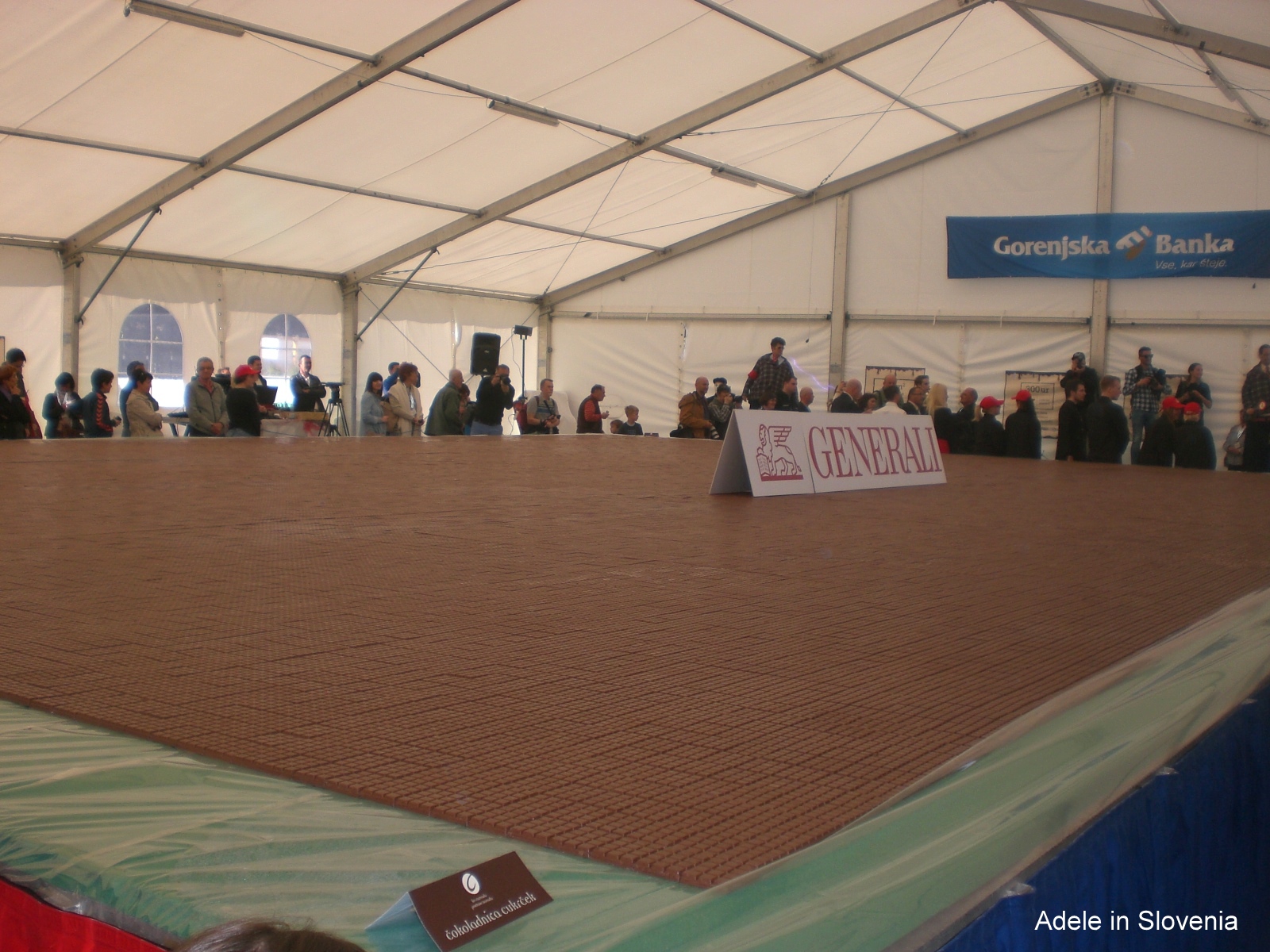
Guinness record was broken for the world’s largest chocolate bar by area. The chocolate bar was made by the Cukrček chocolatier and measured over 140 square metres, smashing the previous record of 102 square metres. It took over 300 hours to piece together the 28,000 pieces of chocolate.

cimg0851

There was also a record number of chocolatiers and visitors to last year’s festival, and I have a feeling that this year, the 6th Radovljica Chocolate Festival, could be even bigger and better.

13041065_1077943002248915_5048165062827836274_o

Photo: Aleš Košir

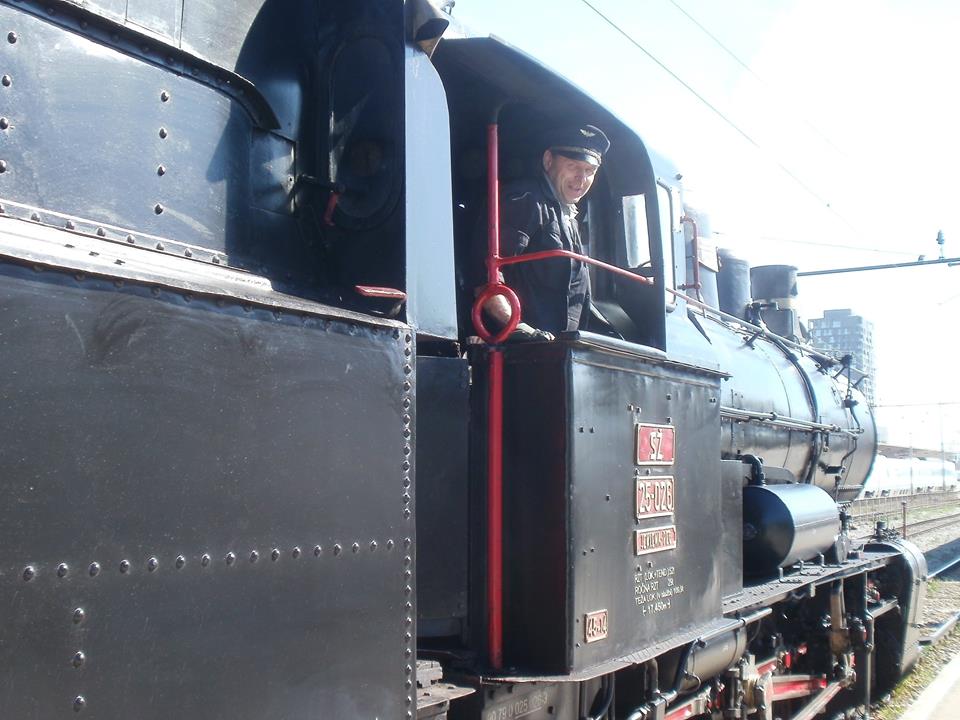
For the first time last year visitors were able to travel to/from the festival by vintage steam train from Ljubljana.

12991053_1352567444758593_7081727616073599369_n

Photo: Adele in Slovenia

The packed programme also includes chocolate-related entertainment for all the family.

13041252_1077943135582235_4488269117016114694_o

Photo: Aleš Košir

What will this year’s festival bring? Well, the 2017 festival programme is still being prepared, but it will be available soon so keep your eye out on the festival website for updates – http://www.festival-cokolade.si/festival-2017/ as well as on the Visit Radol’ca Facebook pagehttps://www.facebook.com/RadolcaHonestlySweet/

© Adele in Slovenia


A Feast of Flavourful Fondues at Vila Podvin

Thanks to the ever-creative team at Vila Podvin in Mošnje, now there’s no need to go all the way to the Swiss Alps to enjoy a cheese fondue! Though only recently revived, the tradition of fondues in Podvin actually dates back quite some way.

cimg2883

Prior to World War II, the French Duke of Polignac lived in Podvin Castle and, according to locals, the castle’s residents used to enjoy fondues on cold winter evenings, made with cheese that they brought with them from France. Vila Podvin decided to revive the tradition this winter, initially just for the month of February, but it’s been such a hit, that you will now be able to enjoy a fondue up until the end of April!

cimg2889

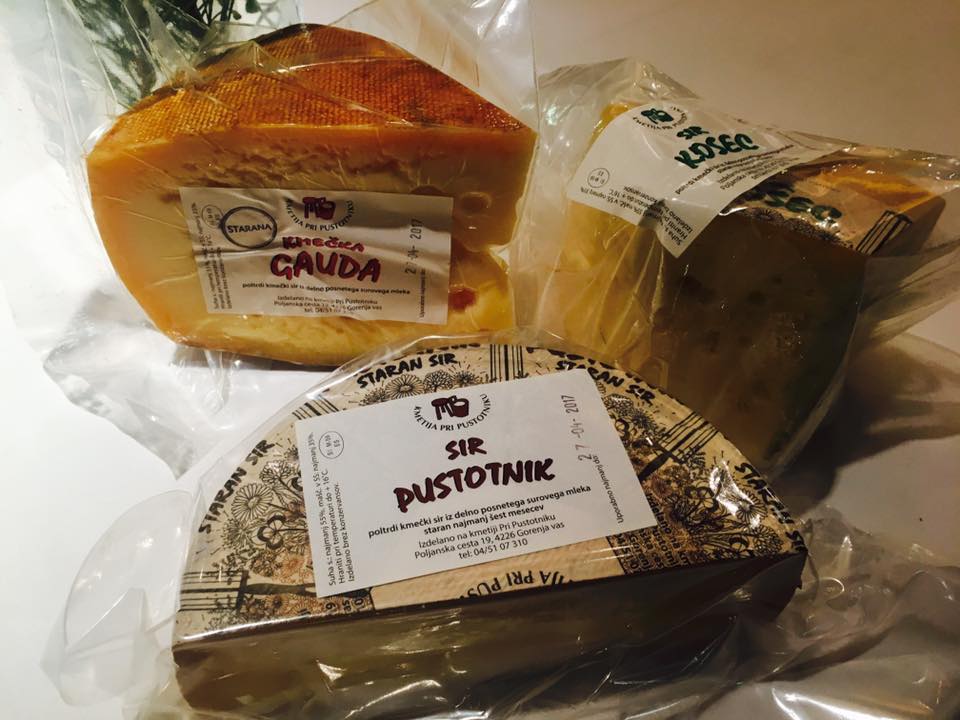
When creating and testing fondue recipes, Uroš Štefelin, co-owner of Vila Podvin and one of Slovenia’s top chefs, was keen to ensure that rather than using imported cheese, he uses the excellent-quality cheese that is produced here in Slovenia. And he knew just where to turn – the  award-winning Pustotnik dairy from Gorenja vas – with whom he set about blending a mixture of their cheeses to create the perfect fondue.

16387985_1371325429607940_3553358564201552740_n

You can also try and buy Pustotnik cheese at the monthly Vila Podvin Local Market, which takes place on the first Saturday morning of each month. Read more here – https://adeleinslovenia.com/2016/09/05/shop-locally-at-radovljicas-farmers-and-craft-markets/

Vila podvin trznica

Each cheese fondue comes with a whole host of tasty and unusual bite-size delights to dip into the gooey cheese!

cimg2886

For a change from dining alone (sigh!), I invited fellow blogger Peter, who writes a blog in German about Slovenia, to join me for dinner – especially since the fondues are designed for two. Of course, fondues are not restricted to just cheese, oh no, lucky for me Vila Podvin does a chocolate fondue too, using 60% dark chocolate and with a range of wonderfully sinful things to dip, including chocolate brownies, fresh and dried fruit, macarons …

cimg2897

Another important feature of the fondues, as well as other dishes, is the recent link-up with attendees of the Radovljica Centre for Work, Training and Care (CUDV). Working together they have created unique pieces of ceramicware on which to serve up the restaurant’s tasty and creative dishes. The range of products is collectively made and sold under the name BISER, meaning ‘pearl’, and they really do make original gifts or additions to your own kitchenware.

16473325_1371325346274615_8740353106975067474_n

Find out more about Vila Podvin here – http://www.vilapodvin.si/EN/ and about Taste Radol’ca here – http://www.radolca.si/en/taste-radolca/

© Adele in Slovenia
Sorica: Super Skiing and Slovenia’s Most Beautiful Mountain Village

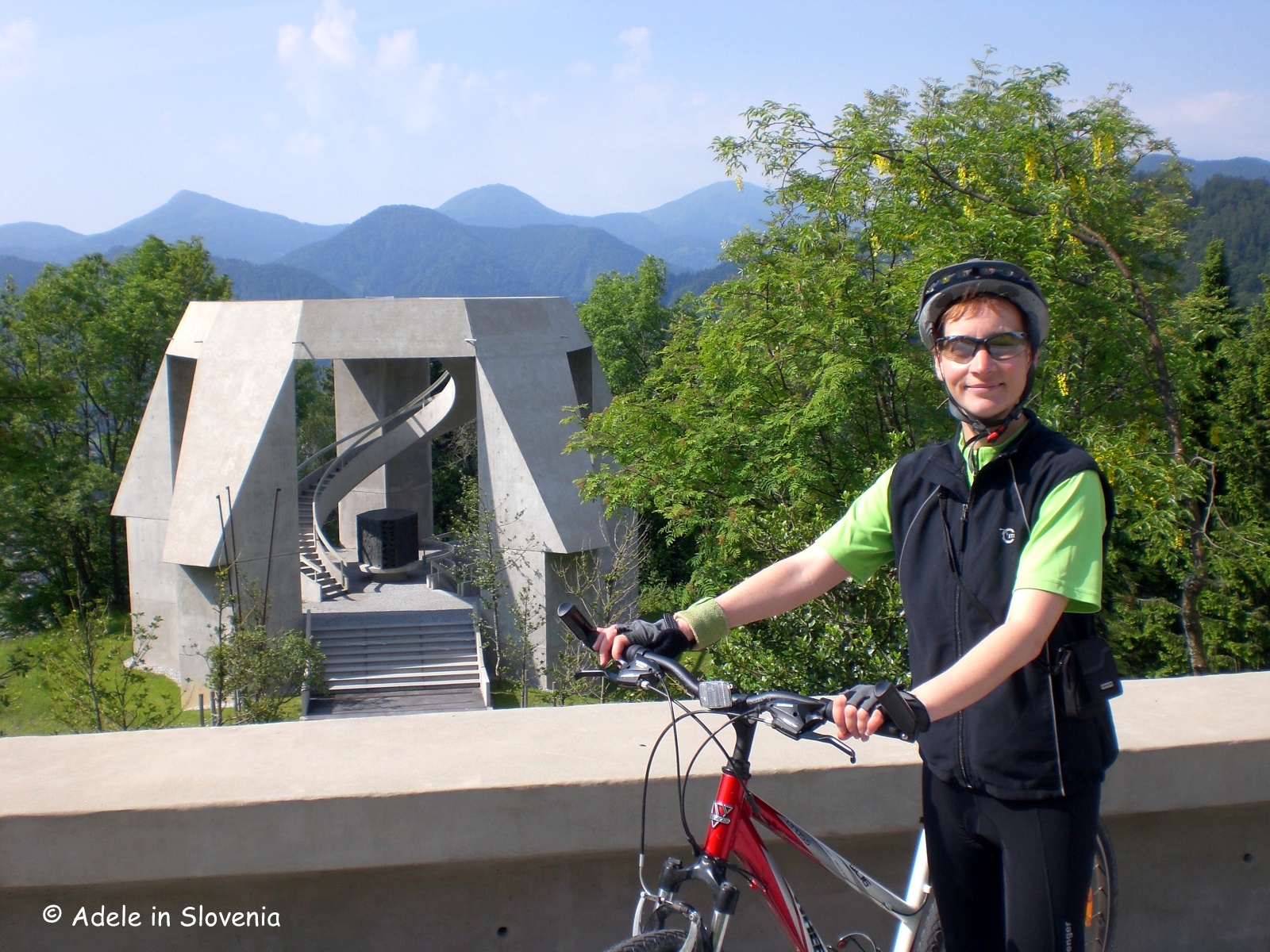
The well-kept village of Sorica is considered to be one of most beautiful mountain villages in Slovenia. As the tourism writer Rudolf Badjura wrote ‘It would be necessary to travel some distance around the world to see such a beautiful village.’ And even though it didn’t look its best on a slightly overcast February afternoon when I visited, when nature’s hues are still somewhat subdued after the winter slumber, one can easily imagine how glorious it must be here in the warmer months when nature is at its vibrant best.

dsc00362

Sorica is known as Grohar’s village (Groharjeva vas) as it is the birthplace of one of Slovenia’s most esteemed impressionist painters, Ivan Grohar (1867-1911).

dsc00360

The best way to get acquainted with the village is by walking the theme path ‘Path through Sorica’, which begins in the centre of the village between the Gostilna Macesen restaurant with rooms and Grohar’s House (Groharjeva hiša) – Ivan Grohar’s birth house.

dsc00365

With views like this, it’s easy to see where Grohar got his inspiration! The 18th century Baroque parish church of St. Nicholas contains a ceiling fresco of ‘The Last Supper’ by another of Slovenia’s esteemed painters, Janez Šubic from Poljane.

Tone Logonder, the sculptor of the statue of Ivan Grohar which was placed here in 1981, received the Gorenjska Prešeren Award for his work.

dsc00371

Rather than just being a museum, locals wanted Grohar’s House to once again come to life and a winning formula was found in making it into a kind of one-stop cultural centre which has become particularly popular for school field trips, and visits for private groups can also be arranged. The ground floor features a gallery.

dsc00380

On the first floor you can indulge your creative side and take part in a workshop in the music room.

dsc00389

And then head up to the upper floor to the artists’ workshop to have a go at creating one of your own pictures to rival that of Grohar!

dsc00391

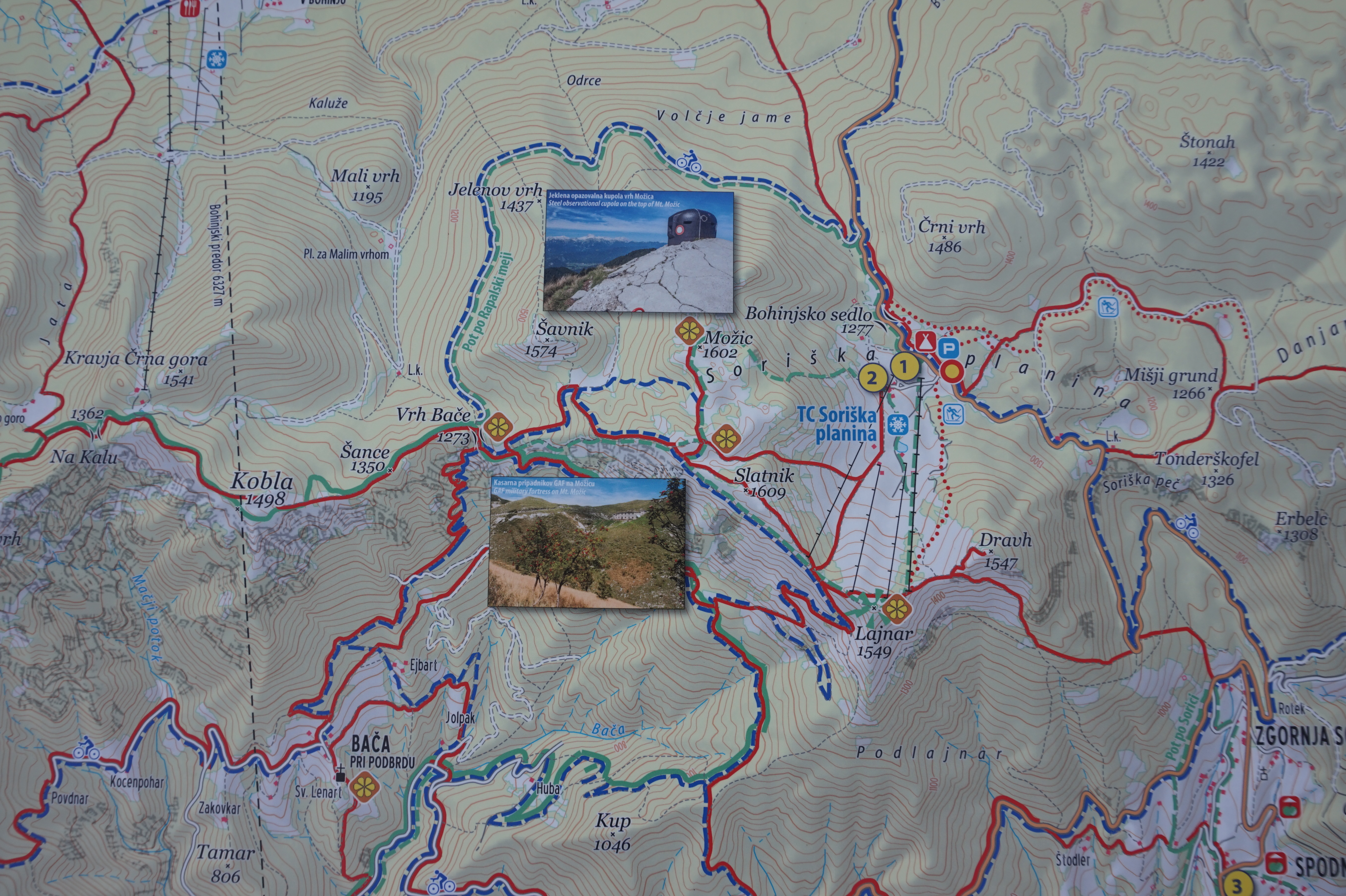
You can choose to just soak up the views of the village and its surroundings, set off on one of the many paths in the hills and mountains or, for those with a thirst for more active pursuits, head up to Soriška planina where in winter you can ski and in summer there are numerous scenic and interesting hiking trails.

dsc00334

Soriska planina can be reached from several directions; from Škofja Loka via Železniki, from Bohinjska Bistrica or from Most na Soči via Baška Grapa.

dsc00356

Facilities at the Soriška planina ski resort consist of a two-person chairlift, 3 drag lifts, a children’s drag lift, a snow park, a sledging track, cross-country ski trails and a restaurant.

15975001_1301471476588056_8741942859265004115_o

I had previously hiked in this area in the summer, but prior to last week had never seen it in its winter glory. Even for non-skiers like me, there’s still snowy fun to be had! Here I am at the highest point of the ski resort looking back down over the village of Sorica.

dsc00344

One of the most interesting features of this area are the numerous bunkers, barracks and other fortifications remaining from the time of the Rapallo Border – a former border that existed during both world wars between Yugoslavia and Italy.

Below you can see the bunker on Lajnar, and you can also continue to others including on Možic, Slatnik and Dravh.

dsc00346

Find out more about the Soriška planina ski resort here – http://www.soriska-planina.si/en/hiking/ and more about other theme paths and trails along the Rapallo Border here – http://www.visitskofjaloka.si/en/experiences/theme-paths/rappalo-border

© Adele in Slovenia

Like Beekeeping? Love Radovljica!

Those interested in beekeeping should definitely make a beeline for Radovljica!

The Radovljica area has a wealth of beekeeping-related sights of interest, all within close proximity, thus making it ideal place to visit for beekeepers or those with an interest in beekeeping.

One such example is the group of 38 beekeepers from Estonia who I helped with their plans to visit Radovljica.

Whilst the main purpose of their trip was beekeeping-related activities, they also managed to find time to do some sightseeing in Ljubljana, took a traditional pletna boat to the island on Lake Bled, and visited Vintgar Gorge.

The main beekeeping day began with a visit to Kralov med in the hamlet of Selo near Bled, where owner Blaž Ambrožič told them everything, and more, that they could possibly want to know about beekeeping in Slovenia. I wrote more extensively about my visit to Kralov med in a previous blog, also about World Bee Day, which you can read here – https://adeleinslovenia.com/2016/05/17/world-bee-day-the-anton-jansa-honey-route/

cimg1031

The undoubted highlight, whether a beekeeper or not, is the chance to see and experience up close the hive found on a nearby tree trunk and transported to its current home. The fact you can get so close is testament to the calm nature of Slovenia’s Carniolan grey bee.

CIMG1028

Next the group came to Radovljica, beginning at the Tourist Information Centre where they tasted local honey and chocolate, and had the chance to buy some gifts to take home. They even brought us some of their own Estonian honey, which, as you can see, the staff enjoyed tasting!

cimg2311

We then took a stroll through the medieval old town to see the main sights of interest – the Šivec House Gallery, the Radovljica Mansion, St. Peter’s Church, and the other wonderful frescoed buildings.

cimg2312

Then it was on to the viewpoint for wonderful views of the Julian Alps, the Jelovica plateau and the Sava river.

CIMG1177

The next stop was to Lectar Inn to watch the process of making and decorating the traditional ‘lectar’ gingerbread’ hearts, made with honey, of course!

cimg2314

And a chance to buy souvenirs and/or gifts for loved ones.

cimg2318

Having seen Radovljica, it was then time to Taste Radol’ca, with a traditional Slovene lunch, also at Lectar Inn, one of the participating Taste Radol’ca restaurants. During lunch, the owner Jože entertained us with a few of his favourite songs played on the harmonica – never something to be missed!

The final stop in Radovljica was to the Museum of Apiculture, housed in the Radovljica Mansion, where visitors can learn all about the history of beekeeping in Slovenia, watch a video (narrated in English by me!), and in summer watch the bees hard work diligently in the hive.

cimg2325

The group’s very last stop on the jam-packed, or should I say honey-packed, day, was to the Gorenjska Beekeeping Development and Education Centre in Lesce. You can read more about the centre and its wide-ranging activities here – http://www.radolca.si/en/gorenjska-region-beekeeping-development-and-education-centre/

So, as you can see, the Radovljica area really is a beekeeper’s paradise!

If you’d like any more information about Slovenian beekeeping, or are interested in taking a tour of the town and/or visiting some of the above-mentioned sights, feel free to get in touch or contact Tourism Radol’ca – http://www.radolca.si/en/

© Adele in Slovenia
Sunny Skiing, Stunning Views and Romance on Stari Vrh!

The Stari Vrh ski resort is located in the middle of the Selca and Poljane valleys, just a ten minute drive from Škofja Loka. It’s proximity to Ljubljana makes it a popular destination; in winter for skiing, snowboarding and other winter sports, and in summer for hiking and cycling.

15542209_1293678730652326_5805150049404543671_n

Stari Vrh offers 10kms of slopes (1km difficult, 5kms medium, 4kms easy), together with a snowboard park, night skiing, a toboggan run and a children’s snow playground.

dsc00301

Even for a non-skier like myself, it’s well worth donning your winter gear and taking the chairlift up to the top for the stunning panoramic views.

dsc00305

Once at the top, you will be blown away (hopefully not literally!) by the views over the Škofja Loka hills and further to the Kamnik-Savinja Alps.

dsc00312

The peak of Stari Vrh is at an altitude of 1217m.

dsc00313

At the top you can visit the cosy Stari Vrh Restaurant and Guest House, where you can enjoy a drink and/or snack, indulge in one of the Slovene specialities – all the while gazing at the stunning views – or stay overnight in one of the inn’s comfortable rooms and warm up in the sauna!

15940753_1190311254389828_459947133629103977_n

And since February is the month of romance, you might be interested to know that one of the ski pistes at Stari Vrh is named Valentine’s piste, after the nearby St. Valentines church in Jarčje Brdo. Additionally, the very scenic Valentine’s Path (Valentinova pot) begins at the lower station of the Stari Vrh chairlift. Note, however, that you will need to wait until at least spring before setting out to walk this path, as it runs on part of the ski piste, so can’t be walked when the ski centre is open.

The circular path is marked with green circles with a yellow inner and runs along old cart tracks and forest paths. It takes about 2 hours to complete, has a total height difference of 280 metres, and leads past the Žgajnar Tourist Farm, a 200-year old farmhouse in the hamlet of Zapreval, where in 1970 the Stari Vrh Tourist Association was founded. During winter there is a marked detour to reach Zapreval, since the ski pistes run almost literally past the front door, hence making it an excellent base for those on multi-day trips.

zgajnar

Today the tourist farm offers accommodation and delicious home-produced and home-cooked food year-round. You can read more about the tourist farm here – http://zgajnar.starivrh.si/presentation/Presentation.html

The path begins at the lower station of the chairlift at the Stari vrh ski resort and continues beside the Valentine ski piste to reach the exact boundary of the municipalities of Gorenja vas-Poljane and Škofja Loka, before rising up to the Stari vrh Restaurant and Guest House. It continues through the village of Mlaka past the Jejlar homestead (Jejlarjeva domačija), the famous house where the film Cvetje v jeseni (Blossoms in Autumn) was filmed. On reaching the village of Jarčje Brdo you will catch sight of the imposing St. Valentine’s parish church and return to the start of the walk.

Photo: TD Stari Vrh

Photo: TD Stari Vrh

Every year on 31st October there is an organised hike on Valentine’s Path, arranged by the Stari Vrh Tourist Association, beginning at 9am from the car park of the lower station of the 6-person chairlift at the Stari vrh ski resort.

The Association also arranges other events, including the popular Charcoal Makers Day, which has been held annually on the first Sunday in August since 1972.

251

Photo: TD Stari Vrh

Having seen how beautiful Stari Vrh is in winter, and the numerous opportunities the area offers for hiking and cycling in summer, I now can’t wait to go back and explore more of the area on foot or by bike. And when I do, you will be sure to read about it here!

wp_20161112_170

You can find out more about all the above on the Visit Skofja Loka website here – http://www.visitskofjaloka.si/en/about-us/tourism-board-skofja-loka

© Adele in Slovenia


Loka Honey Breads and Handicrafts at the DUO Arts & Crafts Centre

There is a long and rich tradition of making Loški kruhki (little honey breads) in the Škofja Loka area. It dates back to the 14th century when the Clarissa nuns ran a girls school in the town in the building seen below. The nuns introduced and taught locals how to make the honey breads, which they baked mainly for festivals, blessings and other celebrations.

stara_sola

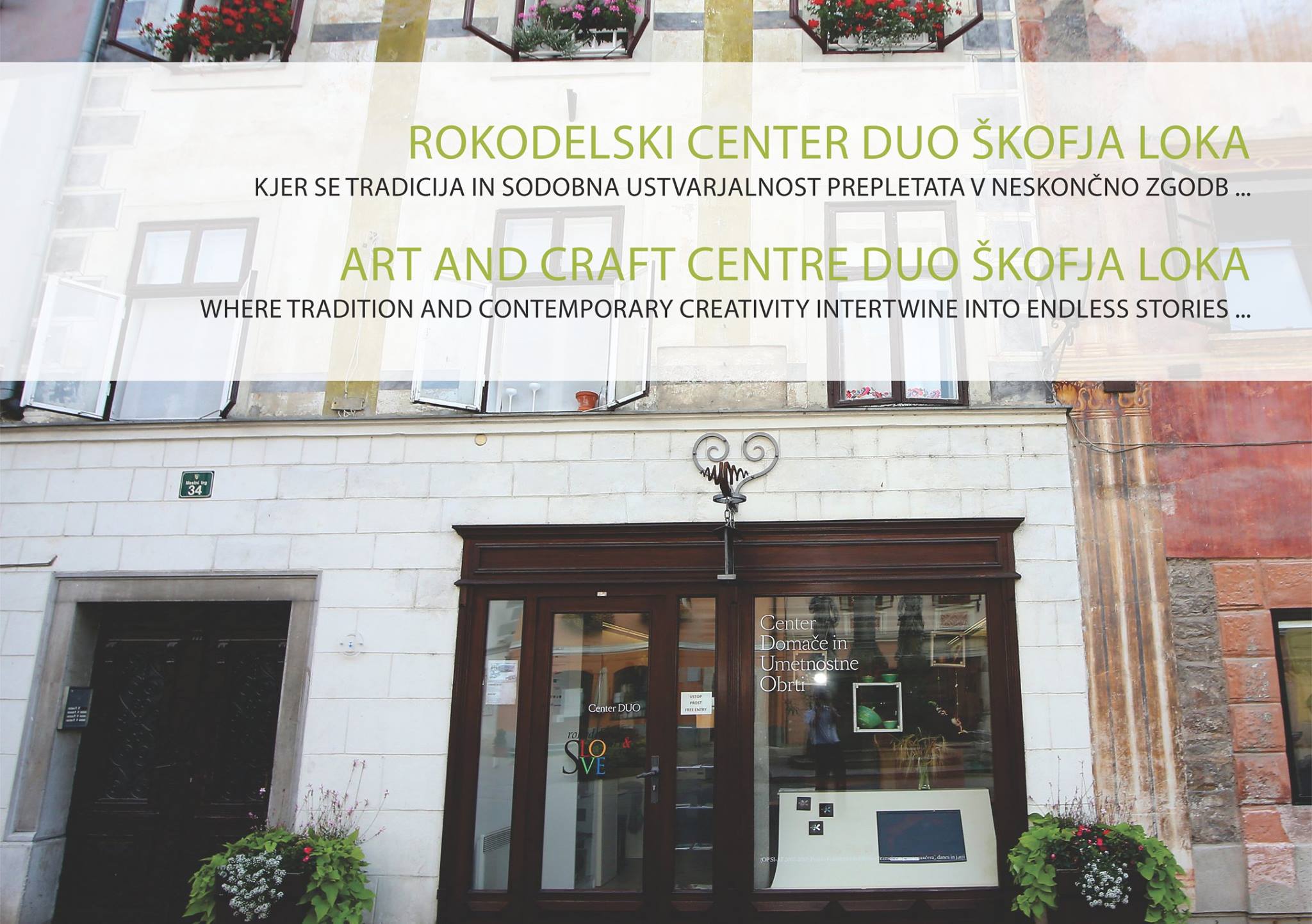
The DUO Arts & Crafts Centre, located in the heart of the medieval old town, showcases the rich handicraft tradition in the area by offering local craftspeople a place to showcase their handicrafts for visitors to browse and/or purchase, and an opportunity for them to present and transfer their skills to future generations.

15800143_1850514261830822_6973099405302340396_o

Among the items on show at the DUO Centre are carved wooden products made by the carver Petra Plestenjak Podlogar, who today is the only master craftsperson in Slovenia keeping alive the tradition of making wooden moulds for Škofja Loka honey breads.

cimg2855

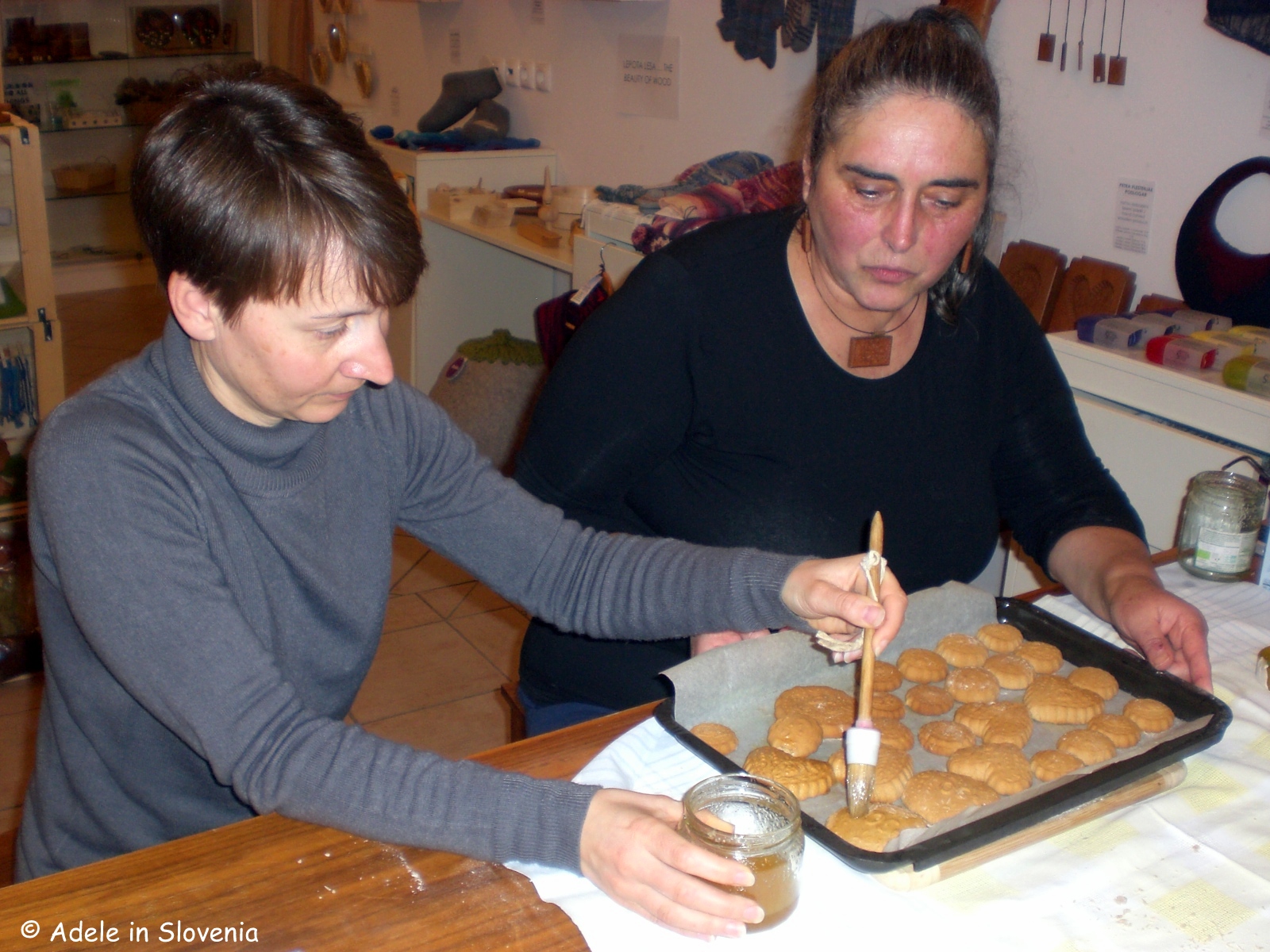
Curious to learn more, and always keen to get hands-on, I recently spent a very pleasant afternoon with Petra at the DUO Centre, learning her insider tips on making the dough for the honey breads and using her wonderfully ornate handcrafted moulds to make my own honey breads to take home.

cimg2840

The basic recipe contains a mixture of flours, lashings of Slovenian honey, and selected spices such as cinnamon, pepper and cloves.

img_0062

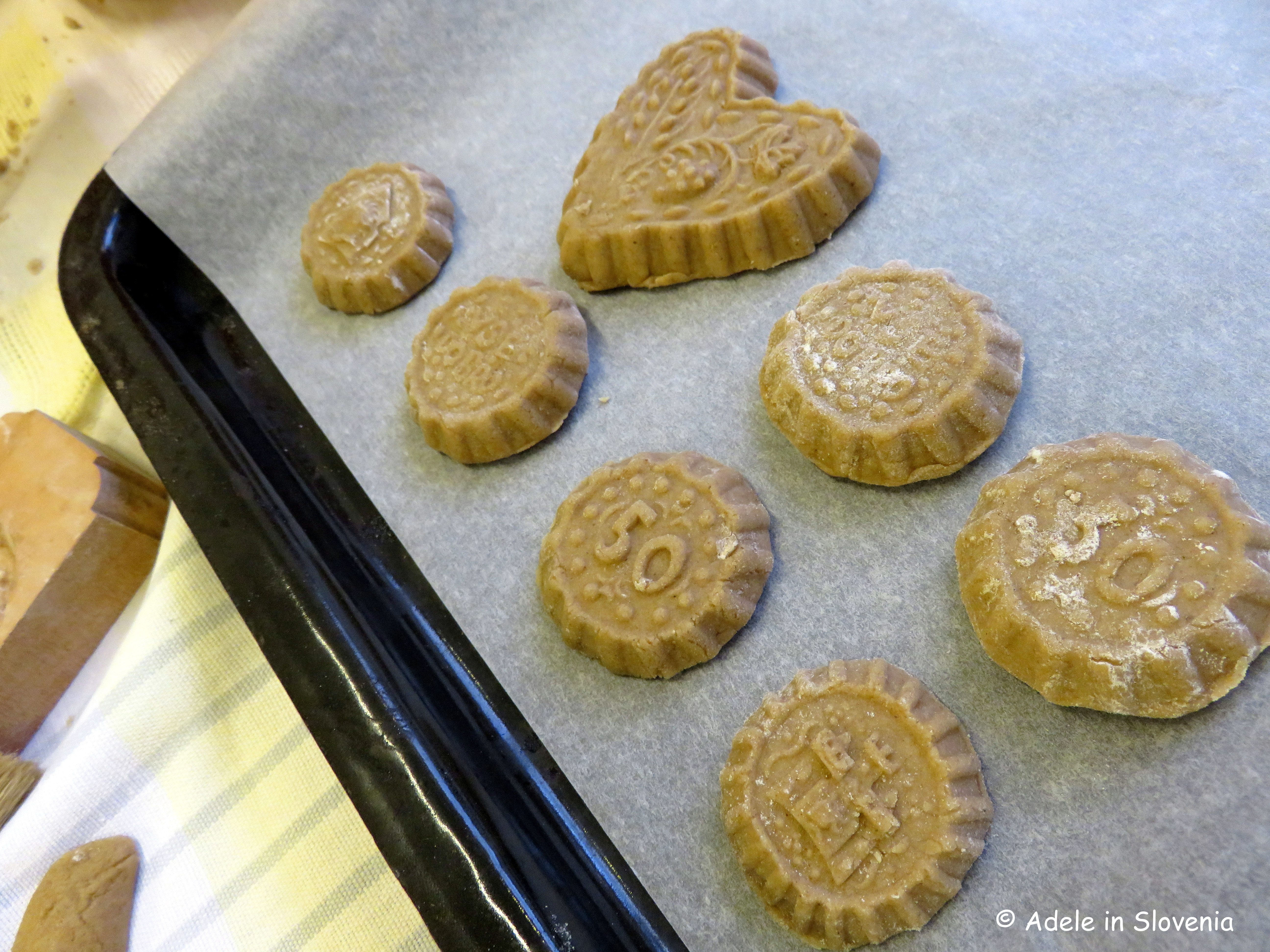
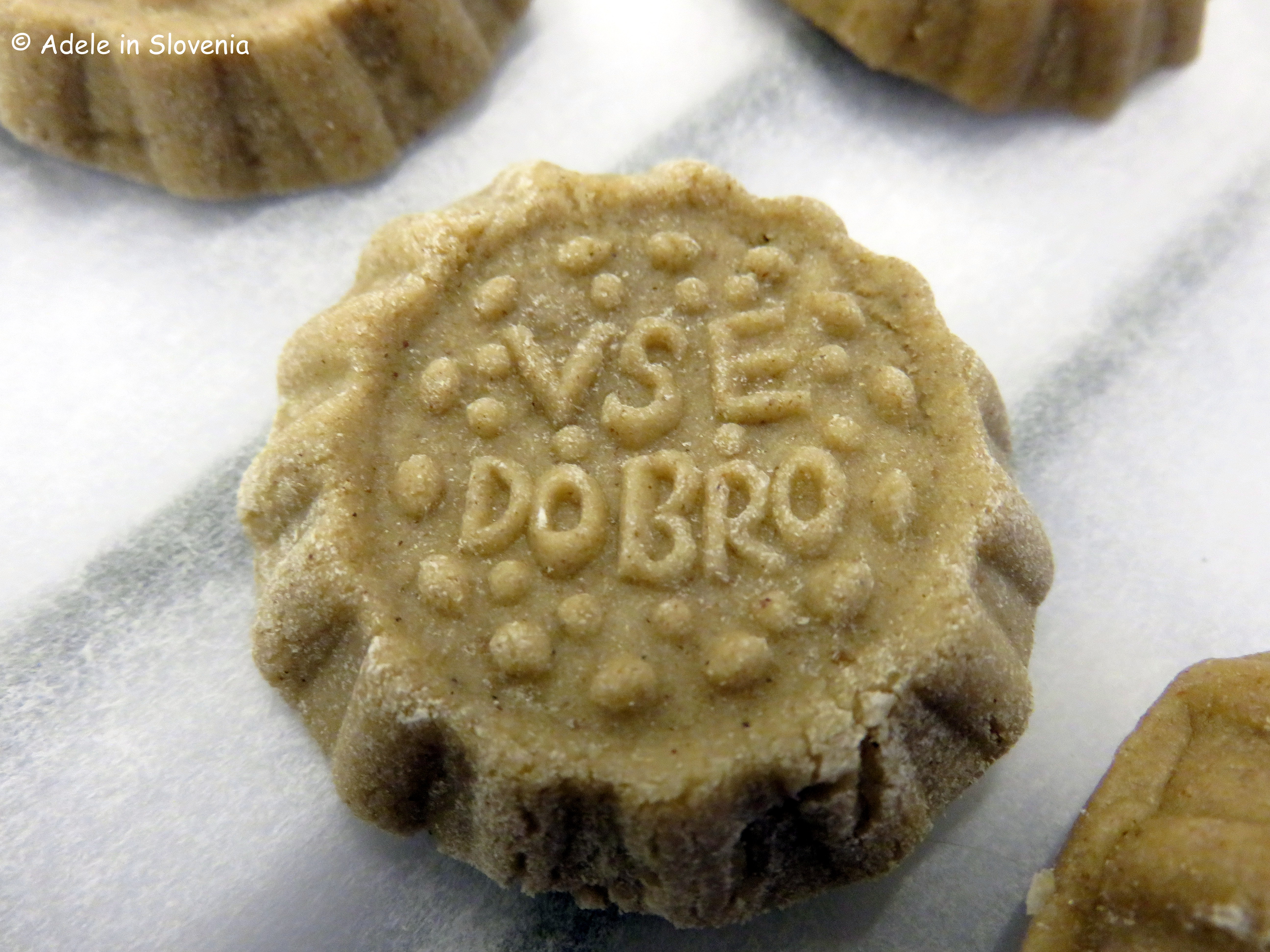
Making the dough is a fairly simple and quick process, then begins the fun part of pressing it into the moulds and choosing which of the many ornate hand-carved moulds to use. Petra also makes moulds ‘to order’ for special birthdays, anniversaries and other celebrations.

img_0079

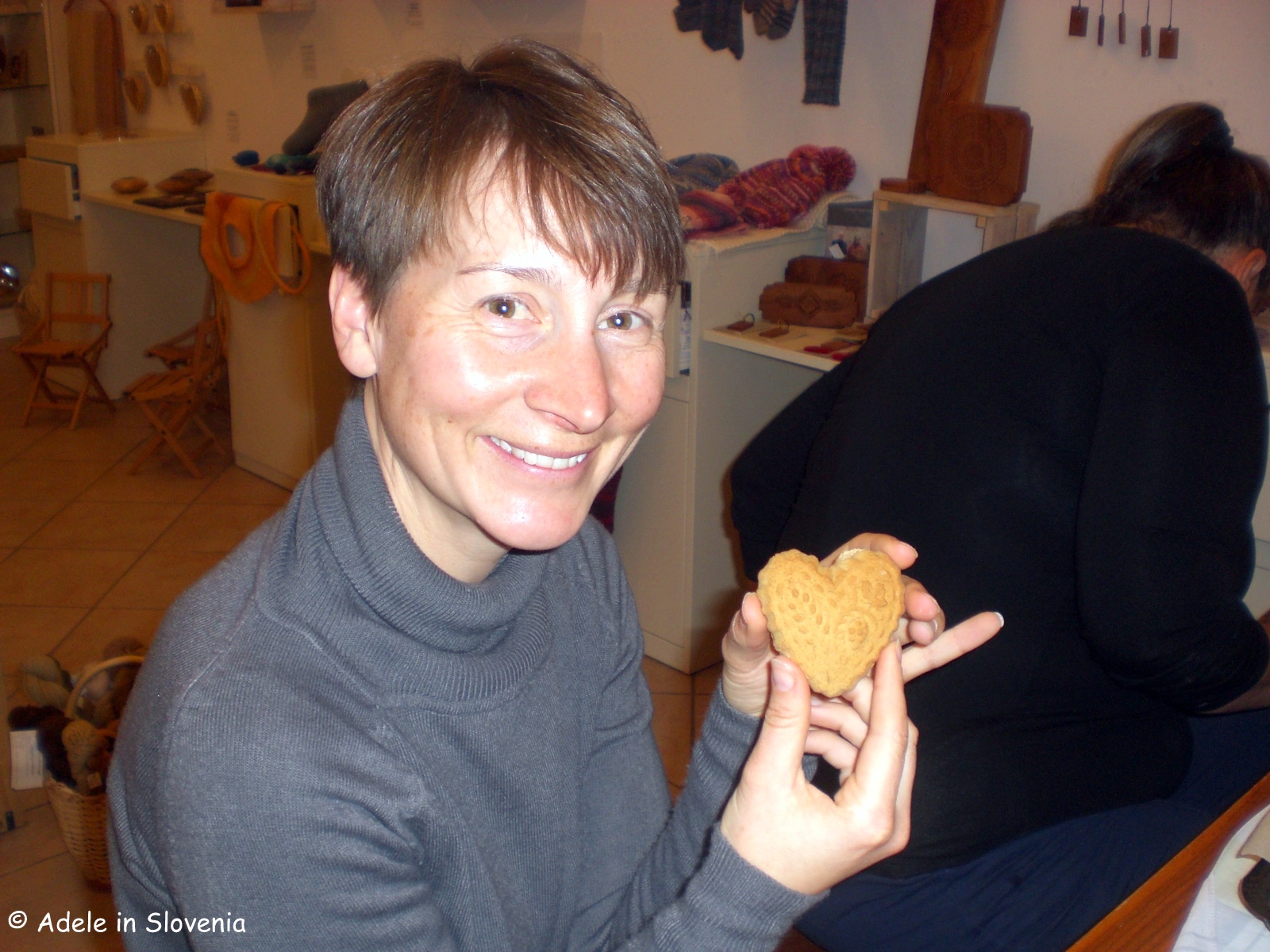
The little honey breads, and indeed the hand-carved moulds, make ideal gifts or souvenirs.

img_0083

Once baked, the breads are glazed with (more!) honey to give them a nice sheen.

cimg2874

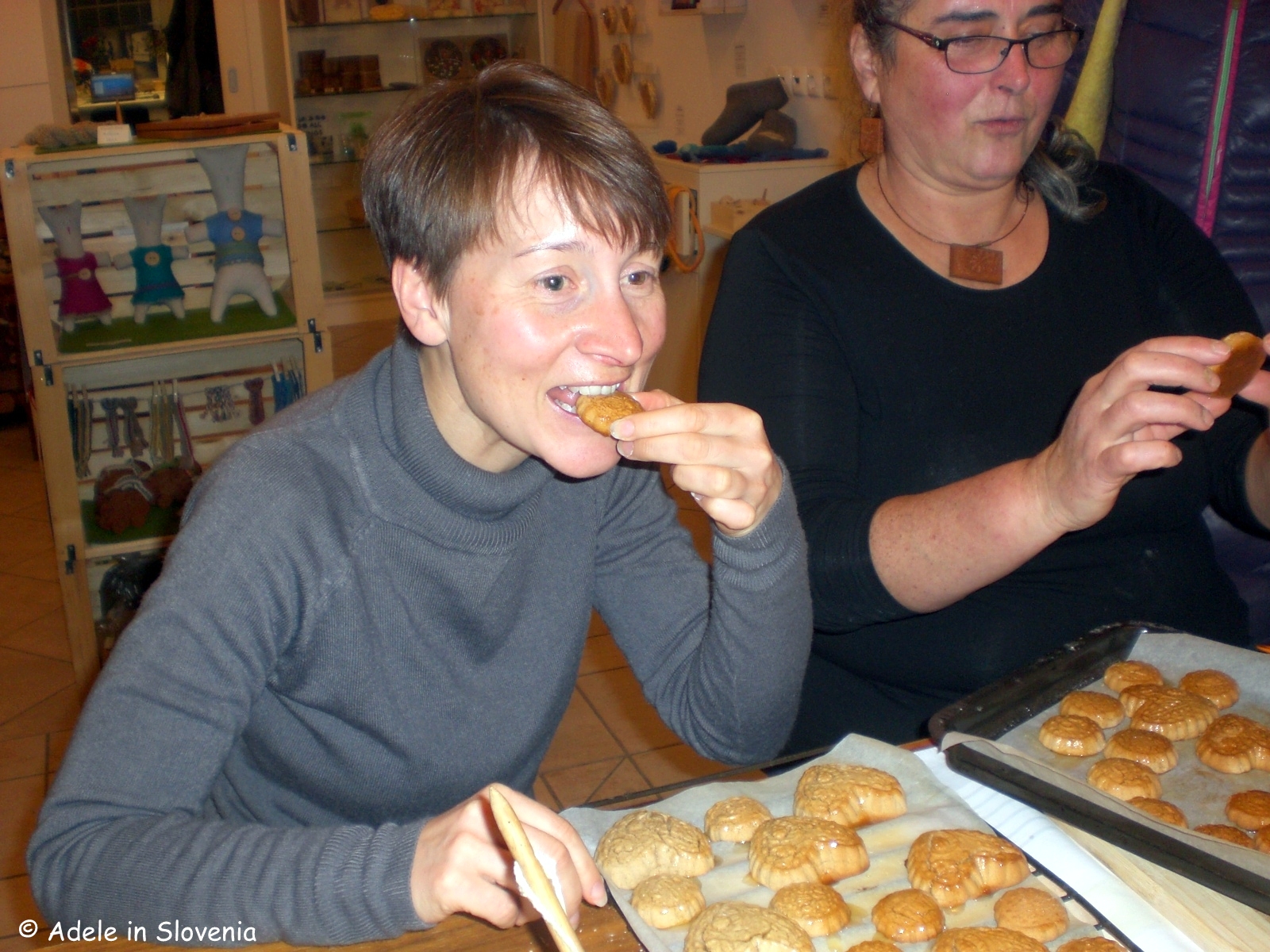
Then, well, I couldn’t resist any longer! The best bit – time to taste them!

cimg2876

I know, after all that hard work I/we should take some time to admire the little honey breads before wolfing them down, but we made plenty so a few won’t go amiss. And, as Petra said ‘Poglej in pojej’ – Look then eat! A great motto I say!

cimg2870

When visiting Škofja Loka be sure to drop into the DUO Centre to browse the range of products available, all of which make excellent gifts or a treat for yourself, and take a piece of Slovenia’s handicraft tradition home. Products include: wooden games and other unique wooden products, clay reliefs, lace products from the A. Primožič House of Bobbin Lace, basketware and wickerwork, tools and other forged-iron implements, felted items, items made from wool and recycled paper, dyed wool, silk and other knitted woolen products, Dražgoše honey breads, crocheted pieces, knitware, products made from rawhide, wood and other raw materials, bags, shoes, hats and other items made using wet-felting, patchwork and glassware.

cimg2828

Upon prior arrangement, various workshops can be organised with any of the master craftspeople, where you can learn a new skill, or brush-on existing ones!

15844263_1850837345131847_4261481801696619663_o

More information about the DUO Center can be found here – http://www.visitskofjaloka.si/en/experiences/864

© Adele in Slovenia
 

Genuine warmth, hospitality and Slovenian food at Globočnik

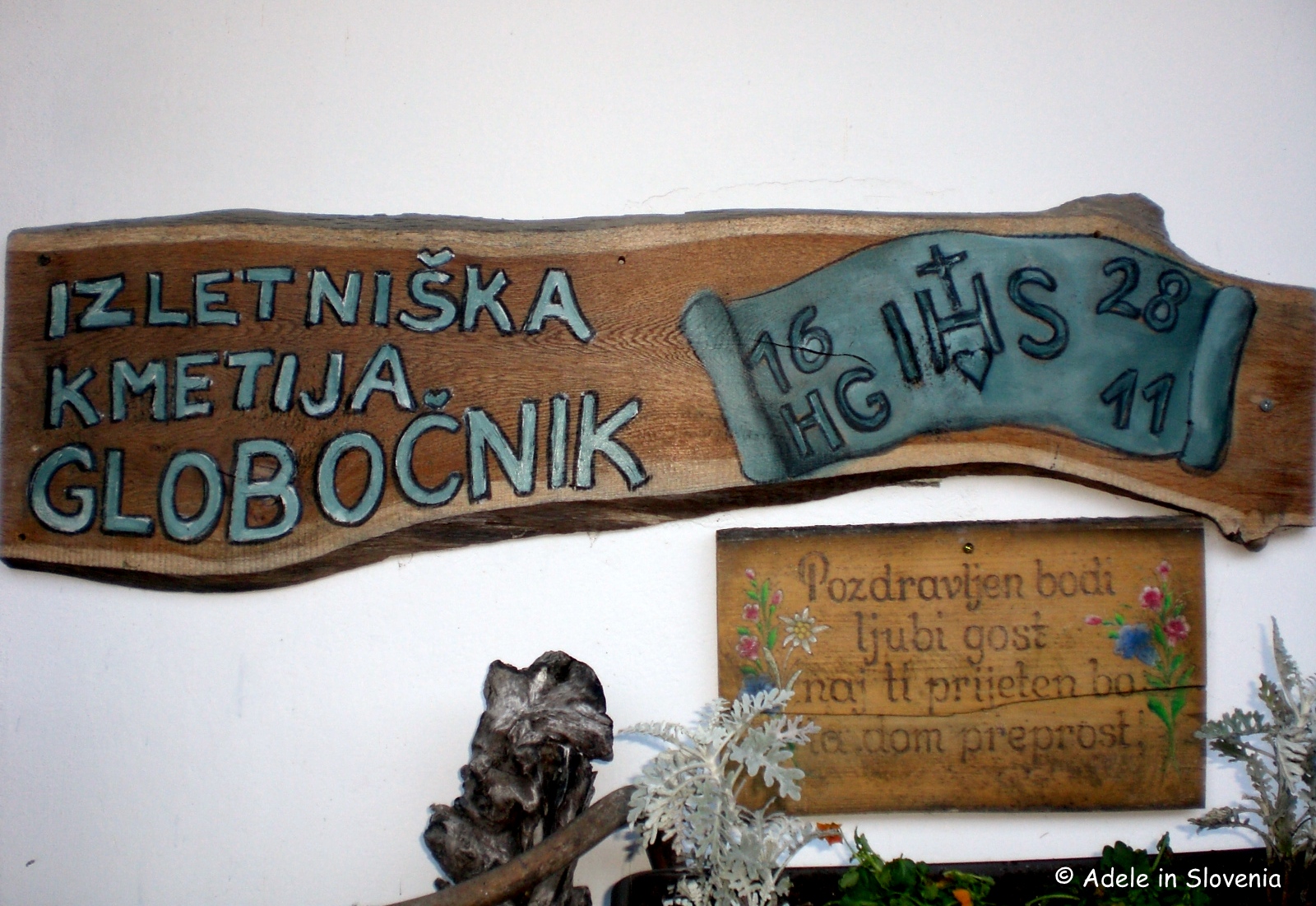
On a cold winter’s evening, I recently paid a(nother) visit to the Globočnik Excursion Farm (Izletniška kmetija Globočnik), where there is always a guaranteed warm welcome together with genuine hospitality and traditional Slovenian food – I just love this place!
Situated in the tiny hamlet of Globoko, next to the Sava river, this centuries-old farmhouse is extra cosy during the winter thanks to the log fire and wood-burning stove. The house dates back to 1628 and contains an original black-kitchen.

cimg2706

The house really has a unique ambience and you feel right at home from the minute you step inside, much in part to the owner Cene – a larger-than-life character with a wealth of tales to tell – ably assisted by his wife, Nika.

On the day I visited, they were holding their annual demonstration and tasting of ‘koline‘ – the traditional preparation of various sausages from the winter pig slaughter. As you can see from the photo below, at Globočnik, it is still done the traditional way.

cimg2711

A lot of muscle is required, though, so it’s ‘all hands on deck!’

cimg2712

On this annual traditional day, one of the farm’s neighbours, who is known as a ‘star bread baker’ also comes to join in to ensure there is delicious just-baked bread to accompany the meat feast! With that many years experience of bread baking under her belt, you just know it’s going to be great bread!

cimg2719

Made in the traditional way and using original equipment together with lots of TLC!

cimg2724

And the results speak for themselves!

cimg2716

As was the rest of the food, which sure hits the spot on a chilly winter’s night!

cimg2737

I could still just about do up my jeans after the feast! And yes, that is flour all over my jumper, nothing like getting stuck in!

cimg2735

The atmosphere was made even warmer thanks to zither and accordion music.

cimg2725

And beautiful singing which soon had people up on their feet!

cimg2740

For the past 2 years, Globočnik has also been one of the participating Taste Radol’ca restaurants, where the focus is on locally produced ingredients.

Dishes available include cold-cut platters and various soups to start; main courses such as grilled sausages, black-pudding, roast pork, stewed beef or roast duck, goulash, tripe, and various stews; a wide selection of side dishes such as steamed sauerkraut, roast potatoes, turnips, buckwheat with mushrooms, cheese štruklji; and desserts such as apple strudel and stuffed apples with walnuts and honey.

Note – The Globočnik Excursion Farm is only at weekends (or at other times upon prior arrangement) and reservations are essential. Unfortunately, however, the website is in Slovene only, and somewhat outdated – top marks for food and hospitality but technology really isn’t their thing, though we forgive them – so the best bet is to call 040 736 930 and if you need any help or more information, you can always turn to me and I’ll endeavour to help.

© Adele in Slovenia