Reasons to Be Cheerful in Radol’ca!

Okay, I admit it, at times I’ve been finding it a bit hard to remain optimistic of late, more so since new rules came into force last Sunday at midnight, which stipulate that we aren’t allowed out of our municipality and have to wear masks to go into food shops, banks, and the post office. On the flip side, however, at this time I am certainly grateful that, if I am forced to be confined to one municipality, it is Radovljica!

In these testing times, when we are surrounded by so much doom and gloom, it is important to find some reasons to be cheerful and rays of hope. And, fortunately, here in Radovljica we don’t have to look too far to find them.

During this period when we are all doing our best to avoid each other(!), it’s the perfect opportunity to take stock and appreciate what we have got rather than what we haven’t. And the main reason to be cheerful, particularly for me, is that Radovljica has so many natural assets and hidden beauty spots, that there’s actually no need to go too far from home.

In the past week, in addition to working, we have managed to:

Hike to the Roblekov dom mountain hut where, following last Monday’s snowfall, it still looked pretty wintry as of the middle of last week…

Photo: ©AdeleinSlovenia

Walk in the Draga valley in Begunje na Gorenjskem – where there really are more animals (albeit not real!) than people at this time. Of course, once things are back to normal, you simply must try the parkour archery course for real, i.e. with a bow and arrow, rather than just being a spectator! You can read more about the course in a previous blog here)…

©AdeleinSlovenia

Photo: ©AdeleinSlovenia

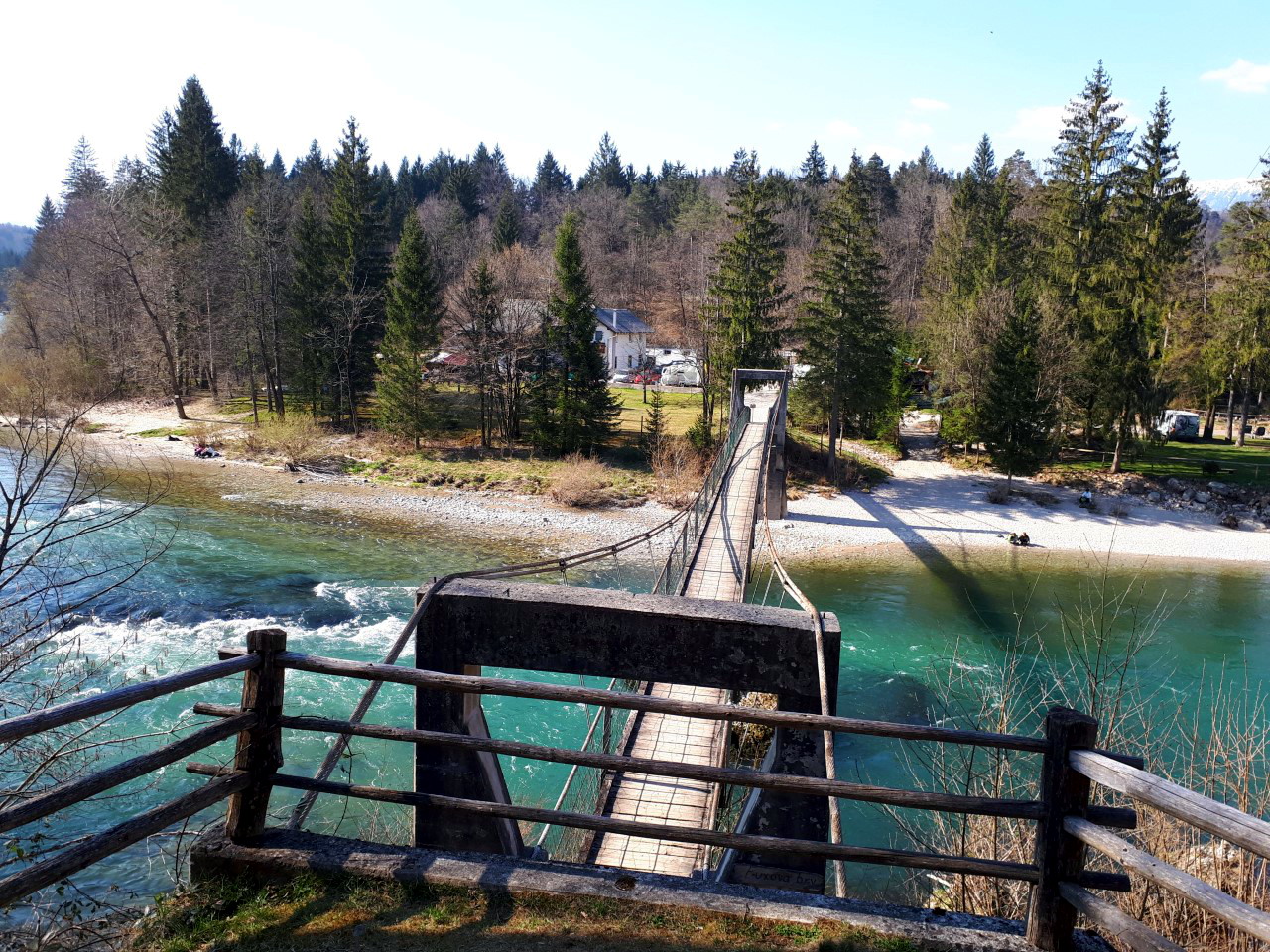
Strolled over the Fuxova brv footbridge and walked among the wild garlic on the Lipnica Castle Trail towards Lipnica Castle

Photo: ©AdeleinSlovenia

…and hiked from Kamna Gorica up to the Vodiška planina mountain pasture above Kropa.

Photo: ©AdeleinSlovenia

And all that without leaving the confines of Radovljica!

In fact, having read this, you might even decide to spend the majority of your next holiday here in Radovljica. I mean, do you really need to go elsewhere?!

@Adele in Slovenia

Radol’ca Strikes Gold!

In these testing times for all, it’s nice to at least be able to convey some good news: Radol’ca has struck gold! Well, obviously, not literally but it has been awarded a Gold Slovenian Green Destination label, which is surely as good, if not better! And, as one of just 14 destinations in the country that are holders of gold labels, I think that’s something to shout about!

The label, which is awarded by the Slovenian Tourist Board, is proof that Radovljica is on the right track not only in the field of tourism but also those of sustainable development, preserving nature and cultural heritage, and social inclusion.

So, why not come and see for yourself – when the virus situation allows, of course – why Radovljica is a ‘Gold’ destination, and experience its nature and culture, and, while you are here, you can play your part in helping its sustainable practice, too.

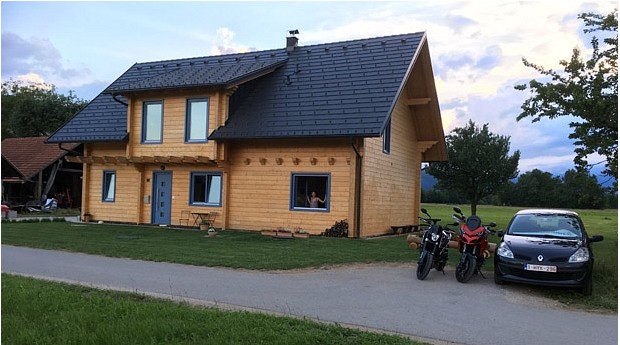
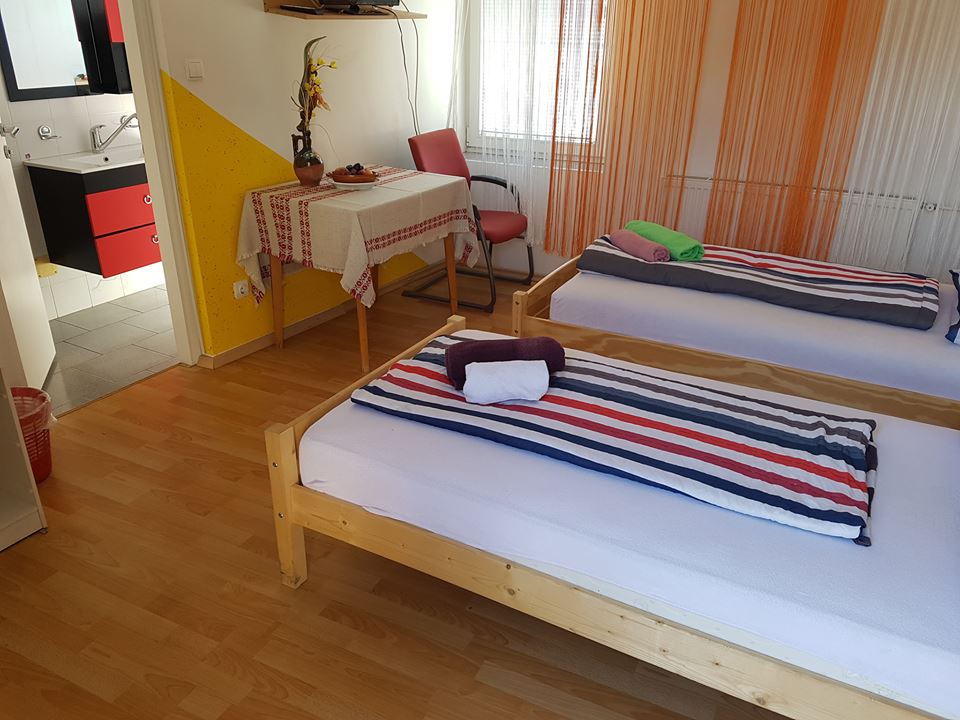
Choosing accommodation that is environmentally-friendly is a good way to start. One such is the Woodhouse B&B in Dobro polje, near Radovljica, which was conceived in a sustainable way, thus requiring less operating and maintenance costs. In fact, this B&B alone played a key part in Radovljica being awarded a ‘Gold’ destination label, since it is the holder of a Green Key certificate, which is one of the requirements for applying for a Slovenian Green Destination label. Click here to see the full range of accommodation in Radol’ca.

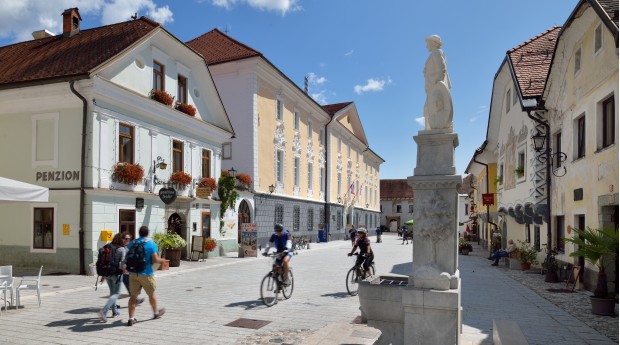
The fact that Radovljica offers so many cultural and natural assets and attractions was also key in obtaining the label. Radovljica’s crowning glory is Linhart Square, the heart of the historic old town centre, with its frescoed houses, the magnificent Radovljica Manor, and numerous museums and galleries.

Keep up the good work Radol’ca!

Of course, I couldn’t end without mentioning Coronavirus and its effect here in Radovljica and Slovenia as a whole.

At the time of writing (Monday 23 March), there have been three deaths here (all of whom had previous medical conditions) and over 400 confirmed cases. Social distancing is being enforced, whereby no more than five people are allowed to be outdoors together at any one time, but we can – for the time being and I’m praying that it stays this way – at least go out for walks in forests, etc., providing we maintain a safe distance from others we encounter.

Fortunately the Radol’ca area has numerous places where you can walk and escape into the embrace of nature whilst avoiding public areas. In addition to such trails being ideal now at a time when we are all forced to avoid each other, they are also great places to walk in the summer to avoid the heat and crowds. In Radol’ca these include the Lipnica Castle Trail and the Grabnarca Waterside Nature Trail.

All shops – other than food shops, post offices, banks and petrol stations – are closed, as are cafes, and all other services such as hairdressers, garages, etc. Sadly, the Radovljica Chocolate Festival has become a ‘victim’ of the virus too and has thus been cancelled. Such a shame for the organisers as a significant amount of work and time had already been invested. But I have no doubt that it will be back bigger and better than ever next year from 16-18 April 2021.

Click here to keep up-to-date on the developments in the Radol’ca area – in tourism terms.

I hope to be back with you soon with some more cheerful news and some photos of me out hiking and enjoying all that the Radol’ca area has to offer! Until then, stay safe and well!

© Adele in Slovenia


Ten Top Insider Radol’ca Tips!

Since I think I have a right these days to call myself a ‘Radolčanka’ (i.e. a Radovljica local), I thought I would share with you some of my top insider tips, some of which are more obvious than others!

So, in no particular order…

YOU WILL NEVER GO HUNGRY OR THIRSTY IN RADOVLJICA…at the last count – in my head that is so I could have forgotten the odd one – I totted up 23 bars, cafes and restaurants in Radovljica itself – not to mention the numerous others within the municipality. So, there’s no need to worry about going hungry or thirsty whilst visiting! And now there’s an exciting new ‘kid’ in town too – Linhart Hotel & Bistro – in Linhart Square, the heart of the old town. The hotel opened a couple of years ago but has just been taken over by the hugely successful and popular restaurant Vila Podvin, with head chef (and celebrity chef these days!) Uroš Štefelin at the helm. Expect bistro-style food – Uroš style!

Image may contain: table and indoor

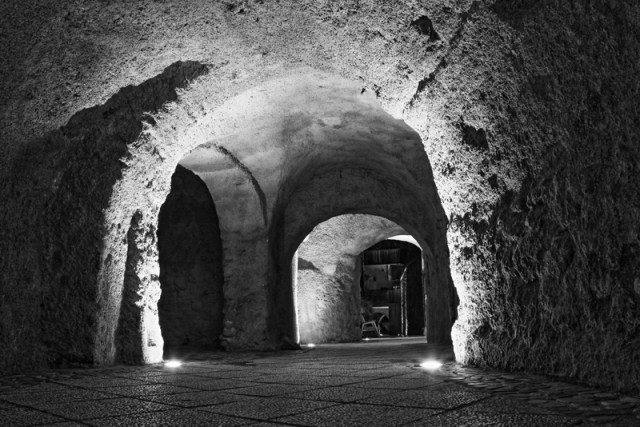
THERE’S A VISIBLE TUNNEL... Okay, so it’s not an insider tip as such, but I’ve included it here since it’s easy to miss. The only preserved moat tunnel in Slovenia is found beneath Radovljica’s old town centre. It was renovated, and partly built-over, some years back, and is well-illuminated, meaning you can walk through it at any time as part of a visit to the old town centre. I’m rather lucky as I live just minutes from the old town and can therefore see it by day and by night, though the latter trumps it for me!
Radoljice1HDR

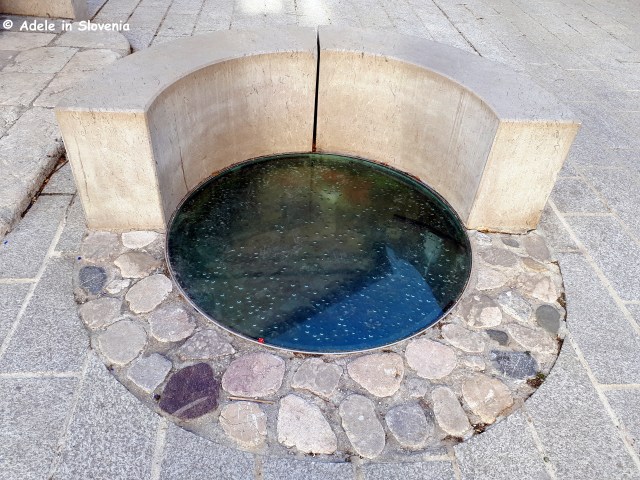
AND AN INVISIBLE/HIDDEN TUNNEL TOO…well, that is if legend is true! It is said that there is a tunnel that runs underground from the well in Linhart Square all the way to Lipnica Castle. To date no one has actually found it, but the legend lives on…!
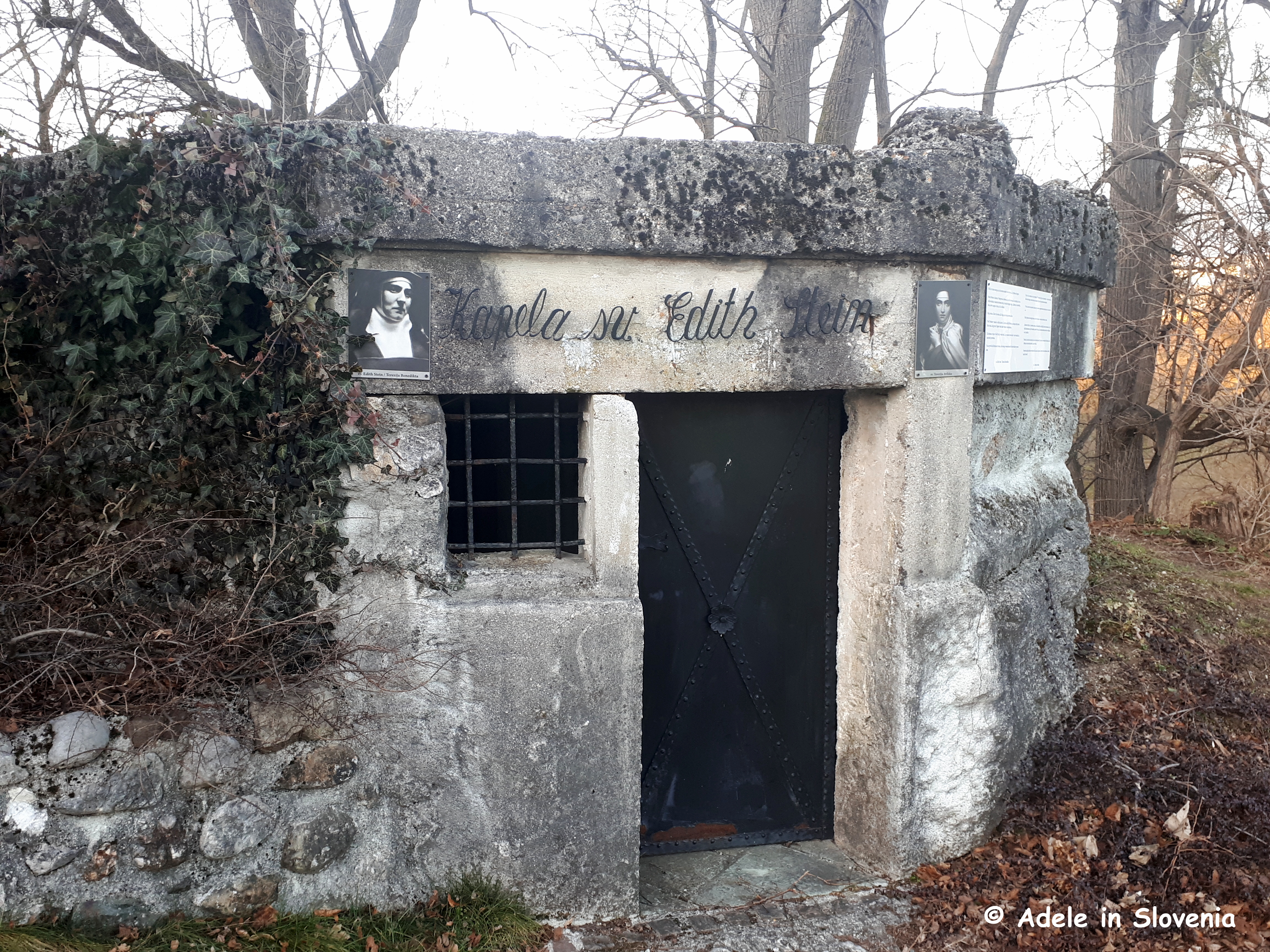
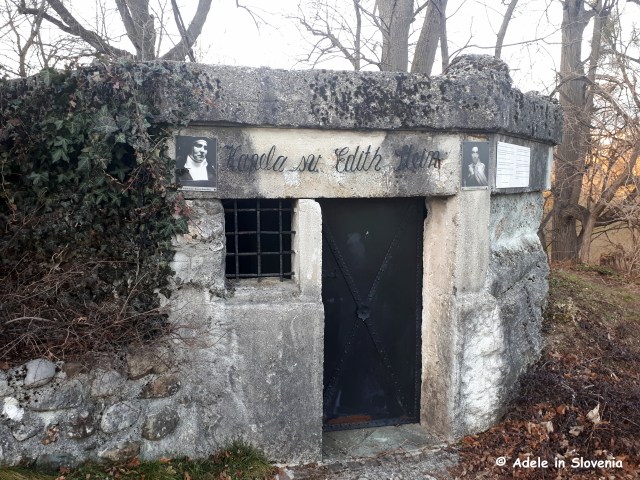
AND EVEN A ‘SECRET’ CHAPEL…the Edith Stein Chapel is hidden away behind the vestry tower of Radovljica’s baroque St. Peter’s church in Linhart Square, and surprisingly few people even know it’s there. Edith Stein was a German-Jewish philosopher, born on 12 October 1891 to Jewish parents, who converted to Catholicism and became a Carmelite nun.

Also know as St. Teresa Benedicta of the Cross, she was canonised as a martyr and saint of the Catholic Church, and is one of six co-patron saints of Europe. Edith and her sister Rosa, who was also a convert and an extern sister, were sent to the Carmelite monastery in Echt in the Netherlands in 1938 for their safety, where, despite the Nazi invasion in 1940, they remained until they were arrested by the Nazis on 2 August 1942 and sent to the Auschwitz concentration camp, where they died in the gas chamber on 9 August 1942.
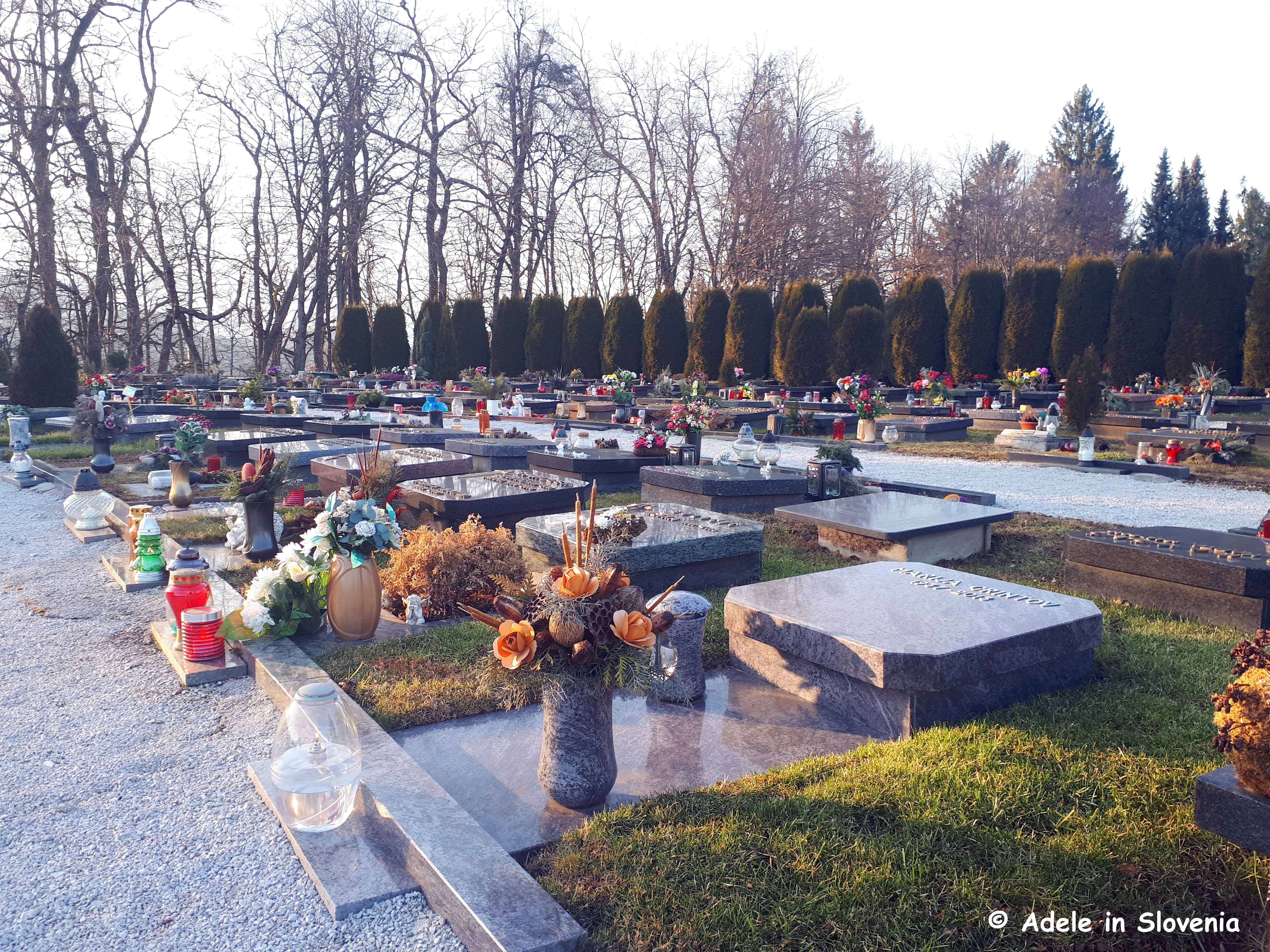
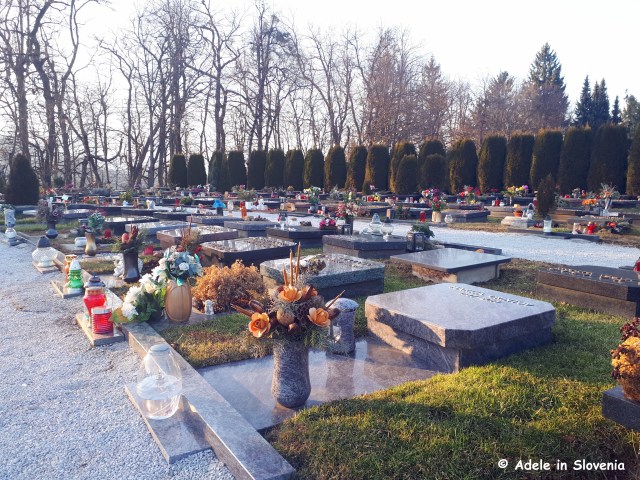
WE HAVE RATHER LOVELY CEMETRIES…bear with me on this one! I know it might sound odd but it’s true, Radovljica’s (and in fact in general throughout the country) two cemetries are so well kept. There is always an abundance of fresh flowers, plants and glowing candles, and a sense of peace prevails. You can admire both the cemetries as you pass on a walk towards the Sava river and the Fux footbridge.
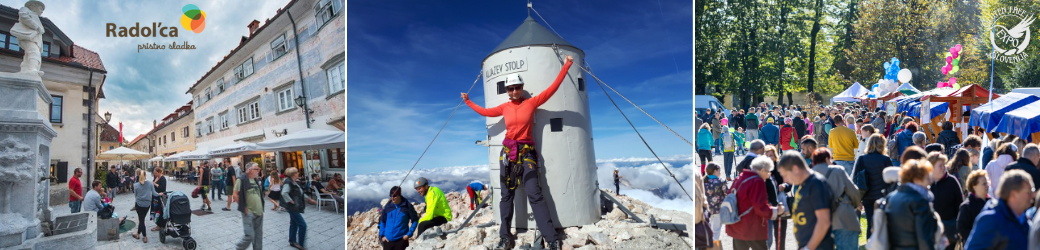
RADOVLJICA REALLY IS A ‘SWEET’ TOWN…in so many ways! Not only is the town’s slogan ‘Honestly Sweet‘ but Radovljica is also the home of the biggest and best chocolate festival in Slovenia and a honey festival too. This year’s Radovljica Chocolate Festival – the 9th in a row – takes place from Friday 17th to Sunday 19th April.

WE LIKE TO STICK TOGETHERTaste Radol’ca is a great example of this. Rather than being in competition with each other, many of Radol’ca’s restaurants have joined forces and, in doing so, have realised and reaped the benefits of cooperation and collaboration. In doing so they are also supporting local farmers, beekeepers and producers of other goods, by including locally sourced ingredients on their menus. Each year there are an increasing number of events at which Taste Radol’ca restaurants are present, such as the Radovljica Chocolate Festival, summer Thursday concert evenings, the November Month of Local Cuisine, various Christmas and New Year events, and more.

WE LOVE OUR BEES…the Museum of Apiculture, the Beekeeping Education Centre of Gorenjska, the ‘Follow a Bee Through Radovljica‘ family adventure, an annual Honey Festival, and numerous beautifully painted apiaries where hardworking bees, and equally hardworking beekeepers, ensure that we have a plentiful supply of local honey.

IT LOOKS GREAT FROM ABOVE OR BELOW…Wherever you view Radovljica from – whether up high in the mountains or down beneaths its terraces – Radovljica’s old town centre with its prominent church is picture postcard stuff! So, whether you choose a stroll beside the Sava river on the Sava River Trail, or one of the marked hiking trails, such as to St. Peter’s church above Begunje, or even higher to the Roblek mountain hut or the peak of Begunščica, you are assured of a great view and a totally different perspective of the beauty of Radovljica and its surroundings.

SEEK OUT BUNKERS FROM THE RUPNIK LINE…the Rupnik Line is a system of fortifications that were built during the 1930’s by the Kingdom of Yugoslavia as a defence line on the border with the Kingdom of Italy. The strategically placed forts and bunkers were never actually used for military or defence purposes, but they at least brought residents a temporary solution to the unemployment and financial troubles which affected them due to the location of the Rapallo Border. In Radovljica there are bunkers on the Obla gorica hill, which is located behind the swimming pool, as well as on the grassy bank in the street Cankarjeva ulicacop. I recently read that, in fact, there are around 50 such bunkers located across the Jelovica plateau, Radovljica and Begunje na Gorenjskem, though, to date at least, I’ve only come across a handful. Hmm, an idea is brewing, how many (more) can I/you find?!

I hope this has given you plenty of ideas for exploring (more of) Radovljica and you’ll agree that’s there’s certainly more than meets the eye!

© Adele in Slovenia
 

The Magnificent Radovljica Manor – (even) More Than Meets the Eye!

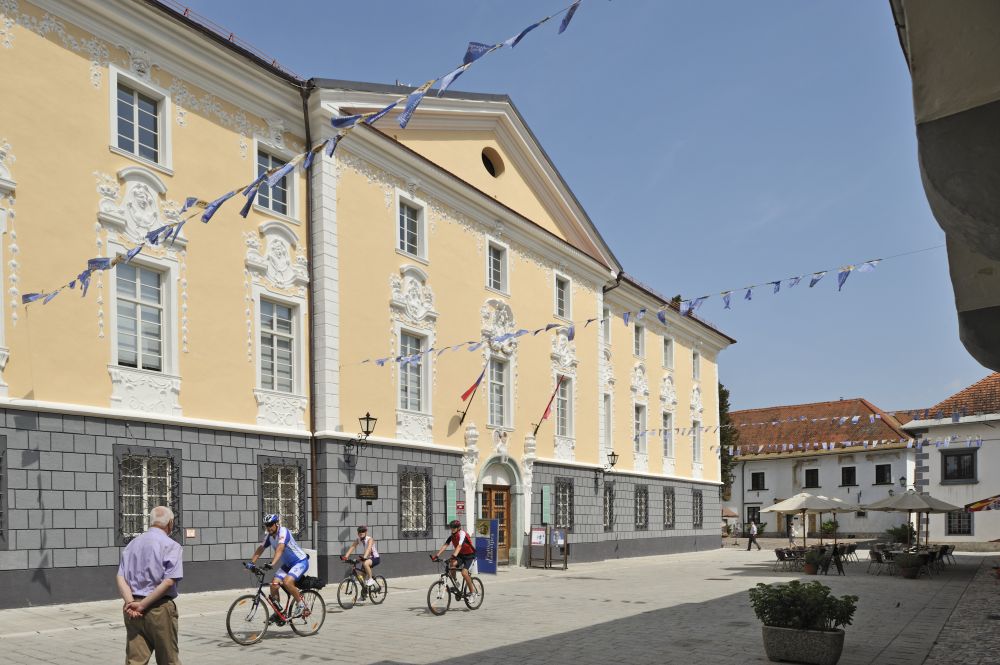
The magnificent and imposing Radovljica Manor dominates Linhart Square – the heart of Radovljica’s historic old town.

The building houses numerous attractions and institutions, among them the Radovljica Music School, the Museum of Apiculture, the Municipal Museum, two small gallery areas, and the wonderful Baroque Hall.

Photo: Tourism Radol’ca

The Orthenburgs built a small castle in the 13th century on the site on today’s manor. The structure was rebuilt following an earthquake in 1511 by the building’s then-tenant Count Dietrichstein, and in the following century it was further expanded by the Counts of Thurn-Valsassina.

Immediately on entering the manor through the impressive, not to mention heavy, door you spot the beautiful grand central staircase, made out of green tuff, which hints at the grandeur of the building.

Before reaching the staircase you will notice a photographic exhibition on the right-side of the entrance hall. The exhibition changes every month so it’s always worth popping in for a look when passing!

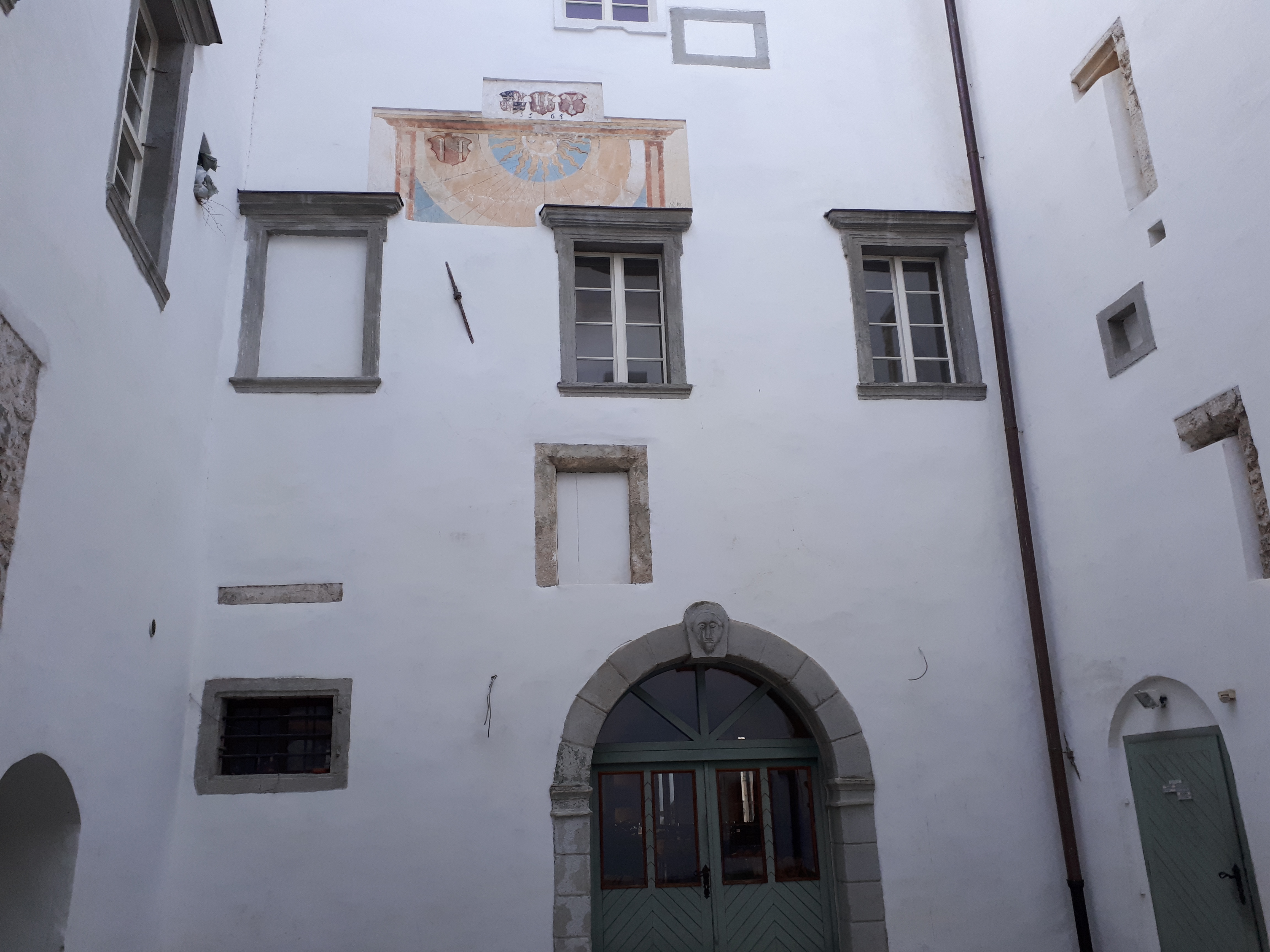
Much of the space on the ground floor is today given over to the Radovljica Music School. But if you have a nose around, you will discover other hidden features, such as this sundial, which I discovered for the first time today, despite having lived here for almost 13 years!

Photo: Adele in Slovenia

Head up the magnificent stairs to visit the Museum of Apiculture and the adjoining Municipal Museum, while numerous concerts take place throughout the year in the Baroque Hall with its amazing acoustics.

The Museum of Apiculture is a hive of activity for beekeepers and bee enthusiasts! It houses a wide collection of bee hives and figural hives, beekeeping equipment and tools.

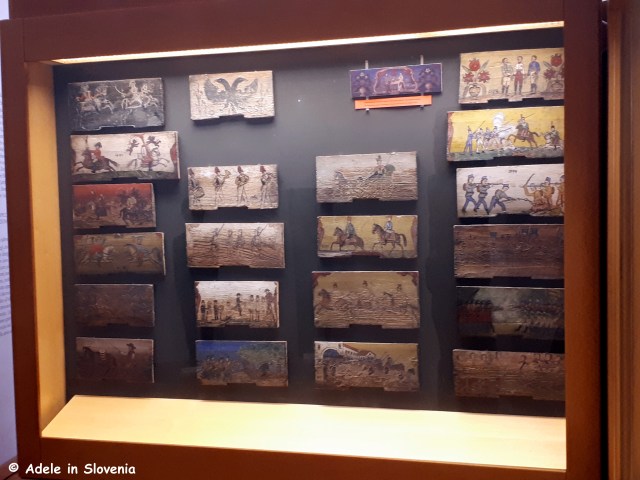
The museum’s extensive collection of painted beehive frontal panels, including the oldest known in the world, is a particular highlight. Each one tells its own unique folk tale.

The manor also plays host to some of Radovljica’s larger annual events, among them the Radovljica Chocolate Festival, which takes place both indoors and outdoors at various venues throughout the town, as well as the Radovljica Festival – a festival of early music.

A chocolate-themed fashion show in the Radovljica Manor!

Photo: Miha Horvat, 2014

The Radovljica Manor also makes a special venue for weddings and other ceremonies/celebrations.

Photo: Tourism Radol’ca

Photo: Tourism Radol’ca

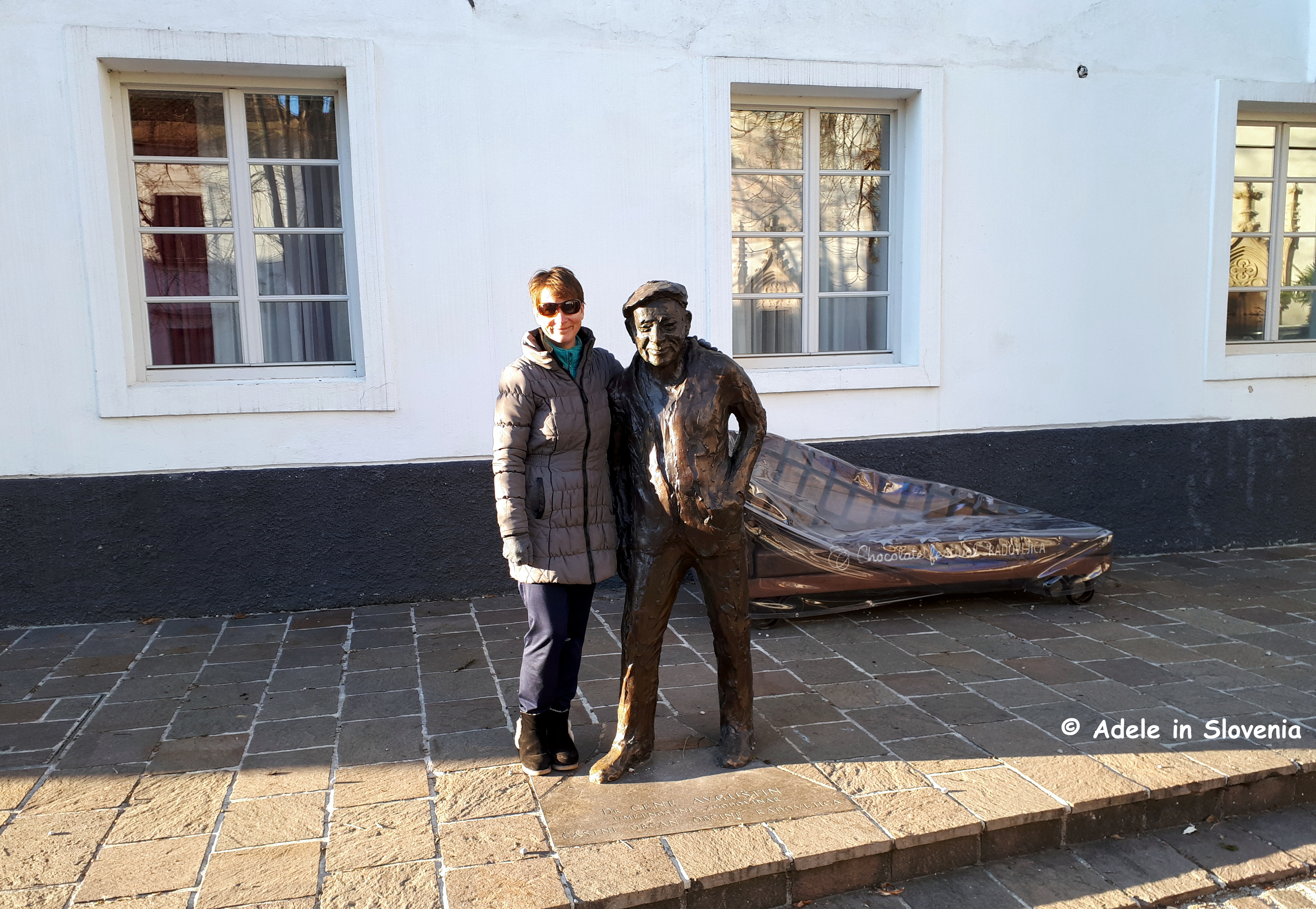
Outside, to the right of the manor, there is a statue of the art historian and honorary citizen of Radovljica Cene Avguštin, and also a small exhibition titled ‘Radovljica, Our Old Town Through the Centuries’.

So, when visiting Radovljica, be sure to take time to discover the manor – both inside and out. And to end, one useful tip…there are toilets on the ground floor. Not an attraction in themselves but always good to know, wouldn’t you agree?!

© Adele in Slovenia

The Radovljica Beekeeping Adventure: Follow a ‘Bee’ Through Radovljica!

Honestly Sweet‘ was chosen as the slogan for the tourist destination of Radol’ca, which encompasses Radovljica itself (where I live!) and the other surrounding towns and villages in the municipality, due to the town’s long connection with all things ‘sweet’ i.e. beekeeping and chocolate.

And while this year’s Chocolate Festival has been and gone, Radovljica now features a brand new ‘sweet’ treat – the Radovljica Beekeeping Adventure.

The Radovljica tourist board came up with the idea for the Radovljica Beekeeping Adventure in order to consolidate the town’s position as the capital of Slovenian beekeeping as well as a desire to offer more activities for families. The idea for a bee-related adventure was an obvious choice and was inspired by the events last year to mark the first-ever World Bee Day.

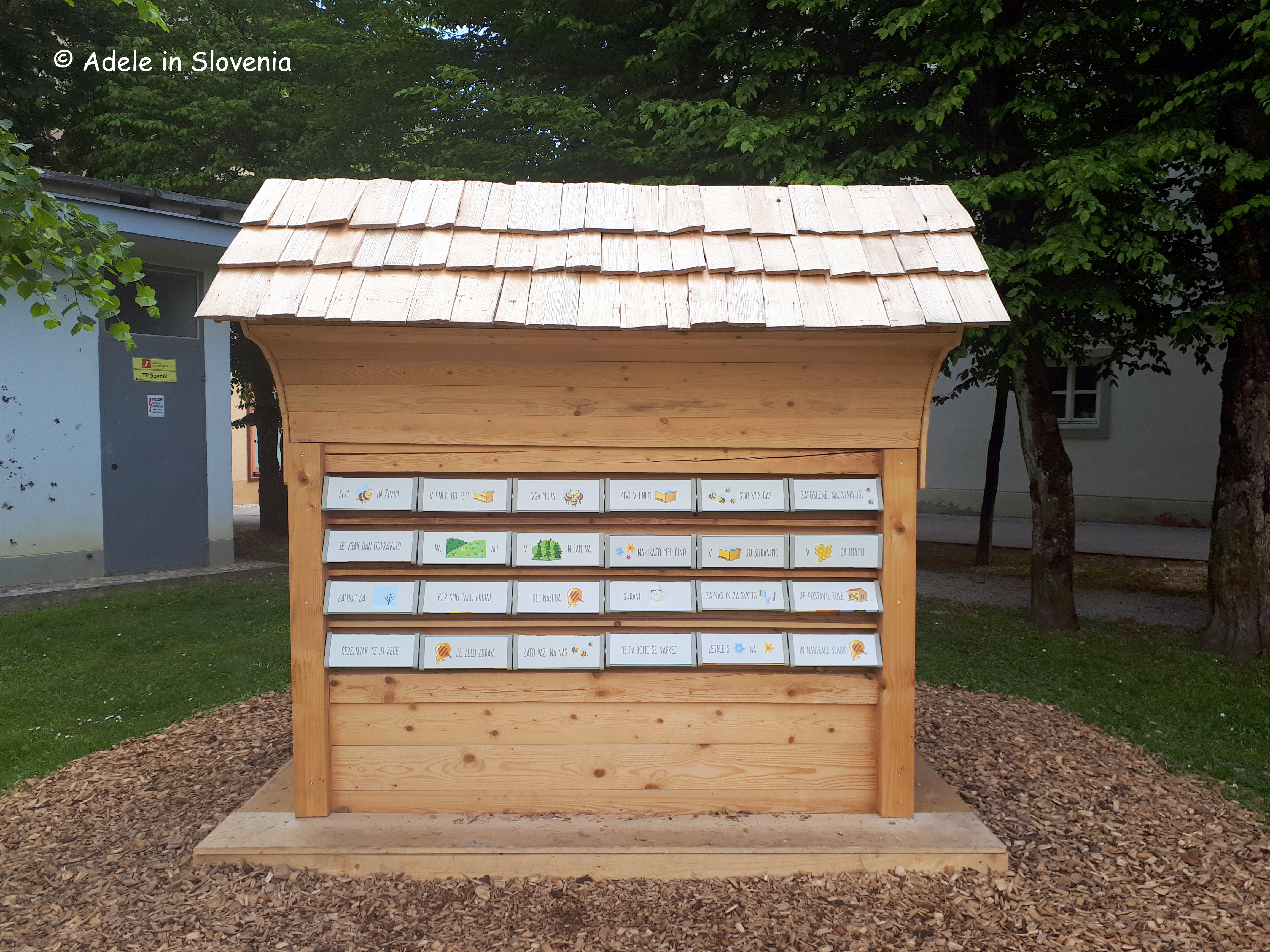
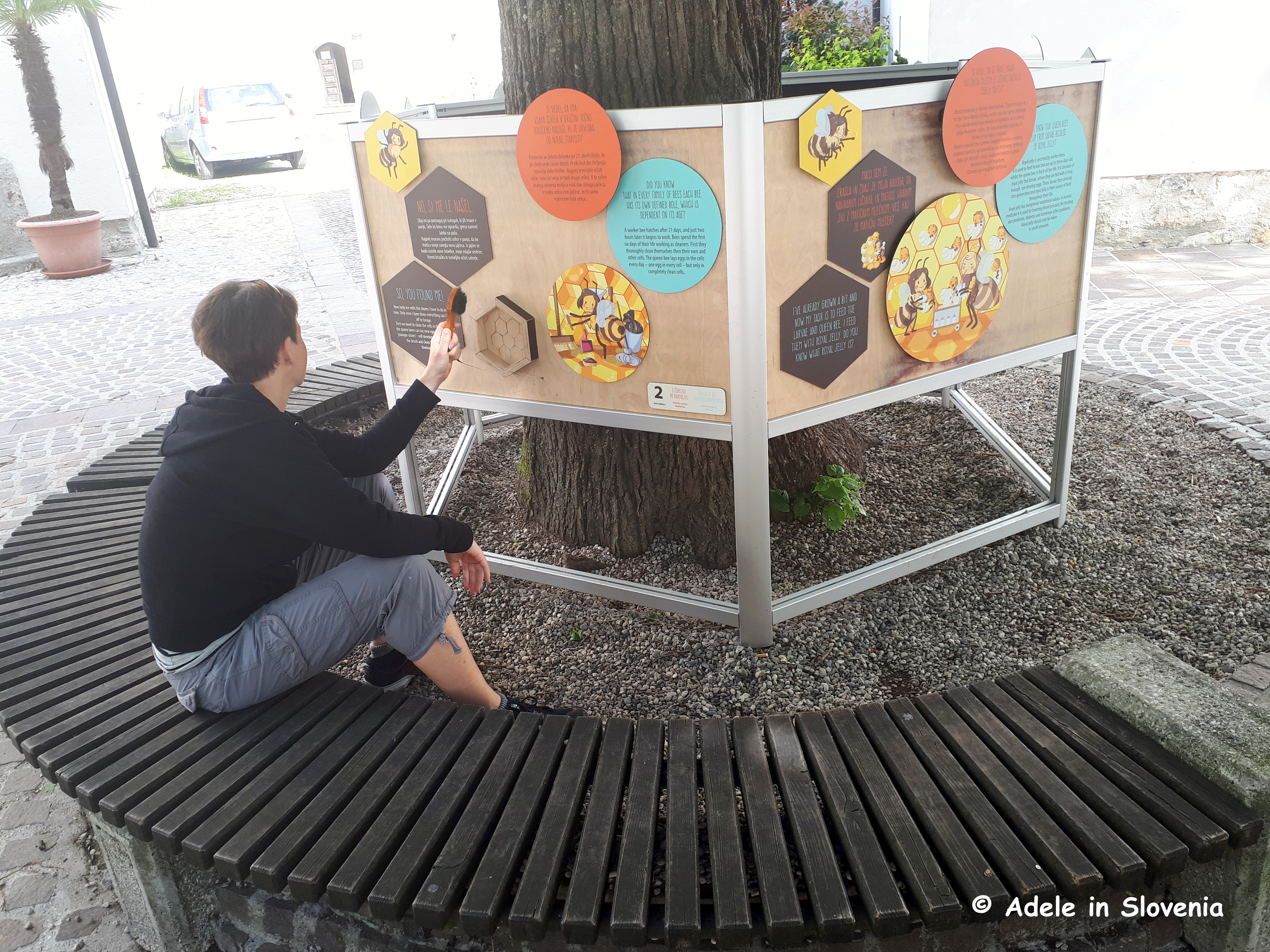
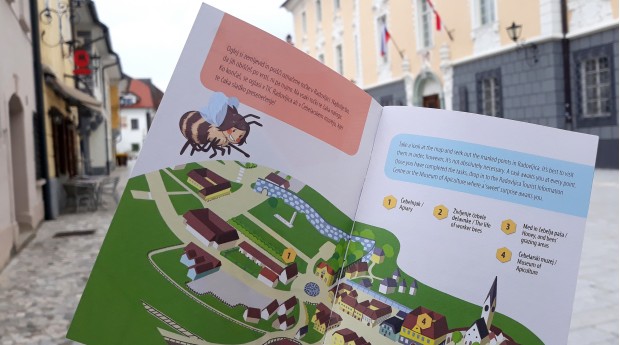
The Beekeeping Adventure has been designed as a family adventure. It features four interactive points in the old town centre of Radovljica, the first of which is the apiary in the town park. 

The next is in front of St. Peter’s church


…and at the viewpoint at the end of the old town centre.

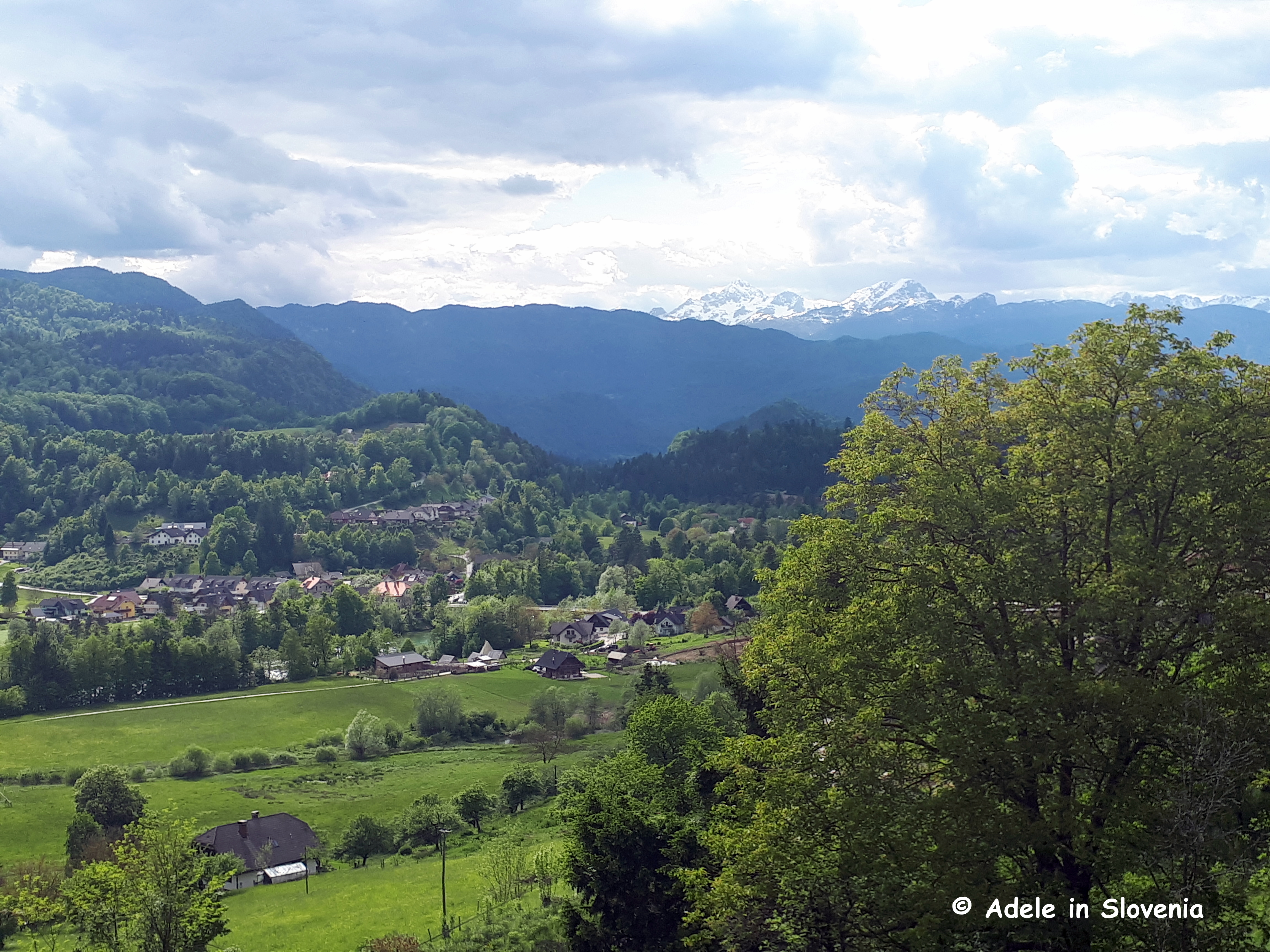
Despite living here 12 years, I can never tire of the view from Radovljica towards the Julian Alps and the Jelovica plateau, and even on a partly cloudy late May day – in a month where there have only been 2 days without rain so far – the views still blow me away, every time!

The adventure concludes with a visit to the Museum of Apiculture in the Radovljica Manor, where you can watch bees hard at work and find out plenty more about the history of Slovenian beekeeping, see an exhibition of the oldest painted beehive frontal panels, and learn even more about just how amazing bees really are!

The fun, creative and educational tasks have been devised to allow children to hone their manual skills and to learn about beekeeping, whilst seeking out the path with the help of a map helps develop outdoor orientation and spatial recognition skills.

As a reward for completing all the tasks, a ‘sweet’ treat awaits at the end – but I won’t spoil the surprise!

The Beekeeping Adventure costs €8 per family, which includes:

  • One copy of the booklet including a map, tasks and information about the life of bees
  • A family entrance ticket to the Museum of Apiculture (2 adults, up to 3 children)
  • A ‘sweet’ surprise
  • Supplement for additional booklets with tasks: €1 per booklet (up to 3 additional booklets are permitted per family upon purchase of a family package)

The booklet can be purchased at the following locations:

The Beekeeping Adventure is available from 24th May to 31st October 2019. Since the Museum of Apiculture is closed on Mondays, it is recommended that you visit from Tuesday to Sunday. The path itself is very short and flat, but together with solving the tasks and a visit to the museum, you should allow approximately 1.5-2 hours.

The Museum of Apiculture is celebrating it’s 60th anniversary this year, and, to mark the occasion, there will be a new comprehensive exhibition while the main anniversary event will take place on 15th June.

To end, on an entirely different theme, though one that many would also consider to be ‘sweet’, next Saturday a brand new festival is coming to Radovjlica – the Radovjlica Craft Beer Festival. Weather permitting the festival will kick off at 12 noon on Saturday 1st June and will feature a number of Slovenian craft breweries, live music, and food from Taste Radol’ca restaurants. A shuttle bus will also run every half hour from Bled.

No photo description available.

So, now there are even more reasons to come and visit the lovely town that I call ‘home’!

© Adele in Slovenia

Visit Tržič: MINFOS and the St. Anne Mine

The Tržič area is known to be one of the most fascinating areas of Slovenia in geological terms.

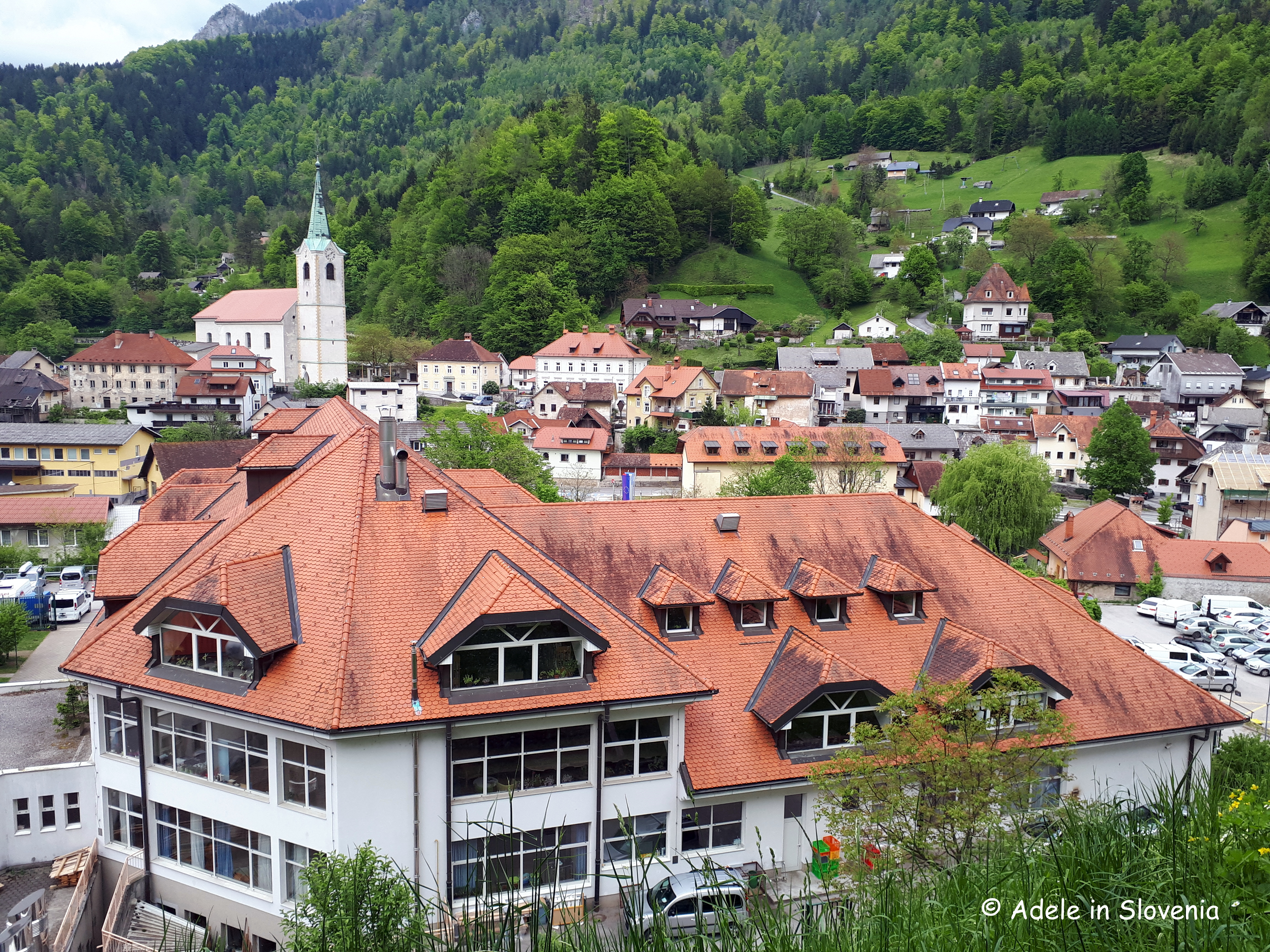
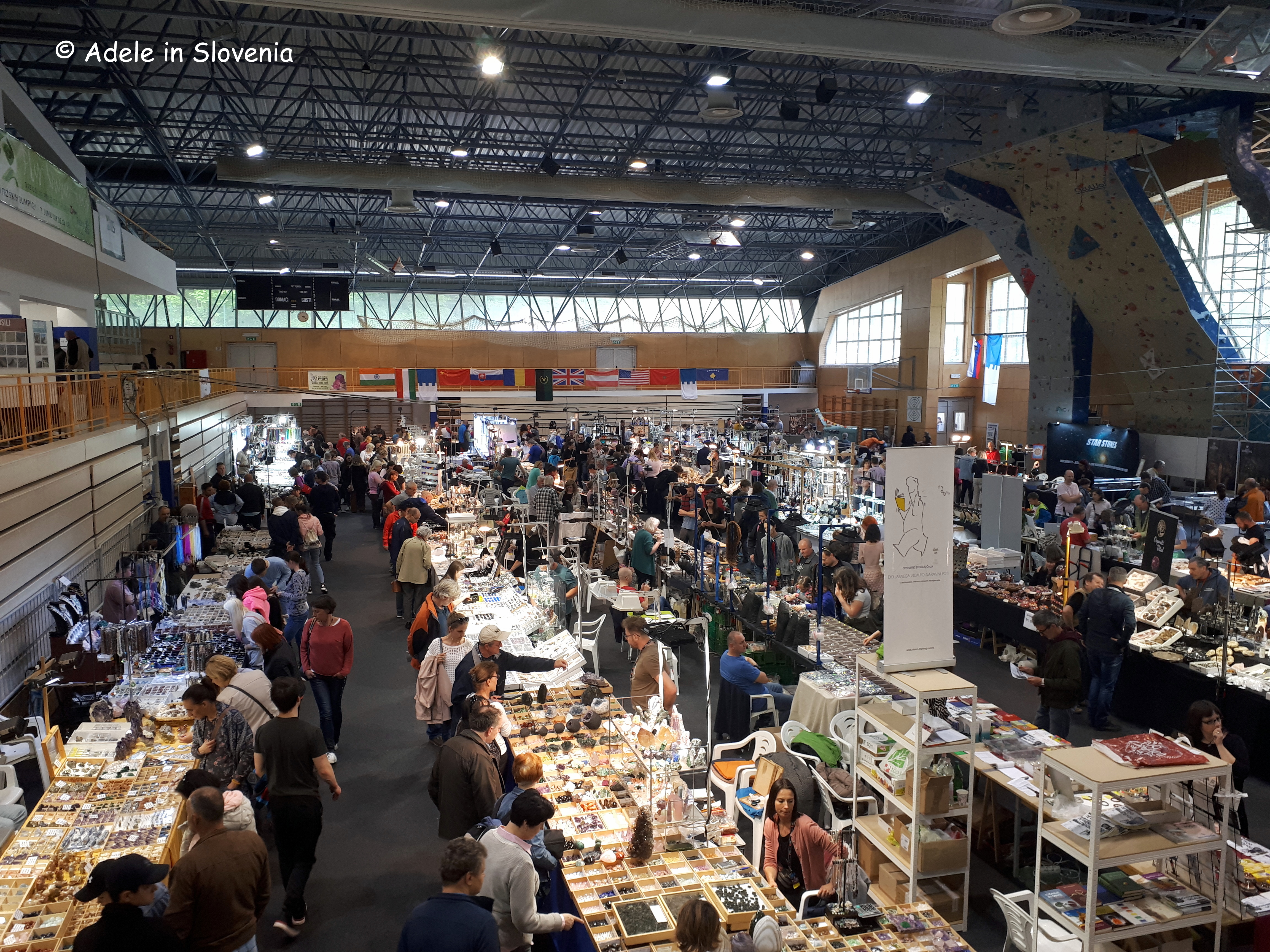
MINFOS is an annual 2-day exhibition of minerals and fossils, which, together with the Dolina Exhibition and Education Centre* and some fascinating geological trails, showcases the area’s rich geological treasures. The exhibition is held in the Tržič Olympians Arena (the red-roofed building just out of sight to the left of building in the foreground below) in the heart of the picturesque old town.

The event unites visitors and exhibitors from far and wide, from those with a specific interest in minerals and fossils wanting to enrich their knowledge by viewing specialised exhibits, talking to experts, and/or attending creative and educational workshops, to those who just want to take a look and/or maybe treat themselves or their loved ones to some new jewellery or other gifts.

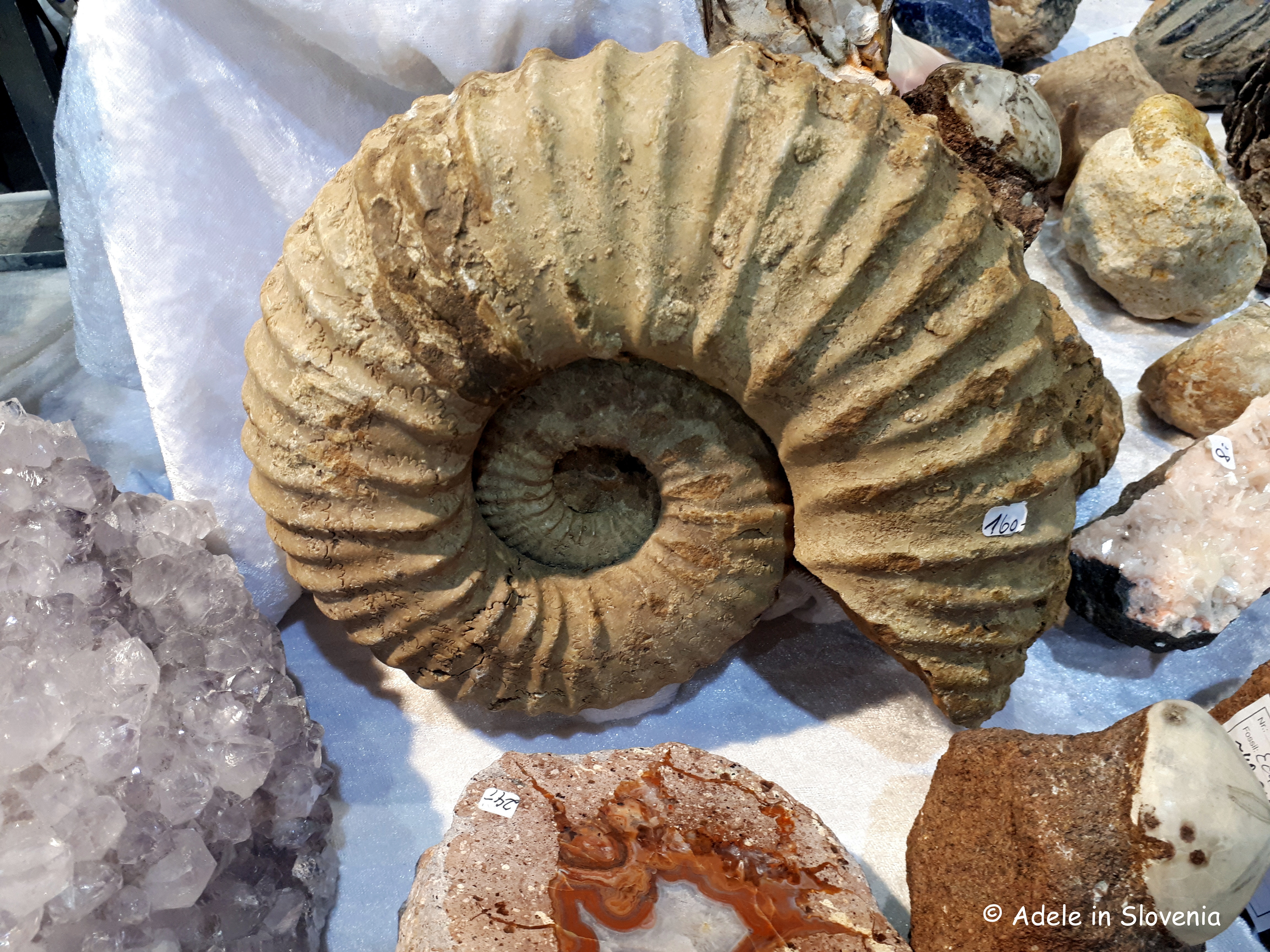
There is a fascinating array of exhibits of almost every shape, colour and size imaginable…

…and you wouldn’t believe how heavy some of them are, despite the relatively small size!

Although this year’s MINFOS took place last weekend – hence its too late to visit this year – you can instead visit the Dolina Exhibition and Education Centre in the hamlet of Dolina located along the valley of the Dovžan gorge** (Dovžanova soteska), just over 3 kilometres northeast of Tržič.

At the centre you can find out more about the picturesque valley that was carved out by the Tržič Bistrica river which laid bare the most complete sequence of rocks from the younger Paleozoic period, ranging in age from 300 to 260 million years.

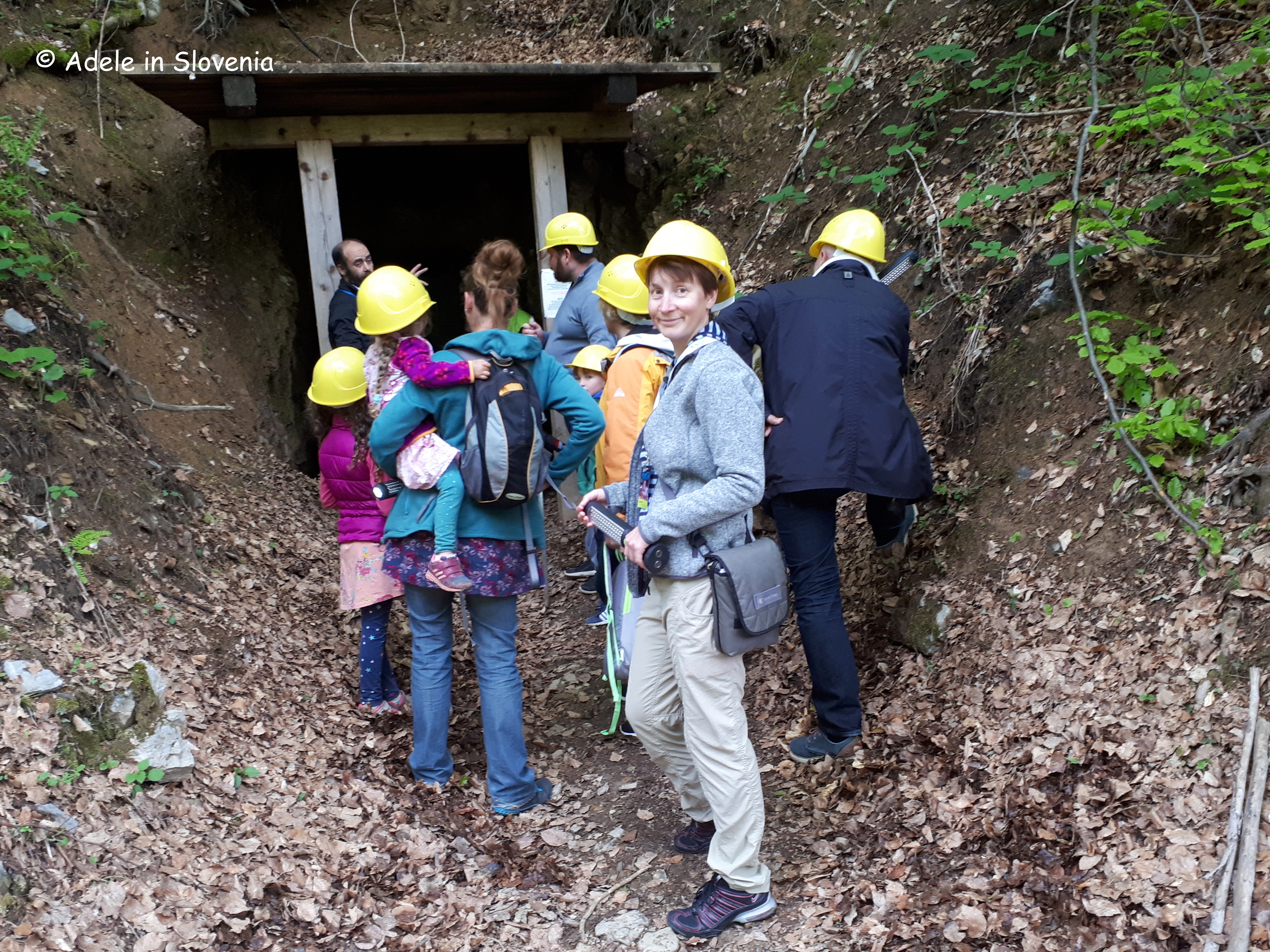
As part of MINFOS, visitors are offered guided tours of the Dovžan gorge and the St. Anne mine (Šentanski rudnik) I chose to visit the latter. Guided tours can also be arranged at other times via the Tržič Tourist Information Centre.

Whilst in the past Idrija was the hub of Slovenia’s mercury mining industry, a number of miners from Idrija also came to work at the mine at Podljubelj. Regular production of cinnabar began at the mine in 1975 but ceased just a quarter of a century later in 1902 due to the low amount of mercury in the ore. A total of about 110,000 tonnes of ore and almost 300 tonnes of mercury were obtained from the mine.

Our incredibly knowledgeable guide, Luka, enlightened us about the history of the mine. At the end of the 19th century, 75 miners worked at the mine, of which 24 were women. But I won’t divulge all the details and spoil the surprise, instead why not take a tour and see it for yourself!

The tour begins by passing the entrance to the 450 metre-long Avgust mine, which served as a service route.

The Friderik mine was the main export tunnel for tailings.

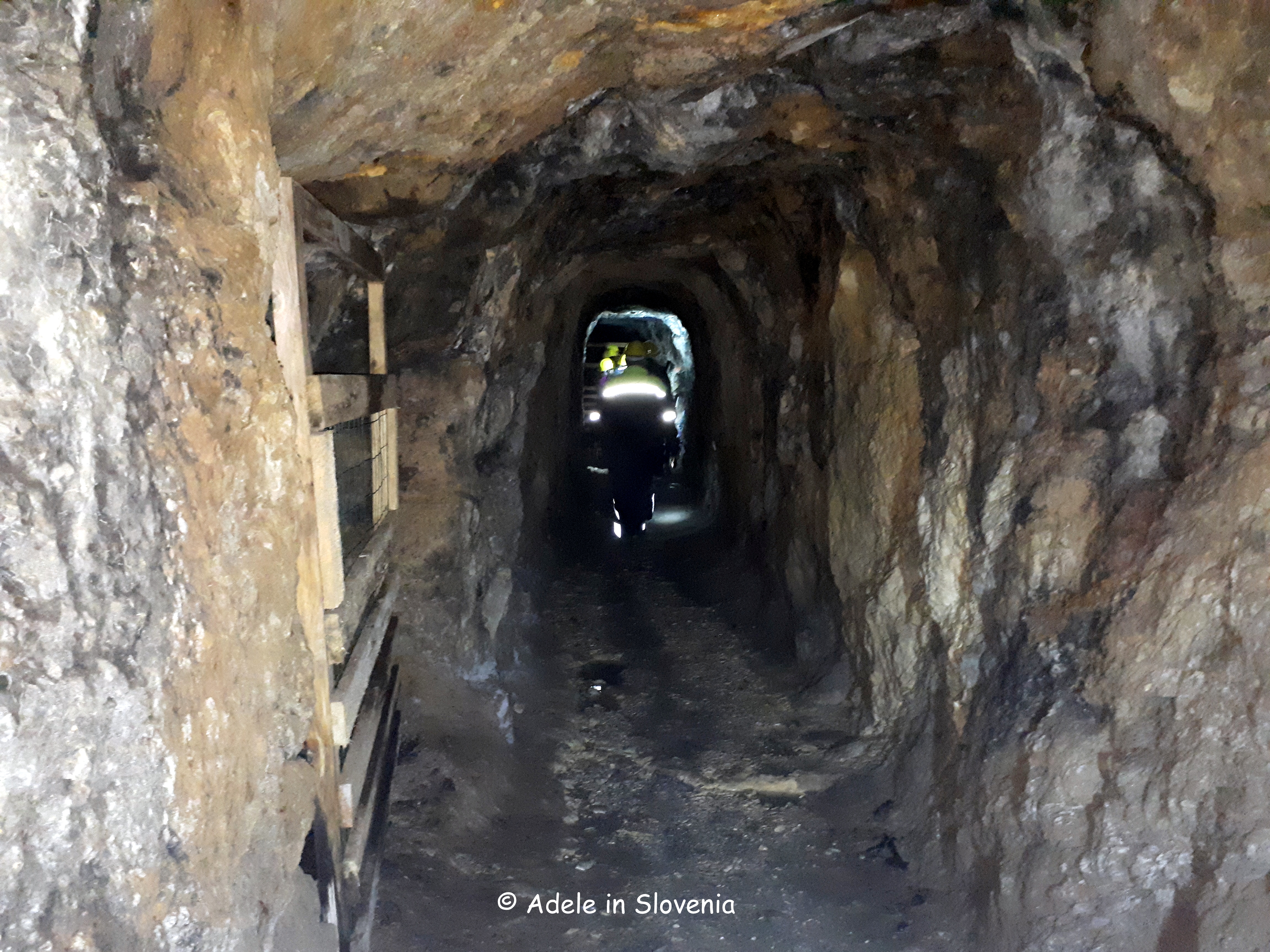
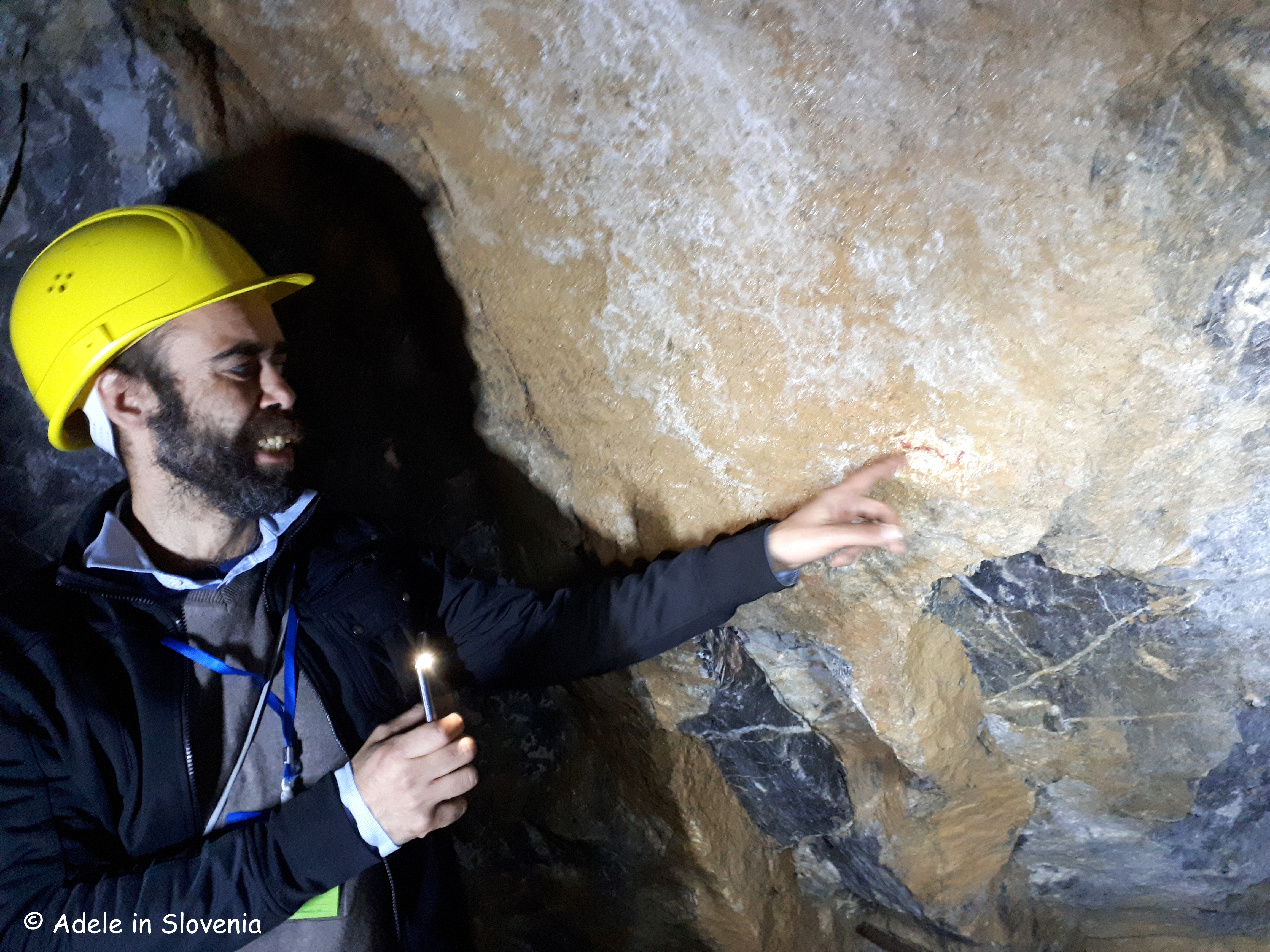
The Anton mine, which was the most rich in ore and was thus also the most mined, is the only part that is open for visitors on the tour. Before entering we donned hard hats and were given torches, then we were off…into the unknown!

Luka told us many more fascinating facts, demonstrated the depth of the deepest shaft – approx. 35 metres, and pointed out the traces of cinnabar that can still be seen on the walls of the mine as well as beneath foot.

It is a bit nippy in there, so be sure to wrap up well – regardless of the weather outdoors – but it’s certainly worth it for a glimpse into part of Tržič’s history.

© Adele in Slovenia

* In fine weather the Dolina Exhibition and Education Centre is open from May until the end of October at weekends and on public holidays from 11am to 6pm, and at other times by prior arrangement.

** Due to extensive flooding in April this year, part of the path through the Dovžan gorge is closed, but rest assured, once it is open again I will be blogging about that too!

Hiking in Žirovnica: The Turkish Cave

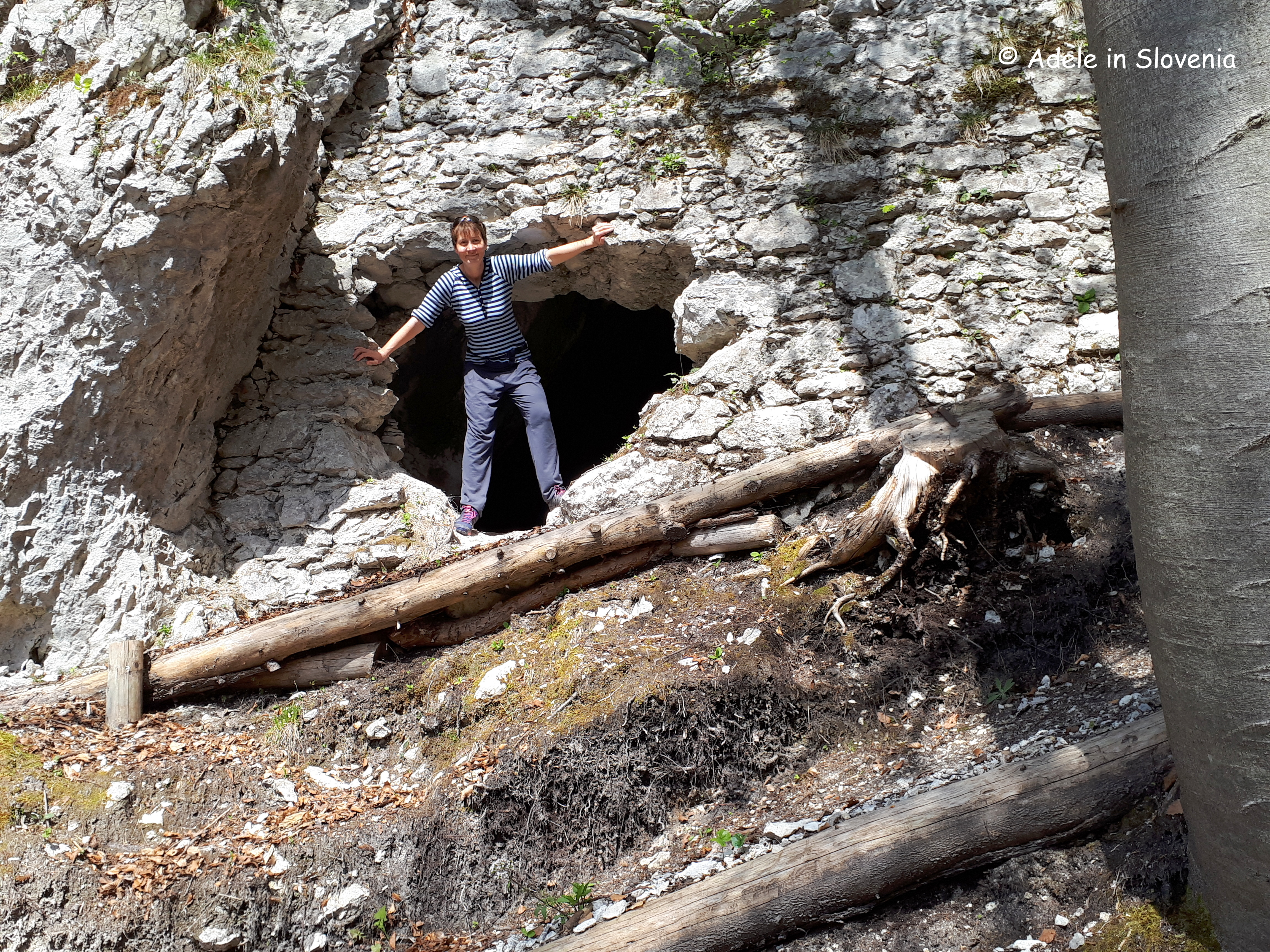
The Turkish Cave (Turška jama) is located at an altitude of 835m above the Završnica valley. The name of the cave derives from when, many centuries ago, women and children retreated to the cave to seek refuge from Turkish invaders.

The path to the cave is just one of the 16 trails included in the new map of hiking and mountain bike trails in the Žirovnica area, which you download here or pick up a copy (available in Slovene and English) at the Žirovnica Tourist Information Centre in Čop’s House (Čopova hiša).

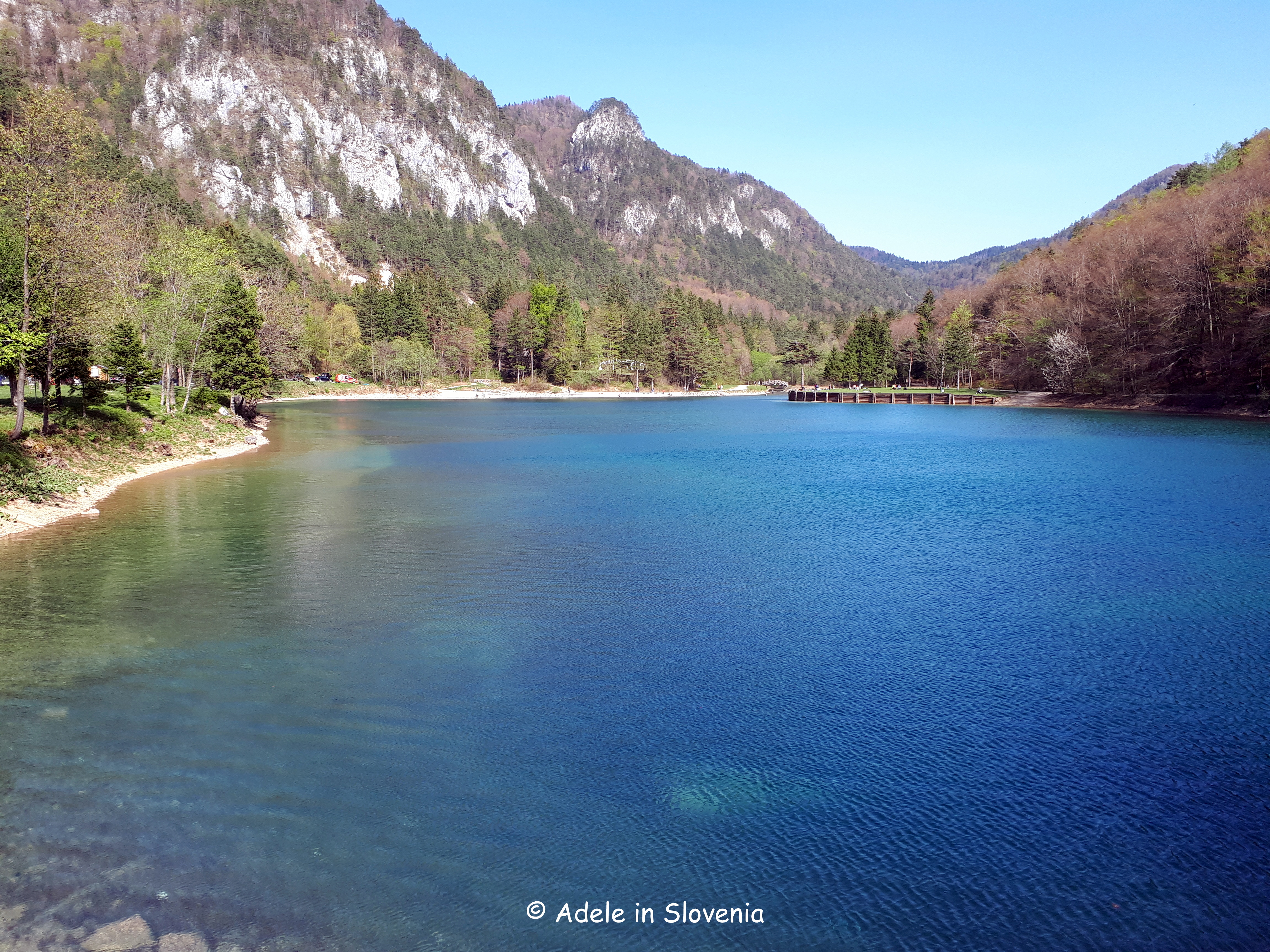
The trail begins at the car park at the Završnica reservoir, which is a very popular place among locals either for just chilling or as a starting point for numerous hiking and cycling trips in the Završnica valley and the surrounding Karavanke mountains, or, of course, both, i.e. first hike or bike, then chill!

Set off along the gravel road towards the Valvasorjev dom mountain hut, where, after cca. 1 kilometre, you will reach a sharp left turn. There is a rest area and a sign showing the path towards the Turška jama cave.

From the sign it takes just 5-10 minutes to ascend through the forest to the cave.

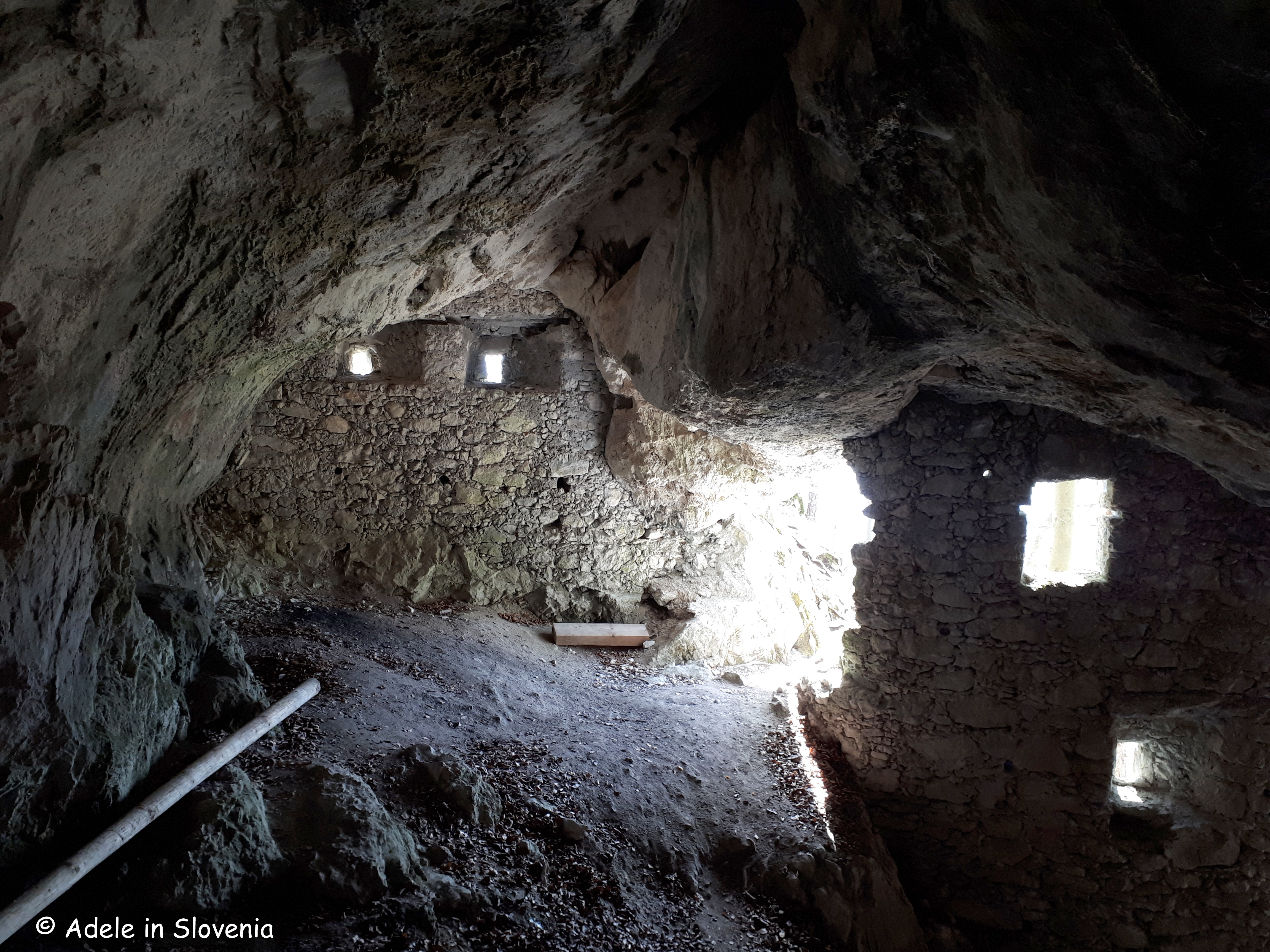
The cave has two entrances, is 18 metres long and 2 metres deep.

The view from the cave is somewhat obstructed by trees…

…so it’s worth venturing (carefully!) a few metres further…

…where you a richly rewarded for your efforts with fabulous views.

You can also extend your trip by visiting the Valvasorjev dom mountain hut – three times the winner in recent years of the title of ‘Slovenia’s Best Mountain Hut’ – or you can even continue to Stol, the ‘top’ of the Karavanke!

© Adele in Slovenia

Discovering the Taste(s) of Žirovnica – Gostišče Osvald

Regular readers of my blog will know that I have written numerous posts about the fantastic hiking opportunities the Žirovnica area offers, among them an ascent of Stol, the highest mountain in the Karavanke range. And now, since all hungry hikers (as well as cyclists and those pursuing other active pursuits) need plenty of sustenance and a ‘reward’ for their efforts, I have now set about delving more deeply into what is on offer at Žirovnica’s restaurants and inns – all in the name of research, of course!

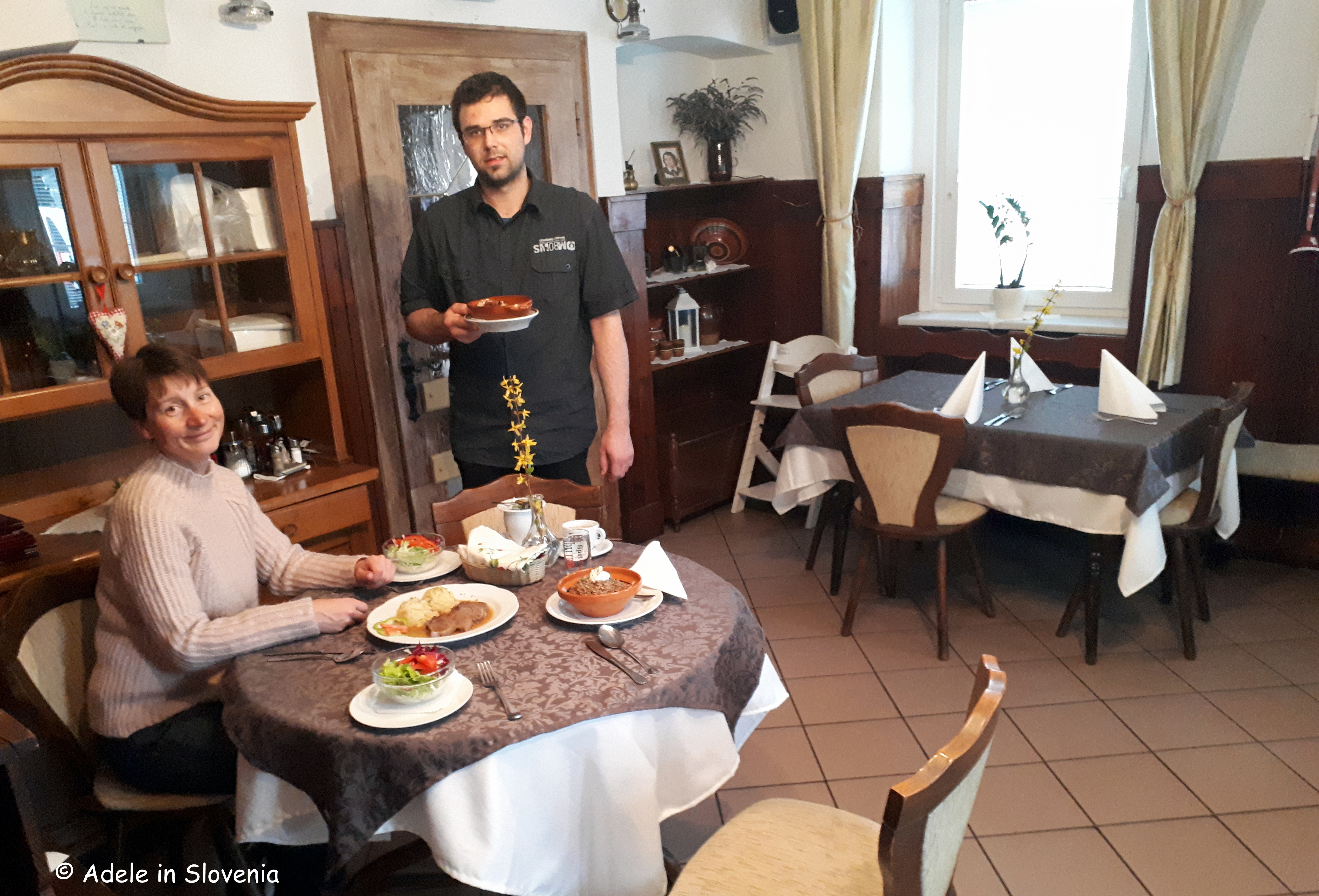
So, let’s begin with a popular and traditional Slovenian restaurant – Gostišče Osvald, which is located on the main road through Žirovnica in the hamlet of Selo pri Žirovnici and is the oldest restaurant in the area.

One of my desires when writing such blogs is to try and uncover and share with readers any particular dishes that are a real speciality of a particular restaurant or area. Hence I left it to owner Anže to dish me up his specialties!

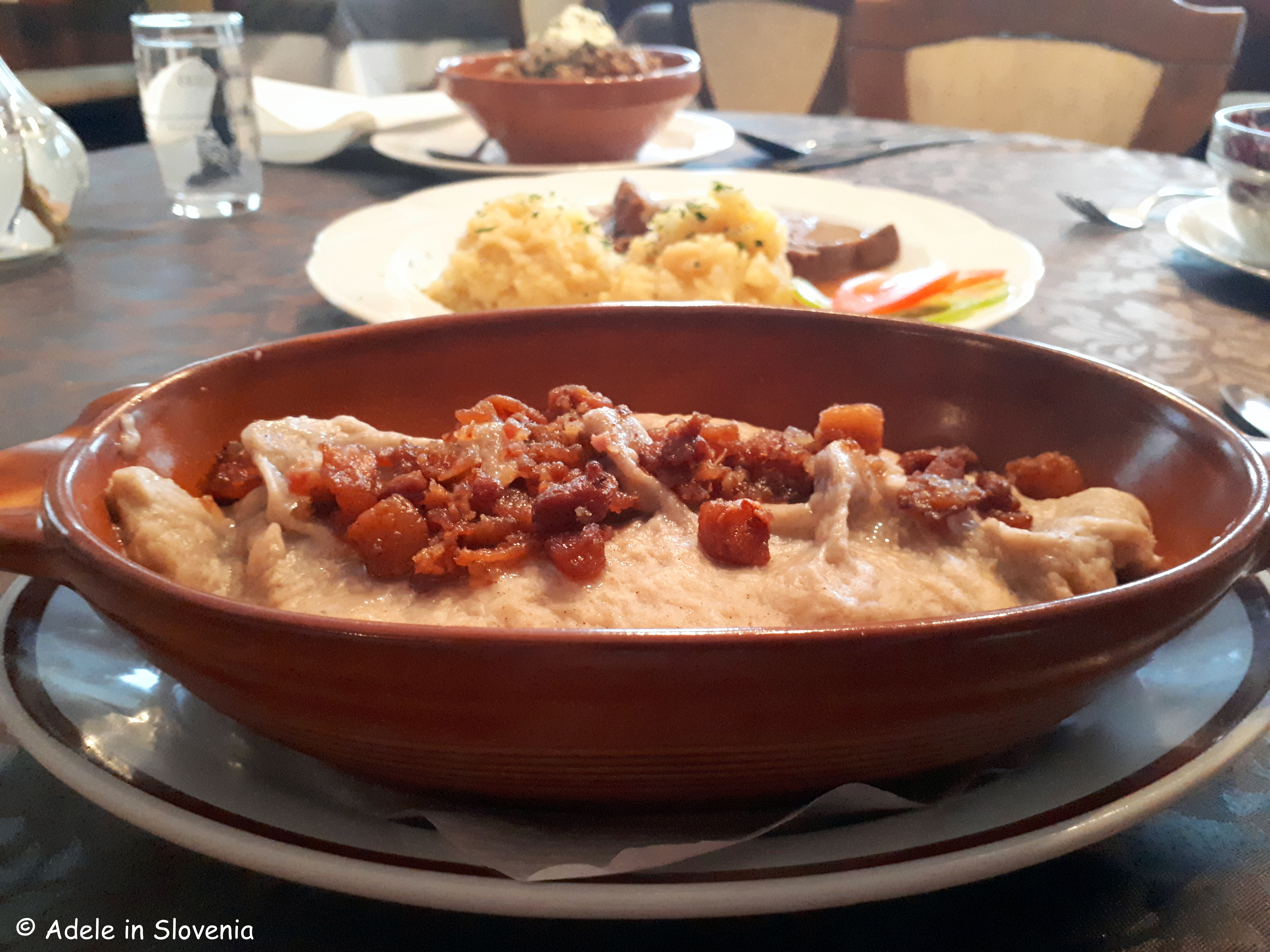
I hit gold with this giant buckwheat ‘krap’! ‘Krapi’ are usually smaller, individual dumplings, filled with curd cheese. This giant one, however, has a small amount of yeast mixed into the buckwheat dough to allow it to rise, is filled with a mixture of curd cheese and millet, and topped with pork crackling – ingenious and delicious!

Another speciality of the Žirovnica area is buckwheat with porcini mushrooms. It’s not dissimilar to a mushroom risotto, albeit it with grains of buckwheat instead of rice, with onion, herbs and sour cream to finish. It can be a hearty and filling dish on its own or a side dish.

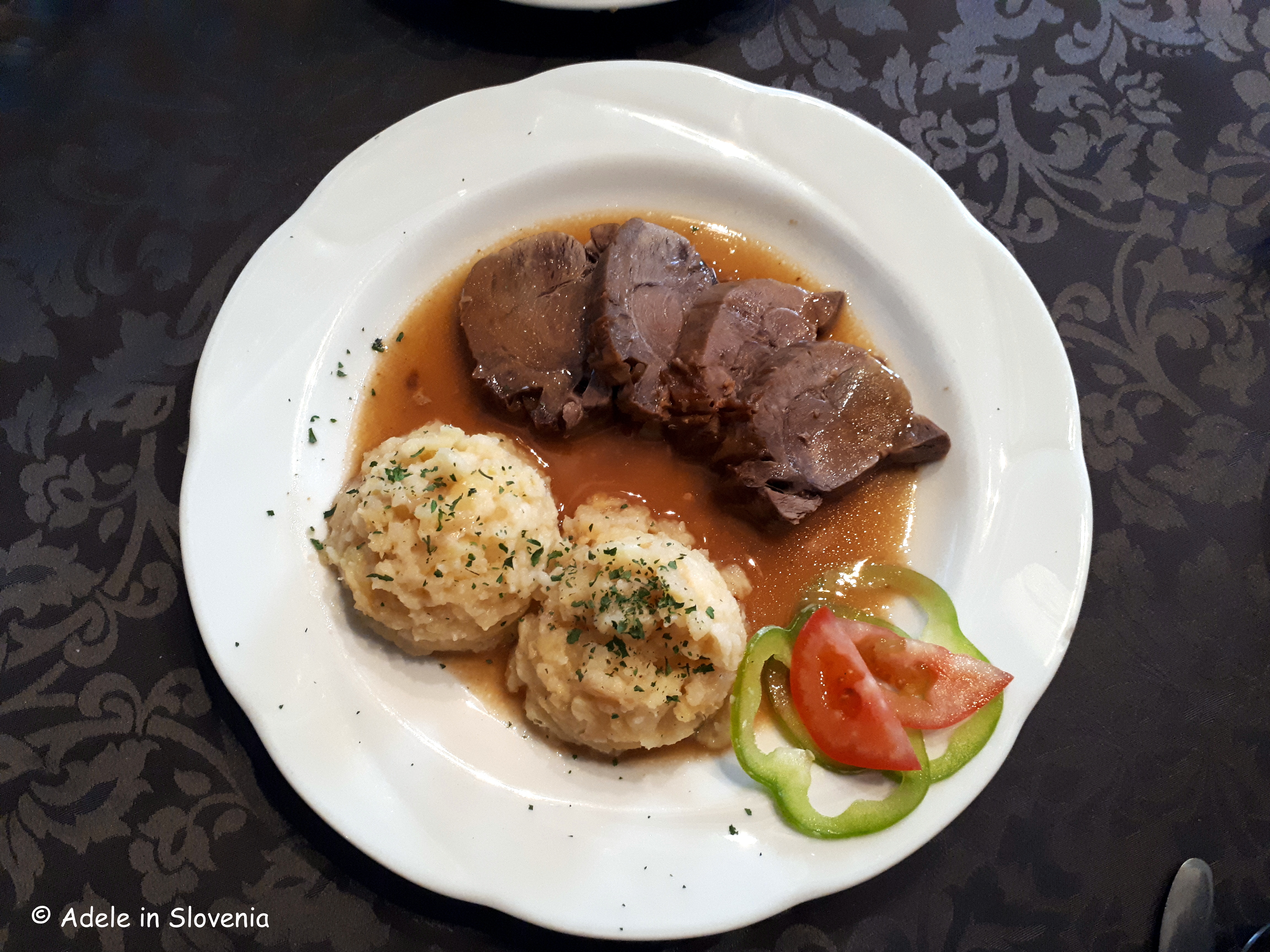
Served together with a roast, I left fit to burst!

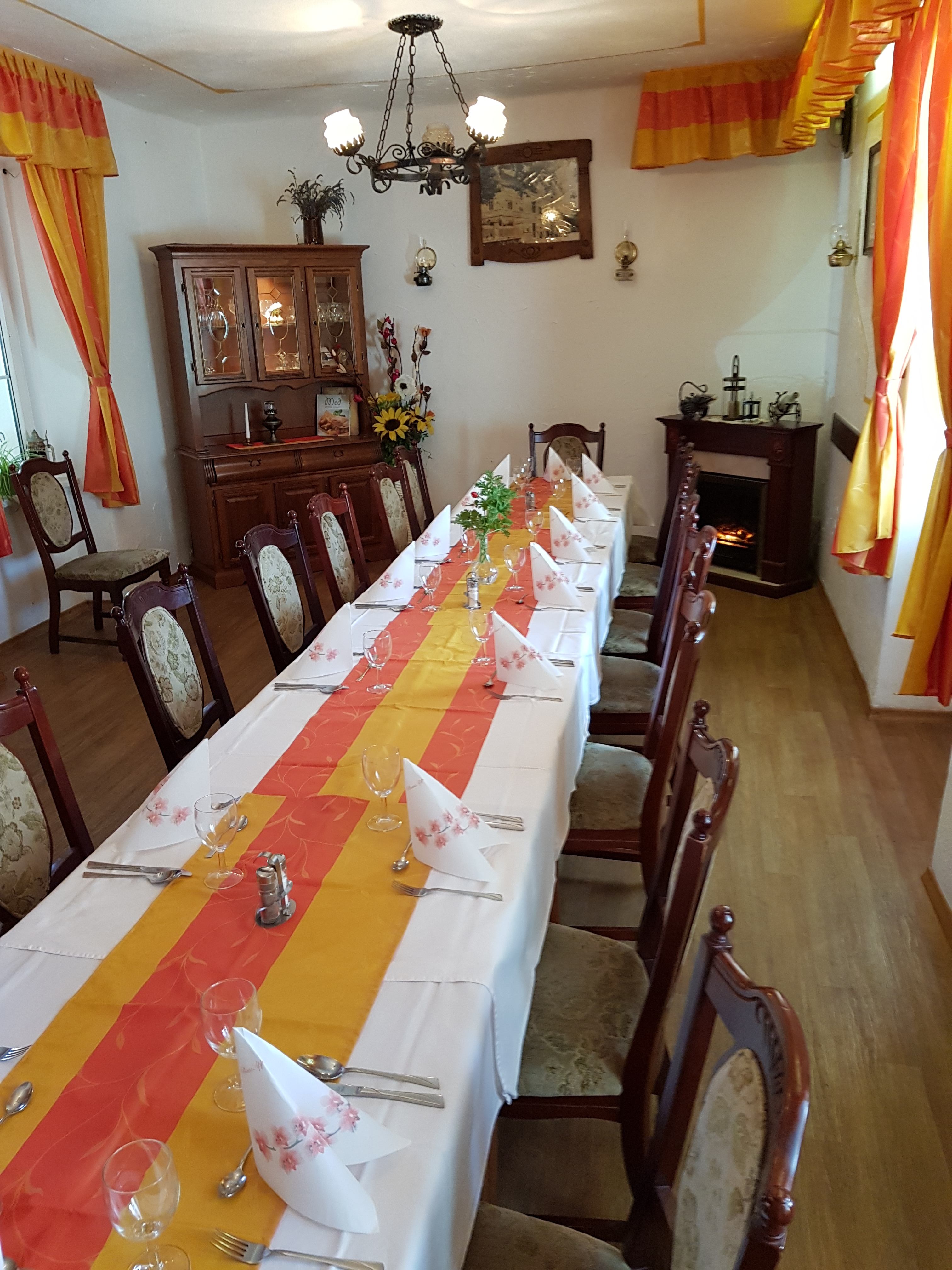
Anže then showed me around the other parts of the deceptively large building, which features two additional rooms for functions.

The restaurant was built in the mid-19th century. In bygone days there was a barn next door for the horses of horsemen who stopped in Selo pri Žirovnici on their onward travels and stayed in rooms above the barn.

Today you too can stay there – though above the restaurant rather than in the barn! – in the recently refurbished attic rooms, which are simple but make a bargain place to stay and ideal base for exploring the area.

Gostišče Osvald is in close proximity to Čopova hisa (Čop’s House), the birth house of Matija Čop, the first Slovenian philologist, literary historian and librarian, one of the greatest European scholars of his time and a good friend and mentor of France Prešeren.

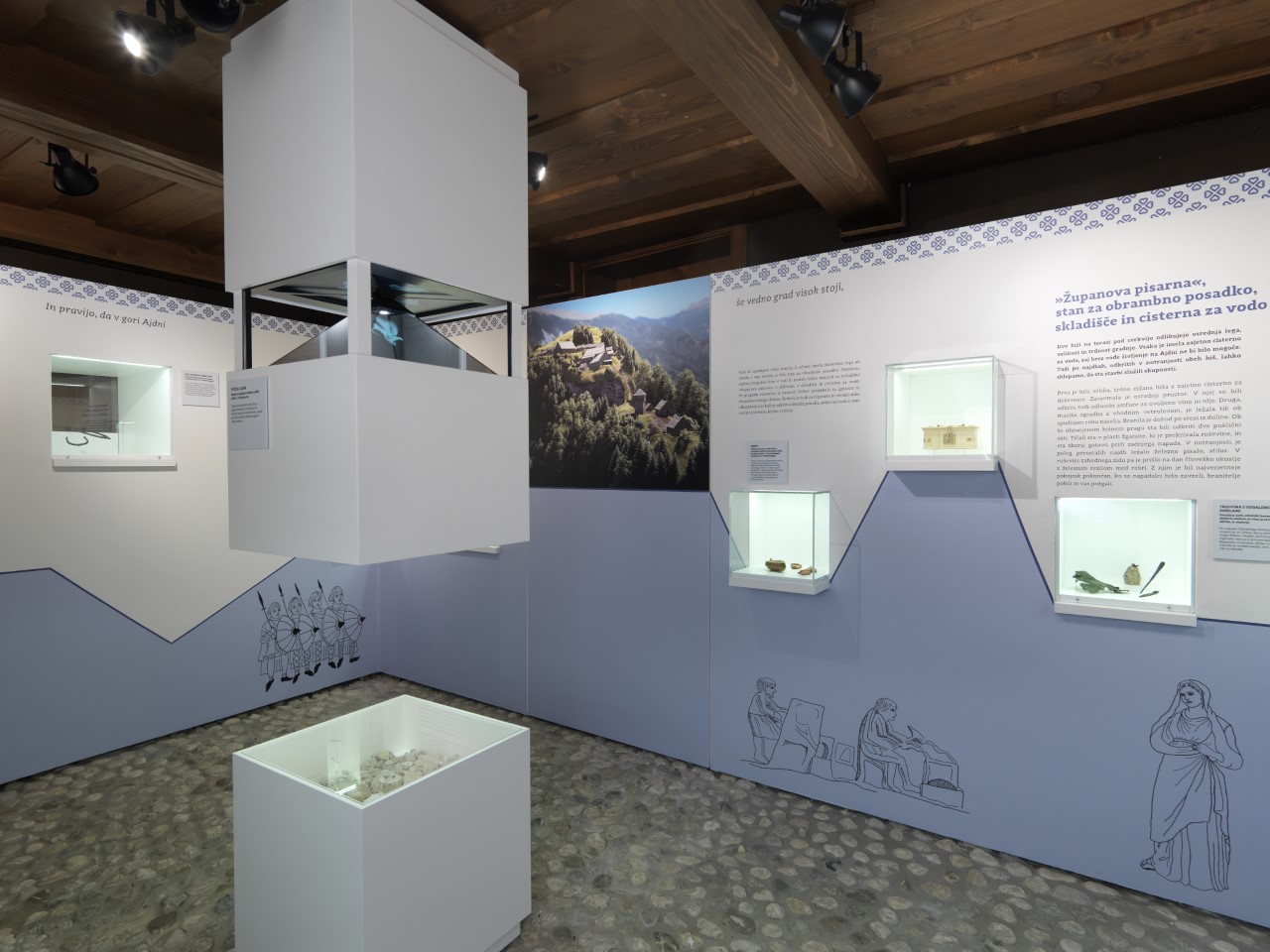
His birth house is now also home to the Žirovnica Tourist Information Centre as well as the Ajdna Museum Room, featuring an exhibition of artefacts found during archeological excavations at Ajdna. Read more about hiking to Ajdna in one of my previous blog posts.

Also close by is the Avenue of Famous Men, located in front of the primary school in Žirovnica, and part of the Žirovnica Path of Cultural Heritage. You can take a horse and cart ride along the path every fourth Saturday in the month from March to October.

The ‘avenue’ features bust statues of five of the most famous and influential men from the Žirovnica area –Anton Janša, France Prešeren, Fran Saleški Finžgar, Janez Jalen and Matija Čop.

Click here for more information about what to see and do in Žirovnica and here for more about what, and where, to taste Žirovnica, and keep an eye out for more ‘tasty’ blogs to come too!

© Adele in Slovenia
The Poignant Past + Delicious Present in Tržič: Mauthausen and Gostišče Karavla

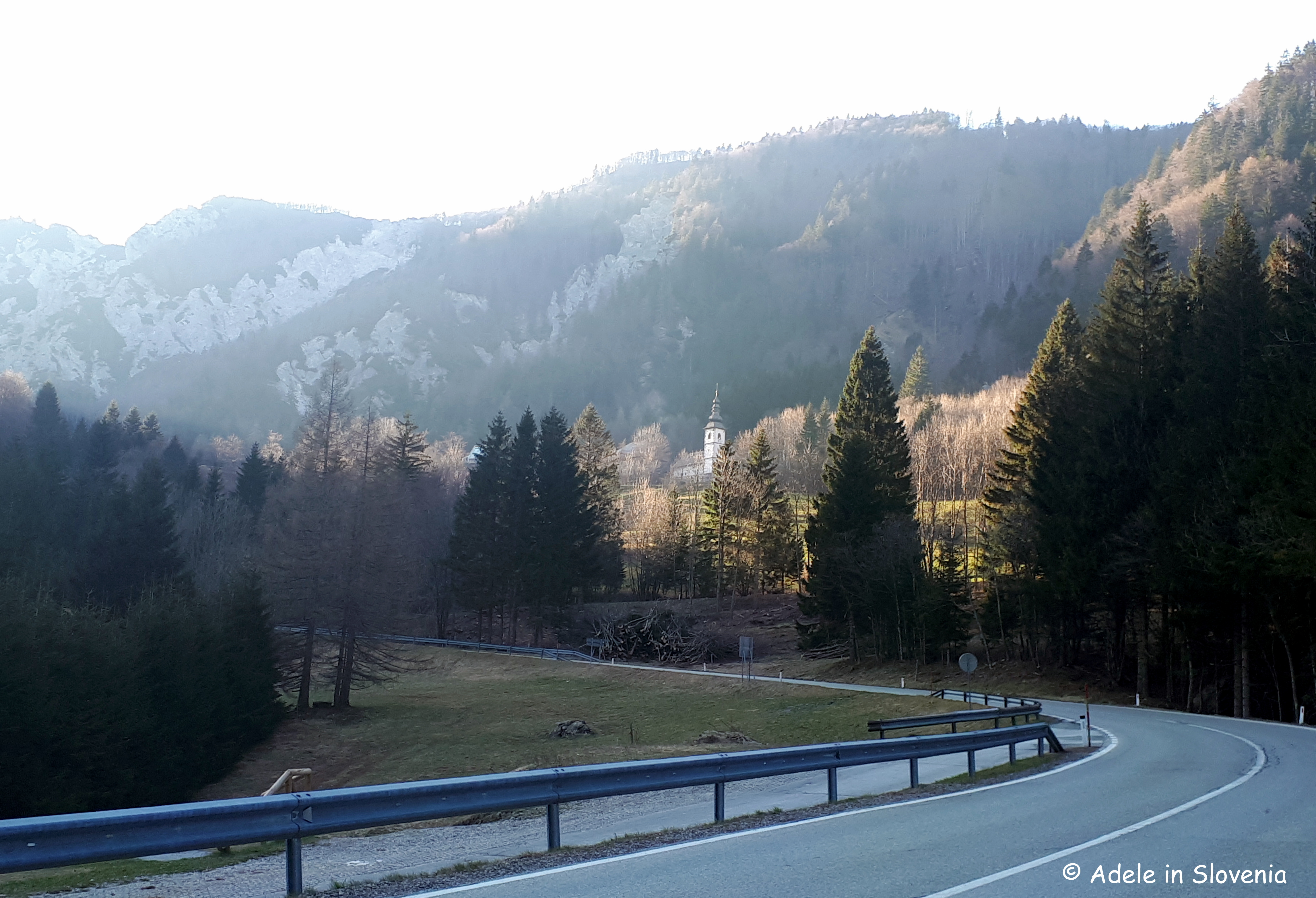
The tranquil St. Ana valley is squeezed between the Karavanke mountains along the road leading from Tržič to the Ljubelj pass. The valley was named after St. Anne’s church, which can be seen nestled beneath the mountains shortly before reaching the top of the windy road.

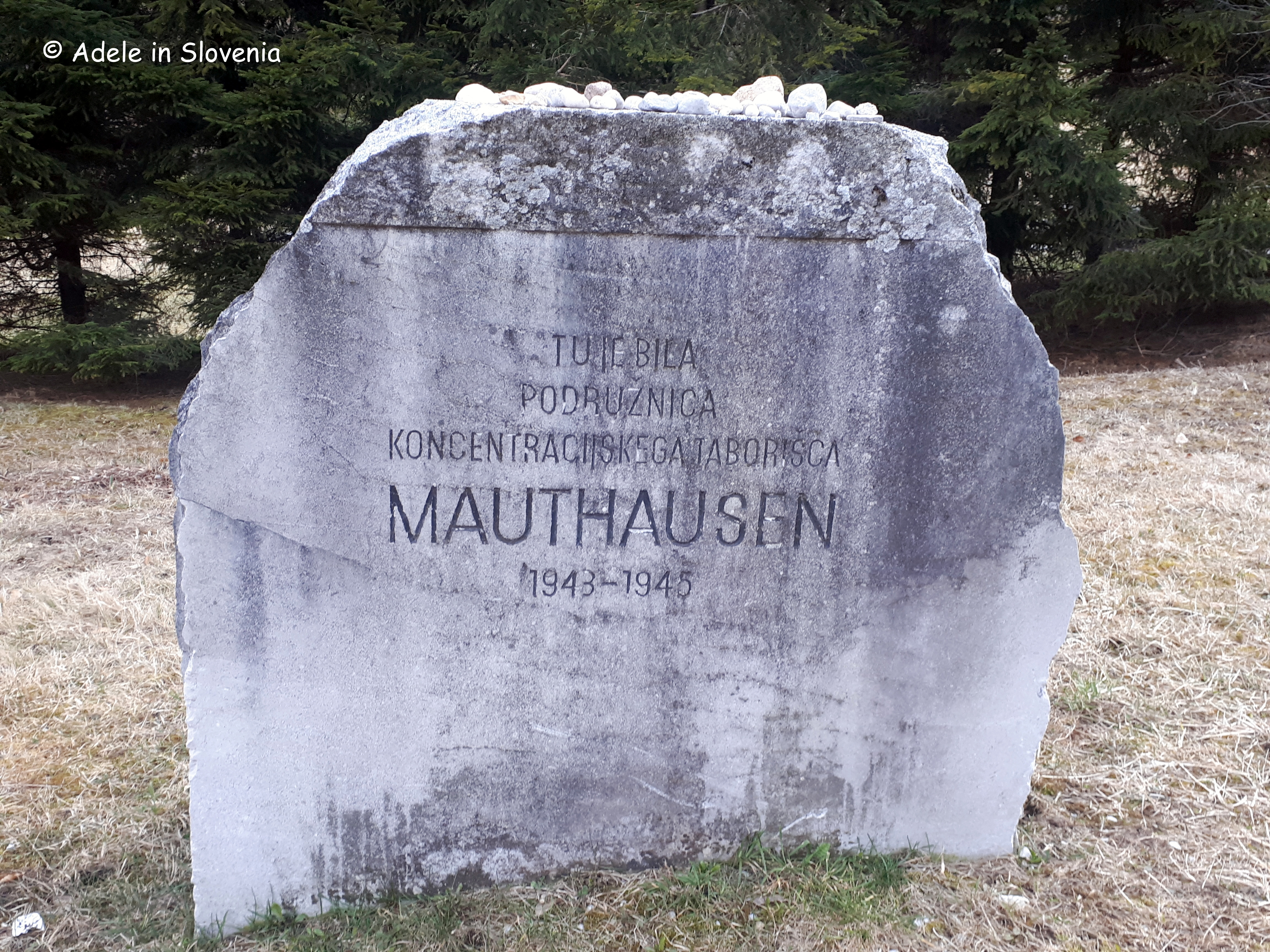
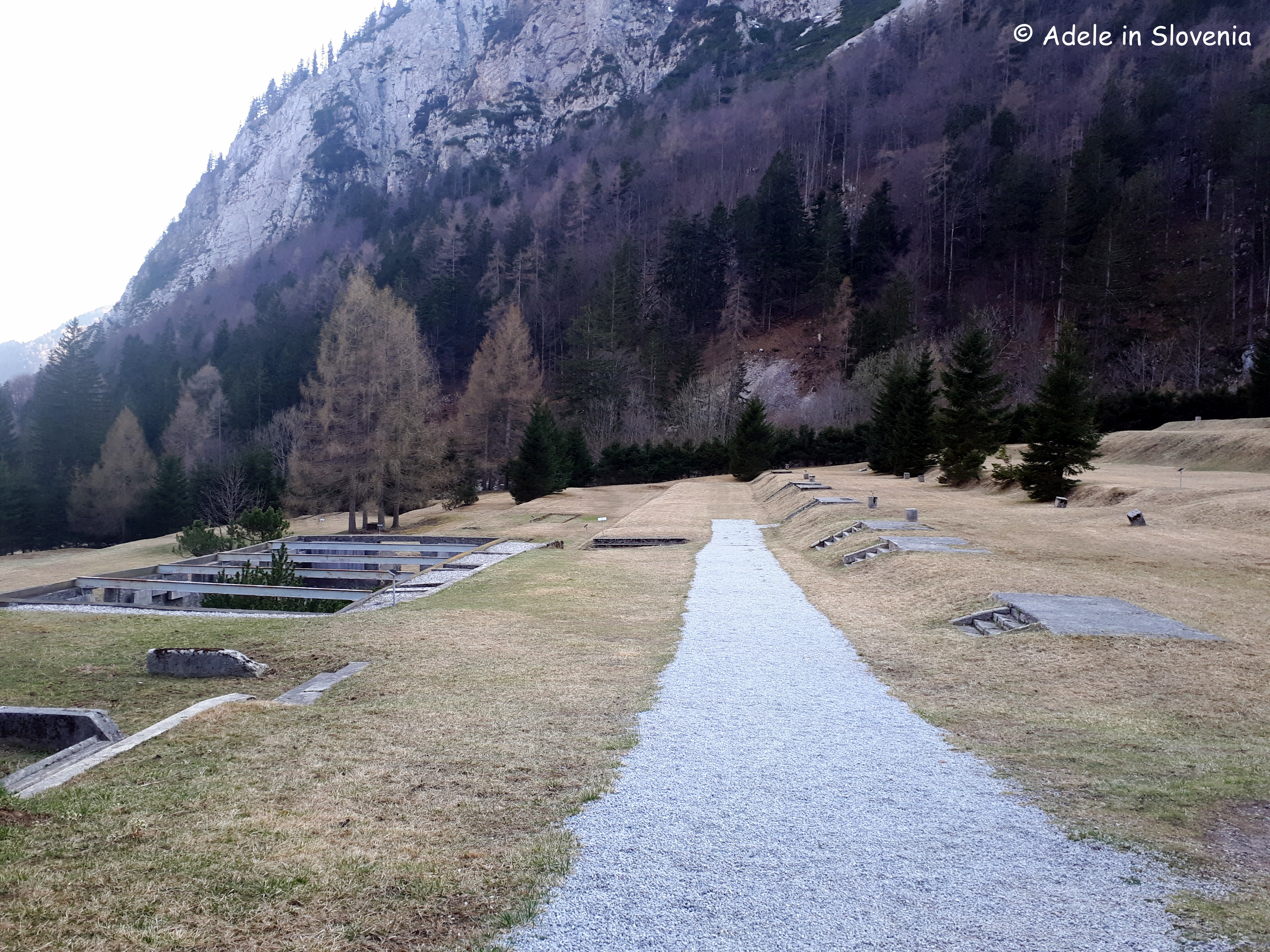
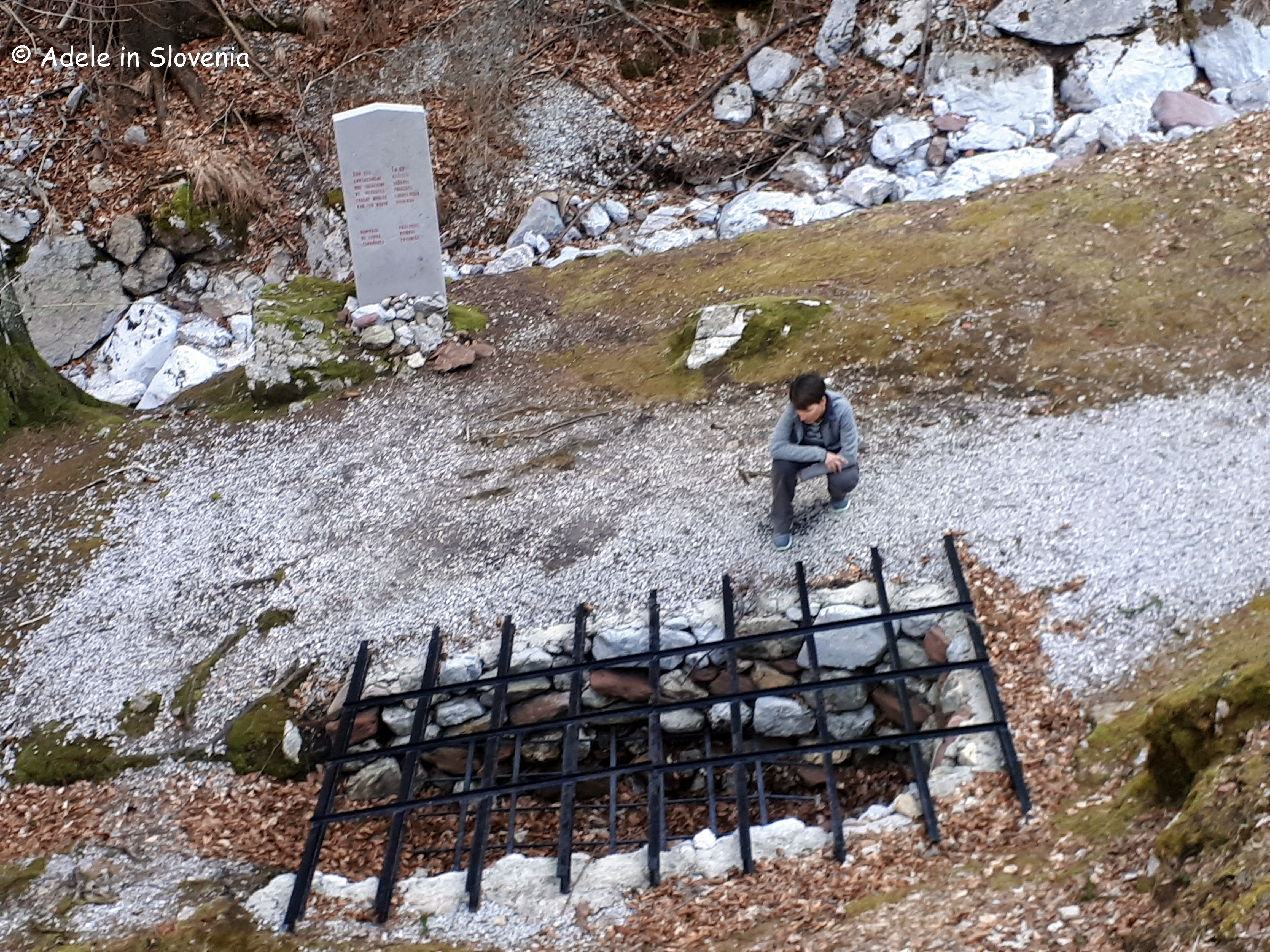
The valley has a particularly poignant past, as it was the location of a former World War II Mauthausen concentration camp, also known as the Ljubelj Labour Camp, the remains of which can still be seen today at the preserved and protected cultural site. It was the only World War II camp of its kind in Slovenia.

The concentration camp, which was a branch of the Mauthausen Nazi camp, was established during the time of the construction of the Ljubelj tunnel on the strategically important road between the then Nazi Germany and the southern occupied territories.

Today the remains have been arranged into a memorial park.

Though its not the usual type of tourist attraction, those interested in history, as well as anyone with a sense of respect for the past – myself included – can’t fail to be moved and feel somewhat poignant when strolling through the camp mindful of the dreadful atrocities that took place there.

The first 330 political internees were brought to the camp on 3rd June 1943, and the camp closed on 7th May 1945. There was a maximum of 1,300 internees, the majority were French, whilst there were also Poles, Yugoslavs, Italians, Czechs, Jews, Norwegians, Belgians, and Greeks, among others, the majority of which met their death while interned at the camp.

Click here to take a virtual walk through the camp.

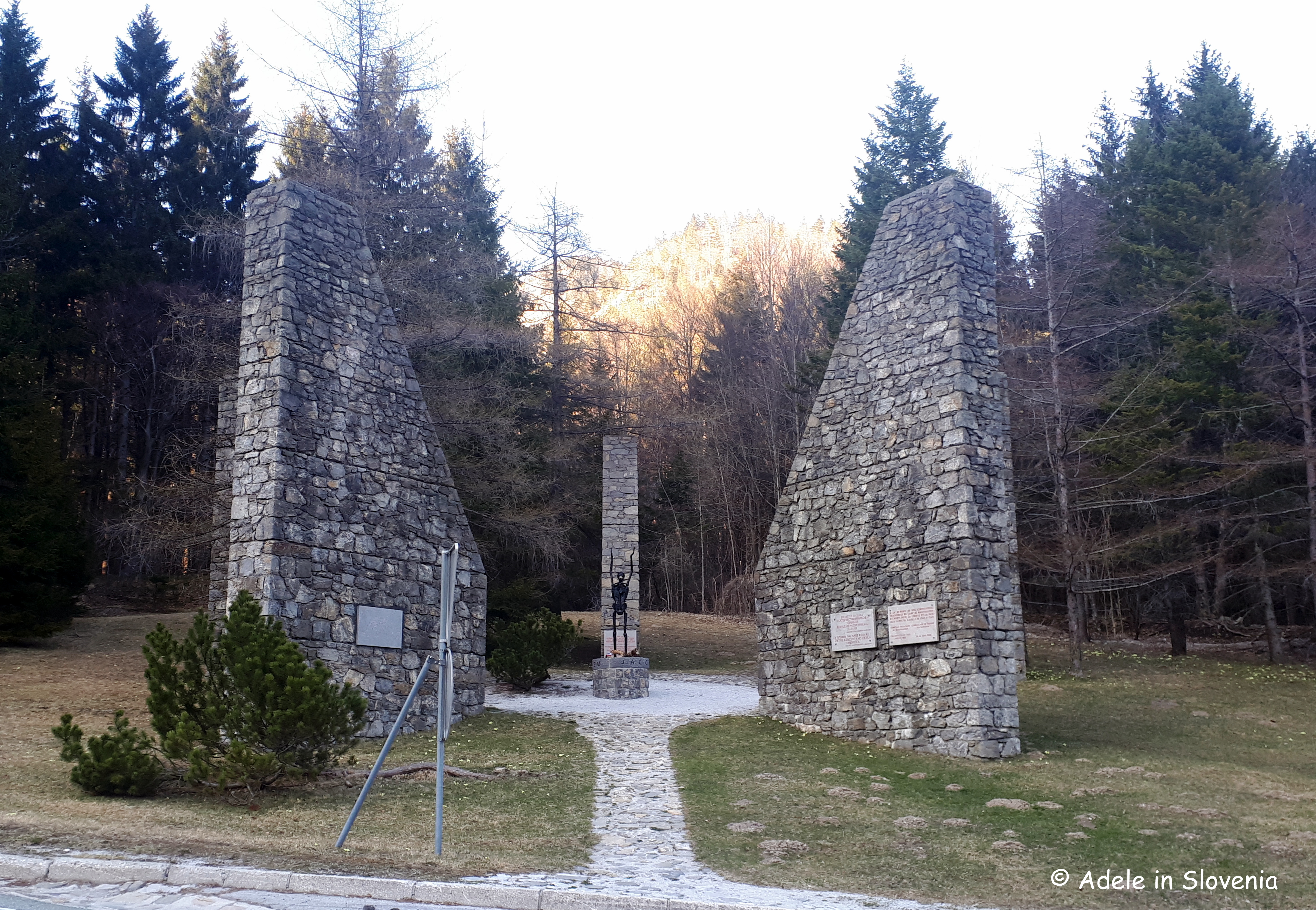
On the opposite side of the road there is a monument with commemorative plaques giving more information (in various languages, though not in English).

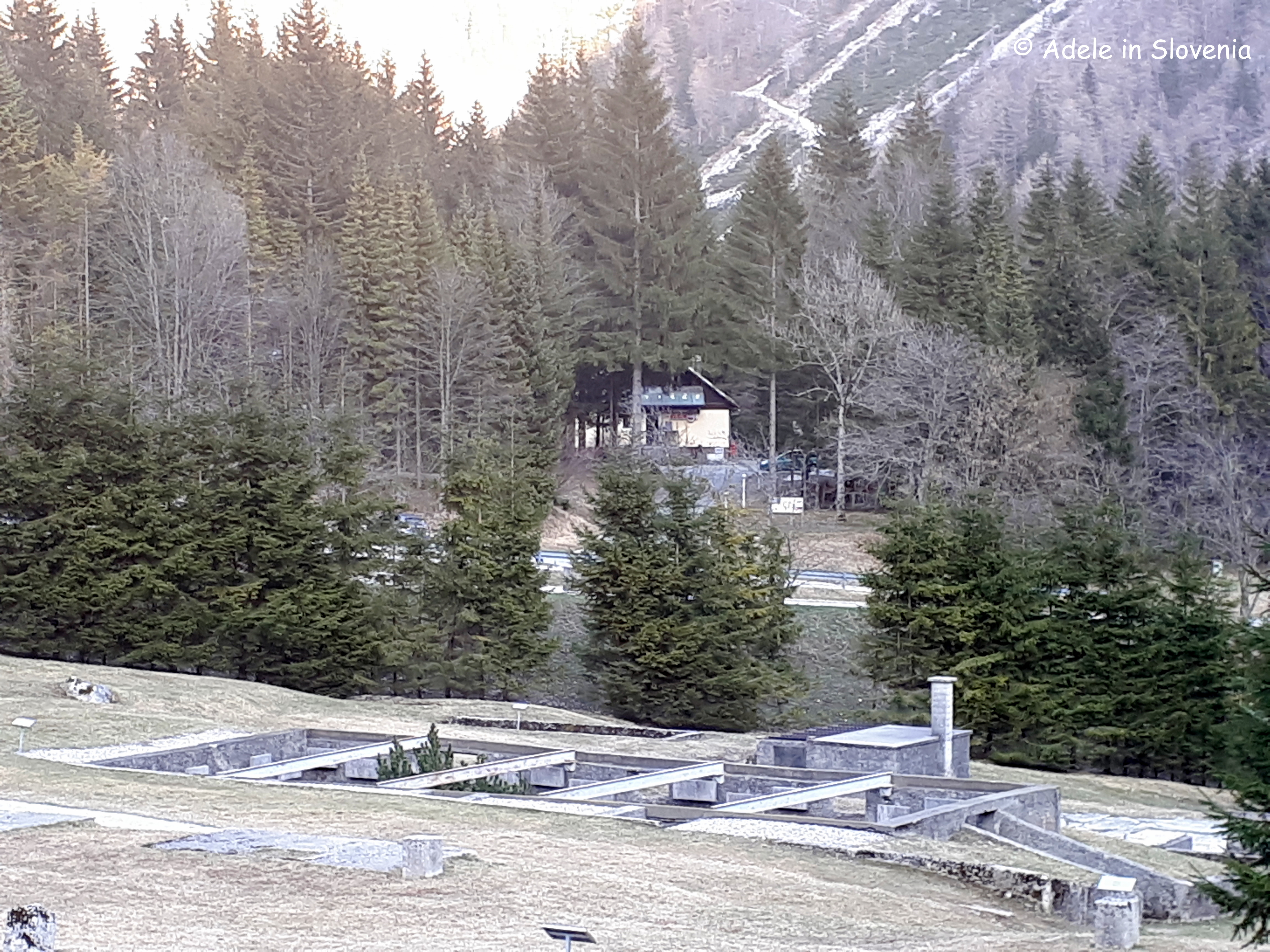
From the Mathausen camp you can see a building on the opposite side of the road almost hidden in the forest. This is Gostišče Karavla (formerly known as Gostišče Koren), which I must admit to having overlooked on previous visits to the area.

However, following my recent visit I can attest that a meal here is a ‘must’ – thanks to both the fantastic food and the exceptionally friendly team – and I highly recommend rewarding yourself after a sightseeing visit to the area, or after a hike, bike ride or, in winter, a ski tour, or just ‘because you’re worth it!’

The menu is varied, with a focus on game and Angus steaks, though there are also plenty of other traditional Slovenian dishes and numerous options for vegetarians too.

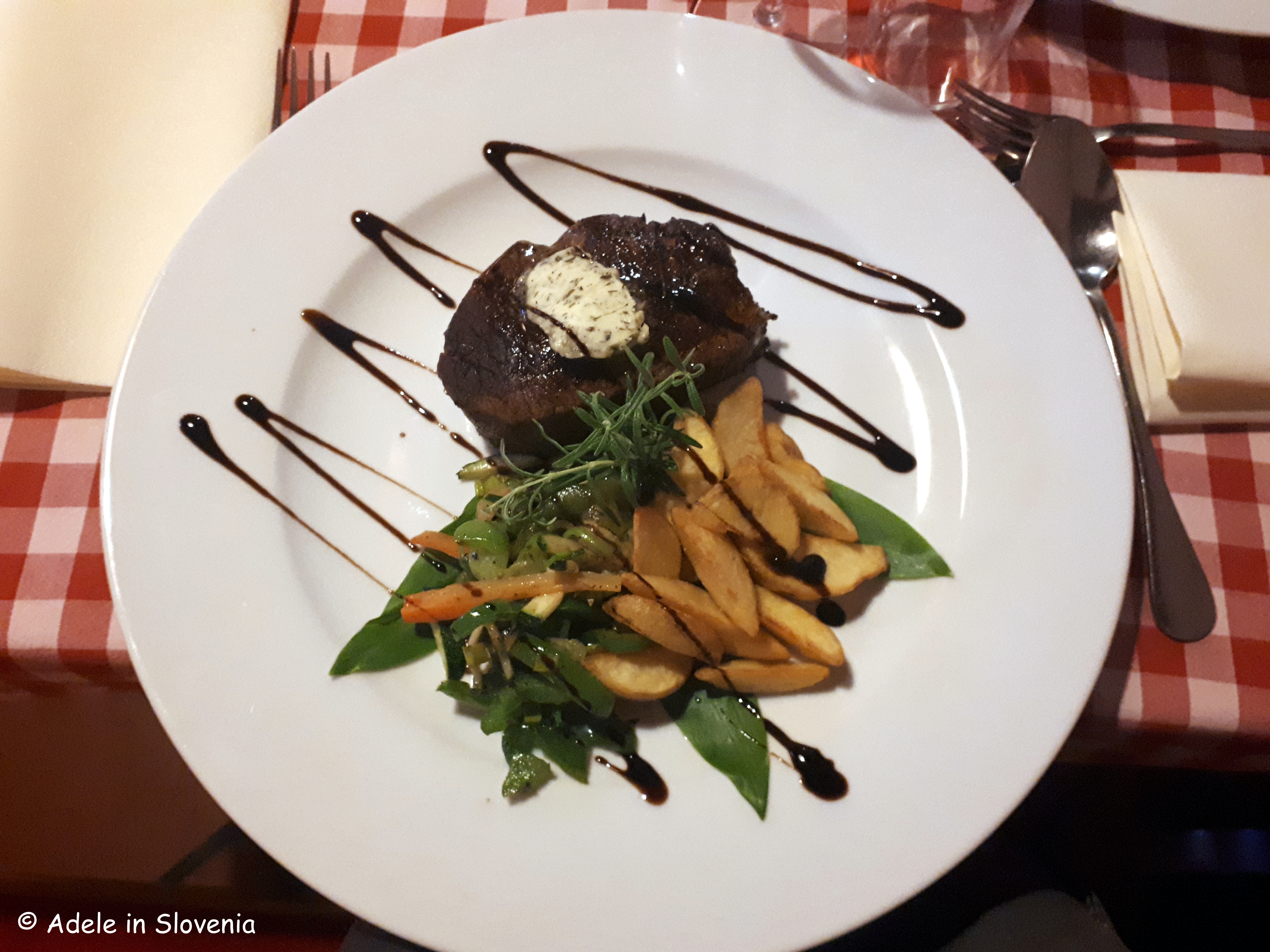
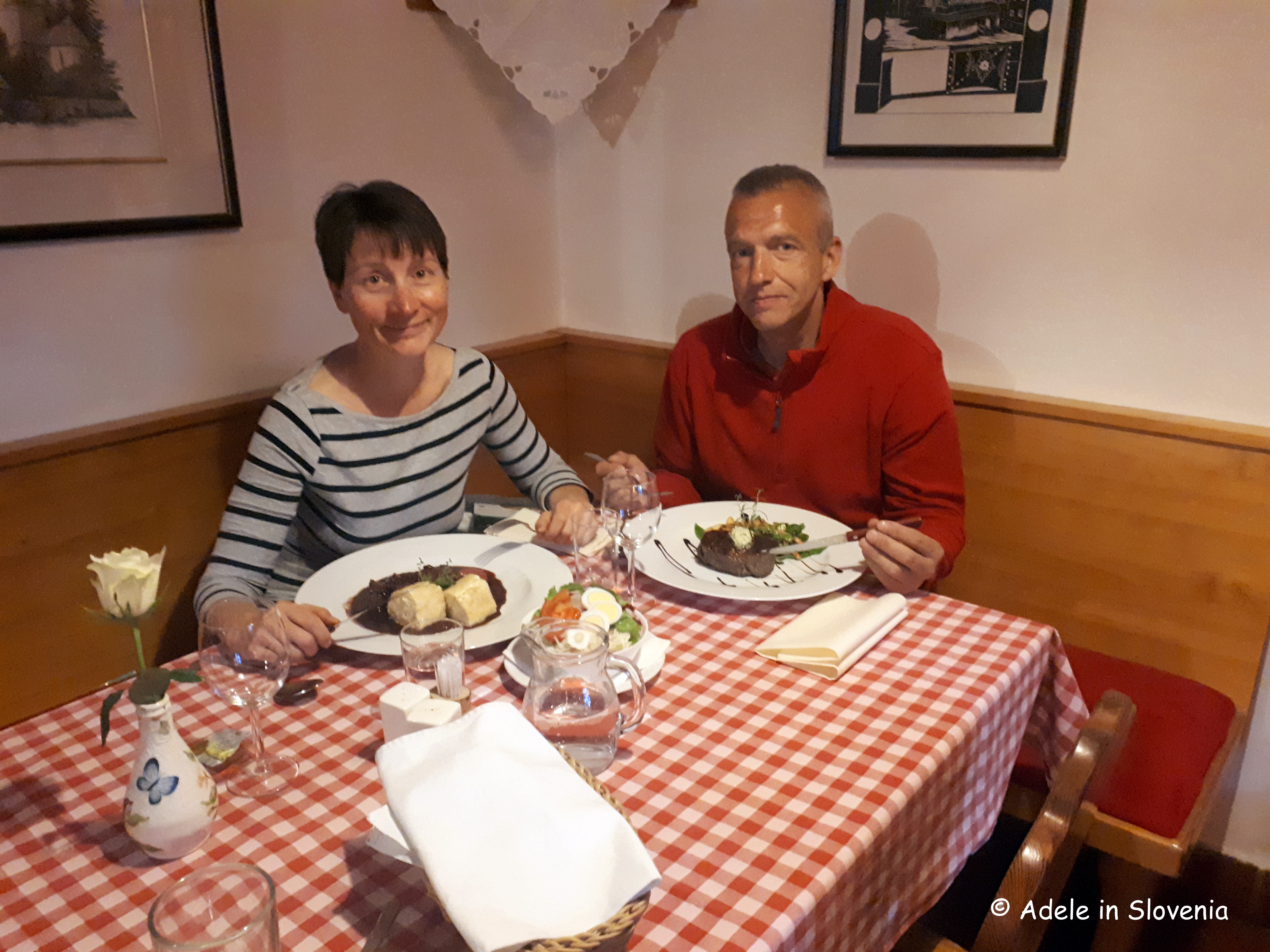
As the focus is on game, I just had to try the wild boar with cranberries, which is served with homemade curd cheese štruklji, and the black Angus steak was cooked to perfection and ‘melt-in-the-mouth’ delicious!

And although, for a change(!) it was ‘dinner-a-deux’…

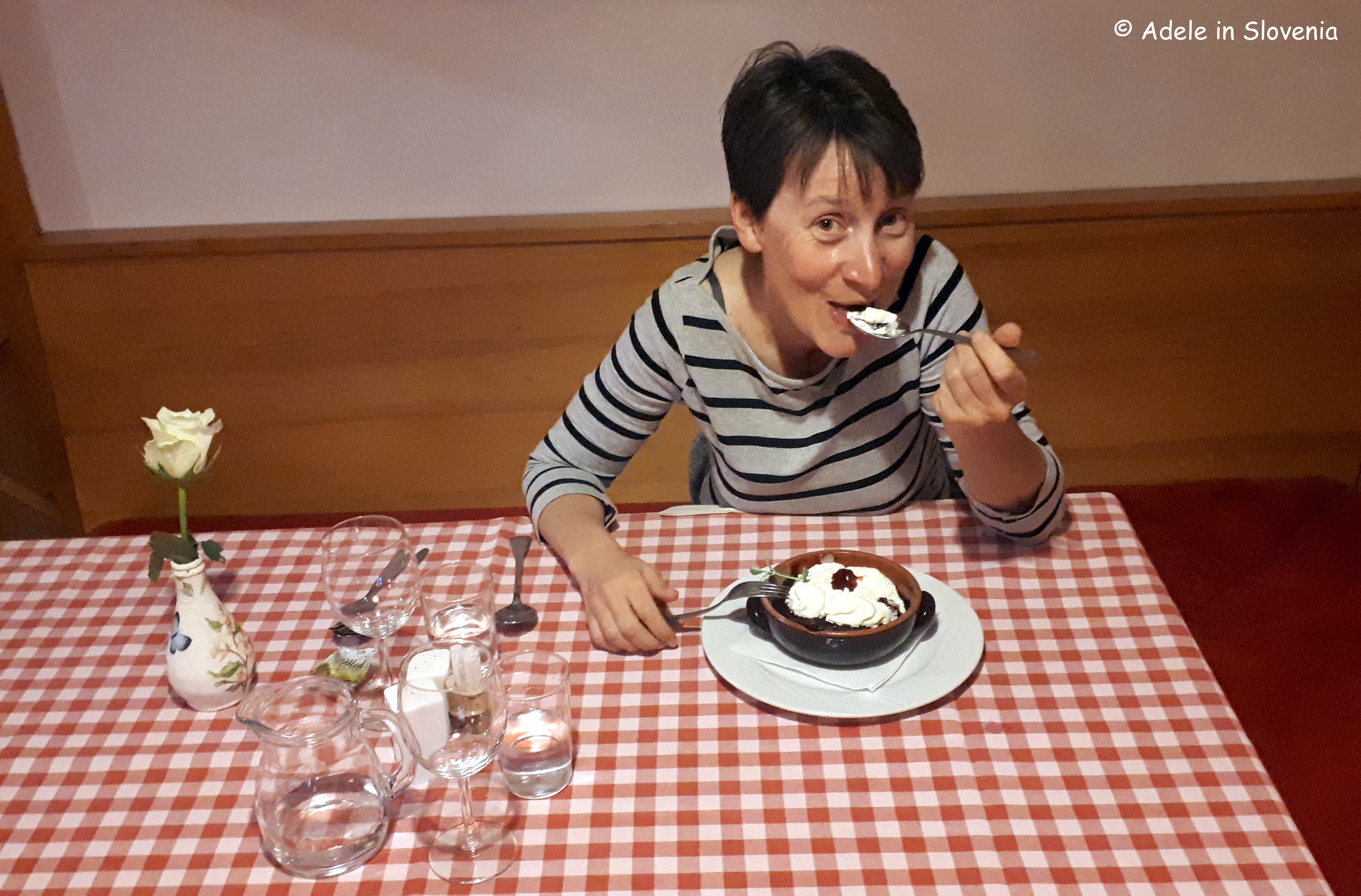
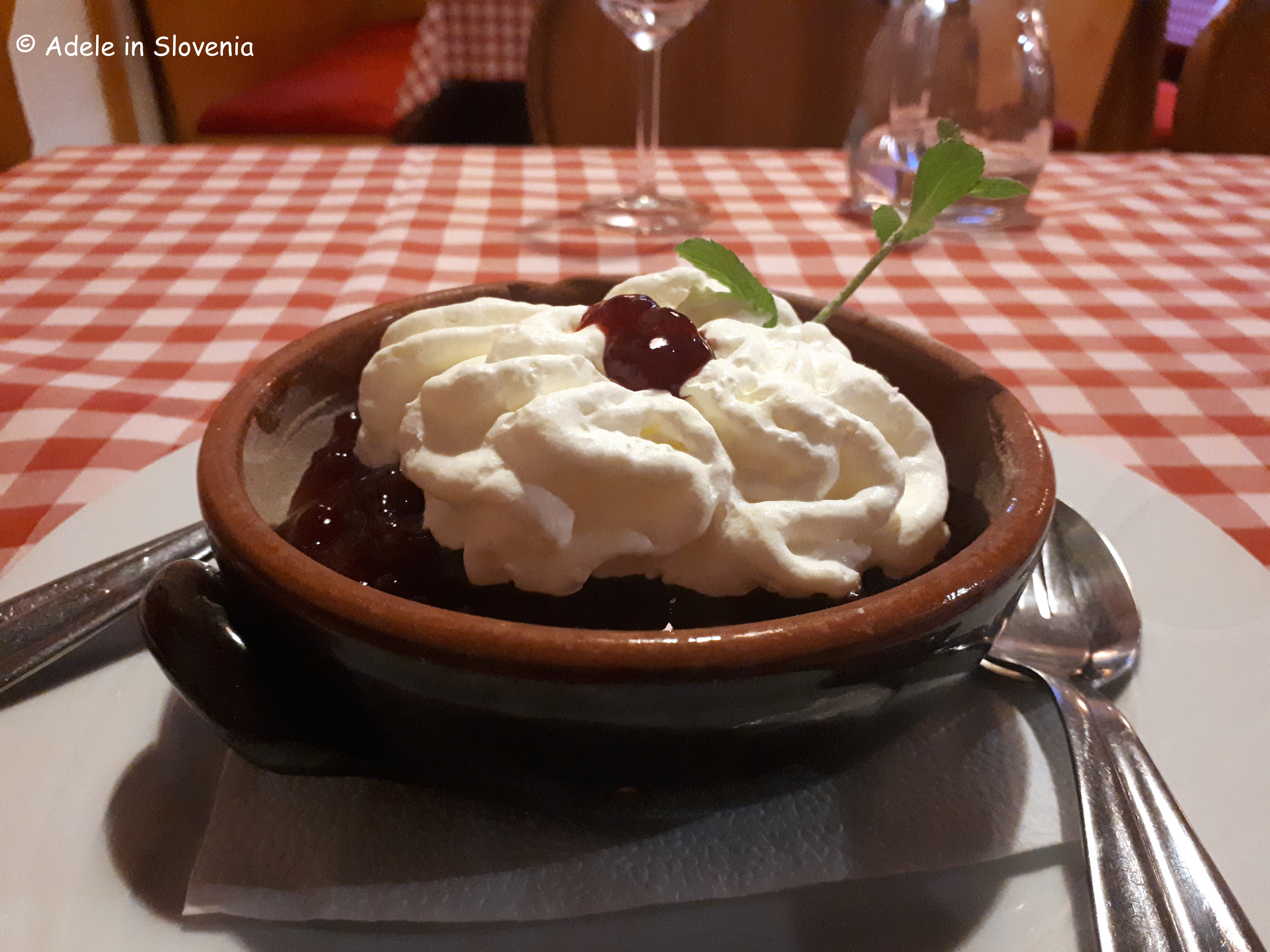
…the dessert – the house speciality buckwheat sponge with hot cranberries and cream – was mine, all mine!

Click here to find out more about all this and all the other attractions in the Trzic area, and here to read my previous post about hiking and other activities at Zelenica and Ljubelj.

© Adele in Slovenia

Lovely Little Ljubno and the Brezje Pilgrimage Trail

The village of Ljubno might be small but its numerous beautifully frescoed houses and ‘miraculous’ church are a real feast for the eyes!

When driving along the Gorenjska motorway from east to west, just before reaching the Ljubno tunnel, to the left you can see the village and its closely-packed houses. However, its not until you get up close and take a walk among the houses, that you get a true sense of this small village.

Ljubno was once a centre of pottery in the Gorensjka region. Today you can find out more about the tradition and see examples of Ljubno pottery at the Manufaktura pottery shop and workshop in Radovljica’s old town centrehttps://adeleinslovenia.com/2019/01/05/manufaktura-a-new-year-and-a-new-addition-to-radovljicas-linhart-square/.

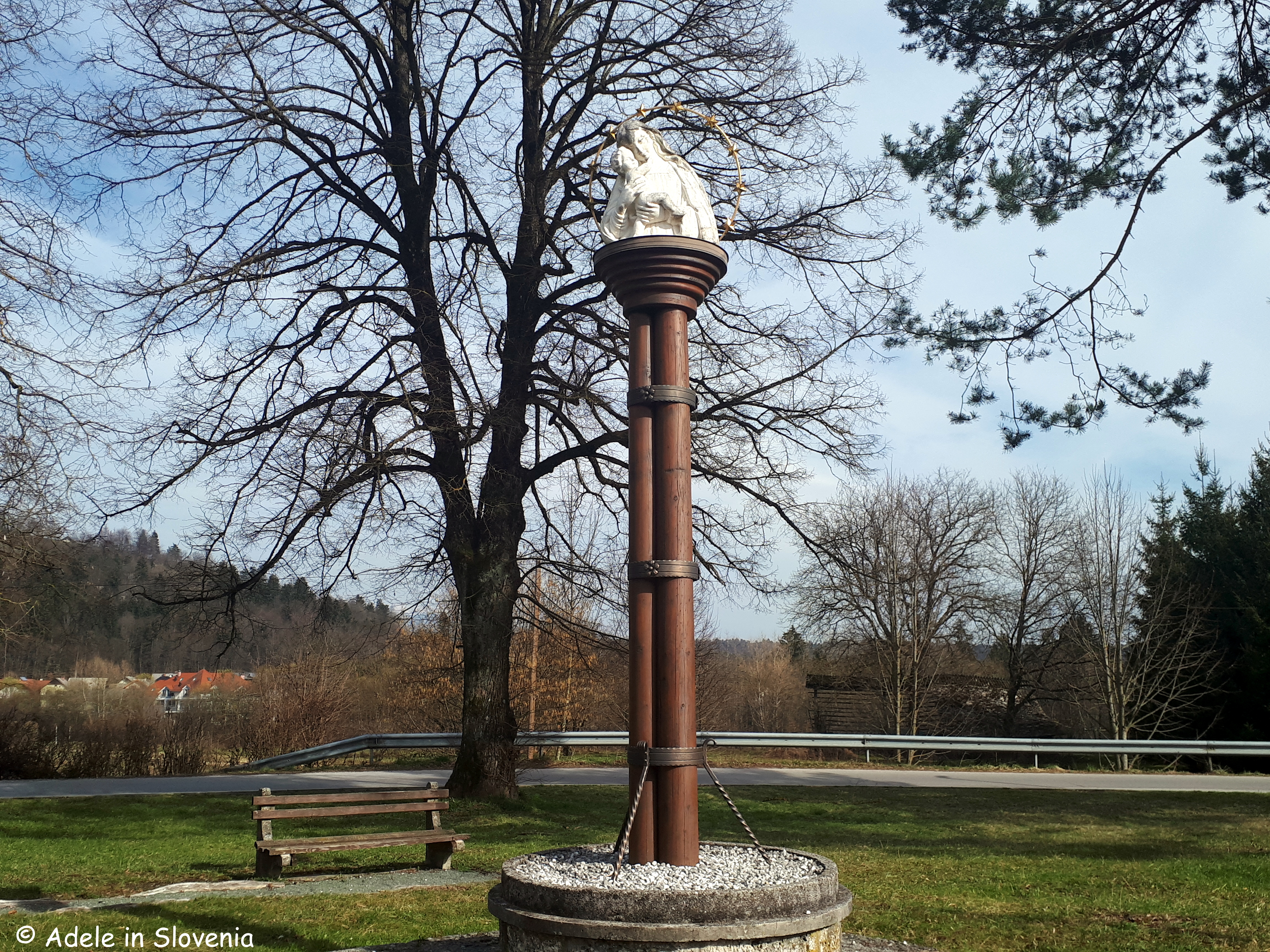
There is an interesting story of how Ljubno was transformed into an important pilgrimage place in the 17th century. During renovation of Ljubno’s village church – the Church of Mary Help of Christians, also known as the Church of the ‘Stricken’ Mary – a builder struck the statue of Mary and blood poured out of the ‘wound’ and wouldn’t stop. The story quickly became known throughout the land and attracted ever more pilgrims. Today it is not as popular as nearby Brezje, however, when in the area, it is still worth a visit.

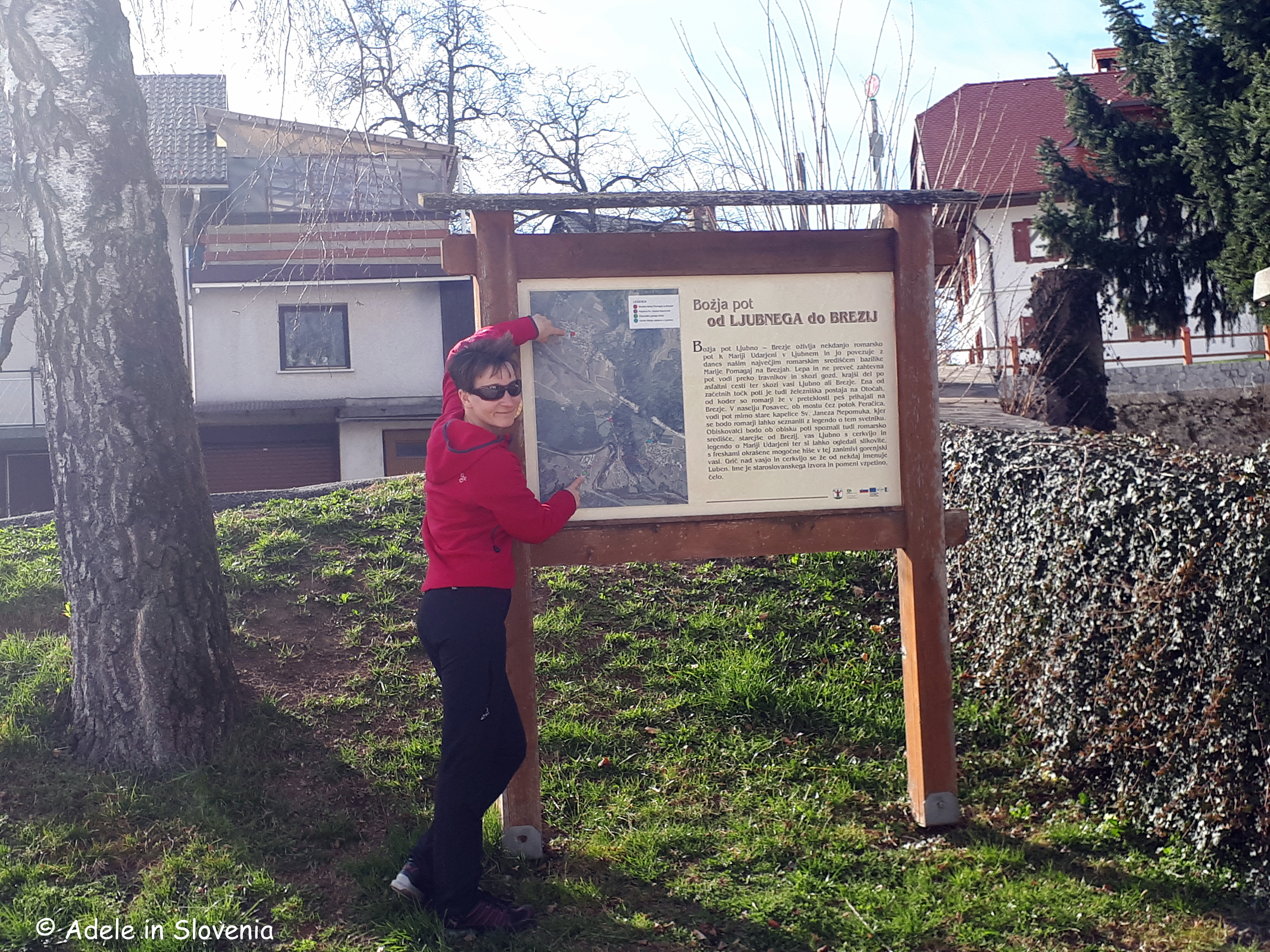
A visit to Ljubno can be an extension of a walk along the Brezje Pilgrimage Trail (Božja pot), which today runs along the once most commonly used pilgrimage trail from Otoče to the Basilica of Mary Help of Christians in Brezje. There is an information board (in Slovene) about the trail adjacent to the church.

The path in Otoče begins at the railway station, hence making it ideal for those reliant on public transport.

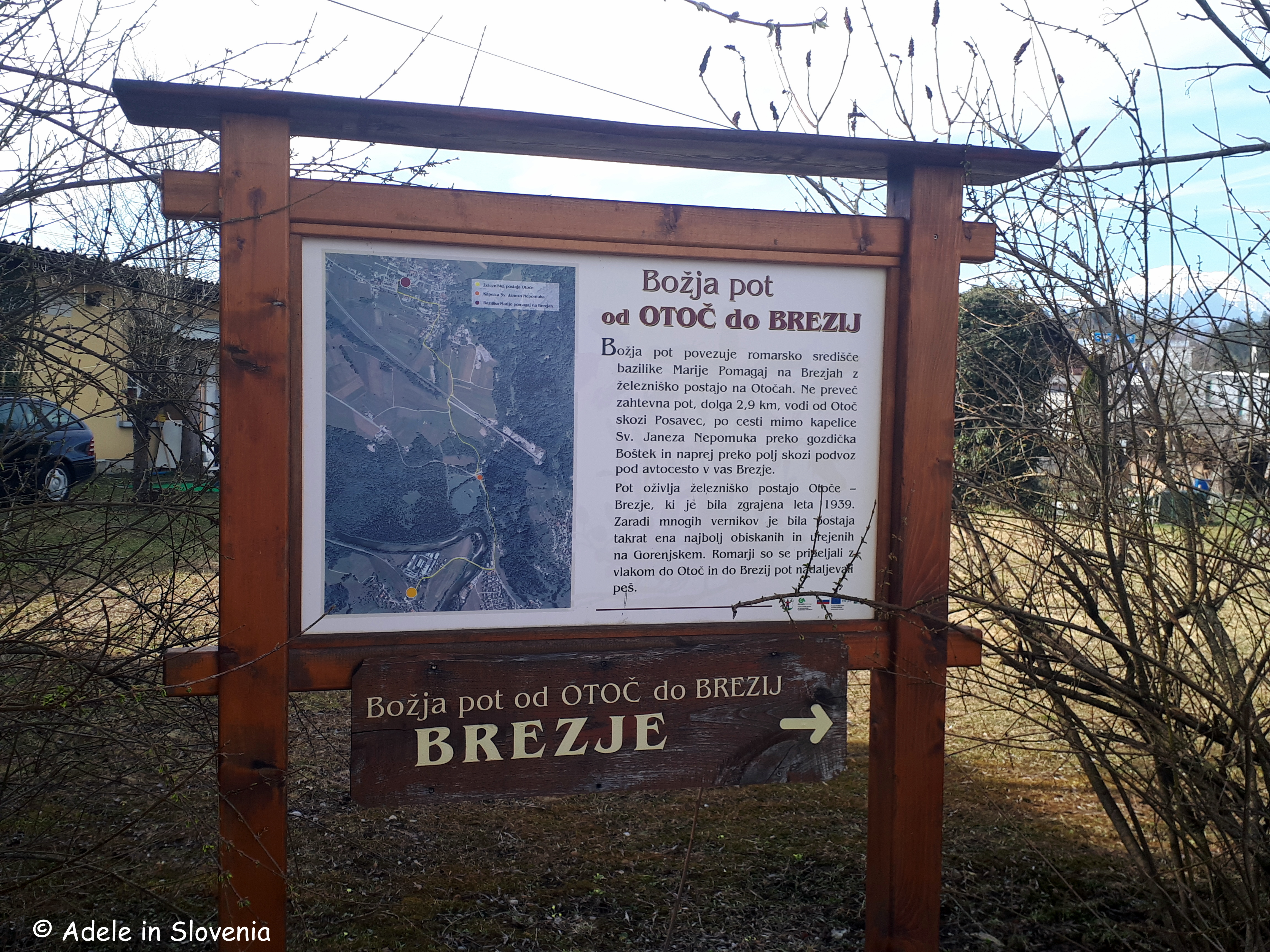
Immediately on leaving the station you will find the first information board about the trail (in Slovene).

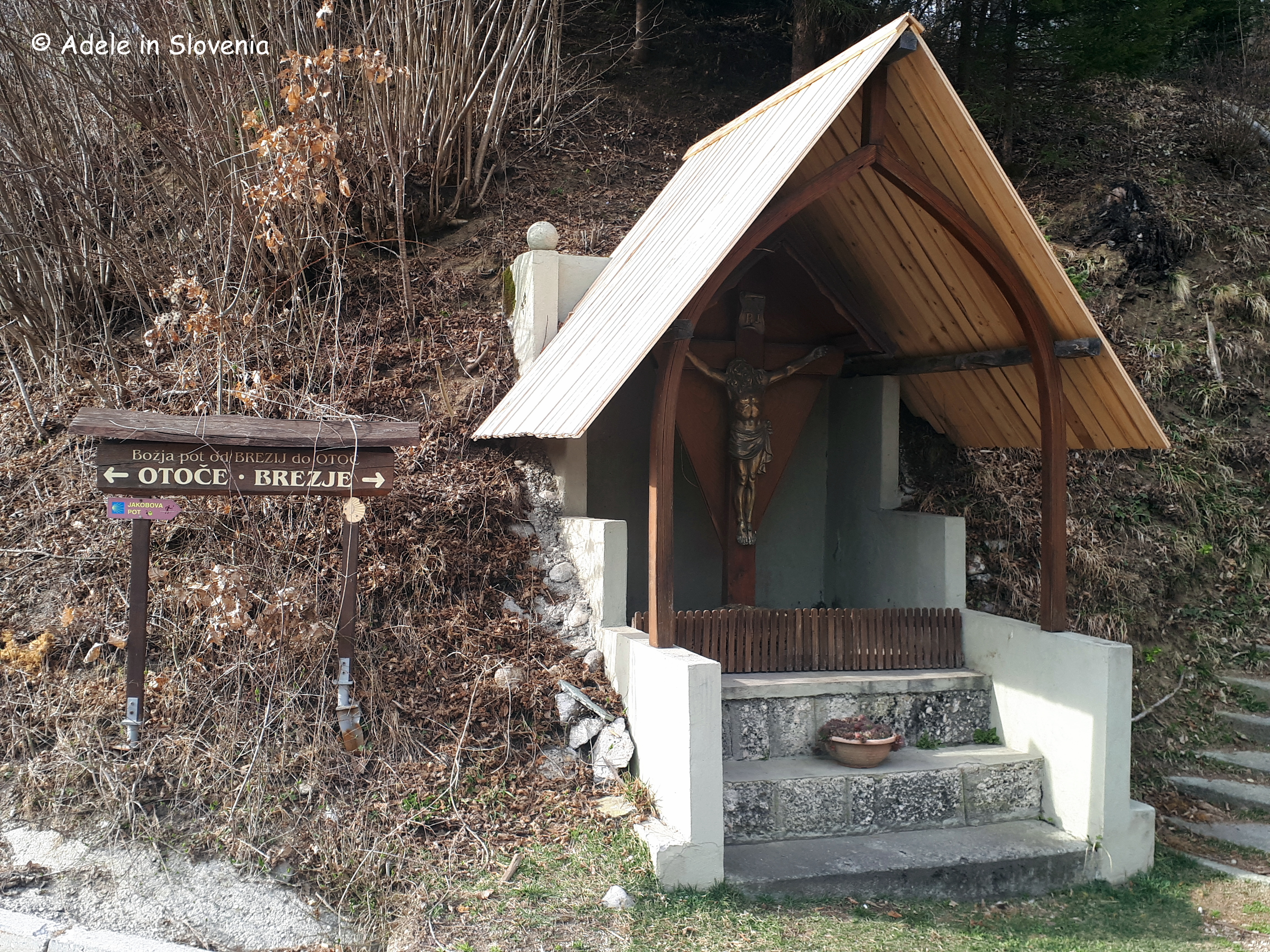
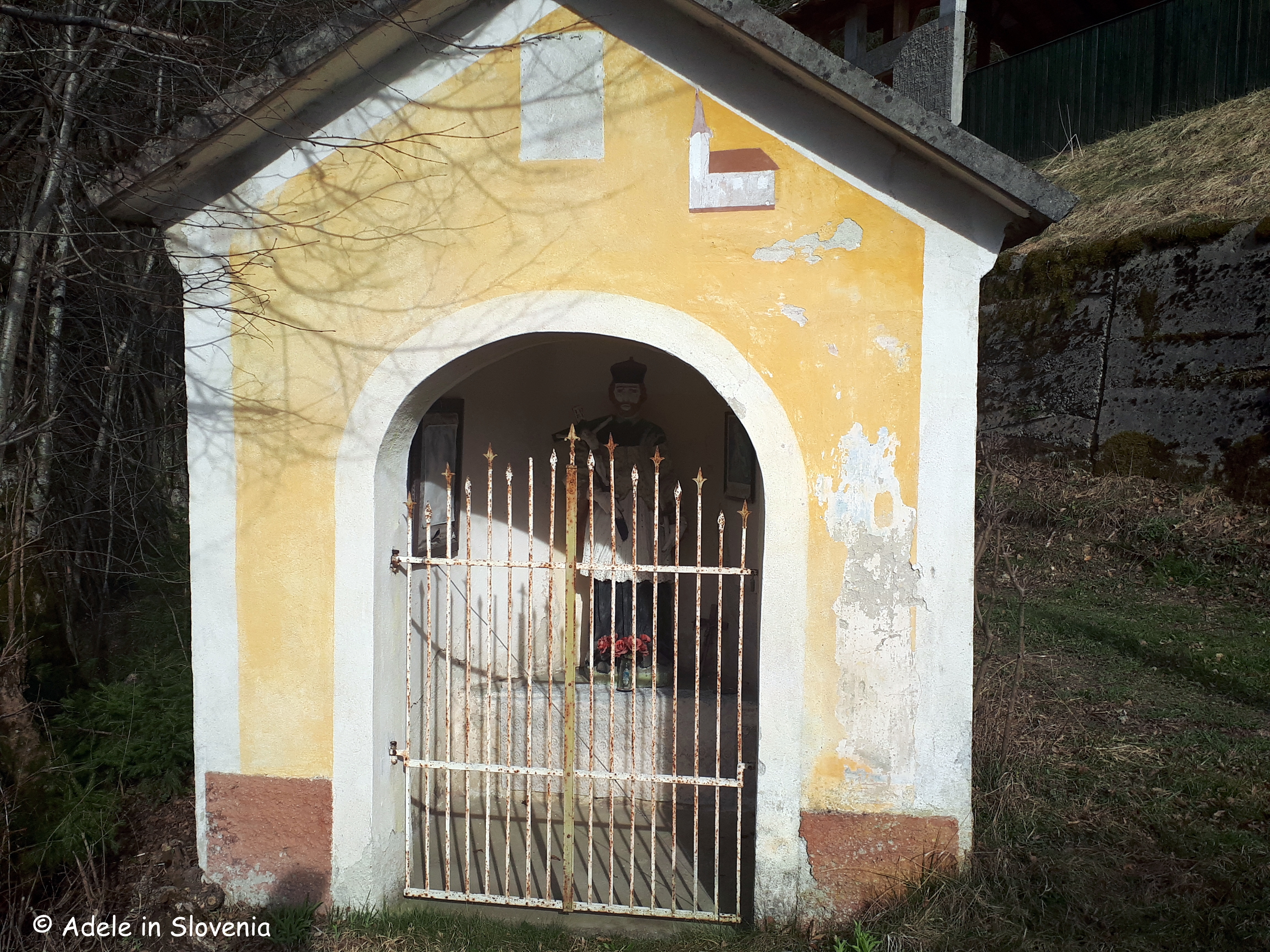
First walk along the village road to the junction with the main road and turn left. After just a few metres you can choose to follow the marked path to make a detour to Ljubno, or take the direct route to Brezje. If you opt for the latter, which is cca. 5kms one-way, continue along the verge of the road for a further cca. 5 mins until you reach the shrine of St. John of Nepomuk (kapelica sv. Janeza Nepomuka).

After crossing the bridge over a stream take the wooden steps to the right of another shrine that lead up steeply on a forest path.

On emerging from the forest head towards the underpass under the motorway. Shortly thereafter you will see the sign for the village of Brezje. Follow the road up a short incline into the village and then just ‘follow your nose’ to the basilica, you can’t exactly miss it!

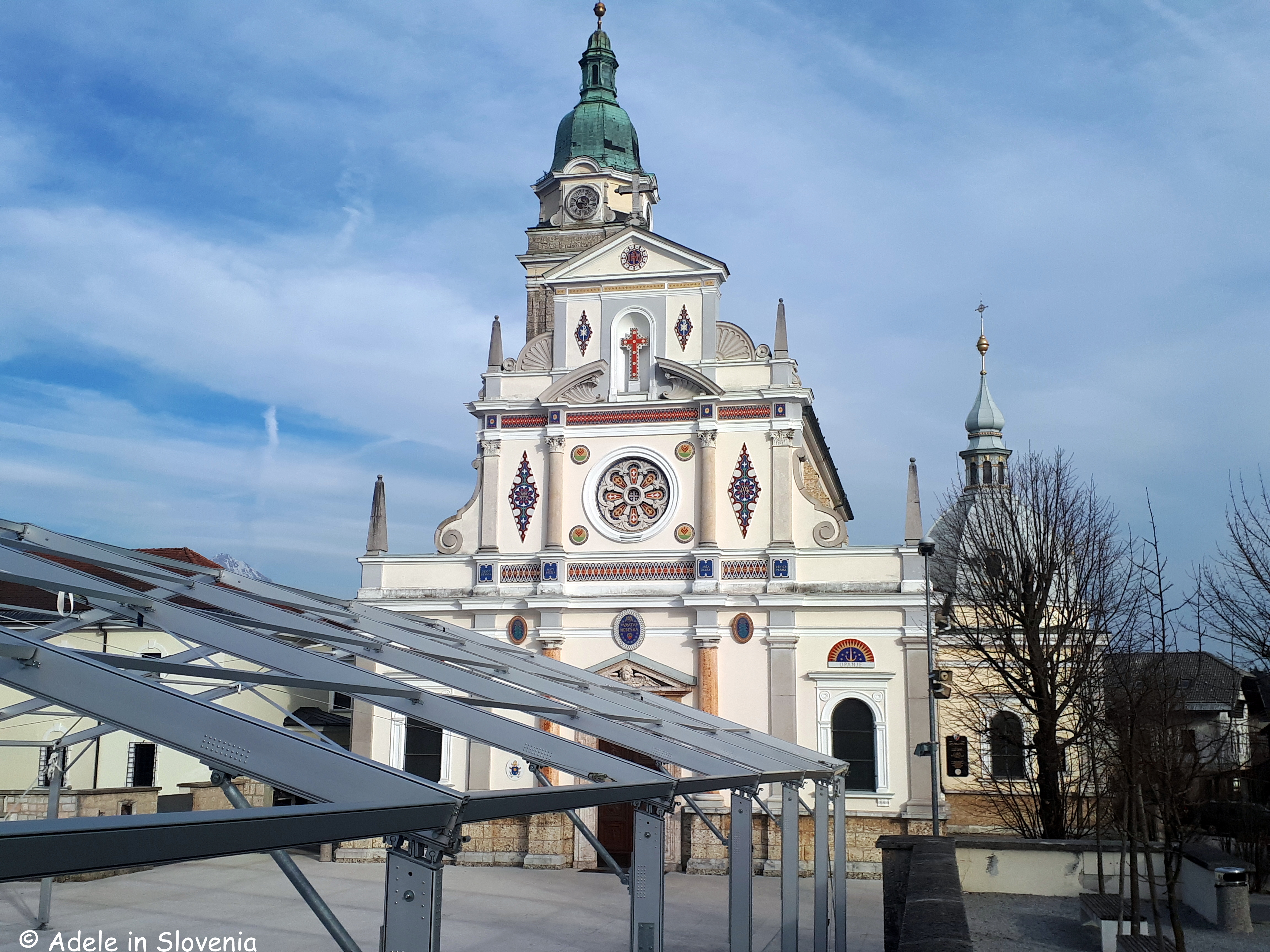
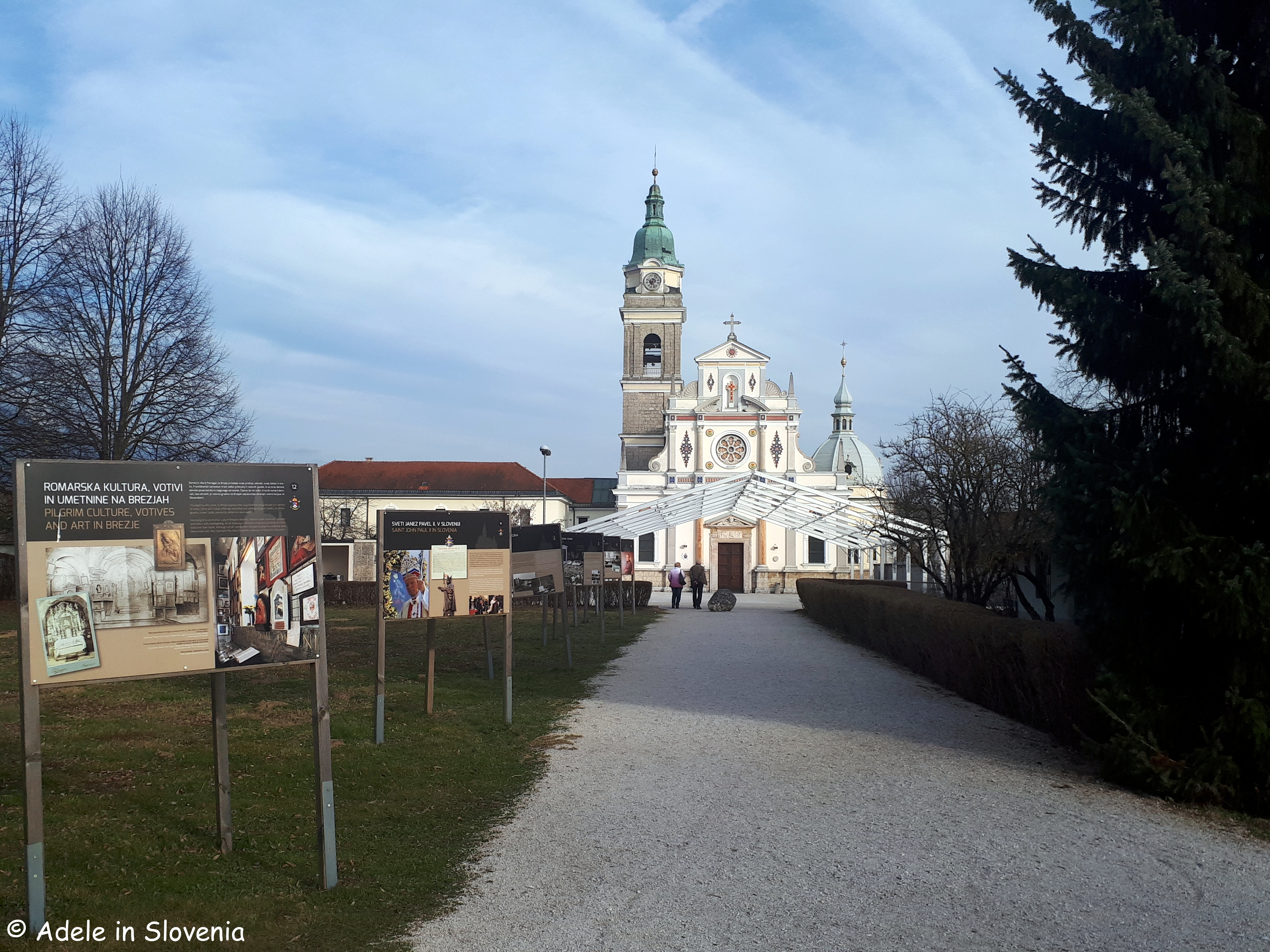
In 1988 the then Church of St. Vitus was elevated to the status of minor basilica by Pope John Paul II, who also visited in 1996. The basilica has become a popular pilgrimage destination to where people flock from all over Slovenia and further afield, too, particularly on Assumption Day, which is celebrated on 15th August and is a public holiday in Slovenia.
Whilst there you can also visit the Nativity Museum, which is located just behind the basilica and contains almost 400 nativity scenes from all over the world. Read more in a previous post here – https://adeleinslovenia.com/2017/12/10/feel-the-festive-spirit-at-the-nativity-museum-at-slovenias-national-shrine-in-brezje/
Opposite the basilica there is a small park where you can sit in peace and admire the basilica, read the information boards about Brezje’s history, and soak up the views of the surrounding countryside and mountains.

You don’t need to be a pilgrim, or even to be particularly religious, to enjoy a walk along the trail; it’s just one of the many attractions in the Radol’ca area. Click here to see even more, oh and by the way, if you happen to be in the area in April, or are planning a visit and are pondering when to come, don’t miss the Radovljica Chocolate Festival from 12th-14th April, about which I will, of course, be writing (and eating!) more soon!

© Adele in Slovenia