A Recce of the Rupnik Line

Another day of exploring the scenic Poljane valley; this time walking along part of the former Rupnik Line – a system of fortifications that were built during the 1930’s by the Kingdom of Yugoslavia as a defence line on the border with the Kingdom of Italy.
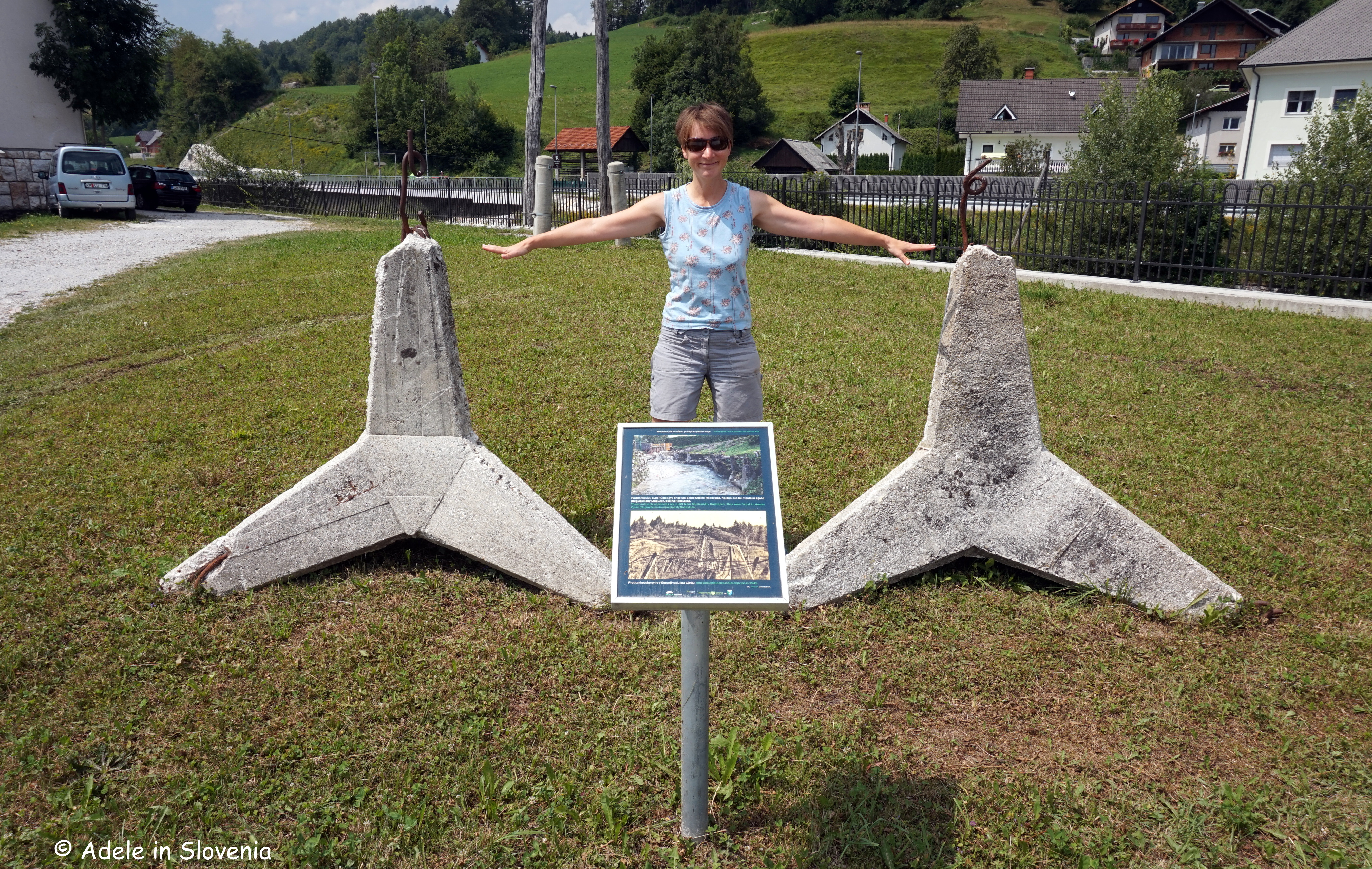
It transpired that the strategically placed forts were never actually used for military or defence purposes, but the building of the fortifications at least brought residents a temporary solution to the unemployment and financial troubles which affected them due to the location of the Rapallo Border.

The Rupnik Line theme path begins at the cemetery in Gorenja vas where there is an information board showing the route.

The path is well marked; in places with green signs, such as seen below, in other places with yellow markings painted on trees.

There are actually two paths – a shorter 4.5km circular path and a longer non-circular path which is 6km one-way. However, due to the ever present damage in the forest due to the glaze ice in the winter of 2014 – the clear up job is still ongoing throughout many parts of the country – walking on the longer path is not currently advised.

For the first 2km both paths follow the same route, first uphill on an asphalt road, which later becomes an unmade road then into the forest where you soon reach the first bunker.

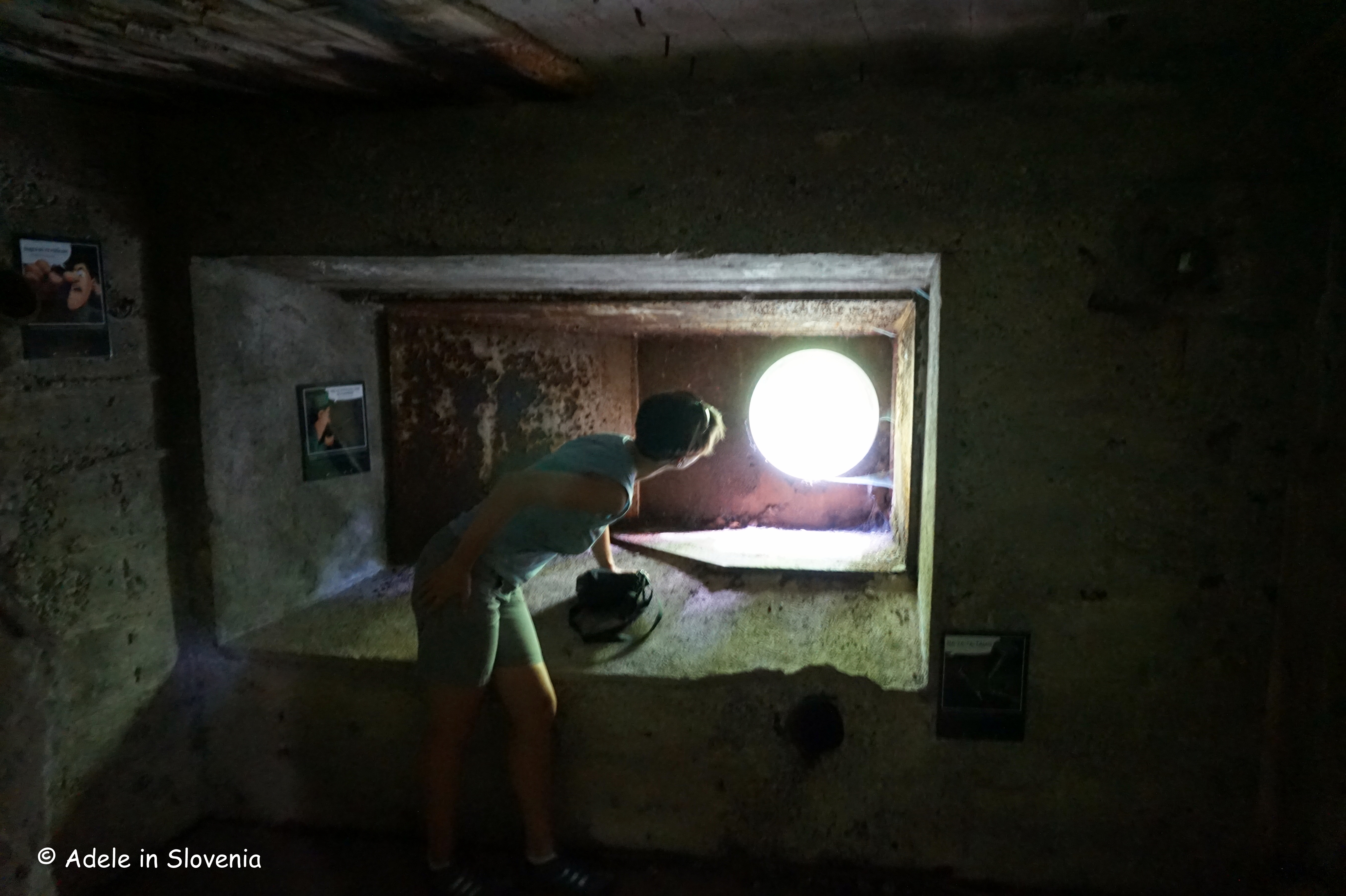
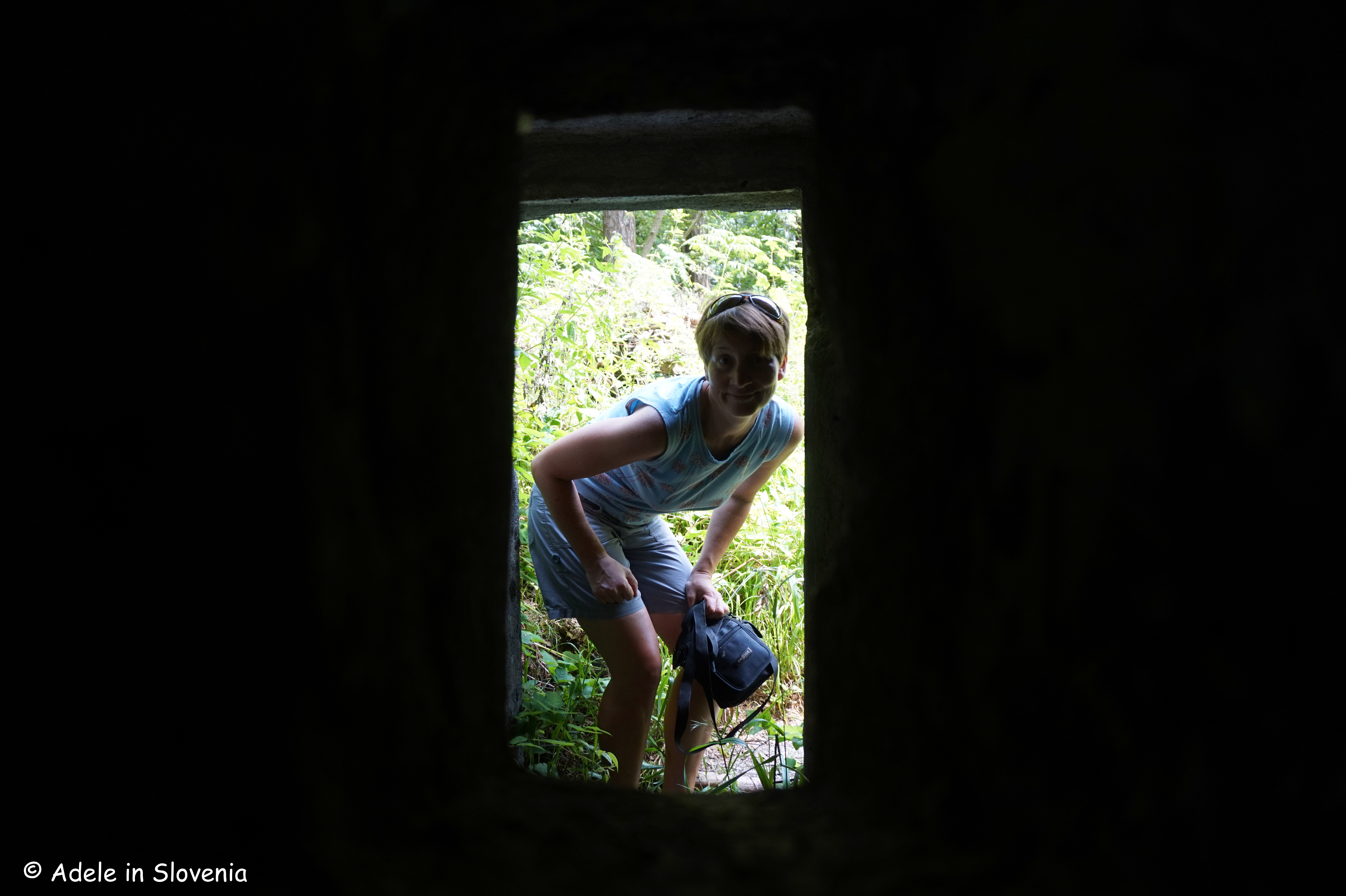
It takes a few minutes for your eyes to adjust to the darkness, but thereafter you can take a look inside. I clearly woke a bat from its slumber and not sure who was more startled, me or it!
Continue until you reach this sign, where you should take the shorter (krajša) path to the right.
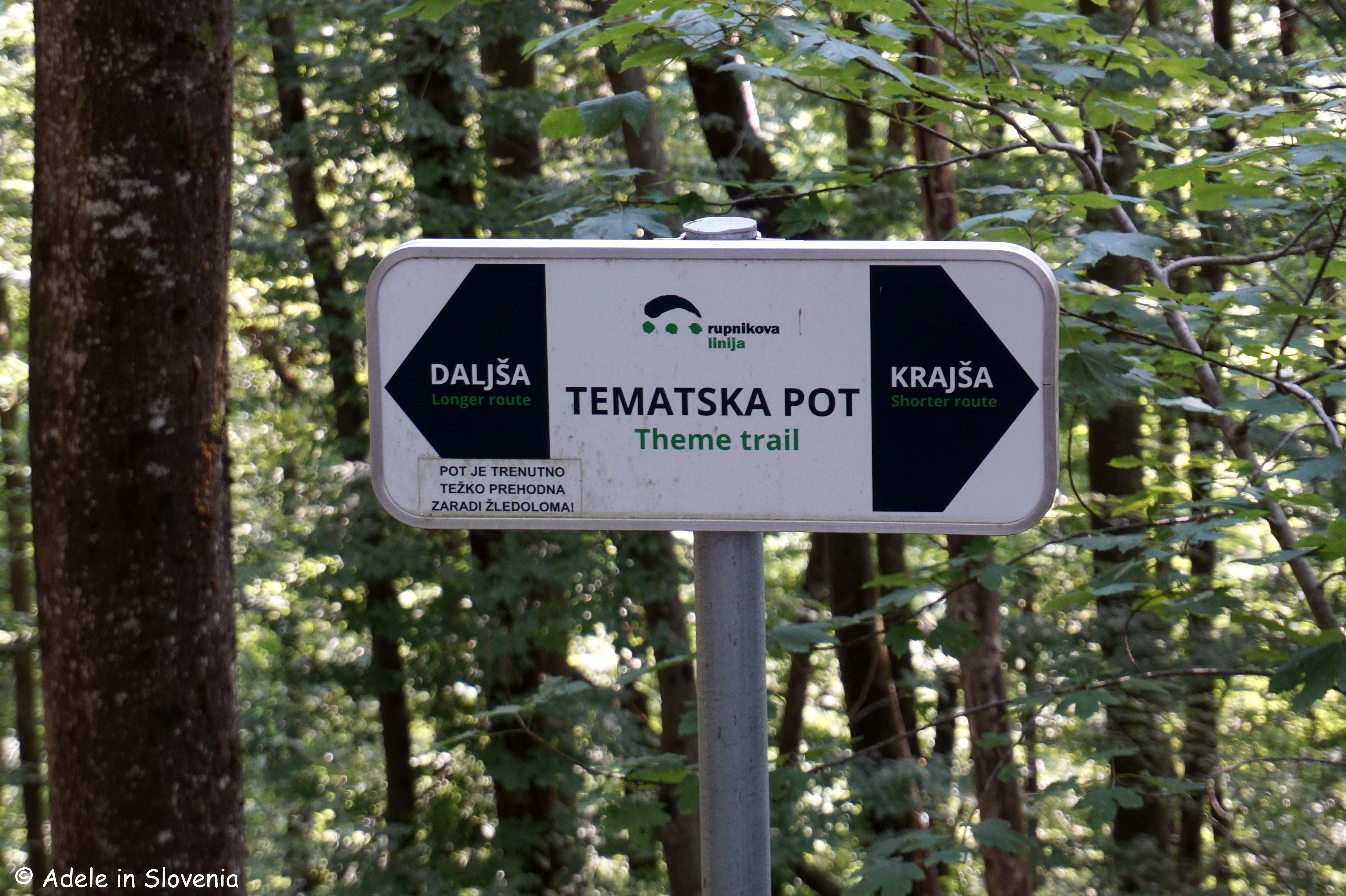
The path continues past more bunkers, each with it’s own information board where you can learn more about the fortifications and take time to explore, but do exercise caution and have sensible, sturdy footwear.

You can enter some of the bunkers, whilst others are not so accessible.
Though not part of this theme path, one of the best-preserved and largest fortifications is the underground fortress on Goli vrh where there is a permanent exhibition of remains from the time of building. I shall be writing more about this in a future blog so watch this space! Find more information about the Rupnik Line theme path on the Visit Škofja Loka website here – http://www.visitskofjaloka.si/en/experiences/theme-paths/the-rupnik-line-construction

The annual Pisana Loka Festival (Colourful Loka) takes place this year in Škofja Loka from 25th August – 3rd September. The festival is a mixture of concerts, workshops and performances – many of which are FREE – that take place at various locations, including in the heart of the old town centre and at Loka Castle.

This year part of the festival will be dedicated to Latino Loka on 2nd September in the Town Square (Mestni trg), and promises to be sizzling!

More about the festival can be found here (in Slovene only) http://www.skofjaloka.si/objava/80730, whilst further details about all the events taking place this month in Škofja Loka, including in English about the Pisana Loka Festival, can be found in the latest events calendar here – http://www.visitskofjaloka.si/si/files/default/Newsletter/Avgust%202017/spletni%20KAM-1%20avgust.pdf

© Adele in Slovenia


Adventure Mini Golf Panorama – The Name Says It All!

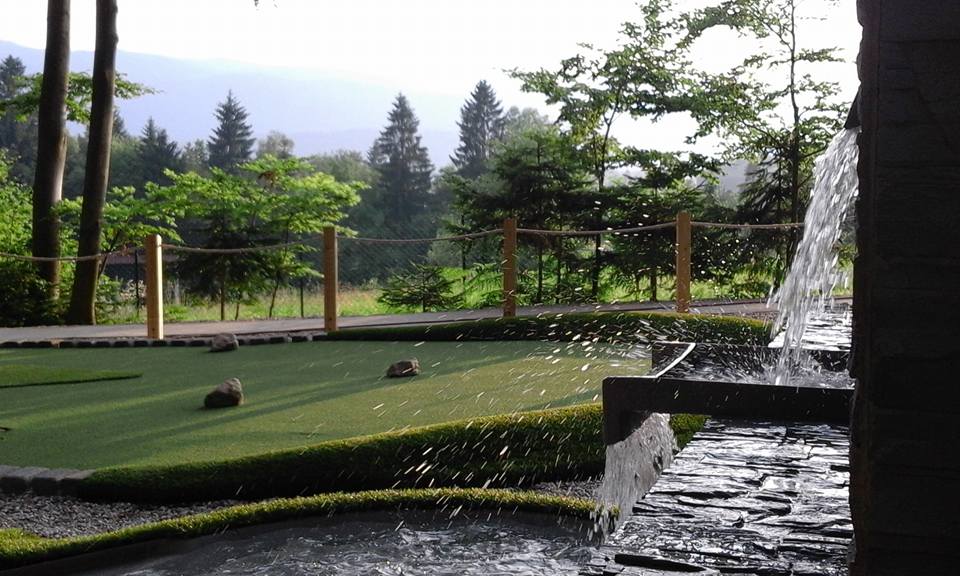
Now I know why the new mini golf course in Gorica, near Radovljica is named Adventure Mini Golf Panorama. Wow, it offers a panorama in the truest sense of the word, and with a heat wave forecast this week, its the ideal place to escape the heat, too.

I run through the village of Gorica regularly and had seen the signs for the new mini golf course, but, if I’m honest, I thought it would probably be nothing that special. Well, I couldn’t have been more wrong – this place really is rather special!

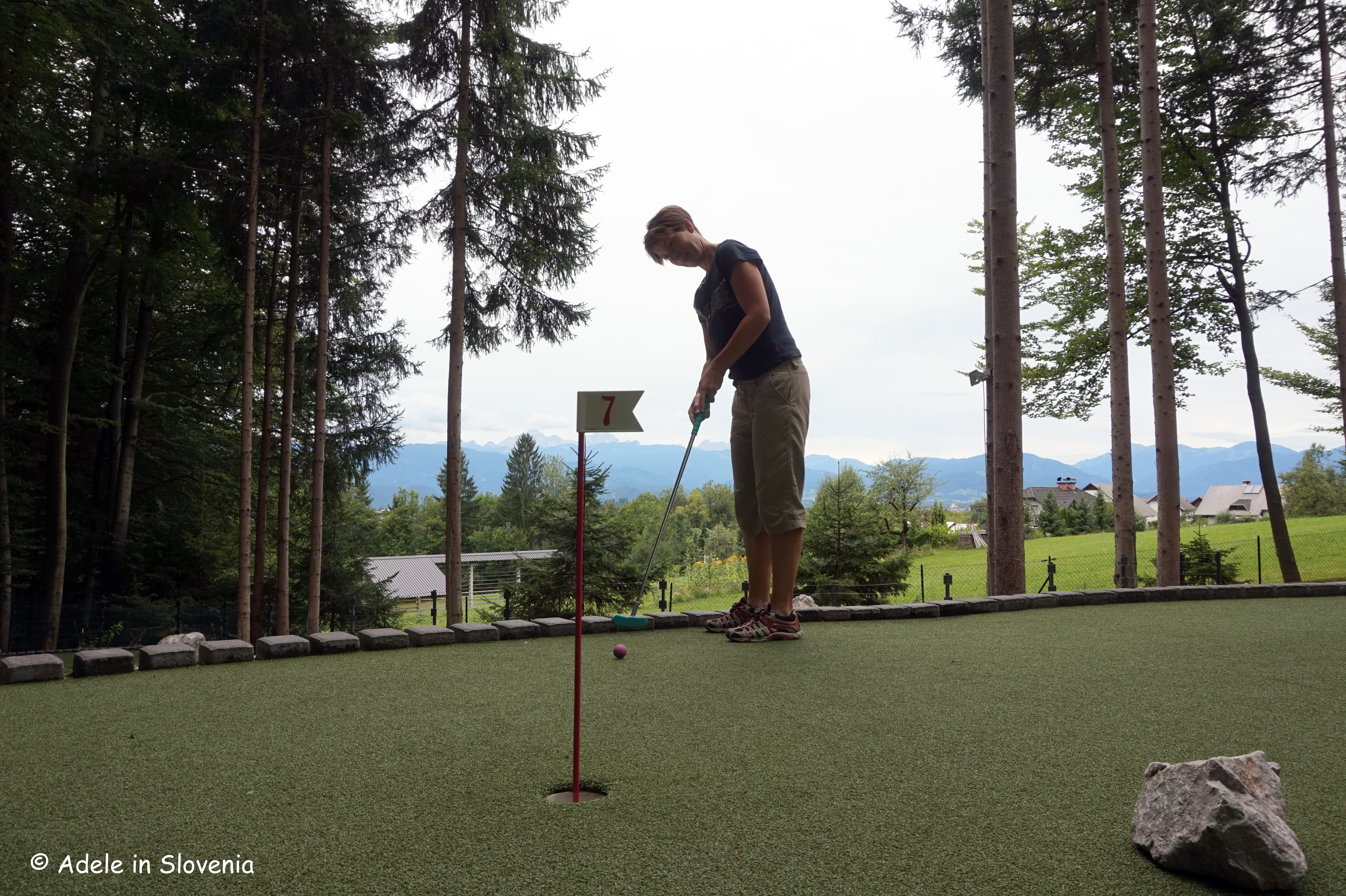
Whether you are a fan of mini golf or not, you simply must visit; be it to play a round or two or just to sit on the terrace with a drink and savour the stunning panoramic views of the Julian Alps and the Jelovica plateau.

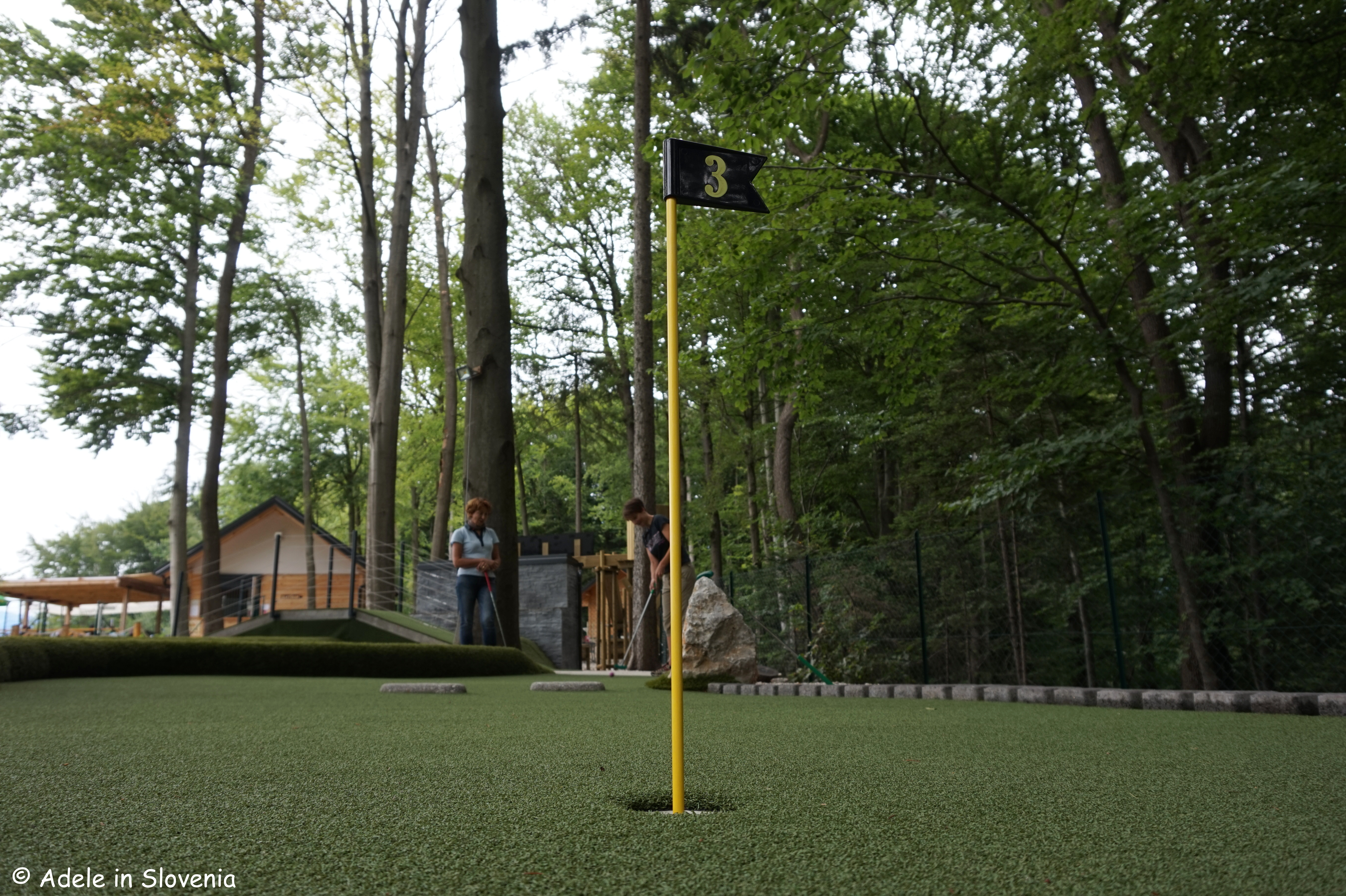
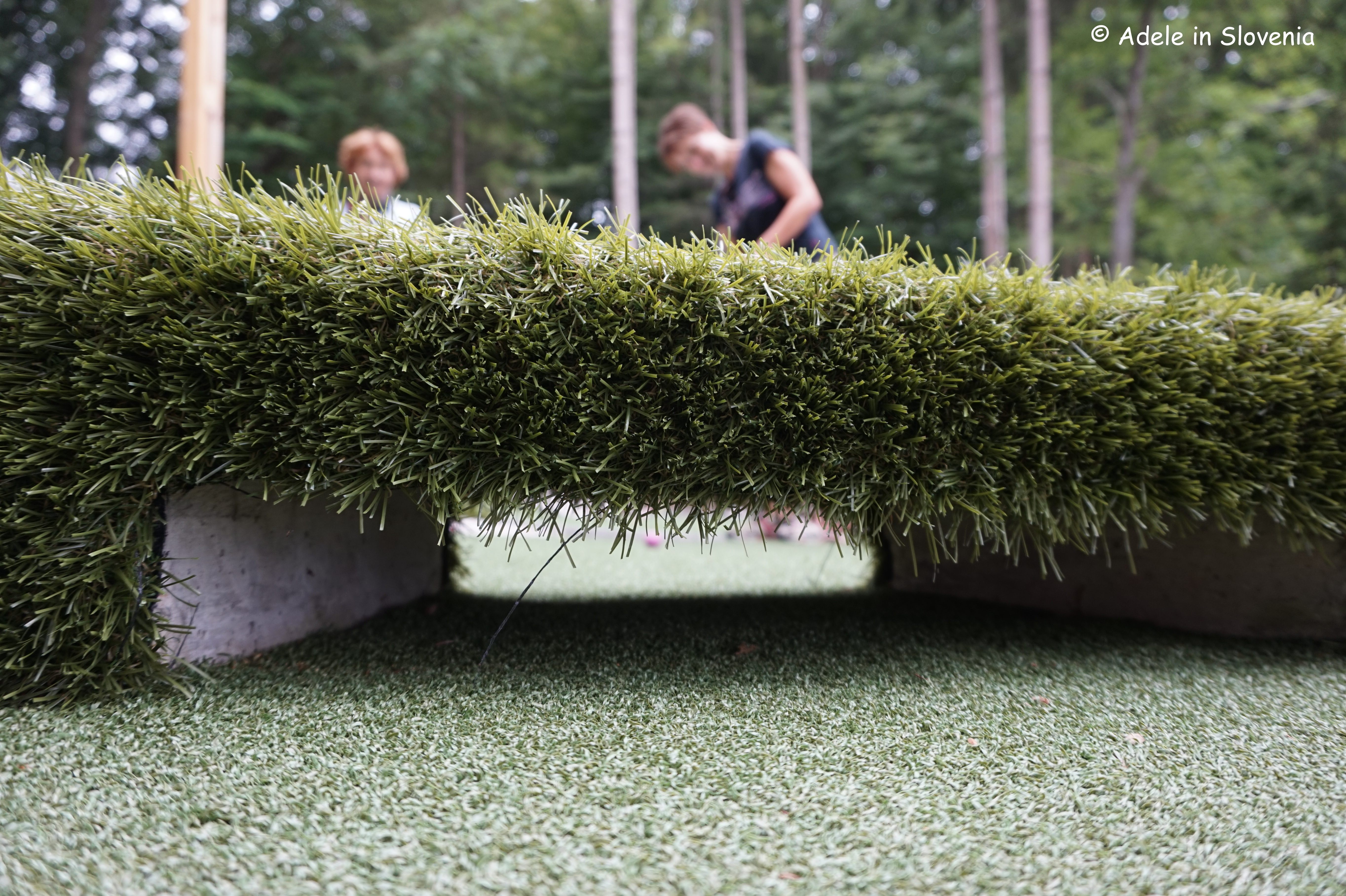
The 12-hole mini golf course has been thoughtfully arranged using superior-quality materials and is set in the cool of the forest.

Photos alone don’t do it justice, particularly as it was slightly overcast on the day of my visit. So, just go and check it out, I believe you won’t be disappointed and you’ll hopefully come away as enthusiastic as I was!

The forest setting provides the perfect respite from the heat and the whole ambience makes you instantly feel relaxed and at ease.

The course is suitable for all ages and abilities – from the littlest to the largest – as long as you can hold a club you can play!

Owner Andreja and her husband are there with a warm welcome and don’t take much persuading to join in a round or two!

The first round per visit costs 5 euros for adults, 4 euros for children, each round thereafter during the same visit costs 2 euros for adults, 1.50 euros for children.

During summer the course is open from 10am – 9pm and you can check the latest opening hours on the website here – http://adventureminigolf.si

© Adele in Slovenia


Hike Blegoš and Dine at Pr’ Andrejon – A Winning Combination!

At 1562m Blegoš is among the highest of the peaks surrounding Škofja Loka and, together with the Koca na Blegošu mountain hut, is one of the area’s favourite destinations for lovers of hiking and nature.

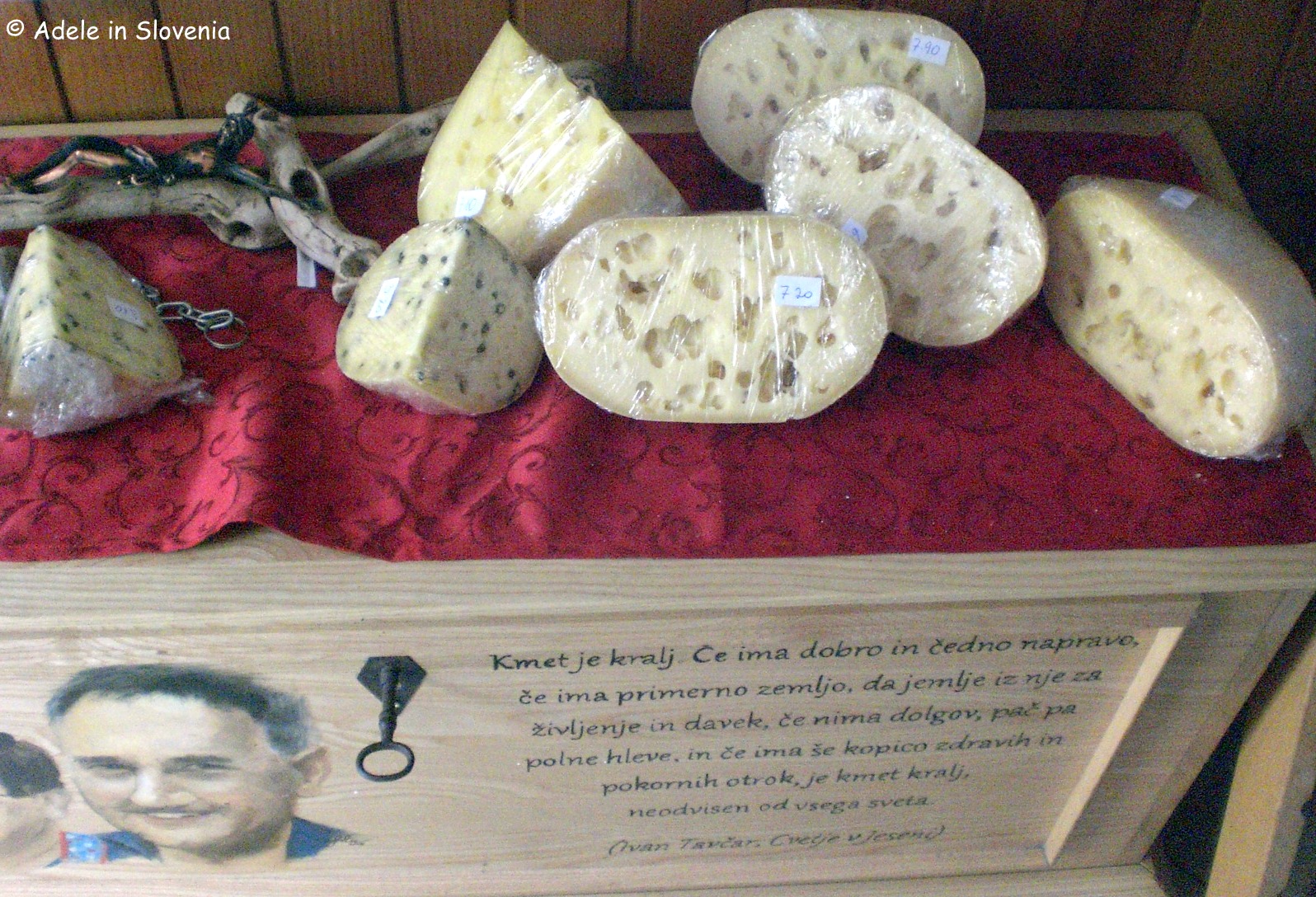
Blegoš can be reached from many directions, but whichever you choose, I recommend that you also take time to visit the Pr’ Andrejon Open Door Farm, where you can buy home-produced cheese and reward yourself with some fantastic, traditional, home-cooked Slovene food.

If you would like to take the shortest route to the peak, and the one which puts you in easiest reach of the Pri Andrejon farm, then you should begin your hike from Črni Kal, from where it only takes around an hour to the top of Blegoš.

I, however – not being prone to ever taking the ‘shortest’ or ‘easiest’ way! – opted to take the route from the hamlet of Volaka which leads past the Mountain Guards’ Shelter on Jelenci (Planinski zavetišče na Jelencih), which, rather oddly, is only open at weekends during winter.

The path, which leads up through the forest, is never overly steep but at the same time is challenging enough to work up a sweat!

The path is very well marked; at times the usual red circle with a white inner is on rocks and/or trees, at other times there are more prominent markings.

It took me exactly 2 hours to reach the summit, having first passed the mountain hut, where I didn’t pause on the way up, but did stop briefly on the way back down to check out their legendary ocvirkova -a kind of savoury potica made using pork crackling.

Although it was one of those mornings when the weather couldn’t quite make up it’s mind, the views were still stunning, and in fact perhaps even more so for the dramatic cloud cover.

Despite the cloud, it was still hard to choose where to look first, such were the panoramic views. An orientation table assists with getting one’s bearings.

Although not the easiest of places to reach, a narrow winding road that seems to go on and on… when you do eventually reach the Pr’ Andrejon farm in the hamlet of Gorenja Žetina above the Poljane valley, the warm welcome and excellent food means all is soon forgotten!

Whilst it is not a tourist farm, i.e. there are no rooms available for overnight accommodation, they consider themselves an ‘Open Door Farm’, meaning, as the name implies, they are pretty much always open. However, despite its relatively remote location, this place is hugely popular, so advanced booking, particularly for large groups, is a must.

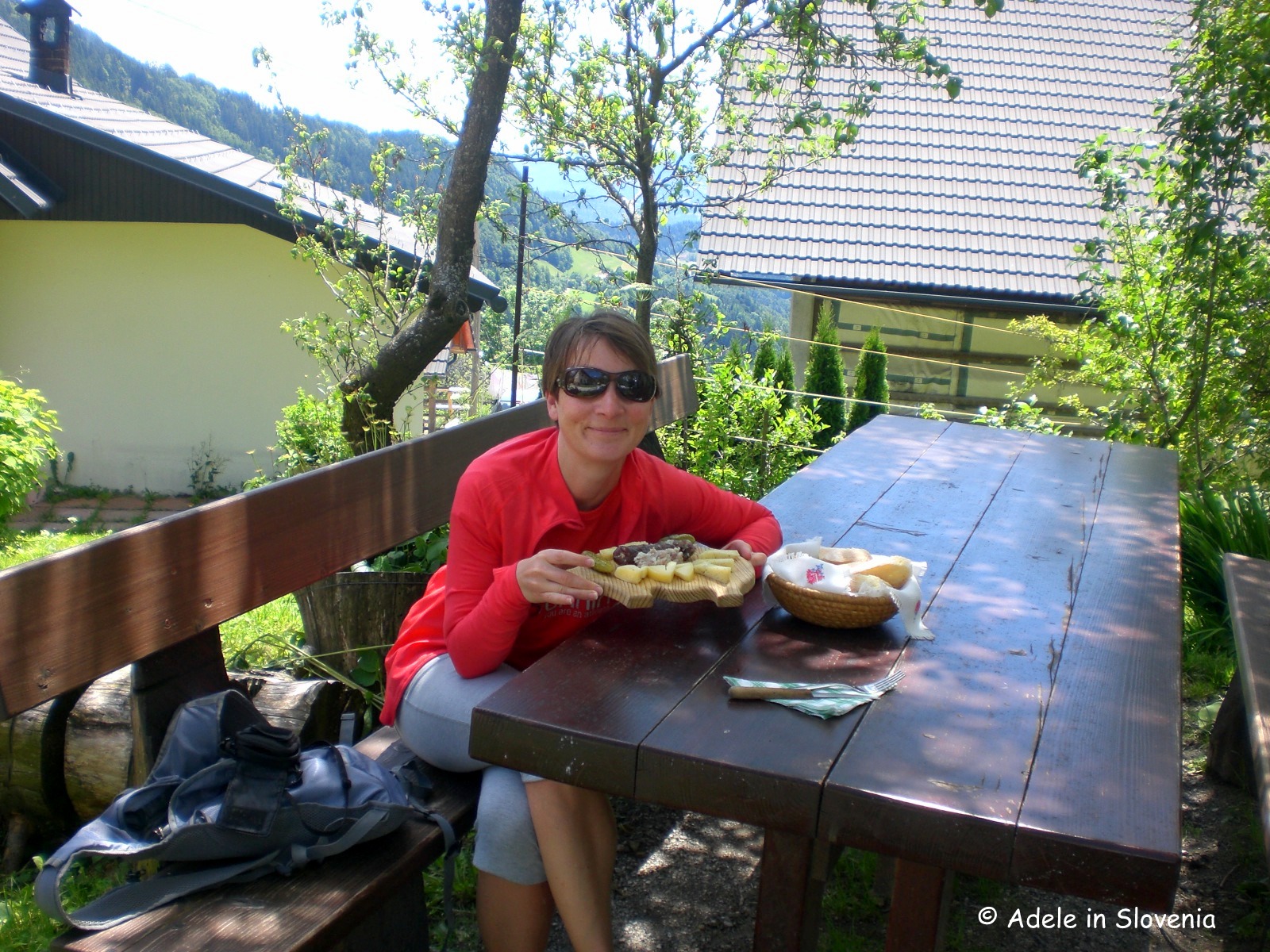
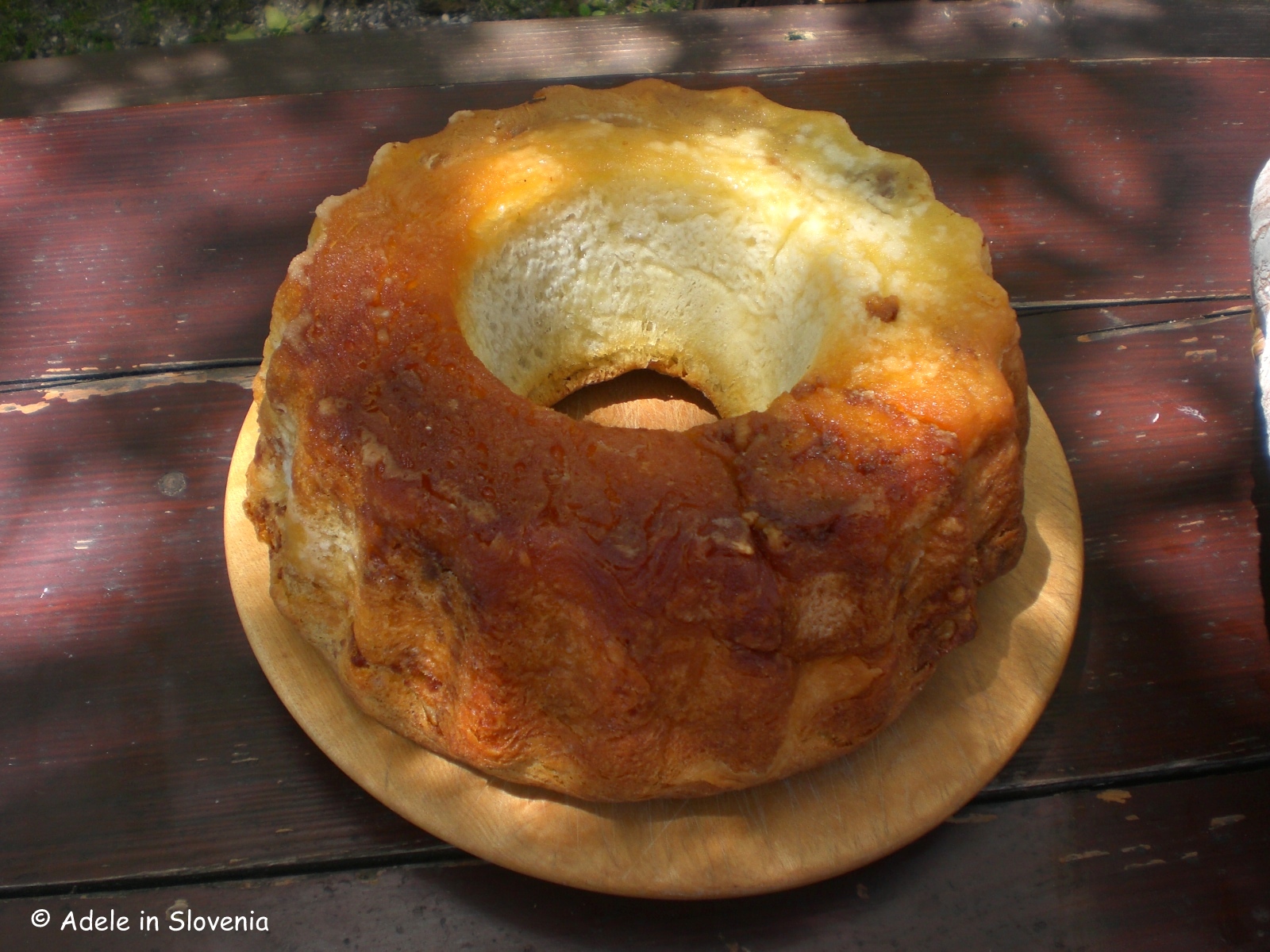
Despite my arrival coinciding with that of 2 large pre-booked groups (hence, heed my advice to book in advance!), Anka still managed to rustle up some home-produced cheese and cold cuts and the most amazing bread, fresh from the wood-burning oven. I’d travel a long way for bread that good – oh yes, I actually did – so I had to get some to take home too!

During my brief visit, I was amazed at how many people stopped by to buy cheese direct from the farm.

Pr Andrejon is also a popular stop for cyclists, as part of the Loka Cycle Route goes right past the door. More information here – https://adeleinslovenia.com/2017/06/11/active-and-historic-loka-the-skofja-loka-cycle-trail/

The farm’s website has more information (only in Slovene), or you can contact Anka by email or phone to make reservations and find out more – anka.vodnik@gmail.com, tel: 045 188174 or 051 389108 – http://www.freeweb.siol.net/mvodnik6/default.htm

You can find more information about the wide range of hiking paths in the Škofja Loka on the Visit Škofja Loka website here – http://www.visitskofjaloka.si/en/experiences/active-breaks/hiking/hiking-trails-in-loka

© Adele in Slovenia


Fit and Fun in Radovljica!

For many people, no doubt the thought of exercising on holiday couldn’t be further from their minds; then there are those of us for whom being active is a way of life, and whether at home or away, we like to find ways of ensuring we stay fit and healthy whilst also having fun!

So for those of you who fit into that bracket – myself included – Radovljica is the perfect destination!

As is widely known and acknowledged, the key to keeping fit is to find an activity, or activities, that are enjoyable, so taking part doesn’t feel like a chore and we are more likely to stick with it.

With the beautiful backdrop of the Karavanke mountains and the Jelovica plateau, as well as the Sava river and the Draga and Lipnica valleys, there are myriad outdoor sports and activities right on the doorstep or within close proximity of Radovljica, so here are some ideas:

HIKING – the Jelovica Plateau, the Karavanke range, or the nearby Julian Alps

WALKING and/or RUNNING – from short strolls or runs on theme paths such as the Sava River Trail, to long cross-country rambles and runs

CYCLING – of all types, mountain biking, road biking, endless possibilities

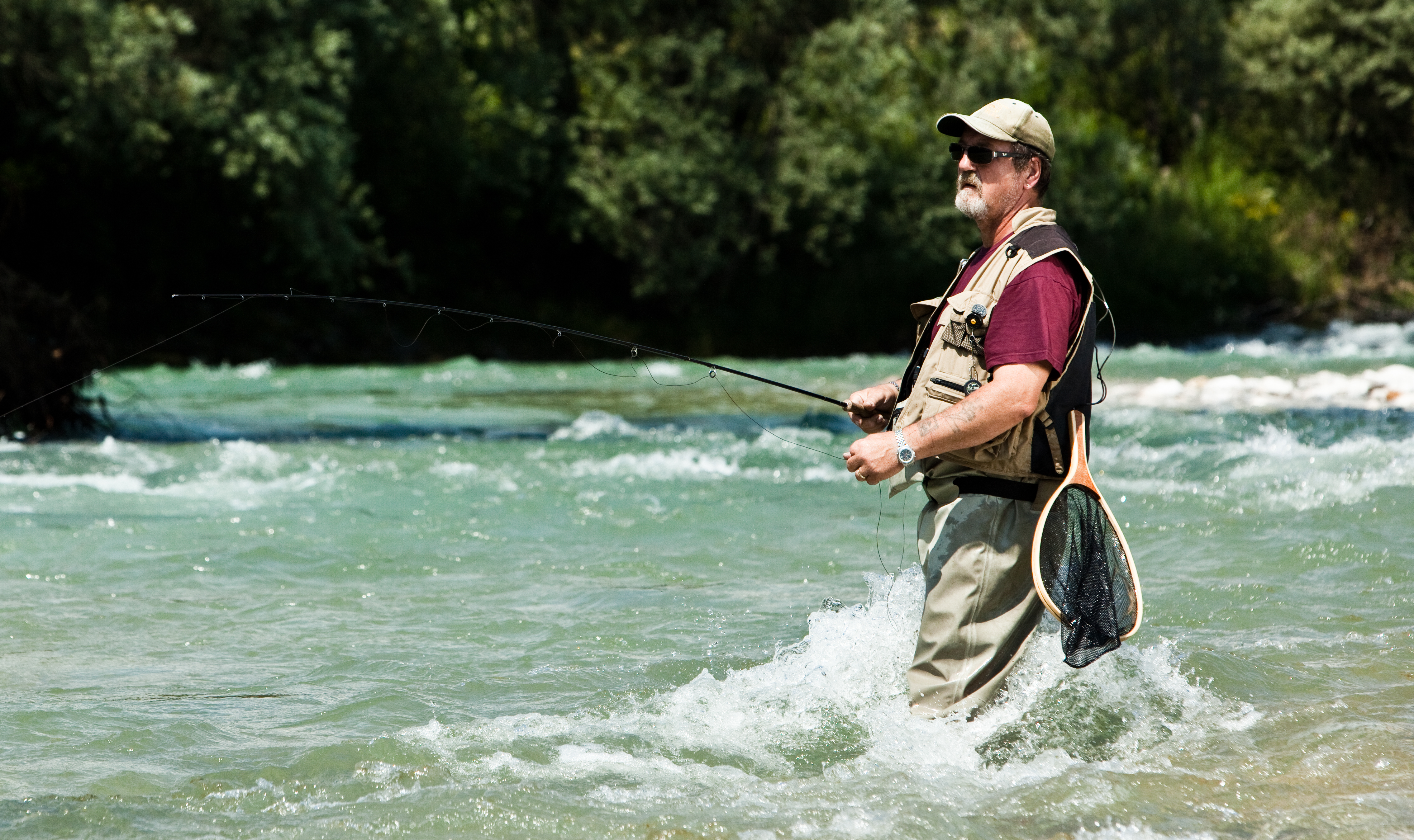
FISHING on the Sava river

HORSE RIDING or horse and carriage rides – get to know Lipizzaner horses at the Barbana stud farm in Globoko, or go riding at the Mošnje Horse Centre – just two among the places offering horse riding in the area. More here – http://www.radolca.si/en/in-the-company-of-horses/

WATER SPORTS – rafting, kayaking, canoeing

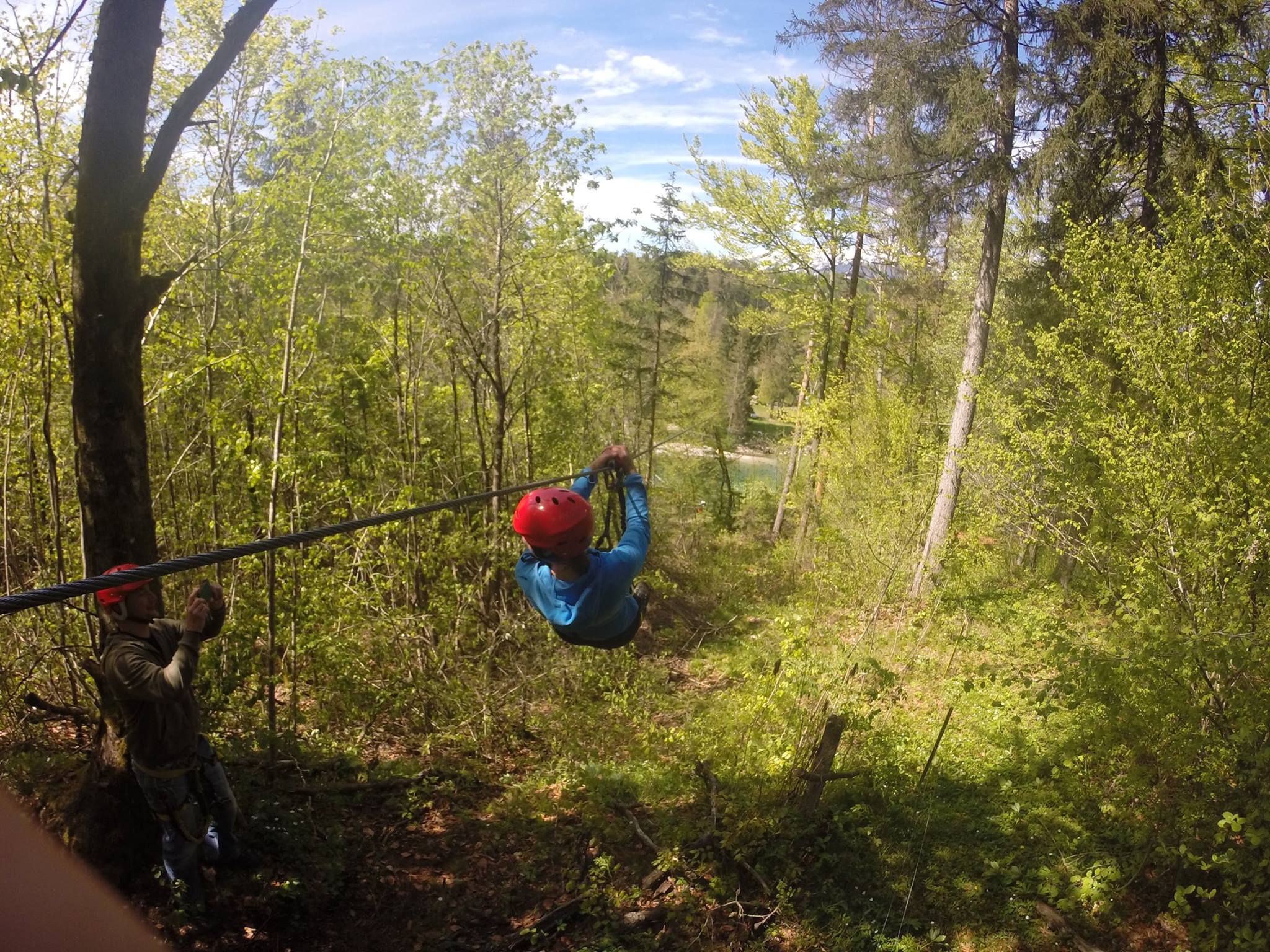
Other adrenalin-fuelled activities –  paintball, zip line, zorbing, caving, climbing

ARCHERY – on the parcour course in the tranquil Draga valley. Find out more here – https://adeleinslovenia.com/2017/04/10/archery-adventures-and-delicious-draga-delights/

SWIMMING at the Olympic size swimming pool in Radovljica – open-air in the summer, covered in the winter; or at the Kropa outdoor pool

PARACHUTING and PANORAMIC FLIGHTS over the Julian Alps from Lesce Sports Airfield

Find out more about sport, recreation and fun in the area here and I wish you fit and fun adventures in Radovljica! – http://www.radolca.si/en/sport-recreation-and-fun/

© Adele in Slovenia
Železniki: A Step Back in Time and Tradition + Lacemaking Days

The small town of Železniki is nestled snuggly in one of the narrowest parts of the Selca Valley (Selška dolina). The town is split into the older ironworks area and the more modern industrial part. Walking through the old part of the town feels like taking a step back in time – in a good way – since it is untouched by the trappings of modernity i.e. ghastly shopping centres and the like, and the town boasts a wealth of tradition and heritage.

Železniki was once a centre of ironworking, and later, after the closure of the last blast furnace, the tradition of lacemaking began to flourish. The best way to learn more about this fascinating place is to visit the Železniki Museum.

dsc00394

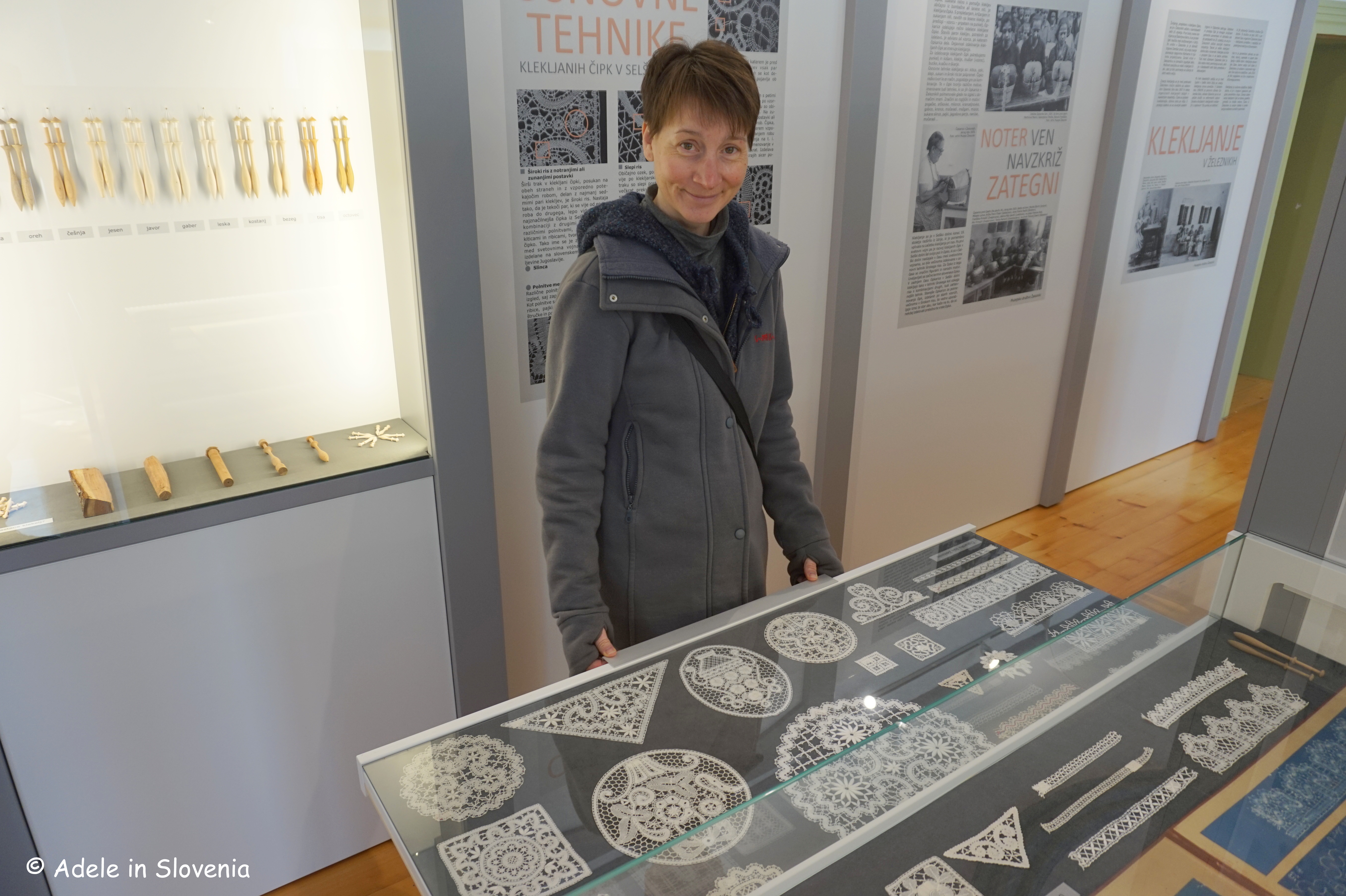
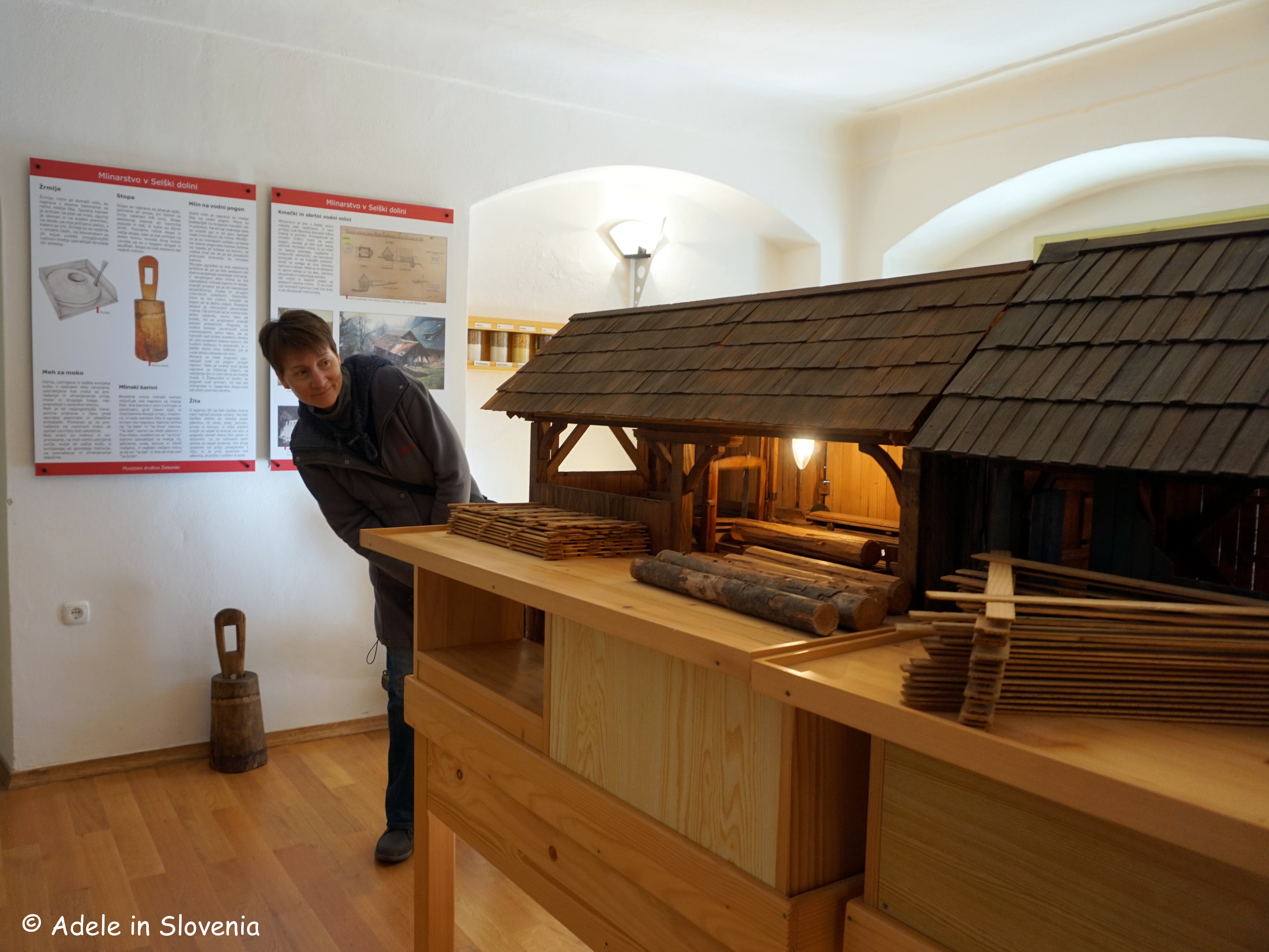
There are 12 collections over three floors crammed into the beautiful 17th century ironworkers house. There are an impressive number of models, some of which also ‘come to life’ with moving parts and/or sound. Collections include the iron industry, the timber industry, lace-making, and the National Liberation Battle in the valley.

dsc00396

Get a glimpse into the working of a timber mill.

dsc00404

And maybe even try your hand at lace-bobbin work. Believe me, it’s a skilled trade requiring patience and dexterity, both of which, in this case at least, I clearly lack!

dsc00409

Once you’ve mastered it, then you can produce all manner of intricate patterns.

The remains of the last mighty blast furnace, used for smelting iron-ore, known to be the only preserved furnace of its kind in Europe, are directly opposite the museum.

dsc00421

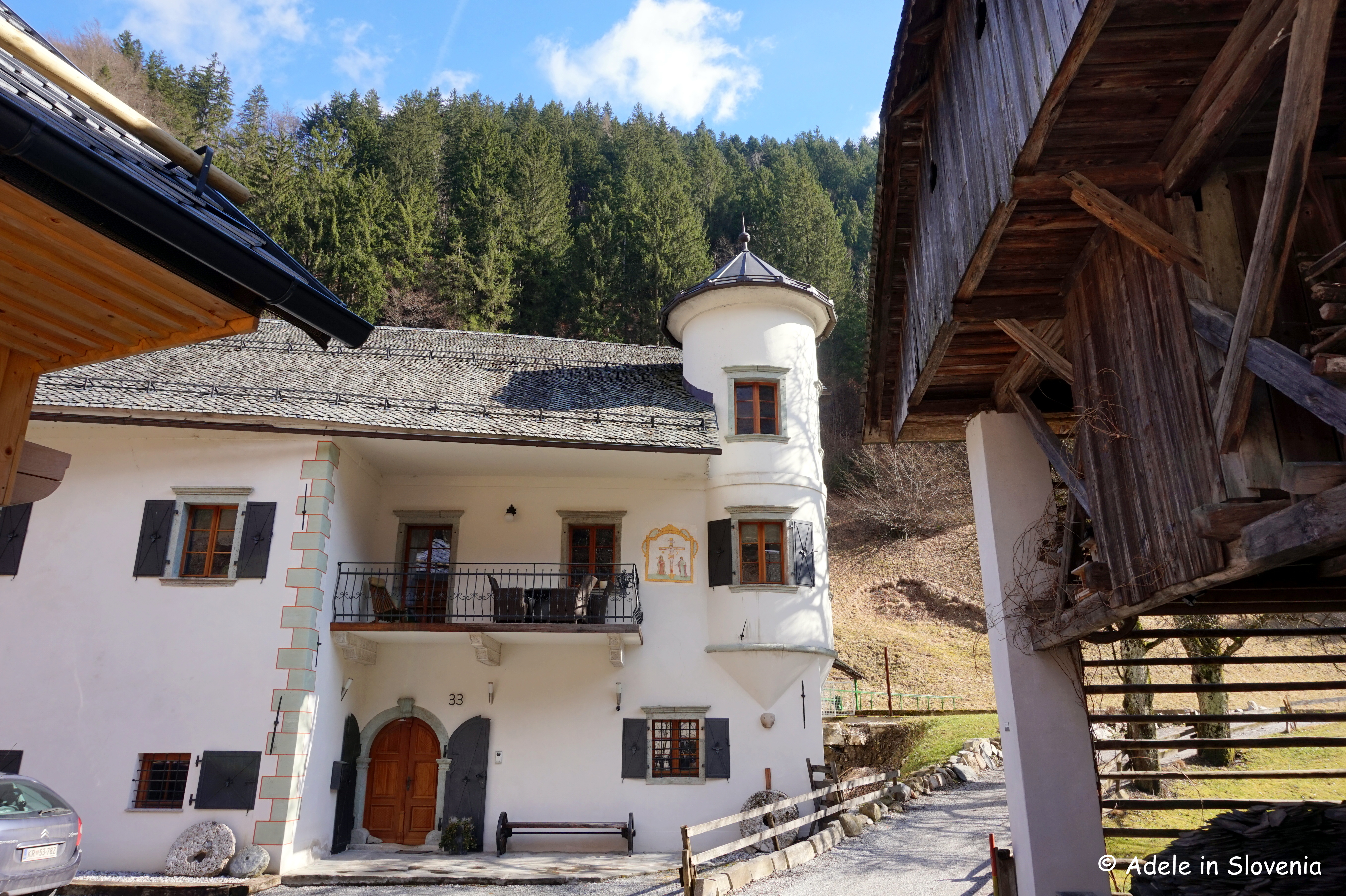
After visiting the museum I recommend taking a walk through the old part of the town beside the Selca Sora river, from where you can admire the traditional ironworkers houses, some still with the traditional slate roofs, and, if you get lucky with the weather, bask in the sunshine!

dsc00430

Plnada is the oldest house in the town.

dsc00428

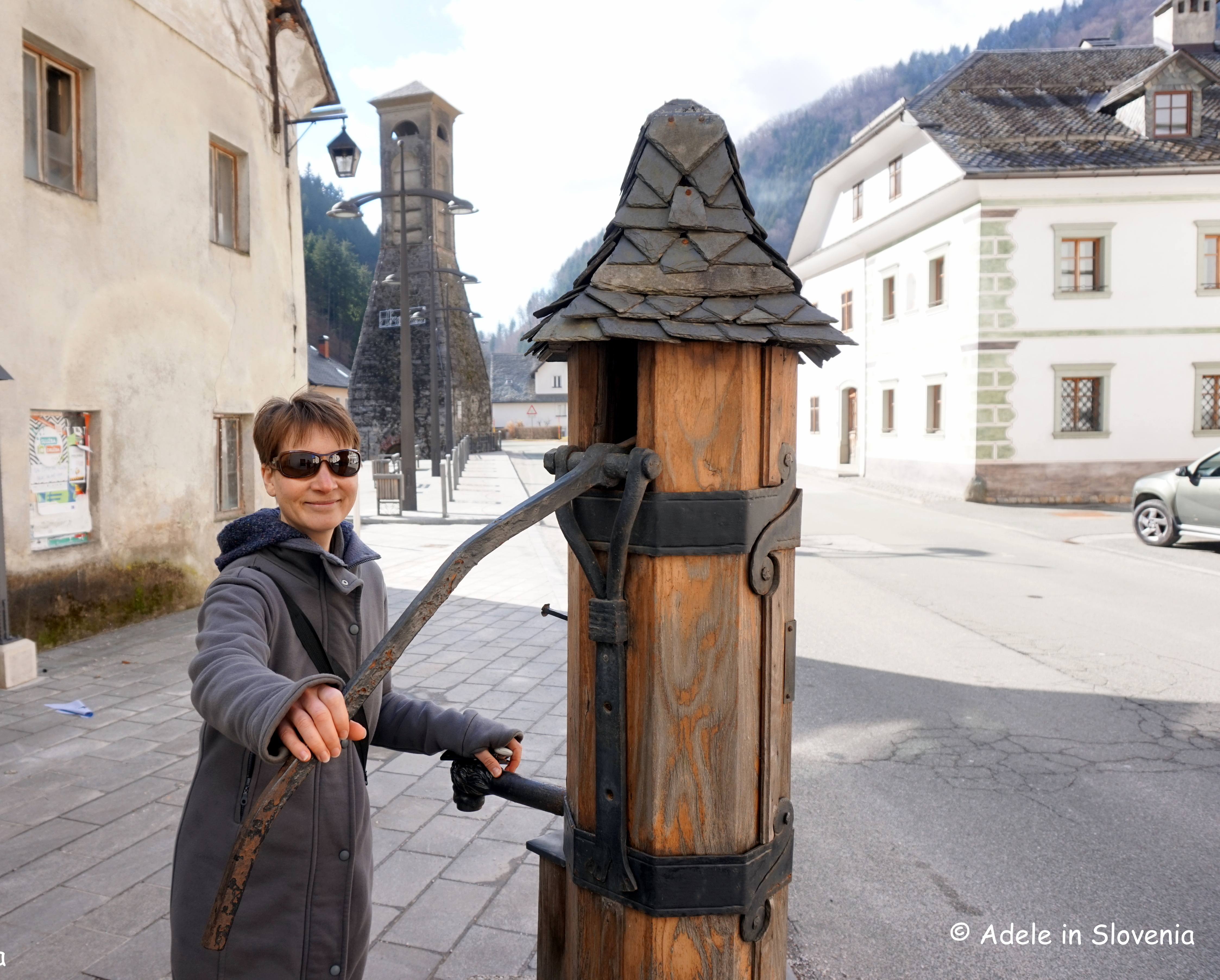
The well, known locally as ‘Šterna na Plavžu’, was renovated and erected on the occasion of the 40th Lacemaking Days event. In the past the well provided water for 40 houses in the upper part of the town.

dsc00431

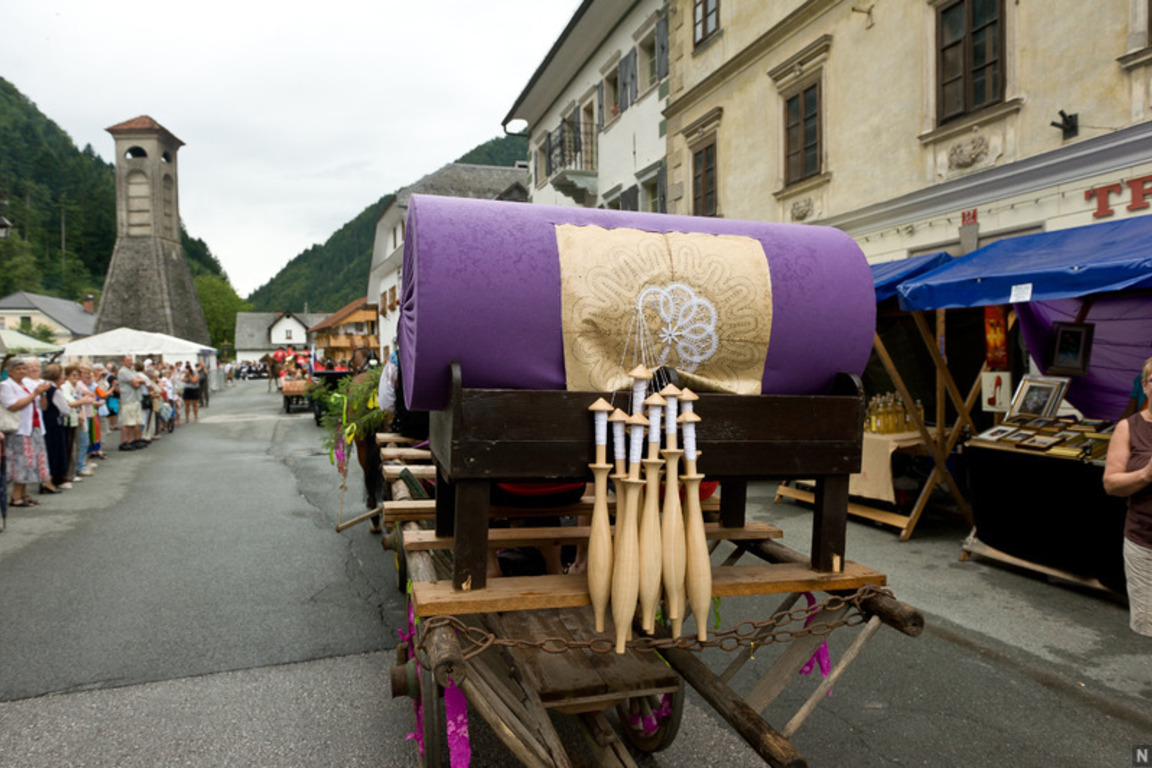
This year the 55th Lacemaking Days event takes place from 12- 16 July. The rich cultural programme includes a craft market, organ grinders, a procession, and even a 24-hour lacemaking competition. The main parade will take place on Sunday 16th July at 2pm. You can also visit the museum and admire the windows of the town’s houses which are adorned with lace during the event.

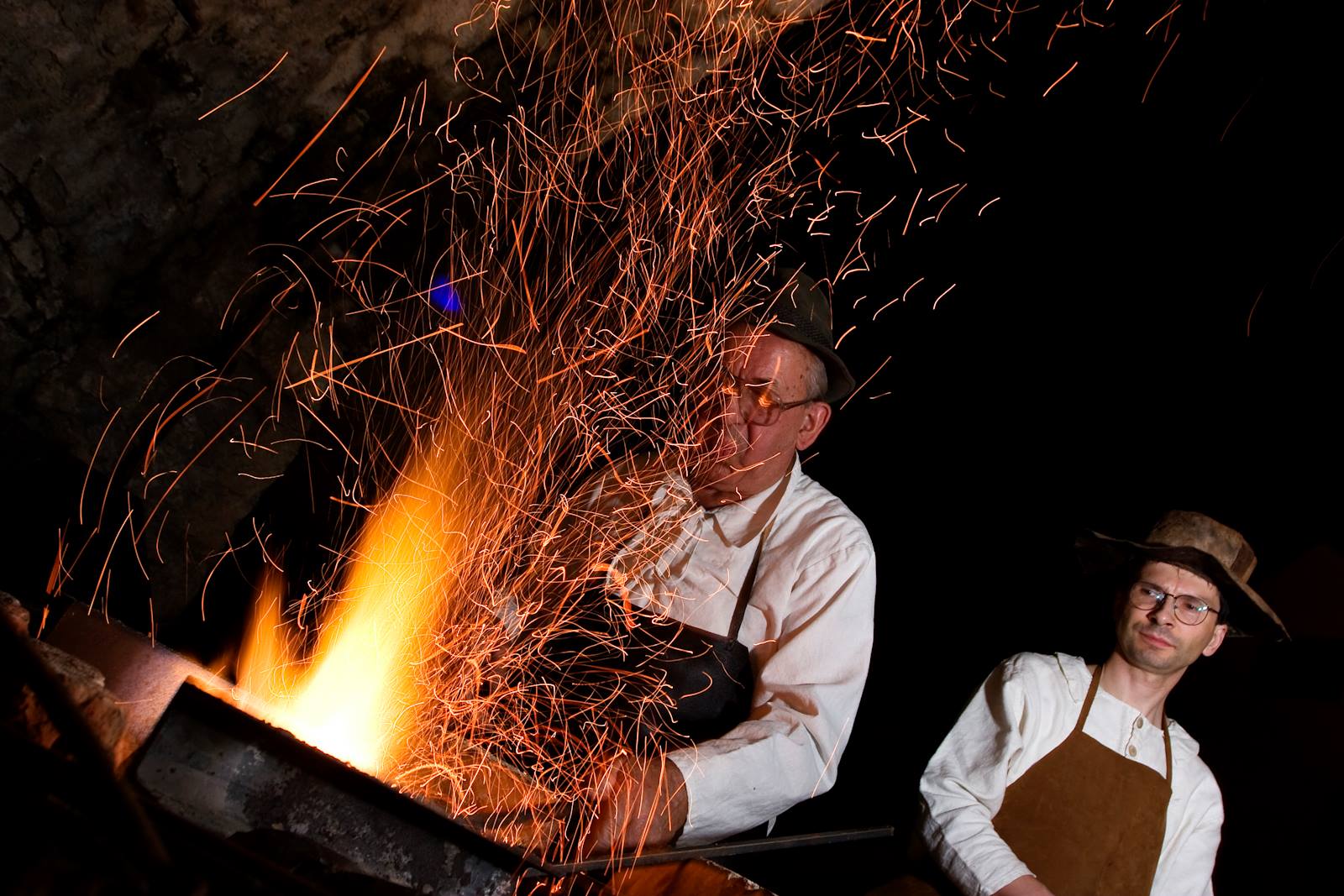
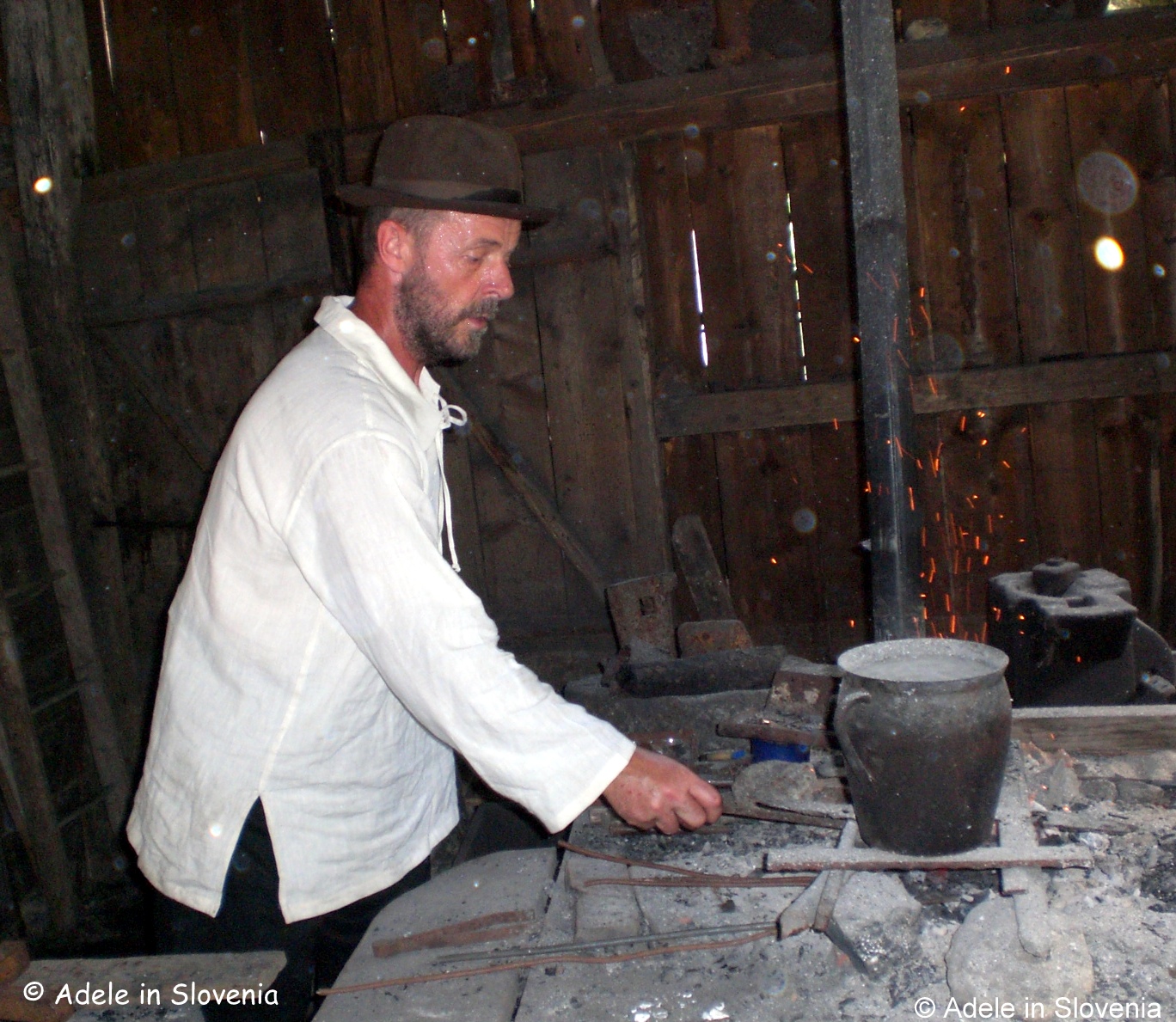
On Saturday 15th July at 9pm, and on Sunday 16th July from 3pm you can watch demonstrations of manual iron forging with Železniki blacksmiths and have a go at making your own nails.

The full programme is below (in Slovene), or you can contact the Železniki Tourist Information Centre or Visit Škofja Loka for more information.

Interesting, earlier this year the Municipality of Železniki was declared the best out of Slovenia’s 211 municipalities in which to live in Slovenia in terms of a number of factors including health of its residents, availability of accommodation, access to nature and leisure facilities etc.

One of the town’s most popular events is ‘Luč v vodo’ (Lights in the Water), an age-old iron-forging custom takes place annually in March. The models, which are a mixture of unique art creations made from paper, cardboard and wood with candles affixed either on the exterior or interior, create a colourful effect against the dusk setting. This custom dates back to the era of manual iron-forging, before the introduction of the Gregorian calendar in 1582, when the name day of St. Gregory was considered the first day of spring.

img_0287

Photo: TD Zelezniki

Other sights of interest nearby include the Lomski slap waterfall, the stone bridges in Kovže and below Griva, numerous examples of architectural ironwork heritage, and hiking trails, including to Ratitovec – about which I will be writing more in the not too distant future!

So, as you can see, and as I found out, there’s more to Železniki than first meets the eye. So do add it to your list of places to visit whilst exploring the Škofja Loka area. Find out more here – http://www.visitskofjaloka.si/en/skofja-loka-area/zelezniki and here – http://www.visitskofjaloka.si/en/experiences/culture-and-art/museums-and-galleries

© Adele in Slovenia


The Kropa Iron Forging Festival – 8th July 2017

The ever-popular annual Iron Forging Festival (Kovaški šmaren) will take place this Saturday 8th July in the village of Kropa, the cradle of Slovene iron-forging.

I love visiting Kropa in summer, when it’s hot and the village is bathed in sunshine, and especially at the time of the Iron Forging Festival when the village comes to life and visitors can get a glimpse into life in the past for the village ironworkers and their families.

Kropa sits nested into the far eastern edge of the Jelovica plateau and is crammed with interesting sights and architecture and preserved technical heritage which is showcased during the annual festival.

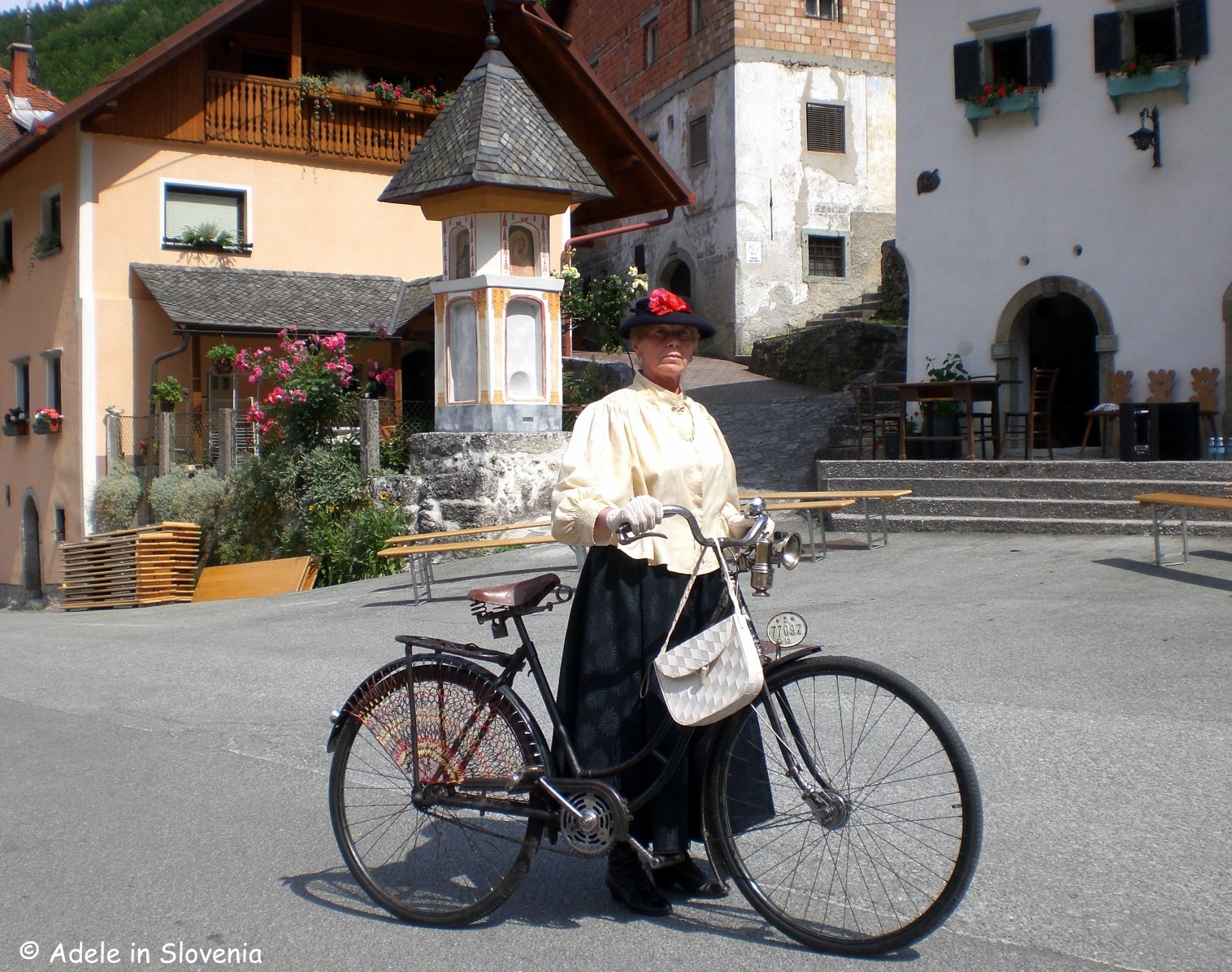
There are demonstrations of hand forging of nails in the Vigenjc Vice Nail Forge, a small local craft market, old-time bikes, open days at the Iron Forging Museum and the Fovšaritnica Museum House, as well as at the headquarters of the company UKO Kropa, which specialises in all manner of wrought iron furnishings and fittings and is keeping the village’s iron-forging tradition alive.

Be sure to take a walk around the village, alongside the Kroparica stream, that runs right through its heart, and admire the former ironworkers houses embellished with decorative wrought iron.

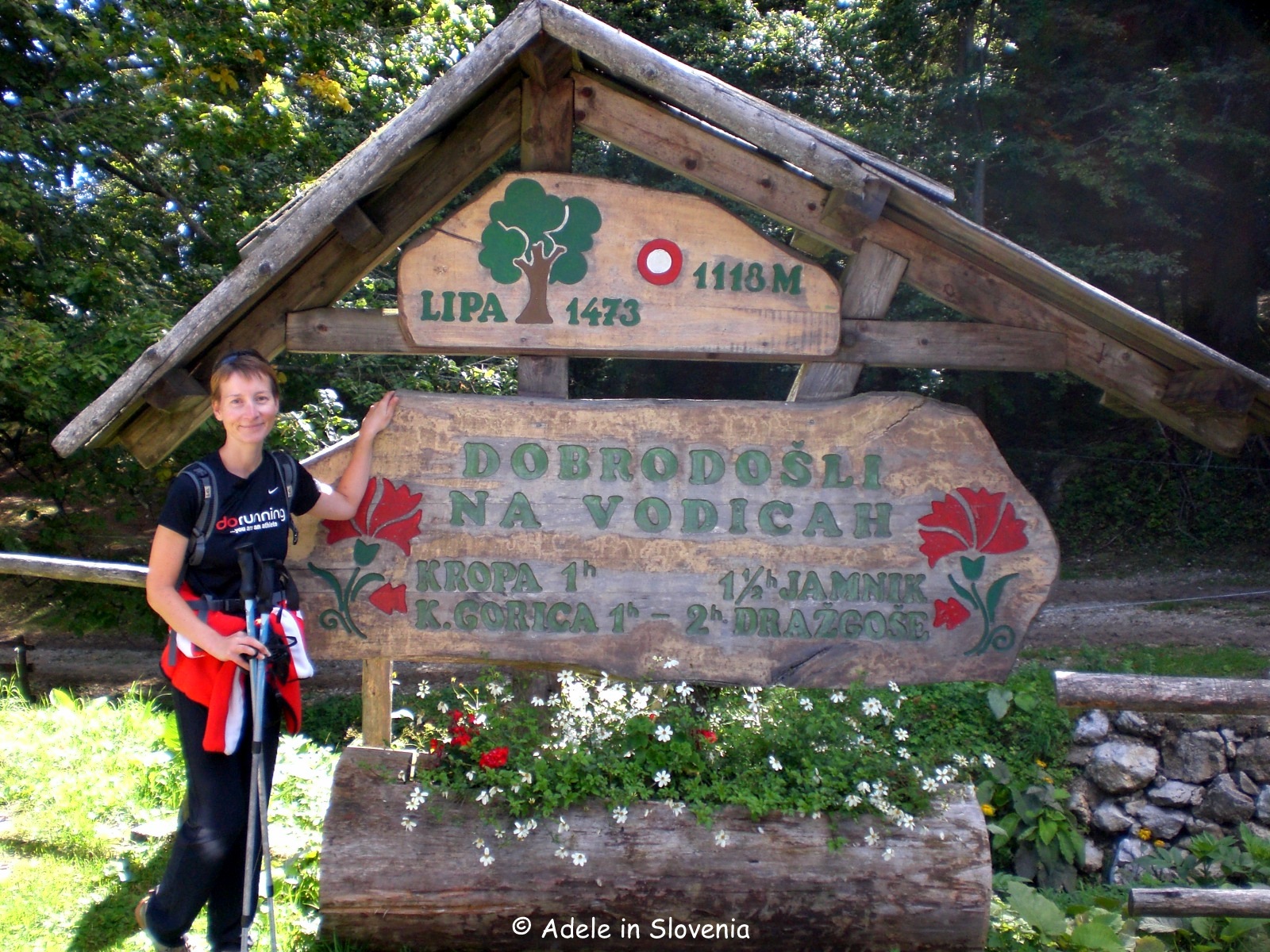
If you’d like to make a day of it, why not take a hike up to the Vodiška planina highland. You can choose to take the steeper route (marked ‘Vodice – strma pot, 1hr 15mins) which begins at the parish Church of St. Leonard, one of the two churches in the village. There is a small parking area beside the church or otherwise you park in the centre of the village, by the memorial, and take the steps which lead between houses up to the church.

Or, alternatively, there is another path that is found by following the road through the village in the direction of Jamnik. The path begins on the bend in the road next to the former Slovenian smelting furnace (Slovenska peč).

Both paths eventually reach the highland and the Partizanski dom mountain hut where you can get refreshments and tasty home-cooked food – the štruklji are particularly popular!

For those without a car the Hop-on Hop-off tourist bus also visits Kropa every Tuesday during the summer months. More information and the timetable can be found here – http://www.radolca.si/en/hop-on-hop-off-radolca/

More information about the Iron Forging Festival can be found here – http://www.radolca.si/en/the-iron-forging-festival/

© Adele in Slovenia


Hop-On Hop-Off This Summer: Radovljica, Bled, Brezje, Kropa, Kamna Gorica, Begunje, Žirovnica

The Radol’ca Hop-On Hop-Off tourist bus will begin operating on Tuesday 4th July and will run every Tuesday and Thursday during July and August. This year there is an even wider range of places to visit and more things to see and do.

As in previous years a day ticket is great value at just 5 euros. You can get on and off the bus to visit sights of interest along the way, or just enjoy the ride!

On Tuesdays the route is Bled – Radovljica – Kropa, with additional stops at the Šobec Camp, Lesce, Lancovo and Kamna Gorica.

On Thursdays the route is Bled – Vrba – Žirovnica – Begunje – Brezje, with additional stops at Breznica, Spodnji Otok and Podvin.

To whet your appetite here’s a preview of just some of the things you can see and do along the way.

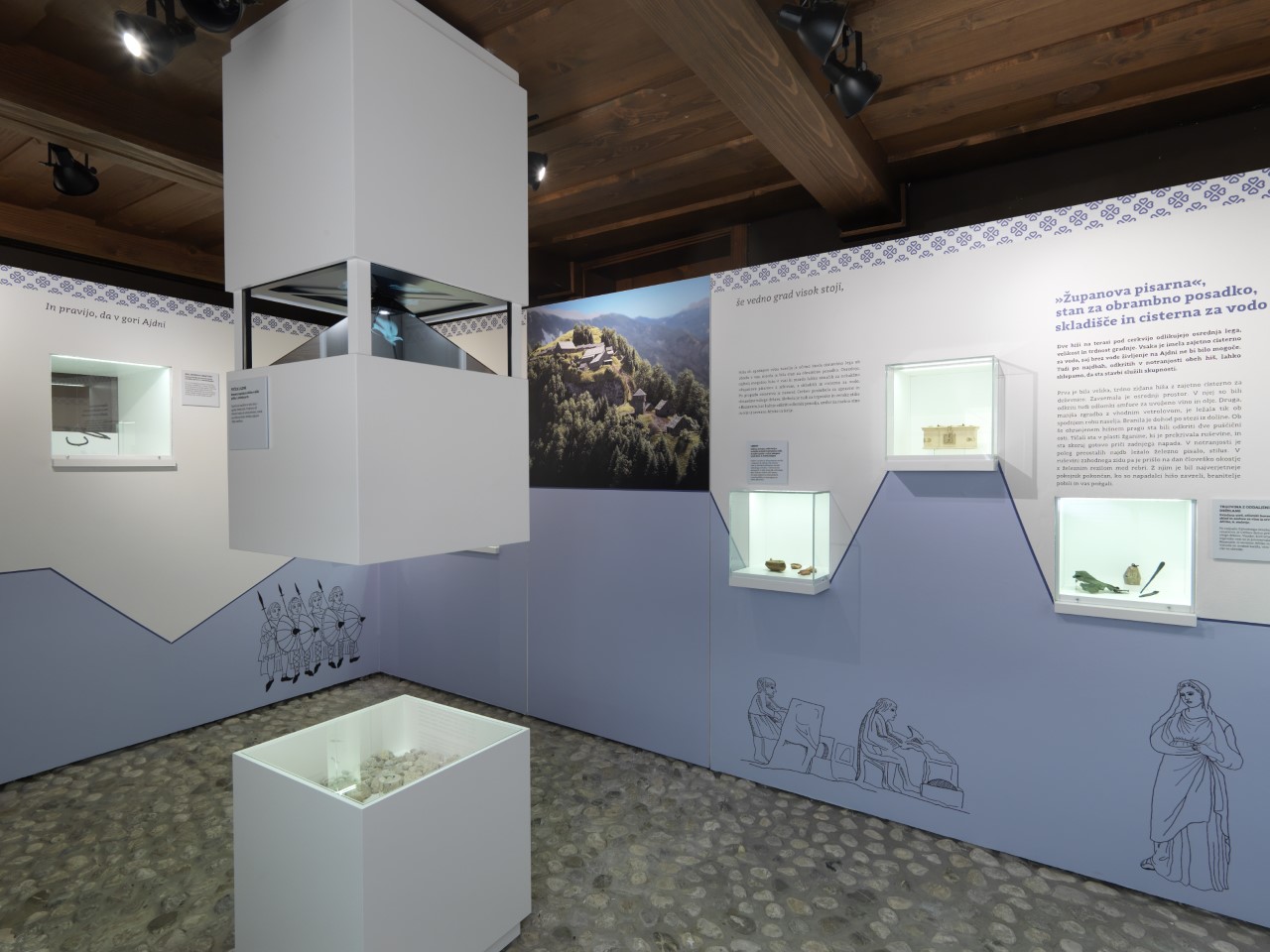
For the first time, this year the bus route includes Žirovnica, where you can visit the new Ajdna Museum Room to find out more about the Ajdna archeological site beneath Mt. Stol where remains were found from a Late Antiquity village dating back over 1400 years.

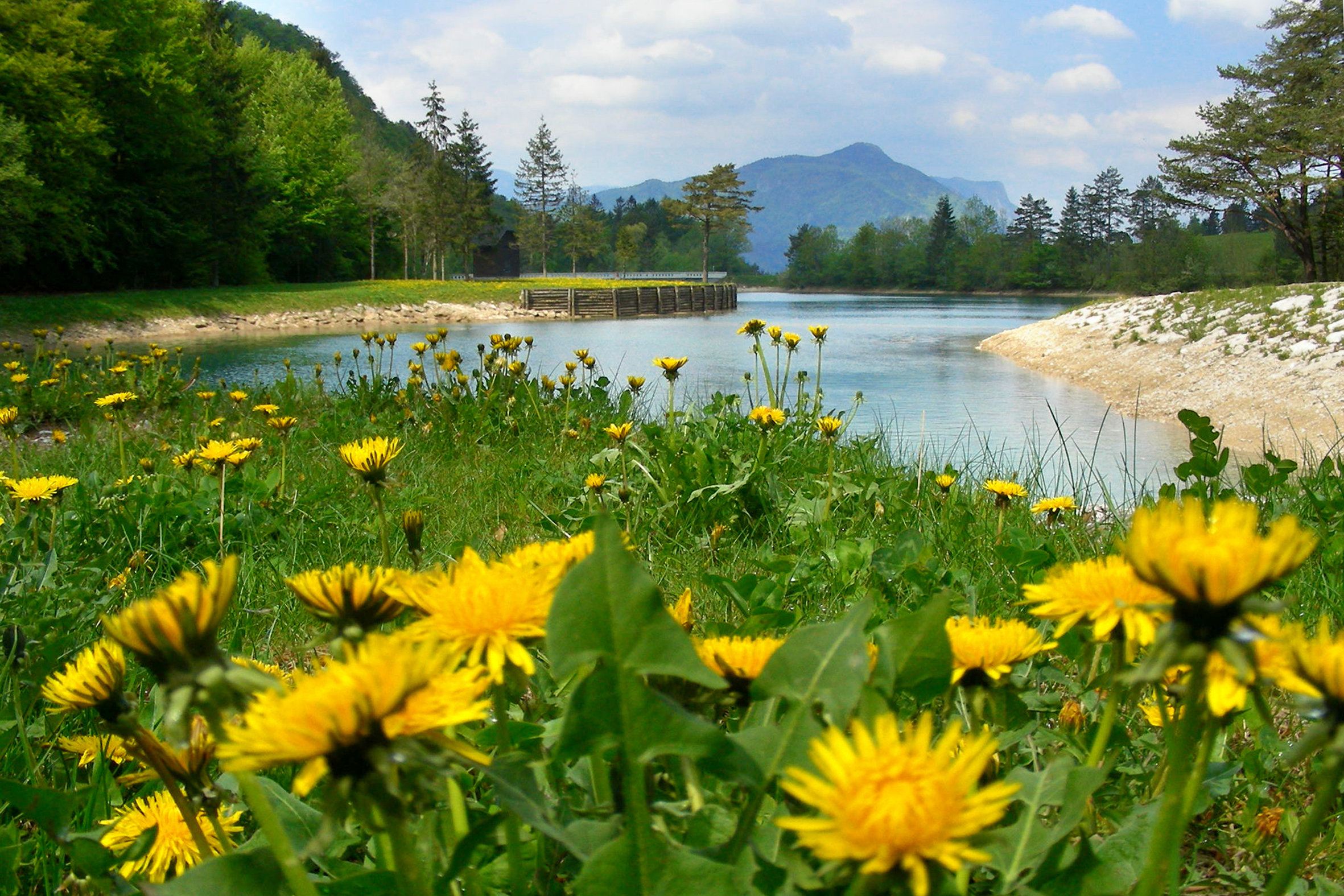
On especially hot days, a trip to the Završnica valley is an ideal way to seek some tranquillity and shade.

The valley is also a start point for great hikes and bike trips in the Karavanke range, including to the highest peak, Mt. Stol.

You can also visit Noč Beekeeping, where you can see some of the hives belonging to the president of Slovenia’s Beekeeping Association and his family, purchase honey and honey products, and try and buy the exclusive ‘Medena noč’ perfume made with Slovenian honey. You can read more about this in one of my previous blog posts here – https://adeleinslovenia.com/2016/06/06/perfume-made-with-slovene-honey-not-just-an-idea-a-reality/

In Brezje you can see the Basilica of Mary Help of Christians, and the Nativity Museum, or take a walk on the Path of Peace to the Peračica waterfall.

In Kamna Gorica you can walk through the village to see its many waterways, and walk up to the Sextons’ House Museum, which contains an original black kitchen. Its position offers great views over the village and towards the Karavanke mountains.

In Kropa you can visit the Iron Forging Museum, take a stroll through the village to see the former ironworkers houses, or visit the Vigenc Vice Blacksmith to watch a demonstration of manual nail forging.

In Radovljica itself there are numerous things to see and do including a visit to the Lectar Gingerbread Museum and Workshop, the Museum of Apiculture, the Šivec House Gallery, or simply enjoy a stroll through the well-preserved medieval old town and sit at the viewpoint and enjoy the views of the Sava river, the Jelovica plateau and the Julian Alps.

Or why not take the chance to find out more about Slovenian food and wine by enjoying a meal at one of the Taste Radol’ca restaurants or take a Taste Radol’ca Food Tour. More information here – https://adeleinslovenia.com/taste-radolca-tours/

Further information about the Hop-on Hop-off route and timetable can be found here – http://www.radolca.si/en/hop-on-hop-off-radolca/

© Adele in Slovenia


Highlights of the Škofja Loka Historial 2017

The annual Škofja Loka Historial (Festival of History) took place last weekend in the well-preserved medieval old town and its surroundings.

I attended the festival and managed to dodge (most of !) the afternoon showers which are so often a feature at this time of year. And the spirits of all the dancers, actors, stallholders, and other performers and guests weren’t dampened either!

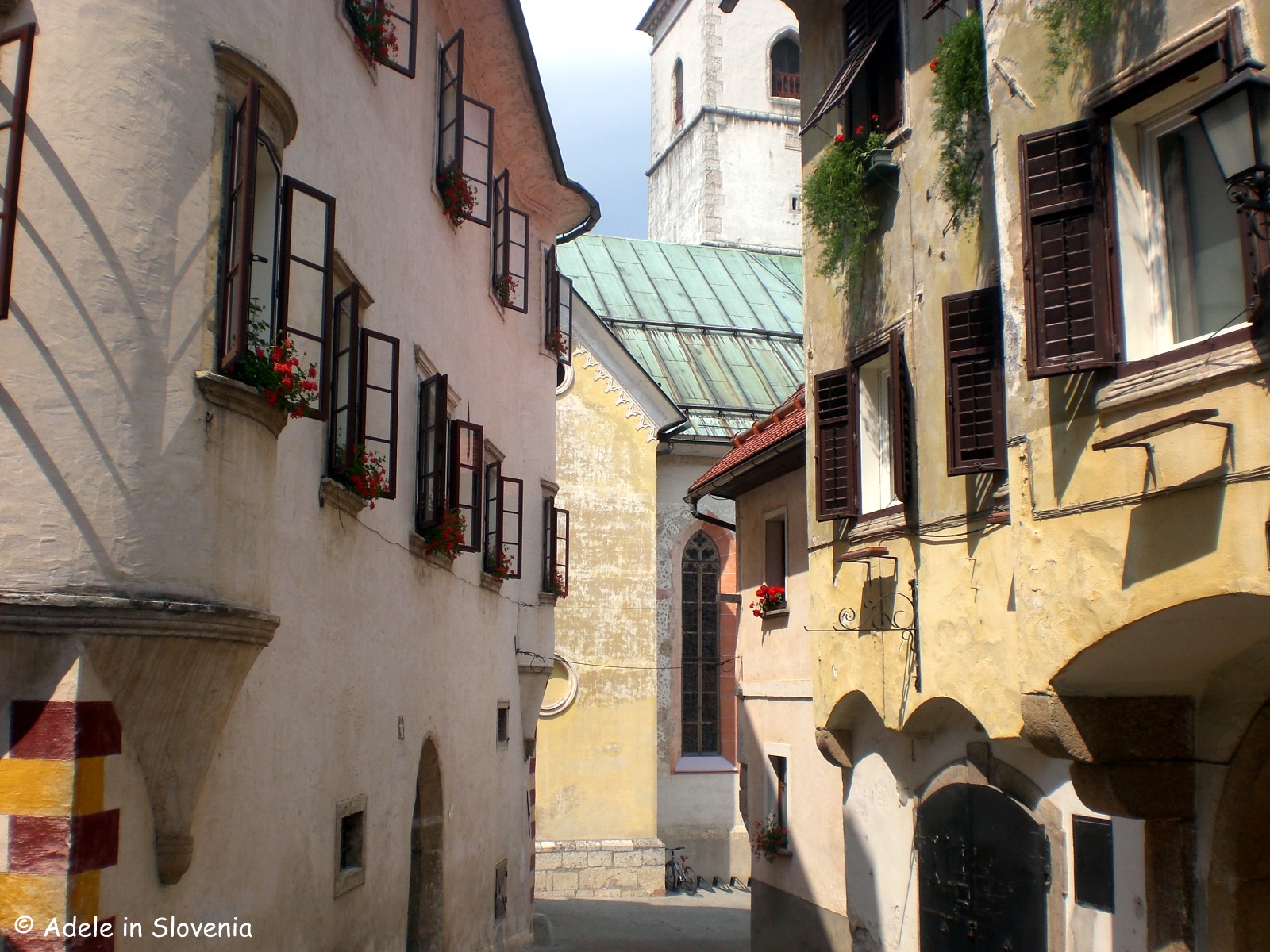
Below you can see some of the highlights of the festival, as well as see more of this charming town on the Sora river which should be on your list of places to visit whilst in Slovenia.

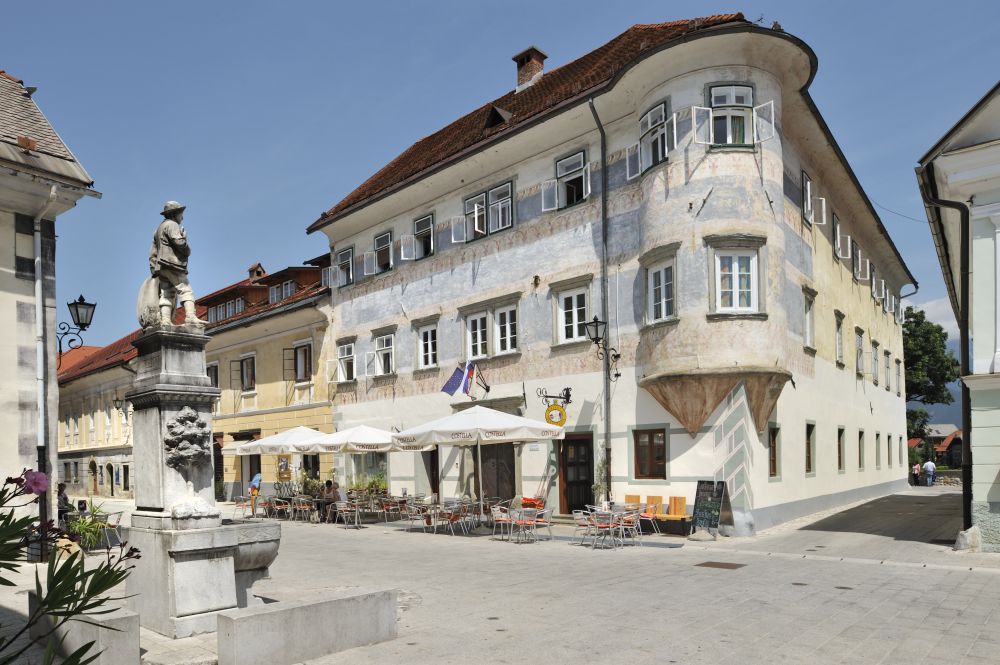
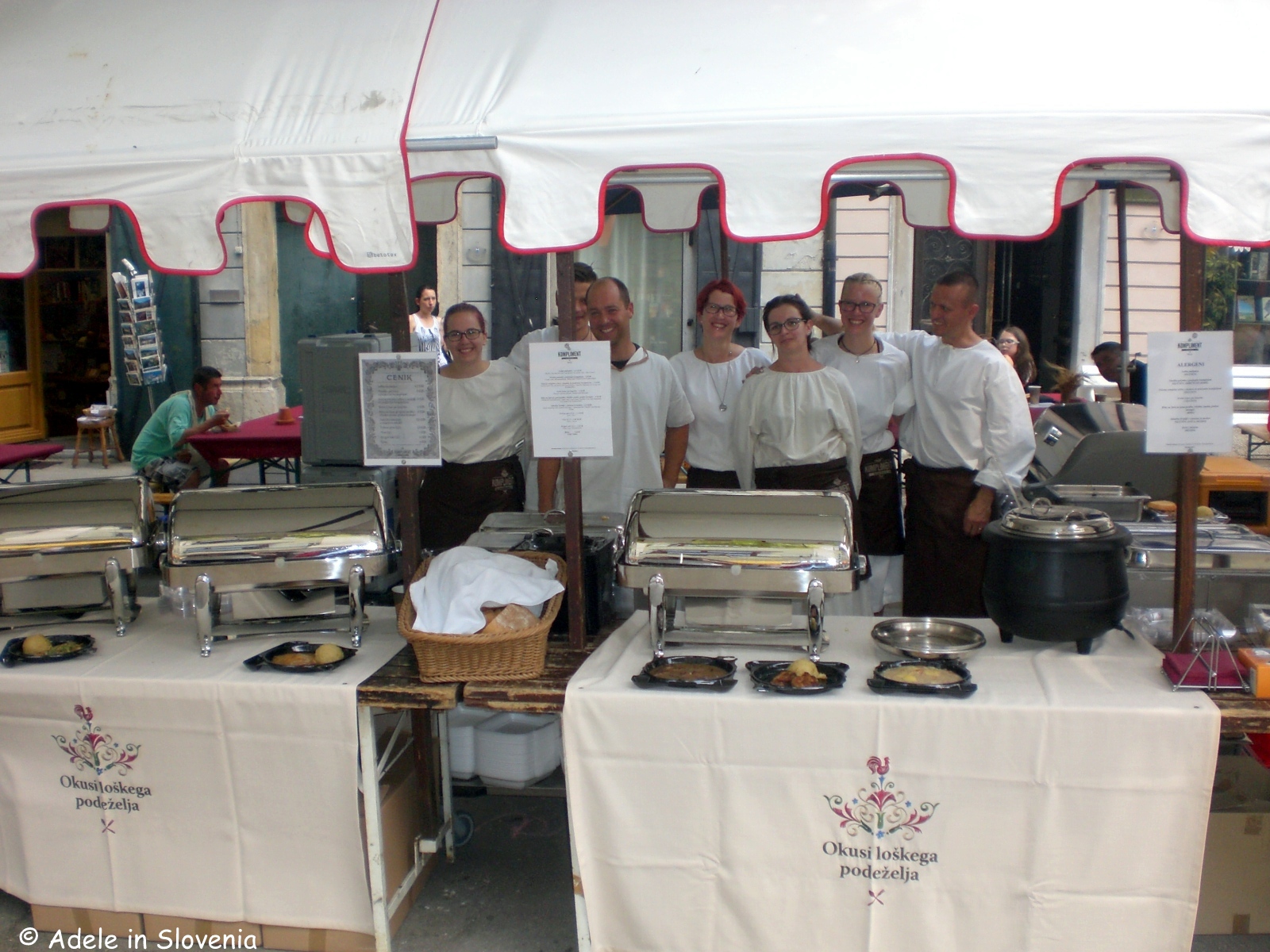
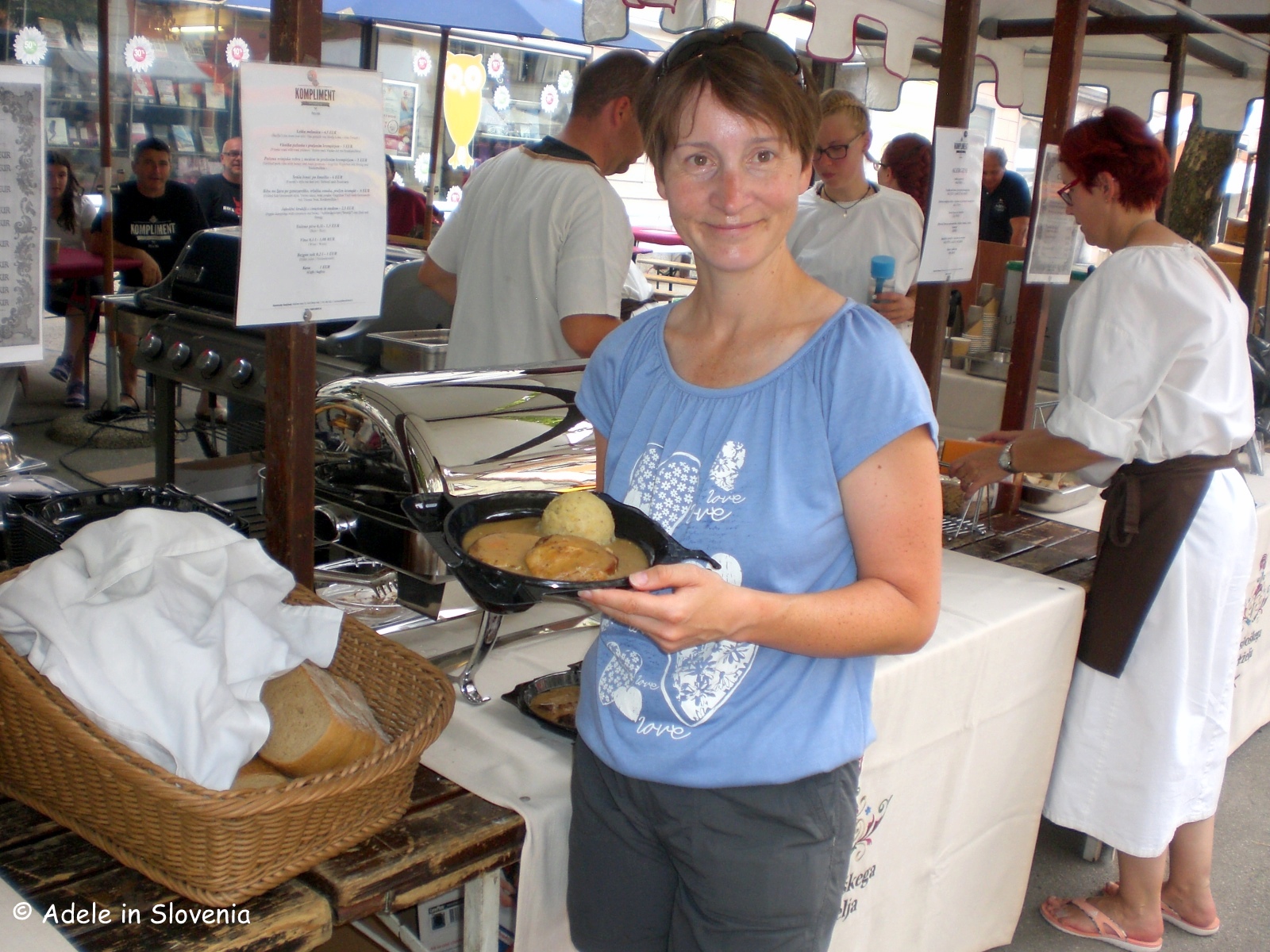
The fair and the majority of events took place in the main town square (Mestni trg) where visitors  had a chance to try some typical dishes from the area, part of the Taste of the Škofja Loka Countryside project (Okusi loškega podeželja).

One of the foods most synonymous with this area is Visoška pečenka – roast pork from nearby Visoko, studded with carrots, lemon, parsley garlic and laurel.

On the main stage there were performances from, amongst others, the Lonca Dance Society performing historic dances.

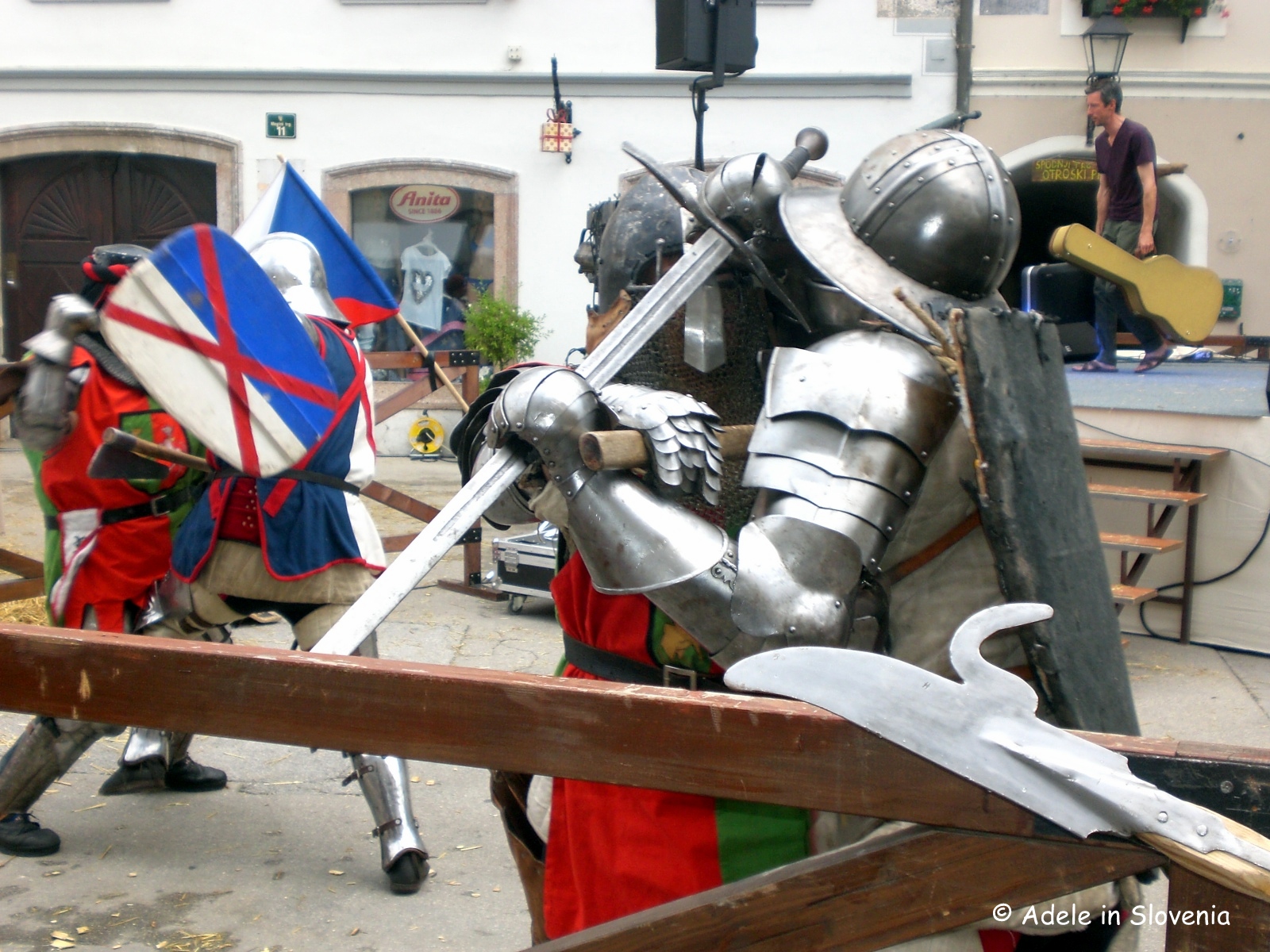
A display of flag throwing and sword play was performed by the Taboršti Kupci historic group from the twin town of Tabor in Southern Bohemia.

They certainly weren’t just play fighting! It was pretty brutal, raw fighting which, in addition to swordplay, seemed to involve a lot of bashing each other over the head with (real!) hammers!

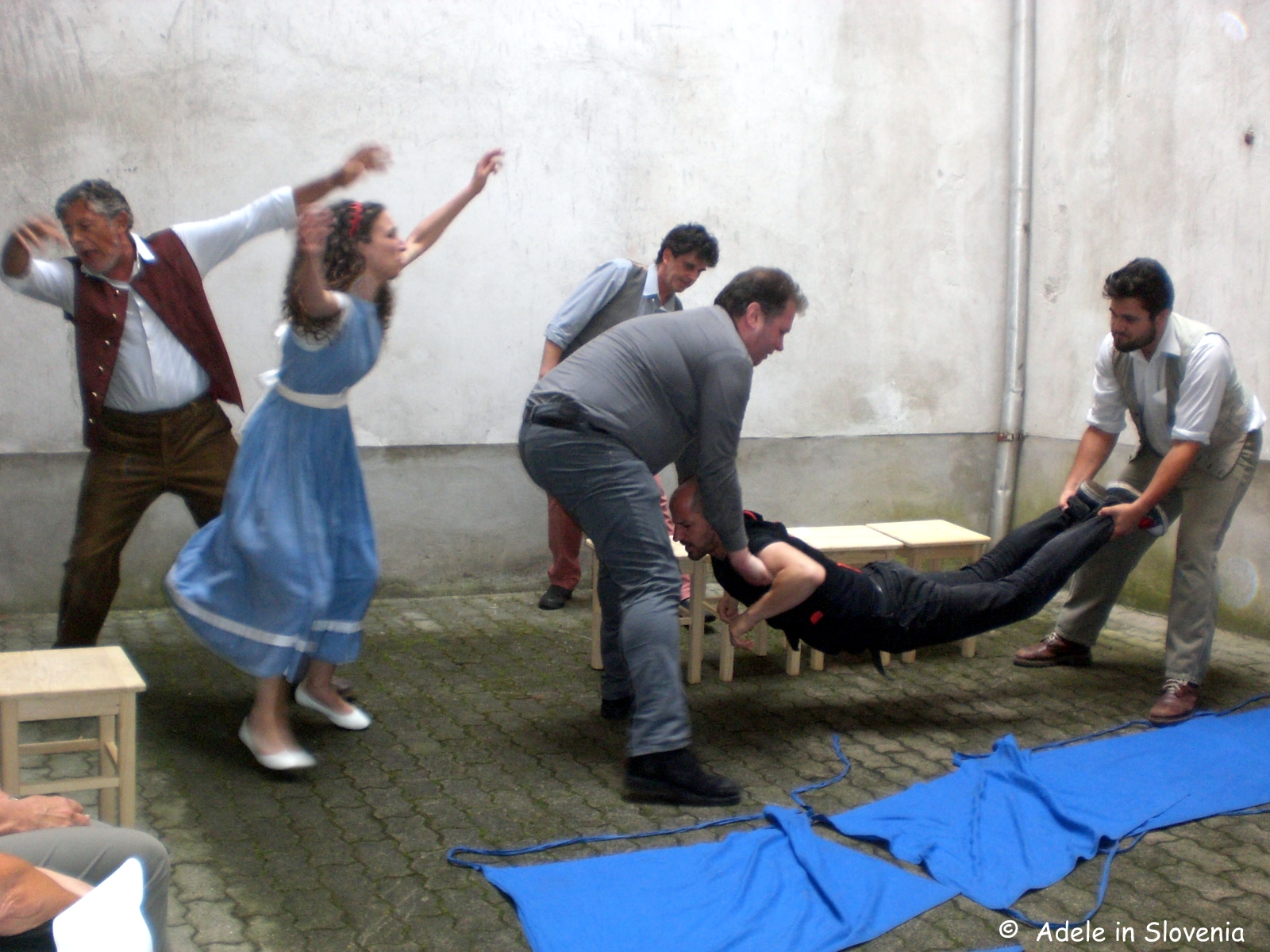
In Rotovž, the former town hall building and one of the most prominent buildings in the square with its baroque frescoes and three-storey gothic arcaded courtyard, the main event took place at intervals throughout the day. The drama ‘The Devil’s Footbridge’ (Hudičev brv) tells the story of the devil, the Puštal frogmen and a stone bridge.

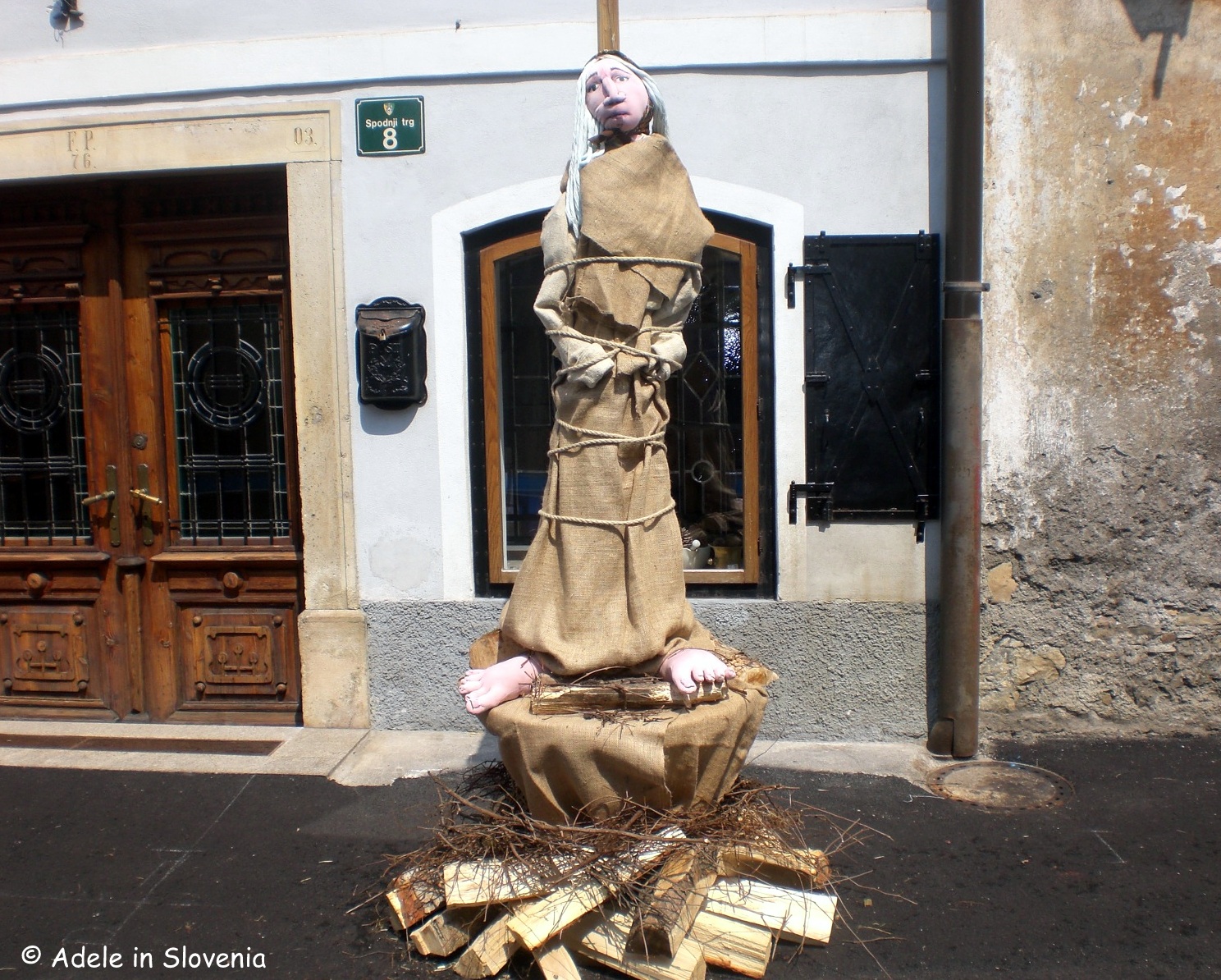
From the main square, I headed down through the narrow streets and alleys to the other main town square, Lower Square (Spodnji trg) where there were also various workshops and performances.

Next it was up to Loka Castle and the 16th century Škopar’s House (Škoparjeva hisa) where I had a chance to sample Loška medla, cooked in the original black kitchen; a simple peasant-style dish made of cooked millet which, according to some sources, originates from the Škofja Loka area.

Outside the house there were workshops and puppet shows for children, as well as weaving workshops. Unfortunately I haven’t got so much as a creative bone in my body when it comes to such things, but I’m always willing to give them a try! Weaving on a loom and using a weaving board; the latter, as I discovered, also requires a fair bit of patience!

Even when there aren’t any particular events happening in the town itself, there’s no shortage of things to see and do in and around it, as well as further afield in the Selca and Poljana valleys, about which I’ve already written quite a bit this year, but I’m certainly not finished yet!

And there’s no need to wait until next year’s Historial if you’d like to try your hand at some traditional handicrafts as this can be done all-year round at the DUO Arts and Crafts Centre (more here https://adeleinslovenia.com/2017/01/13/loka-honey-breads-and-handicrafts-at-the-duo-arts-crafts-centre/); you could also take a guided tour of the town to find out more about its history and listen to some of the many local legends, try some of the suggested experiences, or explore the pristine countryside on foot or by bike. More about all this can be found on the Visit Škofja Loka website – http://www.visitskofjaloka.si/en/

© Adele in Slovenia

The Karavanke Mountains – Majestic Mt. Begunščica

At 2060m, Begunščica is amongst the highest mountains in the Karavanke range, and a favourite destination among locals and those looking for a moderately challenging and very scenic hike.

The approximately 120-kilometre-long Karavanke mountain range forms a natural border between Slovenia, to the south, and Austria, to the north. Thus, in late-spring it’s not uncommon for there to be snow on the northern facing slopes of the Karavanke, whilst it’s green on the sunny Slovenian side!

Green and sunny to the south, snowy to the north!

There are several ways to reach the summit; the most popular among them is to start from the Draga Valley in Begunje na Gorenjskem. If coming from Radovljica, drive through the village and continue in the direction of Tržič, then on the left you will see the road towards the valley. The valley is a popular starting point for hikes in the Karavanke range. The routes are well-marked and signposts show approximate walking times.

I recommend taking time to stop in the village of Begunje na Gorenjskem to have a stroll around the park, and also at the entrance to the Draga Valley to see the ruins of Kamen Castle.

Continue to the end of the valley to the parking area and from there you set off on foot. You can choose to either go via Preval on the first part of the Shepherd’s Trail, which is the more direct, short, but steeper route, or hike first up to the Roblekov dom mountain hut (1657m), where you can stop for refreshments either on the way up or down – or of course both ways! You can find more information about the Shepherd’s Trail here – http://www.radolca.si/en/shepherds-trail-begunje/

Looking down on the Preval mountain hut on the path up towards Begunščica

If you choose the route to Preval, it takes a good hour from the valley to reach the Koča na Prevalu mountain hut, again an optional break for refreshments here – then prepare yourself for the very steep path directly up to the summit. Here you leave the Shepherd’s Trail and take the marked path to Begunščica which, at times, can feel like an almost vertical ascent. However, apart from one small rocky section, it isn’t overly exposed and is manageable for competent and experienced hikers.

As you approach the summit you can’t fail to notice the ‘carpet’ of sheep droppings from the sheep that are taken to graze on the slopes of Begunščica during summer! I always wonder how on earth so few sheep manage to produce so many droppings! At the summit there is an orientation table which provides assistance when you are gobsmacked by the stunning views and don’t know where to look first!

Personally I prefer to do the hike in the direction as I have described it: Draga – Preval – Begunščica – Roblek – Draga, as the descent from the summit to Roblek is easier and more ‘knee-friendly’ than the steep path from the summit down to Preval. I also like doing it this way as it makes it an entirely circular route.

The path from the summit down towards the Roblekov dom hut

Whilst there is no hut at the summit, there’s no shortage of huts to visit; in addition to the aforementioned Koča na Prevalu and Roblekov dom huts, there is also the Tomčeva koča hut (1180m) on the Poljška Planina highland and the hut on the Planina Planinca highland (1136m), both of which are found at approximately the halfway point between the Draga Valley and the Roblekov dom hut.

The hut on the Planina Planinca highland

You can find out more about this and other hiking routes nearby on the Tourism Radol’ca website here – http://www.radolca.si/en/hiking/

© Adele in Slovenia

Active and Historic Loka: The Škofja Loka Cycle Route

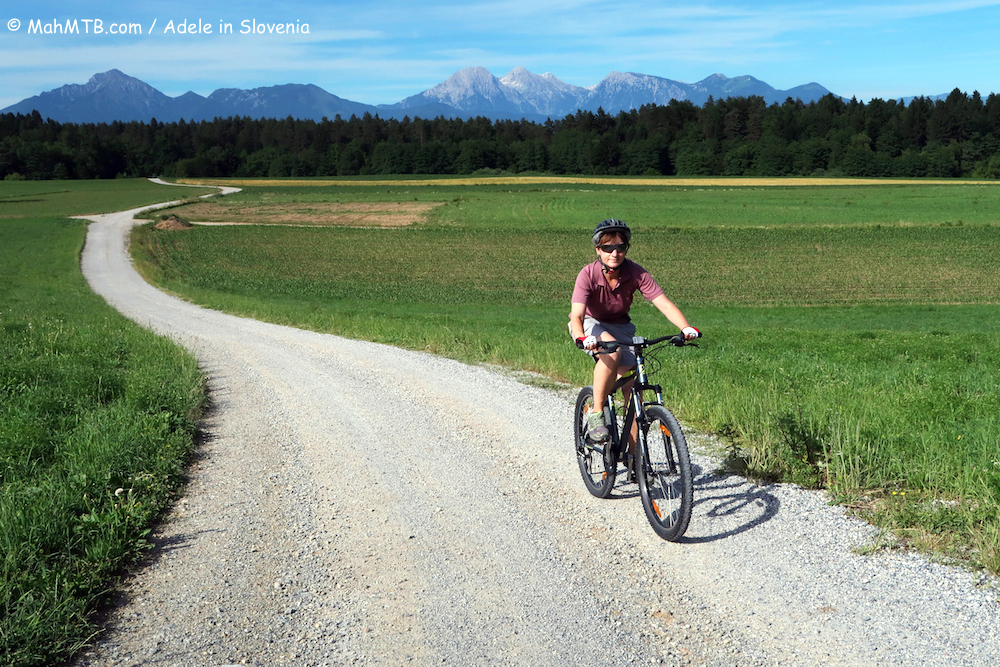
I’m really enjoying getting to better know the Škofja Loka area this year. So far I’ve done most of my discovering on foot, so this time I set off by bike to discover part of the Škofja Loka Cycle Route. The route is divided into 13 sections and covers a total area of 390km. There is something to suit all levels and kinds of cyclist; some of the routes are shorter and easier, others longer and more demanding.

You can rest assured that whichever route you take, you will cycle through unspoilt nature, past numerous sights of interest, soak up the great views, enjoy fresh, clean air, and take a breather for refreshments at tourist farms and other refreshment stops. The hardest part is deciding which of the great routes to take! A ride through the historic old town centre is the obvious place to start, and a must!

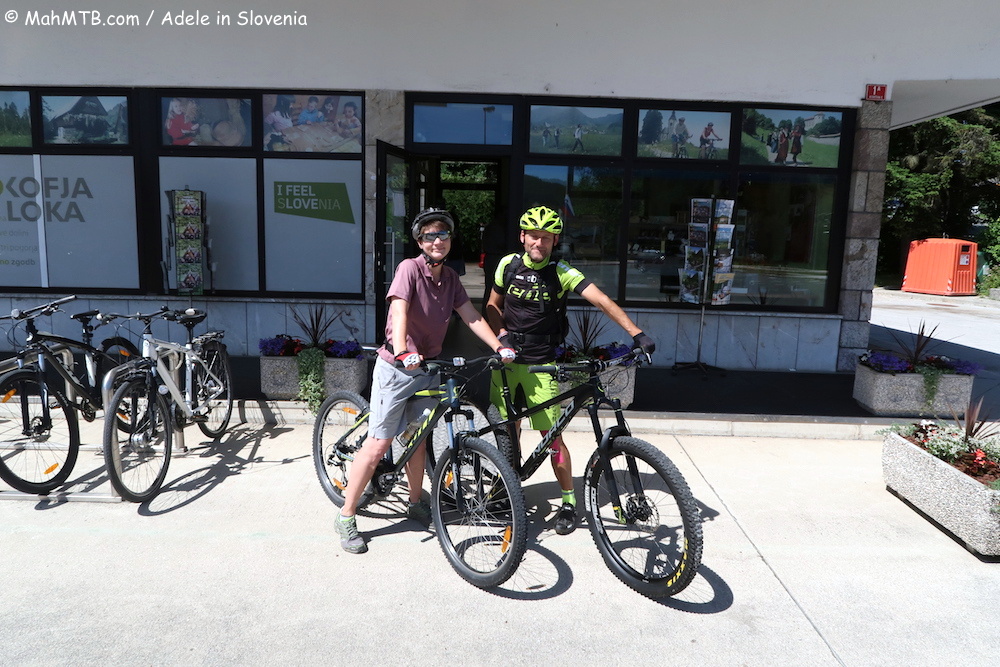
Luckily I didn’t have to make the tough choice about where to go as I had a fab guide – Matej Hartman – who runs mountain bike tours in Slovenia as well as abroad. I really recommend hiring a guide, particularly when cycling in an area you are not so familiar with. Instead of having to faff about with maps and lose precious time, riding with Matej I was able to focus on enjoying the ride whilst taking in the views and listening to his wealth of insider knowledge about the area. Oh and the fact that he also happens to be a dab hand with a camera was an added bonus. Thanks Matej! You can find out more about Matej and his mountain bikes tours on the website MahMTB.com here – http://mahmtb.com/

If you plan to cycle multiple sections of the route, your first port of call should be the Škofja Loka Tourist Information Centre, where you can pick up a map and a card on which you can collect stamps at the various control points along the route. Bikes can also be hired at the centre, trekking or mountain bikes, and decent ones too – mine was a Scott!

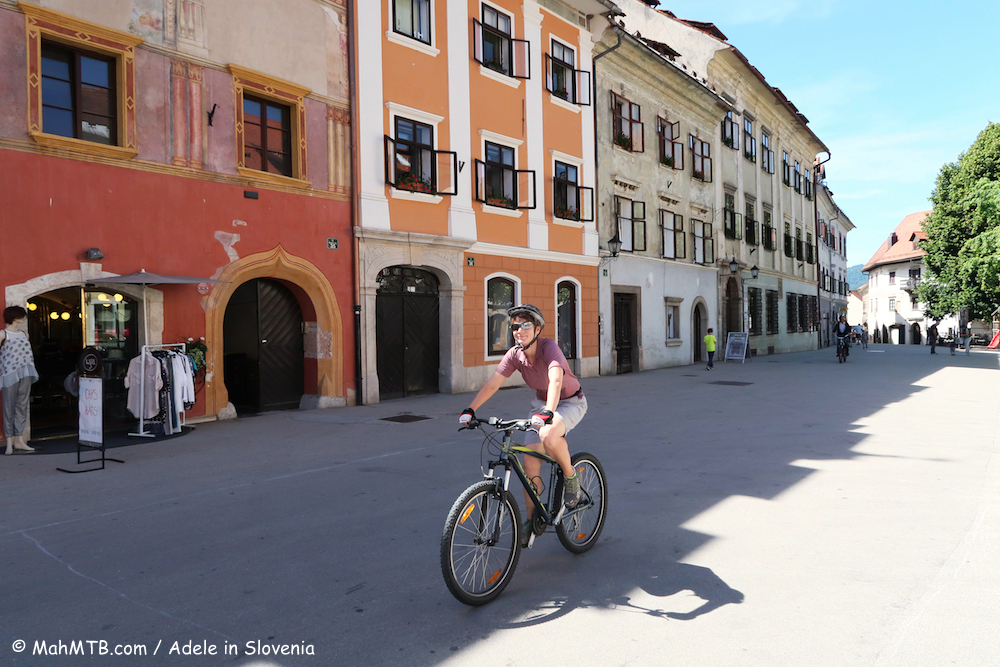
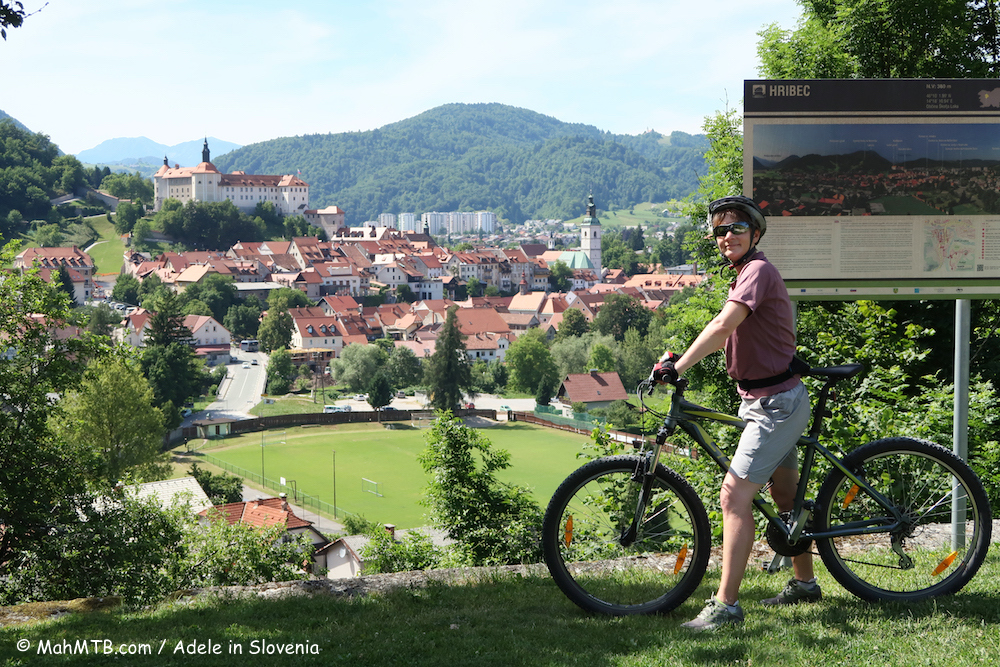
With only a few hours available for our trip, we agreed on taking some of the routes around the outskirts of the town, through Puštal, across the Sorica fields and to Crngrob. One of the highlights was seeing Škofja Loka Castle from an entirely different perspective – from Hribec, part of the Path to Puštal. Stunning, I’m sure you’ll agree!

We crossed fields, meadows and pastures, and Matej led me to hidden beauty spots in the cool of the forest.

We crossed numerous bridges over the crystal clear Sora river.

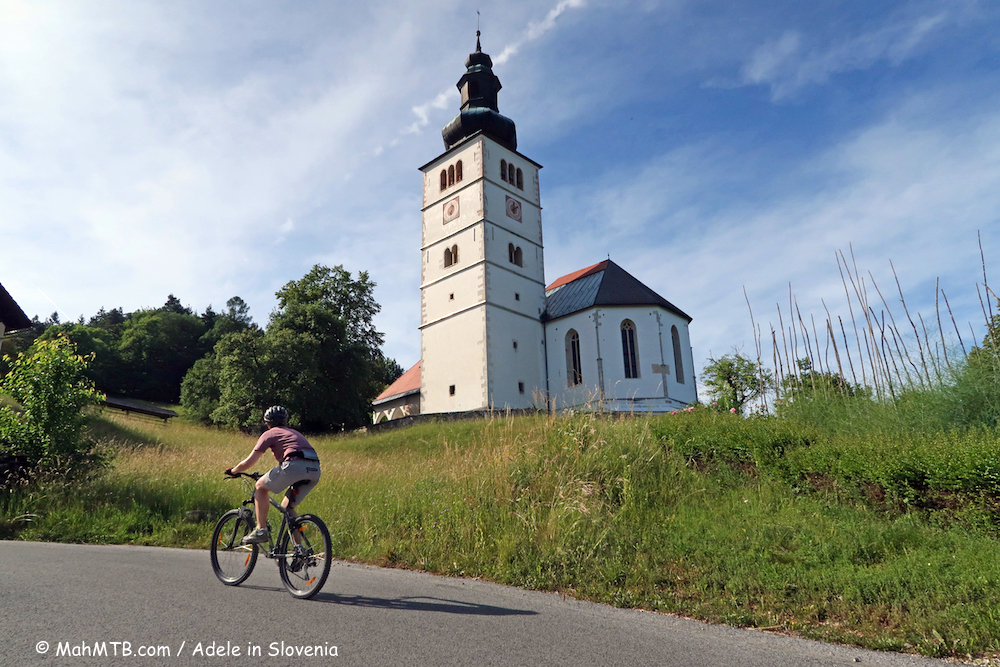
And visited Crngrob, home to the Church of the Annunciation, which is known for its treasured frescoes. The pilgrimage church has a fresco of Saint Christopher with Jesus on his shoulder on the front façade, whilst in the shelter of the neo-gothic porch on the facade, the fresco of Holy Sunday can be seen. This originates from the middle of the 15th century and shows tasks which were at the time prohibited on Sundays.

More information about the Škofja Loka Cycle Route can be found on the Visit Škofja Loka website here – http://www.visitskofjaloka.si/en/experiences/active-breaks/cycling

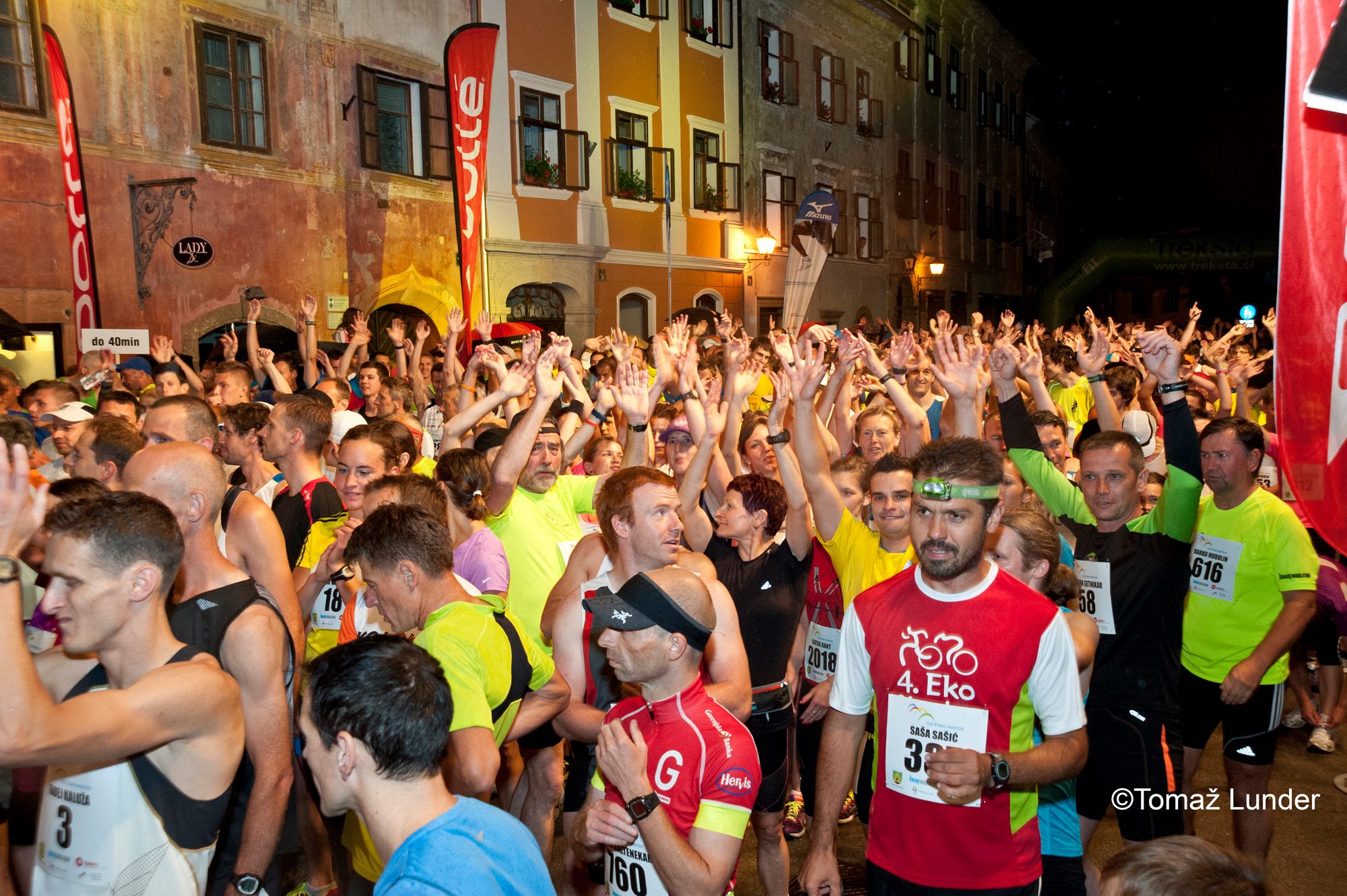
If you, like me, like running, then the Four Bridges Night Run, is for you! It is one of the most popular running events in Slovenia and takes place this year on 17th June. As the name suggests, the 10km route crosses four bridges and runs through the historic old town and around the picturesque town of Škofja Loka and over the Sora river. The main event begins at 9pm with children’s runs taking place earlier and even a pasta party the night before the race! More information about the route and race registration can be found here – http://www.tekstirihmostov.si/razpis-t4m-2016/?lang=en
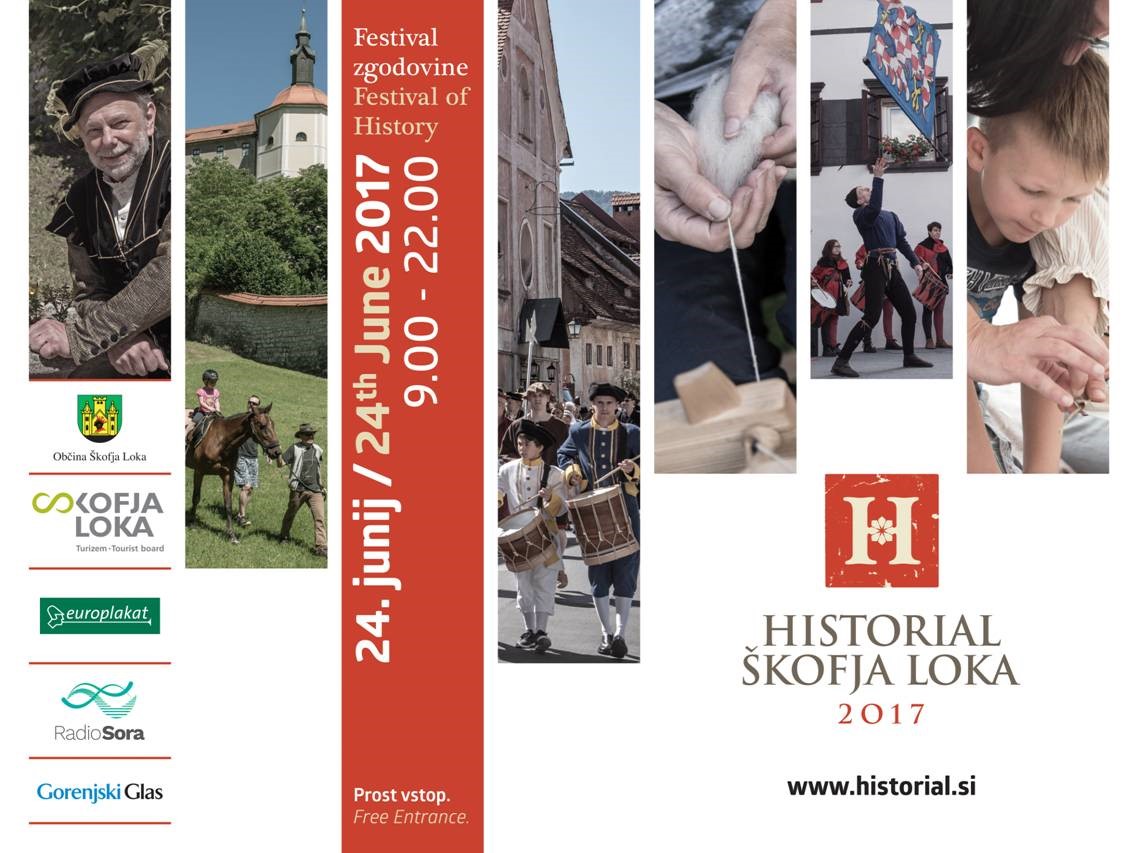
Another ‘Don’t miss’ event, and one that I won’t be missing is the Škofja Loka Historial (Festival of History), which this year will take place on Saturday 23rd June. There is a jam-packed programme of events with something for all the family. The full programme can be found here – http://www.historial-skofjaloka.si/home.aspx

Just one more reminder of my trip to round off this scenic cycling blog!

© Adele in Slovenia