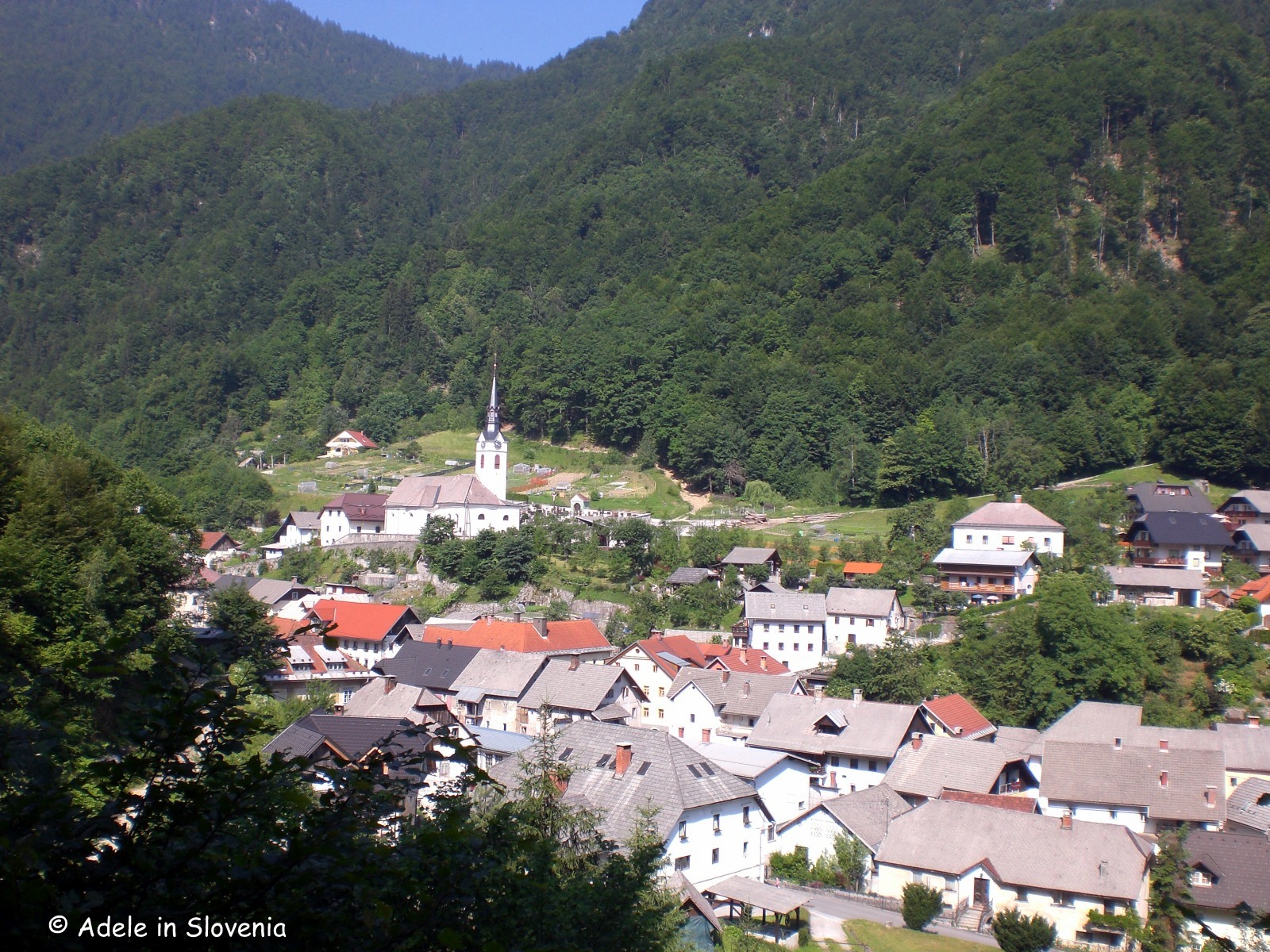
I’ve been living in Slovenia for 18 years now and during that time I’ve visited the village of Begunje na Gorenjskem, just a few kilometres from where I live in Radovljica, hundreds of times, mainly because it’s a great place to start various hikes in the Karavanke mountains.
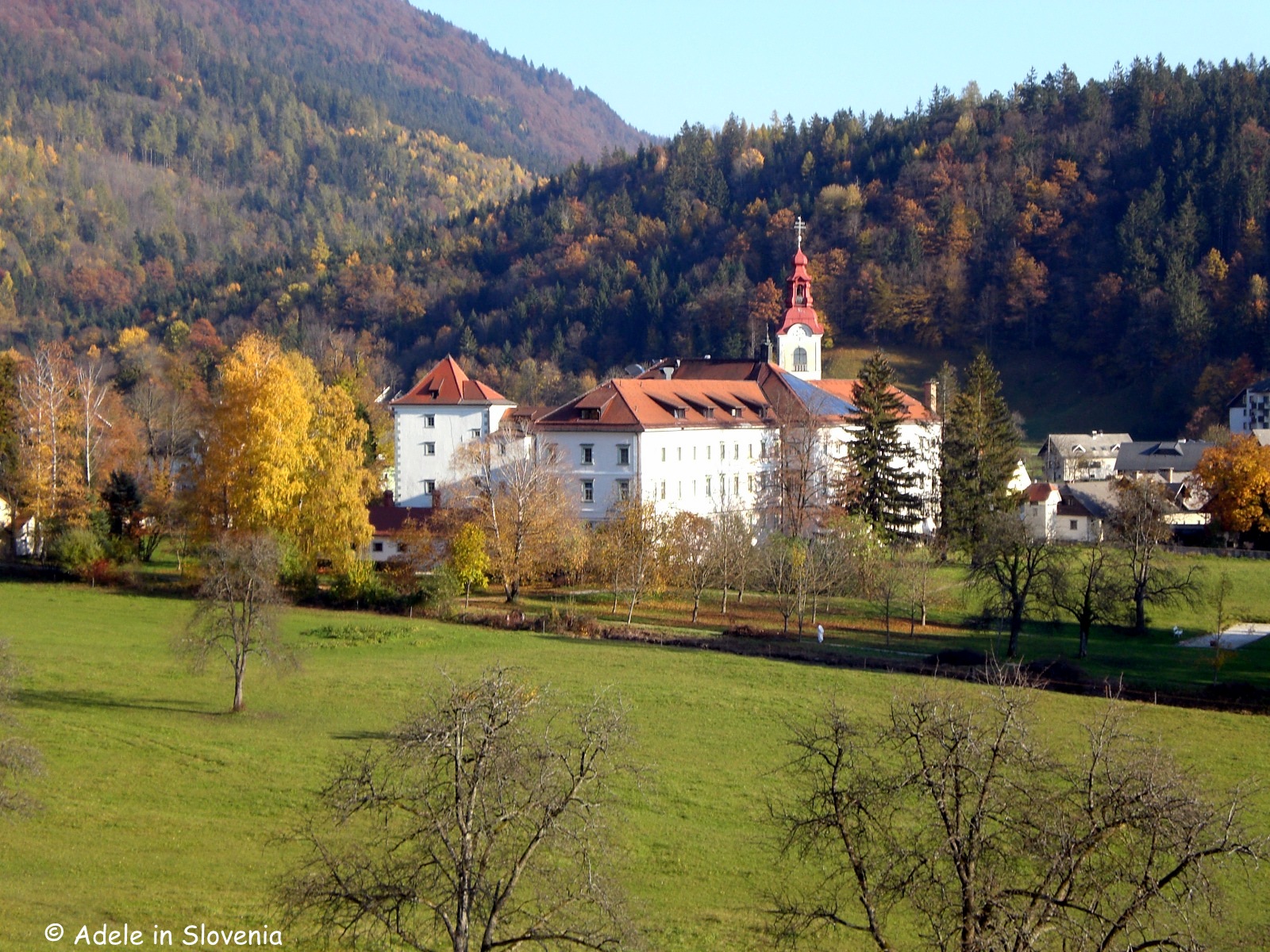
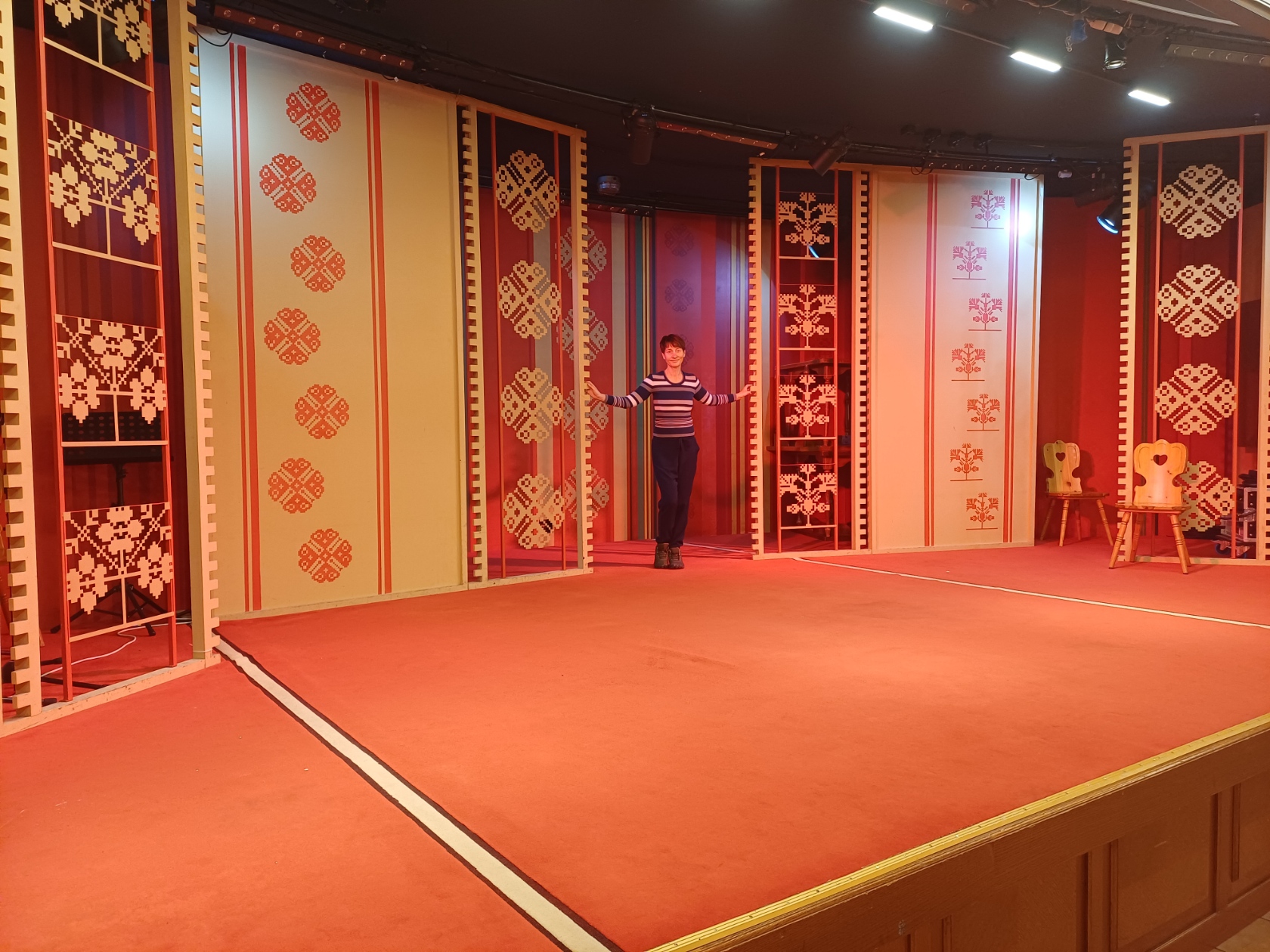
I’ve never, until last week that is, been for a meal at the Pri Jožovcu Avsenik Inn and Restaurant, which is part of the Avsenik complex – concert hall, guest accommodation, restaurant, bar – renowned for its highly popular Oberkrainer music, which still lives on today through younger generations of the Avsenik family.
To be honest, I was under the impression that Avsenik is so popular due to its music that its food isn’t so important; more of just an added extra. Well, I stand to be corrected. We were both very pleasantly surprised at the excellent standard of the food and service on our visit last week, and even more pleasantly surprised that they cater so well for those of us who need gluten-free food (in our case due to us both having coeliac disease). The waiter was very knowledgeable about what we could and couldn’t eat, took time to explain how they prepare the food, and reassured us that we were in good hands.
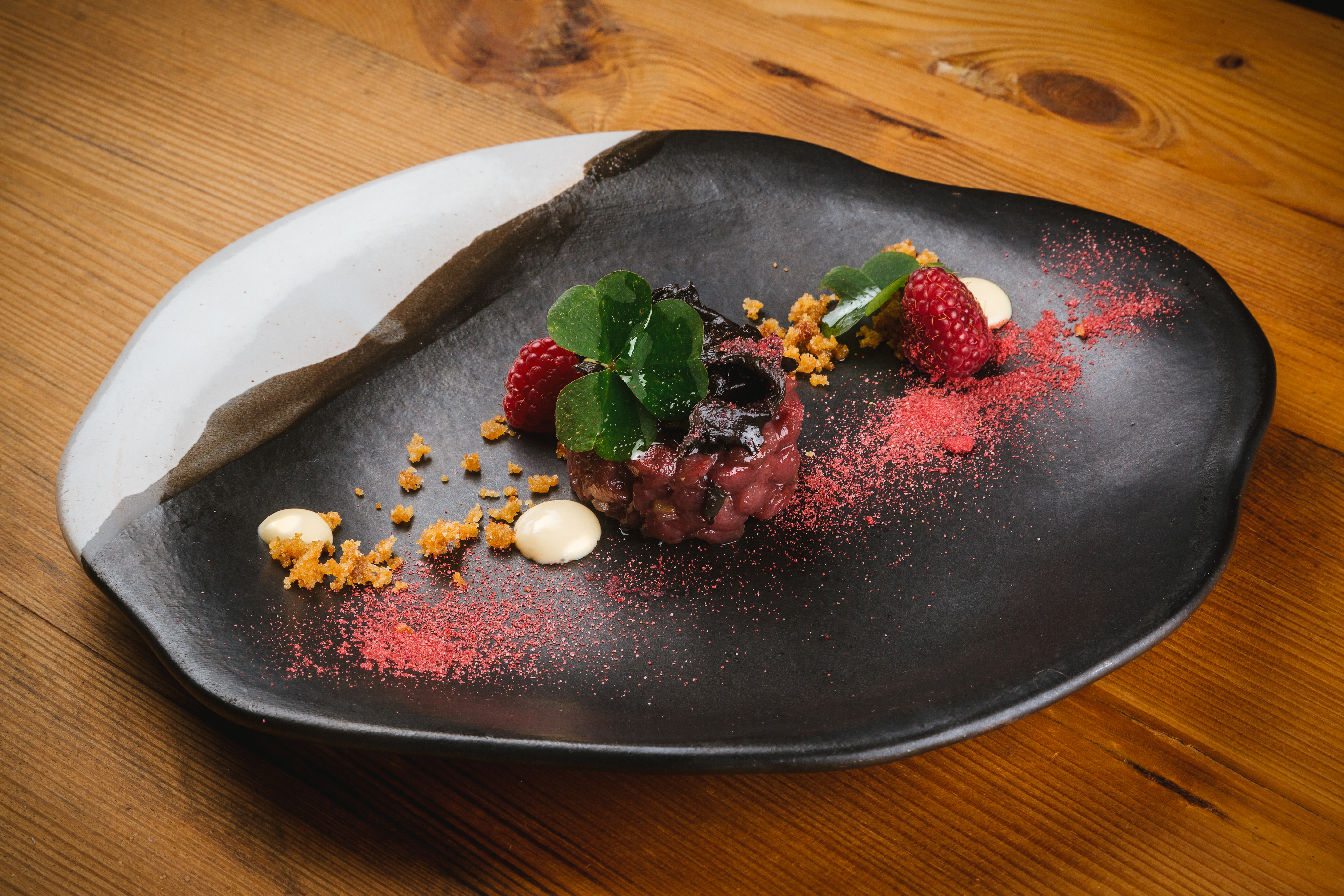
We started with delicious mushroom soup, made using mushrooms from the surrounding hills and mountain pastures.
For main course we chose two dishes that we could share; we always do that as it means we get the best of both worlds!
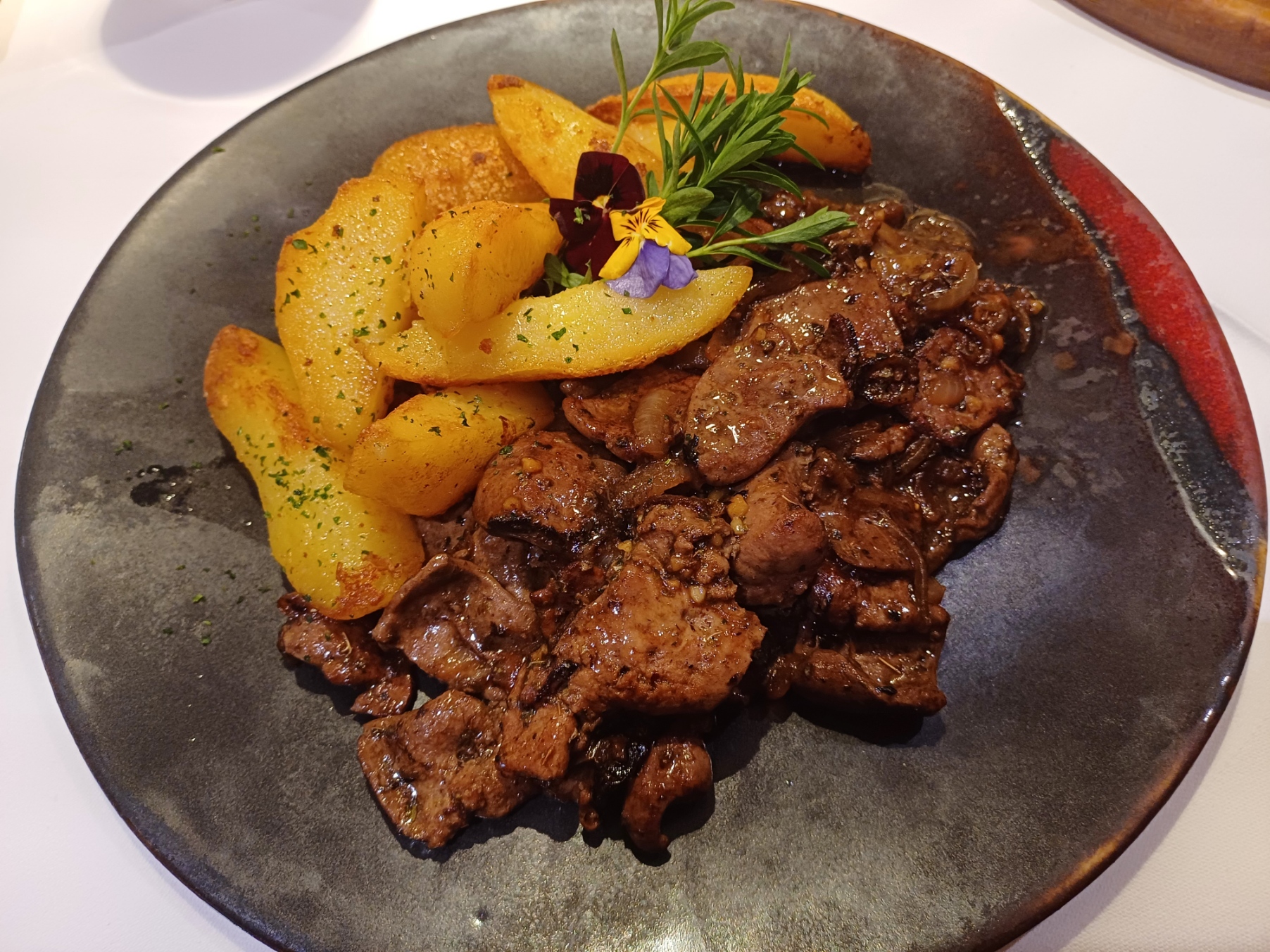
Calves’ liver and roast potatoes; the former was so tender it melted in the mouth.
Shepherds’ lunch is a hearty dishes consisting of pork fillet fried with onions, potatoes, and cabbage salad with bacon.
After our meal we took time to have a nose around the interior and exterior of the complex.
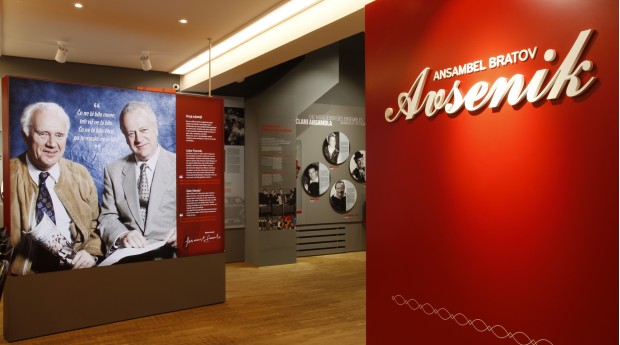
We weren’t able to visit the Avsenik Museum, as it was closed during our visit; for fans of Avsenik music a visit to the museum is a ‘must’.
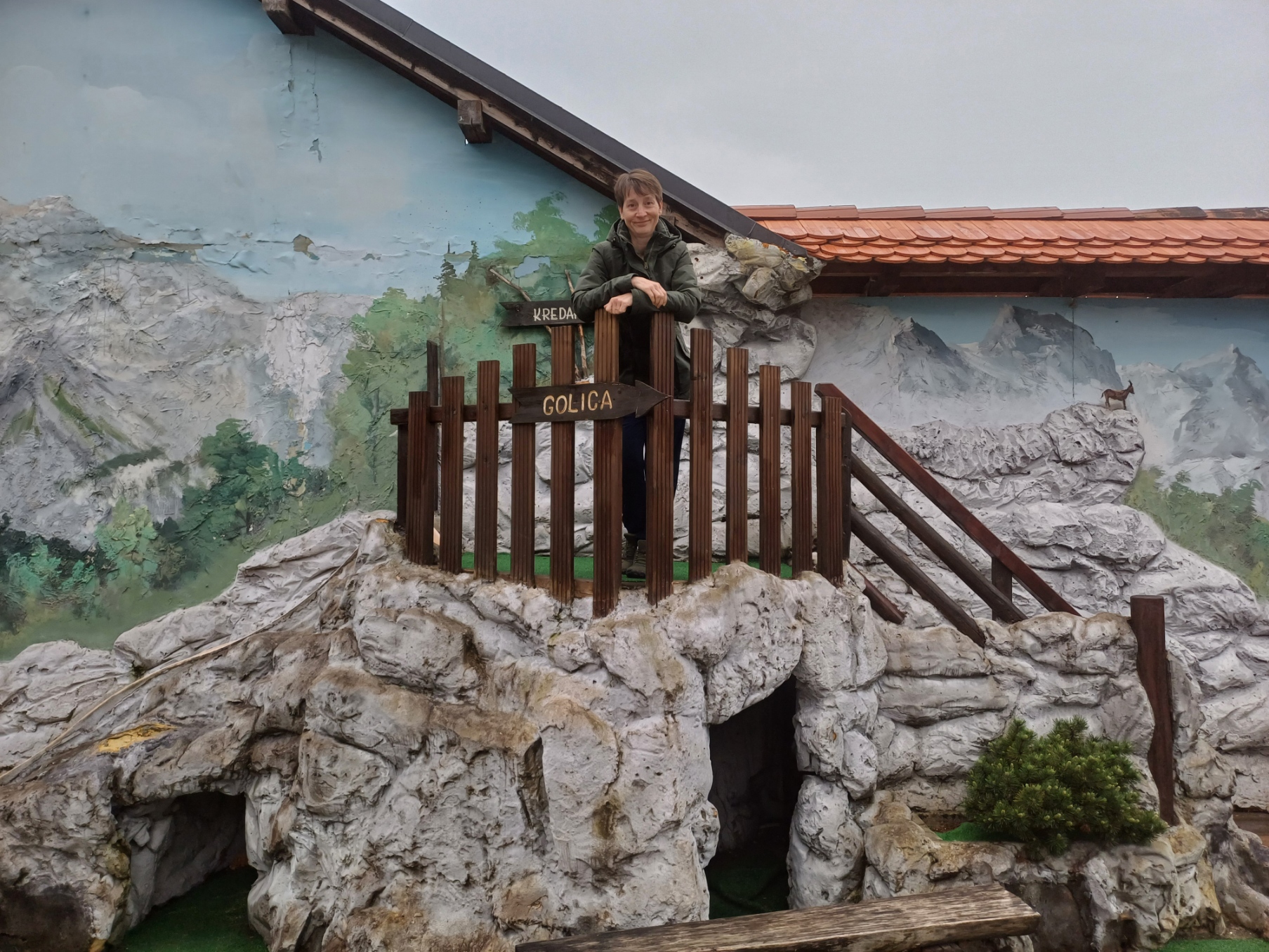
Outside, there’s a small play area for children too.
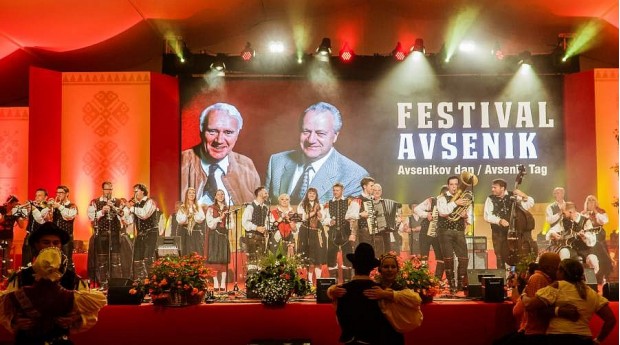
This year the highly popular Avsenik Festival will take place from 28th to 30th August. More than 20 national and international ensembles play concerts in the marquee over the three-day event. The festival sells out very quickly so, if you’d like to go, be sure to buy your tickets online soon!
While at first glance the former iron forging village of Kropa, in the Lipnica valley, may appear to be a sleepy backwater, a closer look reveals it has plenty to offer. Add into the mix the ‘world’ above the village, on the Jelovica plateau, and there’s more than enough to see and do for a short stay in the village or as a base for exploring the surrounding area.
If you are looking for a budget option, the village is now home to a new hostel – Bajta Kropar’ca – as seen below.
The hostel, which has a total of 38 beds (33 in seven rooms and 5 in a small apartment), is housed in a renovated house, in a quiet location in close proximity to the village centre and the Kroparica stream. The shared areas have a well-equipped kitchen and dining room, featuring an original farmers’ stove, which, in addition to the handmade furniture, provides a homely and warm feeling.
To explore the world above Kropa, you can choose from one of the many hiking trails up to the Vodiska planina mountain pasture. One of the paths begins from the Slovenska peč smelting furnace, as seen below, before first leading to the source of the Kroparica stream.
As part of the activities during Coeliac Awareness Month, the Slovenian Coeliac Association organised various activities through the month of May, one of which (which, as vice-president and acting president of the Gorenjska branch of the association, I suggested and organised!), was a hike up to the Partizanski dom mountain hut on the Vodiska planina mountain pasture, where they serve a-m-a-z-i-n-ggluten-free štruklji!
Trust me, for coeliacs, being able to feel ‘normal’ and eat in a mountain hut, in the knowledge that the food has been prepared carefully by someone who is well aware of the steps necessary to avoid contamination, is like winning the lottery! Thank you Heidi Kardoš!
No doubt our smiles say it all!
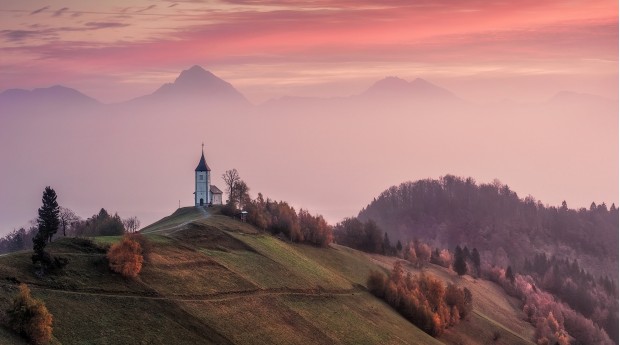
For one of the best vantage points around, and a particularly good spot to await sunrise, take a hike (or drive) up to the village of Jamnik, home to the Church of St. Primus and Felician.
Slovenia takes its culture seriously, and this is most visible every year on 8th February when the country celebrates Prešeren Day – a national cultural holiday – dedicated to its most treasured poet, France Prešeren.
Various events take place throughout the country, the largest of which are in Kranj and Vrba. The former is nowadays known as Prešeren’s Town, while the latter was his birthplace.
In Vrba, which is in close proximity to Radovljica, every year on 8th February people flock from around the country to take part in a 10-kilometre walk along the Žirovnica Cultural Heritage Trail. The trail begins at Prešeren’s birth house …
…then continues via fields and country paths to the birth houses of Žirovnica’s other famous men as well as Anton Janša’s apiary.
The Prešernov smenj fair in Kranj also attracts huge crowds. The event is dedicated to all-things from Prešeren’s time; music, dance, clothing, food …
Throughout the country all museums offer free admission on 8th February to enable everyone to be part of Prešeren Day.
The Radol’ca area has more than its fair share of museums; 12 to be precise (excluding galleries):
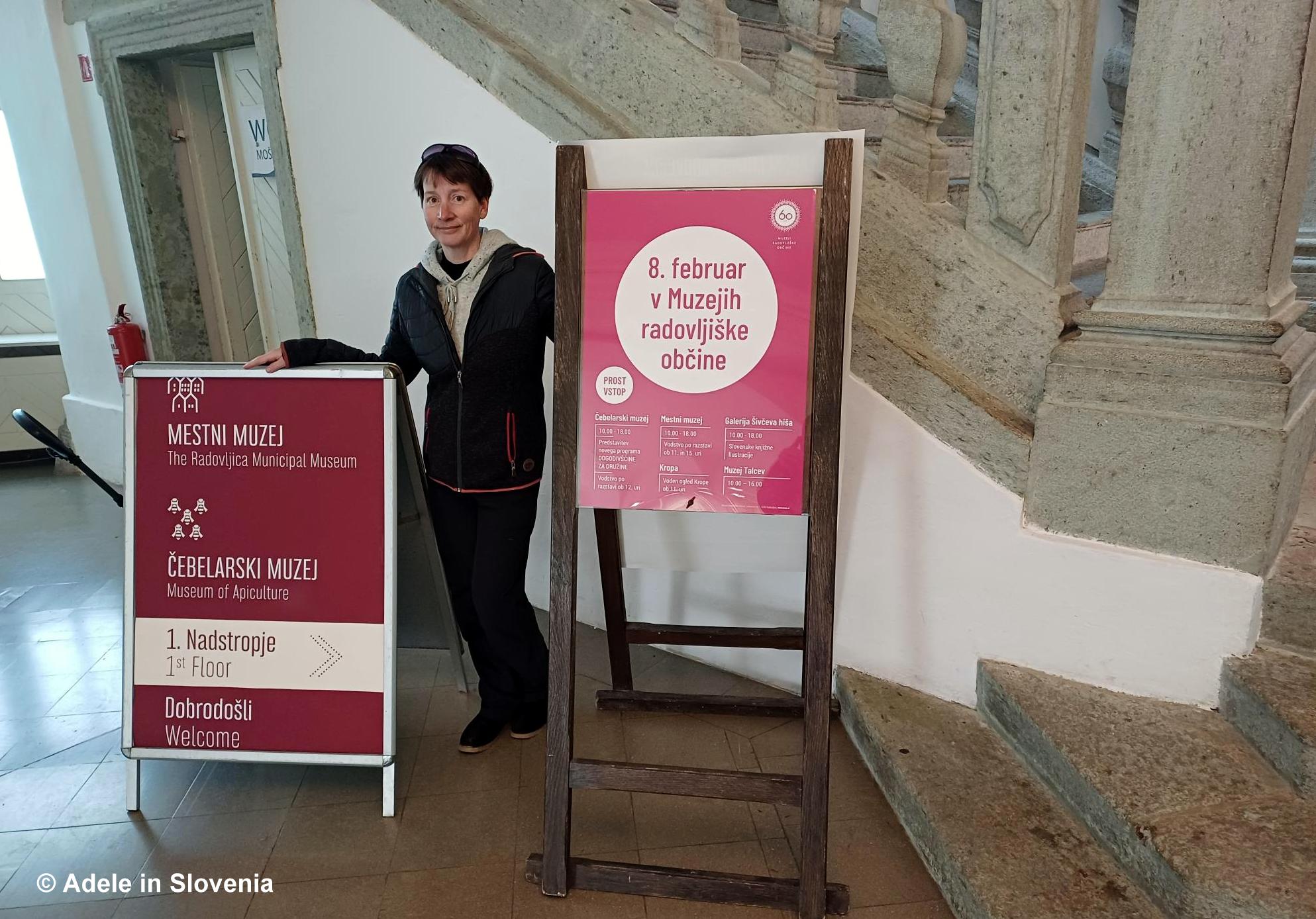
While deciding what to do this year on 8th February, I realised that I had been to all the above museums, except one – the Municipal Museum. So, it was time to tick that one off the list too!
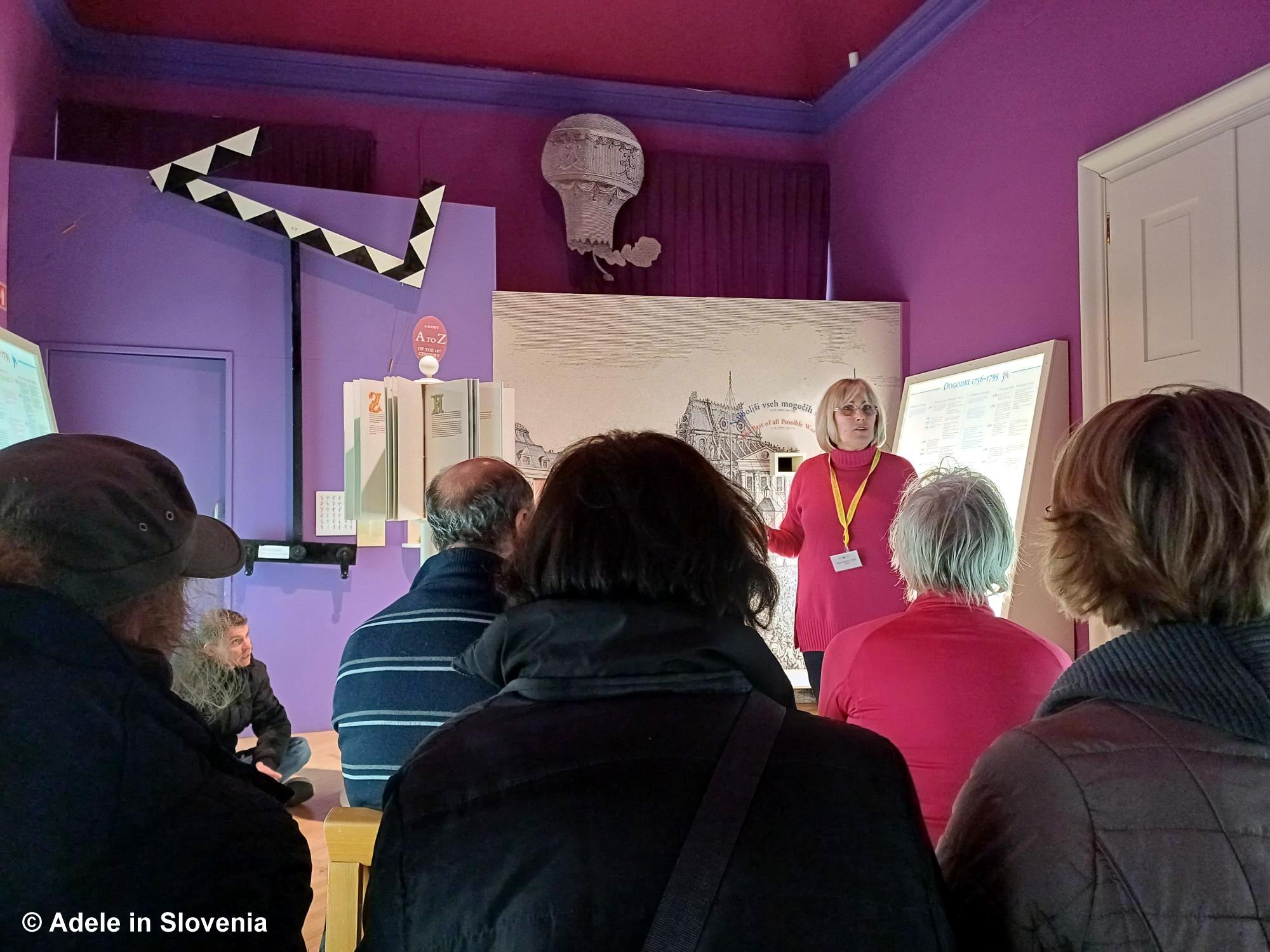
The museum is dedicated to Radovljica’s most well known (former) resident – Anton Tomaž Linhart: The 18th century was a time of great change in Europe. One of the central characters in the then Carniola was Anton Tomaž Linhart from Radovljica, the father of Slovenian theatre and scientific historiography.
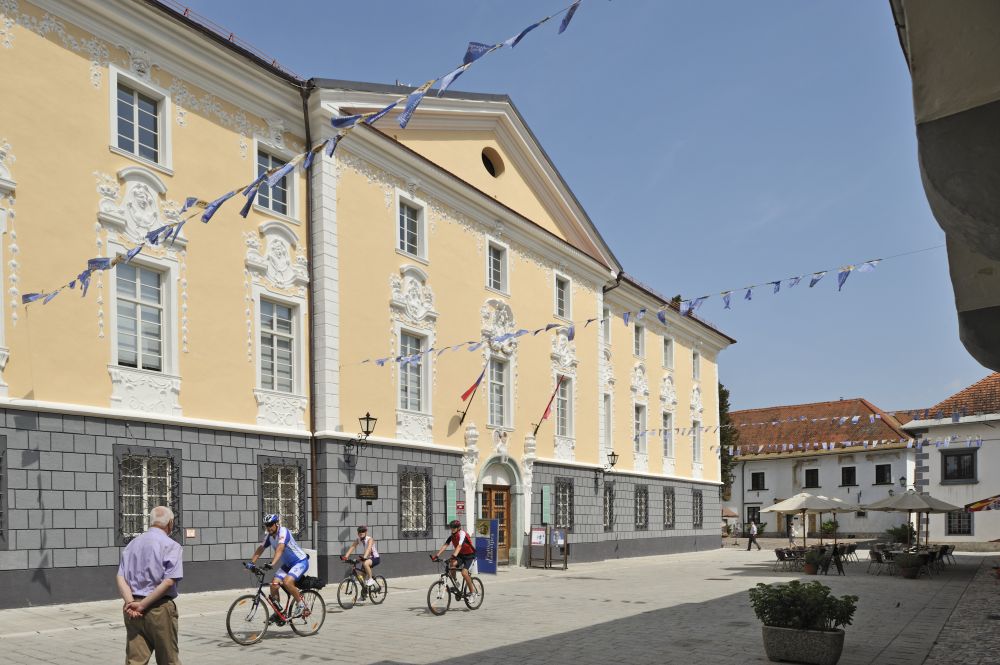
The museum is located on the first floor of the magnificent Radovljica Manor.
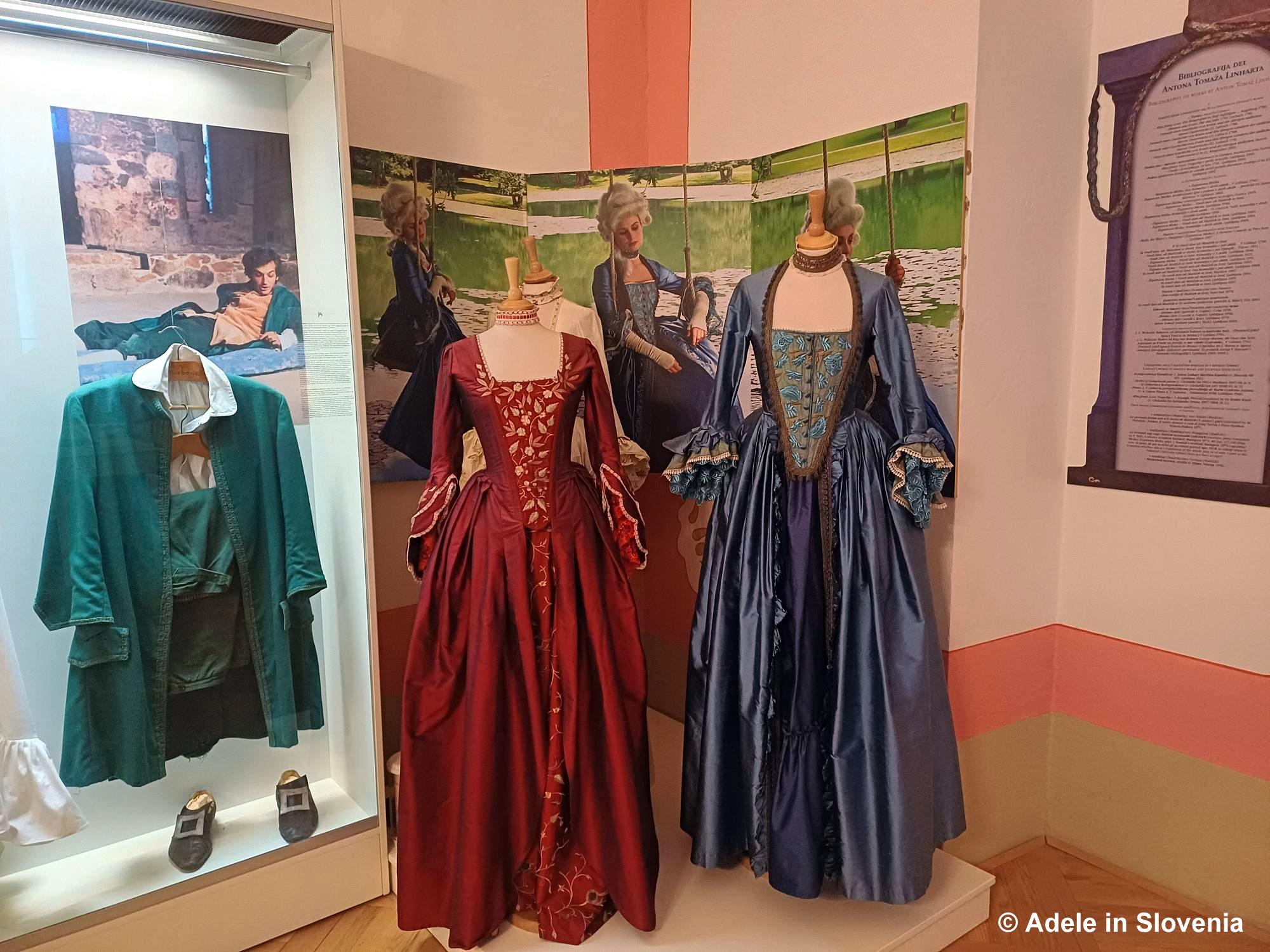
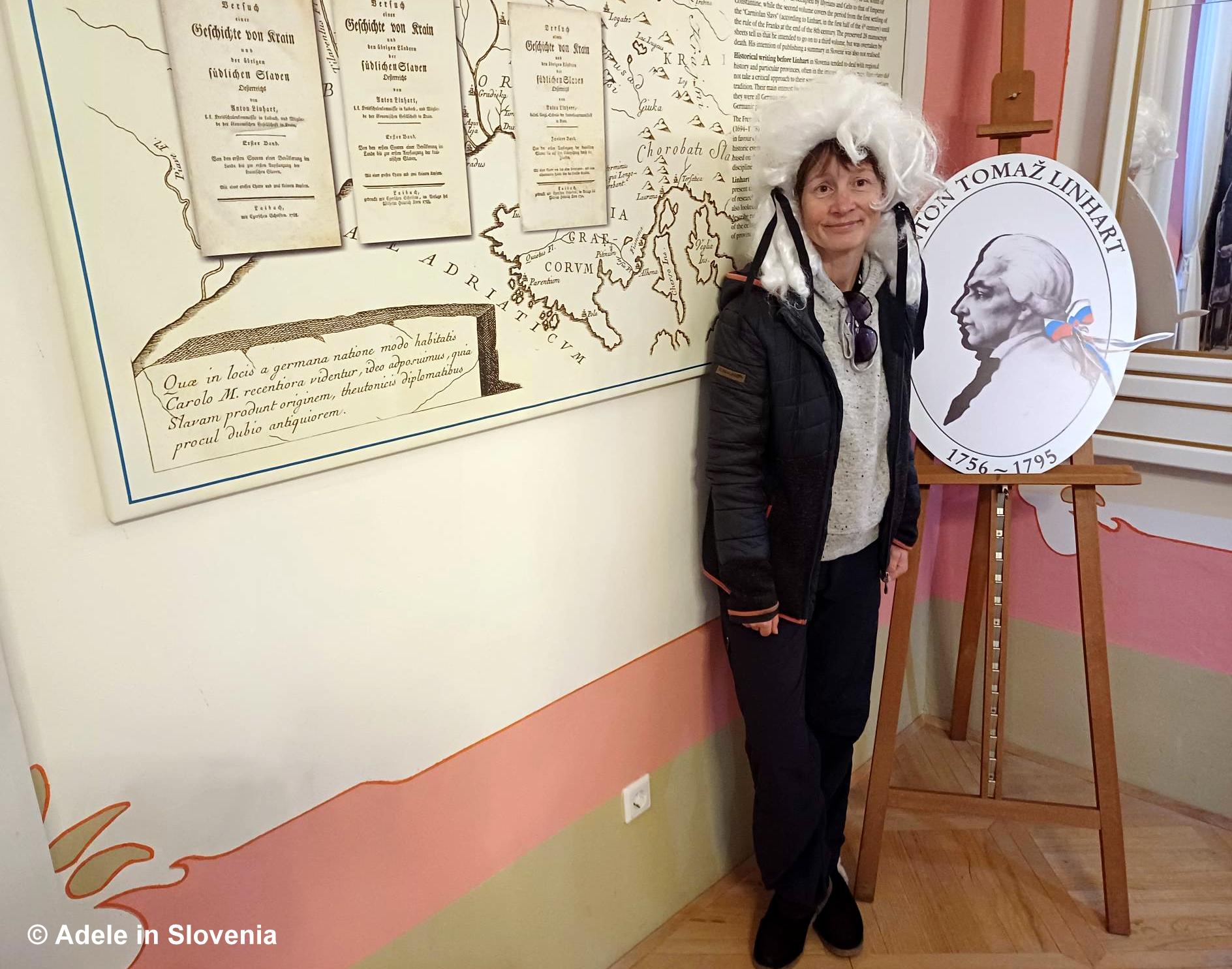
If I’m honest, it had probably never occurred to me to visit the museum as I thought that since it’s all dedicated to one person, there is only so much you can hear and see about that person. But, I stand corrected! Though the content is indeed dedicated to Anton Tomaž Linhart, it is also an opportunity to find out about life, clothing and customs in the eighteenth century.
And to have a bit of fun dressing up too!
Upon prior arrangement, guided tours are available in Slovene, German and English.
Our national day of culture may be over for this year, but there are hundreds of (other) museums throughout Slovenia to explore throughout the year.
It was a public holiday here in Slovenia this Wednesday (Day of Uprising Against Occupation), so we had planned – weather permitting – to do a long hike in the Tržič area. However, it had rained heavily the previous day, and all night too. Although it had stopped by the morning, there were still threatening black clouds and, of course, soaked and muddy paths. So, in the end we waited until the afternoon, by which time the sun had come out, then went to Tržič anyway, albeit for a shorter, but nonetheless pleasant and revealing, afternoon trip, or rather Town in a day!
It’s amazing how much more you see when you take time and explore all the various nooks and crannies of a place on foot. And Tržič certainly one of those places that has far more than initially meets the eye.
We started by taking the path up to St. Joseph’s church. The path starts at the scarp wall, in close proximity to and opposite the main bus station, where there is a gap in the wall and steps leading up to a road.
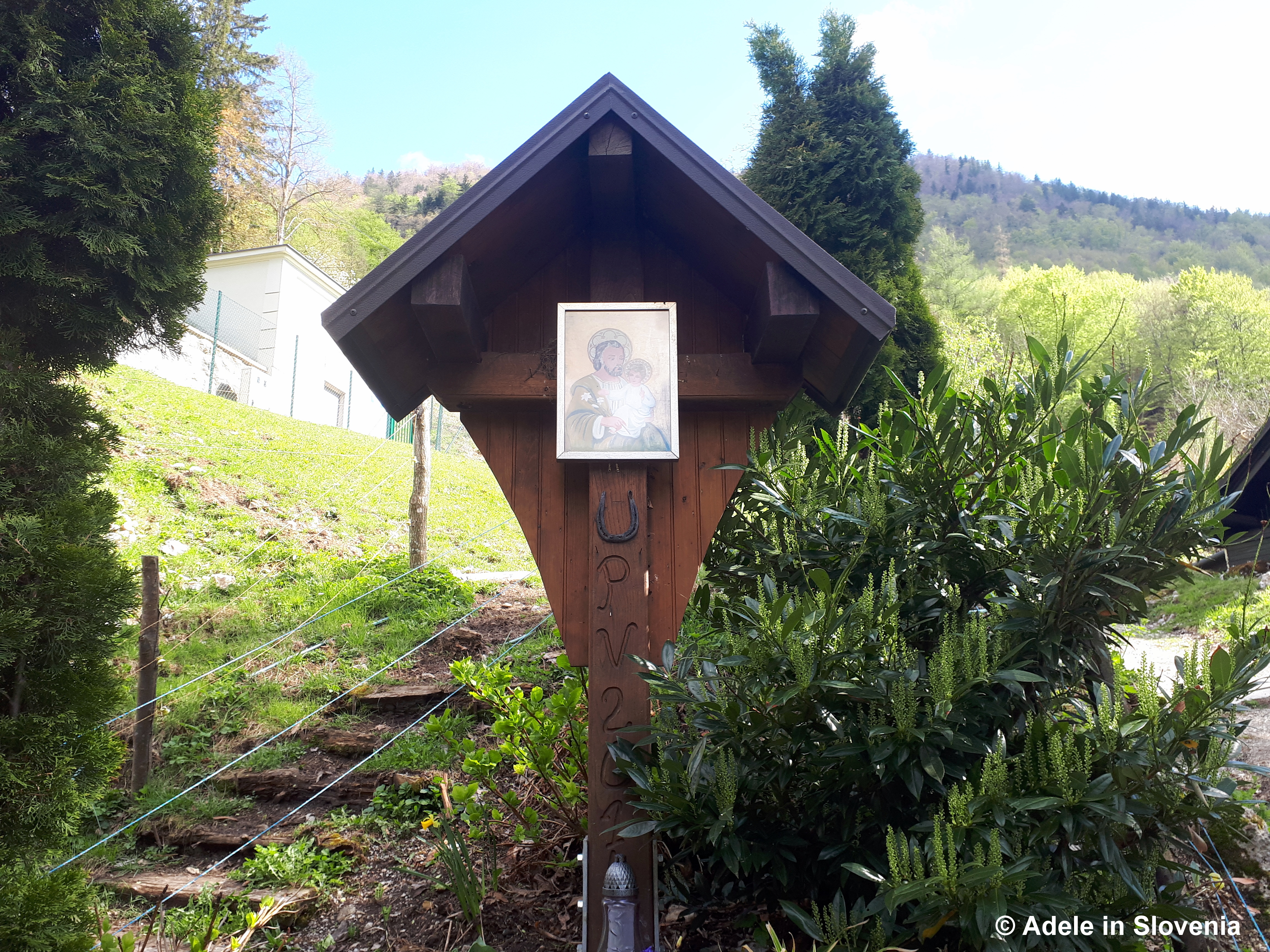
Cross the road and take the path immediately opposite, where there is a shrine and the usual Slovenian red and white circular trail markers.
From there it’s only around a 5-minute walk uphill to reach the church, from where there are beautiful views over the old town of Tržič.
You can return on the same path or take one of the other paths back down towards the old town (note: there is also a marked hiking trail from the church up to Kriška gora).
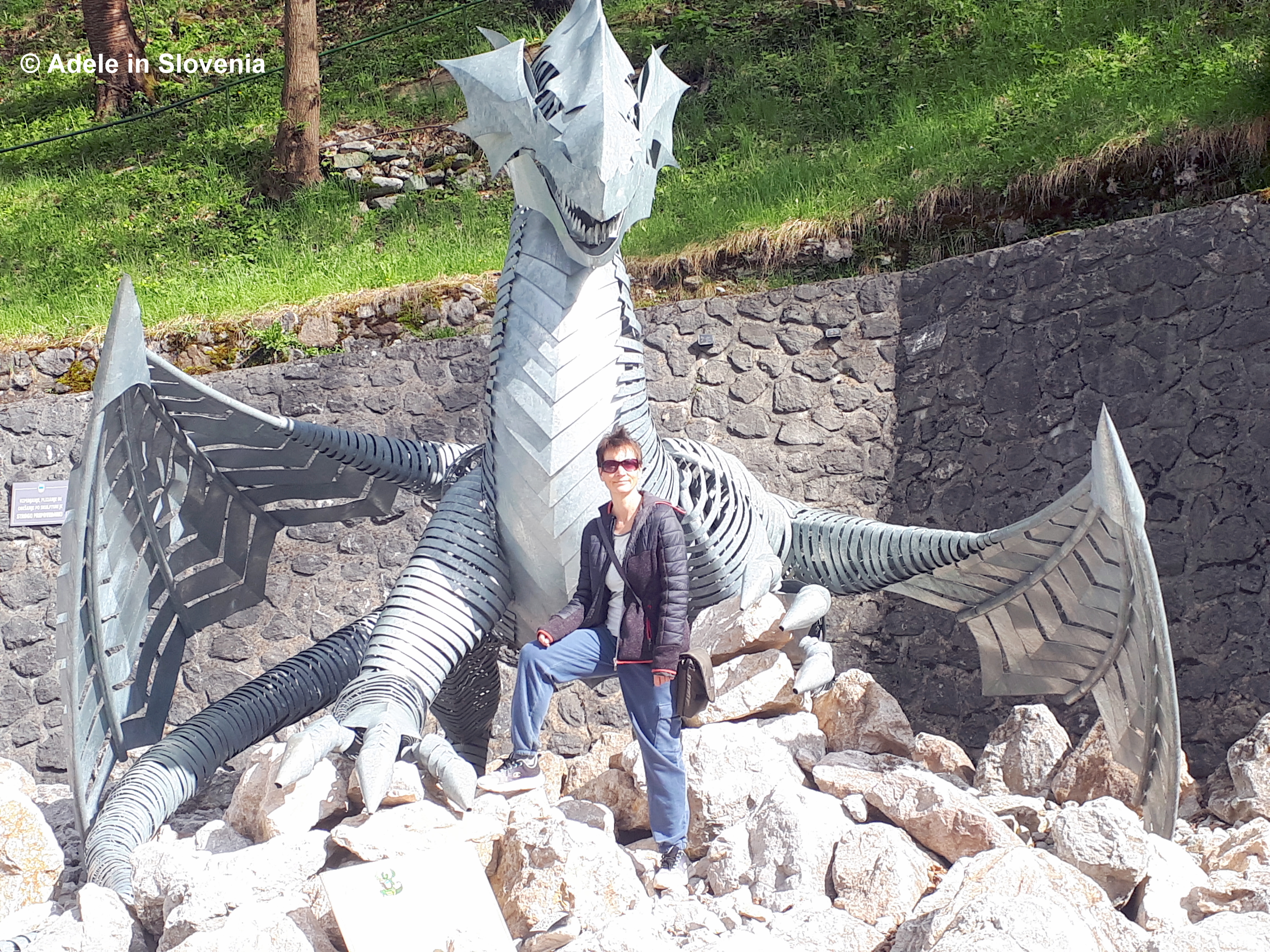
On returning towards the old town, take time to ‘meet’ Tržič’s dragon, before setting off on a discovery of the old town itself. Click here to find out about the legend of the dragon from a rooster’s egg.
At the entrance to the old town centre in Trg svobode (Freedom Square) you can see the last remaining original ‘firbec oken‘ window – a window for the inquisitive, or rather, putting it less politely, the nosy! The bottom of the window protrudes outward, thus allowing those looking from the window to be able to look directly out and down at those below them.
If you want a break, Mestna kavarna (town cafe) is the ideal place. This popular local meeting place offers a wide selection of ice-cream and numerous cakes.
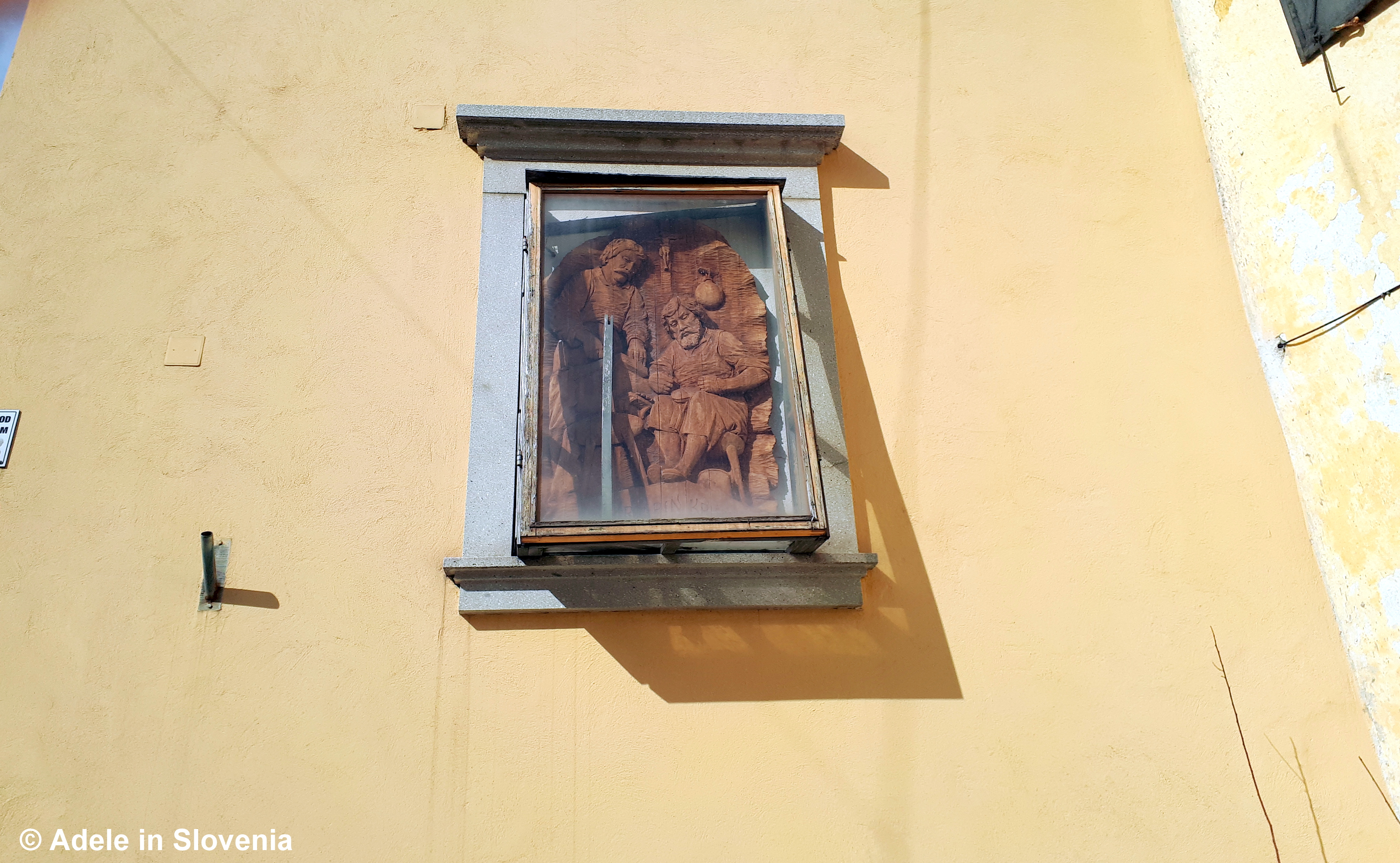
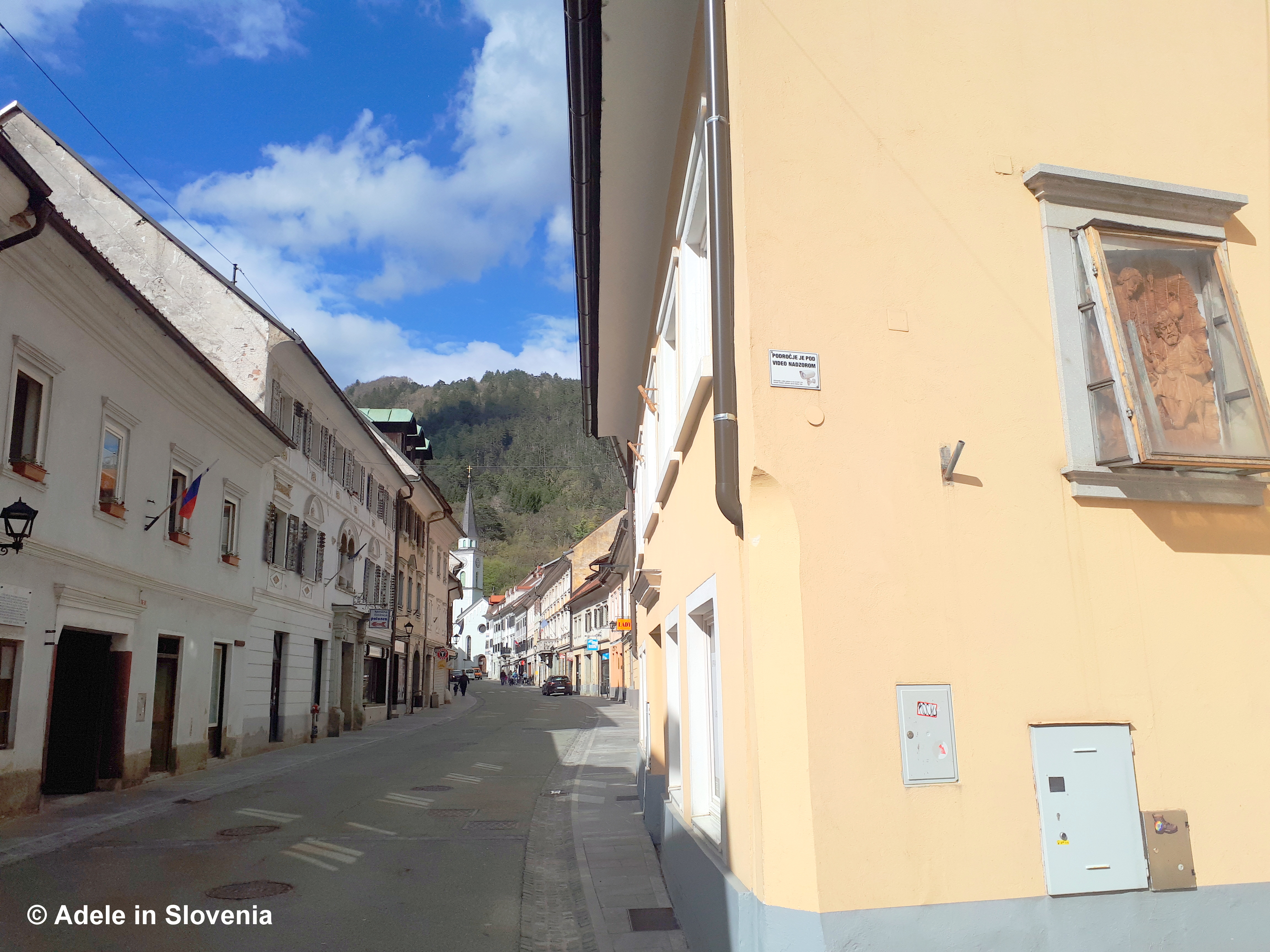
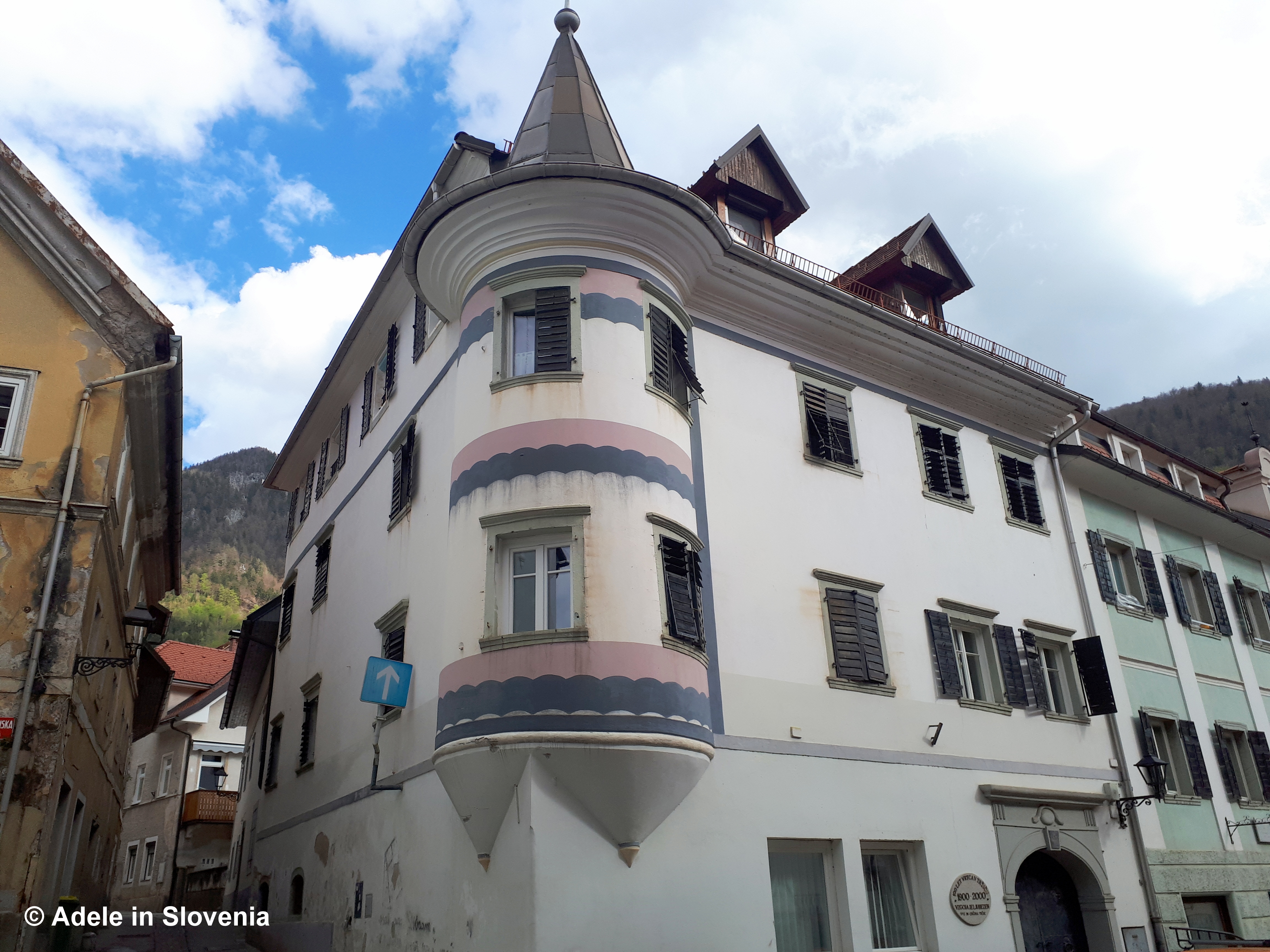
Next, continue to the corner house opposite St. Andrew’s church.
Continue past the church, to reach Muzejska ulica (Museum Street) on the left. Tržič Museum is housed in the former Pollak dyehouse and tannery, which dates from 1811.The museum’s numerous collections take you through Tržič’s historic industries including shoemaking, leather, crafts, trade, winter sports, local history, and art. As I found out on a previous visit (https://adeleinslovenia.com/2019/01/02/rediscover-trzic-with-adele-in-slovenia/), the museum is far more interesting than one might think and has numerous interactive exhibits, so it’s definitely worth a visit and an ideal place to go on a rainy day.
After visiting the museum, or at least admiring it from the outside, return to the main road, where directly opposite you will see Picerjia Pod gradom (Pizzeria beneath the castle) – another option for a rest and a bite to eat, or even a hearty meal.
Walk up the hill past the pizzeria to get another great view over the town – this time from the opposite side. From here you have a choice; you can either continue onwards and upwards towards Kamnek for magnificent views (hiking footwear required) or take the steps back down towards the old town, from where you can see Kurnik House (Kurnikova hiša), a preserved, traditional Tržič house with a black smoke kitchen, the birthplace of the Slovenian poet Vojteh Kurnik.
Finally, take time to admire the views from one of the many bridges over the Bistrica stream.
Find out more about this and other walks, attractions and what else to see and do in the Tržič area here or call into the Tourist Information Centre.
After almost a year-and-a-half of preventative measures of varying degrees, Radol’ca’s summer events calendar kicks off in style this week, with almost a year-and-a-half’s worth of events in just one week!
The first event, and one that many have been waiting (im)patiently for, is the Queen Real Tribute Band, who were lined up to perform at the 2020 Radovljica Chocolate Festival, and who were also on standby for this year’s festival – both of which were cancelled, though a somewhat smaller festival is scheduled for 11th and 12th September this year – and will now finally be on stage this Thursday 1st July in the first of a series of Thursday evening concerts throughout July. The evening is due to start at 8pm with a Taste Radol’ca culinary market in the Radovljica park, which is open to all, followed by the band at 9pm (ticketed event).
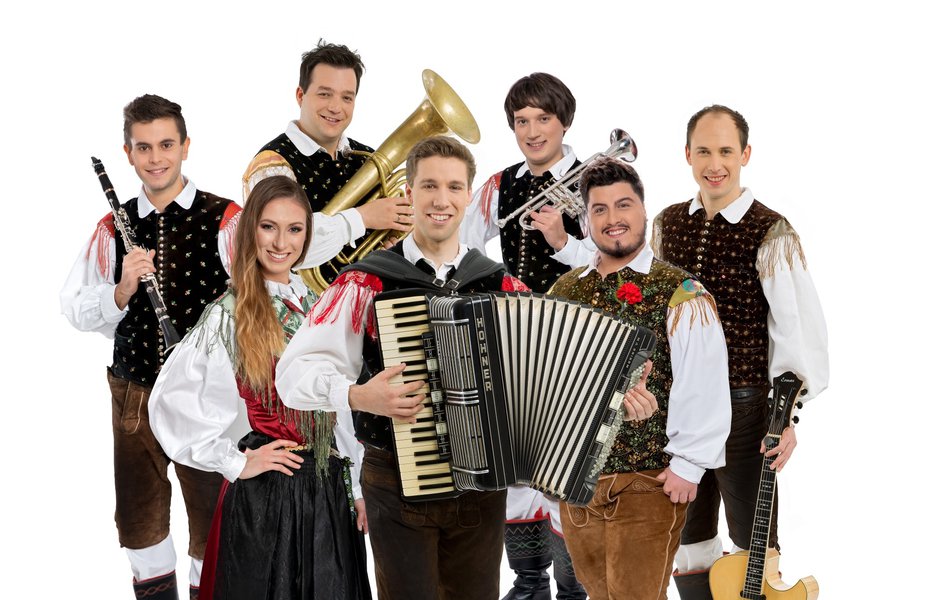
Those more interested in traditional Slovenian folk music can head for nearby Begunje na Gorenjskem where live music evenings have now resumed at Gostilna Avsenik (ticketed events) – the home of Slovenian folk music – with the Avsenik House Ensemble and other guest Slovenian folk music ensembles.
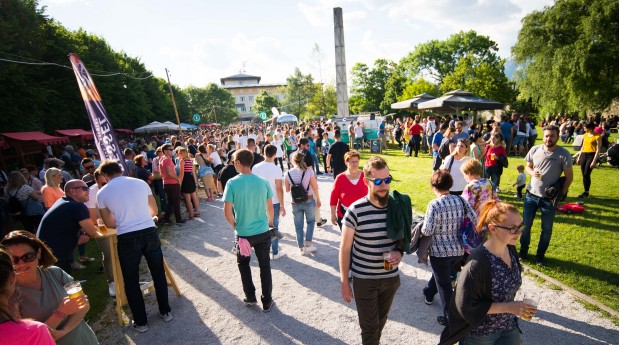
During this current heatwave, for many a cold beer is bound to hit the spot, so the Radovljica Craft Beer Festival, which takes place on Saturday 3rd July from 12noon onwards, is the place to be. The festival will be held in the Radovljica park and feature a food market with Slovenian craft beers and Taste Radol’ca food.
The Kropa Iron Forging Festival takes place on the same day, Saturday 3rd July. So, be sure to plan the day well and, in fact, why not head for Kropa first then stop off at Radovljica on the way back, but remember: Don’t drink and drive!
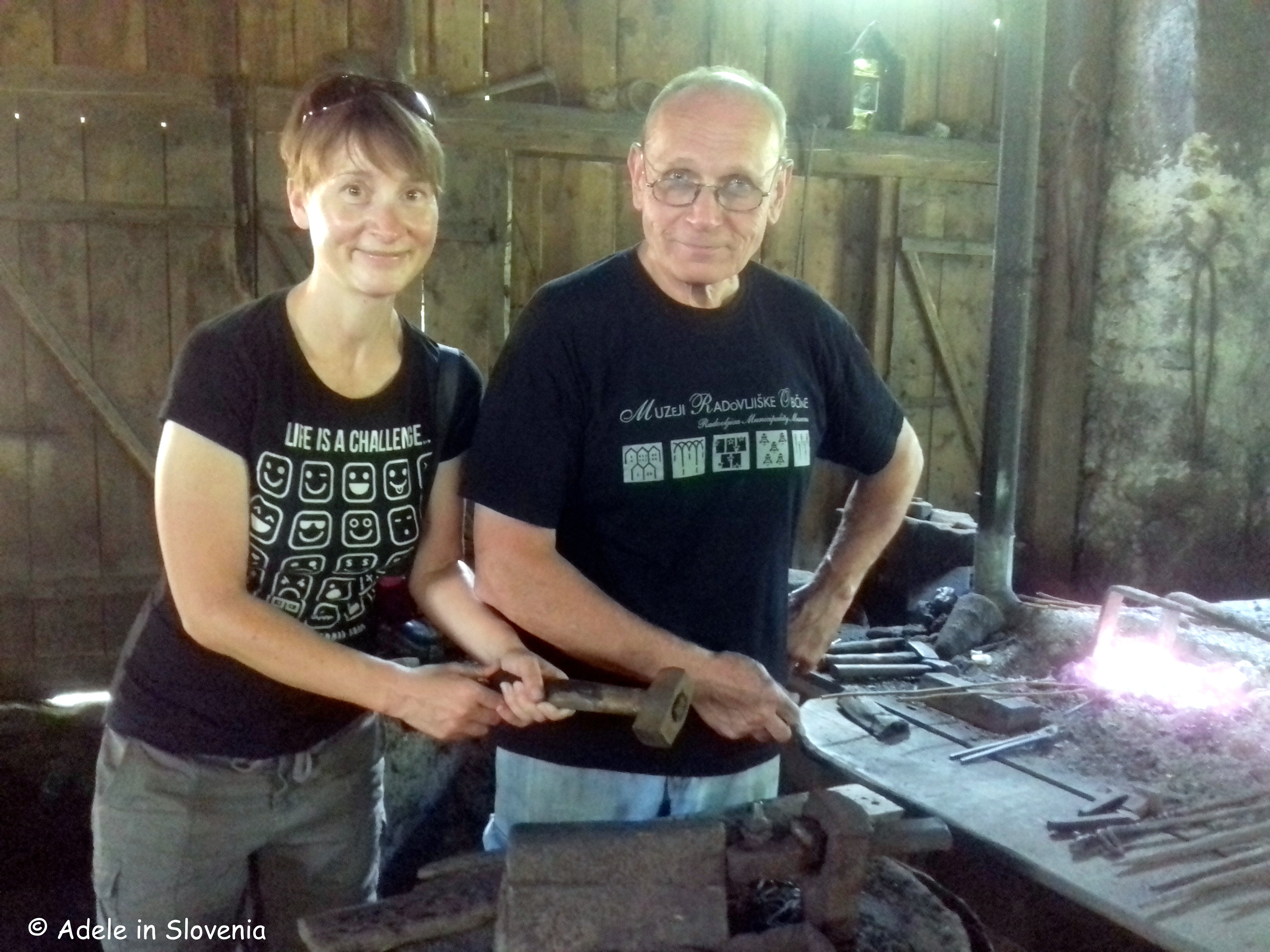
The festival will run from 10am to 6pm and includes free entrance to the Iron Forging Museum throughout the day, a reenactment of the life of Kropa’s blacksmiths with the Cofta Drama Group at 12noon in the Vigenjc Vice forge, a small craft market, open day at the UKO wrought iron factory, a demonstration of smelting iron ore, and more.
Also on the same day – yes, there’s more! – the regular monthly Vila Podvin farmers market takes place in the garden of Vila Podvin (one Michelin Star) from 10am to 12noon, where you can meet local producers and suppliers, and sample and buy their products.
Once you have recovered from all of the above, there are plenty of other events coming up through the month of July. Check out the events calendar for more details.
Meanwhile, if you’re looking for somewhere (else) to ‘chill’, the Radovljica swimming pool is the ideal place to cool off at this time of year. I took this snap of it looking glorious in the sunshine earlier today from Obla gorica, the small hill behind the pool.
Note: many of the events are still subject to social distancing measures and are now ticketed, so be sure to check out the Visit Radol’ca website for the latest information.
Hooray, I am finally the bearer of some good news…it feels like a while since I’ve been able to say that!
Writing this feels a bit like groundhog day, as it was around this time last year that Slovenia began to exit its first lockdown and I published a similar blog on the subject. And here we are today, almost a year later and only now Radovljica, as well as the rest of Slovenia, is slowly beginning to re-open after three, seemingly endless, lockdowns.
Unfortunately, the vaccination programme is still going slowly – to date around one-fifth of the country’s 2 million residents has received at least one shot of a vaccine – but, notwithstanding, things are steadily moving in the right direction and finally, after 6 long months, the terraces of restaurants/bars etc. were able to re-open last week and as of yesterday (Monday 26 April) hotels and other accommodation facilities are able to open up to 30 rooms (regardless of the size of the property). Note, however, that a negative test or proof of vaccination is required to stay in an type of accommodation (camps included).
So, now you, well we if I include myself, can actually begin to start thinking about planning holidays, something that has seemed unthinkable for a long time now. And since most of us will no doubt – sensibly – prefer to avoid places overrun by mass tourism, it is destinations such as Radol’ca that come into their own with its boutique accommodation and numerous hiking trails and other off the beaten track attractions. So, here are a few ideas to help you in planning your visit to Radovljica – whether for a few hours, a few days, or even longer!
After record snowfall in some places, it’s still very much winter in Slovenia’s high mountains, fortunately here in Radol’ca there are plenty of hiking trails at lower altitudes. I’ve written about such trails on numerous occasions, so a quick search back through previous blog posts using key words will turn up plenty of info on hikes to, for example, Suharna, the Vodiška planina mountain hut, the Roblekov dom mountain hut, St. Peter’s church above Begunje na Gorenjskem, and more.
Of course, after all that fresh air and activity you will be in need of some sustenance, and you certainly won’t go hungry at Taste Radol’ca restaurants, the ethos of which is using seasonal, locally sourced, ingredients. At the time of writing, some of the restaurants have yet to re-open, since they are currently only allowed to serve customers outside on the terrace and for those with smaller terraces it is not worth their while re-opening. However, it is to be hoped that it won’t be too long until they are able to fully re-open. Radol’ca even has a Michelin-starred restaurant – Vila Podvin – as well as several other fine dining restaurants and numerous rural inns.
In terms of accommodation, there’s plenty to choose, from river-side camps to apartments, guest houses and other boutique accommodation.
In terms of events, it’s still a bit early to say what will and won’t take place this year. The Radovljica Chocolate Festival, which was cancelled last year and postponed this year, is provisionally scheduled to take place on 11th and 12th September this year, while the organisers are hoping that others events, such as the Craft Beer Festival and live music and food on Thursdays evenings in the square, will be able to go ahead in summer, in some form or another. But at the moment it’s a case of watch this space to see how things pan out.
Of course, all the above-mentioned are in the Radol’ca area itself, meaning there’s still a whole host of other places waiting to be explored in the surrounding areas; the Julian Alps and Triglav National Park are on the doorstep, Lake Bled and Lake Bohinj are close, Slovenia’s capital Ljubljana is just a cca. 40 minute drive, and even places such as the Postojna caves, the Soča valley, and Slovenia’s coast are all within a 1-2 hour drive – nothing is that far away in Slovenia!
So, I hope I have provided you with some food for thought and ideas to help your holiday planning and, as and when there is (even) more news about more things opening up, I’ll be in touch with more up-to-date info, or, in the meantime, do feel free to drop me a line if you need more info. Always happy to help, well, within reason that is!
Since I think I have a right these days to call myself a ‘Radolčanka’ (i.e. a Radovljica local), I thought I would share with you some of my top insider tips, some of which are more obvious than others!
So, in no particular order…
YOU WILL NEVER GO HUNGRY OR THIRSTY IN RADOVLJICA…at the last count – in my head that is so I could have forgotten the odd one – I totted up 23 bars, cafes and restaurants in Radovljica itself – not to mention the numerous others within the municipality. So, there’s no need to worry about going hungry or thirsty whilst visiting! And now there’s an exciting new ‘kid’ in town too – Linhart Hotel & Bistro – in Linhart Square, the heart of the old town. The hotel opened a couple of years ago but has just been taken over by the hugely successful and popular restaurant Vila Podvin, with head chef (and celebrity chef these days!) Uroš Štefelin at the helm. Expect bistro-style food – Uroš style!
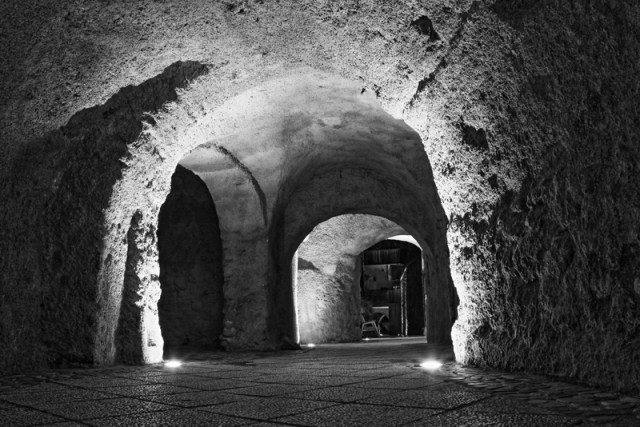
THERE’S A VISIBLE TUNNEL... Okay, so it’s not an insider tip as such, but I’ve included it here since it’s easy to miss. The only preserved moat tunnel in Slovenia is found beneath Radovljica’s old town centre. It was renovated, and partly built-over, some years back, and is well-illuminated, meaning you can walk through it at any time as part of a visit to the old town centre. I’m rather lucky as I live just minutes from the old town and can therefore see it by day and by night, though the latter trumps it for me!
AND AN INVISIBLE/HIDDEN TUNNEL TOO…well, that is if legend is true! It is said that there is a tunnel that runs underground from the well in Linhart Square all the way to Lipnica Castle. To date no one has actually found it, but the legend lives on…!
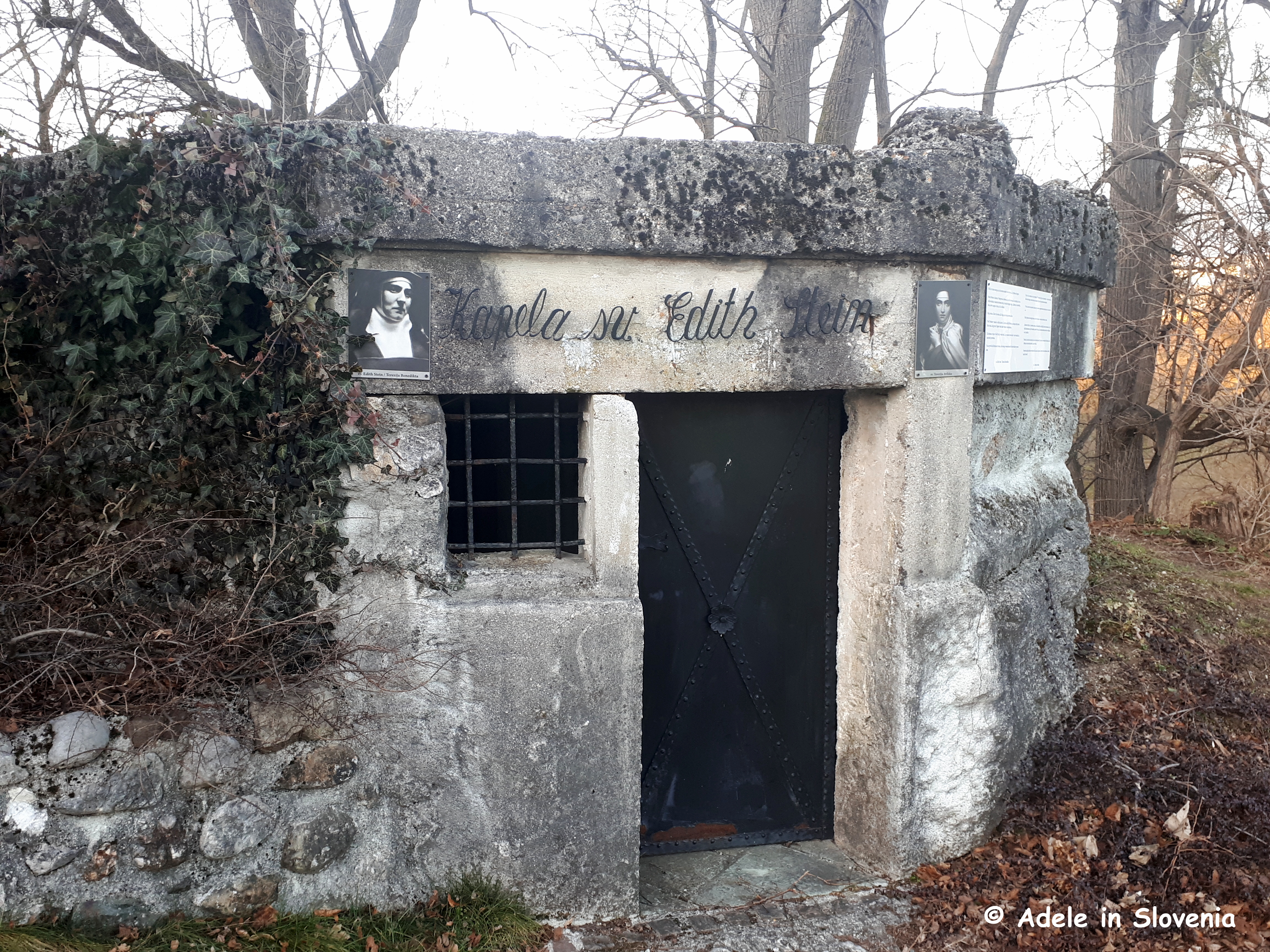
AND EVEN A ‘SECRET’ CHAPEL…the Edith Stein Chapel is hidden away behind the vestry tower of Radovljica’s baroque St. Peter’s church in Linhart Square, and surprisingly few people even know it’s there. Edith Stein was a German-Jewish philosopher, born on 12 October 1891 to Jewish parents, who converted to Catholicism and became a Carmelite nun.
Also know as St. Teresa Benedicta of the Cross, she was canonised as a martyr and saint of the Catholic Church, and is one of six co-patron saints of Europe. Edith and her sister Rosa, who was also a convert and an extern sister, were sent to the Carmelite monastery in Echt in the Netherlands in 1938 for their safety, where, despite the Nazi invasion in 1940, they remained until they were arrested by the Nazis on 2 August 1942 and sent to the Auschwitz concentration camp, where they died in the gas chamber on 9 August 1942.
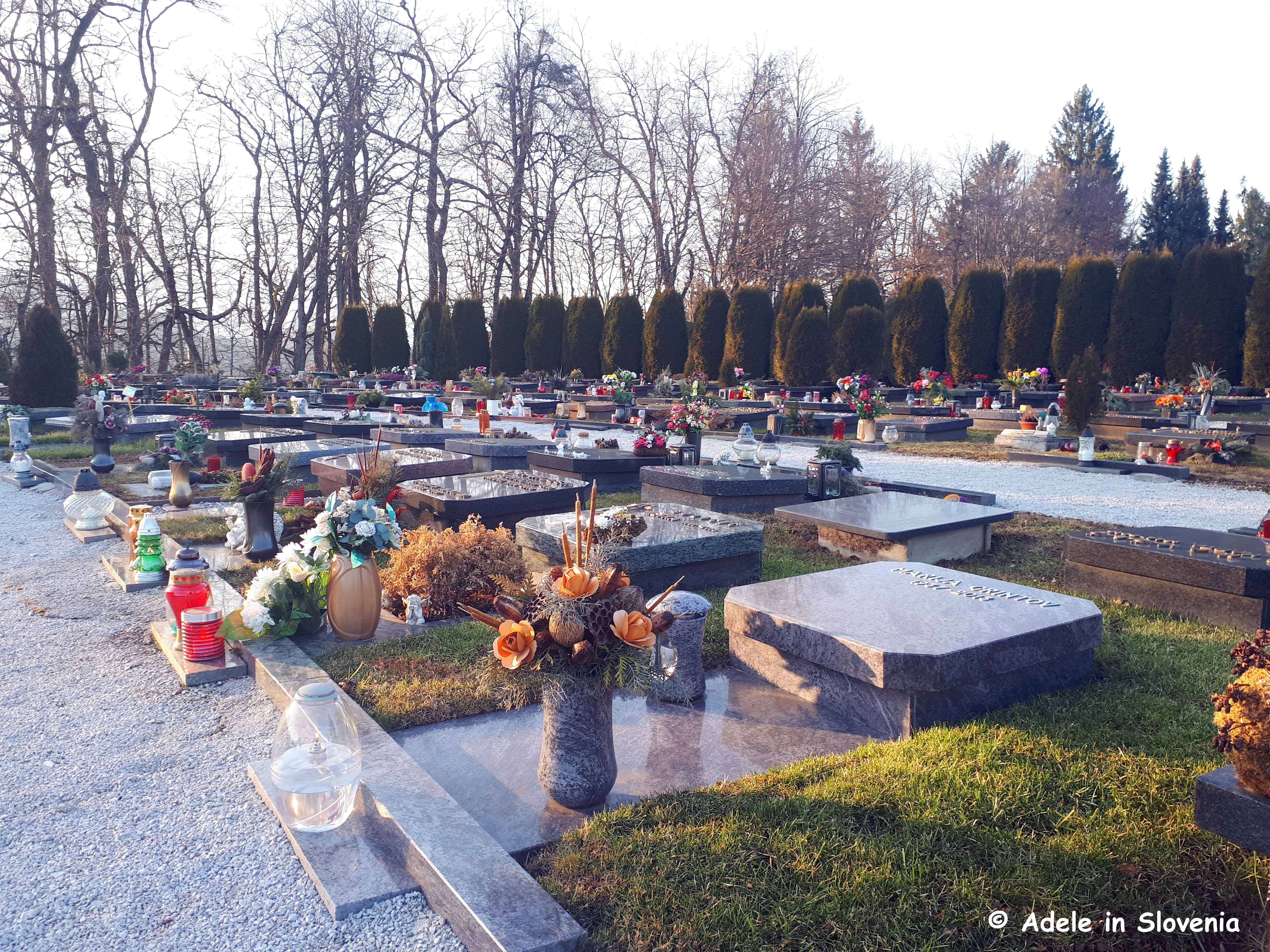
WE HAVE RATHER LOVELY CEMETRIES…bear with me on this one! I know it might sound odd but it’s true, Radovljica’s (and in fact in general throughout the country) two cemetries are so well kept. There is always an abundance of fresh flowers, plants and glowing candles, and a sense of peace prevails. You can admire both the cemetries as you pass on a walk towards the Sava river and the Fux footbridge.
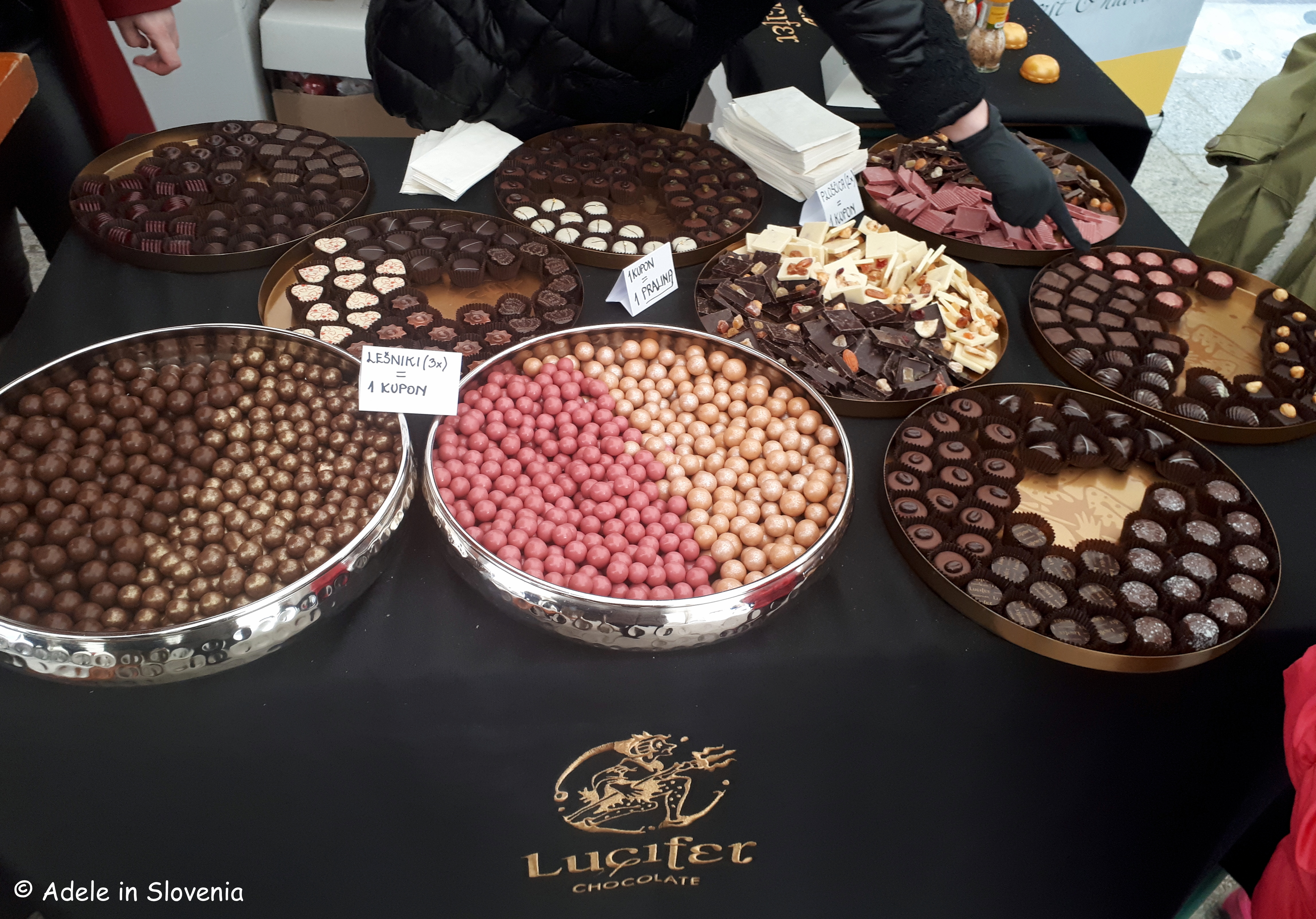
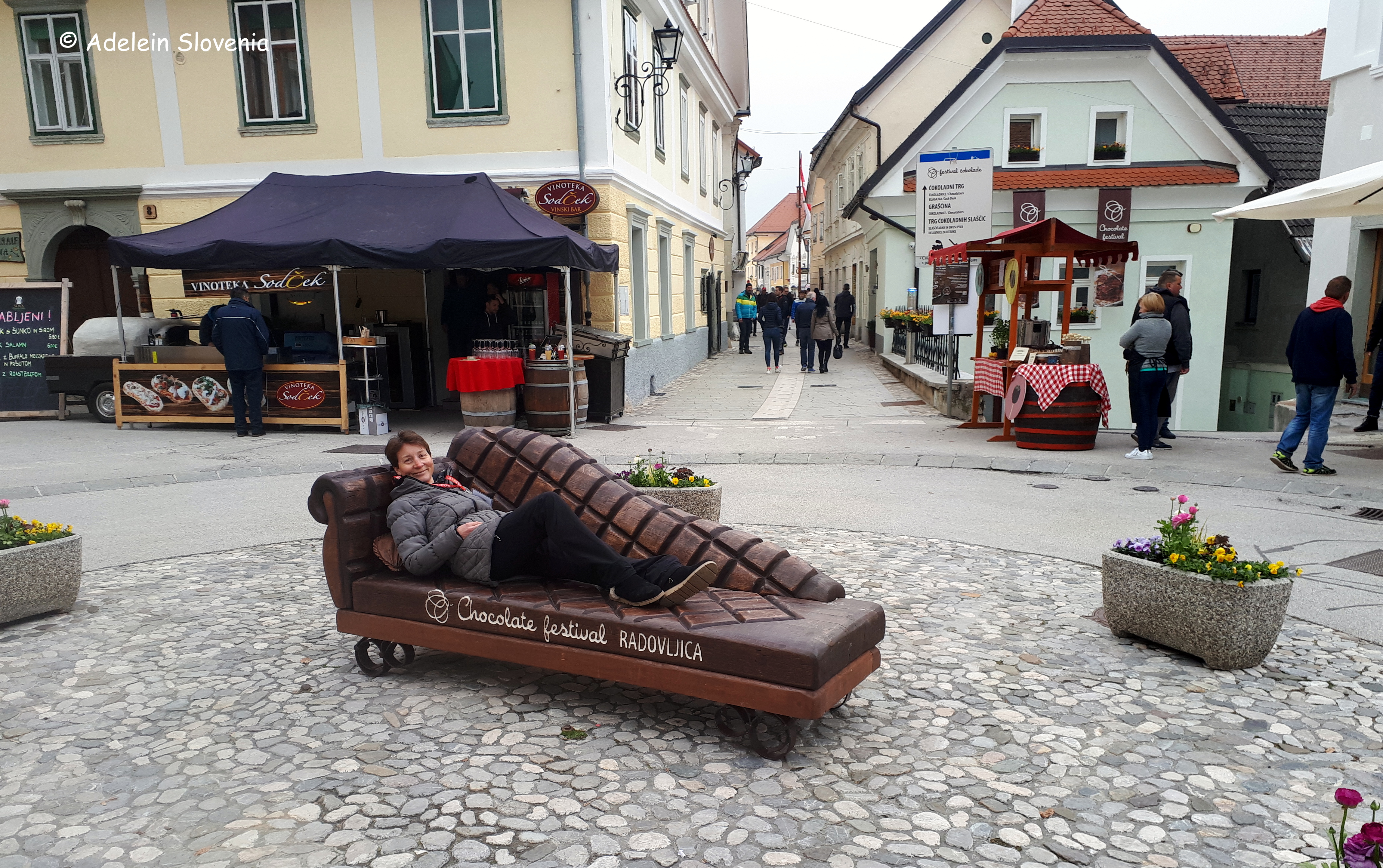
RADOVLJICA REALLY IS A ‘SWEET’ TOWN…in so many ways! Not only is the town’s slogan ‘Honestly Sweet‘ but Radovljica is also the home of the biggest and best chocolate festival in Slovenia and a honey festival too. This year’s Radovljica Chocolate Festival – the 9th in a row – takes place from Friday 17th to Sunday 19th April.
WE LIKE TO STICK TOGETHER…Taste Radol’ca is a great example of this. Rather than being in competition with each other, many of Radol’ca’s restaurants have joined forces and, in doing so, have realised and reaped the benefits of cooperation and collaboration. In doing so they are also supporting local farmers, beekeepers and producers of other goods, by including locally sourced ingredients on their menus. Each year there are an increasing number of events at which Taste Radol’ca restaurants are present, such as the Radovljica Chocolate Festival, summer Thursday concert evenings, the November Month of Local Cuisine, various Christmas and New Year events, and more.
IT LOOKS GREAT FROM ABOVE OR BELOW…Wherever you view Radovljica from – whether up high in the mountains or down beneaths its terraces – Radovljica’s old town centre with its prominent church is picture postcard stuff! So, whether you choose a stroll beside the Sava river on the Sava River Trail, or one of the marked hiking trails, such as to St. Peter’s church above Begunje, or even higher to the Roblek mountain hut or the peak of Begunščica, you are assured of a great view and a totally different perspective of the beauty of Radovljica and its surroundings.
SEEK OUT BUNKERS FROM THE RUPNIK LINE…the Rupnik Line is a system of fortifications that were built during the 1930’s by the Kingdom of Yugoslavia as a defence line on the border with the Kingdom of Italy. The strategically placed forts and bunkers were never actually used for military or defence purposes, but they at least brought residents a temporary solution to the unemployment and financial troubles which affected them due to the location of the Rapallo Border. In Radovljica there are bunkers on the Obla gorica hill, which is located behind the swimming pool, as well as on the grassy bank in the street Cankarjeva ulicacop. I recently read that, in fact, there are around 50 such bunkers located across the Jelovica plateau, Radovljica and Begunje na Gorenjskem, though, to date at least, I’ve only come across a handful. Hmm, an idea is brewing, how many (more) can I/you find?!
I hope this has given you plenty of ideas for exploring (more of) Radovljica and you’ll agree that’s there’s certainly more than meets the eye!
The building houses numerous attractions and institutions, among them the Radovljica Music School, the Museum of Apiculture, the Municipal Museum, two small gallery areas, and the wonderful Baroque Hall.
Photo: Tourism Radol’ca
The Orthenburgs built a small castle in the 13th century on the site on today’s manor. The structure was rebuilt following an earthquake in 1511 by the building’s then-tenant Count Dietrichstein, and in the following century it was further expanded by the Counts of Thurn-Valsassina.
Immediately on entering the manor through the impressive, not to mention heavy, door you spot the beautiful grand central staircase, made out of green tuff, which hints at the grandeur of the building.
Before reaching the staircase you will notice a photographic exhibition on the right-side of the entrance hall. The exhibition changes every month so it’s always worth popping in for a look when passing!
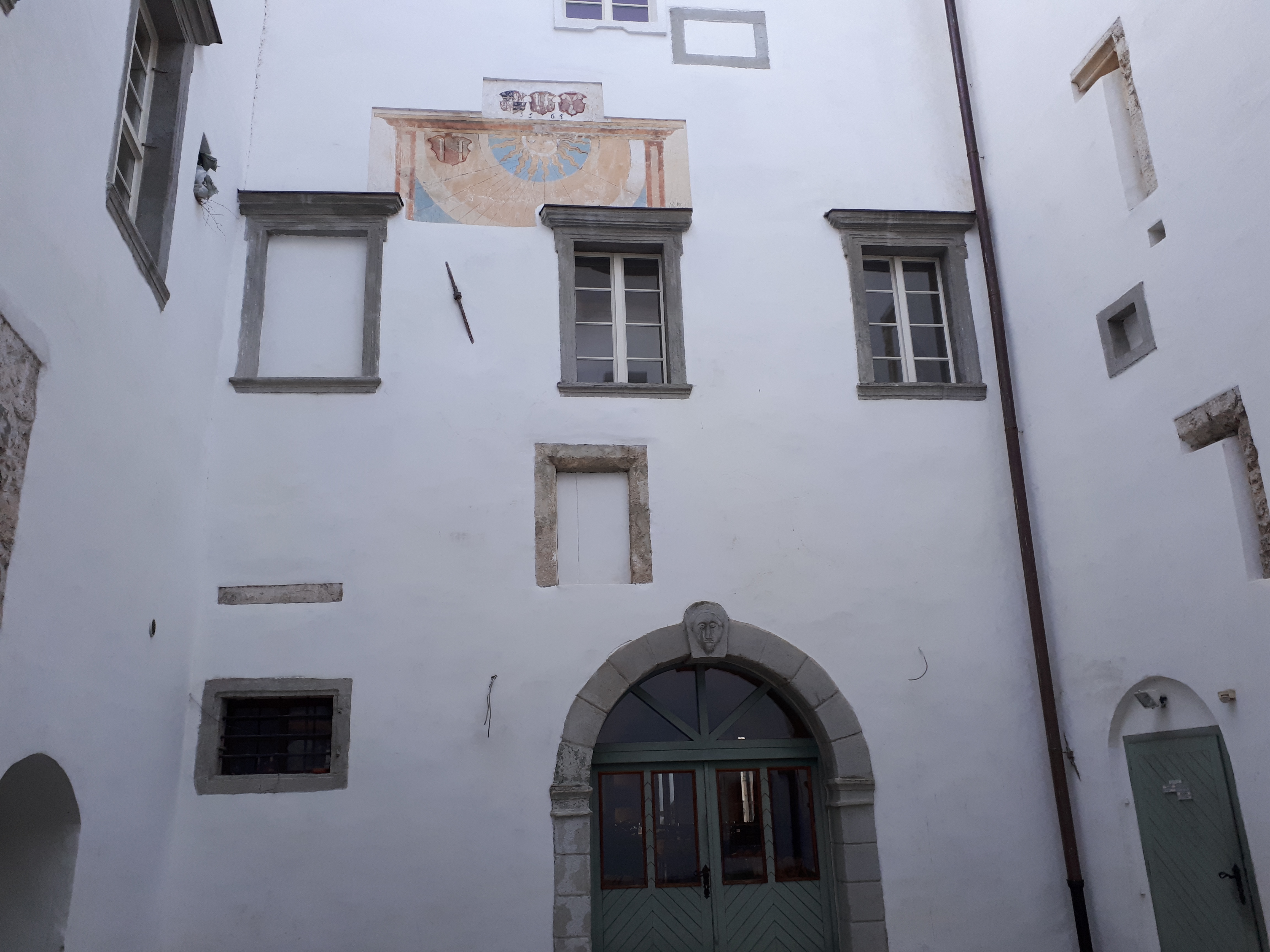
Much of the space on the ground floor is today given over to the Radovljica Music School. But if you have a nose around, you will discover other hidden features, such as this sundial, which I discovered for the first time today, despite having lived here for almost 13 years!
Photo: Adele in Slovenia
Head up the magnificent stairs to visit the Museum of Apiculture and the adjoining Municipal Museum, while numerous concerts take place throughout the year in the Baroque Hall with its amazing acoustics.
The Museum of Apiculture is a hive of activity for beekeepers and bee enthusiasts! It houses a wide collection of bee hives and figural hives, beekeeping equipment and tools.
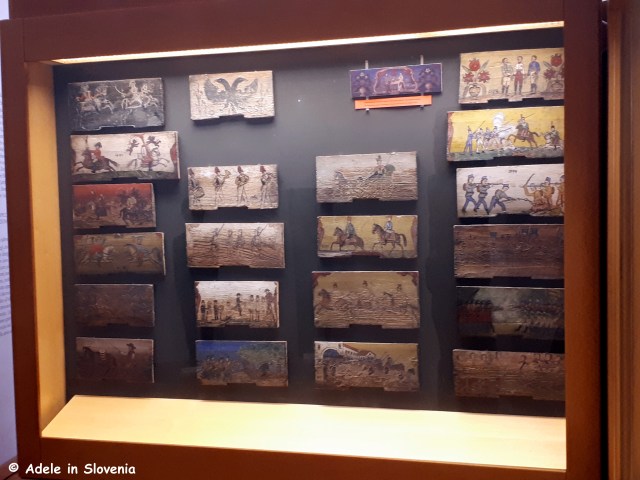
The museum’s extensive collection of painted beehive frontal panels, including the oldest known in the world, is a particular highlight. Each one tells its own unique folk tale.
The manor also plays host to some of Radovljica’s larger annual events, among them the Radovljica Chocolate Festival, which takes place both indoors and outdoors at various venues throughout the town, as well as the Radovljica Festival – a festival of early music.
A chocolate-themed fashion show in the Radovljica Manor!
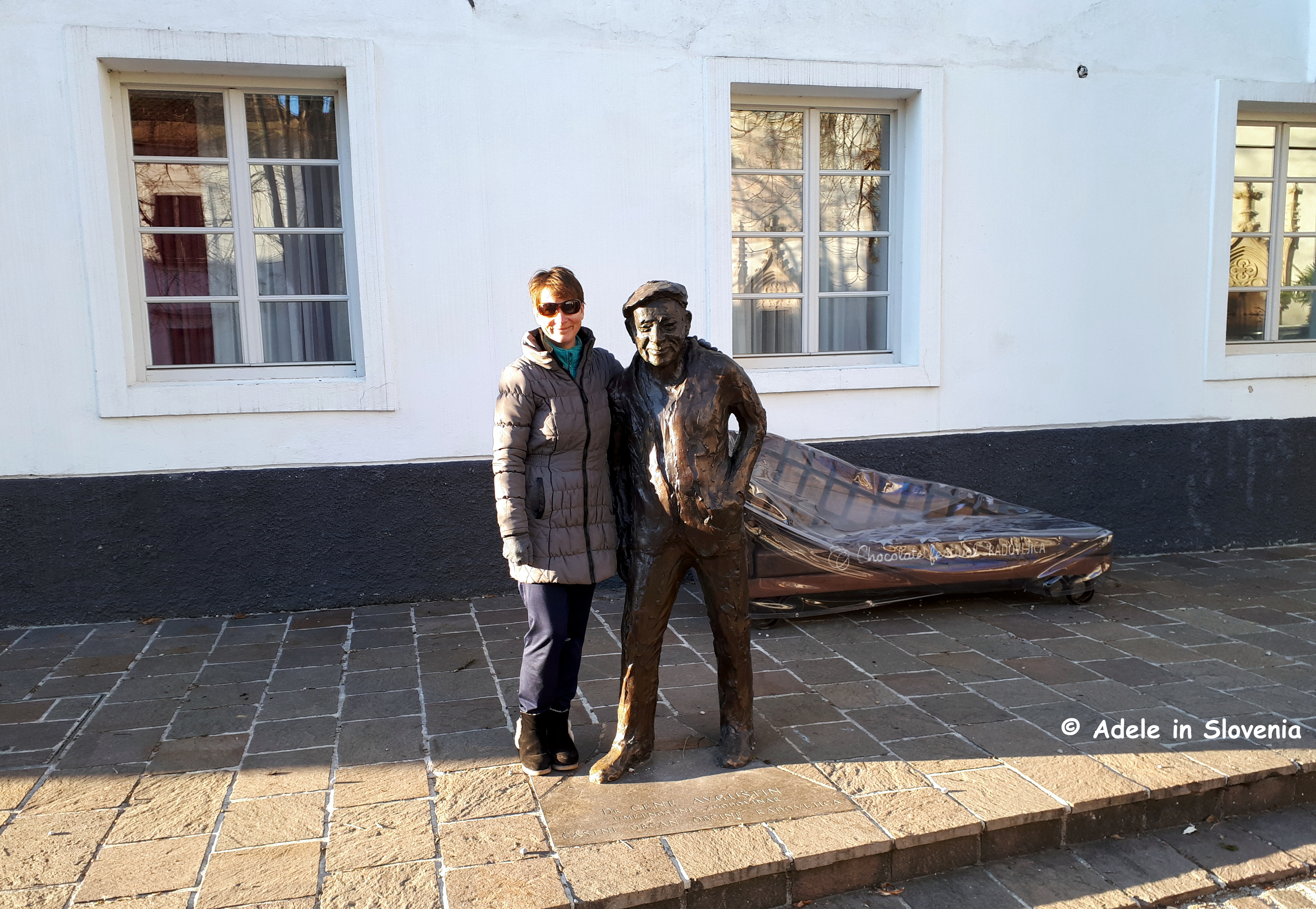
Outside, to the right of the manor, there is a statue of the art historian and honorary citizen of Radovljica Cene Avguštin, and also a small exhibition titled ‘Radovljica, Our Old Town Through the Centuries’.
So, when visiting Radovljica, be sure to take time to discover the manor – both inside and out. And to end, one useful tip…there are toilets on the ground floor. Not an attraction in themselves but always good to know, wouldn’t you agree?!
Providing the weather is good, autumn is one of the best times of the year for hiking in Slovenia; the weather is (usually) more stable i.e. there aren’t (usually!) late afternoon thunderstorms like in summer, and the trails are far less crowded than during the peak summer months. On the downside, the days are getting shorter and some of the mountain huts are already closed, with others only open at weekends, but provided you set off in good time and with proper equipment and a well-stocked rucksack, the hiking world – well Slovenia’s little part of it – is your oyster!
The Karavanke mountains above the Žirovnica area are a great destination for hiking year-round.
I have already written numerous blogs about my various hikes in the area, so this blog is a kind of ‘one-stop-shop’ where I have gathered together all, well far from all in truth, my hikes and blogs in the area, as well as a bonus one too!
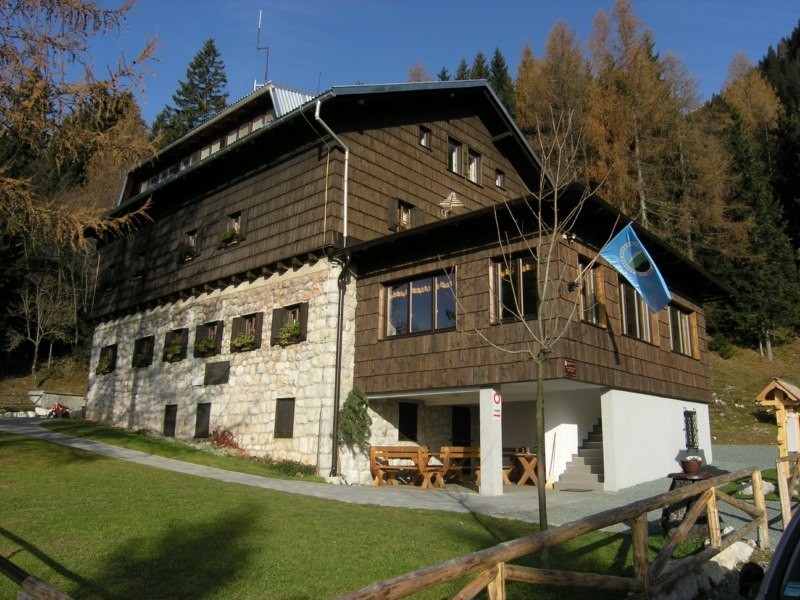
Valvasorjev dom (Valvasor mountain hut) is the three-times winner of the title ‘Best Mountain Hut in Slovenia’. It can be reached in around an hour from the reservoir in the Završnica valley.
Photo: Planinska Zveza Slovenije
There are numerous onward trails from the hut, including to Stol, the highest peak in the Karavanke mountains.
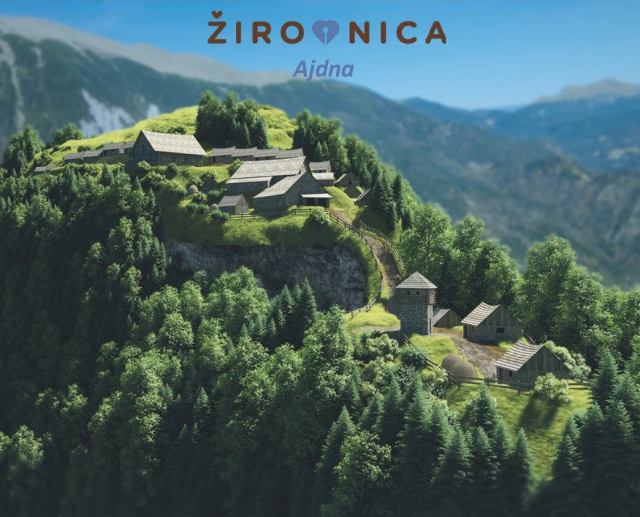
Ajdna is the name of the tooth-shaped peak beneath Mount Stol and is home to a fascinating archaelogical site. It was settled during the crisis times of the collapse of the Western-Roman Empire in 476 AD. Extensive, expensive and exceptionally complex conservation work was carried out and today there are well-preserved buildings and remains of buildings that are thought to date back to the late Antiquity, though some evidence shows that it may even have been inhabited far earlier.
The Žirovniška planina mountain pasture and the Zabreškaplaninamountain pasture are up there among my favourites!
I like to visit the Dom pri izviru Završnice (hut at the source of the Završnica stream) as part of a hike to Srednji vrh.
Starting from the Završnica valley, the trail passes the hut up to the Šija saddle, from where there is no lack of choice where to go next!
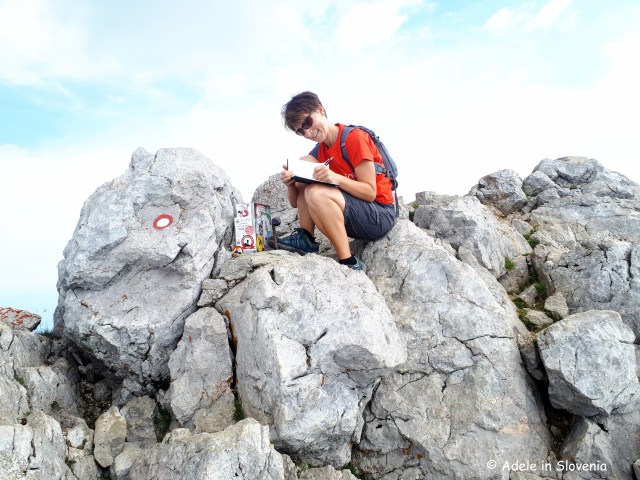
Stol is the highest mountain in the Karavanke range. As the Karavanke mountains form a natural border between Slovenian and Austria, you are spoilt for choice with fabulous views in all directions.
The word ‘stol’ means ‘chair’, hence once you are at the top, you are literally taking a seat atop the Karavanke!
The Turkish Cave(Turška jama) is located at an altitude of 835m above the Završnica valley. The name of the cave derives from when, many centuries ago, women and children retreated to the cave to seek refuge from Turkish invaders.
The cave has two entrances, is 18 metres long and 2 metres deep.
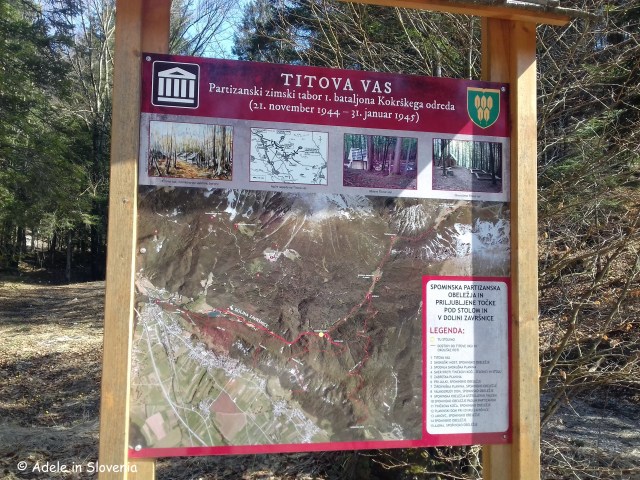
The camp provided partisans with shelter from the German occupiers. The camp was in existence from 21 November 1944 – 31 January 1945, which, though only 2 months, was considered long for those times.
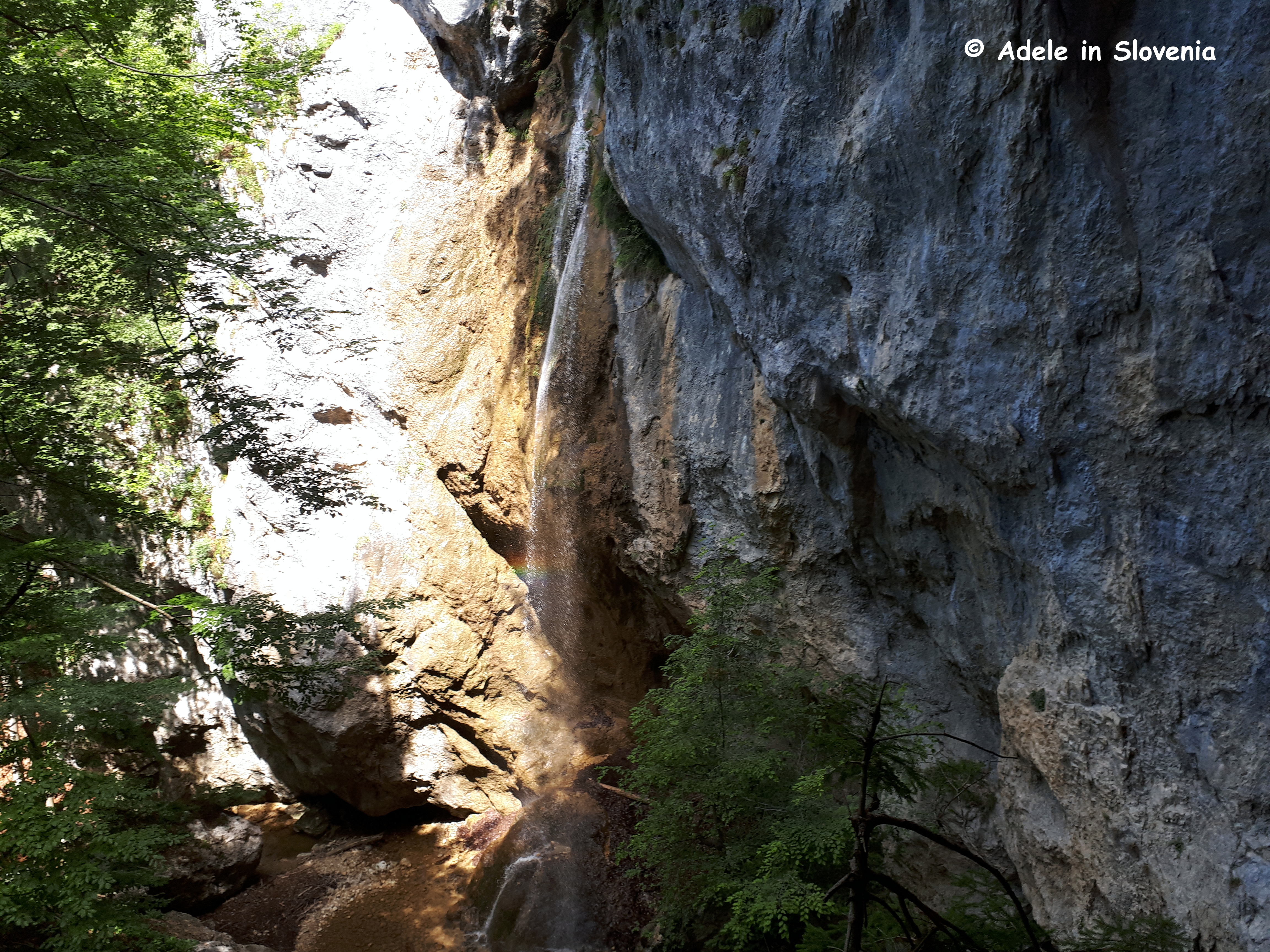
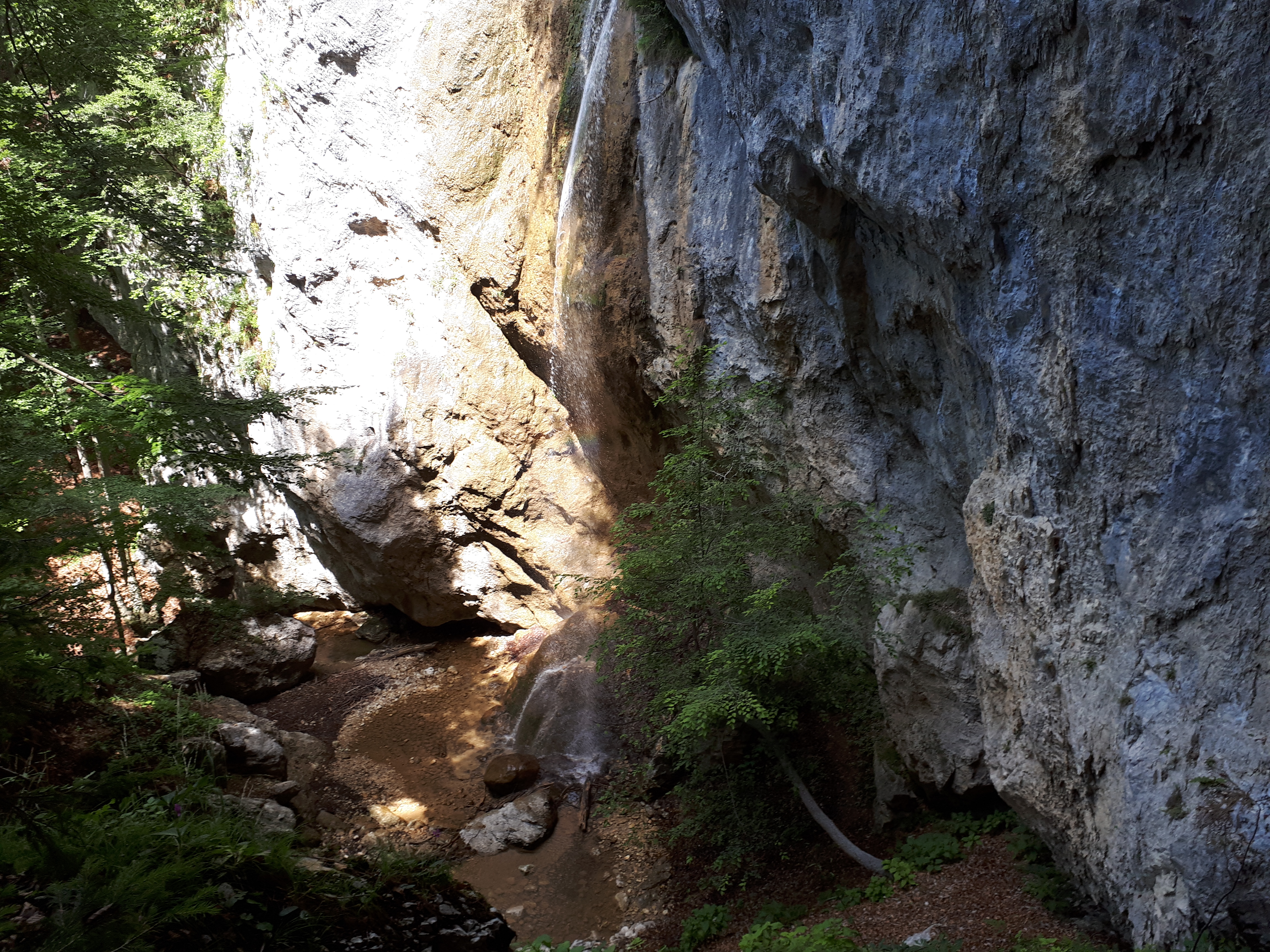
And finally, the Hudič babo pere waterfall – the ‘bonus’ walk I mentioned earlier!
One does, however, need a sense of adventure to find this waterfall, not to mention good footwear! I visited in late summer, when water levels were low, but imagine that during autumn the flow of water is somewhat more impressive. You can reach it on foot from the Završnica valley. After around cca. 200 metres from the reservoir, just before a wooden fenced ‘bridge’, take the (unmarked) path to the left. It first crosses a stream over a wooden boardwalk then leads up steeply into the forest where the path almost disappears. Just keep following the water for a further cca.20 mins to reach the top – but please do so with extreme caution!
So, as you can see, there’s no shortage of choice. The hardest thing, as always, is deciding where to go first. Happy Hiking in Žirovnica!
Not only is cycling good for you and for the environment, it’s also a wonderful way to explore an area, and the Radol’caarea is no exception. In fact, I find it the best way to get around and much prefer two wheels to four! There’s no need to worry about where to park, you are out in the fresh air, and you can see so much more than you do in a car and can stop at your leisure.
So, join me on a bike ride to, and through, Begunje na Gorenjskem to discover some of the sights of the Radol’ca countryside!
I have listed the places below in order so as to suggest a circular ride, however, you can of course pick and choose what to see and do, and the list is by no means exhaustive. Starting from Radovljica head past the Spar supermarket, pass under the motorway then continue to the village of Nova vas.
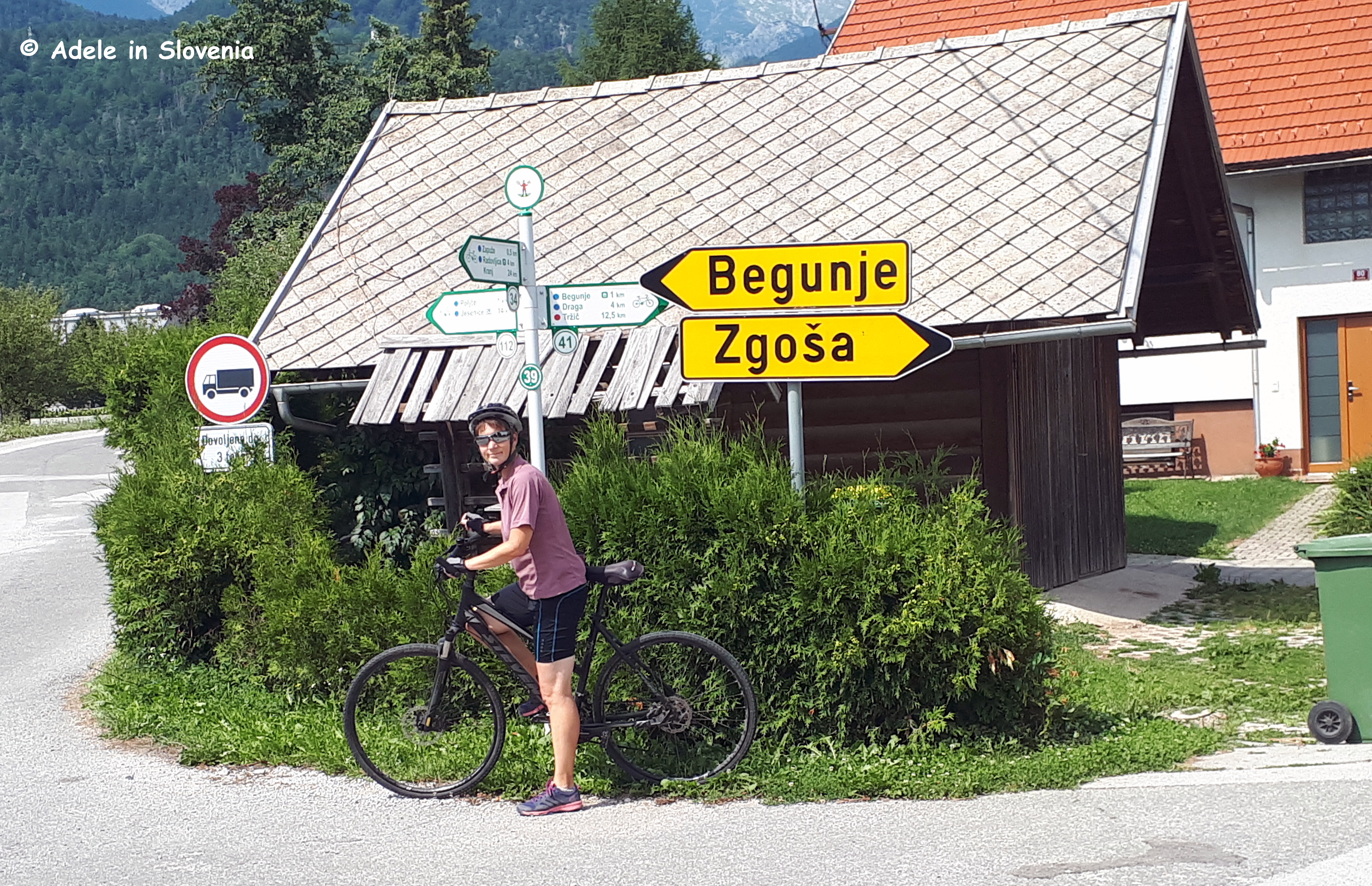
On reaching the t-junction in Zapuže, turn left then shortly afterwards turn right (there is a bar on the corner) towards Zgoša. On reaching the junction, as seen below, turn left towards Begunje.
Continue towards the village of Begunje, the birthplace of Slavko Avsenik, who, together with his brother Vilko Avsenik, were the founders of Slovenian folk music. You can also visit the Avsenik Museum.
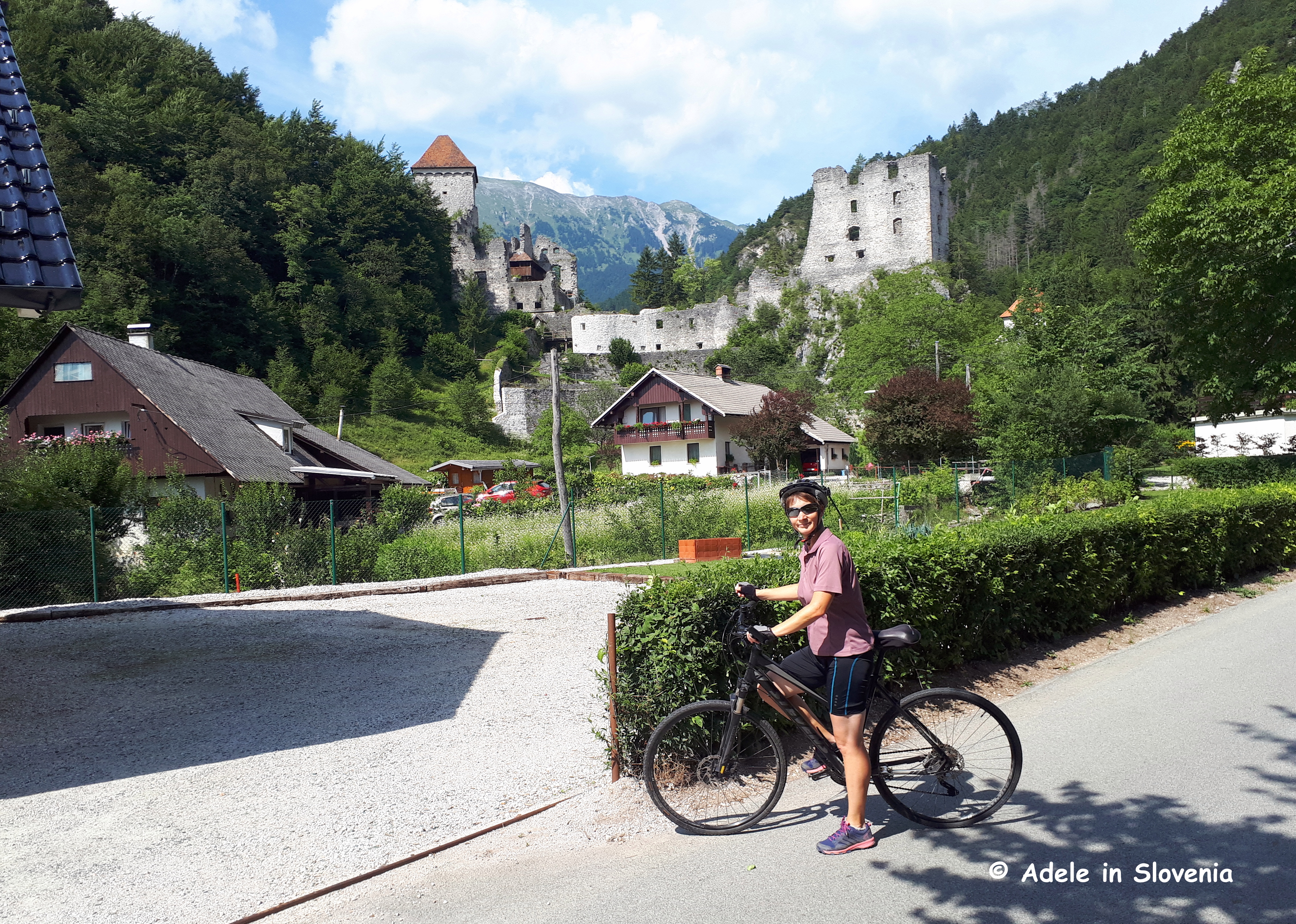
Continue through the village towards the Draga Valley, stopping first to admire and explore the ruins of Kamen Castle (grad Kamen).
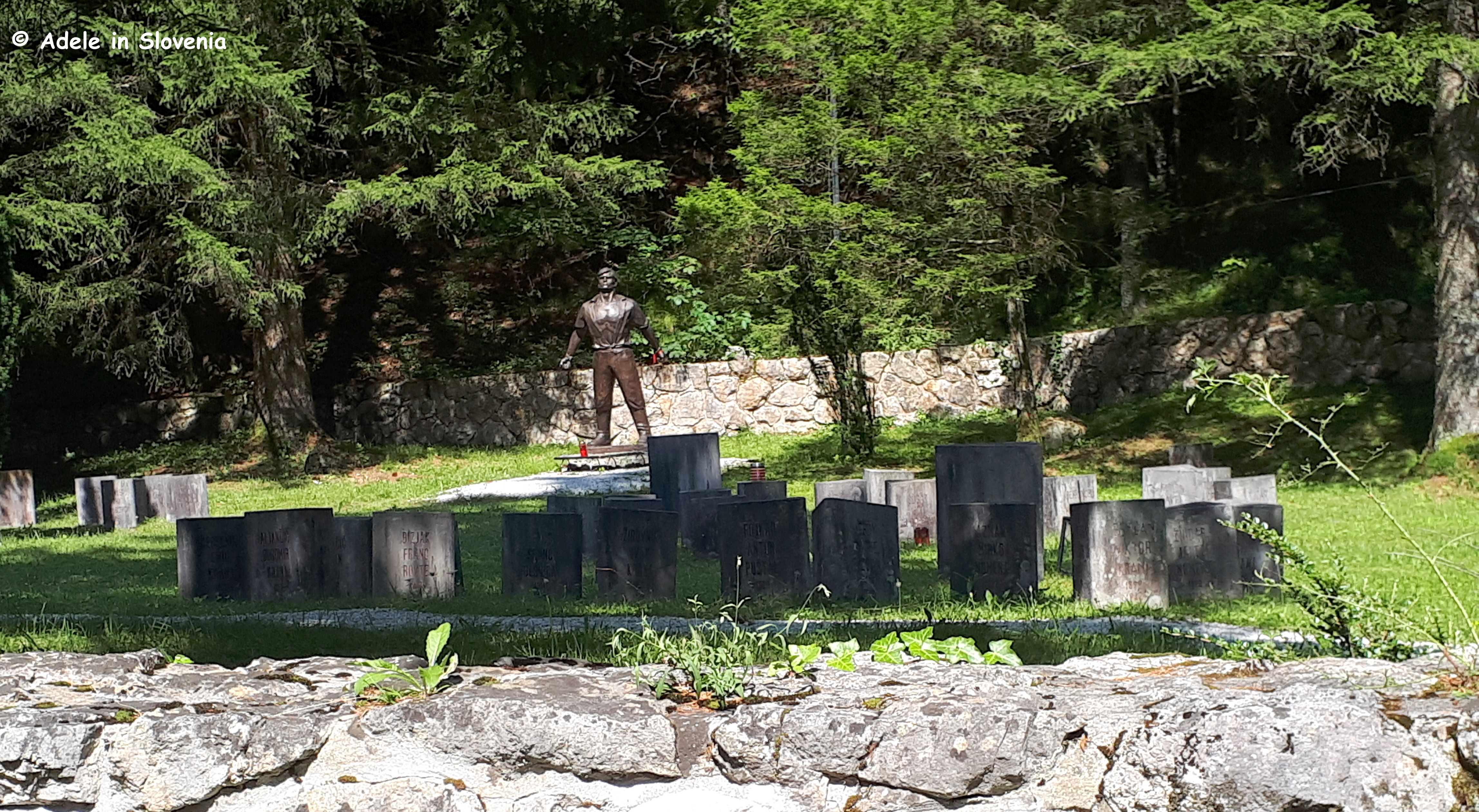
Shortly after leaving the castle, there is a small cemetery that contains graves of hostages from the time when Begunje fell under German rule during World War II. You can also make a side trip to visit the Museum of Hostages, housed in Katzenstein Manor.
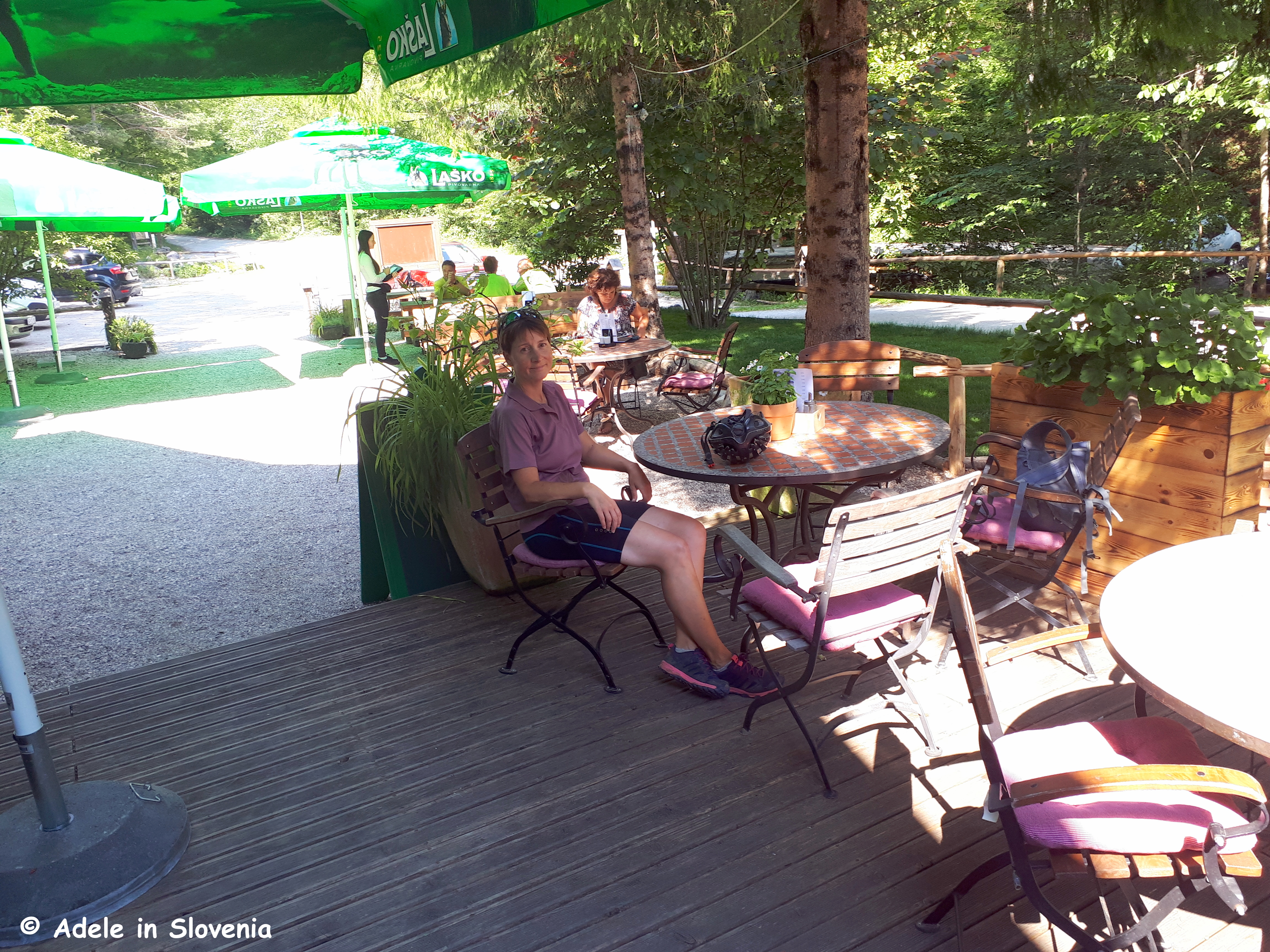
Now its just a few minutes more to reach the head of the Draga valley and the Gostišče Draga restaurant, which situated next to a stream and makes an ideal place to cool down, rest and/or enjoy some sustenance in the form of a drink, ice-cream, something sweet or some hearty traditional Slovenian food.
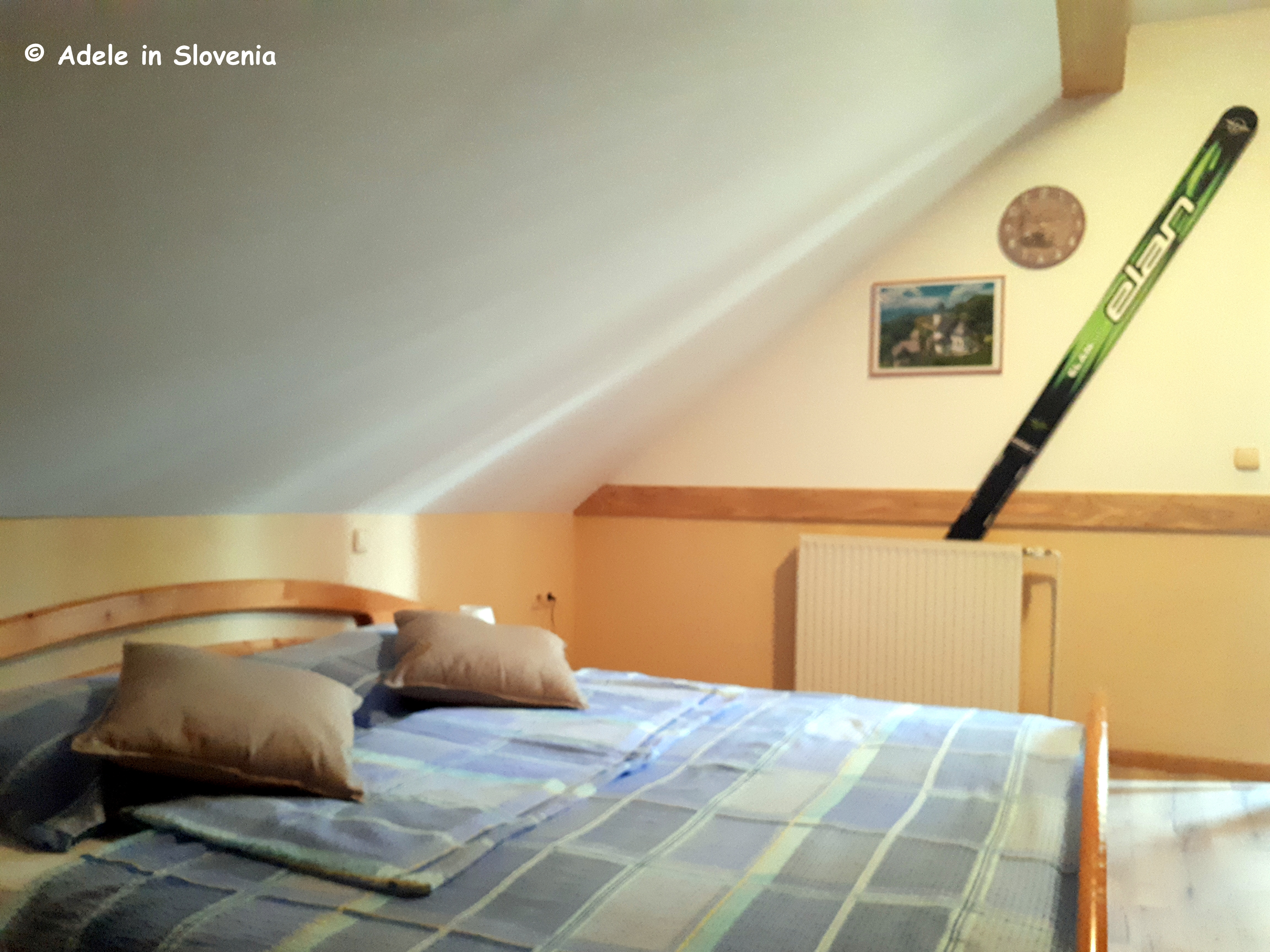
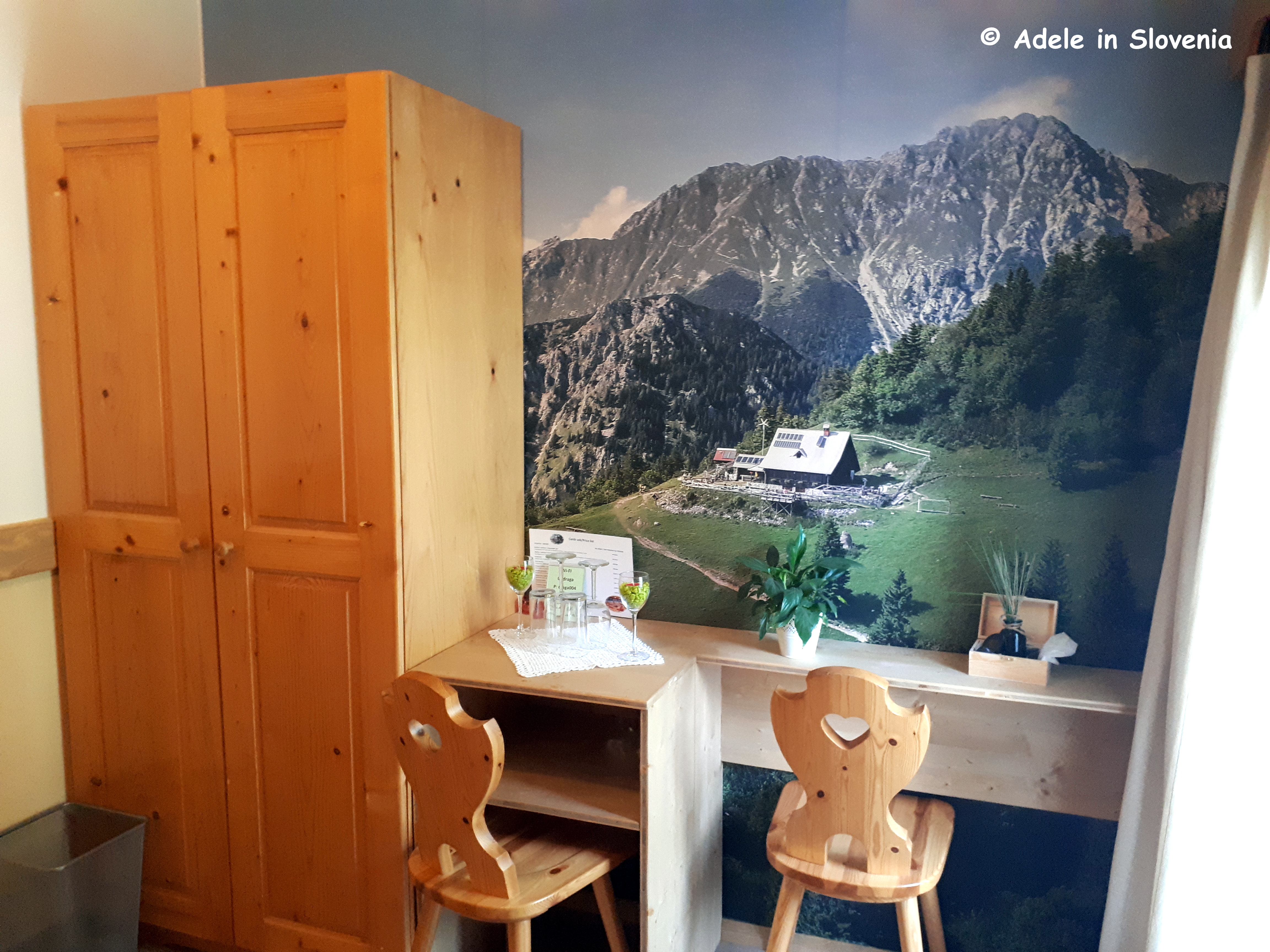
You can even stay overnight in one of the newly-renovated rooms and continue your cycling trip the next day! Or stay longer and enjoy the tranquility of the valley, which is also a great place for hiking in the Karavanke mountains.
On the way back, instead of returning the same way, after leaving the valley, you can turn left at the junction just after passing a sawmill. You could also make a detour to visit the Robačnekov mill. It is officially open on Tuesdays and Fridays from 9am-12noon, however, outside of these times if the owner is home, ask nicely and she will be happy to show you round!
Those interested in beekeeping, and even those who think they might not be interested but will likely discover that actually they are(!), can visit Luznar Beekeeping (Čebelarstvo Luznar).
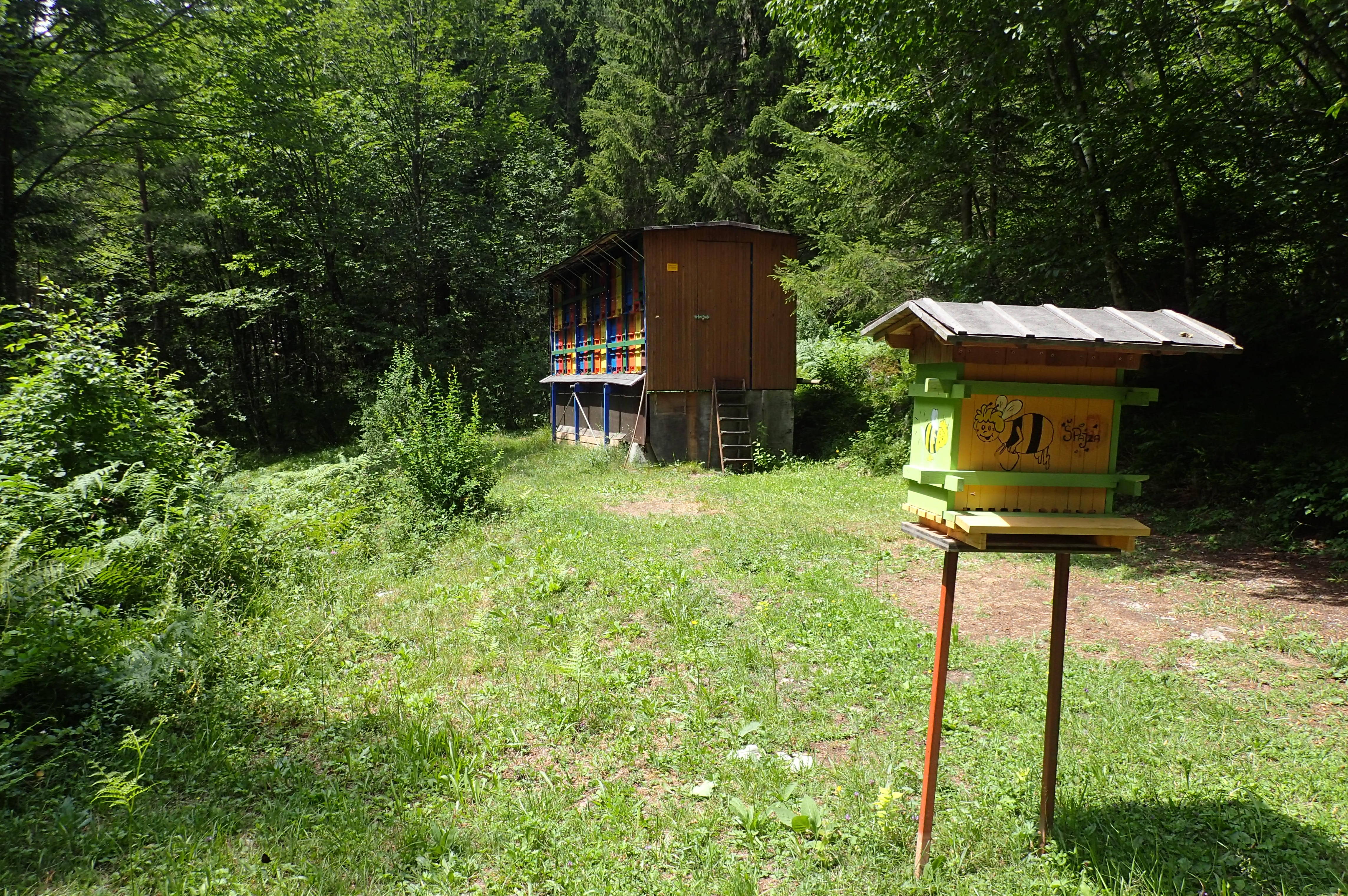
Upon prior arrangement, you can call in to visit Erik at home, where you can purchase his award-winning honey and other honey products, and/or you could arrange to meet him in the Draga valley, where you can get up close to one of his many hives and his amazing new ‘book’ hive, which allows a fascinating, close up, and unique view of Slovenia’s indigenous Carniolan grey bees hard at work. Email cebelarstvo.luznar@gmail.com or call 040 321 556.
Photo: Erik Luznar
Photo: Erik Luznar
You can also visit Begunje and the Draga valley – as well as Erik and his bees(!) – on the Hop-On Hop-On tourist bus, which runs every summer throughout July and August. It’s a great way to discover the villages and countryside of the Radol’ca area. In addition to the ride, there are guided tours and walks as well as other attractions to see and visit at each destination.
Click here for more information about cycling in the Radol’ca area.



















































 Adele in Slovenia