Ten Top Insider Radol’ca Tips!

Since I think I have a right these days to call myself a ‘Radolčanka’ (i.e. a Radovljica local), I thought I would share with you some of my top insider tips, some of which are more obvious than others!

So, in no particular order…

YOU WILL NEVER GO HUNGRY OR THIRSTY IN RADOVLJICA…at the last count – in my head that is so I could have forgotten the odd one – I totted up 23 bars, cafes and restaurants in Radovljica itself – not to mention the numerous others within the municipality. So, there’s no need to worry about going hungry or thirsty whilst visiting! And now there’s an exciting new ‘kid’ in town too – Linhart Hotel & Bistro – in Linhart Square, the heart of the old town. The hotel opened a couple of years ago but has just been taken over by the hugely successful and popular restaurant Vila Podvin, with head chef (and celebrity chef these days!) Uroš Štefelin at the helm. Expect bistro-style food – Uroš style!

Image may contain: table and indoor

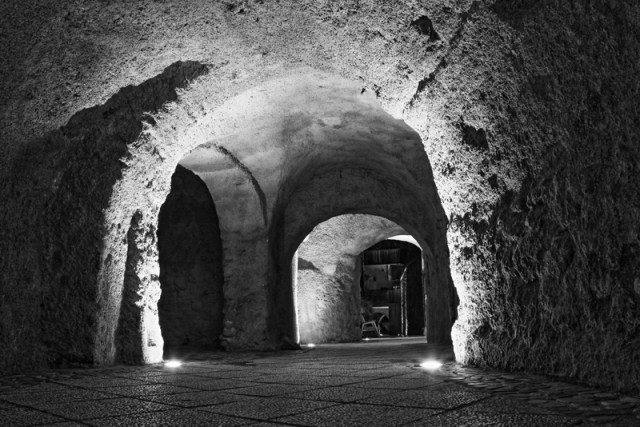
THERE’S A VISIBLE TUNNEL... Okay, so it’s not an insider tip as such, but I’ve included it here since it’s easy to miss. The only preserved moat tunnel in Slovenia is found beneath Radovljica’s old town centre. It was renovated, and partly built-over, some years back, and is well-illuminated, meaning you can walk through it at any time as part of a visit to the old town centre. I’m rather lucky as I live just minutes from the old town and can therefore see it by day and by night, though the latter trumps it for me!
Radoljice1HDR

AND AN INVISIBLE/HIDDEN TUNNEL TOO…well, that is if legend is true! It is said that there is a tunnel that runs underground from the well in Linhart Square all the way to Lipnica Castle. To date no one has actually found it, but the legend lives on…!

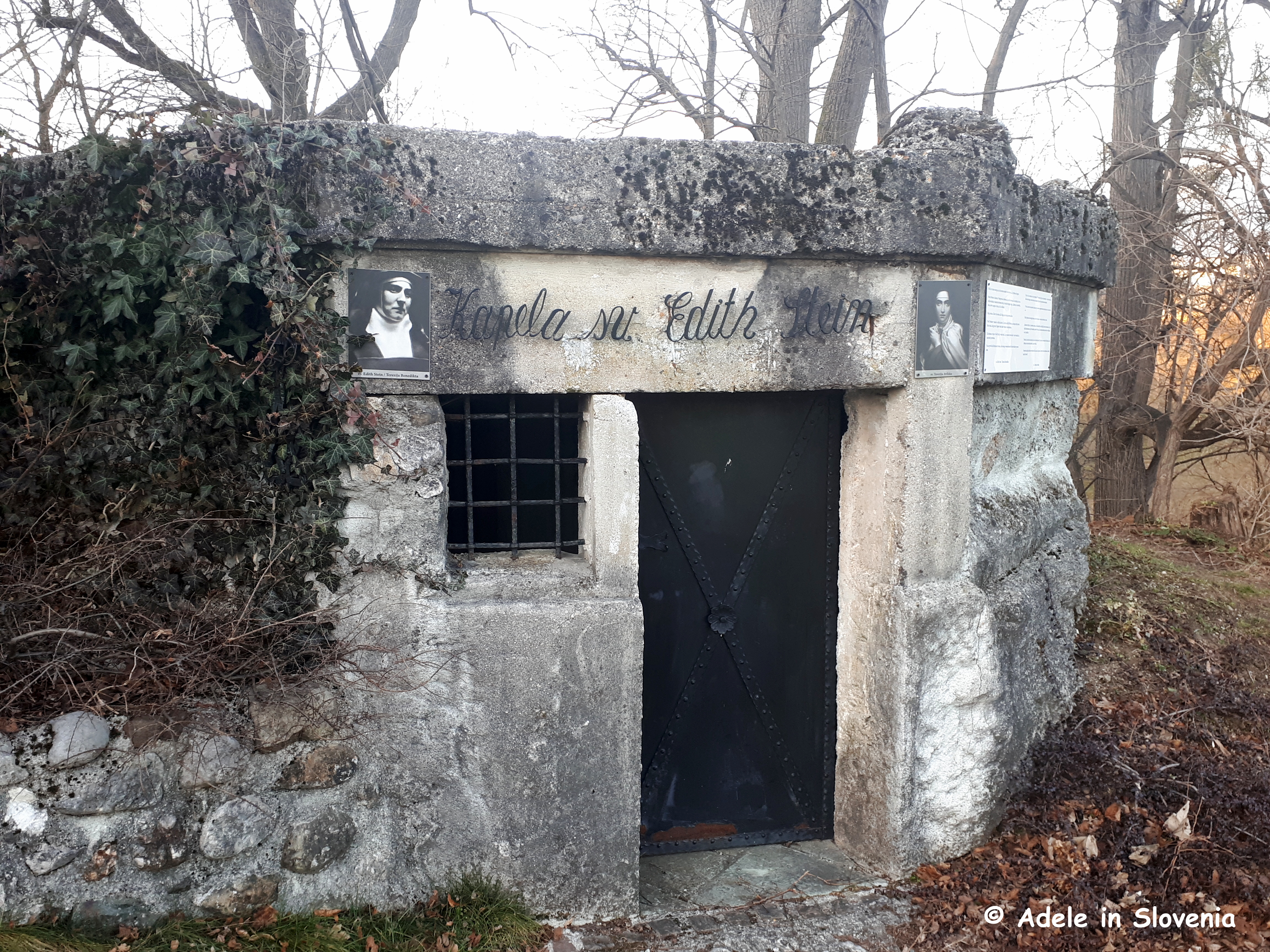
AND EVEN A ‘SECRET’ CHAPEL…the Edith Stein Chapel is hidden away behind the vestry tower of Radovljica’s baroque St. Peter’s church in Linhart Square, and surprisingly few people even know it’s there. Edith Stein was a German-Jewish philosopher, born on 12 October 1891 to Jewish parents, who converted to Catholicism and became a Carmelite nun.

Also know as St. Teresa Benedicta of the Cross, she was canonised as a martyr and saint of the Catholic Church, and is one of six co-patron saints of Europe. Edith and her sister Rosa, who was also a convert and an extern sister, were sent to the Carmelite monastery in Echt in the Netherlands in 1938 for their safety, where, despite the Nazi invasion in 1940, they remained until they were arrested by the Nazis on 2 August 1942 and sent to the Auschwitz concentration camp, where they died in the gas chamber on 9 August 1942.
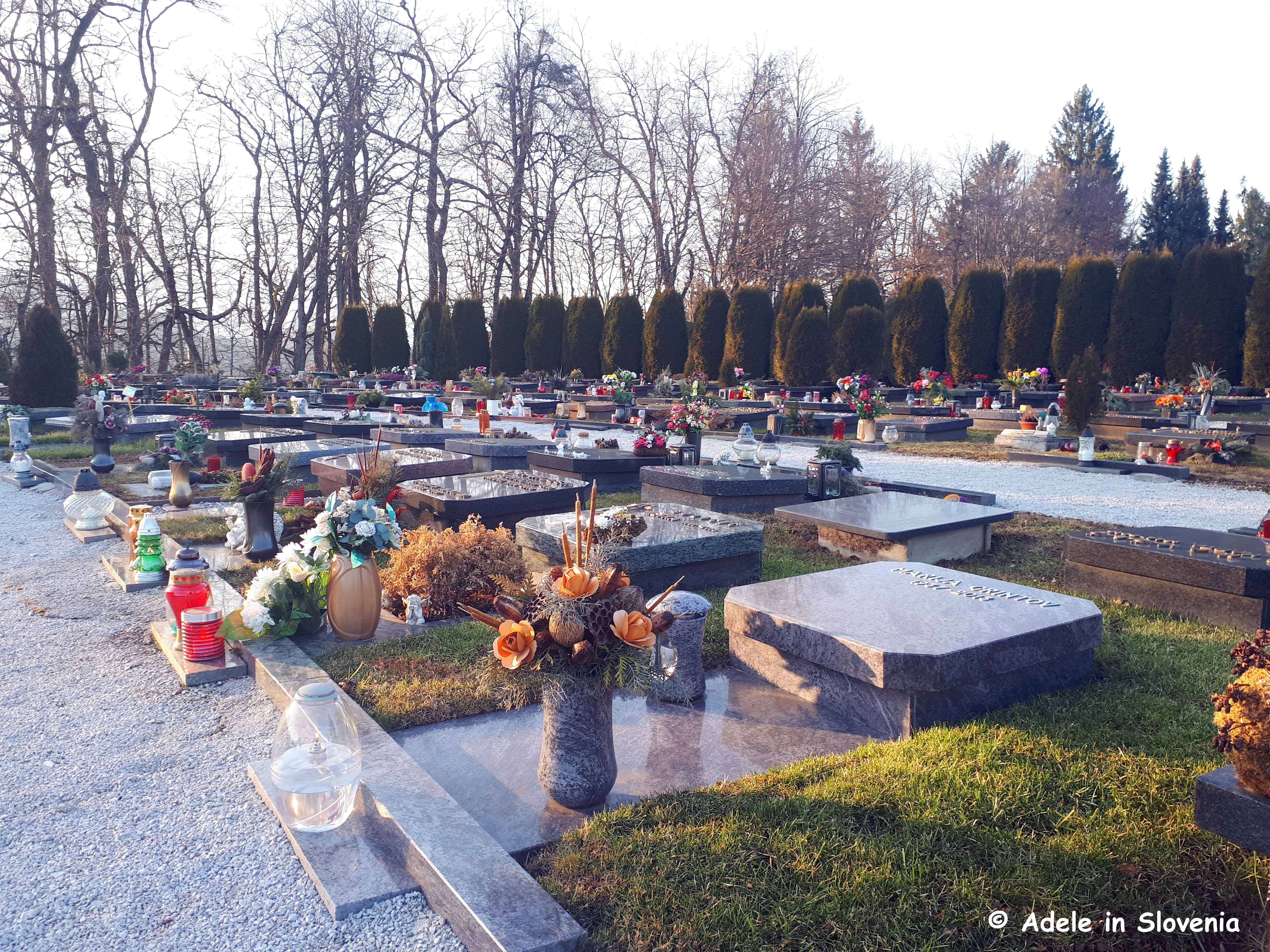
WE HAVE RATHER LOVELY CEMETRIES…bear with me on this one! I know it might sound odd but it’s true, Radovljica’s (and in fact in general throughout the country) two cemetries are so well kept. There is always an abundance of fresh flowers, plants and glowing candles, and a sense of peace prevails. You can admire both the cemetries as you pass on a walk towards the Sava river and the Fux footbridge.
RADOVLJICA REALLY IS A ‘SWEET’ TOWN…in so many ways! Not only is the town’s slogan ‘Honestly Sweet‘ but Radovljica is also the home of the biggest and best chocolate festival in Slovenia and a honey festival too. This year’s Radovljica Chocolate Festival – the 9th in a row – takes place from Friday 17th to Sunday 19th April.

WE LIKE TO STICK TOGETHERTaste Radol’ca is a great example of this. Rather than being in competition with each other, many of Radol’ca’s restaurants have joined forces and, in doing so, have realised and reaped the benefits of cooperation and collaboration. In doing so they are also supporting local farmers, beekeepers and producers of other goods, by including locally sourced ingredients on their menus. Each year there are an increasing number of events at which Taste Radol’ca restaurants are present, such as the Radovljica Chocolate Festival, summer Thursday concert evenings, the November Month of Local Cuisine, various Christmas and New Year events, and more.

WE LOVE OUR BEES…the Museum of Apiculture, the Beekeeping Education Centre of Gorenjska, the ‘Follow a Bee Through Radovljica‘ family adventure, an annual Honey Festival, and numerous beautifully painted apiaries where hardworking bees, and equally hardworking beekeepers, ensure that we have a plentiful supply of local honey.

IT LOOKS GREAT FROM ABOVE OR BELOW…Wherever you view Radovljica from – whether up high in the mountains or down beneaths its terraces – Radovljica’s old town centre with its prominent church is picture postcard stuff! So, whether you choose a stroll beside the Sava river on the Sava River Trail, or one of the marked hiking trails, such as to St. Peter’s church above Begunje, or even higher to the Roblek mountain hut or the peak of Begunščica, you are assured of a great view and a totally different perspective of the beauty of Radovljica and its surroundings.

SEEK OUT BUNKERS FROM THE RUPNIK LINE…the Rupnik Line is a system of fortifications that were built during the 1930’s by the Kingdom of Yugoslavia as a defence line on the border with the Kingdom of Italy. The strategically placed forts and bunkers were never actually used for military or defence purposes, but they at least brought residents a temporary solution to the unemployment and financial troubles which affected them due to the location of the Rapallo Border. In Radovljica there are bunkers on the Obla gorica hill, which is located behind the swimming pool, as well as on the grassy bank in the street Cankarjeva ulicacop. I recently read that, in fact, there are around 50 such bunkers located across the Jelovica plateau, Radovljica and Begunje na Gorenjskem, though, to date at least, I’ve only come across a handful. Hmm, an idea is brewing, how many (more) can I/you find?!

I hope this has given you plenty of ideas for exploring (more of) Radovljica and you’ll agree that’s there’s certainly more than meets the eye!

© Adele in Slovenia


Winter Hiking Above Tržič – Kriška gora and Tolsti vrh

Okay, so I know the title of the blog is ‘Winter Hiking Above Tržič…..’, but, as you will see from the pictures below, the weather – thank goodness! – is anything but wintry right now – and long may it continue I say!

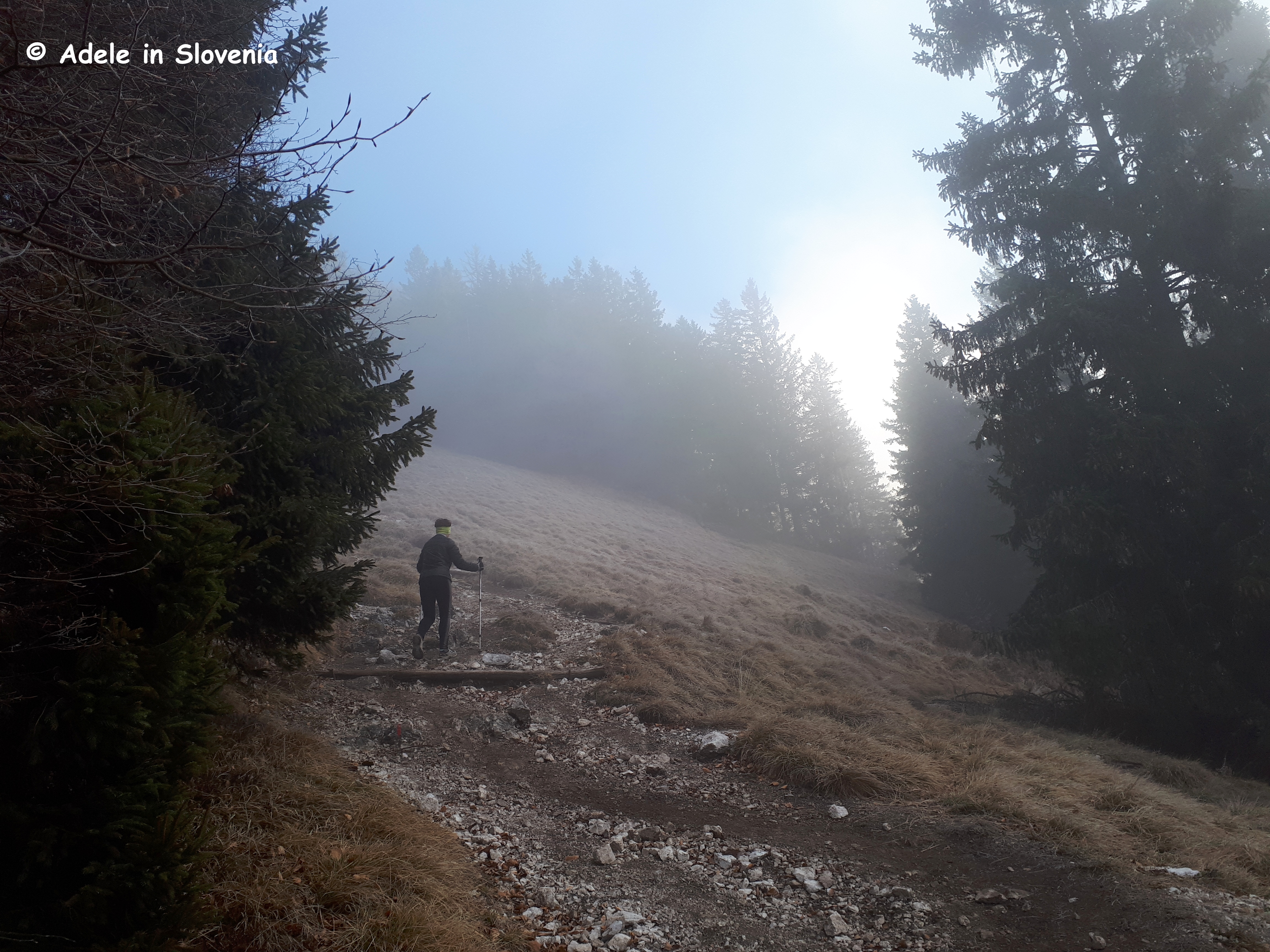
We’ve had almost a month with no rain or snow, brilliant blue skies and sunshine – of course, it can’t last indefinitely, but while it does one has to make the most of it! So yesterday, despite waking up to fog in the valley, we headed out for our first winter hike this year in the Tržič area, this time we chose Kriška gora and Tolsti vrh. In places it looked, and felt, more like autumn!

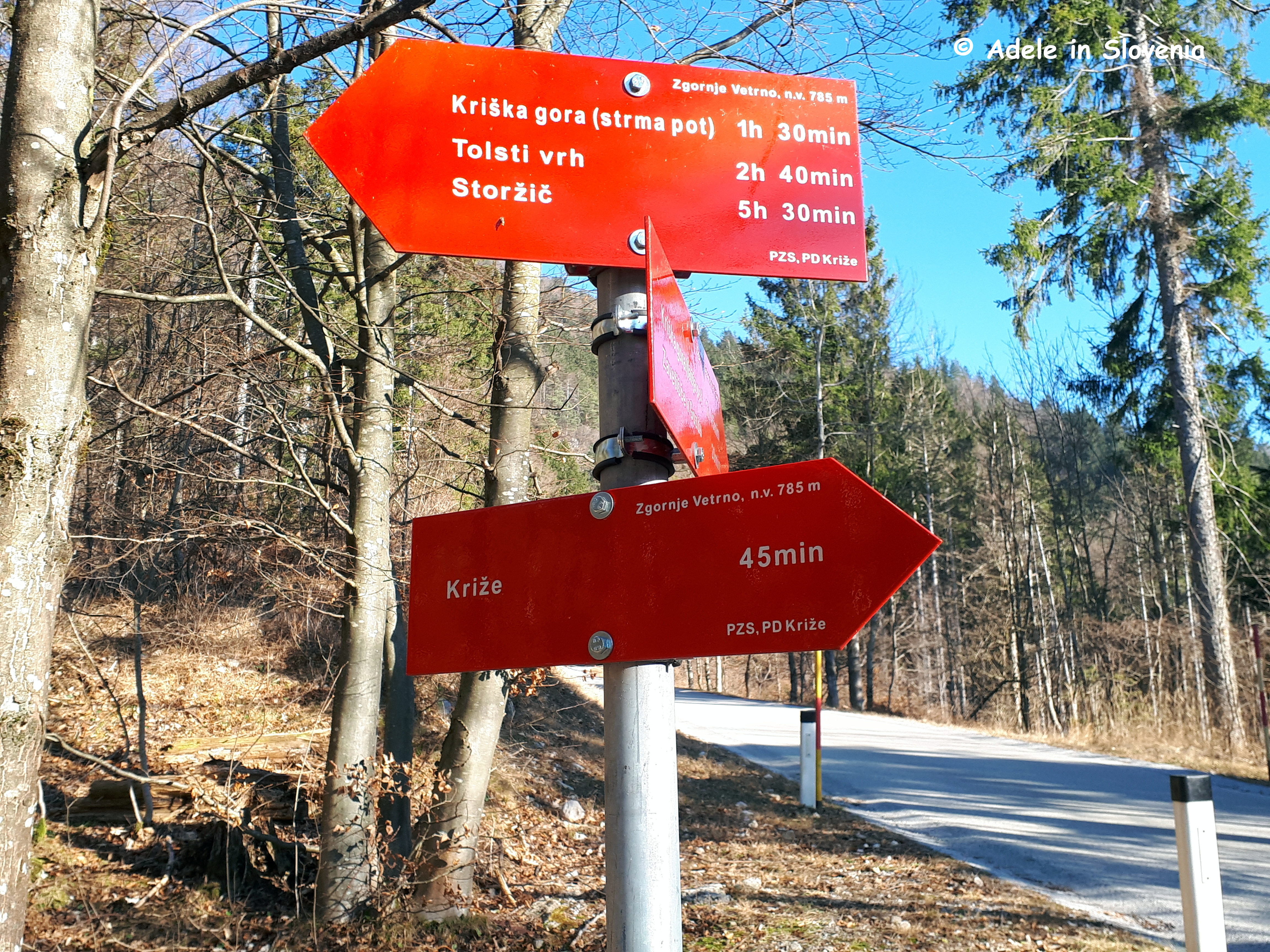
As regular readers will know, I have a penchant for circular hikes, and this is a great one! You can begin the hike from Tržič itself (cca. 2.5 hours to reach the hut), from Zgornje Vetrno, or, as we did, drive up to the village of Gozd, where we parked in the small parking area on the left-hand side of the road, from where we set off on the steeper of the two paths (shown below as strma pot) that leads to the Koča na Kriški gori mountain hut. Should you wish to do the hike in the opposite direction you can drive further up the road to reach the Zavetišče v Gozdu and then set off from there on foot.

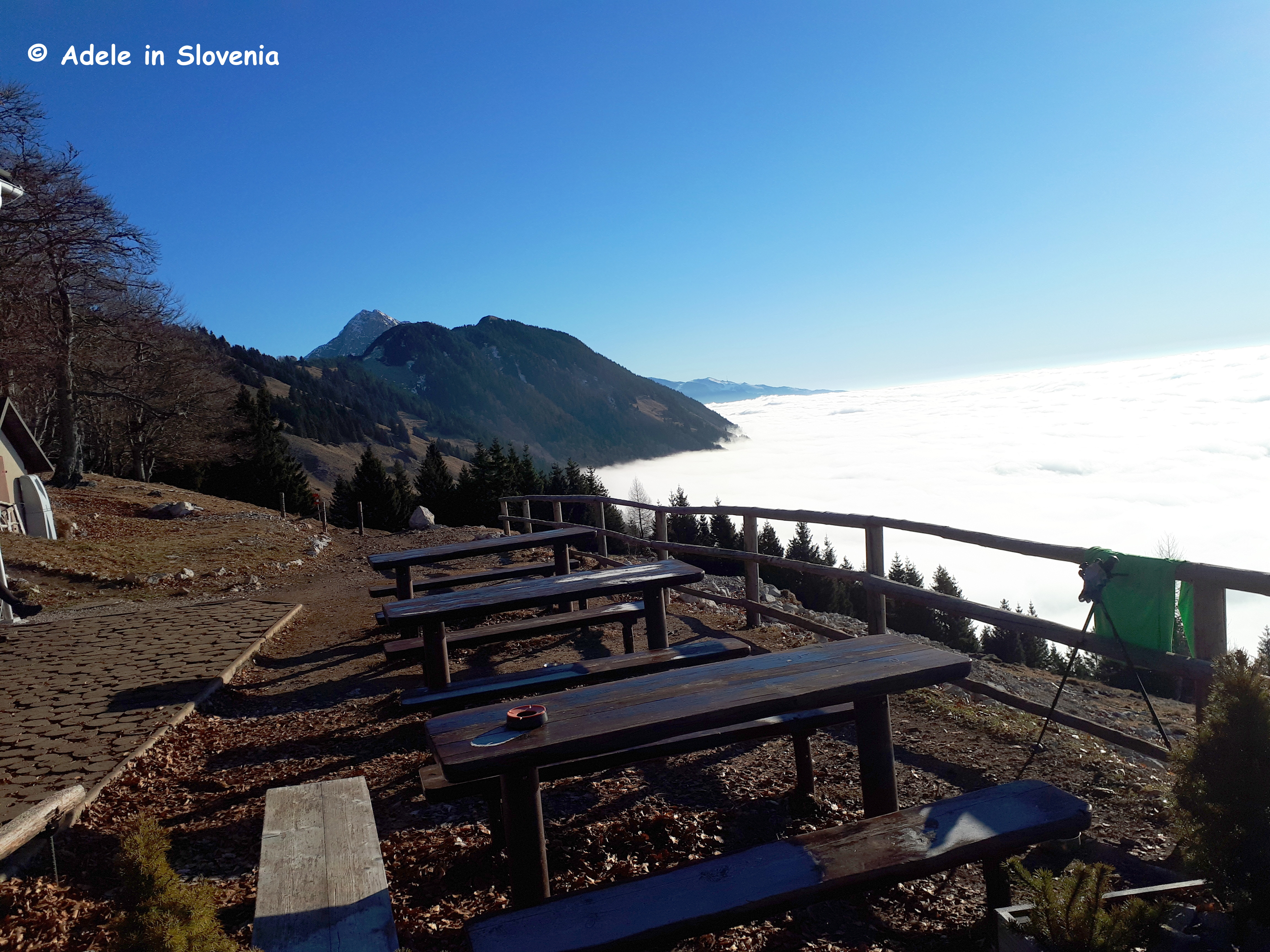
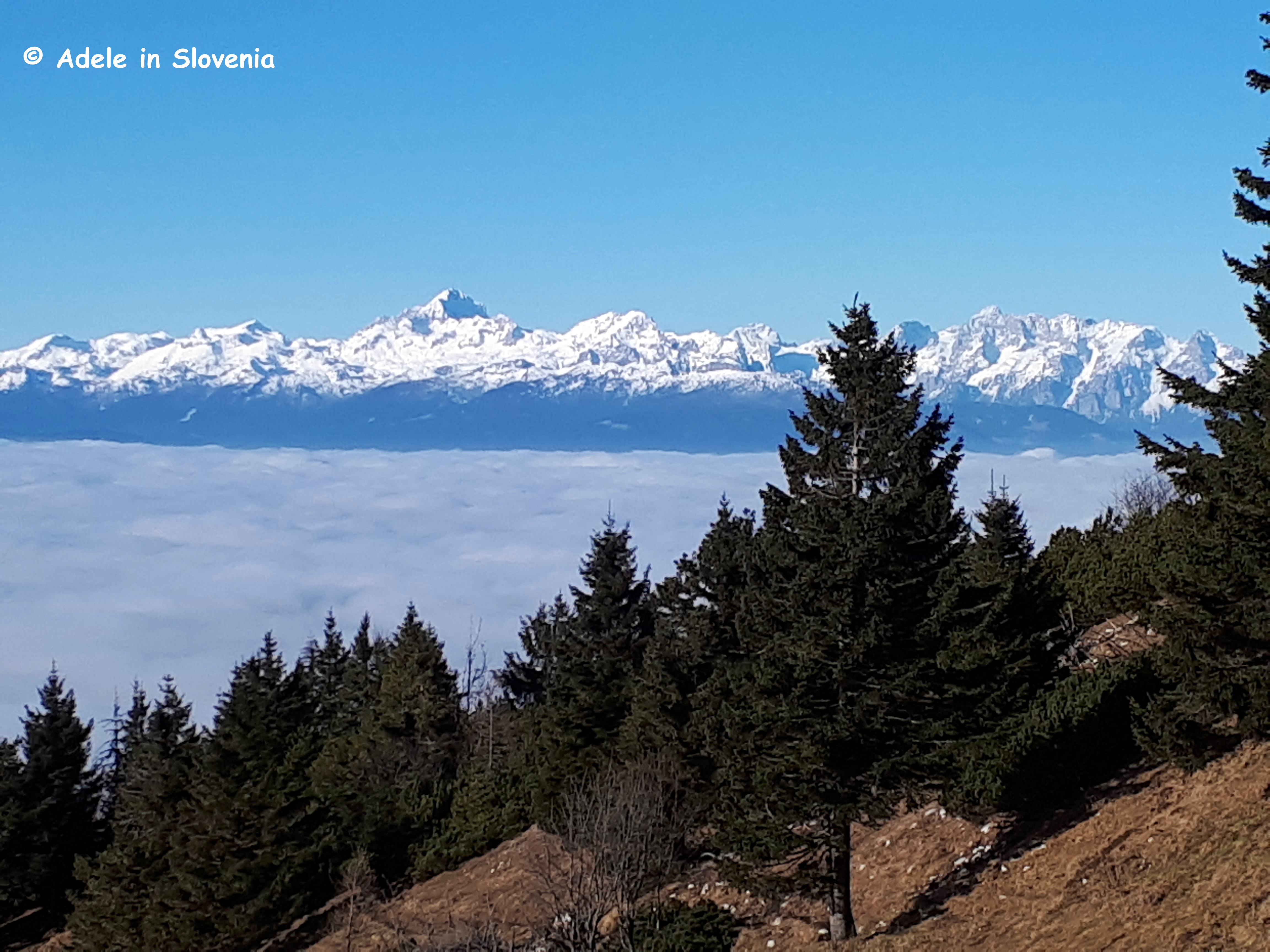
It’s such an amazing feeling when you get up above the fog and see the first glimpse of blue sky followed by the ‘sea’ of fog below!

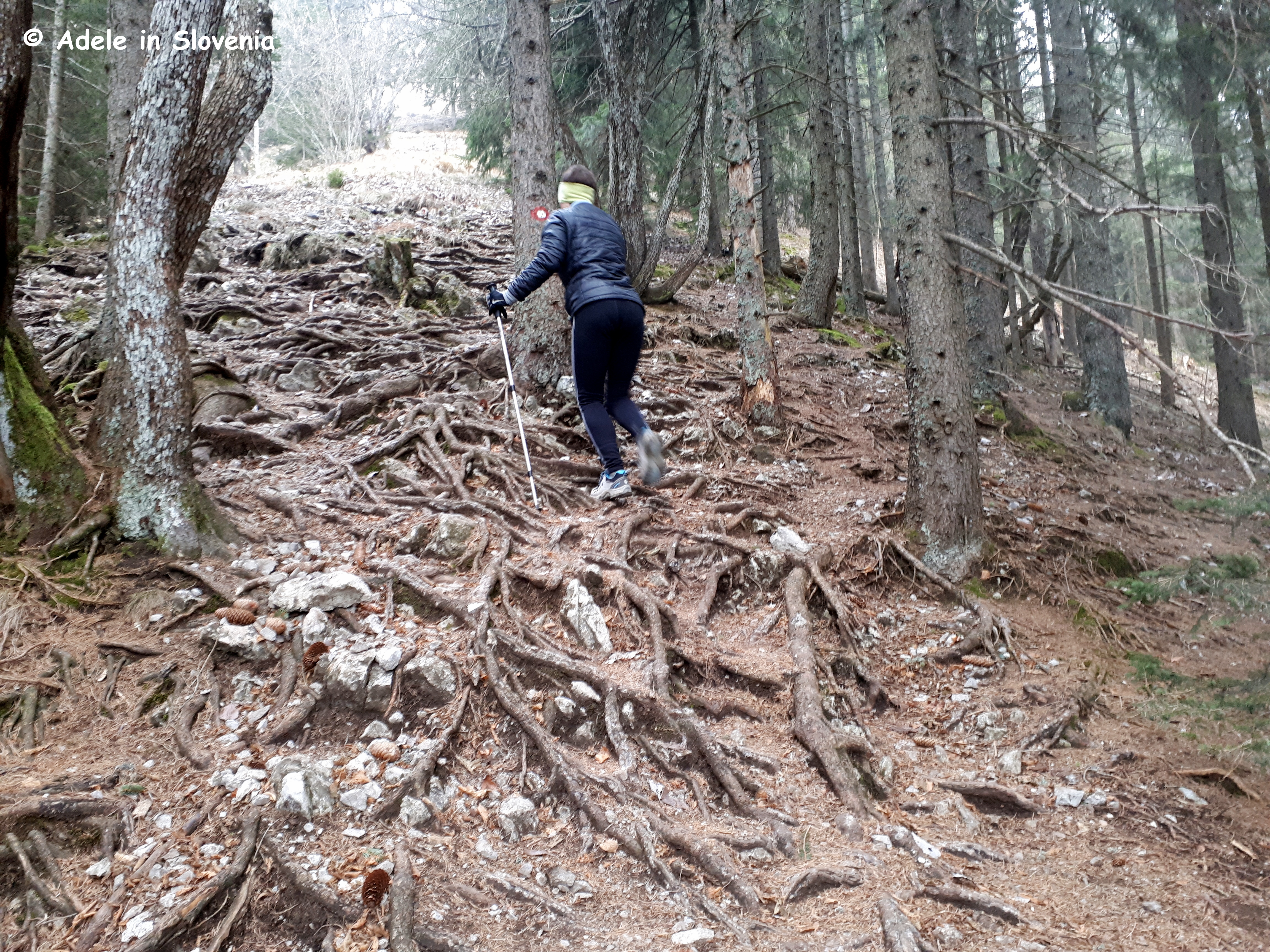
After about 1hr and 15mins of climbing up steeply – very – through the forest, you reach the Koča na Kriski gori mountain hut (1,471m).

You can take a breather here and soak up the views, and/or head inside for some typical Slovenian mountain food.

Slovenia’s highest mountain, Mt Triglav (2,864m), looks particularly majestic on days like these.

Since there is still snow and ice in many places above around 1,500 metres (and over 3 metres of snow in the high mountains) of course, at this time of year one should always have a pair of crampons with them, which, had we done the hike in the opposite direction, would certainly have been needed in a few places today. The patches of ice and snow served as a reminder that it actually is mid-January!

From here you can either pass the hut then take the path that leads at first in an easterly direction before winding its way down through the forest, or, for a longer walk continue along the ridge for another cca. 1hr 15mins to reach the peak of Tolsti vrh (1,715m).

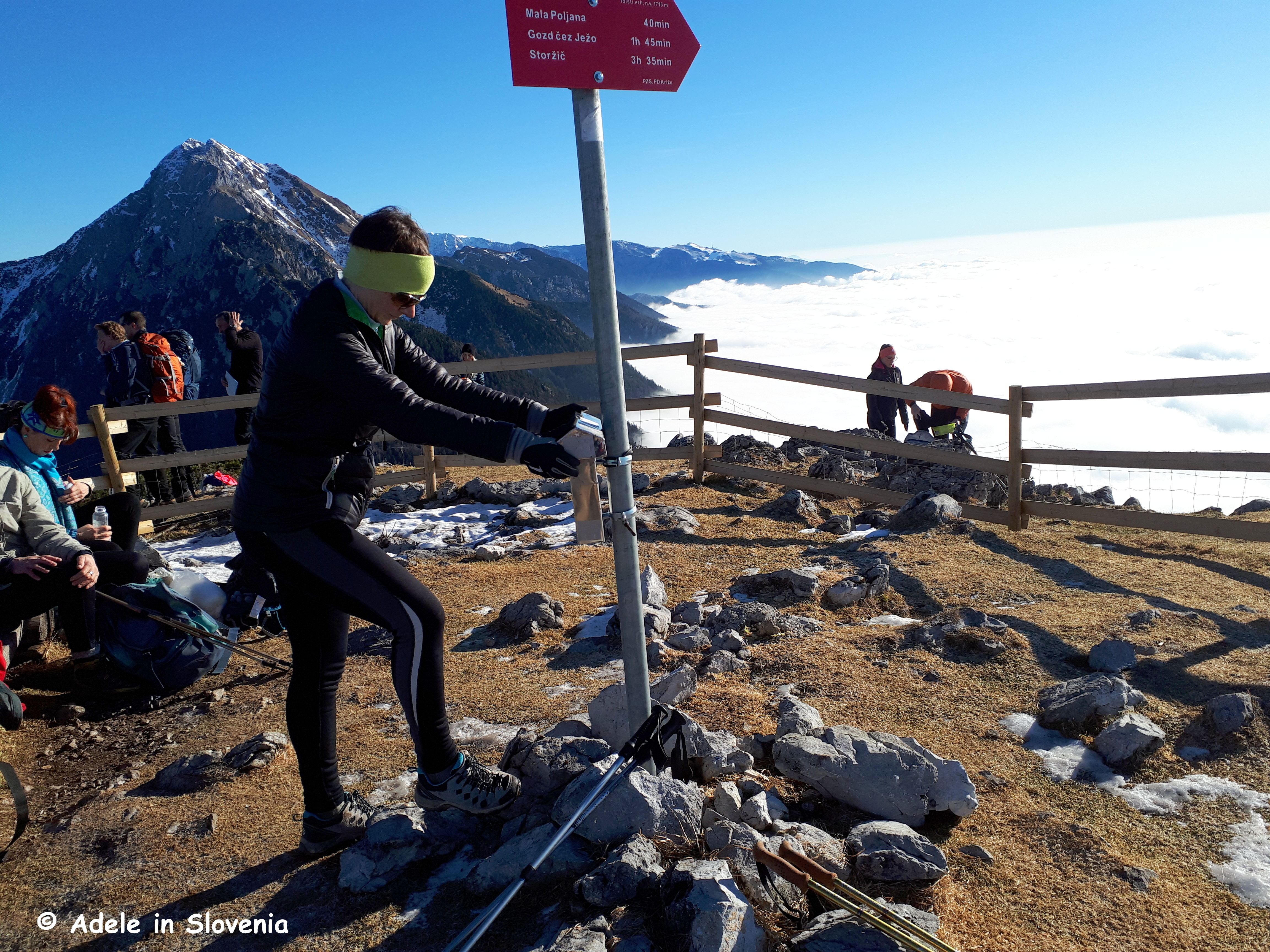
At the top there is a small fenced area where you can take a breather, soak up the views, and sign the record book. In the background you can see Mt. Storžič, which is on my list of peaks to conquer this year, so, more about that to come in the course of this year!

From Tolsti vrh you can take the path that leads directly downwards – steeply at first before levelling out. It takes around 1hr 30 mins to reach the Zavetišče v Gozdu, which is a kind of (non-mountainous!) mountain hut that is open at weekends.

If you need some sustenance after your hike, you could visit Gostilna Pri Bajdu in Senično near Golnik, which you can read about in a previous blog here, or visit one of the other places to eat in the Tržič area.

So, this was a good start to my hikes and adventures in the Tržič area for 2020. Here’s to many more and, in the meantime, check out the Visit Tržič website to find out more!

© Adele in Slovenia


When Adele in Slovenia Became Adele ‘Is’ a Slovene!

After a process that took almost 10 months and was, at times, exasperating to say the least, I finally became a citizen of the Republic of Slovenia on Tuesday 10th September 2019!

After such a lengthy and laborious process, which began with me passing the Slovenian language exam and was thereafter followed by a period of gathering documents, more documents and more documents, the actual official awarding of the citizenship was a simple and quick affair; just a case of reading the official oath, signing a few documents and that was that!

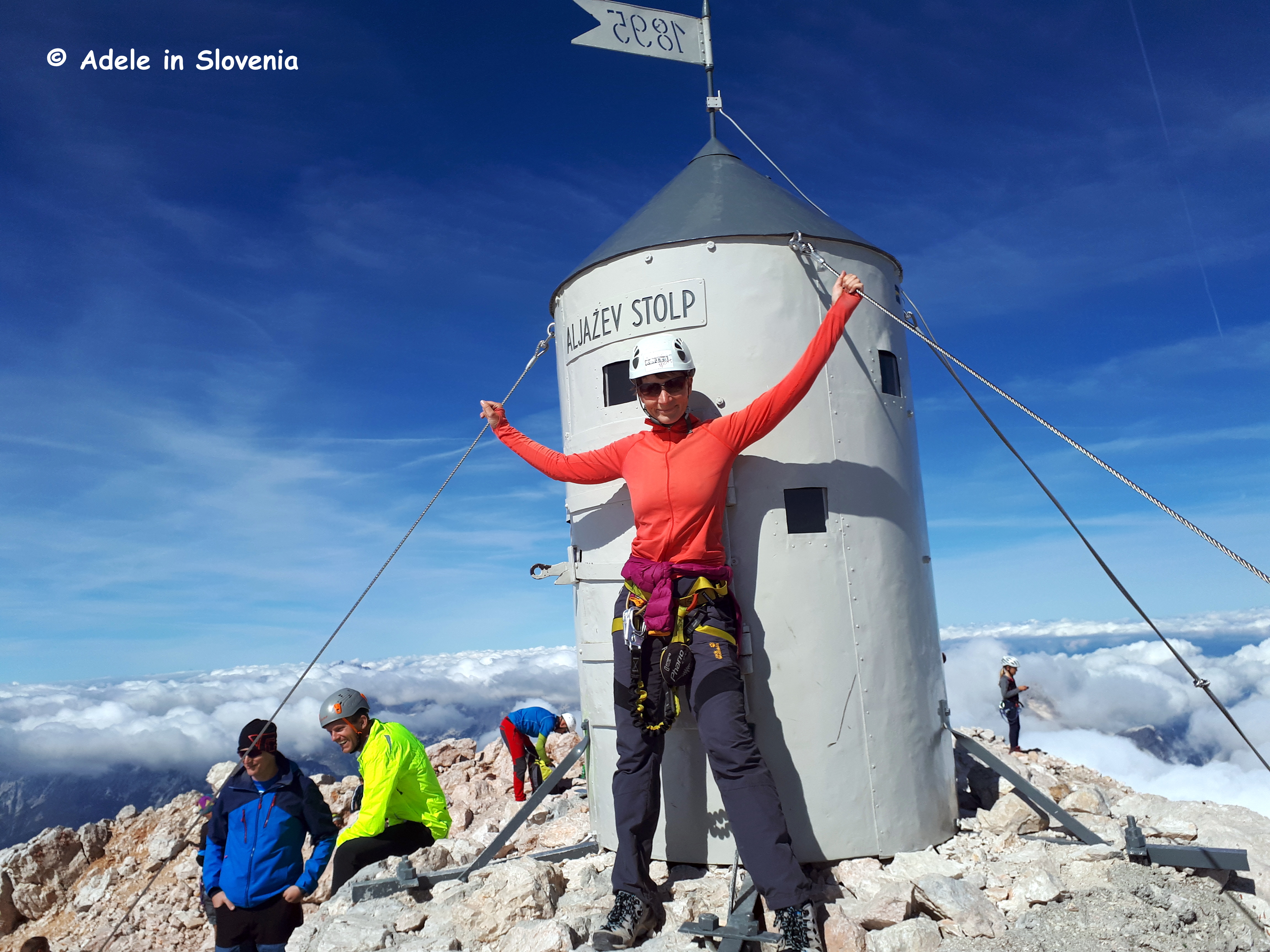
And since it’s said that every Slovene must make it to the summit of Triglav once in their life, four days later I did just that!

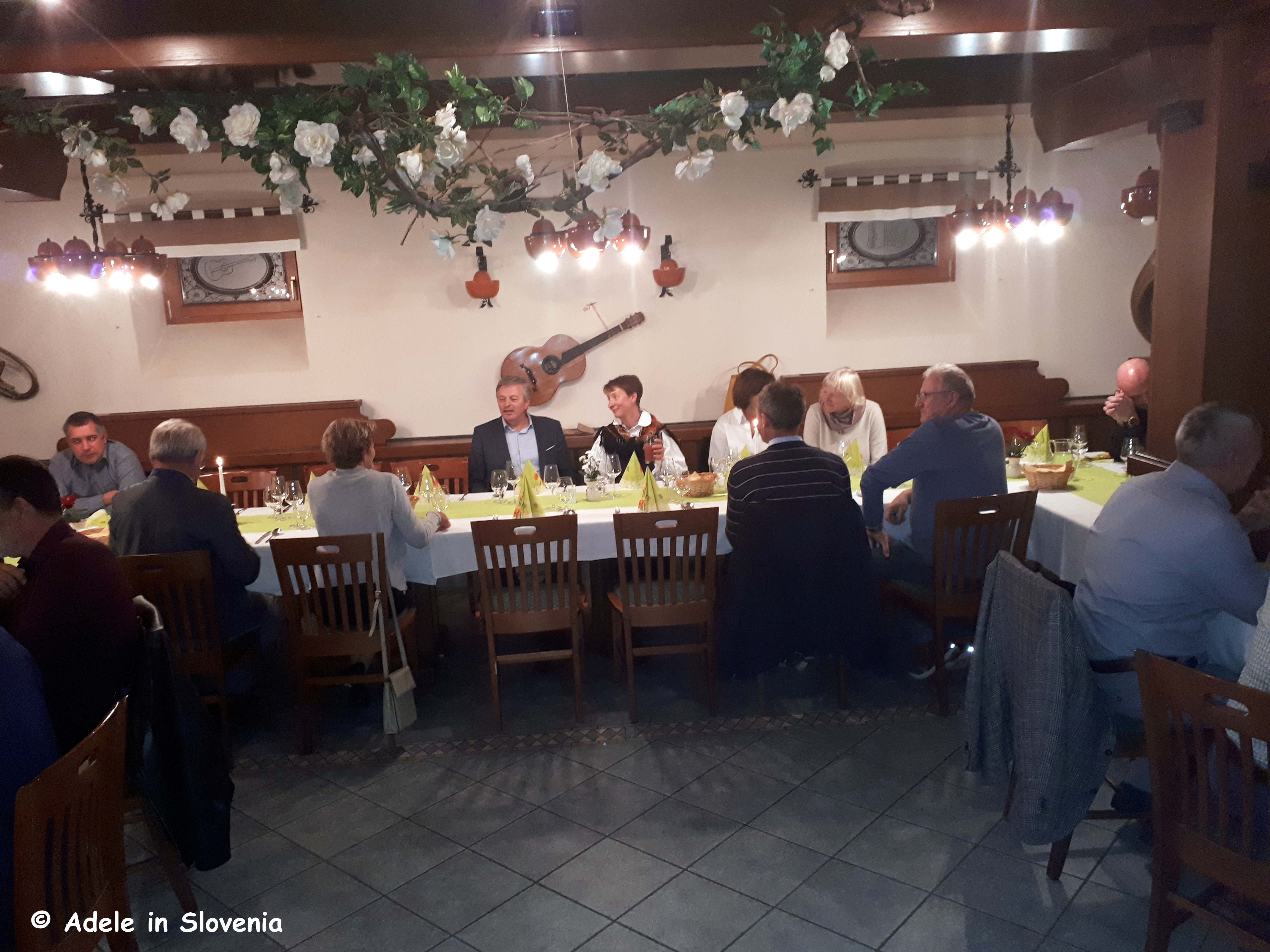
Since it’s not every day that one becomes a Slovene, I decided a good old knees-up was in order and invited those who have been, or rather are, an important part of my life here. After pondering where to hold it, I decided on Gostišče Tulipan in Lesce, as it is known for its great traditional Slovenian food, friendly service, spacious rooms and pleasant ambience.

We had the area downstairs to ourselves and it definitely turned out to be the right choice as the organisation and service was exemplary and I was also delighted that I was able to enjoy a great meal in great company without having to worry about being ‘glutened’ as I had agreed the whole menu in advance and given strict instructions re gluten contamination.

So, I’d like to extend a huge thanks to the whole team at Gostišče Tulipan for their efforts and also thanks to all those who came and made it such a great evening.

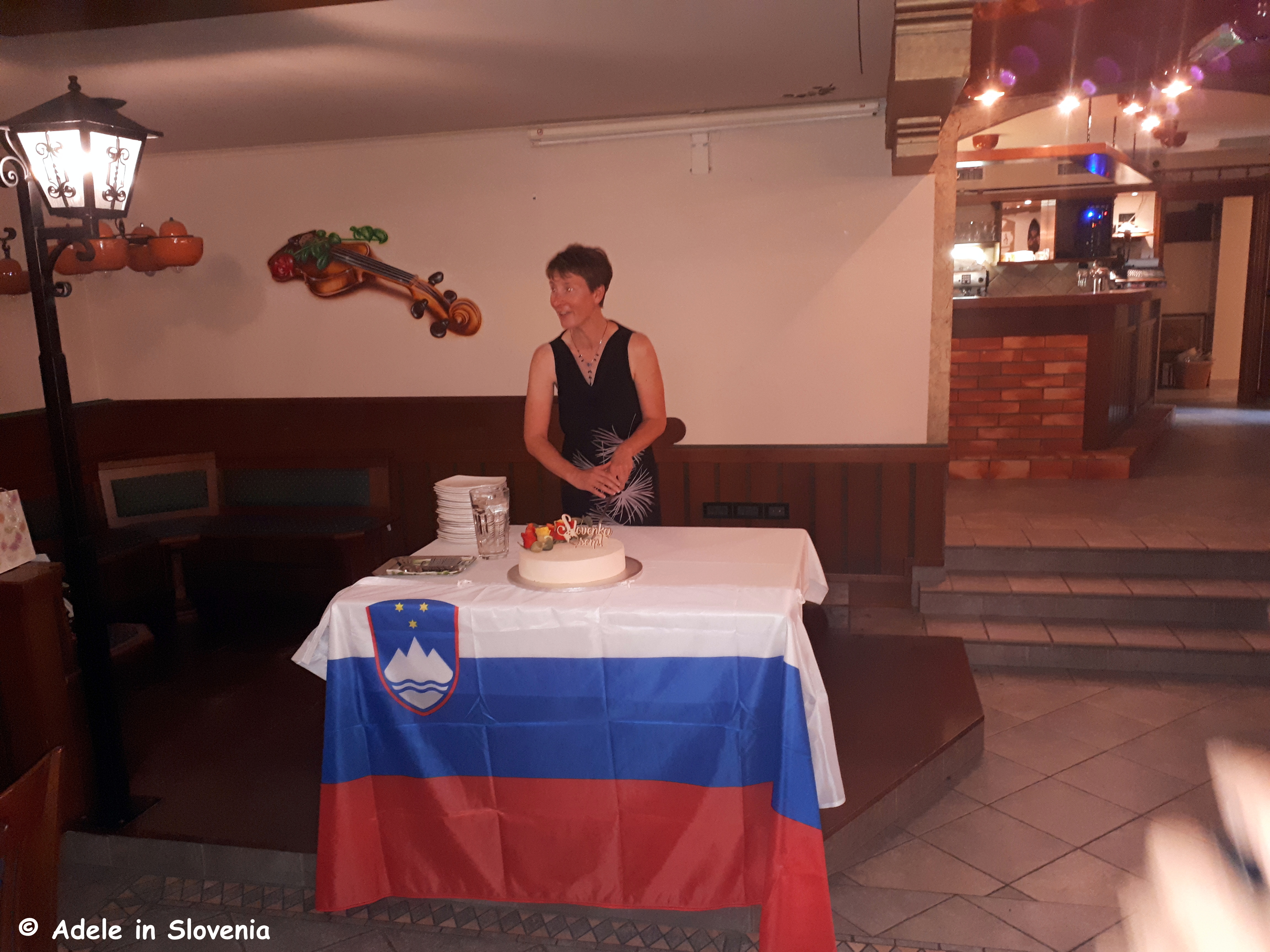
And Gostišče Tulipan even took care of a (gluten-free) ‘Slovenka sem’ (I’m a Slovene) cake too, which we managed to polish off pretty quickly!

As befits such a gathering, I donned a Slovenian national costume to (re)read the oath, accompanied by the Slovenian national anthem…

Becoming a Slovene wasn’t easy, as with so many things in life, but I’m proud to be able to say I am and wouldn’t have it any other way!

© Adele in Slovenia


Autumn Hiking at the ‘Top’ of Radol’ca – Mount Begunščica!

At a height of 2,060 metres, Begunščica is the highest point of the Radol’ca area. It rises above the village of Begunje na Gorenjskem and can be reached from several directions; from Radovljica the Draga valley is the most convenient start point. From the parking area at the head of the valley, there is a choice of two trails to reach Veliki vrh (literally ‘big peak’) – the highest point of Begunščica.

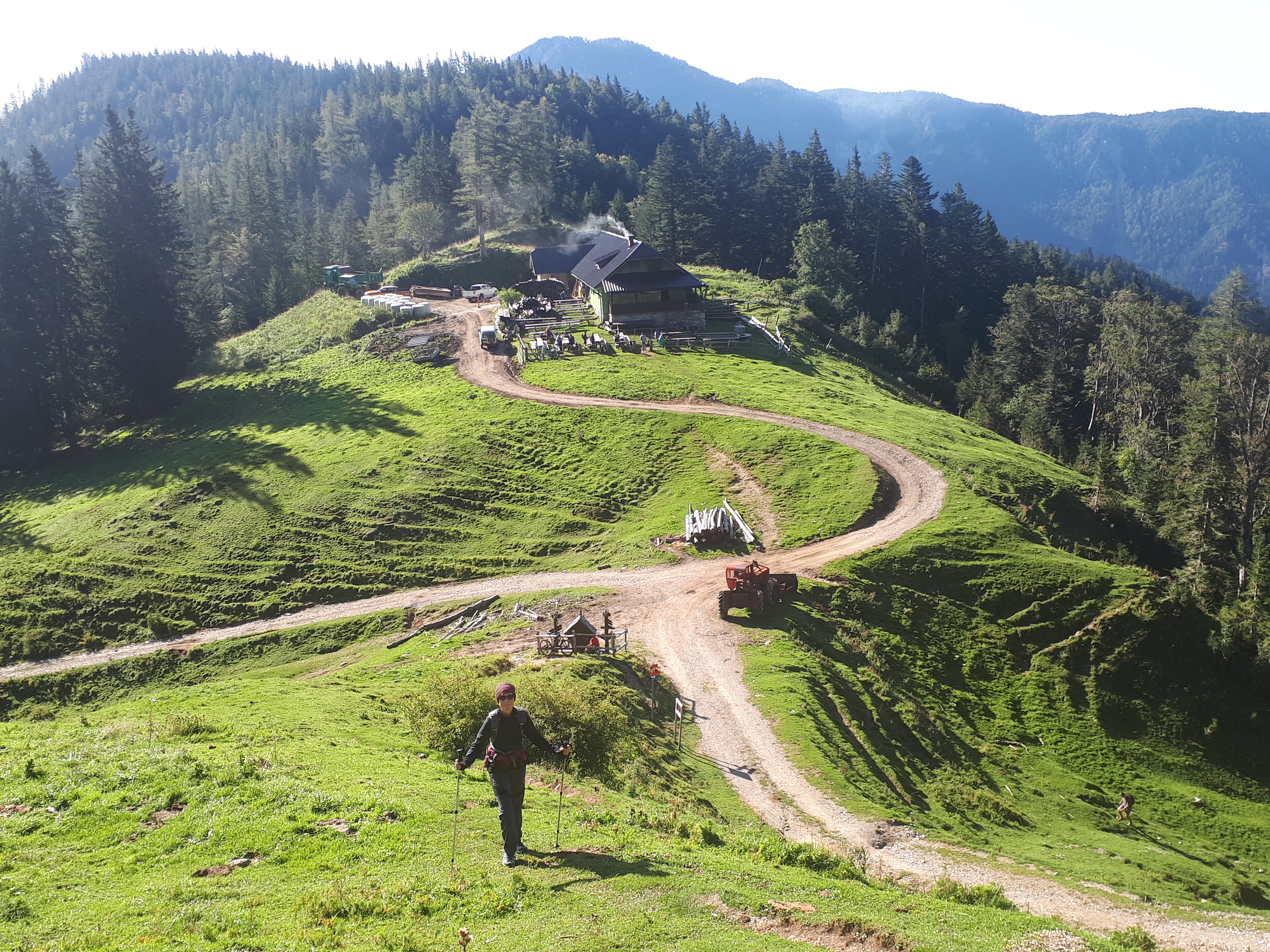
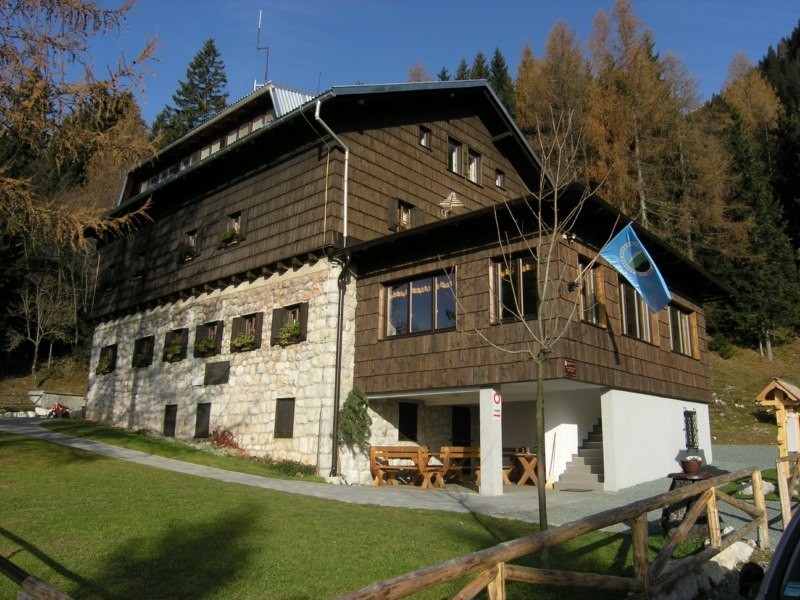
The slightly longer but easier of the two routes leads first on the forest road then through the forest road to the Roblekov dom mountain hut and from there onwards to the peak. Nowhere is it overly steep.

The other trail, and the one I will describe below, is my preferred choice – especially since it makes the perfect circular route – but in places is most definitely steep! It leads first along the Shepherds’ Trail to the Preval mountain hut and mountain pasture, and from there onwards and upwards towards the top, followed by the less steep trail down to the Roblekov dom hut and back to the Draga valley – and all without a single retraced step!

I have already previously blogged about the Shepherds’ Trail, so won’t go into too much detail here, other than to say that, should you decide to follow it as per the details in my previous blog, you should only do so up until the point where you reach the Preval mountain hut and pasture; from there on the trail to Begunščica leads off in a different direction.

From the mountain pasture take the path that leads directly upwards across a steep grassy slope before entering the forest.

It can seem like a bit of a slog at times, but once you gain some height and in places emerge from the forest, you can forget the more ‘sloggy’ parts and begin enjoying the views!

Once you emerge from the forest there are a couple of metres of scrambling here and there but nothing too demanding.

Once the ground begins to level out you turn left and start heading towards the highest point of Begunščica, but it’s still around half-an-hour to get there yet, even though the sign says 20 minutes!

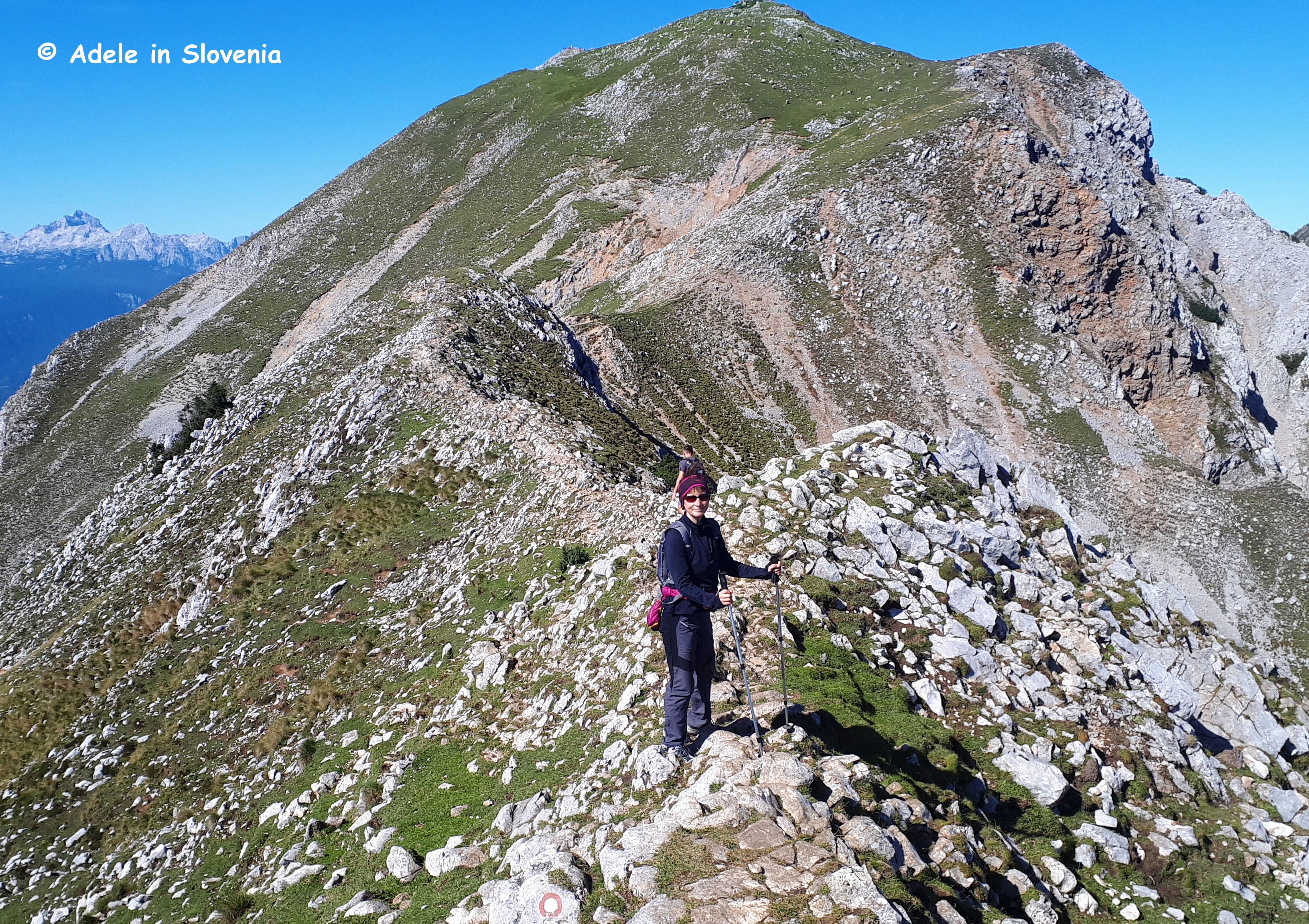
Then a short section of the walk leads along a ridge – don’t look down if you have a fear of heights!

The views, however, divert your attention and make it all worthwhile!

Until the end of the grazing season you will be ‘greeted’ near the top by a flock of sheep. And even when they have been transported back down to the valley, you will certainly know they have been there!

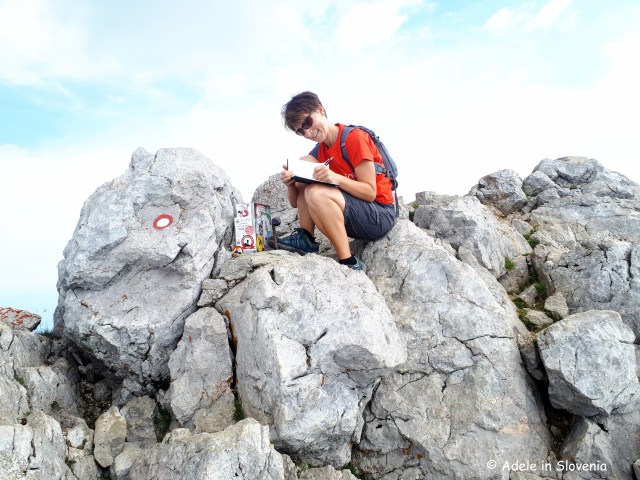
At the top there is an orientation table and a visitors’ book and you can rest for a while before beginning the descent.

To make an entirely circular route, descend from Veliki vrh towards the west. It takes around an hour to reach the ever-popular Roblekov dom mountain hut, where you can get some sustenance and enjoy more of the stunning views before returning back to the Draga valley – a further cca. 1.5 hours.

Since October is a great month for hiking and enjoying the fruits of the forest, Tourism Radol’ca has launched a prize game entitled ‘The Wealth of the Forest with Taste Radol’ca‘. To enter all you have to do is head off into the forest and share your experience to be in with the chance to win a Taste Radol’ca meal for 2!

More about hiking in Radol’ca can be found here.

© Adele in Slovenia

Visit Žirovnica: Autumn Hikes in the Karavanke Mountains

Providing the weather is good, autumn is one of the best times of the year for hiking in Slovenia; the weather is (usually) more stable i.e. there aren’t (usually!) late afternoon thunderstorms like in summer, and the trails are far less crowded than during the peak summer months. On the downside, the days are getting shorter and some of the mountain huts are already closed, with others only open at weekends, but provided you set off in good time and with proper equipment and a well-stocked rucksack, the hiking world – well Slovenia’s little part of it – is your oyster!

The Karavanke mountains above the Žirovnica area are a great destination for hiking year-round.

I have already written numerous blogs about my various hikes in the area, so this blog is a kind of ‘one-stop-shop’ where I have gathered together all, well far from all in truth, my hikes and blogs in the area, as well as a bonus one too!

The hikes listed below are all included in the leaflet ‘Žirovnica Green Energy – Hiking and Mountain Bike Trails in the Municipality of Žirovnica‘.

Valvasorjev dom (Valvasor mountain hut) is the three-times winner of the title ‘Best Mountain Hut in Slovenia’. It can be reached in around an hour from the reservoir in the Završnica valley.

Rezultat iskanja slik za valvasorjev dom

Photo: Planinska Zveza Slovenije

There are numerous onward trails from the hut, including to Stol, the highest peak in the Karavanke mountains.

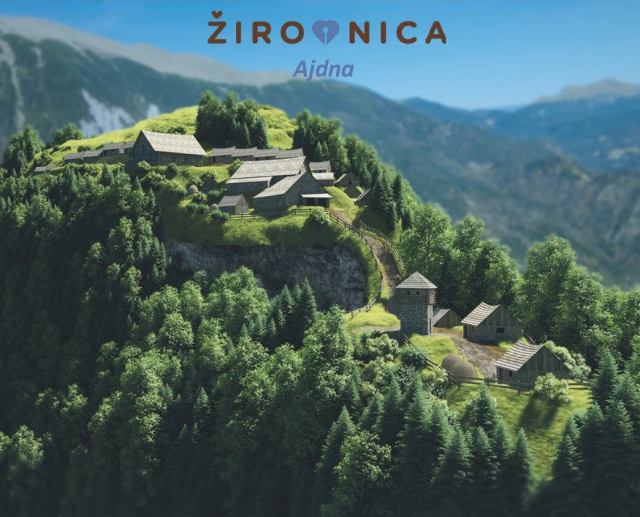
Ajdna is the name of the tooth-shaped peak beneath Mount Stol and is home to a fascinating archaelogical site. It was settled during the crisis times of the collapse of the Western-Roman Empire in 476 AD. Extensive, expensive and exceptionally complex conservation work was carried out and today there are well-preserved buildings and remains of buildings that are thought to date back to the late Antiquity, though some evidence shows that it may even have been inhabited far earlier.

You can also find out more about Ajdna by visiting the Ajdna Museum Room in Čopova hisa (Čop’s House).

The numerous mountain pastures beneath Mt. Stol are ideal for those seeking easier, more level walks, and/or mountain bike enthusiasts.

The Žirovniška planina mountain pasture and the Zabreška planina mountain pasture are up there among my favourites!

I like to visit the Dom pri izviru Završnice (hut at the source of the Završnica stream) as part of a hike to Srednji vrh.

Starting from the Završnica valley, the trail passes the hut up to the Šija saddle, from where there is no lack of choice where to go next!

Stol is the highest mountain in the Karavanke range. As the Karavanke mountains form a natural border between Slovenian and Austria, you are spoilt for choice with fabulous views in all directions.

The word ‘stol’ means ‘chair’, hence once you are at the top, you are literally taking a seat atop the Karavanke!

The Turkish Cave (Turška jama) is located at an altitude of 835m above the Završnica valley. The name of the cave derives from when, many centuries ago, women and children retreated to the cave to seek refuge from Turkish invaders.

The cave has two entrances, is 18 metres long and 2 metres deep.

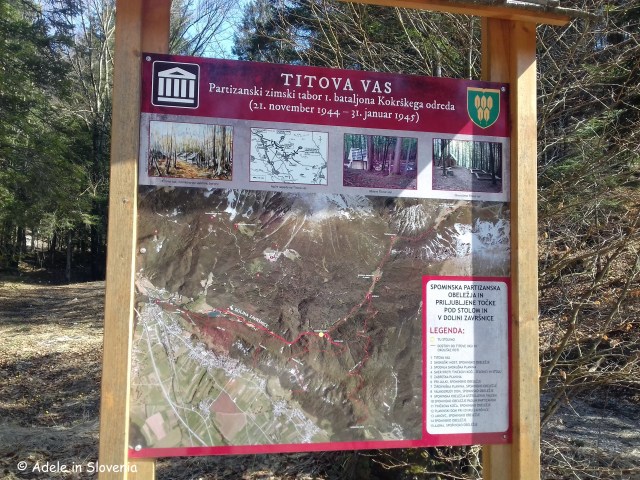
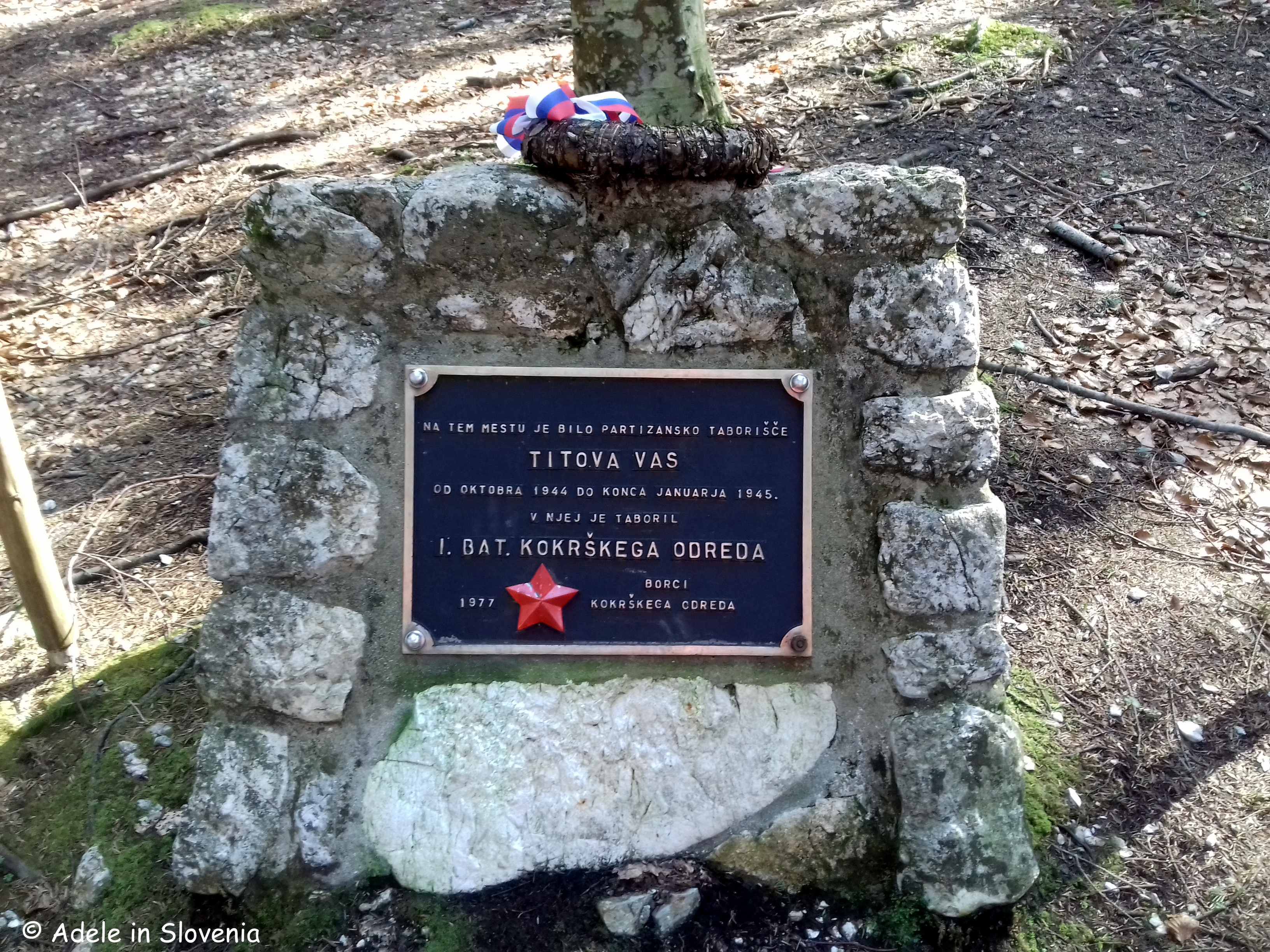
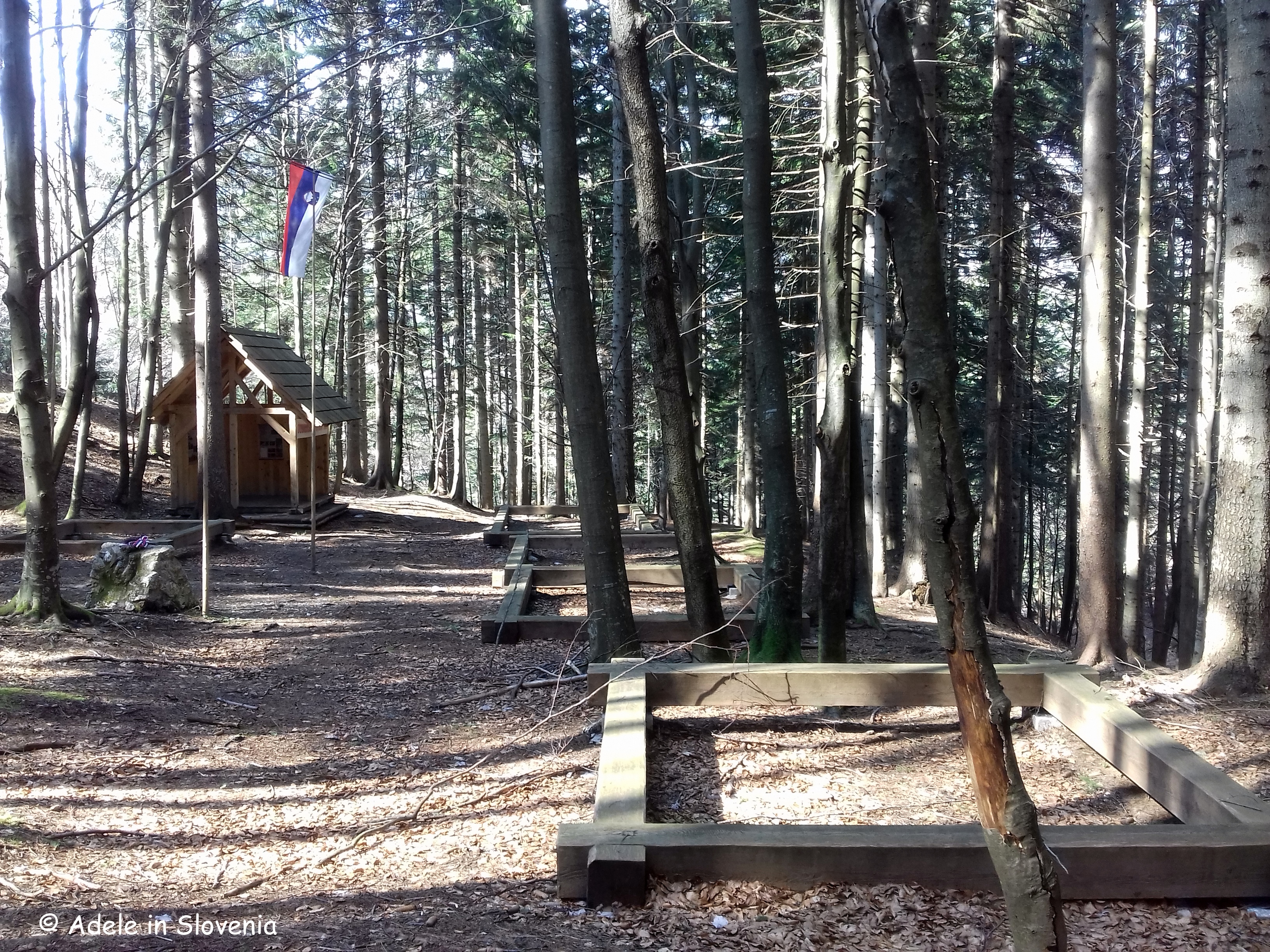
I have already written two blogs about Tito’s Village, offering two alternative ways to reach it. The first describes the route from the Završnica valley or, for a more adventurous approach, take the path along the ridge to Mali vrh and onwards to Tito’s village.

The camp provided partisans with shelter from the German occupiers. The camp was in existence from 21 November 1944 – 31 January 1945, which, though only 2 months, was considered long for those times.

And finally, the Hudič babo pere waterfall – the ‘bonus’ walk I mentioned earlier!

One does, however, need a sense of adventure to find this waterfall, not to mention good footwear! I visited in late summer, when water levels were low, but imagine that during autumn the flow of water is somewhat more impressive. You can reach it on foot from the Završnica valley. After around cca. 200 metres from the reservoir, just before a wooden fenced ‘bridge’, take the (unmarked) path to the left. It first crosses a stream over a wooden boardwalk then leads up steeply into the forest where the path almost disappears. Just keep following the water for a further cca.20 mins to reach the top – but please do so with extreme caution!

So, as you can see, there’s no shortage of choice. The hardest thing, as always, is deciding where to go first. Happy Hiking in Žirovnica!

© Adele in Slovenia


Visit Tržič and Košuta – A Hike Along the Ridge of Slovenia’s Longest Mountain

At 10 kilometres long, the Košuta ridge, part of the Karavanke range situated above Tržič, is Slovenia’s longest mountain.

Its numerous peaks and mountain pastures make it a paradise both for hikers and mountain bikers. And you certainly won’t go hungry whilst on, or beneath, Košuta, as there are several mountain huts and dairy farms on the mountain pastures.

This blog post is day two of the 2-day hike I did on the ridge, with an overnight stay at the Taborniški dom na Šiji (the Šija Scouts’ Hut) – read about the hike up to the hut, the great food and the friendly hosts here. After breakfast, we took one final look back at the hut where we had spent such a pleasant night, then set off to conquer two of the peaks along the ridge.

From the Šija mountain pasture we walked to the Pungrat mountain pasture.

We passed by the dairy farm on the Pungrat mountain pasture (Planšarija planina Pungrat) – no need for sustenance just yet after having only just set off!

From the dairy farm a path leads up towards the Škrbina saddle. As you gain height, the views just get better; first back down towards the mountain pastures below and the mountains in the distance.

Then, on reaching the saddle, the views – in all directions – are magnificent and accompany you all the way along the ridge.

You can choose the path to the east towards Košutnikov turn or to the west towards Kladivo. We chose the latter, not least because my previous attempt to reach the peak didn’t exactly go to plan!

Regular readers might recall a blog I wrote some years back, titled ‘Kindness in the Karavanke‘ about my attempt to reach Kladivo, which, that time, ended up with me in tears and some friendly strangers being very kind! This time, however, I conquered it with relative ease and, in doing so, realised that last time I was literally a few metres from the top before I bottled it, and also discovered that the path down the other side is much easier, so I could have managed it, but that’s hindsight for you!

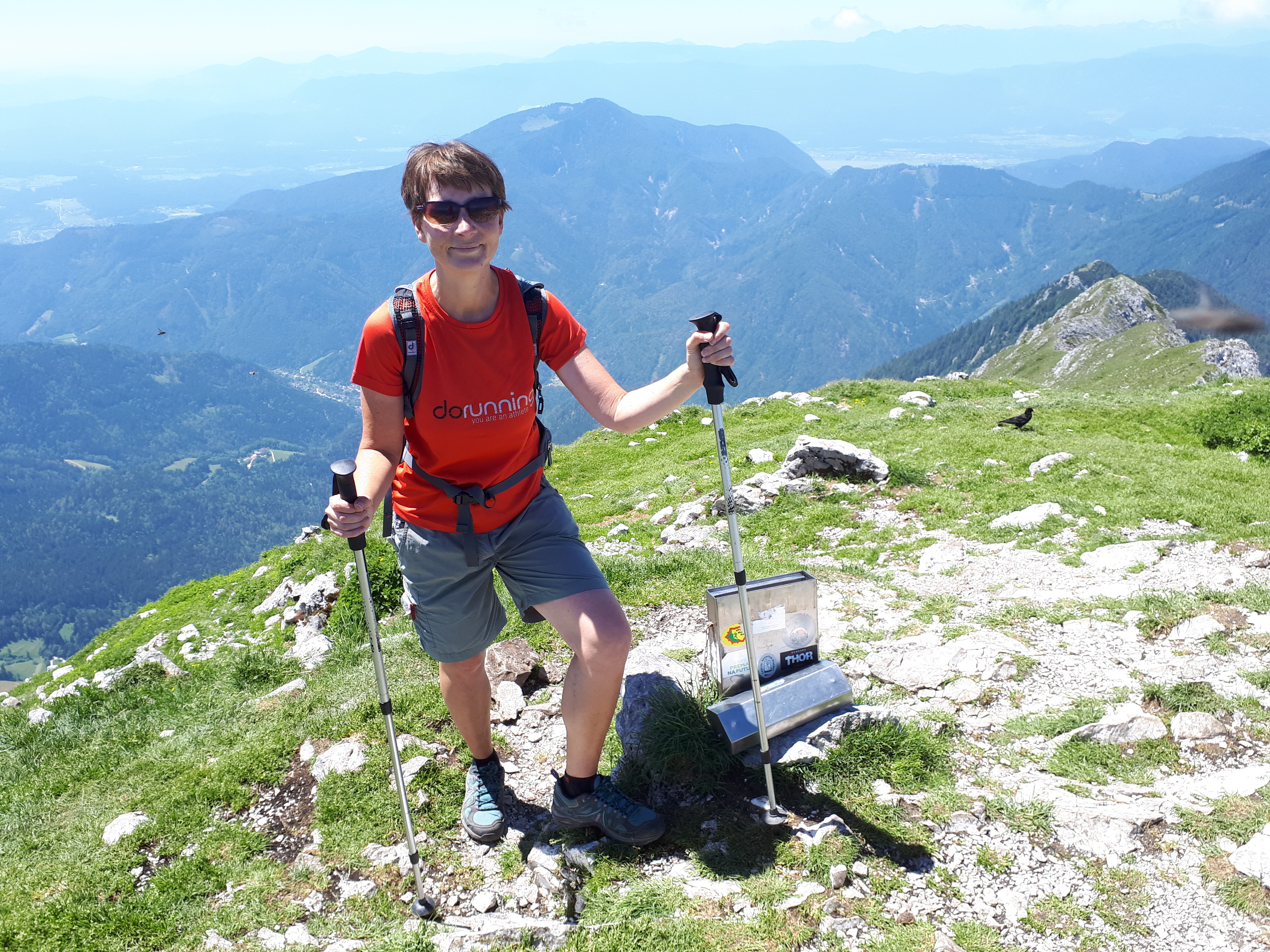
And the views are, well, you can see for yourself below, but they are even better when you earn them by hiking up and seeing and experiencing them for yourself!

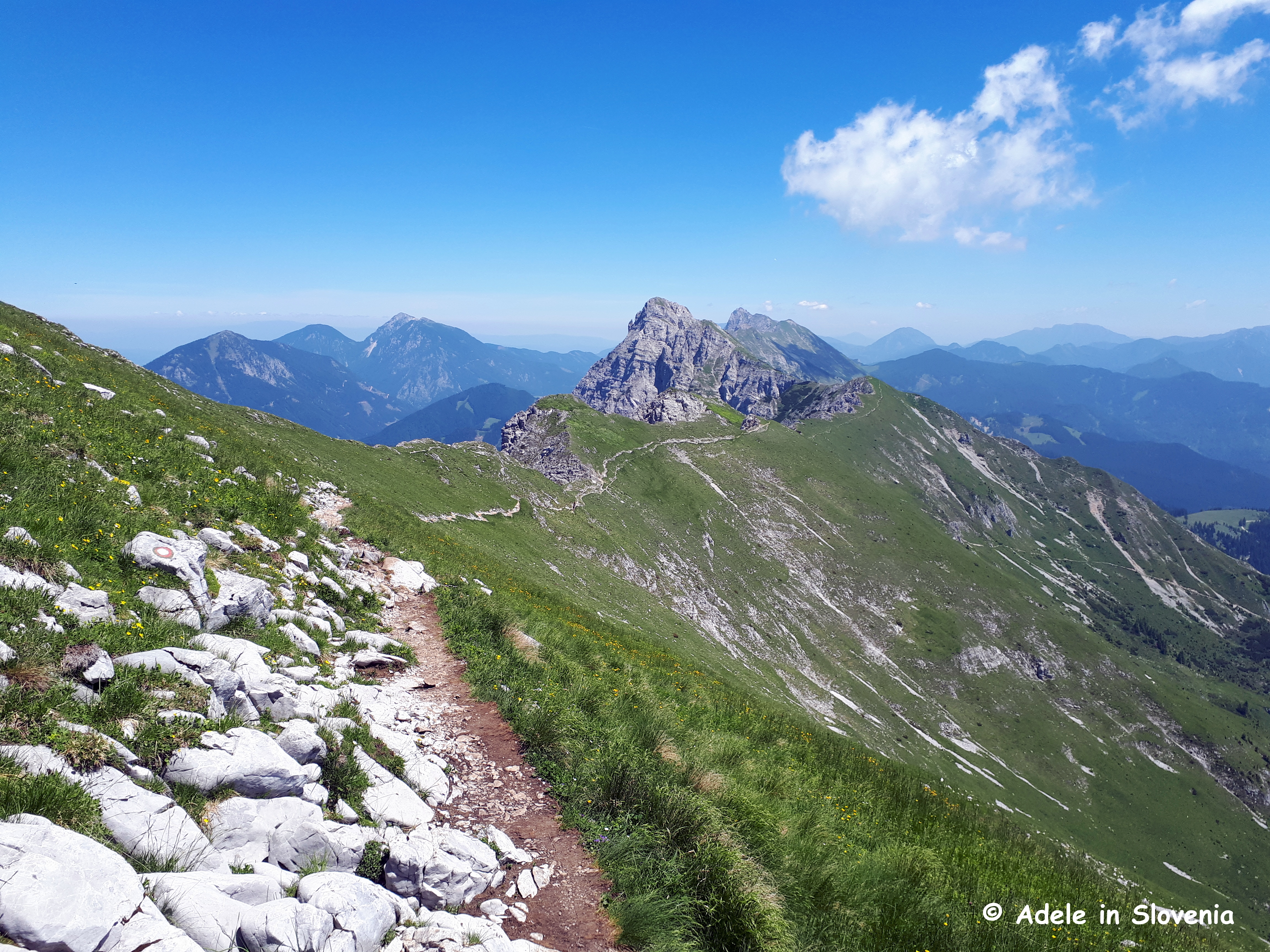
After descending from Kladivo, we carried on along the wonderful ridge walk to Kofce gora and then on to Veliki vrh (literally ‘Big peak’).

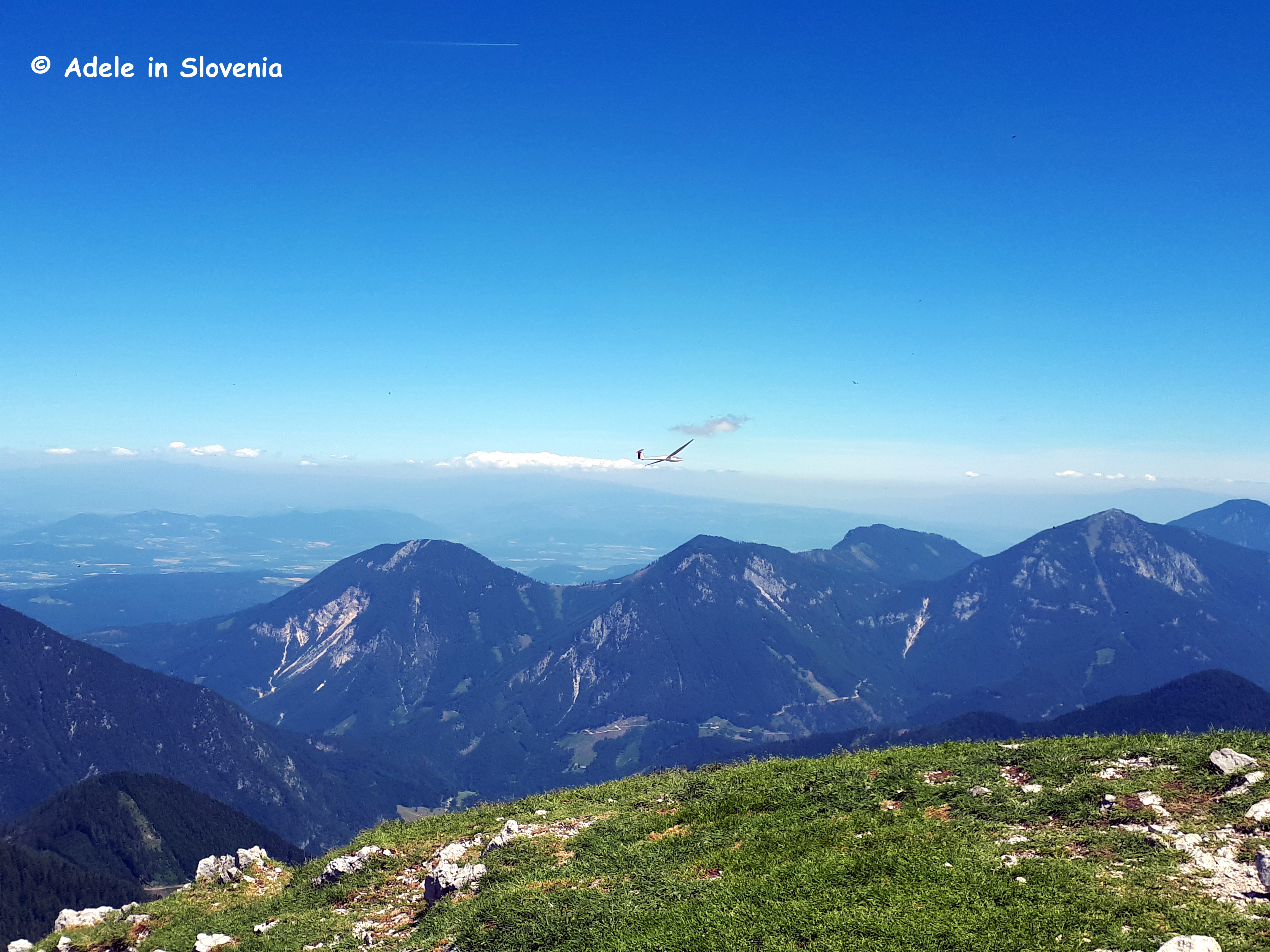
Is it a bird, is it a plane…?

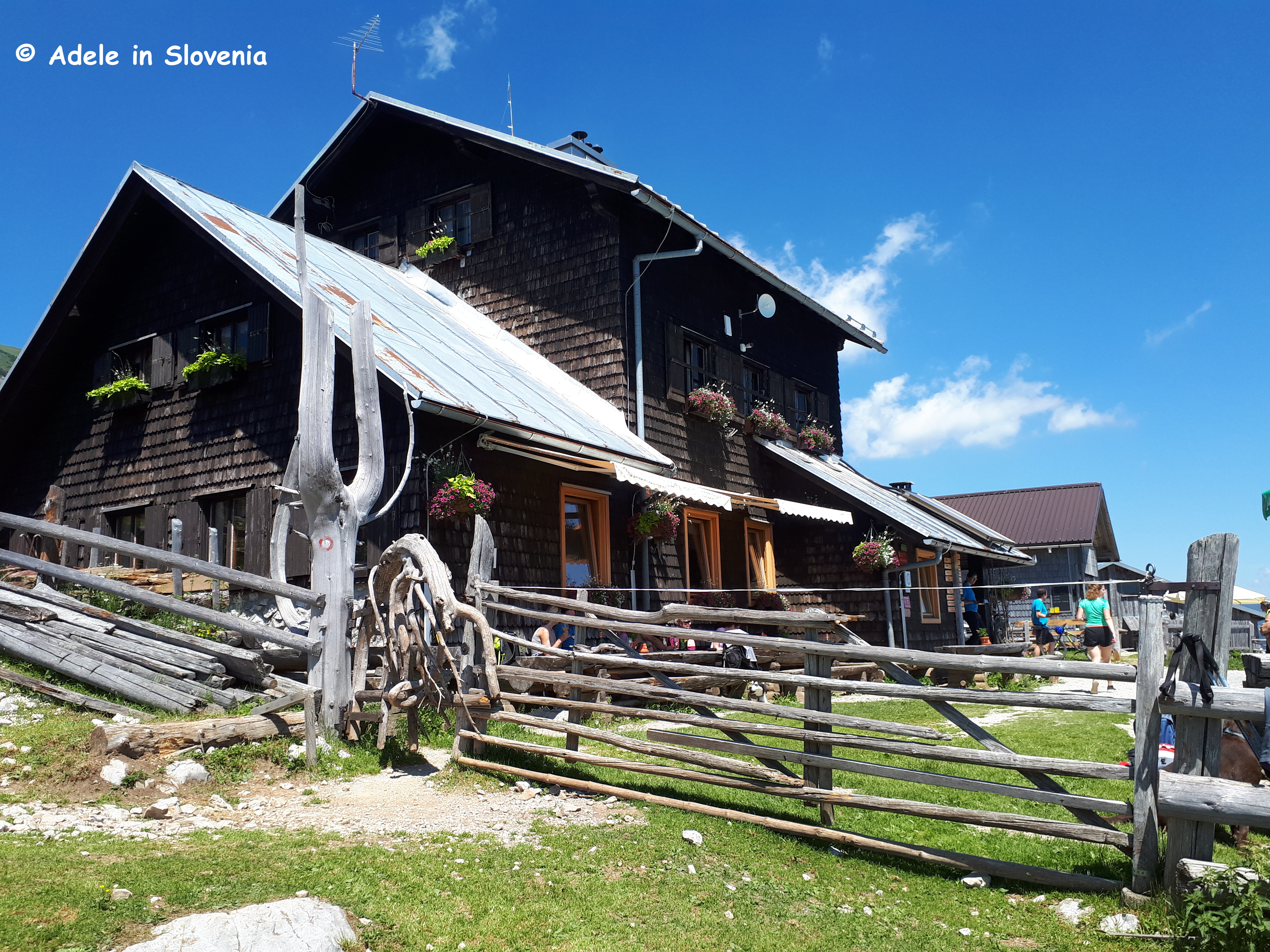
From Veliki vrh we descended to the Dom na Kofcah mountain hut which, at the time of writing is in the running for the title of ‘Best Slovenian Mountain Hut 2019‘.

The hut is famous for its excellent štruklji in a myriad of flavours. For me a visit is now a bittersweet experience and (almost) brings tears to my eyes when I see and smell the excellent štruklji as, sadly, there are no gluten-free ones to be had so my once favourite Slovenian food is now off limits for me – a travesty indeed! But for those who are lucky enough to be able to eat ‘normally’, do try the štruklji, I’m sure you won’t be disappointed, and maybe you will spare a thought for me whilst doing so!

This is just one of the many great hiking routes in the Tržič area, where you are spoilt for choice. See the Visit Tržič website, and you can also click on the ‘Visit Tržič’ tab above to see all the other blog posts I have written about what to see and do in the area.

© Adele in Slovenia


Hike Tržič: Košutica (Ljubeljska Baba) – 2 Countries, 1 Great Hike!

Despite being here over 12 years, I still get a kick out of being able to cover two countries in one hike, and the hike from Podljubelj in Tržič to Košutica (also known locally as ‘Ljubeljska Baba’) – part of the Karavanke mountain range – is up there among my favourites, not least because it makes a fab circular hike!

There are various ways of reaching the peak of Košutica; I like to begin from the monument next to the road and opposite the Mauthausen concentration camp in the St. Ana valley, which is located on the road from Tržič towards the Ljubelj pass to Austria.

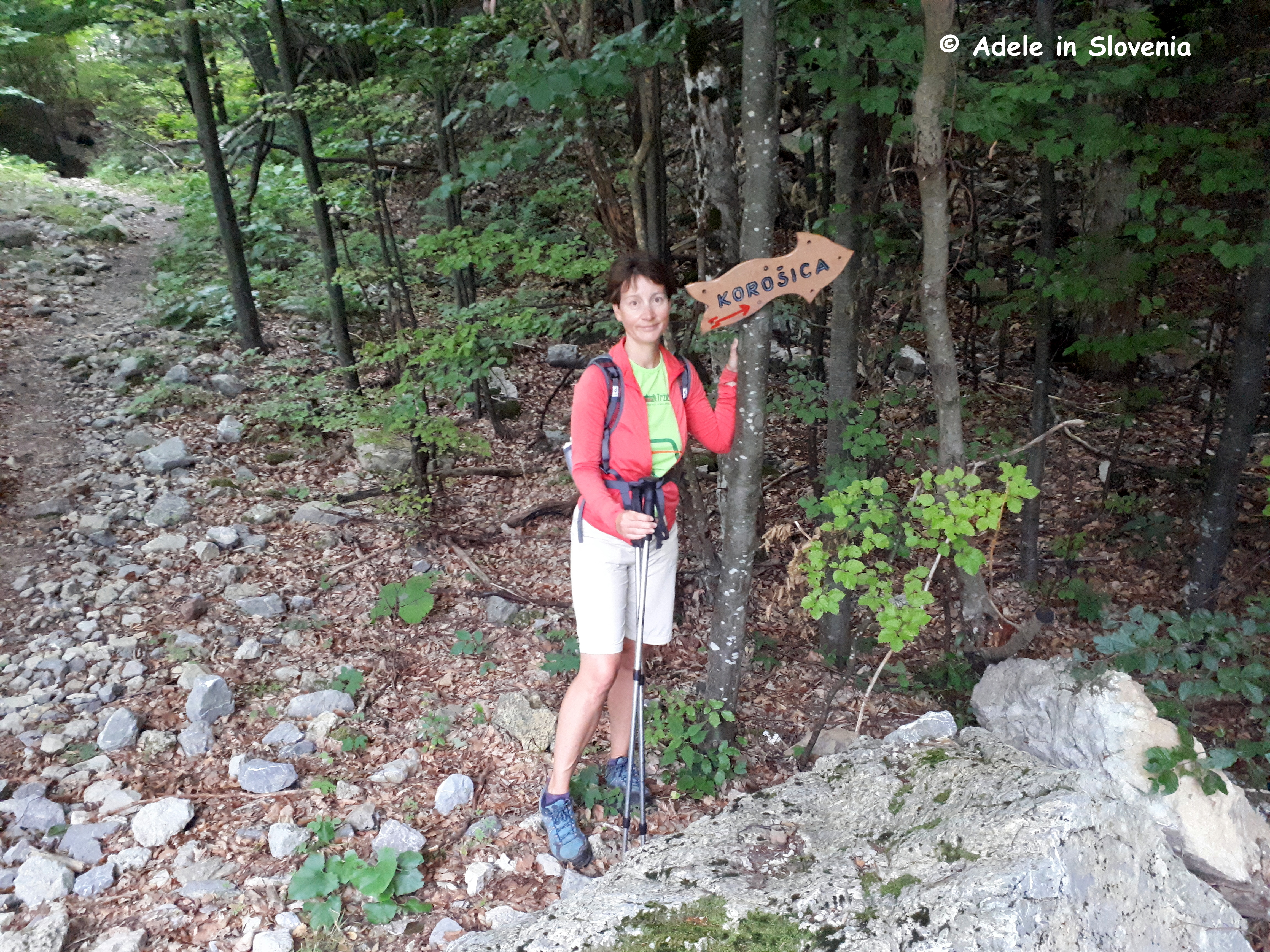
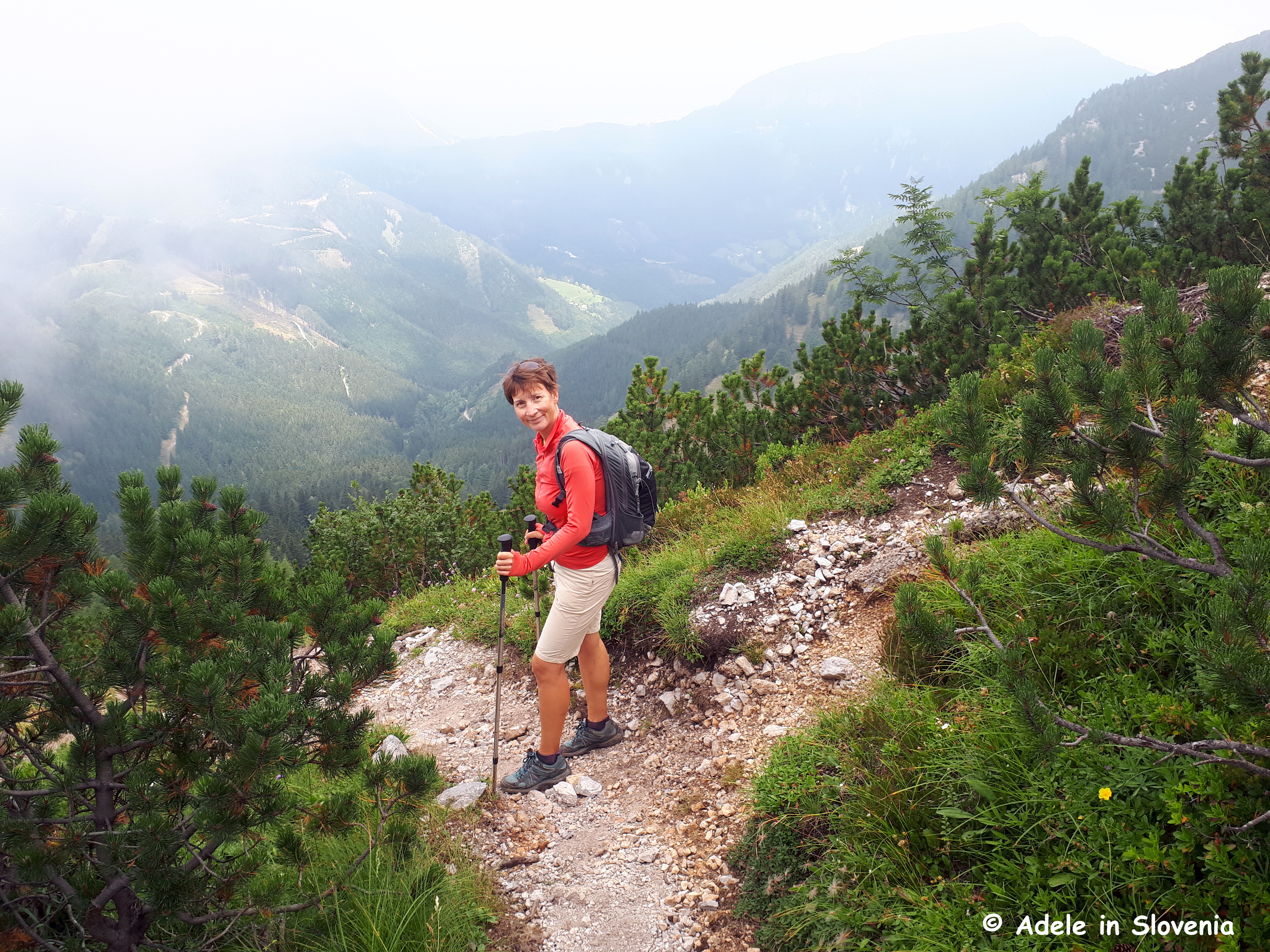
The Hunters’ path (Lovska pot) winds its way up through the forest towards the Korošica mountain pasture. It is sparsely marked but well trodden, so orientation shouldn’t prove too much of a problem, well, unless the valley is shrouded in cloud as it was last Sunday morning!

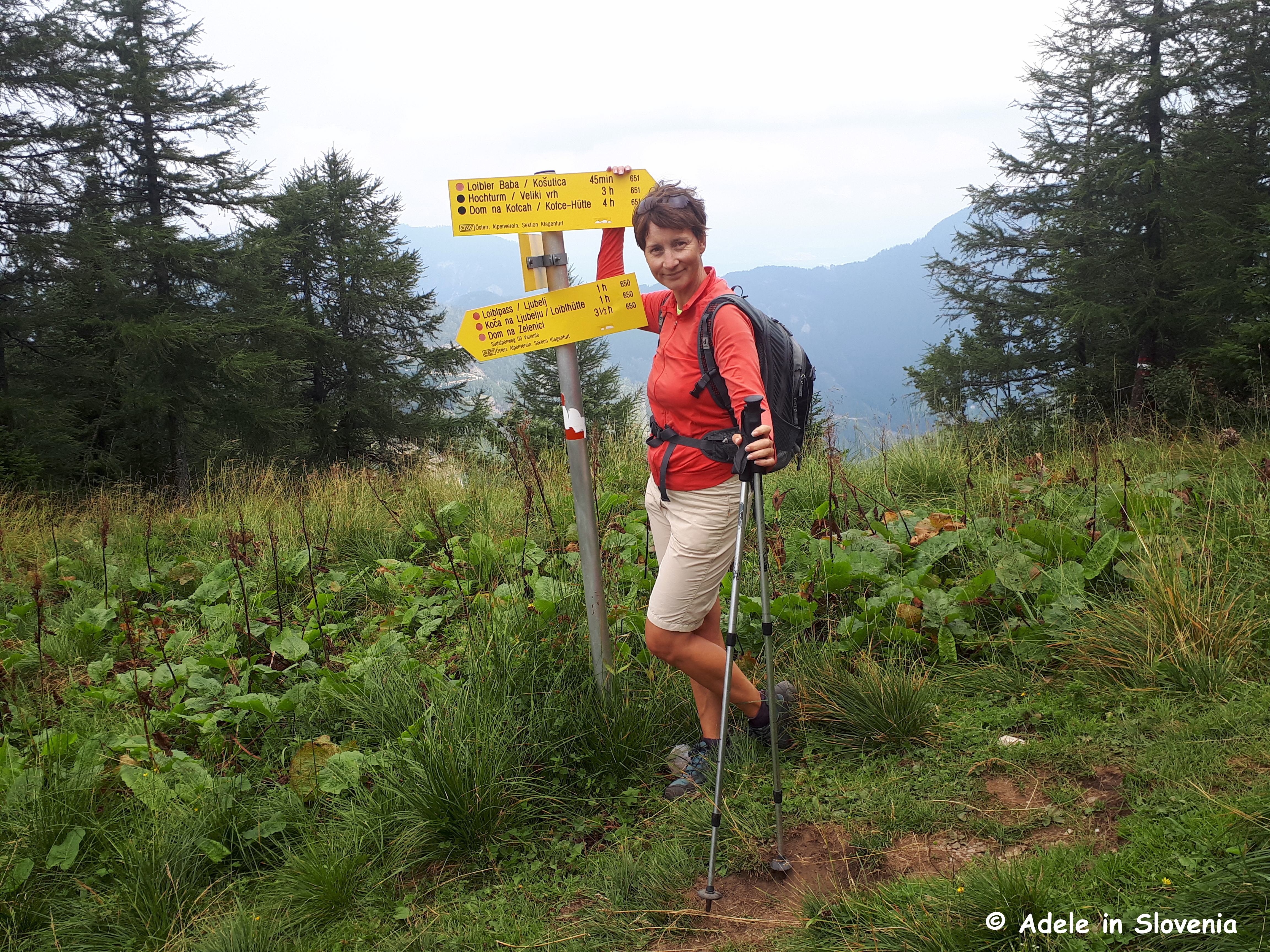
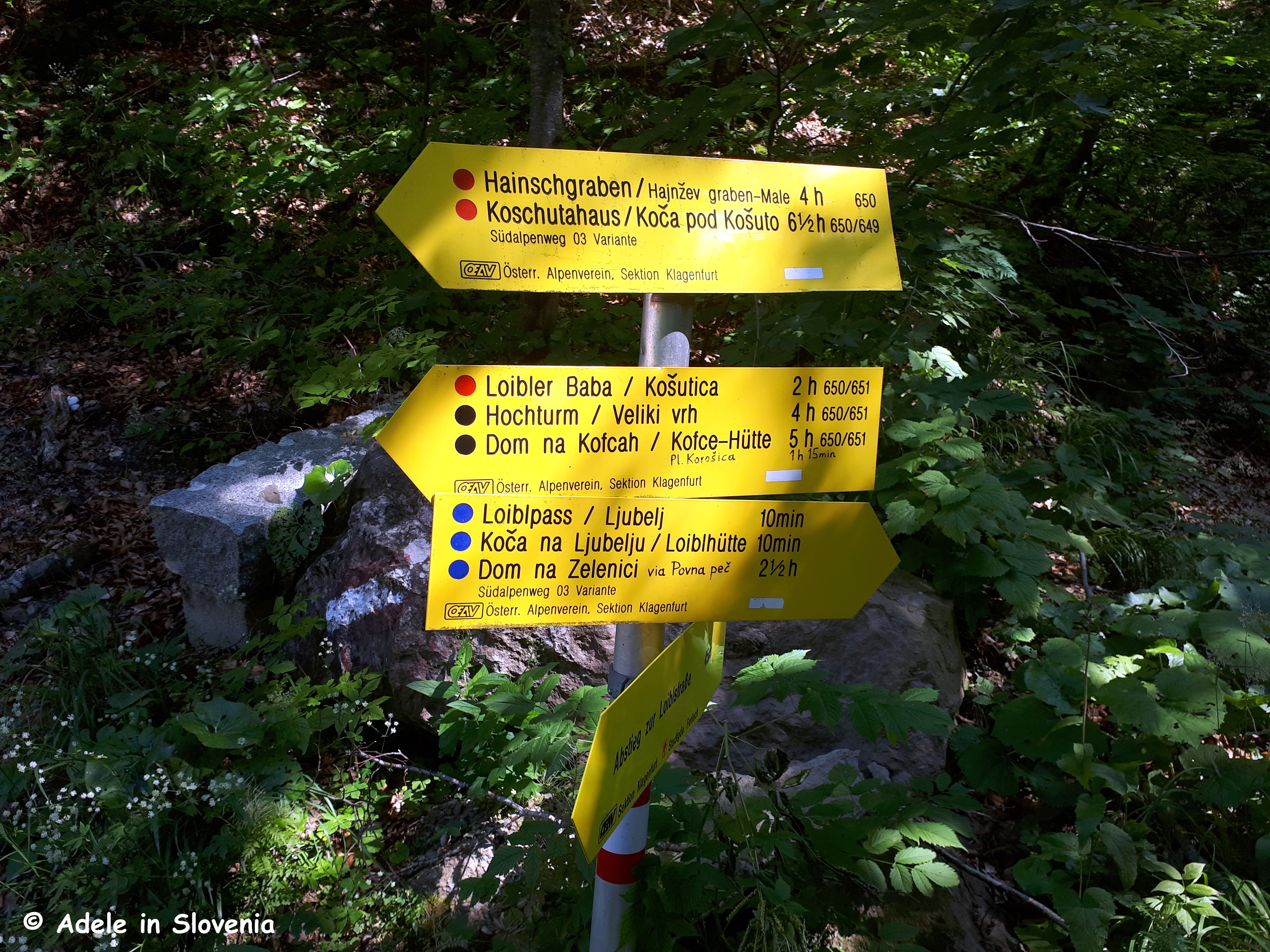
Shortly before reaching the mountain pasture, the path to the peak of Košutica veers off to the left up to a junction of paths and the border with Austria, from where you turn left to take the path up to the peak of Košutica (1968m), marked here as ‘Baba’.

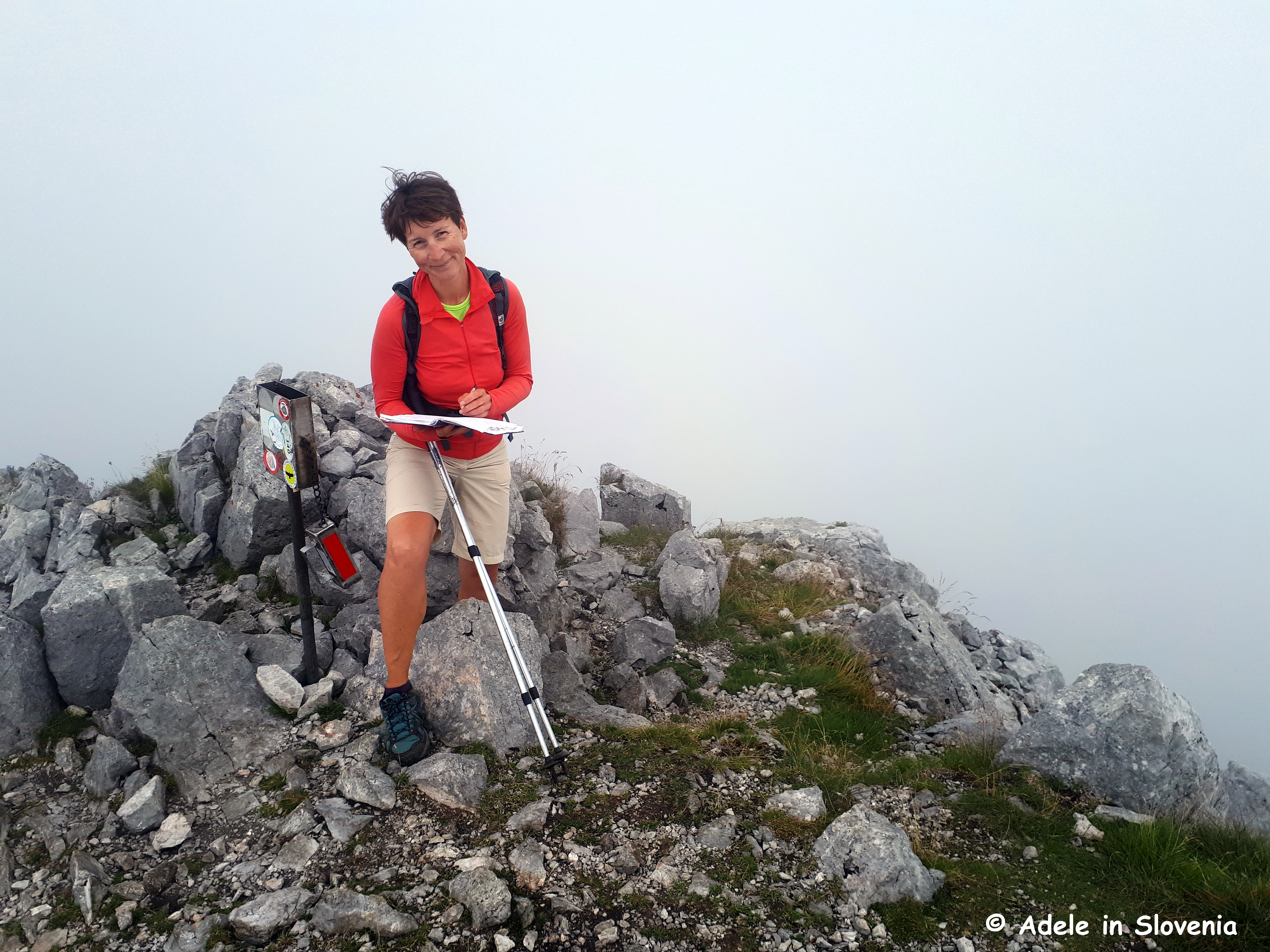
Although I try to pick perfect sunny days for my hikes – both for my enjoyment and in order to get good pictures for my blog – the weather doesn’t always play ball, and despite waiting around 20 minutes at the top, sheltering from the wind in the vain hope that the cloud might lift revealing the magnificent scenery below, it didn’t – well not at least until we had descended from the peak!

At least I had a flask of tea to warm me up!

The fog didn’t deter this pair, who obviously know where to find food!. They were so tame it was amazing, almost eating out of our hands!

And then, of course, the inevitable happened. As we began to descend the fog lifted, as did our spirits, the wind died down and the sun began to break through.

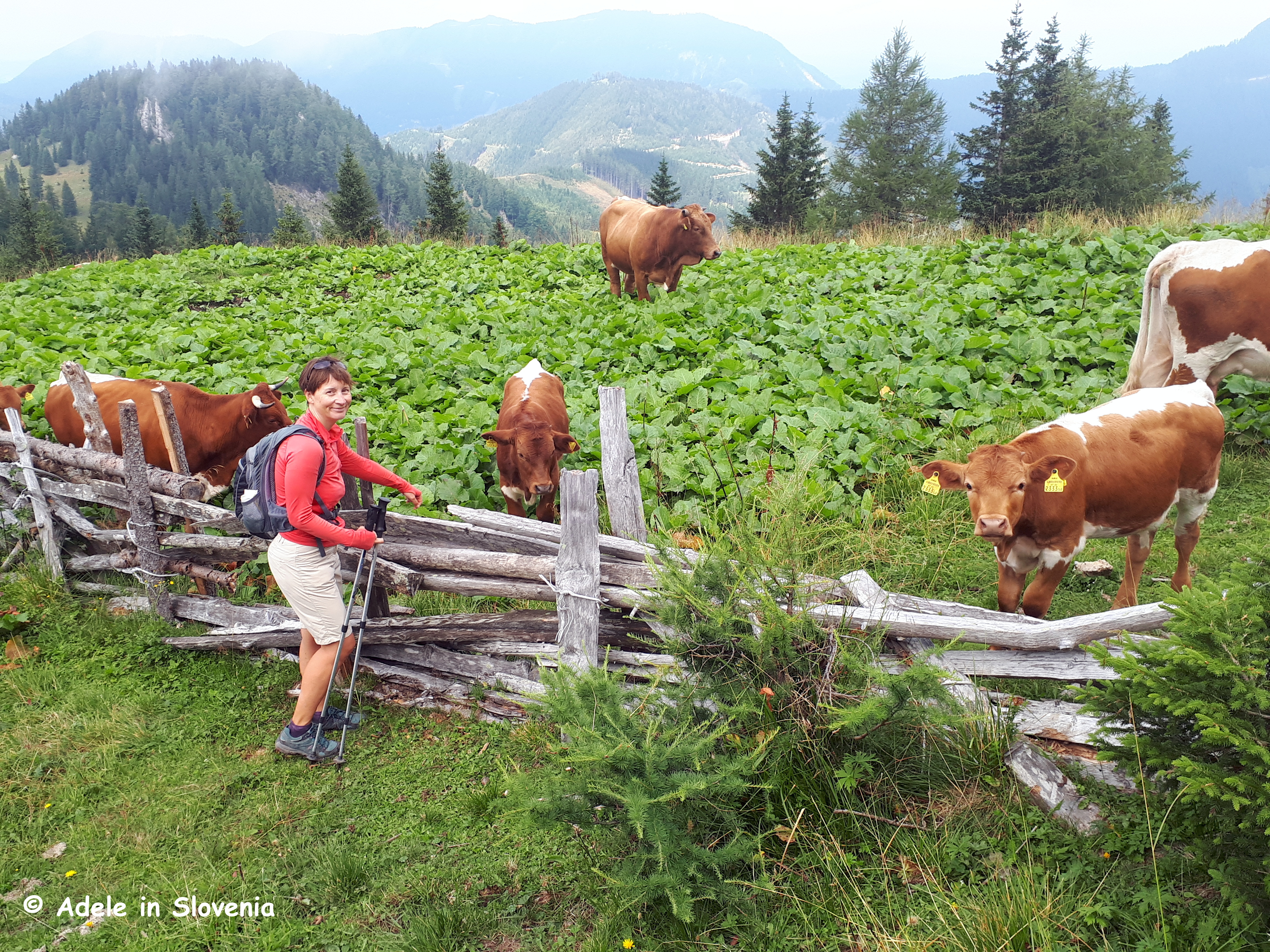
We could even finally see the cows that we had previously only been able to hear – these ones are Austrian (can you tell?!), since they are on the Austrian side of the border!

The donkeys we met on the way down, however, were most definitely Slovenian!

From the junction of paths, you can either return the same way, walk down to the mountain hut on the Korošica mountain pasture, and/or follow the path adjacent to the fence that forms a border between Slovenia and Austria – we opted for the latter two, i.e. first down to the hut for some sustenance, then back up to the junction and into Austria.

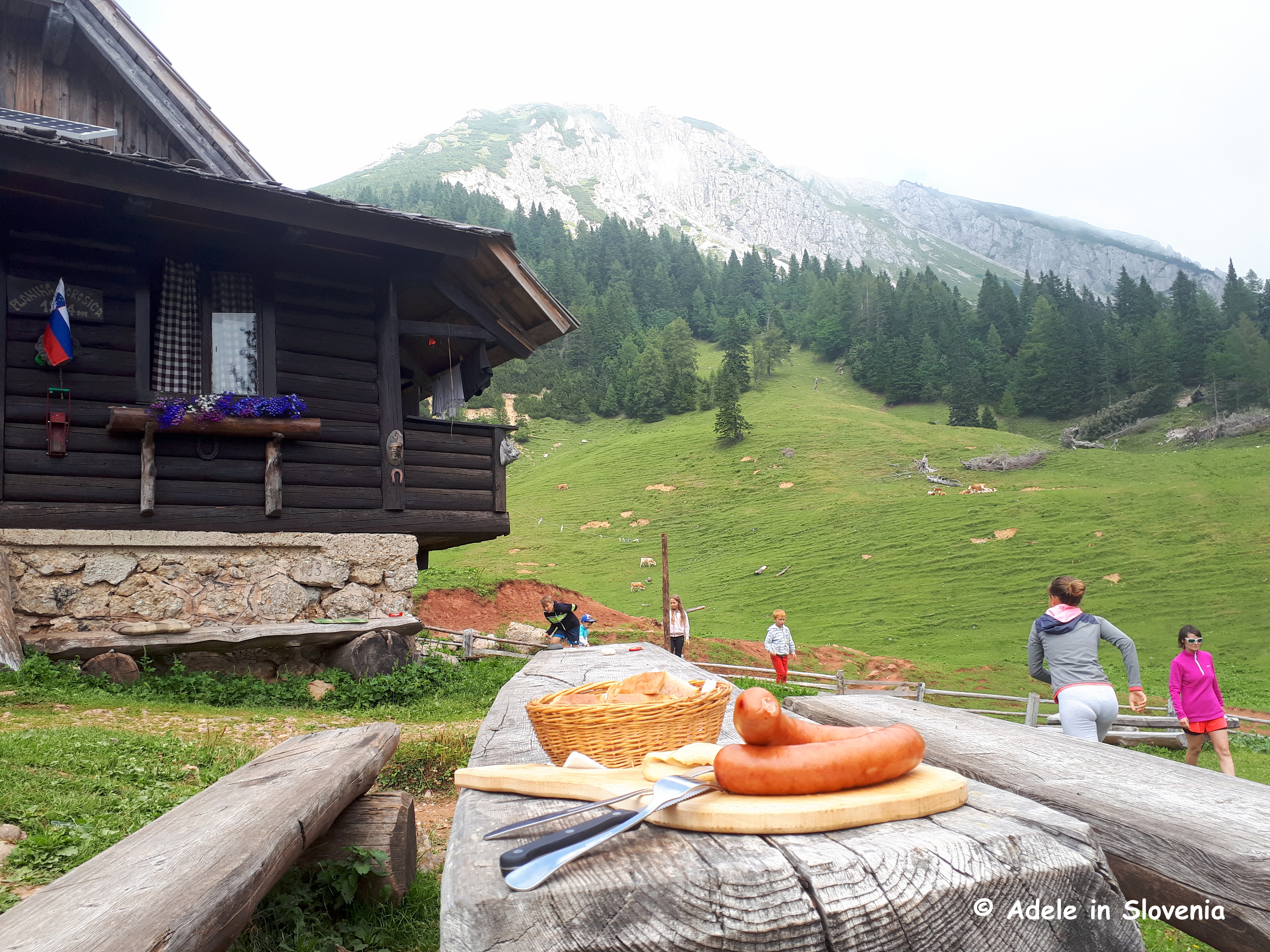
The hut is only open during the grazing season – usually mid-June to mid-September. It offers typical Slovenian mountain food, such as Carniolan sausages, buckwheat with pork crackling, sour milk, and, if you arrive early enough (we clearly didn’t – not that I would have been able to indulge anyway, sadly), freshly-baked strudel and potica.

Feeling fortified, we walked back up to the junction of paths, then followed the path along the border, from where there are wonderful views back towards Košutica – now looking magnificent in the sun!

The path continues along pastures before descending to an iron ladder. I wouldn’t advise this route when it is, or has recently been, wet, as in places it is rather steep, muddy and slippery when wet.

After a while the path eventually descends to reach a forest road (in Austria!), where we turned left and walked slightly uphill for around 5 minutes before reaching the Ljubelj pass – the oldest road pass in Europe – and returned back into Slovenia.

Prior to the building of the Ljubelj tunnel, the steep pass, which reaches 1,369 metres above sea-level, was the main transport route from Slovenia to Klagenfurt in Austria. Since the building of the Karavanke tunnel in 1991, however, the Ljubelj tunnel is far less frequented, while the Ljubelj pass today is a favourite year-round destination for hikers and in winter it turns into a sledger’s paradise!

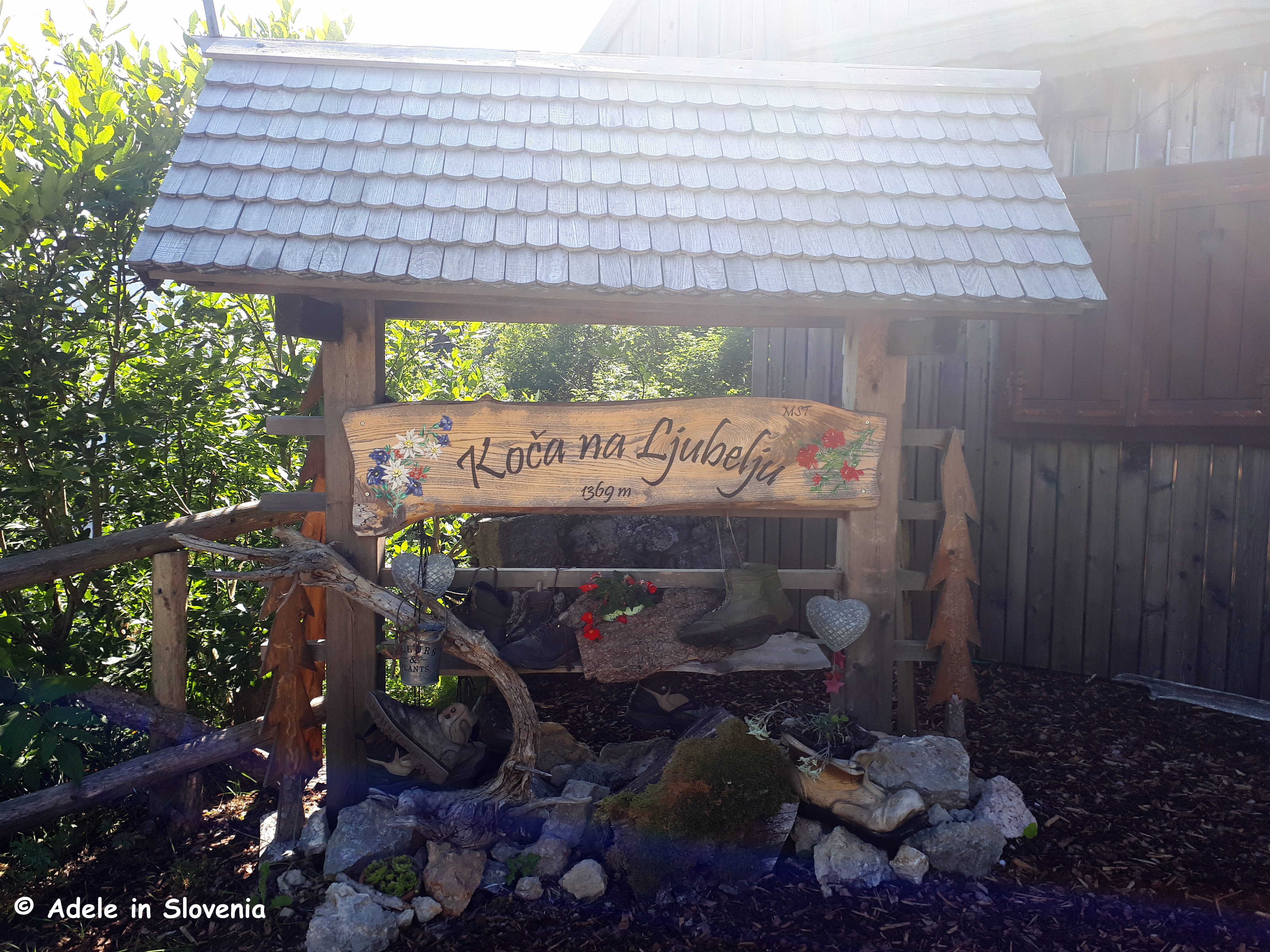
You can visit the Koča na Ljubelju mountain hut (1369m) for (more) refreshments, if required, before making the cca. 45 min walk back down to the start.

And that rounds off another great hike in the Karavanke mountains in Tržič! Click here to find out more about what you can see and do in the area.

© Adele in Slovenia


By Bike to Begunje and Bees!

Not only is cycling good for you and for the environment, it’s also a wonderful way to explore an area, and the Radol’ca area is no exception. In fact, I find it the best way to get around and much prefer two wheels to four! There’s no need to worry about where to park, you are out in the fresh air, and you can see so much more than you do in a car and can stop at your leisure.

So, join me on a bike ride to, and through, Begunje na Gorenjskem to discover some of the sights of the Radol’ca countryside!

I have listed the places below in order so as to suggest a circular ride, however, you can of course pick and choose what to see and do, and the list is by no means exhaustive. Starting from Radovljica head past the Spar supermarket, pass under the motorway then continue to the village of Nova vas.

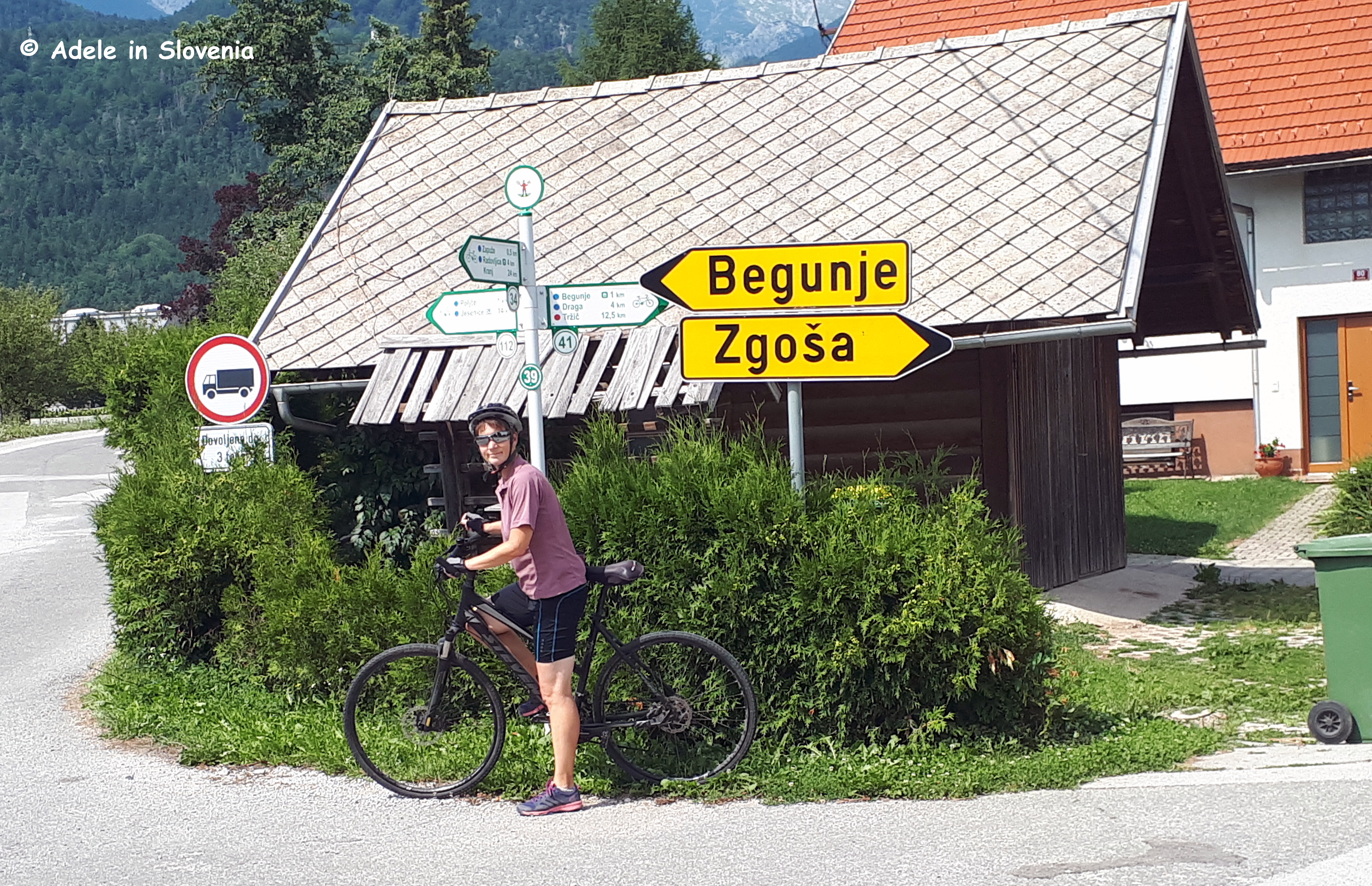
On reaching the t-junction in Zapuže, turn left then shortly afterwards turn right (there is a bar on the corner) towards Zgoša. On reaching the junction, as seen below, turn left towards Begunje.

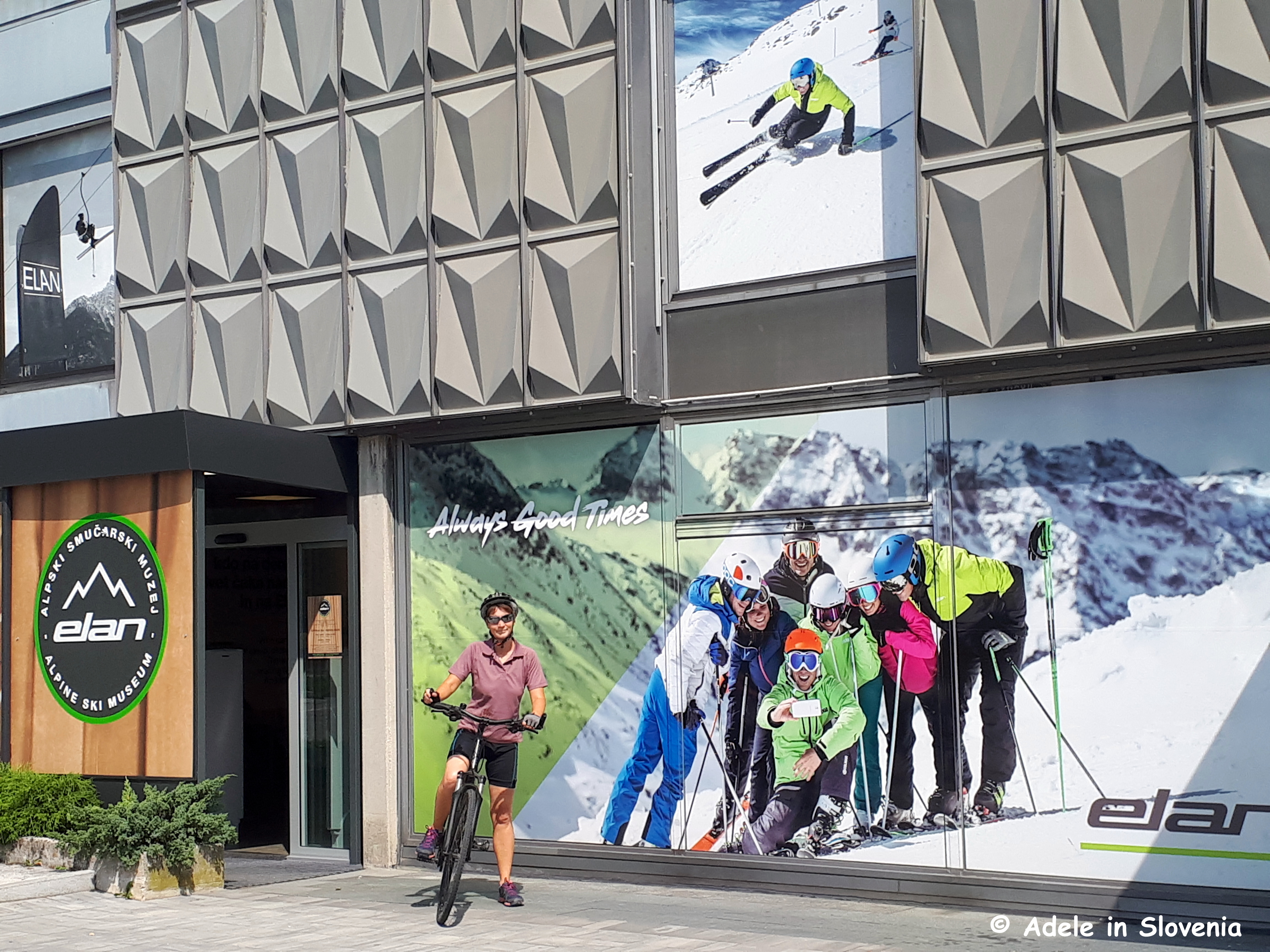
After a few minutes you will reach the Elan factory, shop and Alpine Skiing Museum, more here – https://adeleinslovenia.com/2019/01/27/test-your-skiing-skills-at-the-elan-alpine-skiing-museum/

Continue towards the village of Begunje, the birthplace of Slavko Avsenik, who, together with his brother Vilko Avsenik, were the founders of Slovenian folk music. You can also visit the Avsenik Museum.

Opposite the Avsenik Museum is the Begunje Tourist Information Centre, where you can pick up more information about the area.

Continue through the village towards the Draga Valley, stopping first to admire and explore the ruins of Kamen Castle (grad Kamen).

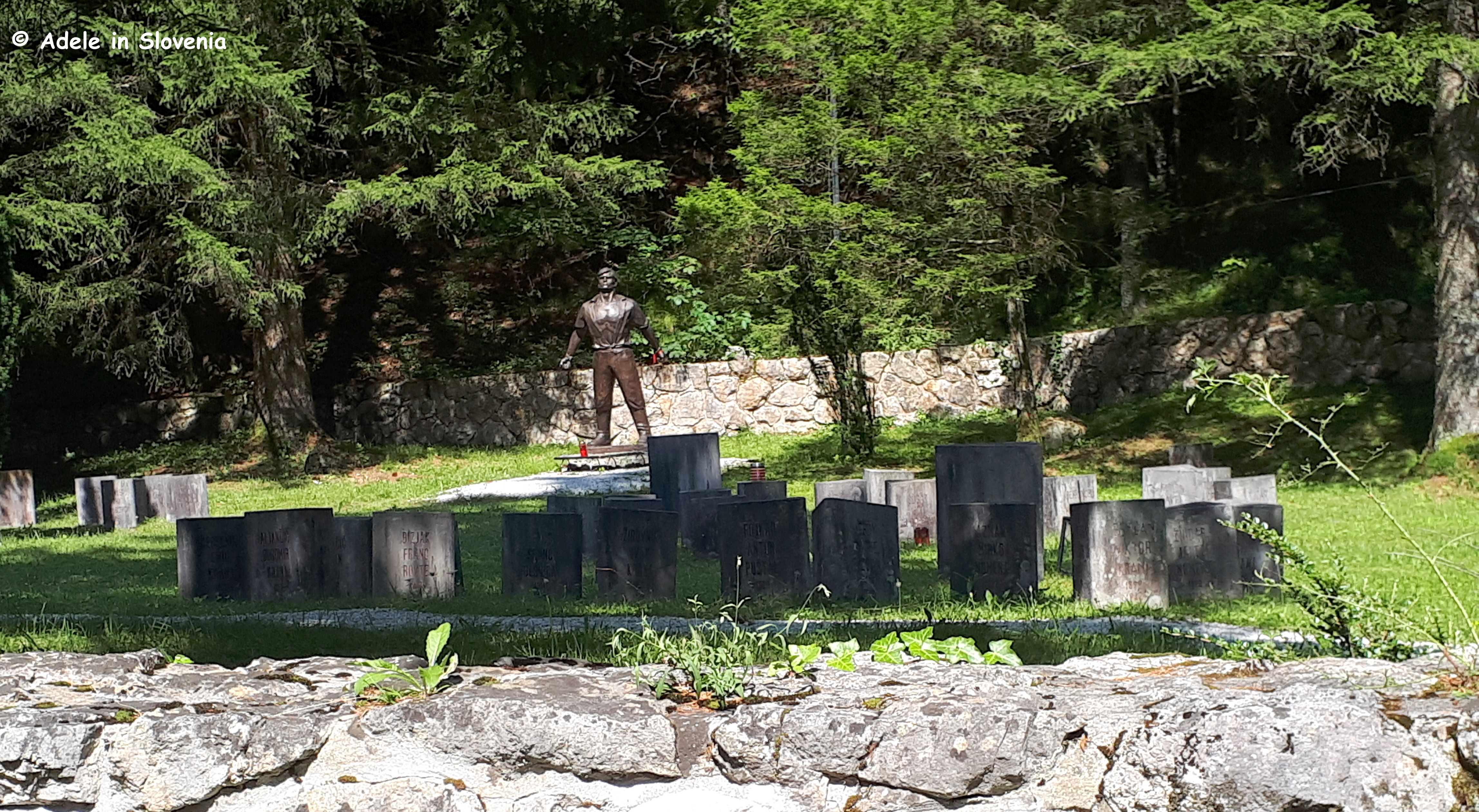
Shortly after leaving the castle, there is a small cemetery that contains graves of hostages from the time when Begunje fell under German rule during World War II. You can also make a side trip to visit the Museum of Hostages, housed in Katzenstein Manor.

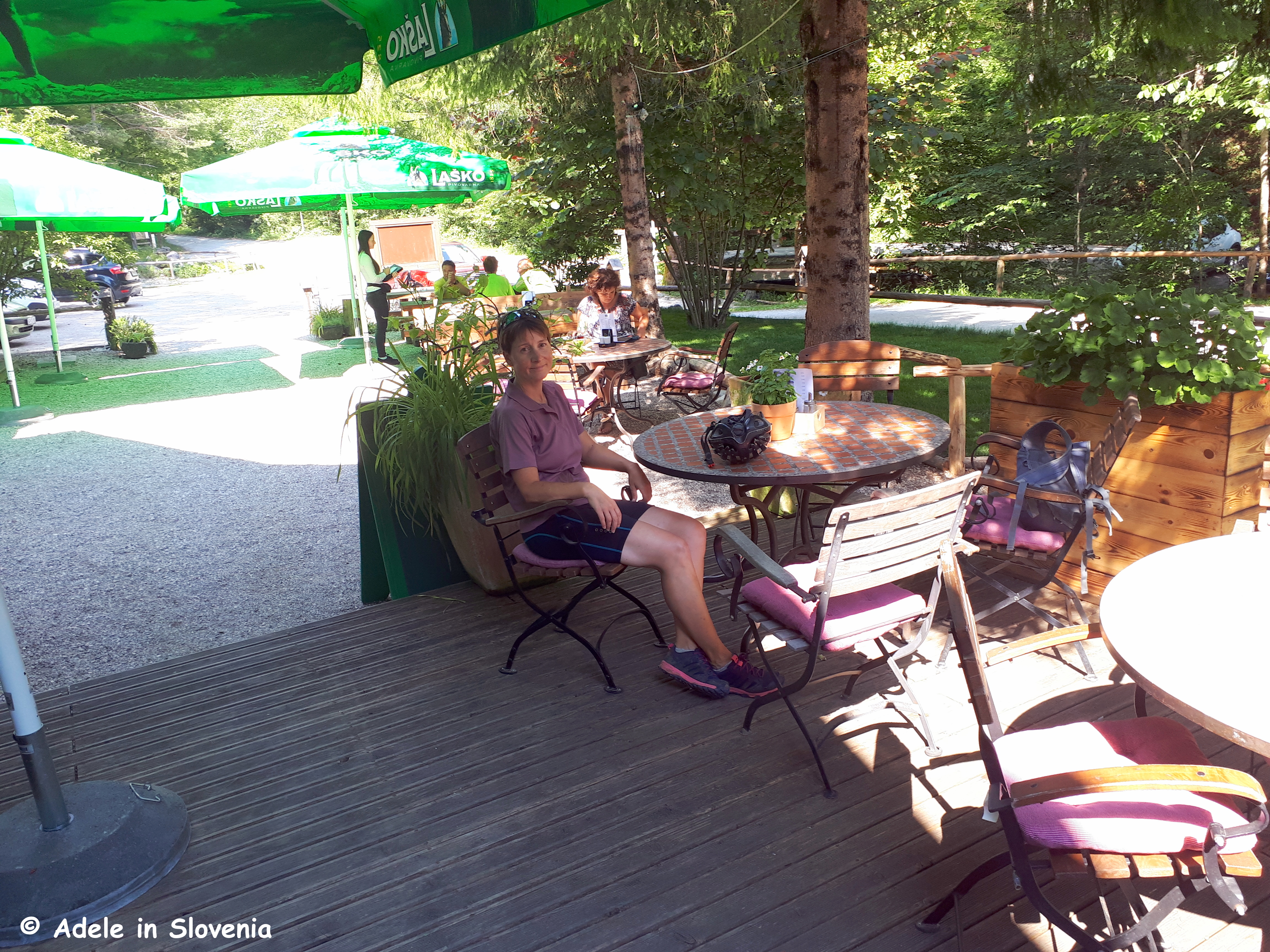
Now its just a few minutes more to reach the head of the Draga valley and the Gostišče Draga restaurant, which situated next to a stream and makes an ideal place to cool down, rest and/or enjoy some sustenance in the form of a drink, ice-cream, something sweet or some hearty traditional Slovenian food.

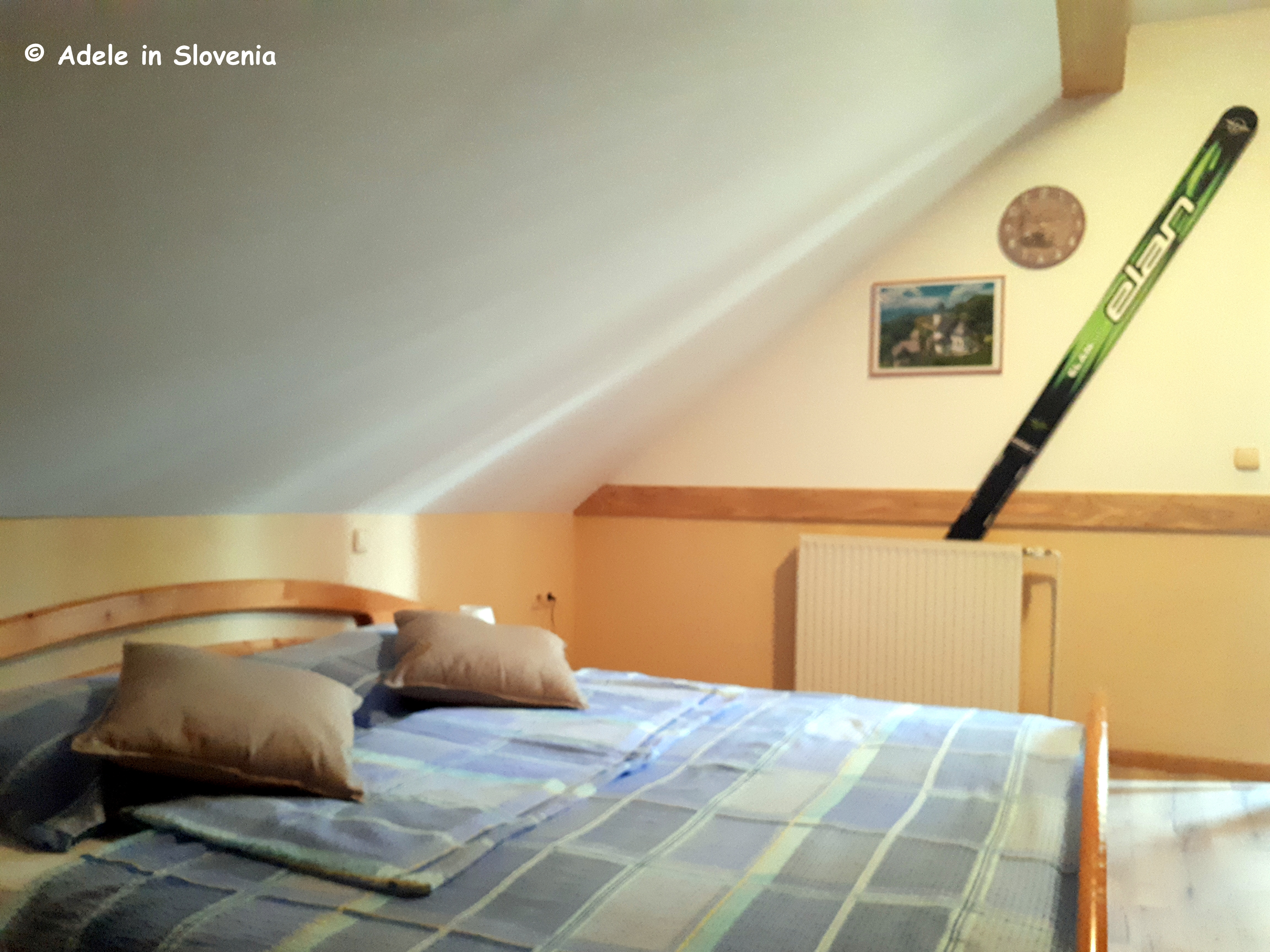
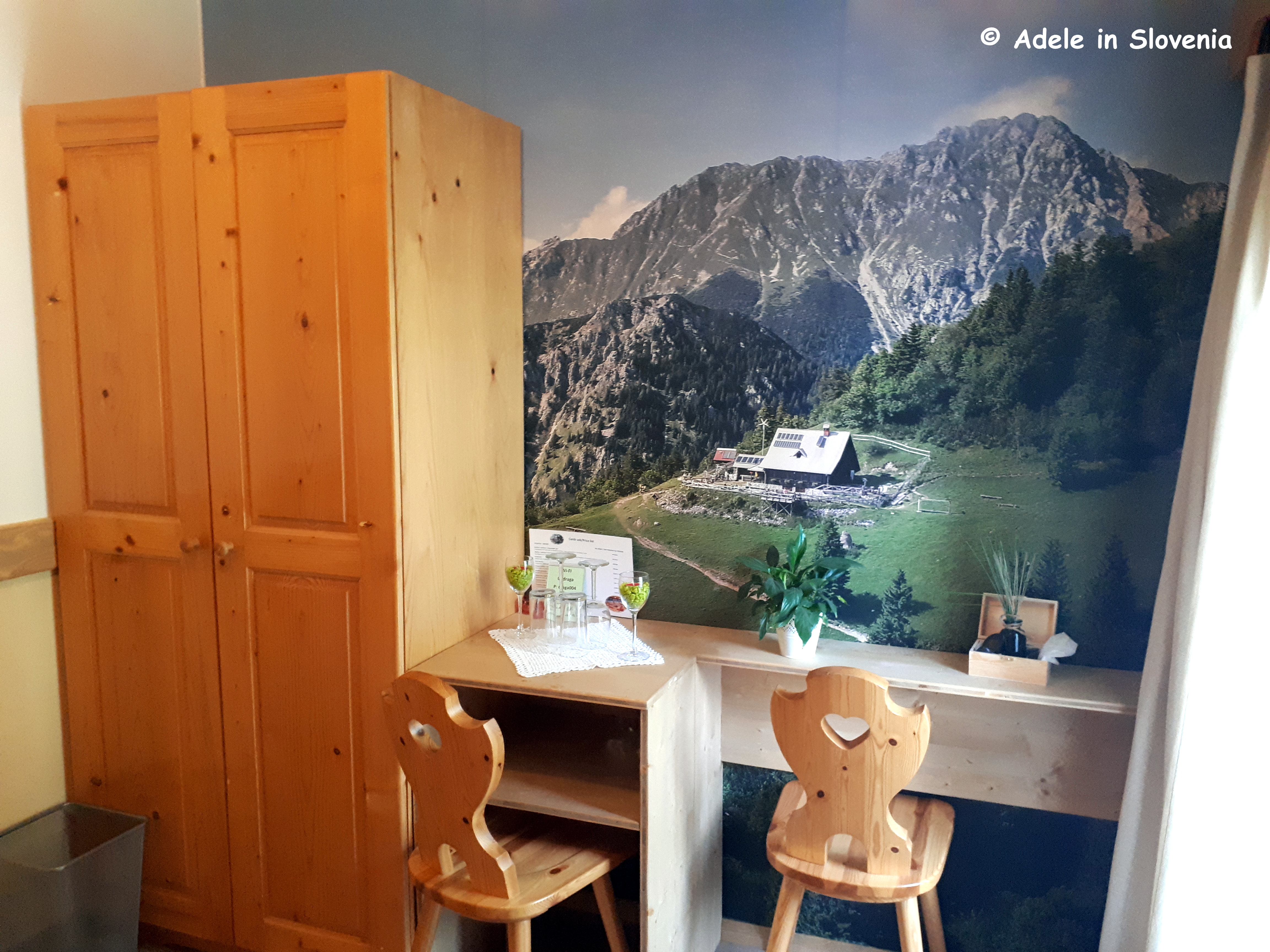
You can even stay overnight in one of the newly-renovated rooms and continue your cycling trip the next day! Or stay longer and enjoy the tranquility of the valley, which is also a great place for hiking in the Karavanke mountains.

On the way back, instead of returning the same way, after leaving the valley, you can turn left at the junction just after passing a sawmill. You could also make a detour to visit the Robačnekov mill. It is officially open on Tuesdays and Fridays from 9am-12noon, however, outside of these times if the owner is home, ask nicely and she will be happy to show you round!

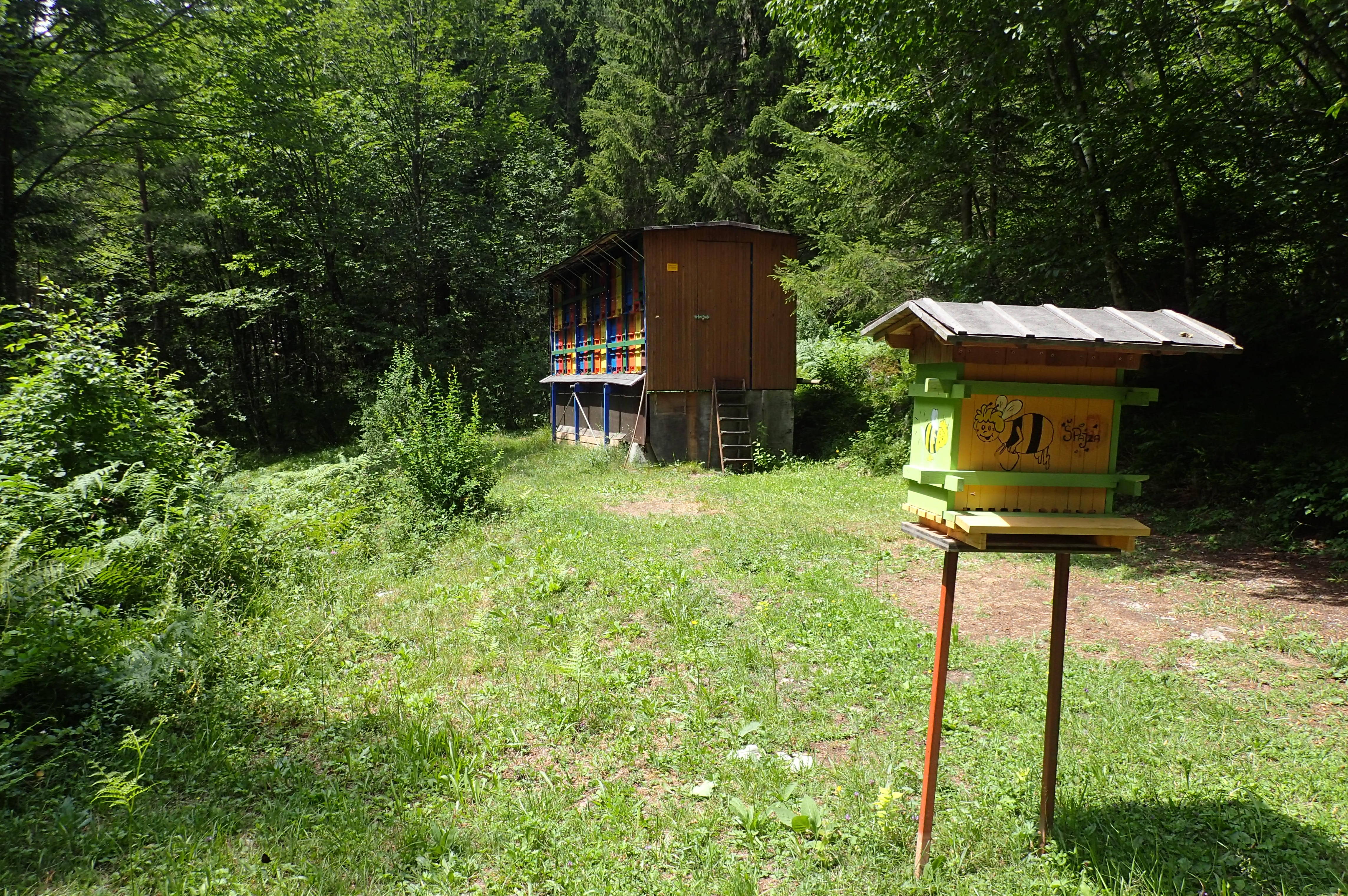
Those interested in beekeeping, and even those who think they might not be interested but will likely discover that actually they are(!), can visit Luznar Beekeeping (Čebelarstvo Luznar).

Upon prior arrangement, you can call in to visit Erik at home, where you can purchase his award-winning honey and other honey products, and/or you could arrange to meet him in the Draga valley, where you can get up close to one of his many hives and his amazing new ‘book’ hive, which allows a fascinating, close up, and unique view of Slovenia’s indigenous Carniolan grey bees hard at work. Email cebelarstvo.luznar@gmail.com or call 040 321 556.

Photo: Erik Luznar

Photo: Erik Luznar

You can also visit Begunje and the Draga valley – as well as Erik and his bees(!) – on the Hop-On Hop-On tourist bus, which runs every summer throughout July and August. It’s a great way to discover the villages and countryside of the Radol’ca area. In addition to the ride, there are guided tours and walks as well as other attractions to see and visit at each destination.

Click here for more information about cycling in the Radol’ca area.

© Adele in Slovenia


Jezersko – Scenic, Tranquil and a True Hiker’s Paradise!

Achingly beautiful and tranquil, Jezersko boasts a wide range of challenging hiking trails as well as easier walks, scattered farms and homesteads, picture-perfect scenery, and no traffic jams. tourist traps or crowds. Add into the mix friendly locals, traditional food and more, and Jezersko is the place to be!

Jezersko really is a hiker’s paradise and a haven of peace for those looking for a total escape from the day-to-day, whether you visit for an active break or just for some much-needed rest and relaxation.

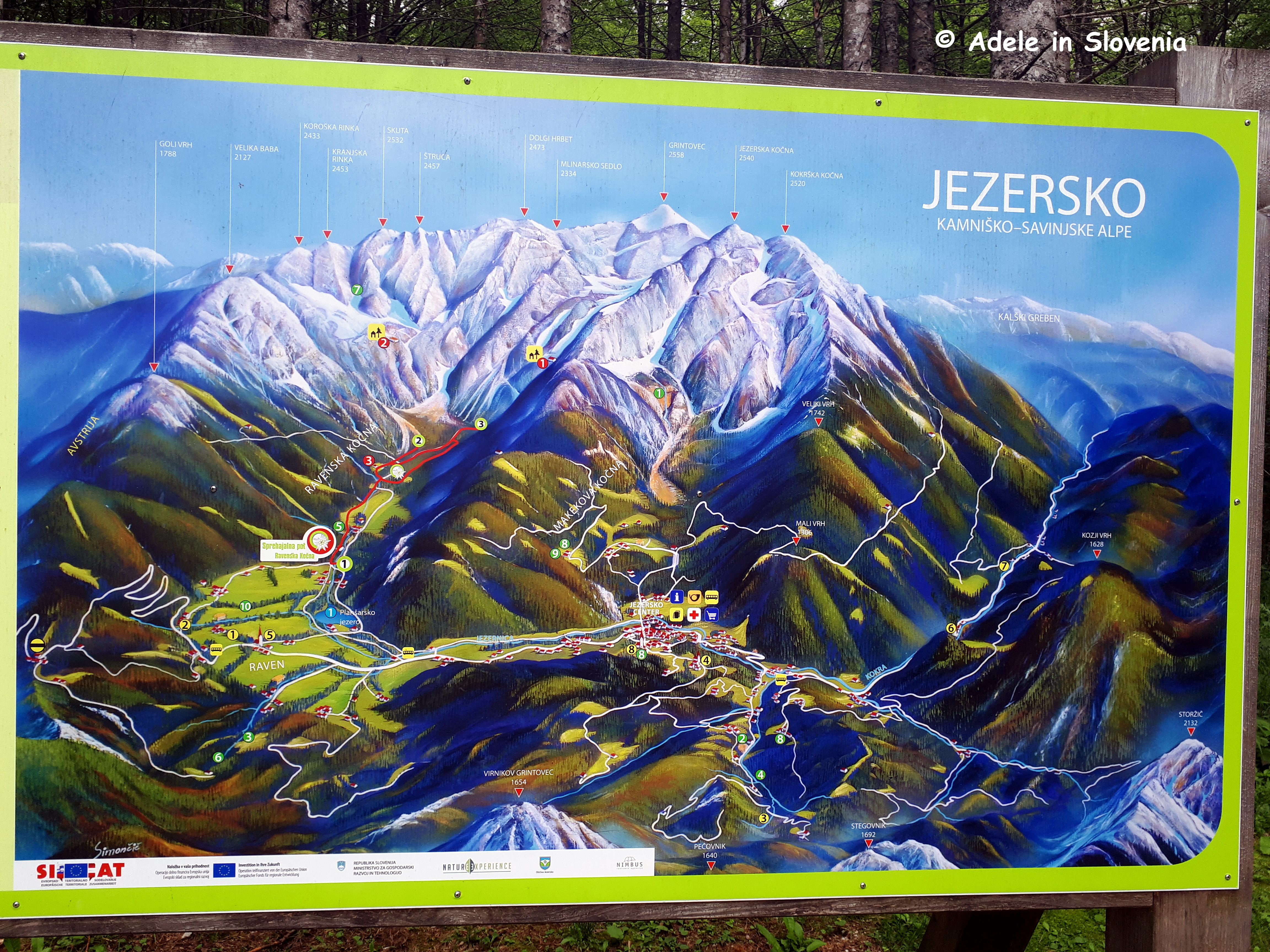
The village lies at an altitude of 906 metres above sea-level at the foot of the Kamnik-Savinja Alps and the Karavanke range and is Slovenia’s first, and indeed only, true mountaineering village. It is one of the villages included in the Bergsteiger Dorfer Association of Mountain Villages, which is no mean feat when you consider that all the other villages are in well-known mountainous areas, such as Bavaria and Tyrol.

The Jezersko Mountain Trail is ideal for those seeking some challenging hikes. You can walk the entire trail, staying at mountain huts along the way, or choose sections for shorter hut-to-hut routes or just pick and choose day hikes – the choice is yours!

For my recent hike I decided to choose a circular route (yes, you know me and my penchant for circular hikes!) which first leads to the Ceška koča mountain hut (1,543m), then onward to the Kranjska koča na Ledinah hut (1,700m).

The trail, or rather many trails, begin at the car park at the end of the Ravenska kočna valley, where there are information boards about the valley and the various trails and attractions.

There are a choice of trails that lead up to the Ceska koca hut, including a via ferata trail for those looking for extra adventure. I chose the trail that leads off to the right of the car park, first for around 5 minutes on the flat before leading up steeply through the forest to the Stularjeva planina mountain pasture.

Thereafter the trail continues up to the hut, with a few hurdles to encounter en-route, though nothing technically difficult. In total it takes cca. 1.5 hours.

In addition to its fantastic location, what makes the Češka koca mountain hut unique is that it was built in 1900 by the Prague-based Czech branch of the Slovene Mountaineering Association, after which the hut was named. It has been renovated many times over the years but has retained its original appearance.

You are spoilt for choice with onward routes from the hut. Many of Jezersko’s mighty mountains such as Grintovec, Skuta and Kočna can be reached in 3-4 hours, or you can continue, as I did, towards the Kranjska koča na Ledinah hut, from where there are also numerous onward hikes.

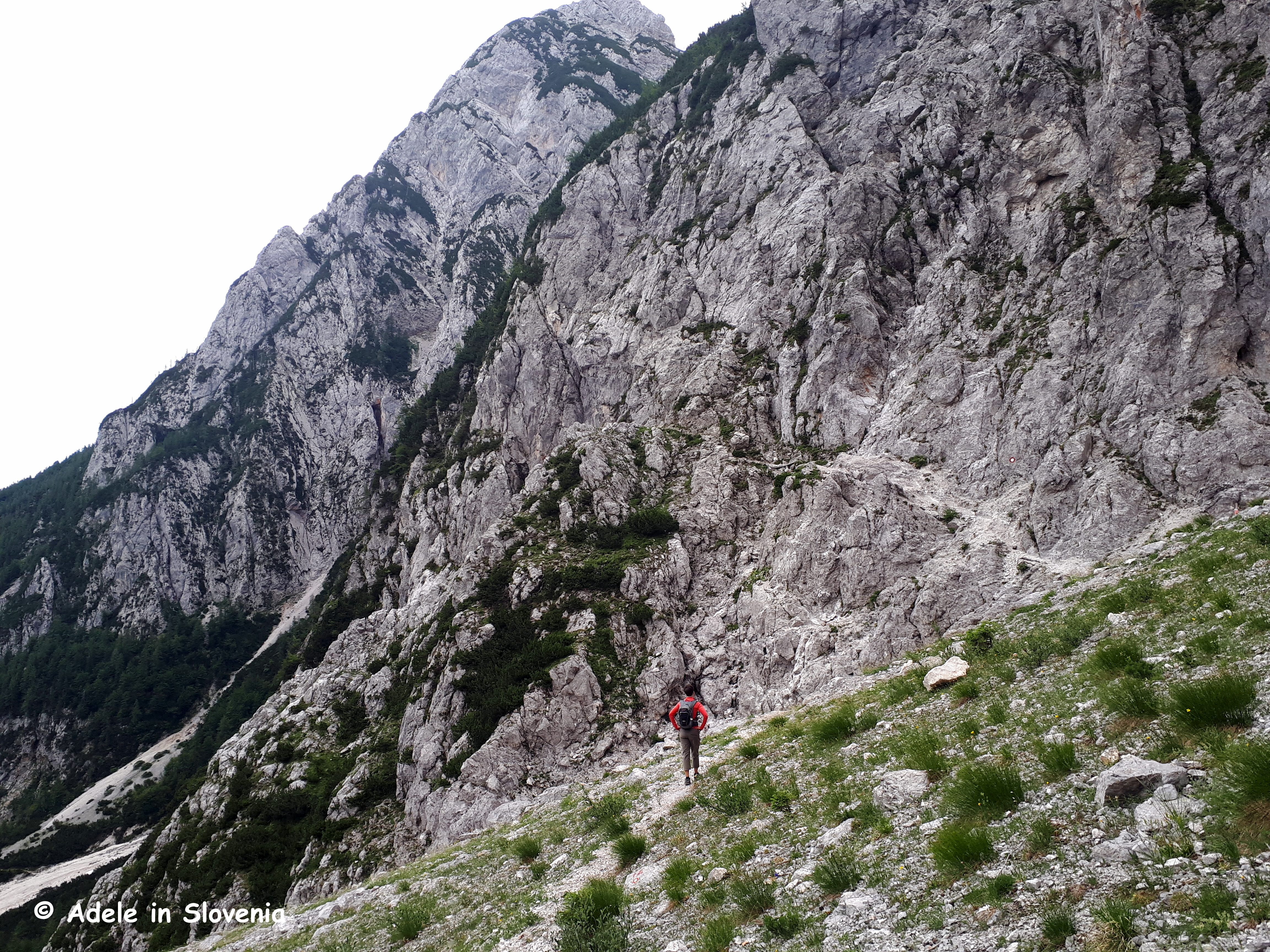
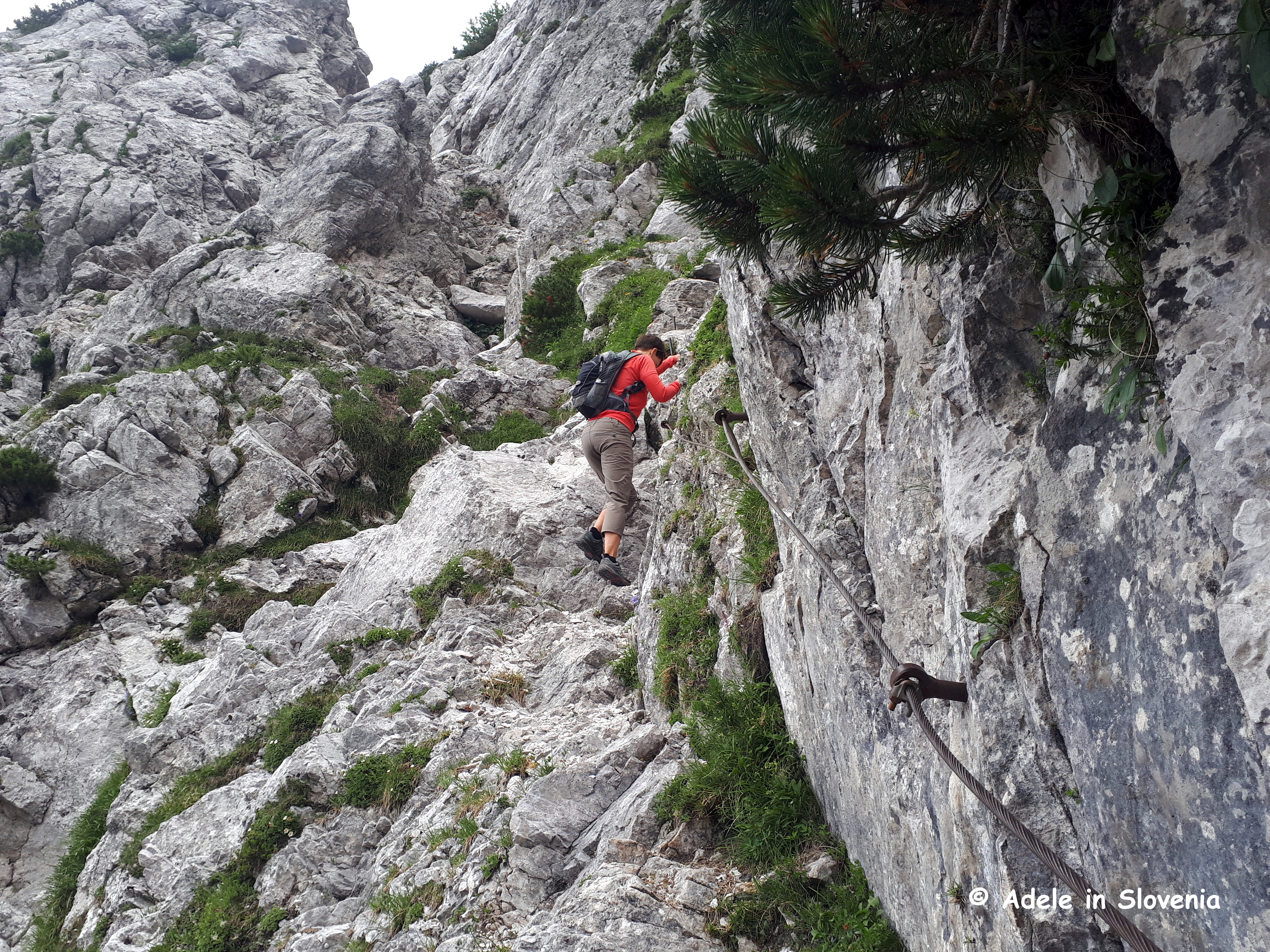
There is a choice of 2 routes between the two huts, however, at the time of writing (July 2019) the ‘skozi Žrelo‘ trail, which is considered ‘very demanding’, is closed – not that I had intended to take it anyway! The alternative route first descends to join the ‘Slovenska pot‘ (The Slovene Trail). In places the path is narrow and there is a steep drop, but there is iron railing and foot rungs in the most exposed places.

After descending for cca.15 mins, the trail joins the ‘Slovenska pot’ and begins to ascend steeply. There is one section – quite a long one – where there are iron rails and rungs and therefore extreme caution is required, but, credit where its due, the trail is well maintained and secure.

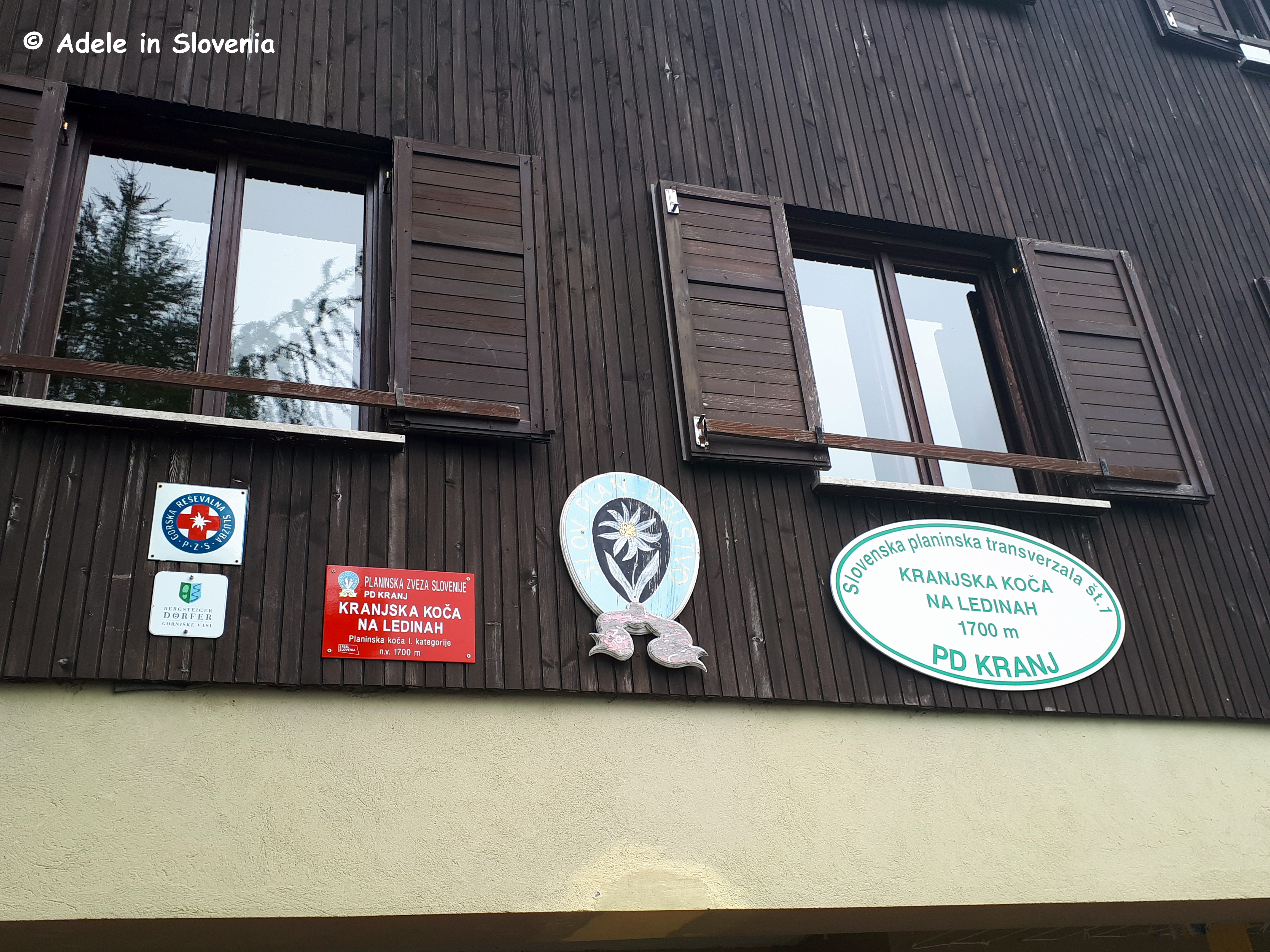
Unlike the Ceška koca hut, it can’t be said that the Kranjska koča hut is anything to look at, and in fact due to its position its almost impossible to get a good photo of it as one can’t get far enough from the hut to capture it. It is, however, a good base for onward hikes and/or for having a breather before returning to the valley.

Almost all the onward trails from the Kranjska koča na Ledinah hut, such as those to Koroška Rinka and Kranjska Rinka are marked as ‘very demanding’ (zelo zahtevni poti), so are only suitable for those with significant mountaineering experience and proper equipment.

Not being one for such adventurous challenges, I descended back to the valley on the much easier Lovska pot (Hunters’ Trail), which makes for a perfect circular half-day hike. The path leads directly back down to the car park in around 1.5 hours.

There are also numerous easier hikes and other attractions and activities in the Jezersko area, so there’s something for everyone – more about which in another blog post soon! In the meantime, a great way to find out more about the village and immerse yourself in its local culture is to attend a performance of ‘The Stories of Jezersko‘ (Jezerske štorije), which takes place on Fridays during July and August at Jenk’s Barracks (Jenkova kasarna).

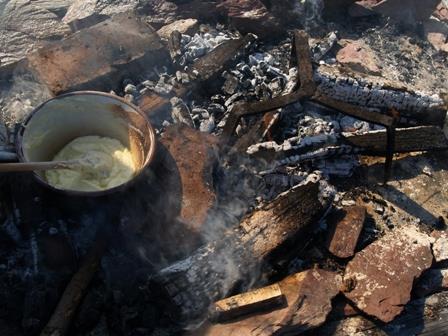
And another way to learn more about Jezersko is to taste some of its traditional cuisine. A good place to start is at the beautiful Planšar Lake (Planšarsko jezero), where on Saturdays at 5pm throughout the summer you can attend a demonstration of cooking the local dish ‘masunek’ over an open fire.

While I, in fact no one, can guarantee the weather – a glorious morning was forecast for the day of the hike described above, however, as is evident from the photos, the mountain tops were largely shrouded in cloud for much of the hike – in Jezersko you can, however, be assured of wonderful nature, peace, friendly locals and a break from the hustle of bustle of life. But don’t just take my word for it…!

© Adele in Slovenia


Visit Žirovnica – A Ridge Hike to Tito’s Village via Mali vrh

When choosing what to blog about, sometimes a look at my blog statistics can help to provide inspiration. So, having seen that there has been significant interest in the blog I wrote last year about Tito’s Village (Titova vas), I thought I would write another blog on the theme, though this time describing an alternative, more interesting/challenging, way of reaching it; a hike along the ridge from Mali vrh and onward to Tito’s Village.

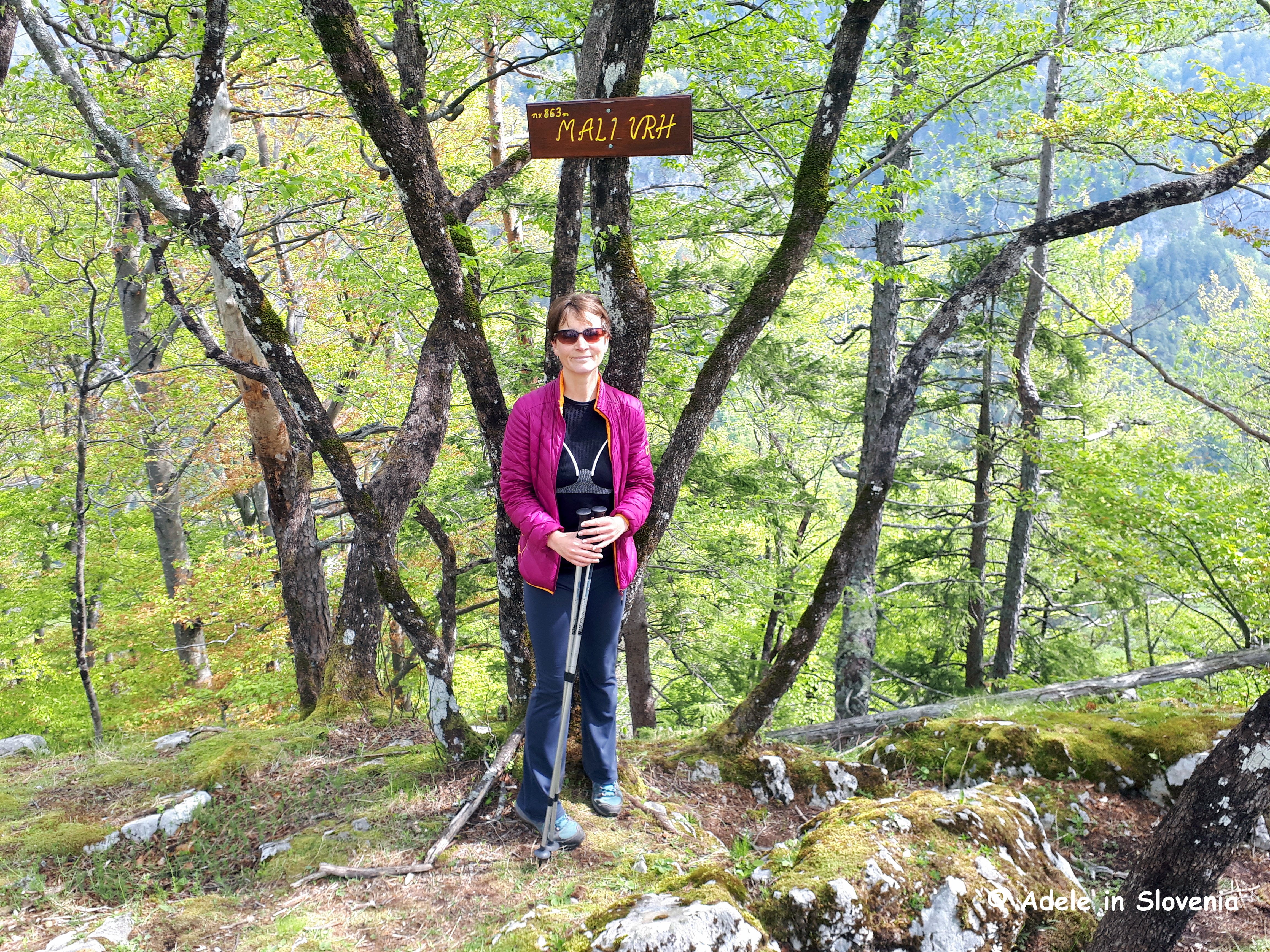
Mali vrh can be reached by taking the aptly-named Sunny Path (Sonča pot) from Žirovnica to St. Lawrence’s church (sv. Lovrenc). You can join the path and reach the church from several places. I like to park in Žirovnica then take the path that leads towards the steps that go up towards the distinctive water surge tank. Don’t go up the steps but just to the right the path, though not marked, is easily visible as it traverses the grassy meadows above the villages of Žirovnica.

Follow the path towards the church and, just a hundred metres or so before reaching the church, you will see a sign pointing upwards to the left marked Brin vrh.

If you want to visit the church, do so first, then return to the sign and head up the steep path to reach Mali vrh. At the top there is a small rest area…

…complete with a visitors book…

and, somewhat bizarrely, a broom! I’m guessing it must be to brush the snow off the benches in winter!

From Mali vrh continue along the ridge before descending to a saddle where you can either descend steeply down to the Završnica reservoir and recreational park (this makes a great circular route if you walk back past the reservoir and continue on the path back to the water surge tank), or you continue towards Tito’s village, or even further!

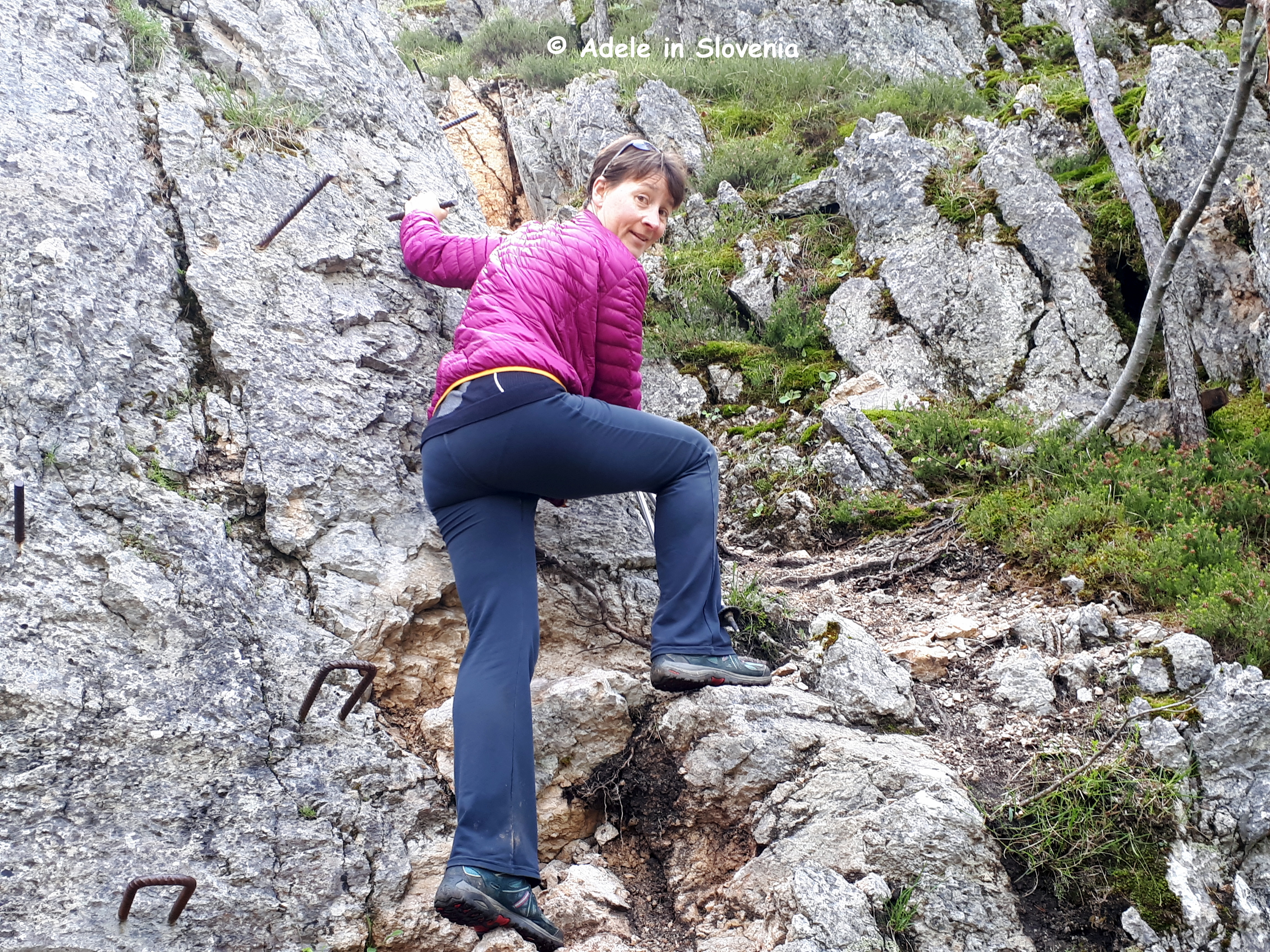
In a couple of places there are iron pegs and rungs, but there’s nothing too scary – fortunately – and it adds to the adventure!

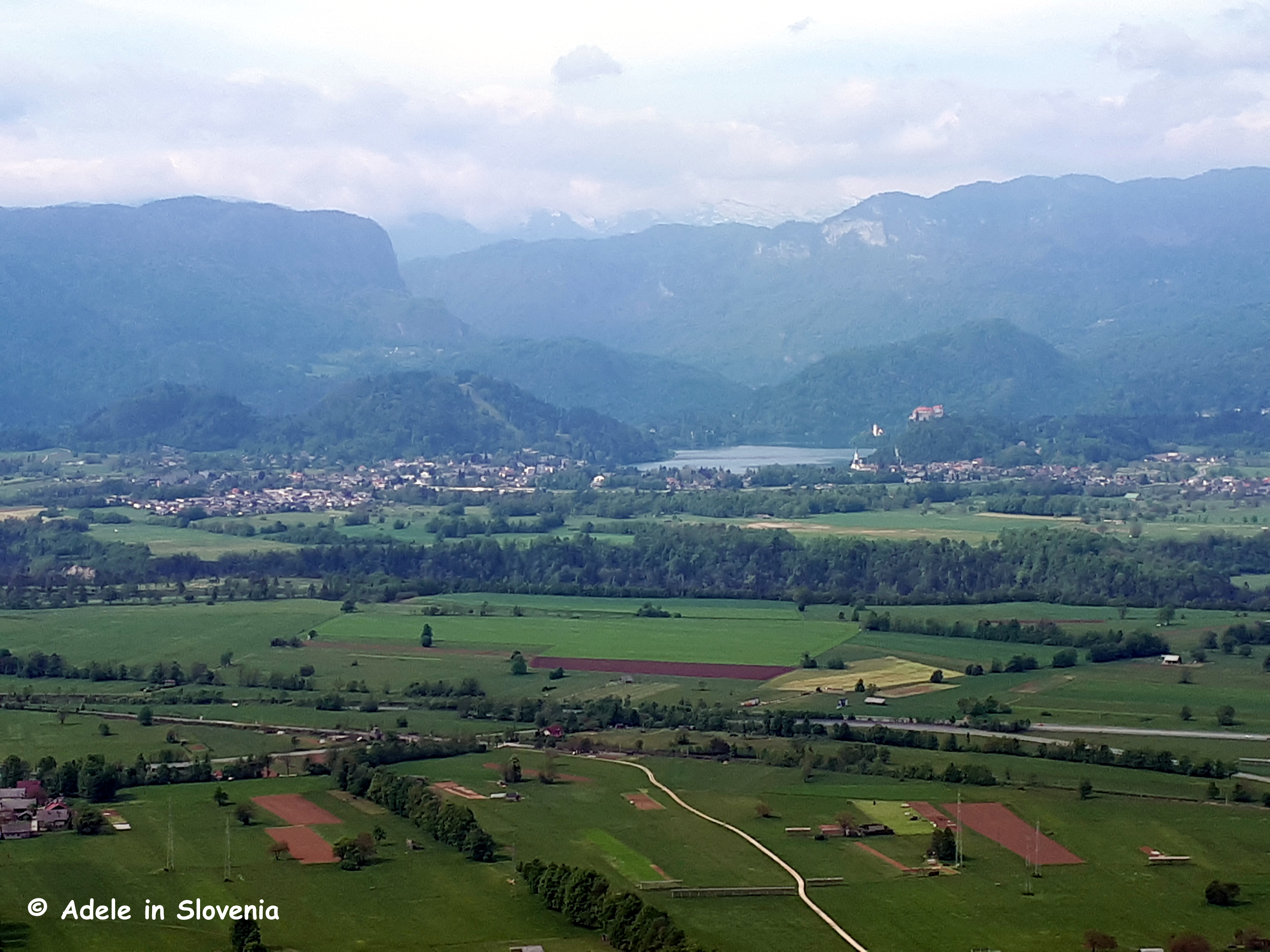
The path is very well marked throughout, and there are a couple of strategically placed benches where you can take a breather and soak up the views of the surrounding villages and countryside, as well as Lake Bled and the Julian Alps on one side…

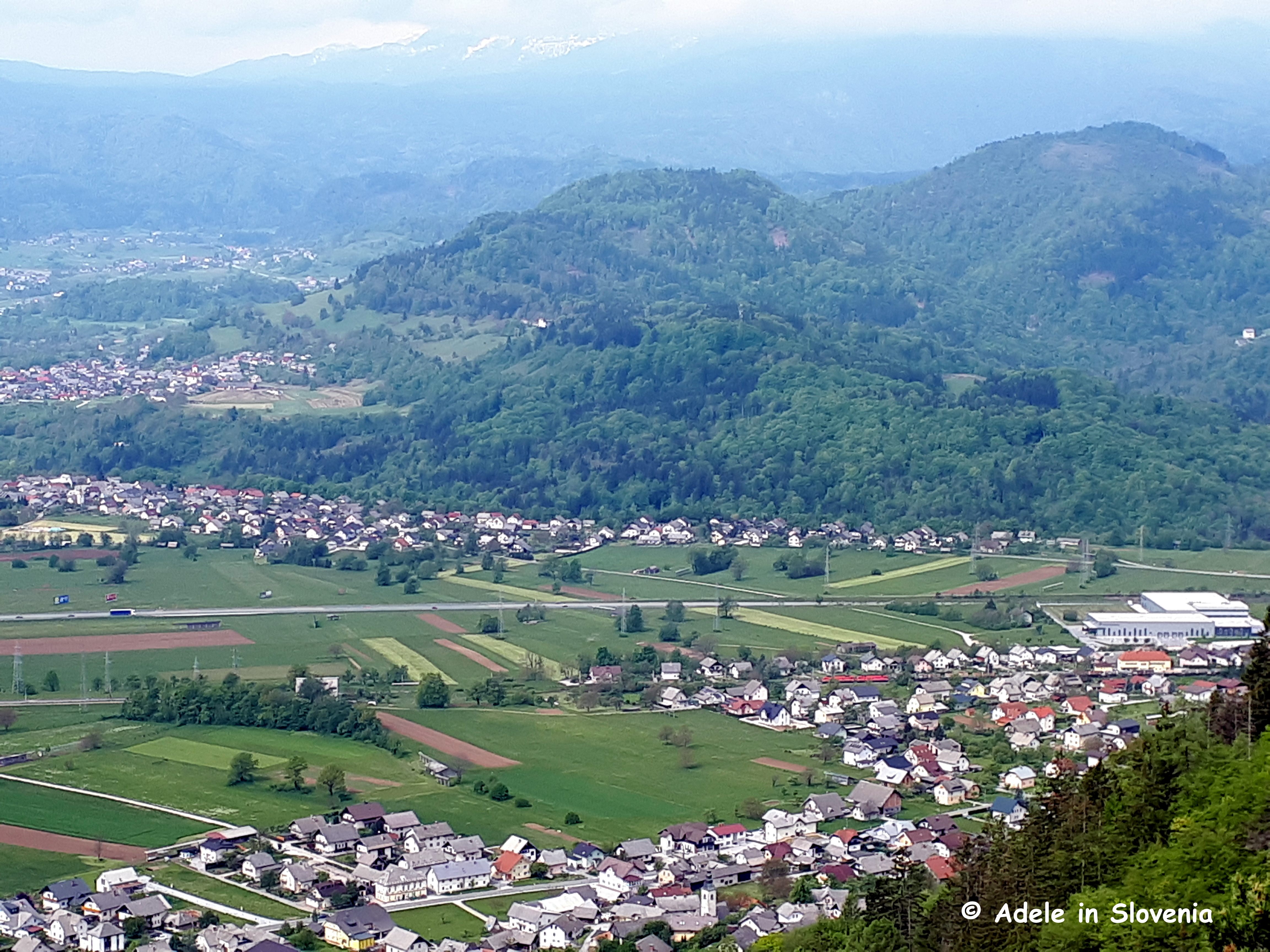
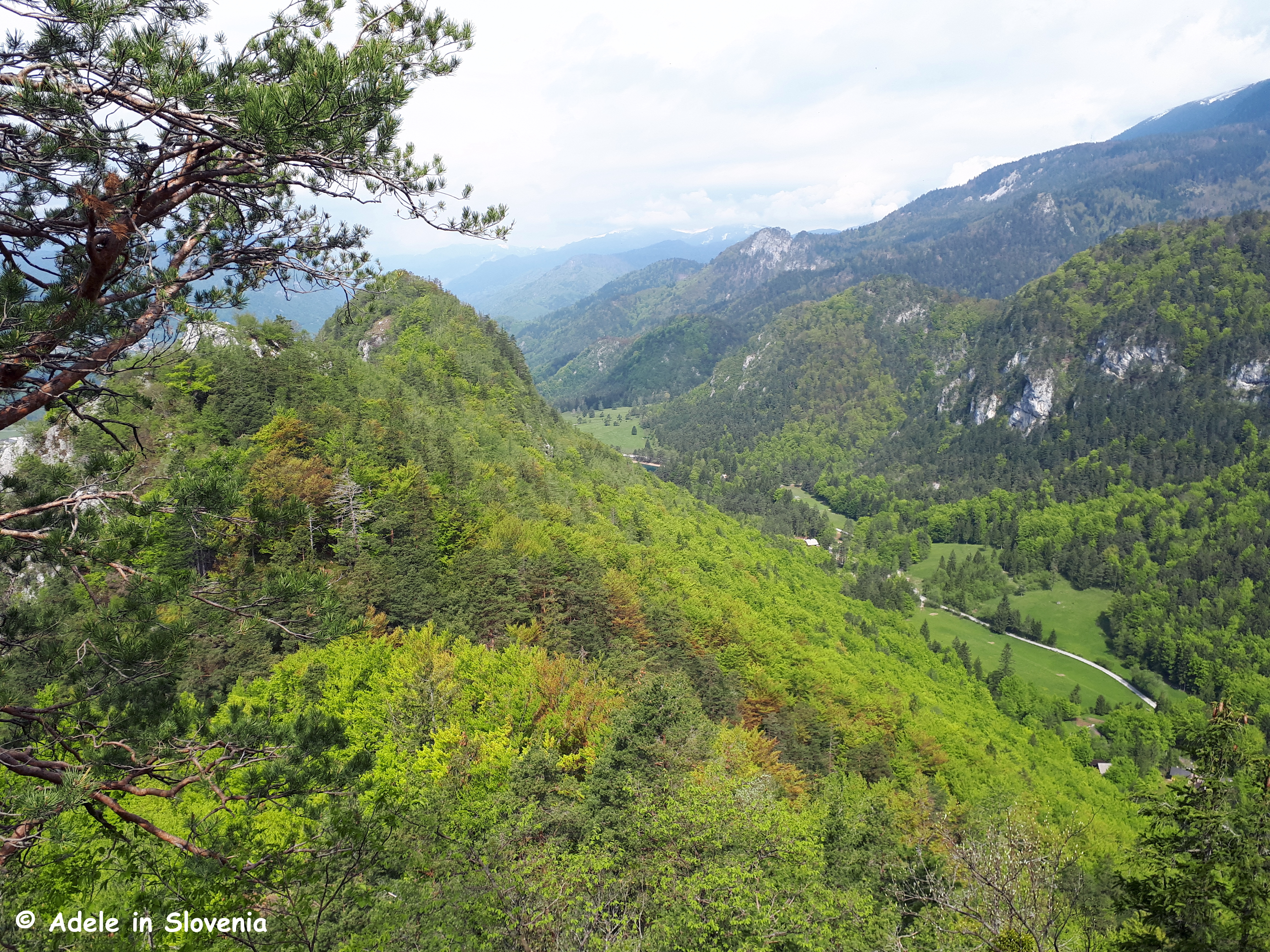
…while on the other you can see the lush Završnica valley beneath Mt. Stol – the highest peak in the Karavanke mountain range.

The path continues it way along the ridge, with a few nooks and crannies to explore along the way!

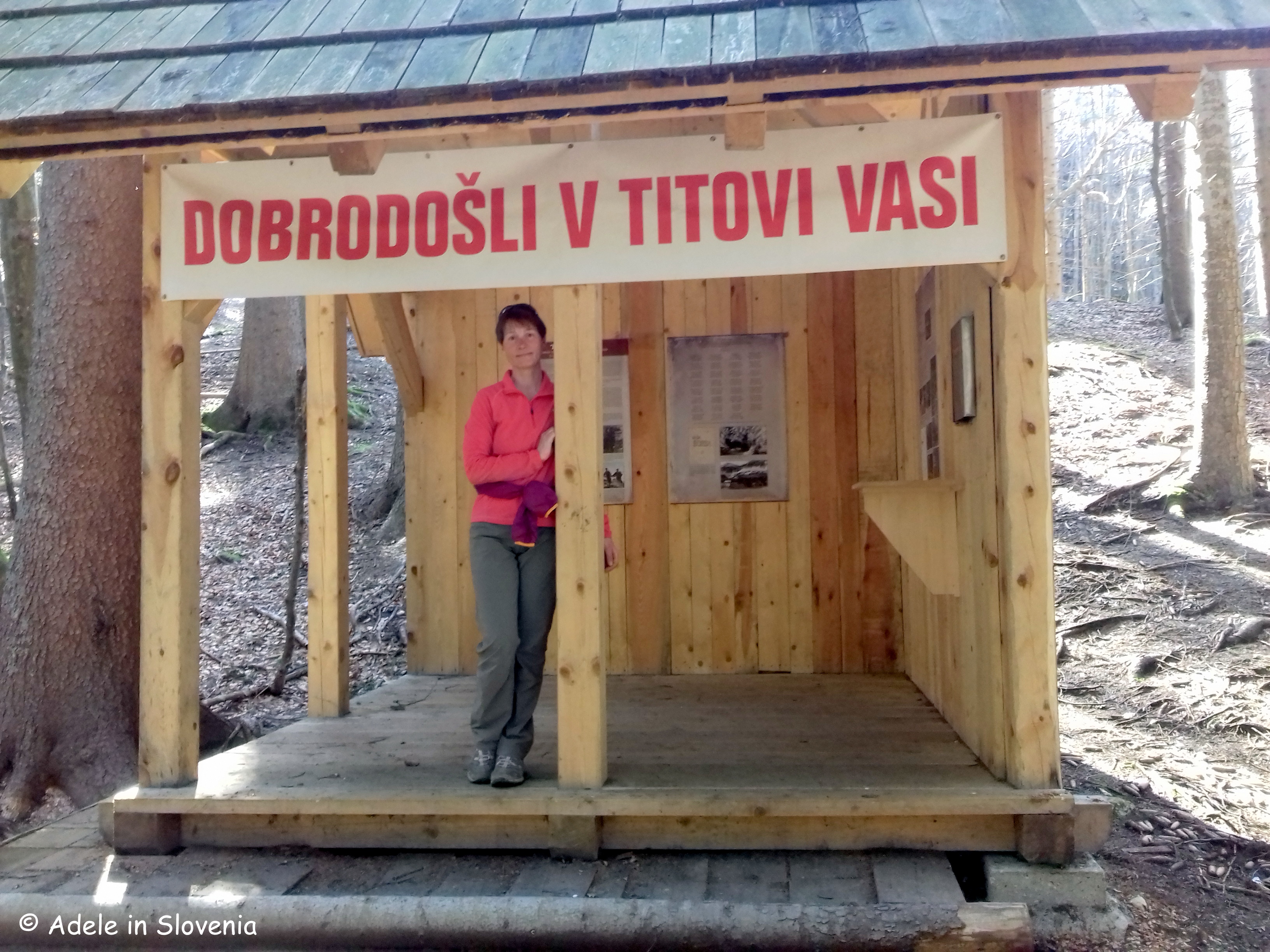
On reaching the sign for Titova vas, you can follow the forest road down to visit the secret World War II partisan camp that was hidden deep in the forest in a remote, hidden and relatively inaccessible location beneath the peak of Smokuški vrh. The camp had its own newspaper, a choir, butchery and everything needed for everyday life at that time.

The camp provided partisans with shelter from the German occupiers. Considering its location, in close proximity to German strongholds in nearby Žirovnica, Bled, Koroška Bela, Javornik, Jesenice, Lesce, Radovljica, Brezje, Poljče and Begunje, the existence of the camp from 21 November 1944 – 31 January 1945 – though only 2 months – was considered long for those times.

You can either return along the outward route described in my previous blog about Tito’s Village, or return by the same route, or, at the junction of paths, take the wide stony path downwards to the right, which leads down to the village of Smokuč, from where you can either walk back to the start along the road, or, to avoid having to walk along the road, follow the signs for the Žirovnica Path of Cultural Heritage (Pot po kulturni dediščini).

If you want a great base for a hiking holiday in Slovenia, why not consider Žirovnica; there’s a wealth to see and do, it’s off the main tourist trail – and therefore you get a more genuine experience of Slovenia than one does in the main tourist towns – there are plenty of places to eat, and it’s great value too!

© Adele in Slovenia