Kunstelj Inn – A True and Tasty Tale of Tradition!

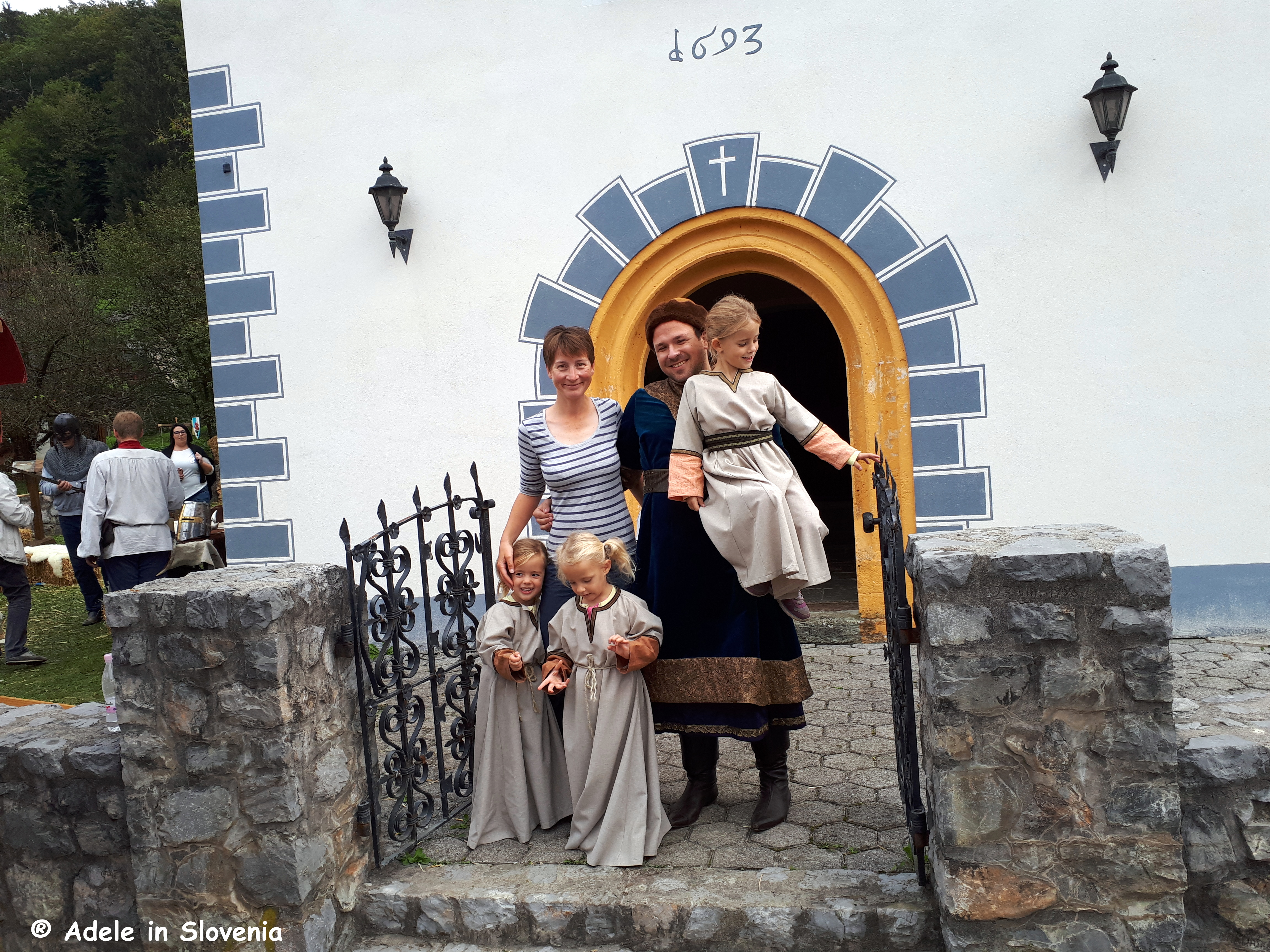
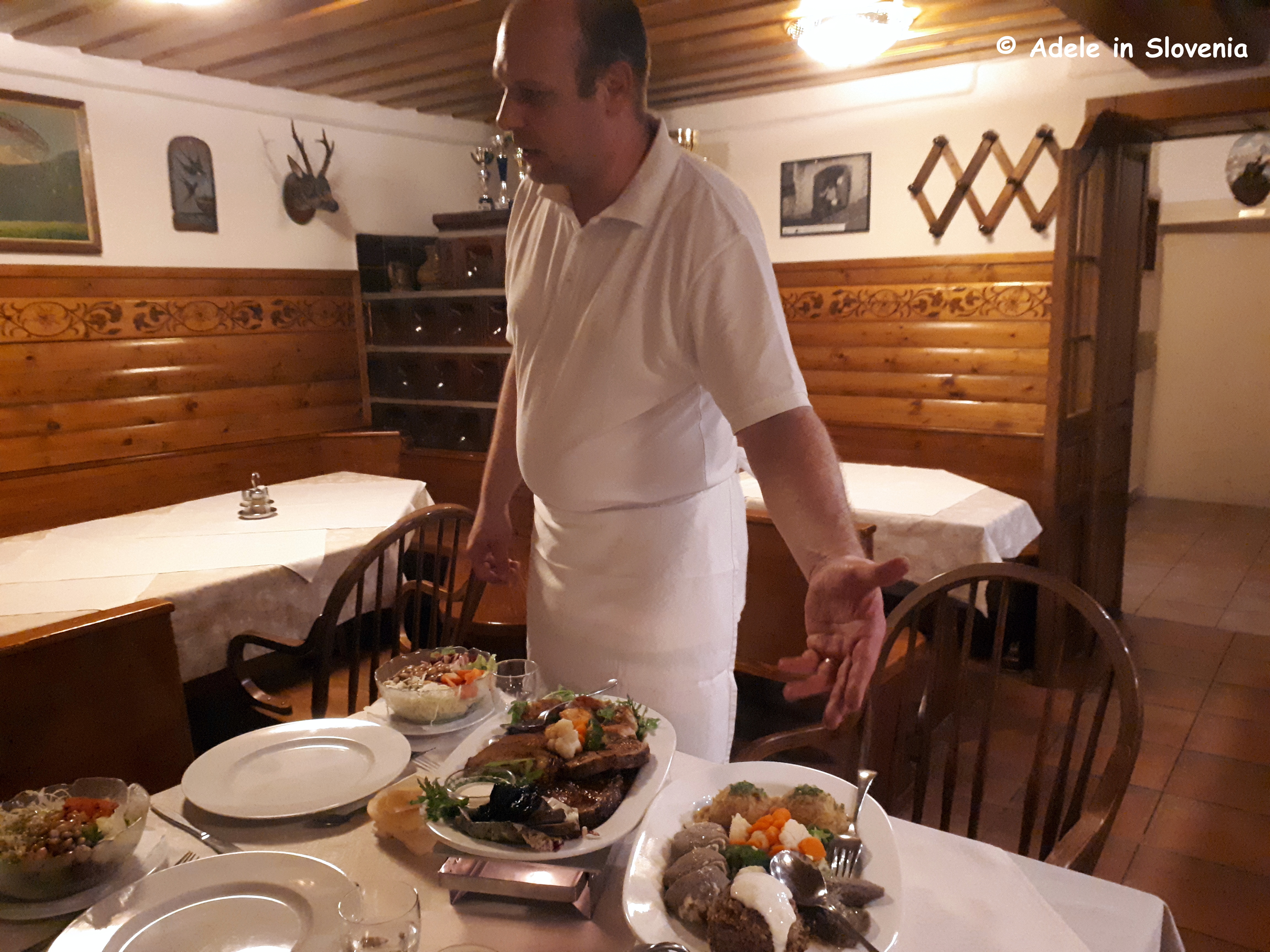
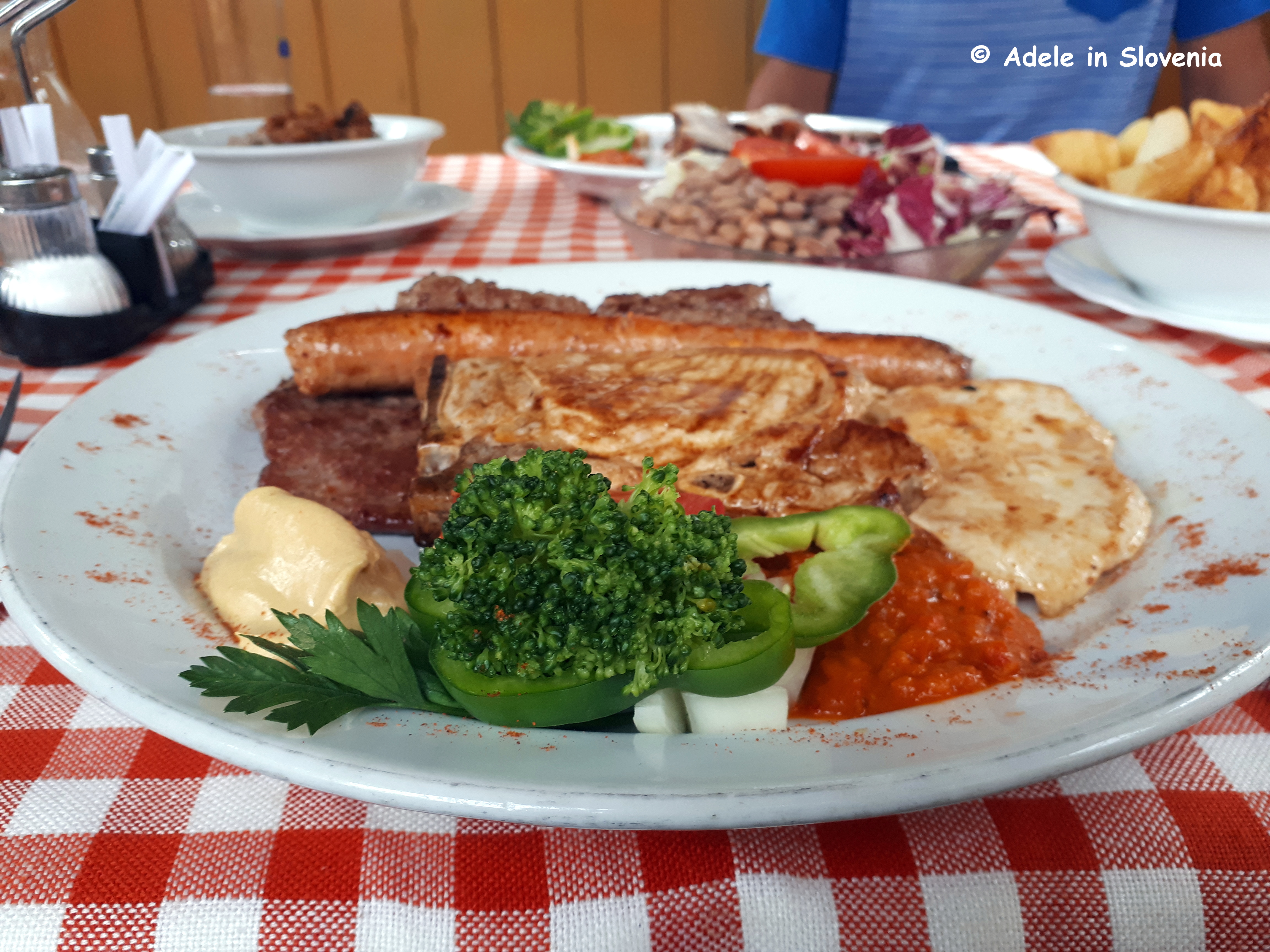
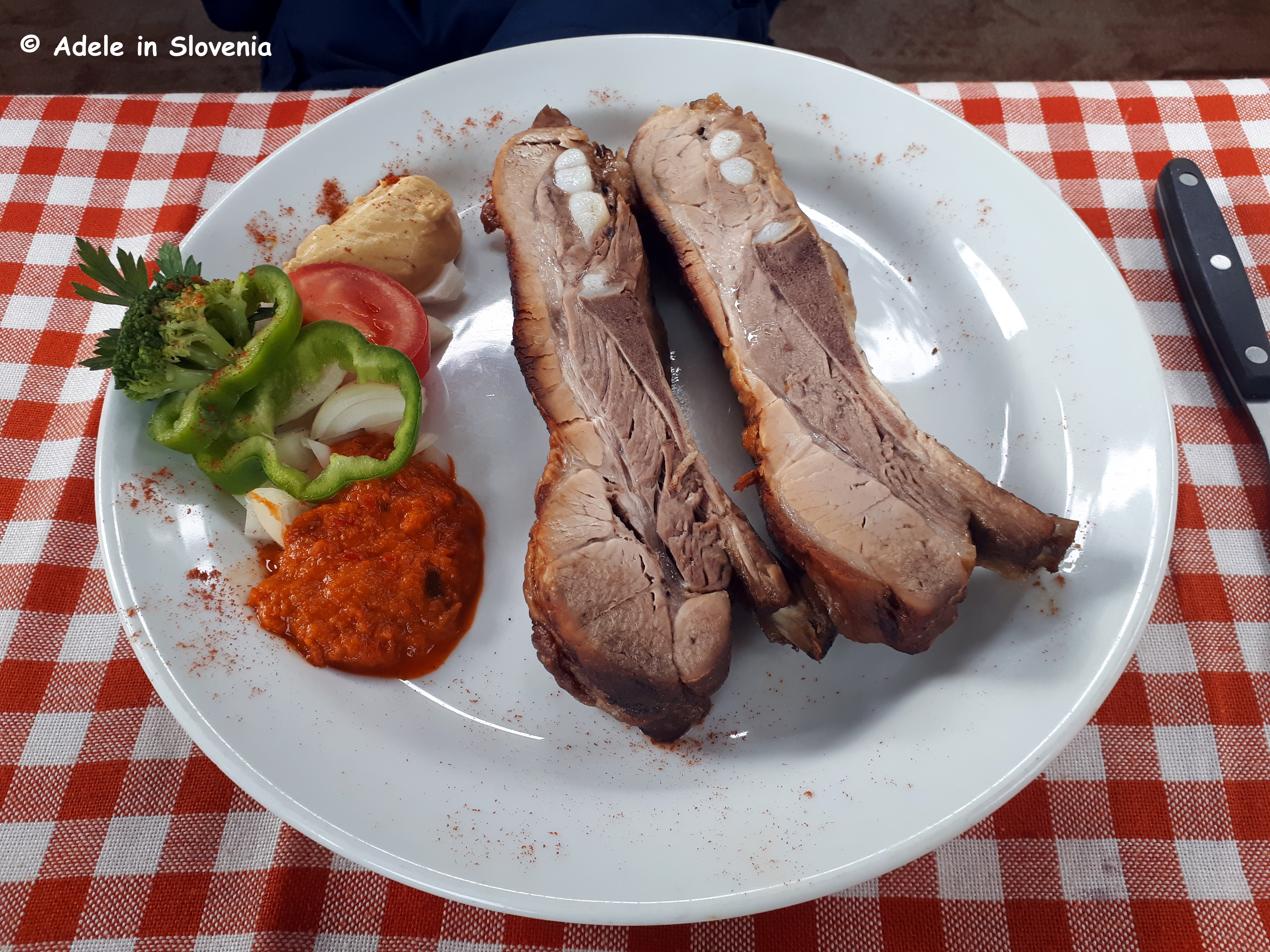
Kunstelj Inn in Radovljica is a family-run restaurant with rooms that has a long tradition and a great reputation. It is also one of the participating Taste Radol’ca restaurants, takes part in other culinary events such as Slovenian Restaurant Week and is featured in the Gault&Millau restaurant guide.

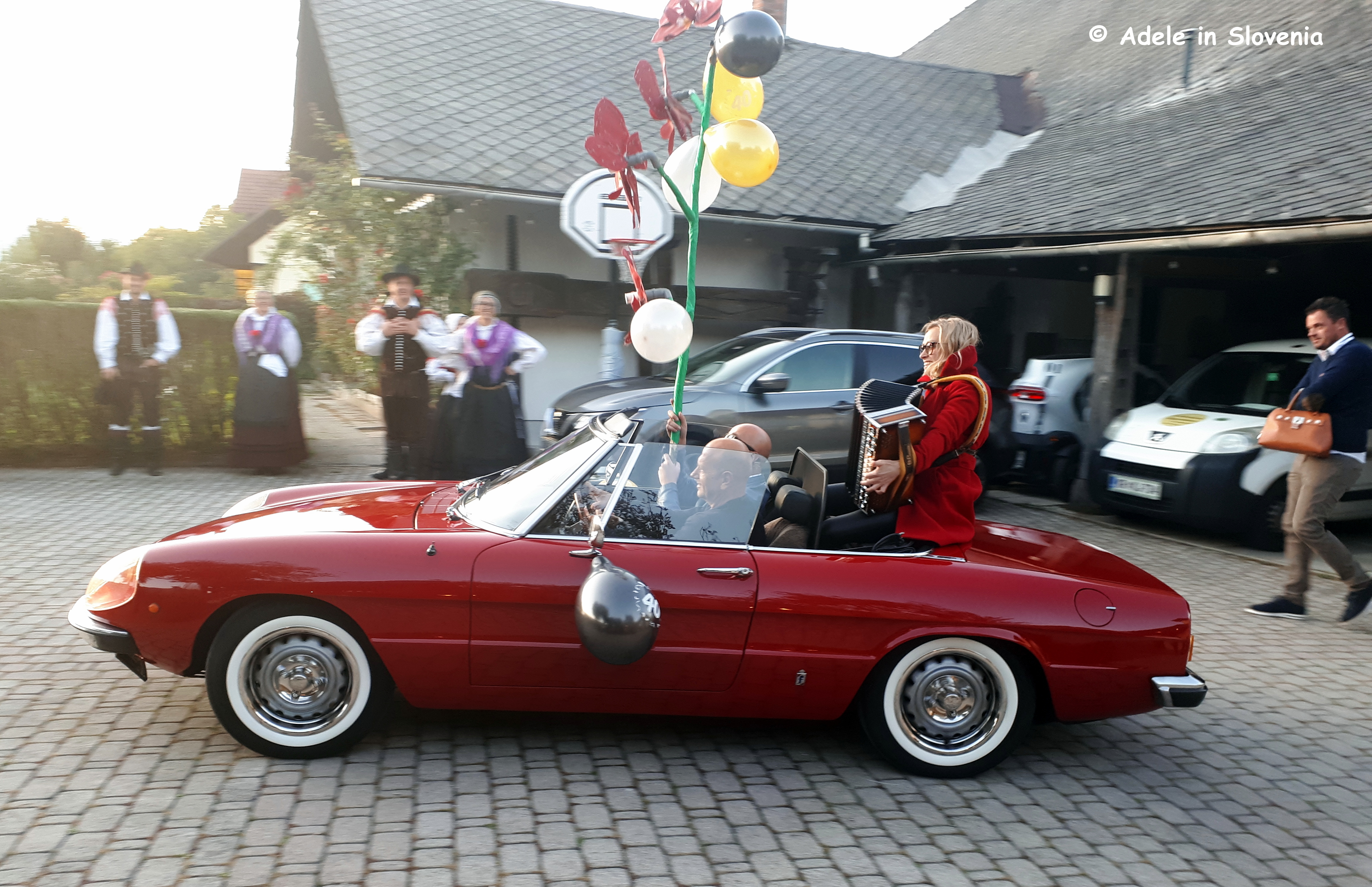
Five year’s ago, Maja Buden (nee Štiherle), daughter of Toni and granddaughter of Tone and the fourth generation to head up the family business, took over as manager of the inn. To mark this anniversary, as well as a certain ‘big’ birthday with a zero at the end, she threw a celebratory gathering last Friday! Happy Birthday and congratulations Maja!

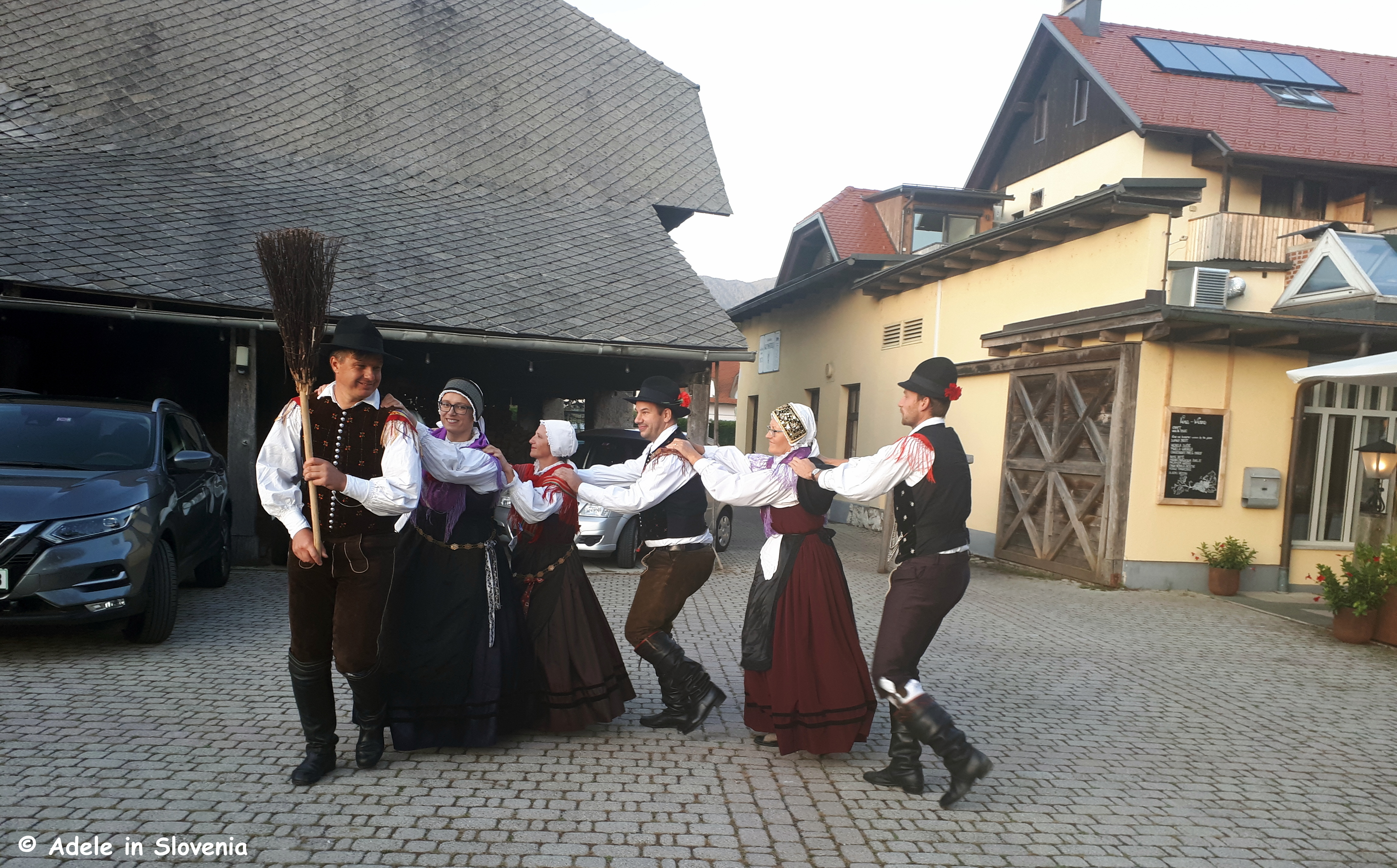
And, of course, a Slovenian celebration wouldn’t be complete without accordion music and traditional entertainment!

Having recently translated a special edition newsletter to mark this special anniversary, I was keen to be able to share with readers of my blog some of the highlights and photographs of the inn’s long and fascinating history, and, fortunately, Maja gave me the nod to do so!

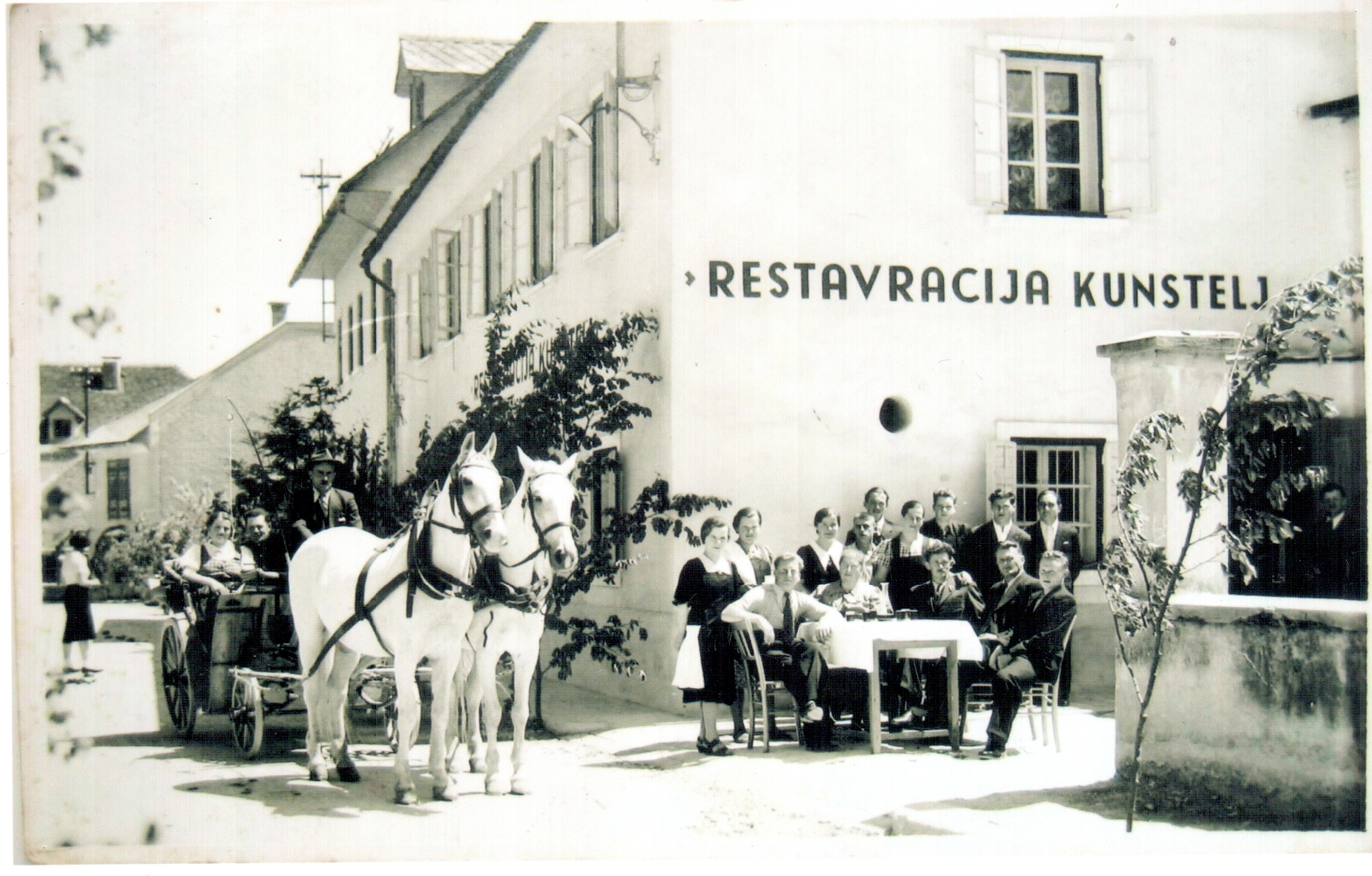
Kunstelj Inn was opened by Franc Kunstelj in 1873 and some years later handed it over to his son Rudolf. Rudolf was very ambitious and had a vision and belief that the small family inn could become the heart and soul of social life in Radovljica.

The Rudolf Kunstelj Inn in 1906. Photo: 110 years of the Radovljica Tourist Association

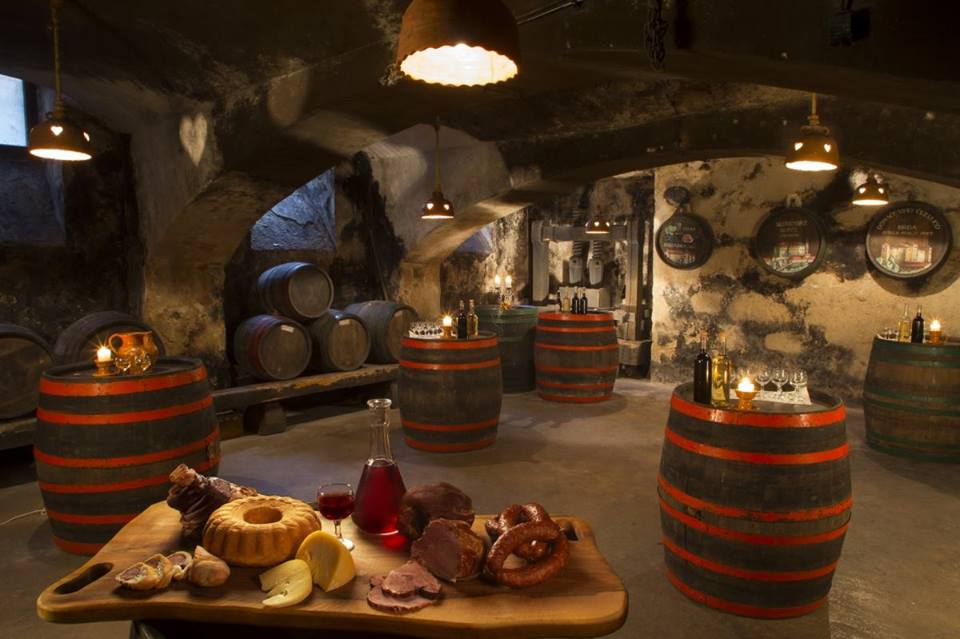
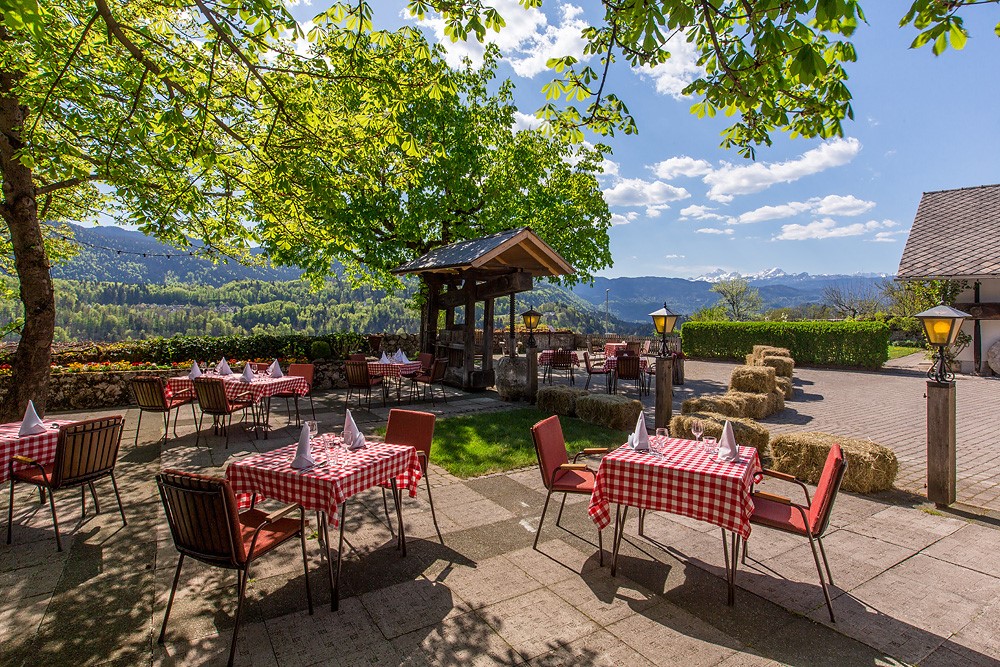
He set to work building a large lounge with a stage for celebrations, a wine cellar, a freezer and a veranda with views of the Julian Alps. The renovations placed Kunstelj Inn on the map of the most popular local restaurants in Slovenia.

Grandmother Jerica later took over the running of the inn. She had a reputation as a fearless woman who always knew exactly what she wanted and was not afraid to tell people to their face what was on her mind! She survived two wars, became a widow at a very young age, raised two sons, and took over and managed Kunstelj Inn all by herself.

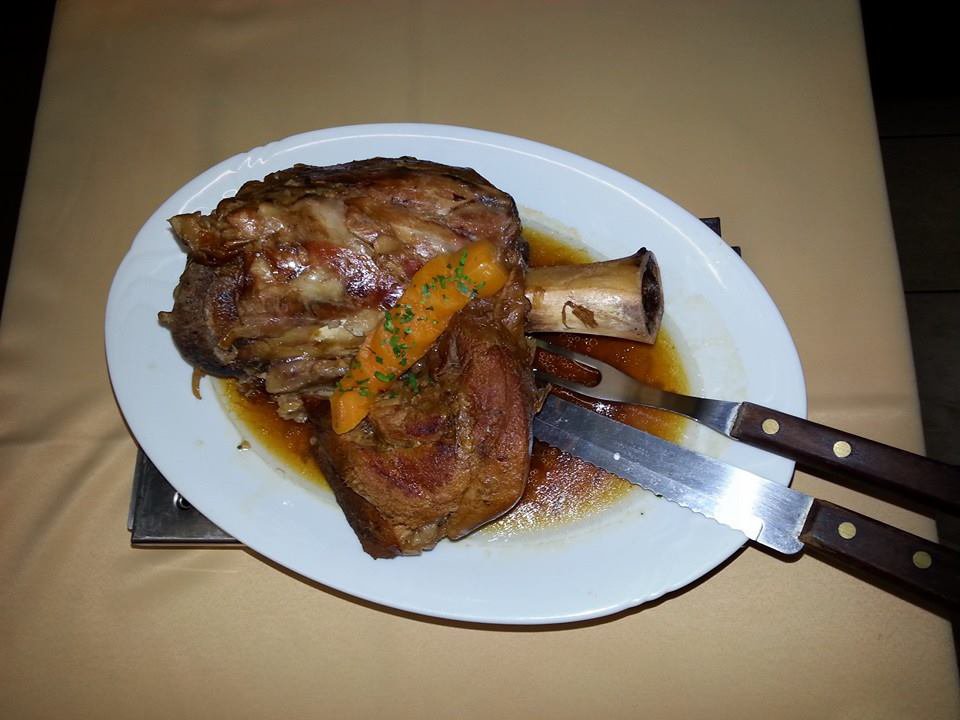
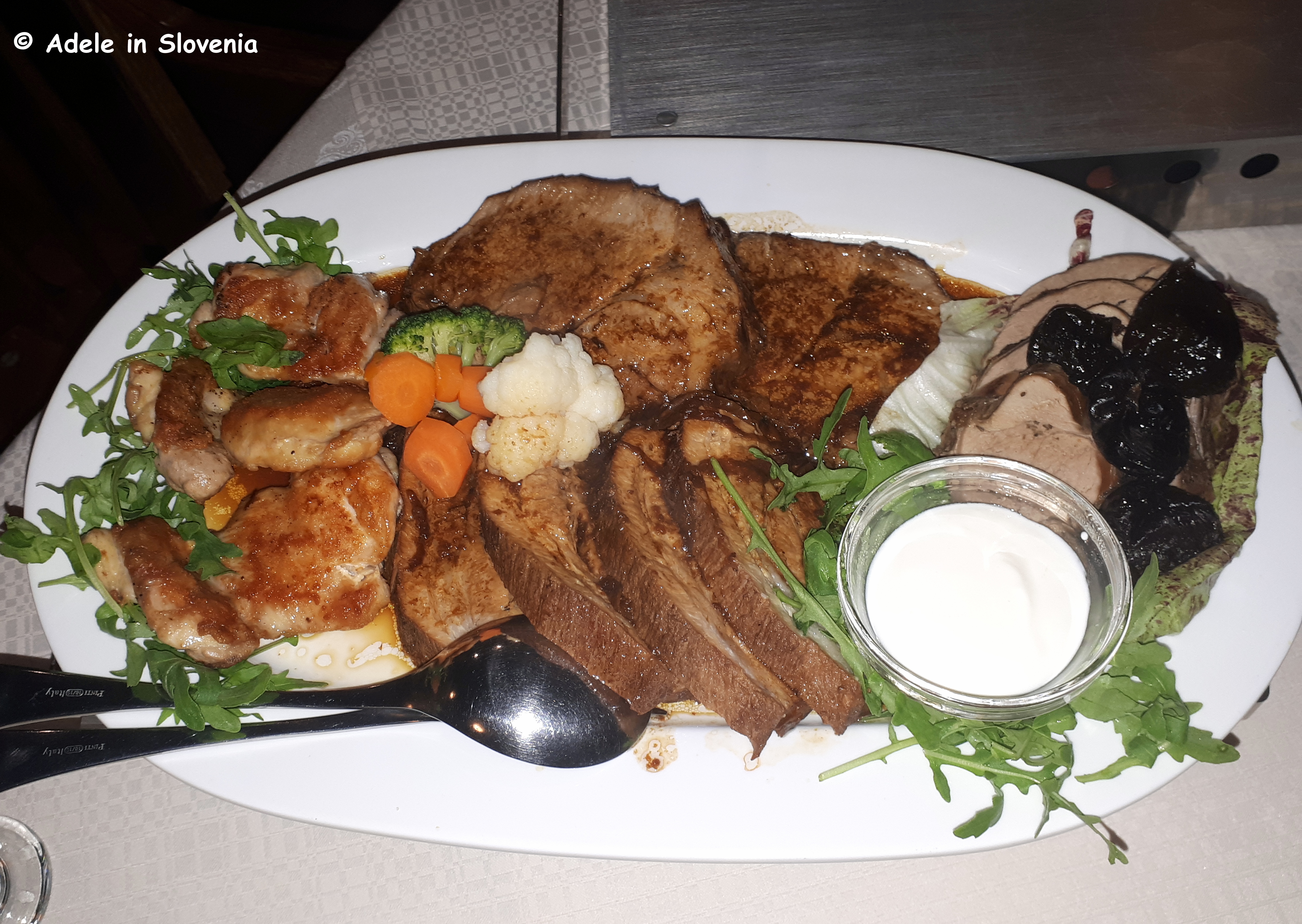
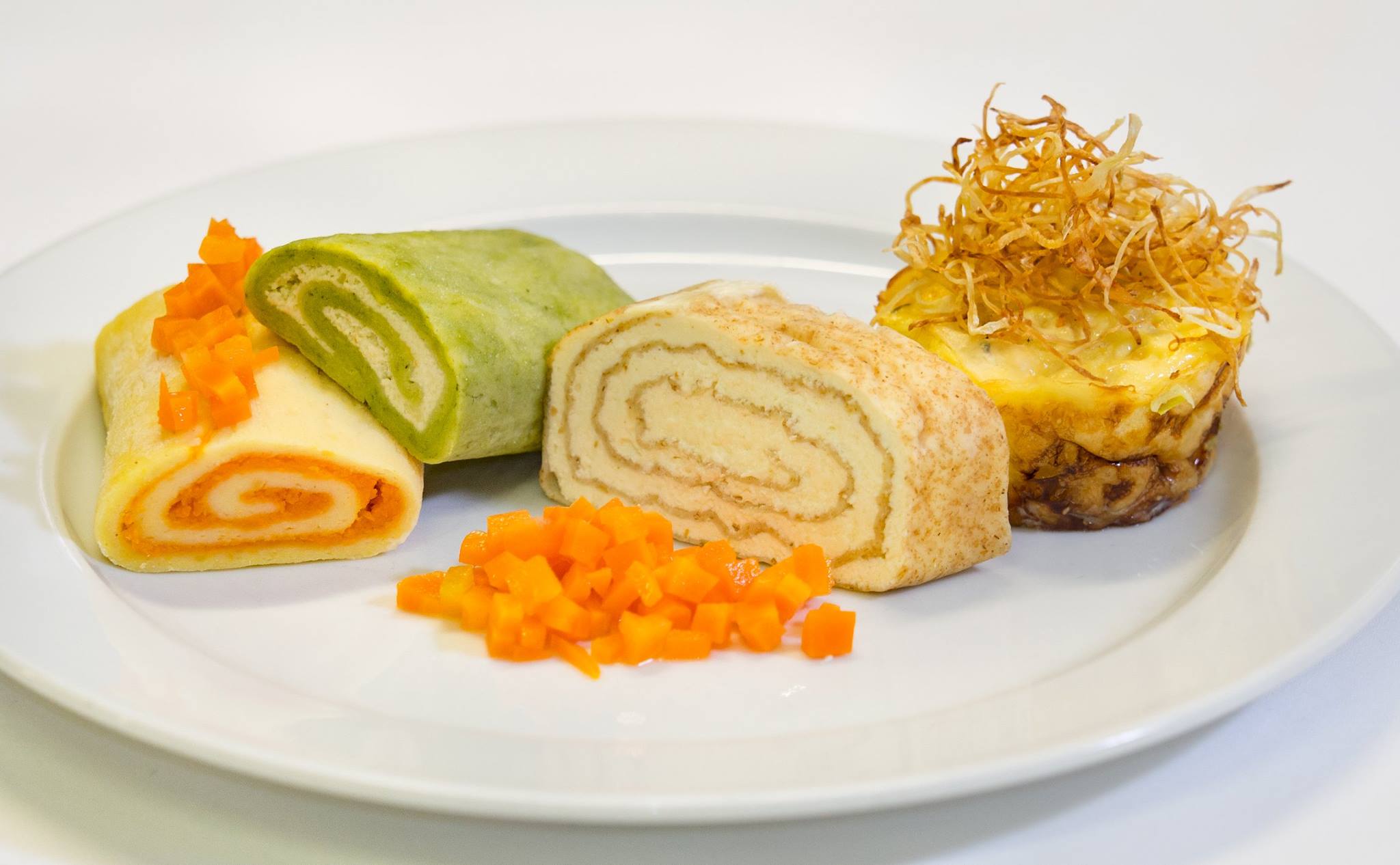
Many of the dishes Jerica introduced onto the inn’s menu can still be found today, albeit with a modern ‘Maja twist’, as well as other traditional Slovenian food, including blood sausages, Carniolan sausage with sauerkraut or turnip, buckwheat polenta, homemade štruklji and more.

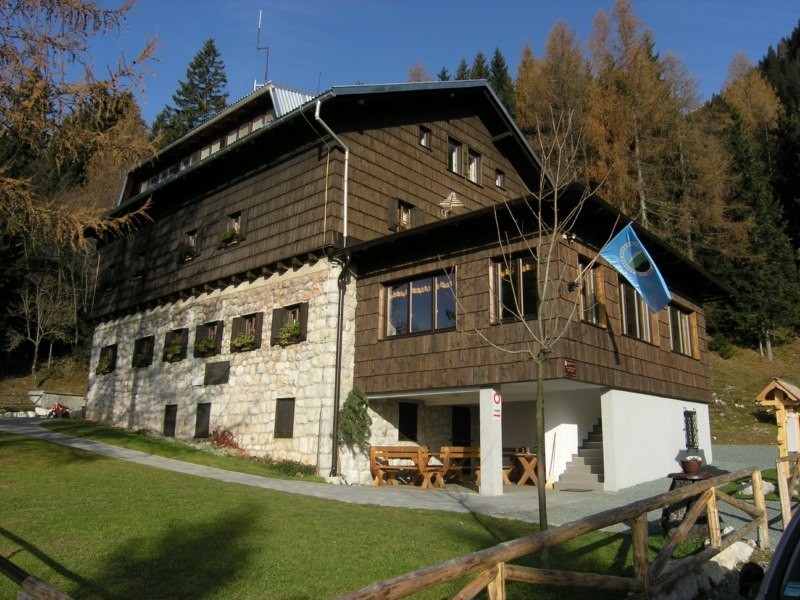
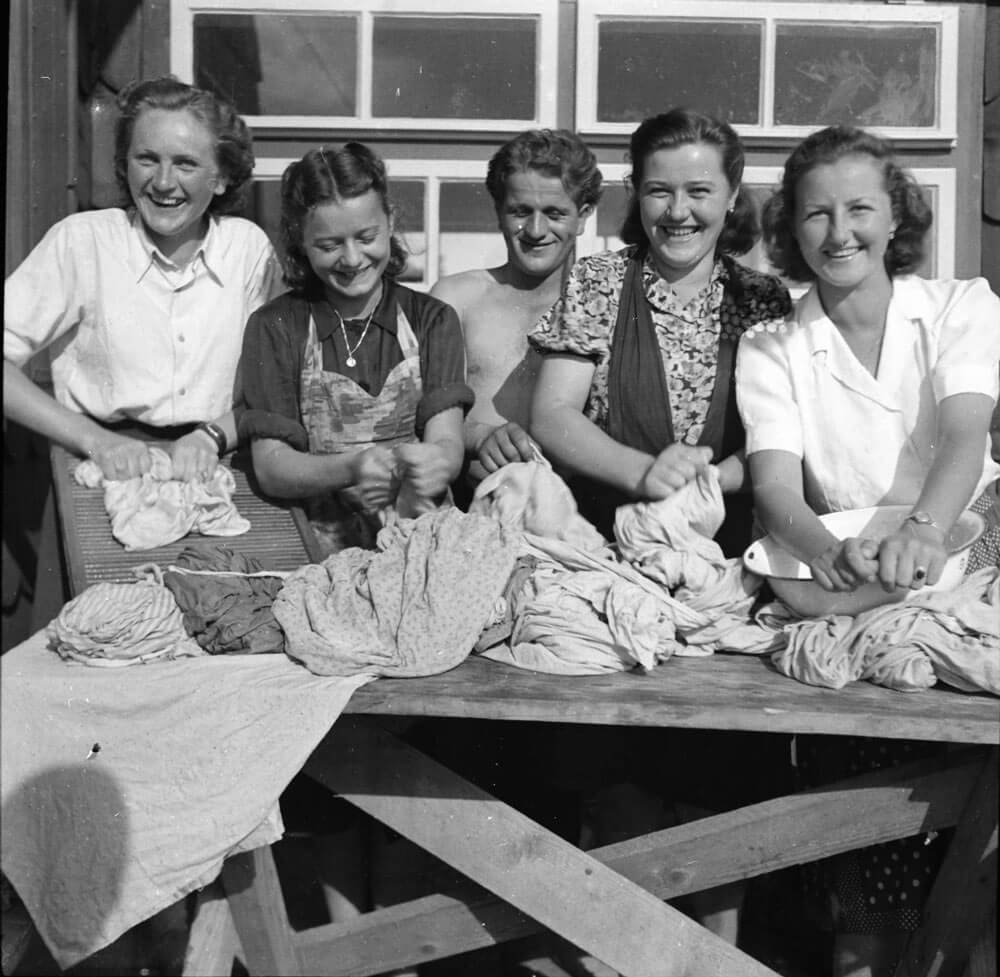
Meanwhile, grandmother Maria left home at the age of 14 to work at the Roblek dom mountain hut. Tone and the now legendary Slavko Avsenik – the founder of Slovenian folk music – used to visit the hut as rumour had it that there were a lot of pretty girls there! And it turned out to be true, since Tone and Maria met and later married, and Slavko Avsenik even played at their wedding!

Grandmother Maria (second from left) doing washing at the Roblek dom mountain hut

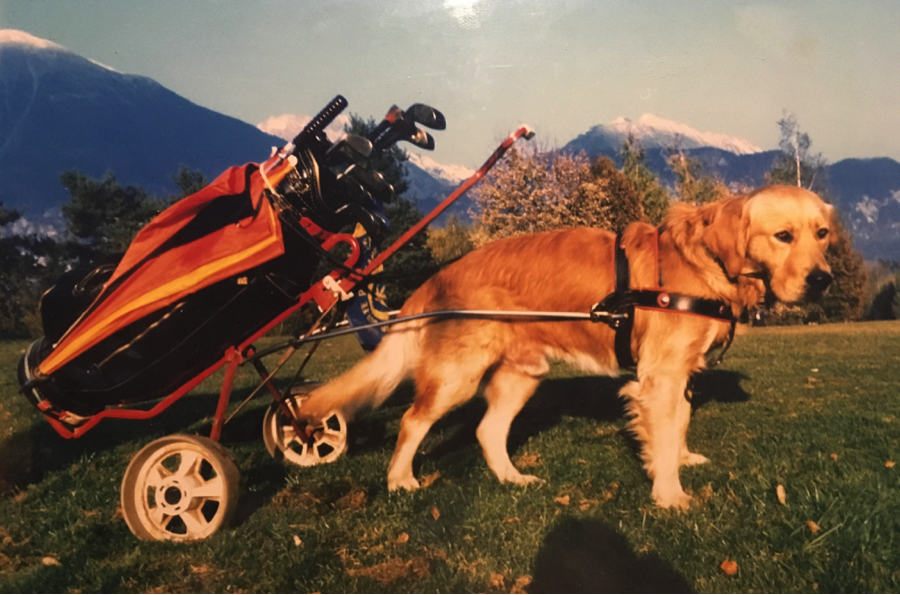
A particularly amusing tale is that of Grandad Tone and his golf ‘caddy’ Grol. Tone didn’t start to play golf until he was 62, when, due to his weak heart he gave up hunting as well as skiing and golf became a form of relaxation and enjoyment.

As the doctors had instilled in him that he must strictly avoid all forms of exertion, for some time Tone thought about how he could lighten the load of carrying his heavy golf clubs from one hole to the next and he hit on the idea that his faithful companion Grol could help!

Uncle Ivan made Grol a special trolley for transporting Tone’s golf clubs, and Grol adapted really well to his role as ‘caddy’.

Maja’s father Toni regularly went on exchange to Switzerland to “learn from the best”. It was there that he learnt skills from one of the most well known Swiss patisserie chefs, Hans van den Klinkenberg, in Hotel Eden in Lugano. Toni brought all the tricks and secrets he learnt from the patisserie chef to Kunstelj Inn’s kitchen, which led to Kunstelj’s strudels, pies, ice-cream and other cakes soon gaining a reputation as the best desserts in Gorenjska.

Like her father, Maja also has a passion for desserts and, also like her father, she went to Austria to learn her patisserie skills. Her role model, who she met on one of her culinary travels, is Lea Linser; at that time Lea was running an acclaimed restaurant in Luxembourg and was the first ‘tv chef’ on German television. To this day Maja turns to Lea’s cookery books for inspiration for her signature desserts.

Some year’s back Maja created the first Kunstelj ‘grizike’ (cake pops), which later became – and still are – one of the star attractions of the Radovljica Chocolate Festival!

You can also visit during the time of Slovenian Restaurant Week, which takes place twice per year for 10 days in autumn and spring, when you can take advantage of a 3-course menu for just 19 euros per person, the next edition will take place from 11th – 20th October (note: the website is currently only available in English, but menus will soon also be available in English and by next year the entire website too – working on that one too!).

Kunstelj Inn is also part of Taste Radol’ca and for the whole month of November all nine participating Taste Radol’ca restaurants offer special menus based on local ingredients also for a set price of 19 euros  per person.

So, now you know (some of) Kunstelj Inn’s history, why not visit to find out (and taste!) more!

© Adele in Slovenia

A Jaunt Through Jezersko!

I have already written several blogs about Jezersko, mainly about what a wonderful destination it is for hiking in the Kamnik-Savinja Alps. However, the valley itself also has plenty else to offer, including easy walks, a beautiful lake, a mineral water spring, a waterfall, museums, monuments and other historic buildings.

So, join me on a jaunt through Jezersko, and this time no hiking boots required!

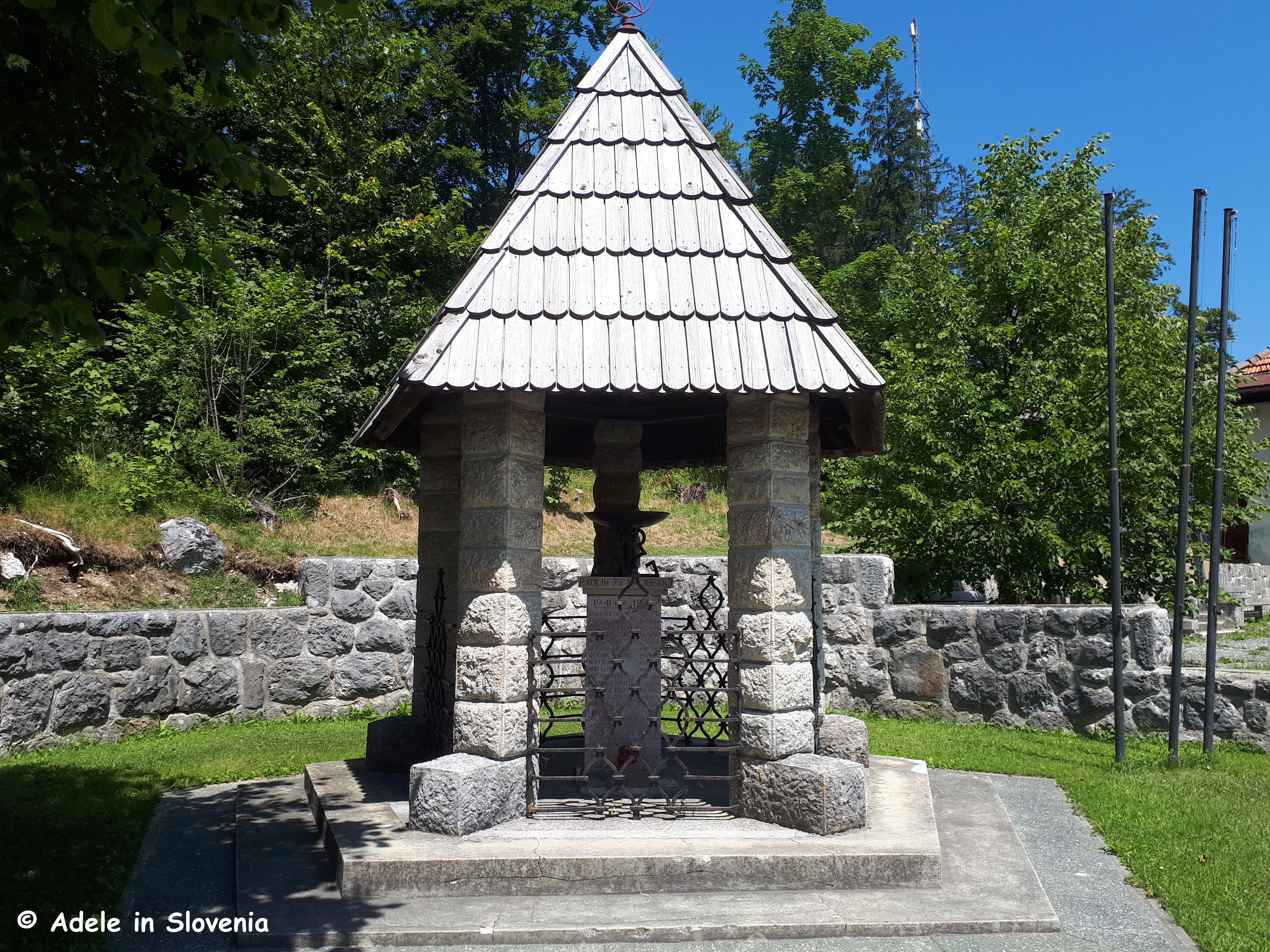
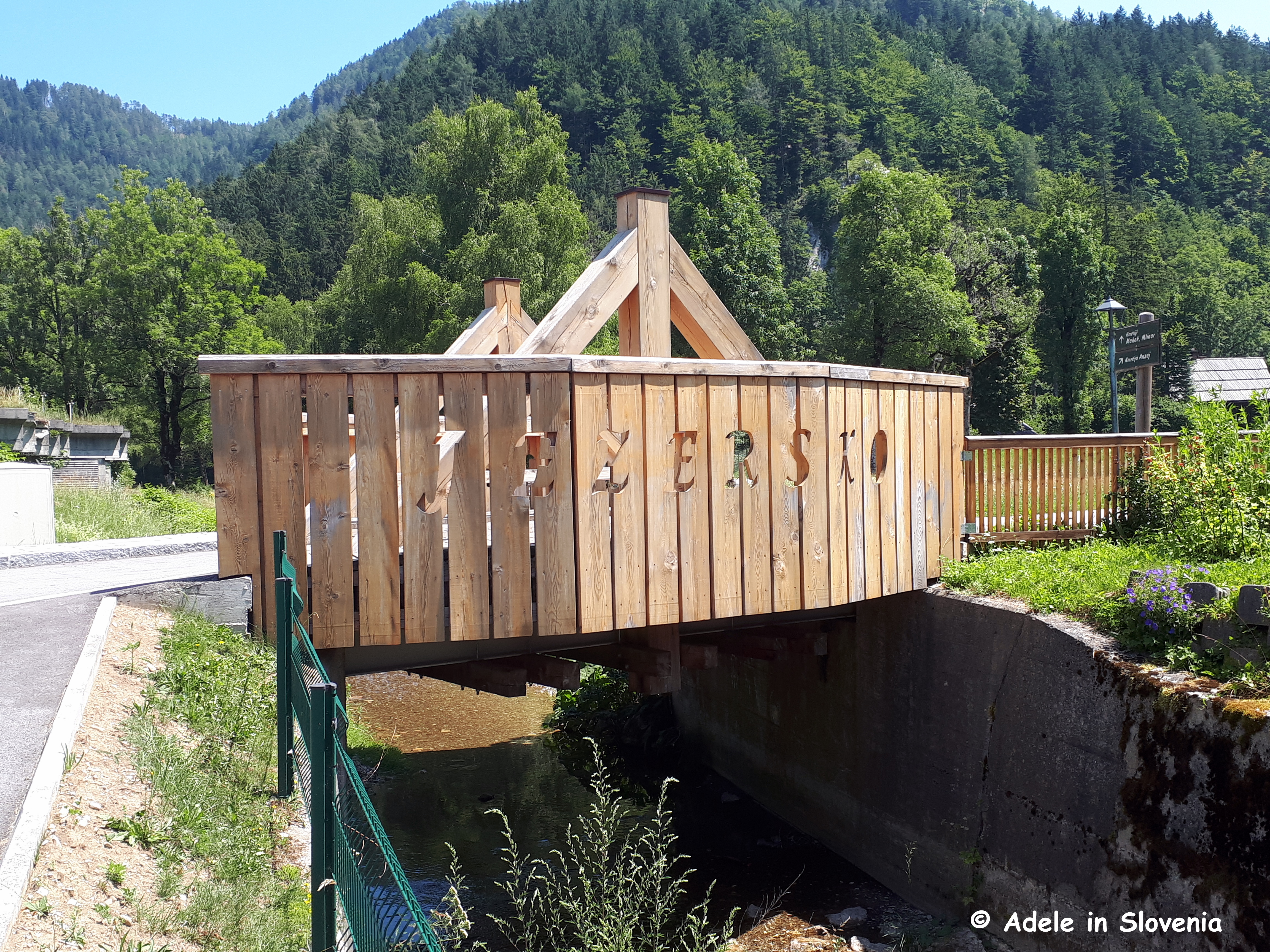
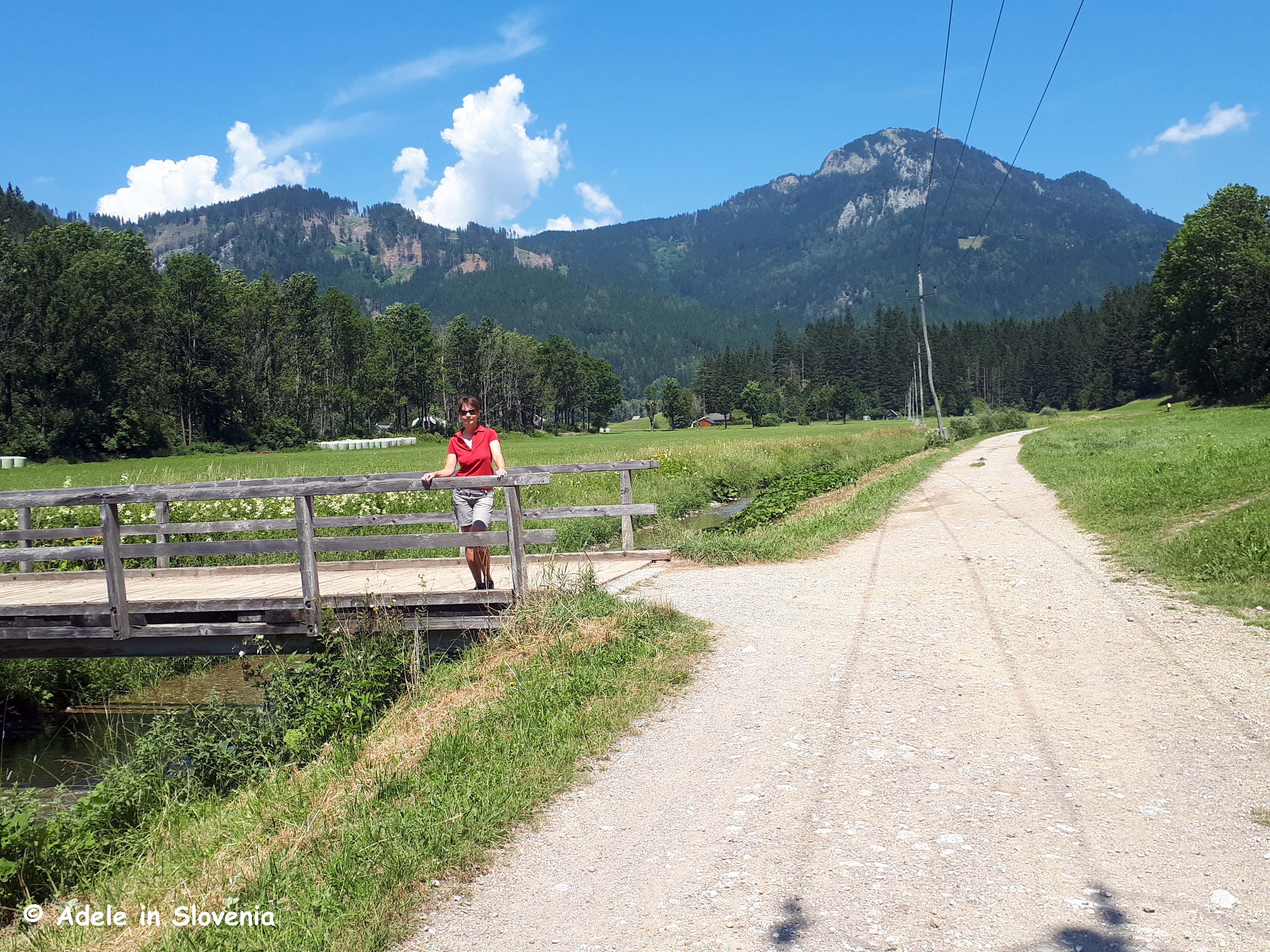
If you plan to walk the valley in its entirety, a good place to start – and to park – is at, or near, the Jezersko Tourist Information Centre. From there, pass a monument, cross the road and then cross the bridge.

Turn left after crossing the bridge to join the path alongside the Jezernica stream.

It’s not long until the valley begins to open up to reveal magnificent views of the surrounding peaks of the Kamnik-Savinja Alps.

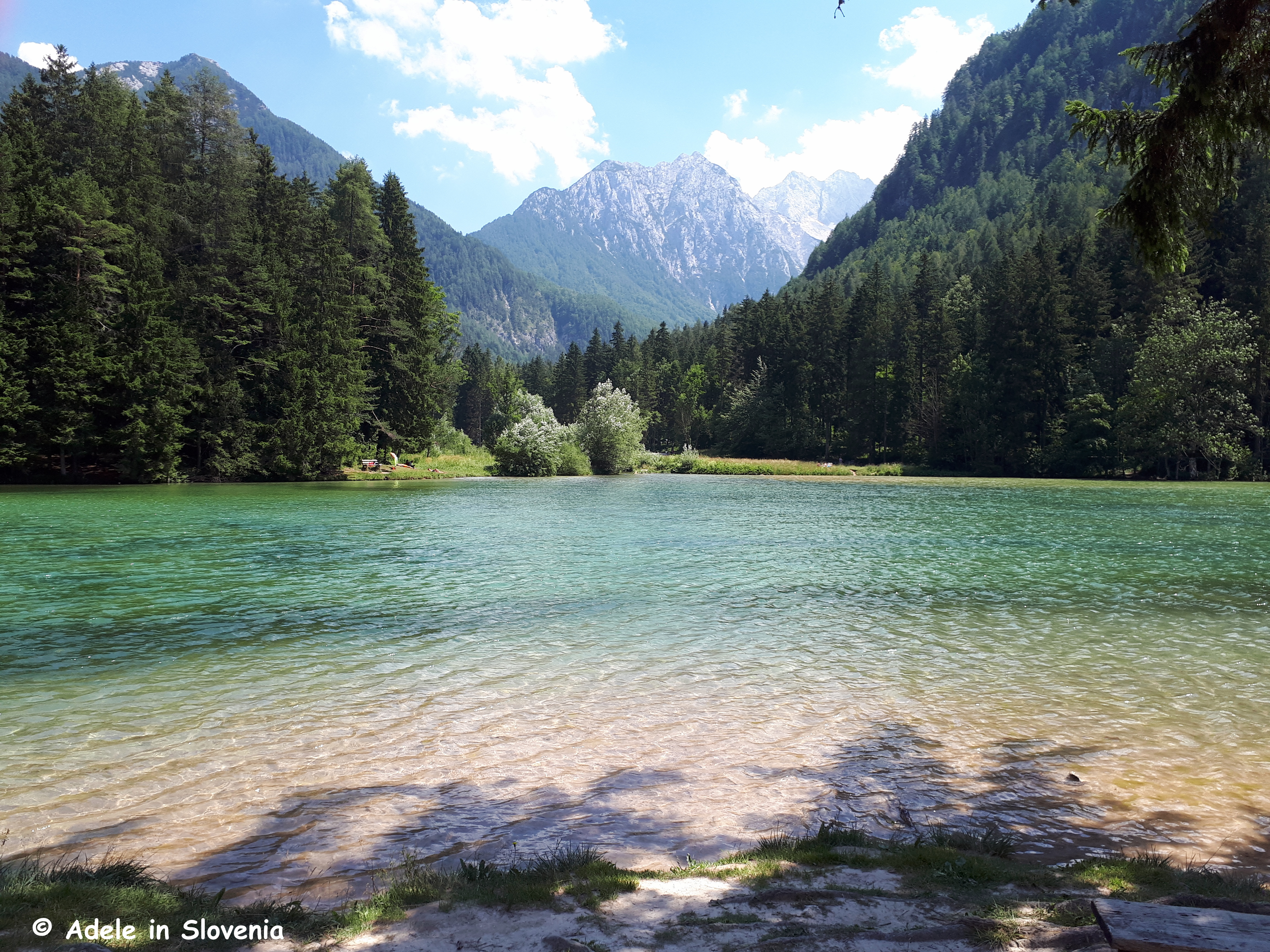
Follow the path for around 25 minutes to reach the beautiful Planšar Lake (Planšarsko jezero).

You can take a refreshments break at the Gostišče ob Planšarskem jezeru restaurant, which is known for its traditional food and especially desserts such as kremšnita (cream slice).

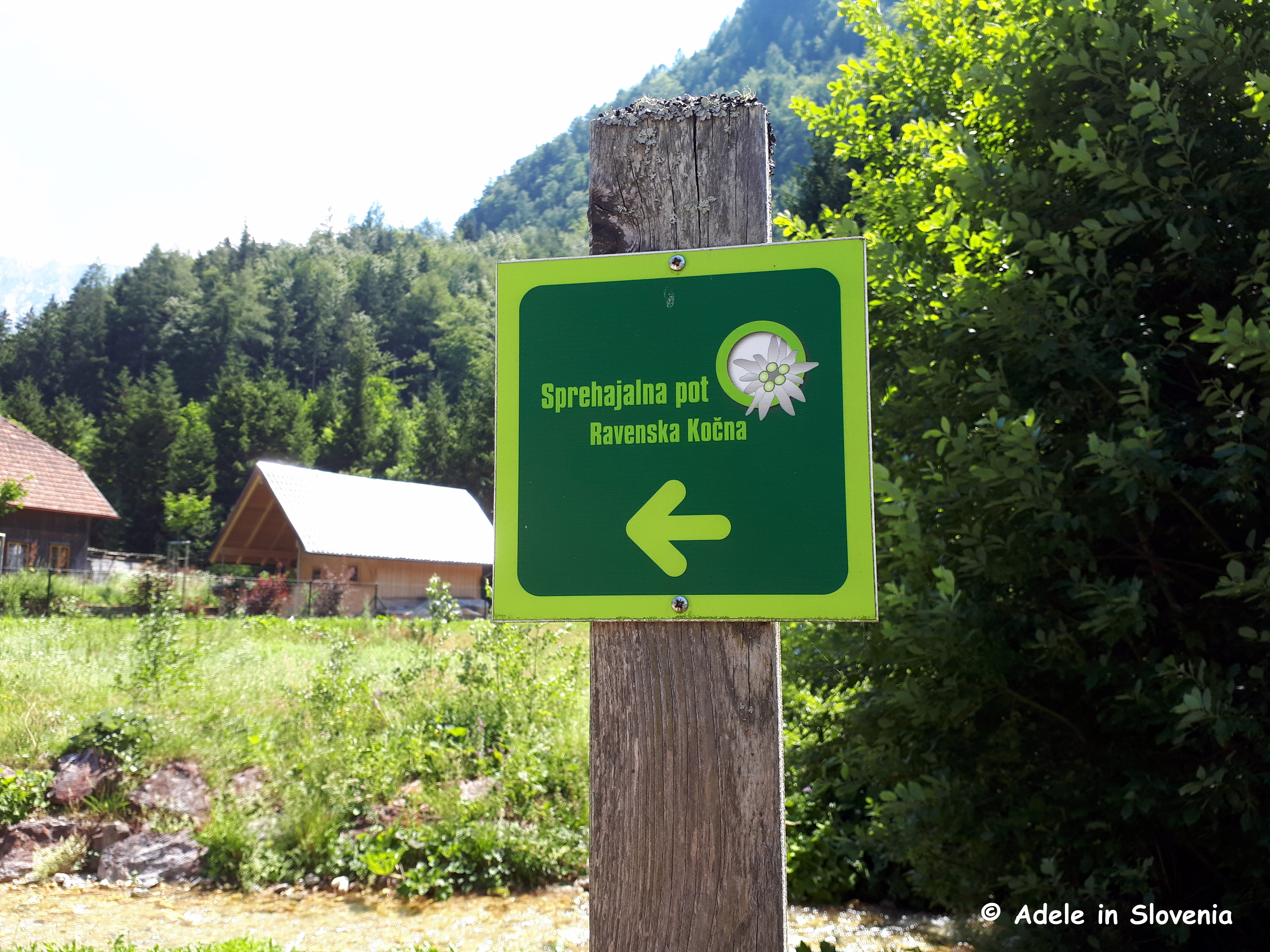
Then walk around the lakeshore – in either direction – to join the Ravenska kočna theme path. The path branches off the tarmac road to the right at the junction seen in the photo below. It is well marked and easy to follow.

After about 20 minutes walking on the gradually rising gravel path, you reach a clearing and a pasture, from where there are magnificent views.

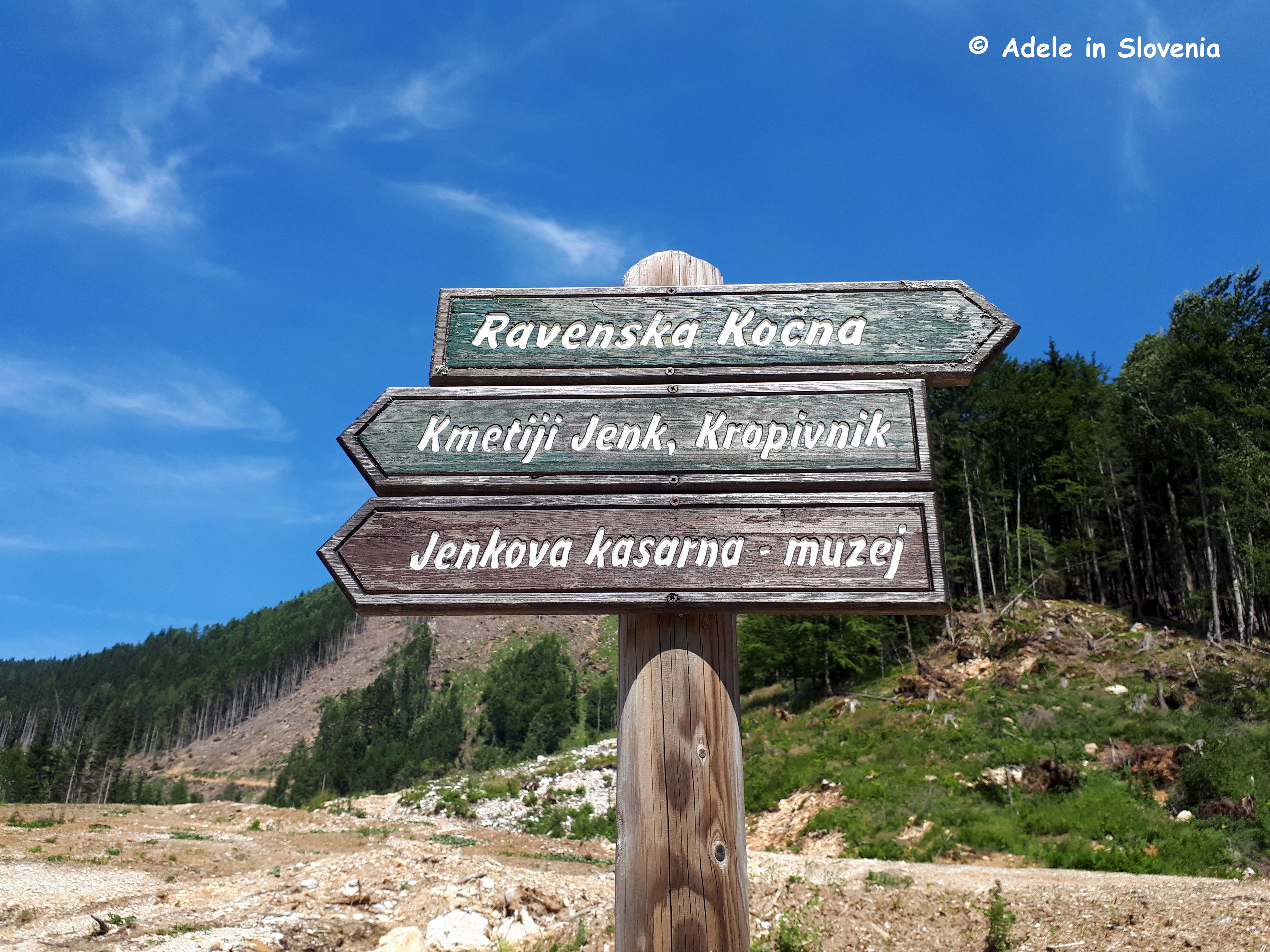
You can continue to the head of the valley, which takes another cca. 30 minutes and is worth it for the views alone. Or, if you would like to continue exploring Jezersko, on returning, instead of walking back towards the lake, follow the tarmac road towards Jenks barracks (Jenkova kasarna).

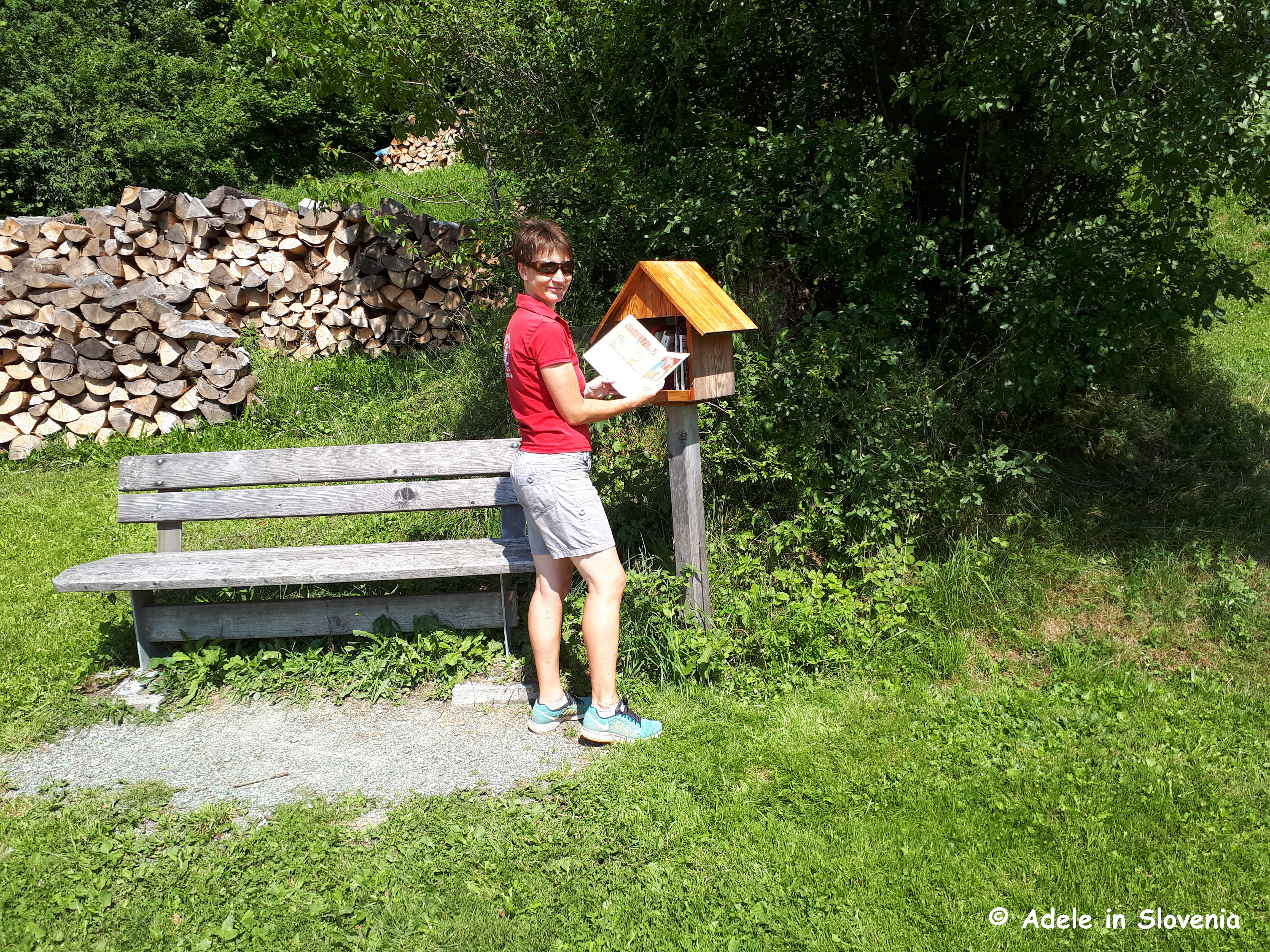
Along the way you can stop for a rest and a read at one of the free book stops!

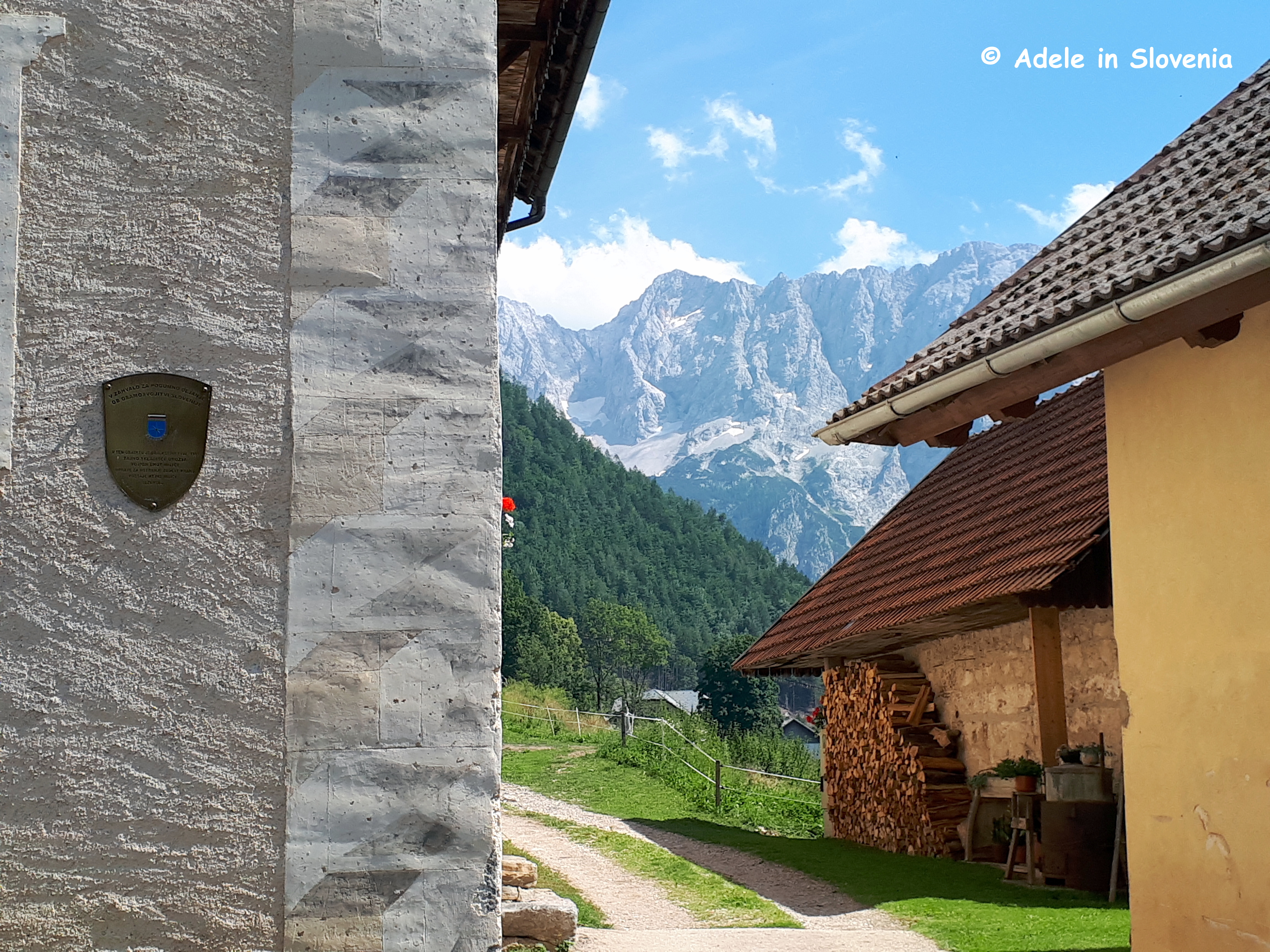
The building dates from the 15th century when it was used as a boarding house for merchants travelling from Tržič (in Slovenia) to Eisenkappel (in Austria) and onward.

During Slovenia’s short battle for independence, the barracks, which nowadays contain an ethnographical museum collection, once housed a secret stash of weapons. The plaque on the outside of the house – as seen below – is a thanks for brave actions on the independence of Slovenia.

Should you want to visit the museum, contact the Jezersko Tourist Information Centre which can make the necessary arrangements.

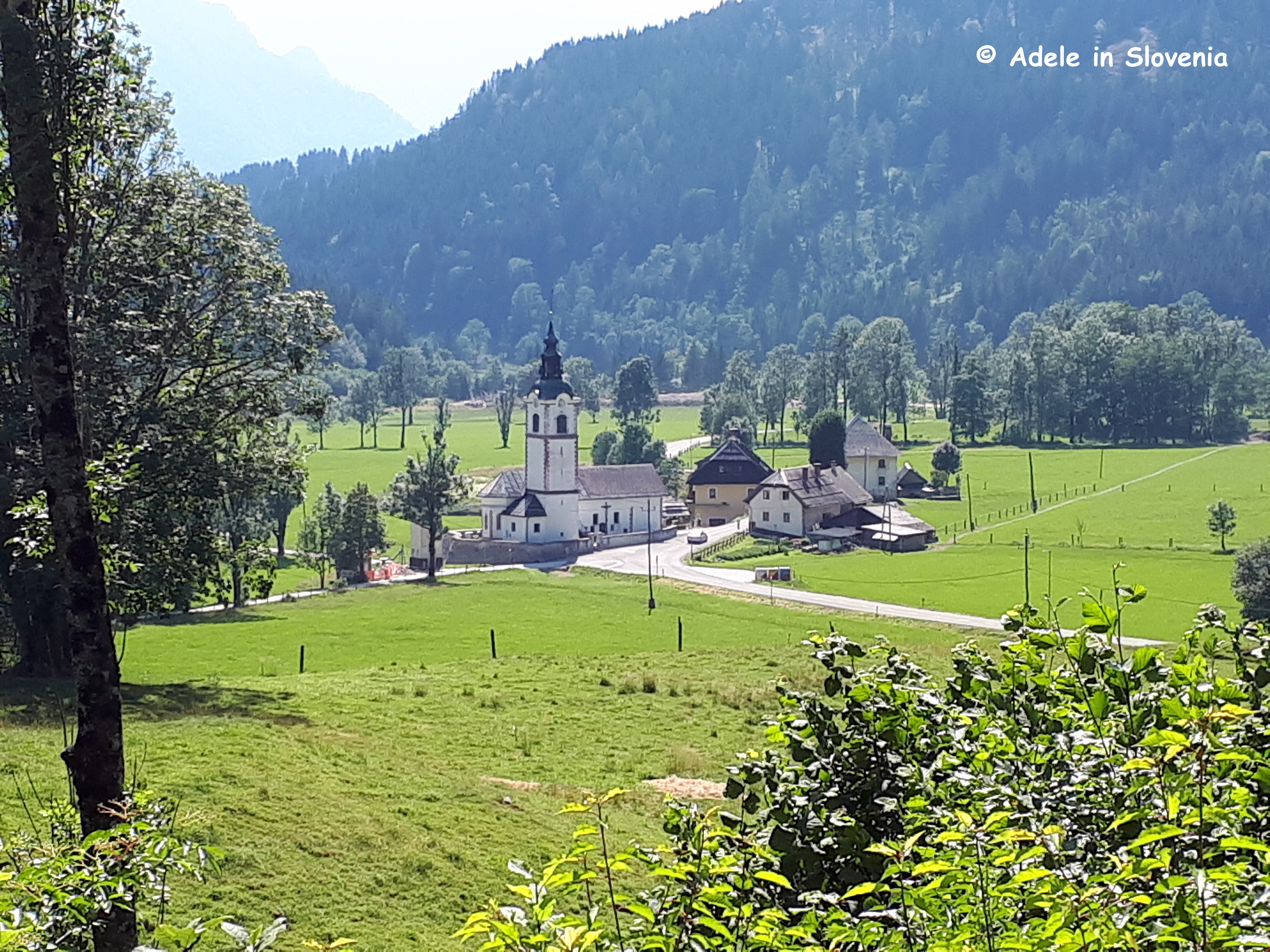
After passing the barracks, continue slightly upwards until you meet the main road that leads upwards towards the border with Austria – the Pavlič pass (Pavličevo sedlo). Turn left and walk back towards Jezersko towards St. Andrew’s church (sv. Andrej).

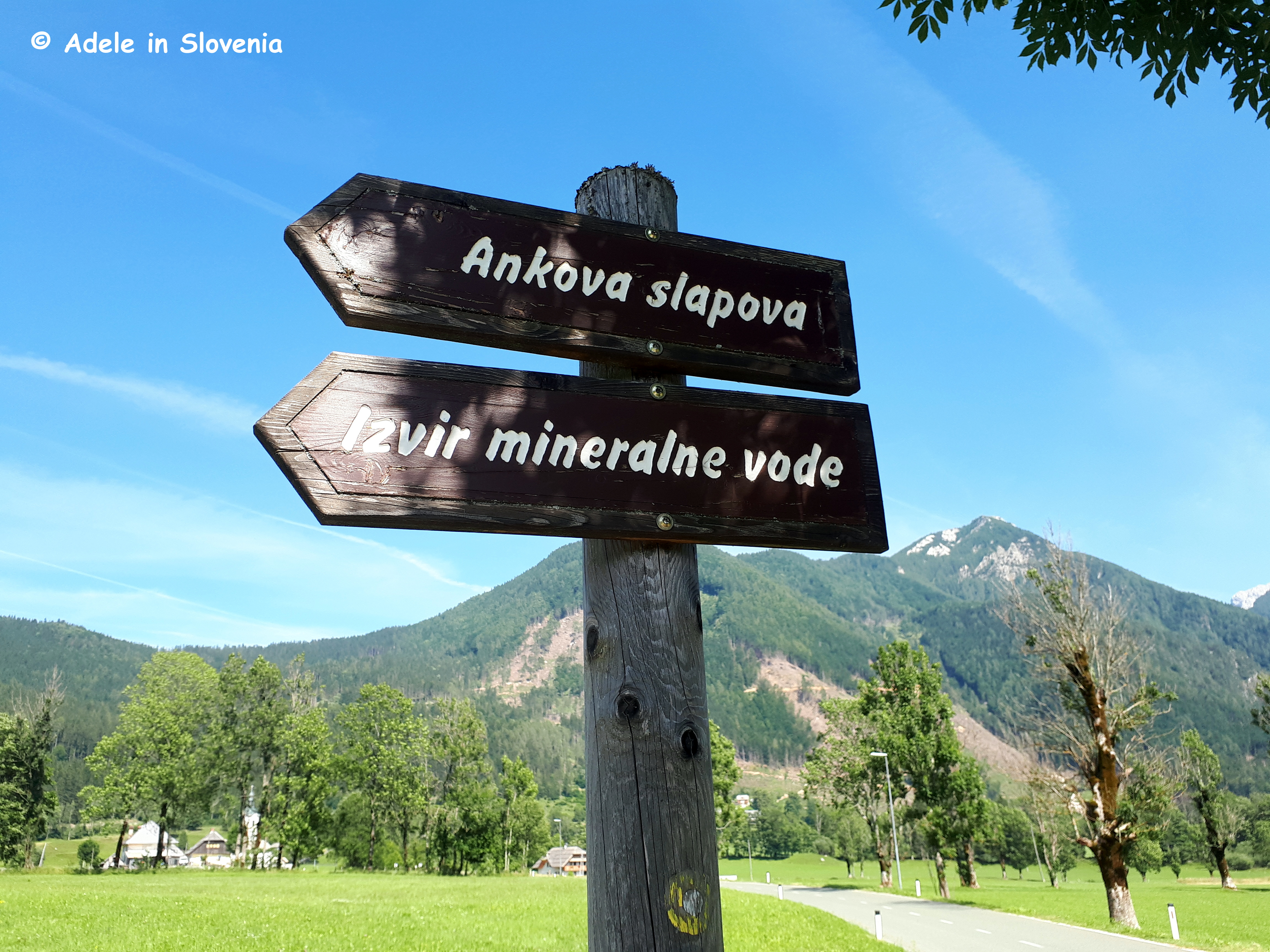
On reaching the church, at the junction you can either turn off the main road to return towards the Planšar lake or make a(nother) side trip to visit a mineral spring and waterfall. If you choose the latter, follow the main road past the church for around 5 minutes before turning right at the sign below.

The water that springs from the Jezerska slatina mineral water spring is known to contain magnesium content of all mineral waters in Slovenia. It is said to be beneficial for a range of ailments and diseases, particularly cardiovascular-related.

I must admit I was surprised to discover that it actually has a very pleasant taste and is lightly carbonated; some such natural mineral waters I have tried elsewhere have a somewhat metallic or bitter taste, but this one doesn’t, though one should be careful not too drink too much. The information board behind the spring gives more information and advice about how much can be drunk.

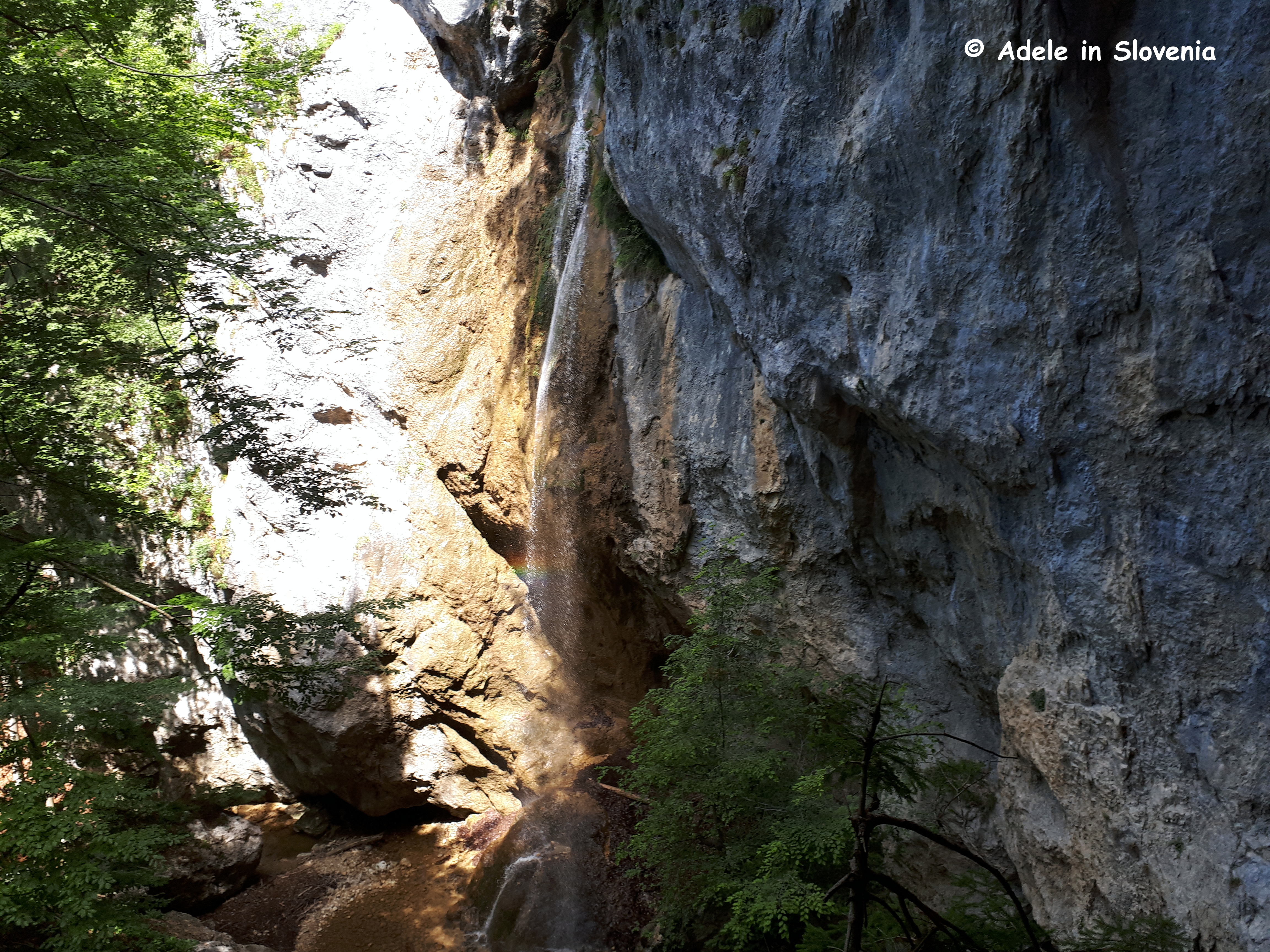
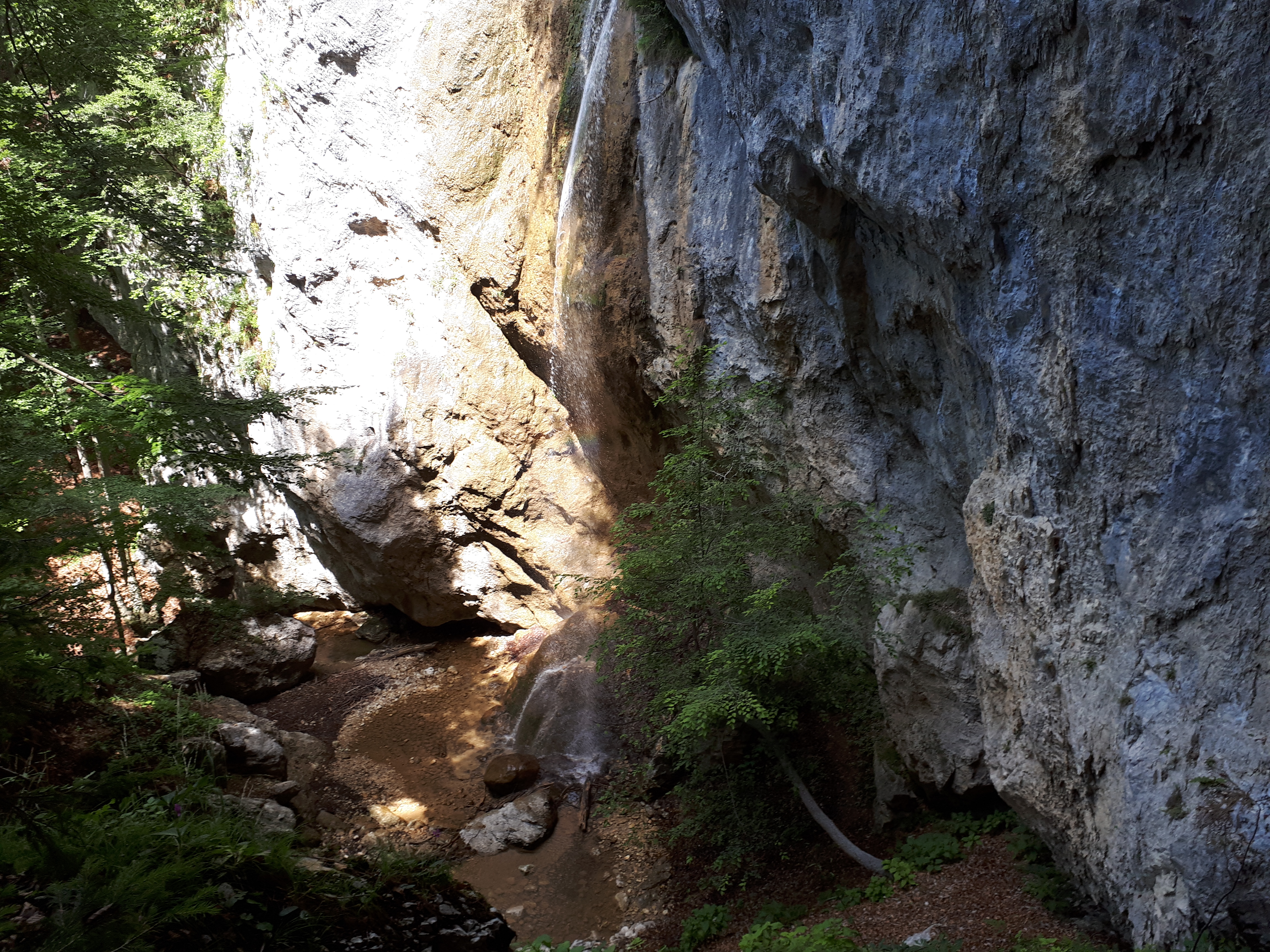
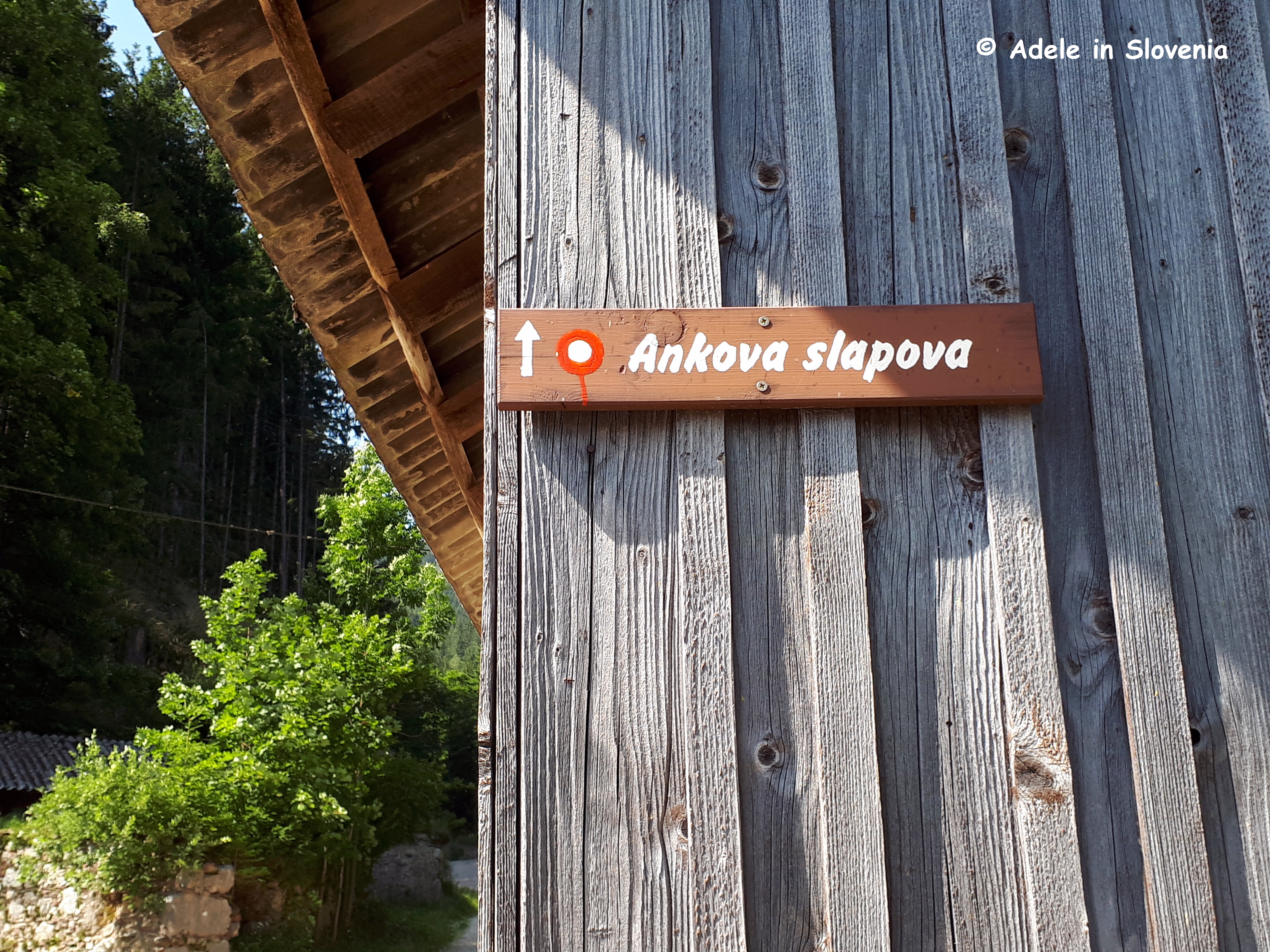
You can continue past the spring to reach the Ank waterfalls (Ankova slapova). To reach the falls, walk past the Ank homestead (Ankova domačija) and follow the signs upwards into the forest.

There are two small waterfalls that, one after another, drop 7 metres.

So, that wraps up my jaunt through Jezersko. I hope you will follow in my footsteps and visit, whether for a short jaunt, a longer hike, or an even longer stay!

© Adele in Slovenia


Visit Tržič and Košuta – A Hike Along the Ridge of Slovenia’s Longest Mountain

At 10 kilometres long, the Košuta ridge, part of the Karavanke range situated above Tržič, is Slovenia’s longest mountain.

Its numerous peaks and mountain pastures make it a paradise both for hikers and mountain bikers. And you certainly won’t go hungry whilst on, or beneath, Košuta, as there are several mountain huts and dairy farms on the mountain pastures.

This blog post is day two of the 2-day hike I did on the ridge, with an overnight stay at the Taborniški dom na Šiji (the Šija Scouts’ Hut) – read about the hike up to the hut, the great food and the friendly hosts here. After breakfast, we took one final look back at the hut where we had spent such a pleasant night, then set off to conquer two of the peaks along the ridge.

From the Šija mountain pasture we walked to the Pungrat mountain pasture.

We passed by the dairy farm on the Pungrat mountain pasture (Planšarija planina Pungrat) – no need for sustenance just yet after having only just set off!

From the dairy farm a path leads up towards the Škrbina saddle. As you gain height, the views just get better; first back down towards the mountain pastures below and the mountains in the distance.

Then, on reaching the saddle, the views – in all directions – are magnificent and accompany you all the way along the ridge.

You can choose the path to the east towards Košutnikov turn or to the west towards Kladivo. We chose the latter, not least because my previous attempt to reach the peak didn’t exactly go to plan!

Regular readers might recall a blog I wrote some years back, titled ‘Kindness in the Karavanke‘ about my attempt to reach Kladivo, which, that time, ended up with me in tears and some friendly strangers being very kind! This time, however, I conquered it with relative ease and, in doing so, realised that last time I was literally a few metres from the top before I bottled it, and also discovered that the path down the other side is much easier, so I could have managed it, but that’s hindsight for you!

And the views are, well, you can see for yourself below, but they are even better when you earn them by hiking up and seeing and experiencing them for yourself!

After descending from Kladivo, we carried on along the wonderful ridge walk to Kofce gora and then on to Veliki vrh (literally ‘Big peak’).

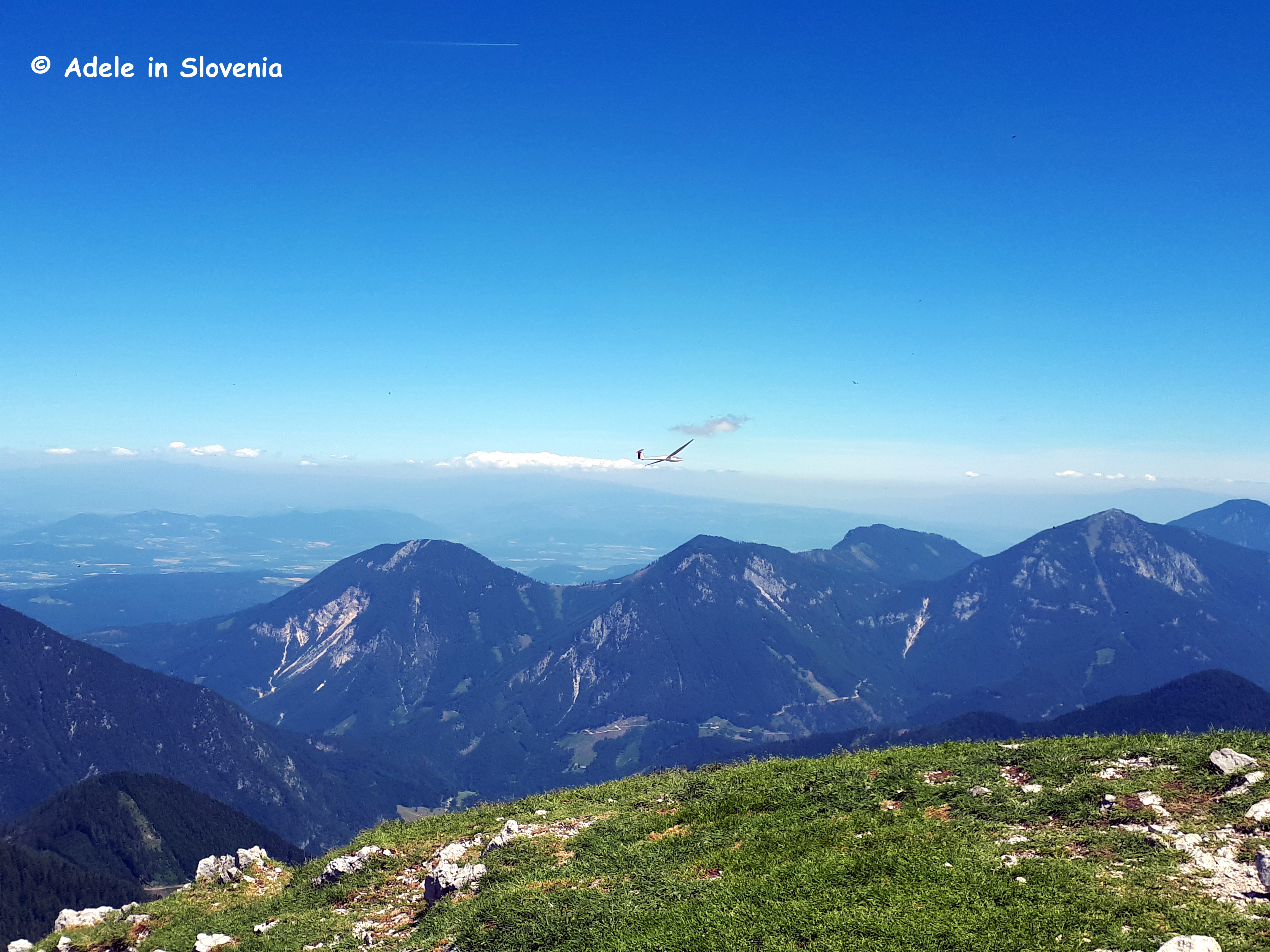
Is it a bird, is it a plane…?

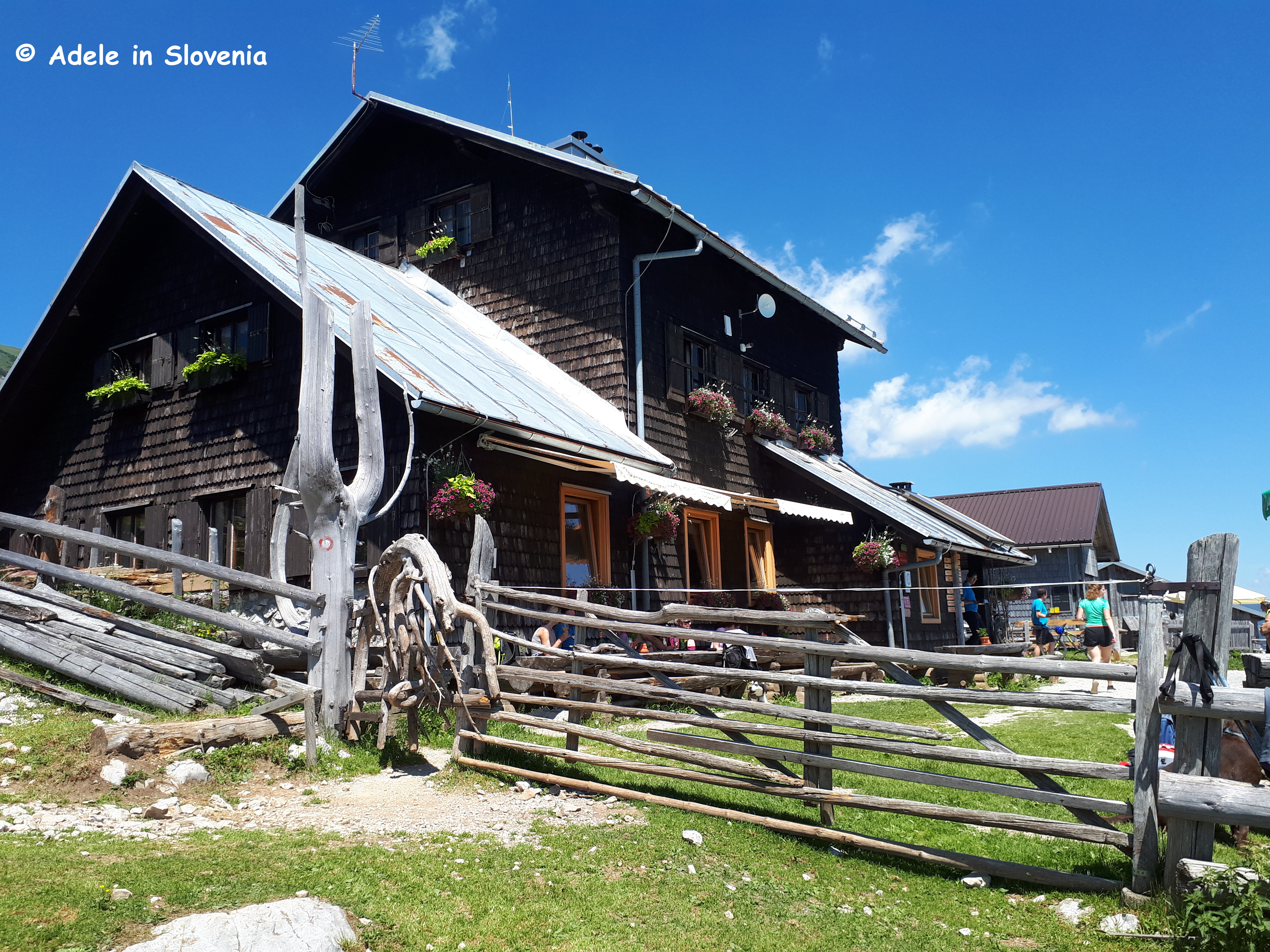
From Veliki vrh we descended to the Dom na Kofcah mountain hut which, at the time of writing is in the running for the title of ‘Best Slovenian Mountain Hut 2019‘.

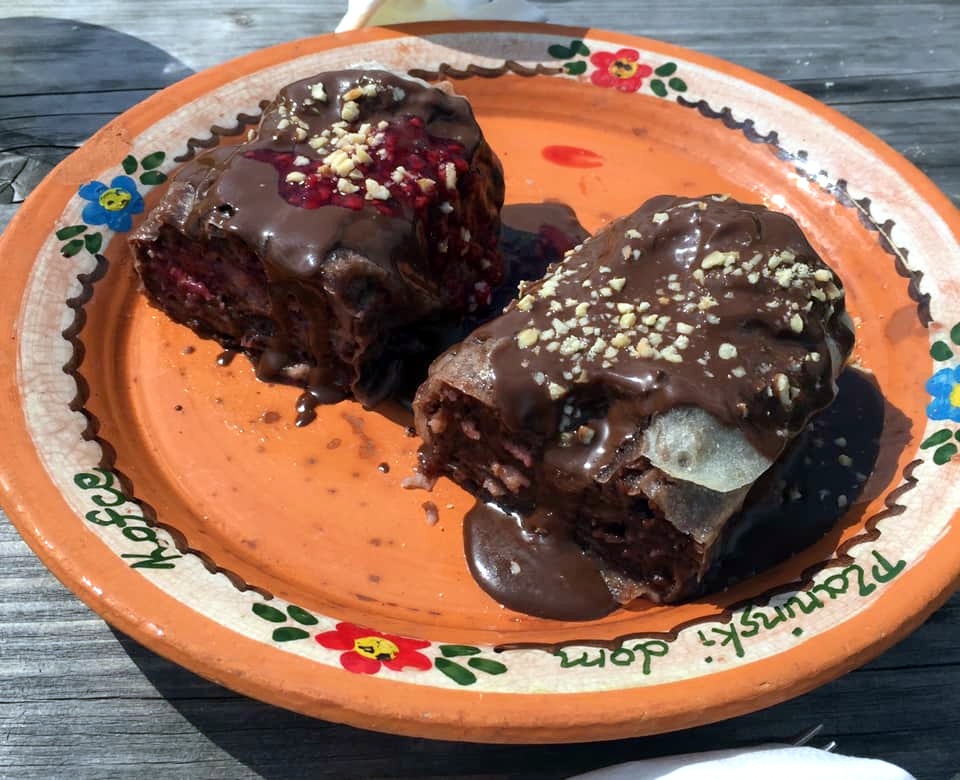
The hut is famous for its excellent štruklji in a myriad of flavours. For me a visit is now a bittersweet experience and (almost) brings tears to my eyes when I see and smell the excellent štruklji as, sadly, there are no gluten-free ones to be had so my once favourite Slovenian food is now off limits for me – a travesty indeed! But for those who are lucky enough to be able to eat ‘normally’, do try the štruklji, I’m sure you won’t be disappointed, and maybe you will spare a thought for me whilst doing so!

This is just one of the many great hiking routes in the Tržič area, where you are spoilt for choice. See the Visit Tržič website, and you can also click on the ‘Visit Tržič’ tab above to see all the other blog posts I have written about what to see and do in the area.

© Adele in Slovenia


Hike Tržič: Košutica (Ljubeljska Baba) – 2 Countries, 1 Great Hike!

Despite being here over 12 years, I still get a kick out of being able to cover two countries in one hike, and the hike from Podljubelj in Tržič to Košutica (also known locally as ‘Ljubeljska Baba’) – part of the Karavanke mountain range – is up there among my favourites, not least because it makes a fab circular hike!

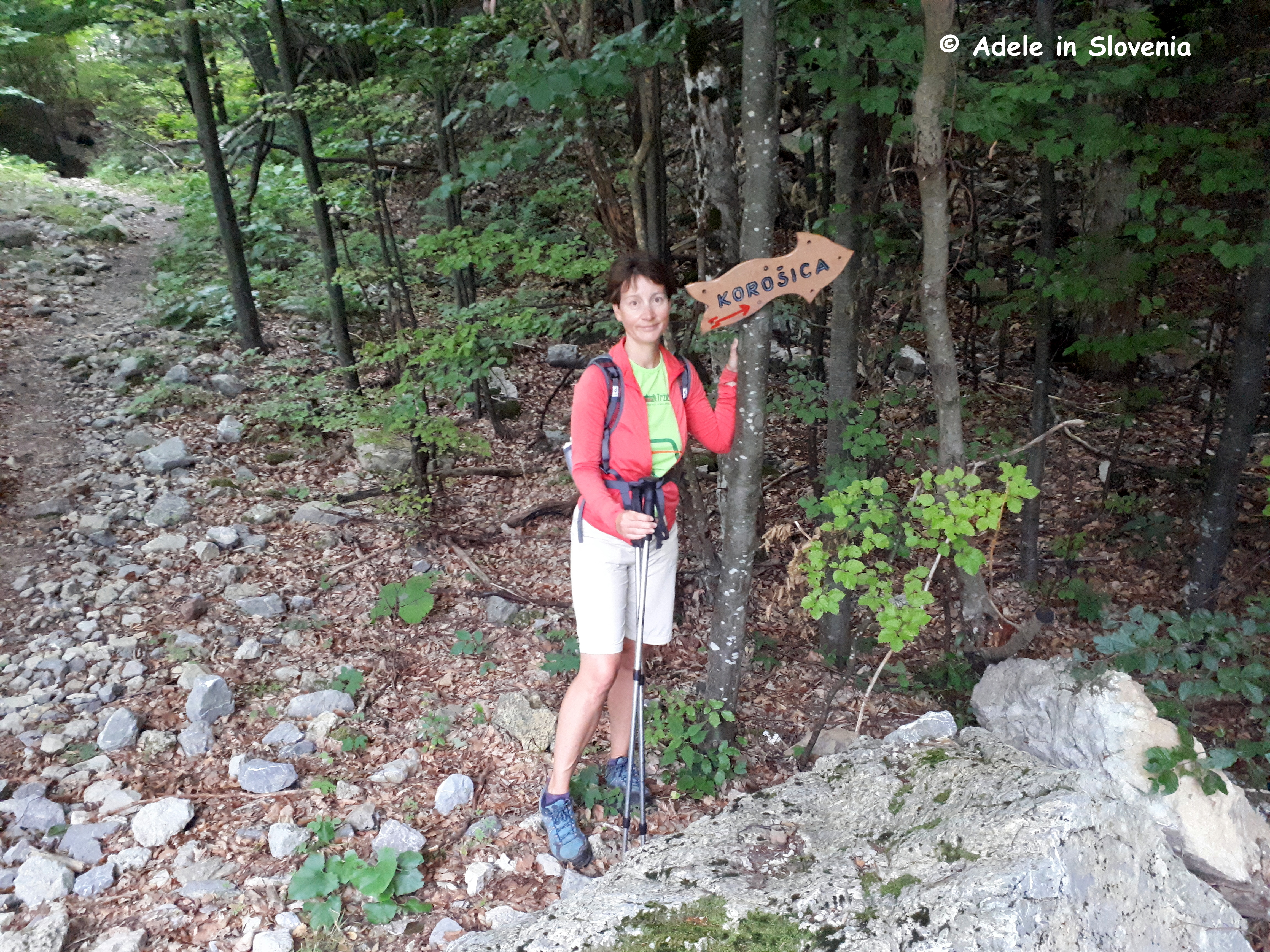
There are various ways of reaching the peak of Košutica; I like to begin from the monument next to the road and opposite the Mauthausen concentration camp in the St. Ana valley, which is located on the road from Tržič towards the Ljubelj pass to Austria.

The Hunters’ path (Lovska pot) winds its way up through the forest towards the Korošica mountain pasture. It is sparsely marked but well trodden, so orientation shouldn’t prove too much of a problem, well, unless the valley is shrouded in cloud as it was last Sunday morning!

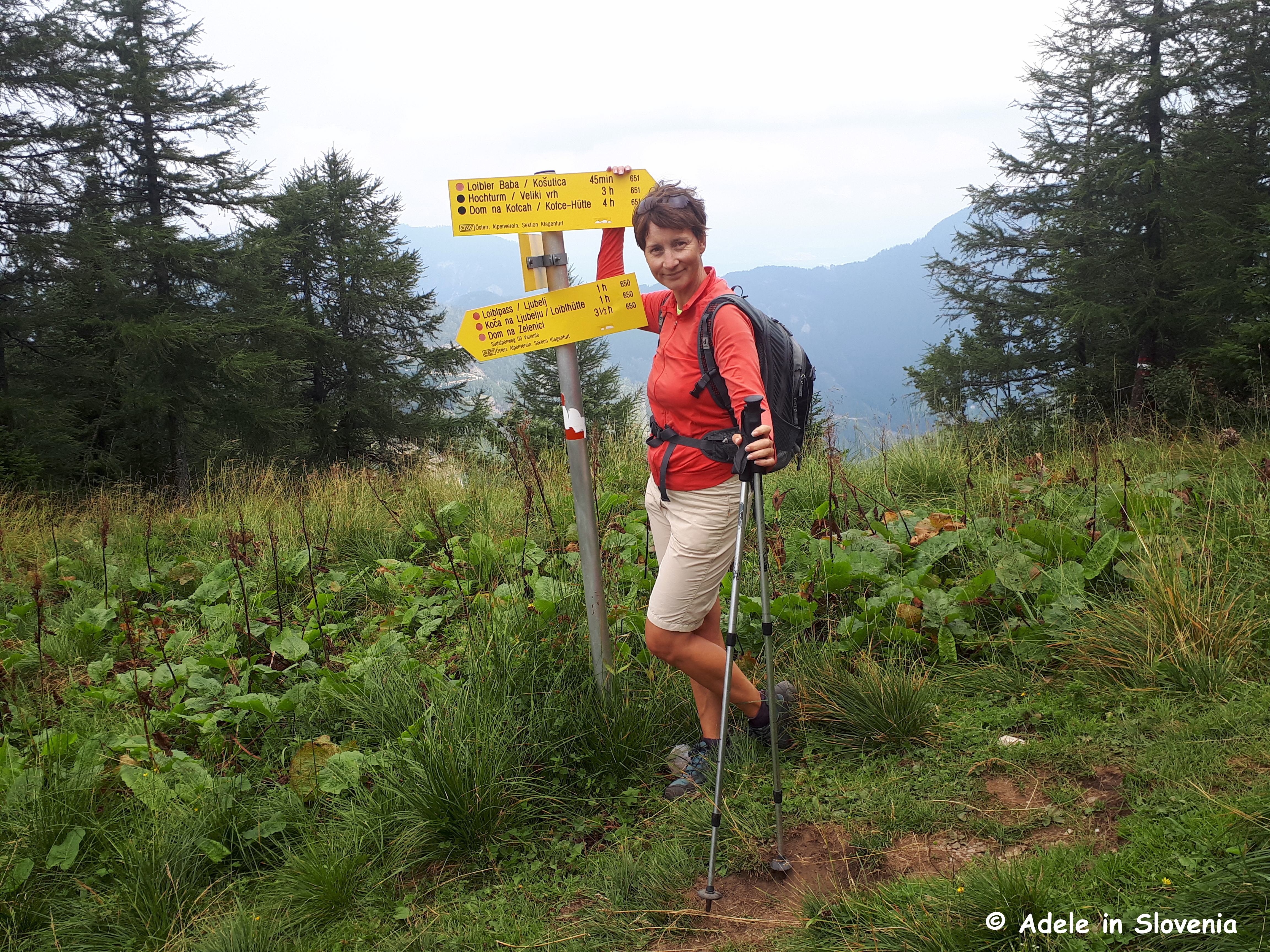
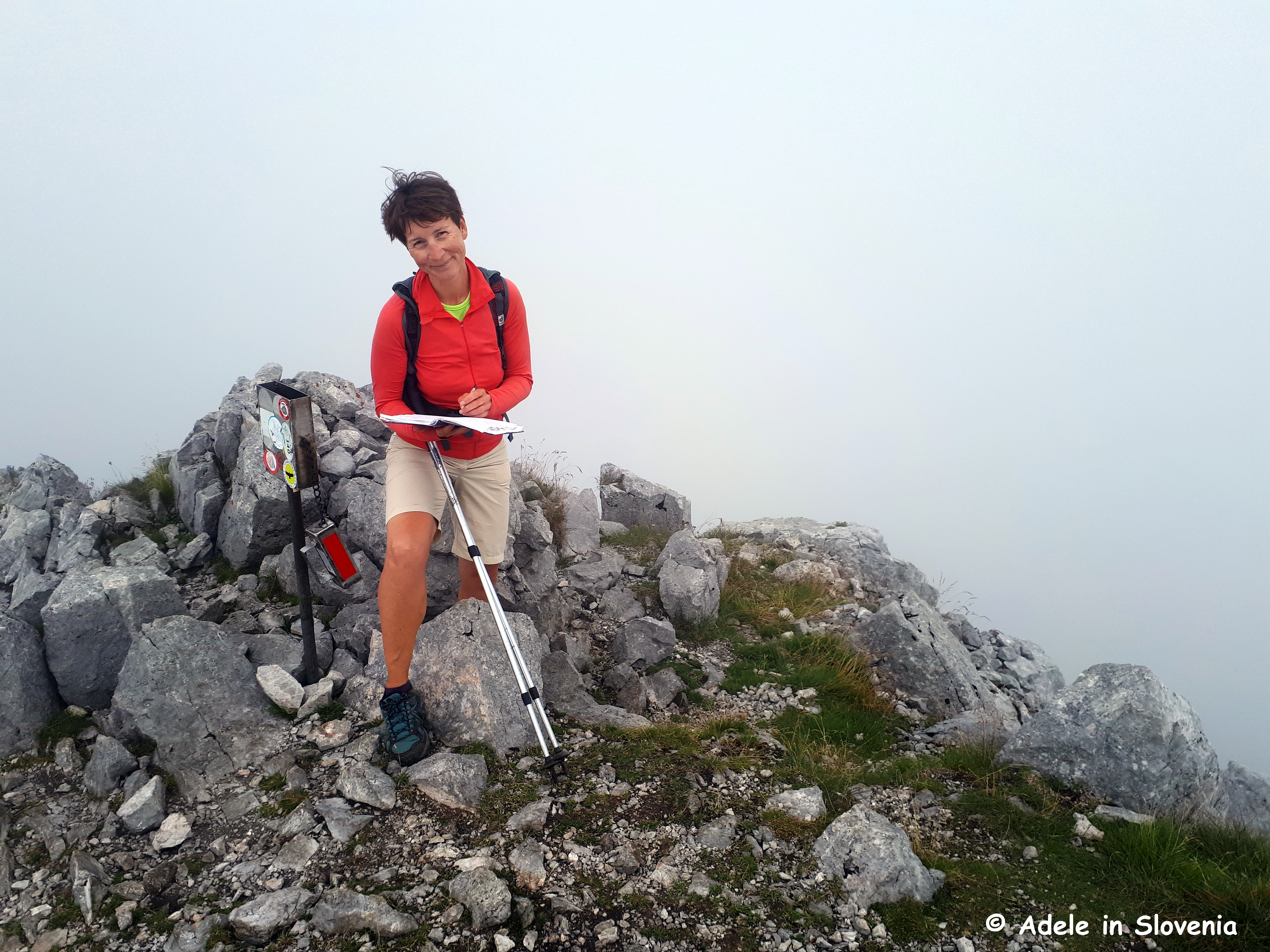
Shortly before reaching the mountain pasture, the path to the peak of Košutica veers off to the left up to a junction of paths and the border with Austria, from where you turn left to take the path up to the peak of Košutica (1968m), marked here as ‘Baba’.

Although I try to pick perfect sunny days for my hikes – both for my enjoyment and in order to get good pictures for my blog – the weather doesn’t always play ball, and despite waiting around 20 minutes at the top, sheltering from the wind in the vain hope that the cloud might lift revealing the magnificent scenery below, it didn’t – well not at least until we had descended from the peak!

At least I had a flask of tea to warm me up!

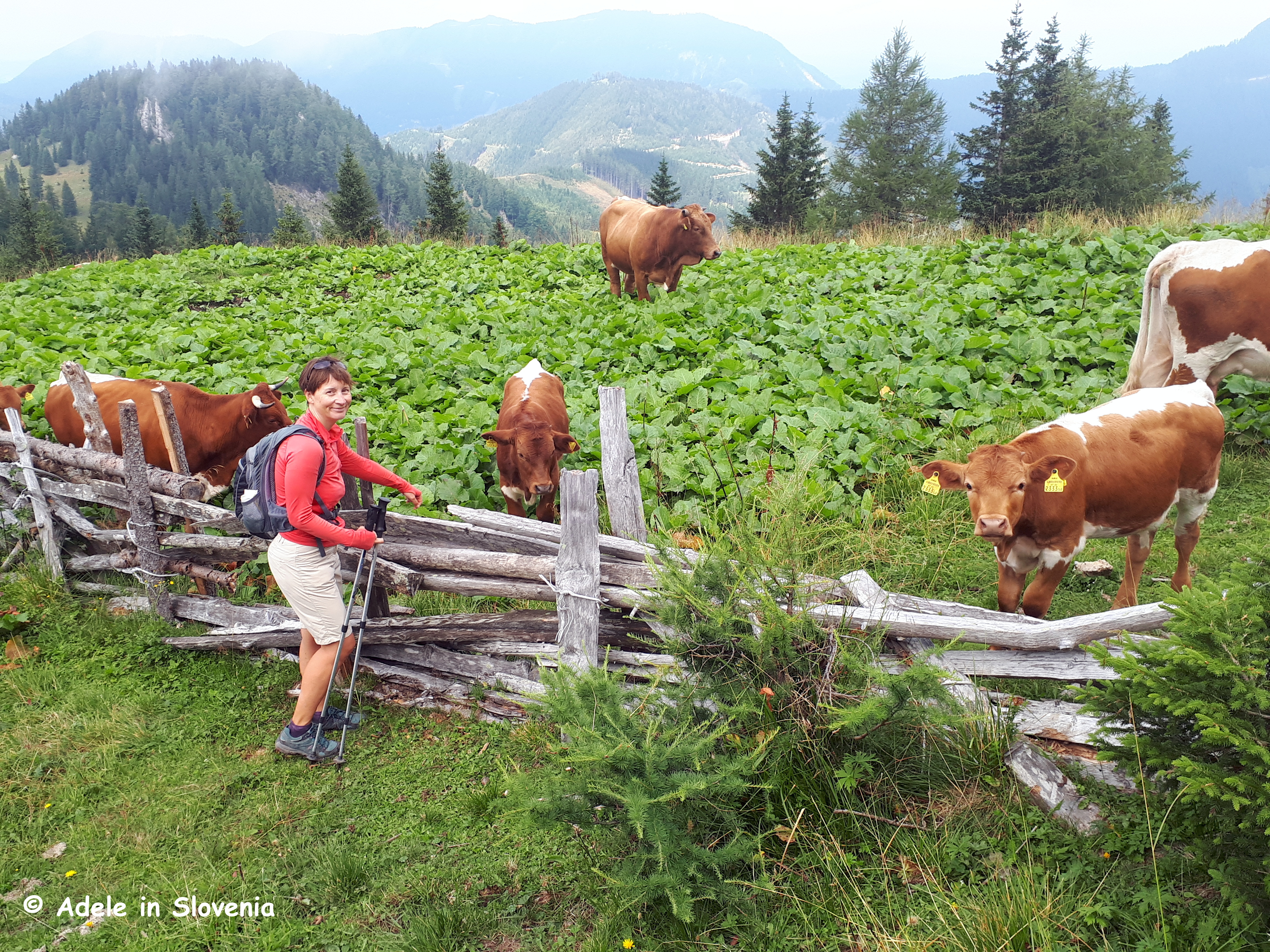
The fog didn’t deter this pair, who obviously know where to find food!. They were so tame it was amazing, almost eating out of our hands!

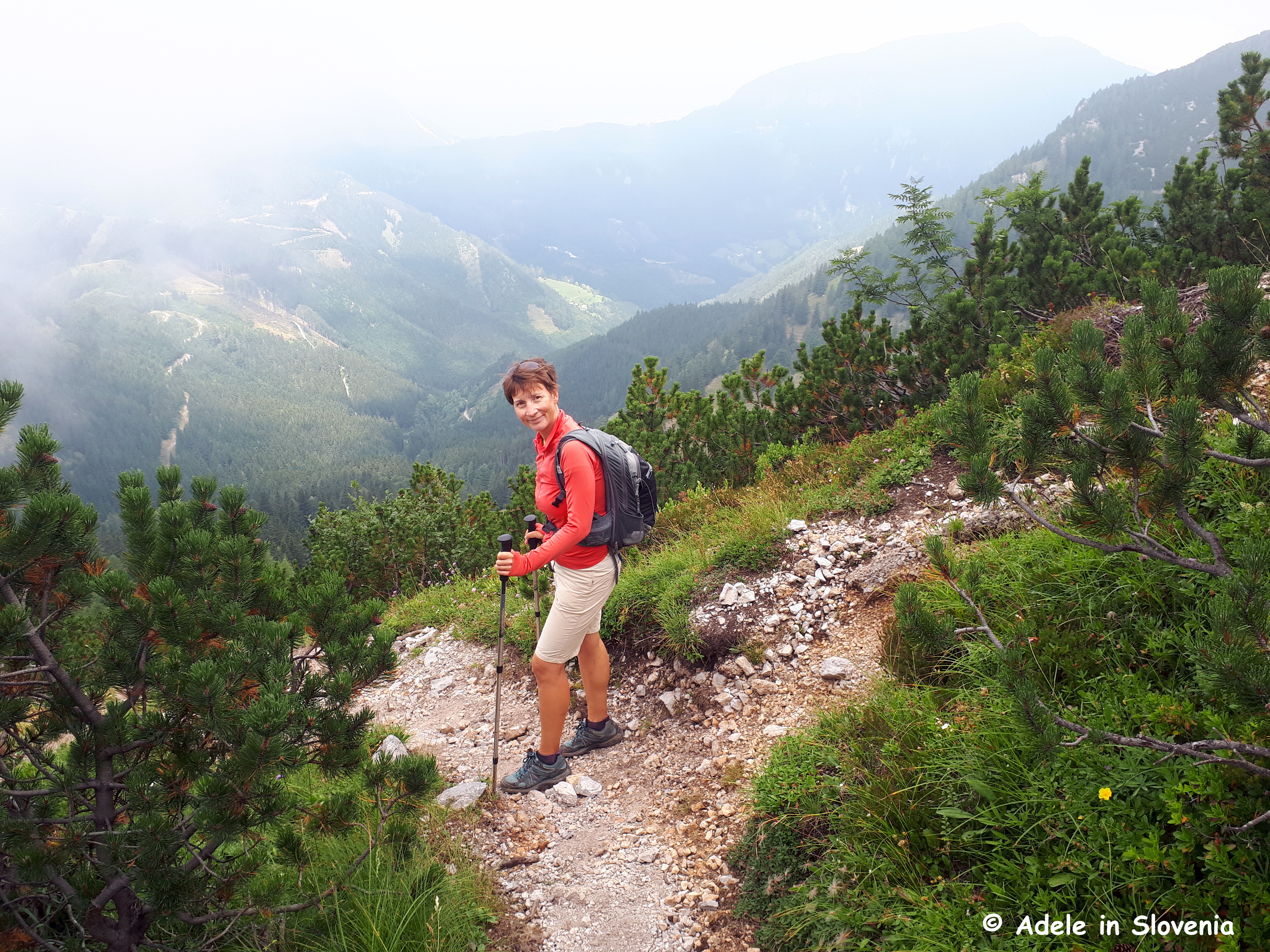
And then, of course, the inevitable happened. As we began to descend the fog lifted, as did our spirits, the wind died down and the sun began to break through.

We could even finally see the cows that we had previously only been able to hear – these ones are Austrian (can you tell?!), since they are on the Austrian side of the border!

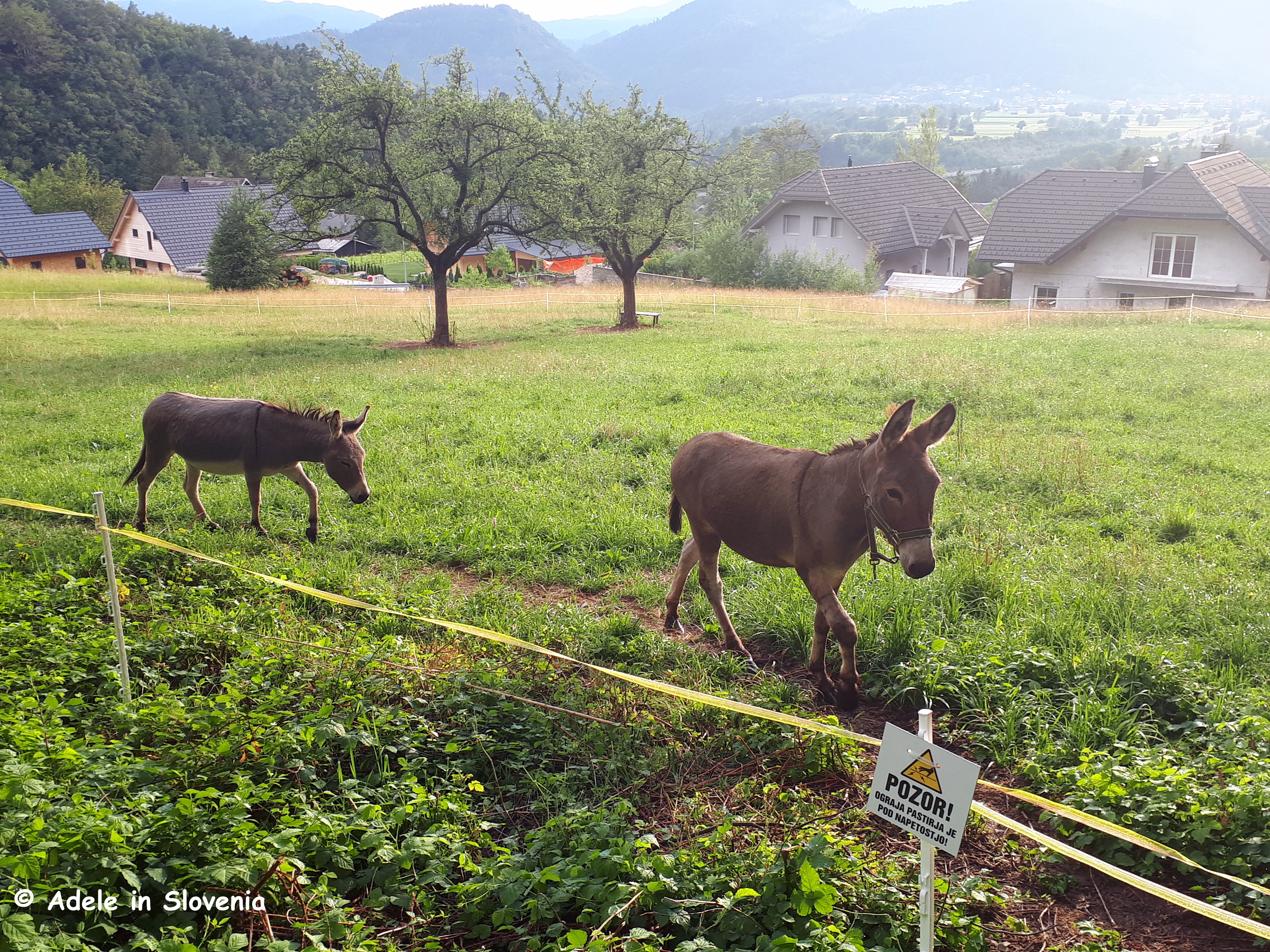
The donkeys we met on the way down, however, were most definitely Slovenian!

From the junction of paths, you can either return the same way, walk down to the mountain hut on the Korošica mountain pasture, and/or follow the path adjacent to the fence that forms a border between Slovenia and Austria – we opted for the latter two, i.e. first down to the hut for some sustenance, then back up to the junction and into Austria.

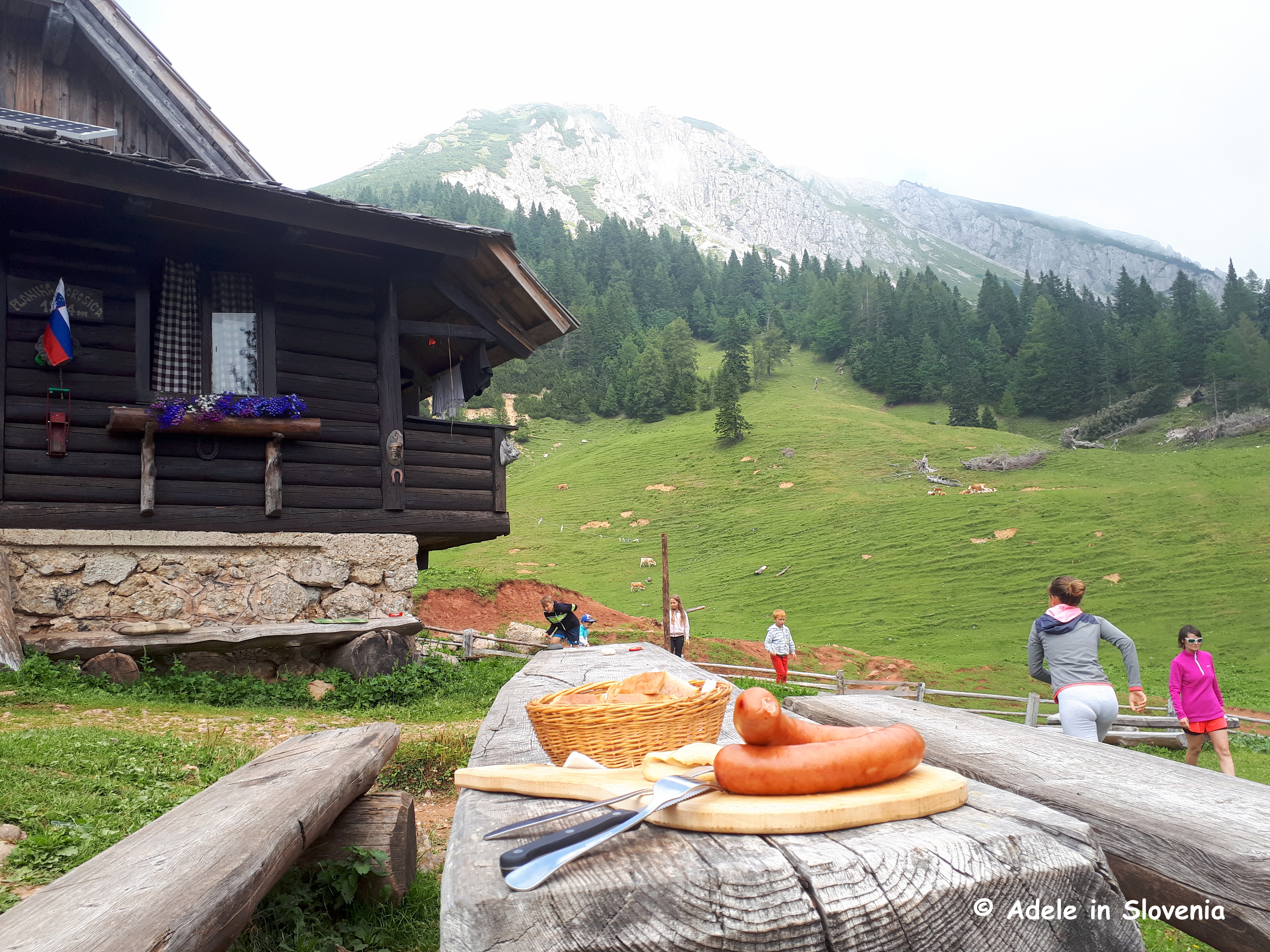
The hut is only open during the grazing season – usually mid-June to mid-September. It offers typical Slovenian mountain food, such as Carniolan sausages, buckwheat with pork crackling, sour milk, and, if you arrive early enough (we clearly didn’t – not that I would have been able to indulge anyway, sadly), freshly-baked strudel and potica.

Feeling fortified, we walked back up to the junction of paths, then followed the path along the border, from where there are wonderful views back towards Košutica – now looking magnificent in the sun!

The path continues along pastures before descending to an iron ladder. I wouldn’t advise this route when it is, or has recently been, wet, as in places it is rather steep, muddy and slippery when wet.

After a while the path eventually descends to reach a forest road (in Austria!), where we turned left and walked slightly uphill for around 5 minutes before reaching the Ljubelj pass – the oldest road pass in Europe – and returned back into Slovenia.

Prior to the building of the Ljubelj tunnel, the steep pass, which reaches 1,369 metres above sea-level, was the main transport route from Slovenia to Klagenfurt in Austria. Since the building of the Karavanke tunnel in 1991, however, the Ljubelj tunnel is far less frequented, while the Ljubelj pass today is a favourite year-round destination for hikers and in winter it turns into a sledger’s paradise!

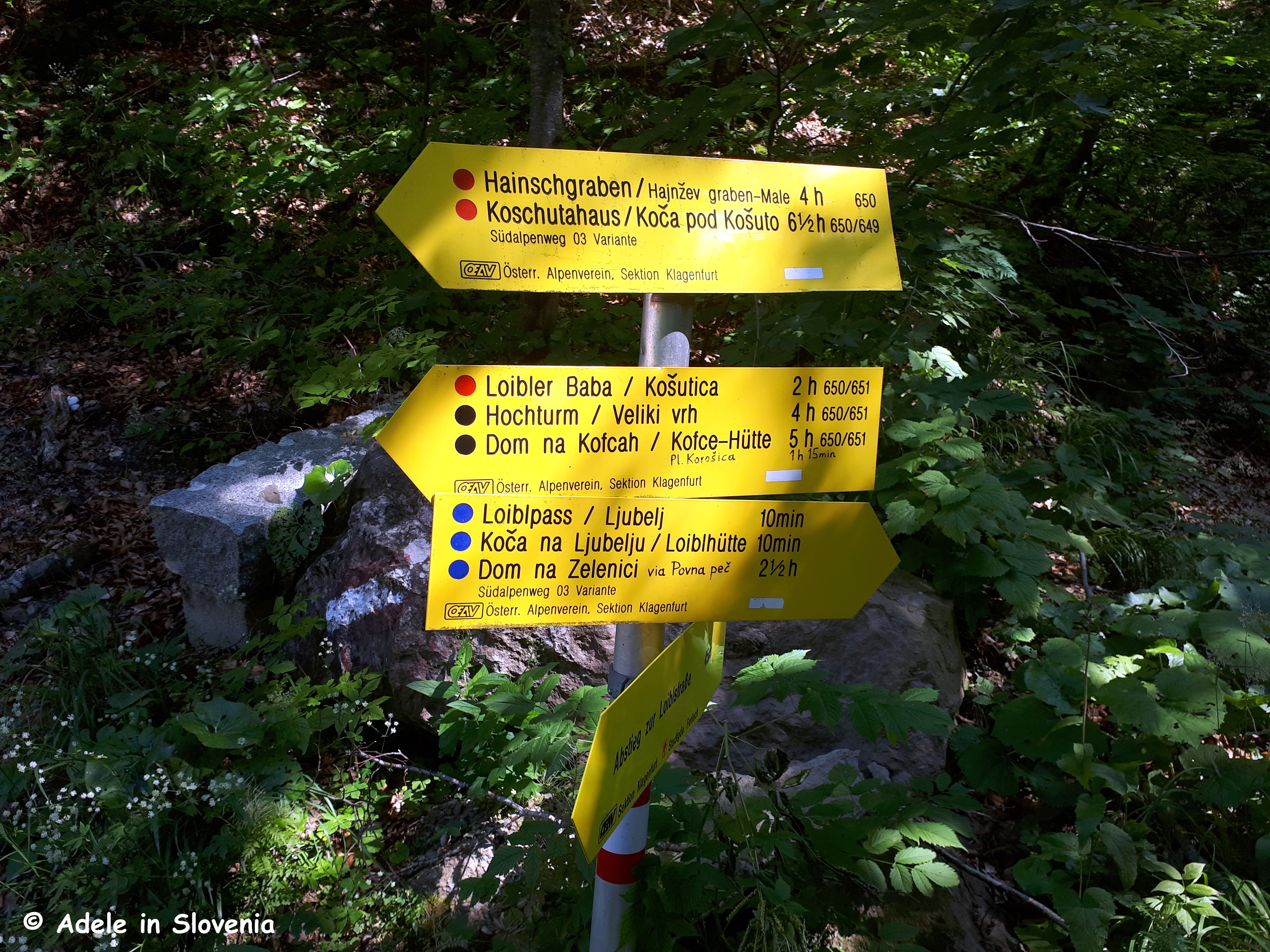
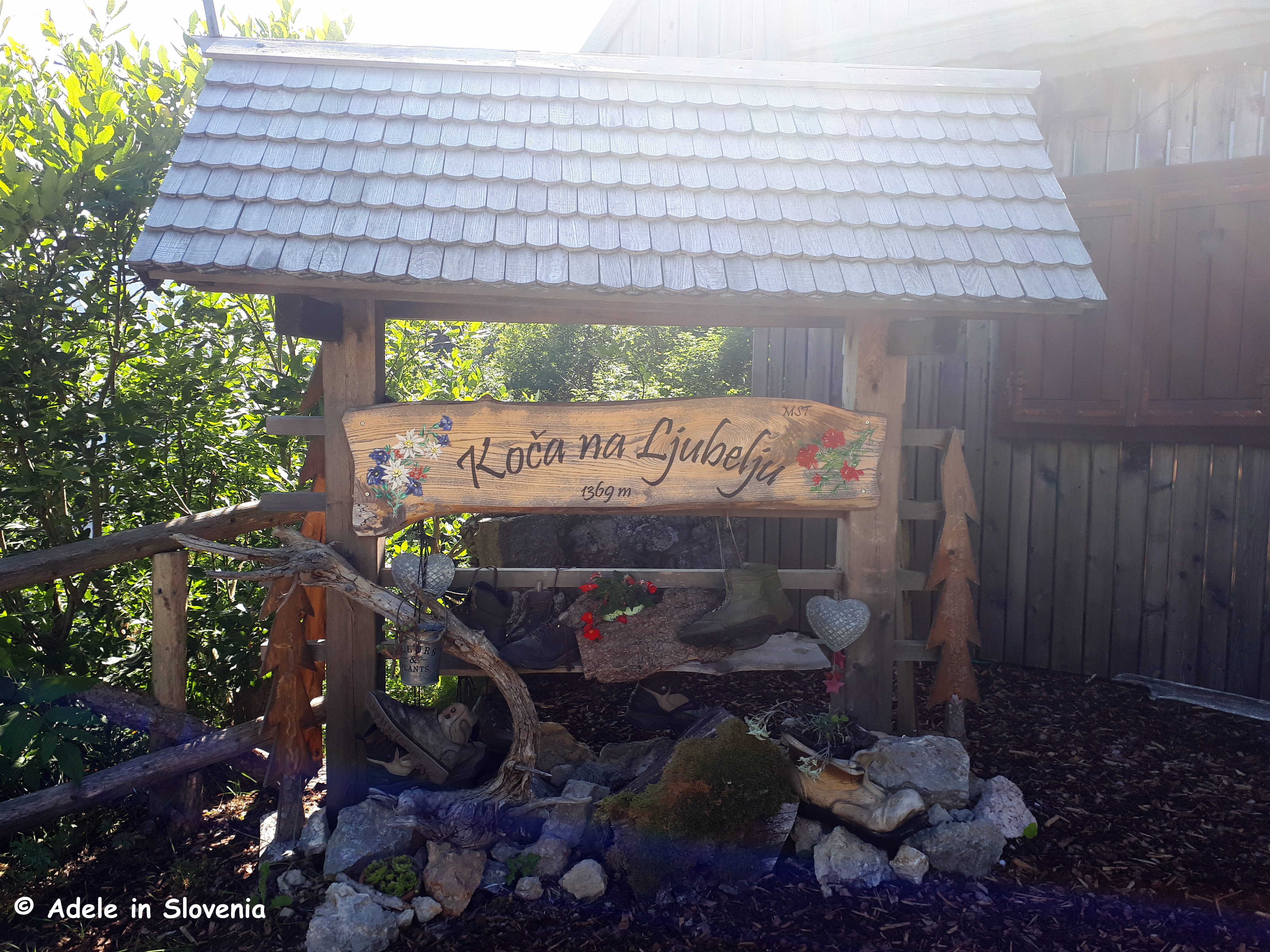
You can visit the Koča na Ljubelju mountain hut (1369m) for (more) refreshments, if required, before making the cca. 45 min walk back down to the start.

And that rounds off another great hike in the Karavanke mountains in Tržič! Click here to find out more about what you can see and do in the area.

© Adele in Slovenia


By Bike to Žirovnica and the Završnica Valley

The Završnica valley, located in Žirovnica, is crammed full of interesting natural sights and attractions. It is best explored on foot or by bike, so join me on my bike to discover (just) some of the highlights!

It is a pleasant ride from Radovljica, where I live, along quiet, mainly traffic-free roads through Lesce and Hraše, where you can join the Imperial Road. In the past, the road, which is mostly untarmacked, was used by carriages for the transport of various goods. Today it makes a great traffic-free cycle route between Begunje na Gorenjskem and the villages under Mount Stol – the highest peak in the Karavanke mountains – that form the municipality of Žirovnica.

Along the way, and/or by making short detours, you can stop to see the many sights, particularly cultural, among them the Alley of Famous Men, and the birth houses – now museums – of famous men hailing from Žirovnica,

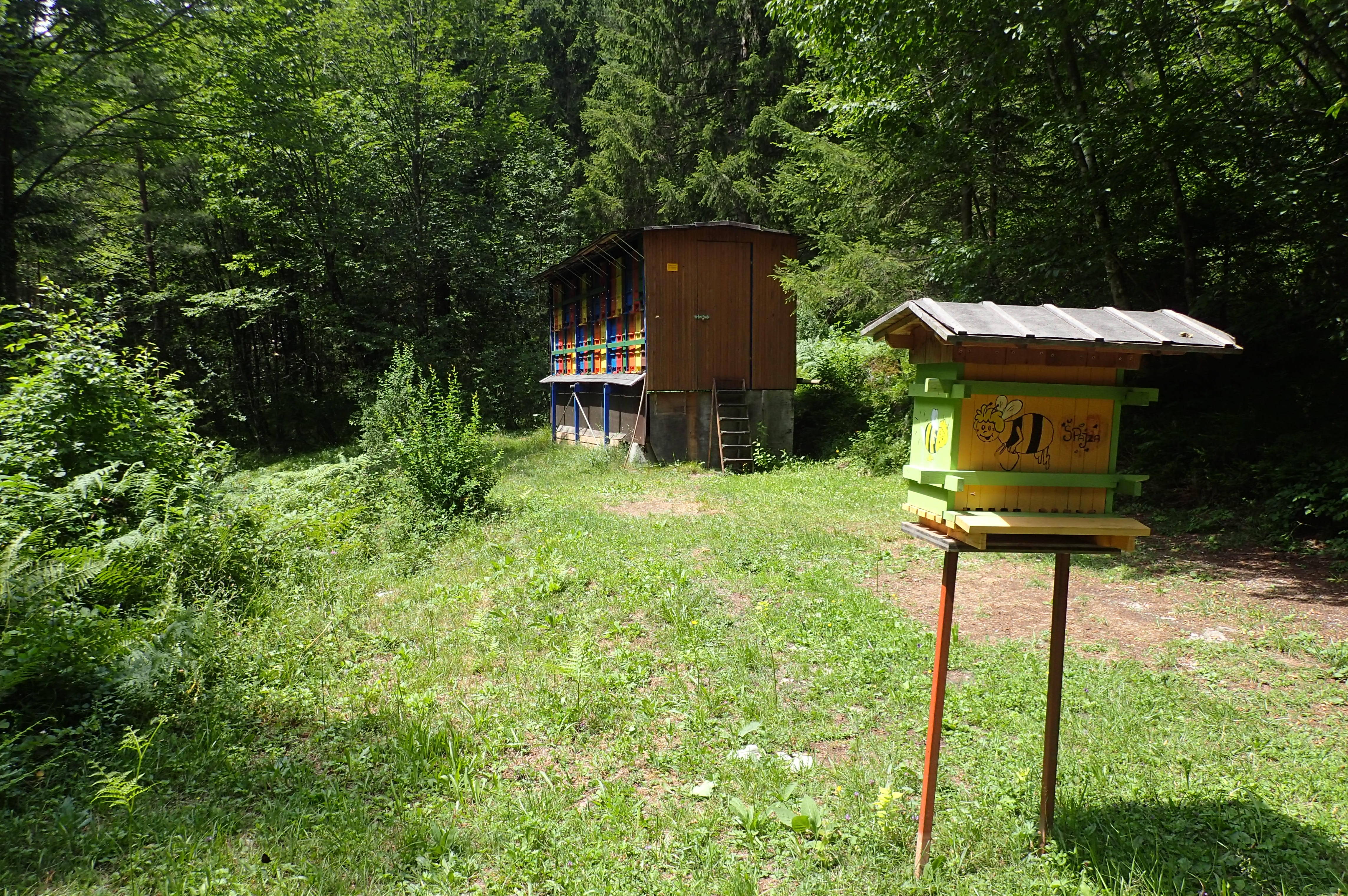
Those interested in beekeeping should make a beeline for Anton Janša’s apiary and Bee Paradise.

On reaching Žirovnica itself you can continue through Moste and then slightly uphill towards the Završnica valley and reservoir, where you can just ‘chill’, or continue further along the valley to the Zavrh bar and the Završnica Recreation Park, or even further if you want in the direction of Tito’s Village; for the last part, however, you will have dismount your bike and set off on foot.

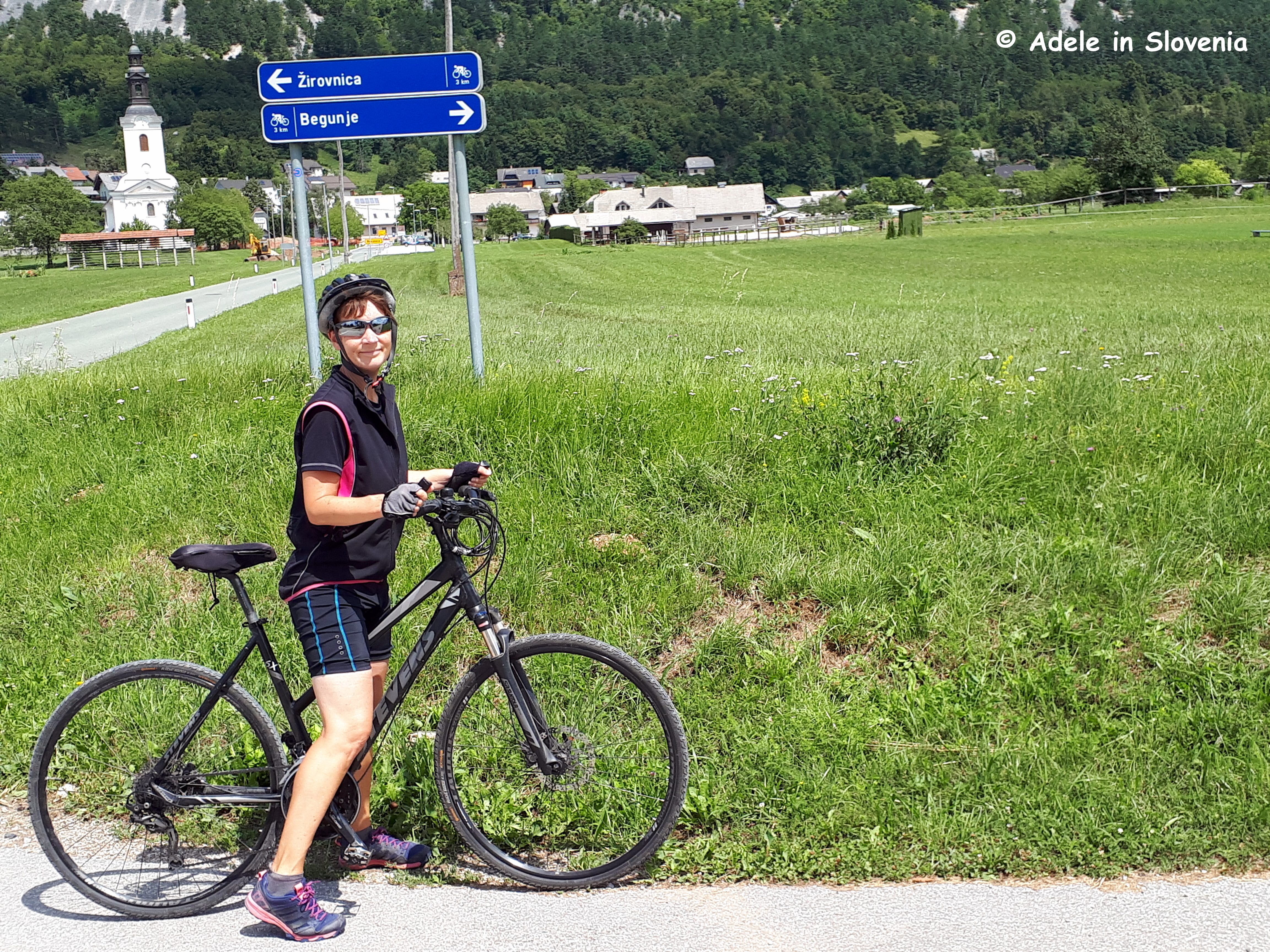
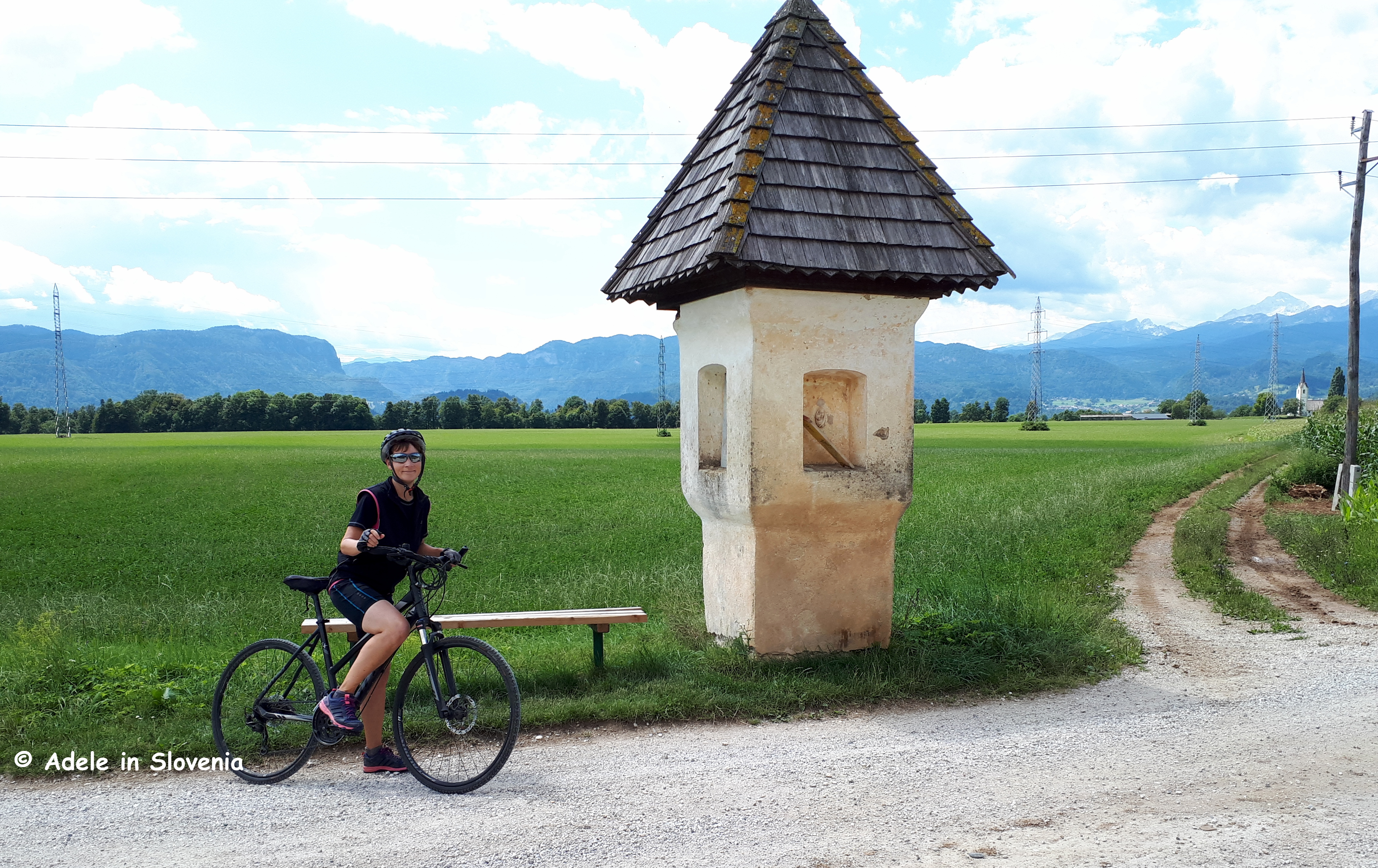
Can you spot me?!

This is just one of the many options for cycling in the Žirovnica area; there’s something for everyone, from short, easy rides suitable for families to longer, more challenging mountain bike trails – such as the Predigra adrenaline ascent.

The 2 kilometre-long descent is rated as ‘very demanding’ and is therefore only suitable for experienced mountain bike riders with suitable equipment. It is therefore recommend that you book a guide to take you on the descent, and who can also guide you along the numerous mountain pastures beneath Mount Stol or to other parts of the Završnica valley. Contact the Žirovnica Cycling Club (KK Žirovnica) for more information: kkzavrsnica@gmail.com, +386 (0)41 474 984.

Photo: KK Završnica

Watch the video below to find out more about cycling in Žirovnica and/or click here for more information.

© Adele in Slovenia

By Bike to Begunje and Bees!

Not only is cycling good for you and for the environment, it’s also a wonderful way to explore an area, and the Radol’ca area is no exception. In fact, I find it the best way to get around and much prefer two wheels to four! There’s no need to worry about where to park, you are out in the fresh air, and you can see so much more than you do in a car and can stop at your leisure.

So, join me on a bike ride to, and through, Begunje na Gorenjskem to discover some of the sights of the Radol’ca countryside!

I have listed the places below in order so as to suggest a circular ride, however, you can of course pick and choose what to see and do, and the list is by no means exhaustive. Starting from Radovljica head past the Spar supermarket, pass under the motorway then continue to the village of Nova vas.

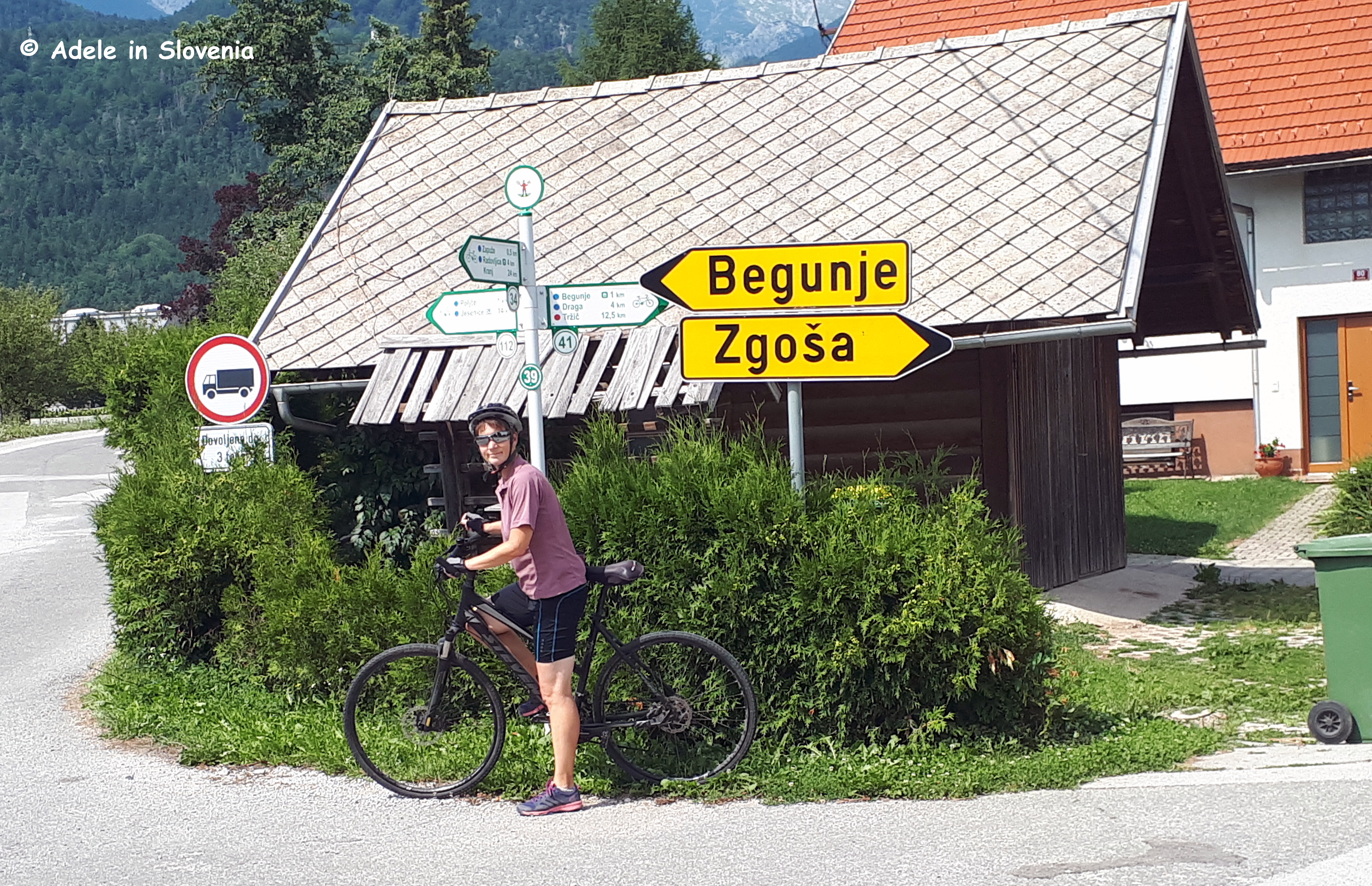
On reaching the t-junction in Zapuže, turn left then shortly afterwards turn right (there is a bar on the corner) towards Zgoša. On reaching the junction, as seen below, turn left towards Begunje.

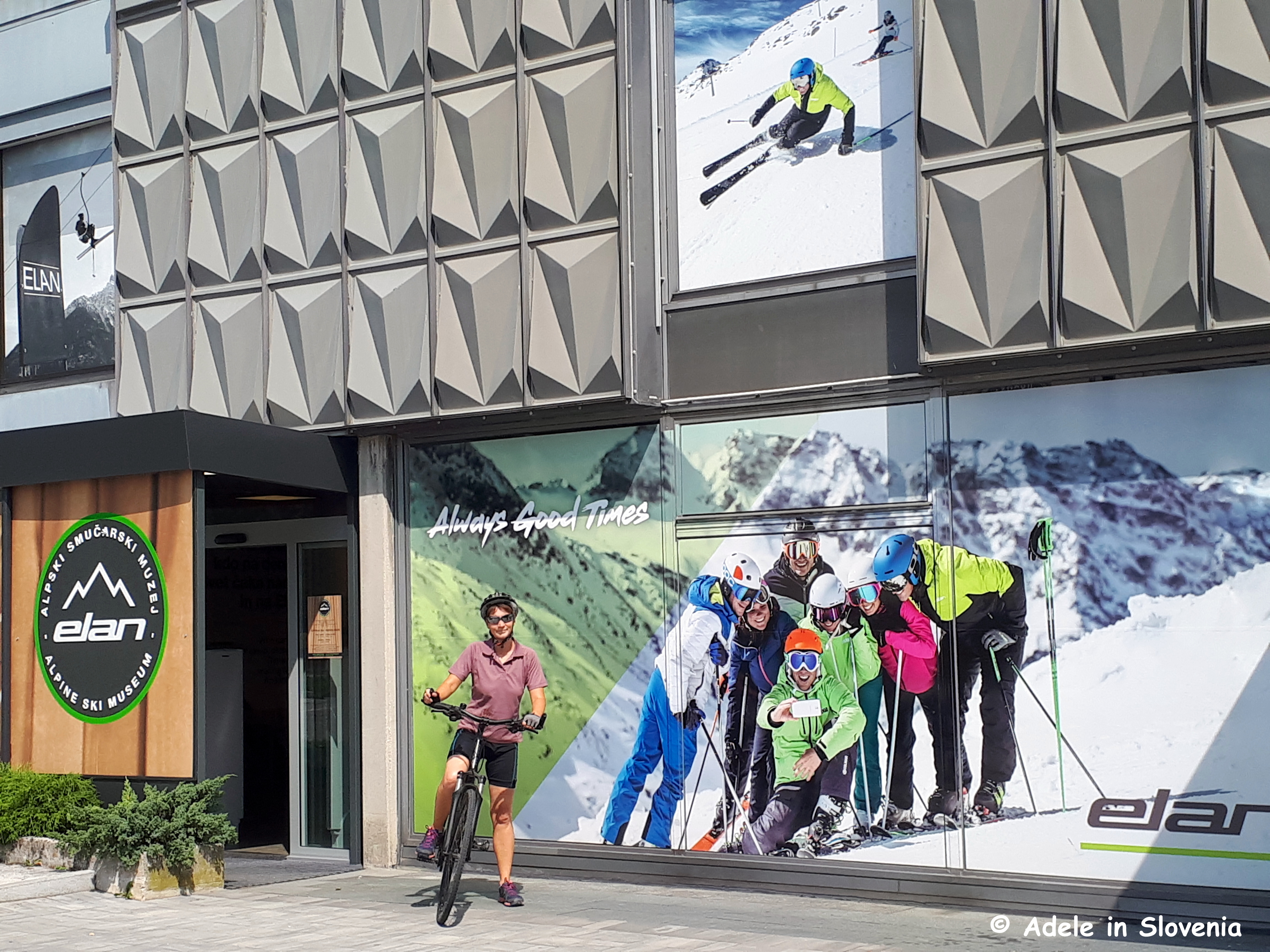
After a few minutes you will reach the Elan factory, shop and Alpine Skiing Museum, more here – https://adeleinslovenia.com/2019/01/27/test-your-skiing-skills-at-the-elan-alpine-skiing-museum/

Continue towards the village of Begunje, the birthplace of Slavko Avsenik, who, together with his brother Vilko Avsenik, were the founders of Slovenian folk music. You can also visit the Avsenik Museum.

Opposite the Avsenik Museum is the Begunje Tourist Information Centre, where you can pick up more information about the area.

Continue through the village towards the Draga Valley, stopping first to admire and explore the ruins of Kamen Castle (grad Kamen).

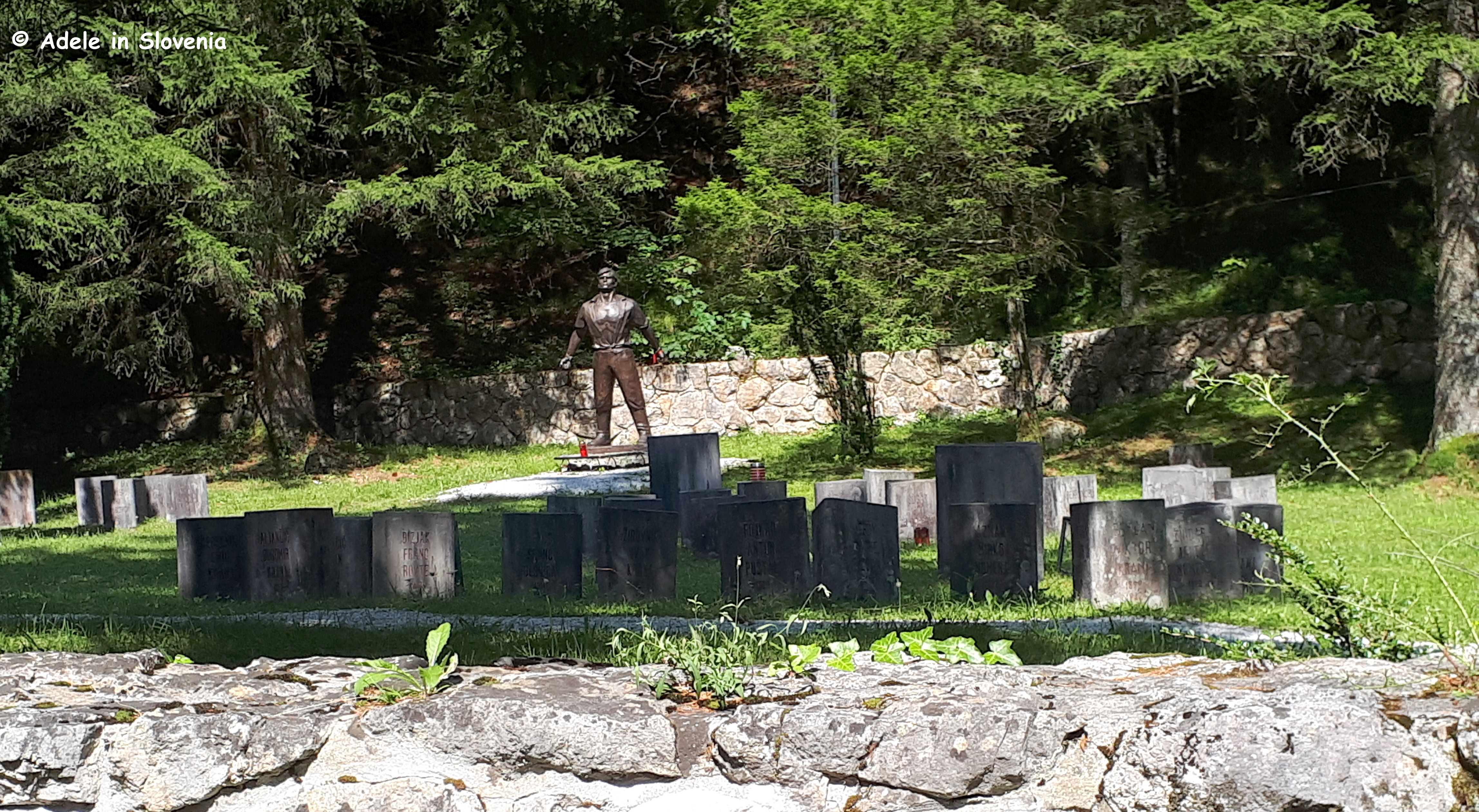
Shortly after leaving the castle, there is a small cemetery that contains graves of hostages from the time when Begunje fell under German rule during World War II. You can also make a side trip to visit the Museum of Hostages, housed in Katzenstein Manor.

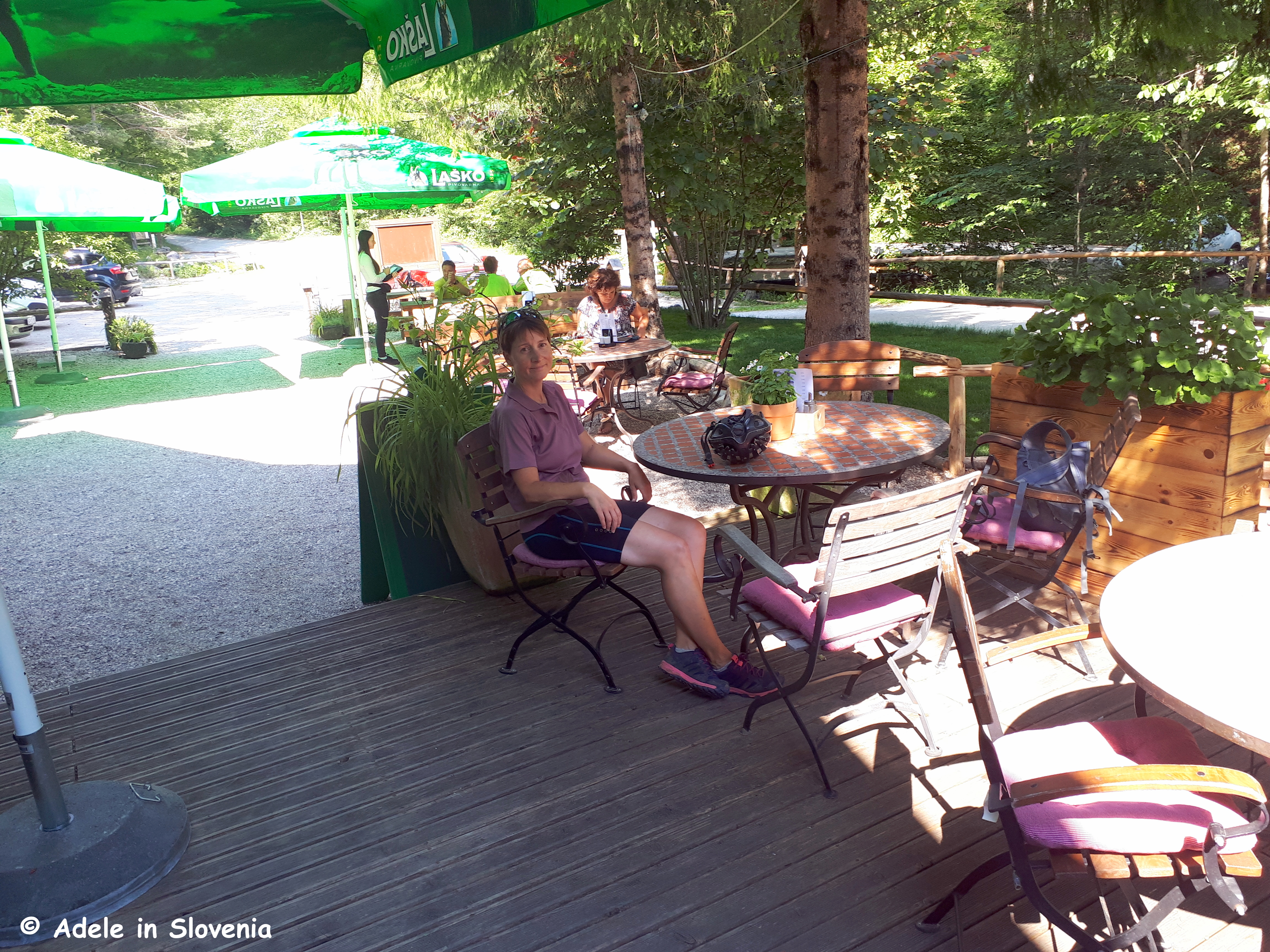
Now its just a few minutes more to reach the head of the Draga valley and the Gostišče Draga restaurant, which situated next to a stream and makes an ideal place to cool down, rest and/or enjoy some sustenance in the form of a drink, ice-cream, something sweet or some hearty traditional Slovenian food.

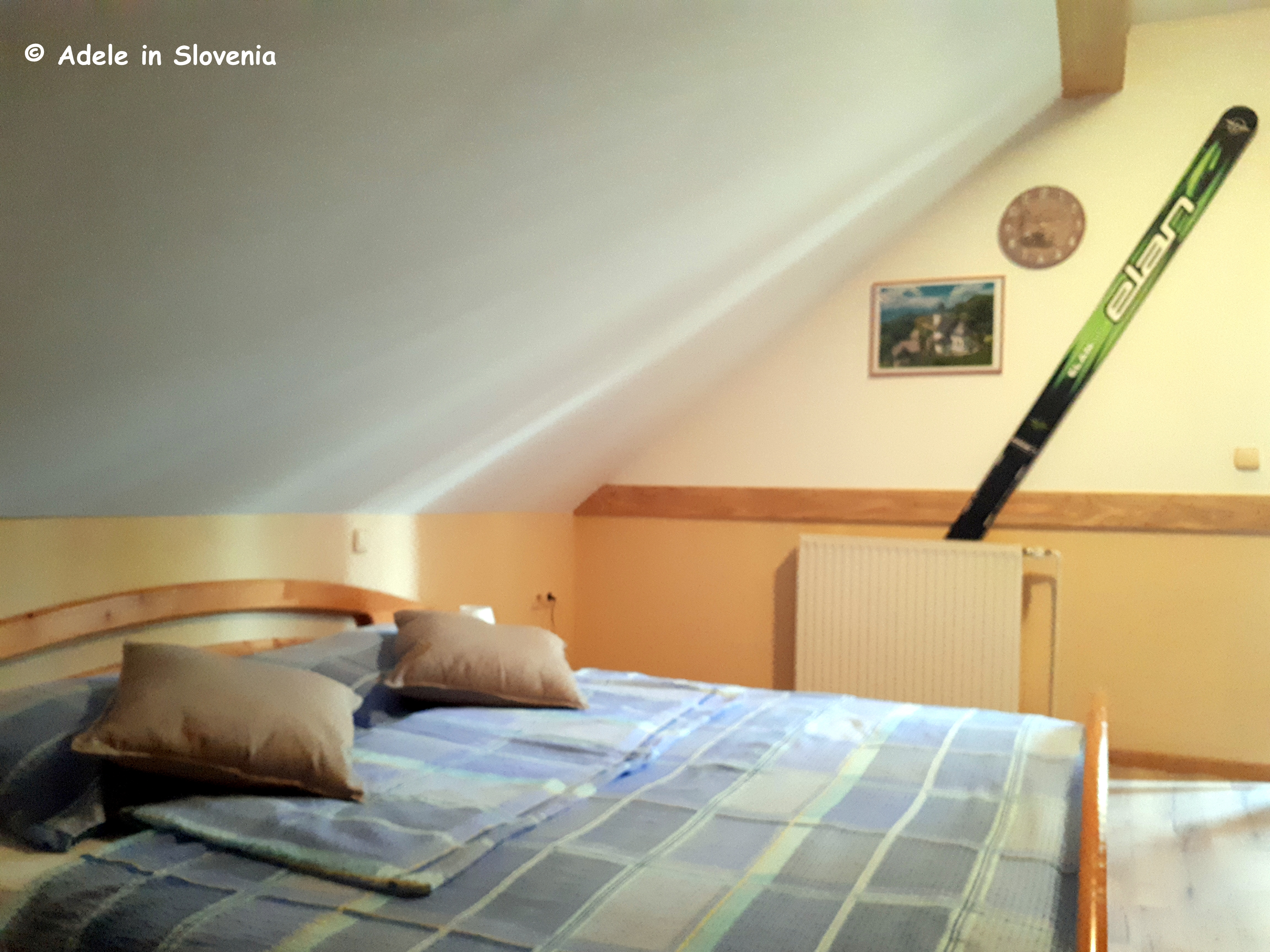
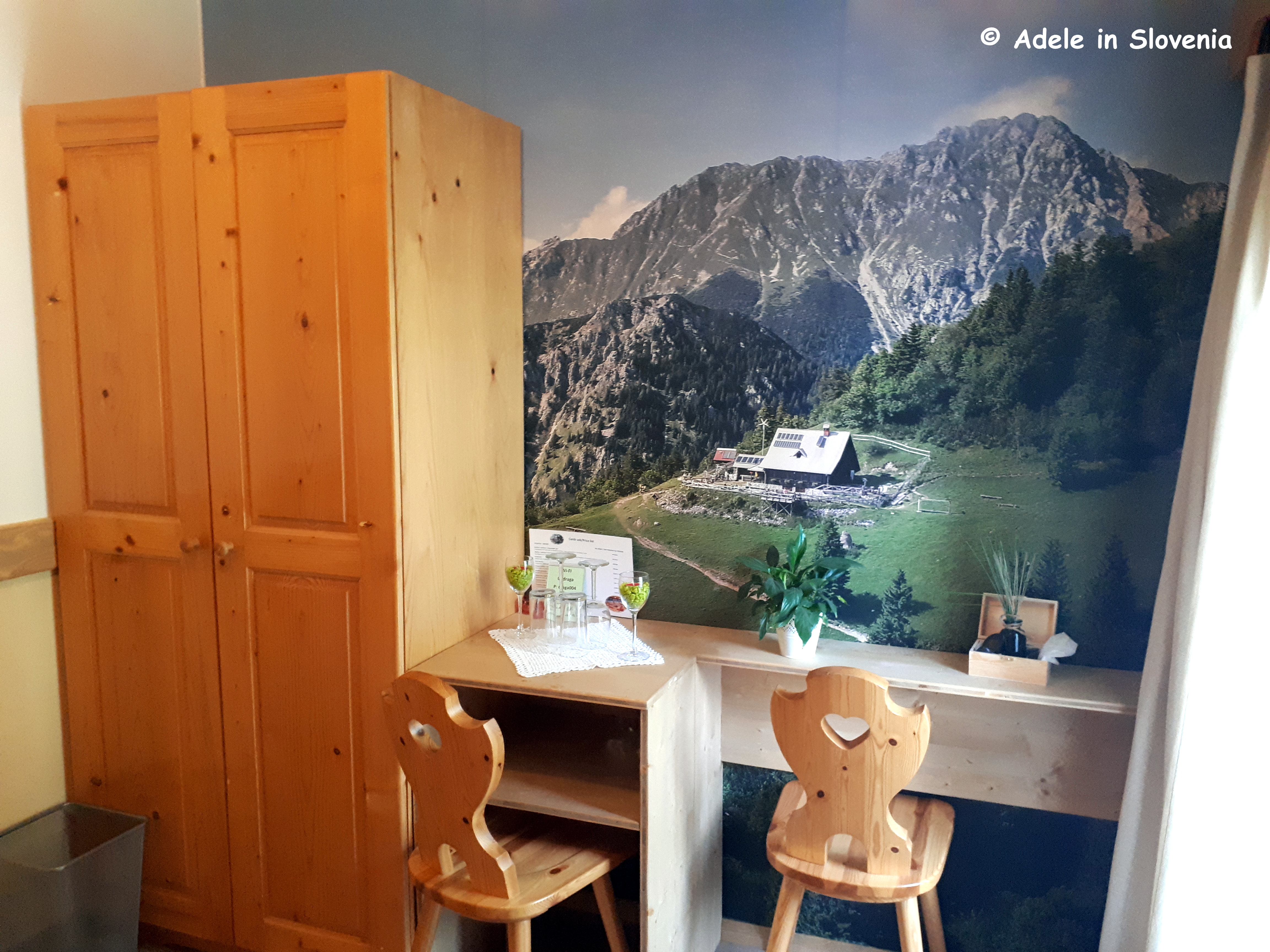
You can even stay overnight in one of the newly-renovated rooms and continue your cycling trip the next day! Or stay longer and enjoy the tranquility of the valley, which is also a great place for hiking in the Karavanke mountains.

On the way back, instead of returning the same way, after leaving the valley, you can turn left at the junction just after passing a sawmill. You could also make a detour to visit the Robačnekov mill. It is officially open on Tuesdays and Fridays from 9am-12noon, however, outside of these times if the owner is home, ask nicely and she will be happy to show you round!

Those interested in beekeeping, and even those who think they might not be interested but will likely discover that actually they are(!), can visit Luznar Beekeeping (Čebelarstvo Luznar).

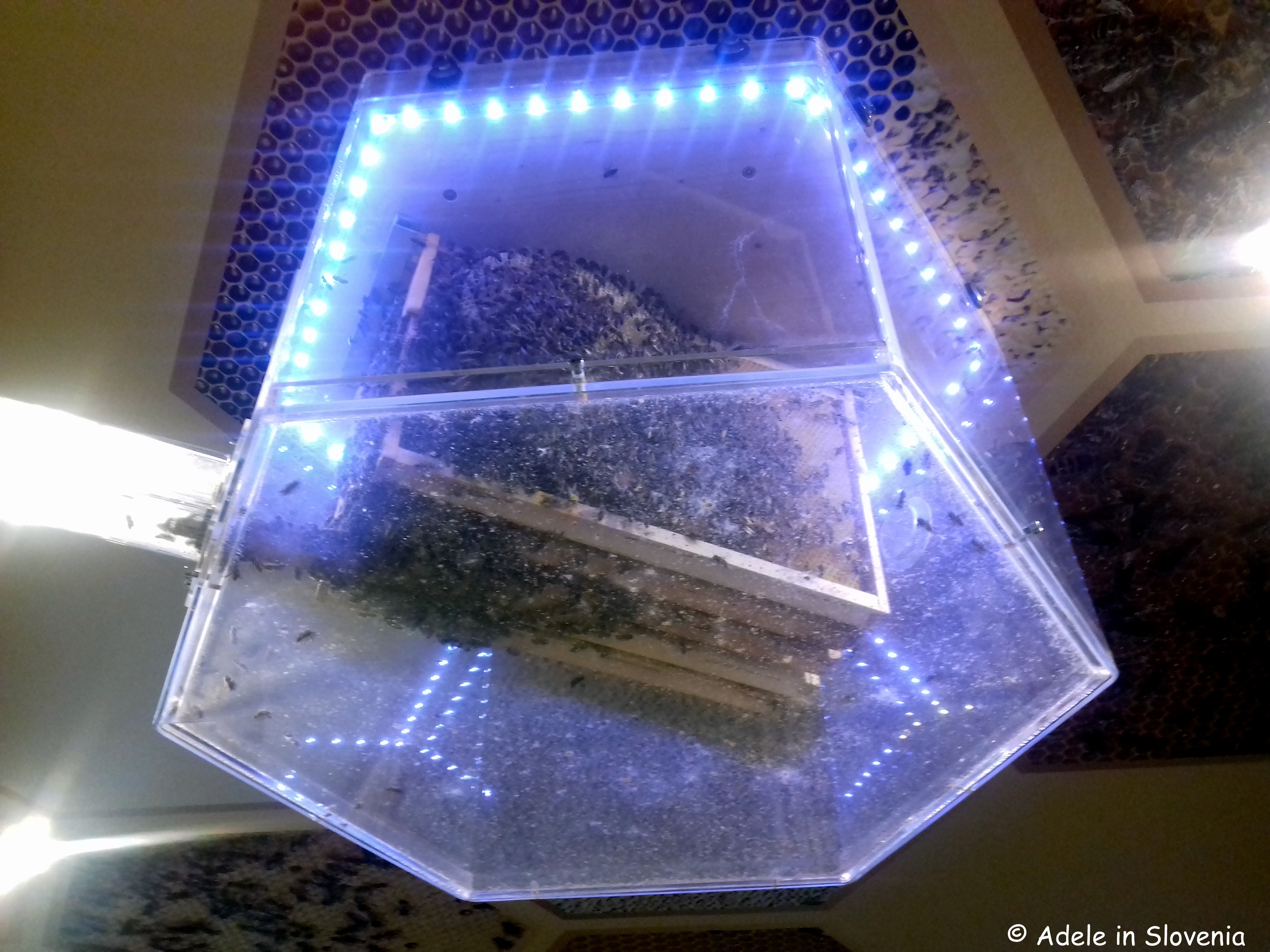
Upon prior arrangement, you can call in to visit Erik at home, where you can purchase his award-winning honey and other honey products, and/or you could arrange to meet him in the Draga valley, where you can get up close to one of his many hives and his amazing new ‘book’ hive, which allows a fascinating, close up, and unique view of Slovenia’s indigenous Carniolan grey bees hard at work. Email cebelarstvo.luznar@gmail.com or call 040 321 556.

Photo: Erik Luznar

Photo: Erik Luznar

You can also visit Begunje and the Draga valley – as well as Erik and his bees(!) – on the Hop-On Hop-On tourist bus, which runs every summer throughout July and August. It’s a great way to discover the villages and countryside of the Radol’ca area. In addition to the ride, there are guided tours and walks as well as other attractions to see and visit at each destination.

Click here for more information about cycling in the Radol’ca area.

© Adele in Slovenia


Visit Žirovnica and Dine Hunter-Style at Lovski dom!

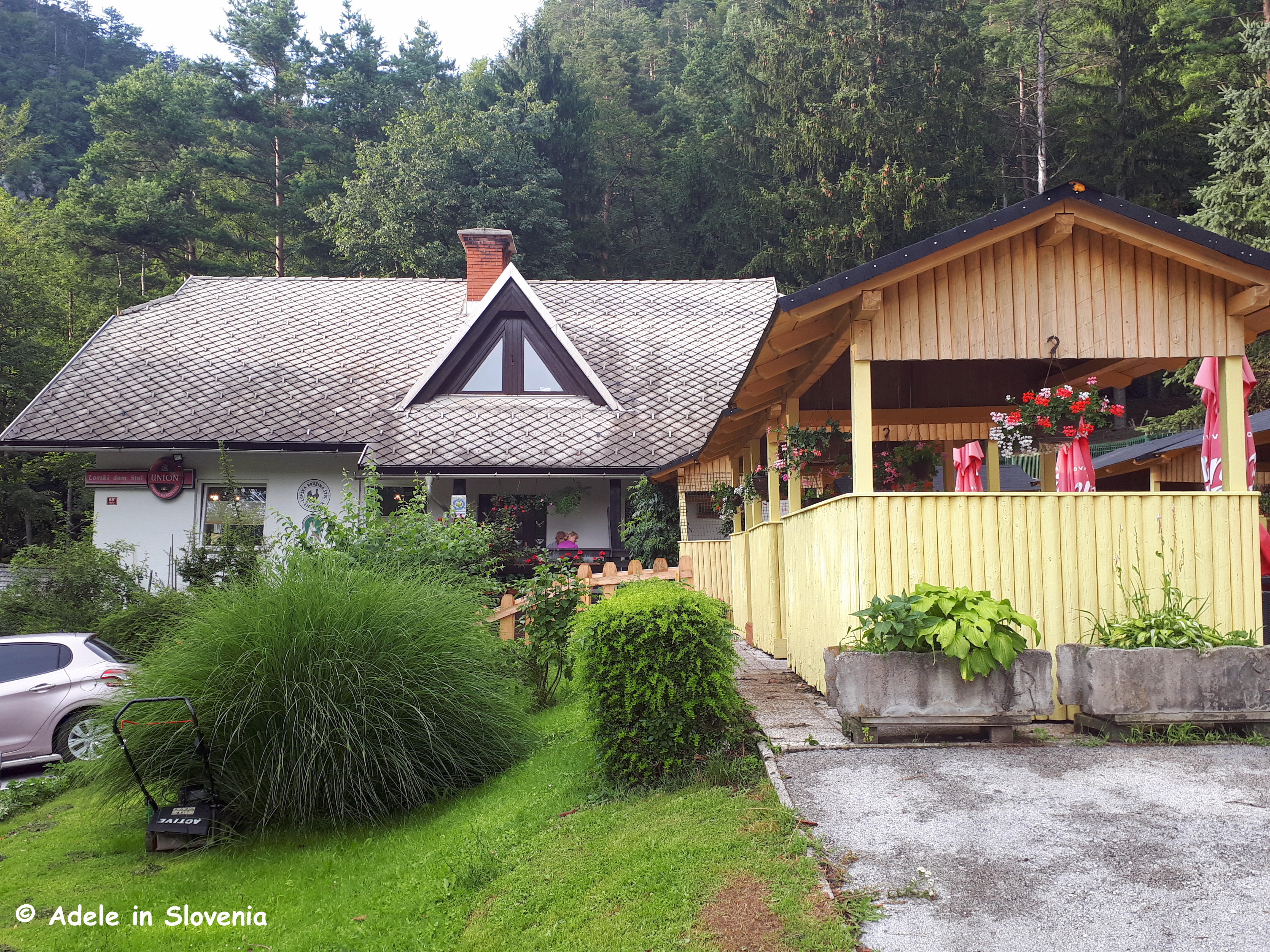
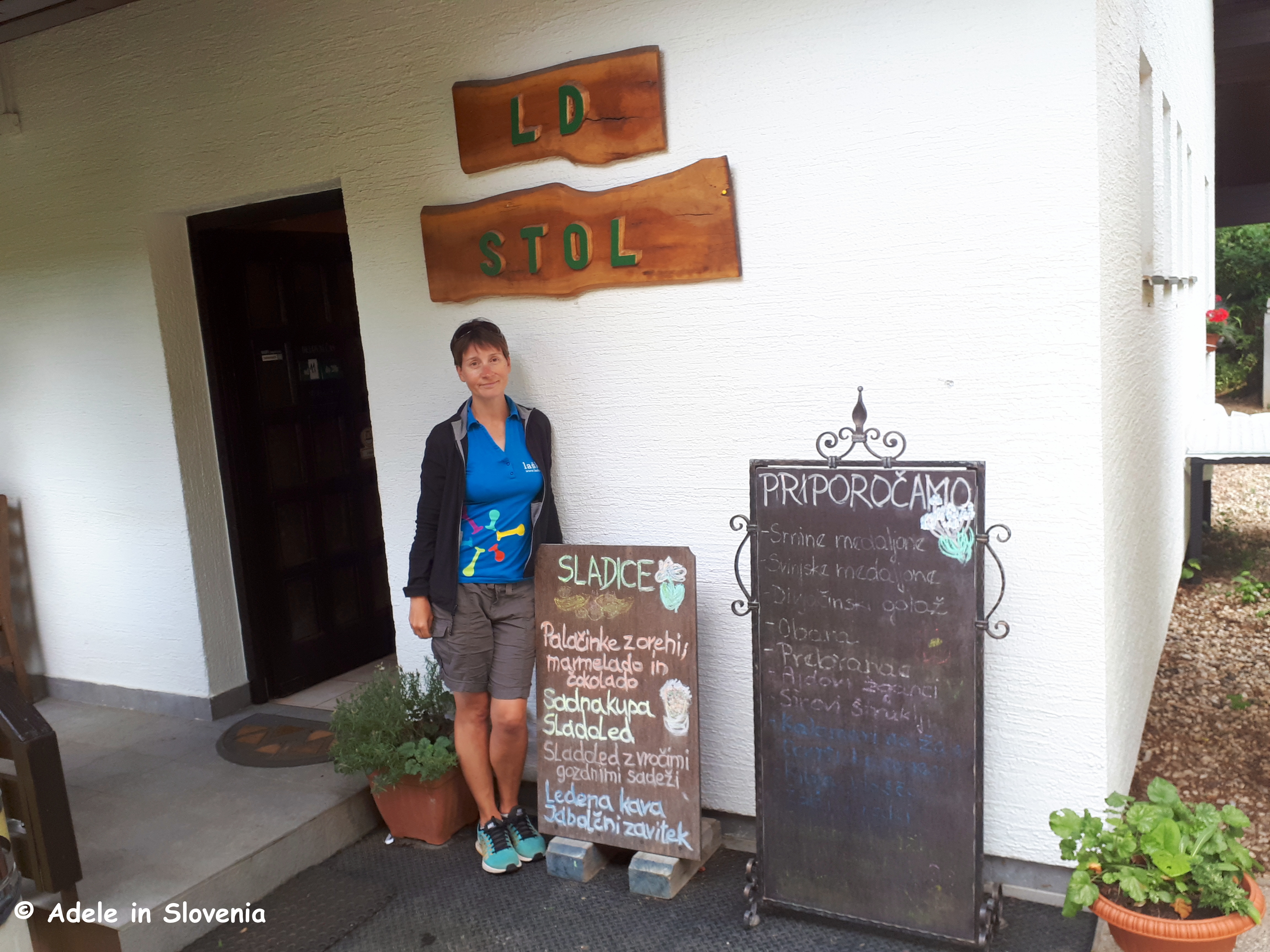
Lovski dom (Hunters’ Lodge) in the Završnica valley has long been a favourite place to dine among locals from the Žirovnica area as well as those from further afield. It has a reputation for its great wild game dishes, among others, as one would expect from a Hunters’ Lodge!

The restaurant was originally established by hunters, hence the name, and has now been under the same ownership for 27 years. Its winning recipe for success is a combination of great, traditional Slovenian food, hearty portions, friendly service and reasonable prices.

In fine weather you can sit outside and enjoy the views of both the surroundings and the restaurant’s own menagerie of animals, including Mici the bear.

…while during the colder months you can join the array of animal indoors – not live ones though!

Mici, originally from Kočevje, has been at ‘home’ at Lovski dom for 16 years now, and seemed more than happy to show off her climbing skills to get a treat of oranges and apples. The merits of keeping a bear in captivity are for some, obviously, questionable, however owner Ingrid explained to me that Mici has been in captivity all her life and would likely be unable to survive now in the wild.

Now, on to the food! Being somewhat limited in what I can order these days, I was unable to indulge, as I would have liked, in the huge meaty platters laden with Wiener schnitzel and other such traditional delights for which Lovski dom is known, including venison goulash, river trout and homemade štruklji.

Fortunately, however, I was able to indulge – and did – in the delicious and humungous pork ribs, the mixed grill, buckwheat with crackling, sauteed potatoes and salad, so, for a change, I didn’t feel short changed by being unable to eat anything containing gluten.

Reservations are recommended at weekends. Call 041 945 347 or email okrepcevalnica.stol@gmail.com

There is plenty to see and do in the vicinity of Lovski dom to build up an appetite for your hearty meal. You can hike in the Karavanke mountains, for example to Stol – the highest mountain in the Karavanke range – and/or visit the Valvasorjev dom mountain hut, which is the three-time winner of the title of Slovenia’s Best Mountain Hut (2014, 2016, 2018).

For a less strenuous option, you can visit the Turkish Cave or just take a leisurely stroll around the Završnica reservoir and recreation park – the choice is yours!

Find out more about what to see, do, and taste in Žirovnica here.

© Adele in Slovenia


Jezersko – Scenic, Tranquil and a True Hiker’s Paradise!

Achingly beautiful and tranquil, Jezersko boasts a wide range of challenging hiking trails as well as easier walks, scattered farms and homesteads, picture-perfect scenery, and no traffic jams. tourist traps or crowds. Add into the mix friendly locals, traditional food and more, and Jezersko is the place to be!

Jezersko really is a hiker’s paradise and a haven of peace for those looking for a total escape from the day-to-day, whether you visit for an active break or just for some much-needed rest and relaxation.

The village lies at an altitude of 906 metres above sea-level at the foot of the Kamnik-Savinja Alps and the Karavanke range and is Slovenia’s first, and indeed only, true mountaineering village. It is one of the villages included in the Bergsteiger Dorfer Association of Mountain Villages, which is no mean feat when you consider that all the other villages are in well-known mountainous areas, such as Bavaria and Tyrol.

The Jezersko Mountain Trail is ideal for those seeking some challenging hikes. You can walk the entire trail, staying at mountain huts along the way, or choose sections for shorter hut-to-hut routes or just pick and choose day hikes – the choice is yours!

For my recent hike I decided to choose a circular route (yes, you know me and my penchant for circular hikes!) which first leads to the Ceška koča mountain hut (1,543m), then onward to the Kranjska koča na Ledinah hut (1,700m).

The trail, or rather many trails, begin at the car park at the end of the Ravenska kočna valley, where there are information boards about the valley and the various trails and attractions.

There are a choice of trails that lead up to the Ceska koca hut, including a via ferata trail for those looking for extra adventure. I chose the trail that leads off to the right of the car park, first for around 5 minutes on the flat before leading up steeply through the forest to the Stularjeva planina mountain pasture.

Thereafter the trail continues up to the hut, with a few hurdles to encounter en-route, though nothing technically difficult. In total it takes cca. 1.5 hours.

In addition to its fantastic location, what makes the Češka koca mountain hut unique is that it was built in 1900 by the Prague-based Czech branch of the Slovene Mountaineering Association, after which the hut was named. It has been renovated many times over the years but has retained its original appearance.

You are spoilt for choice with onward routes from the hut. Many of Jezersko’s mighty mountains such as Grintovec, Skuta and Kočna can be reached in 3-4 hours, or you can continue, as I did, towards the Kranjska koča na Ledinah hut, from where there are also numerous onward hikes.

There is a choice of 2 routes between the two huts, however, at the time of writing (July 2019) the ‘skozi Žrelo‘ trail, which is considered ‘very demanding’, is closed – not that I had intended to take it anyway! The alternative route first descends to join the ‘Slovenska pot‘ (The Slovene Trail). In places the path is narrow and there is a steep drop, but there is iron railing and foot rungs in the most exposed places.

After descending for cca.15 mins, the trail joins the ‘Slovenska pot’ and begins to ascend steeply. There is one section – quite a long one – where there are iron rails and rungs and therefore extreme caution is required, but, credit where its due, the trail is well maintained and secure.

Unlike the Ceška koca hut, it can’t be said that the Kranjska koča hut is anything to look at, and in fact due to its position its almost impossible to get a good photo of it as one can’t get far enough from the hut to capture it. It is, however, a good base for onward hikes and/or for having a breather before returning to the valley.

Almost all the onward trails from the Kranjska koča na Ledinah hut, such as those to Koroška Rinka and Kranjska Rinka are marked as ‘very demanding’ (zelo zahtevni poti), so are only suitable for those with significant mountaineering experience and proper equipment.

Not being one for such adventurous challenges, I descended back to the valley on the much easier Lovska pot (Hunters’ Trail), which makes for a perfect circular half-day hike. The path leads directly back down to the car park in around 1.5 hours.

There are also numerous easier hikes and other attractions and activities in the Jezersko area, so there’s something for everyone – more about which in another blog post soon! In the meantime, a great way to find out more about the village and immerse yourself in its local culture is to attend a performance of ‘The Stories of Jezersko‘ (Jezerske štorije), which takes place on Fridays during July and August at Jenk’s Barracks (Jenkova kasarna).

And another way to learn more about Jezersko is to taste some of its traditional cuisine. A good place to start is at the beautiful Planšar Lake (Planšarsko jezero), where on Saturdays at 5pm throughout the summer you can attend a demonstration of cooking the local dish ‘masunek’ over an open fire.

While I, in fact no one, can guarantee the weather – a glorious morning was forecast for the day of the hike described above, however, as is evident from the photos, the mountain tops were largely shrouded in cloud for much of the hike – in Jezersko you can, however, be assured of wonderful nature, peace, friendly locals and a break from the hustle of bustle of life. But don’t just take my word for it…!

© Adele in Slovenia


Visit Žirovnica – A Ridge Hike to Tito’s Village via Mali vrh

When choosing what to blog about, sometimes a look at my blog statistics can help to provide inspiration. So, having seen that there has been significant interest in the blog I wrote last year about Tito’s Village (Titova vas), I thought I would write another blog on the theme, though this time describing an alternative, more interesting/challenging, way of reaching it; a hike along the ridge from Mali vrh and onward to Tito’s Village.

Mali vrh can be reached by taking the aptly-named Sunny Path (Sonča pot) from Žirovnica to St. Lawrence’s church (sv. Lovrenc). You can join the path and reach the church from several places. I like to park in Žirovnica then take the path that leads towards the steps that go up towards the distinctive water surge tank. Don’t go up the steps but just to the right the path, though not marked, is easily visible as it traverses the grassy meadows above the villages of Žirovnica.

Follow the path towards the church and, just a hundred metres or so before reaching the church, you will see a sign pointing upwards to the left marked Brin vrh.

If you want to visit the church, do so first, then return to the sign and head up the steep path to reach Mali vrh. At the top there is a small rest area…

…complete with a visitors book…

and, somewhat bizarrely, a broom! I’m guessing it must be to brush the snow off the benches in winter!

From Mali vrh continue along the ridge before descending to a saddle where you can either descend steeply down to the Završnica reservoir and recreational park (this makes a great circular route if you walk back past the reservoir and continue on the path back to the water surge tank), or you continue towards Tito’s village, or even further!

In a couple of places there are iron pegs and rungs, but there’s nothing too scary – fortunately – and it adds to the adventure!

The path is very well marked throughout, and there are a couple of strategically placed benches where you can take a breather and soak up the views of the surrounding villages and countryside, as well as Lake Bled and the Julian Alps on one side…

…while on the other you can see the lush Završnica valley beneath Mt. Stol – the highest peak in the Karavanke mountain range.

The path continues it way along the ridge, with a few nooks and crannies to explore along the way!

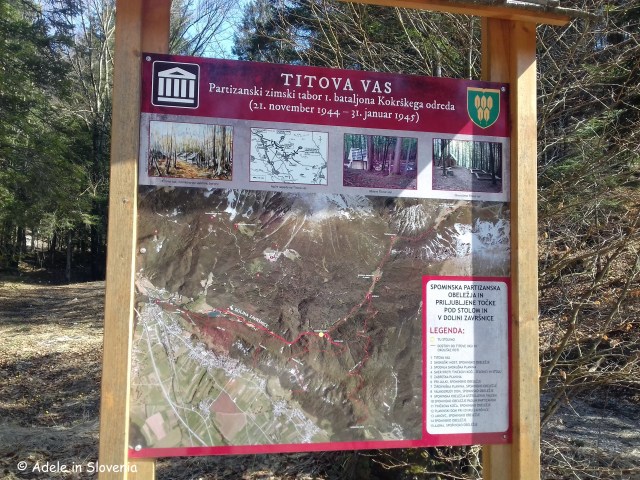
On reaching the sign for Titova vas, you can follow the forest road down to visit the secret World War II partisan camp that was hidden deep in the forest in a remote, hidden and relatively inaccessible location beneath the peak of Smokuški vrh. The camp had its own newspaper, a choir, butchery and everything needed for everyday life at that time.

The camp provided partisans with shelter from the German occupiers. Considering its location, in close proximity to German strongholds in nearby Žirovnica, Bled, Koroška Bela, Javornik, Jesenice, Lesce, Radovljica, Brezje, Poljče and Begunje, the existence of the camp from 21 November 1944 – 31 January 1945 – though only 2 months – was considered long for those times.

You can either return along the outward route described in my previous blog about Tito’s Village, or return by the same route, or, at the junction of paths, take the wide stony path downwards to the right, which leads down to the village of Smokuč, from where you can either walk back to the start along the road, or, to avoid having to walk along the road, follow the signs for the Žirovnica Path of Cultural Heritage (Pot po kulturni dediščini).

If you want a great base for a hiking holiday in Slovenia, why not consider Žirovnica; there’s a wealth to see and do, it’s off the main tourist trail – and therefore you get a more genuine experience of Slovenia than one does in the main tourist towns – there are plenty of places to eat, and it’s great value too!

© Adele in Slovenia
The Apitourism Bee House in Bohinj

The Apitourism Bee House in Bohinjska Bistrica, near Bohinj lake, is a one-stop destination for apitherapy and wellbeing.
The combination of apitherapy, honey massages, and a spacious, well-equipped apartment, makes this an ideal place to reap the benefits of apitourism and enjoy some pampering, and a great base from where to explore the beautiful surroundings of the Bohinj area and Triglav National Park.

The house and apiary is tucked away in a quiet part of Bohinjska Bistrica, next to the Tomaž Godec Museum and alongside a stream, whilst also being within walking distance of local shops and restaurants.

You can relax in a deckchair in the garden, which is planted with honey plants, and watch the bees going about their business.

You can visit the Bee House as a day guest to enjoy apitherapy sessions in the traditional Slovenian apiary and/or honey massages, or stay in the spacious on-site apartment, from where its just a hop and a skip to the apiary, thus making it the ideal place for total rest and relaxation.

After admiring the painted apiary from the outside and watching the diligent bees go about their business, you can go inside, take a seat, place a mask over your mouth and nose and breathe in the goodness.

Apitherapy is known to help improve a number of conditions, particularly respiratory problems, as well as allergies, stress, depression, etc.

To complement the apitherapy sessions, you can also treat yourself to an on-site honey massage, the benefits of which, in addition to being relaxing, include detoxification, boosting of the immune system and revitalisation.

Brane and Mirjam – the owners of the Bee House – are both certified apitherapists and can prescribe personalised wellbeing programmes. They can also offer advice on how various bee products, including honey, honey vinegar, propolis and their own patented drink made from honey and effective microorganisms, can aid a range of conditions.

The modern Bee House apartment has a fully-equipped open-plan kitchen/living/dining room, and 2 bedrooms that can accommodate 4 people.

Image may contain: living room, table and indoor

There are wonderful views of the surrounding mountains from the balcony.

Upon prior arrangement workshops and tastings of honey products can also be arranged.

For information and reservations visit the Bee House Facebook page, call +386 31 490 865, or email: crt.boznik@gmail.com or orbita.bb@siol.net.

So, when in Bohinj, or considering a bee-themed trip, be sure to make a beeline for the Bee House!

© Adele in Slovenia